

.webp?language=en-US)


Voices of Women in Landscape Architecture, Part 16

ASLA's Women in Landscape Architecture Professional Practice Network (WILA PPN) is sharing the next set of profiles of women in the profession (see the previous installment right here). If you'd like to be featured, the PPN's call for submissions will remain open, with profiles being shared on an ongoing basis.
These profiles will appear on the PPN's LinkedIn group, Facebook group, and here on The Field. This post includes Lauren Colunga, ASLA, Nusrat Jahan Nipu, and Tanya Olson, ASLA.
Lauren Colunga, ASLA
What inspired you to pursue a career in landscape architecture?
While working at a plant nursery in Austin, TX, there was a landscape architect prepping garden designs and planting plans. He walked me through what his job entailed, and I was sold! It was the perfect combination of indoors, outdoors, art, science, etc. I loved that every day presented an opportunity to learn something new.
Who are the female role models who have influenced your career?
Siegrun O'Sullivan was the first and most eye-opening. A family friend of my father, I spent a month at her home in England before attending graduate school. She taught me about plants, surveying by hand, design theory, working with nature, and client relations. She is such a multi-talented and generous person; her enthusiasm and willingness to share knowledge provided me with a strong start to my career!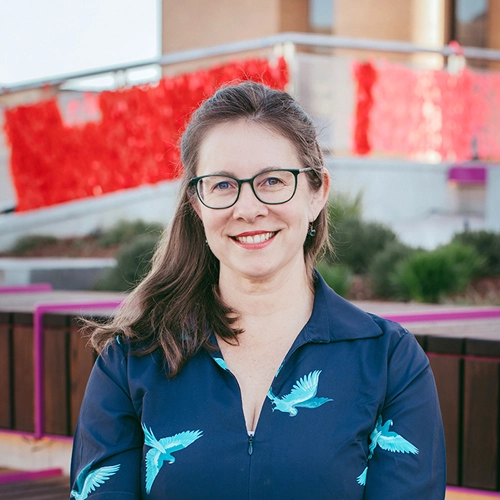
What advice do you have for other women pursuing a career in landscape architecture?
There is no one correct path to becoming a landscape architect! I have spent 14 years overseas (military family), home educated two children, worked when and where I could, and am proud of how my various experiences have created a wealth of knowledge to draw upon. A unique background, a willingness to learn, and the desire to do your best will take you almost anywhere you want to go in life.
Can you share with us a project you are particularly proud of and why?
Honestly, my favorite projects were helping construct several exhibition gardens at the RHS Chelsea Flower Show from 2009-2011. Frequent moves often prevented me seeing a project through from beginning to end, so these gardens provided micro-projects from design through construction (and demo!) that were invaluable.
What advice would you give your younger self?
Do not compare your journey to other people's. You may not end up where you plan to go, but enjoy the time you spend getting there. Often it is the unexpected experiences that give you a unique insight and set you apart from others.
Nusrat Jahan Nipu

What inspired you to pursue a career in landscape architecture?
During my undergraduate final project, I had the opportunity to explore a Buddhist historical site in detail, and I was immediately struck by how the landscape had been meticulously designed to complement and highlight the site’s unique features. The designers in that era had incorporated elements such as gardens, pathways, and water features that not only added aesthetic value but also played a crucial role in the preservation of the site’s history, culture and religious beliefs. I realized that landscape architecture was not merely about creating beautiful outdoor spaces; it was about enhancing the environment in a way that respects the cultural, historical, and ecological significance of a place. This revelation made me realize that landscape architecture has the power to shape our surroundings, not just visually, but also in terms of how people experience and interact with the environment.
Furthermore, I became increasingly aware of how landscape architecture influences the broader environment. For example, the use of native plants and sustainable design practices on the historical site helped reduce the ecological footprint and fostered biodiversity. These elements not only contributed to the preservation of the site but also highlighted the potential of landscape architecture to address larger environmental challenges, such as climate change and urbanization. I became inspired by the possibility of using landscape architecture to create spaces that promote sustainability and improve the quality of life for communities.
However, as I delved deeper into the field, I faced the realization that the opportunities to study landscape architecture in my home country were limited. There were very few programs available, and the curriculum did not provide the comprehensive education needed to pursue a successful career in this field. This limitation became a significant motivation for me to seek higher education opportunities abroad, particularly in the United States, where landscape architecture is a well-established and highly regarded field of study. The prospect of learning from esteemed professors, gaining exposure to cutting-edge research, and collaborating with like-minded individuals from diverse backgrounds further fueled my desire to pursue a career in landscape architecture.
Who are the female role models who have influenced your career?
In graduate school, Dr. Diane Jones Allen, FASLA, PLA! She is not just a role model to me—she is a beacon of inspiration, a symbol of what it means to be a visionary, a leader, and an advocate in the world of landscape architecture. From the moment I encountered her work and research, I felt a deep sense of admiration for her approach to design—one that goes far beyond aesthetics and technical expertise.
Can you share with us a project you are particularly proud of and why?
Titled “The Path Forward: Contain, Clean, and Connect,” was one of my group projects which took FIRST PLACE in master plan category of the EPA Campus RainWorks Challenge in 2020. The master plan of the University of Texas at Arlington was redesigned to strategically incorporate green infrastructure practices at key locations and along transportation corridors and local water bodies. Our team took a holistic design approach that would not only protect public health and water quality, but promote resilience, create new wildlife habitat, and create new recreational amenities for students and educators.
What advice would you give your younger self?
Follow your passion and don't look back. Life moves pretty fast so don't waste your time on thinking what happened before or your failure. Just move forward and enjoy every second of your journey, which will help your dream come true!
Tanya Olson, ASLA, PLA
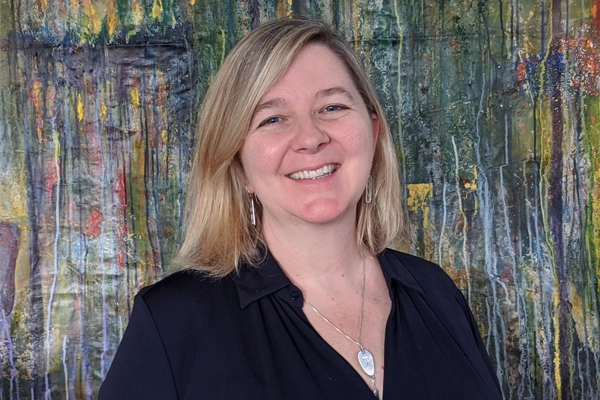
What inspired you to pursue a career in landscape architecture?
It was a happy accident. I was intending to get a degree in horticulture but followed the advice of the college guidance counselor and tried out landscape architecture. It couldn't have been a better fit for a highly social person who grew up roaming the fields and forests and ravines of northern Minnesota.
Who are the female role models who have influenced your career?
I have been incredibly lucky. Joan Iverson Nassauer was the department head of landscape architecture when I was at the University of Minnesota. I was her student and a research assistant for several of her projects. She was then and still is a brilliant, driven, disciplined researcher and professor who I deeply admire.
Julie Bargmann was a brand-new professor of landscape architecture and taught my first-year studio. She is a dazzling personality and introduced us all to an unforgettable, beautiful, challenging, and unique view on the world and landscape architecture.Jane Marx was a principal at Quadriga Landscape Architecture, the first firm I worked for out of college. Jane is one of the best designers I know and came to the profession through non-traditional pathways. I learned from her how to run a firm and have had the good fortune to be able to reach out for mentorship well into my own firm ownership.
Rural sociologist Cornelia Butler Flora, who I have never met, has deeply influenced my practice with the Community Capitals Framework, which identified the seven types of capitals necessary for promoting long-term development and well-being of communities, in particular rural communities.
And of course, a multitude of women landscape architects, architects, scientists, and artists who inform and inspire me on a daily basis.
What advice do you have for other women pursuing a career in landscape architecture?
Good designers must step away from the desk and experience life, places, and people. We all need time to observe, reflect, and understand. In a world where we are increasingly asked to have higher levels of productivity with less time, protect your time to live life away from the desk fiercely.
Can you share with us a project you are particularly proud of and why?
I'm really proud of my firm's work with rural communities. I am proud that we approach our work with rural communities with a respect for each community's autonomy and right to determine what is in the community's own best interest. We approach the needs of rural communities from a wide perspective and knowledge base that transcends traditional landscape architecture and provides those communities with solutions that have built and natural environment components, but also social, economic, and political components.
What advice would you give your younger self?
Just be yourself. That is enough.
2025 WILA Profiles:
Voices of Women in Landscape Architecture, Part 15- Inge Daniels, ASLA
- Alexandria Hernandez
- Abigail Thomas, ASLA
2024 WILA Profiles:
Voices of Women in Landscape Architecture, Part 1- Carolina Jaimes, ASLA
- Connie Scothorn, ASLA
- Emily Greenwood, ASLA
- Kathryn Talty, ASLA
- Aida Curtis, FASLA
- CeCe Haydock, ASLA
- Qing Lana Luo, ASLA
- Caeli Tolar, ASLA
- Jan Satterthwaite, ASLA
- Kristina Snyder, ASLA
- Jennifer Cooper, ASLA
- Anne Chen, ASLA
- Meghan Mick, ASLA
- Dana Hernalsteen, ASLA
- Lucila Silva-Santisteban, ASLA
- Martha Fajardo
- Rituparna Simlai, ASLA
- Laurie Hall, ASLA
- Kristen Sweatland
- Donna Rodman
- Becky Rupel, ASLA
- Maria Debye Saxinger, ASLA
- Liwei Shen, Associate ASLA
- Elizabeth "Violet" Mak, ASLA
- Nicole Cleary, ASLA
- Fatema Ali Tushi, ASLA
- Whitner Kane, ASLA
- Carley Rickles, ASLA
- Rebecca Bradley, ASLA
- Kelly Ream, ASLA
- Chuyi Yin, Associate ASLA
- Stevie Famulari
- Amy Rampy, ASLA
- Peixuan Wu, Associate ASLA
- Jaime Zwiener
- Jingyi Hu, ASLA
- Jolene Rieck, ASLA
- Kaylin Slaughter, Associate ASLA
- Jessica Jacobs, Affiliate ASLA
- Salonee Chadha, Associate ASLA
- Katie Summers, ASLA
- Caroline Donaldson, ASLA
- Emily Bousaada, ASLA
- Brittany Lowe
2023 WILA Profiles:
Women in Landscape Architecture Profiles, Part 1- Alexandra Mei, ASLA
- Angelica Rockquemore, ASLA
- Sandy Meulners, ASLA
- SuLin Kotowicz, FASLA
- Shuangwen Yang, Associate ASLA
- Heidi Hohmann, ASLA
- Tristan Fields, ASLA
- Joni Hammons, ASLA
- Sahar Teymouri, ASLA