

.webp?language=en-US)

.webp?language=en-US)


Advertisement
Landslides
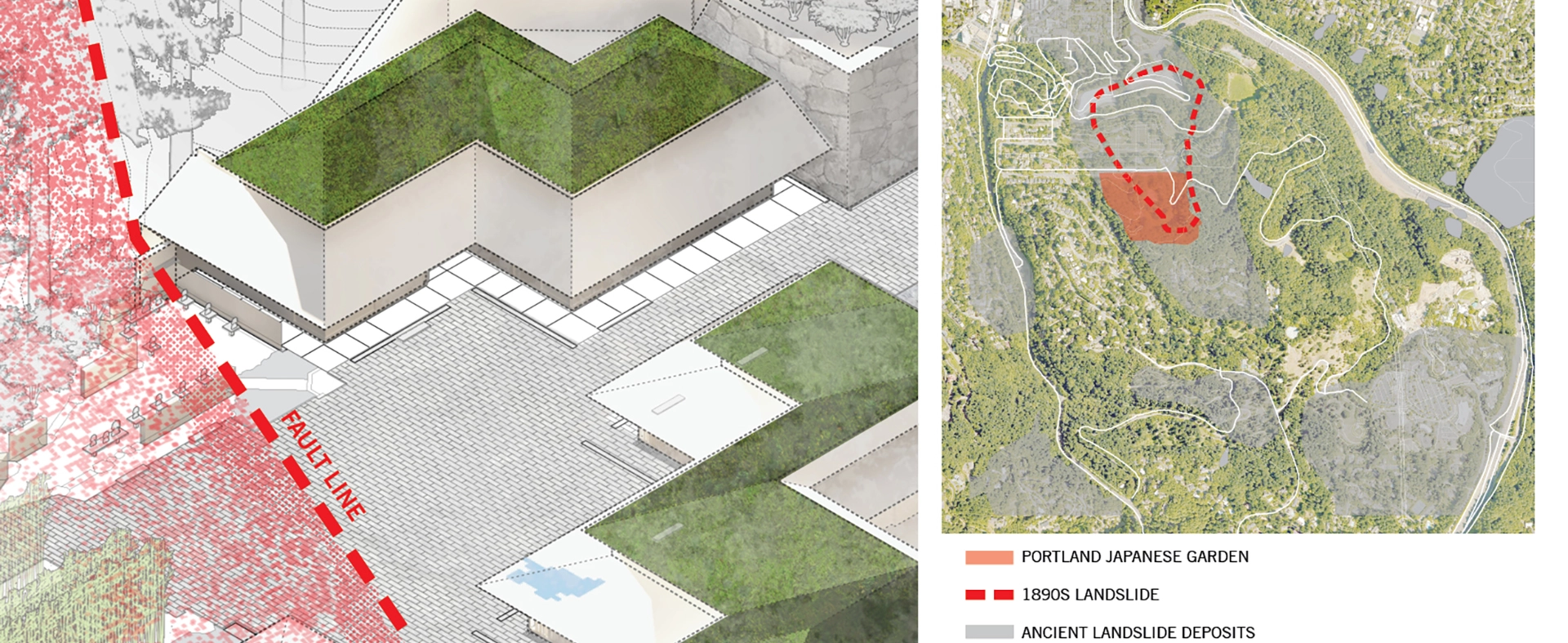
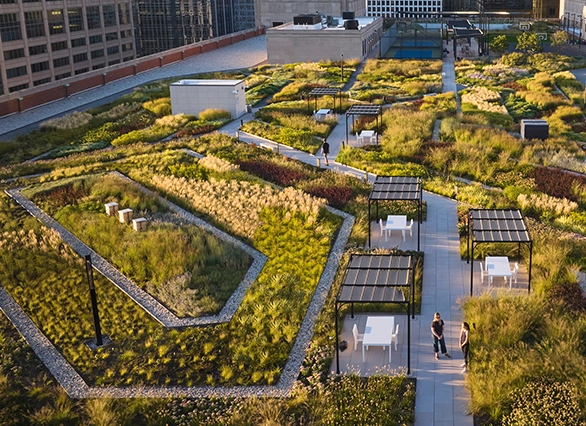
ASLA 2020 Professional General Design Award of Excellence. Cultural Crossing Transforms Portland Japanese Garden into a Place of Cultural Dialogue. Portland, Oregon. Walker Macy
Landslides primarily occur when heavy rains destabilize soil on steeps slopes, causing them to crumble. Official numbers on landslide deaths vary, but a report in Geology suggests that 2,620 landslides took 32,322 lives globally between the years 2004 and 2010. And the damage done by landslides to buildings and infrastructure annually ranges in the billions of dollars globally, according to the U.S. Geological Survey (USGS). These figures may be conservative considering that some developing countries do a poor job of reporting landslide fatalities and damage.
A note about the difference between landslides and mudslides: landslides are the general term for surface movement of earth and rock. Mudslides are uniquely associated with an inundation, which causes groundwater to rise and soil to lose friction. Inundation can trigger landslides as well, but so can earthquakes and other disturbances.
Both landslides and mudslides can be aided by human disturbance of natural defenses. Trees and other plants stabilize soil, but deforestation, development in landslide-prone areas, and the effects of climate change, such as volatile precipitation, are increasing the risks that landslides pose to people and infrastructure.
How Resilient Planning and Design Helps
Proper site selection is critical to reducing the risks of landslides. Working with the contours of a place, vegetation and its root systems stabilize soil and prevent erosion. Likewise, certain soils resist the forces that catalyze landslides better than others, and geotextiles can help improve the soil's performance. Designing with these natural defense systems can lessen the danger of landslides.
Co-benefits
Areas of greatest risk in urban areas can be set aside as public green space networks. There, trees and brush are preserved to stabilize slopes and offer the added benefit of habitat for wildlife. These landscape parcels can also incorporated into public spaces, like Medellin, Colombia, is doing with its Metropolitan Greenbelt project.
Role of the Landscape Architect
The best way to avoid landslides is to avoid building on sites at risk of a landslide. However, sprawl and the quest for optimal views often necessitates developing on dangerous terrain. In those cases, landscape architects can work with engineers to construct slopes that are resistant to landslides. A knowledge of erosion-control techniques, geotextiles, soils, and hydrology allow landscape architects to mitigate the risks.
Advertisement

Landscape Architecture 2040: Climate & Biodiversity Action Plan
Empowers landscape architects with bold targets—advancing biodiversity, reducing emissions, increasing sequestration, and delivering climate and biodiversity justice through every project.
Relevant Projects
Galindez Slope and Pau Casals Square, Bilbao, Spain, ACXT
Kun 2, Los Angeles, CA, Lisa Gimmy Landscape Architecture
Resources
Landslide Disaster Prevention and Mitigation through Works in Hong Kong, Journal of Rock Mechanics and Geotechnical Engineering
Introduction to Landslide Stabilization and Mitigation, USGS
Landslides and Debris Flow, Ready.gov