
.webp?language=en-US)
.webp?language=en-US)
What's Your Sign?
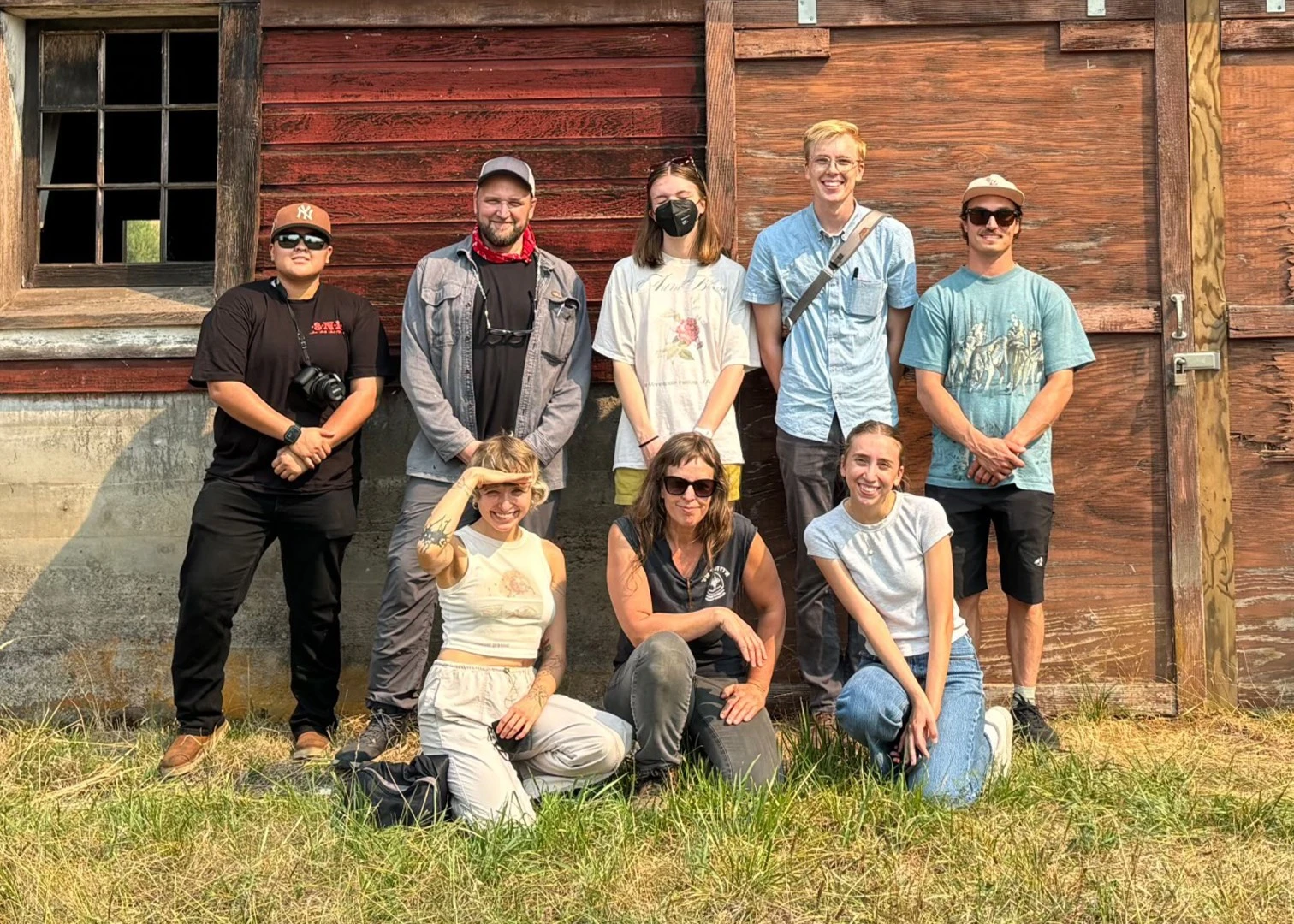
Janessa Beltran; Trevor Hattabaugh, Student ASLA; Mason Kelley; Keith Stanley; Aidan Teppema, Student ASLA; Sabine Winkler

Love the playfulness, regional specificity, and hands-on approach!
Awards Jury
-
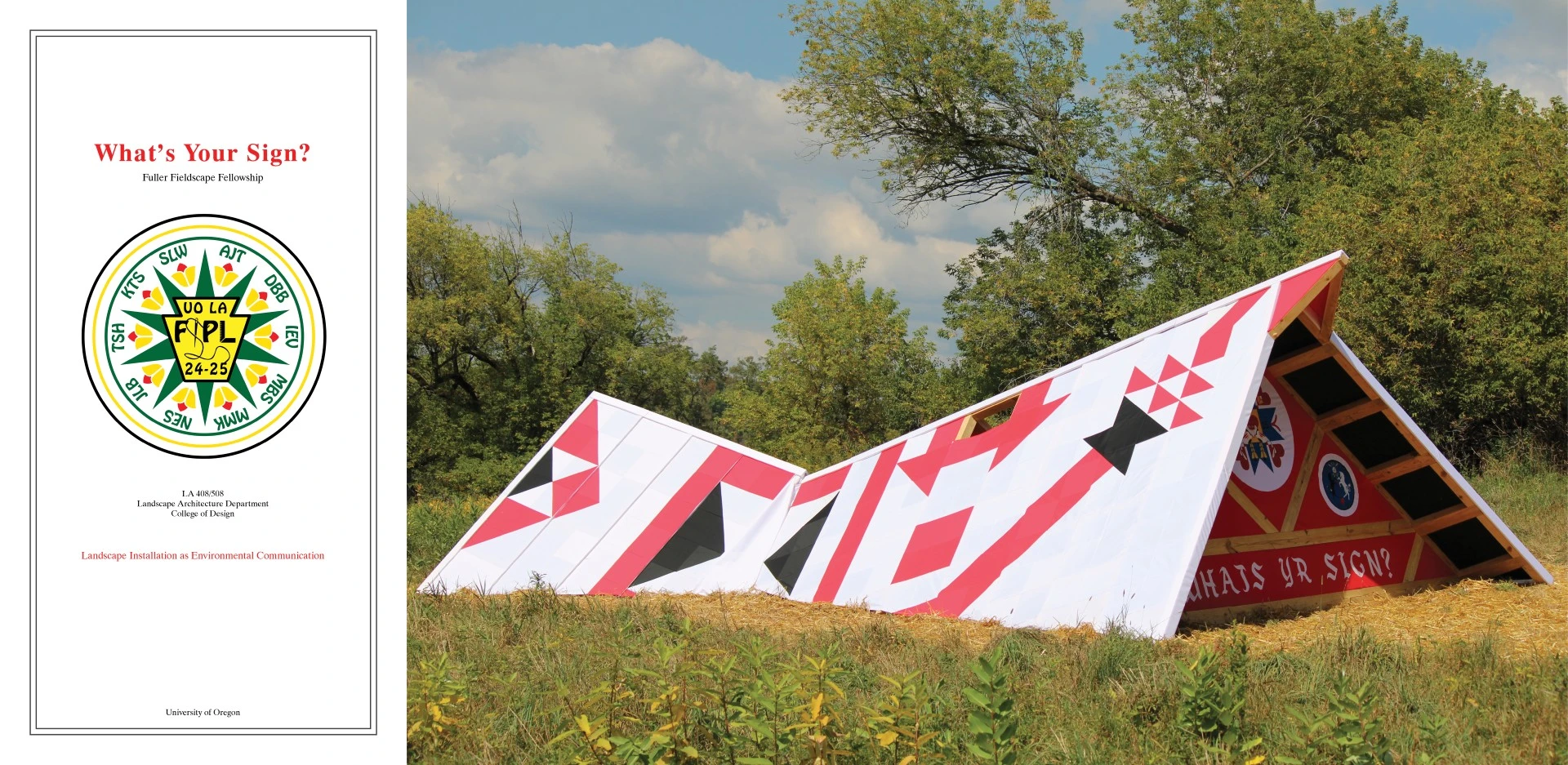
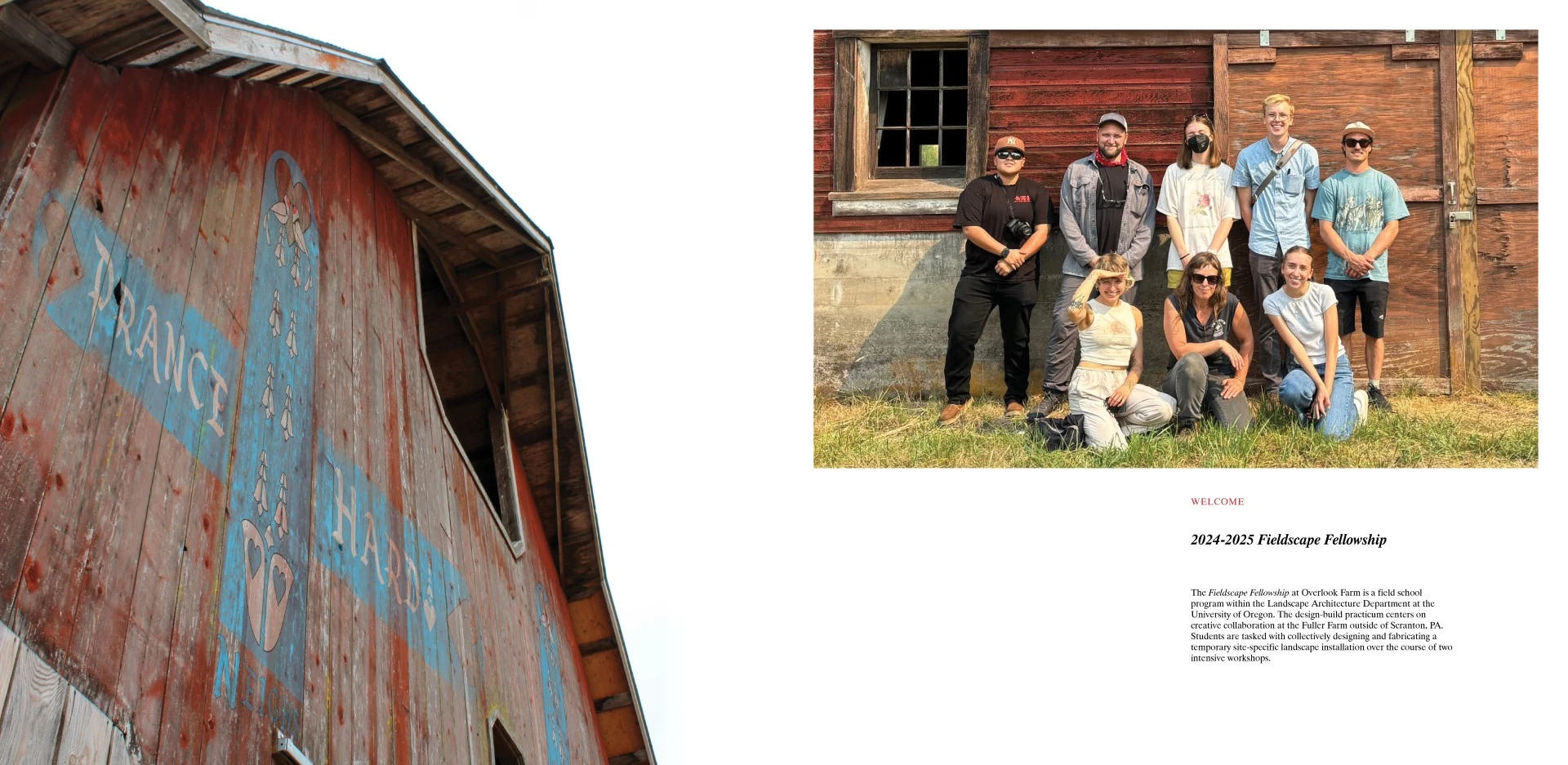
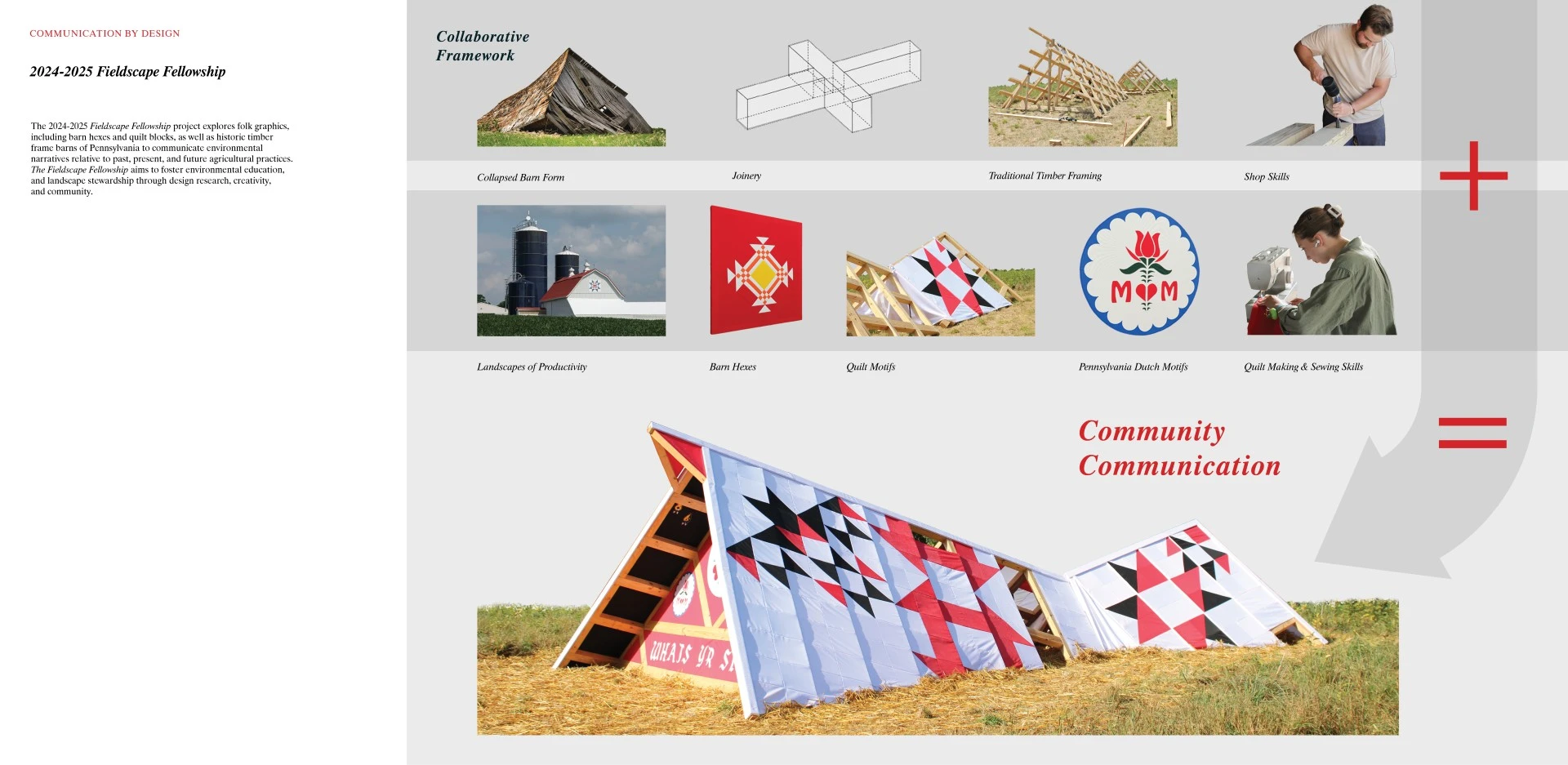
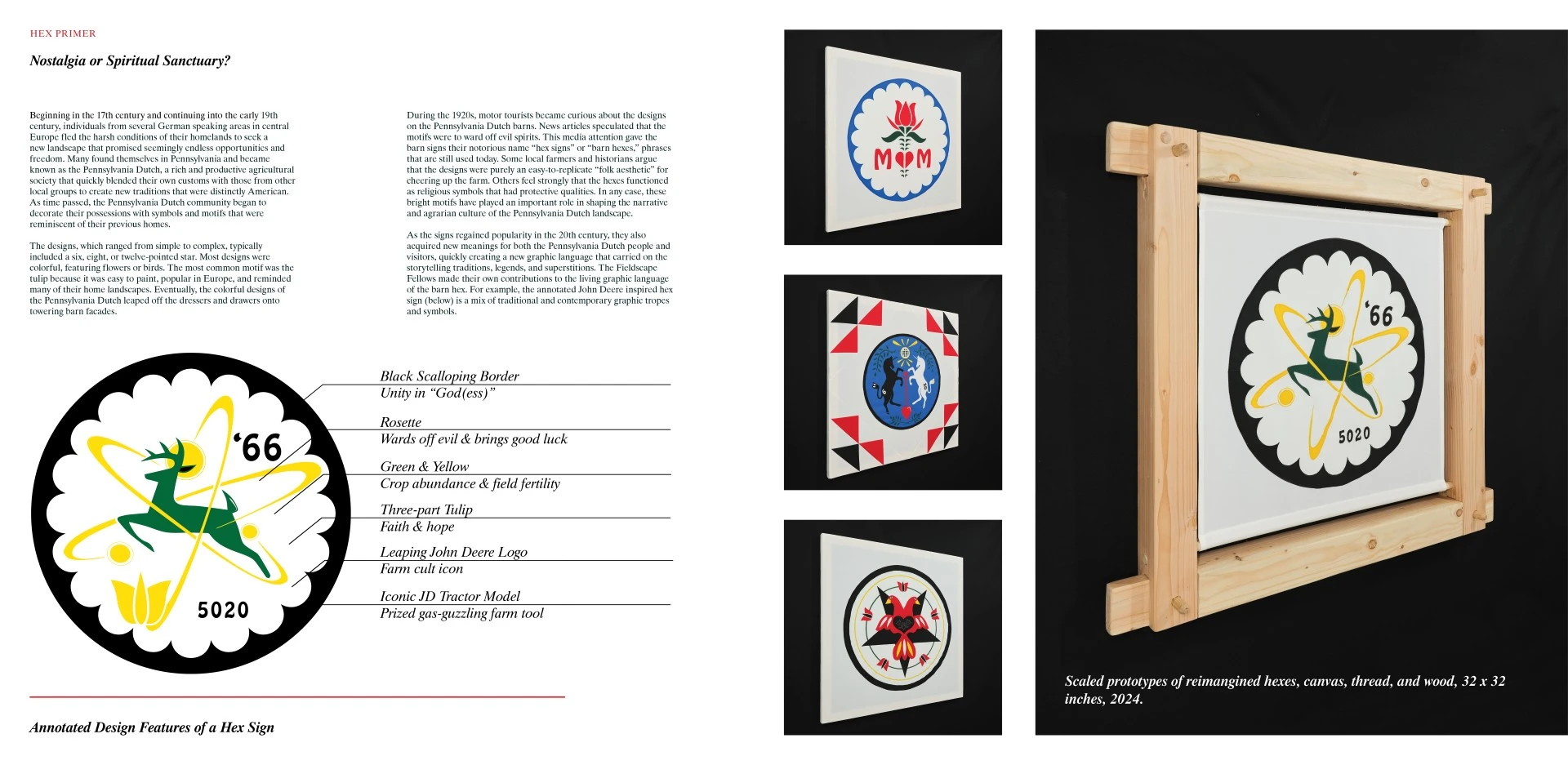
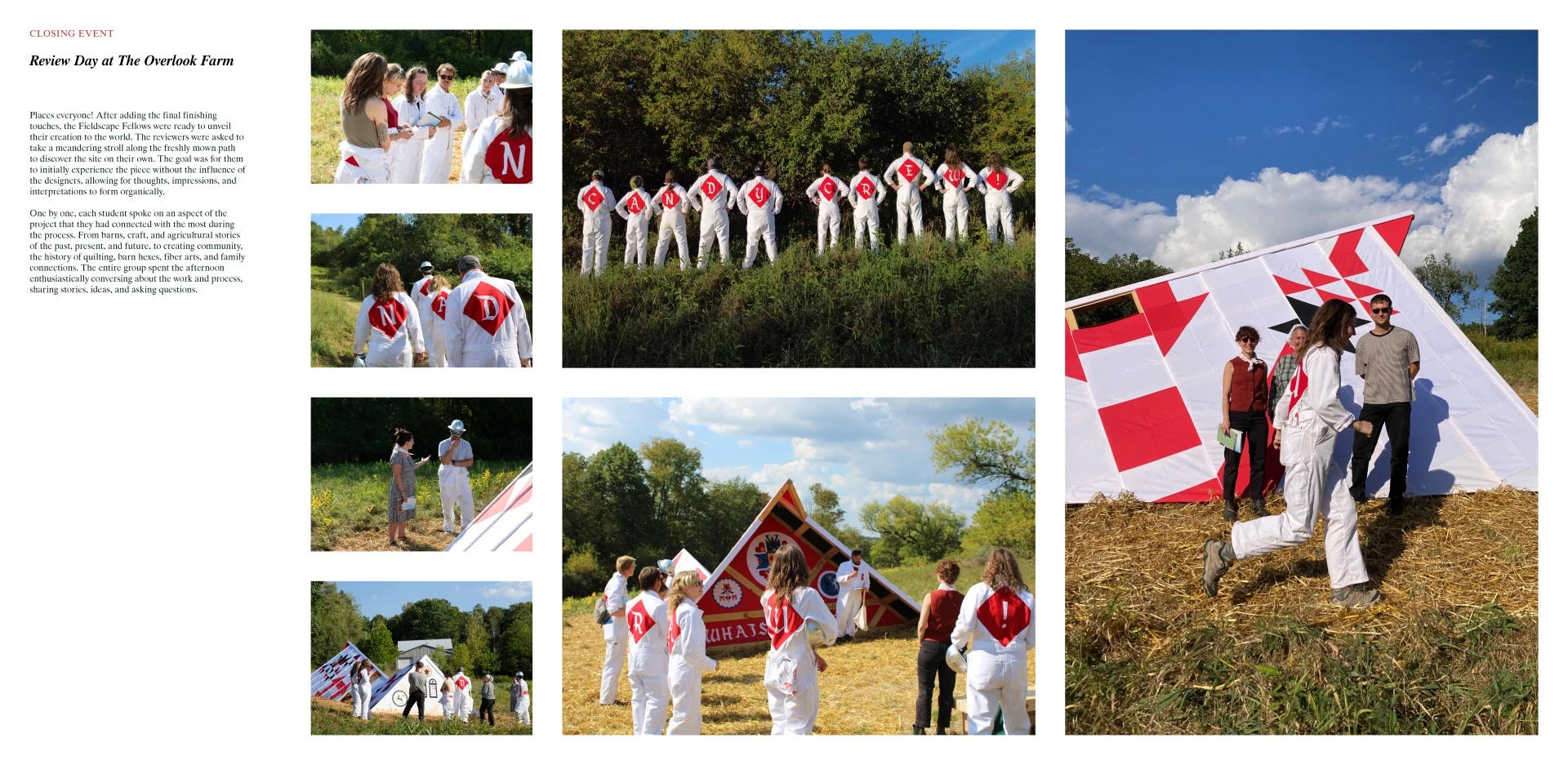
The Fieldscape Fellowship project, titled "What's Your Sign?" explored the folk graphics and historic timber frame barns of rural Pennsylvania to communicate environmental narratives relative to agricultural practices. The project's stories cover a range of often-contradictory attitudes, beliefs, and opinions related to productive landscapes. The Fieldscape Fellowship aimed to foster constructive conversations relative to environmental education and landscape stewardship through design research and community-making.
-
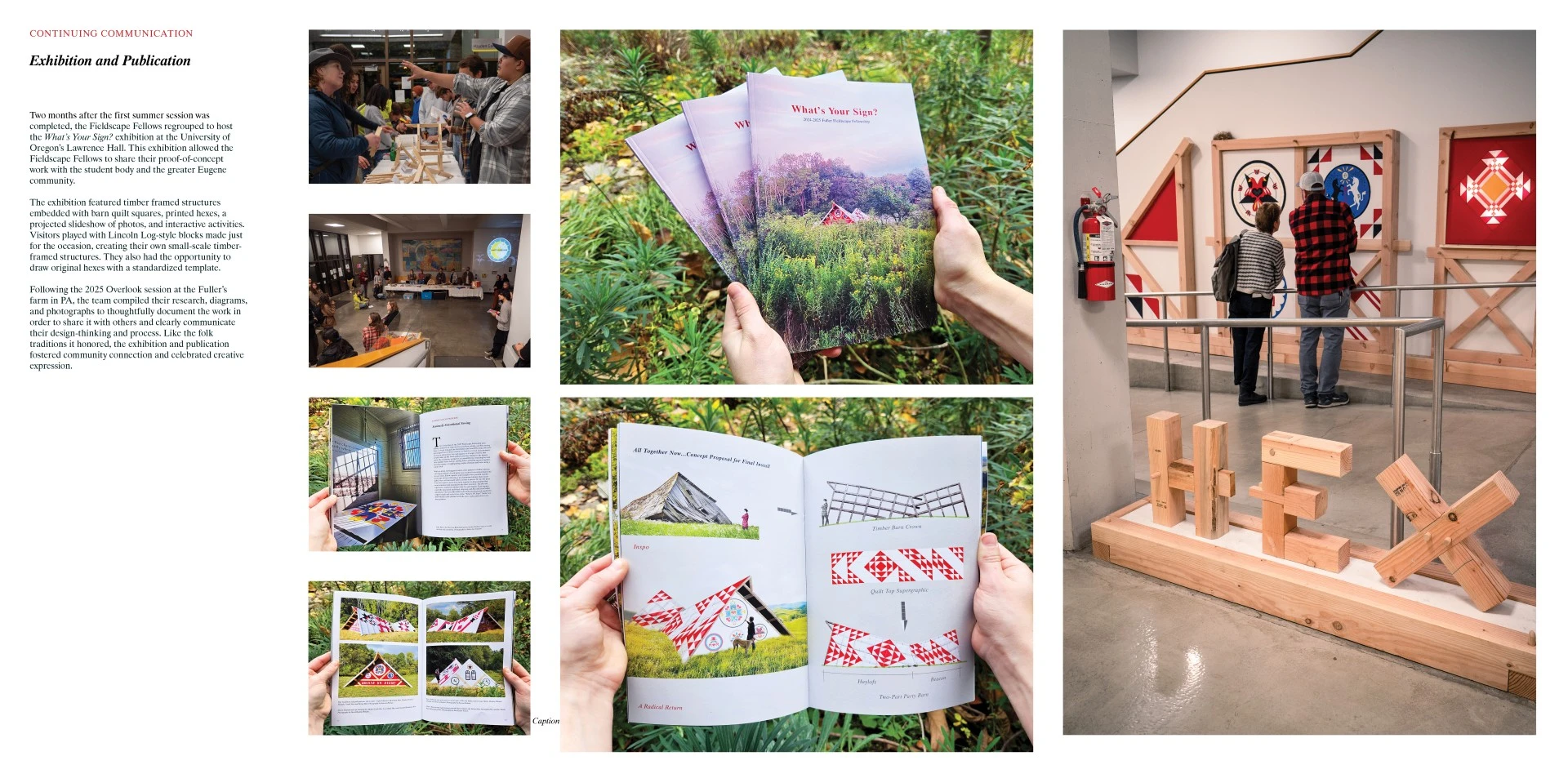
The Fieldscape Fellowship is a field school program supported by the Fuller Initiative for Productive Landscapes at the University of Oregon's Landscape Architecture Department. For the 2024-2025 fellowship, students were tasked with collectively designing and fabricating a site-specific landscape installation over the course of two intensive workshops. The first maker-based practicum, held in the summer of 2024, focused on design research, conceptual development, skill-building in the shop, proof-of-concept fabrication, and an exhibition at the University of Oregon. The second "Act" of the practicum, in the summer of 2025, was the design-build phase of the installation at the Fuller's Overlook Farm outside of Scranton, PA.
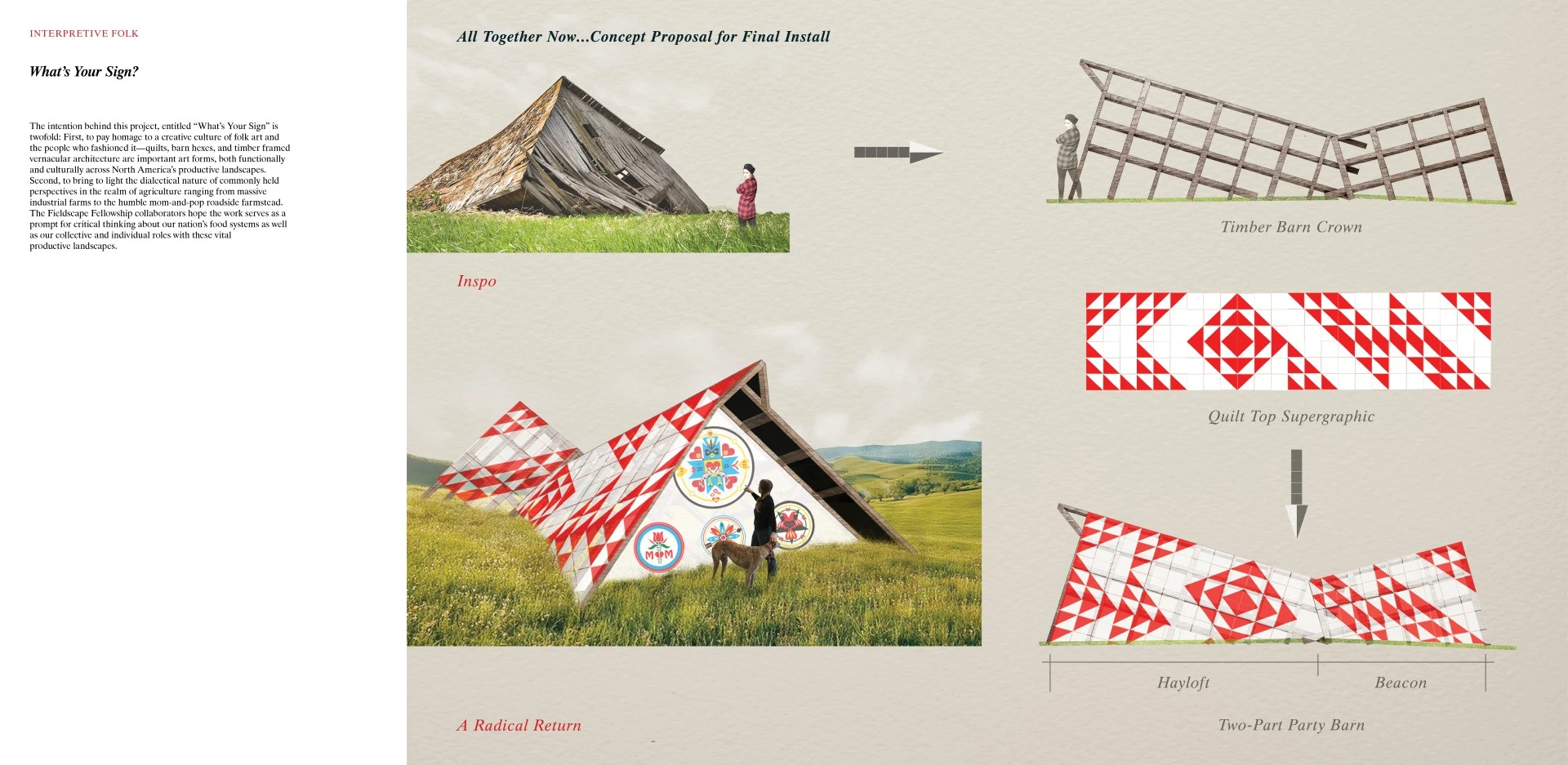
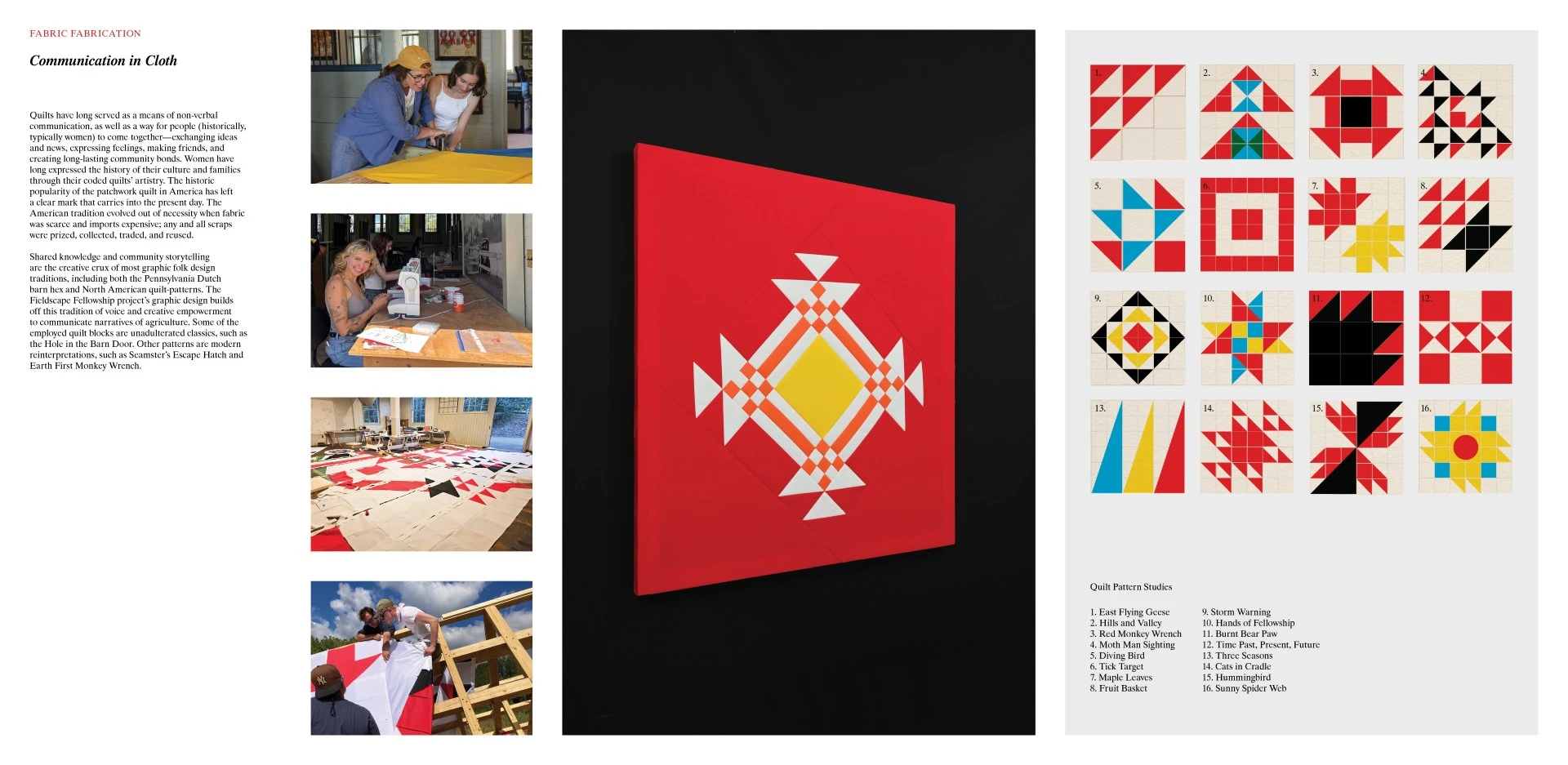
The intention behind the "What's Your Sign?" concept design was twofold: First, to pay homage to a creative culture of folk art and the people who fashioned it—quilts, barn hexes, and timber framed vernacular architecture are important art forms, both functionally and culturally across North America's productive landscapes. Second, to highlight the dialectical nature of common perspectives in the realm of agriculture ranging from the massive capital-driven industrial farm to the humble roadside farm stand. The Fieldscape Fellowship installation served as a prompt that was both joyful and critical in terms of the nation's food systems as well as our collective and individual roles within these vital landscapes.
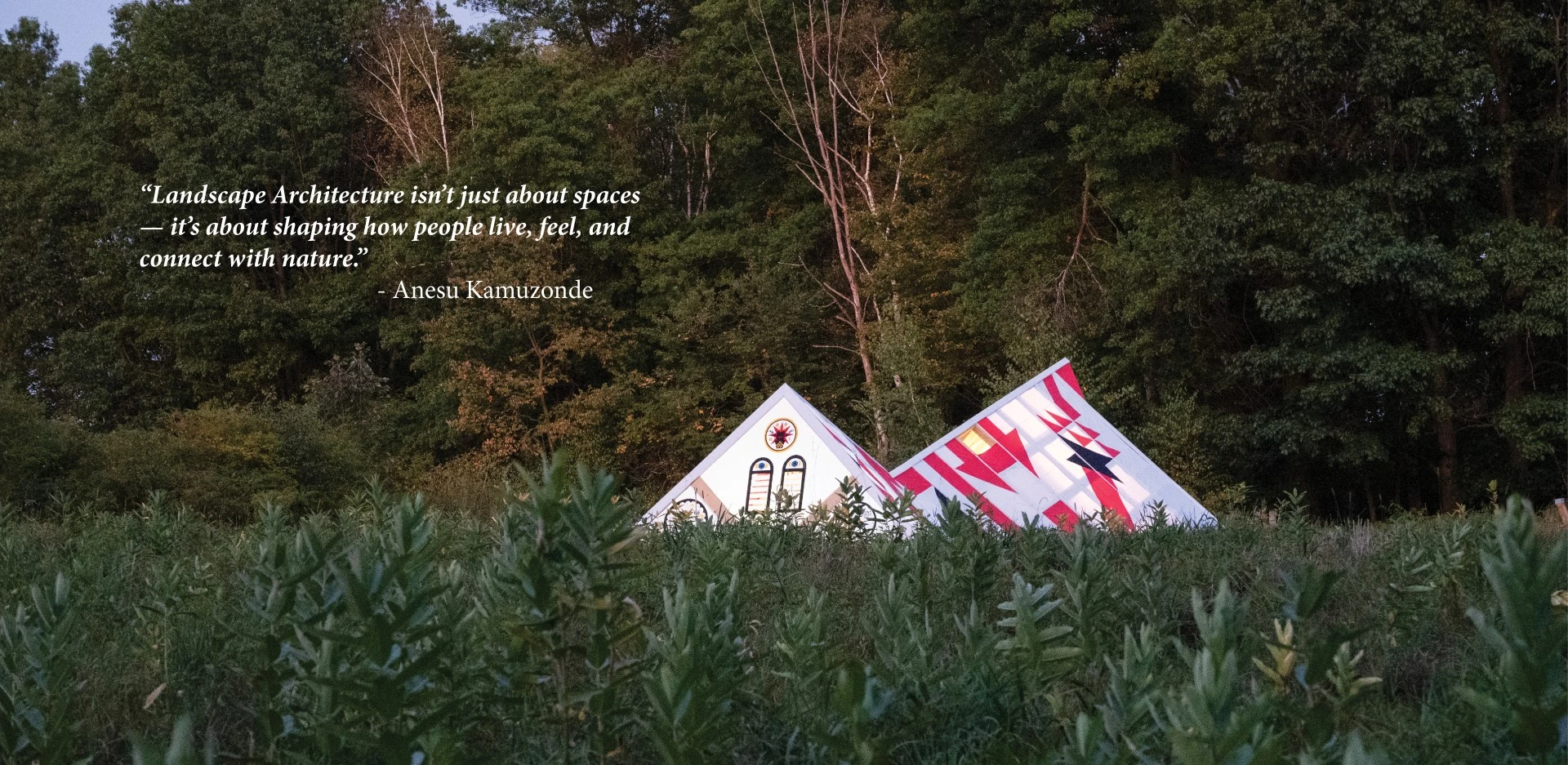
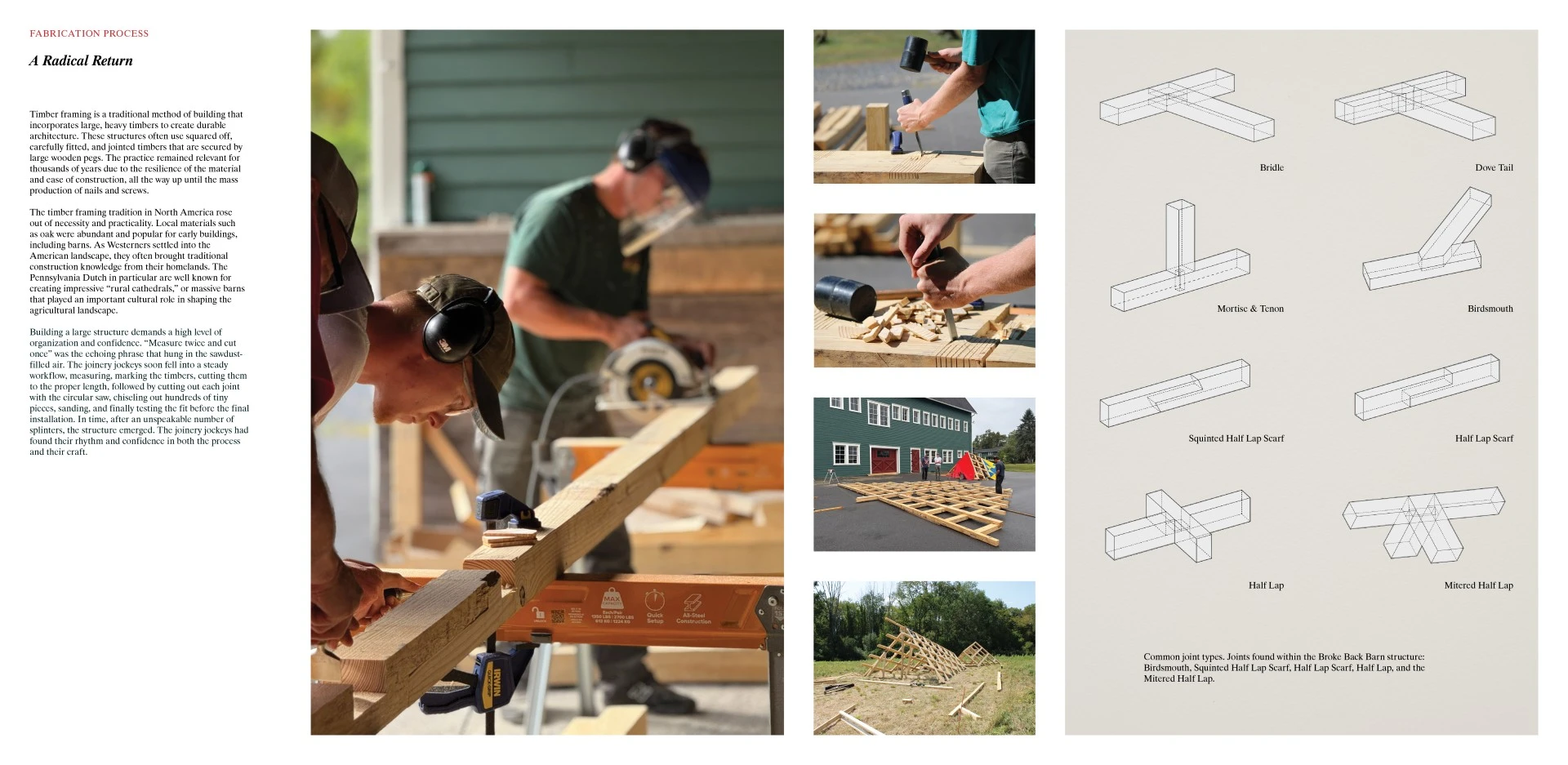
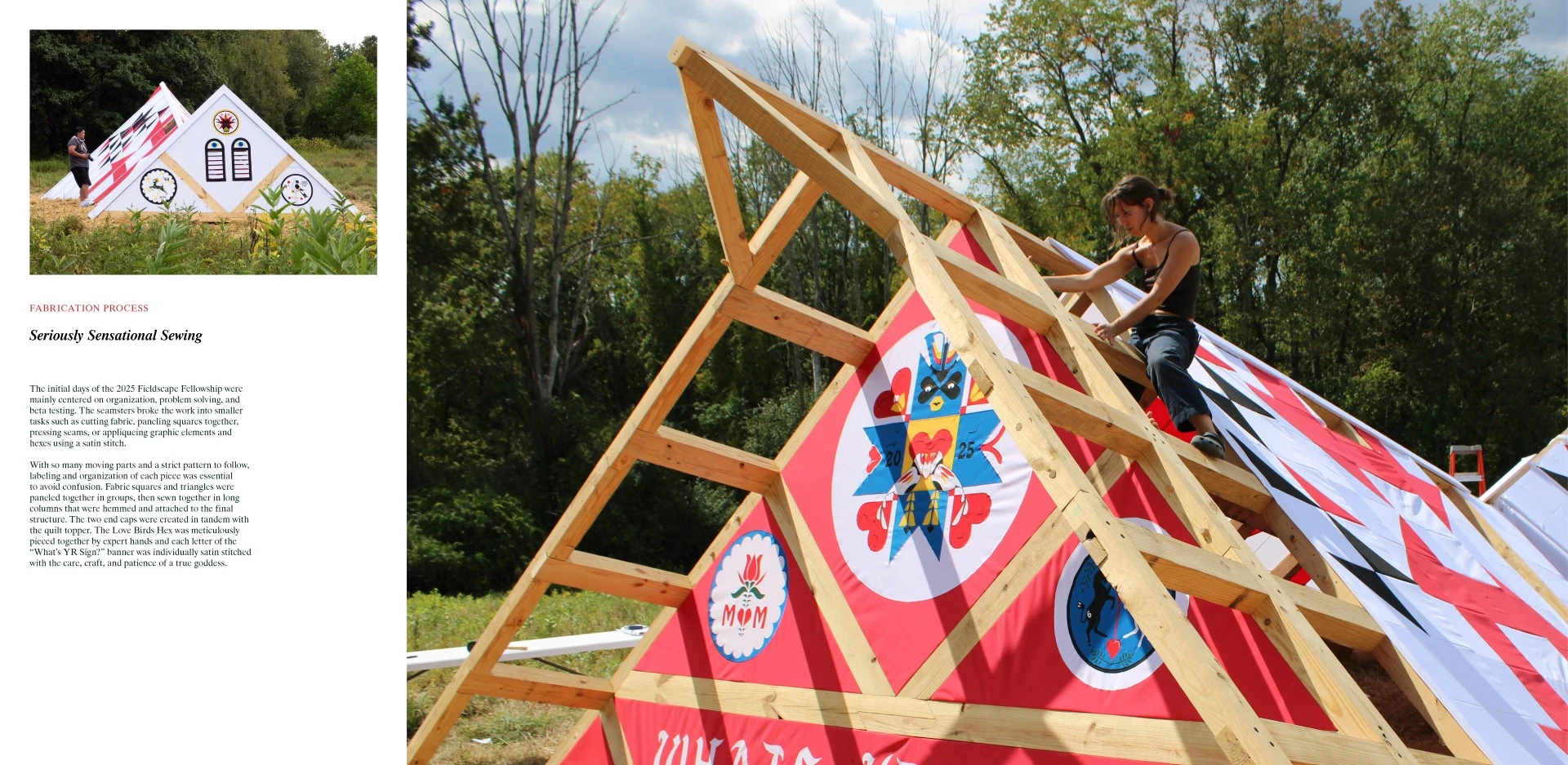
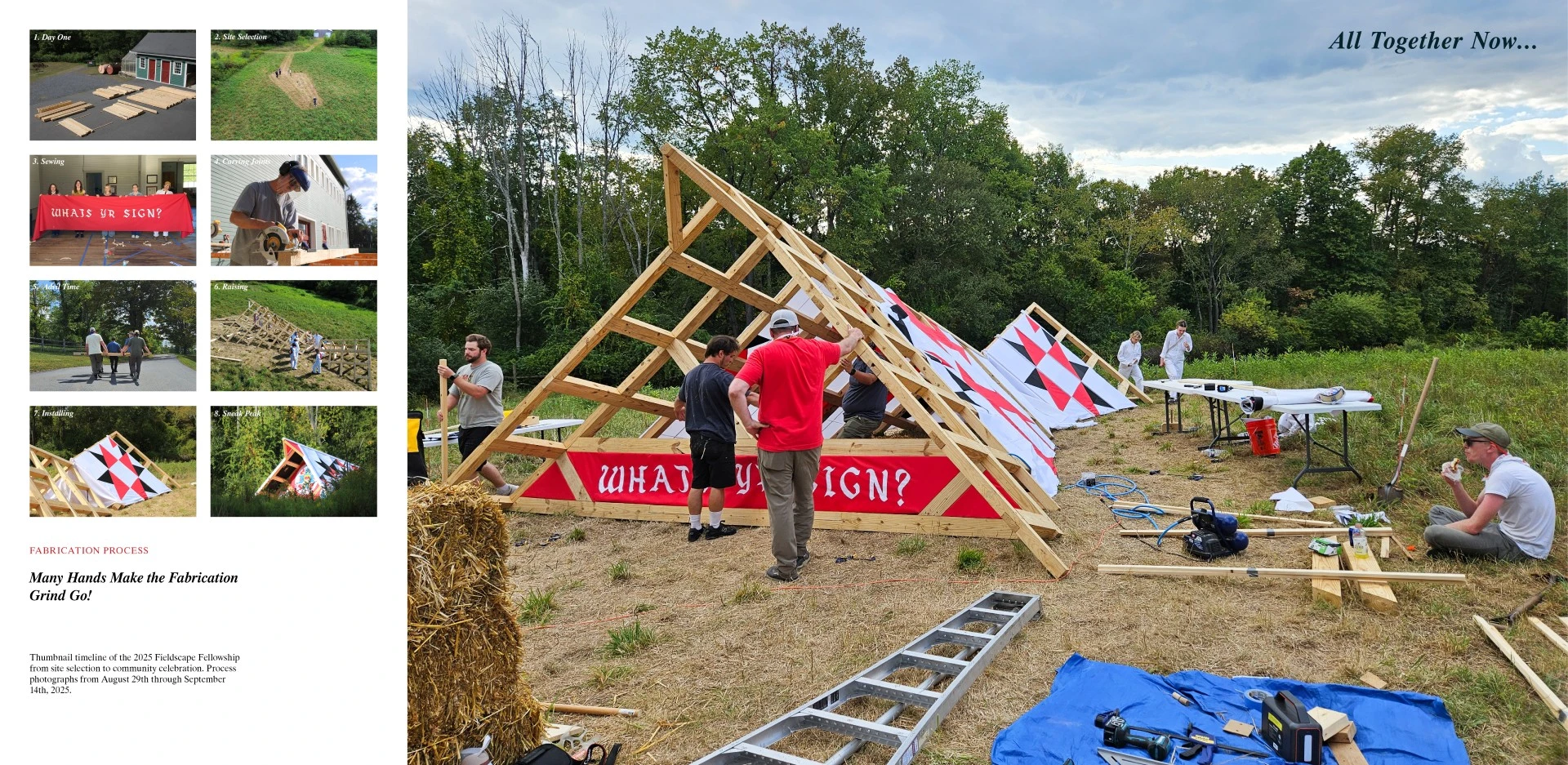
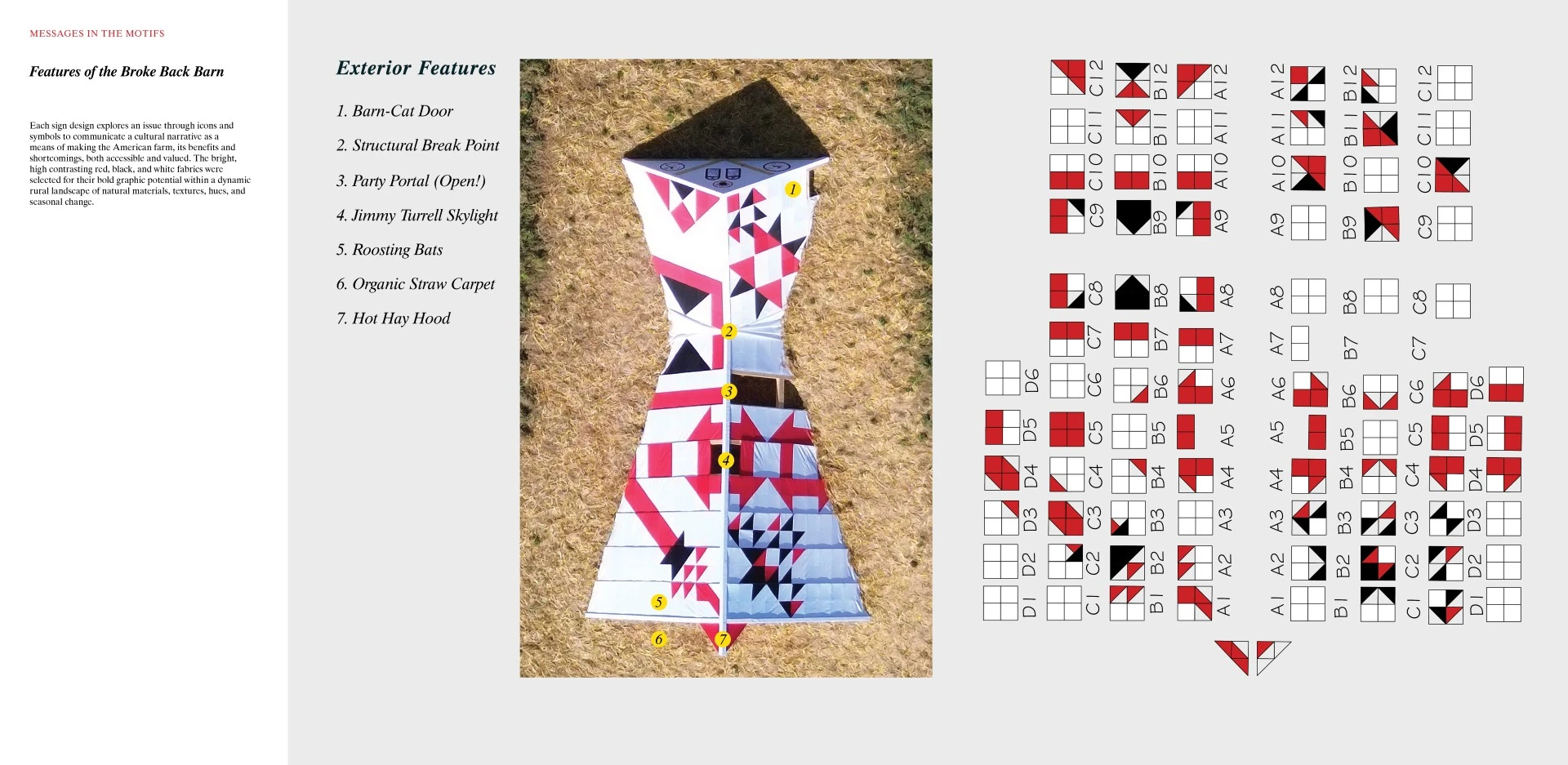
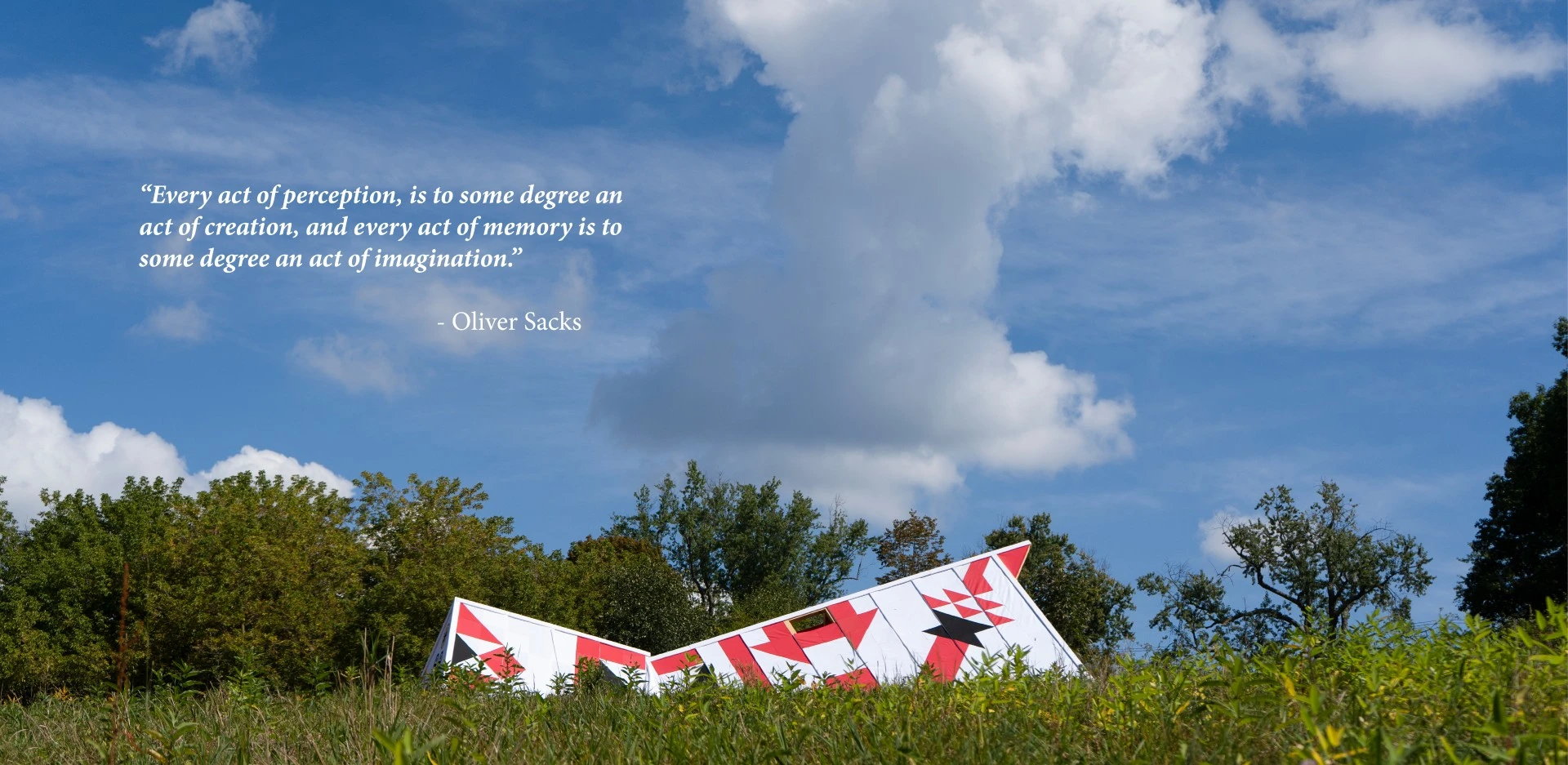
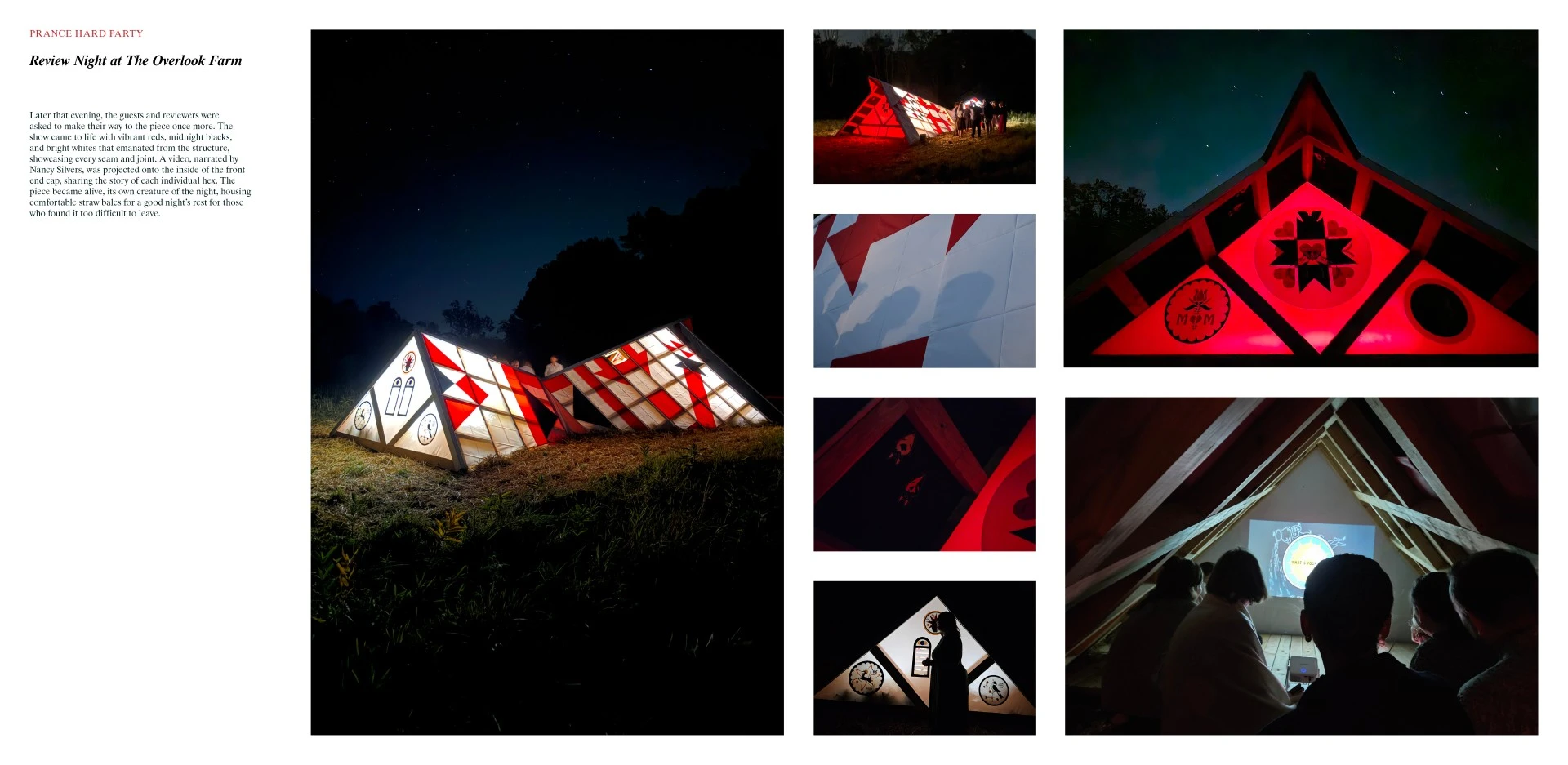
Each graphic design explores an issue through icons and symbols to communicate a cultural narrative as a means of making the American farm, its benefits, struggles and shortcomings, both accessible and appreciated. The fabric was pre-sewn and then installed on a timber frame. The form, lovingly entitled, the "Broke Back Barn", was inspired by a common rural sight; collapsed barns that fall from the weight of snow and neglect. In addition to the cultural context of rural architecture, the Fieldscape Fellows were drawn to timber framing's modular workflow and practice of being built off site and then transported as part of a community effort. The Pennsylvania Dutch are well known for their maker-based community events and the collective creation of "rural cathedrals." These massive barns played an important cultural role in shaping the agricultural landscape. The Fieldscape Fellows honored this tradition in the process, product, and community spirit in the final installation with a mix of traditional and contemporary design inspirations and the age-old question, "What's Your Sign?"
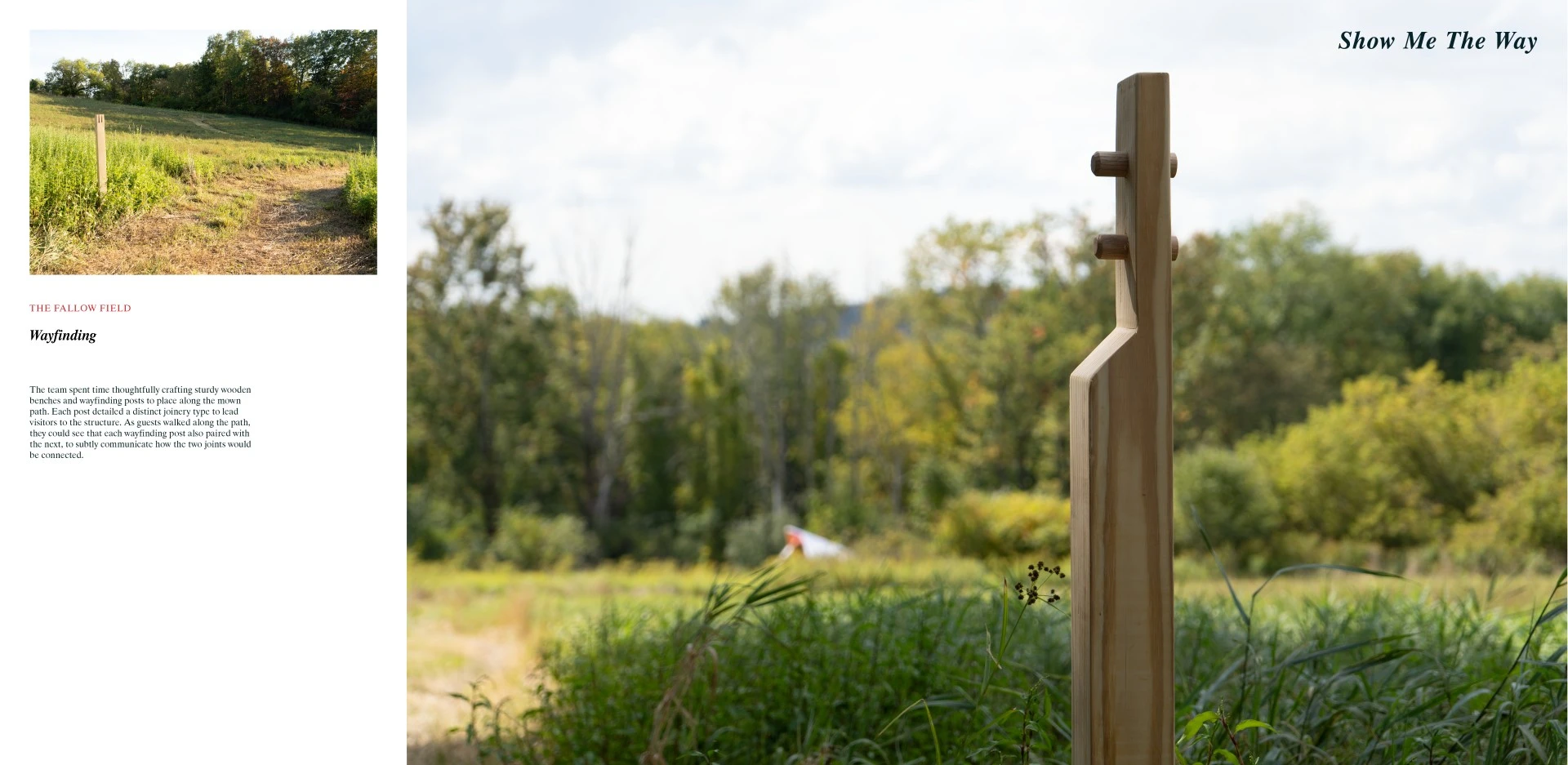
The Fieldscape Fellows made contributions to the landscape installation both as individuals and as a group with a shared cause. The contributions are evident in the details, within each carved joint, wayfinding sign, and satin stitch, but also within the overall installation as it sat aglow in a fallow field during the final review event. The students were tasked with their deep connections to the work, from barns, craft, and farming stories to their own personal histories with quilting, barn hexes, fiber arts, creating community, and family collaborations. The Fieldscape Fellowship not only brought the folk-art elements to life in the form of a physical landscape installation, but it also allowed students to work towards a common goal within a newfound community, learn new skills, and build confidence in their design capacity as emerging professionals.
Advertisement
Related Awards
Honor Award, Communications
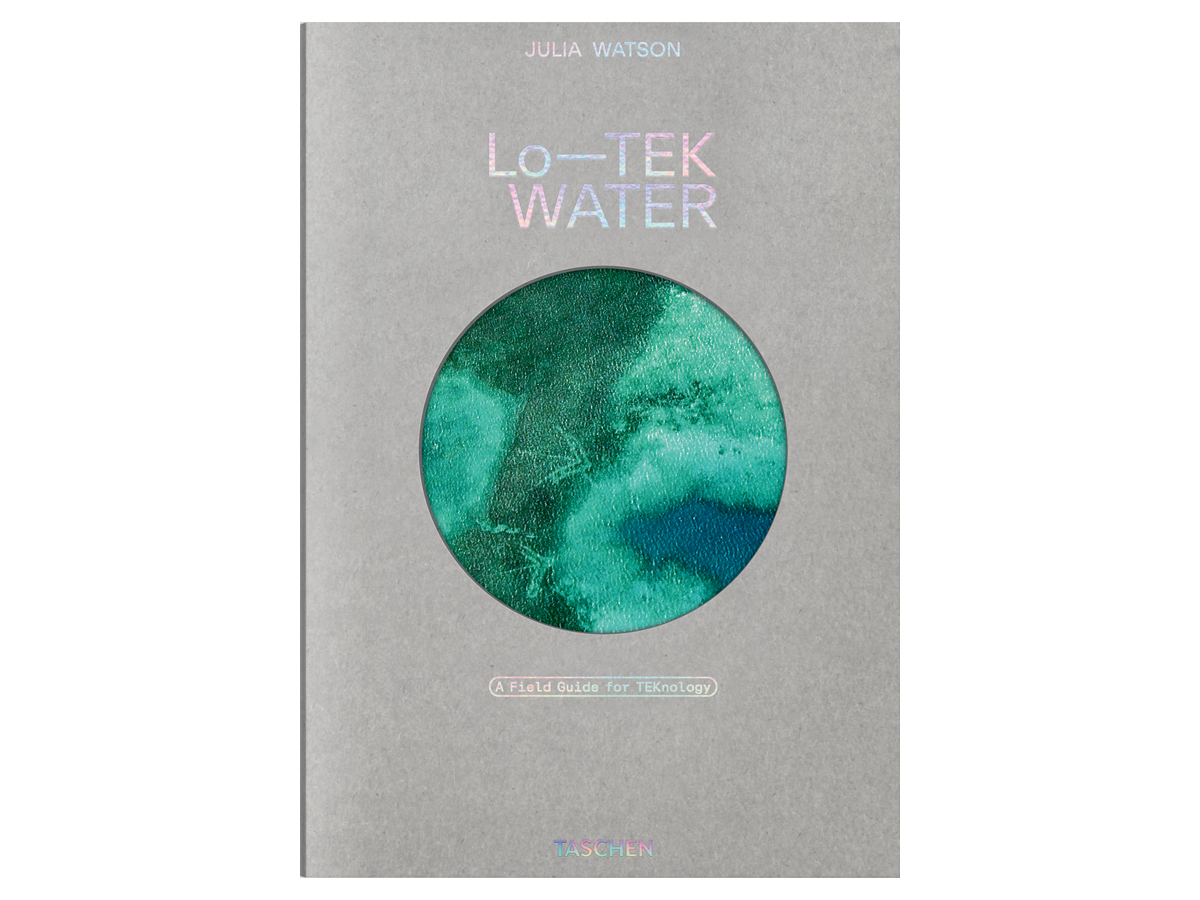
Lo—TEK Water. A Field Guide for TEKnology
Lo—TEK Water is a publication that communicates Indigenous and traditional ecological knowledge as a contemporary framework for addressing global water challenges. Through rigorous research, compelling narrative, and visually driven storytelling, the book translates complex environmental systems into accessible, actionable insights for designers, planners, policymakers, and the public.