
.webp?language=en-US)

.webp?language=en-US)
Tracks of Transfer
Kaitlin Sampson, Associate ASLA

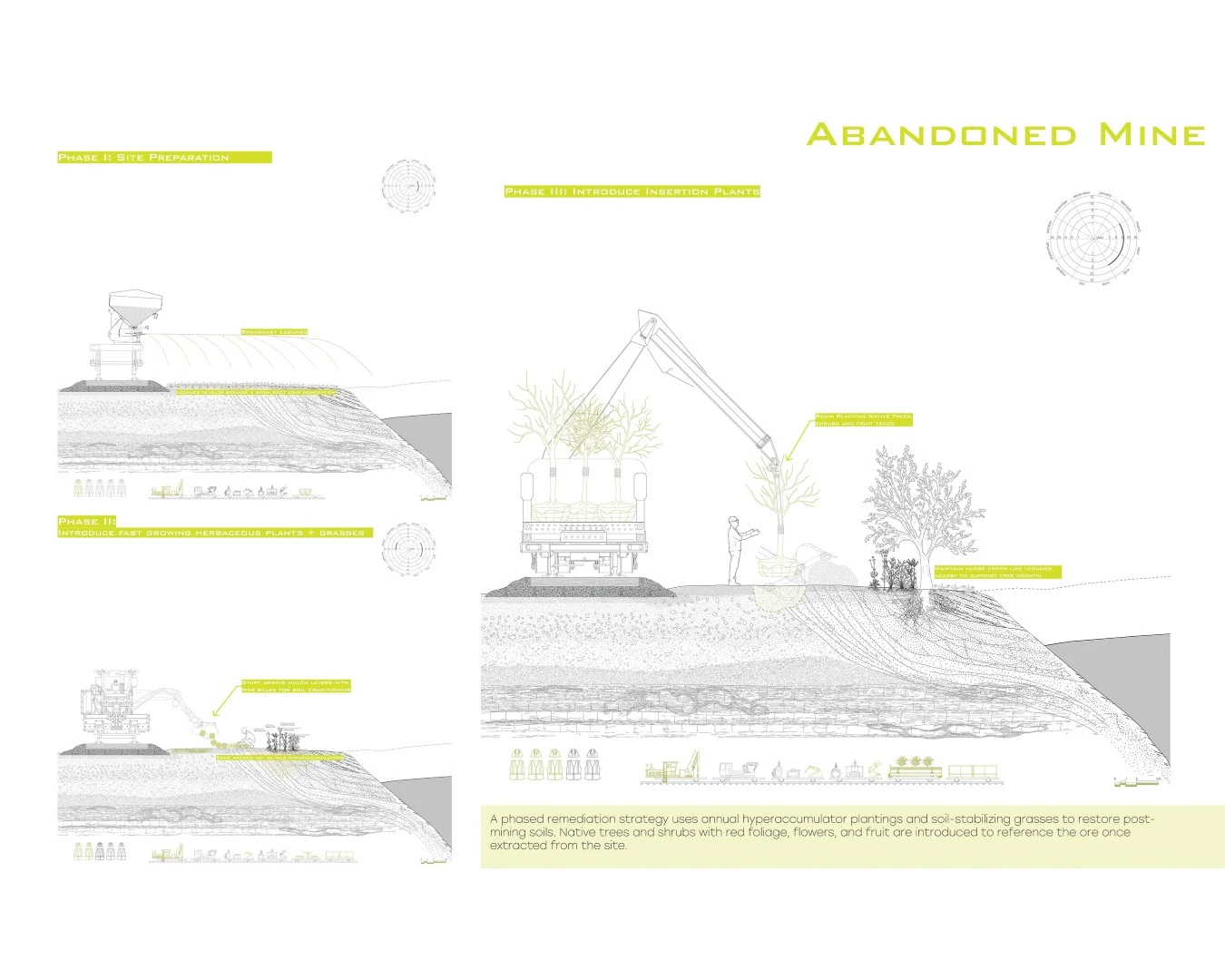
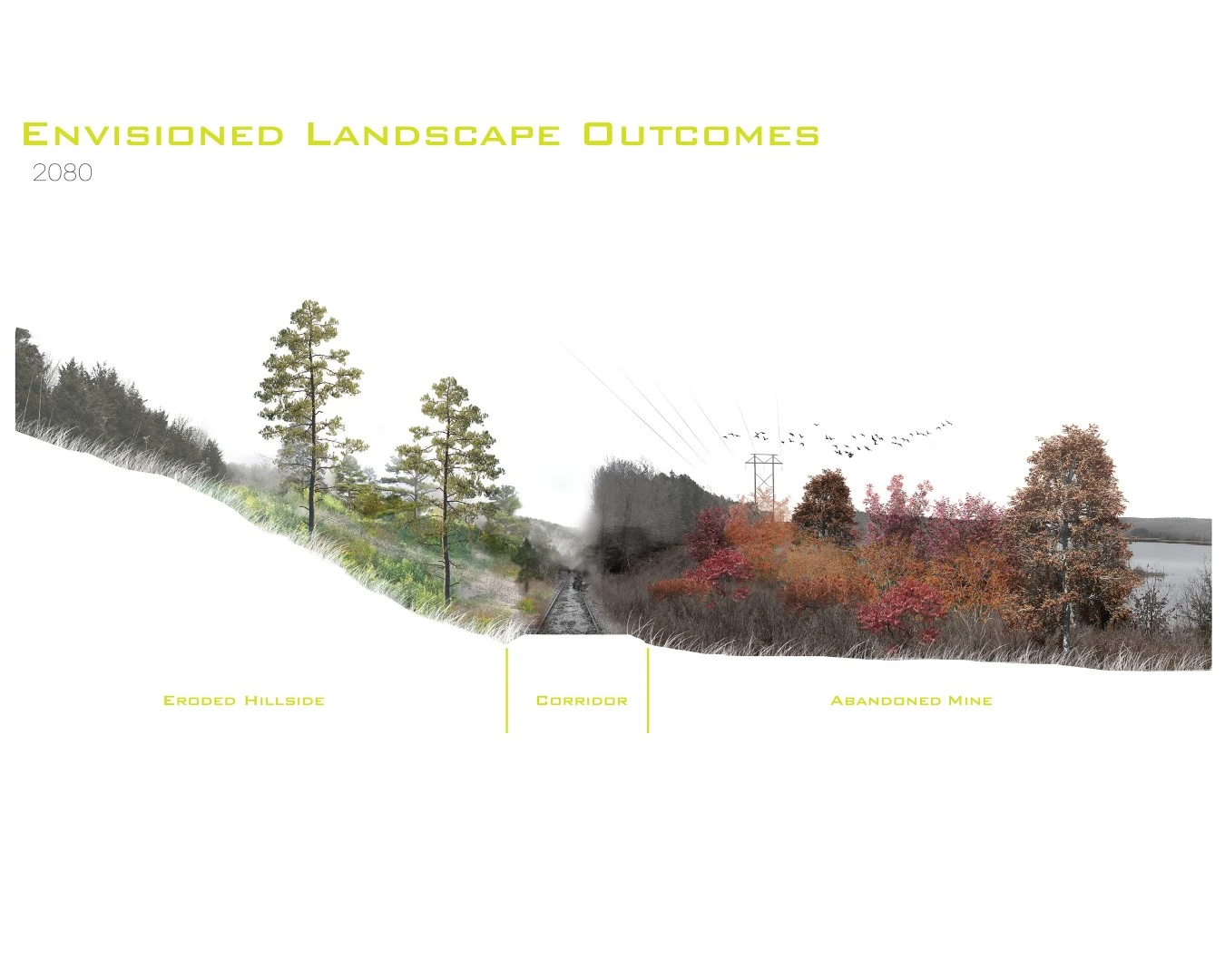
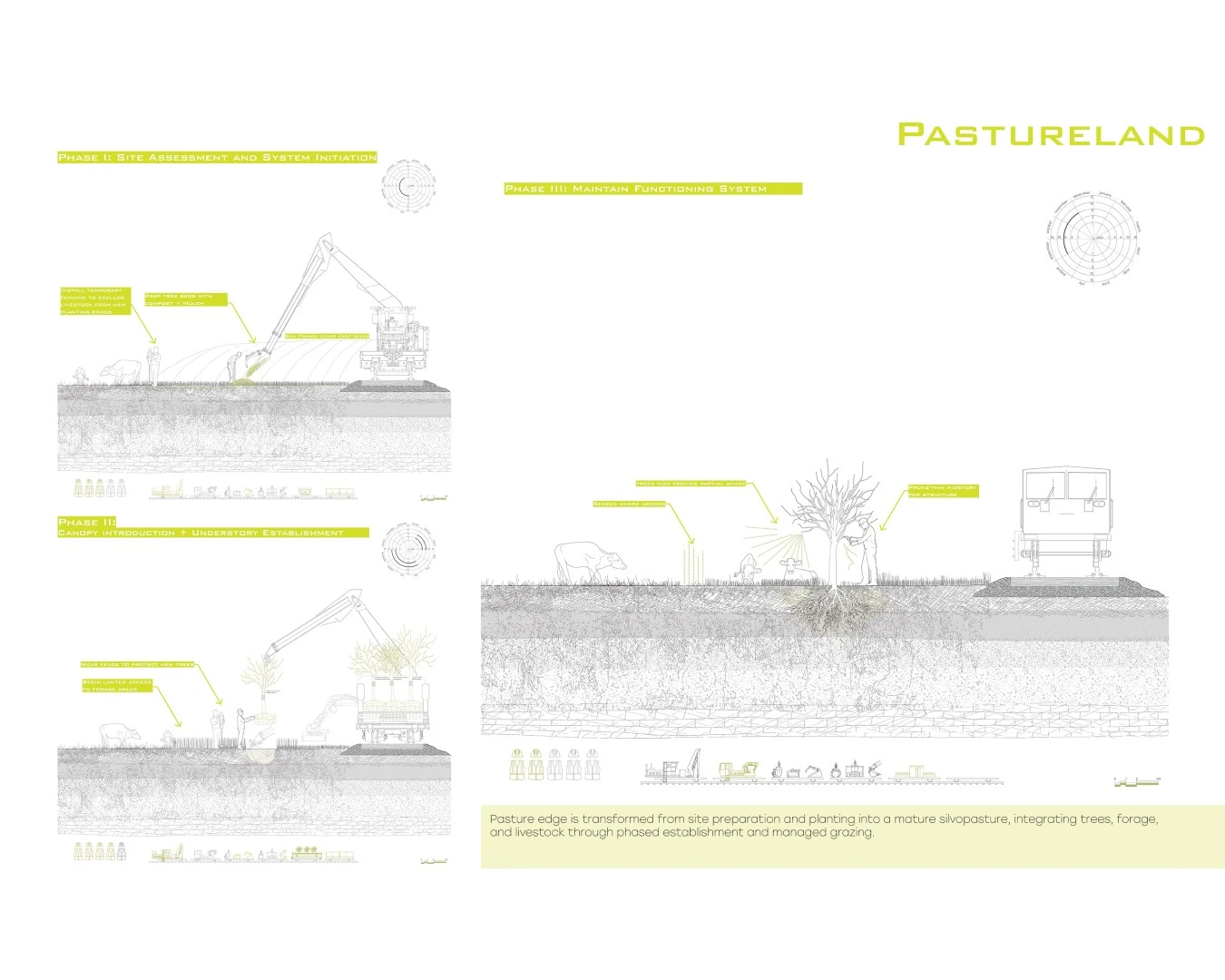
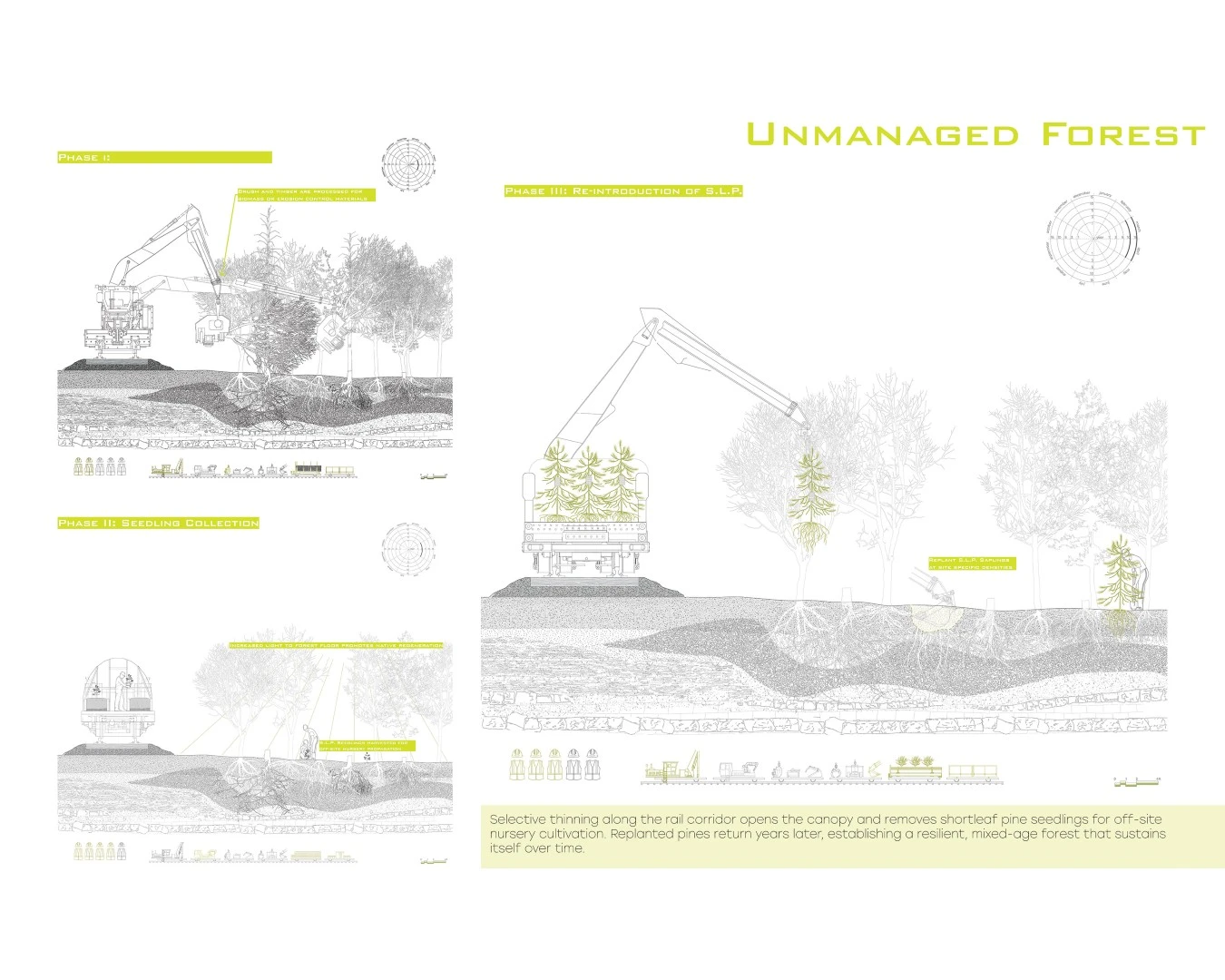
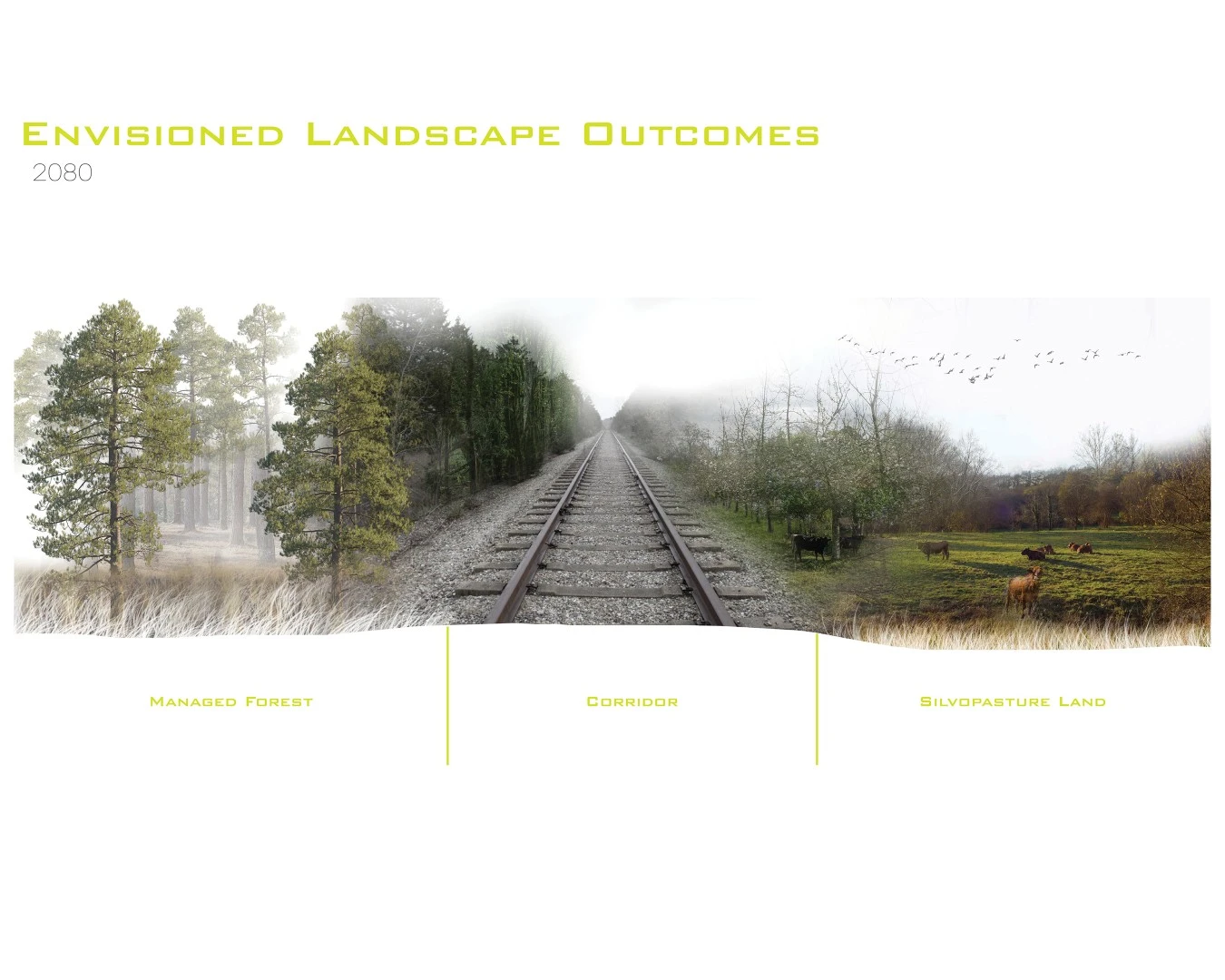
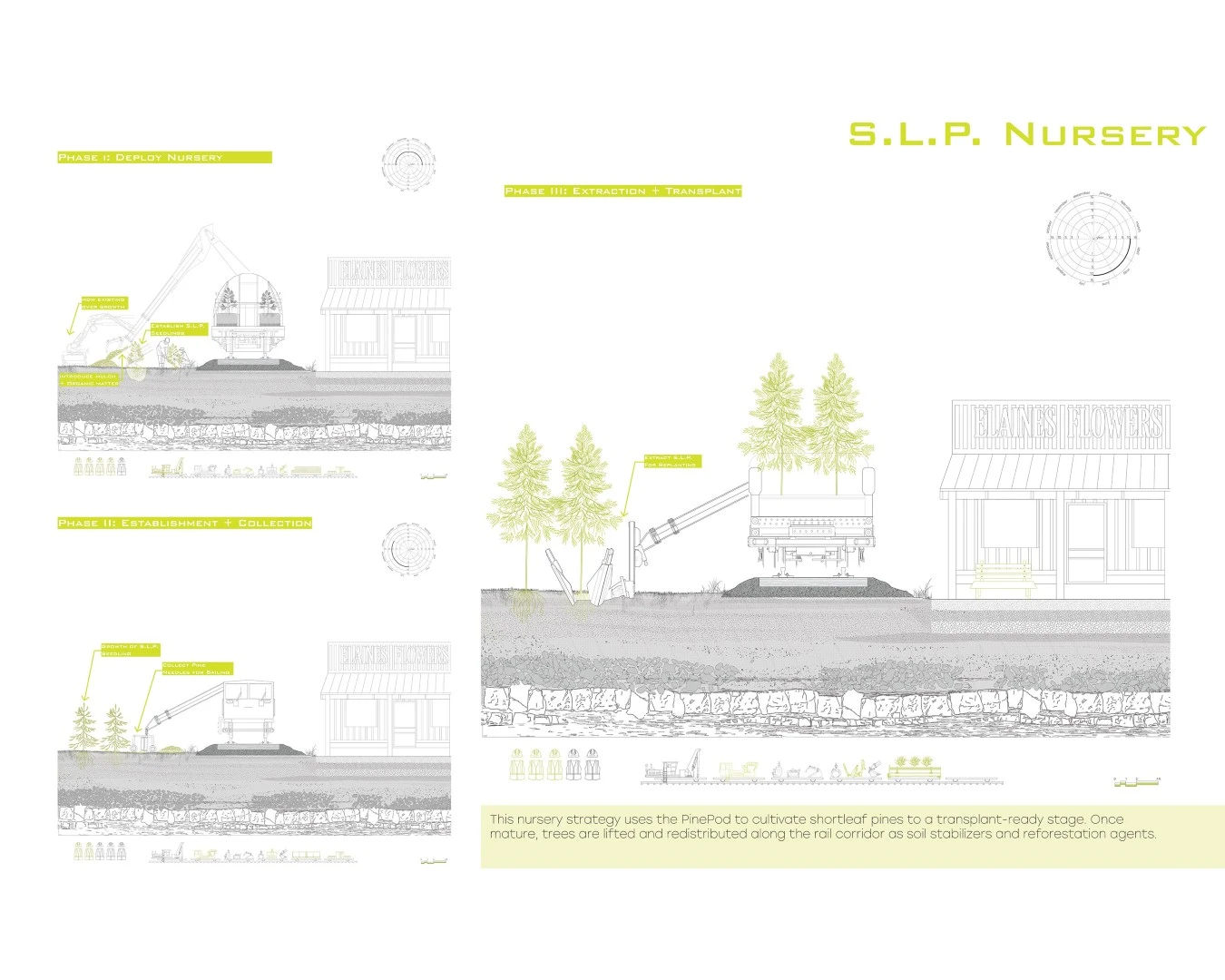
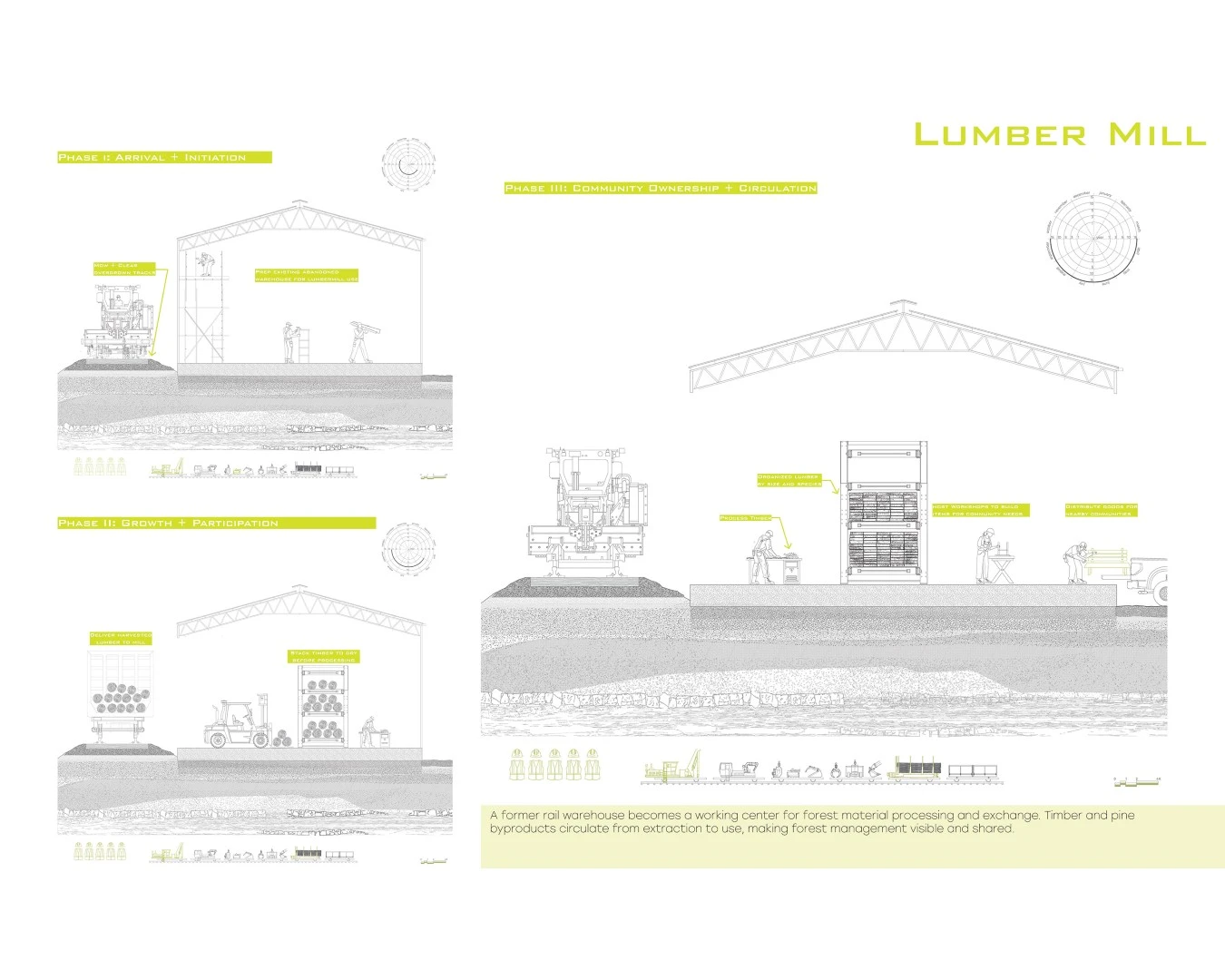
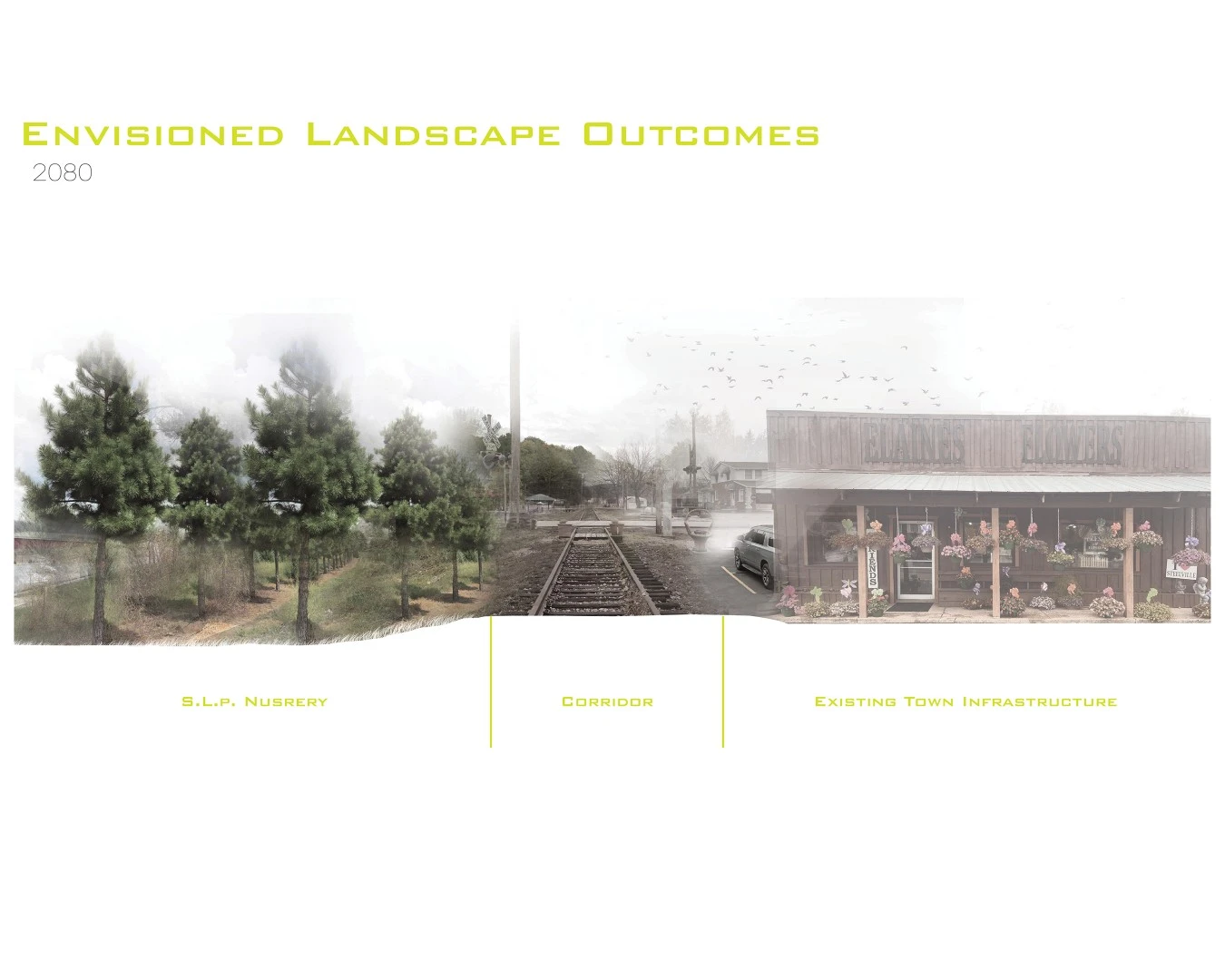

Beautifully clear narrative and idea, nice clean graphics.
Awards Jury
-
Tracks of Transfer is award-worthy for showing how abandoned and extractive landscapes can be transformed into regenerative systems. Instead of treating post-industrial infrastructure as obsolete, the project reuses the existing railroad corridor and engineered landforms to create a resilient framework for ecological restoration and material reuse. Through regional analysis and planning, it repositions abandoned infrastructure as an asset for long-term stewardship rather than replacement. The project also expands the role of landscape architecture by demonstrating how the discipline can operate at a regional scale while addressing extraction, labor, ecology, and resilience simultaneously.
-
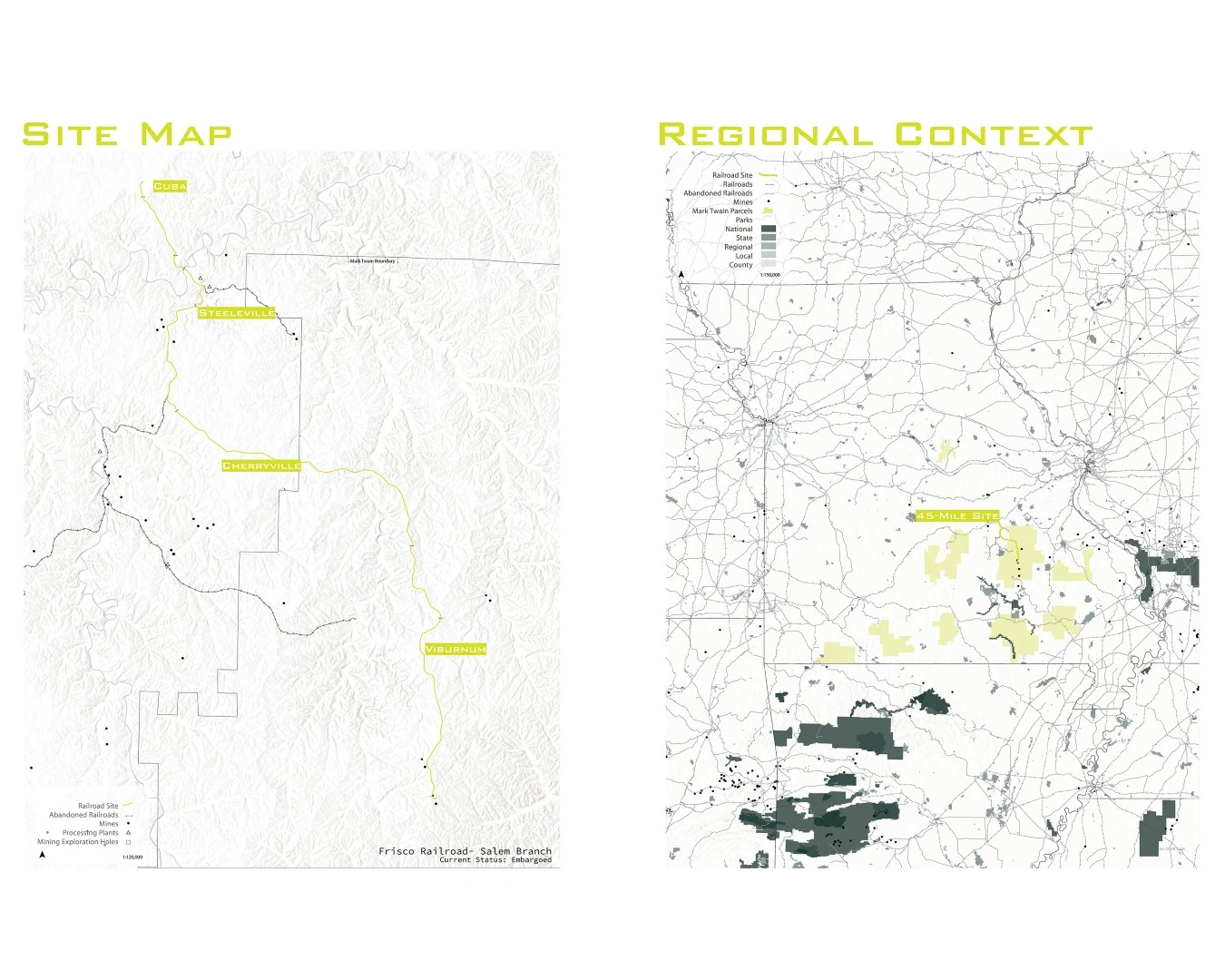
Tracks of Transfer is a regional landscape planning and analysis project that reimagines a 45-mile abandoned railroad corridor in southern Missouri as a framework for ecological repair and community resilience. The project investigates how post-industrial landscapes shaped by extraction can be transformed into regenerative systems that restore ecological function while supporting new economic activity.
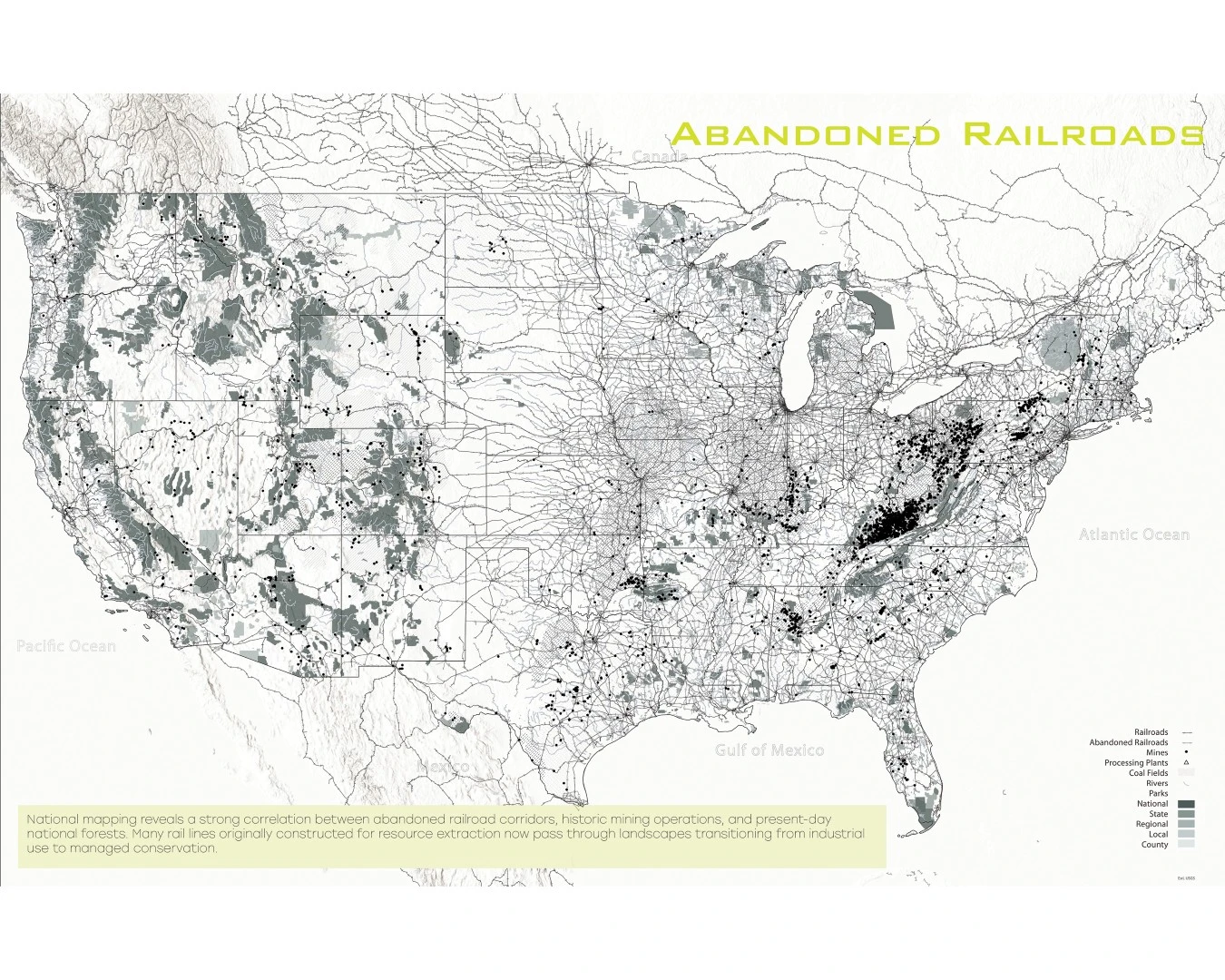
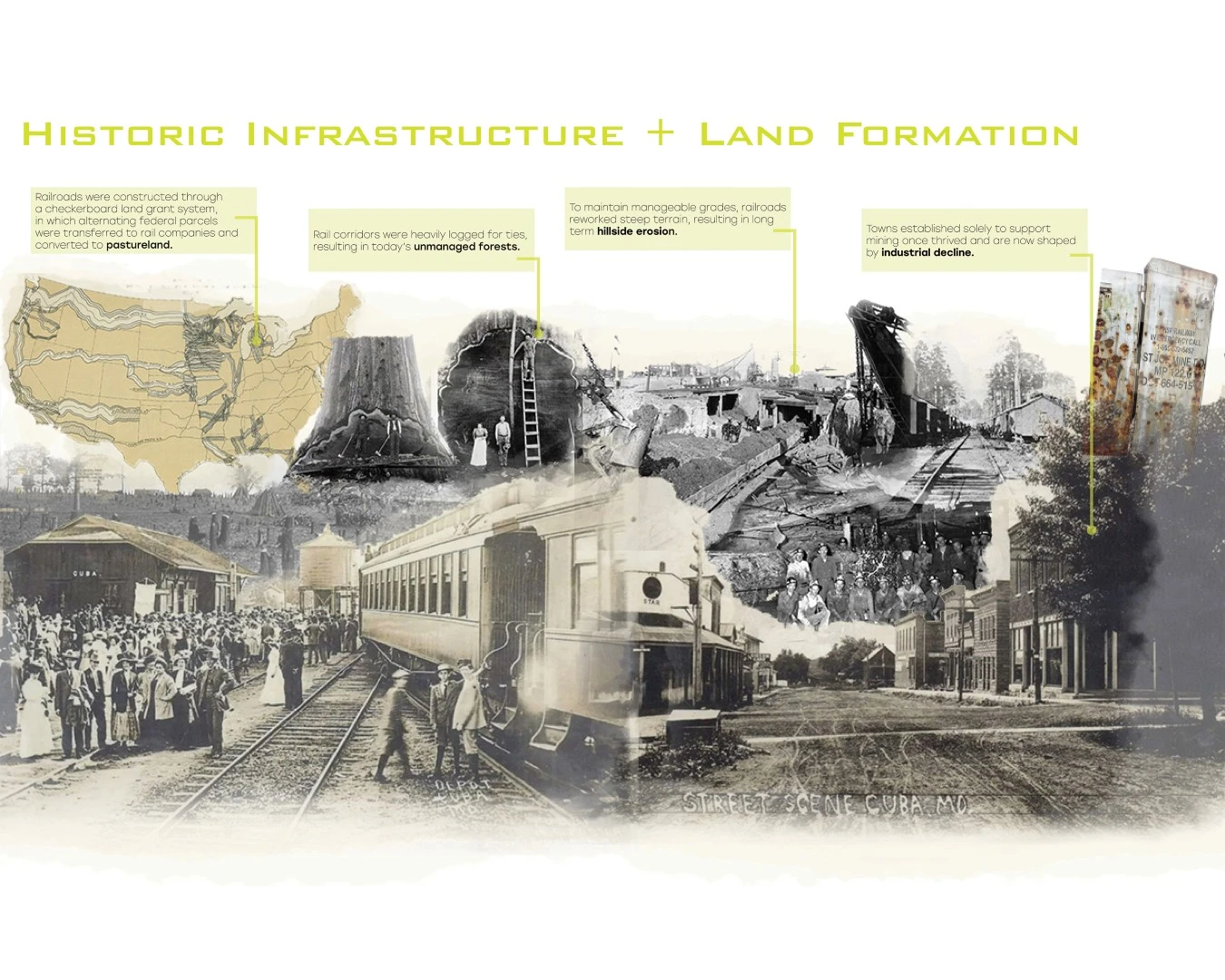
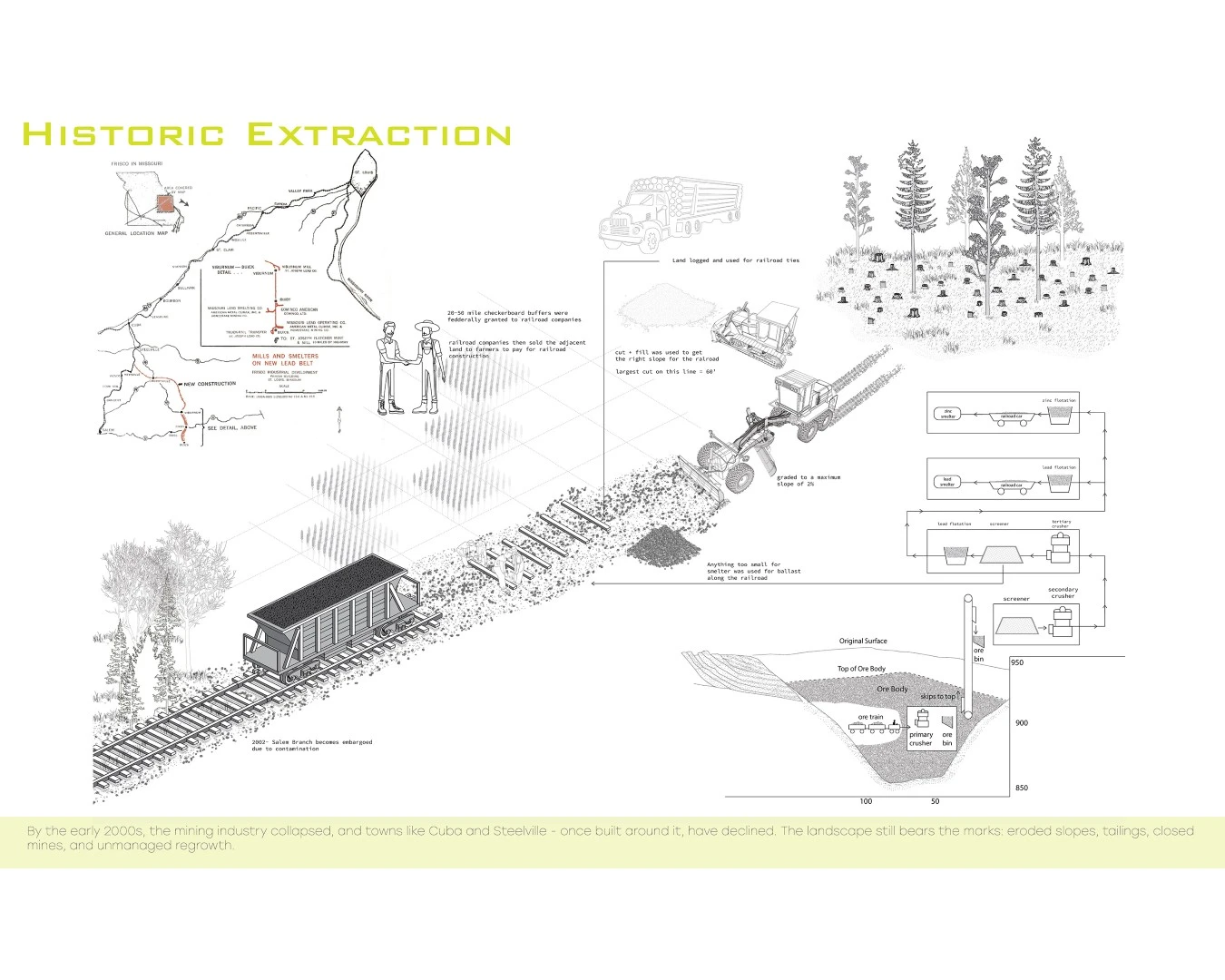
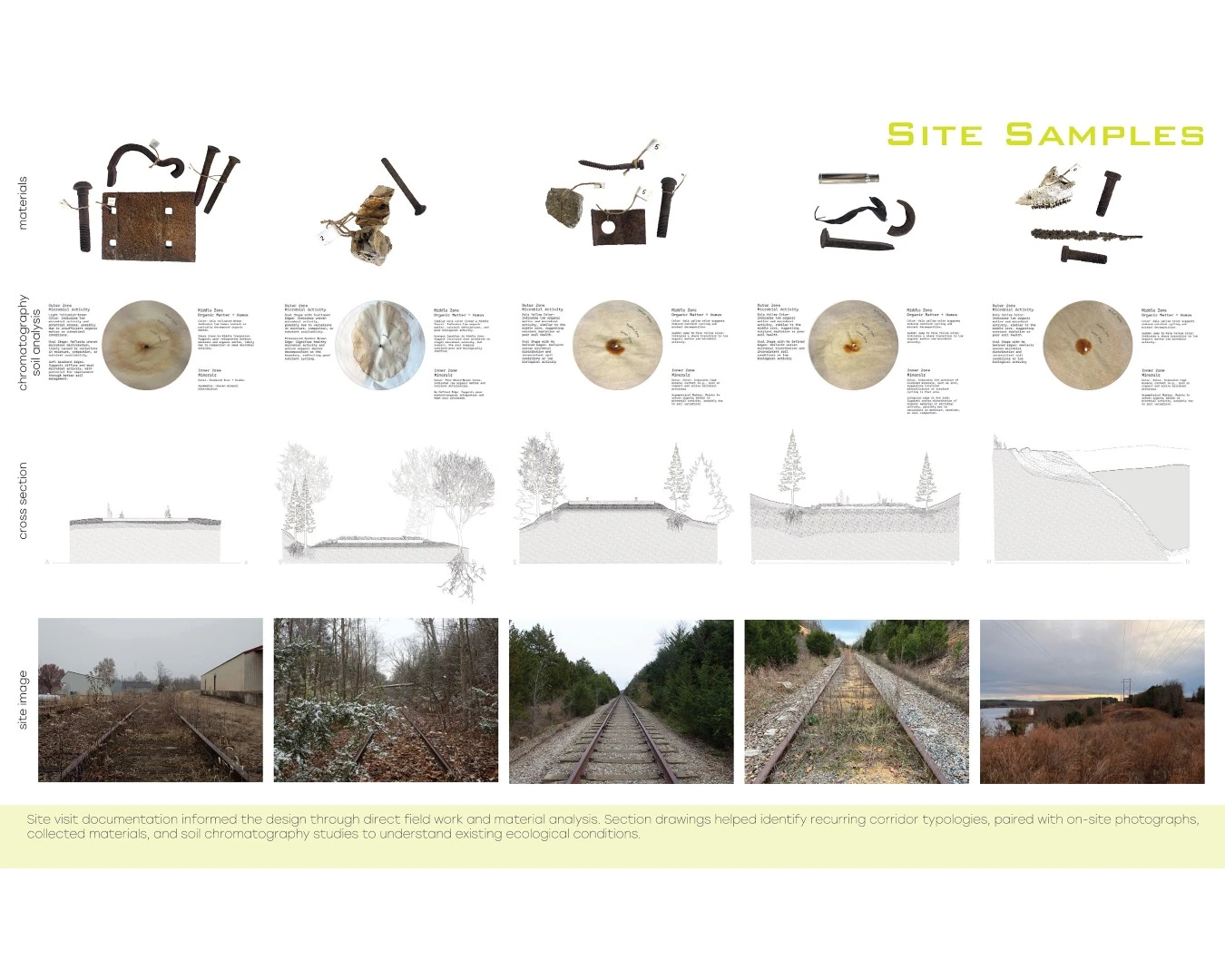
The site follows the former "Lead Line," a railroad constructed in 1967 by the Frisco Railroad to serve Missouri's lead mining industry. Built through steep, heavily forested terrain, the corridor required extensive grading, cuts, fills, embankments, and land clearing to meet railroad engineering standards. These engineered landforms are part of a larger national pattern tied to the development of the U.S. railroad system. Railroads were built through a checkerboard land grant model in which alternating parcels were distributed to railroad companies and later sold for agriculture and pasture. Mining and logging industries expanded alongside these corridors, shaping both the landscape and the rural towns that emerged around them.
In southern Missouri, timber was harvested for railroad ties and hillsides were carved to create rail grades capable of moving heavy industrial loads. Lead and timber were extracted from the region and processed elsewhere into industrial materials. By the early 2000s, mining activity collapsed, leaving behind abandoned infrastructure, eroded slopes, degraded soils, fragmented habitats, and unmanaged regrowth. Rural communities such as Cuba and Steelville, once economically tied to extraction, experienced long-term decline.
The project responds to these inherited conditions through an analysis-driven framework that treats abandoned infrastructure not as a liability, but as an asset for regeneration. Regional mapping and spatial analysis identified the corridor as a strategic armature for large-scale restoration across disconnected rural landscapes.
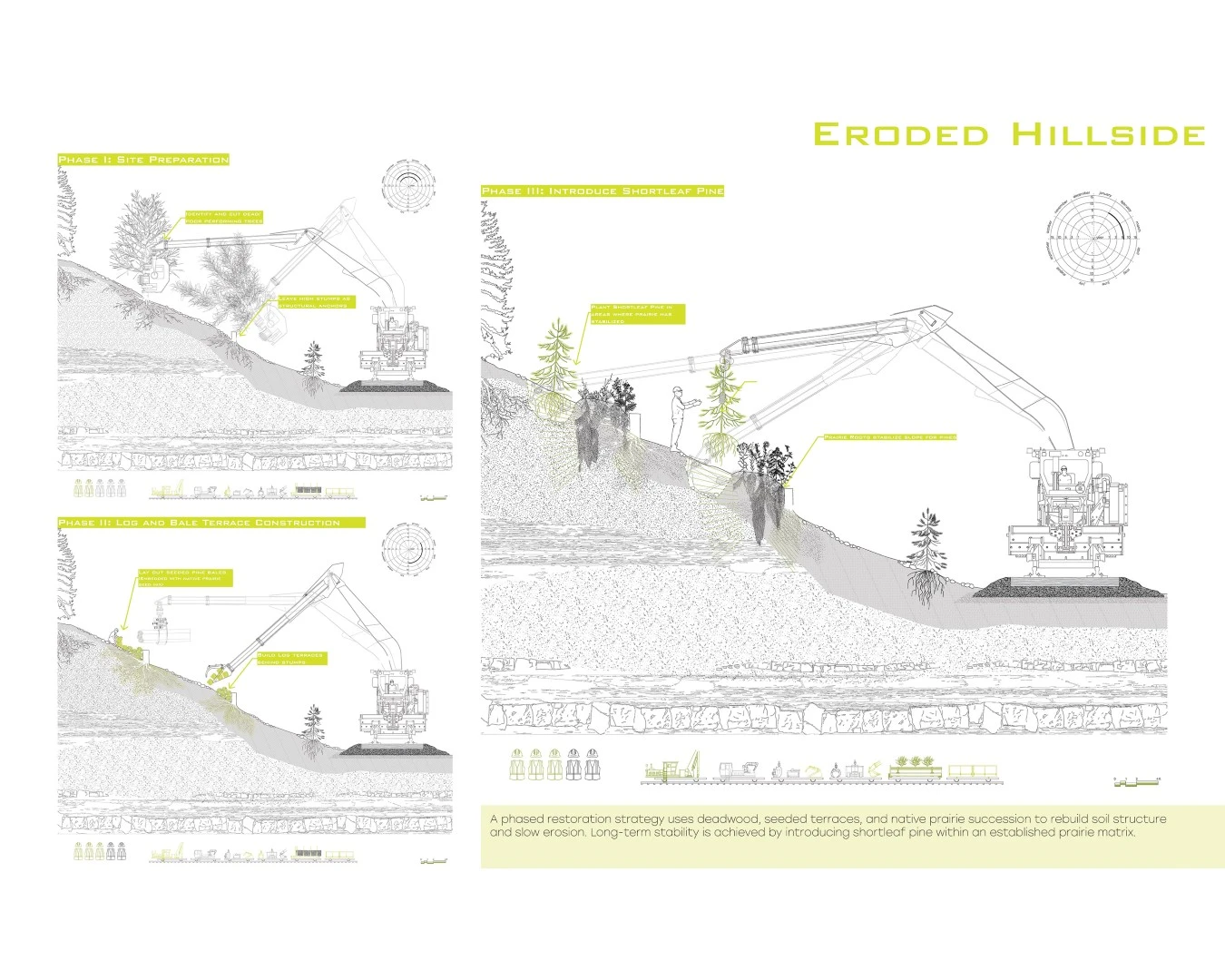
Rather than removing the railroad, the project reuses the corridor and its engineered landforms as the organizational structure for restoration. Eroded hillsides, abandoned mines, and access corridors become sites for forest thinning, erosion stabilization, soil rebuilding, and habitat regeneration. The proposal works with systems and materials already embedded within the landscape, minimizing additional disturbance while strengthening long-term ecological performance.
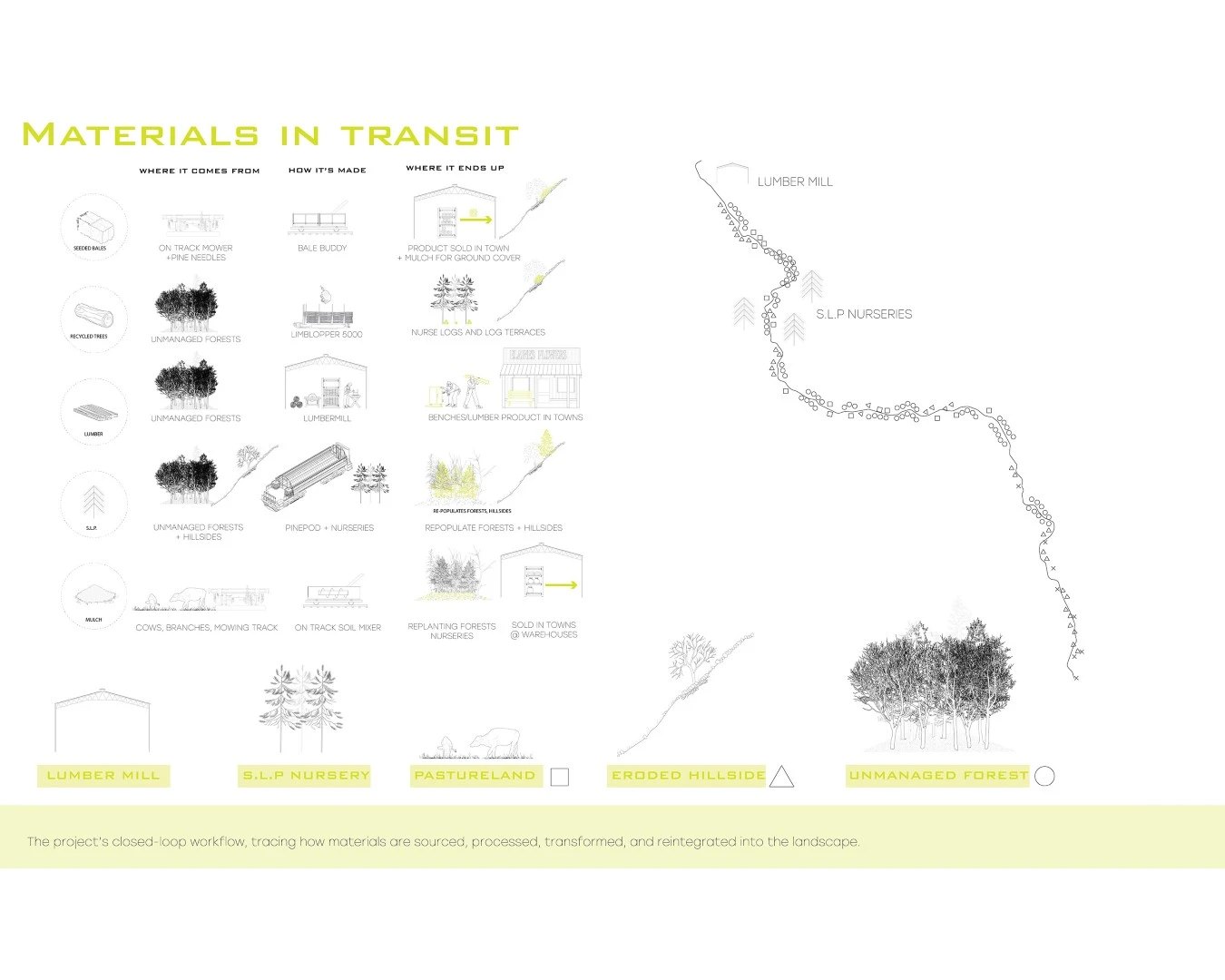
A central component of the project is a mobile rail-based restoration system designed to operate along the corridor. Specialized railcars support logging, mulching, milling, planting, and soil rebuilding directly on site. This closed-loop approach allows harvested materials to be processed and reused within the corridor, reducing waste and transportation impacts while reinvesting resources back into the landscape. By eliminating the need for new permanent roads and infrastructure, the system enables large-scale restoration with minimal ecological disruption.
Tracks of Transfer reclaims a once-extractive rail corridor to regenerate land and revitalize rural communities by reconnecting economic activity to stewardship rather than extraction.
-
- American Persimmon
- Service Berry
- Honey Locust
- Black Walnut
- Short Leaf Pine
- Alfalfa
- Lespedeza
- Black Eyed Susan
- Big Blue Stem
- Lanceleaf
- Little Blue Stem
- Switch Grass
- Winter Rye
- Clover
Advertisement
Related Awards
Award of Excellence, Analysis & Planning
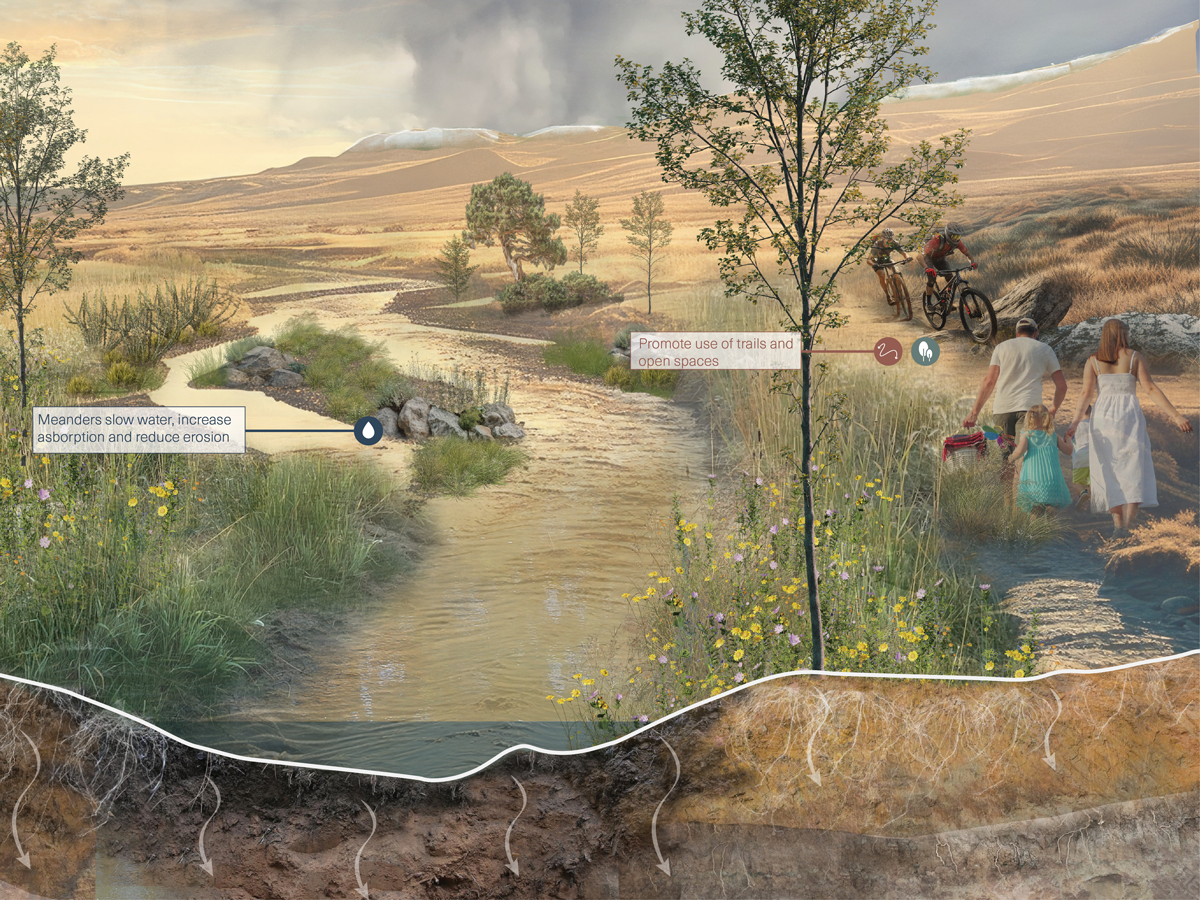
H2Oquirrh: Regional Water Reform for a Resilient Salt Lake Valley
Location: Salt Lake City, UT
Firm: Design Workshop
Client: Wasatch Front Regional Council, Salt Lake County
Water flowing from the Oquirrh Mountains is a critical contributor to the Great Salt Lake. Severe drought and human-caused decline threaten the lake’s viability, with cascading impacts on ecosystems and public health. This regional collaboration of seven jurisdictions, the H2Oquirrh Vision Plan, undertakes a large systems analysis of hydrologic cycles, land cover, and land-use decisions to identify site-specific interventions across nine creeks and washes. Led by landscape architects and water resource engineers, the study advances a deeper understanding of localized drivers of water loss and proposes innovative solutions through integrated landscape infrastructure design and policy.
-listing-img.webp?language=en-US)