
.webp?language=en-US)
.webp?language=en-US)
Rooted Futures: Multi-Temporal Strategies for Coastal Tree Systems
Kongxi Zhu, Student International ASLA


-
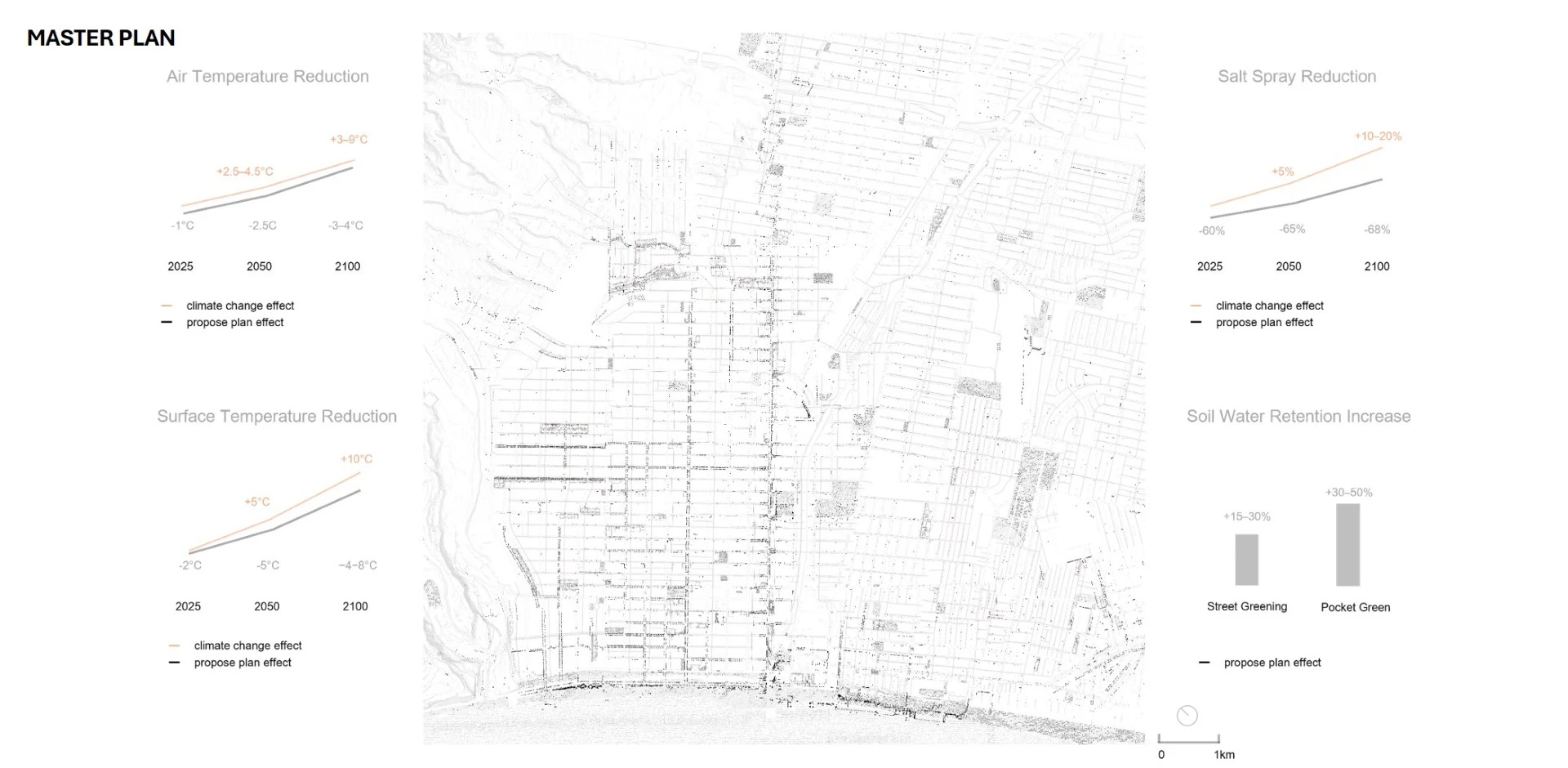
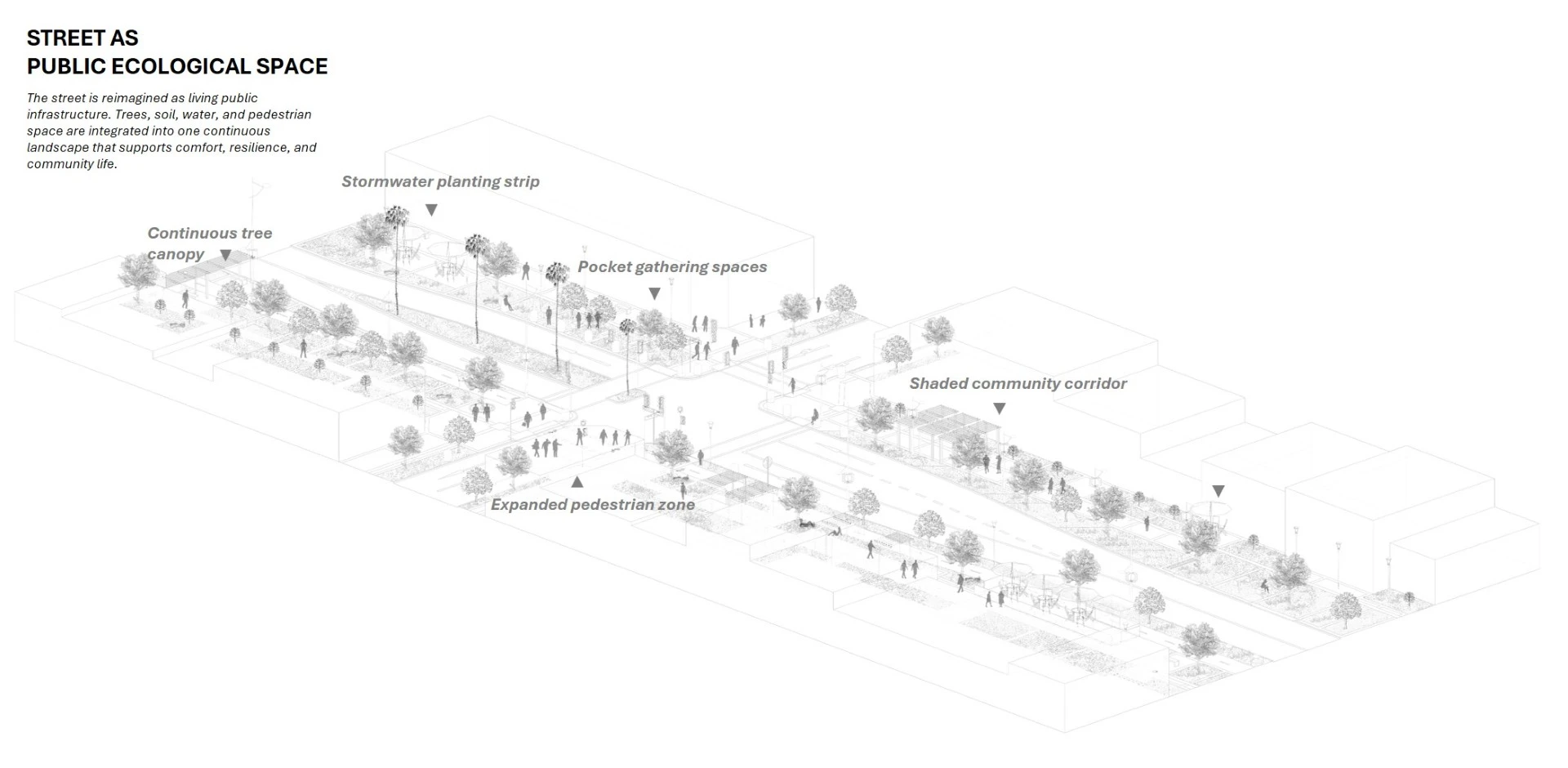
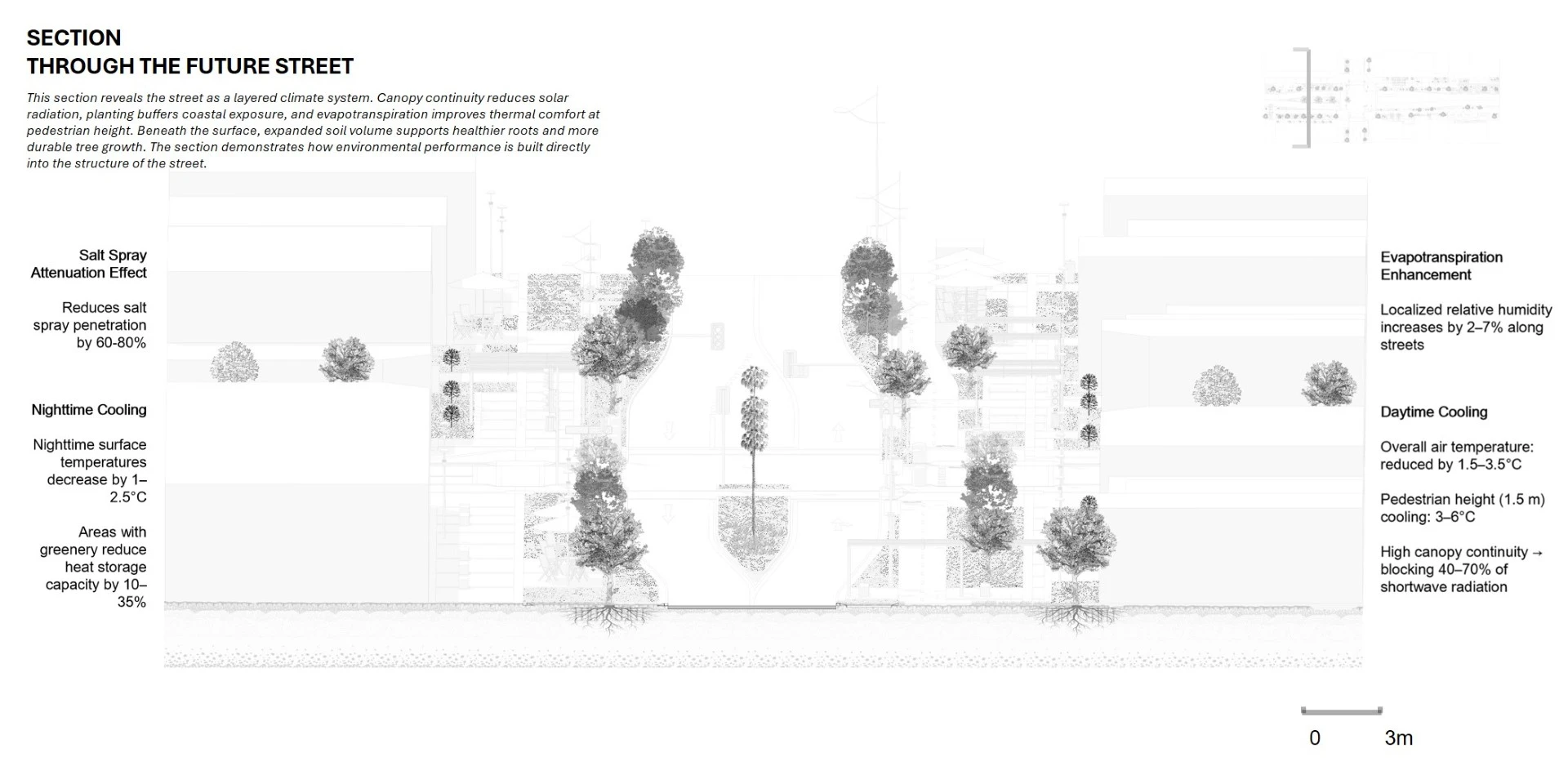
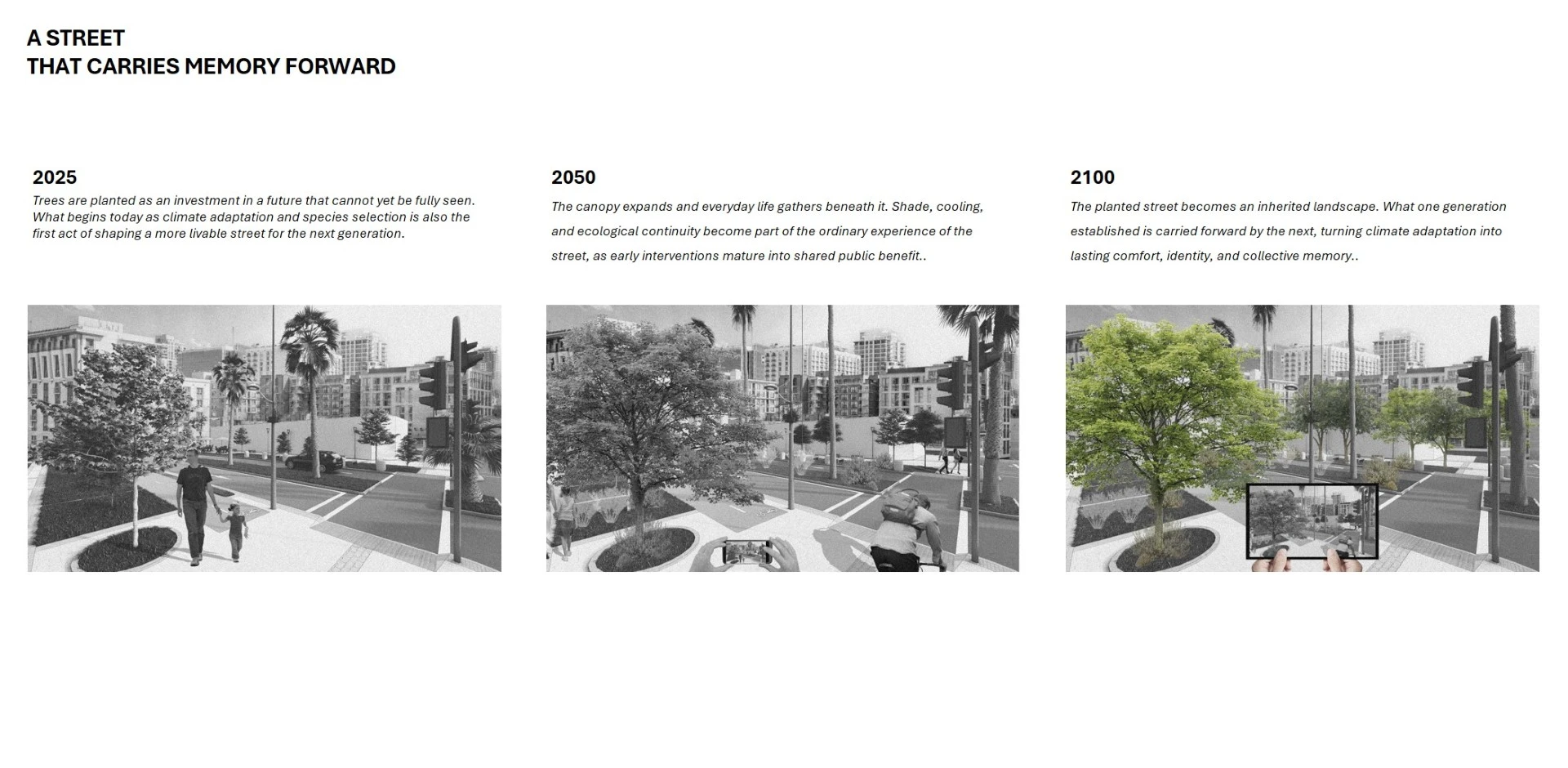
This project reimagines street trees in coastal Suburbia as long-term climate infrastructure. Facing rising temperatures, prolonged drought, and intensified salt spray, many existing street trees are becoming increasingly vulnerable. Drawing on UC Davis and the U.S. Forest Service's Climate-Ready Trees research, the proposal develops a phased strategy for 2025, 2050, and 2100 that combines climate-adapted species selection, continuous soil systems, stormwater integration, and connected ecological corridors. The project is award-worthy for transforming fragmented roadside planting into a resilient public landscape framework that improves thermal comfort, ecological performance, and everyday community life under future climate change.
-
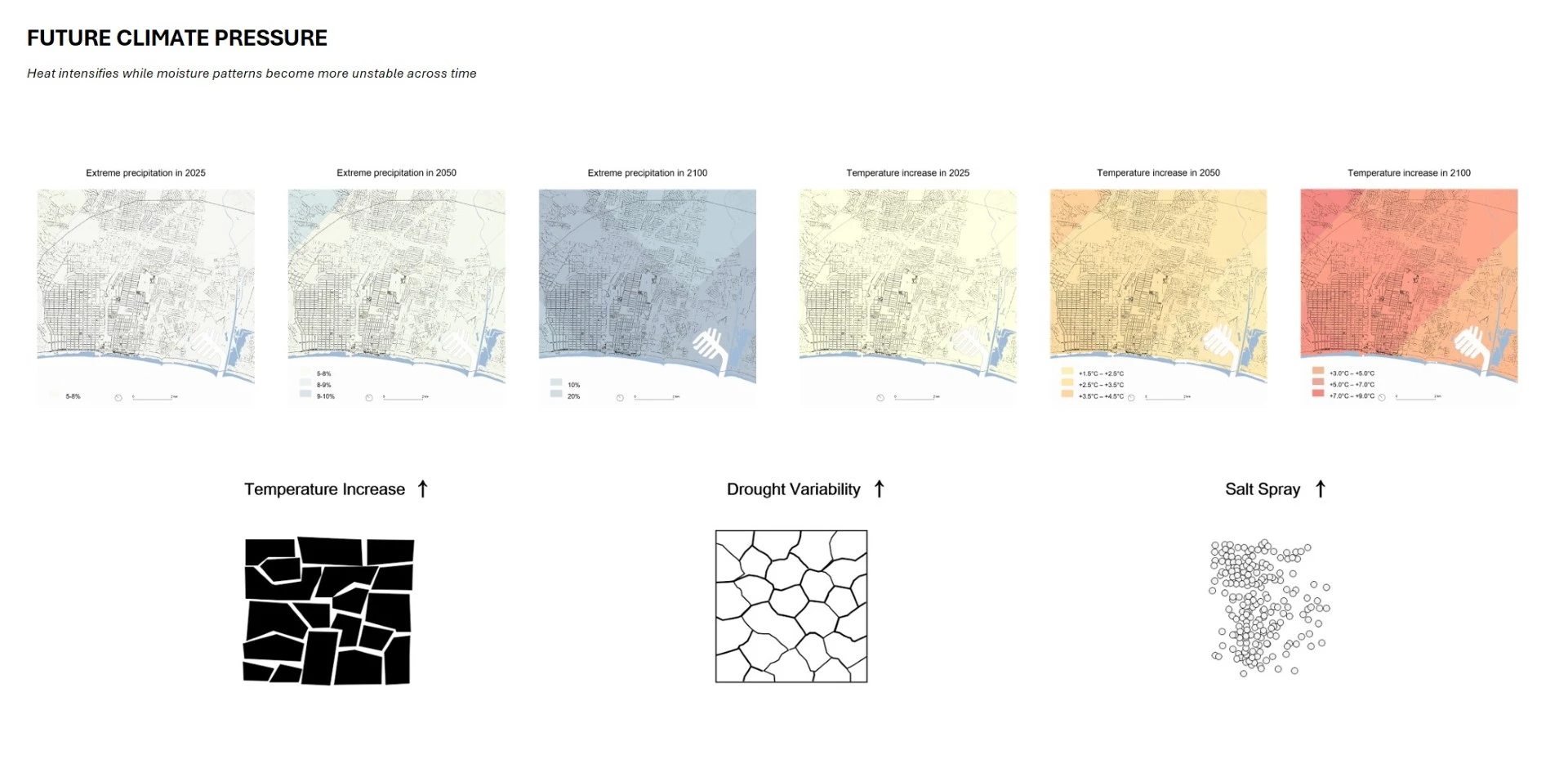
Street trees are often treated as background planting, yet in coastal Suburbia they are the most continuous and publicly shared green infrastructure. As parks and open spaces remain limited and fragmented, the street tree system carries a larger burden: it shades daily life, moderates heat, supports ecological continuity, and shapes the public identity of the community. Today, that system is under growing pressure. Rising temperatures, longer dry periods, and intensified coastal salt spray are weakening many existing species and exposing the limits of conventional roadside planting.
This project asks a direct question: how can a suburban street tree system survive climate change and still remain meaningful as public landscape? Drawing on the Climate Ready Trees research led by UC Davis and the U.S. Forest Service, the proposal translates climate science into a long-term design strategy for 2025, 2050, and 2100. It shifts the role of street trees from isolated ornamental elements to an integrated ecological framework.
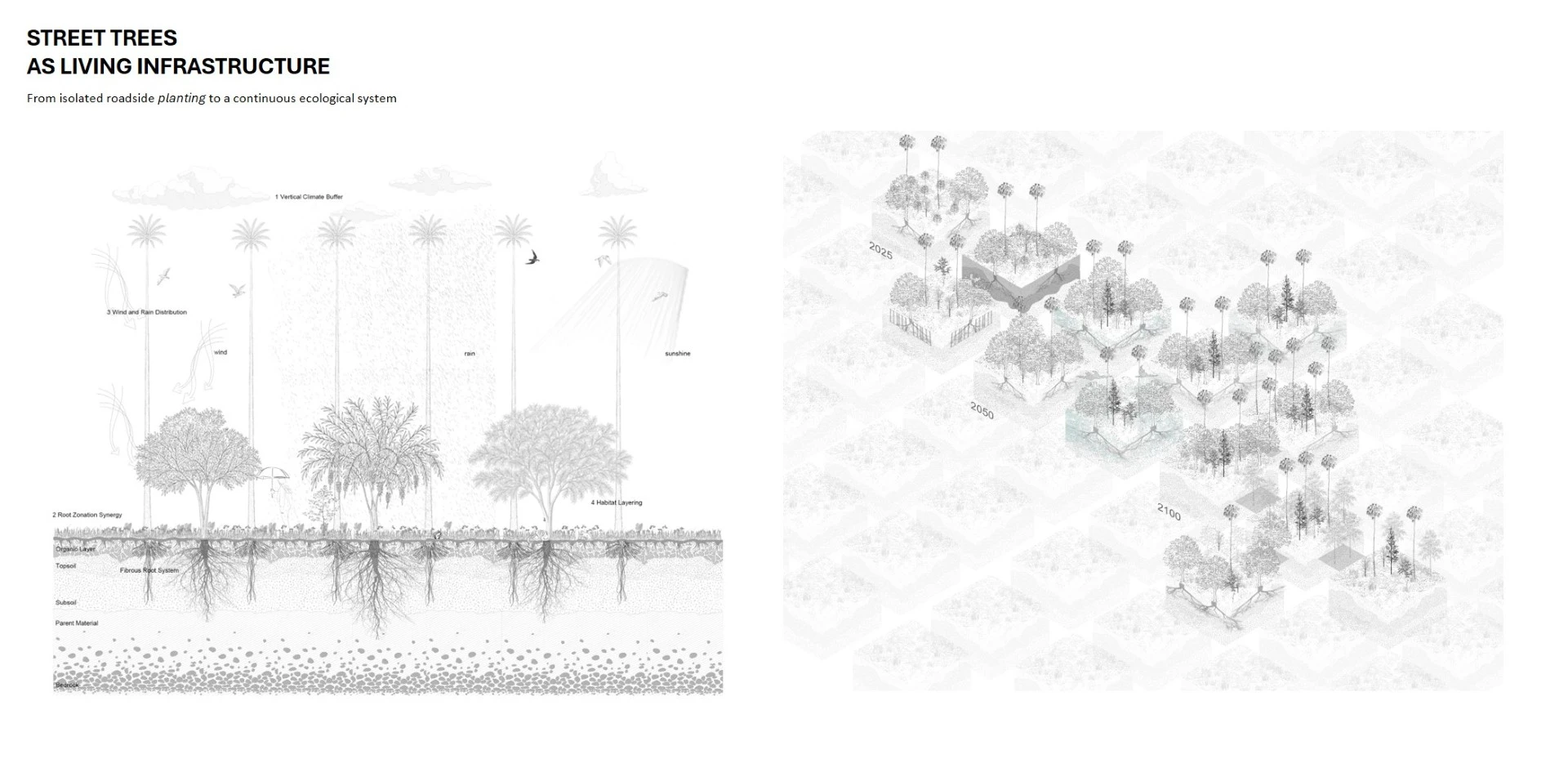
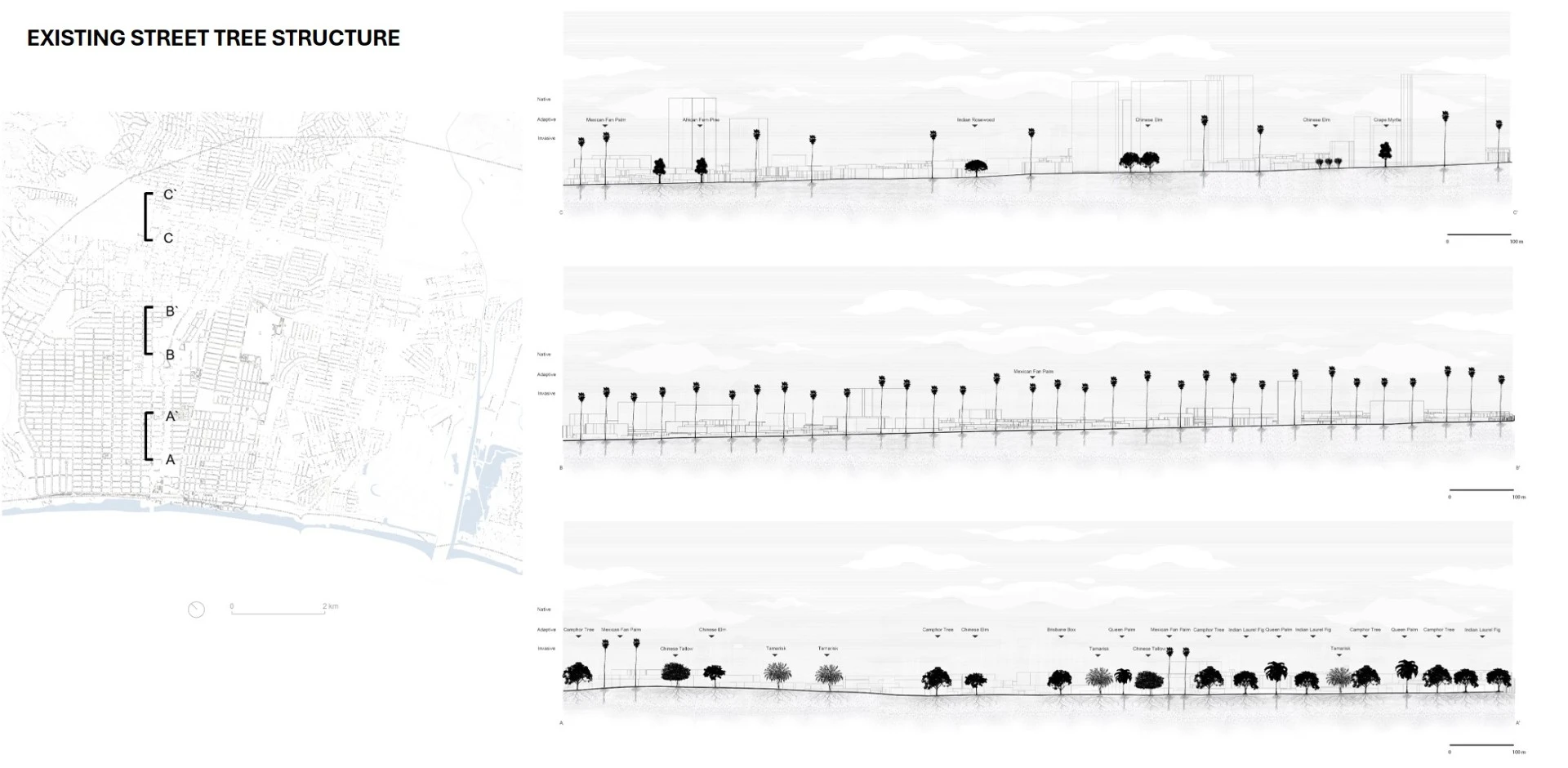
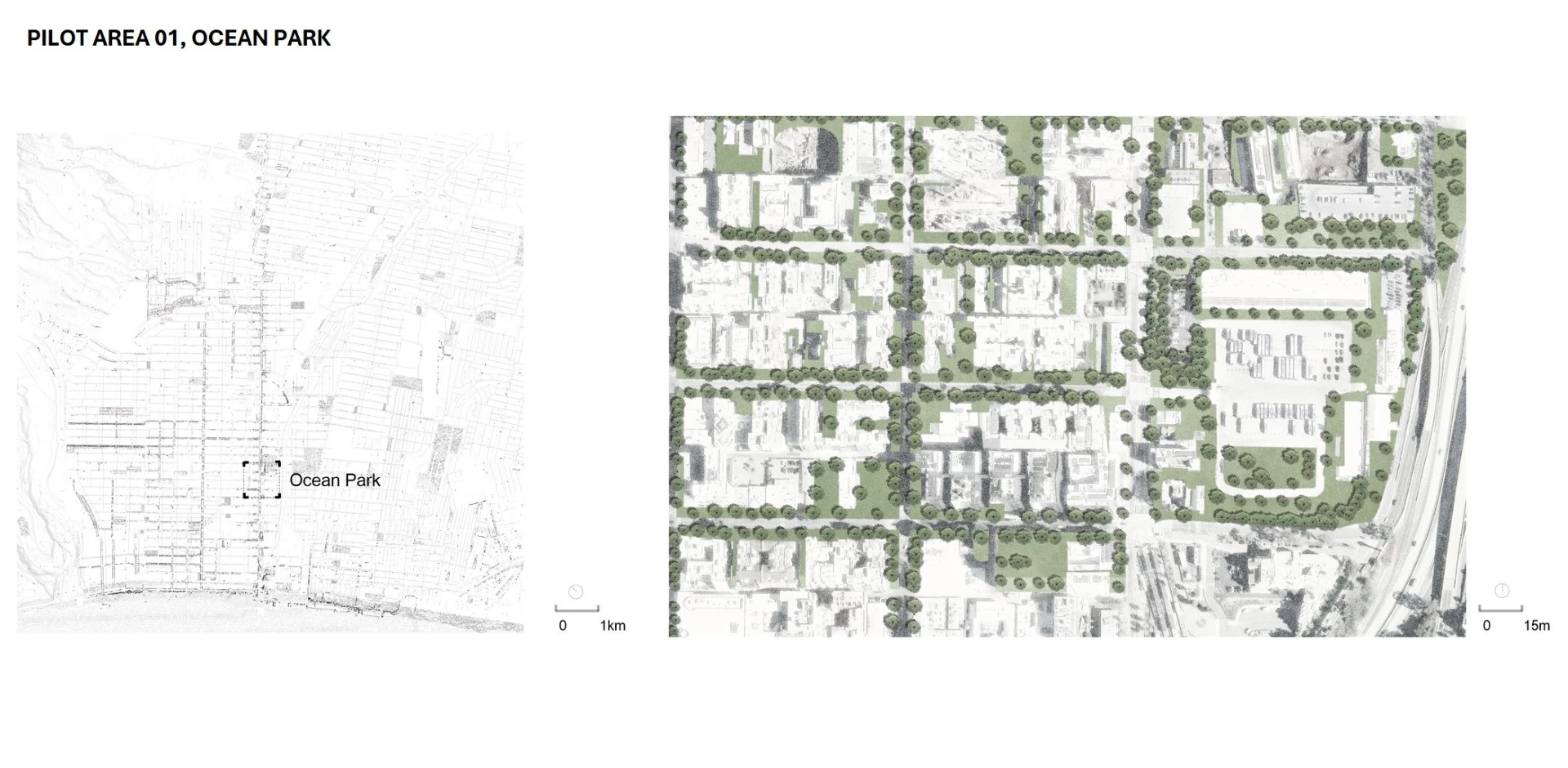
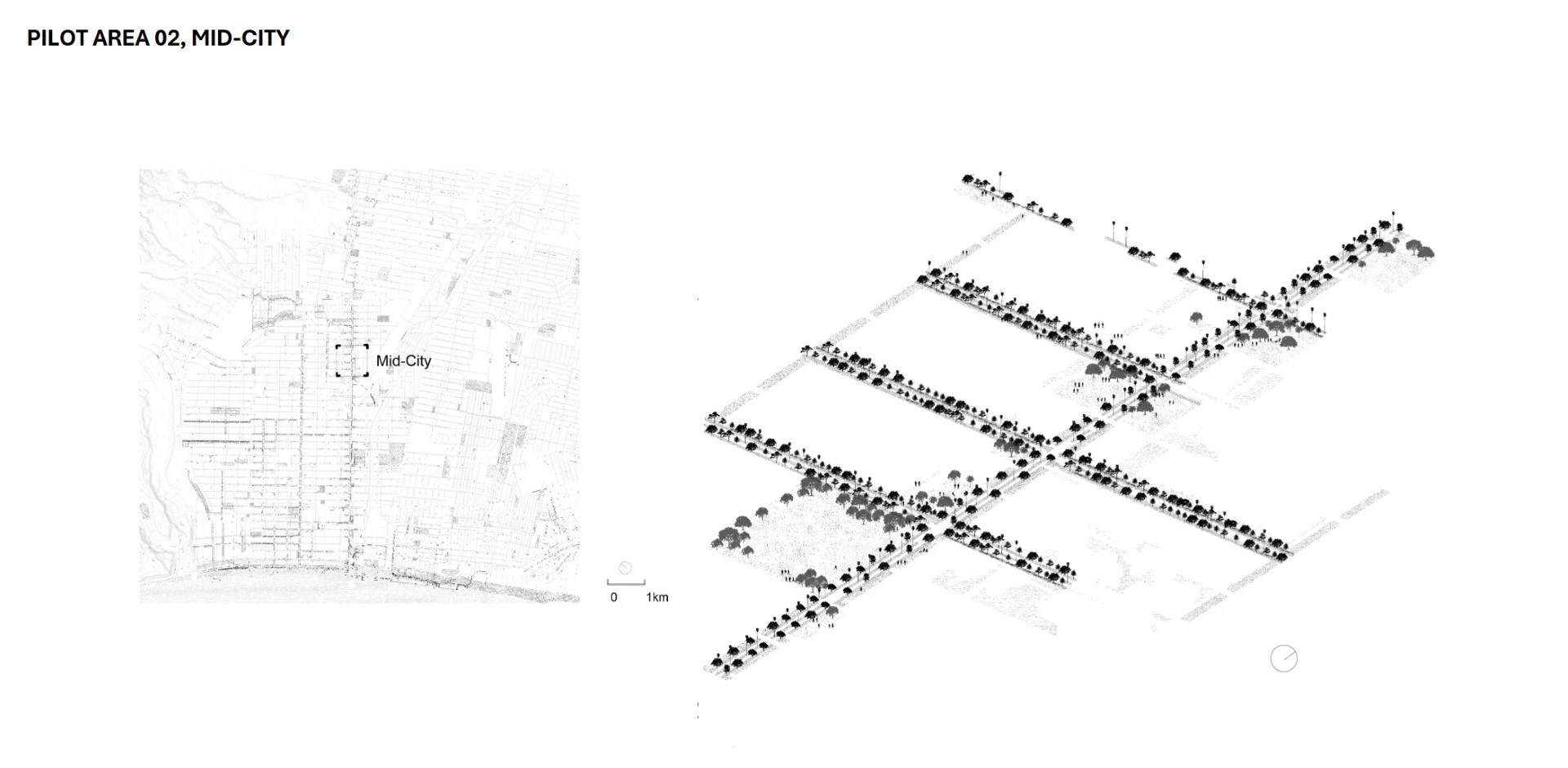
The project begins by identifying the core failures of the existing system: shallow and fragmented soils, restricted root space, sparse canopy cover, limited understory planting, and almost no capacity for stormwater retention or salt leaching. These conditions leave trees vulnerable and prevent the landscape from functioning as a resilient whole. In response, the proposal introduces three spatial strategies: continuous soil volume to connect tree pits and expand rooting space, structural soil systems to support healthy growth under urban loads, and stormwater integration to capture, slow, and reuse water within the street section. Together, these interventions transform the ground beneath the street into living infrastructure.
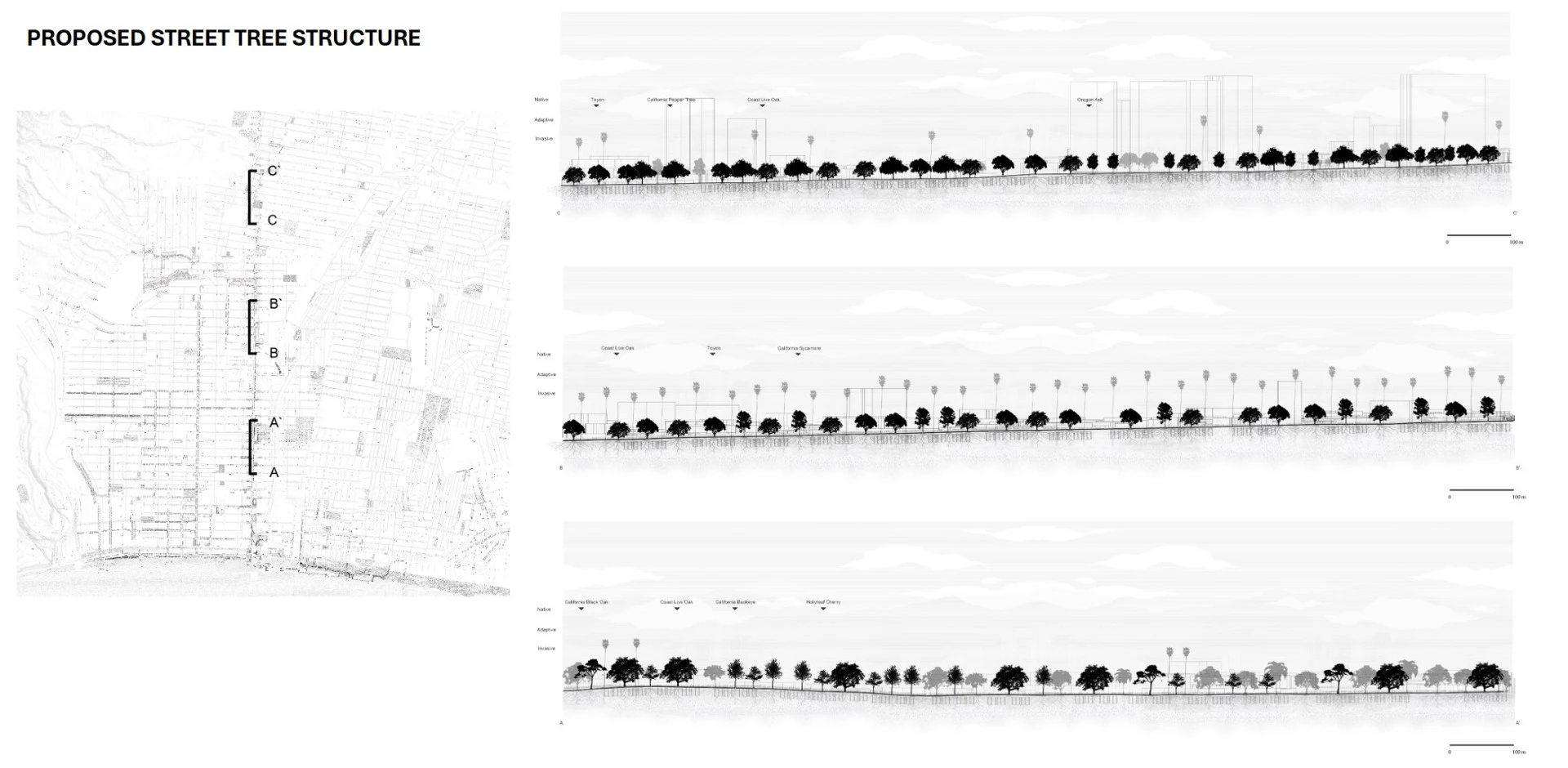
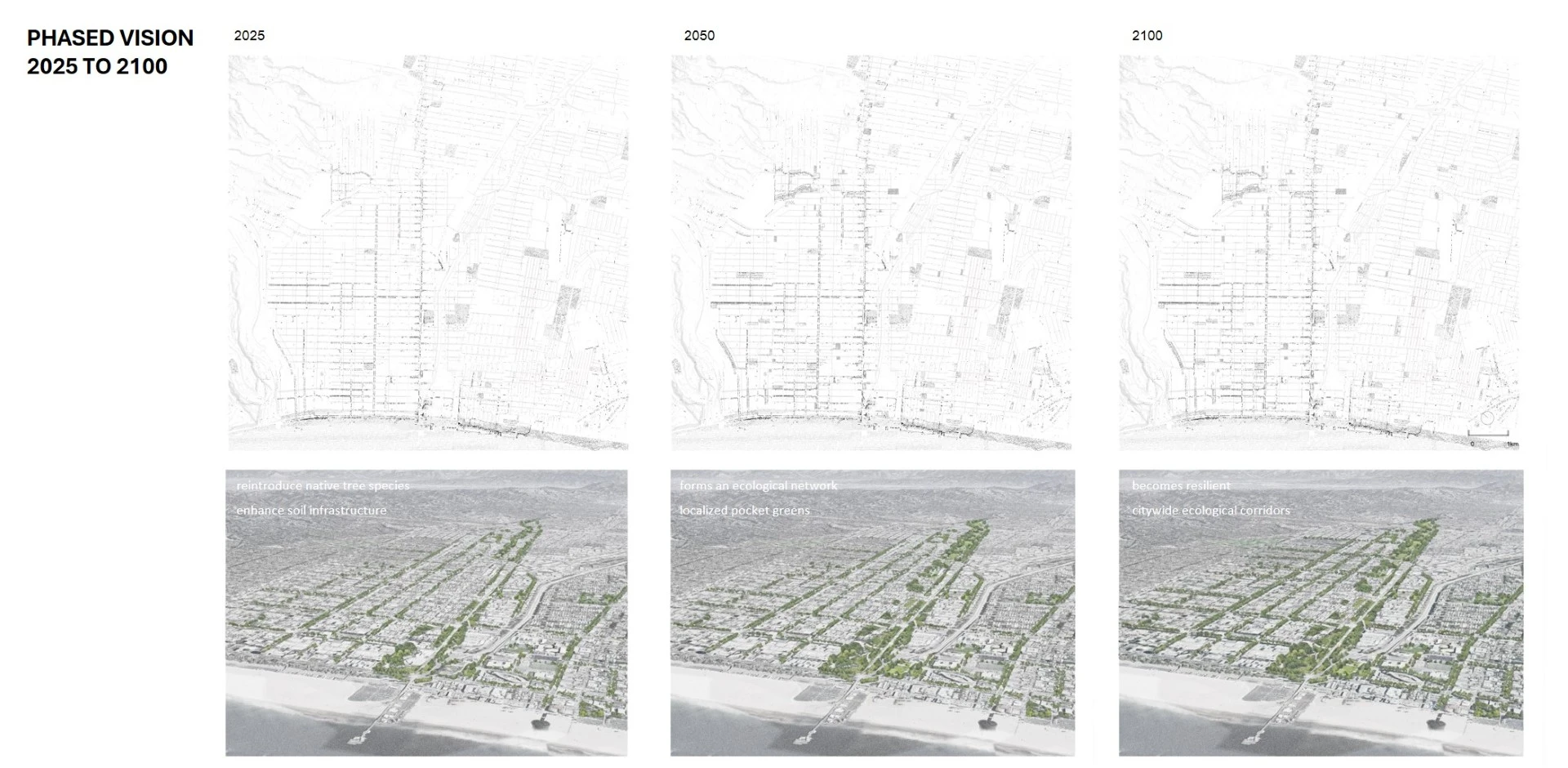
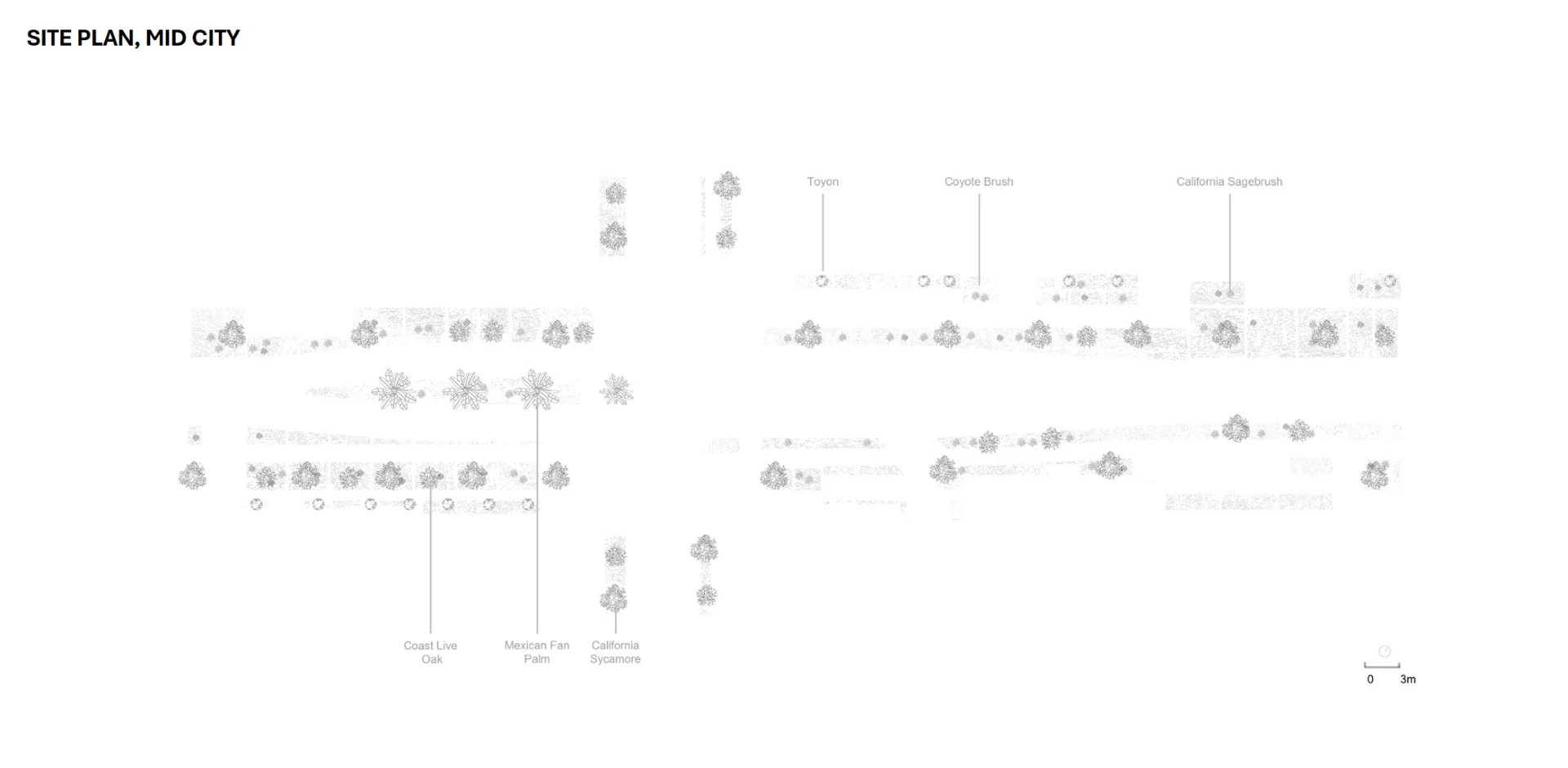
Planting is equally rethought as a climate adaptation strategy. The proposal prioritizes native and climate tolerant species that can endure future heat, drought, and coastal exposure while building stronger ecological relationships over time. Through phased implementation, the design reintroduces native species in the near term, builds localized green networks and pocket landscapes in the mid term, and establishes broader ecological corridors in the long term. What emerges is a layered and adaptive streetscape that cools the environment, resists salt intrusion, improves water performance, and reconnects fragmented community spaces.
The project is ultimately about time. A street tree planted today will outlive current assumptions and become part of someone else's everyday memory decades from now. By designing for 2025, 2050, and 2100 simultaneously, this proposal frames climate adaptation as both ecological necessity and cultural responsibility. It offers a model for how suburban streets can become resilient public landscapes that are not only able to endure future climate stress, but also capable of carrying community life forward.
-
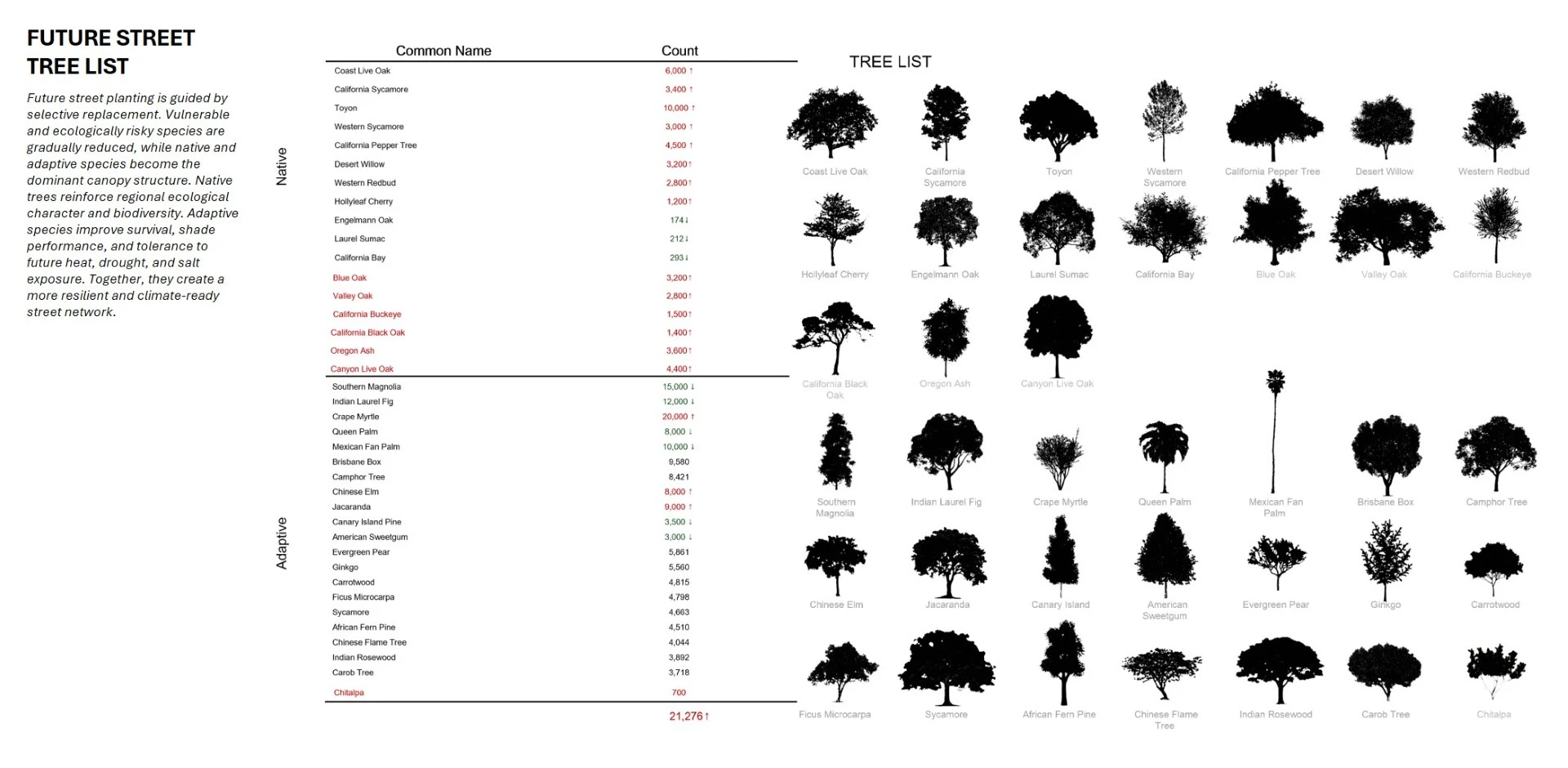
- Coast Live Oak
- California Sycamore
- Toyon
- Western Sycamore
- California Pepper Tree
- Desert Willow
- Western Redbud
- Hollyleaf Cherry
- Engelmann Oak
- Laurel Sumac
- California Bay
- Blue Oak
- Valley Oak
- California Buckeye
- California Black Oak
- Oregon Ash
- Canyon Live Oak
- Southern Magnolia
- Indian Laurel Fig
- Crape Myrtle
- Queen Palm
- Mexican Fan Palm
- Brisbane Box
- Camphor Tree
- Chinese Elm
- Jacaranda
- Canary Island Pine
- American Sweetgum
- Evergreen Pear
- Ginkgo
- Carrotwood
- Ficus Microcarpa
- Sycamore
- African Fern Pine
- Chinese Flame Tree
- Indian Rosewood
- Carob Tree
- Chitalpa
Advertisement
Related Awards
Award of Excellence, Analysis & Planning
H2Oquirrh: Regional Water Reform for a Resilient Salt Lake Valley
Location: Salt Lake City, UT
Firm: Design Workshop
Client: Wasatch Front Regional Council, Salt Lake County
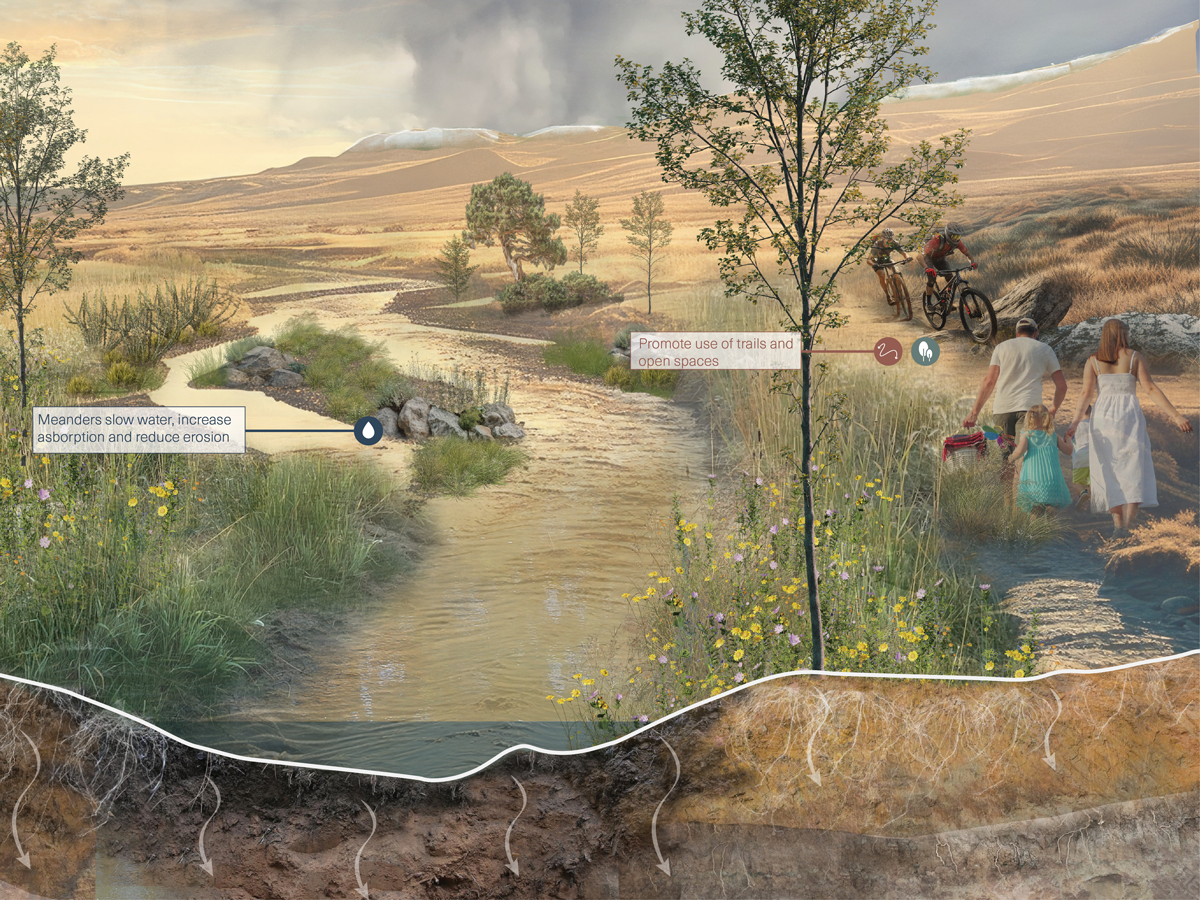
Water flowing from the Oquirrh Mountains is a critical contributor to the Great Salt Lake. Severe drought and human-caused decline threaten the lake’s viability, with cascading impacts on ecosystems and public health. This regional collaboration of seven jurisdictions, the H2Oquirrh Vision Plan, undertakes a large systems analysis of hydrologic cycles, land cover, and land-use decisions to identify site-specific interventions across nine creeks and washes. Led by landscape architects and water resource engineers, the study advances a deeper understanding of localized drivers of water loss and proposes innovative solutions through integrated landscape infrastructure design and policy.
-listing-img.webp?language=en-US)