
.webp?language=en-US)
.webp?language=en-US)
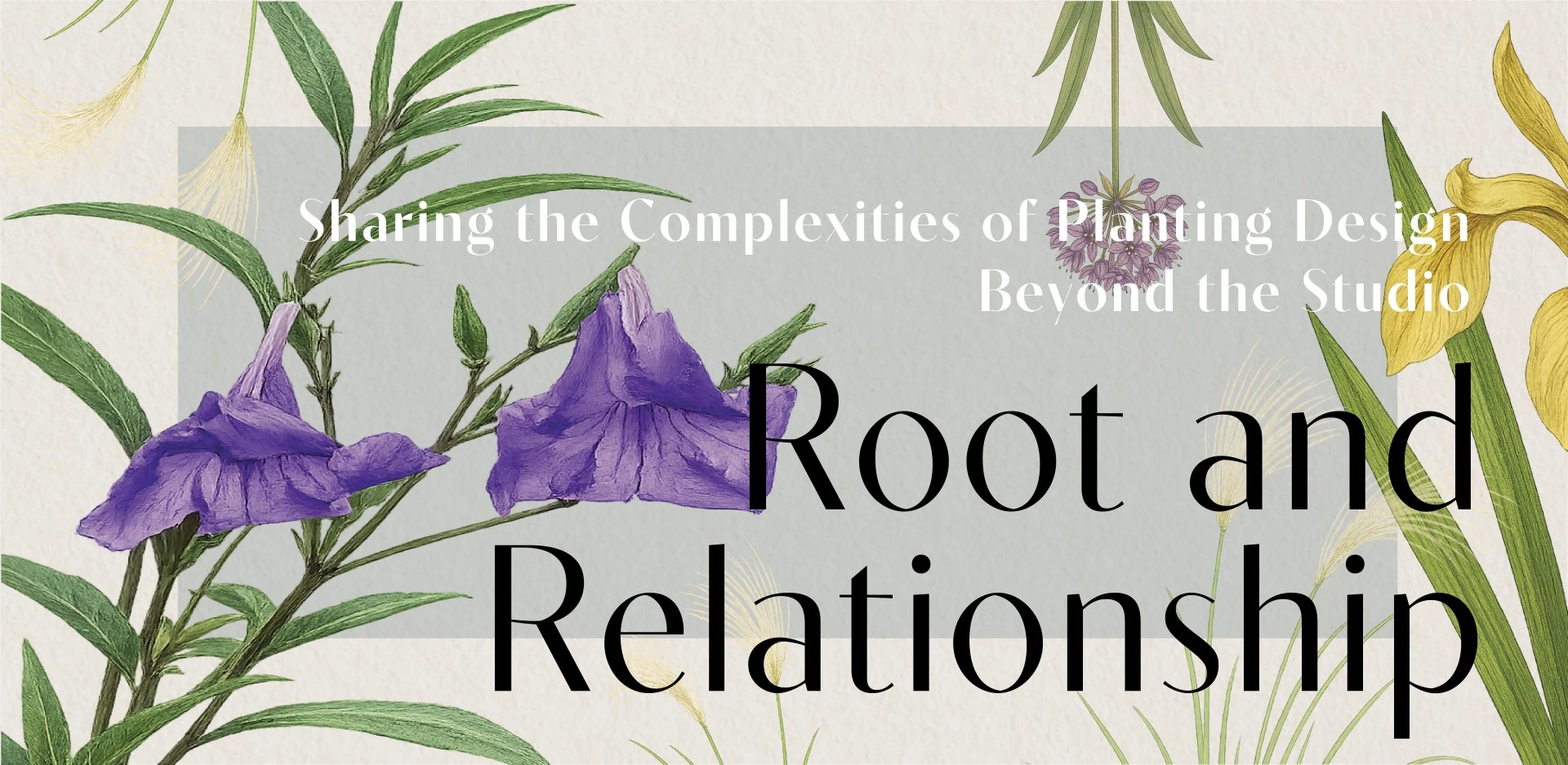
Root and Relationship: Sharing the Complexities of Planting Design
Emily Harvard, Student ASLA; Aedan Rosolia, Student ASLA; Rachel Dingley, Student ASLA; Jessica Spires, Student ASLA; Dailey Jackson, Student ASLA; Marne Smith, Student ASLA; Abby Burts, Student ASLA
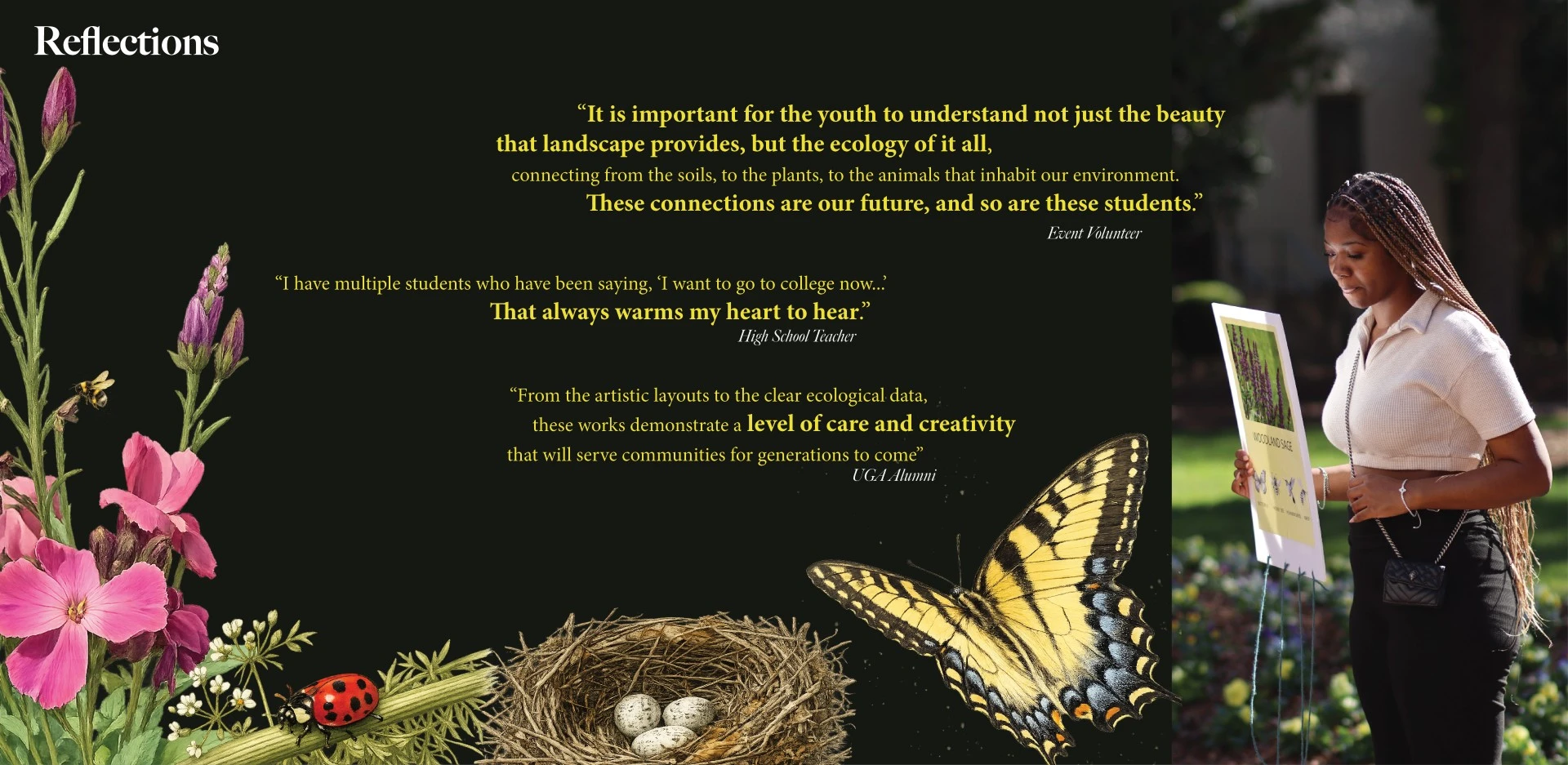

Beautiful work, the presentation of the materials is very clear and beautiful and the approach to teaching high school students was fun and engaging
Awards Jury
-
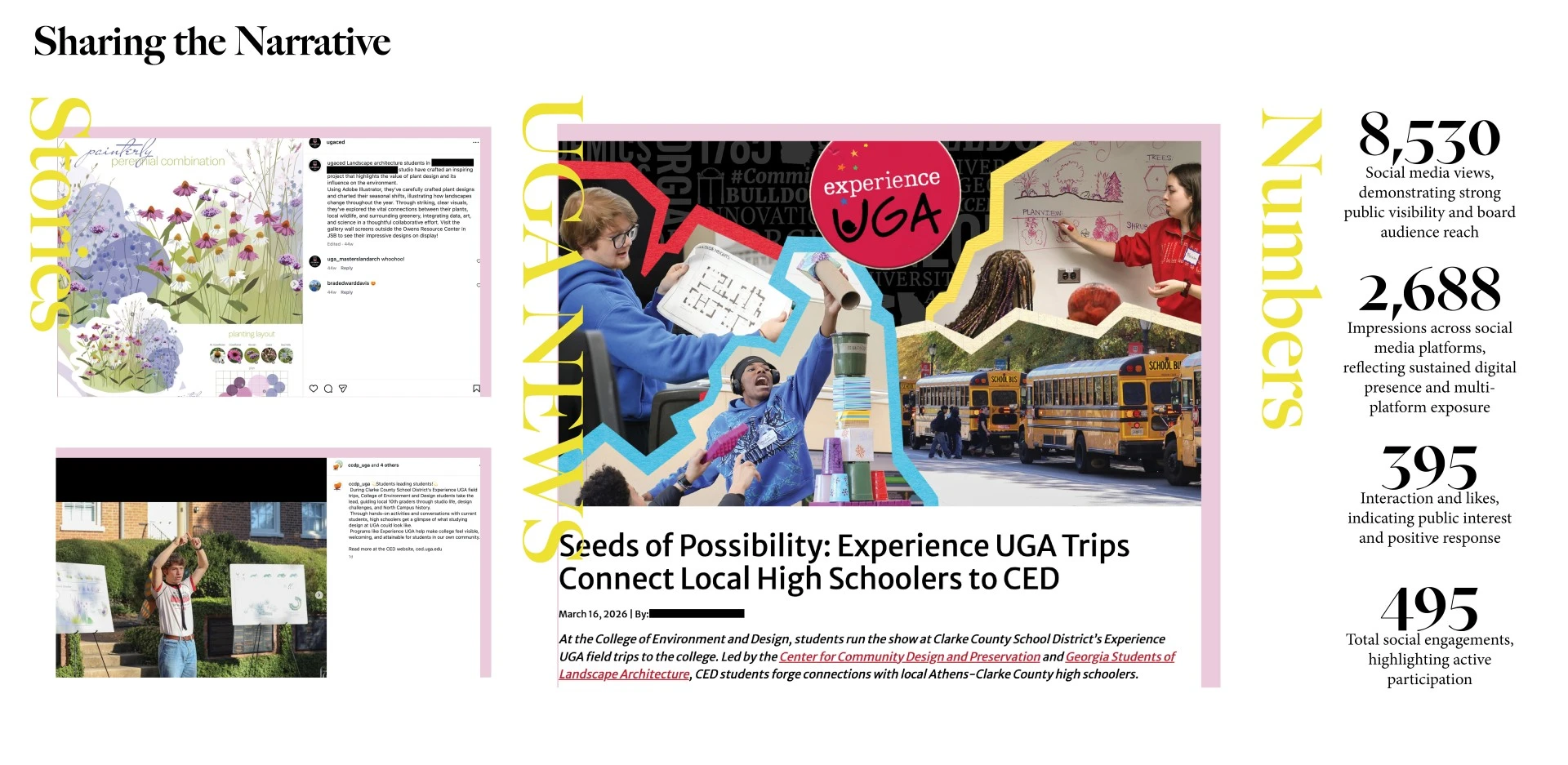
A web of colored yarn turned thoughtful planting design into something high school students could see, hold, and understand. Through student-created visualizations, species cards, and an interactive biodiversity activity, this project transformed studio research into an accessible public lesson for tenth-grade students visiting the University of Georgia. It expands the reach of landscape architecture by helping future stewards recognize how thoughtful planting combinations support beauty, biodiversity, and ecological care.
-
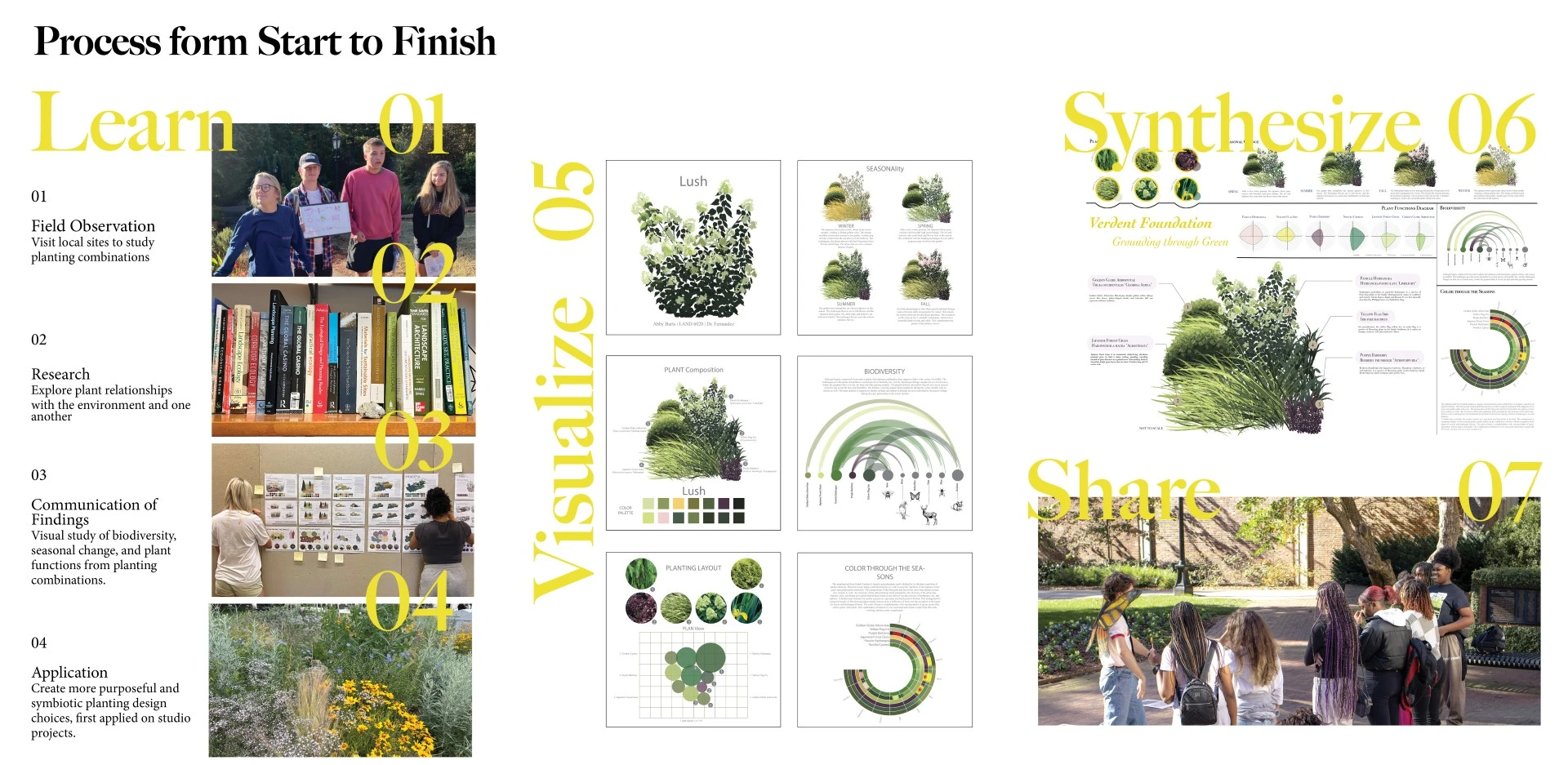
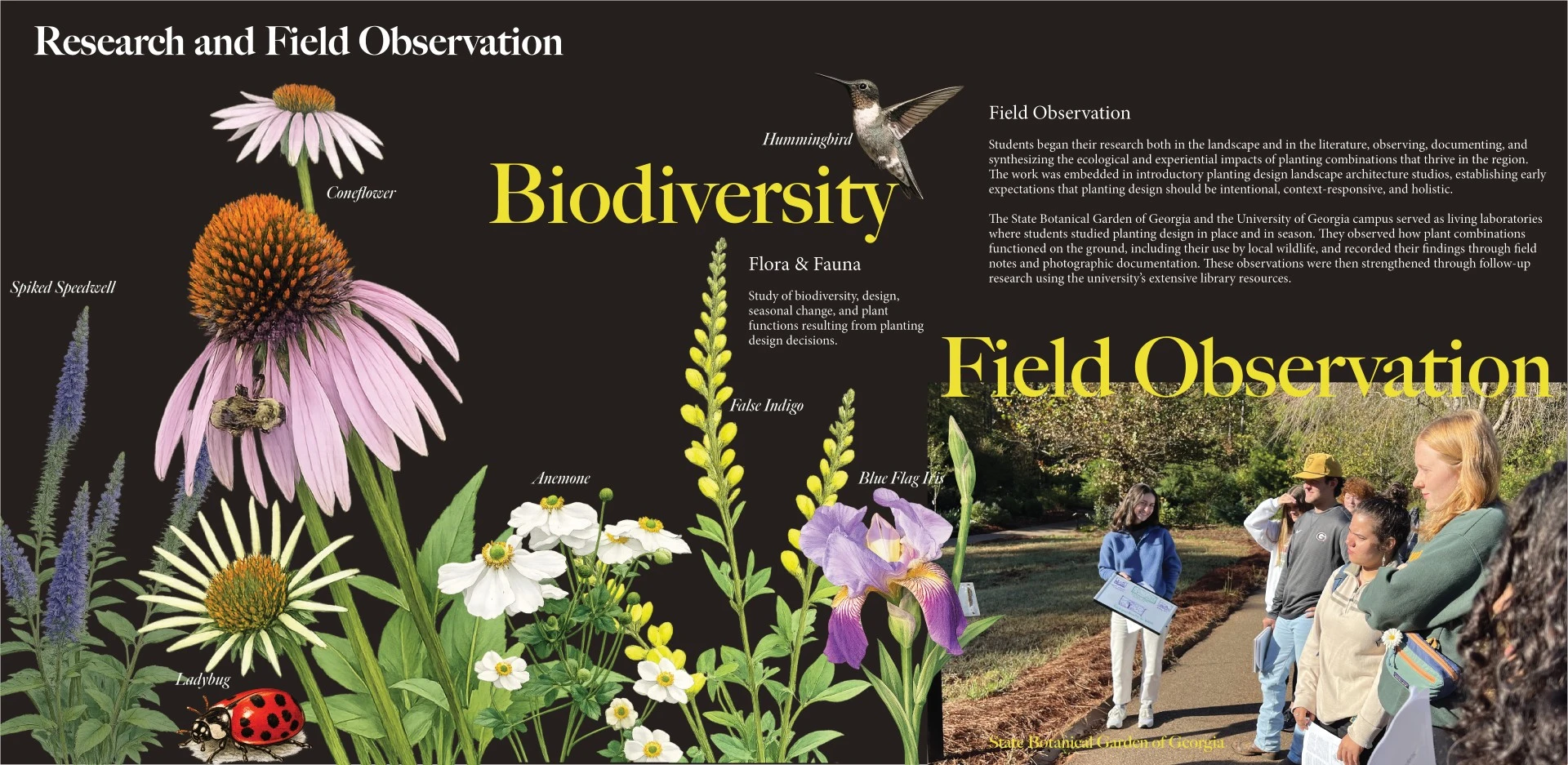
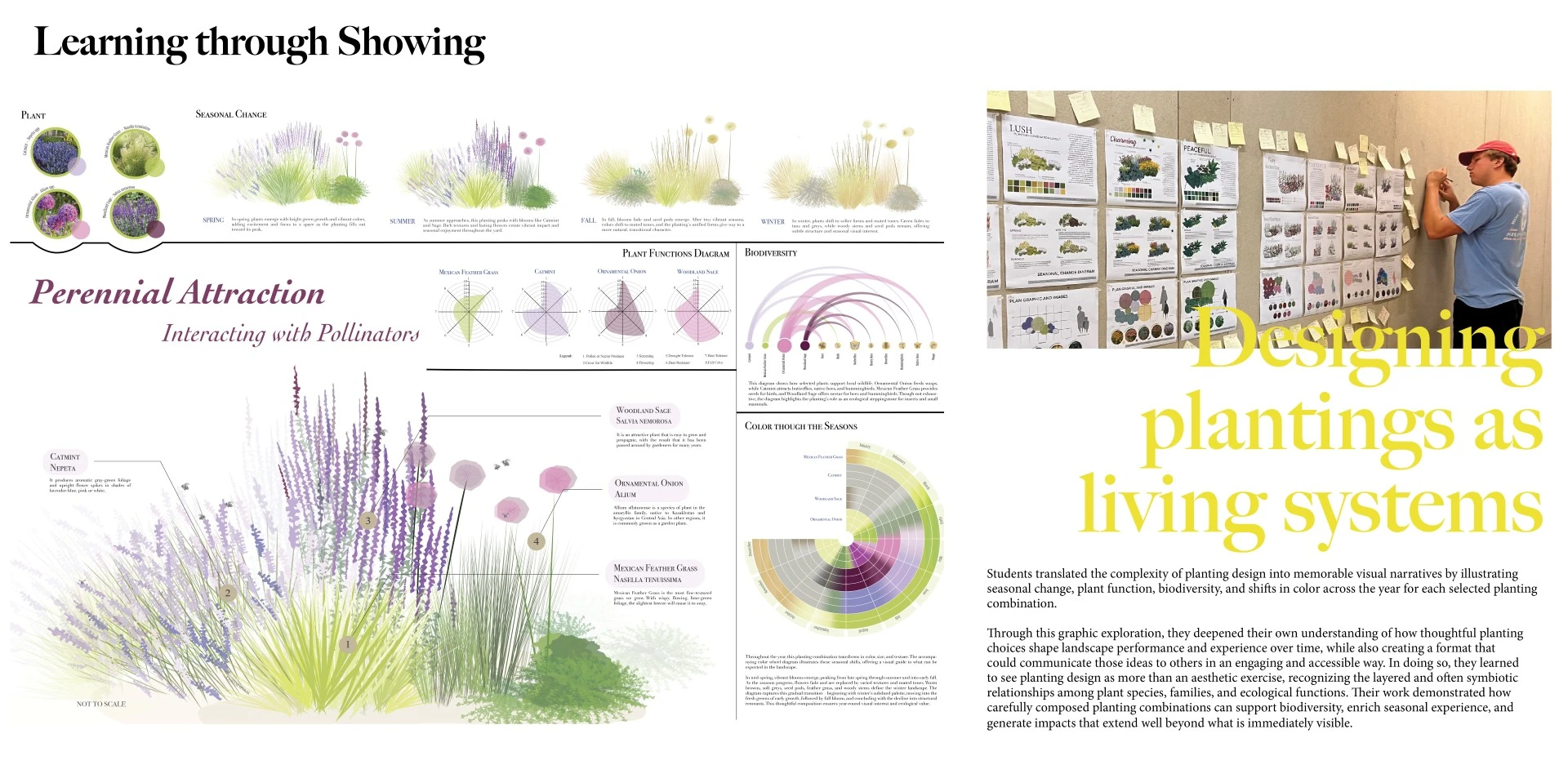
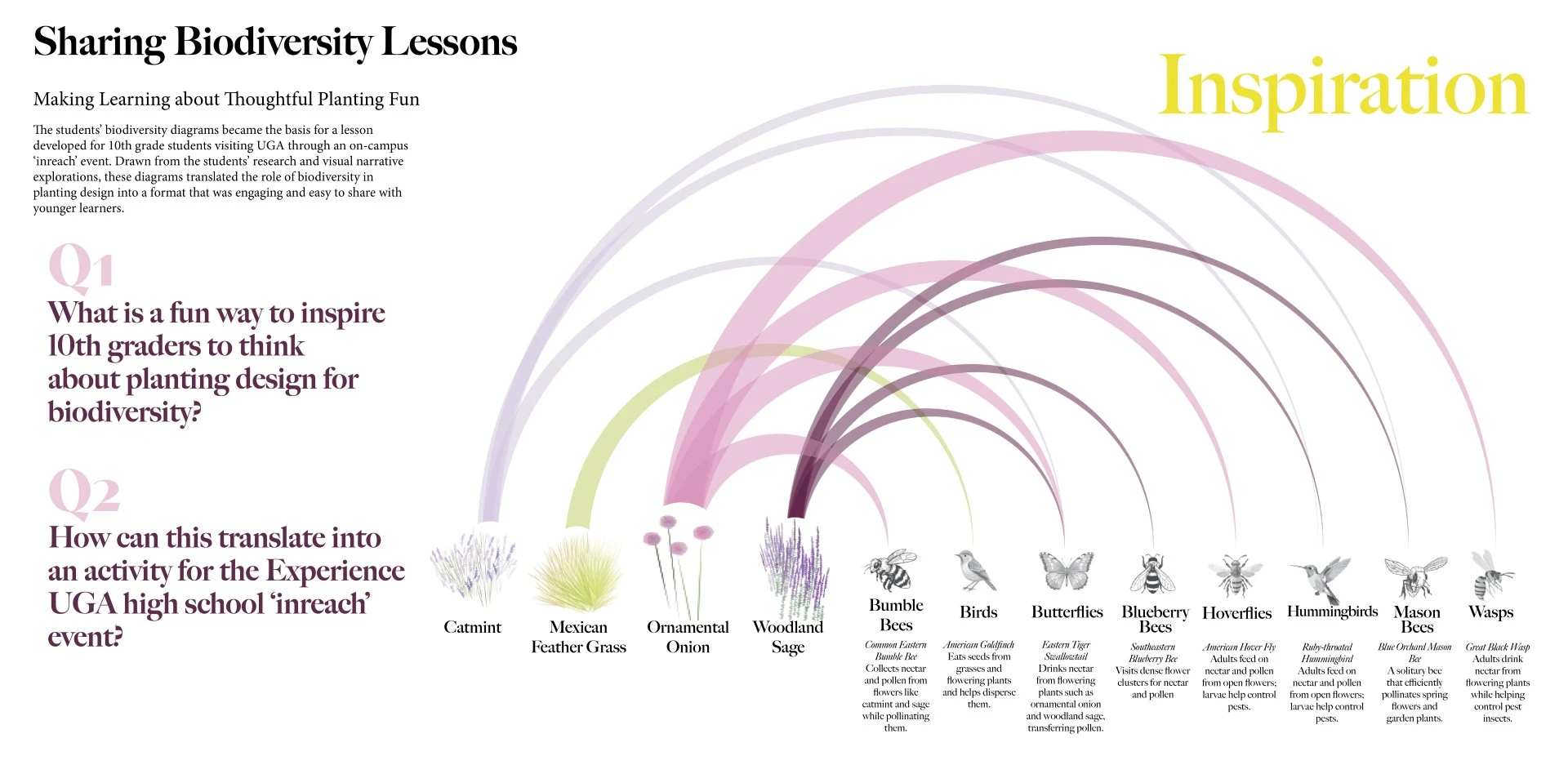
Planting combinations are often appreciated first for their visual appearance, but their ecological functions reveal another kind of beauty rooted in relationships, performance, and care. Root and Relationship builds from this idea through approachable visualizations that made the complexity of planting combinations legible. Developed across multiple introductory planting design studios, the work began with field observation, photography, library research, and graphic synthesis. Students investigated multiple planting combinations, studied hundreds of plant species and ecological relationships, and translated their findings into visual narratives that revealed how selected plant groupings function as living systems across seasons. Through this process, they learned to represent planting combinations not only as aesthetic compositions, but as systems shaped by interdependence.
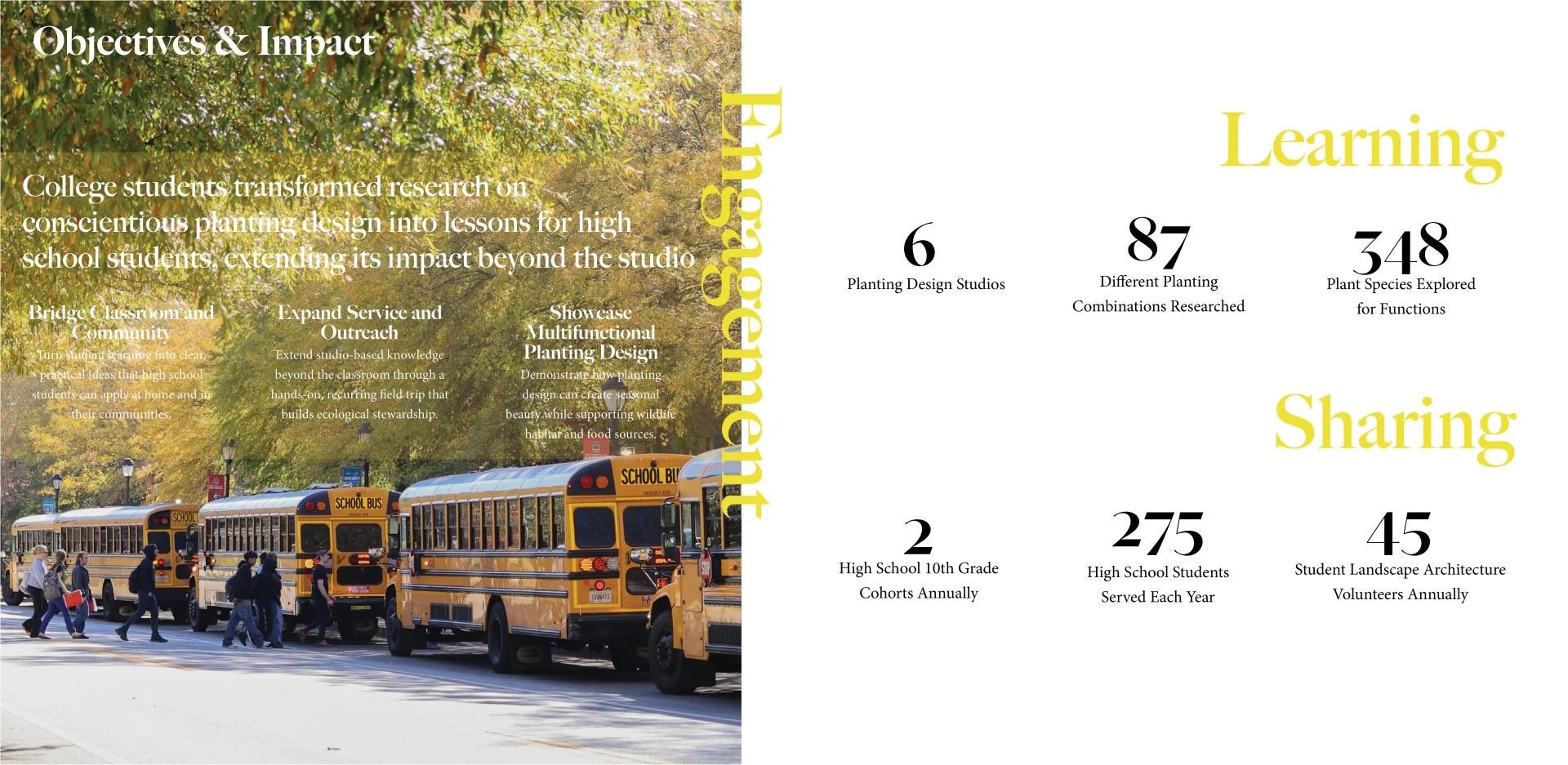
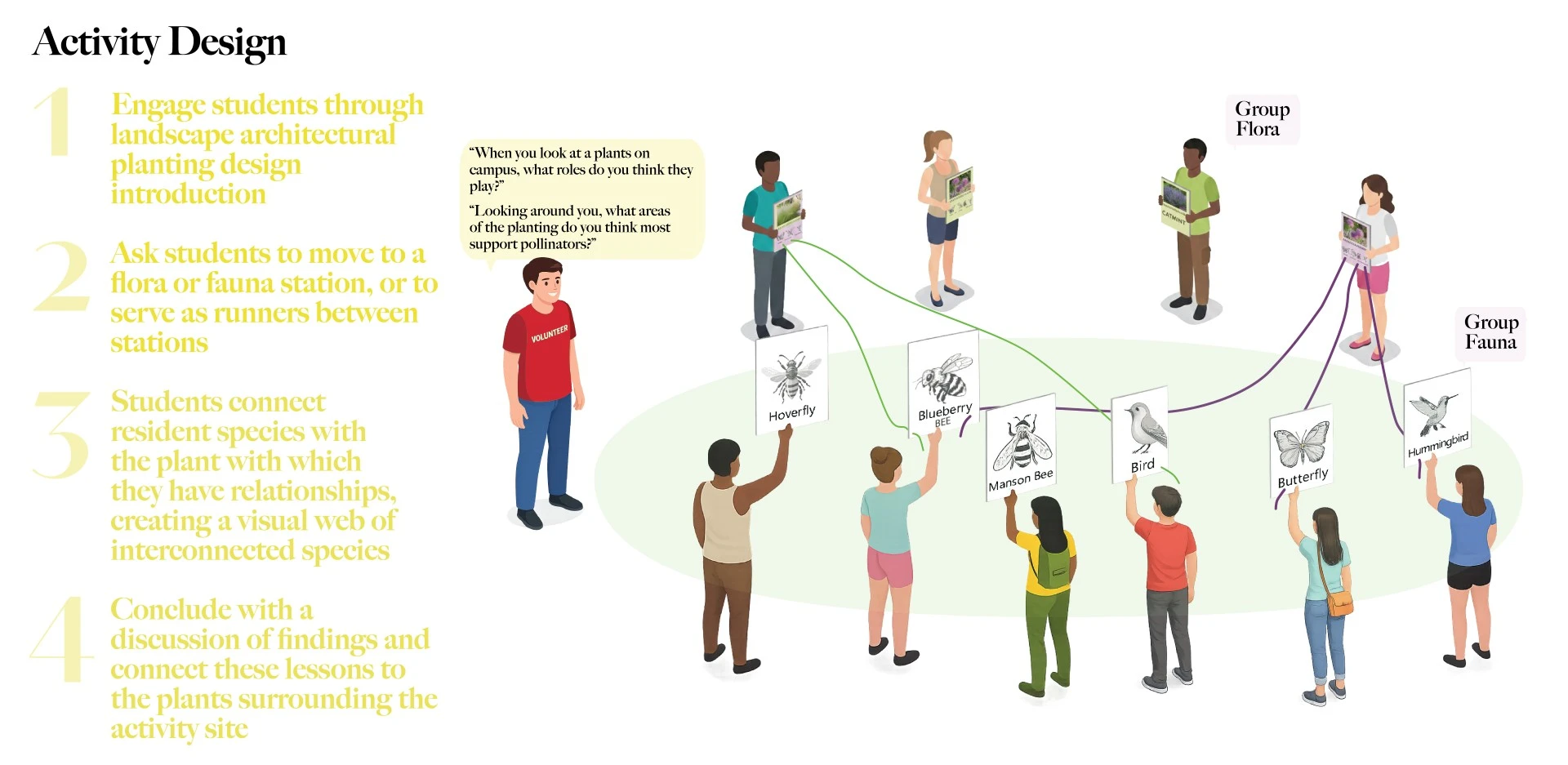
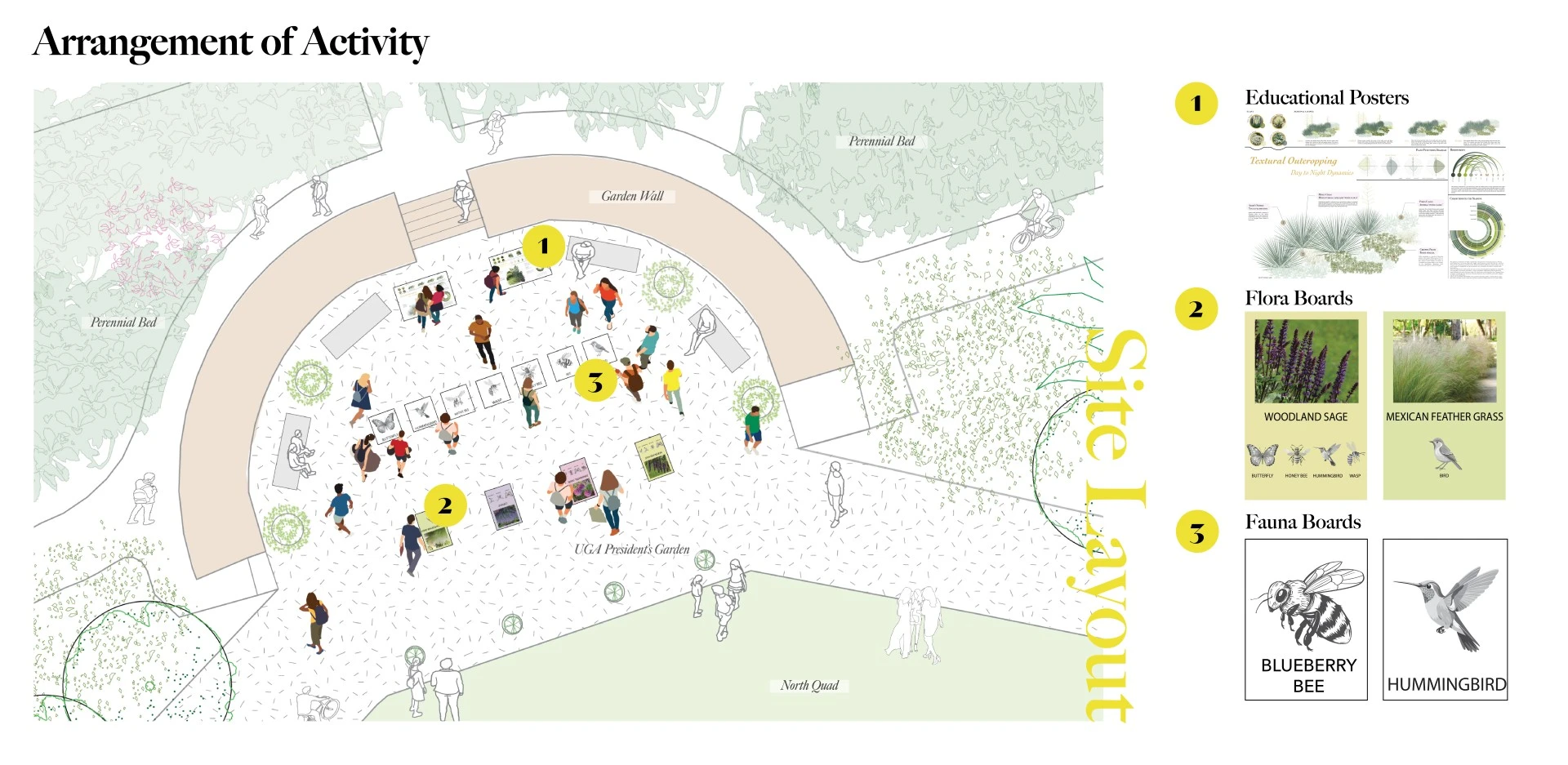
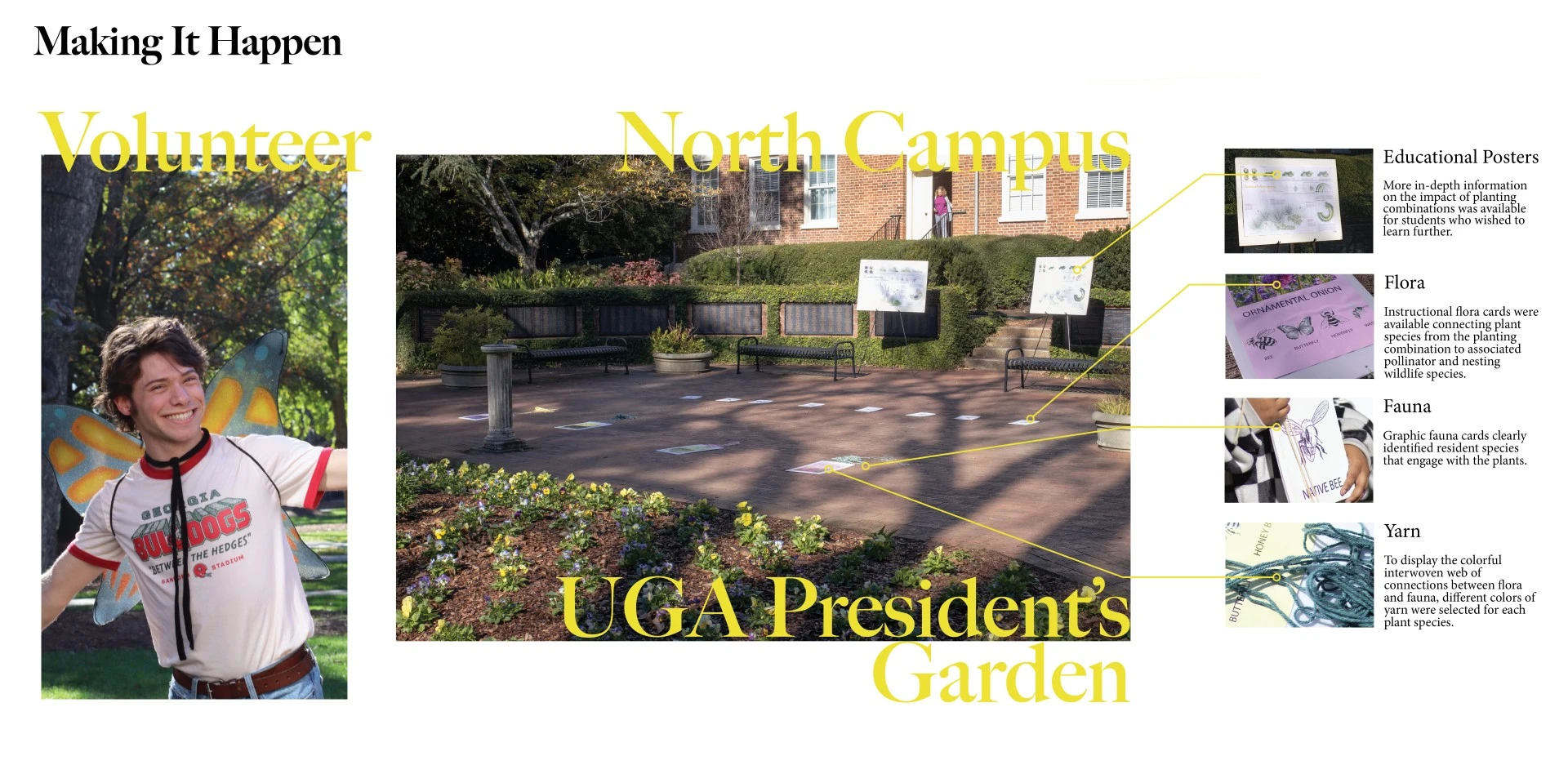
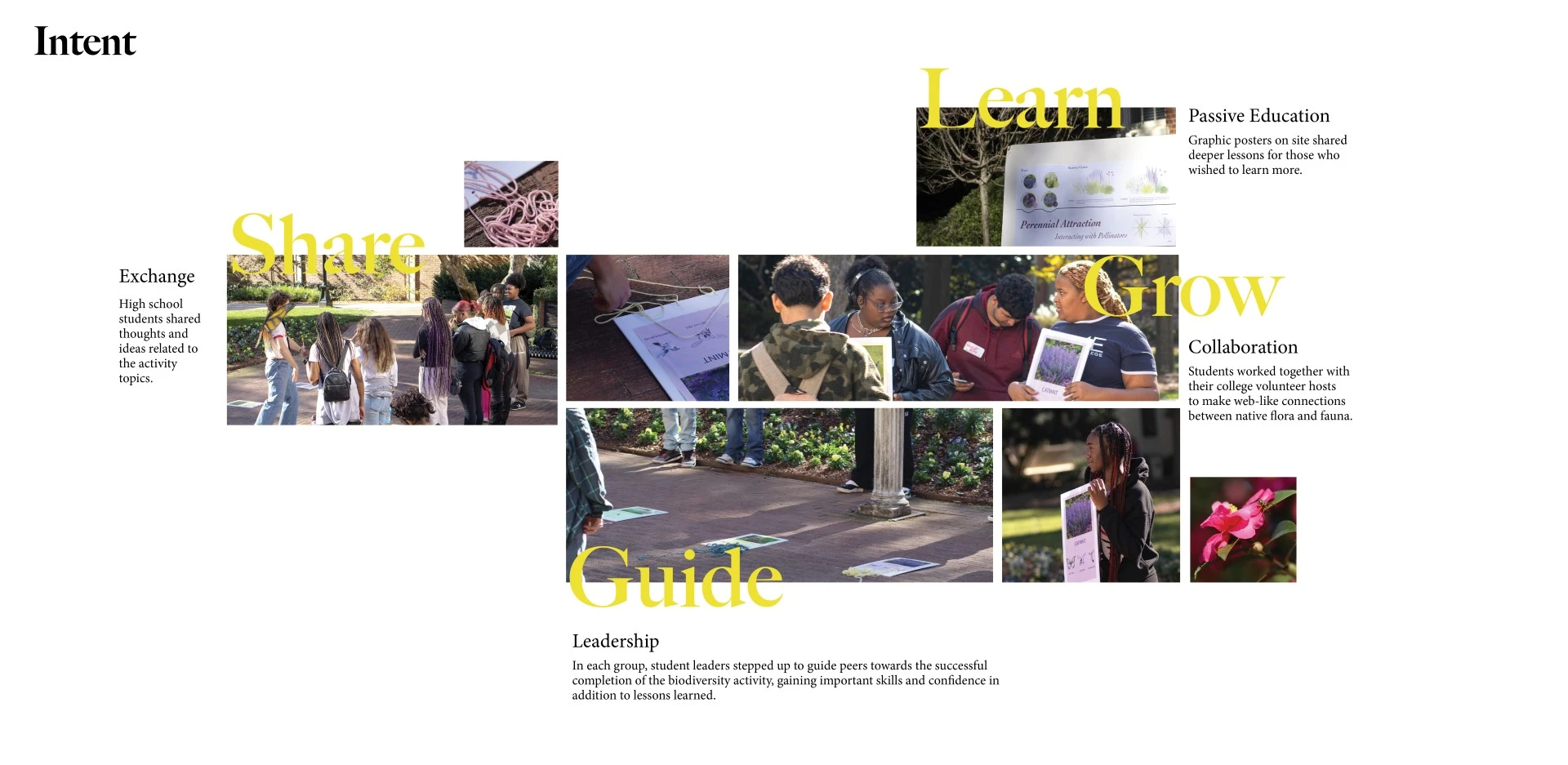
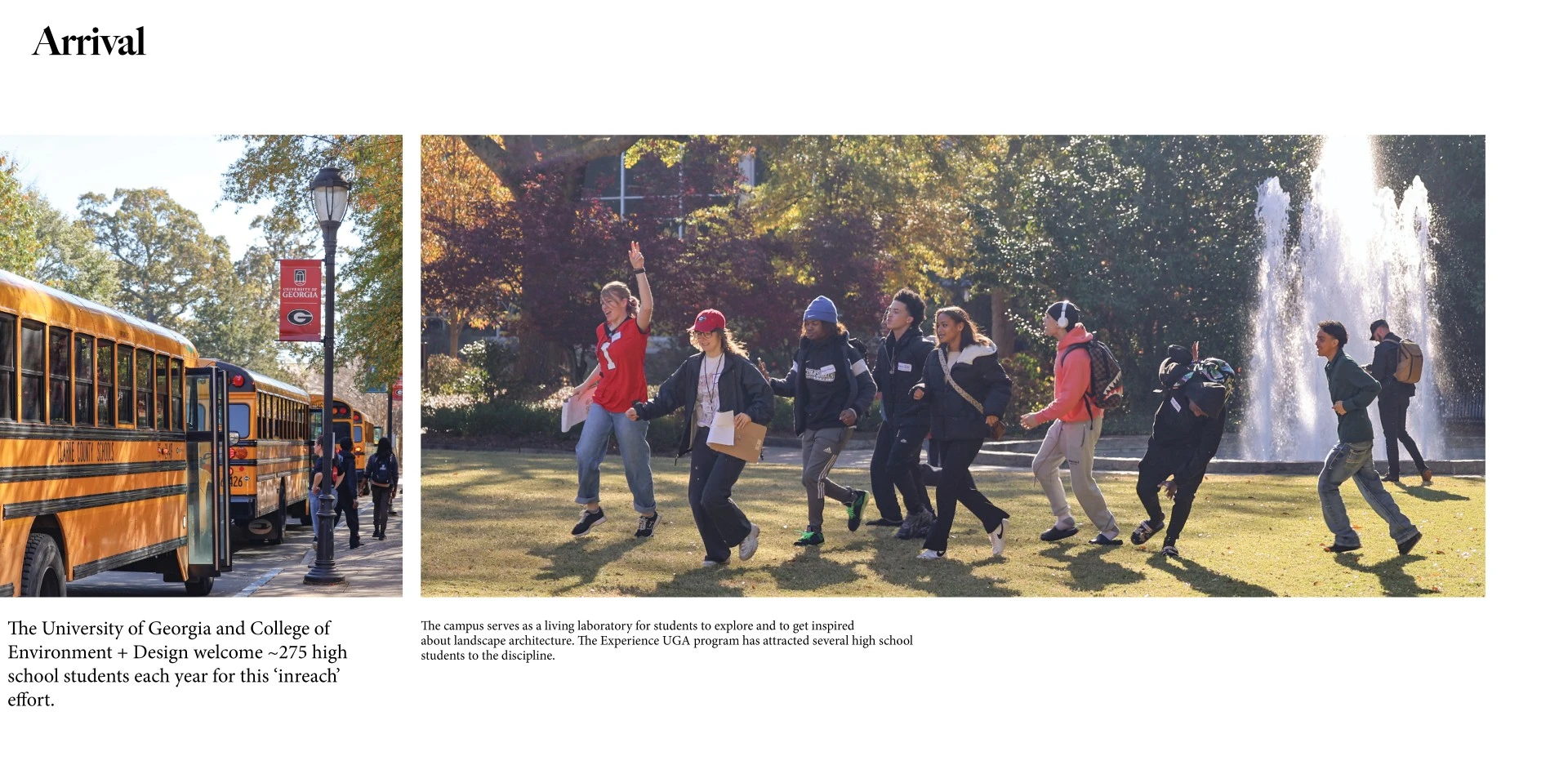
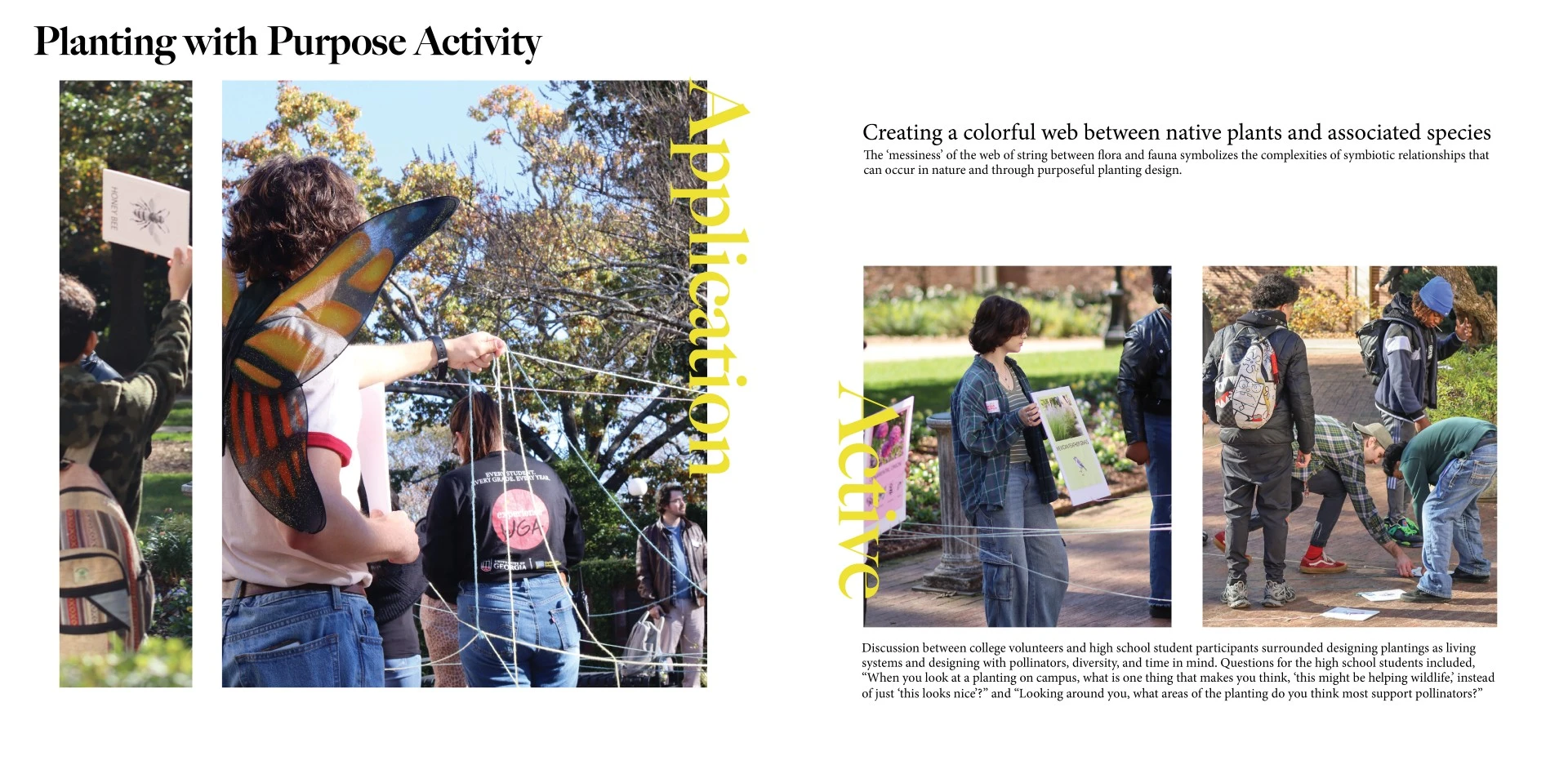
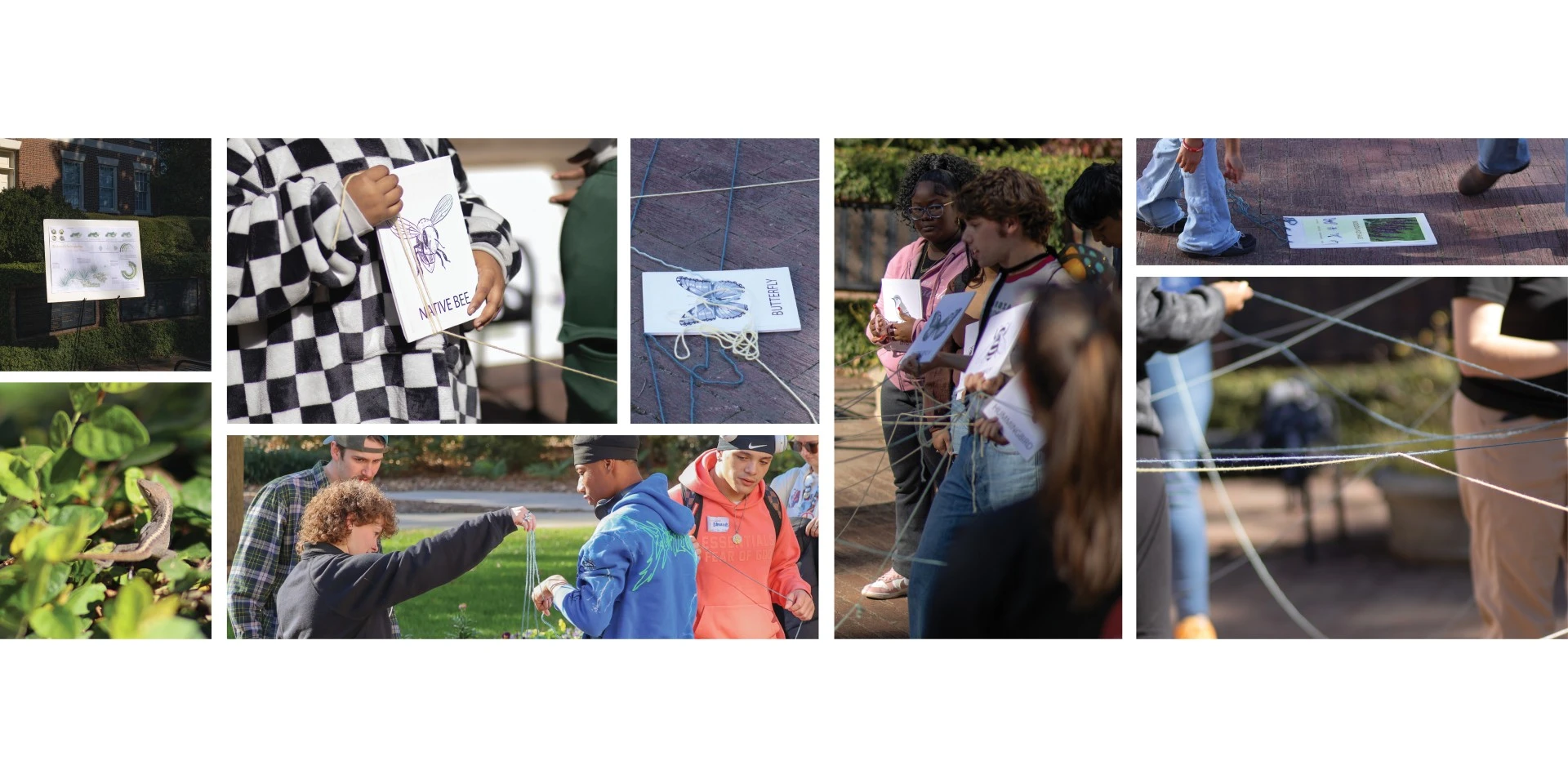
The clarity of the student visualizations allowed the work to move beyond the studio and into public learning for approximately 275 tenth-grade students who visit the University of Georgia College of Environment and Design each year through Experience UGA. The core message was that planting combinations are living systems with ecological roles that can be observed, understood, and applied. Student visualizations were adapted into educational posters, flora and fauna cards, and a participatory activity. Using species cards and colored yarn, high school students connected plants to the pollinators and other wildlife they support, making the complexity of planting combinations visible through a shared, hands-on web. Student landscape architecture volunteers guided the activity, encouraged discussion, and connected the lesson back to surrounding campus plantings.
The project was distributed through an in-person outreach event supported by nearly 50 landscape architecture student volunteers annually, with materials designed for reuse as part of a recurring Experience UGA lesson. Its reach extended beyond the event through university news coverage and social media, where the project generated thousands of views and meaningful public engagement. Its effectiveness is reflected in the adaptability of the materials, the leadership developed among student volunteers, and responses from teachers, alumni, and participants. The result is a communications project that moves planting knowledge from studio research into public understanding, helping young audiences see how planting combinations work, what they support, and why they matter.
-
- LAND 3030: University of Georgia Landscape Architecture 2nd Year Planting Design Studio
- LAND 6020: University of Georgia Master of Landscape Architecture 1st Year Site Application Studio
- Experience UGA: Partnership program between the University of Georgia and the Clarke County School District (CCSD)
Advertisement
Related Awards
Honor Award, Communications
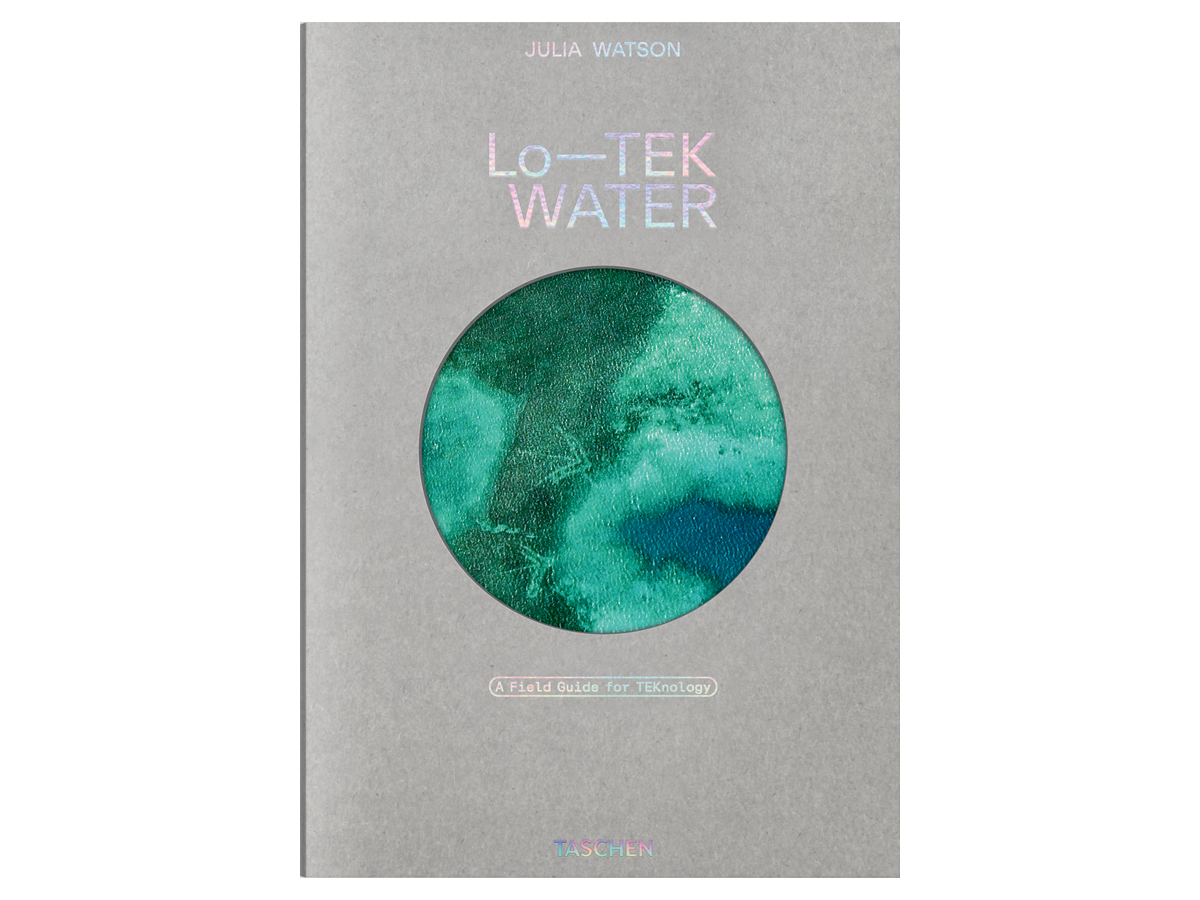
Lo—TEK Water. A Field Guide for TEKnology
Lo—TEK Water is a publication that communicates Indigenous and traditional ecological knowledge as a contemporary framework for addressing global water challenges. Through rigorous research, compelling narrative, and visually driven storytelling, the book translates complex environmental systems into accessible, actionable insights for designers, planners, policymakers, and the public.