
.webp?language=en-US)
.webp?language=en-US)


Paillettesage
Cassandra Lanson, Student ASLA


Incredible, playful, beautiful, useful. In the age of AI and burnout, tools like this are needed to keep the field grounded.
Awards Jury
-
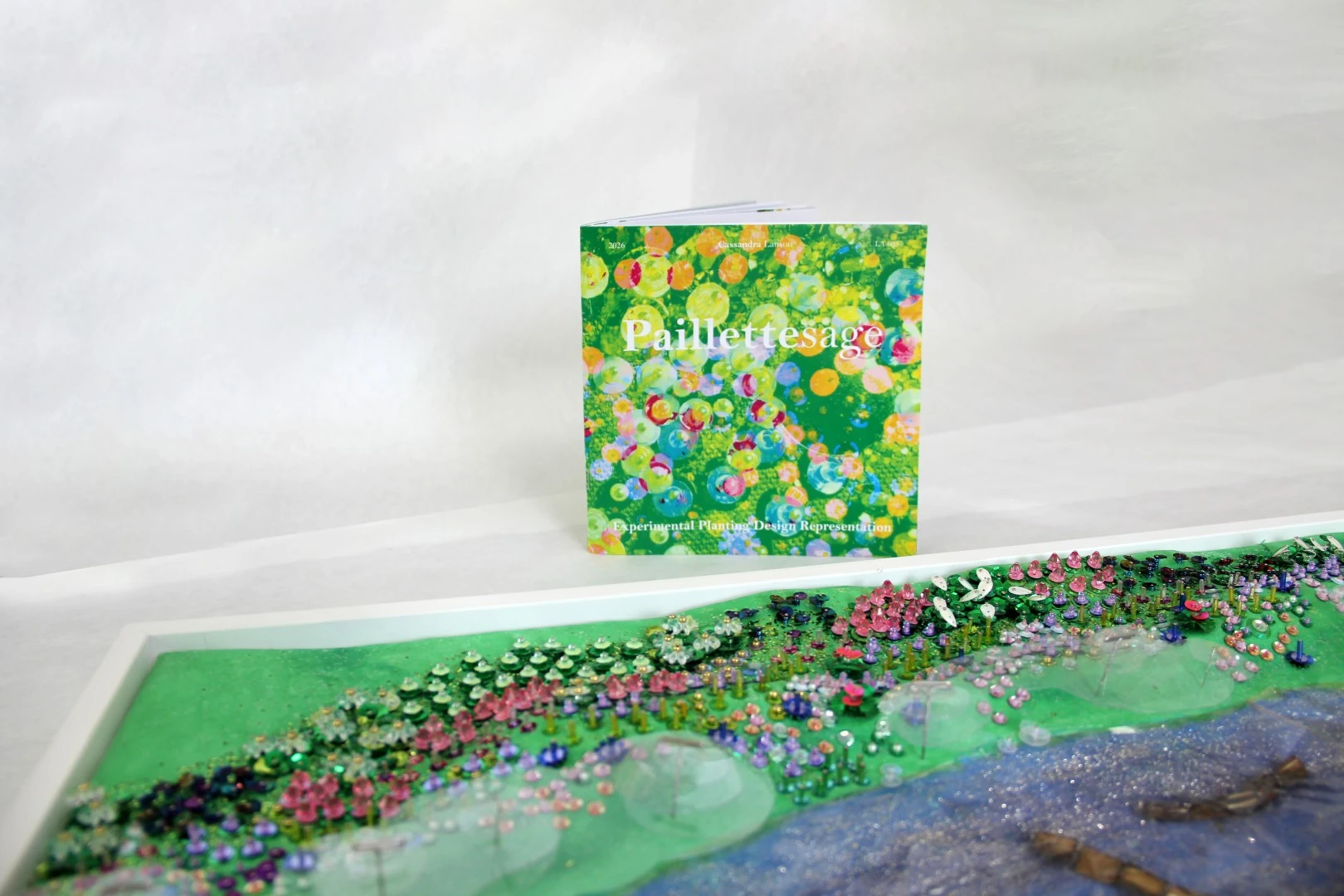
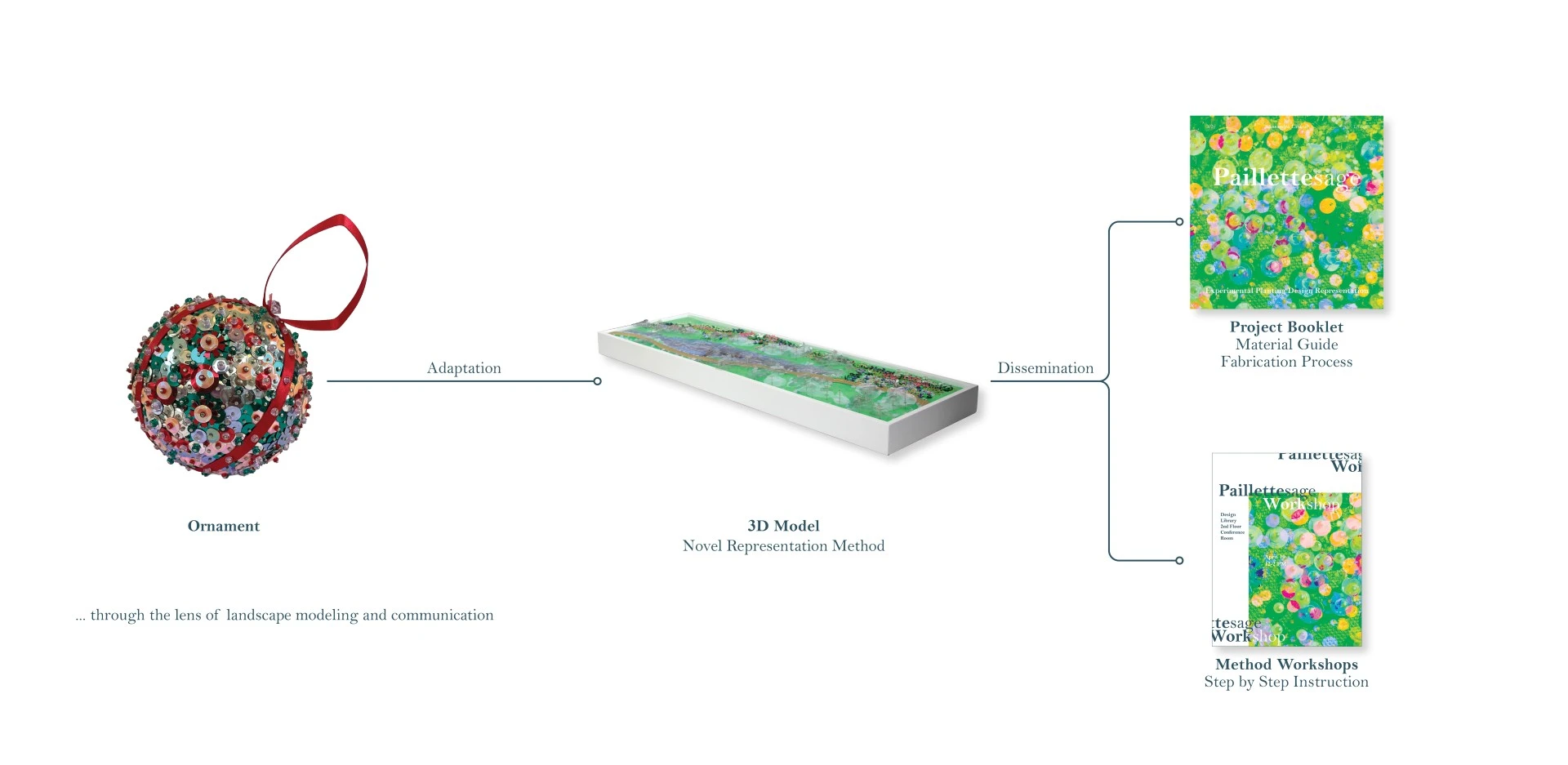
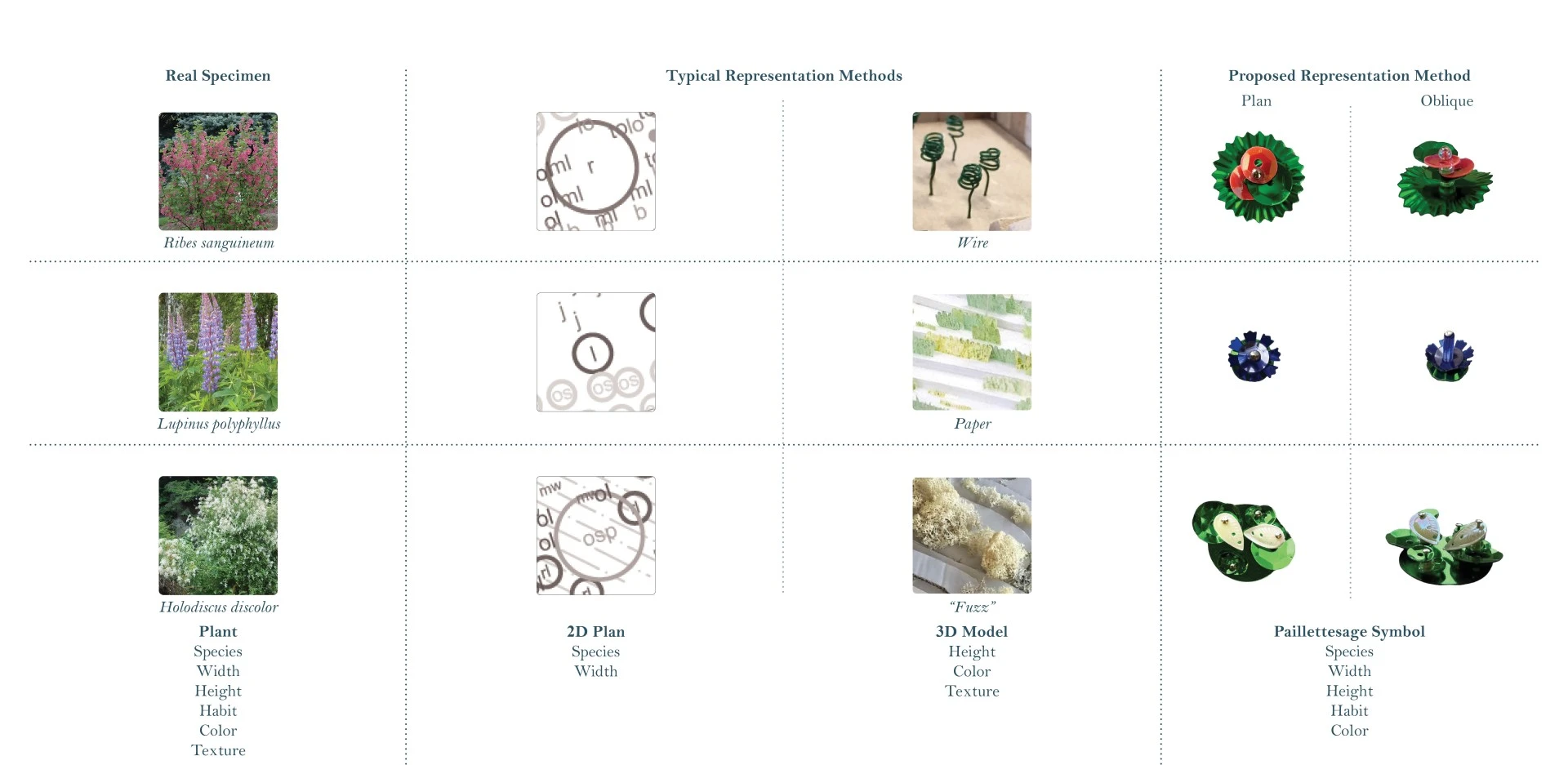
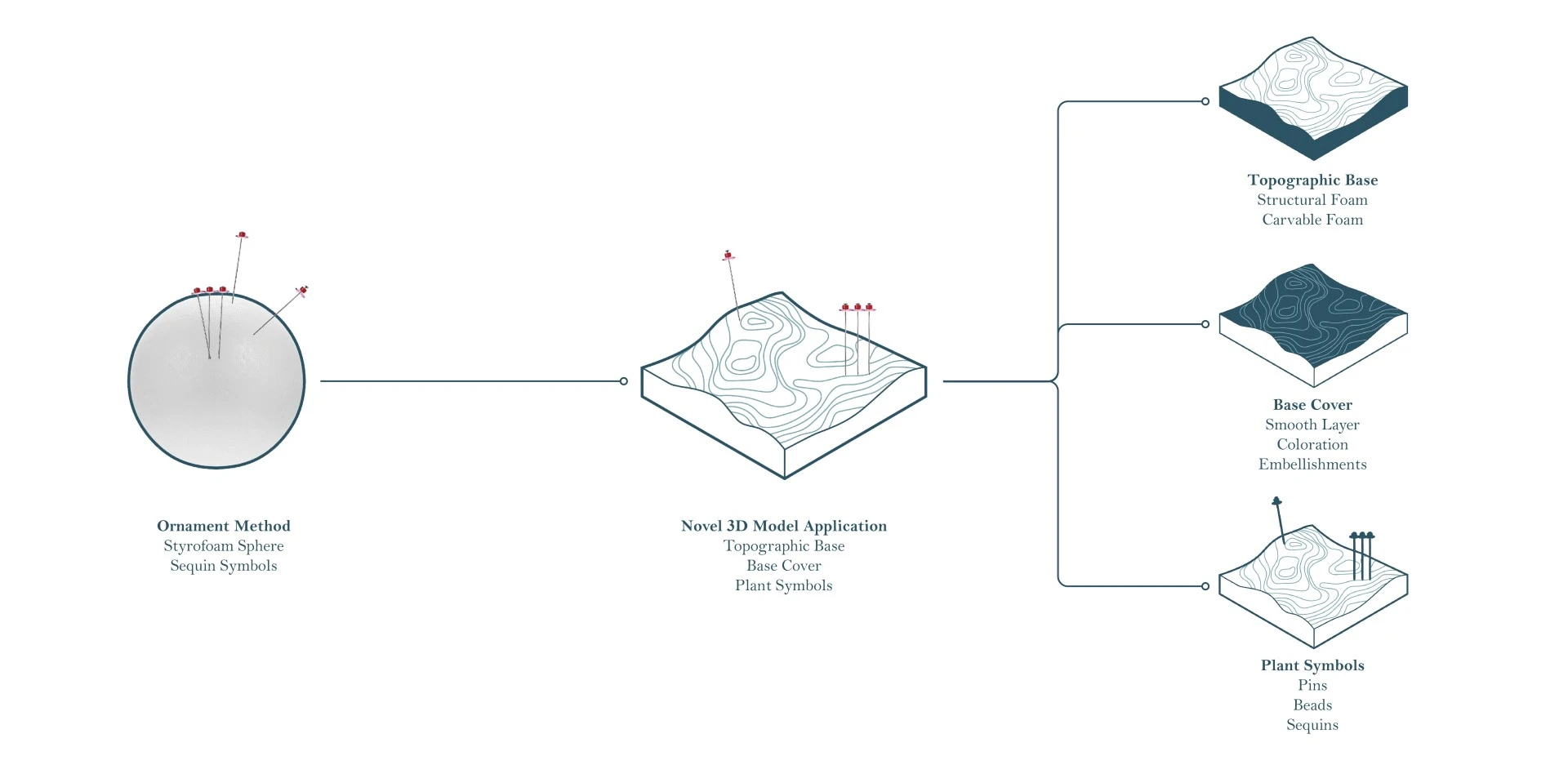
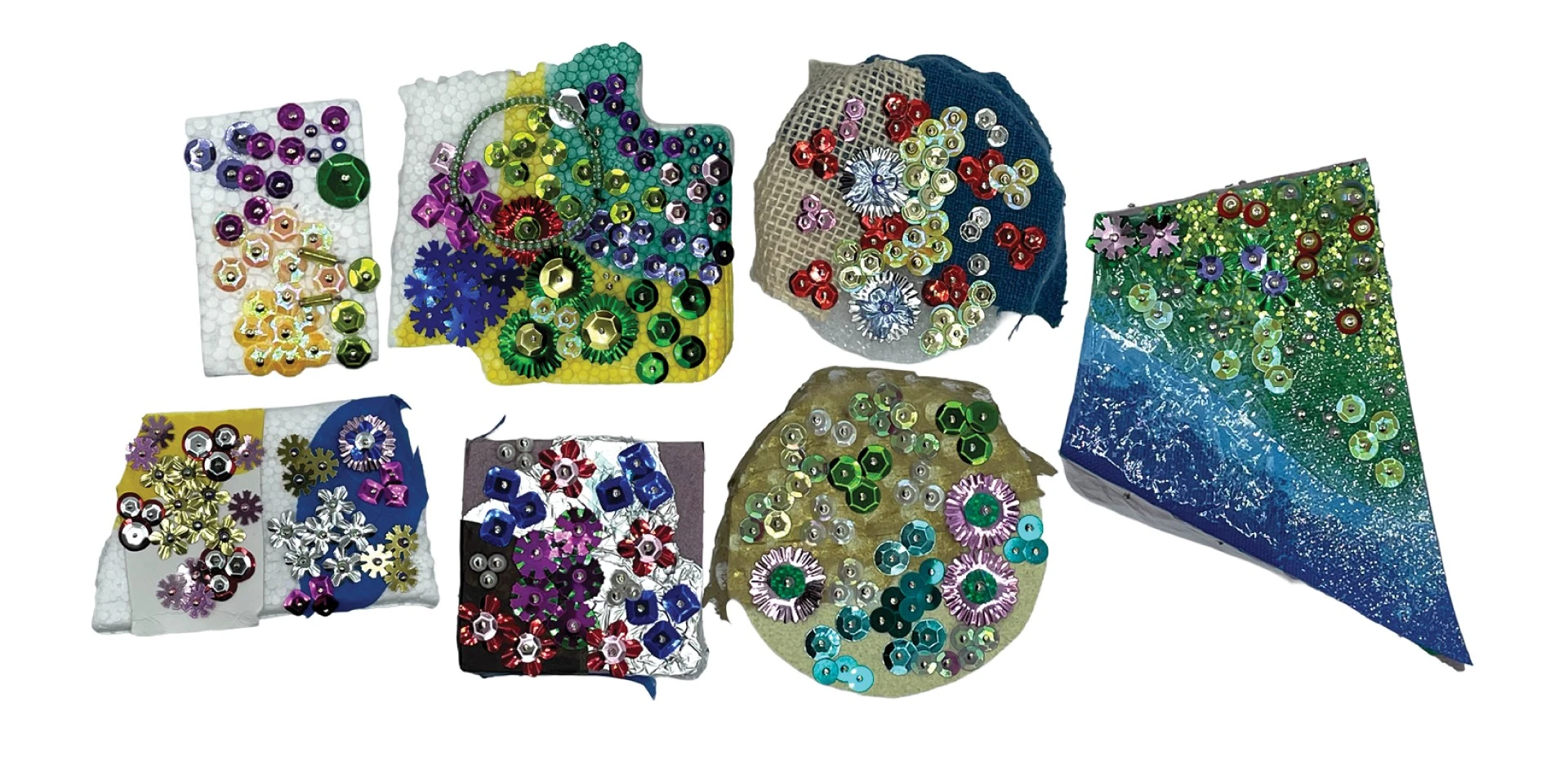
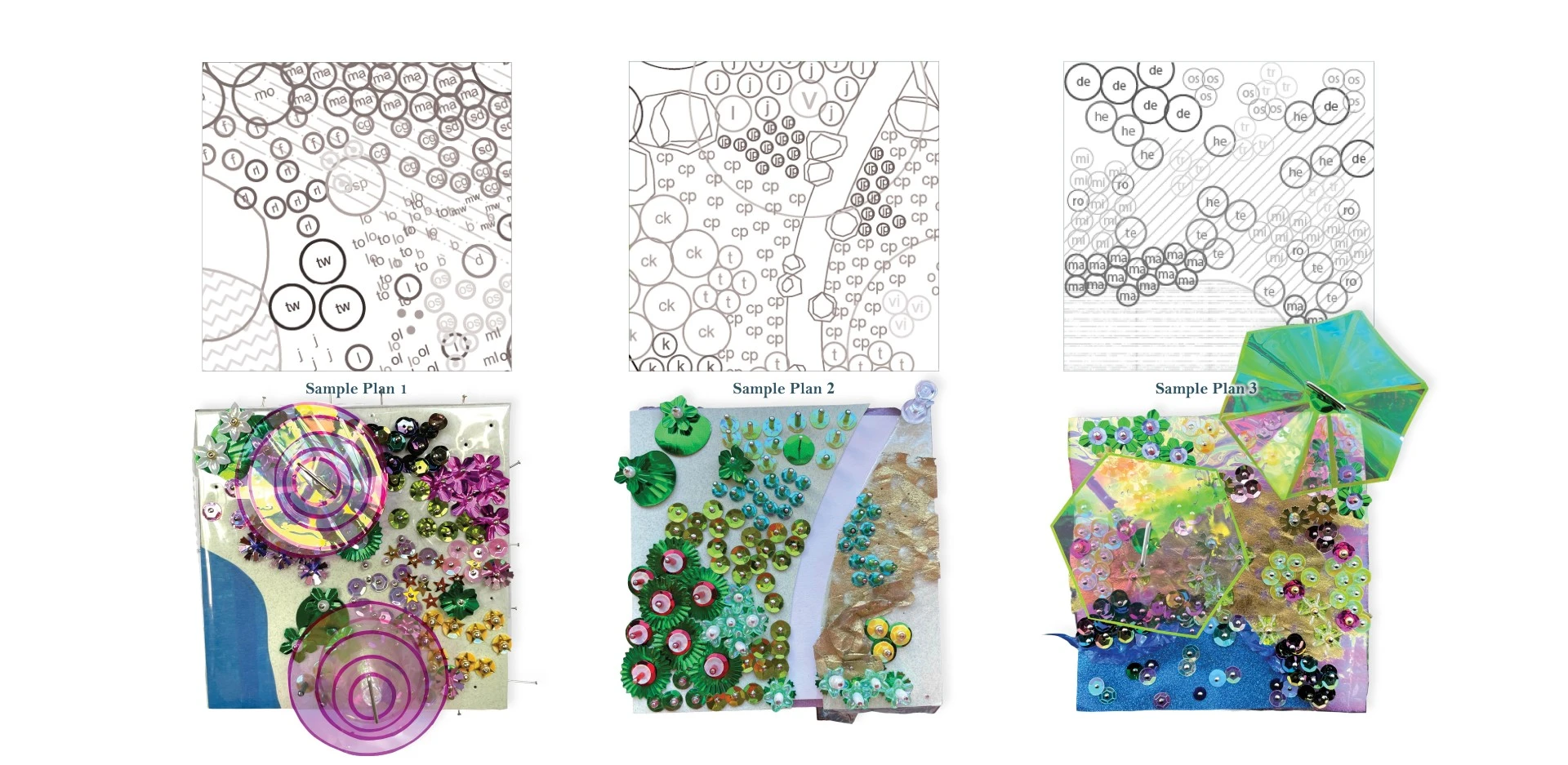
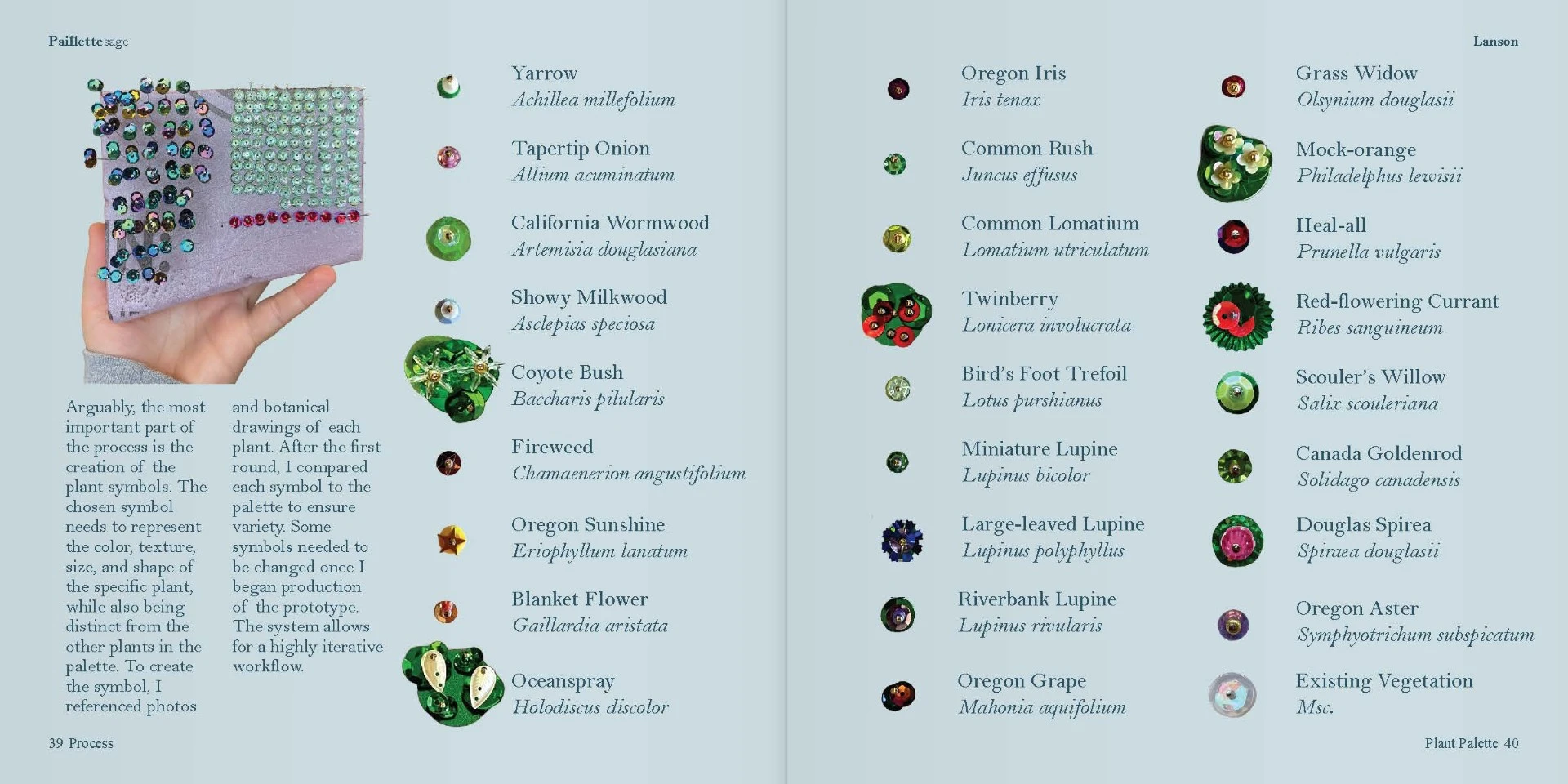
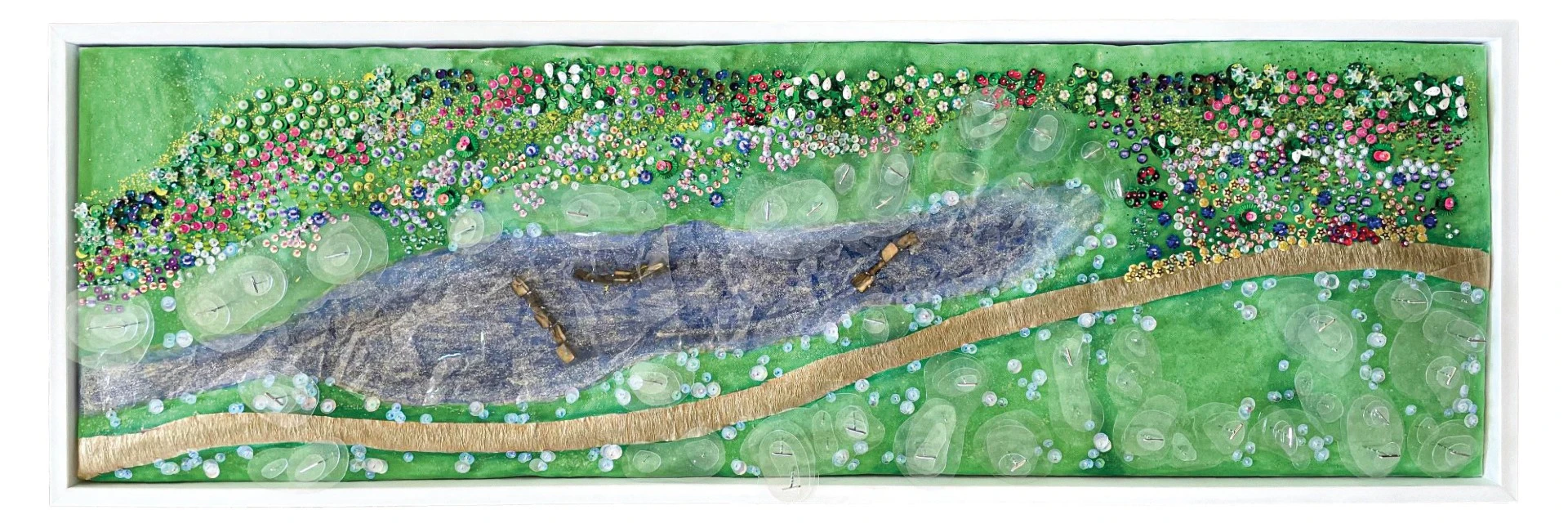
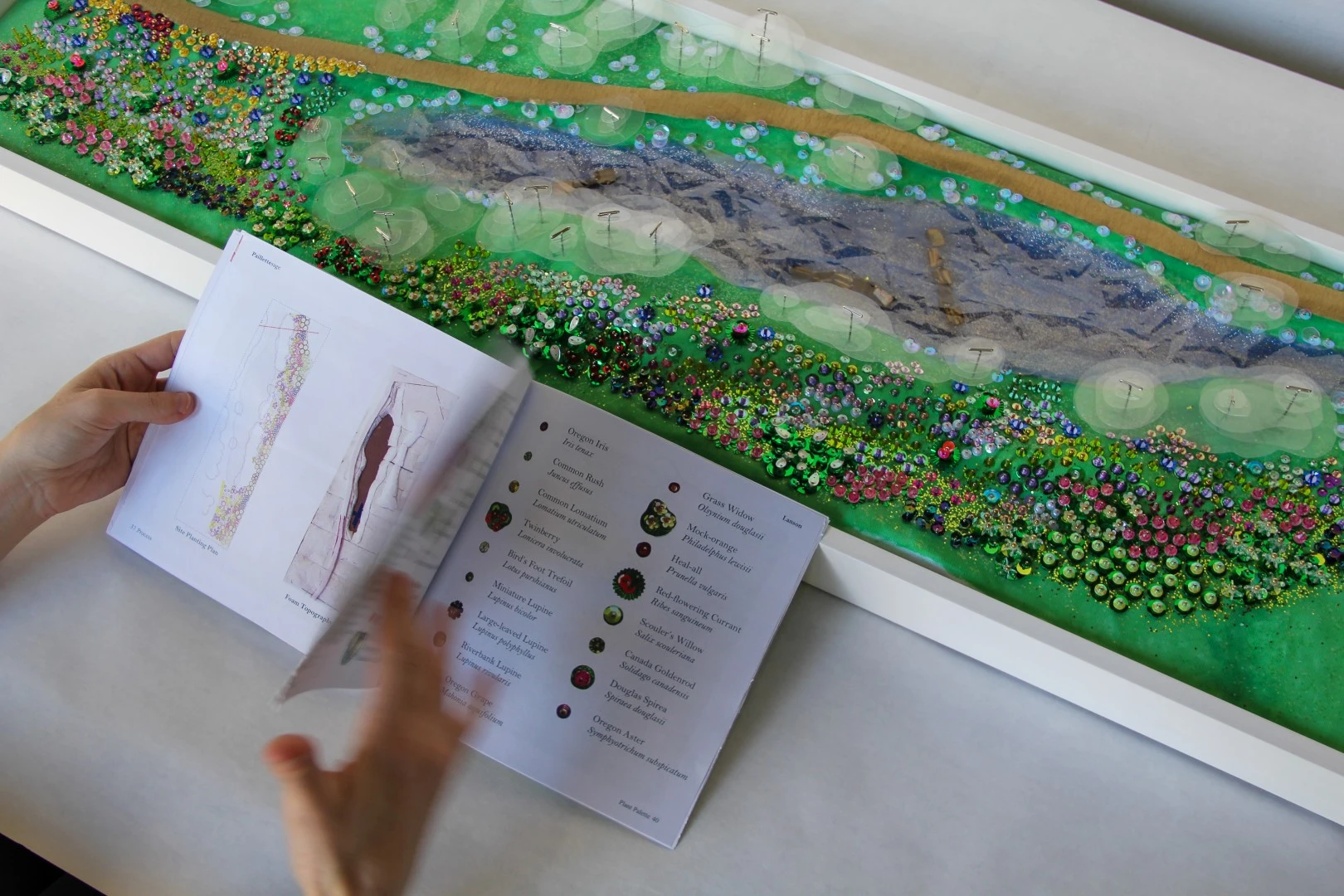
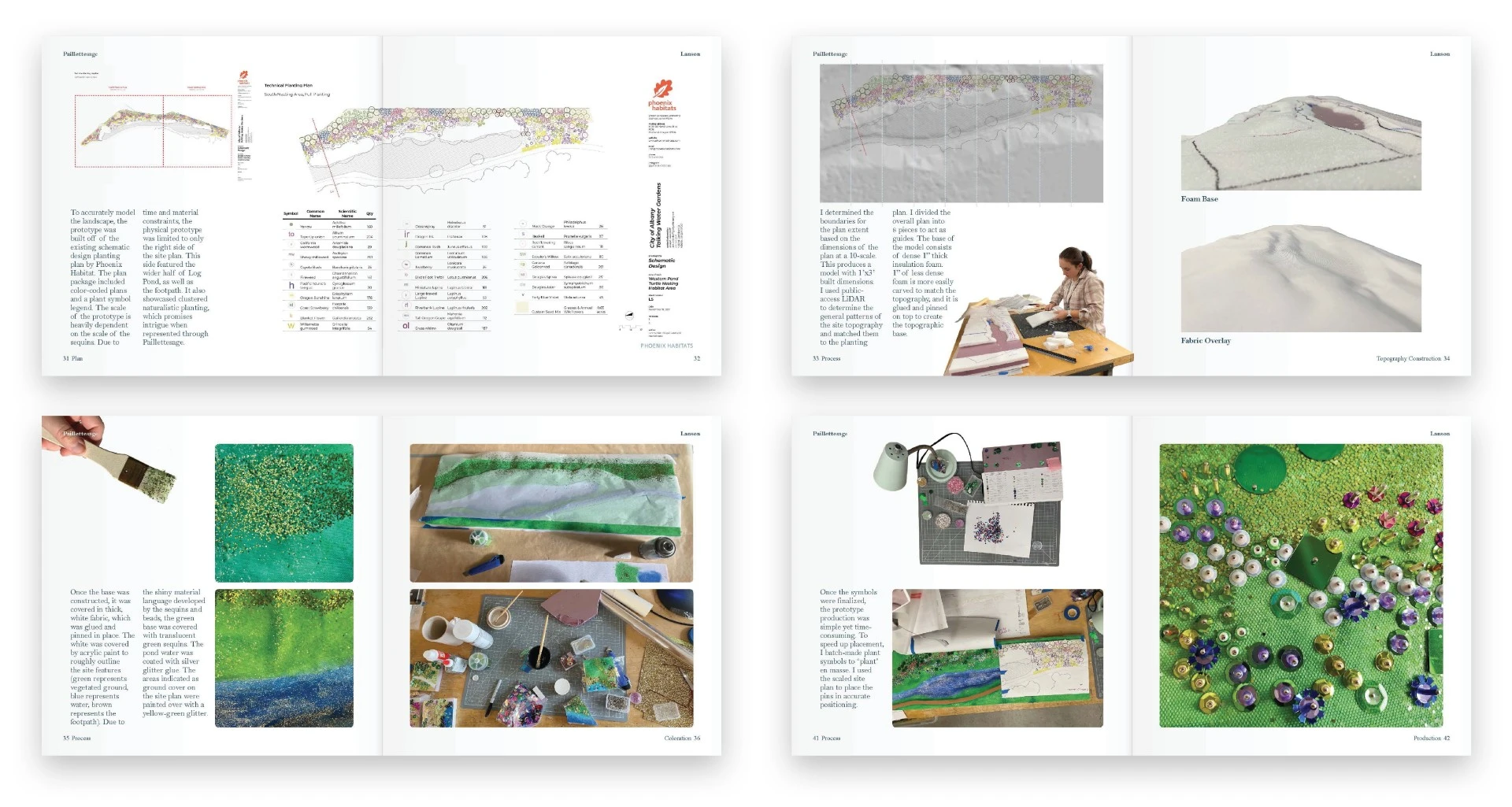
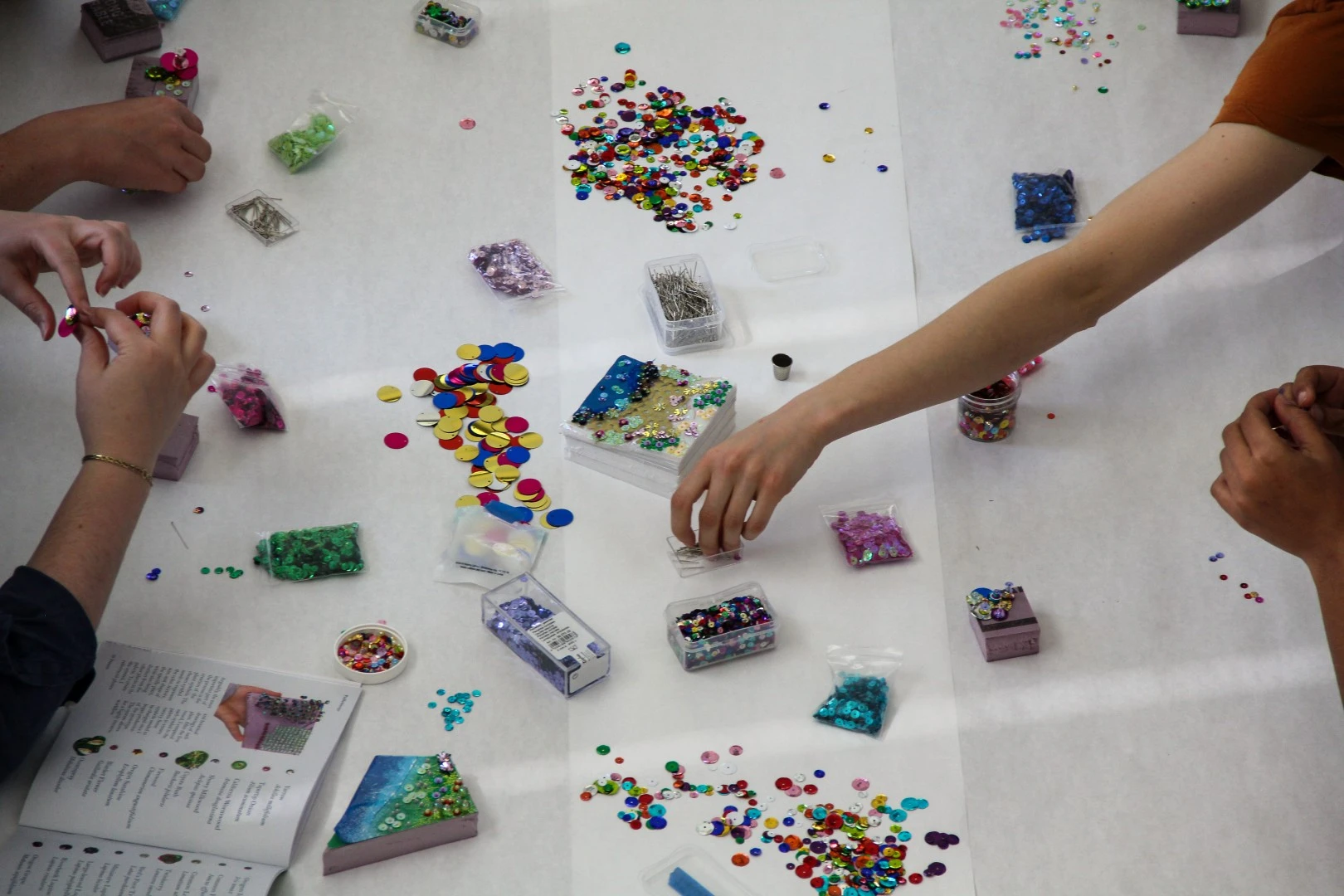
Paillettesage is a plant-representation technique that moves beyond traditional landscape models and 2D planting plans. Using sequins and beads, this new method considers scale, chirality, shape, and embellishments to communicate the complexity of botanical life—its width, height, habit, color and texture. Each plant is attached with a pin, creating a movable, reversible system that conveys the iterative nature of planting design.
The technique is a new communication tool that makes the visual and physical variety of planting design legible to designers, clients, and the public seeking a tactile, expressive way to understand spatial and material nuances often lost in conventional representation.
-
Background: Typical planting representation, both 2D and 3D, often fails to convey the richness and diversity of planting design. 2D planting plans, while precise, tend toward technical abstraction. Often rendered in black and white, they communicate species, quantity, and spacing but reveal little about plant habit, texture, and color. In physical 3D models, vegetation is frequently reduced to uniform "green fuzz," which neglects many individual plant characteristics. Typical models emphasize tree location, massing, and scale while overlooking layered understory complexity. Together, these tools struggle to convey the vibrancy, variety, and ecological nuance inherent in planting design--gaps that can impede communication and limit clients' and the public's ability to understand qualities of a proposed landscape.
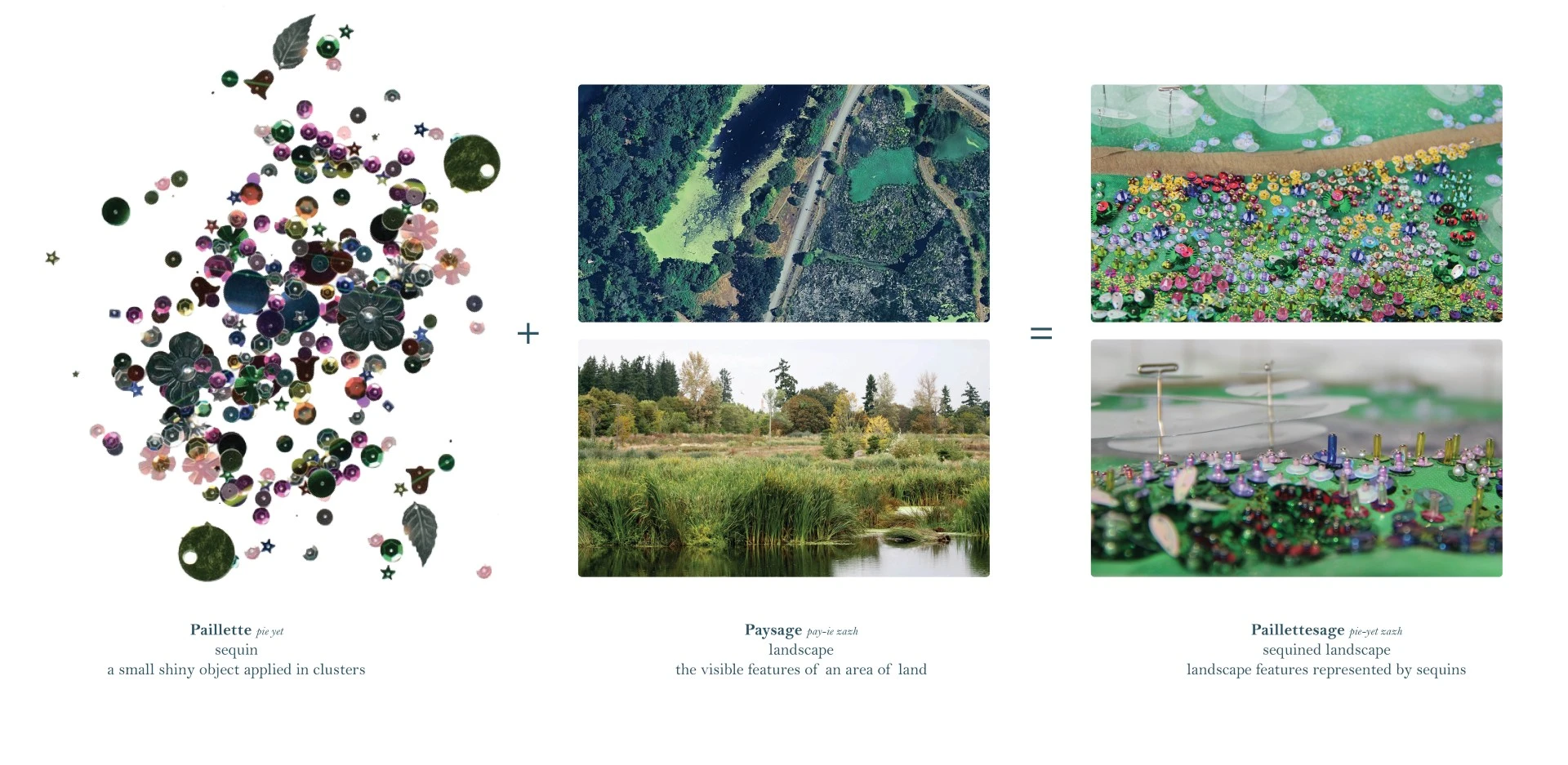
Paillettesage emerges in response to this representational disconnect. A portmanteau of the French words paillette (sequin) and paysage (landscape), this novel planting representation method employs sequins, beads, and pins to highlight plant diversity in ways that current methods overlook. By considering scale, chirality, form, and texture, the technique highlights botanical complexity more explicitly than standard 2D or 3D approaches. Paillettesage is movable and reversible, creating opportunities to work iteratively and expressively.
The work is intended for designers interested in model-making, planting design, and experimental representation, as well as clients and the public who benefit from tactile, visually engaging deliverables. More broadly, it speaks to anyone seeking more creative, nuanced, and accurate ways to communicate plant diversity.
Goals: Develop a representation method that highlights plant complexity more explicitly than conventional 2D and 3D techniques. Expand the use of unconventional materials in planting design communication. Create a tactile, iterative system that captures representational complexity in both dimensions.
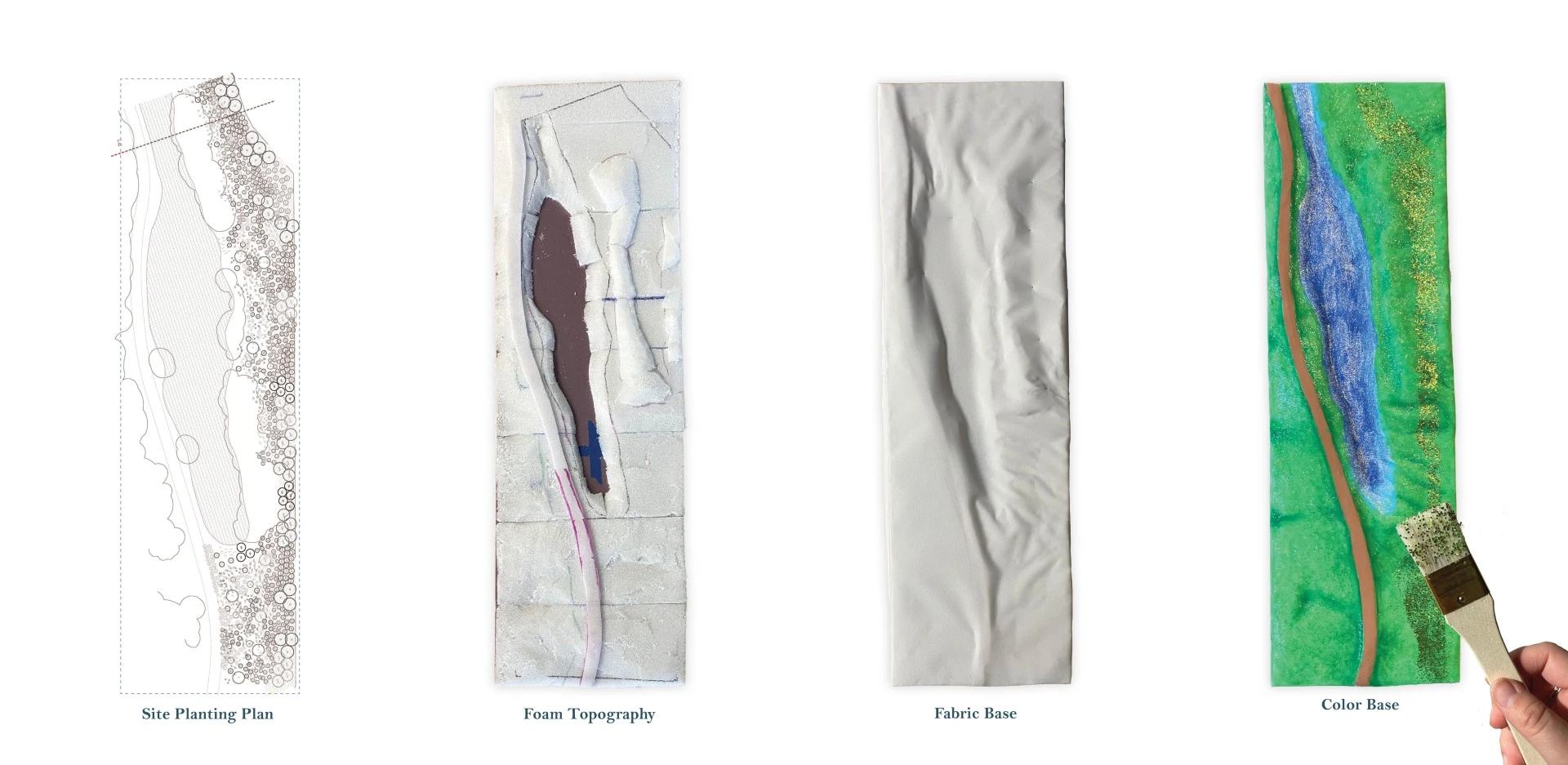
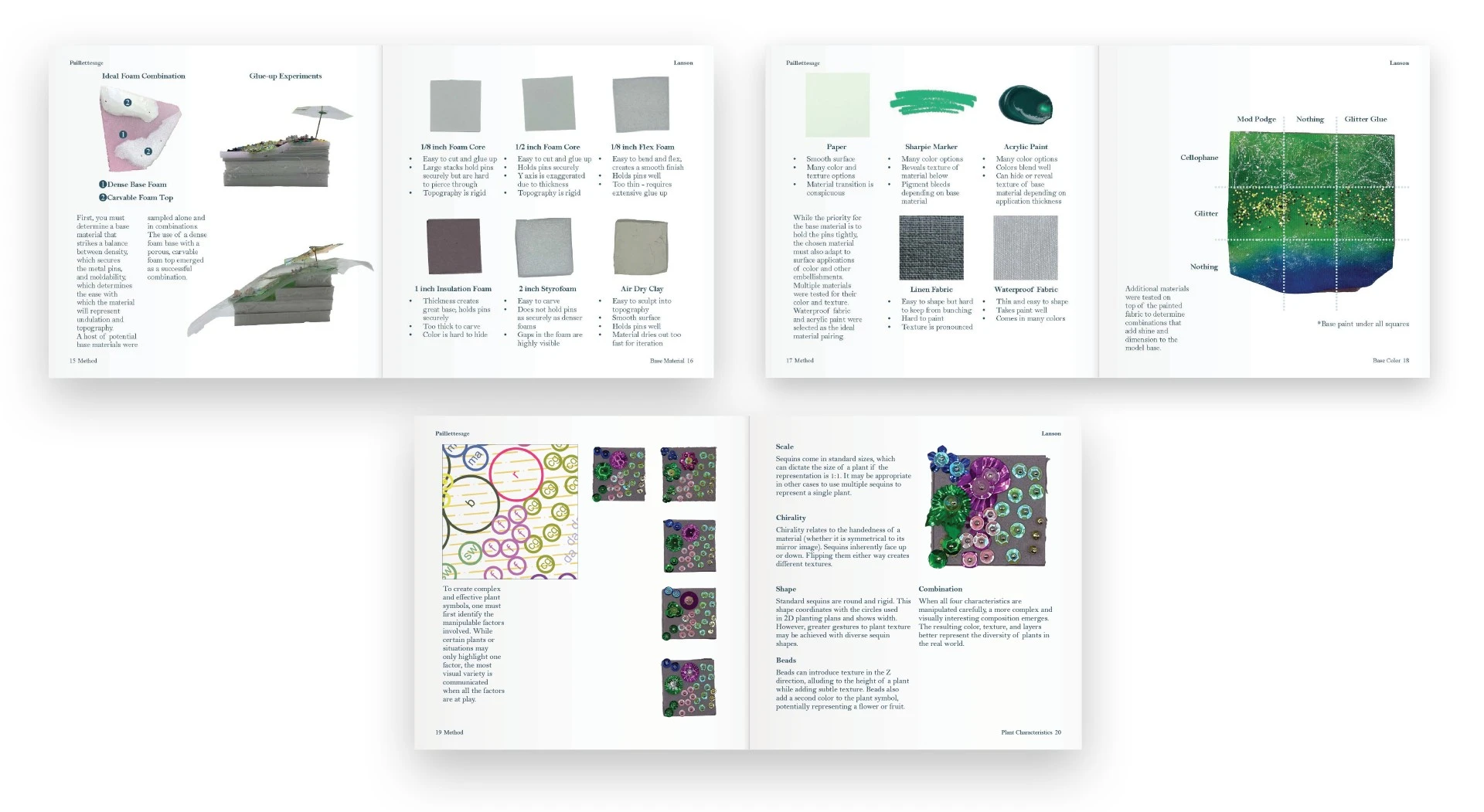
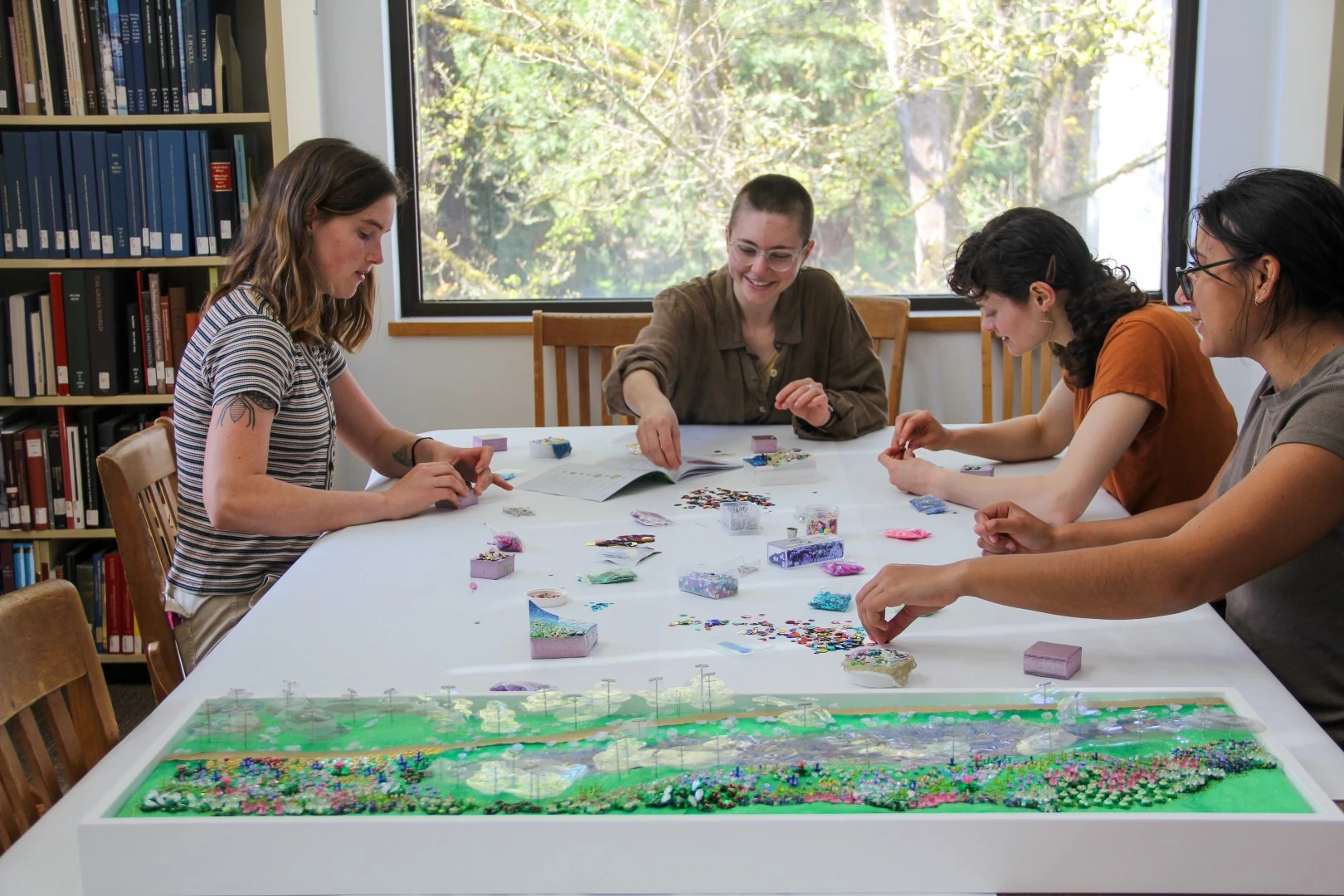
Strategy: Identify the key physical and visual factors essential for representing plants with sequins and beads, including scale, chirality, shape, and texture, to capture width, height, habit, color, and texture. Using sketch models and vignettes, test base and top materials that are compatible with sequins and pins. Develop a functional prototype. Document and disseminate the work through a project booklet that records project process and guides users to replicate the technique. Host a Paillettesage workshop to teach about and apply the technique.
Impact: Paillettesage expands conventional practice around planting representation by offering a more expressive, tactile, and accurate way to communicate spatial and ecological complexity. The technique encourages designers to adopt more experimental and materially rich methods and champion the diversity of the understory. Future iterations may take the form of Paillettesage starter kits, enabling designers, clients, students, and the public to experiment with new ways of representing—and ultimately understanding—plants.
-
- Mark Eischeid, Project Reviewer
-
- Yarrow
- Tigerlily Onion
- California Wormwood
- Showy Milkweed
- Coyote Bush
- Fireweed
- Oregon Sunshine
- Blanket Flower
- Ocean-spray
- Oregon Iris
- Common Rush
- Common Lomatium
- Twinberry
- Bird's Foot Trefoil
- Miniature Lupine
- Large-leaved Lupine
- Riverbank Lupine
- Oregon Grape
- Grass Widow
- Mock-orange
- Heal-all
- Red-flowering Currant
- Scouler's Willow
- Canada Goldenrod
- Douglas Spirea
- Oregon Aster
- Existing Vegetation
Advertisement
Related Awards
Honor Award, Communications
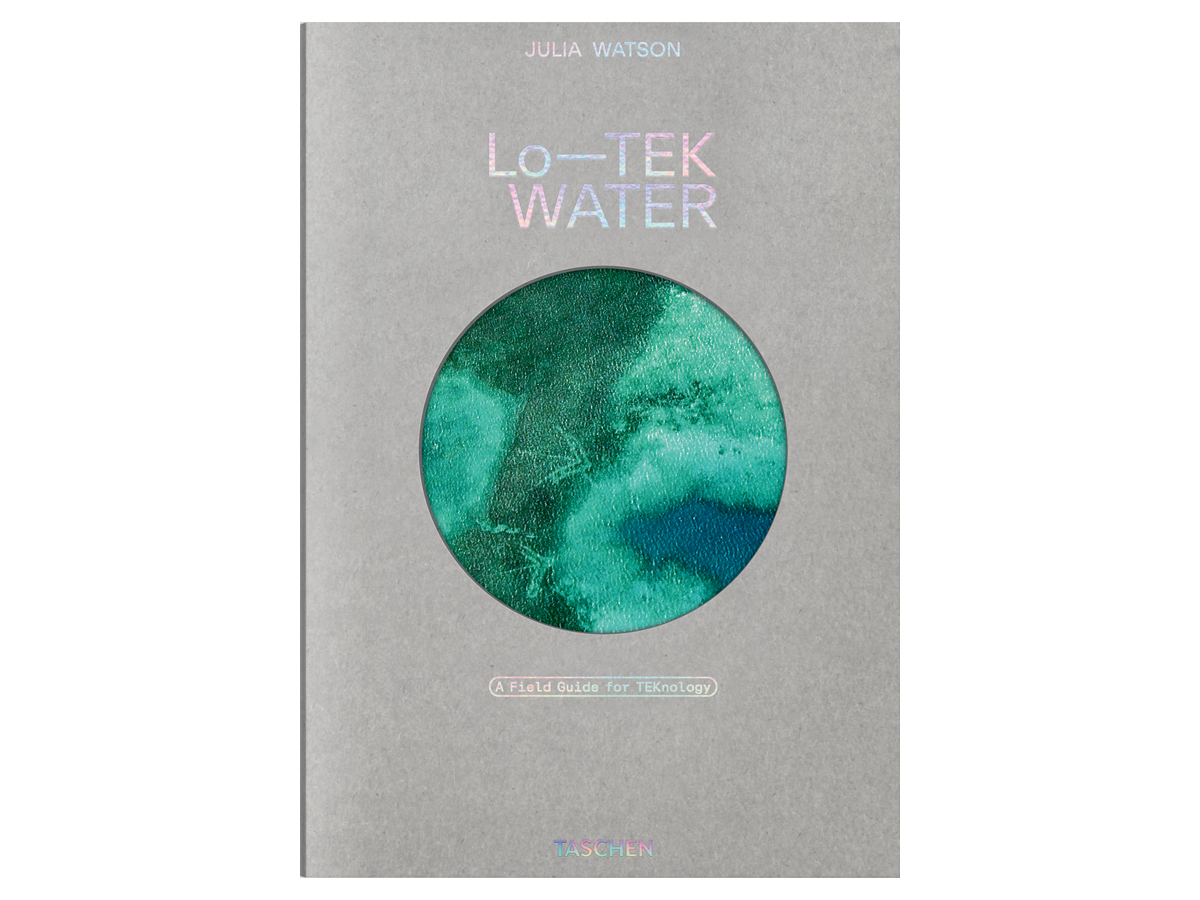
Lo—TEK Water. A Field Guide for TEKnology
Lo—TEK Water is a publication that communicates Indigenous and traditional ecological knowledge as a contemporary framework for addressing global water challenges. Through rigorous research, compelling narrative, and visually driven storytelling, the book translates complex environmental systems into accessible, actionable insights for designers, planners, policymakers, and the public.