
.webp?language=en-US)

.webp?language=en-US)
Making Up Ground: New Language for the Wasteland
Allison Swanka, Student ASLA

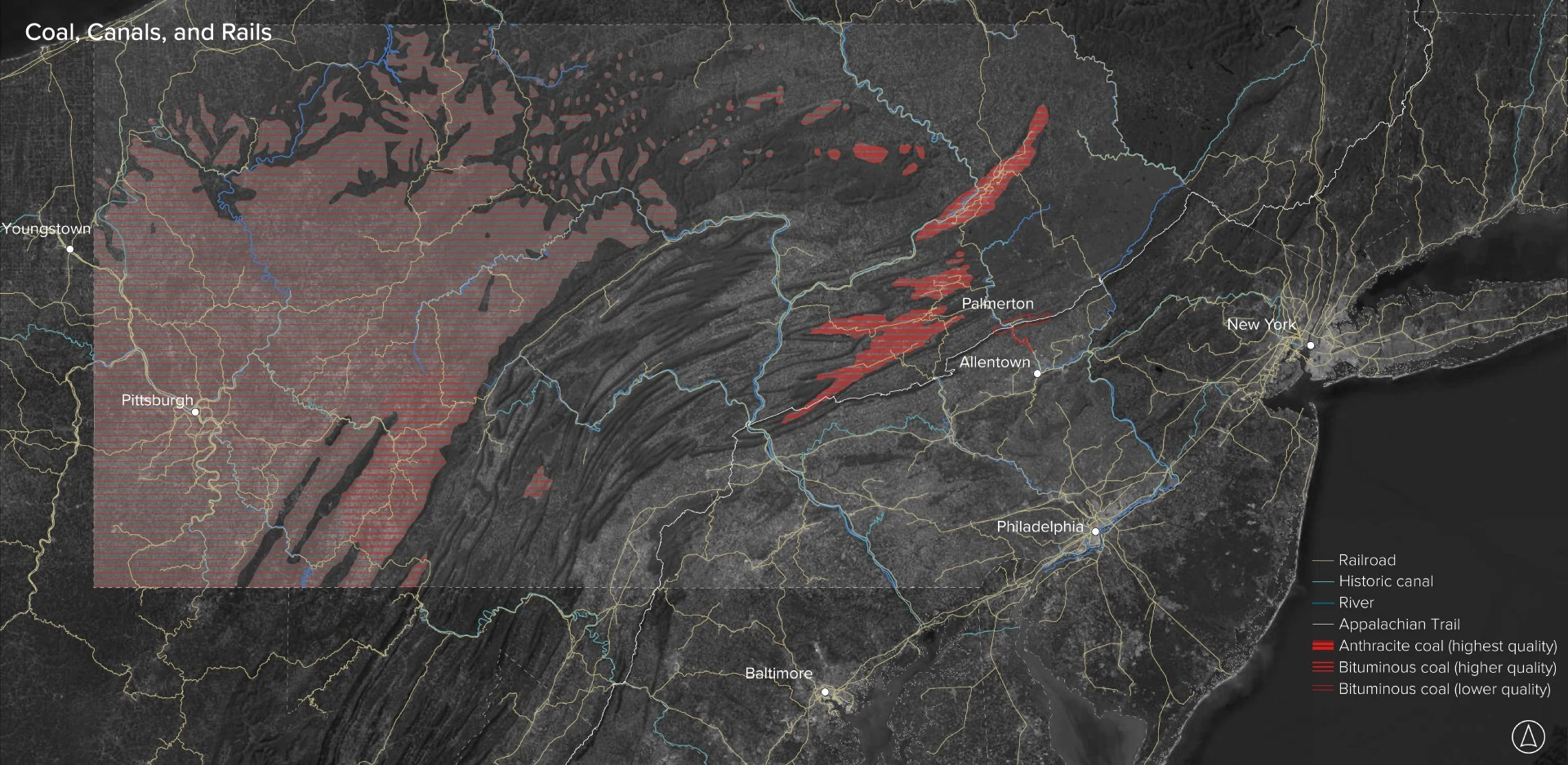
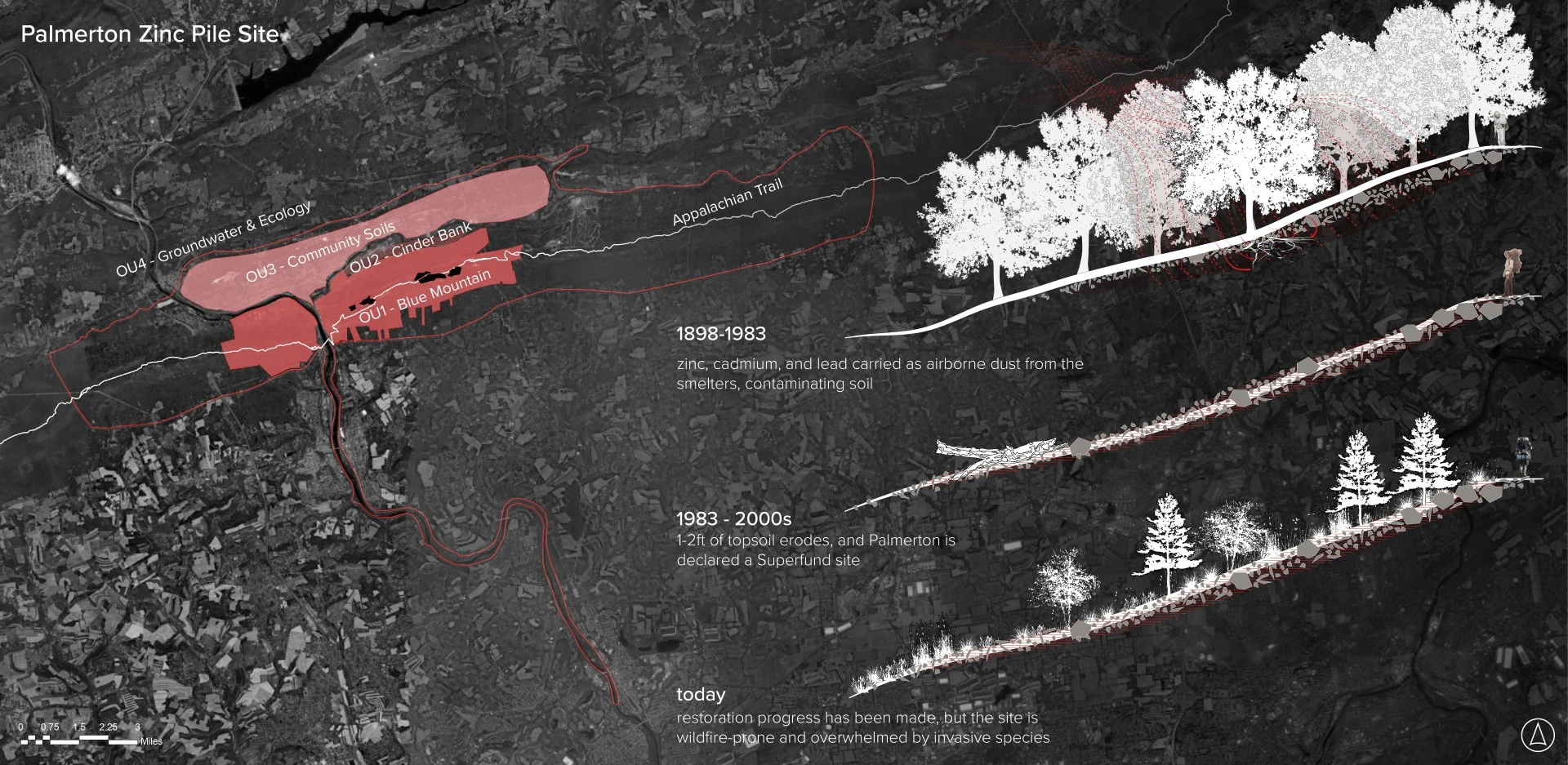
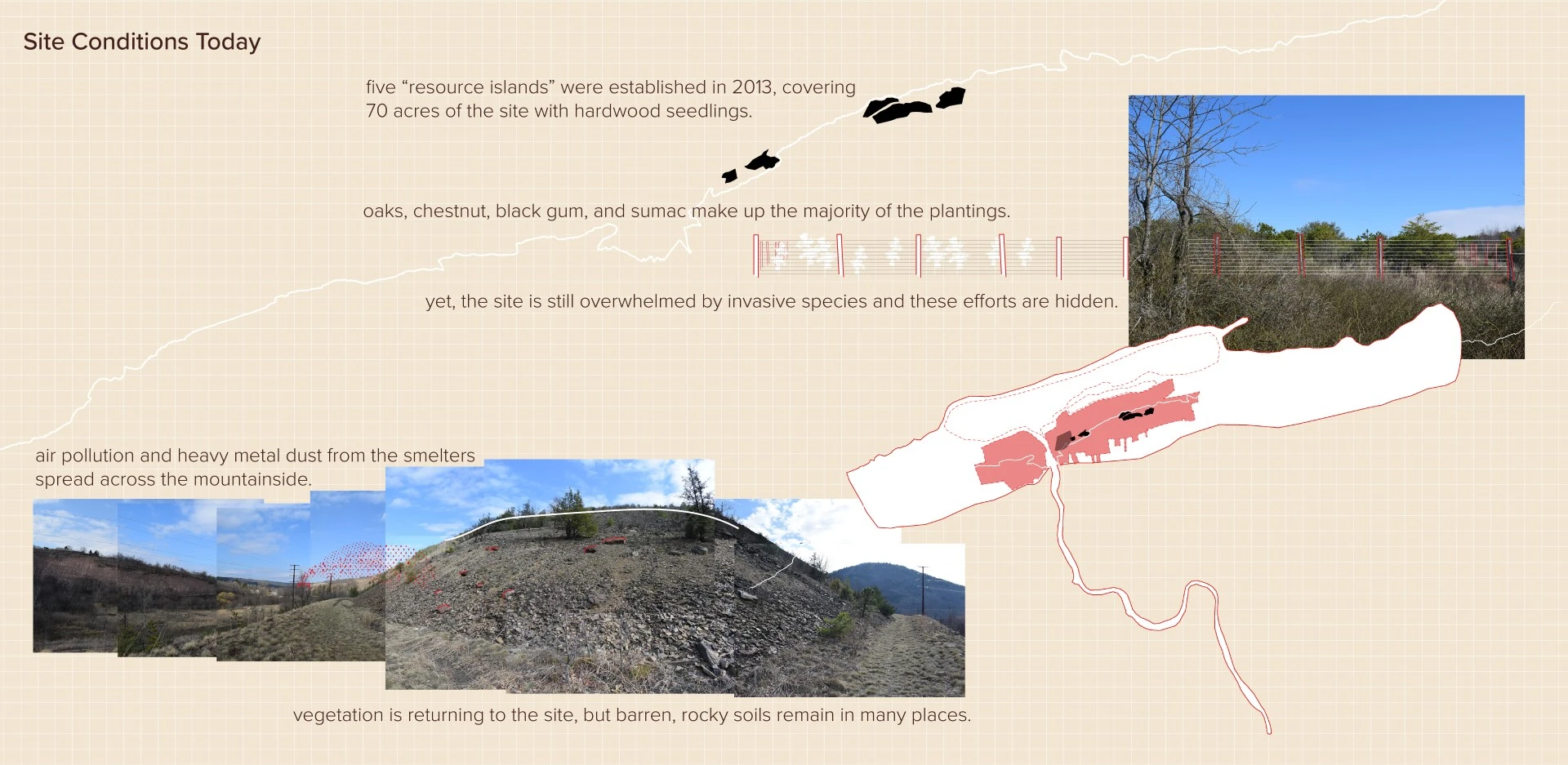
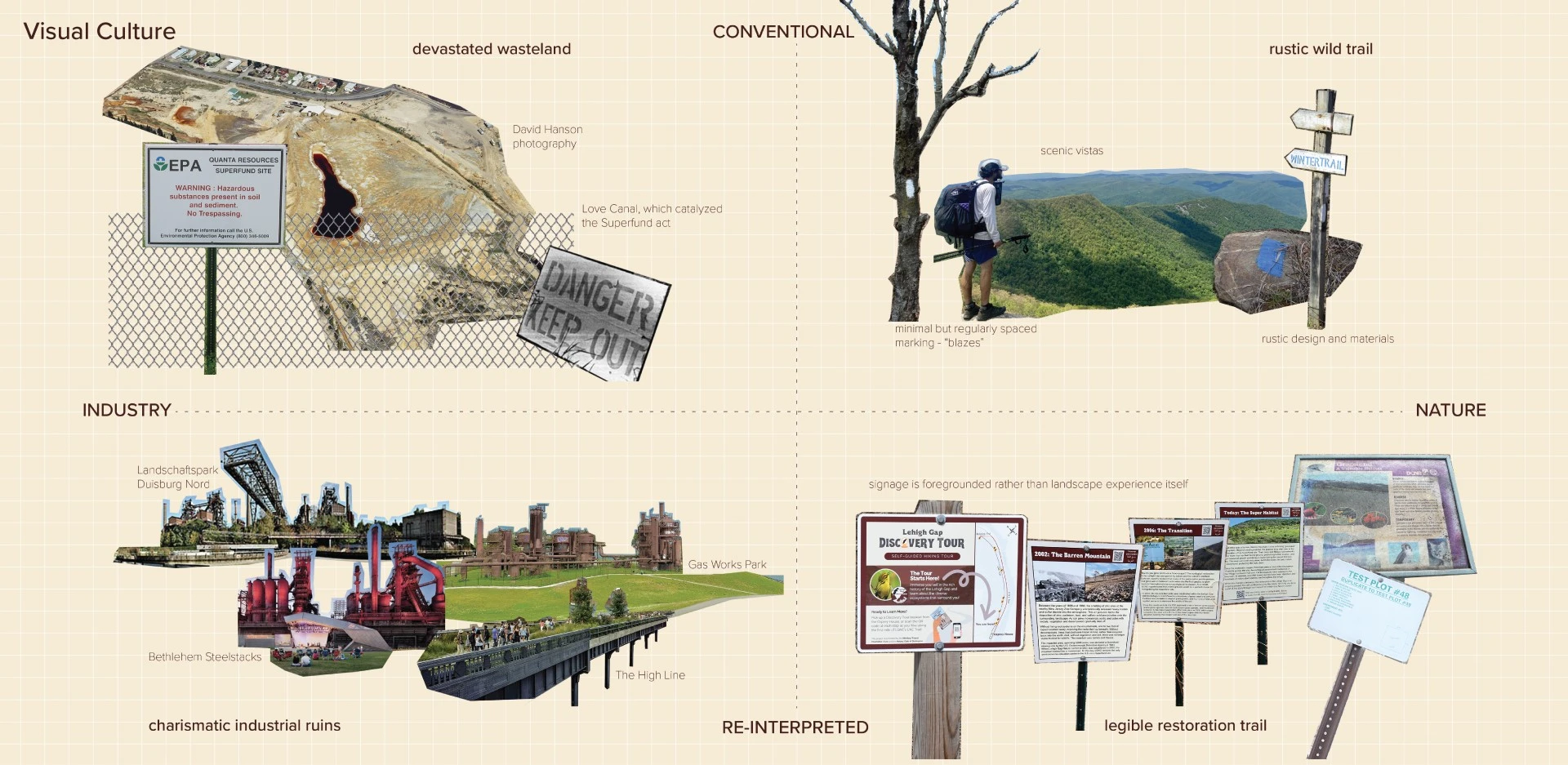
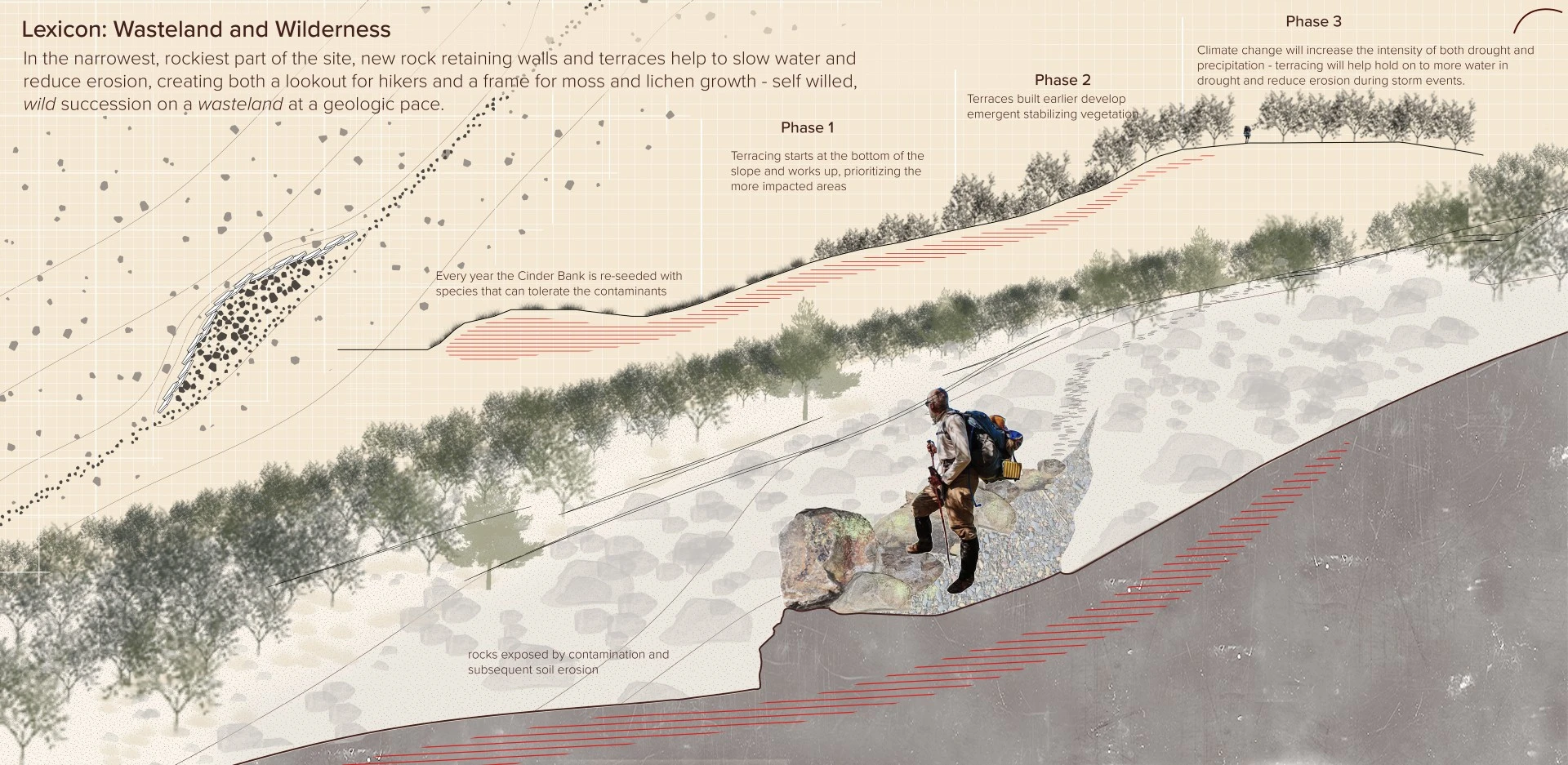

Innovative approach that bridges communication, analysis, and planning into one project.
Awards Jury
-
Making Up Ground analyzes conventional language and management approaches for Superfund sites, focusing on Palmerton, Pennsylvania, and the Palmerton Zinc Pile site. Twenty miles of the scenic, regional Appalachian Trail go right through the middle of this site, raising broader questions about the perception and design of contaminated landscapes. Language is used as a tool to examine the poetics and meaning of the site, rather than treating it as a place to be fenced off or camouflaged, or solely as a problem to solve. A design plan for adaptive management demonstrates a system for making ecological restoration a legible and cultural way of working with these complex landscapes.
-
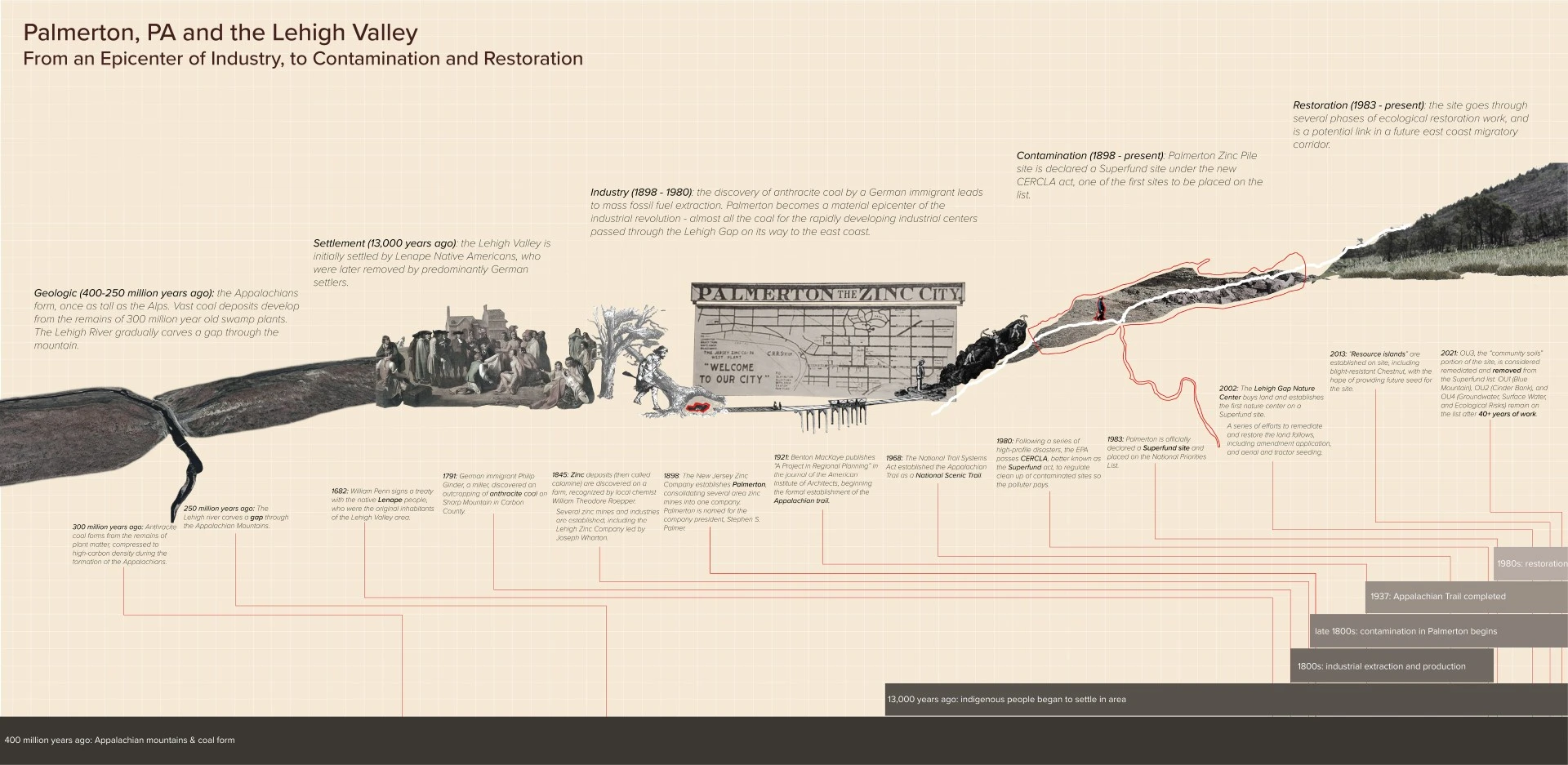
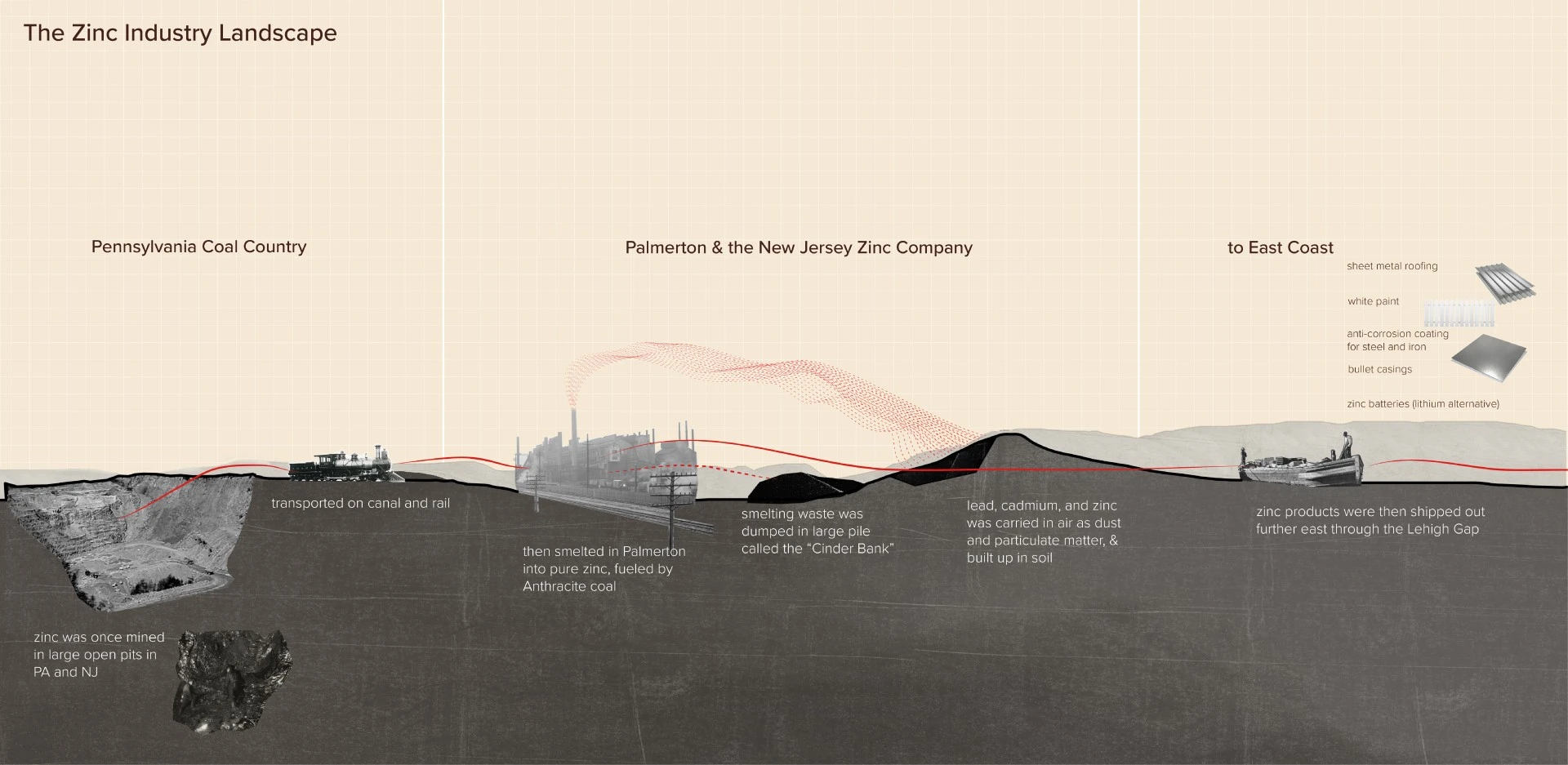
Palmerton, Pennsylvania is a historic company town and former zinc industry hub, now home to one of the nation's first Superfund sites, Palmerton Zinc Pile, as well as twenty miles of the Appalachian Trail. This project examines and critiques conventional Superfund remediation and restoration processes using language as a lens. Designer Jane Wolff has said that, "Language colors observations in the present and speculations about the future. It's hard to perceive what we can't name, and our ideas about what's possible emerge from our perceptions of what already exists." Palmerton contains many layers of meaning and history, which are often at odds with one another, and the site's history is largely obscured from visitors. This project proposes the use of language as a tool or lens for understanding these complex layers, and aims to open up possibilities and questions rather than prescribe a single answer.
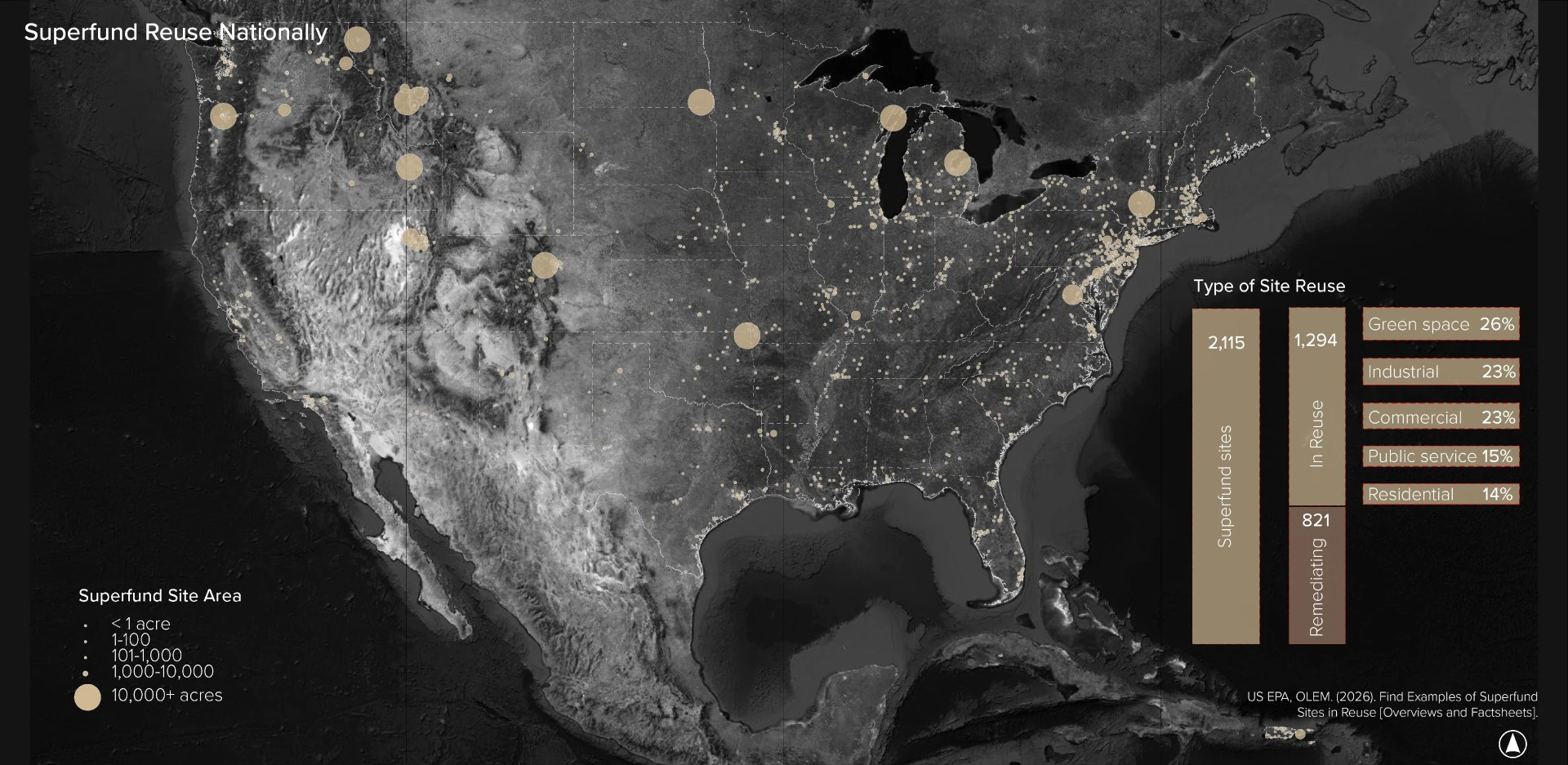
Conventional Superfund site reuse data was analyzed, showing that while around 2/3rds of U.S. Superfund sites are in some sort of reuse program, the majority of these are for further commercial or industrial use and rarely as green space. The scale of the restoration work and the unique public access through the Appalachian Trail system in Palmerton provide an opportunity to reimagine what the afterlife of the Superfund site can and should be. Additionally, site history and ecological analysis through EPA documents, public iNaturalist data, GIS analysis, and field work, show that while there has been a great deal of progress in turning the mountain "green" again, the site today is at risk of wildfires and is still overwhelmingly dominated by invasive species. Visual culture of related sites was also analyzed, placing Palmerton within the broader conversation of post-industrial site adaptation and outdoor culture.
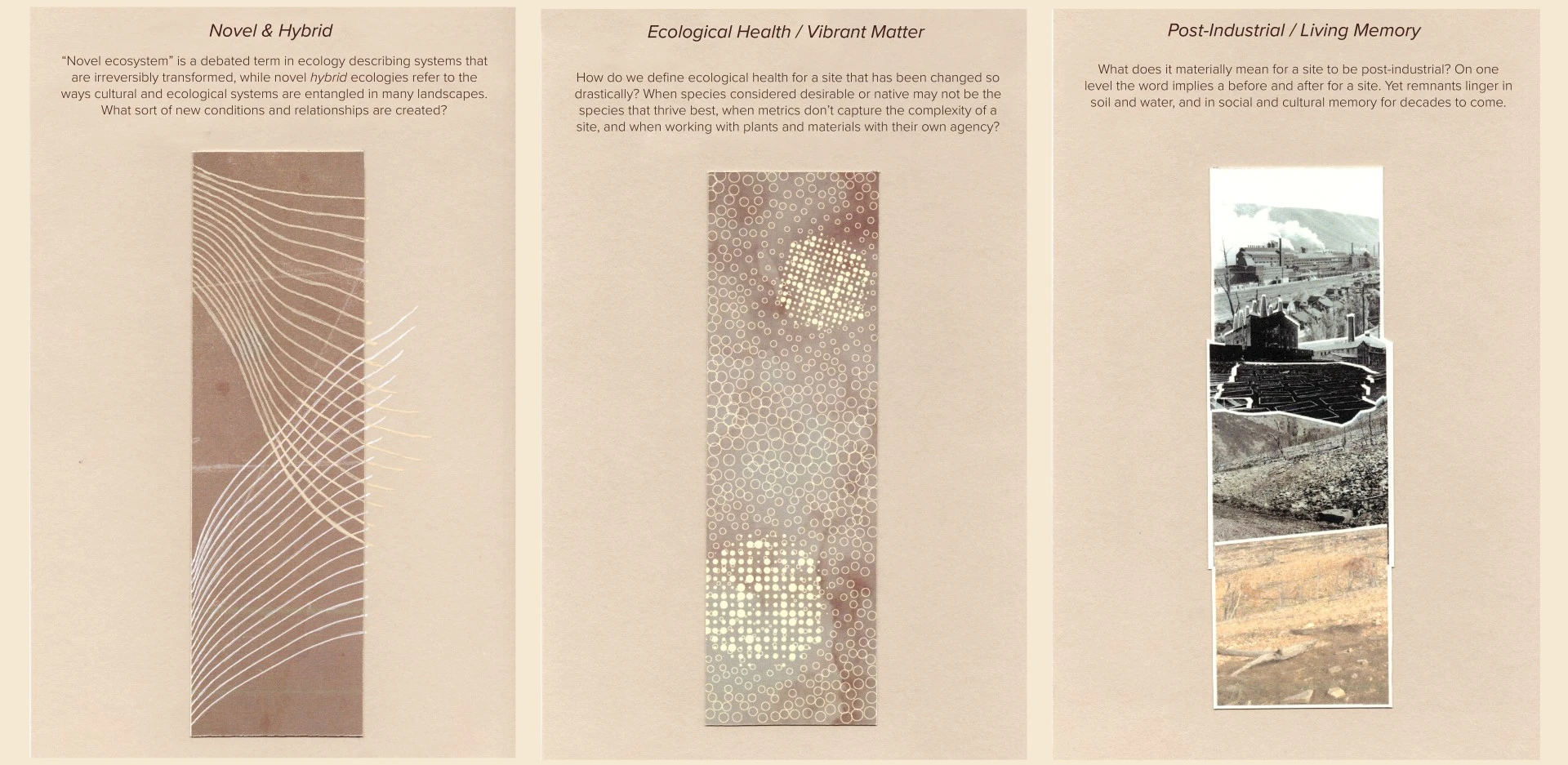
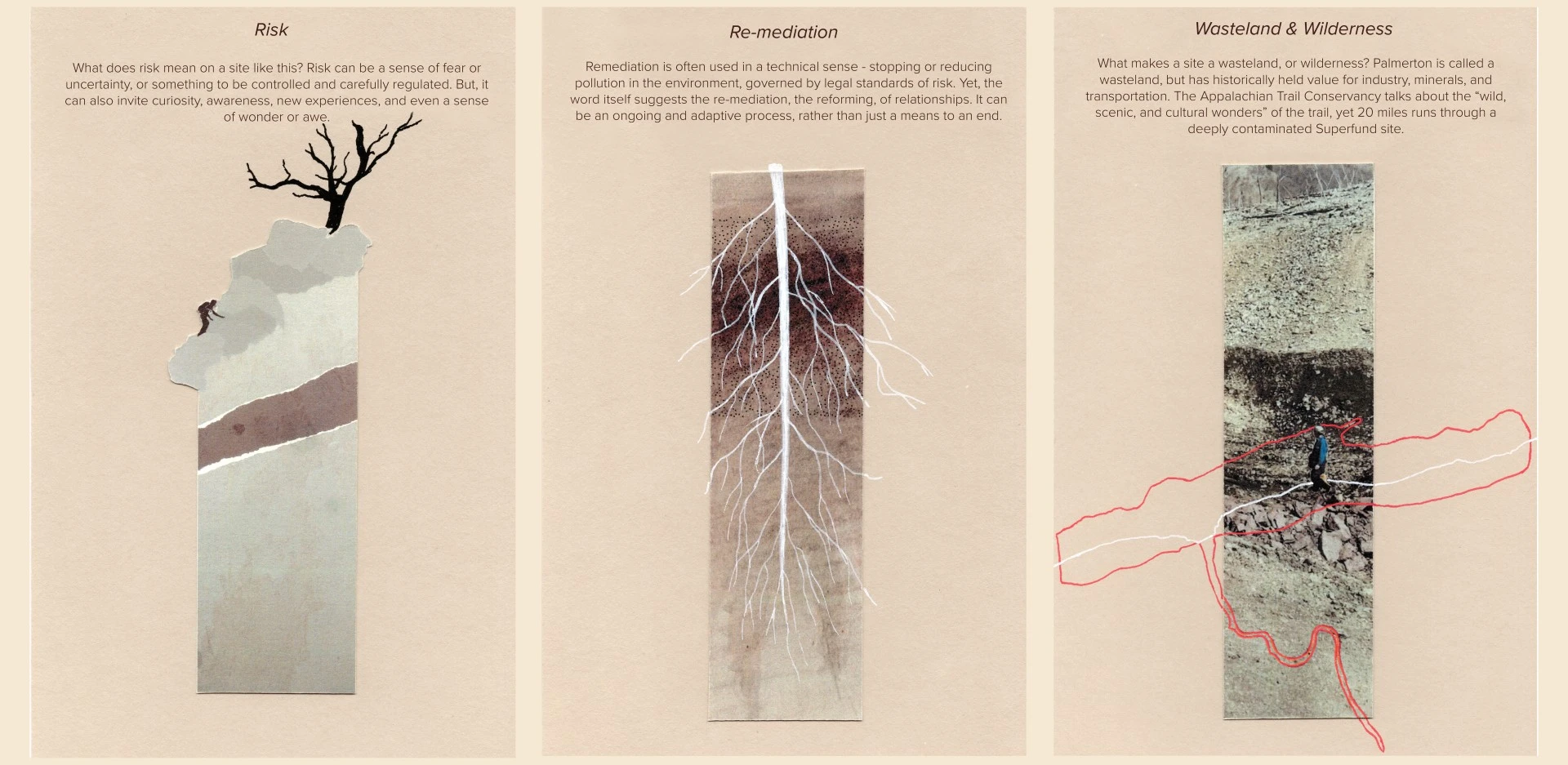
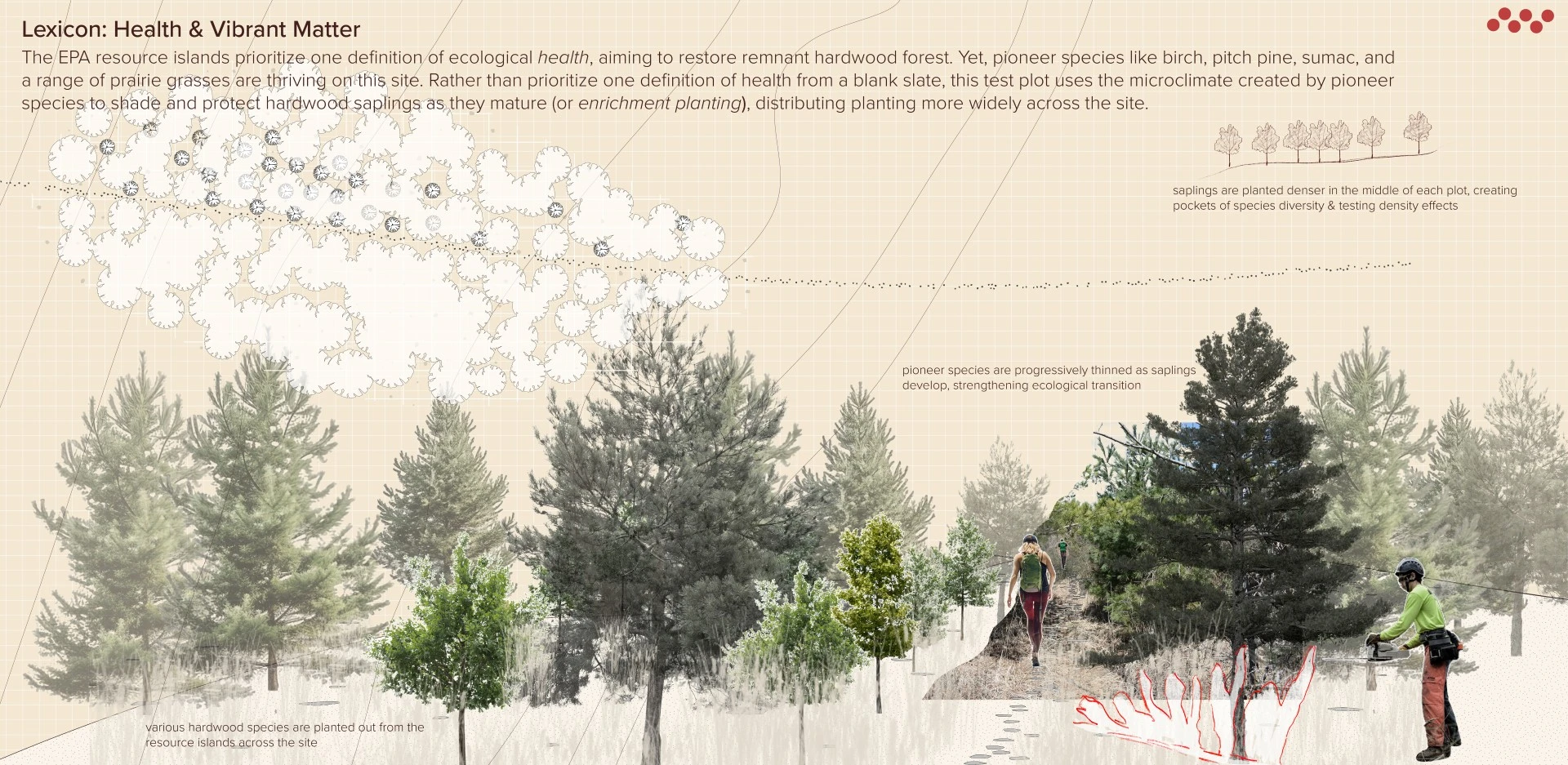
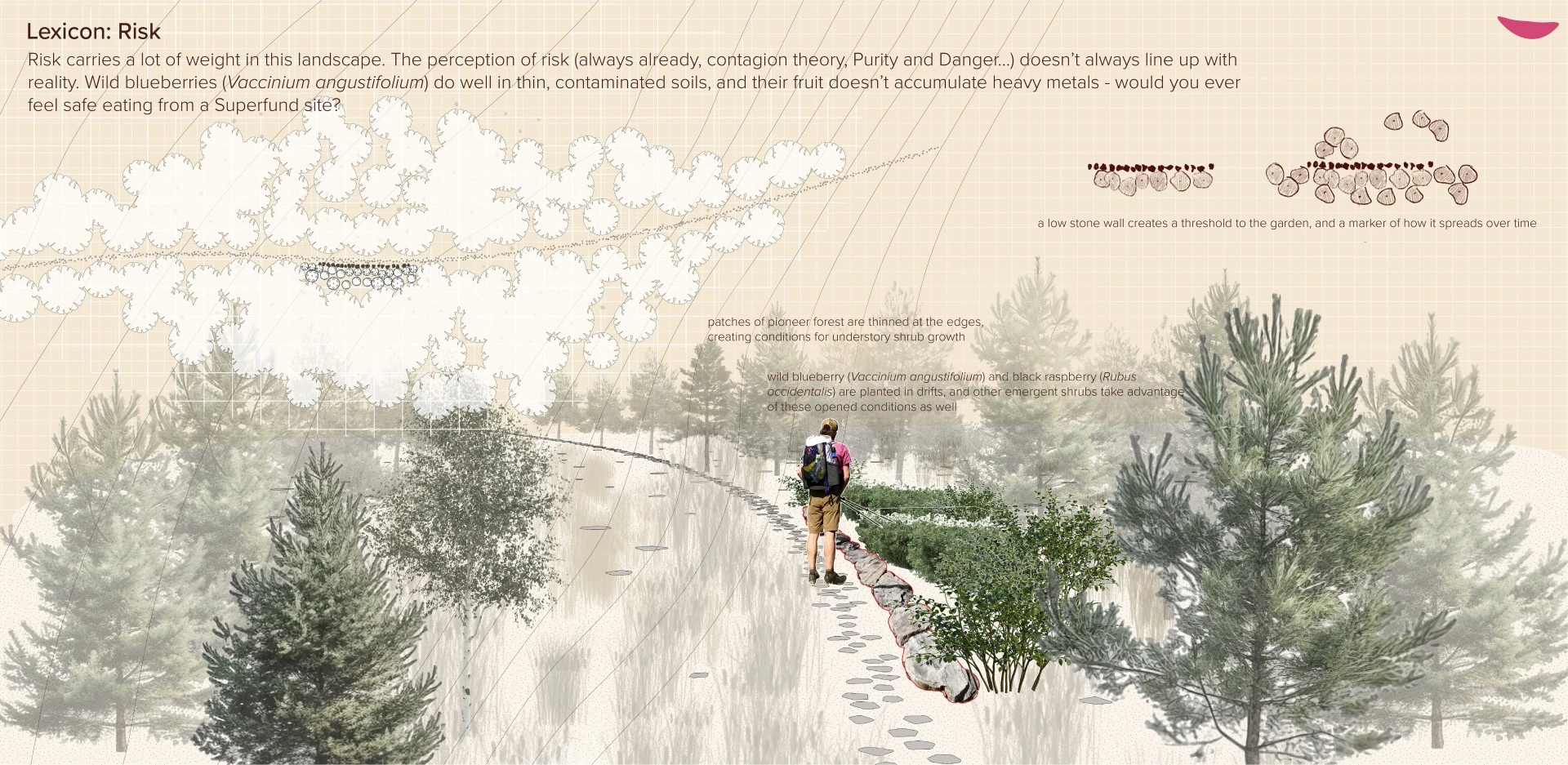
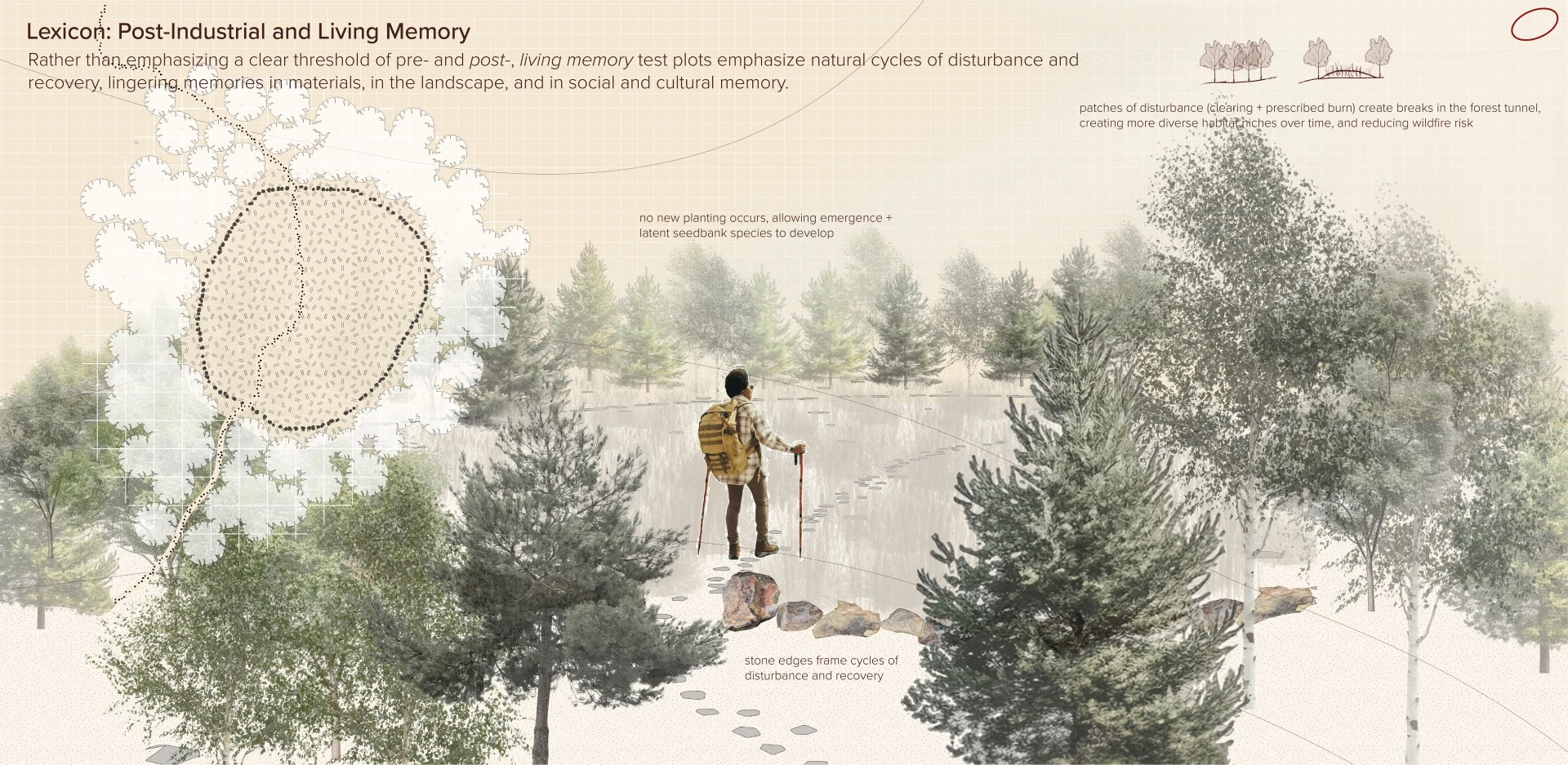
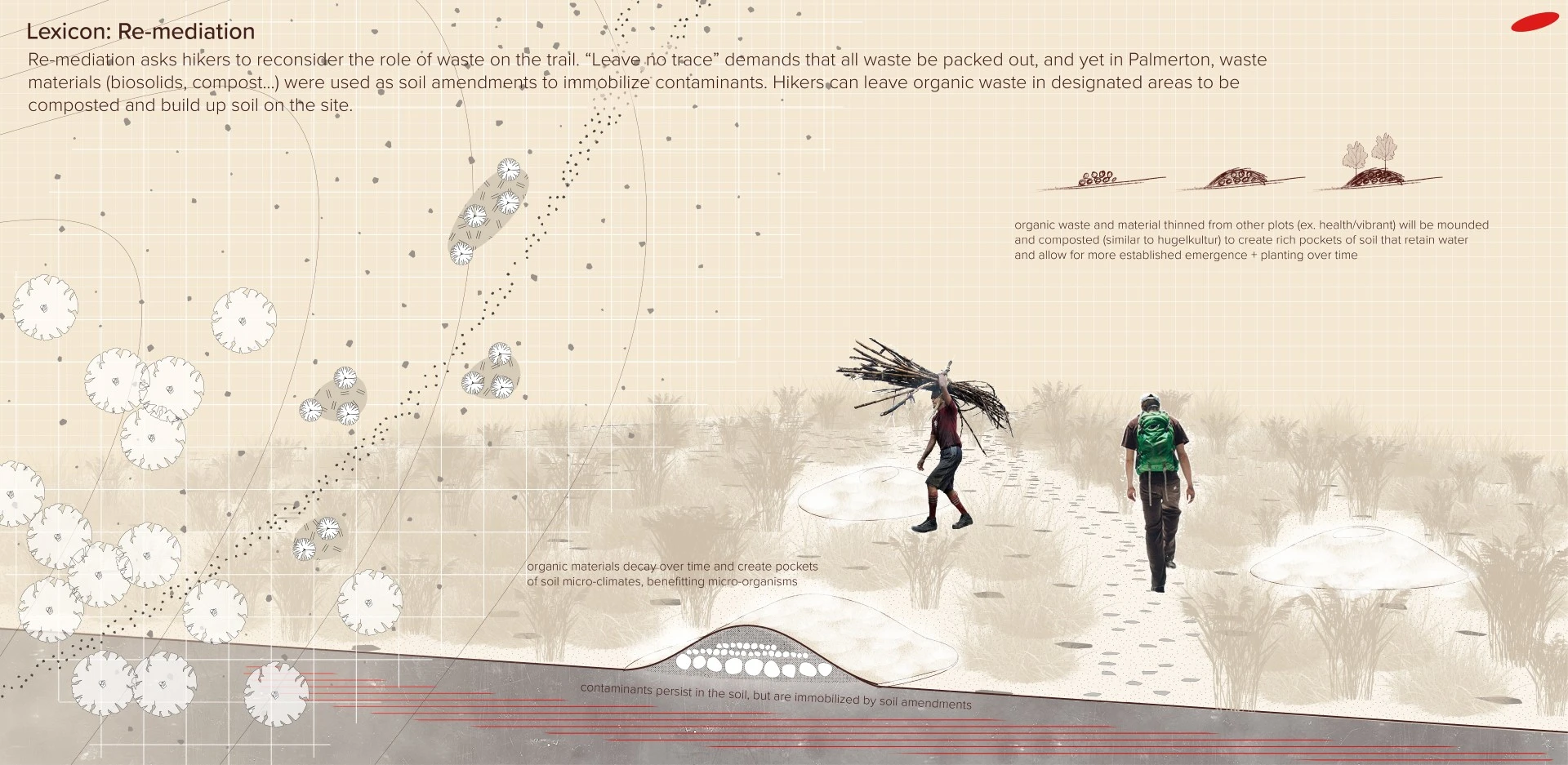
Throughout the literature review process, recurring themes and tensions on site were framed through a series of lexicon entries. This version of a lexicon is less about prescribing a solution or coming up with brand new terms, but rather pairing conventional approaches with an emerging or novel term, creating a dialogue and a new way of understanding the landscape. The entries in the lexicon are related, but distinct, each framing a question or tension present in the wasteland, aiming to foster a more nuanced conversation.
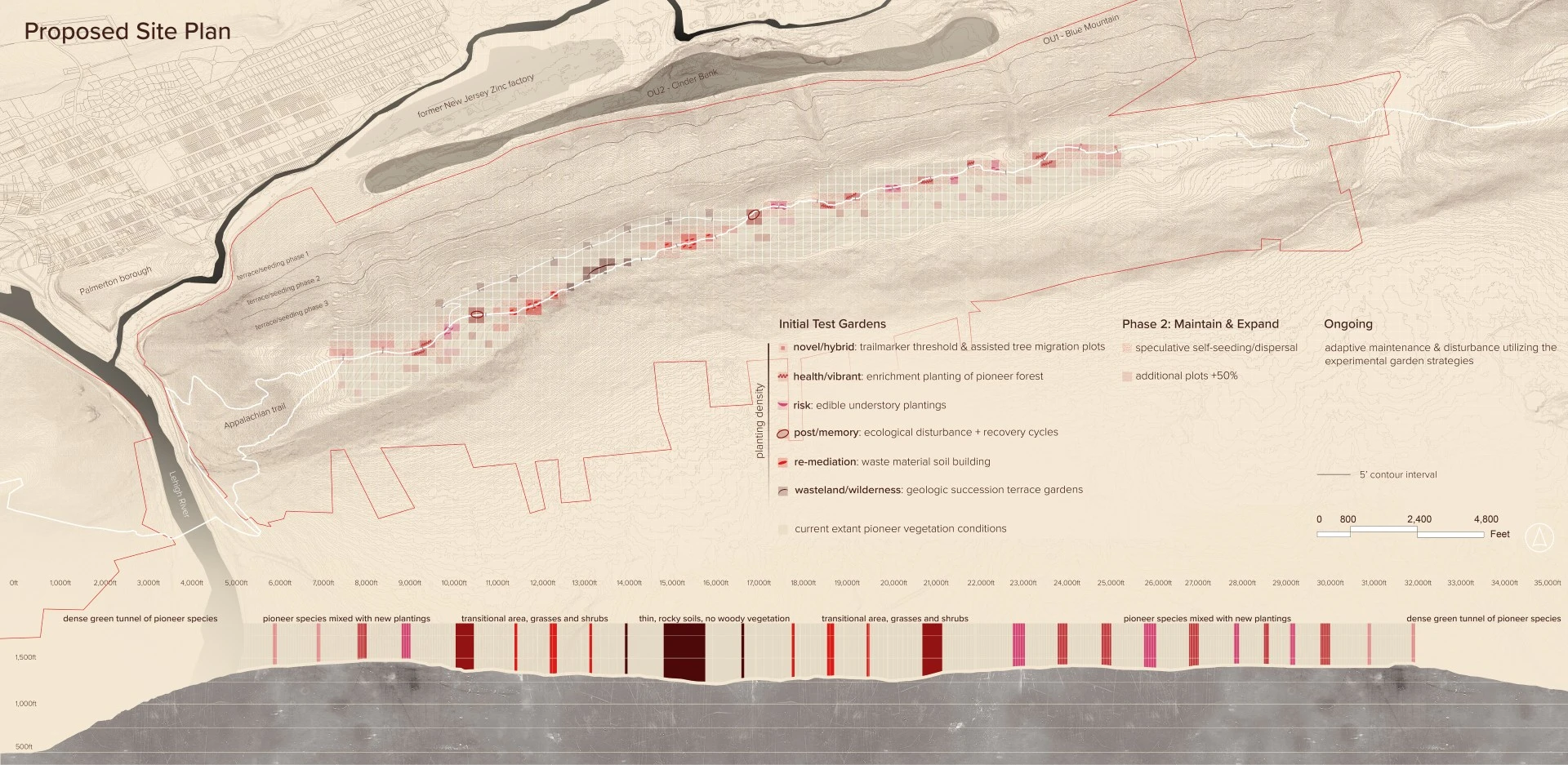
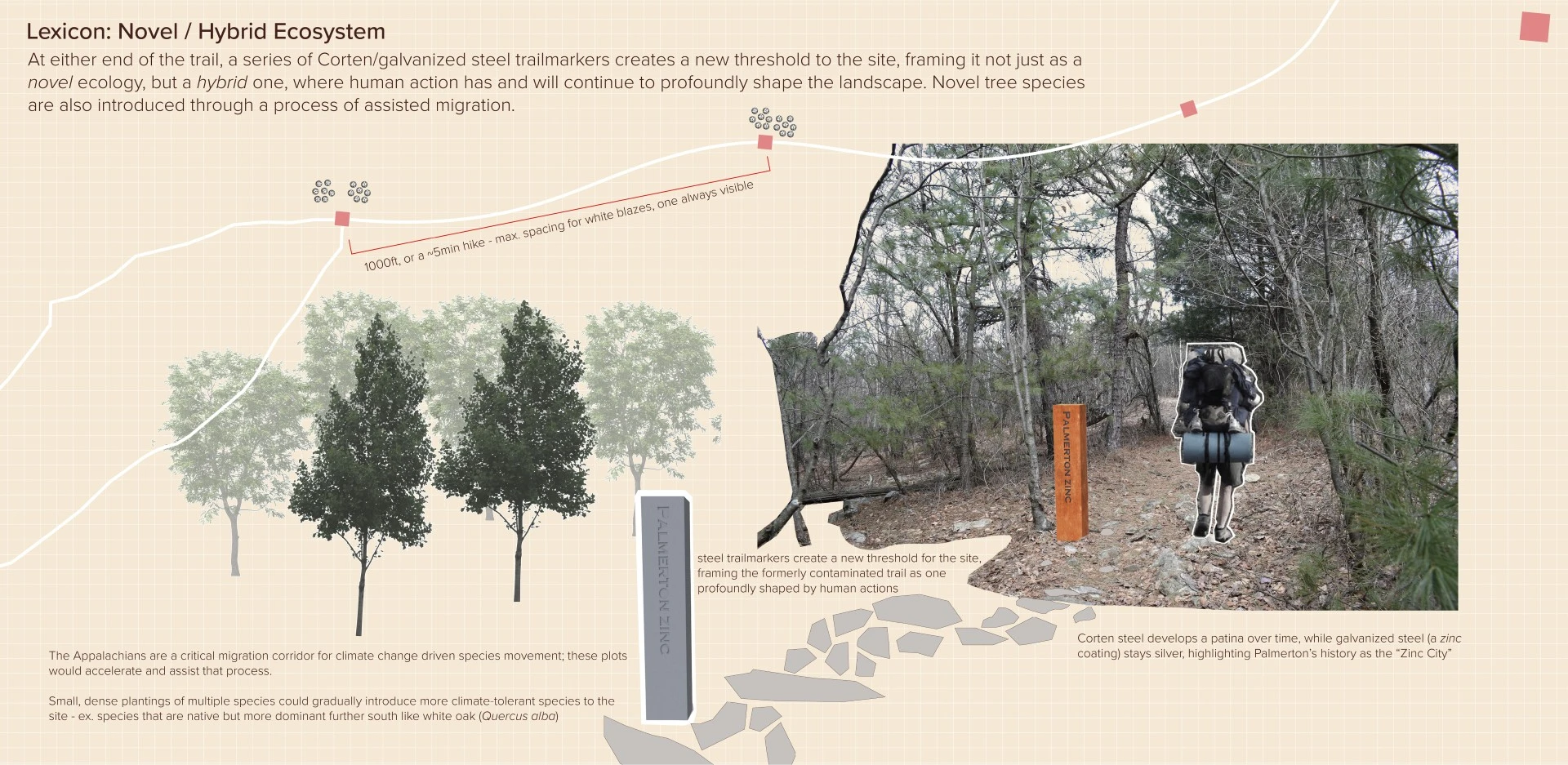
Rather than camouflaging the industrial history or treating the site as simply scenic wilderness, the design proposes a system of adaptive management and gardening where community members and hikers can play an active role in the restoration of the site. The lexicon becomes the inspiration for a series of gardens or test plots in the landscape, and change over time is made legible through subtle design touches. These moments could start off small to test the strategies and build public buy-in, but be scaled up, multiplied, and expanded across the landscape both through emergent conditions and active maintenance. The gardens respond to historic and future climate and ecological pressures, working over time to create a more resilient landscape. Ultimately the project aims to frame the post-industrial landscape not as something to cover up or "solve", but as an ever-evolving cultural landscape, and restoration as a collective act.
-
- White Oak
- Scrub Oak
- Northern Red Oak
- Pitch Pine
- American Chestnut
- Staghorn Sumac
- Black Gum
- Wild Blueberry
- Black Raspberry
- Eastern White Pine
- Gray Birch
Advertisement
Related Awards
Award of Excellence, Analysis & Planning
H2Oquirrh: Regional Water Reform for a Resilient Salt Lake Valley
Location: Salt Lake City, UT
Firm: Design Workshop
Client: Wasatch Front Regional Council, Salt Lake County
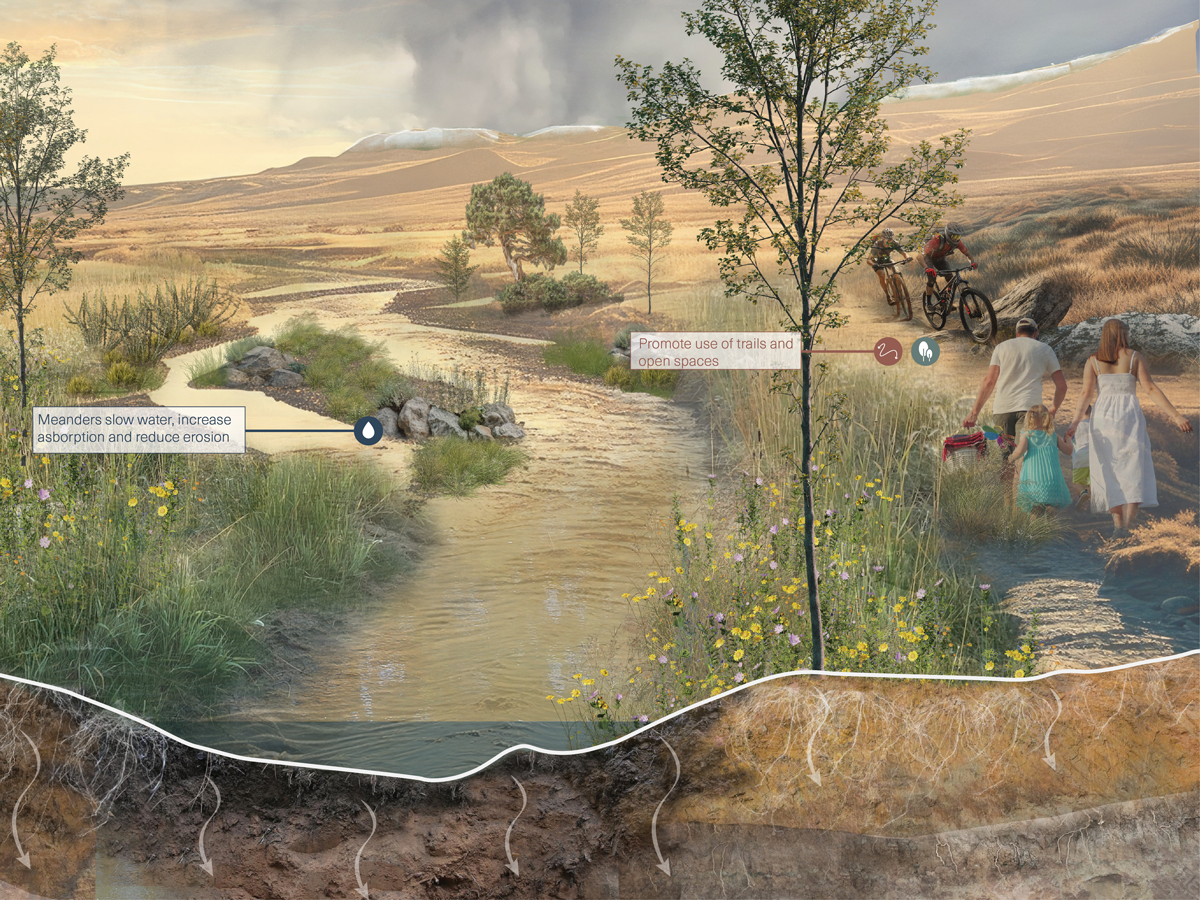
Water flowing from the Oquirrh Mountains is a critical contributor to the Great Salt Lake. Severe drought and human-caused decline threaten the lake’s viability, with cascading impacts on ecosystems and public health. This regional collaboration of seven jurisdictions, the H2Oquirrh Vision Plan, undertakes a large systems analysis of hydrologic cycles, land cover, and land-use decisions to identify site-specific interventions across nine creeks and washes. Led by landscape architects and water resource engineers, the study advances a deeper understanding of localized drivers of water loss and proposes innovative solutions through integrated landscape infrastructure design and policy.
-listing-img.webp?language=en-US)