
.webp?language=en-US)

.webp?language=en-US)
Living After the Feedlot: Restoring Yucatán’s Karst Territory
Yuhan Wu, Student International ASLA; Qiujing Ma, Student International ASLA; Yu Zhu, Student International ASLA; Qingyuan Li, Student International ASLA; Hua Wu, Student International ASLA; Luqi Bai, Student International ASLA

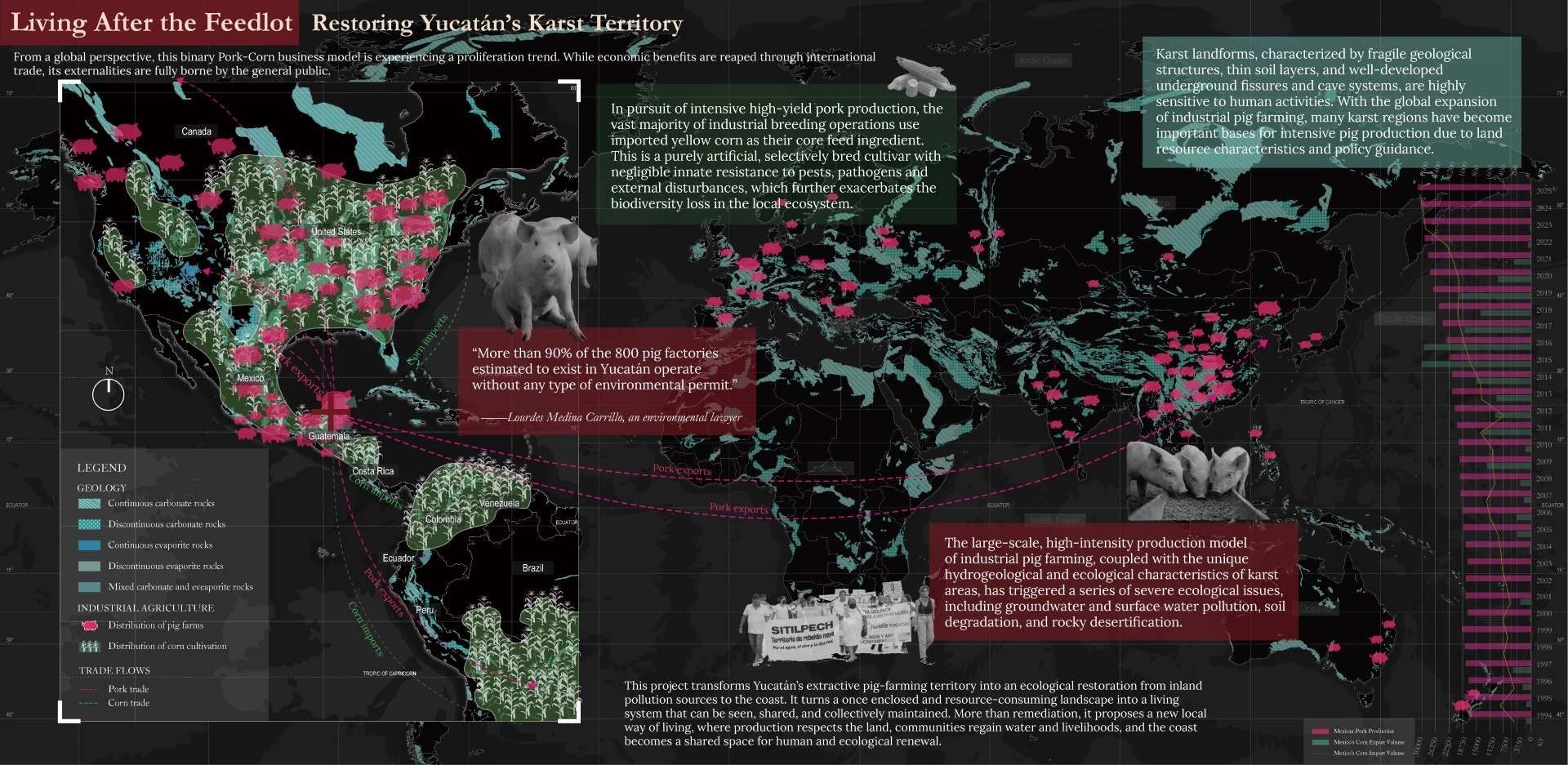
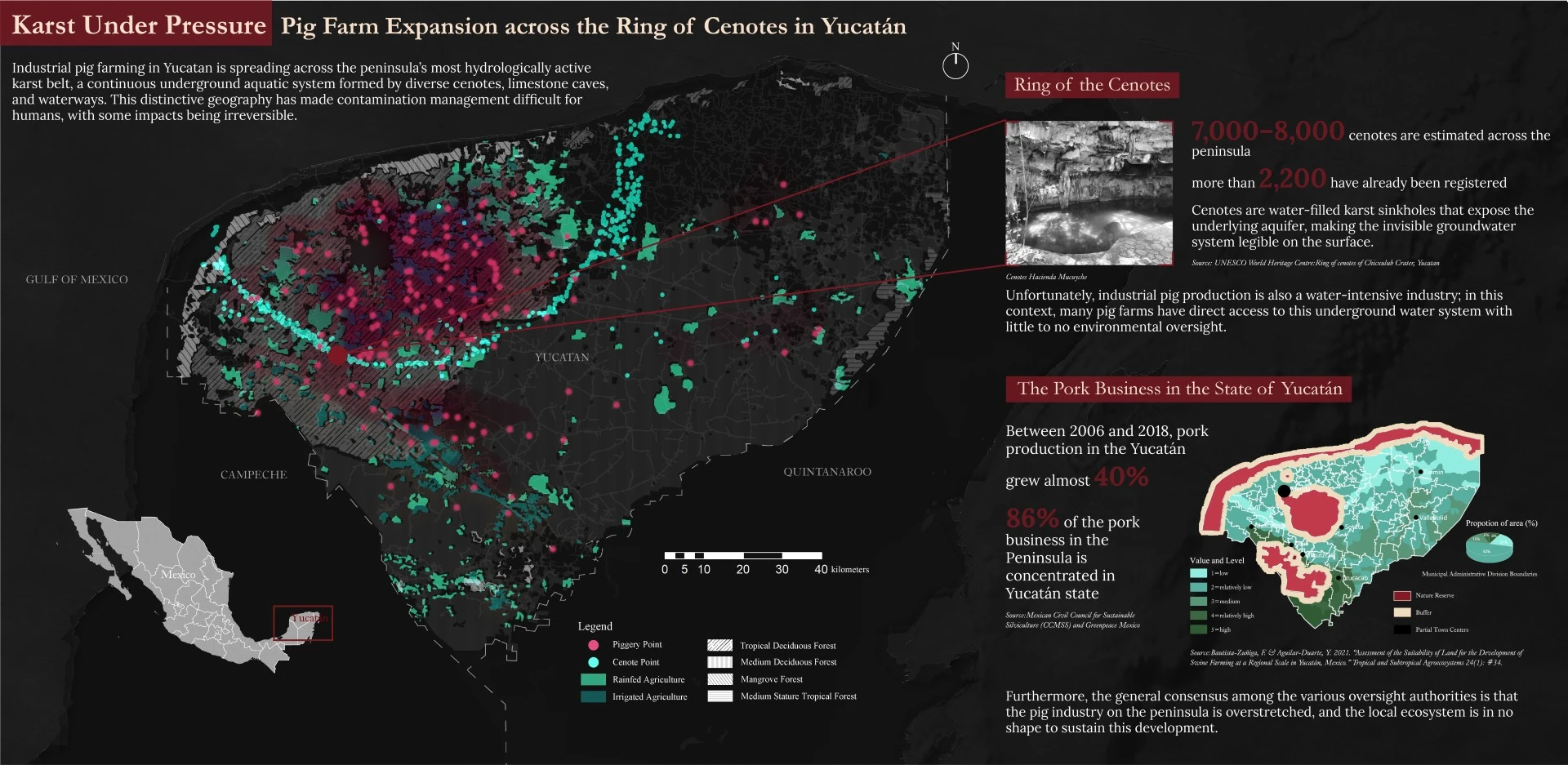
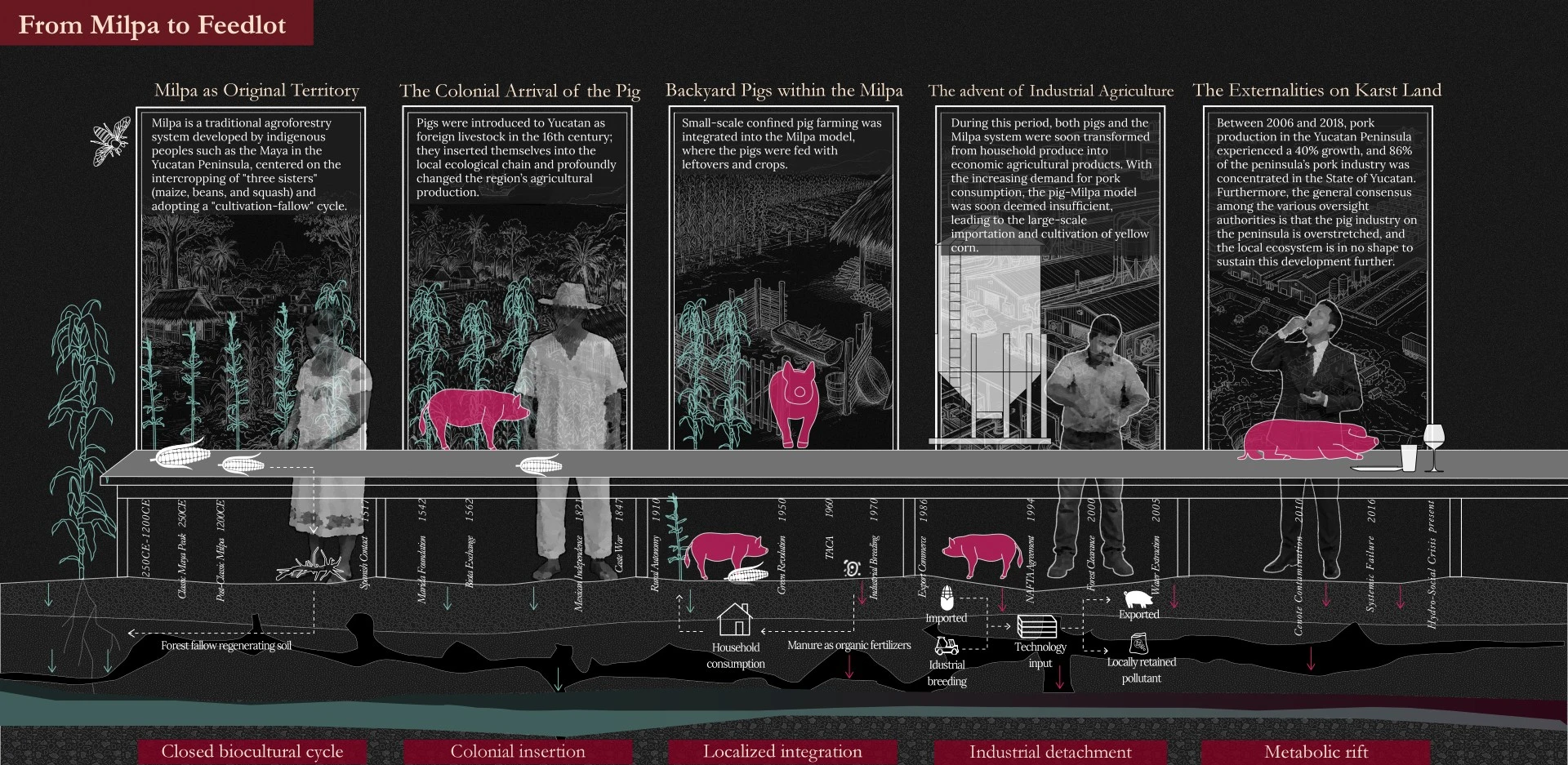
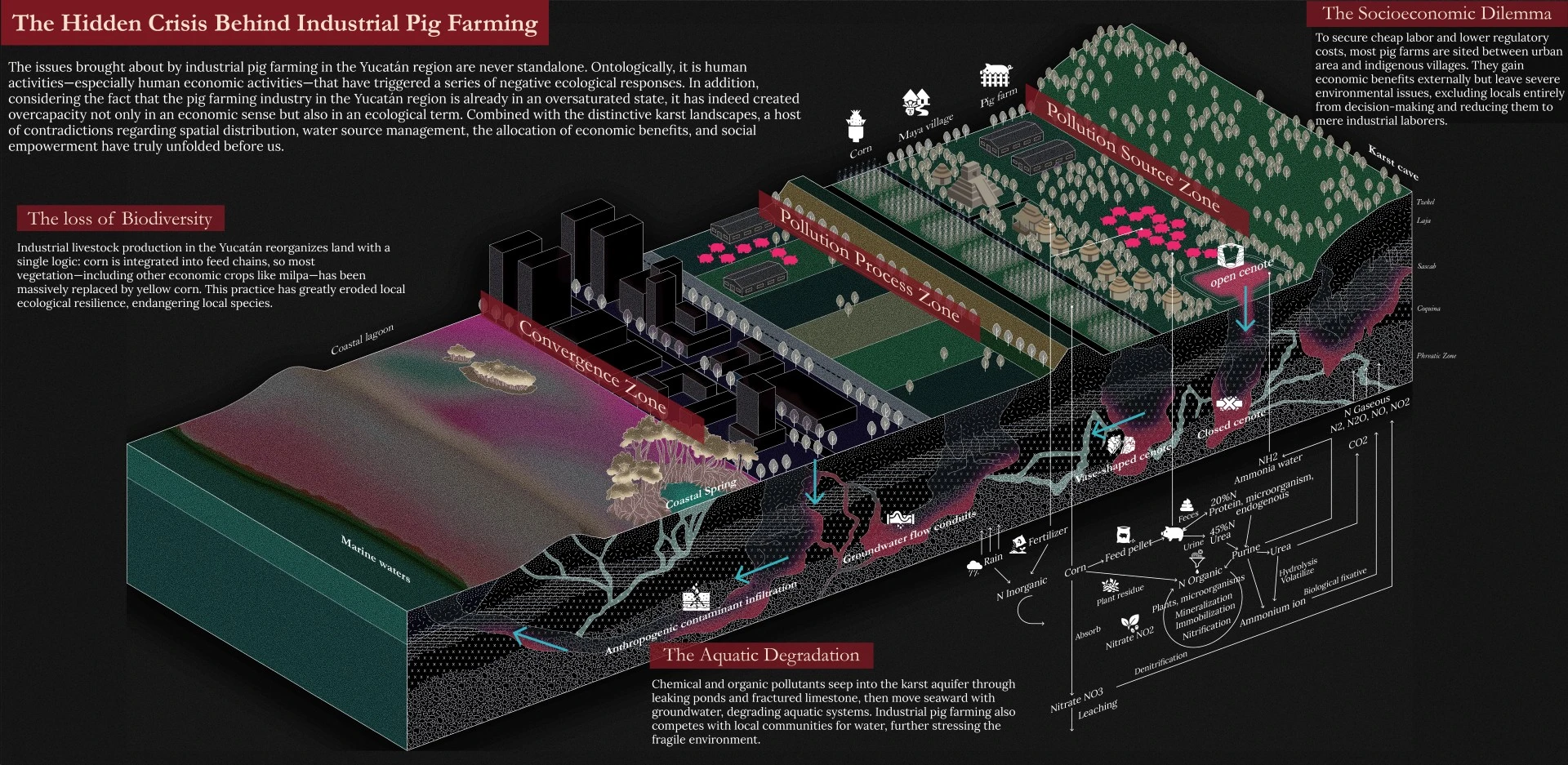
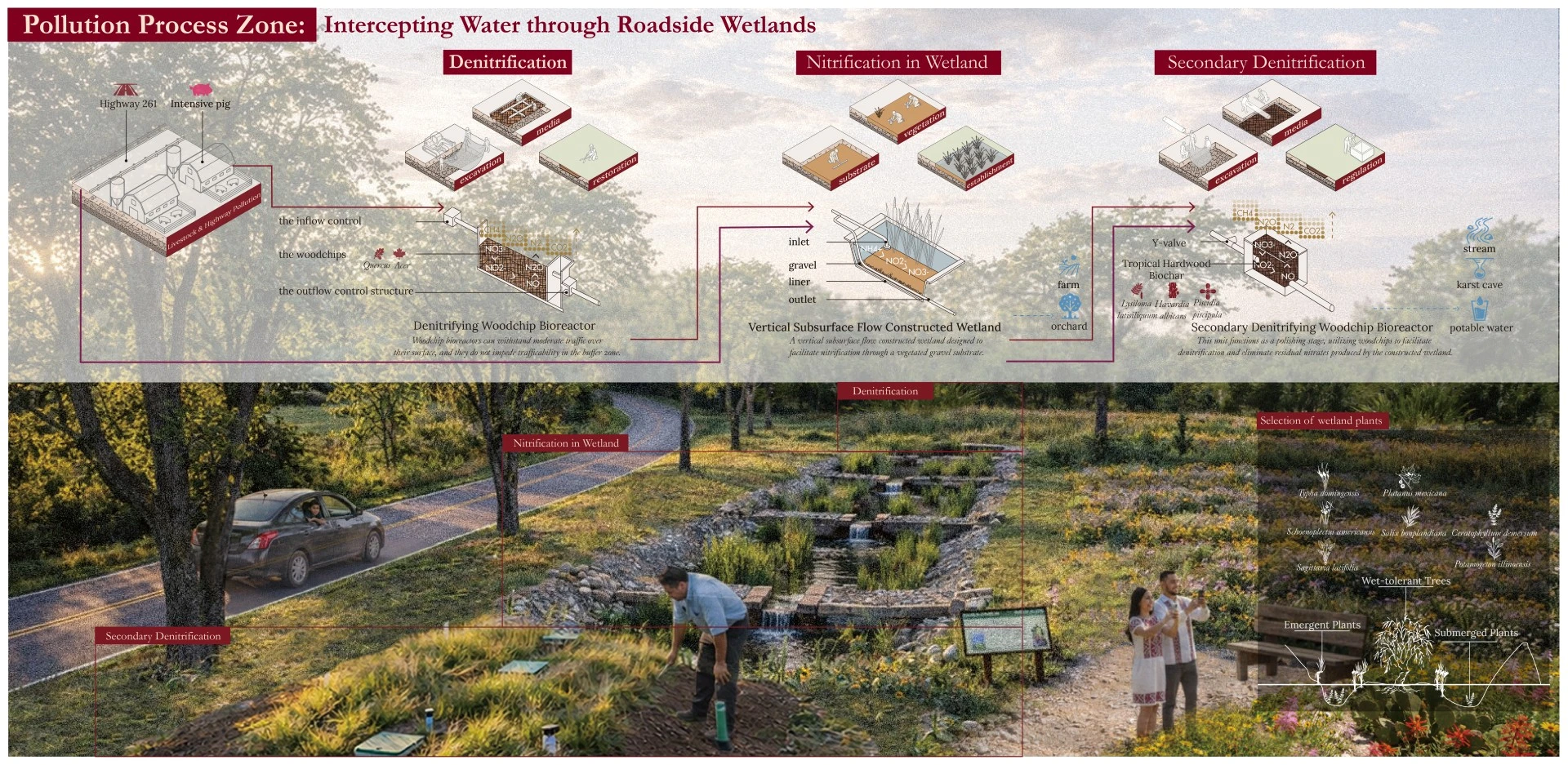
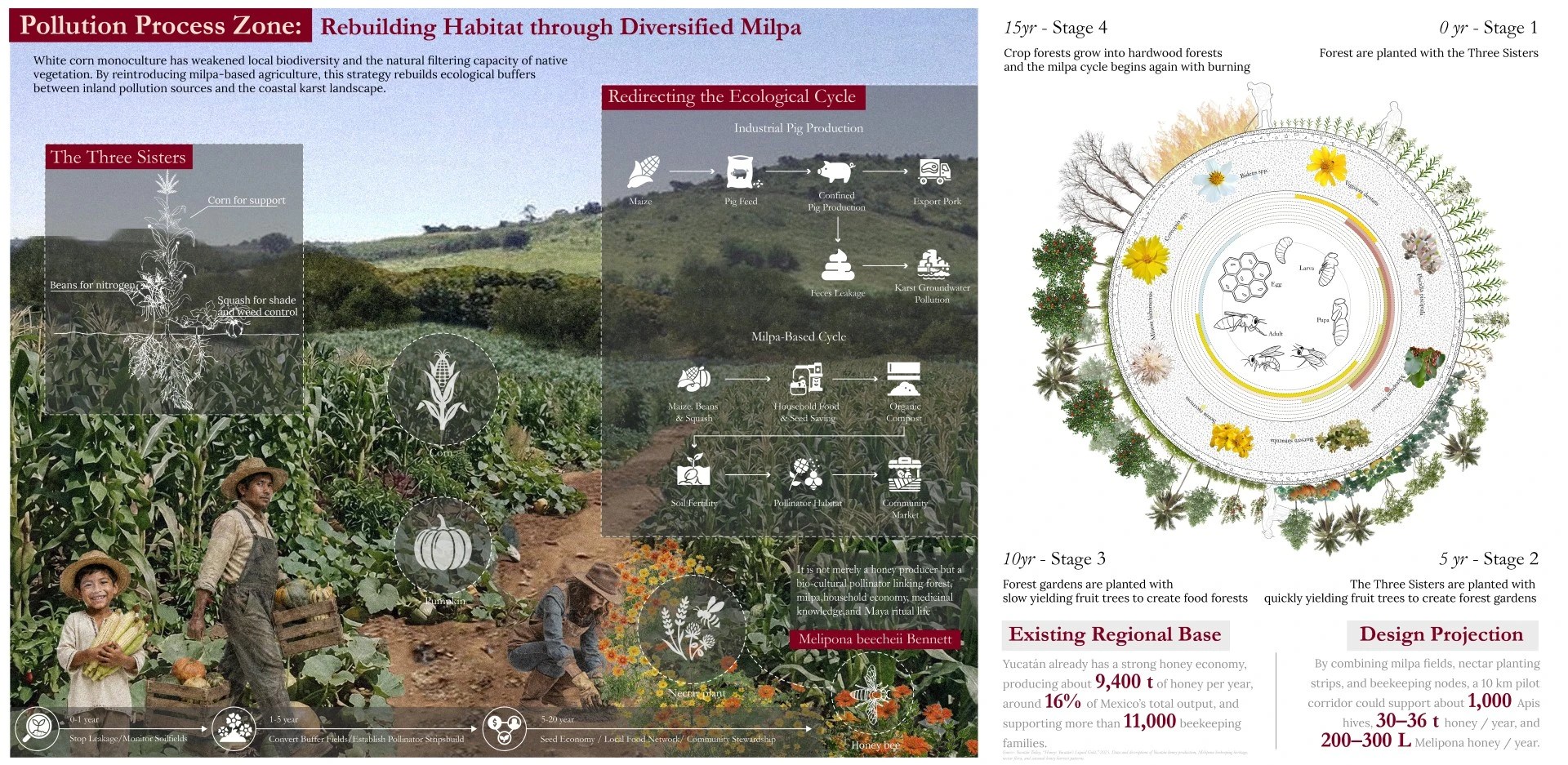
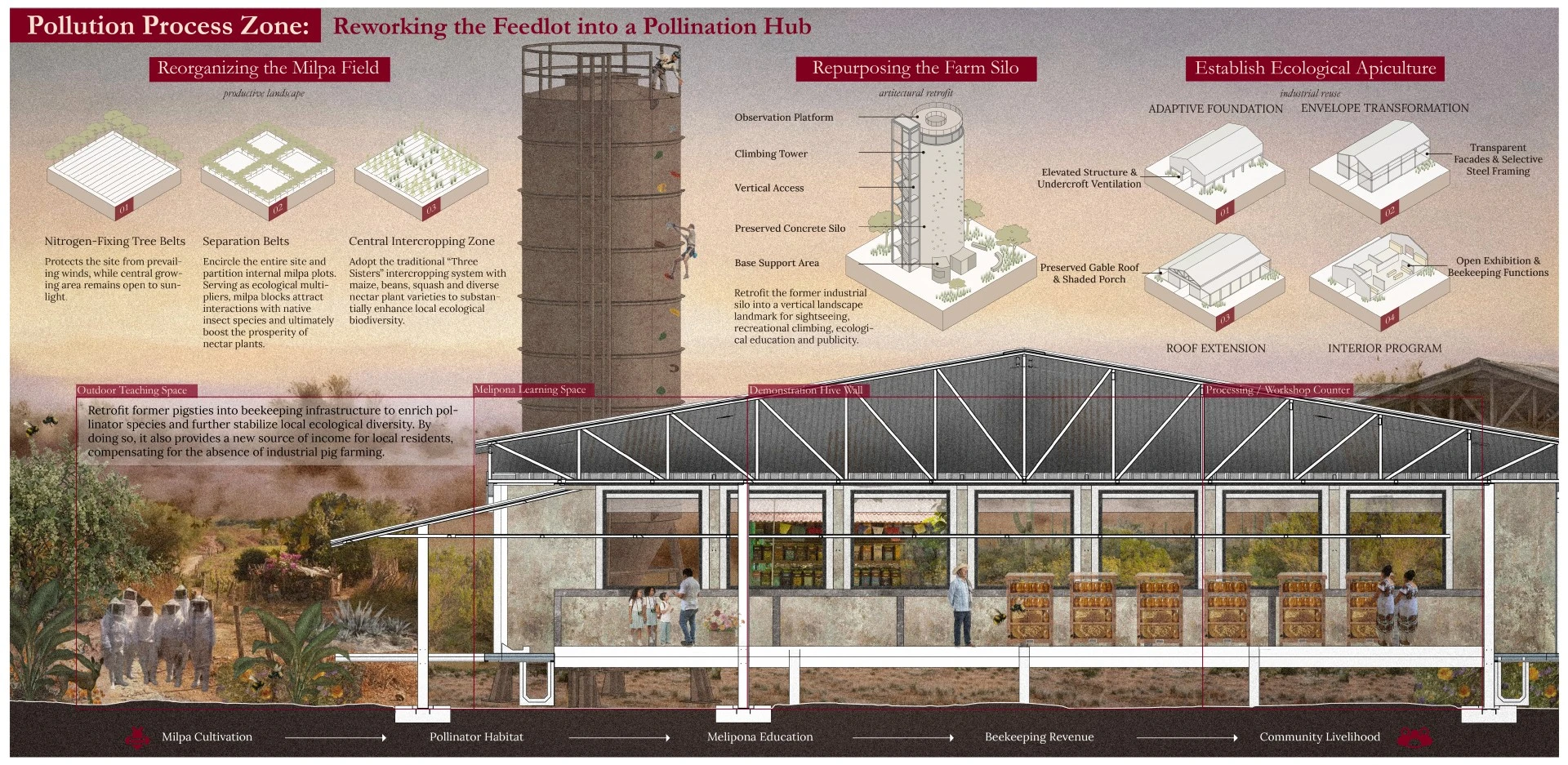
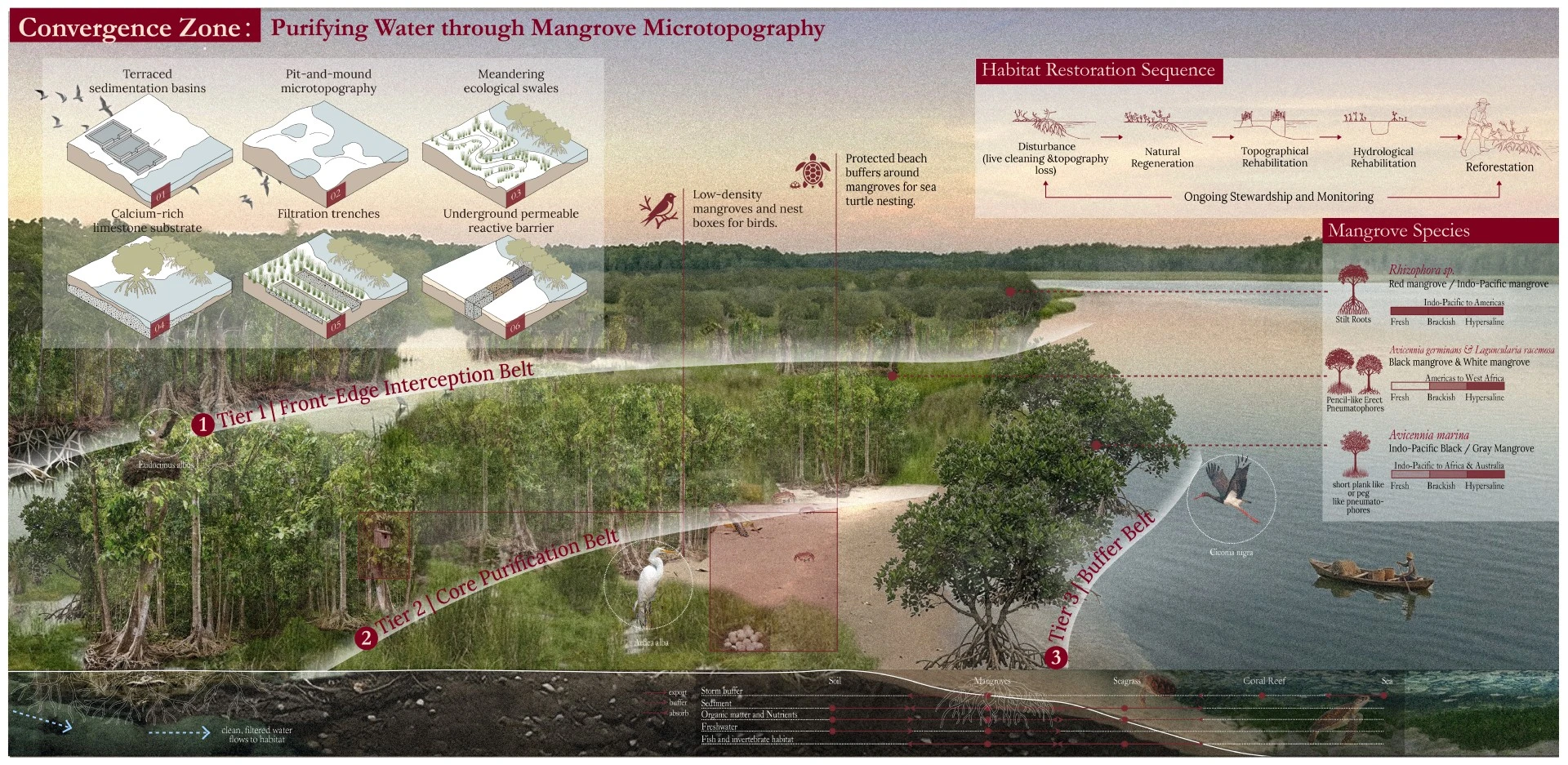
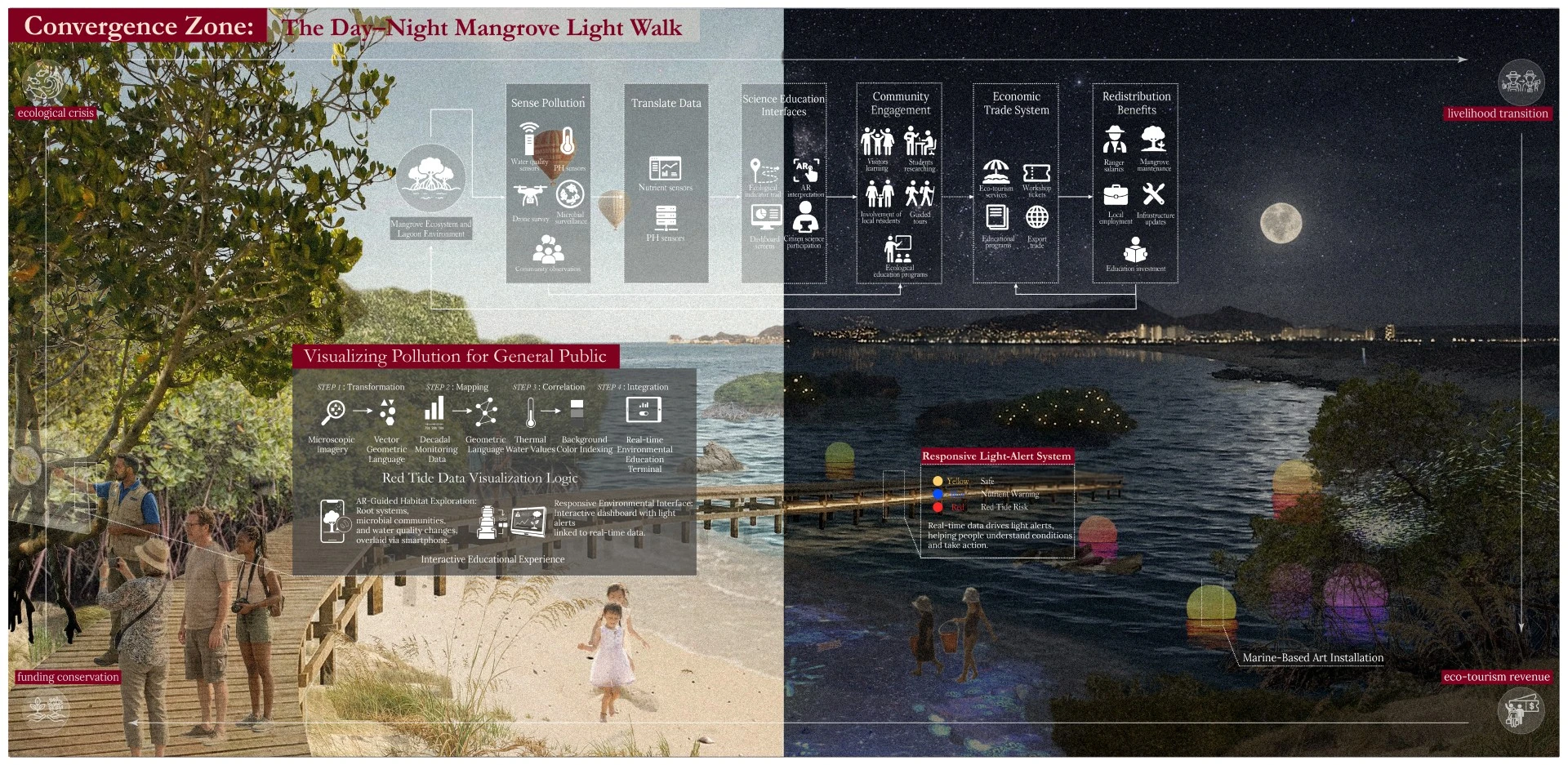
The project critiques the consequences of global food production methods in an environmental and cultural context that are diminished by agribusiness models. It is a compelling and consequential proposal.
Awards Jury
-
Living After the Feedlot reimagines Yucatán's pig farming territory through a karst-based repair framework that reconnects inland villages, Maya milpa landscapes, and the Progreso coast as one living system. Grounded in the porous condition of limestone hydrology and the biocultural knowledge of the Peninsular Maya milpa, the project transforms an extractive livestock corridor into a landscape of ecological filtration, community stewardship, and cultural renewal. Rather than treating pollution merely as a technical issue, the project reveals how water, maize, and labor are intertwined, and proposes a regenerative model for territories shaped by industrial agriculture, environmental injustice, and invisible groundwater contamination.
-
Living After the Feedlot proposes a restore framework for northern Yucatán, where pig farming, karst hydrology, Maya heritage, and coastal ecology collide. The project begins with a metabolic rift: pork and feed circulate through global markets, while waste remains in vulnerable landscapes. As maize is redirected from the table to the trough, local food culture becomes entangled with an extractive livestock economy.
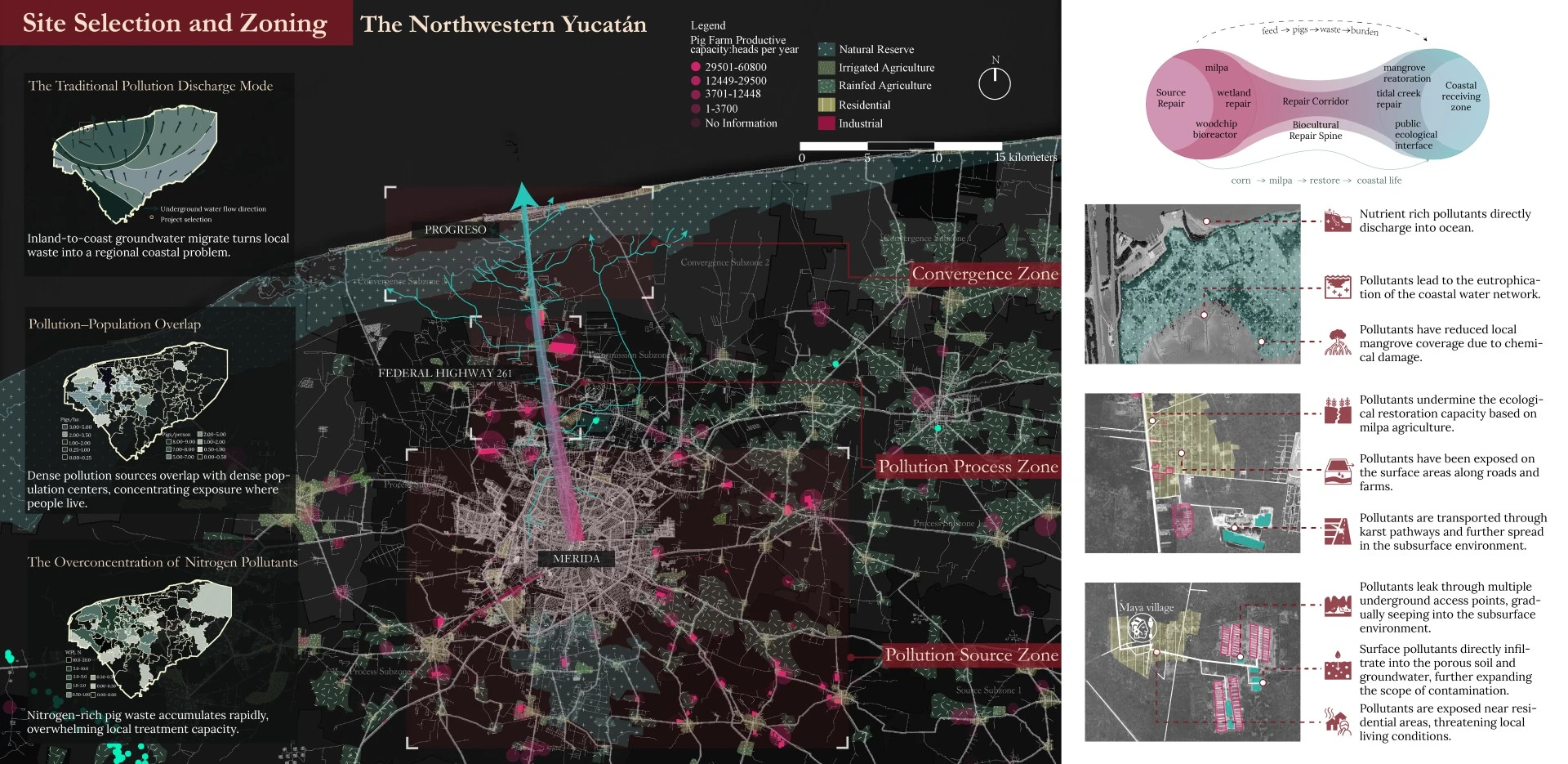
This rift is shaped by porous karst geology, where thin soils, fractured limestone, cenotes, and connected aquifers allow pig waste to move rapidly from barns and lagoons into groundwater. Cenotes, once sacred openings into the Maya cosmology of water, exposed as an entry point in a contaminated aquifer system. Pollution travels underground toward the Progreso coast, where nutrient loading contributes to lagoon degradation, mangrove stress, eutrophication, and red tide risk.
The project follows the Merida-to-Progreso corridor, tracing groundwater discharge from inland pig-farming clusters, across the 261 Highway corridor, to the Ciénaga lagoon and mangrove edge. This transect overlaps pollution sources, population exposure near Mérida, vulnerable karst geology, and coastal pressure. It reveals an environmental injustice in which capital and profit leave the landscape, while Maya communities inherit groundwater risk and health impacts.
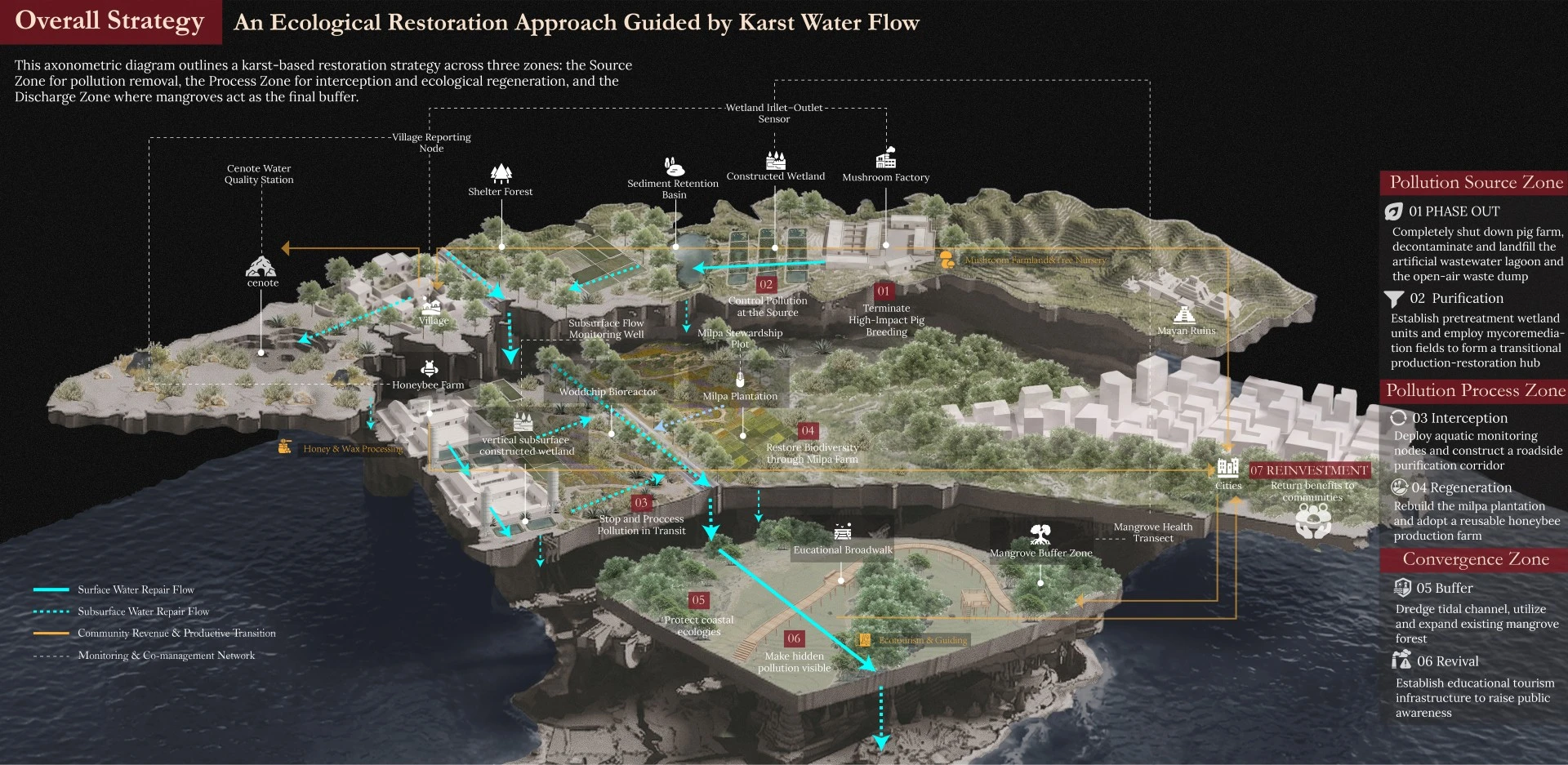
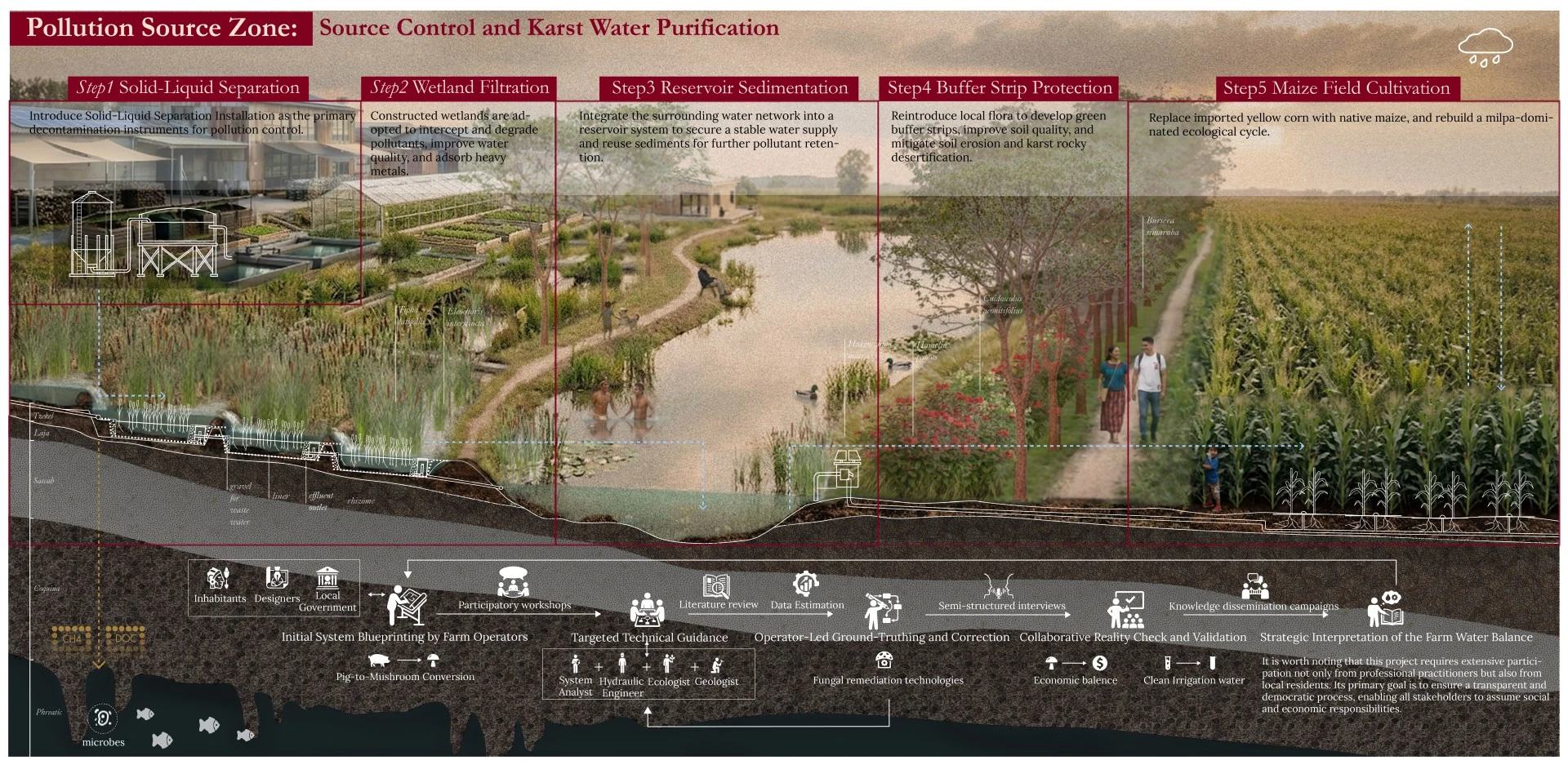
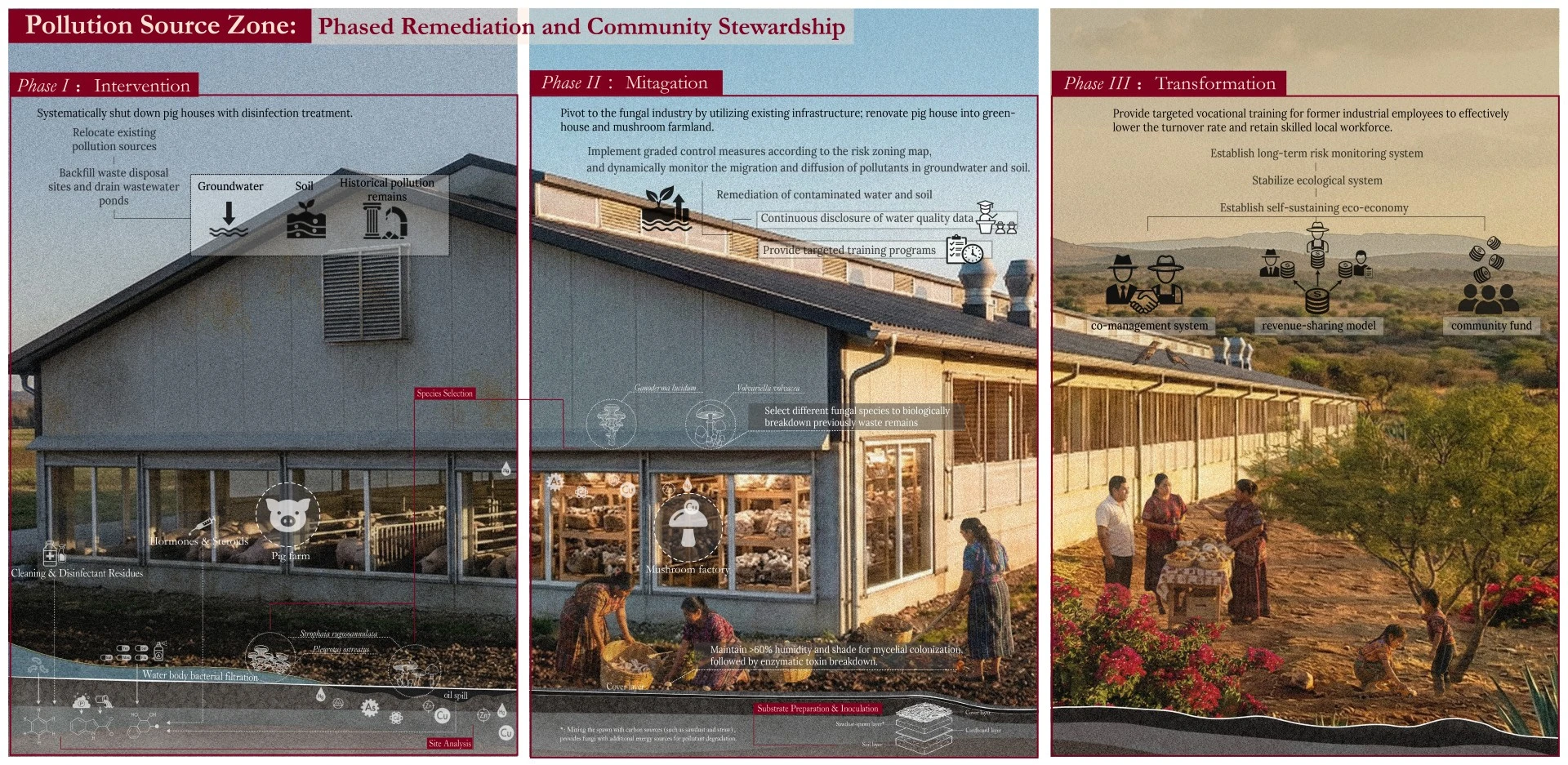
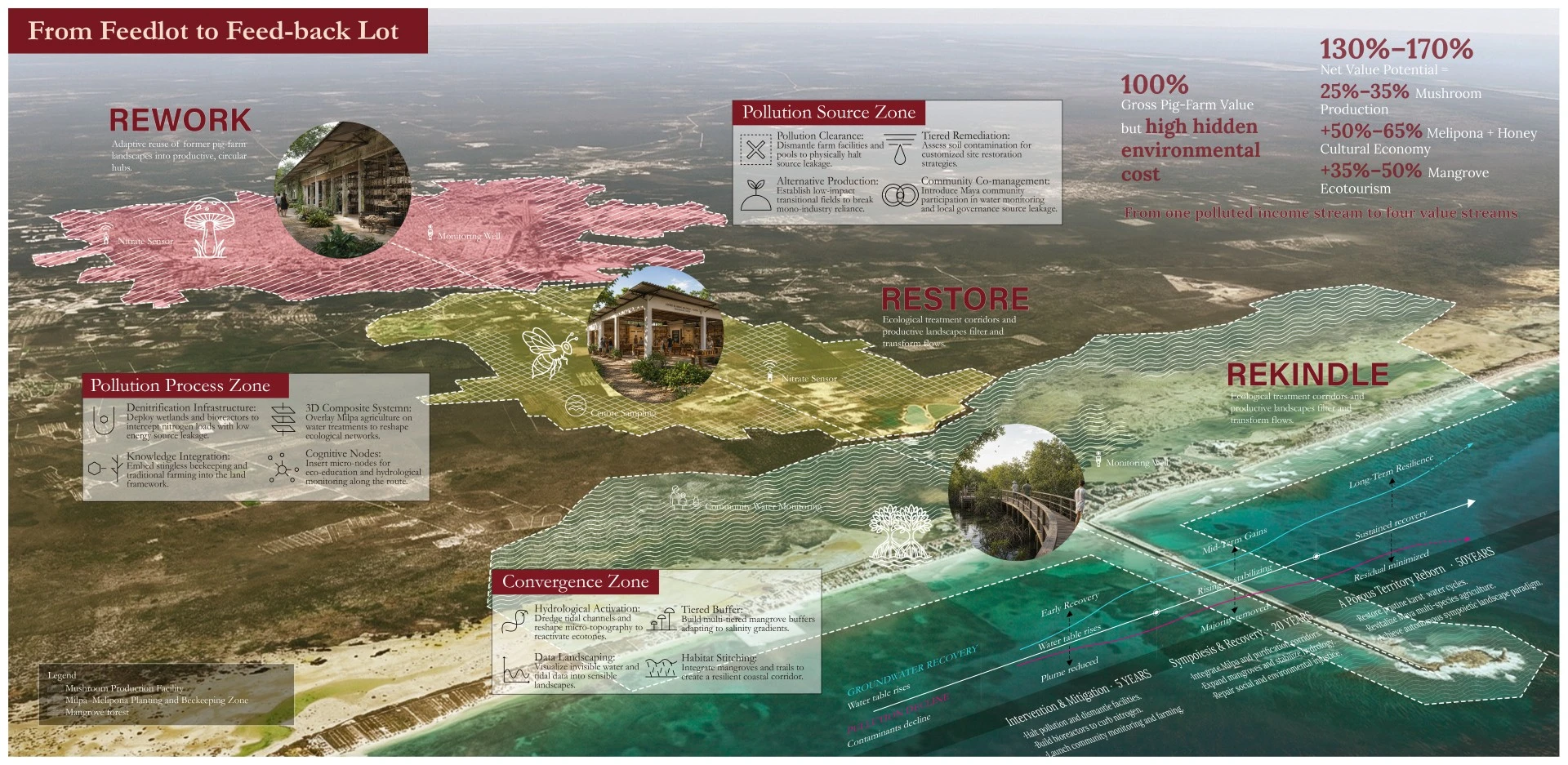
The design reverses the path of contamination and organizes repair along the same route. At the source, high-risk pig facilities are decommissioned, sealed, or remediated. Former barns, waste ponds, and soils are transformed through staged closure, pretreatment wetlands, biochar filtration, and monitoring. The feedlot becomes a transitional landscape for edible fungi cultivation, nurseries, seed preservation and composting, reducing livestock dependence while creating cleaner livelihoods.
In the transmission zone, hidden groundwater flows are transformed into visible and treatable infrastructure. Linear wetlands, vegetated buffers, and denitrifying woodchip bioreactors intercept nitrogen before it reaches the coast. Around these systems, the project reclaims the corridor as a milpa-based landscape of food production, pollination, learning, and biocultural renewal. The Peninsular Maya milpa, recognized by the Food and Agriculture Organization (FAO) as an agricultural heritage system, becomes a framework for soil repair, polyculture, pollination, food sovereignty, and community governance.
At the coastal convergence zone, tidal channels are reopened, microtopography is restored, and mangrove belts are established according to salinity, inundation, root structure, and ecological function. Red mangrove zones, black mangrove purification zones, and upland zones slow water flow, trap sediment, draw nutrients, and sustain habitat. Public walkways and interactive day-and-night interpretive installations translate nitrogen and mangrove health into a civic learning landscape.
The project turns an invisible groundwater crisis into a legible territorial strategy. It connects global pork production with water contamination, cenote desecration, maize displacement, Indigenous rights, and coastal collapse, then transforms these conflicts into a repair framework. By aligning karst science, environmental justice, milpa knowledge, community water councils, low-pollution livelihoods, and multispecies habitat restoration, it offers a replicable model for territories shaped by industrial livestock production.
-
- Mexican Sycamore
- Bonpland Willow
- Southern Cattail
- American Bulrush
- Broadleaf Arrowhead
- Coontail
- Illinois Pondweed
- Oyster Mushroom
- King Stropharia
- Beggarticks
- Toothed Goldeneye
- Cosmos
- Tickseed
- Bahama Mimosa
- Limoncillo
- Gumbo limbo
- Fishpoison Tree
- Black Chechen
- Red Mangrove
- Black Mangrove
- White Mangrove
- Gray Mangrove
- Reishi Mushroom
- Straw Mushroom
- Seagrass
- Native maize
- Climbing beans
- Pumpkin
Advertisement
Related Awards
Award of Excellence, Analysis & Planning
H2Oquirrh: Regional Water Reform for a Resilient Salt Lake Valley
Location: Salt Lake City, UT
Firm: Design Workshop
Client: Wasatch Front Regional Council, Salt Lake County
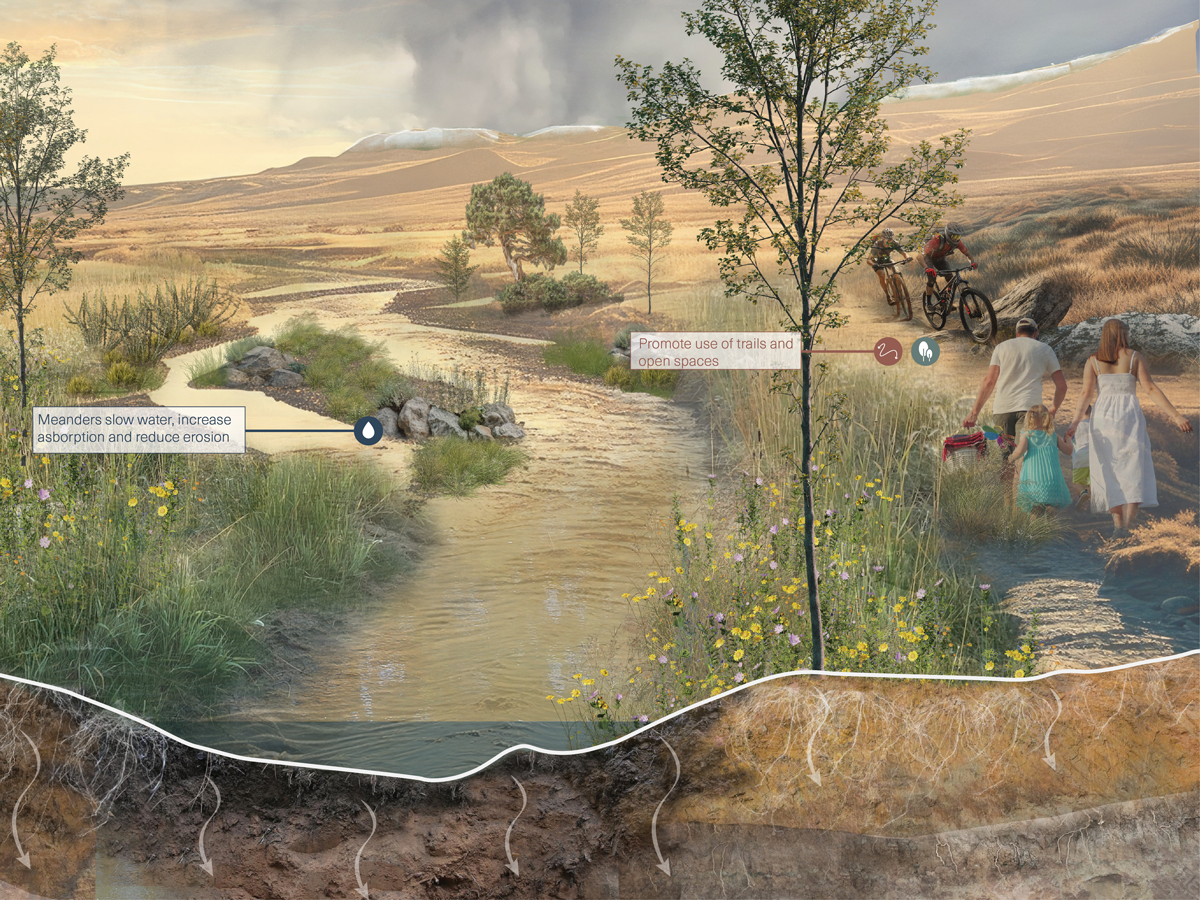
Water flowing from the Oquirrh Mountains is a critical contributor to the Great Salt Lake. Severe drought and human-caused decline threaten the lake’s viability, with cascading impacts on ecosystems and public health. This regional collaboration of seven jurisdictions, the H2Oquirrh Vision Plan, undertakes a large systems analysis of hydrologic cycles, land cover, and land-use decisions to identify site-specific interventions across nine creeks and washes. Led by landscape architects and water resource engineers, the study advances a deeper understanding of localized drivers of water loss and proposes innovative solutions through integrated landscape infrastructure design and policy.
-listing-img.webp?language=en-US)