
.webp?language=en-US)
.webp?language=en-US)
A Ground for Change: Regenerating Cultural Landscapes on Pine Island
Hayden Germanis, Student ASLA

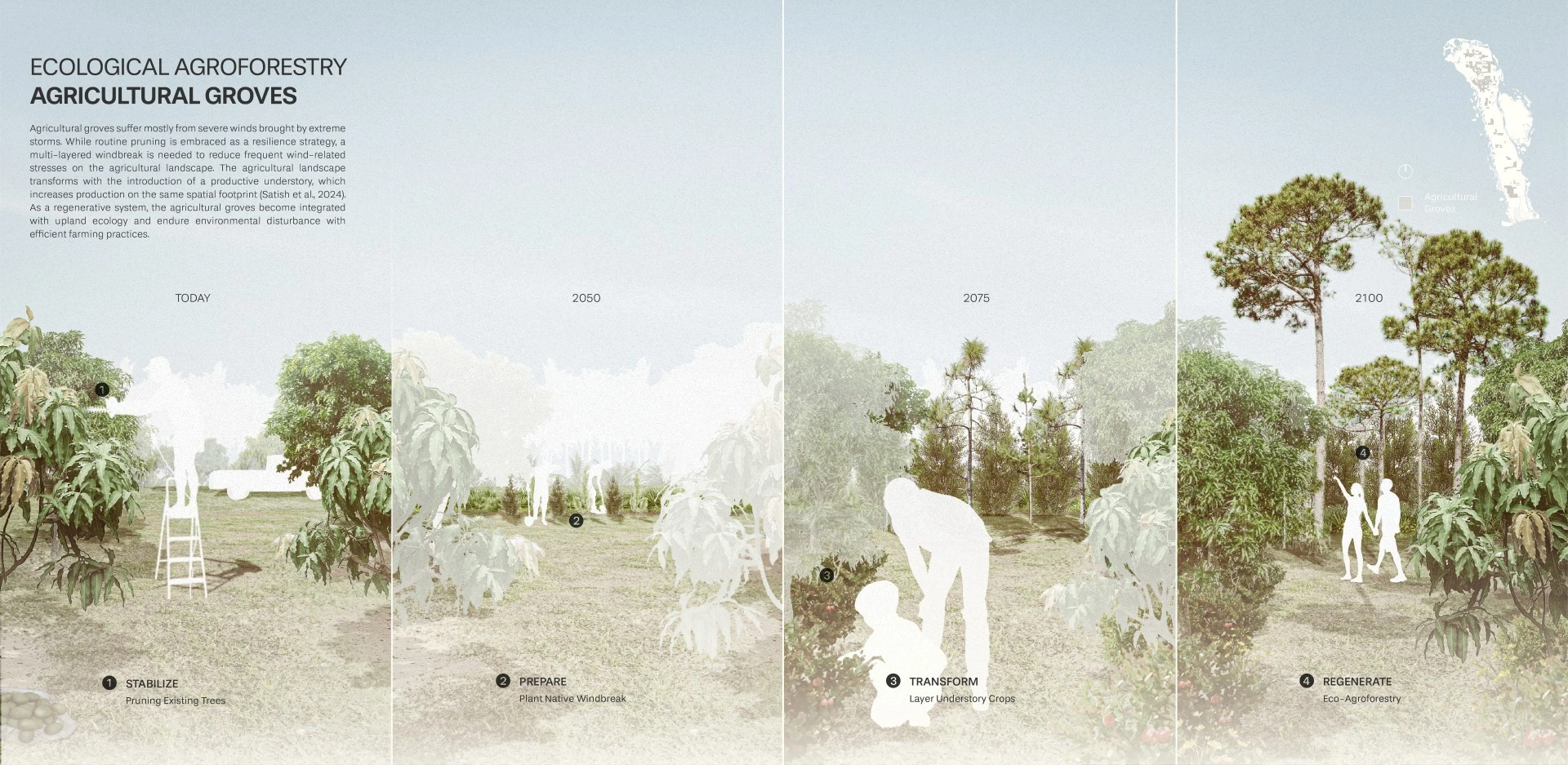
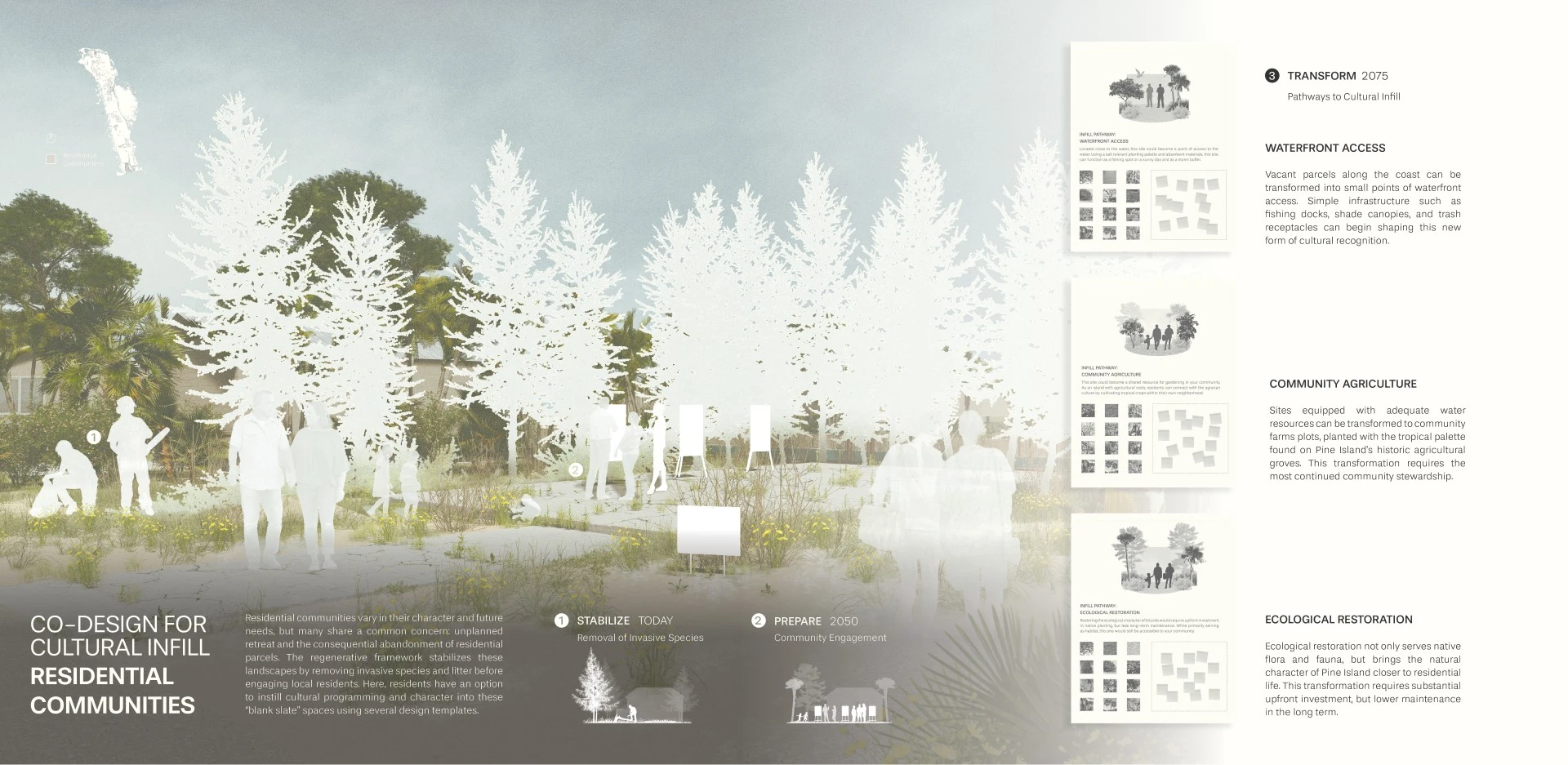
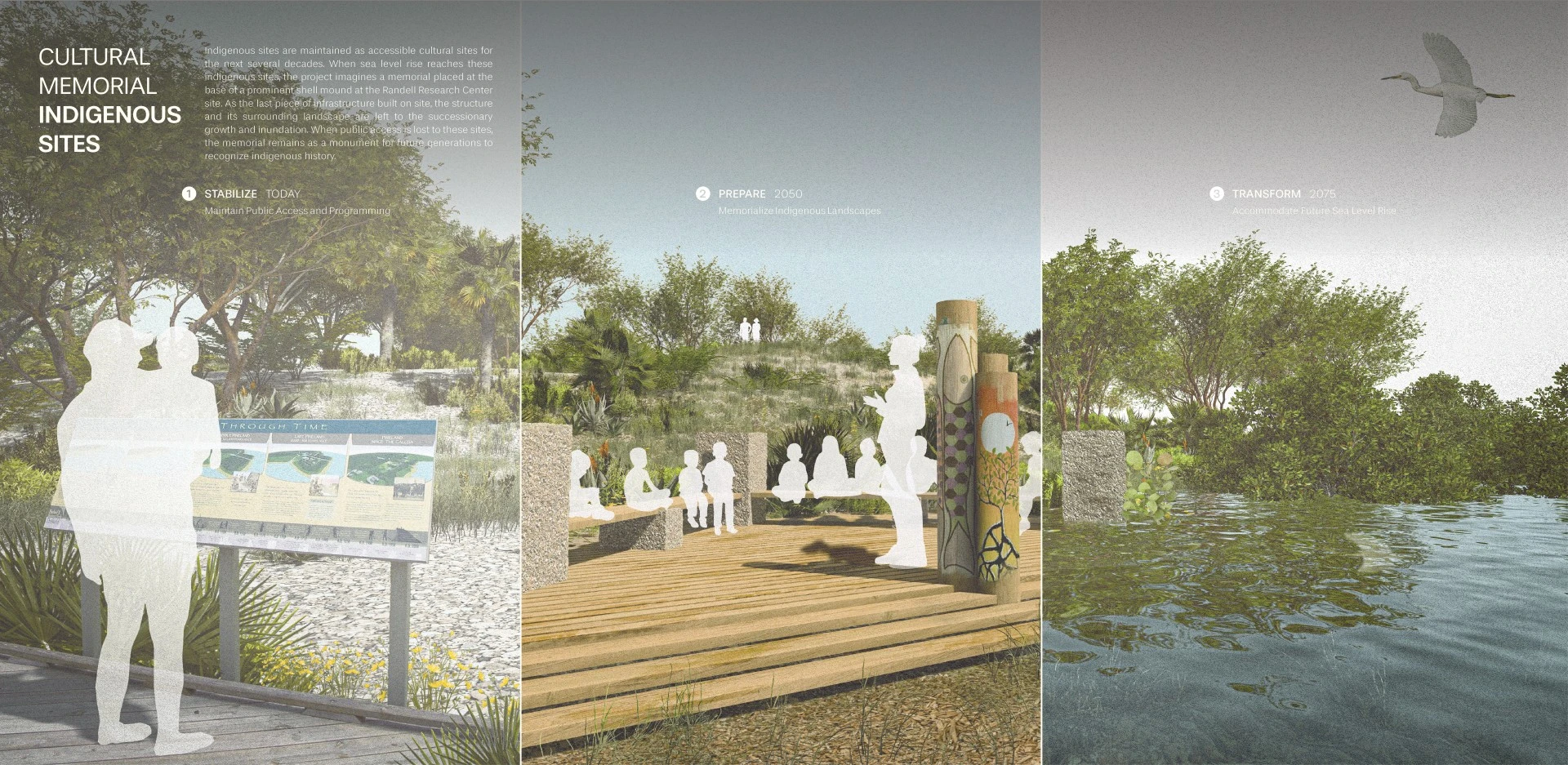
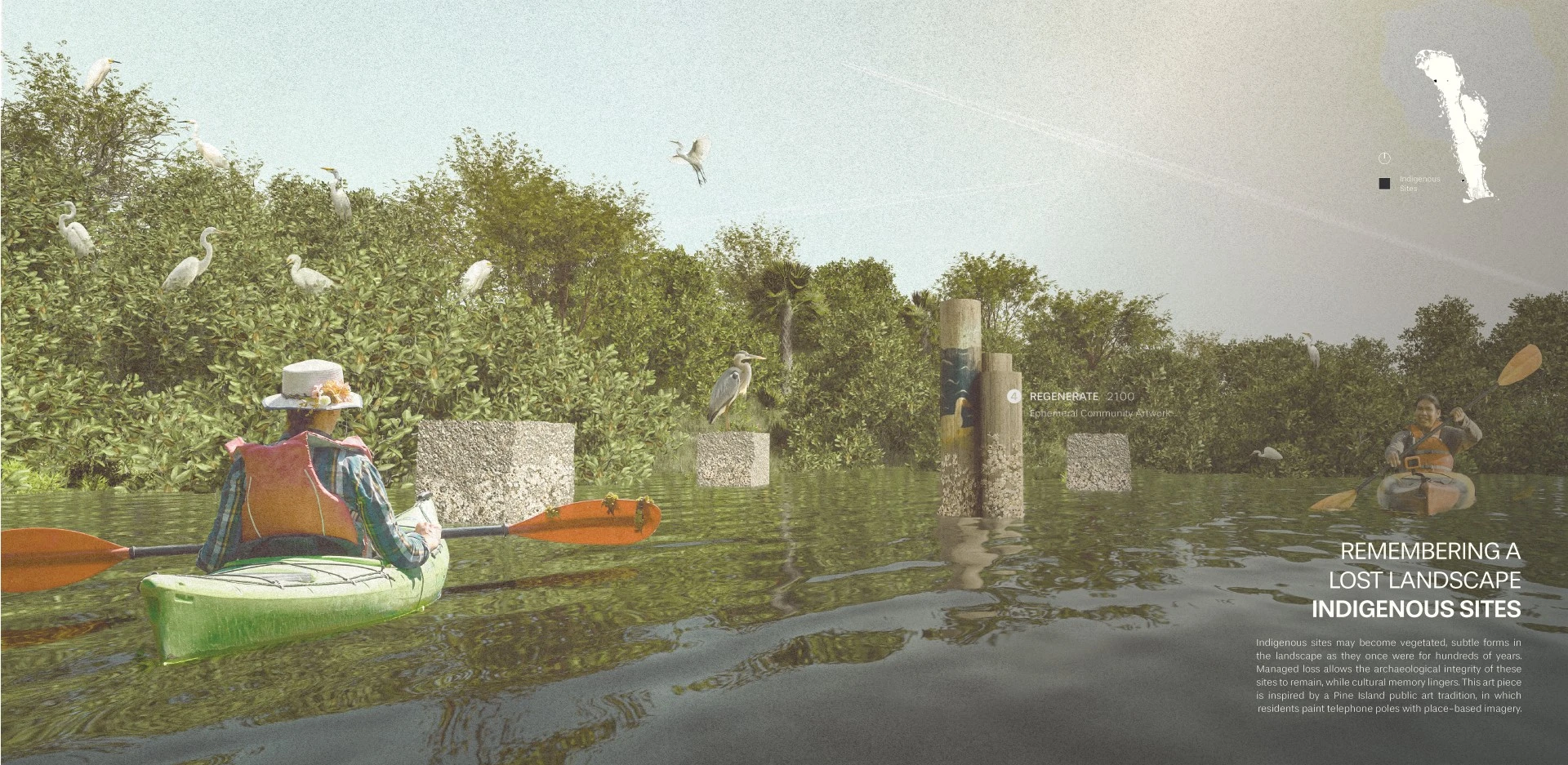
Beautiful, stunning project, lovely graphics, local/place-based analysis and planning
Awards Jury
-
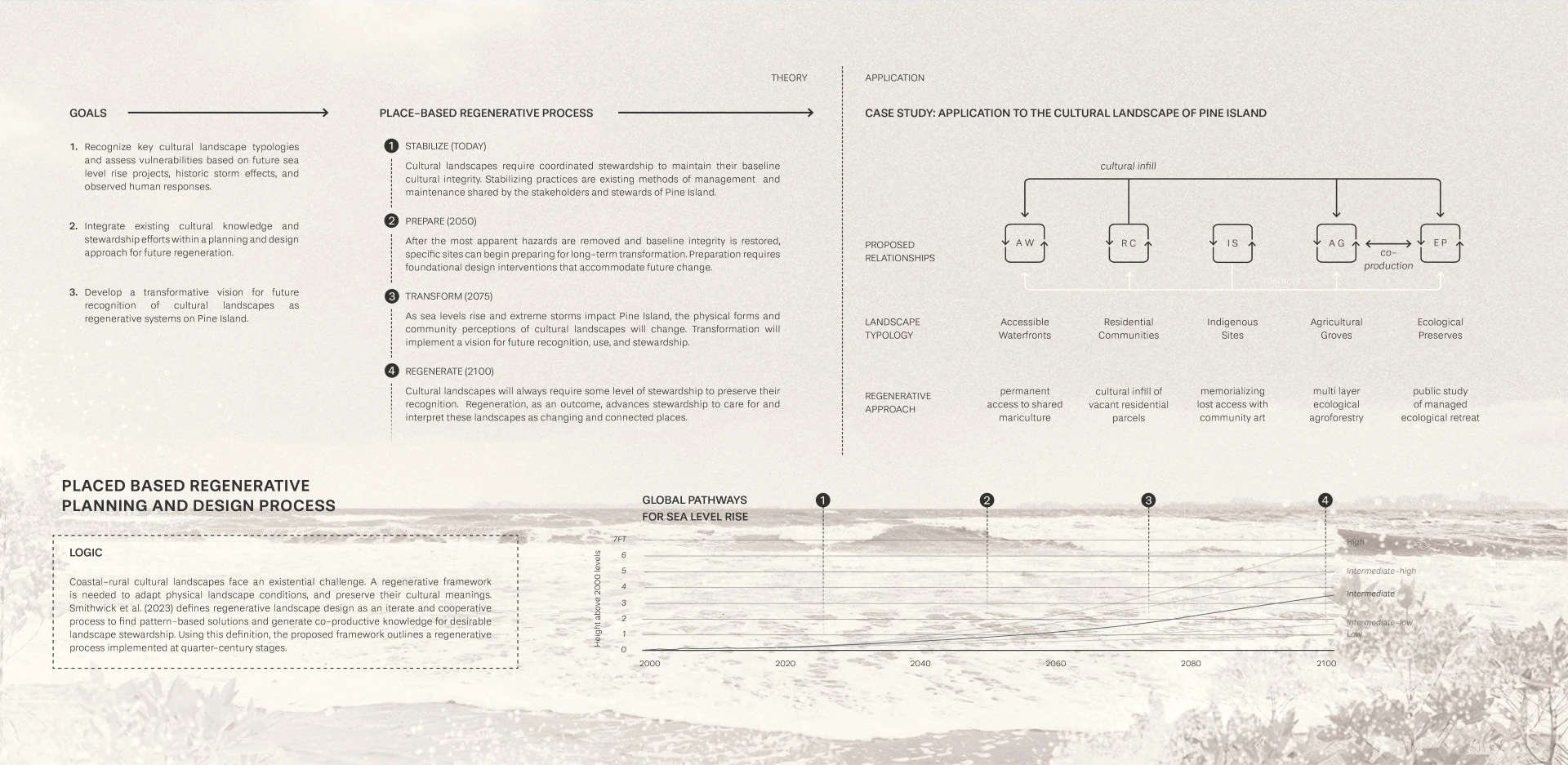
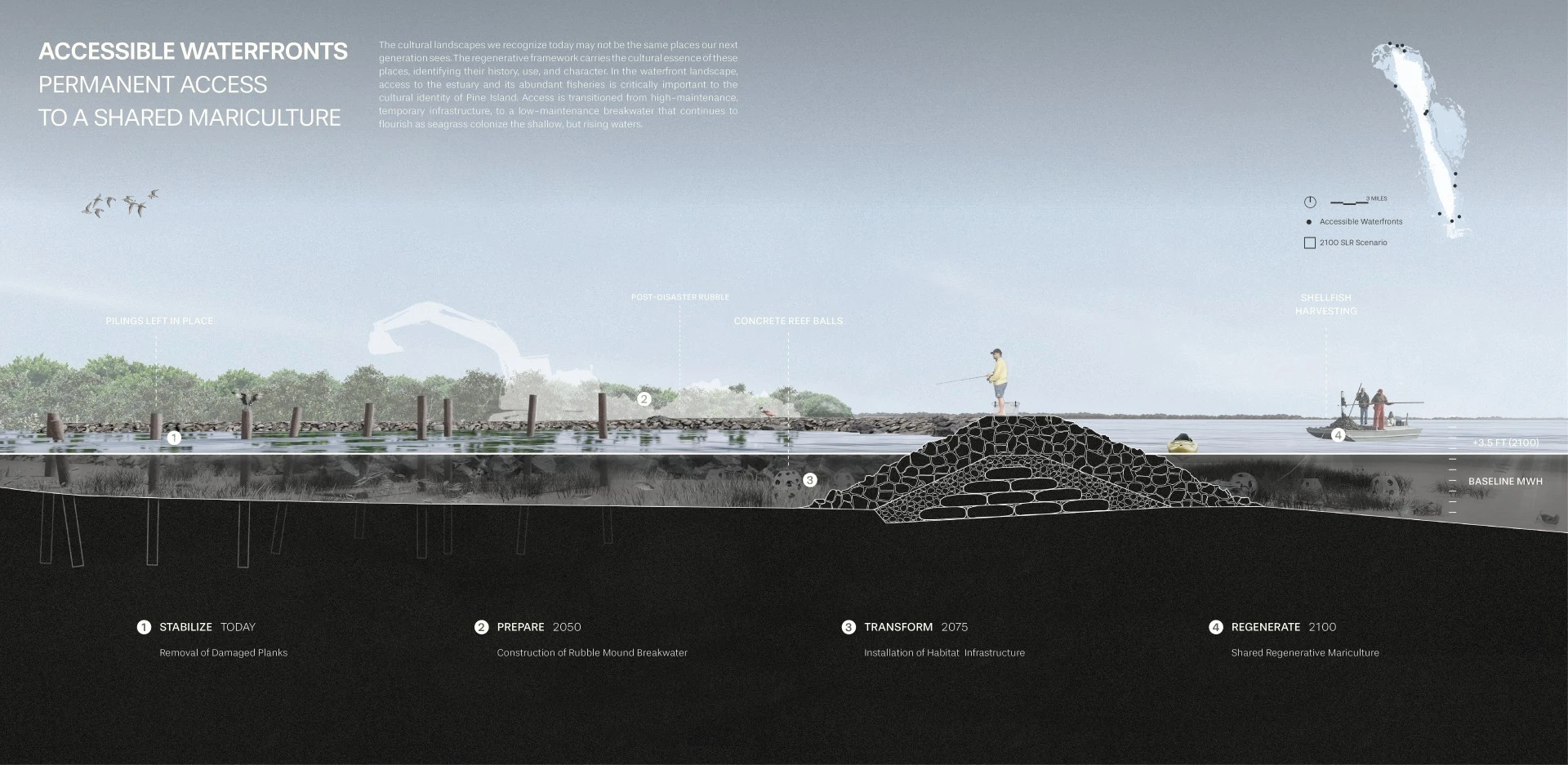
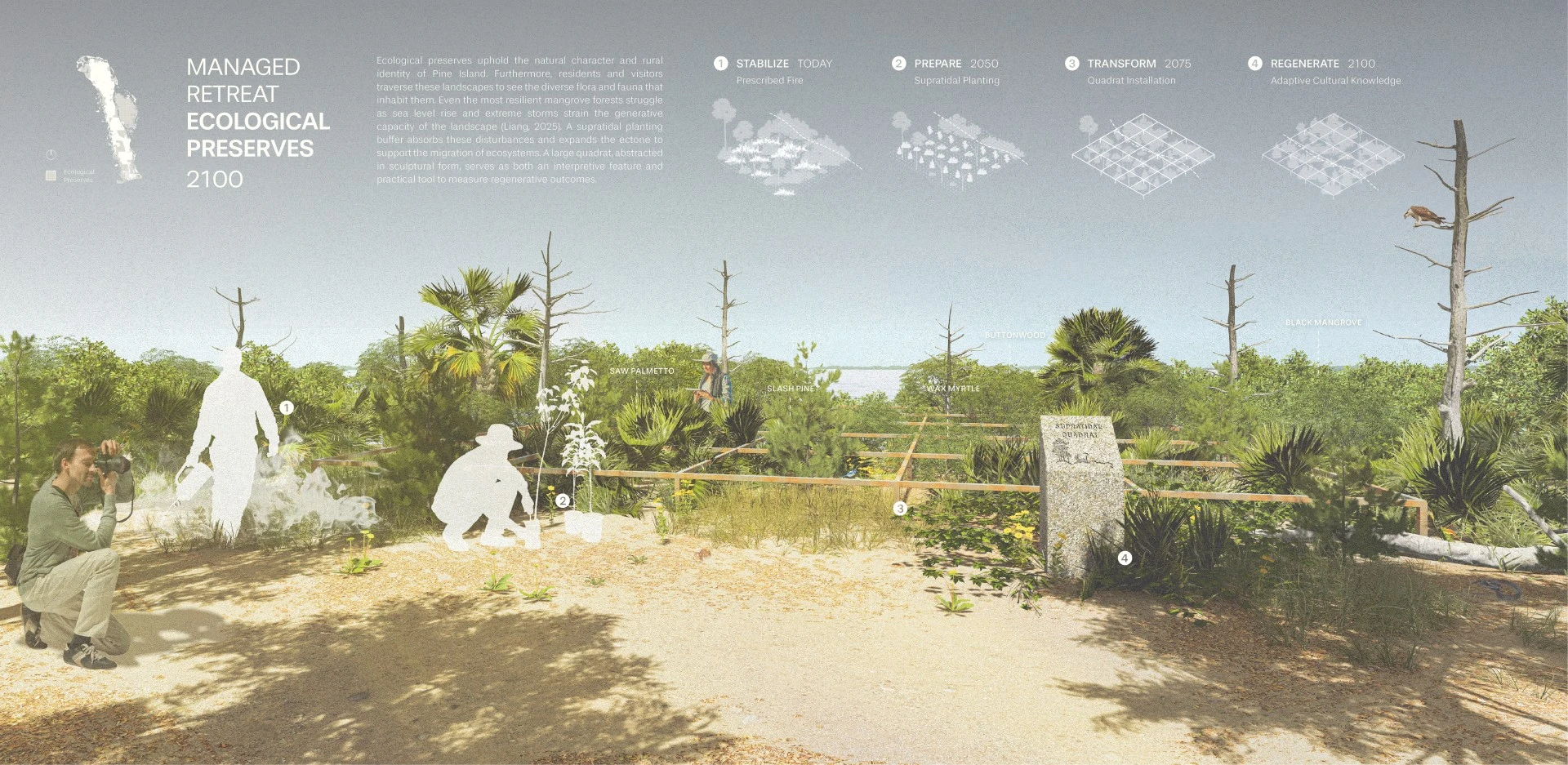
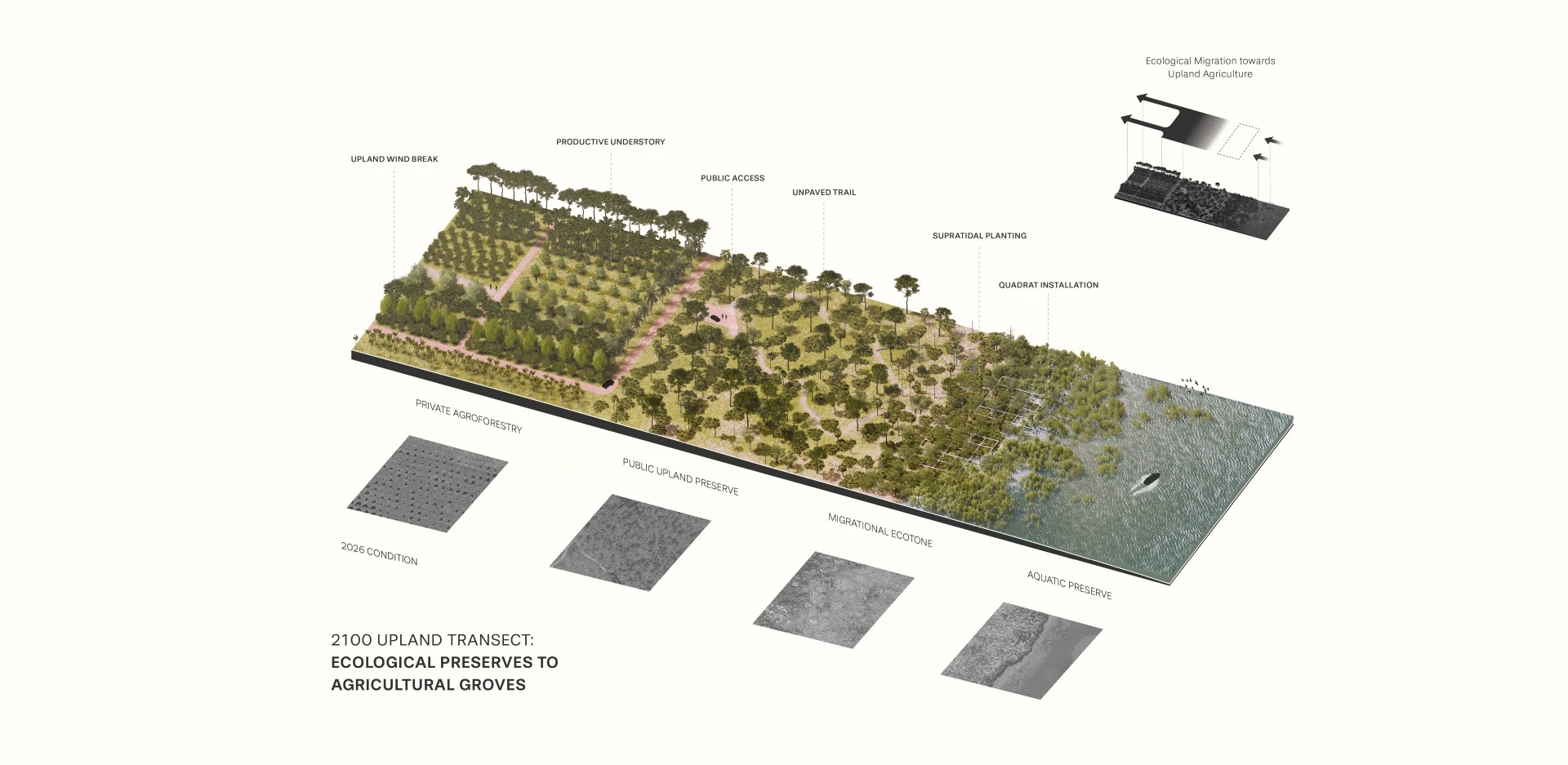
Coastal-rural communities harbor some of the most intact cultural resources in the Gulf South, but these places often struggle to preserve important cultural landscapes. A Ground for Change proposes that regenerative landscape design, applied to the cultural landscape, can empower the stewards of coastal-rural landscapes to accommodate climate change while maintaining recognition. The outlined regenerative planning and design process is applied to Pine Island, FL, a community viewed as a microcosm of coastal-rural struggle. Beginning with the recognition of cultural landscape typologies, A Ground for Change applies the regenerative process to each typology, creating a plan for changed, but intentional stewardship of cultural landscapes.
-
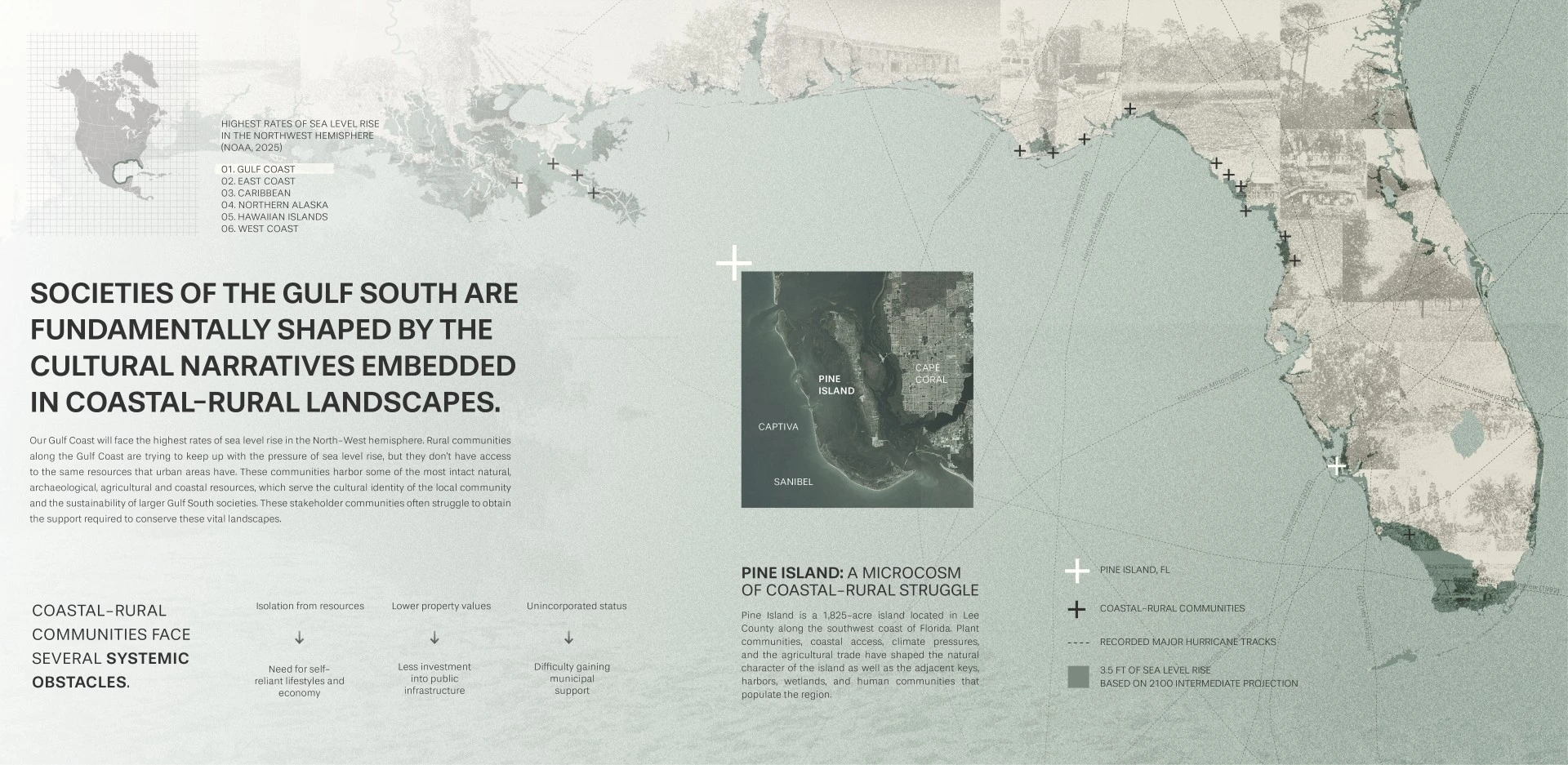
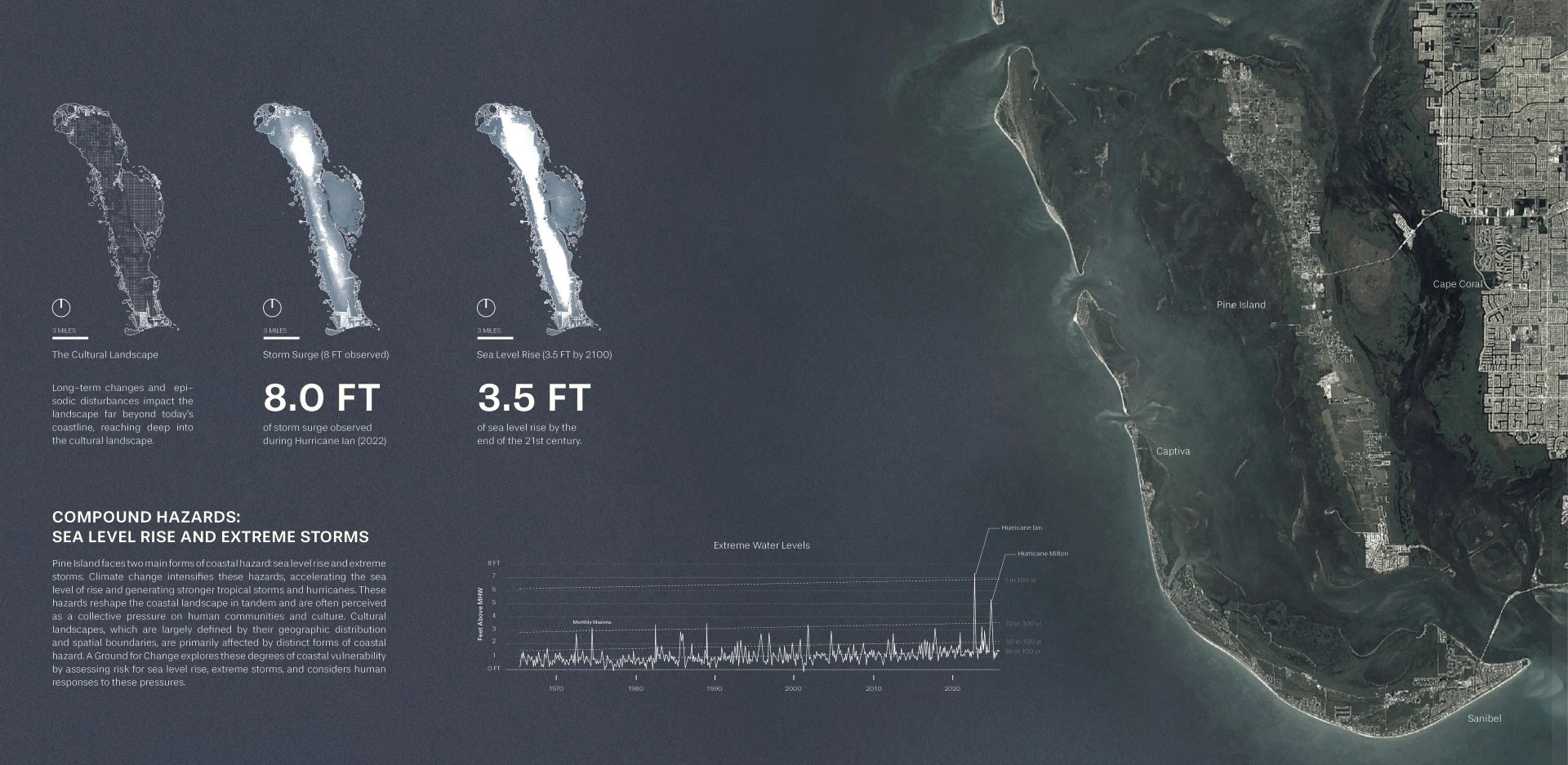
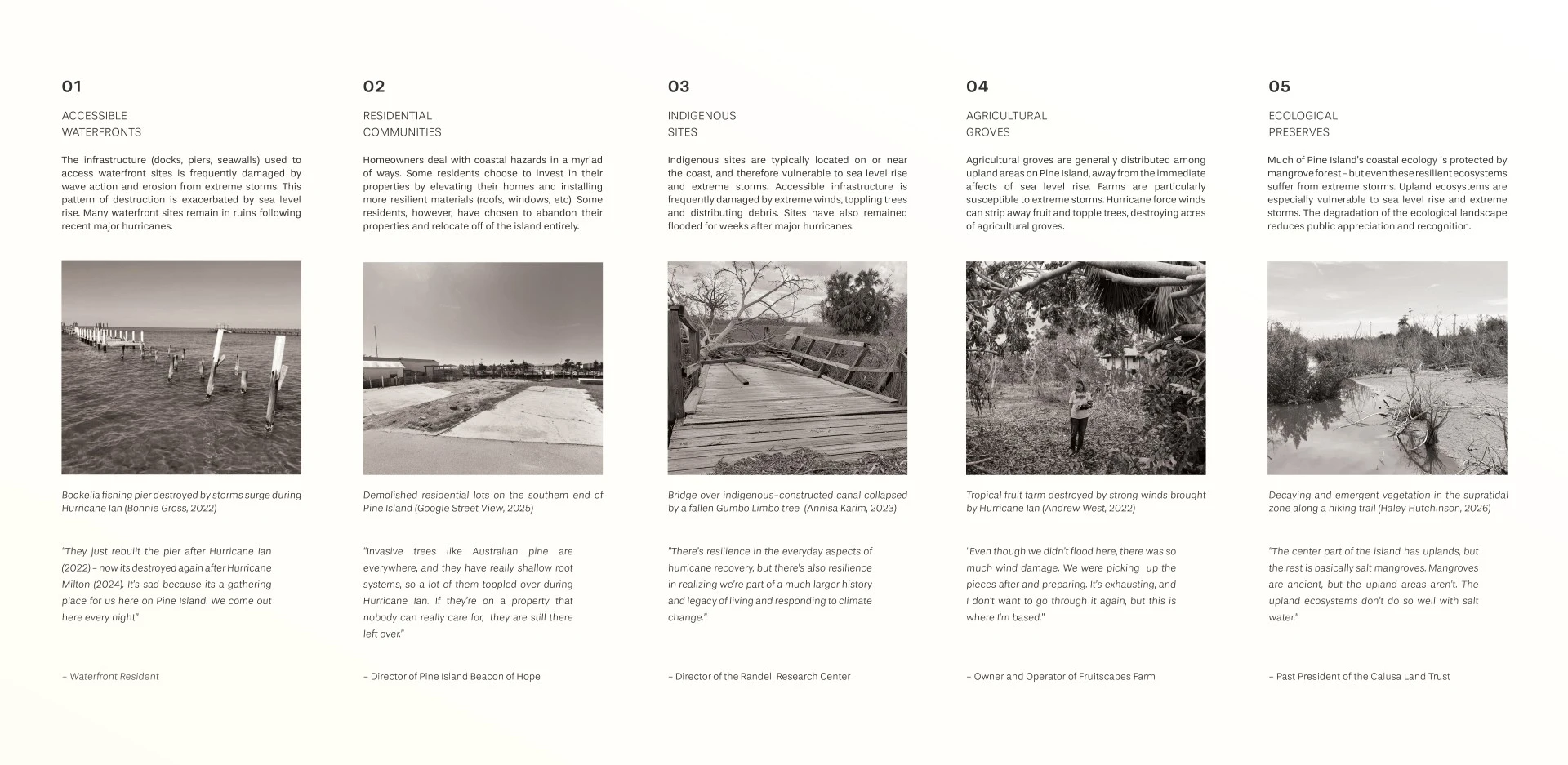
The Gulf Coast is projected to face some of the highest rates of sea level rise in North America. Current projections estimate that up to 1.5 feet of sea level rise will inundate the Gulf Coast by 2050, a trend compounded by extreme storm events that are increasing in intensity. Coastal-rural communities can be especially vulnerable to environmental hazards when there is limited protective infrastructure and low access to municipal resources. Counterintuitively, the relative isolation of rural life can exacerbate vulnerability but also protect culturally significant landscapes from rapid development and homogenization, preserving patterns of land use and habitation that express distinct cultural identity. Pine Island, Florida, is a microcosm of coastal vulnerability, rural identity, and cultural landscape value.
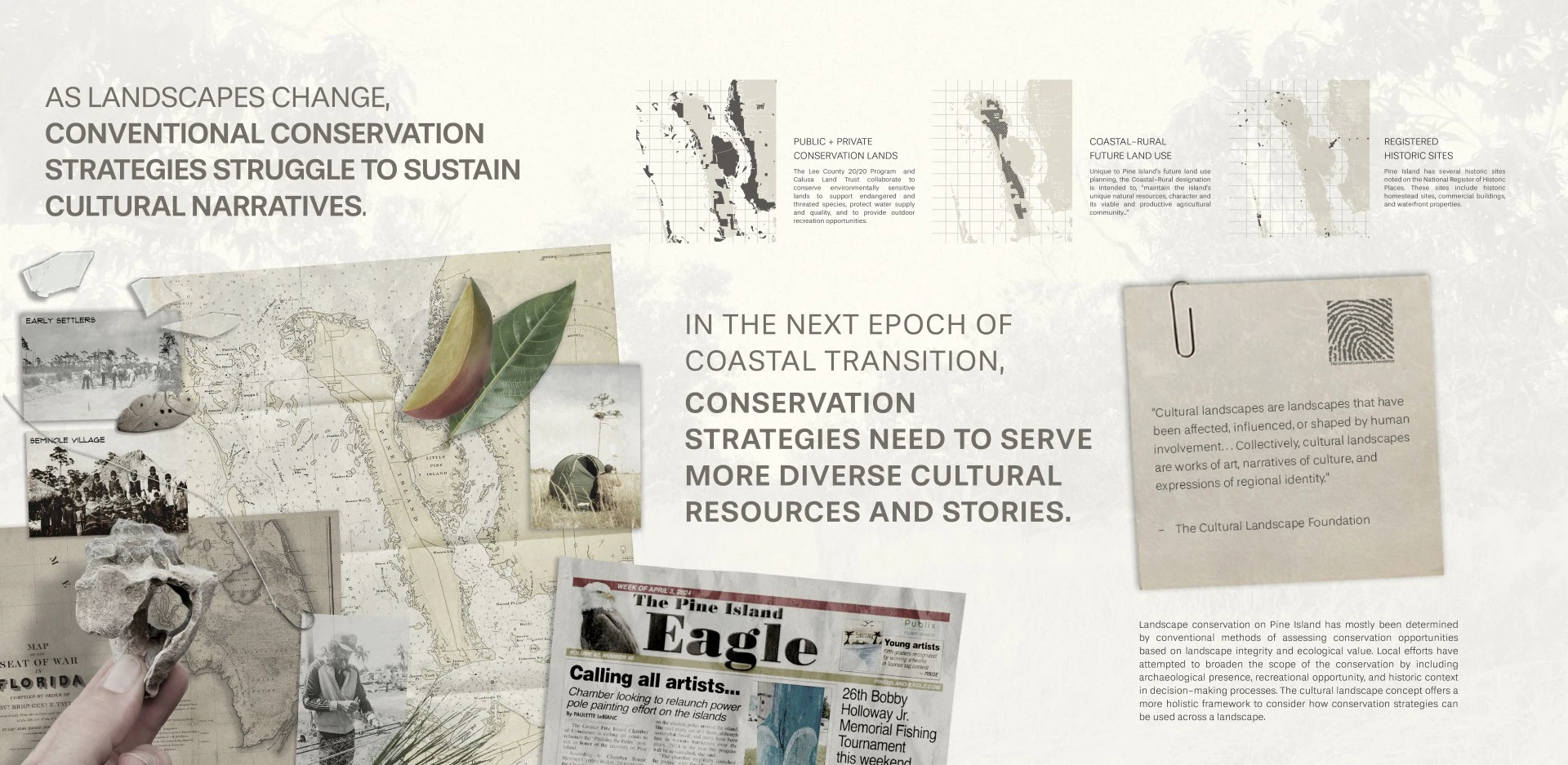
Cultural landscapes offer a lens for community-centered coastal adaptation. Physical landscapes may change through coastal processes like sea level rise and extreme storms, but cultural meaning can evolve to appreciate transformed landscapes and recognize new ones. Recognizing the cultural landscape and designing for regeneration requires an understanding of the ephemeral qualities, stakeholder identities, and public values that connect people to land. This project proposes that regenerative landscape design, applied through a place-based and community-centered process, can empower the stewards of coastal-rural cultural landscapes to adapt to mounting vulnerabilities while maintaining the productive capacity, livability, and importance of these places into an uncertain future.
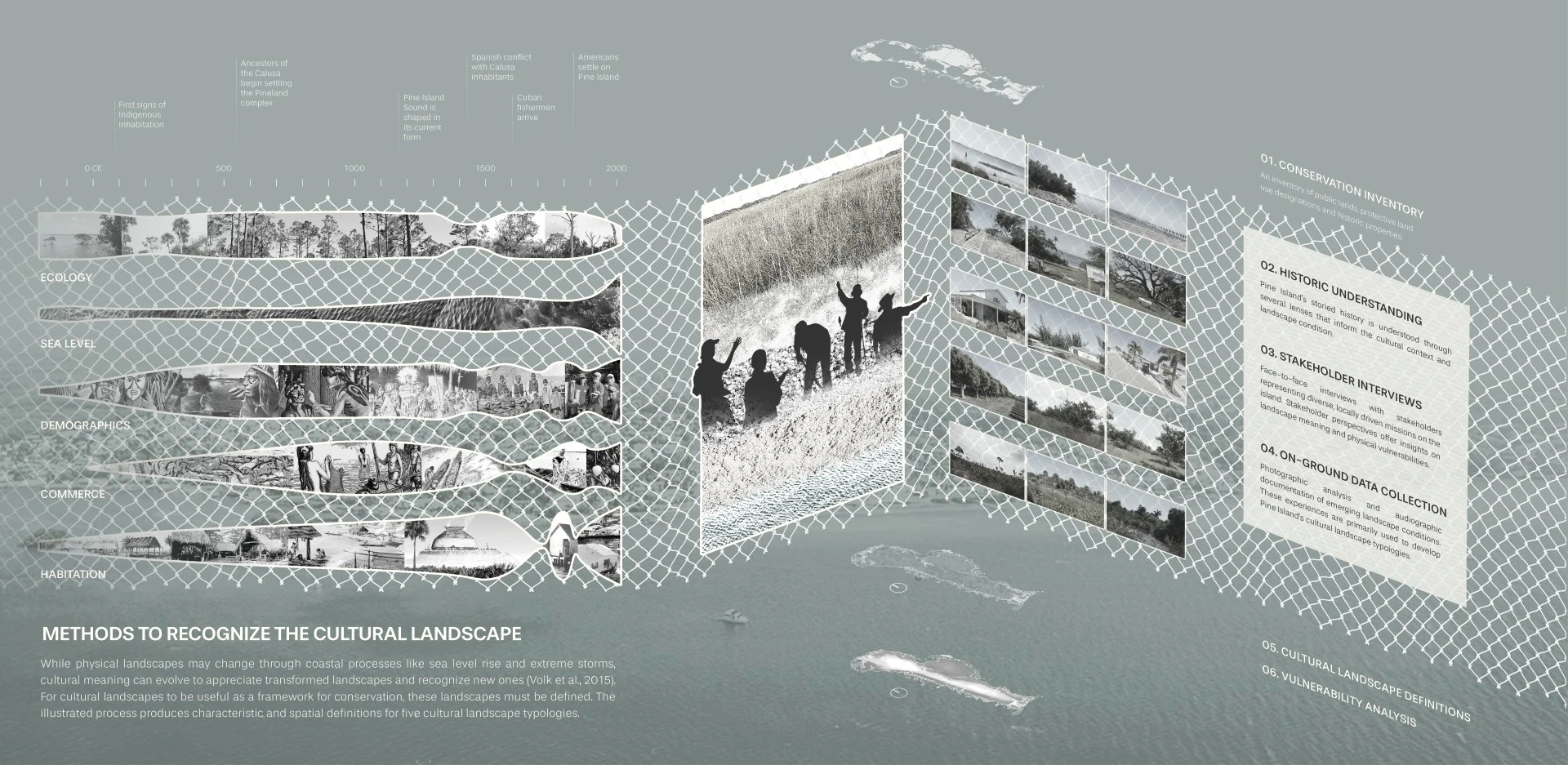
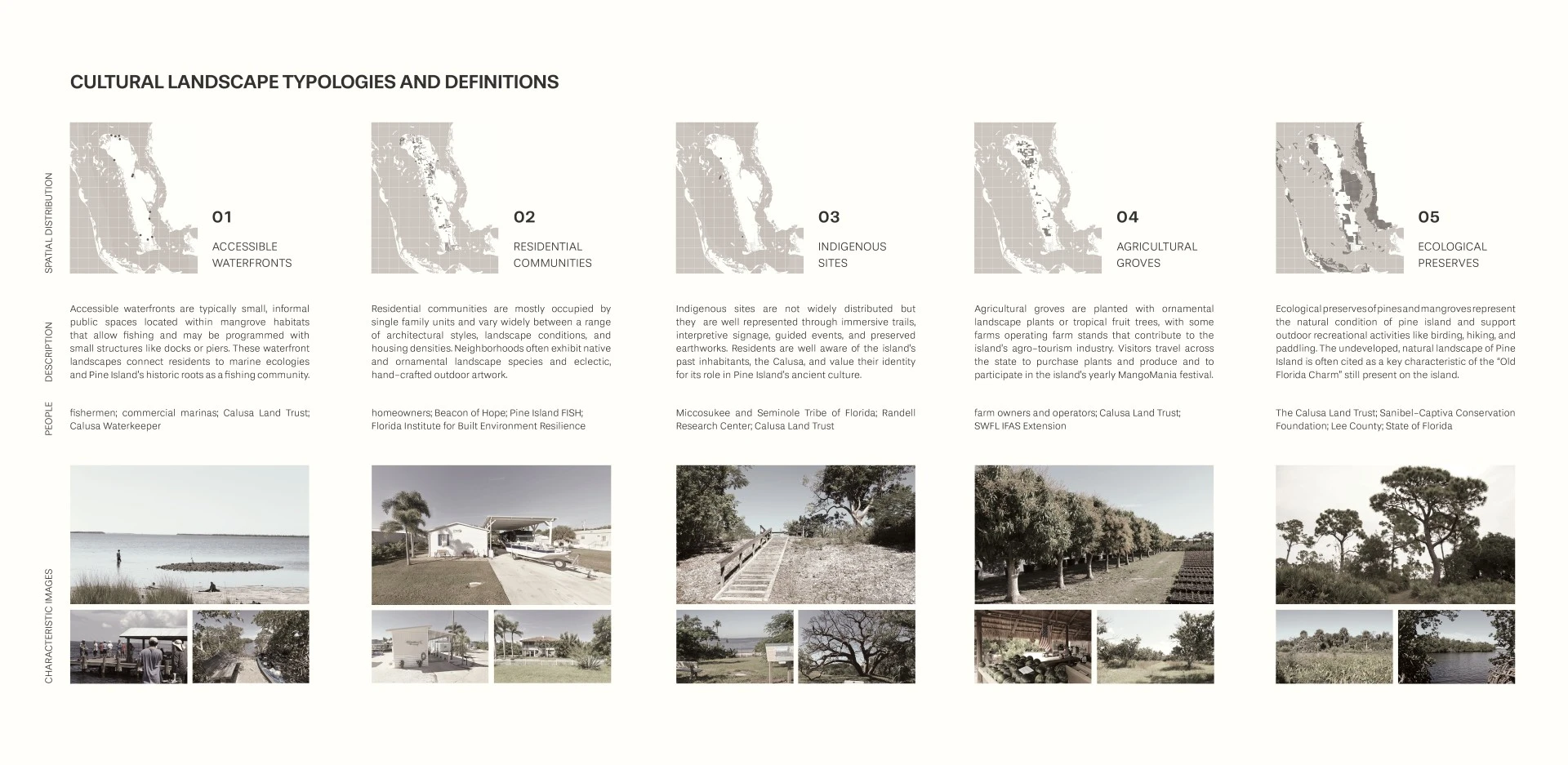
To activate this regenerative capacity, cultural landscapes must first be identified, documented, and understood spatially in relation to coastal hazards and community priorities. Descriptive and spatial definitions cannot be formed without engagement with cultural primary sources that include stakeholder interviews, oral history, and archival materials. In the application of this methodology, A Ground for Change utilized several strategies to identify cultural landscape typologies and understand associated vulnerabilities. Three planning and design phases precede regeneration, including stabilization, preparation, and transformation. Each phase is developed within quarter-century increments, in which planning and design efforts are expected to coalesce, generating adapted cultural landscape forms.
The design processes described include existing management practices, proposals for design implementation, and concepts for long-term stewardship. In the process outlined in A Ground for Change, cultural preservation and regenerative stewardship are interdependent objectives. Beginning with the recognition of cultural landscape typologies, the project applies the regenerative process to each typology, creating a framework for changed, but intentional stewardship of cultural landscapes among mounting coastal pressures. While the project develops unique proposals for Pine Island's cultural landscape, the application serves as a case study for broader implementation of the regenerative process, which may benefit similar coastal-rural communities of the Gulf South. Beyond Pine Island, coastal-rural communities including Cedar Key, Yankee Town, Inglis, and Port St. Joe face similar challenges and opportunities for regenerating the changing cultural landscape.
-
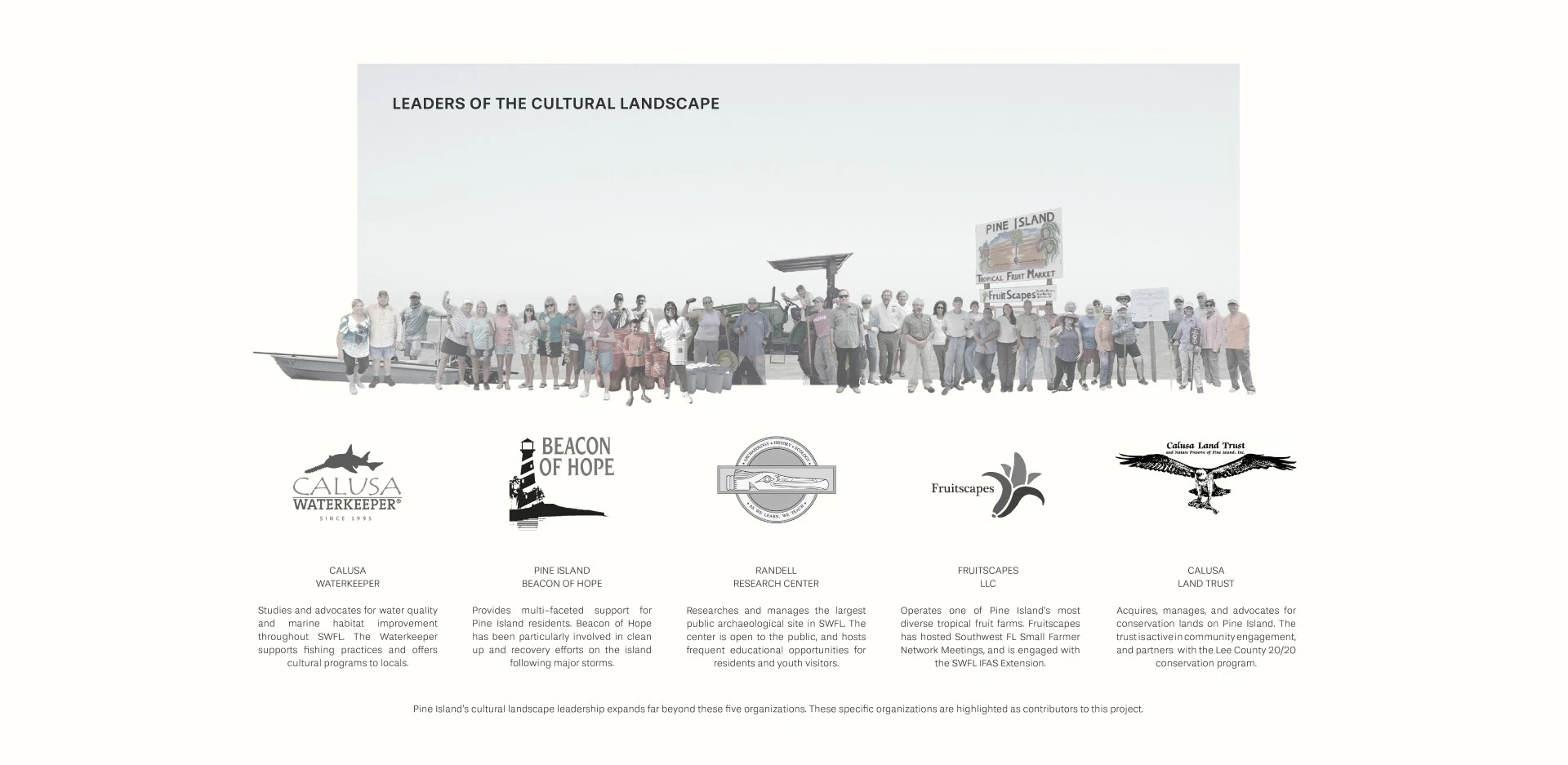
- Nancy Cote, Executive Director, Pine Island Beacon of Hope
- John Kendall, Past President, Calusa Land Trust
- Stephen Cucura, Owner, Fruitscapes
- Michelle Lefebvre, Director, Randell Research Center
-
- Slash Pine
- Saw Palmetto
- Buttonwood
- Mango
- Cabbage Palm
- Gumbo Limbo
Advertisement
Related Awards
Award of Excellence, Analysis & Planning
H2Oquirrh: Regional Water Reform for a Resilient Salt Lake Valley
Location: Salt Lake City, UT
Firm: Design Workshop
Client: Wasatch Front Regional Council, Salt Lake County
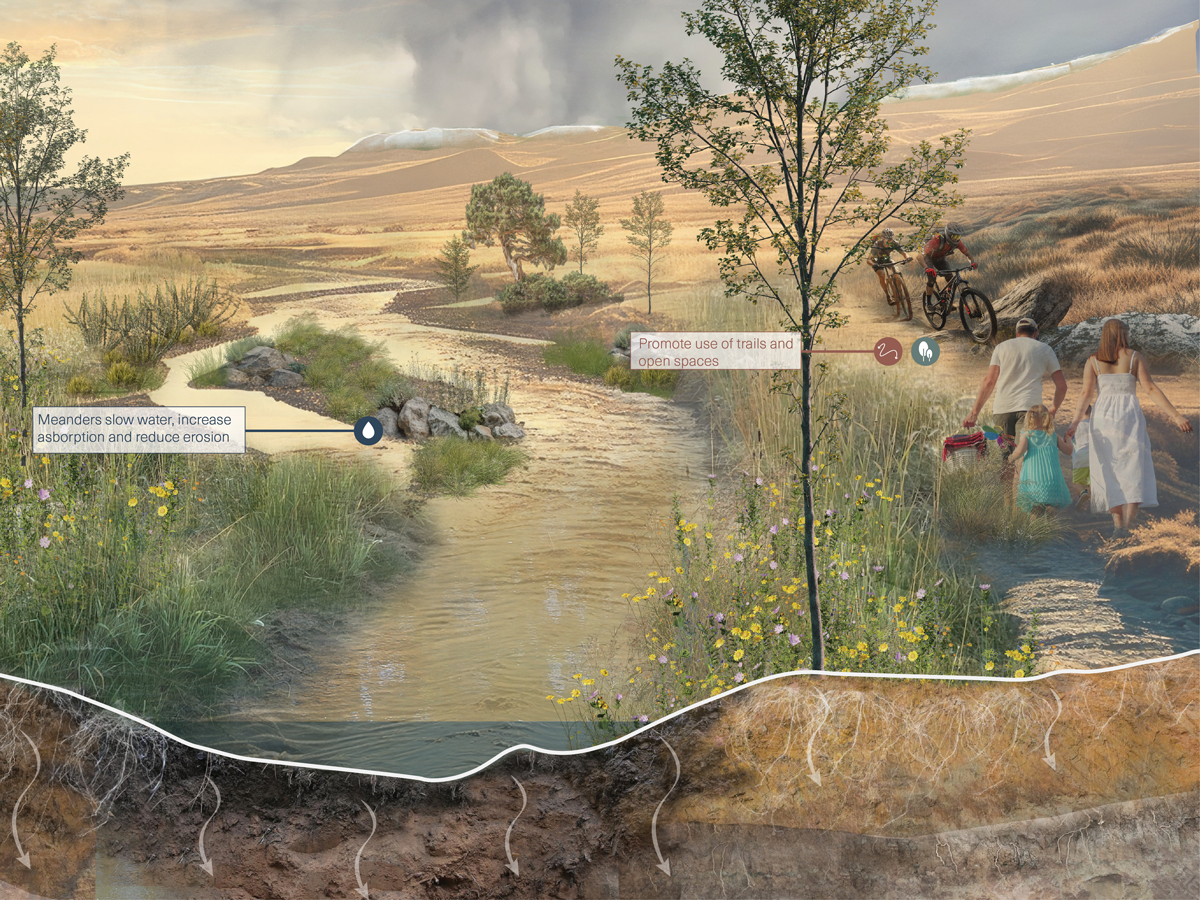
Water flowing from the Oquirrh Mountains is a critical contributor to the Great Salt Lake. Severe drought and human-caused decline threaten the lake’s viability, with cascading impacts on ecosystems and public health. This regional collaboration of seven jurisdictions, the H2Oquirrh Vision Plan, undertakes a large systems analysis of hydrologic cycles, land cover, and land-use decisions to identify site-specific interventions across nine creeks and washes. Led by landscape architects and water resource engineers, the study advances a deeper understanding of localized drivers of water loss and proposes innovative solutions through integrated landscape infrastructure design and policy.
-listing-img.webp?language=en-US)