
.webp?language=en-US)


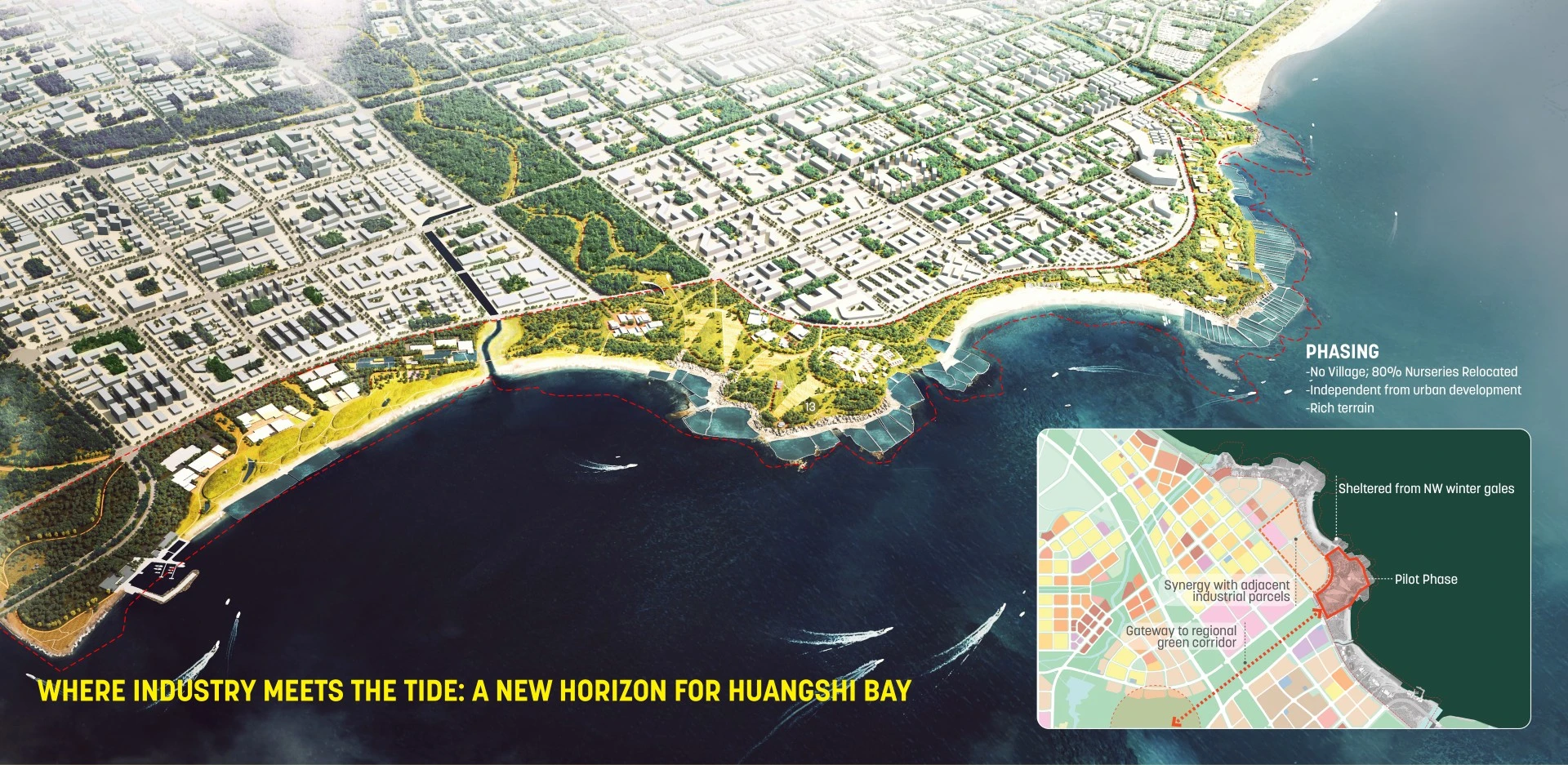
Where Industry Meets the Tide: A New Horizon for Huangshi Bay
-
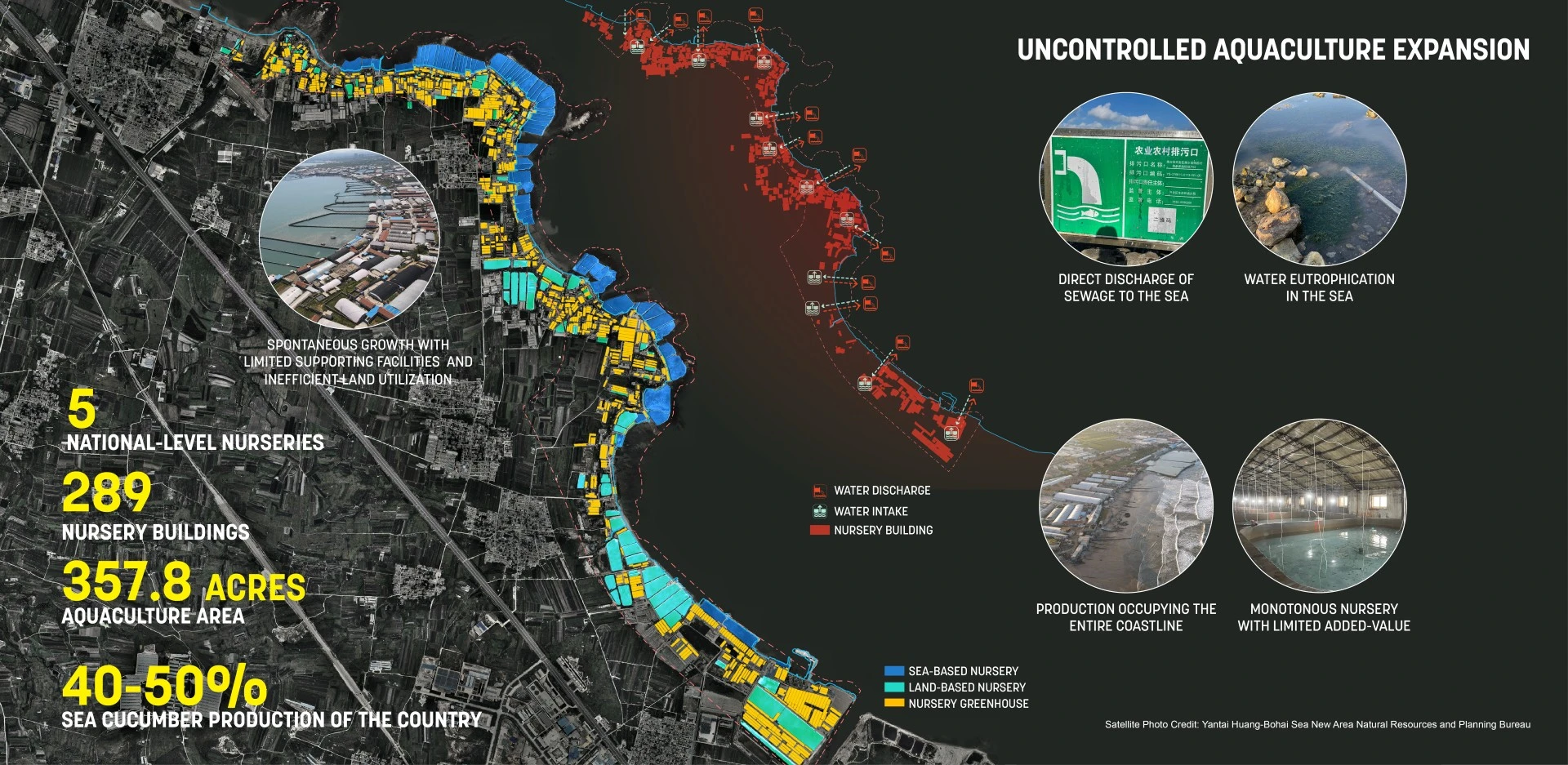
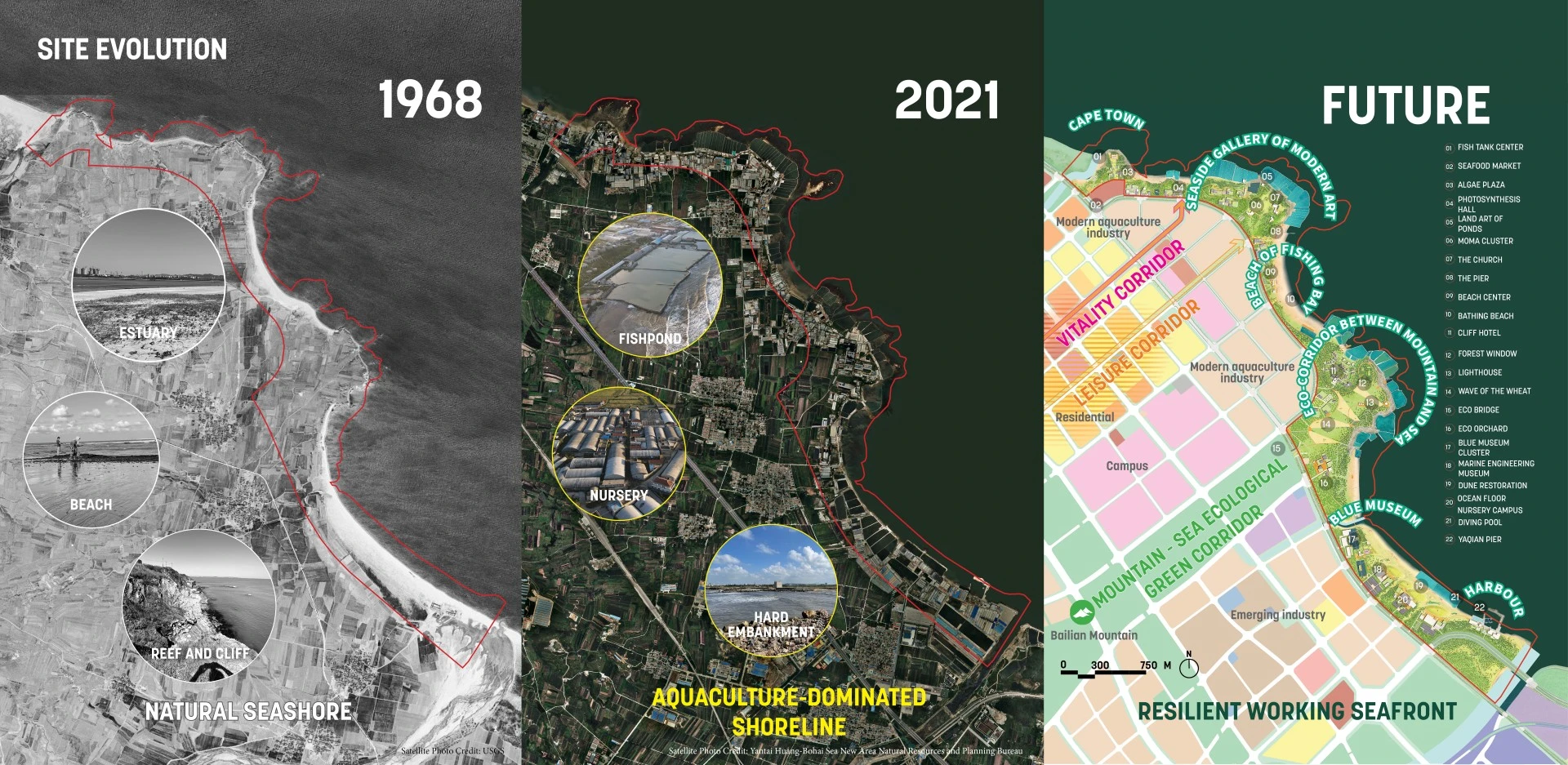
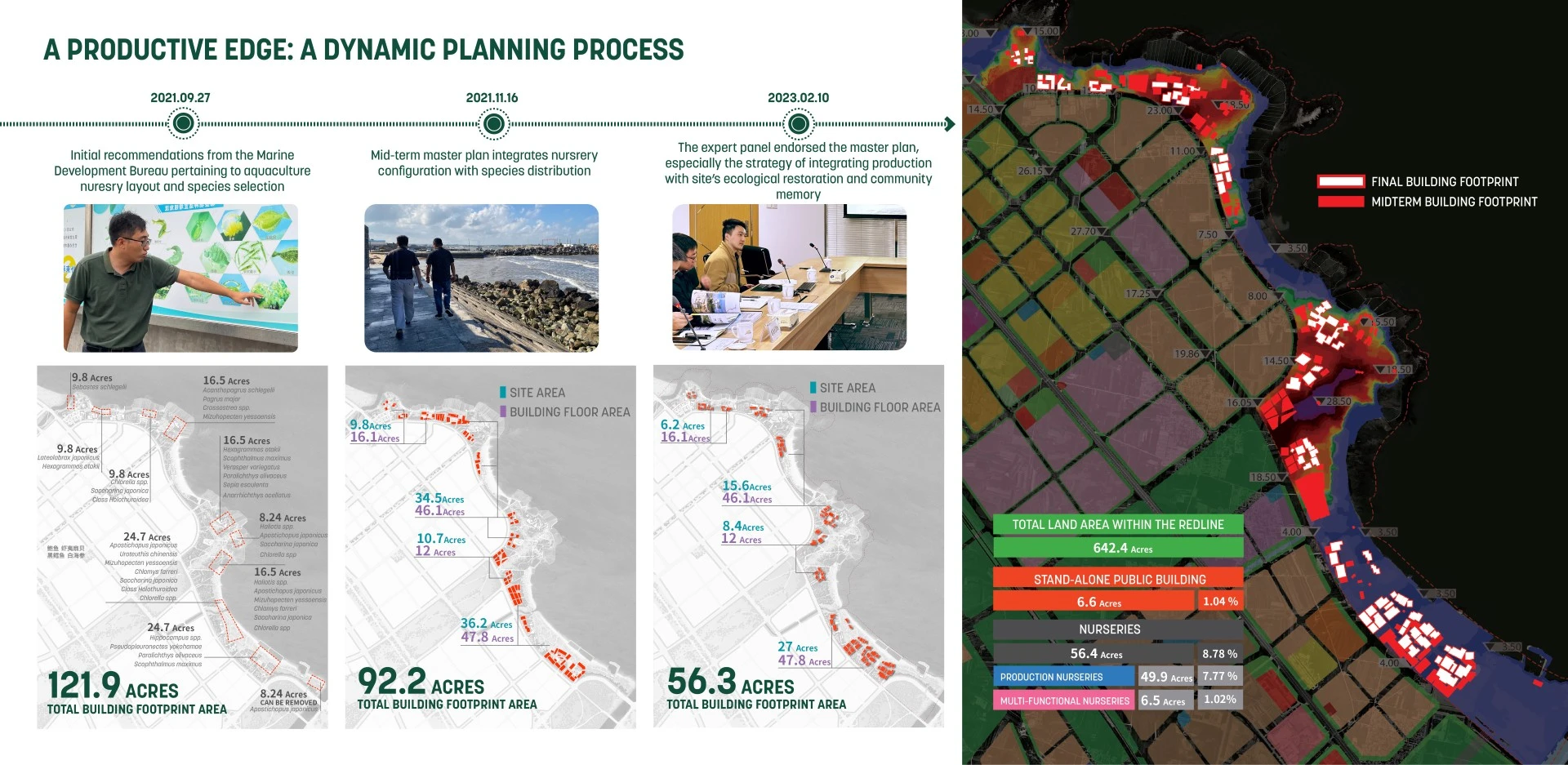
For decades, the uncontrolled expansion of aquaculture in Huangshi Bay disrupted its natural ecosystems, blocked public access, and increased the coastline's vulnerability to natural disasters. The plan relocates aquaculture operation inland to reclaim the shoreline for ecological and community uses while maintaining economic output.
The design reorganizes marine aquaculture facilities on site into a multi-layered landscape that integrates modern production with habitat rehabilitation and the preservation of community memory. By transforming a fragmented coastal barrier into a resilient waterfront park, this initiative creates a scalable model for coastal restoration blending economic viability, ecological resilience, and community wellbeing.
-
Coast in Conflict: The Legacy of Industry
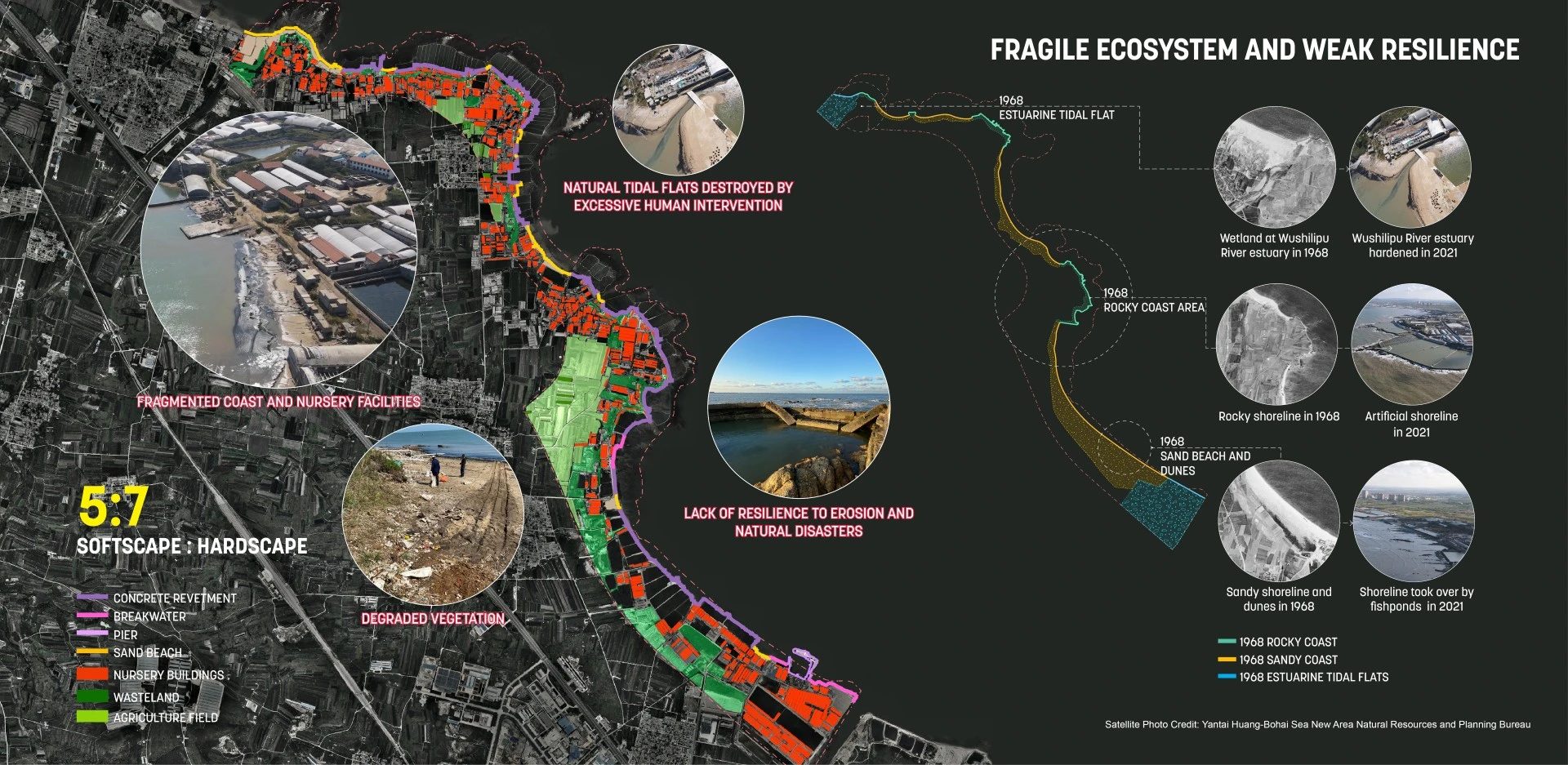
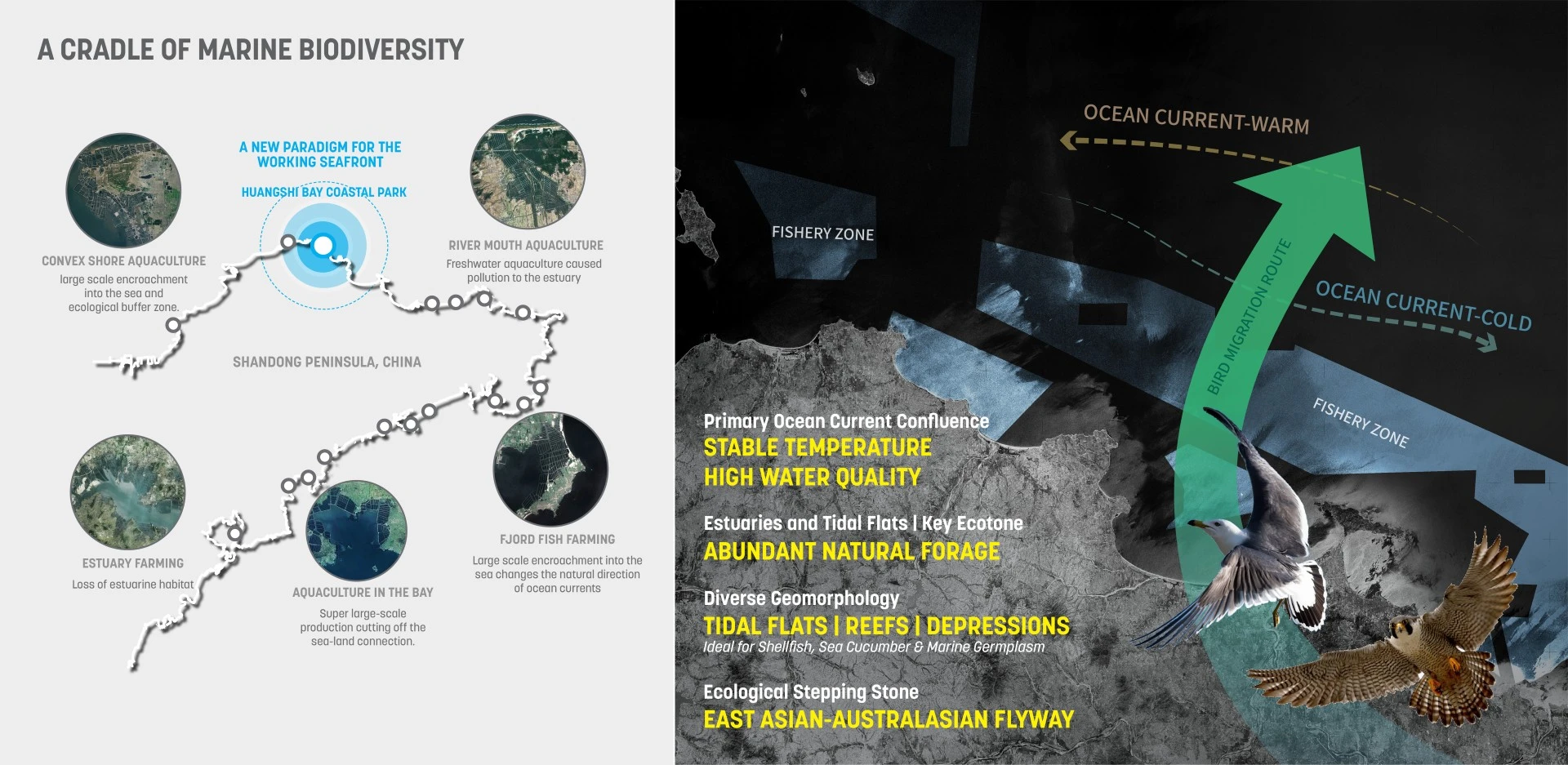
The Huangshi Bay shoreline, where the Yellow Sea meets cliffs, beaches, and estuaries, is a cradle of marine biodiversity. Nourished by the confluence of nutrient-rich currents and mild temperatures, it provides abundant bait for marine life and migratory birds. These conditions fostered a generations-old fishing culture that shaped the region’s spatial and spiritual character. Yet, the very industry this ecosystem nurtured has become its greatest threat.
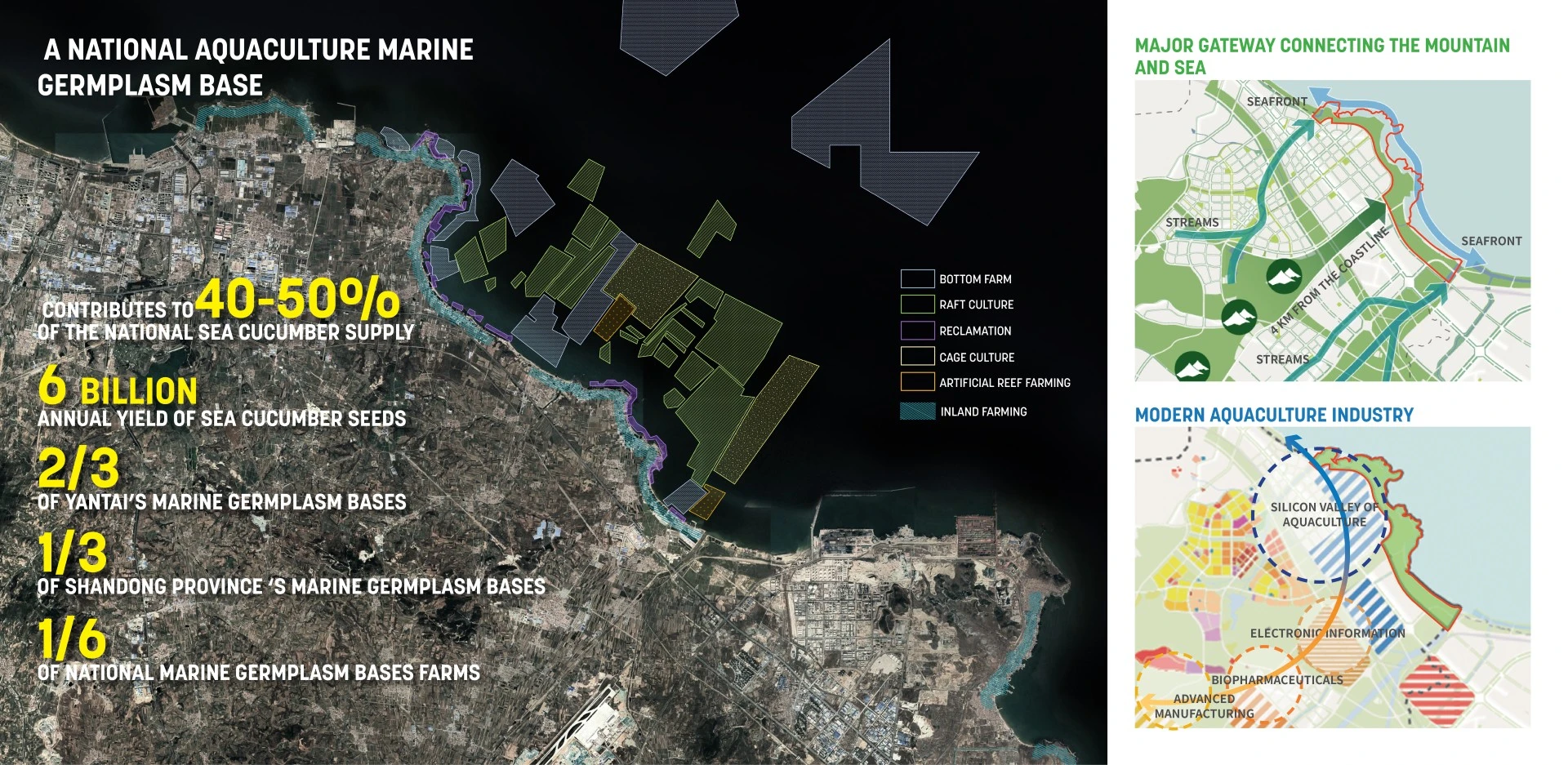
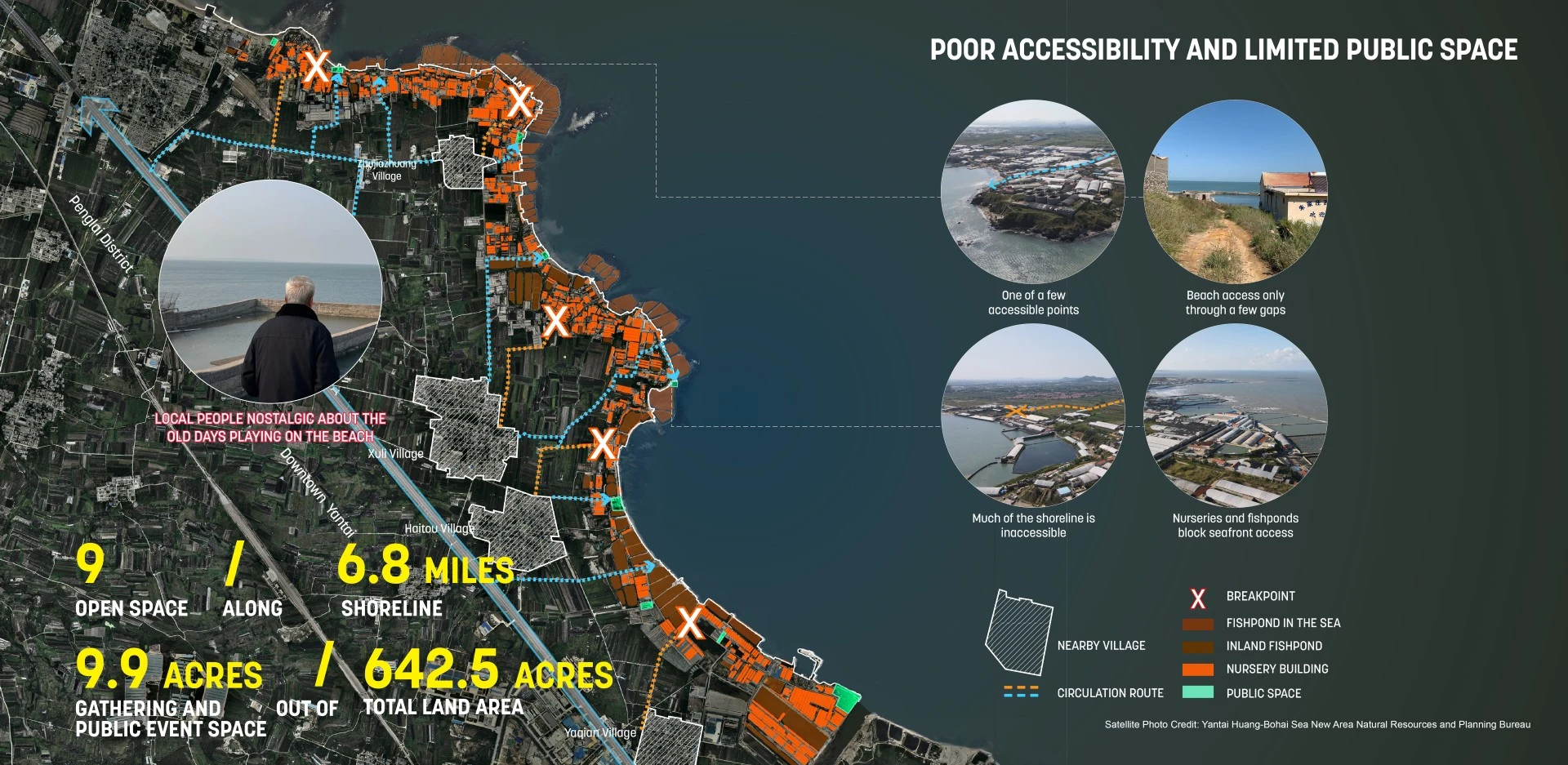
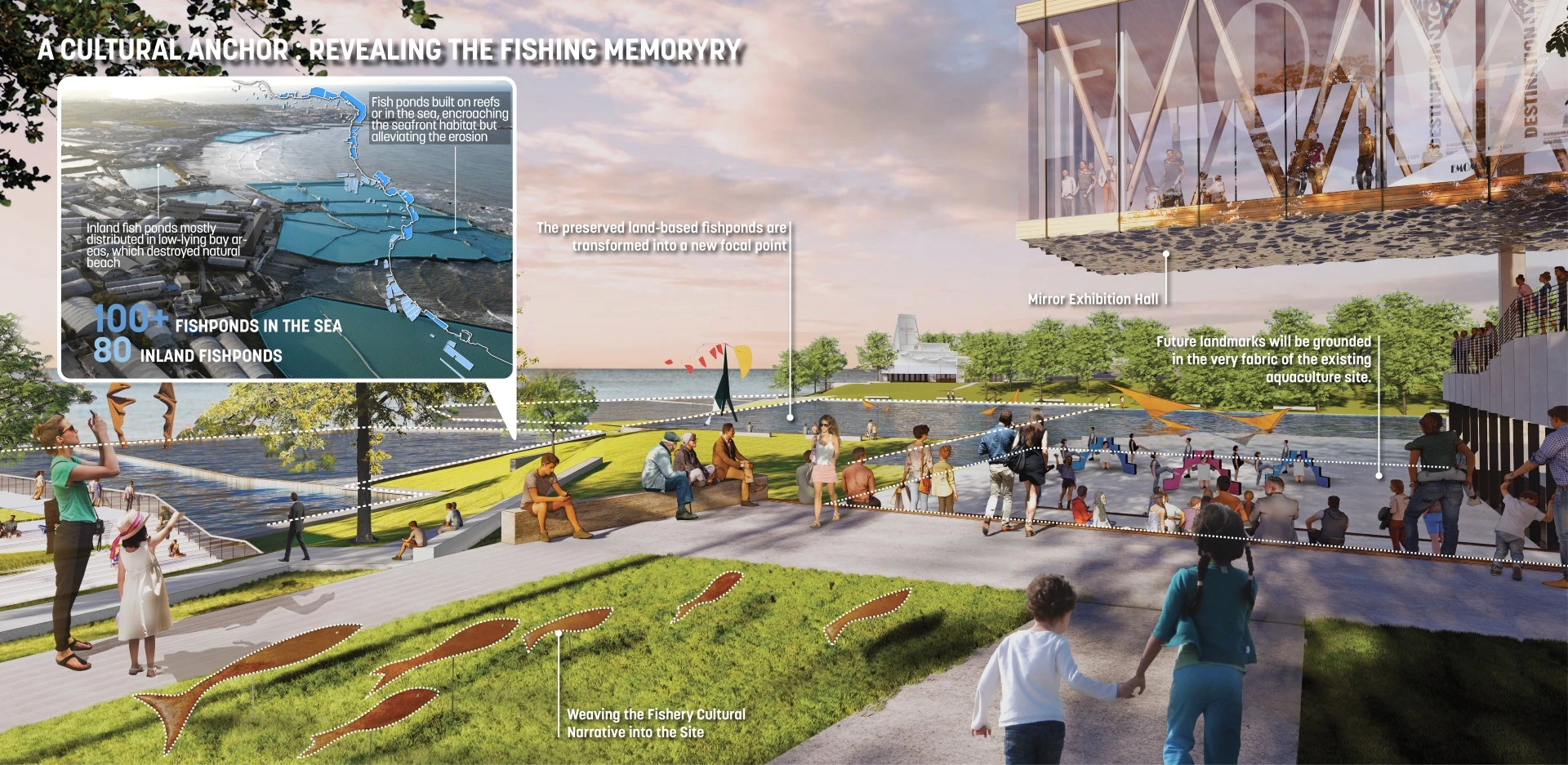
Over forty years, aquaculture expansion has transformed the bay into one of China’s leading marine germplasm bases for shellfish, sea cucumbers, and fish. This growth has come at a cost of natural coastlines being replaced by fishponds and hatcheries, resulting in inefficient land use, loss of public space, habitat degradation, and coastal fragmentation, diminishing the shoreline’s resilience. Interview with local villagers reveal a deep-seated paradox: while aquaculture is culturally significant, it stands as a barrier isolating them from the sea.
Weaving Ecology, Economy, and Community
This regional plan for marine nursery upgrades enables the site to rehabilitate its coastline. As a pilot project, the 988-acre site will become a multi-layered park integrating production, ecological restoration, and community access. By relocating production inland or integrate it with otheron-site uses, the plan restores the shore for ecological and community uses without sacrificing economic output.
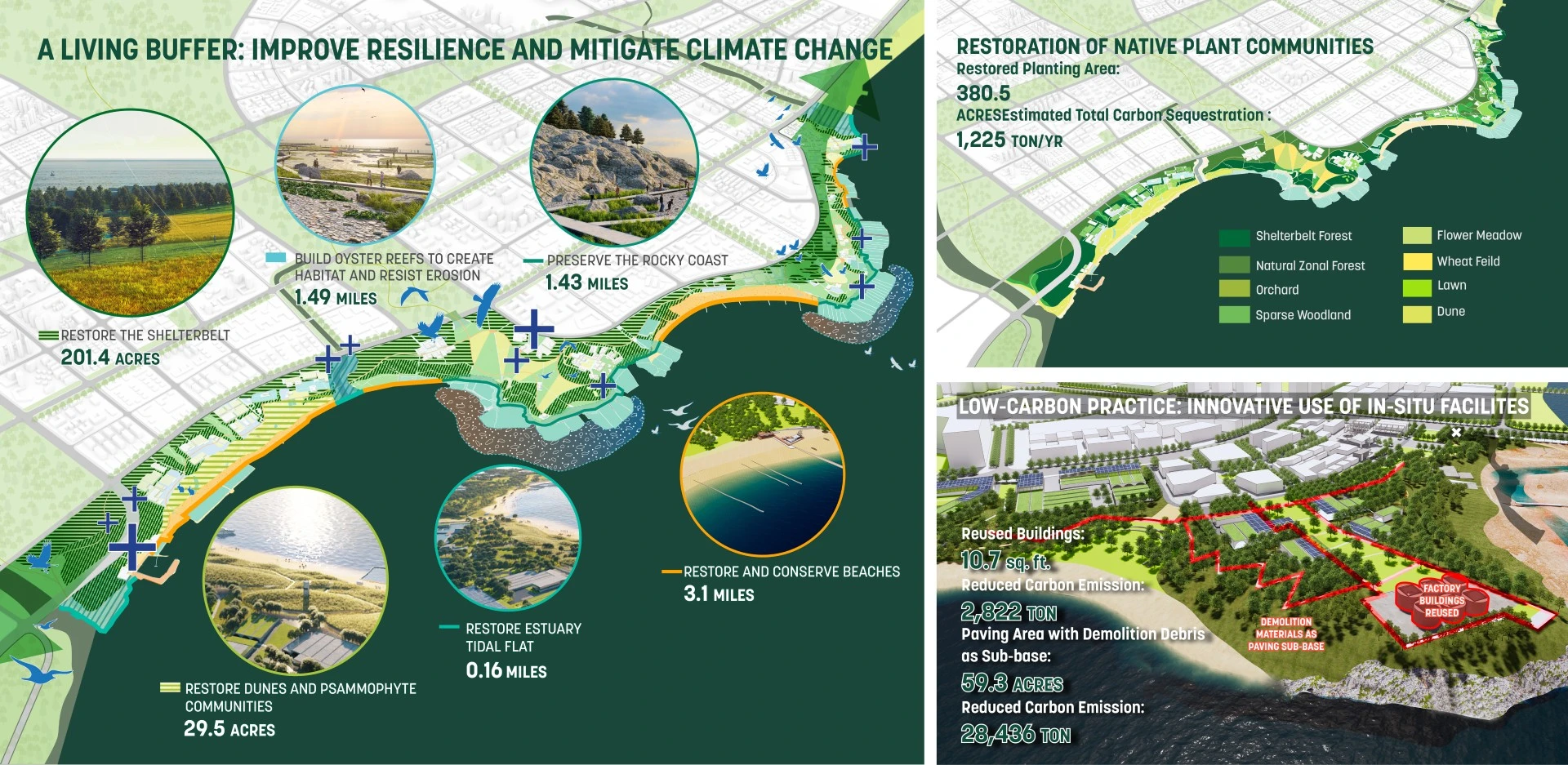
A Living Buffer: Restoring the Ecological Spine
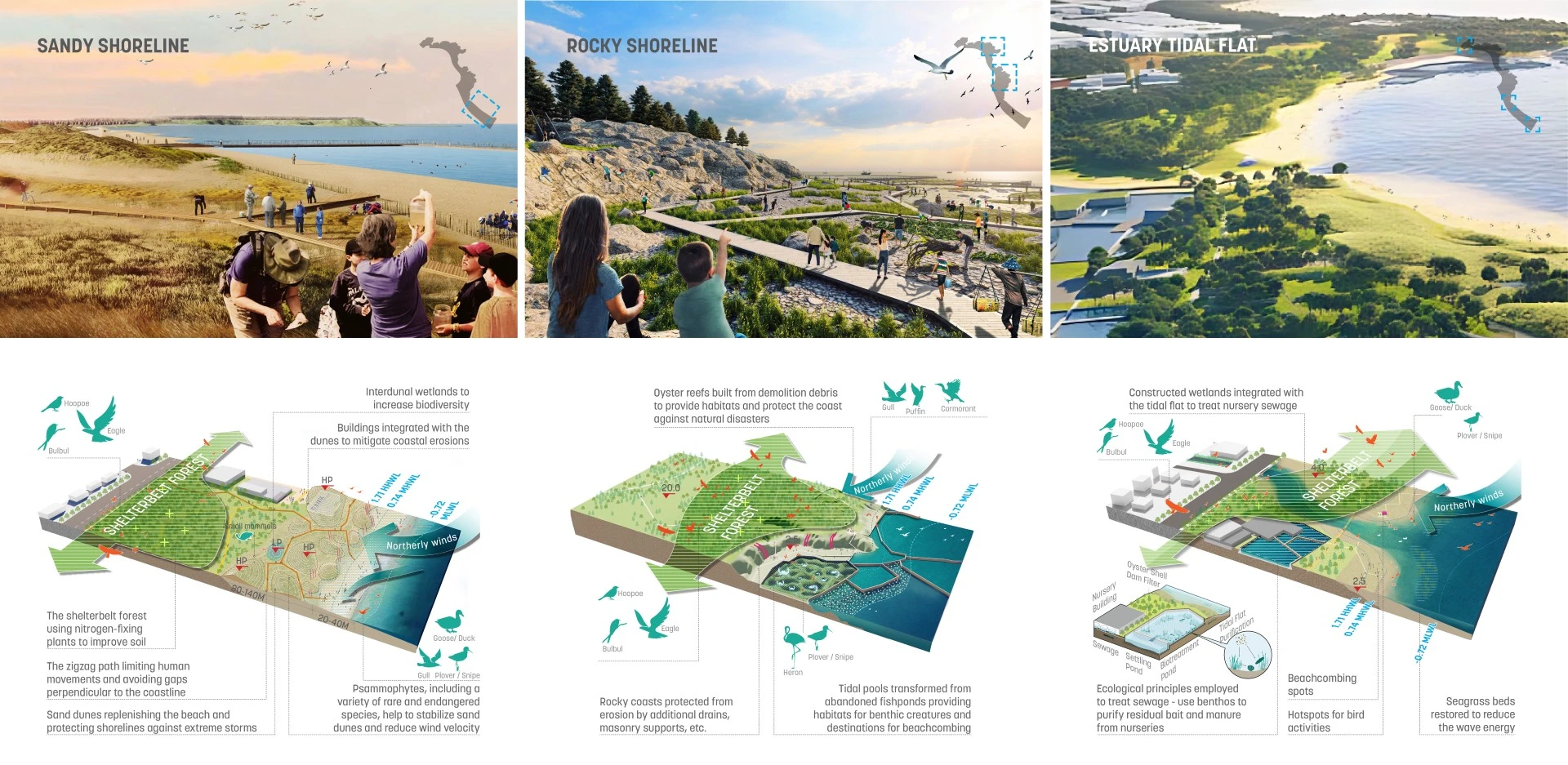
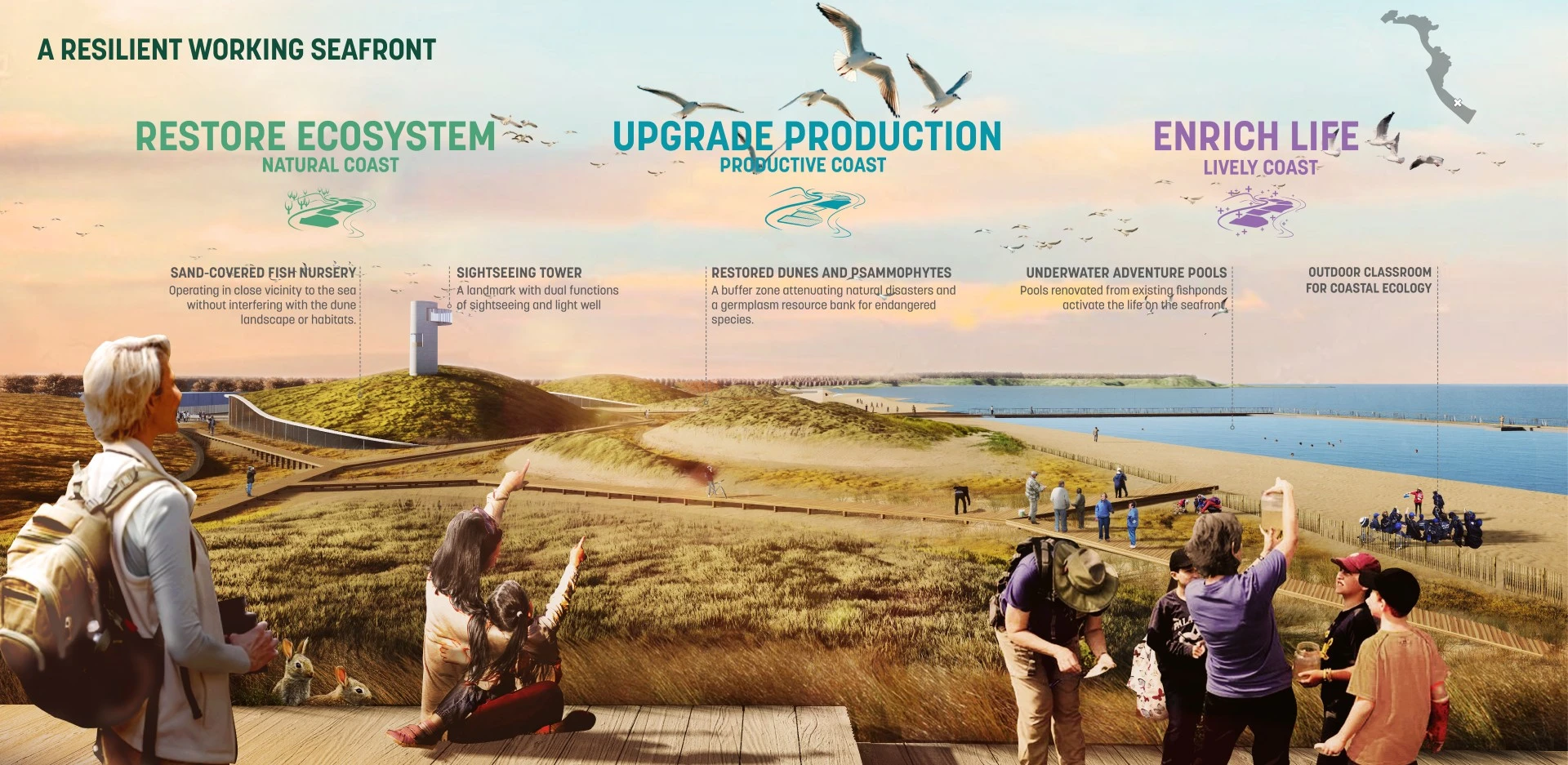
The plan rebuilds the coastal ecosystems to enhance resiliency and mitigate climate change. This involves restoring beach-dune systems, protecting cliffs and reefs, and planting shelterbelt forests. By reintroducing native plants, the design creates multi-layered defense against coastal hazards while maximizing carbon sequestration. It also repurposes demolition debris and existing structures to reduce the project’s carbon footprint.
A Productive Edge: Compounding Industrial and Public Vitality
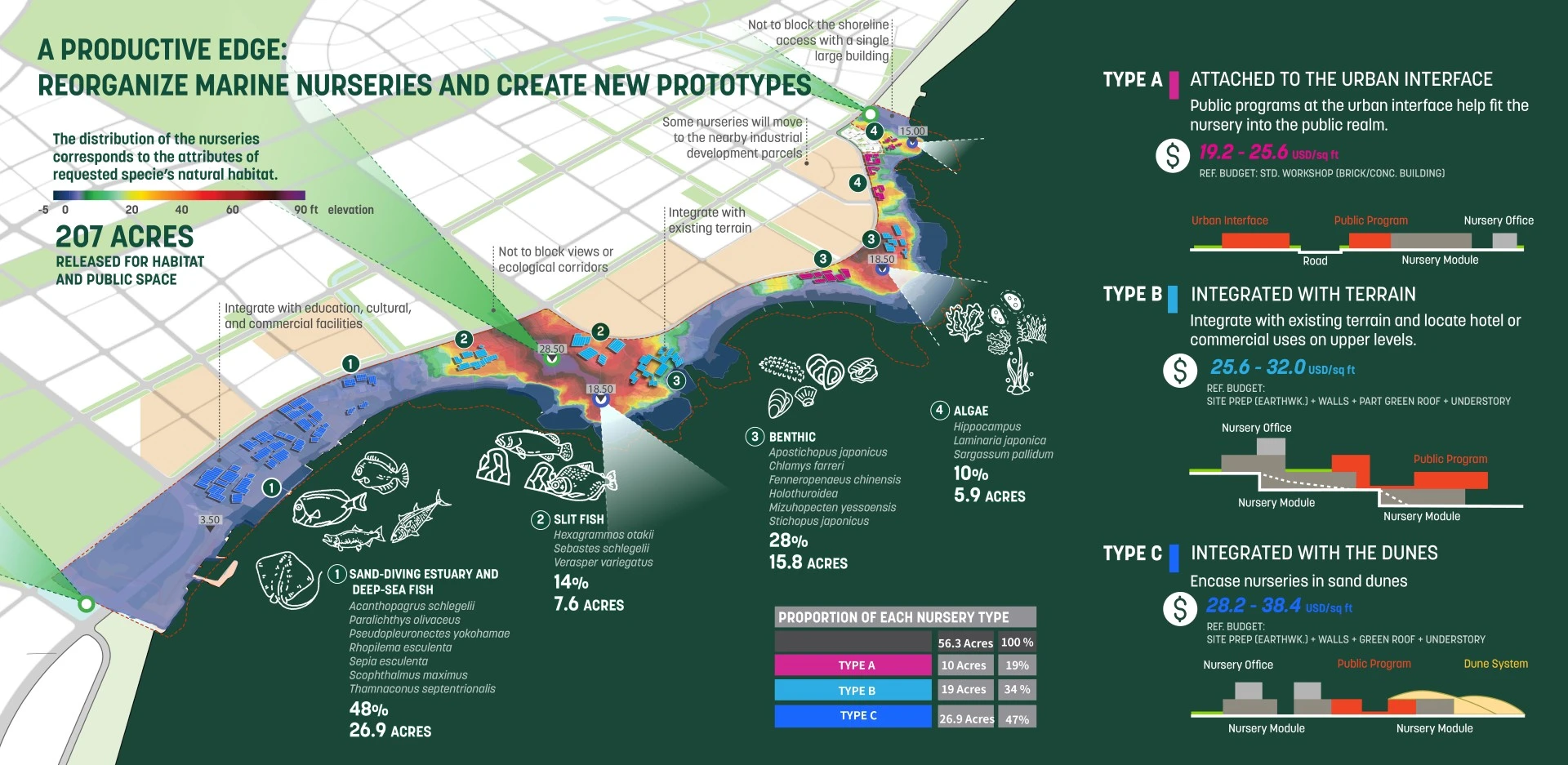
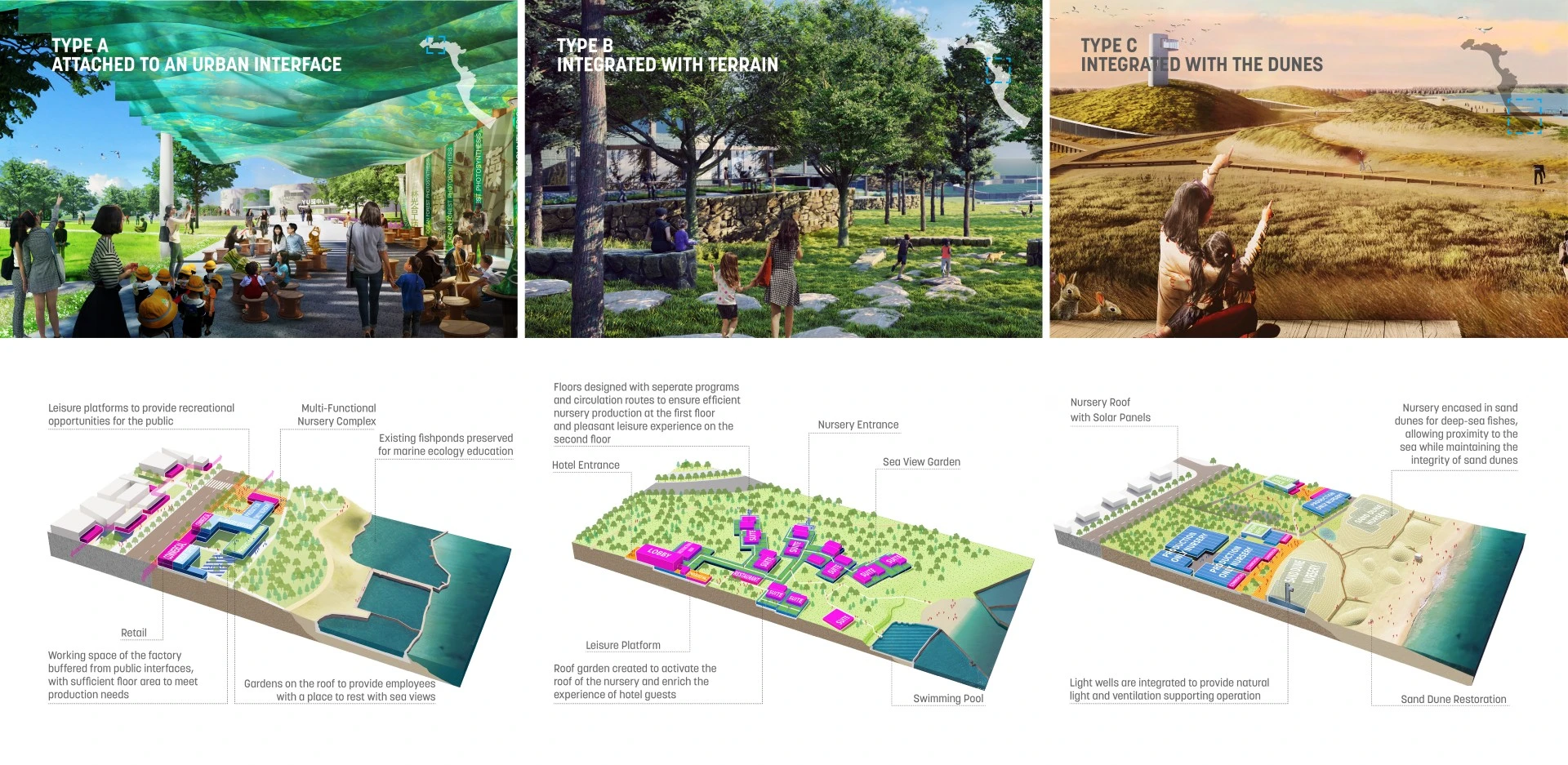
The design introduces three compounding models that allow modernized marine nurseries on-site, leveraging the bay’s unique assets while minimizing environmental and visual impacts:
- Attach urban interfaces of public programs to nurseries
- Integrate with the existing terrain by laying the production modules on lower levels, and hotel or commercial uses on upper levels.
- Encase nurseries in sand dunes, allowing them to operate in close vicinity to the sea without interfering with the dune landscape or habitats.
A Cultural Anchor: Reclaiming Public Access
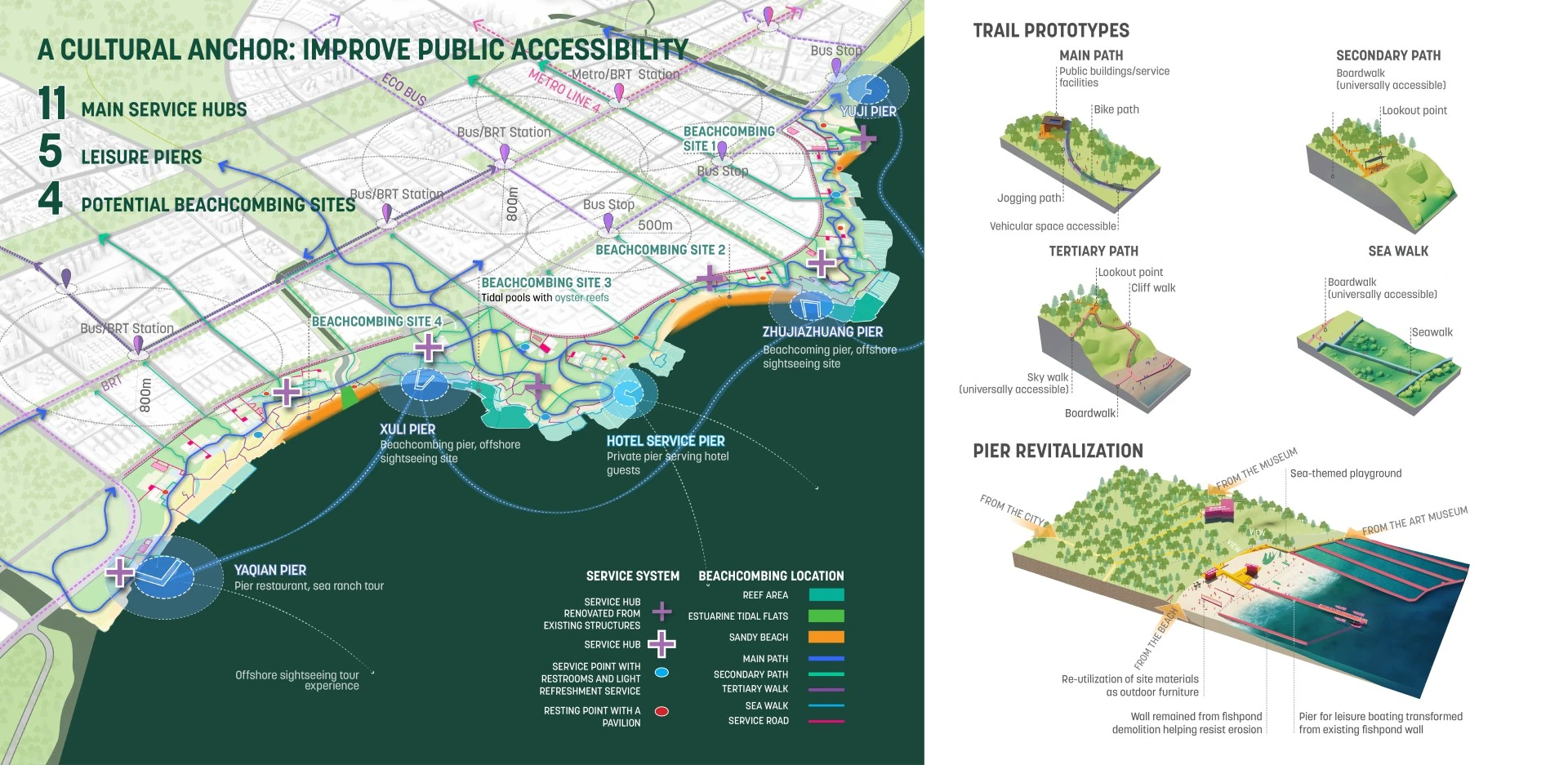
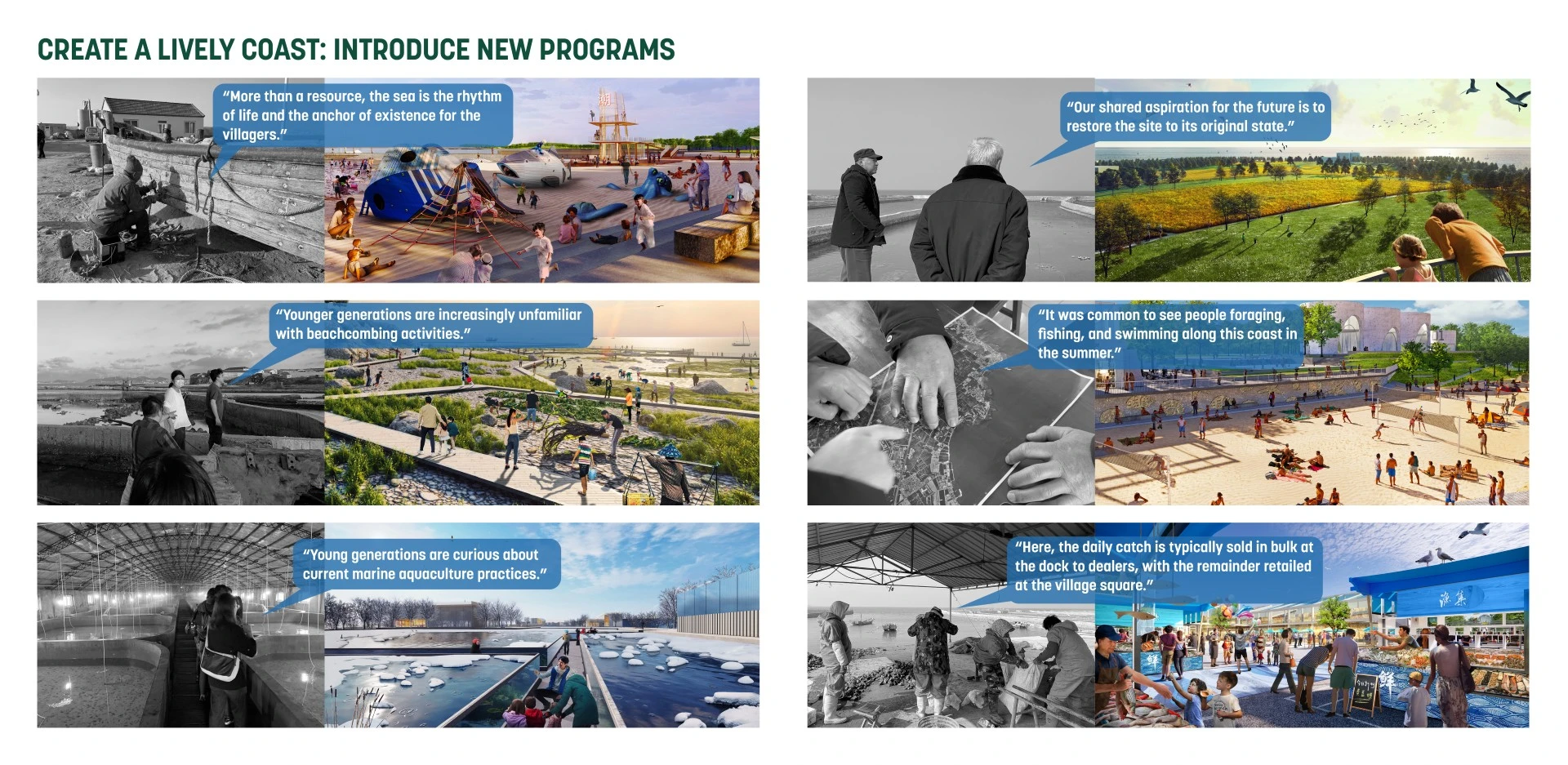
To resolve the area’s industrial legacy, the plan uses “memory mapping”—derived from villager interviews—to revive traditional fishing culture and reclaim lost coastal vistas. A continuous trail network reopens public access to the sea. By repurposing industrial structures into heritage landmarks and introducing year-round programs, the design honors the site’s past while establishing a spiritual and social anchor.
A Model for China’s Coastal Rehabilitation
The plan redefines the working seafront as a sustainable economic engine, an ecological buffer, and a vibrant sanctuary of identity and leisure. By reconciling the conflict between industry, nature, and culture, it sets a replicable model for sustainable coastal rehabilitation in China. The achievement has been recognized with numerous design awards, including honors from IFLA, WLA, BSLA, Architizer A+, and Fast Company.
-
- Yantai Huang-Bohai Sea New Area Natural Resources and Planning Bureau, Client
- Yantai Economic and Technological Development Area Ocean Economic Development Bureau, Consultant
- Ocean University of China College of Marine Life Sciences, Consultant
-
- Albizia julibrissin
- Celtis sinensis
- Prunus serrulata
- Ginkgo biloba
- Morus alba
- Pinus thunbergii
- Pistacia chinensis
- Pyrus betulifolia
- Quercus acutissima
- Salix matsudana
- Ulmus pumila
- Arundinella hirta
- Chrysanthemum indicum
- Elaeagnus angustifolia
- Imperata cylindrica
- Lespedeza daurica
- Limonium sinense
- Lysimachia mauritiana
- Medicago sativa
- Poa annua
- Viola philippica
- Asparagus dauricus
- Calystegia soldanella
- Carex kobomugi
- Glehnia littoralis
- Ischaemum barbatum
- Ixeris repens
- Lathyrus japonicus
- Rosa rugosa
- Vitex trifolia
Advertisement
Related Awards
-listing-img.webp?language=en-US)
ASLA / IFLA Global Impact Award, Analysis & Planning
The Four Coasts Project
The US Army Corps of Engineers is responsible for the bulk of the nation’s water resources infrastructure. USACE’s Engineering With Nature program works to align that infrastructure with natural processes and support a broader range of benefits to the nation’s economy, local communities, and ecosystems. Four Coasts is a three-year effort by landscape architects and engineers working with EWN Proving Ground districts to identify and advance nature-based coastal infrastructure projects.