
.webp?language=en-US)


H2Oquirrh: Regional Water Reform for a Resilient Salt Lake Valley
-
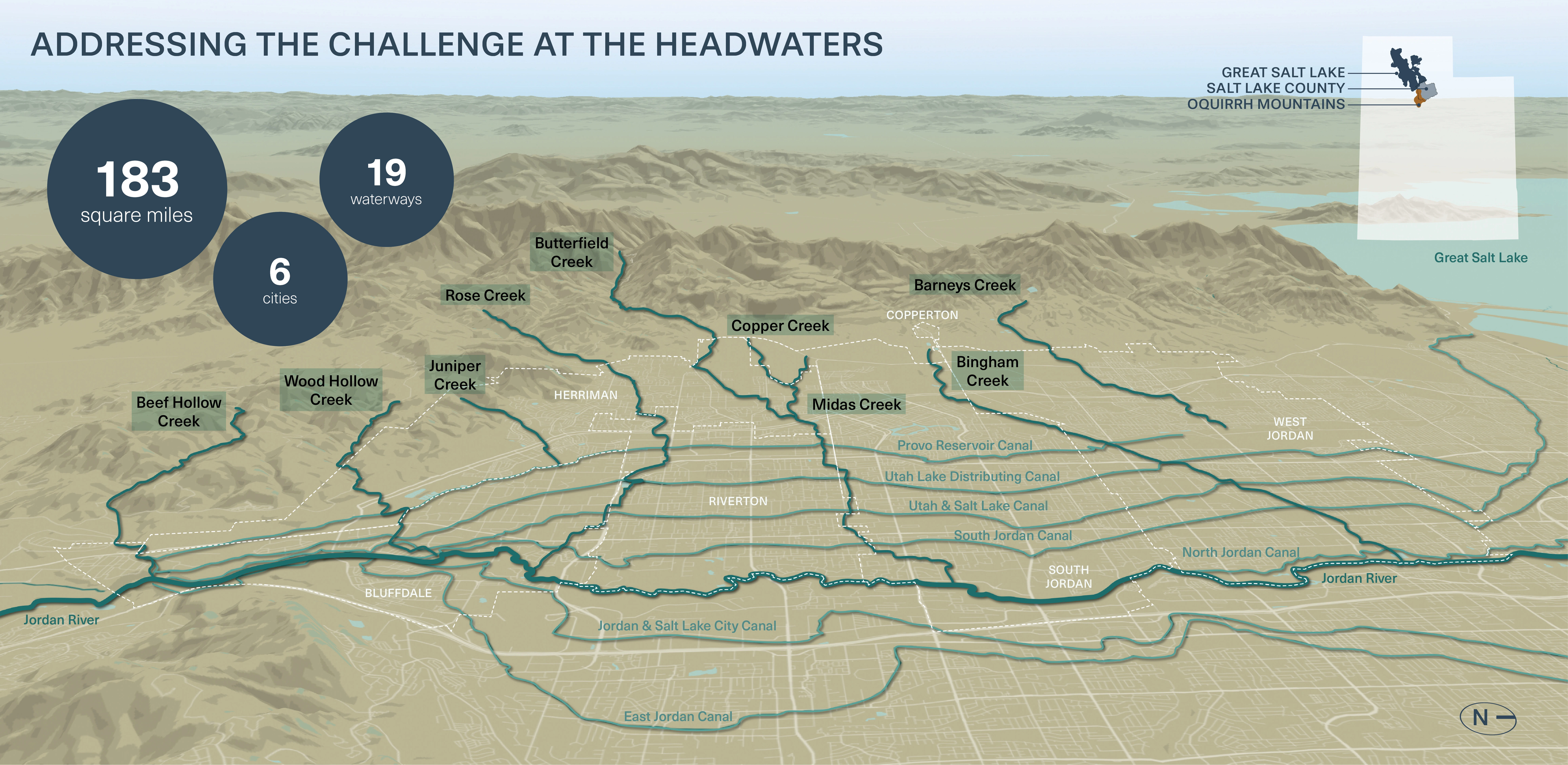
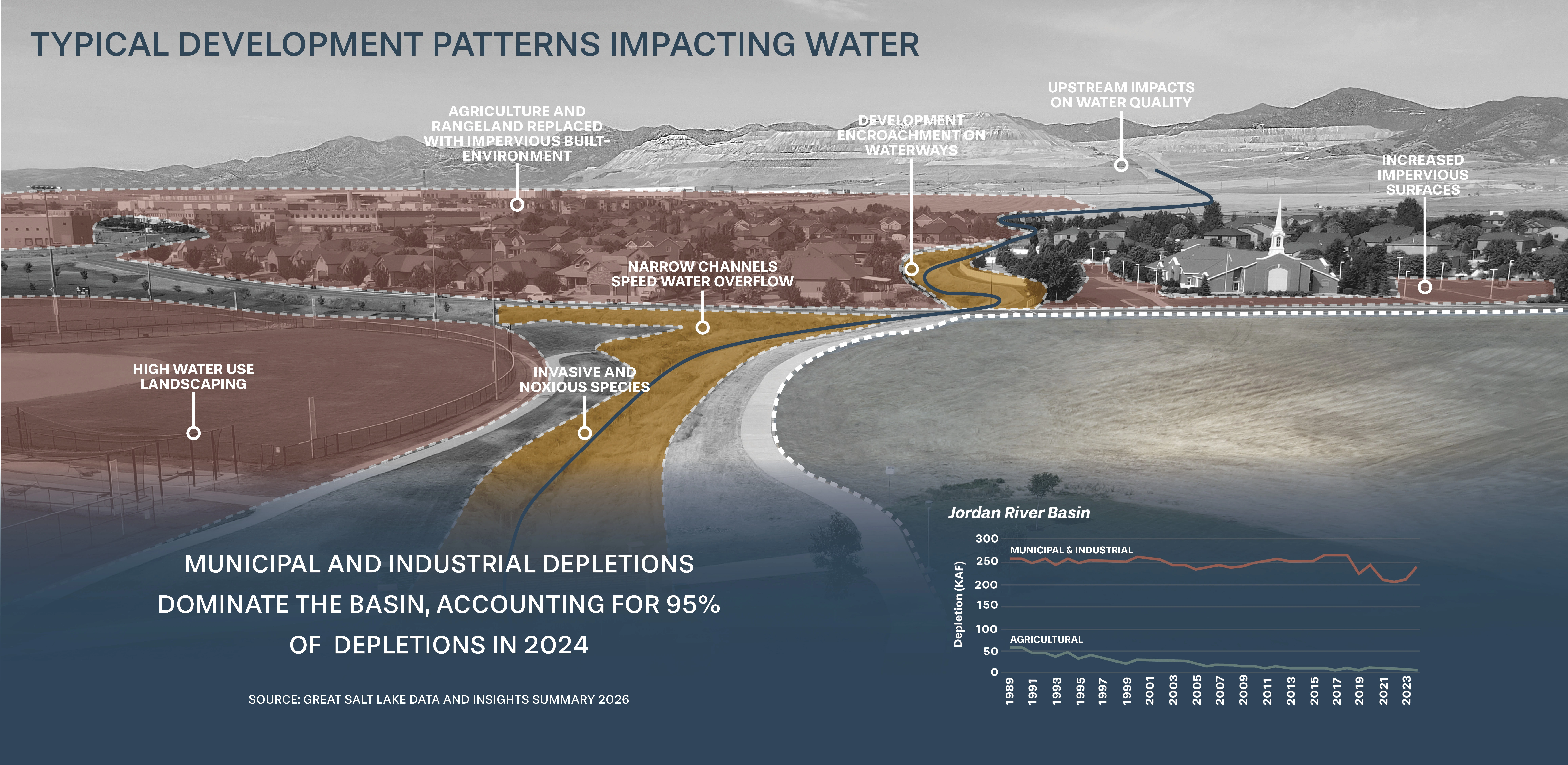
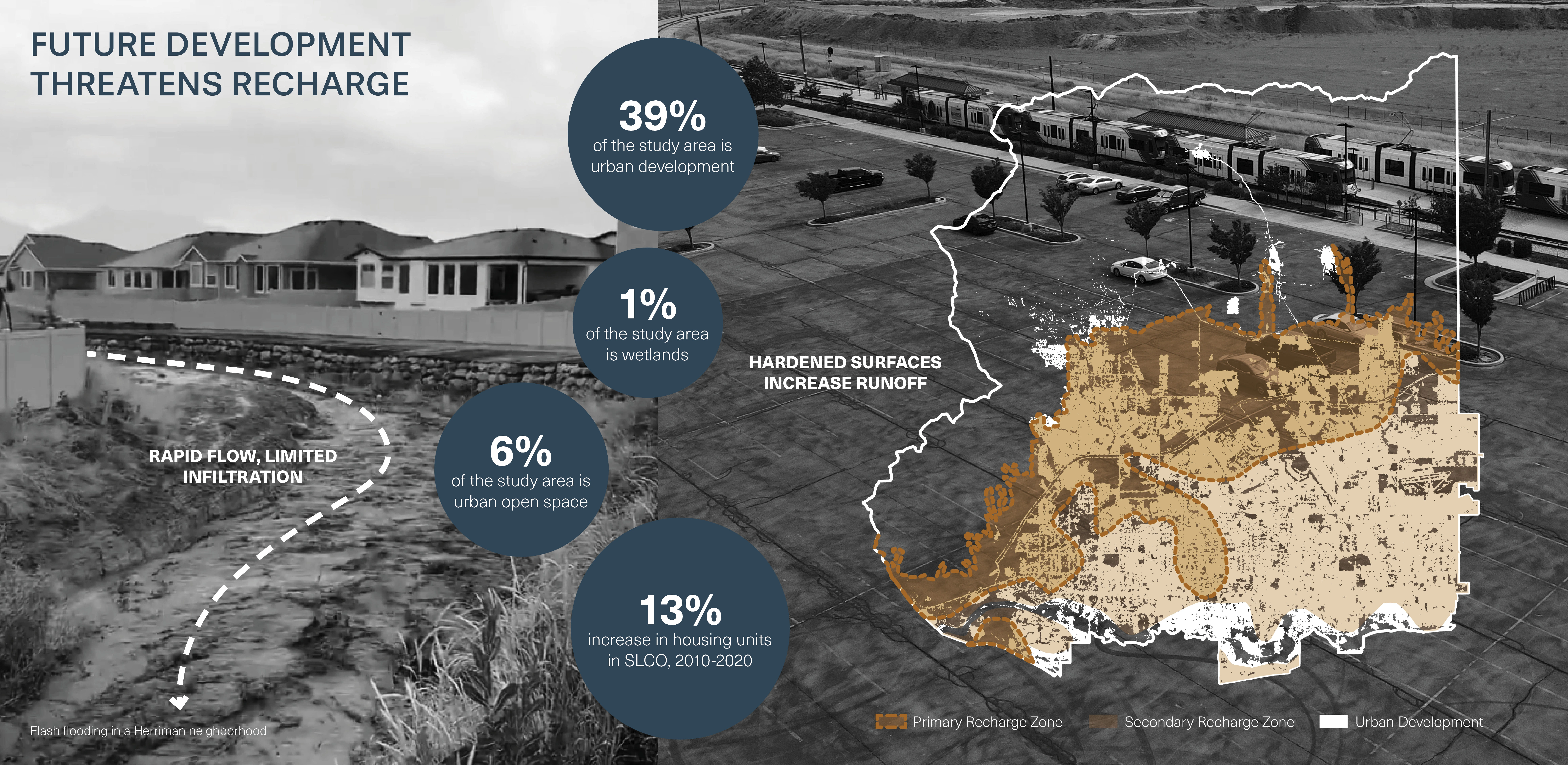
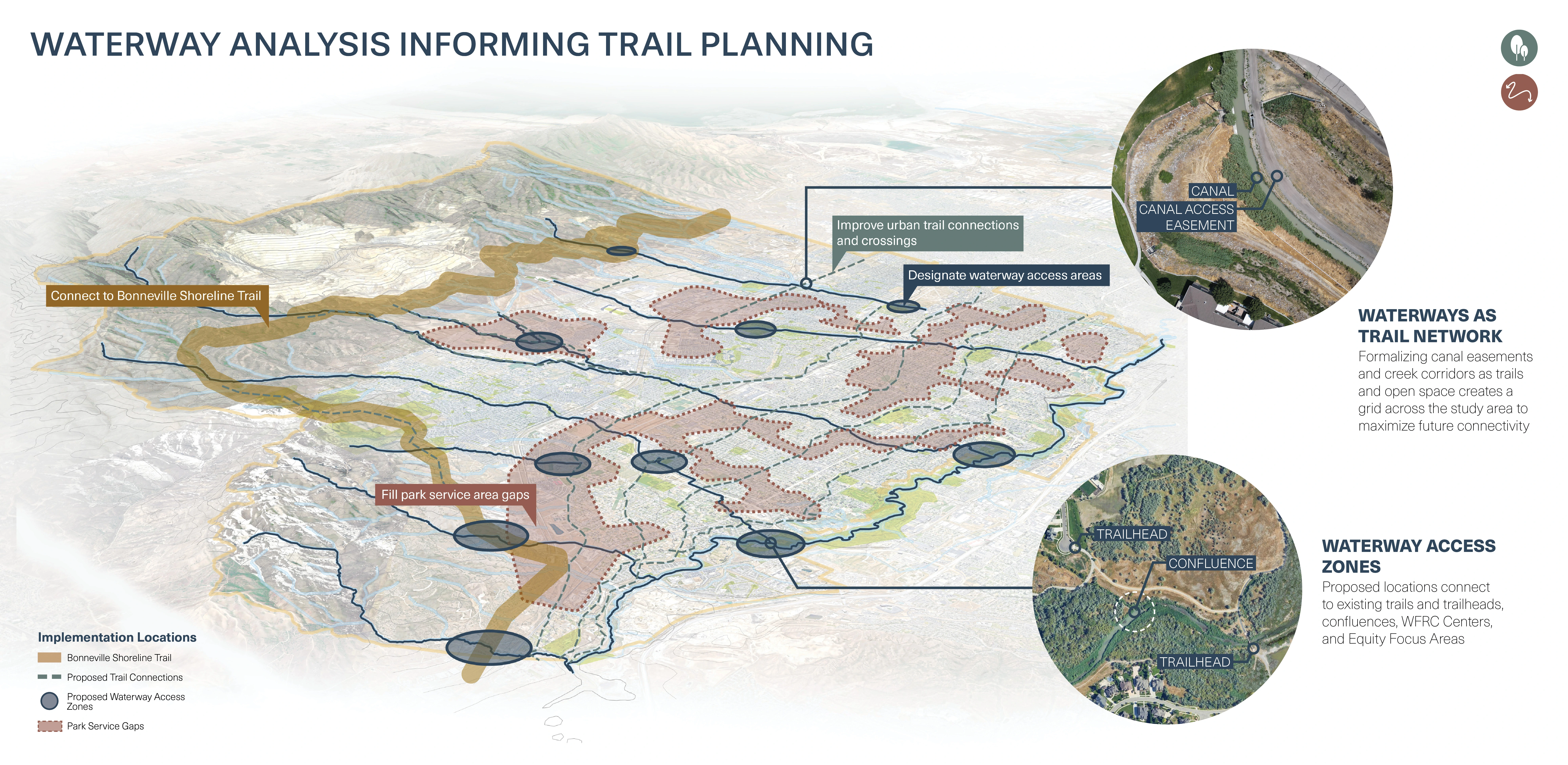
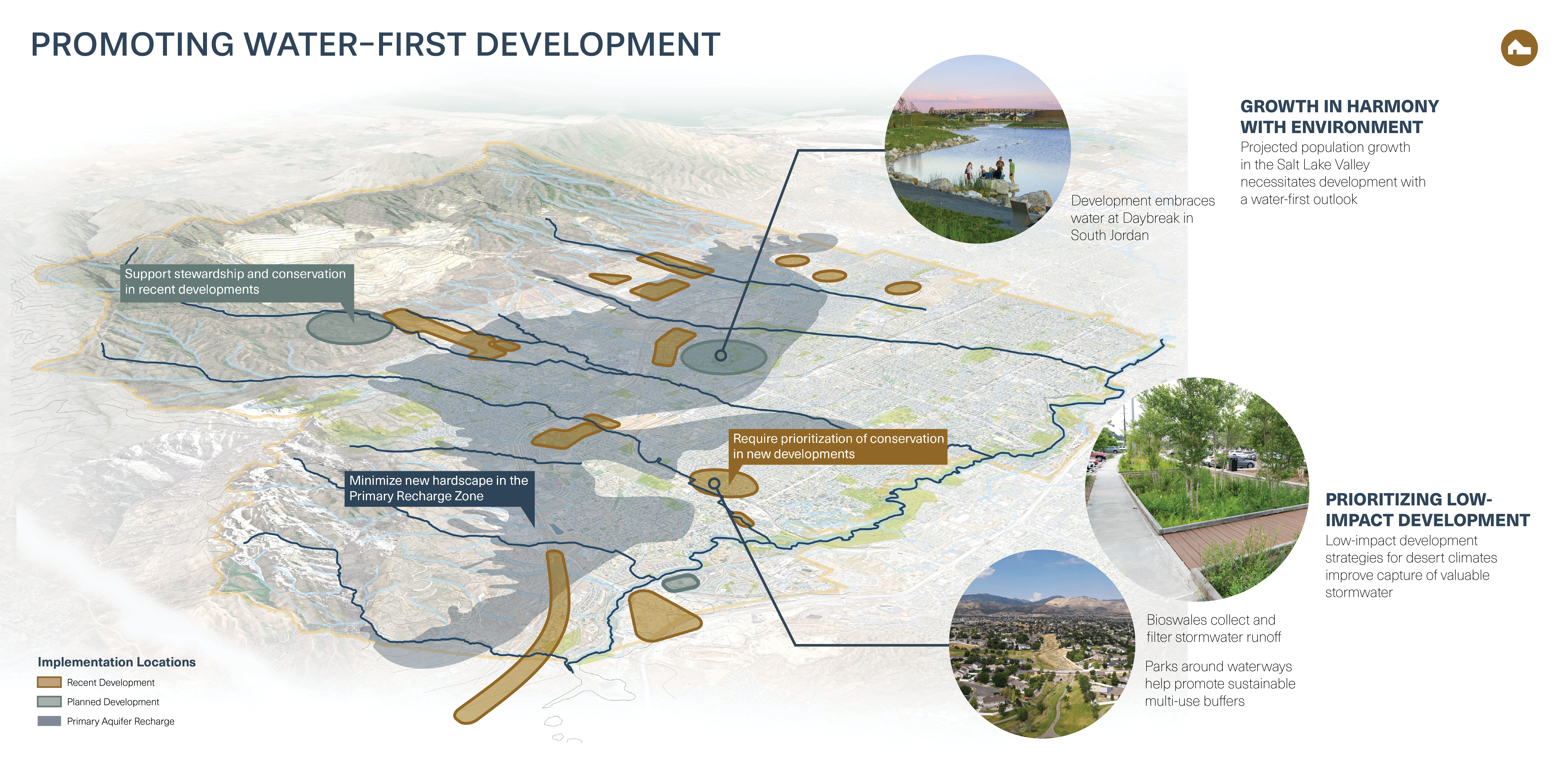
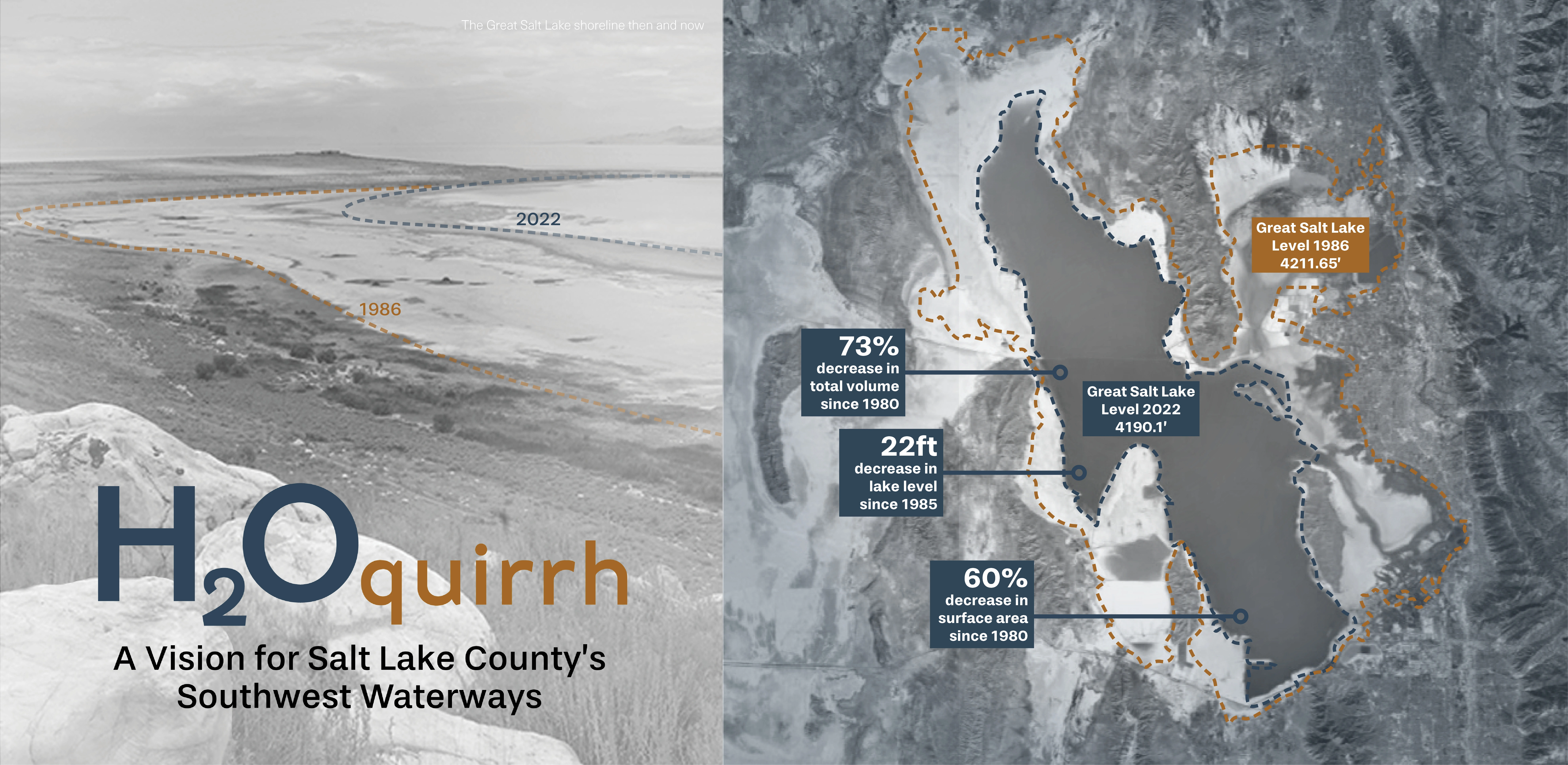
Water flowing from the Oquirrh Mountains is a critical contributor to the Great Salt Lake. Severe drought and human-caused decline threaten thelake’s viability, with cascading impacts to ecosystems and public health. This regional collaboration of seven jurisdictions, the H2Oquirrh VisionPlan, undertakes a large systems analysis of hydrologic cycles, land cover, and land-use decisions to identify site-specific interventions across ninecreeks and washes. Led by landscape architects and water resource engineers, the study advances a deeper understanding of localized drivers ofwater loss and proposes innovative solutions through integrated landscape infrastructure design and policy.
-
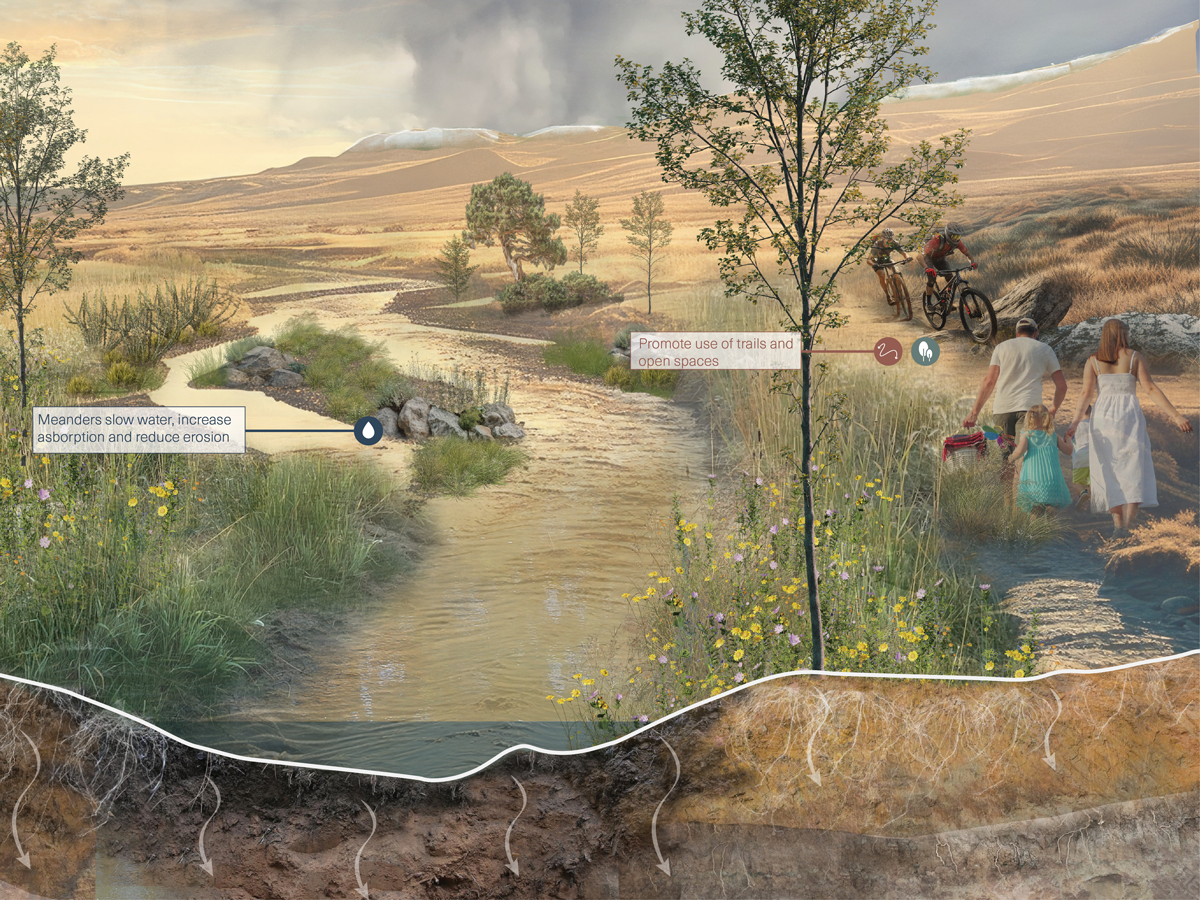
The waterways of the Oquirrh Mountains present a paradoxical landscape planning challenge: designing for water that is largely unseen. This upper watershed is defined by intermittent creeks and washes that flow only during seasonal storm events, yet quietly perform essential hydrologic work for the Salt Lake Valley. Because these channels are dry most of the year, they are often overlooked—misunderstood as empty corridors rather than living systems that impact groundwater recharge, promote landscape resilience, and support the long-term health of the Great Salt Lake.
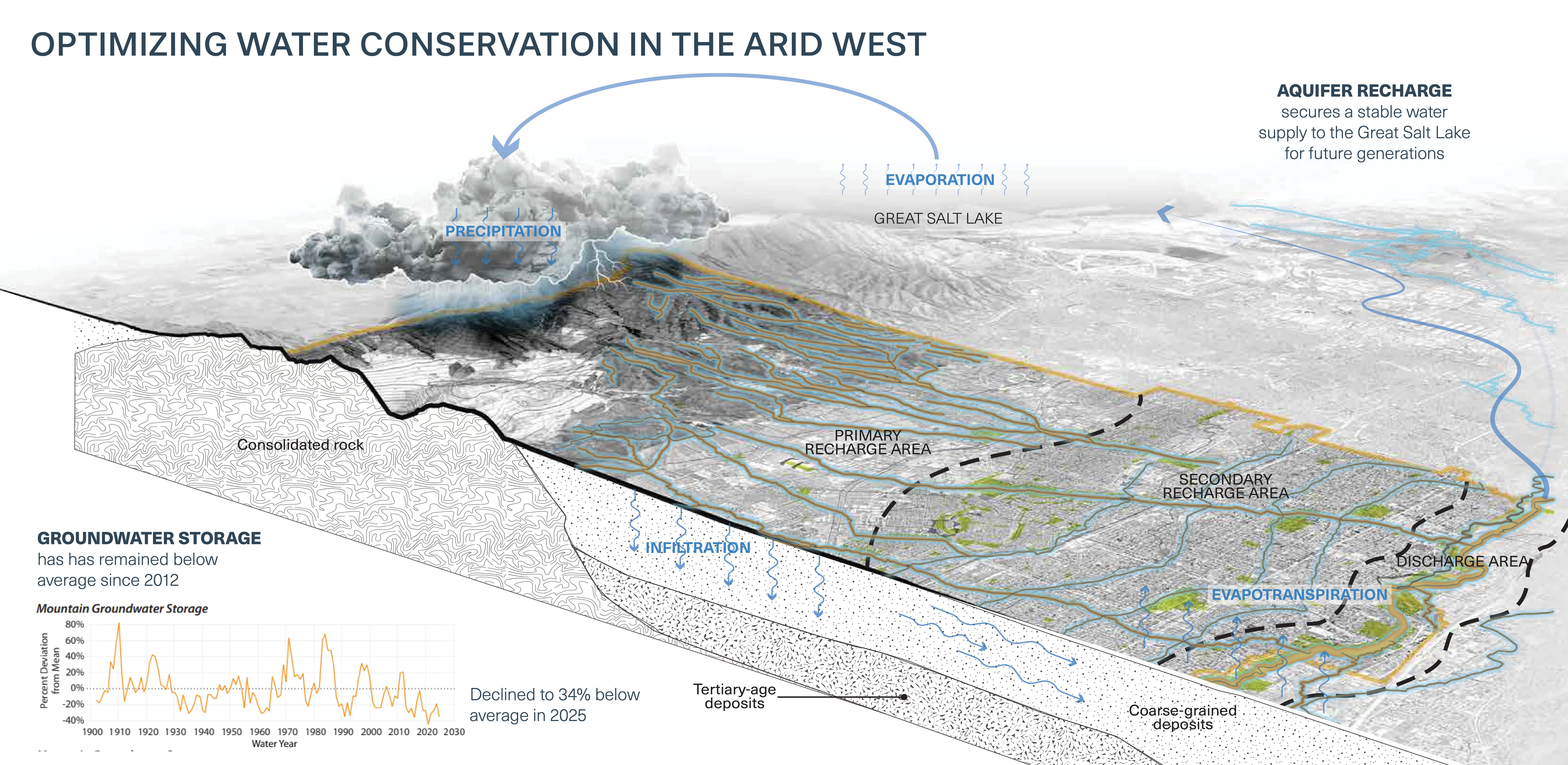
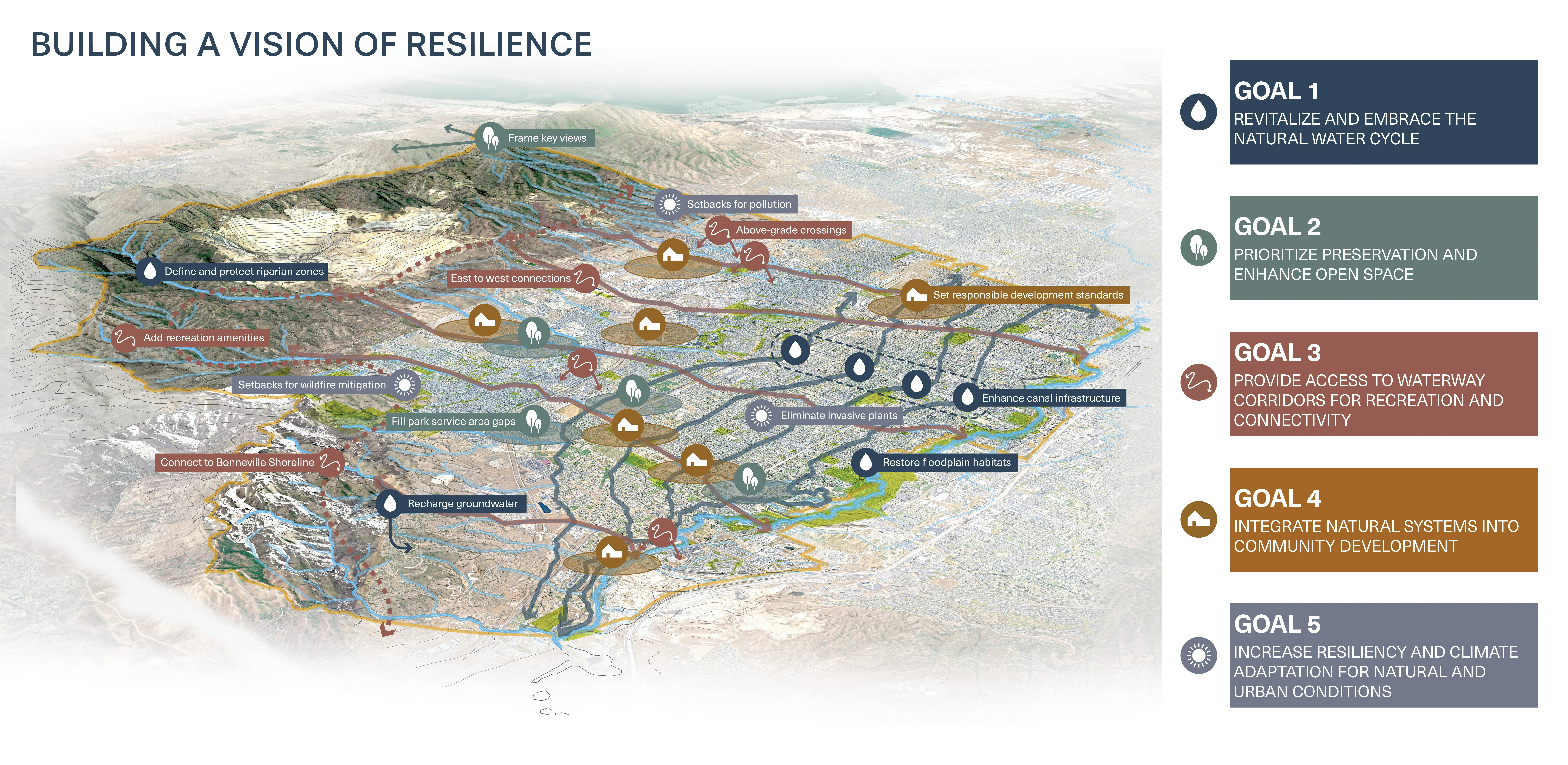
From the outset of the project, the decline of the Great Salt Lake framed every conversation. The question was not simply how to manage stormwater locally, but how this watershed could meaningfully contribute to the recovery of a rapidly shrinking lake. This reframing prompted a fundamental shift in ambition. Rather than focusing on visible water in creeks today and attempting to encourage its rapid movement before evaporation, the H2Oquirrh Vision Plan sets its sights on securing a water bank for the Great Salt Lake for the next generation. The plan positions these waterways as critical environmental infrastructure—systems capable of supporting regional hydrology while catalyzing community stewardship and redefining how arid communities interface with their landscapes.
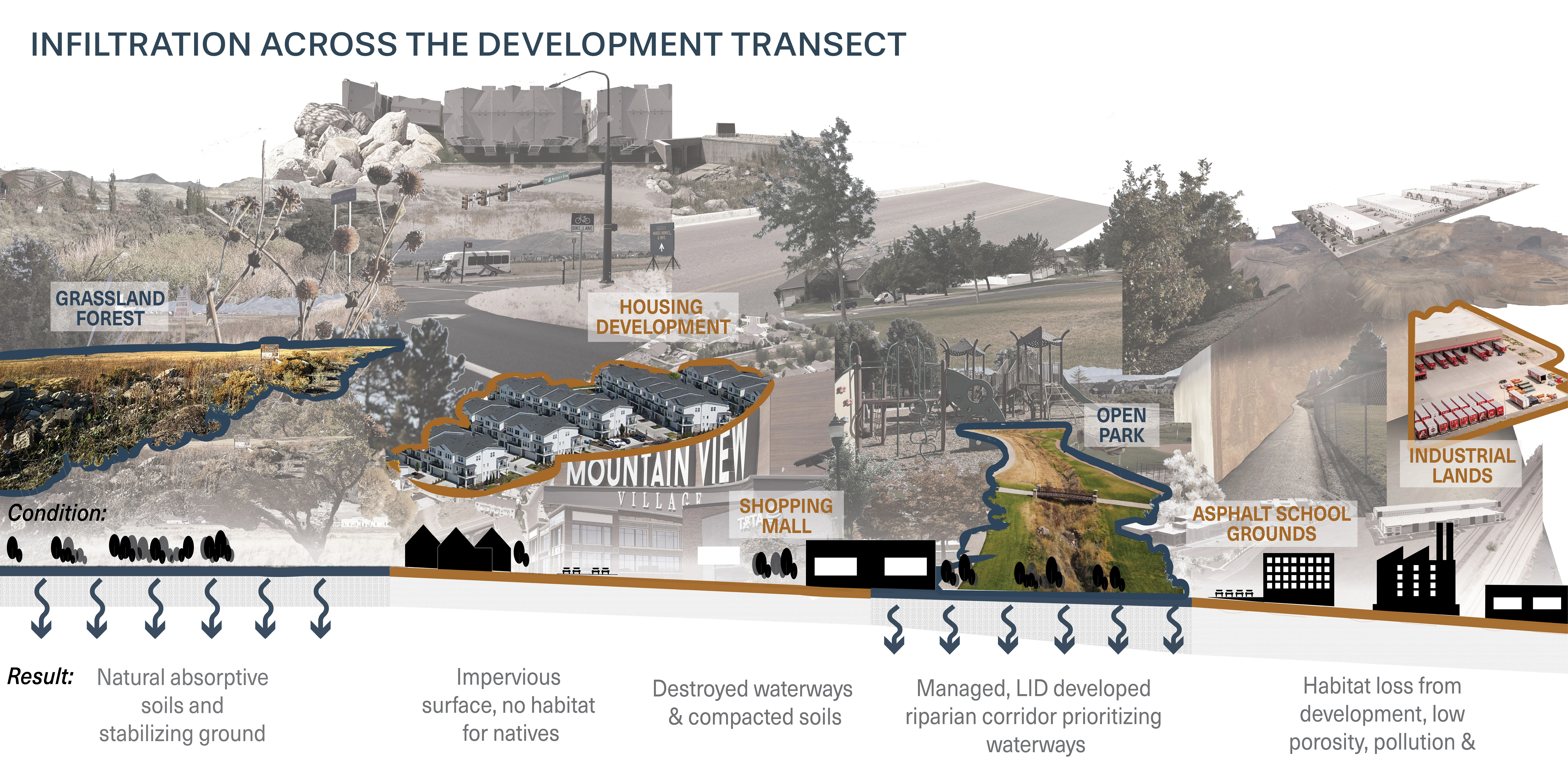
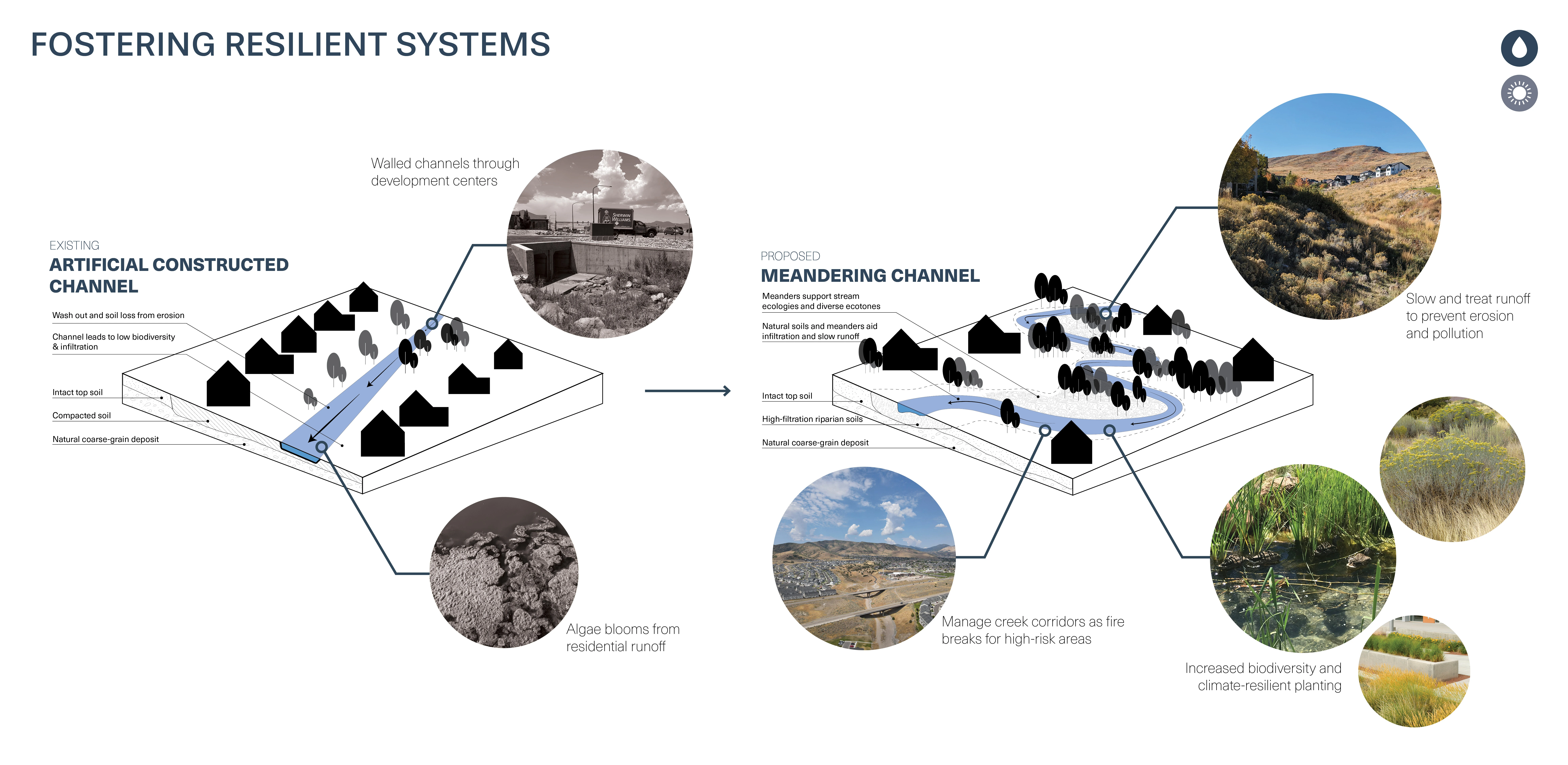
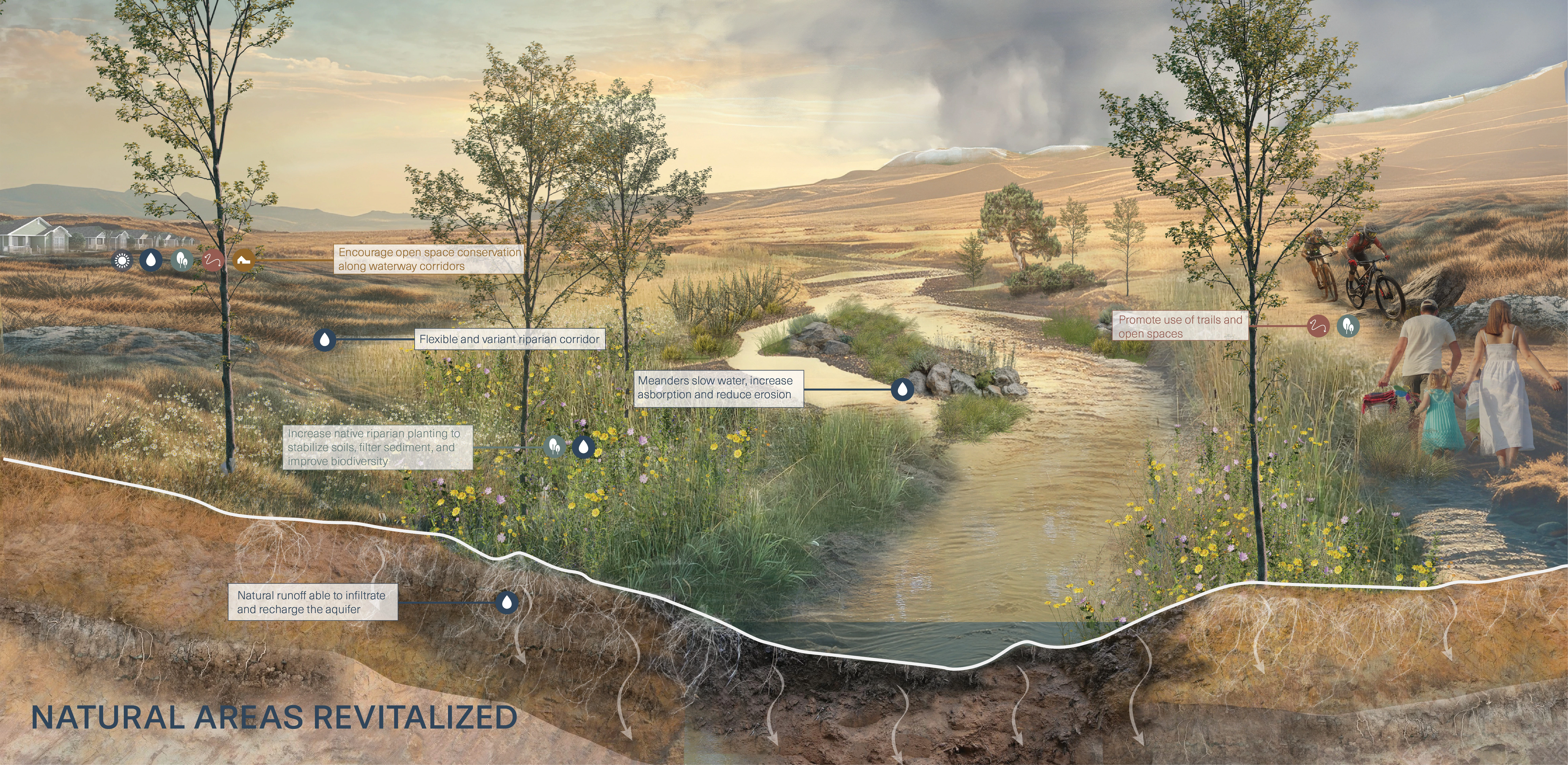
Achieving this vision required a new model for water management. Early assumptions that success meant delivering more surface water to creeks gave way to a preservation-first strategy centered on infiltration, aquifer recharge, and long-term hydrologic function. By prioritizing water movement underground, the plan aligns local land-use decisions with regional water outcomes. This shift unlocked broader, cross-jurisdictionalopportunities to guide sustainable growth while protecting sensitive floodplains and headwater systems.
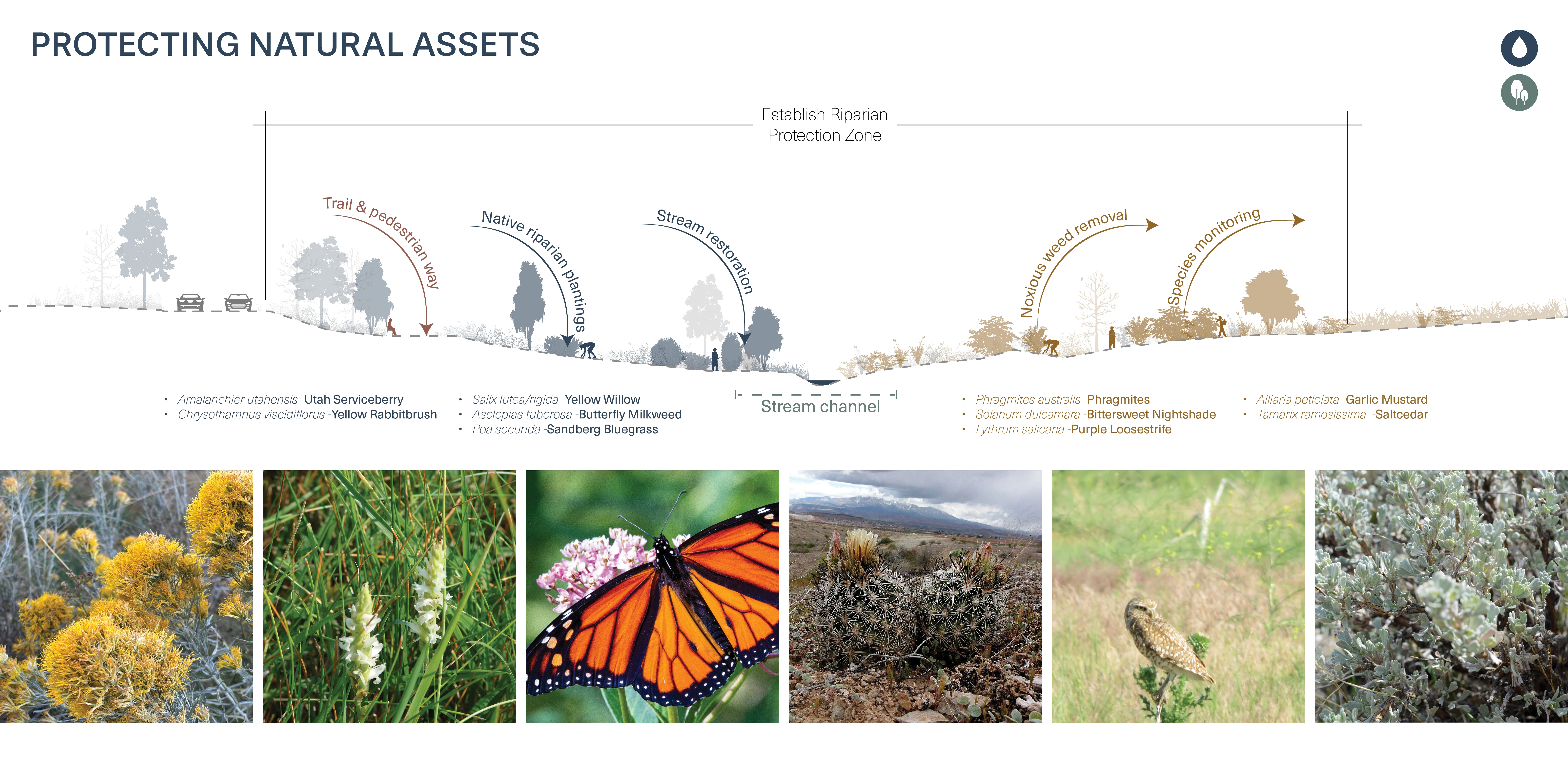
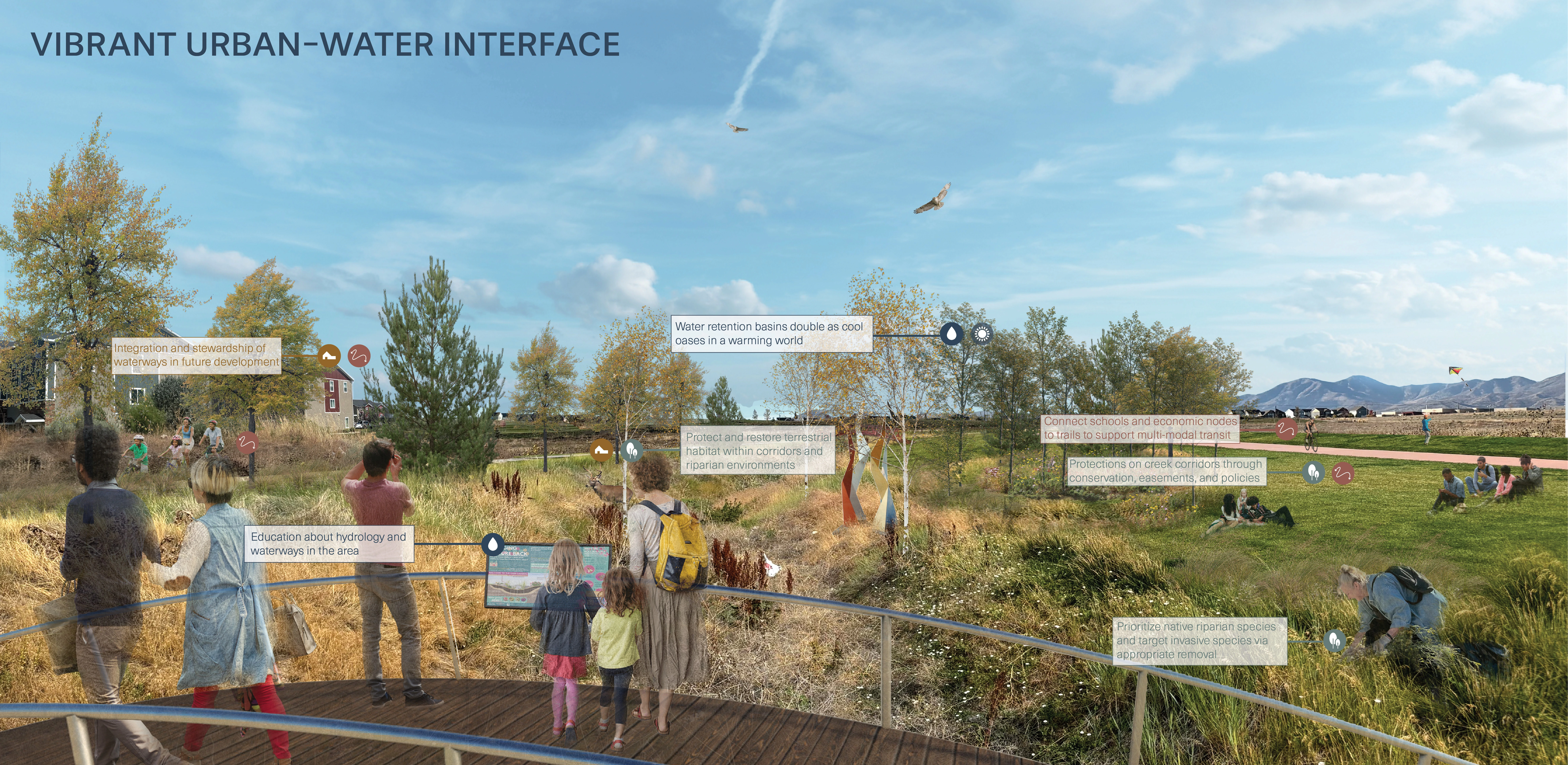
While water remains the organizing force, the plan ultimately evolved into a multi-benefit resilience strategy. Recommendations address invasive species management, heat island reduction, flood mitigation, wildfire resistance, and the careful balancing of human use within dynamic floodplain environments. Together, these strategies reinforce the idea that hydrologic health is inseparable from ecological integrity, public safety, and quality of life.
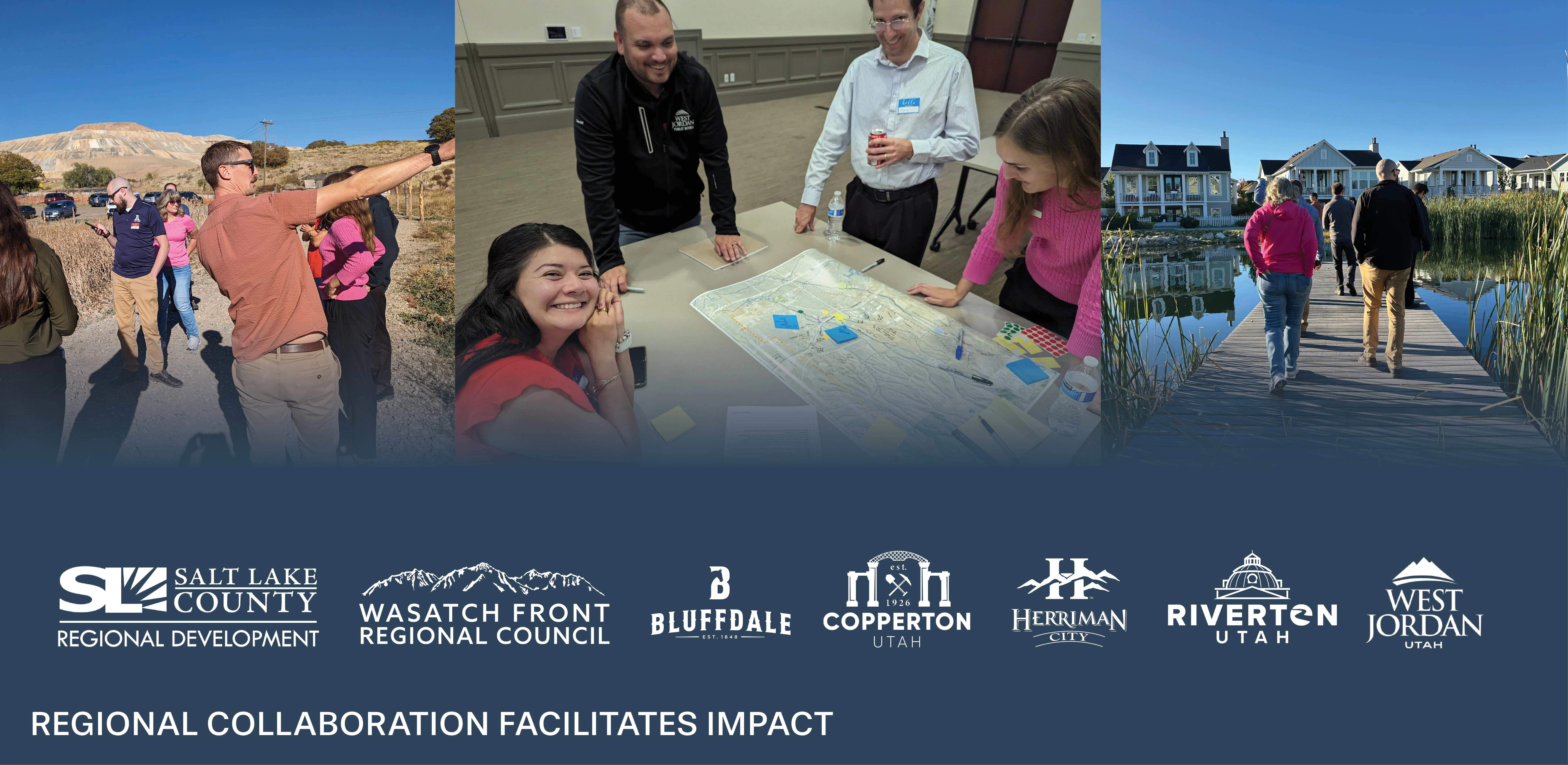
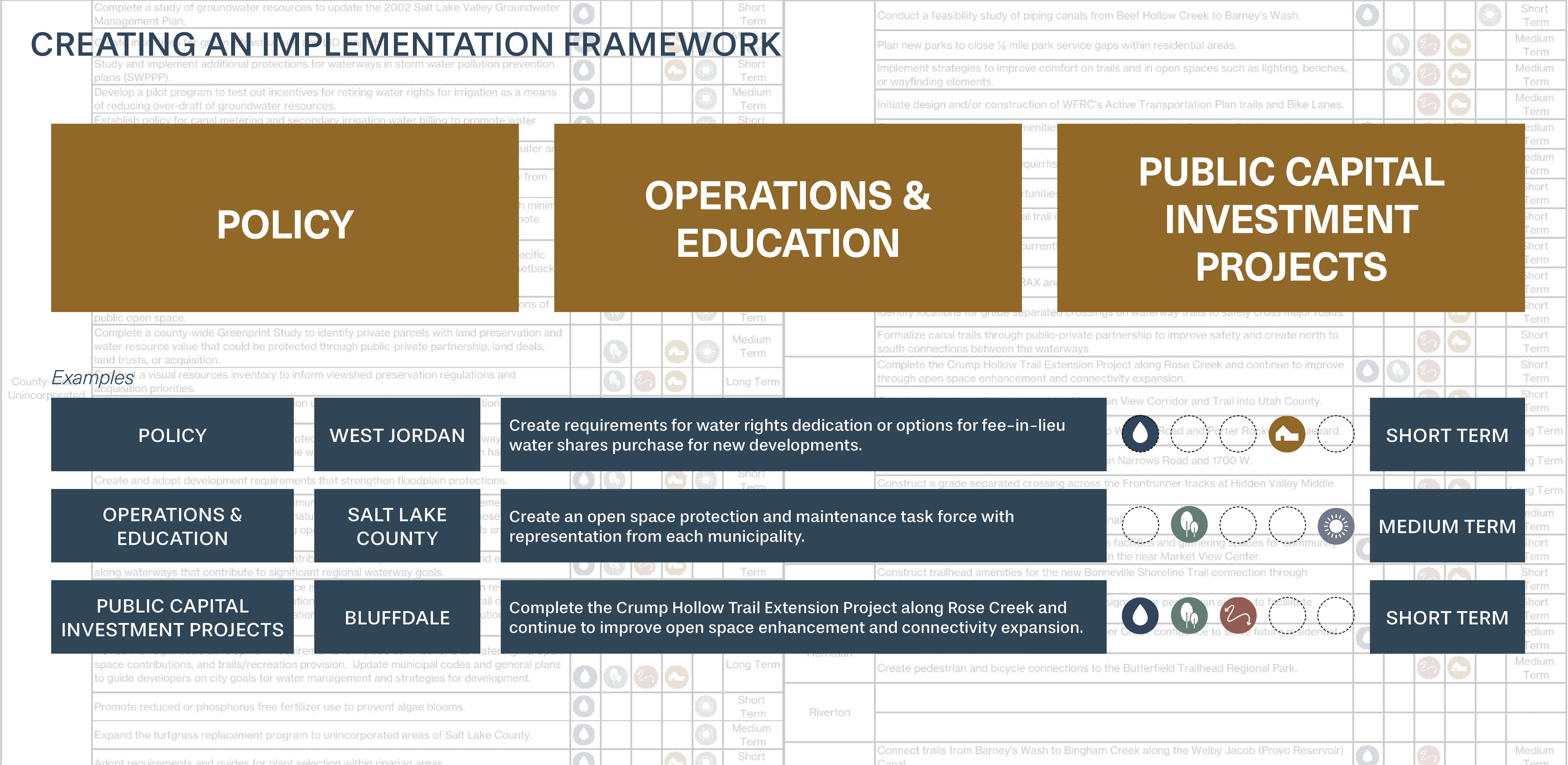
Throughout the stakeholder and public process it became clear that education for a broad audience is critical to build awareness of the impacts of development and water management choices. Visuals created of the localized water cycle fostered new understandings. The team refreshed with findings discoveries on an online platform, including virtual creek tours, toolkit of landscape design guildelines tailored to the variety of conditions, and implementation matrix of actions.
Salt Lake County (SLCo) has leveraged the vision plan to pursue funding through the Sentinel Landscapes Partnership—a federal collaboration supporting sustainable land use and resilience around military installations. In 2024, the designation of the Great Salt Lake as a Sentinel Landscape opened new pathways to advance projects near Camp Williams in Bluffdale, directly translating the plan’s recommendations into action. Continued commitment from the project team and regional partners positions the H2Oquirrh Vision Plan as a living framework for long-termwatershed stewardship and recovery.
-
Design Workshop
- Anna Laybourn, FAICP, Principal
- Dylan Bagnasco, PLA, Project Manager
- Mary Oliver, Project Manager
Consultant
- LimnoTech
Collaborators
- Wasatch Front Regional Council
- Salt Lake County
- City of Bluffdale
- Town of Copperton
- Herriman City
- Riverton City
- City of West Jordan
Advertisement
Related Awards
Award of Excellence, ANALYSIS AND PLANNING