

.webp?language=en-US)

.webp?language=en-US)

Somerville Pollinator Action Plan: A Pollinator’s Guide to City Living


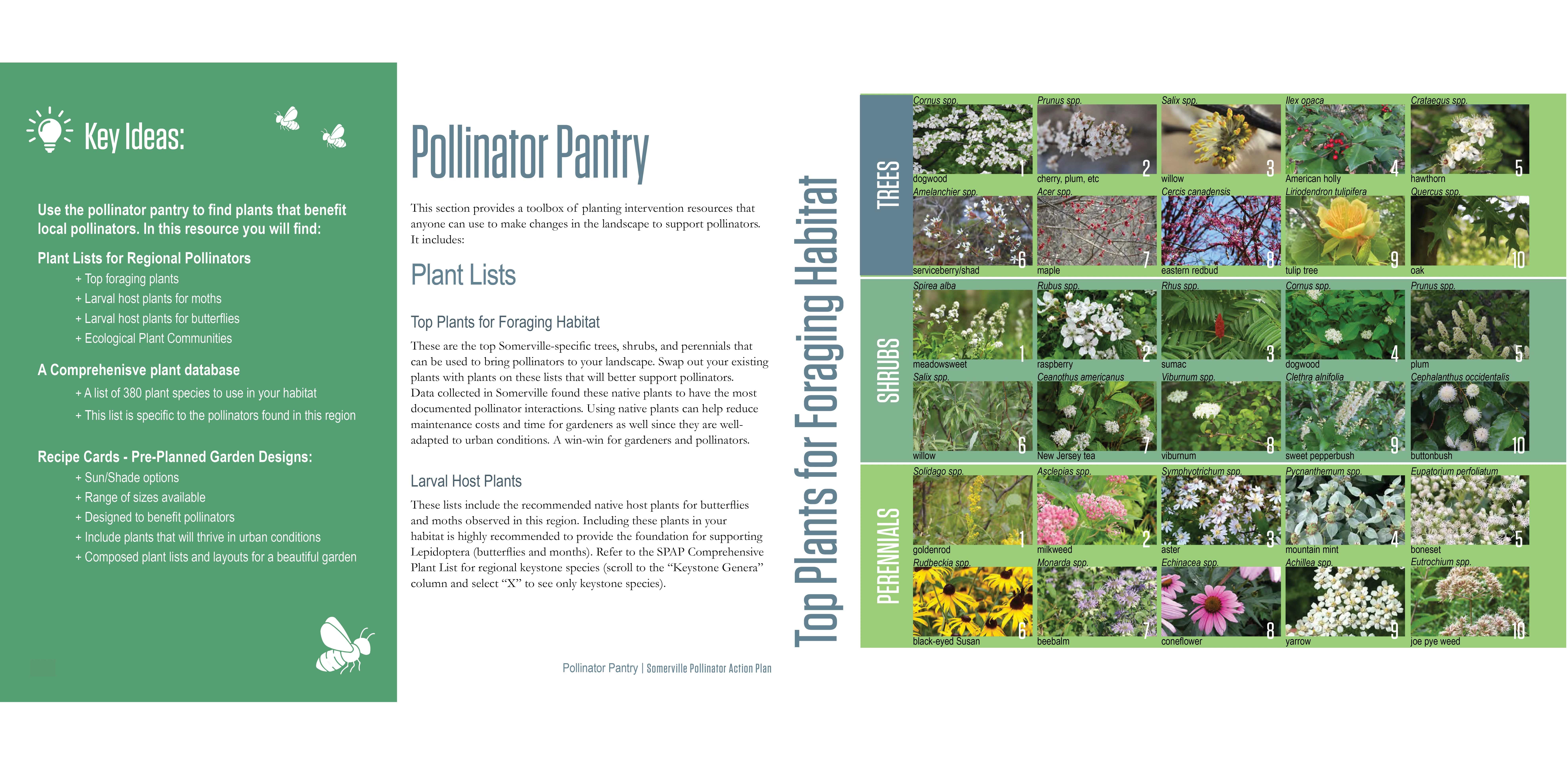
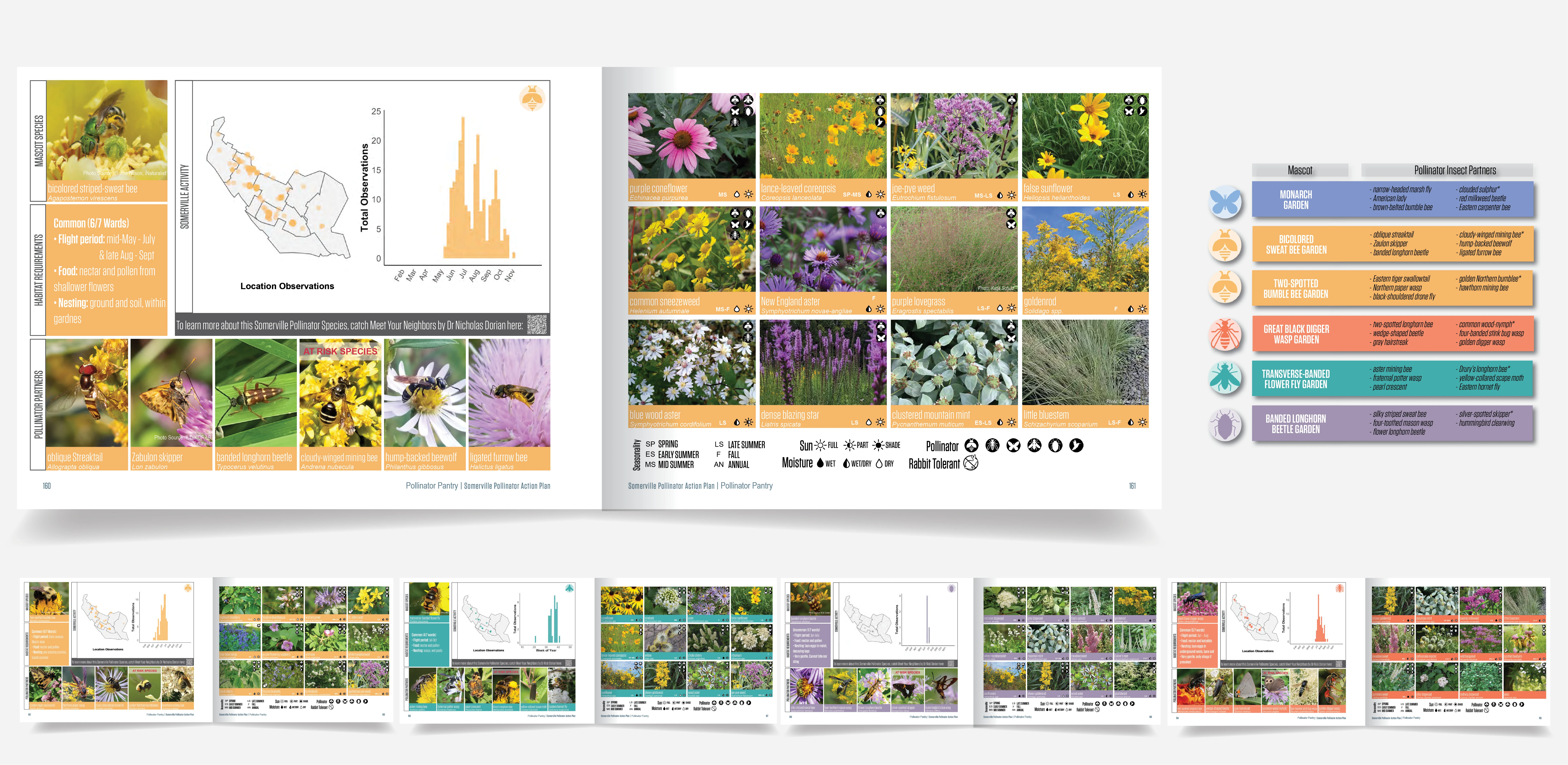
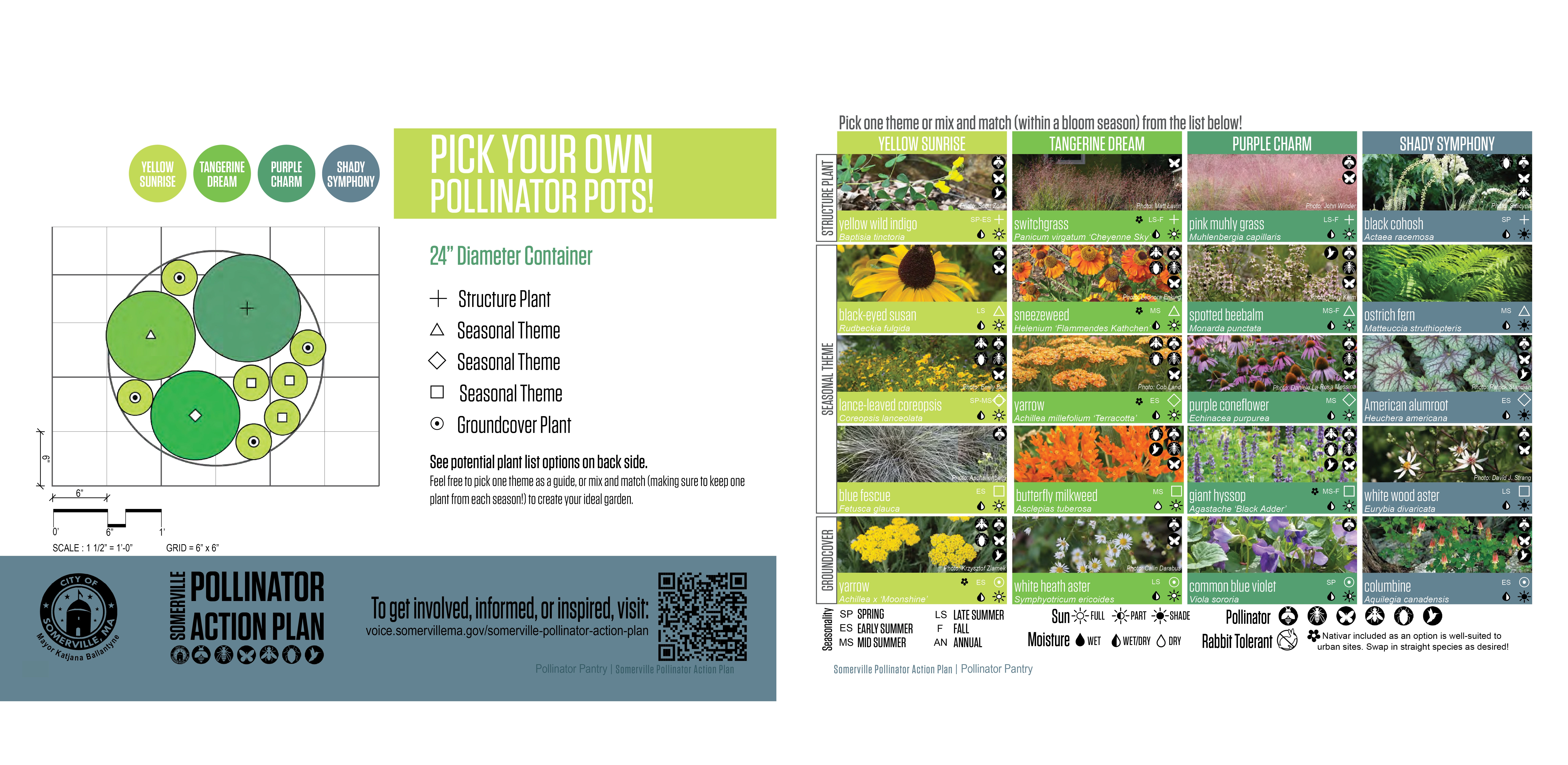
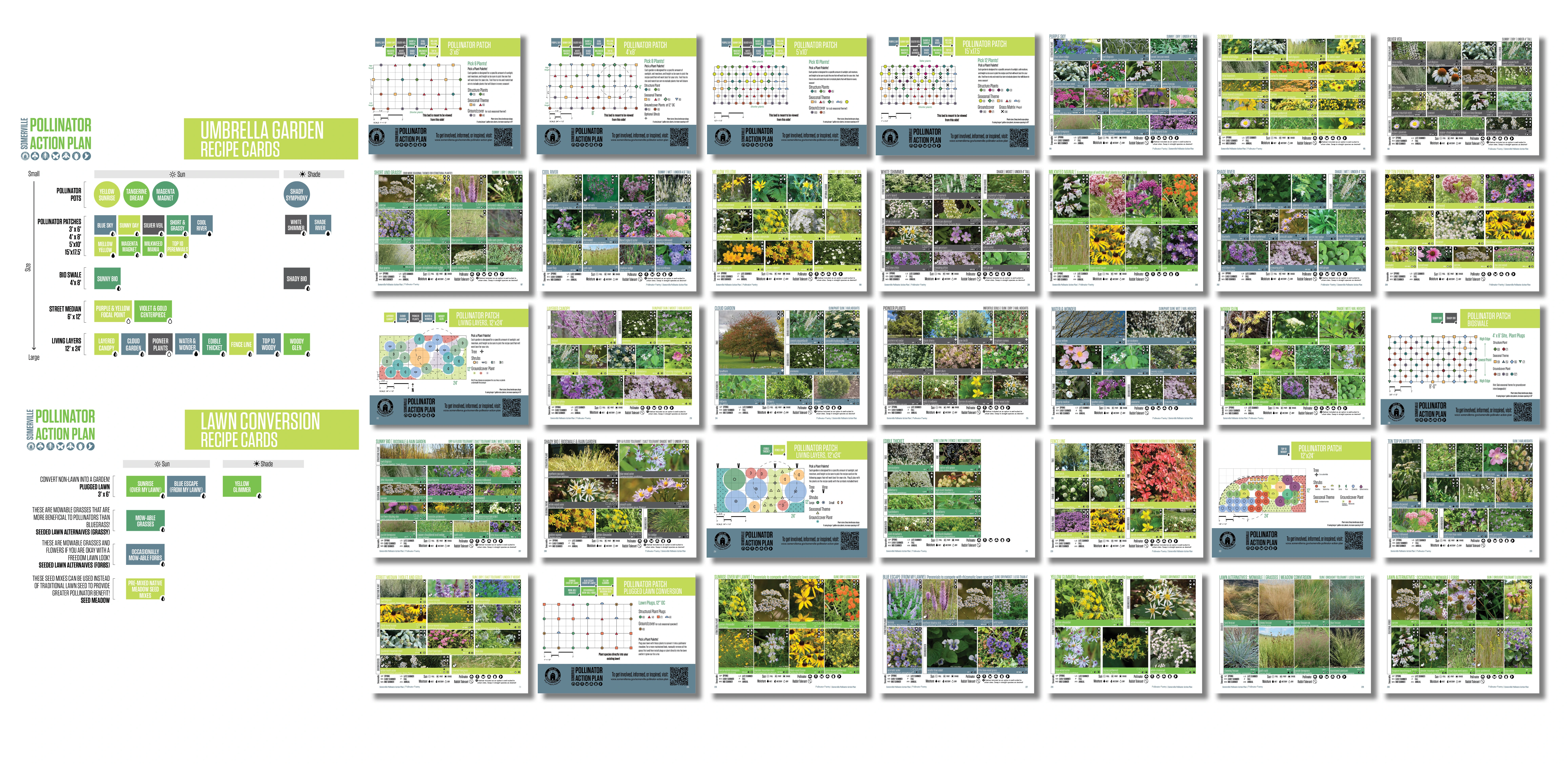
More than just a tactical project, this initiative strategically centers biodiversity citywide and acts as a vital communication tool for adapting our cities.
Awards Jury
-
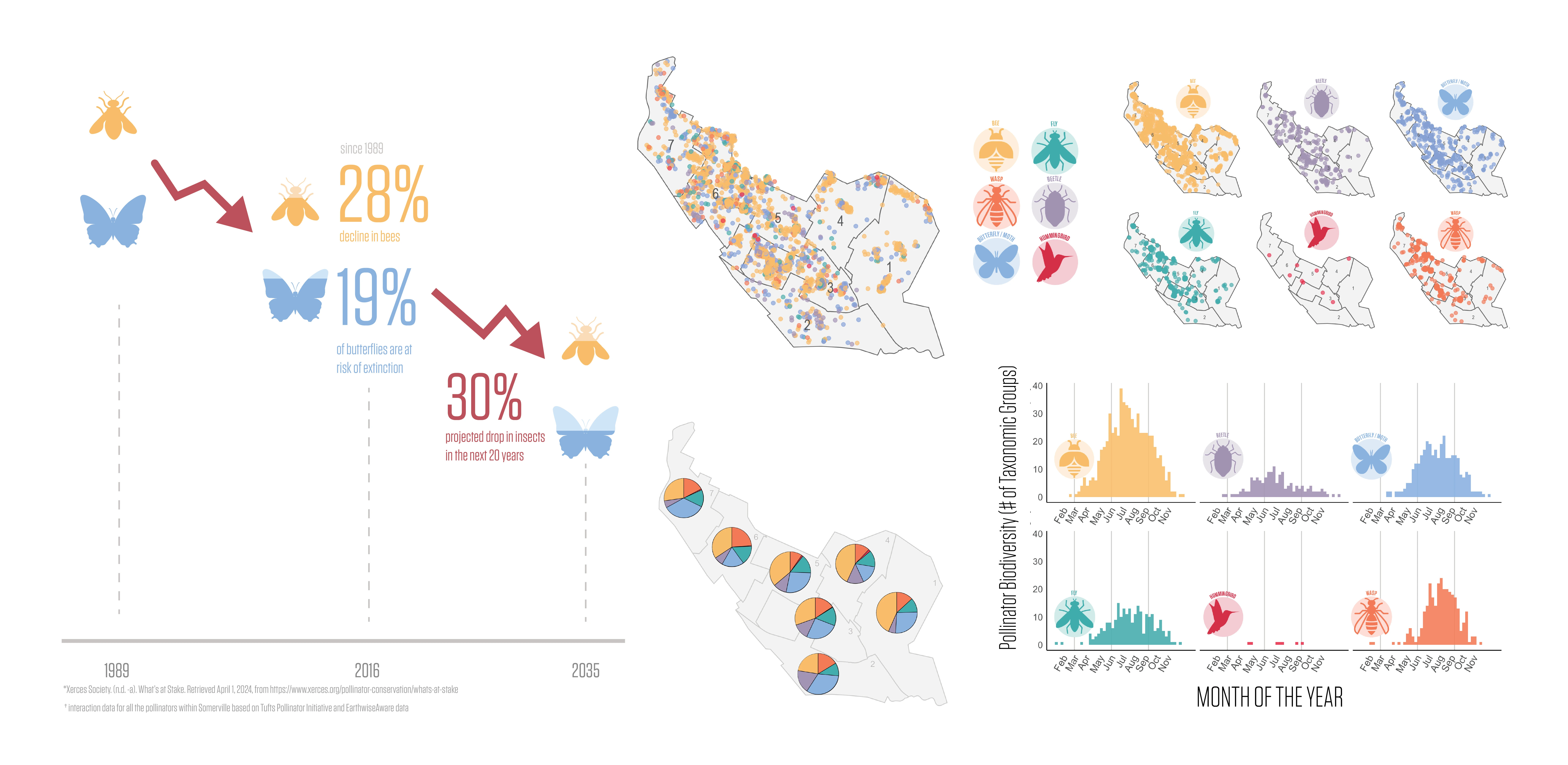
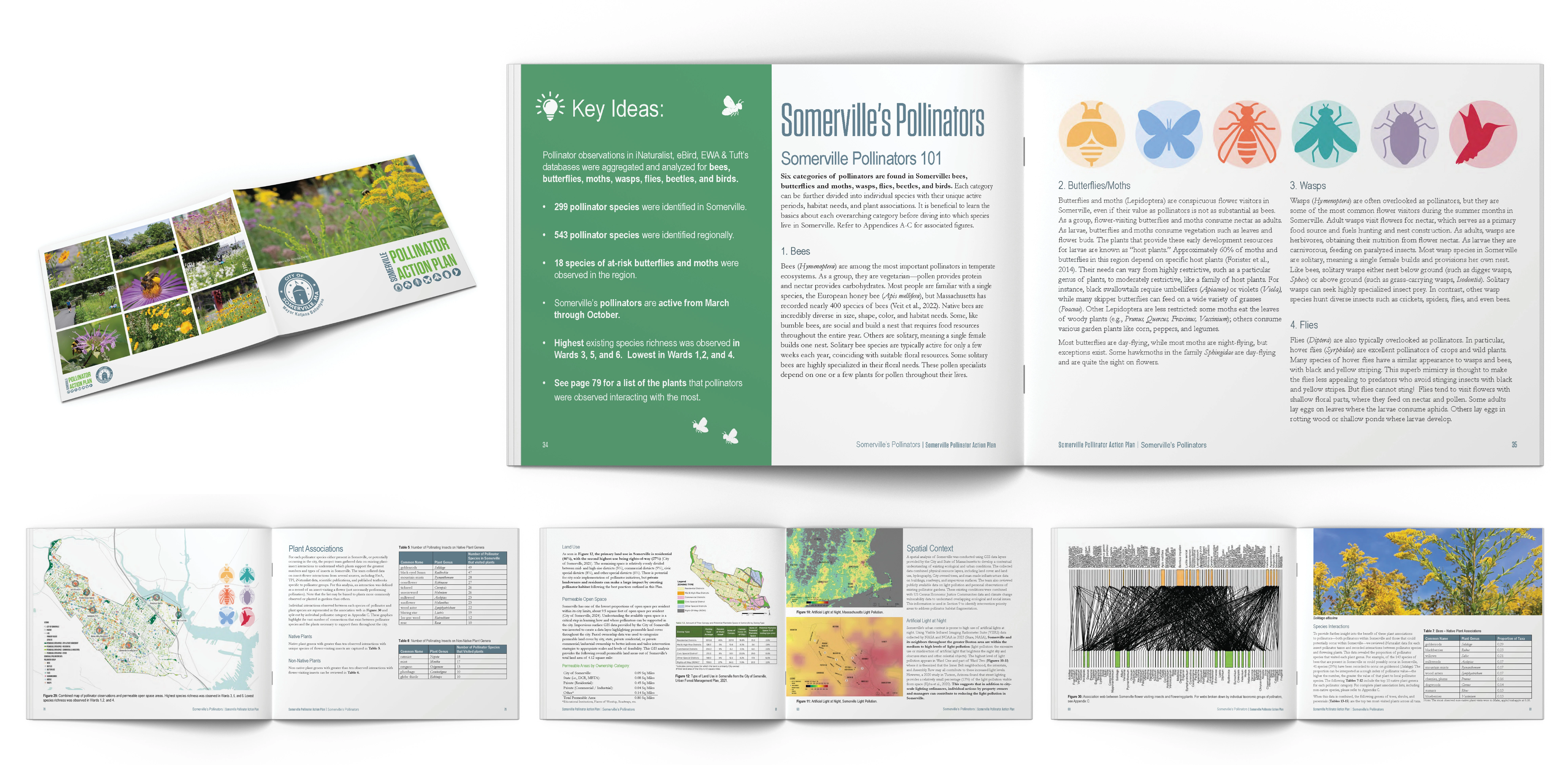
The Somerville Pollinator Action Plan is a first-of-its-kind urban pollinator research and policy framework, envisioning a city where biodiversity grows alongside community. Pollinator decline—projected at 30% insect loss over the next 20 years—demands urgent attention. iNaturalist and community observation data was mapped to create a baseline of known local pollinators. The plan details pollinator support strategies with both science and aesthetics in mind, including original ecological research, plant lists, revamped municipal policy and maintenance practices, and a ‘Pollinator Pantry’ of 40+ regionally specific planting ‘recipe cards.’ The methodology and open-source framework is replicable across the US to support urban biodiversity.
-
The Somerville Pollinator Action Plan (SPAP) guides efforts to create an urban environment to support pollinators in Somerville, MA. With pollinators essential to food production, biodiversity, and ecosystem stability, their decline—marked by a 28% drop in bumble bees and 19% of butterflies in the last decade—demands urgent research and action. This requires considering all pollinators, such as beetles, hover flies, wasps, and birds. Without intervention, insect populations could decline 30% in less than 20 years.
Modifying conventional landscape practices is critical to making cities more pollinator- and people- friendly. Somerville, MA is the most densely populated city in New England, with only .17 sq miles of publicly owned pervious land. Interventions must occur both at the residential scale and on public lands. The SPAP, developed with scientists, public officials, landscape architects, and community leaders, delivers original urban pollinator research and a format for intervening immediately at both small and large scales. Cities have a critical role to play in reconnecting landscapes to pollinators and people to pollinators.
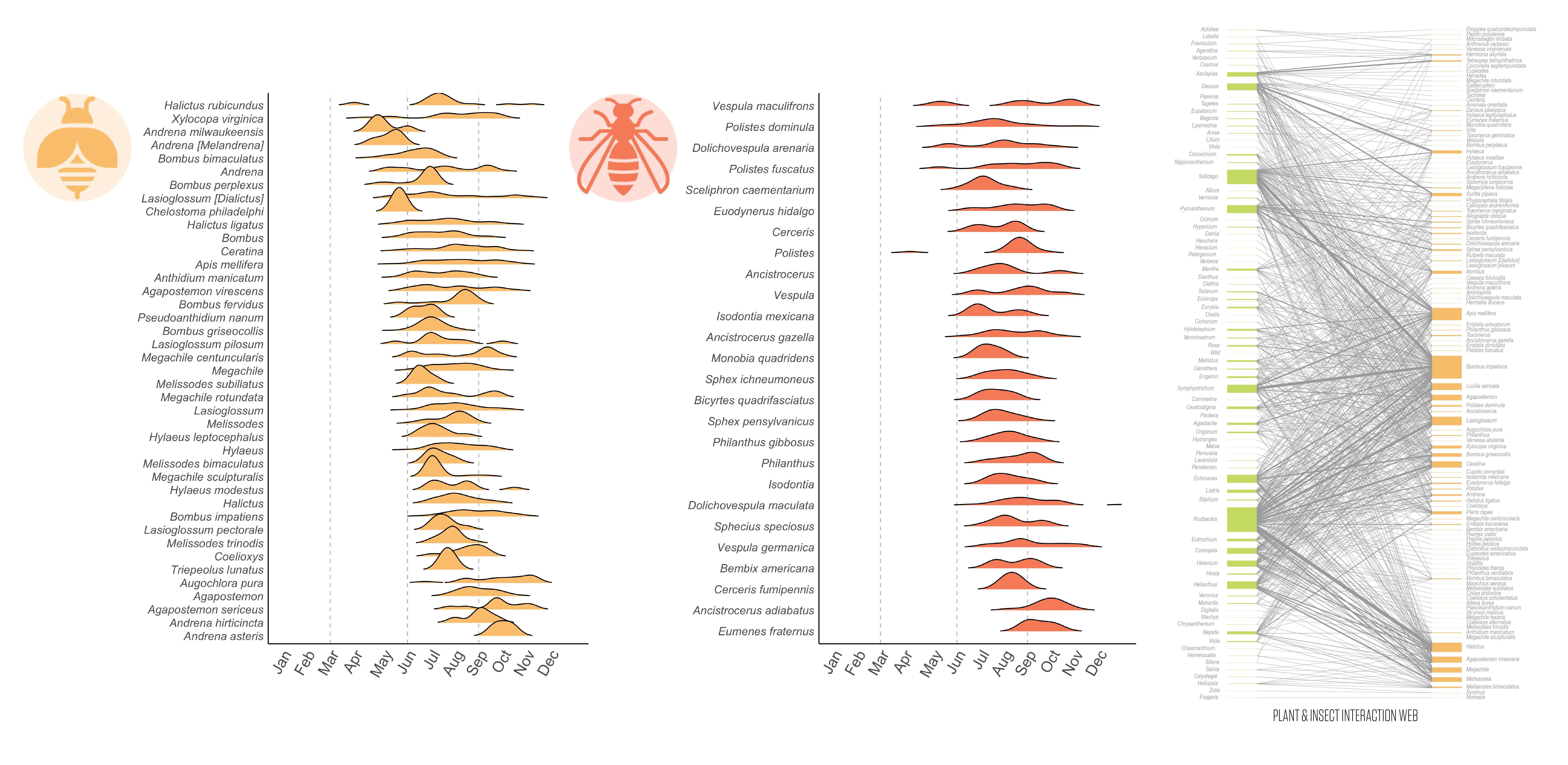
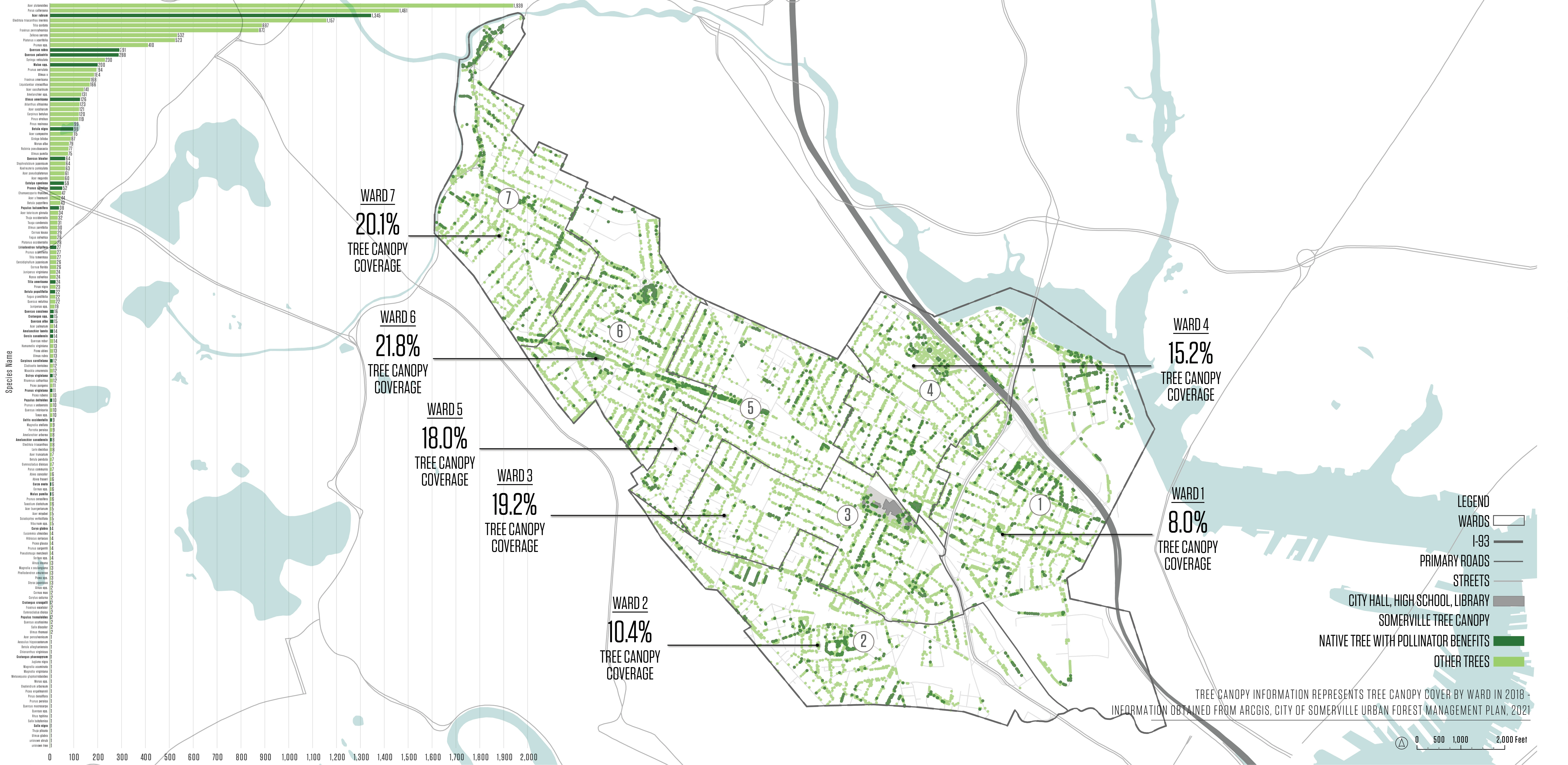
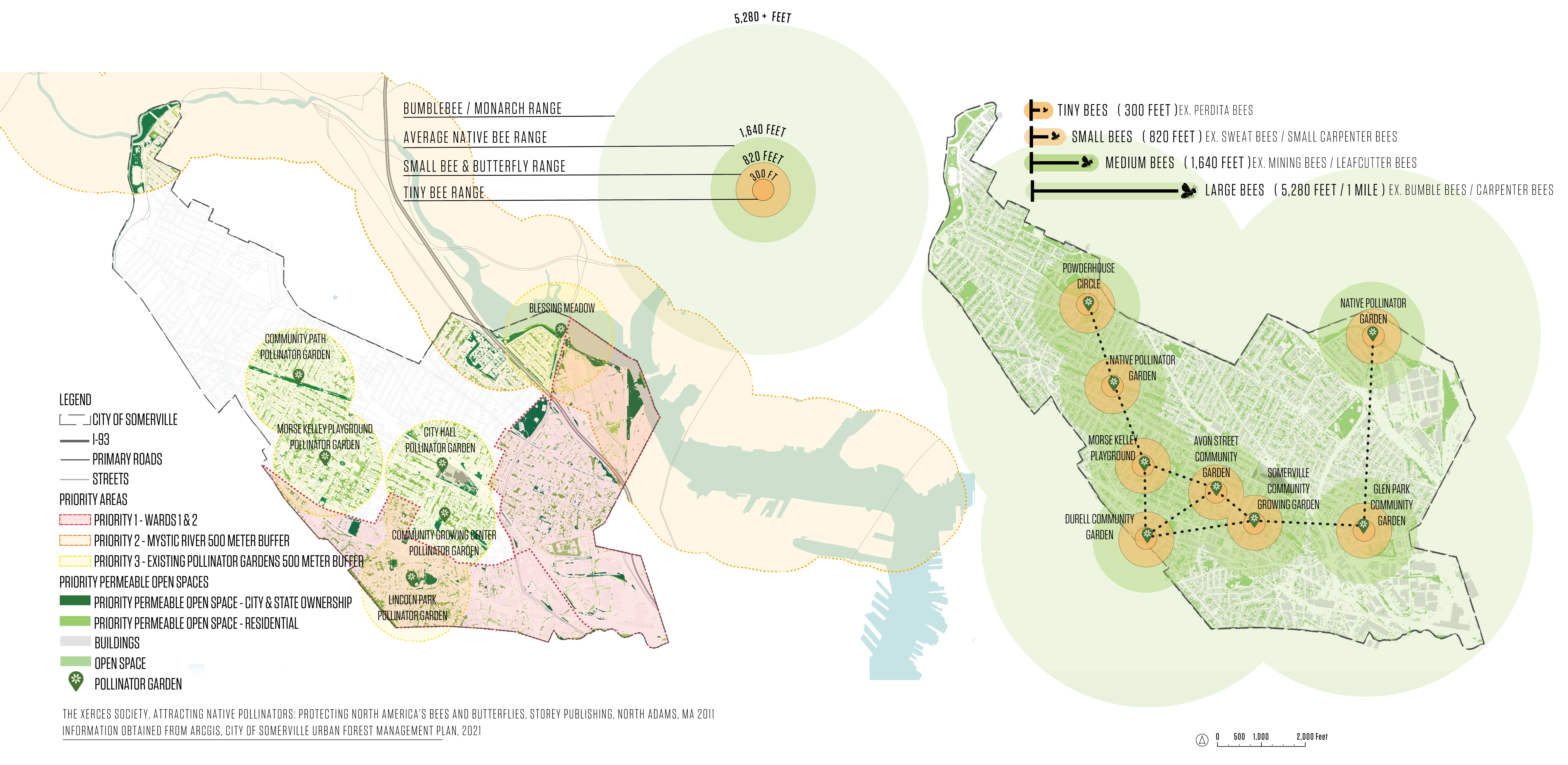
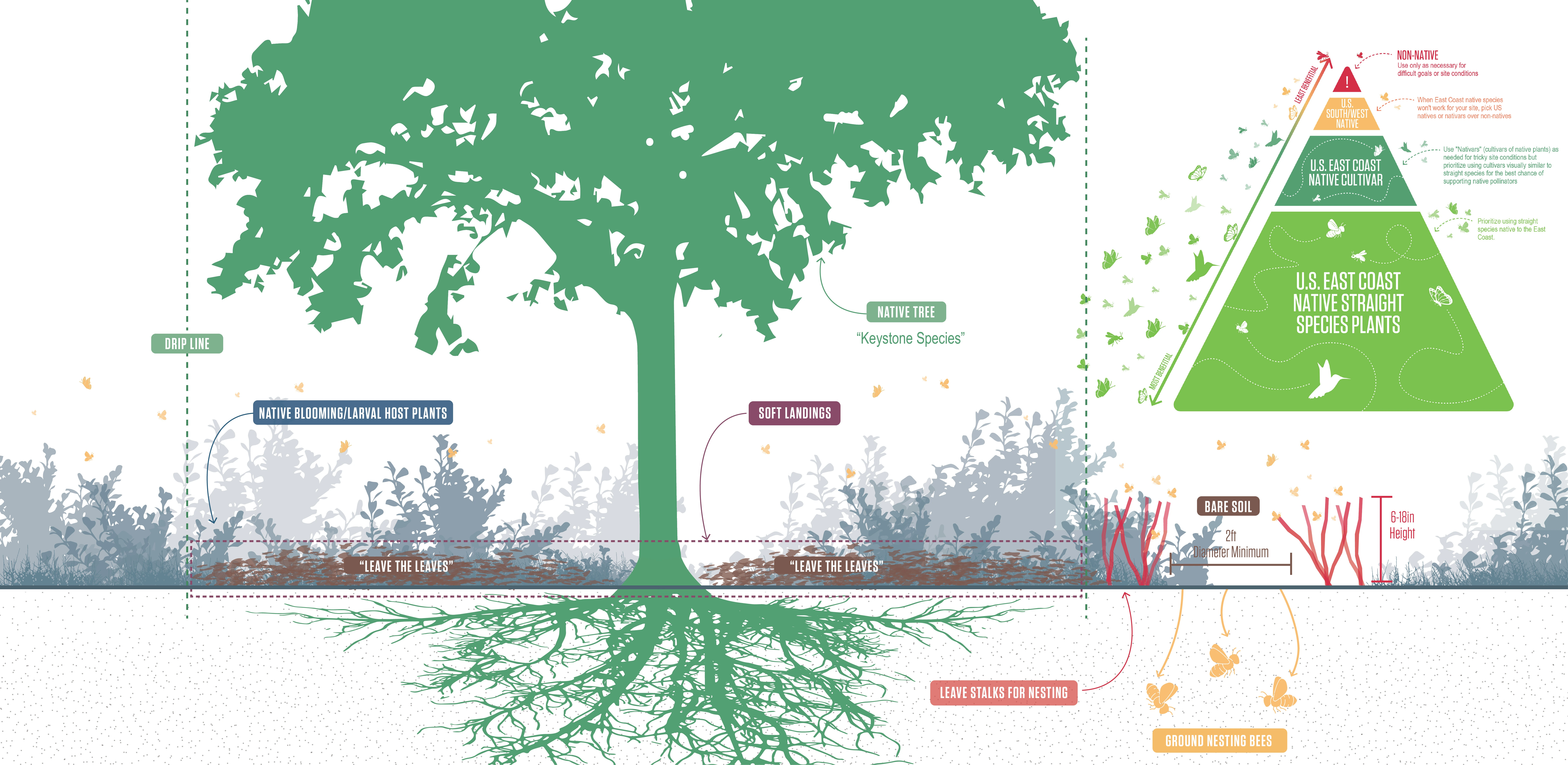
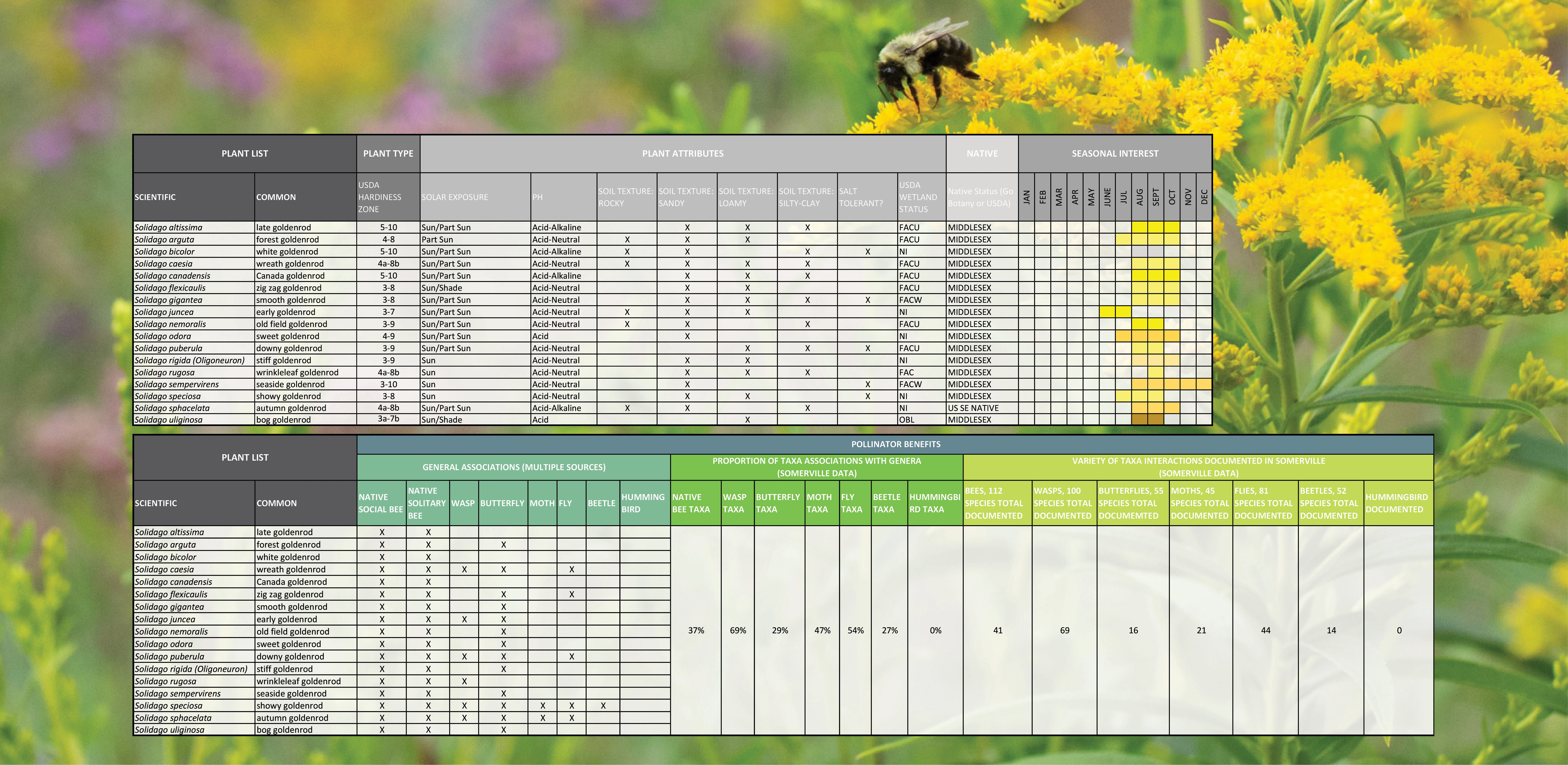
Using data from citizen science platforms iNaturalist, Ebird, Tufts Pollinator Initiative, and EwA Buggy, researchers mapped species presence and seasonality, setting a foundation for conservation and ongoing monitoring. 299 unique pollinators in Somerville were documented in 9397 observations. The project conservation biologist used over 10,000+ photographs to identify local pollinator and plant interactions, creating priority plant lists (including non-natives and cultivars!). Peer-reviewed literature was layered into the hyper-local findings to create a prioritized ‘Comprehensive Plant List’ (over 400 ecoregion- specific species) of both foraging and host plants. The list was used to create a ‘Pollinator Pantry’ of 40+ ‘Recipe Cards’ for garden designs at different scales, including critical trees and shrubs and easy lawn-to-forb conversions. GIS mapping sets priority areas for habitat creation by identifying gaps between existing pollinator gardens, water resources, and areas with minimal pollinator sightings.
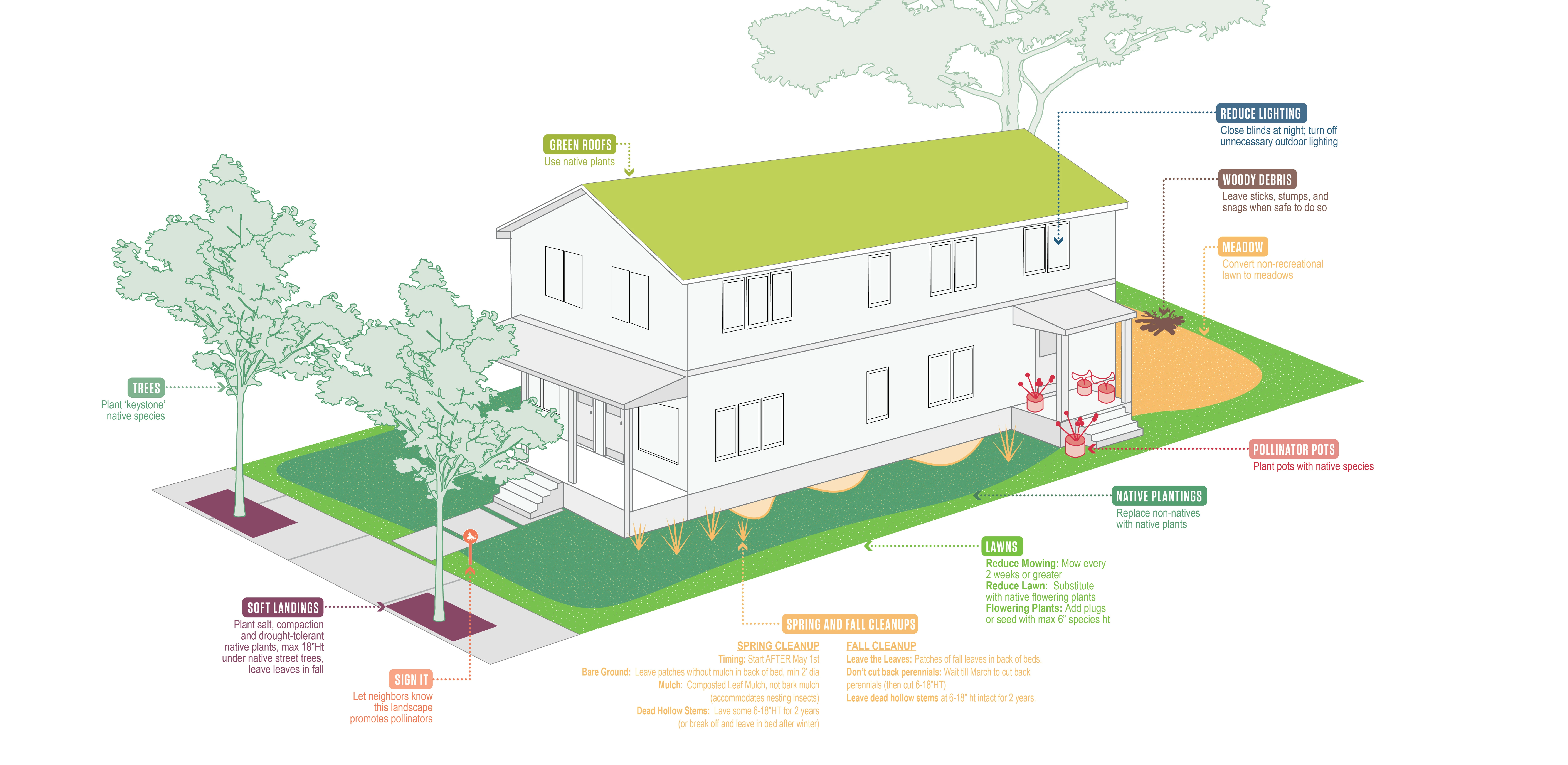
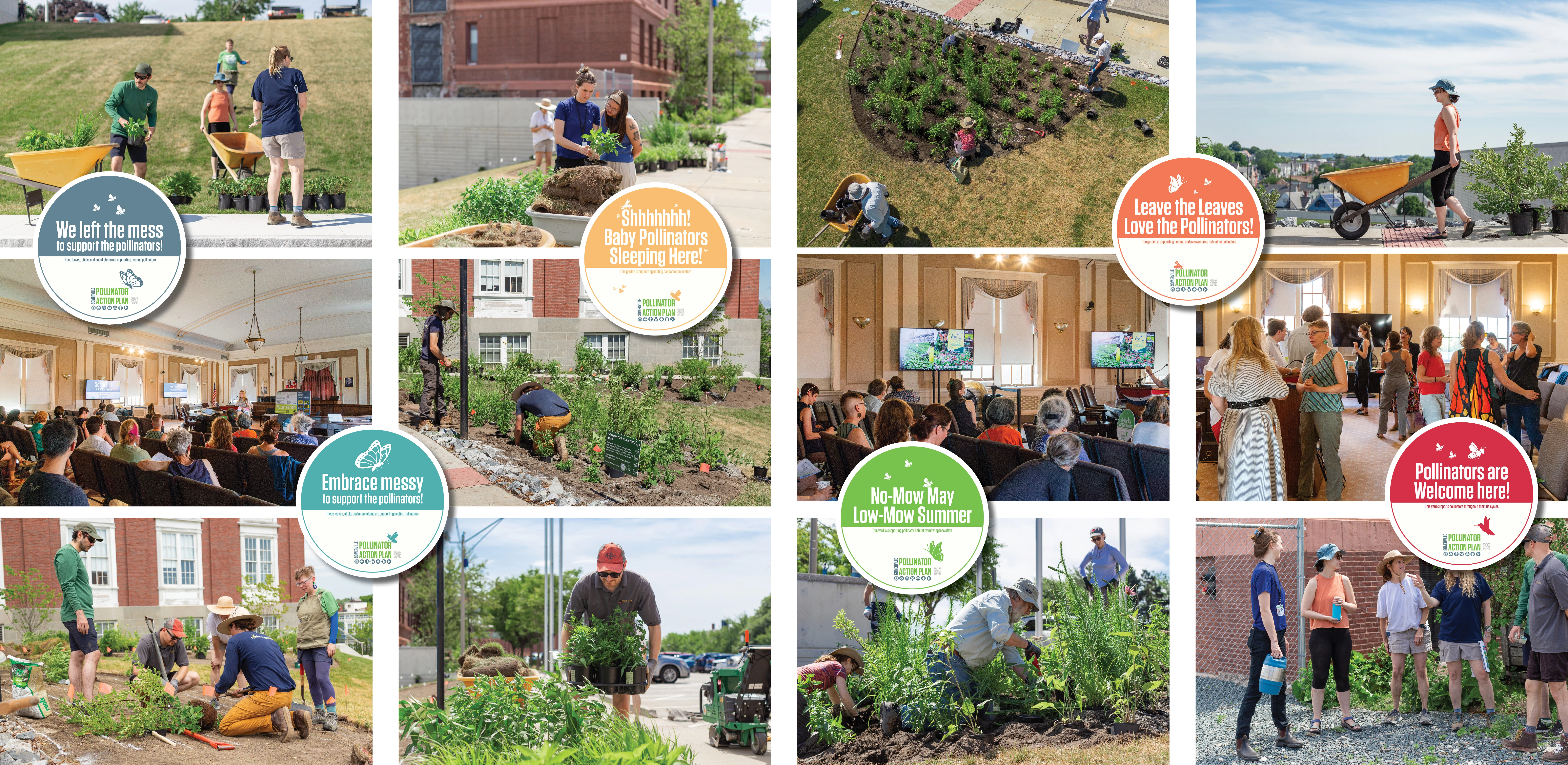
SPAP provides easy-to-follow checklists of revamped maintenance practices that target specific user groups, such as public DPW, landscape contractors, and residents. Branded signs were developed for pollinator-forward plantings and maintenance practices in the field.
Public policy recommendations include revisions to lighting, maintenance, native plant and green roof ordinances. These small modifications have a big impact on urban pollinator health.
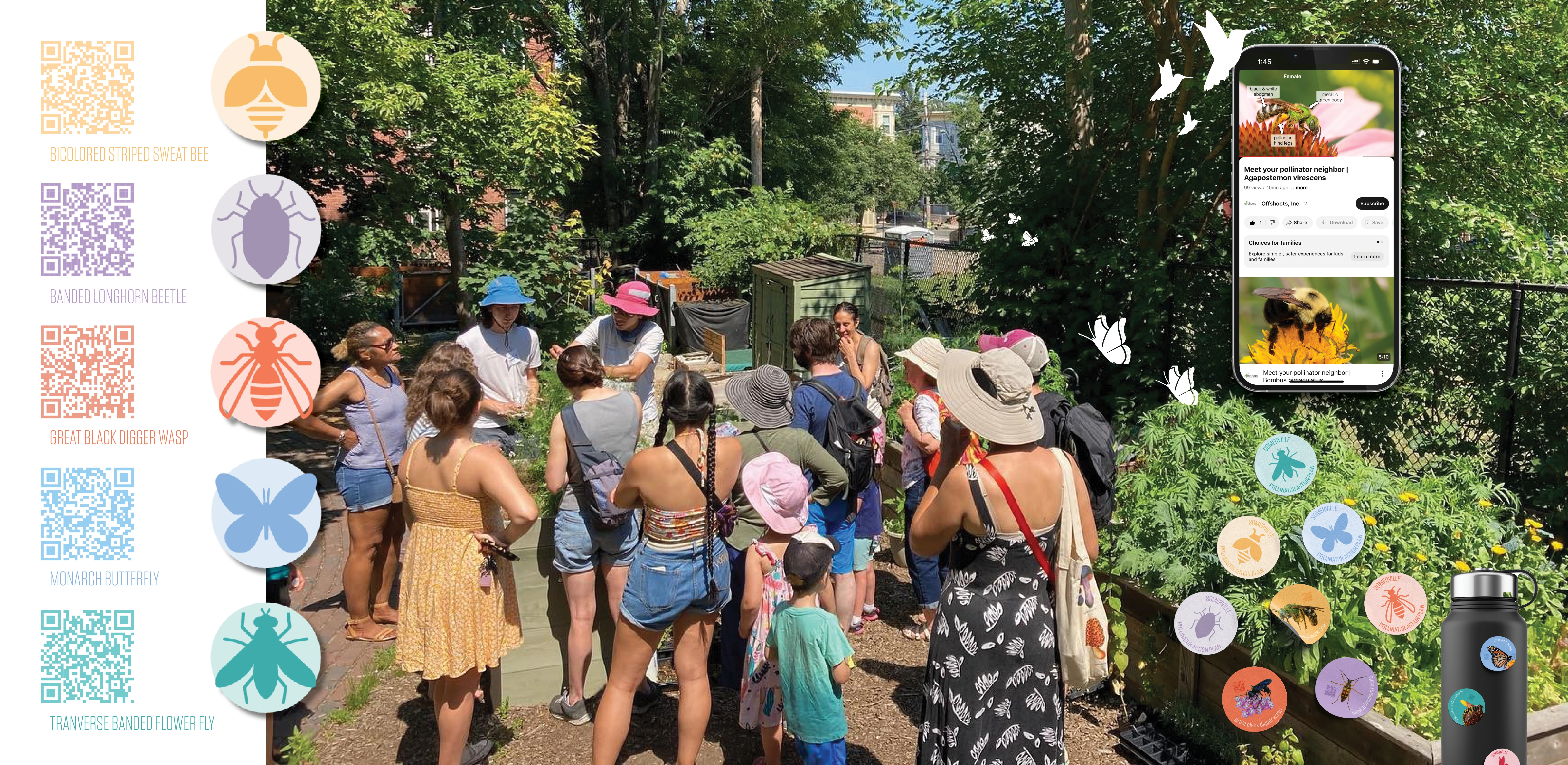
For roll-out and dissemination, a ‘Pollinator Ambassadors’ program was developed to train residents through ‘Pollinator Safaris’ to identify insects and spread the word. Six charismatic ‘Mascot’ species were selected to help the community ‘Meet Your Pollinator Neighbors!’ Approachable videos and stickers were created about the mascots to encourage community awareness and future monitoring. Over 15 community events were held throughout the planning process to identify community values and educate the public. As part of the plan release, demonstration gardens were planted by volunteers and included complimentary plant giveaways.
This plan provides a scalable model to create urban pollinator plans that prioritize research and public participation, expanding ecological networks with collective tiny actions.
-
- Kate Kennen, FASLA - Principal, Offshoots, Inc.
- Shelby Chapman-Hale, ASLA - RLA, Project Manager, Offshoots, Inc.
- Jack Beresford - Designer, Offshoots, Inc.
- Anastasia Storos, Affiliate ASLA - Offshoots, Inc.
- Elizabeth Quintero, Associate ASLA - Designer, Offshoots, Inc.
- Alyssa Taylor - Offshoots, Inc.
- Cristian Umaña - Designer, Offshoots, Inc.
- Luisa Oliveira, ASLA - Director of Office of Strategic Planning & Community Development
- Vanessa Boukili - Senior Urban Forestry & Landscape Planner
- Alison Maurer, Associate ASLA - Planner of Ecological Restoration, SPAP Project Manager
- Cary Breck Miller - Tree Warden
- Tori Antonino, Advisory Committee Member - Urban Forestry Committee
- Lisa Brukilacchio, Advisory Committee Member - Somerville Community Growing Center
- Michael Fager, Advisory Committee Member - Conservation Commission
- Alejandra Narváez - Advisory Committee Member
- Jack Perenick - Advisory Committee Member
- Renée Scott - Advisory Committee Member
- Cynthia Stillinger, Advisory Committee Member - Somerville Garden Club
- David Falka - Alternates and Past Member
- Cortney Kirk, ASLA - Alternates and Past Member
- Anna Mateo - Alternates and Past Member
- Amy Mertl - Alternates and Past Member
- Claire O'Neill, Earthwise Aware - Alternates and Past Member
- Dr. Nicholas Dorian - Ecologist
- Harry Harding, Conditioning Leader - Community Engagement Specialist
Advertisement
Related Awards
Award of Excellence, Analysis & Planning
H2Oquirrh: Regional Water Reform for a Resilient Salt Lake Valley
Location: Salt Lake City, UT
Firm: Design Workshop
Client: Wasatch Front Regional Council, Salt Lake County
Water flowing from the Oquirrh Mountains is a critical contributor to the Great Salt Lake. Severe drought and human-caused decline threaten the lake’s viability, with cascading impacts on ecosystems and public health. This regional collaboration of seven jurisdictions, the H2Oquirrh Vision Plan, undertakes a large systems analysis of hydrologic cycles, land cover, and land-use decisions to identify site-specific interventions across nine creeks and washes. Led by landscape architects and water resource engineers, the study advances a deeper understanding of localized drivers of water loss and proposes innovative solutions through integrated landscape infrastructure design and policy.
-listing-img.webp?language=en-US)
Related Articles

ASLA Fund
American Society of Landscape Architects Announces its 2026 Student Awards
39 Student Award winners elevate the future of the landscape architecture profession
Aug 24 2026