
.webp?language=en-US)

.webp?language=en-US)
-
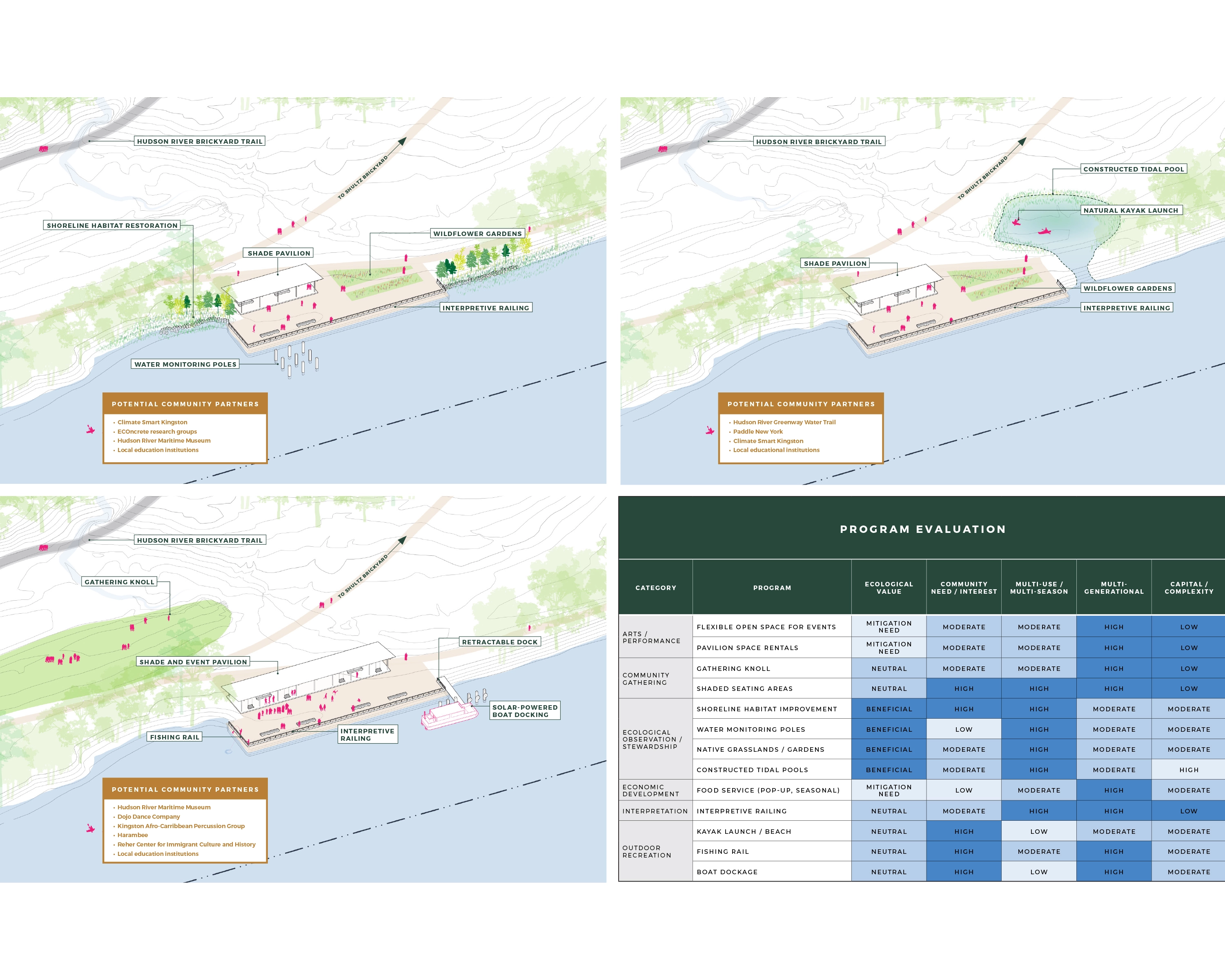
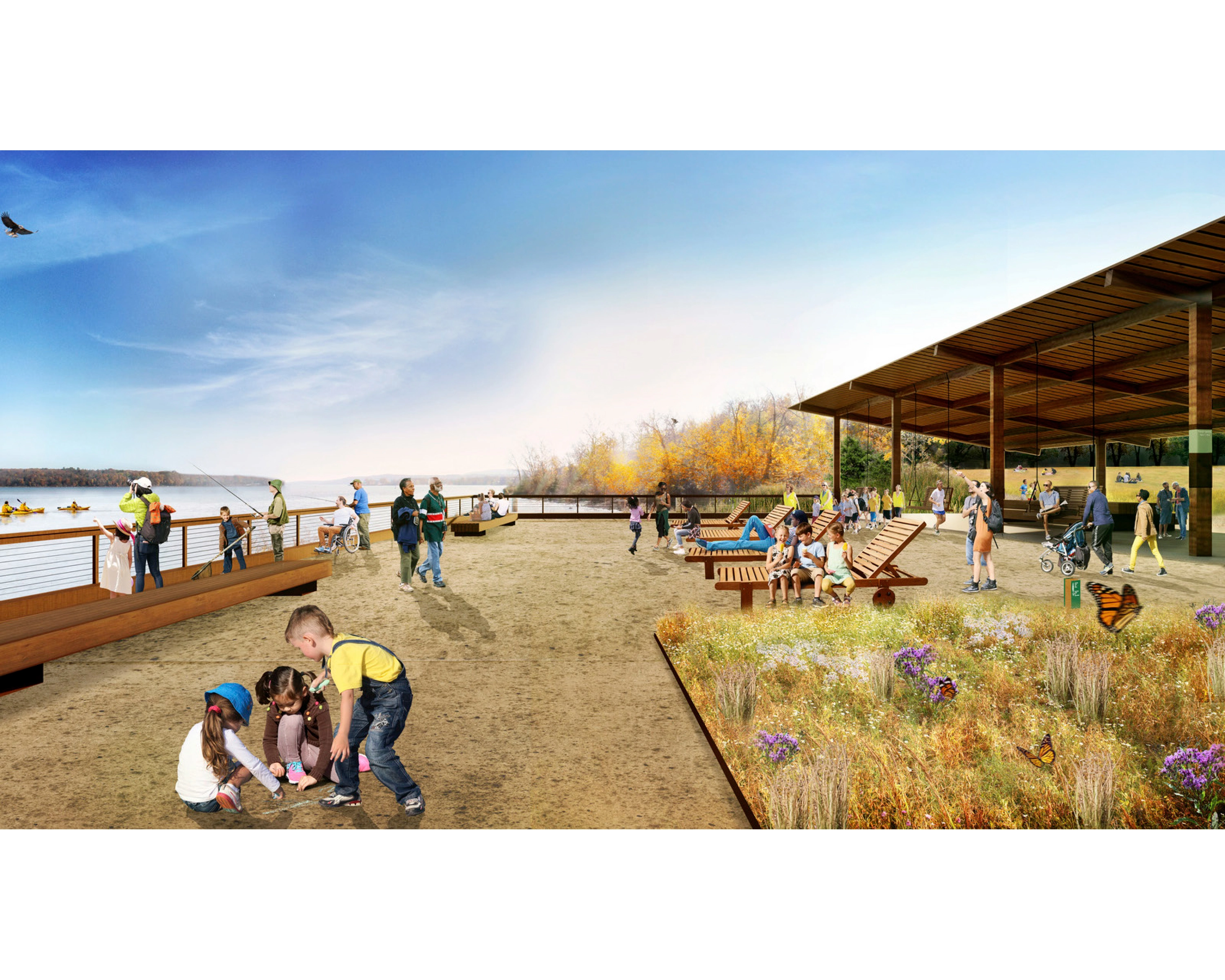
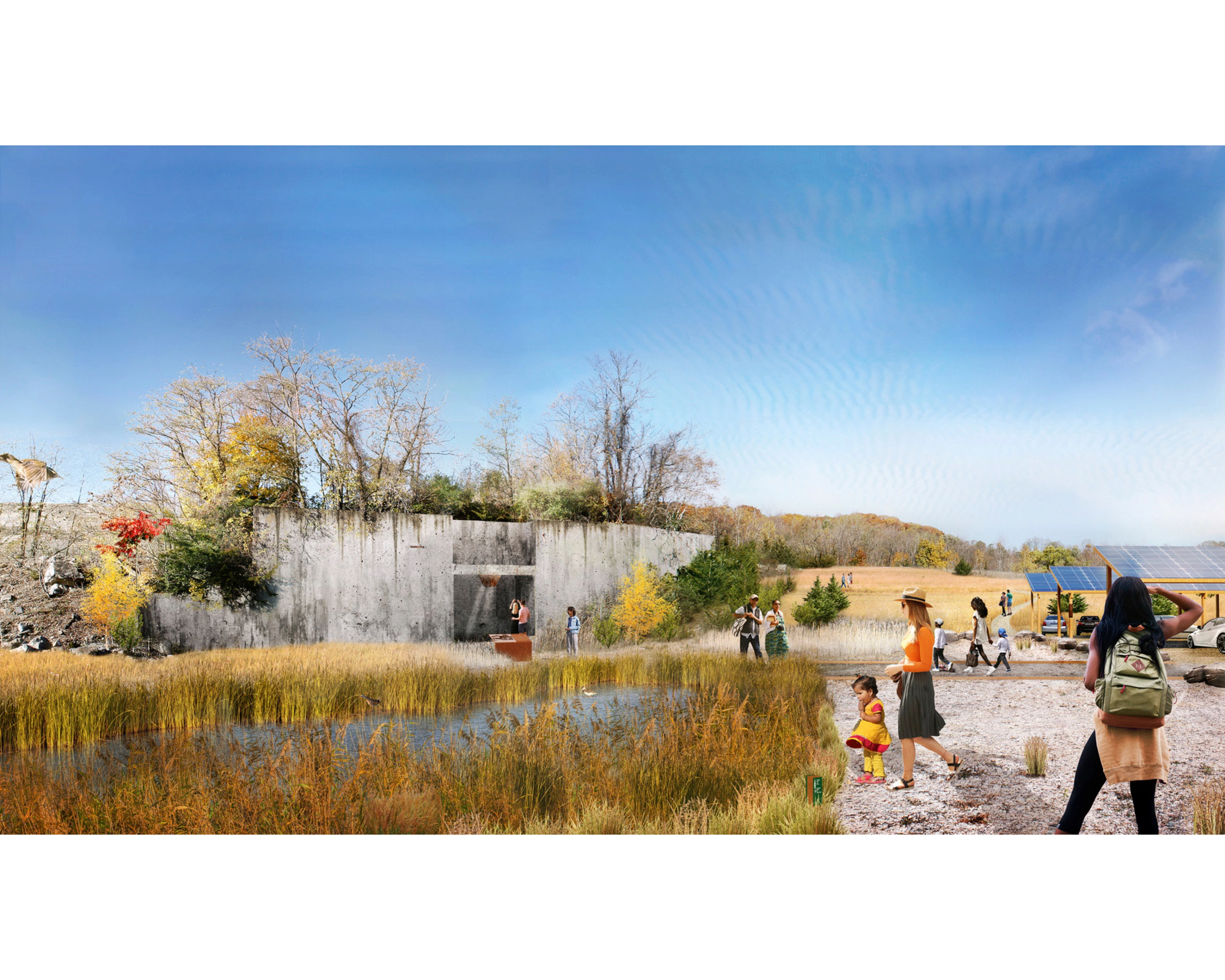
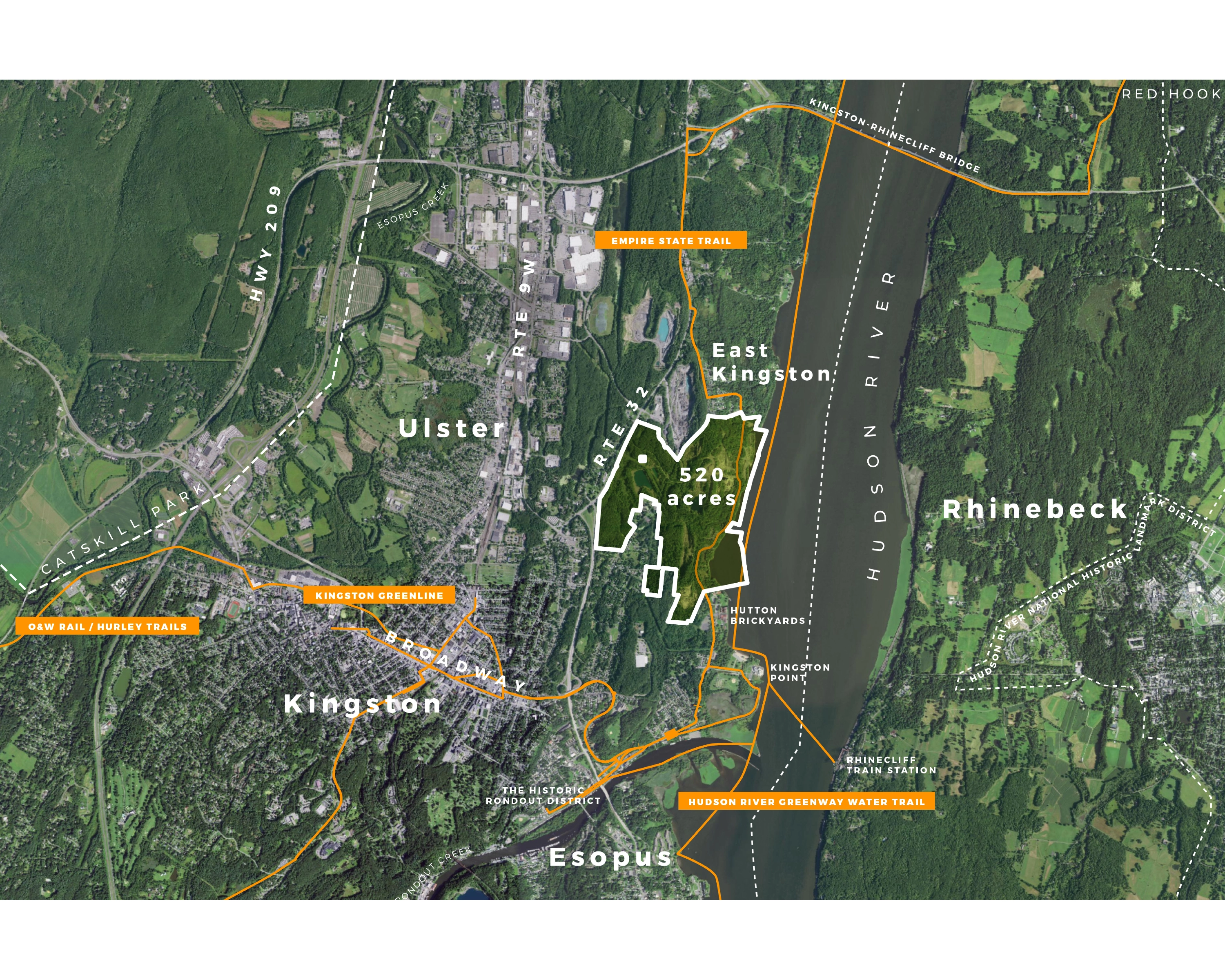
The Framework Plan is an adaptable biodiversity focused long-term toolkit for transforming a 520-acre abandoned quarry along the Hudson River into a new state park. Developed through robust analysis and inclusive engagement, the plan aims to amplify ongoing ecological regeneration of unique soils and landforms, reveal the many layers of the site’s geological, indigenous, cultural, and industrial history, and invite all communities of the region to explore the woodlands, wetlands, and dramatic cliffs of the park.
-
The Sojourner Truth State Park Framework Plan guides the transformation of a former extractive landscape to one of ecological regeneration and social connection through strategic cultivation of site features and establishment of inclusive access. The plan establishes a real-world model of recovery of biodiversity in post-industrial landscapes.
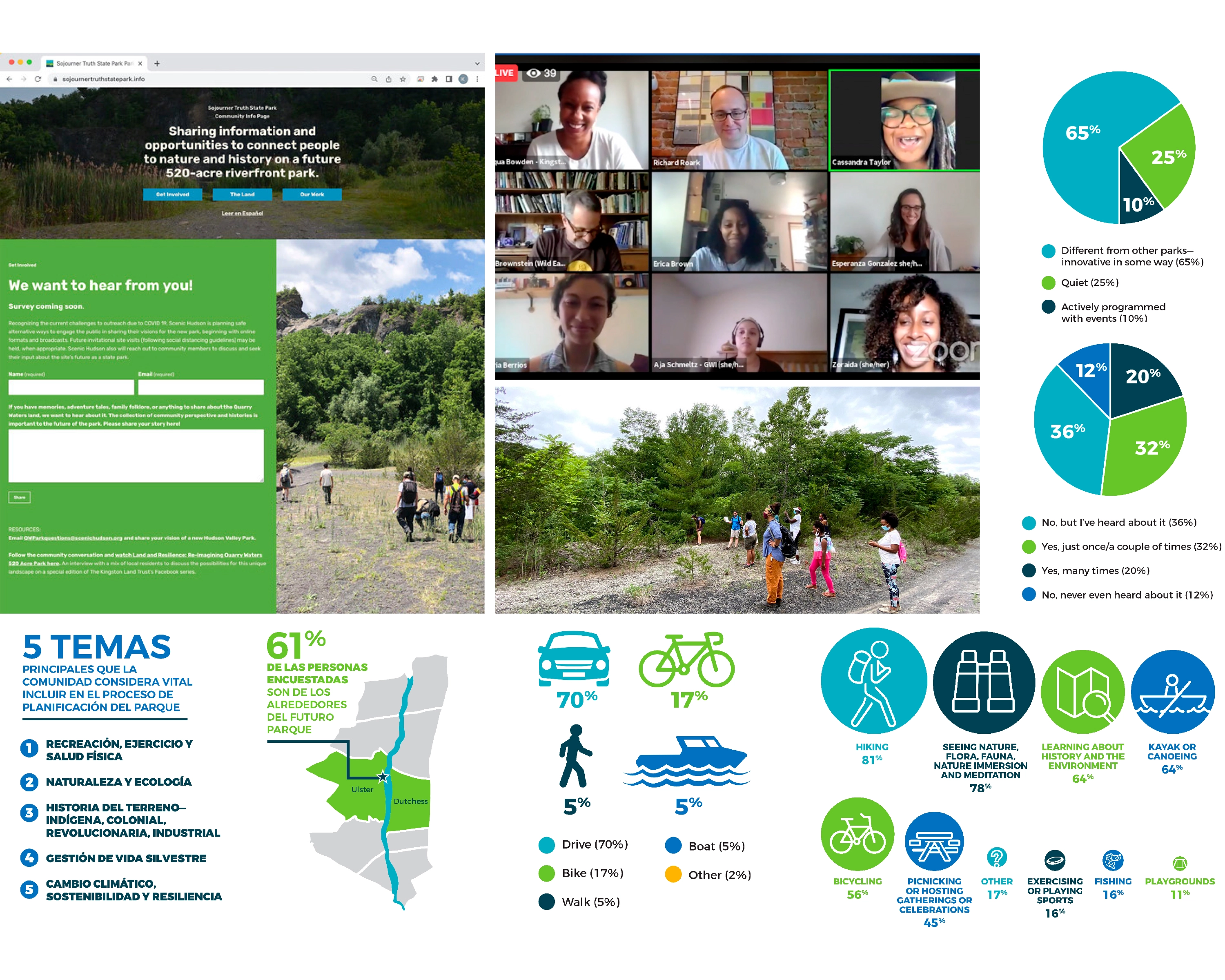
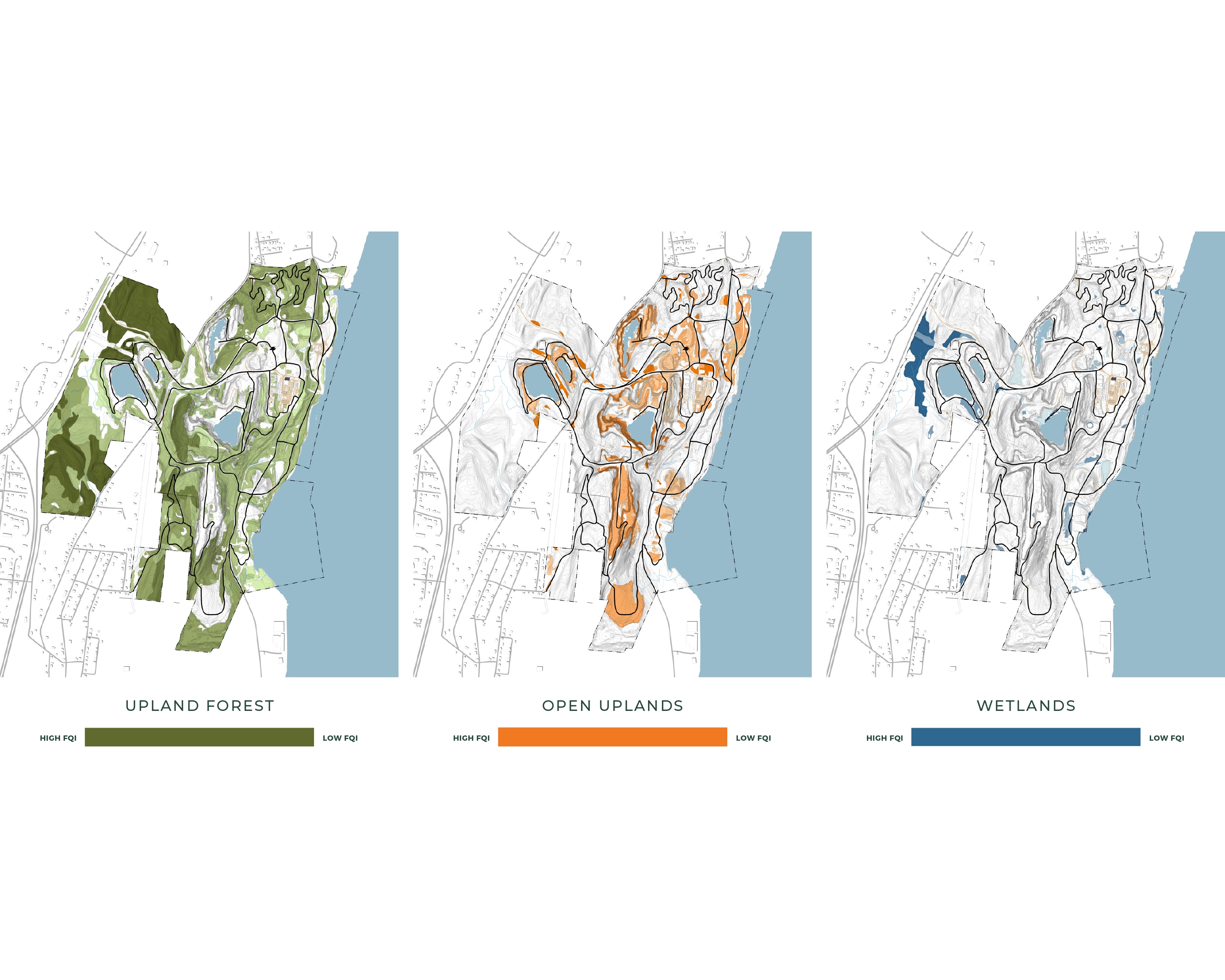
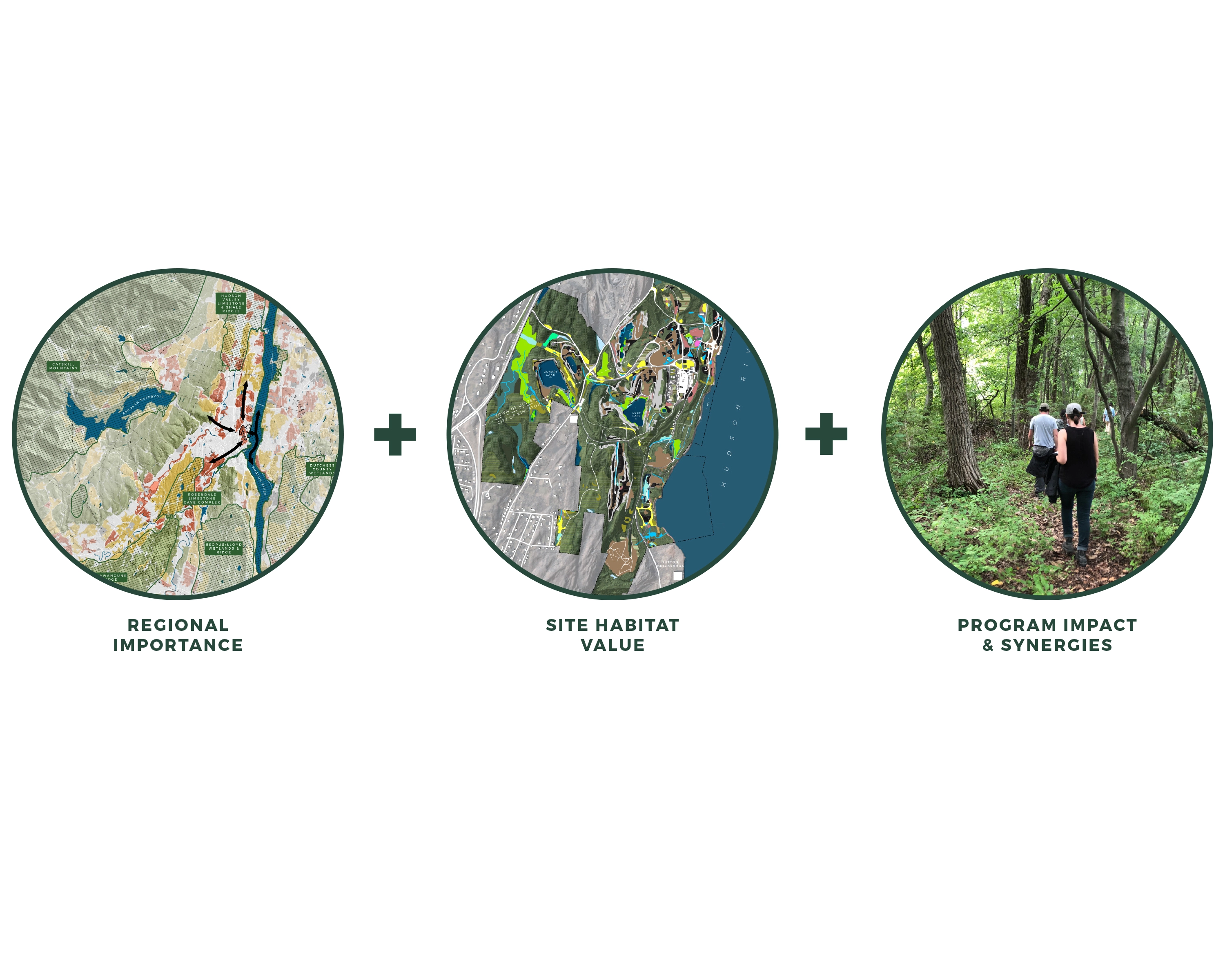
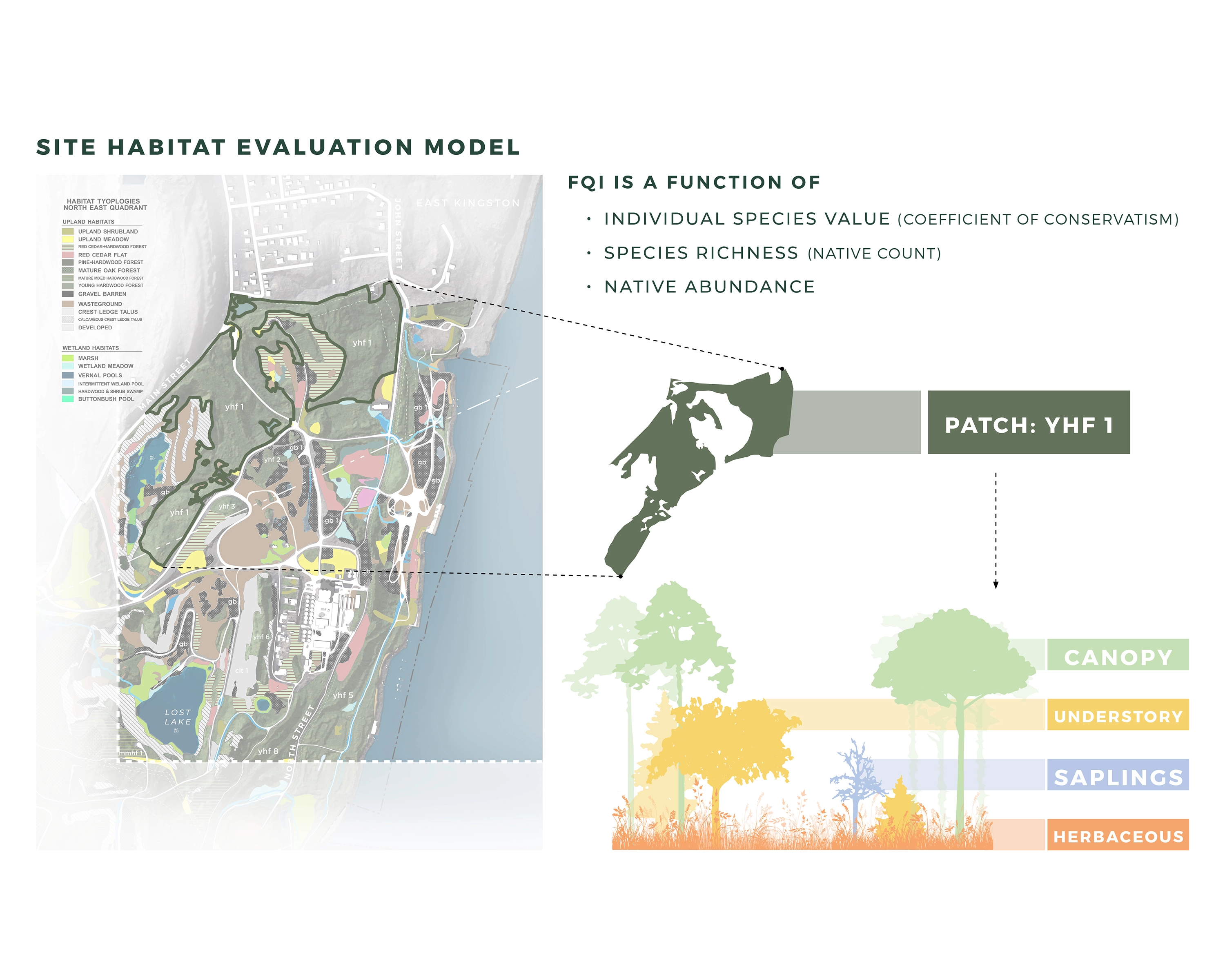
Analysis and Planning Effort: The Sojourner Truth State Park Framework Plan was developed according to a comprehensive site inventory and analysis process. This included cultural heritage research, historic structure assessment, site modeling, context mapping, and a rapid ecological assessment (REA), followed by an eight-month natural resources inventory and habitat value assessment. The planning process involved robust engagement with community members, partners, local nonprofits, institutions, indigenous representatives, and government leaders through interviews, site walks, and online events. This multifaceted approach ensured a thorough analysis and planning effort that underpins the framework plan.
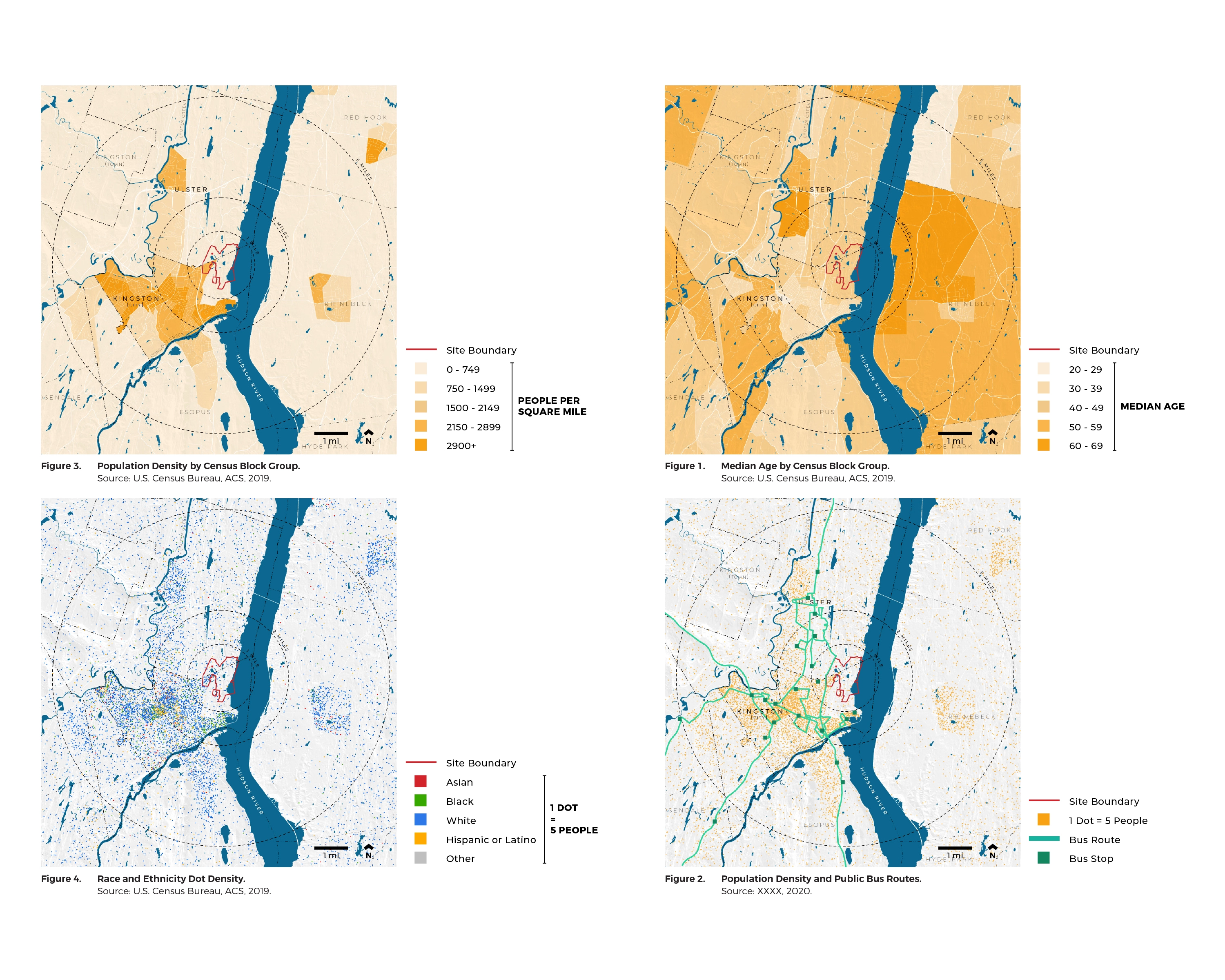
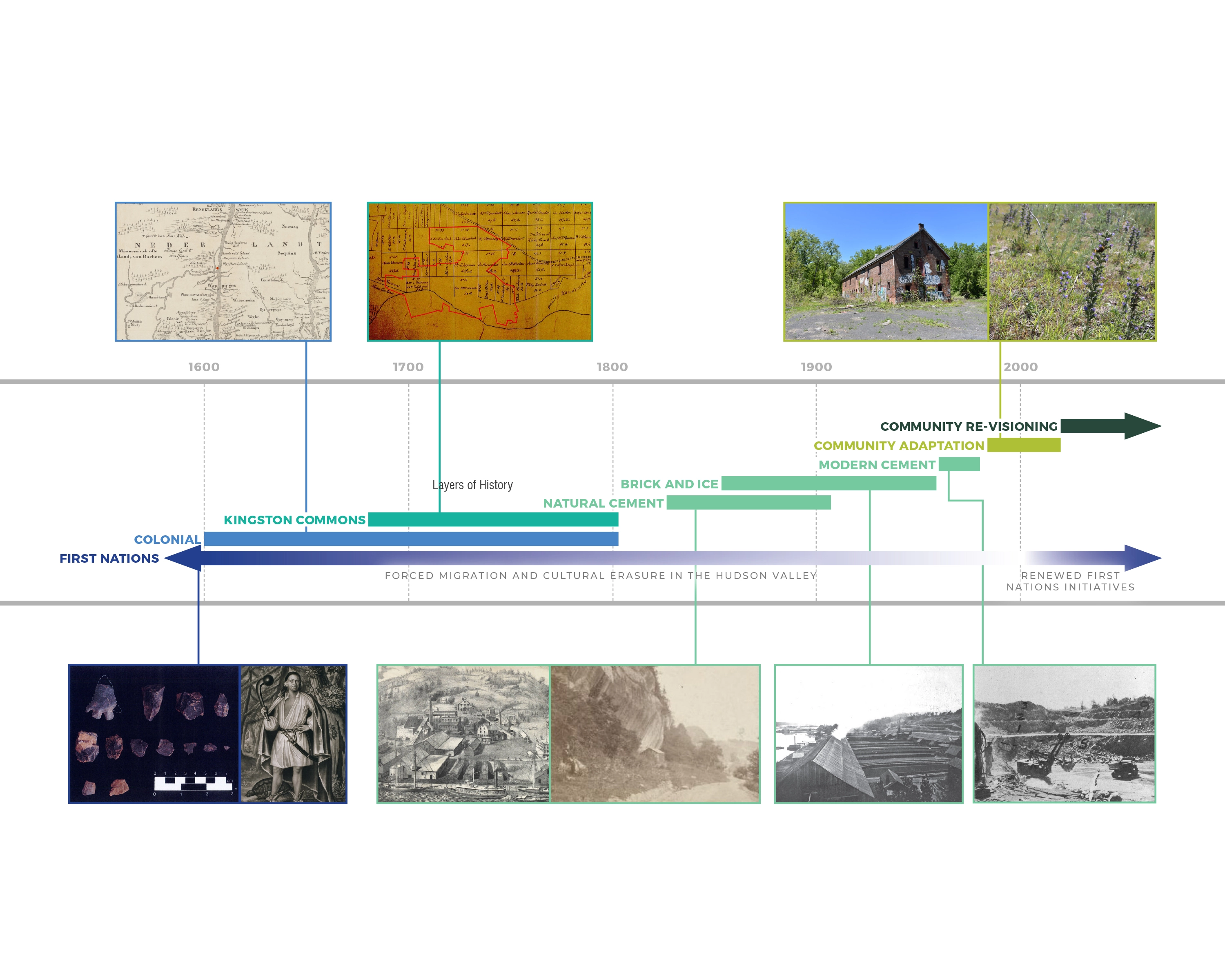
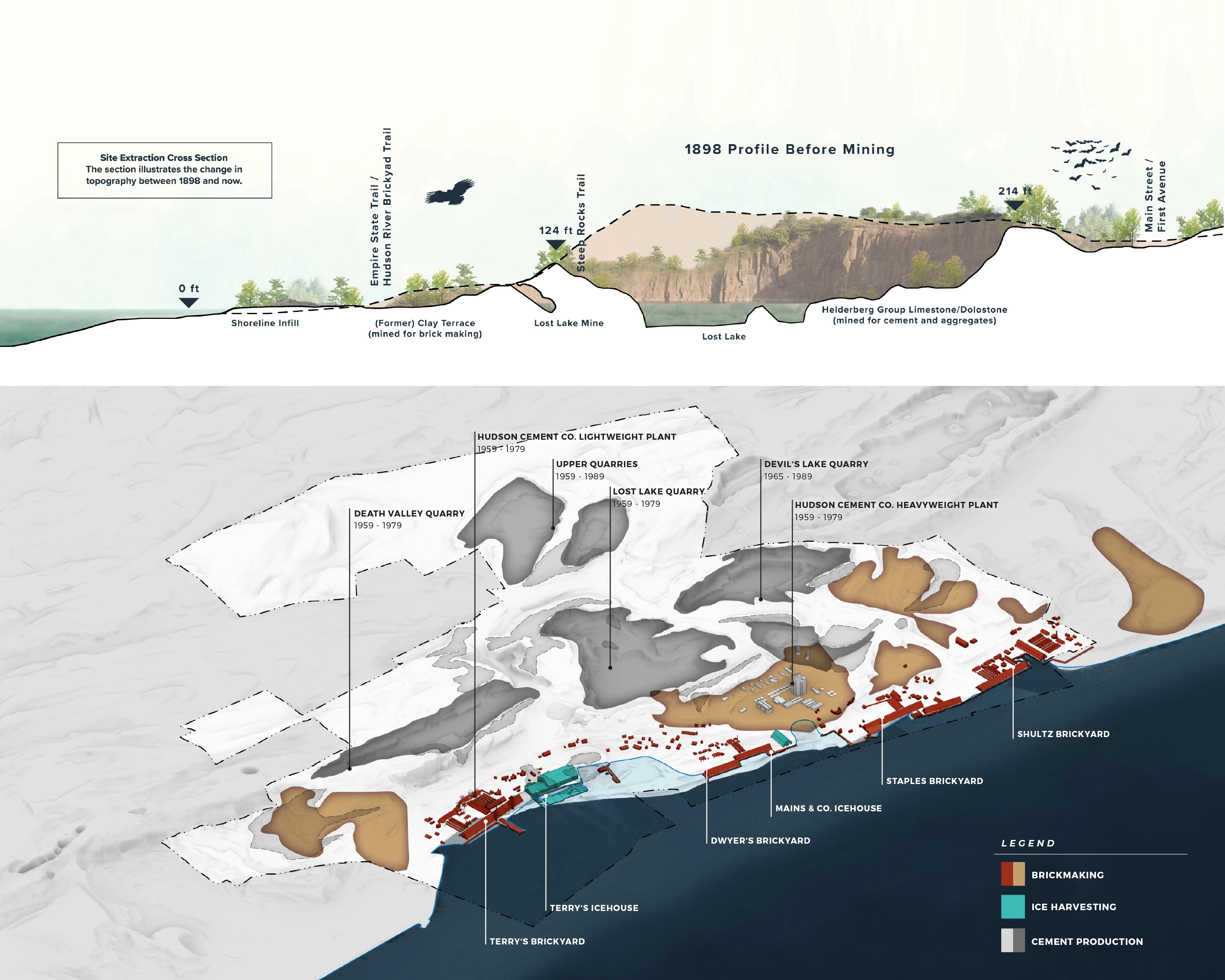
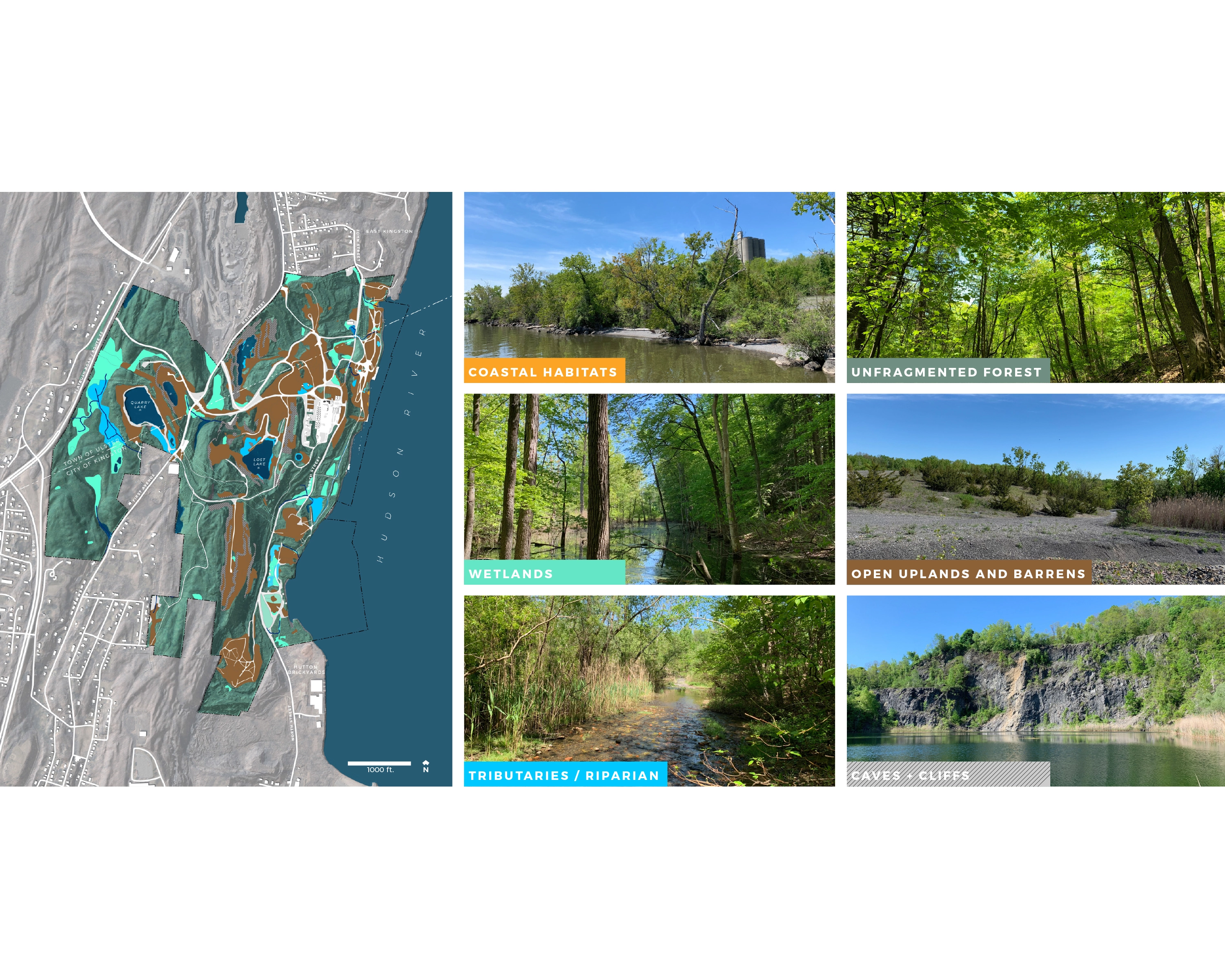
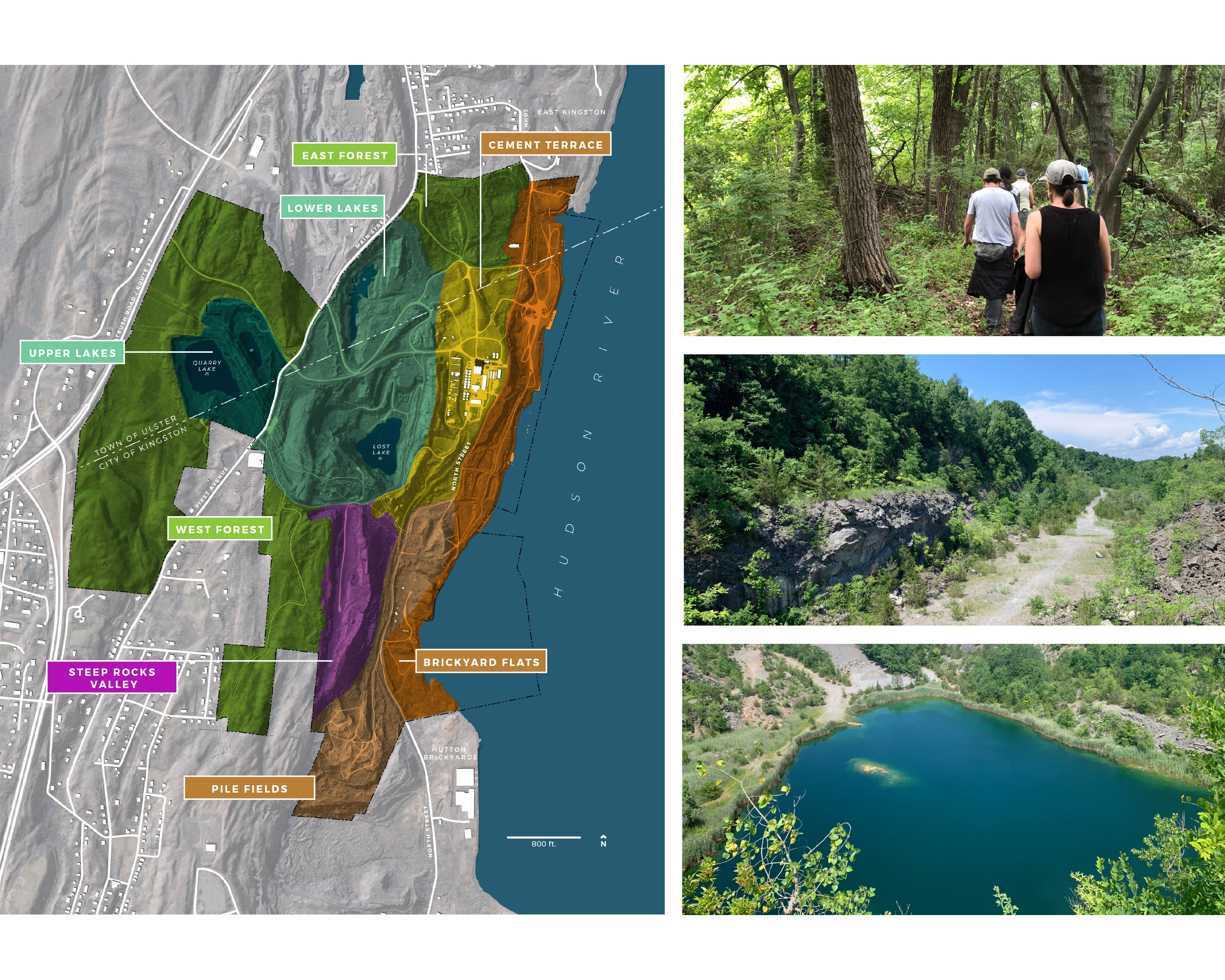
Context: Situated on 520-acres of abandoned quarry land in the City of Kingston and adjacent to the Town of Ulster, the site includes diverse natural features such as woodlands, wetlands, quarry lakes, and Hudson River waterfront. The area's history spans from its pre-industrial home to the Esopus people and later as the "Kingston Commons," and through a century of extractive industry use and abandonment, led to its current state: part wild and heavily degraded. The plan is deeply informed by understanding local communities of the area including diverse Black and Hispanic communities.
Environmental Sensitivity and Sustainability: The Framework Plan focuses on ecological regeneration and creating a model for biodiversity recovery in post-industrial landscapes. It employs strategies for preservation, climate adaptive enhancement, and innovative re-wilding techniques, especially in areas with bare rubble soils. The plan’s ecological strategy is designed to enhance environmental sensitivity and sustainability, aligning with climate action commitments by focusing on the recovery of native habitats and biodiversity.
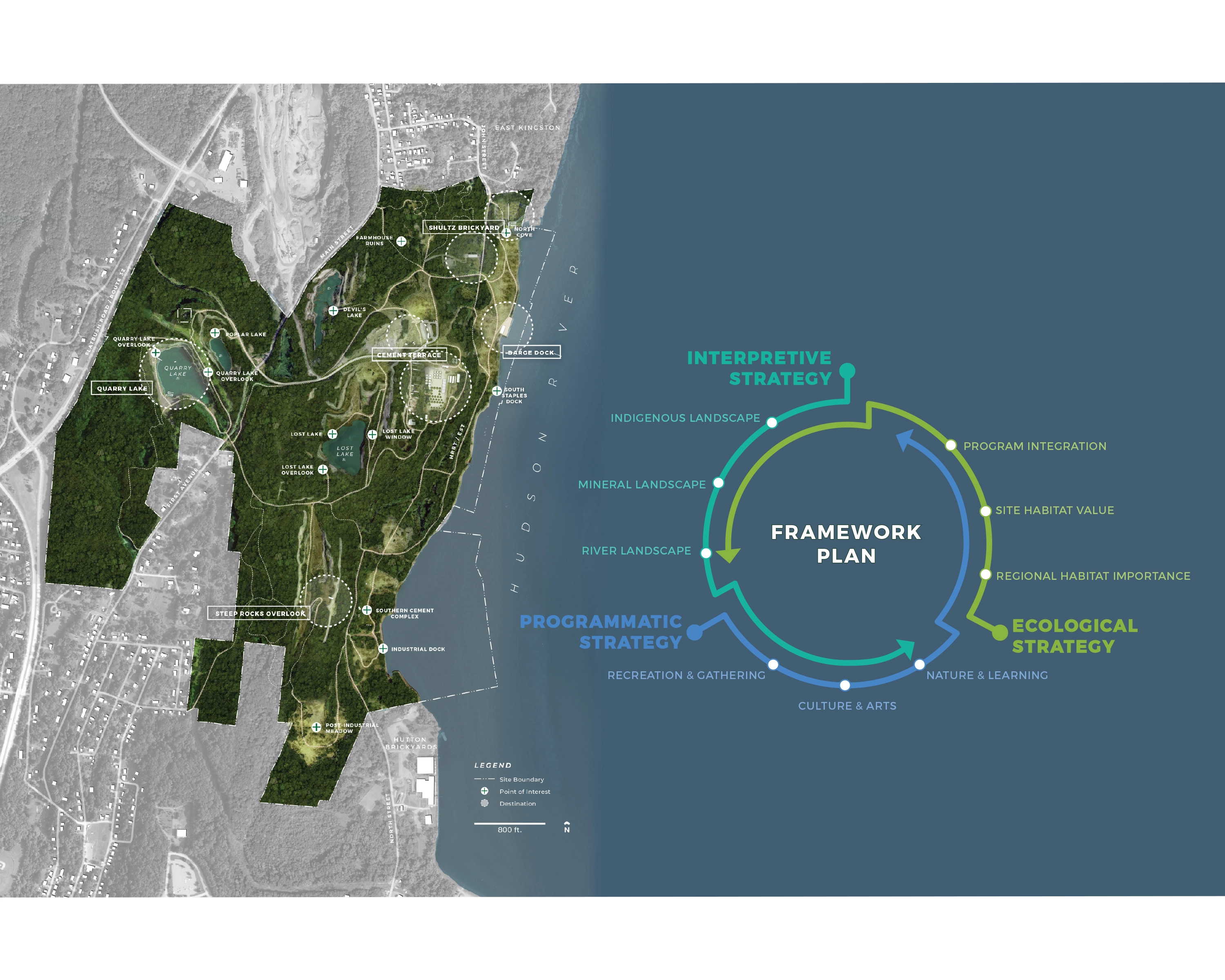
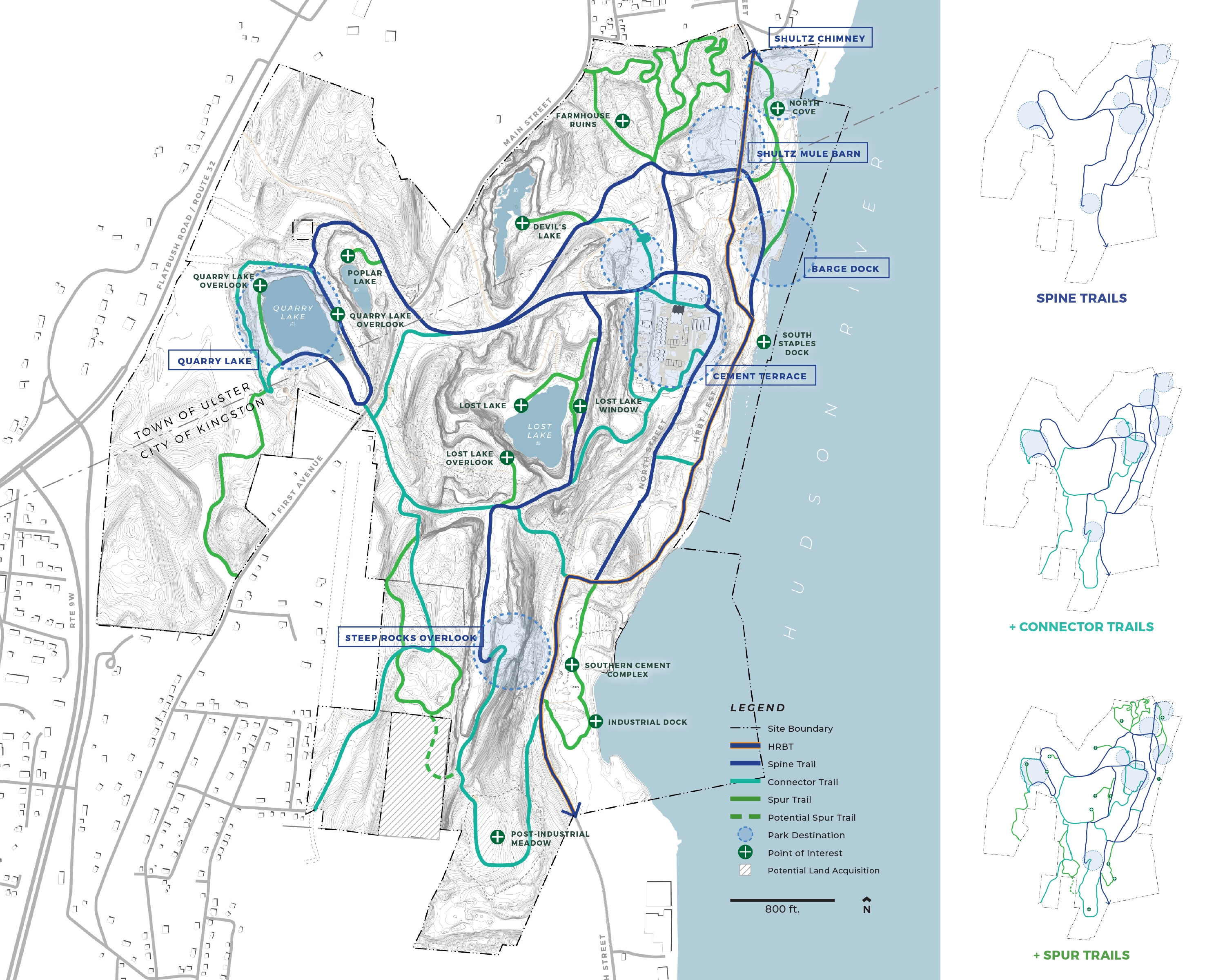
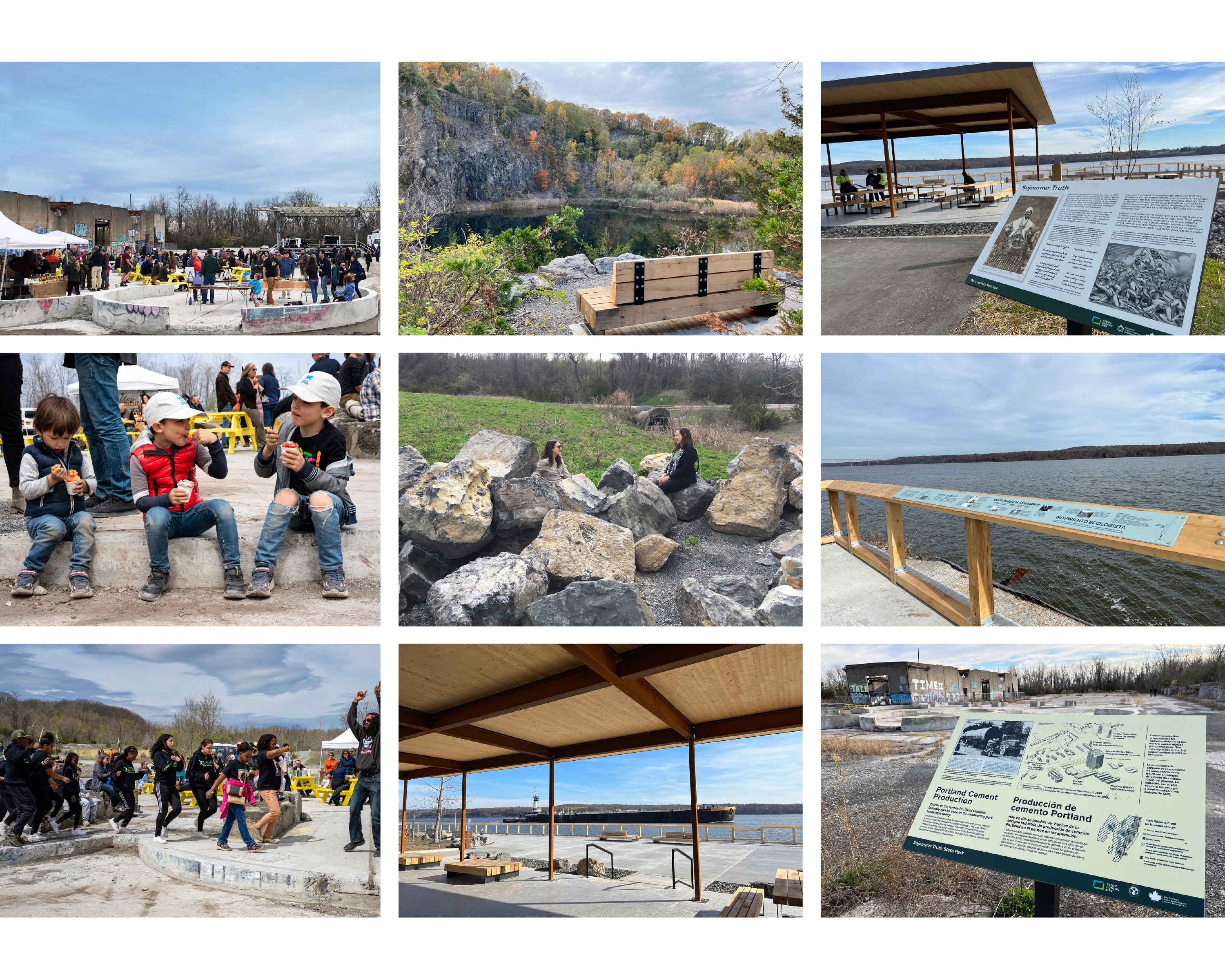
Implementation: The plan is organized into three adaptable and flexible strategies–Interpretive, Ecological, and Programmatic–to accommodate future development opportunities and funding scenarios. These strategies, combined with an engaged planning process and detailed analysis of existing structures, trails, and natural resources, increase the likelihood of successful implementation. In 2022 New York State adopted the land as its first state park since 2019. The first project proposed in the Framework plan completed construction in 2023. The inclusion of cost analyses for various park destinations further aids decision-making processes, demonstrating a pragmatic approach to realizing the vision for the park.
Value: By transforming a former extractive landscape into a space of ecological and social revitalization, the Sojourner Truth State Park Framework Plan offers significant value as a model of engagement and novel programming. It provides a real-world model for ecological recovery and sustainable park design that serves diverse community needs, enhancing local economies and contributing to the well-being of the public. As a tool for design, it illustrates a flexible framework process relying on a light and nurturing hand to restoring biodiversity to degraded lands.
-
- Richard S. Roark, RLA, ASLA, LEED / SITES AP - Lead Partner
- Marni Burns, RLA, ASLA - Partner
- Nate Wooten, RLA, ASLA, RA, AIA - Lead Designer
- Heather Blaikie, ASLA - Landscape Architect, Scenic Hudson
- Sarah Pate - Designer
- Kate Lawler - Visual Communications and Signage Design
- eDesign Dynamics - Habitat Assessment, Stormwater, and Ecological Design
- Hudsonia - Habitat Assessment
- PennPraxis - Heritage Consultant
- Matthew Baird Architects - Architect
- Barretto Bay Strategies - Community Engagement and Economic Consultant
- McLaren Engineering Group - Structural and Marine Engineering, and Permitting
- Rave Consultants - Cost Consultant
Advertisement
Related Awards
Award of Excellence, Analysis & Planning
H2Oquirrh: Regional Water Reform for a Resilient Salt Lake Valley
Location: Salt Lake City, UT
Firm: Design Workshop
Client: Wasatch Front Regional Council, Salt Lake County
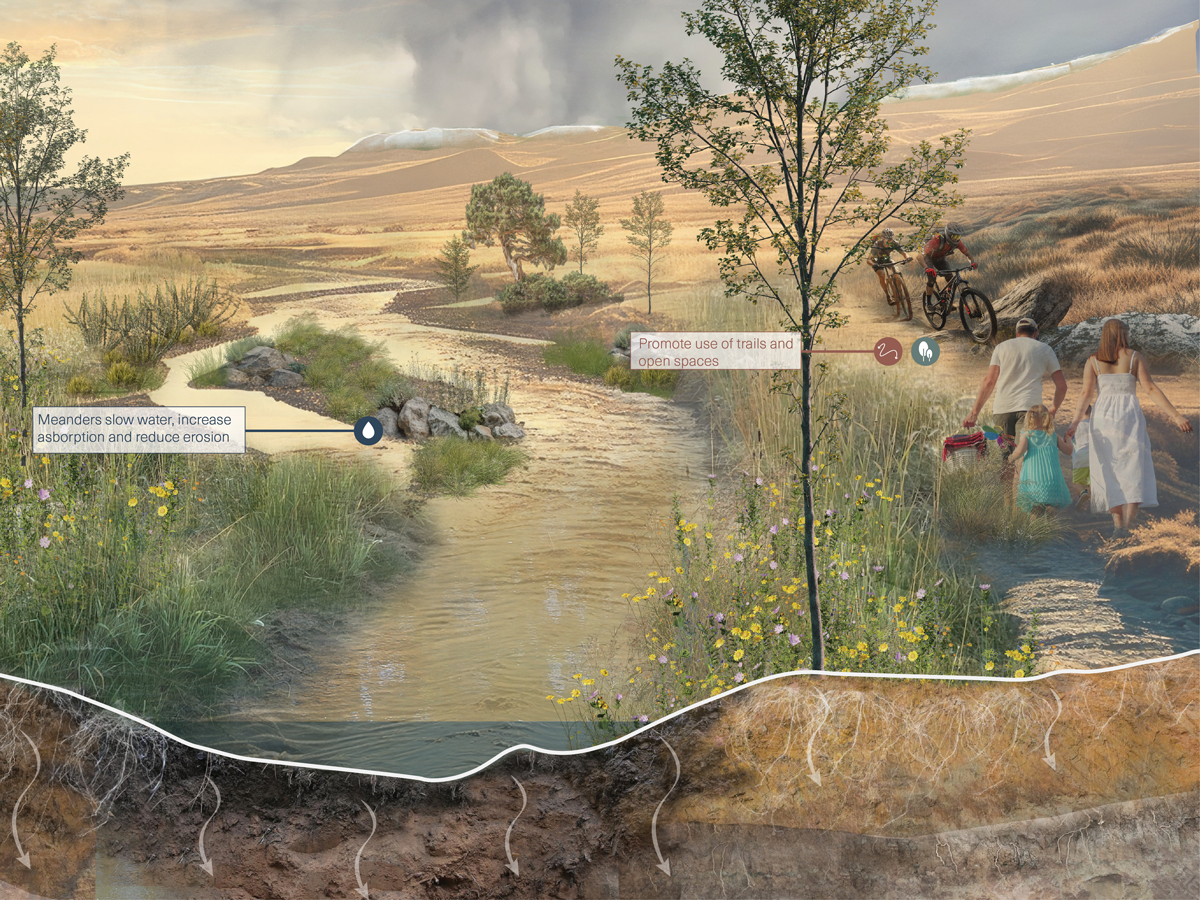
Water flowing from the Oquirrh Mountains is a critical contributor to the Great Salt Lake. Severe drought and human-caused decline threaten the lake’s viability, with cascading impacts on ecosystems and public health. This regional collaboration of seven jurisdictions, the H2Oquirrh Vision Plan, undertakes a large systems analysis of hydrologic cycles, land cover, and land-use decisions to identify site-specific interventions across nine creeks and washes. Led by landscape architects and water resource engineers, the study advances a deeper understanding of localized drivers of water loss and proposes innovative solutions through integrated landscape infrastructure design and policy.
-listing-img.webp?language=en-US)
Related Articles
ASLA Fund
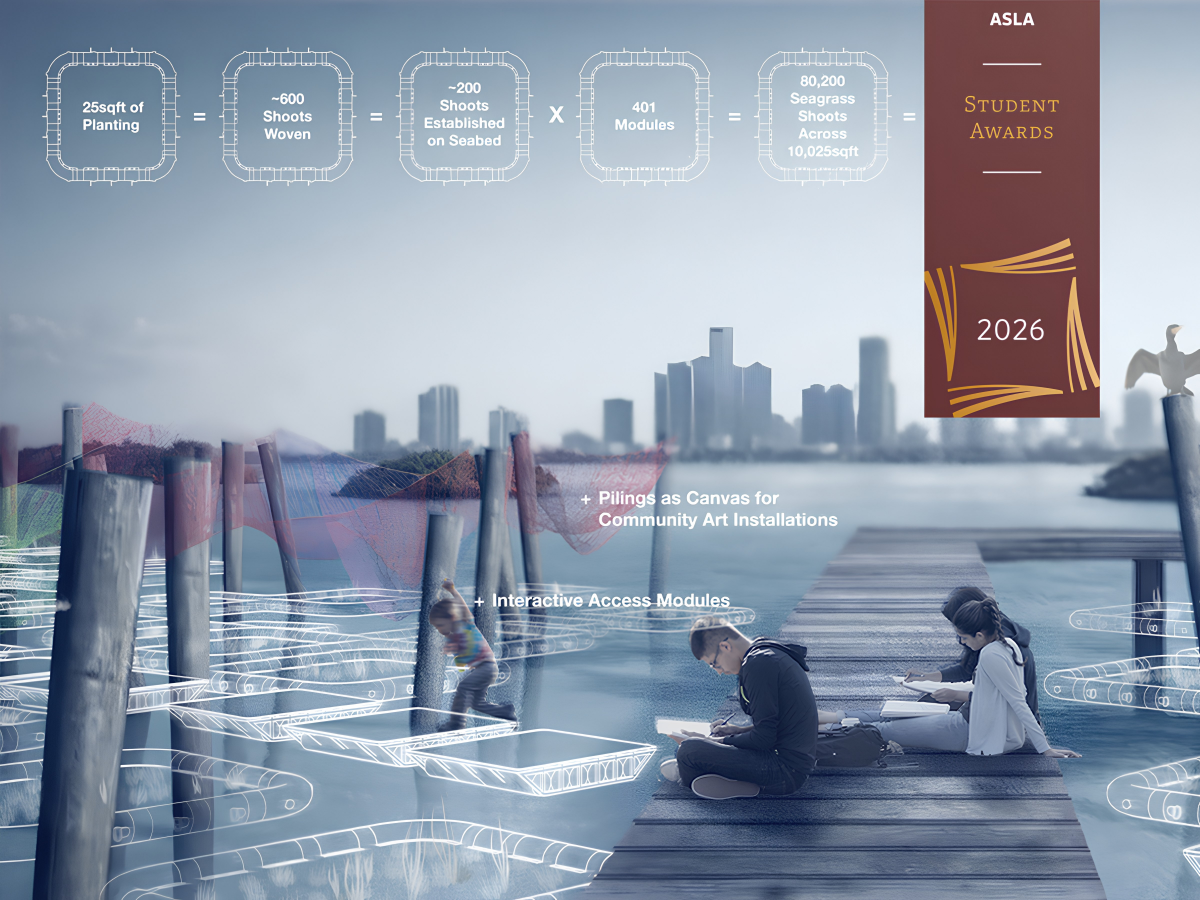
American Society of Landscape Architects Announces its 2026 Student Awards
39 Student Award winners elevate the future of the landscape architecture profession
Aug 24 2026