

.webp?language=en-US)
.webp?language=en-US)
Advertisement
2017 ASLA Student Awards
Explore:
General Design Category
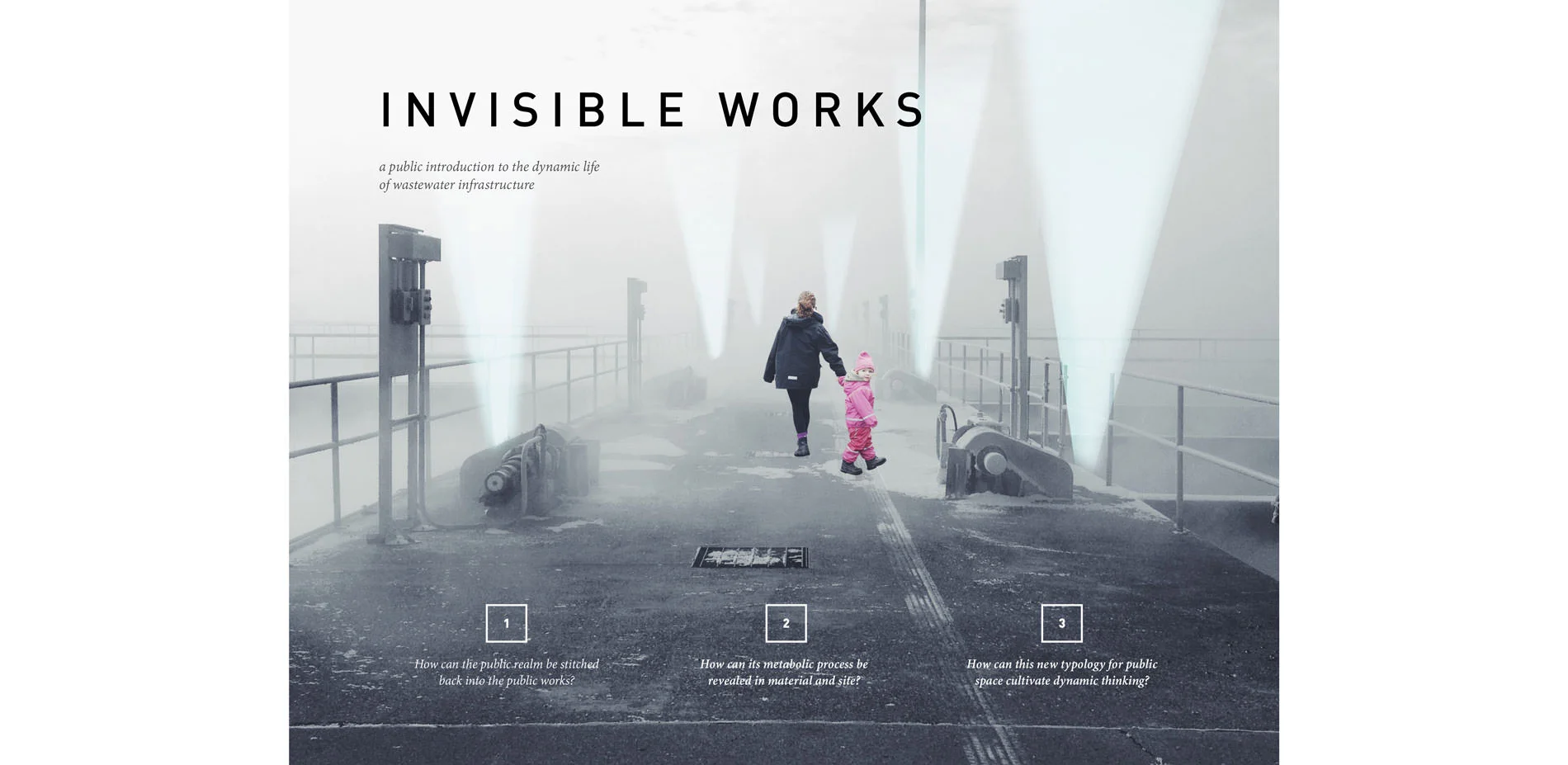
Invisible Works: A public introduction to the dynamic life of wastewater treatment
Though easily forgotten and often misunderstood, the infrastructures of wastewater treatment are inextricably linked with the pulse of our modern cities. Invisible Works is a public introduction to the dynamic life of wastewater treatment in St. Paul, Minnesota. It is a chance for people to engage in the active nature of treatment and simultaneously uncover its mysteries through experience. The intent is to transform the wastewater treatment plant from a marginalized system into a place that all can enjoy, acknowledging its importance as part of the public realm.
Three questions drive the design:
- How can the public realm be stitched back into this public works?
- How can the metabolic process of wastewater treatment be revealed in material and site scales?
- How can this new typology for public space cultivate dynamic thinking?
This project is worthy of consideration because of its potential to expand the role that landscape architects play in celebrating and exploring the hybrid systems that support us, and in evolving the scope of the profession.
General Design
Honor Awards
Weaving the Waterfront
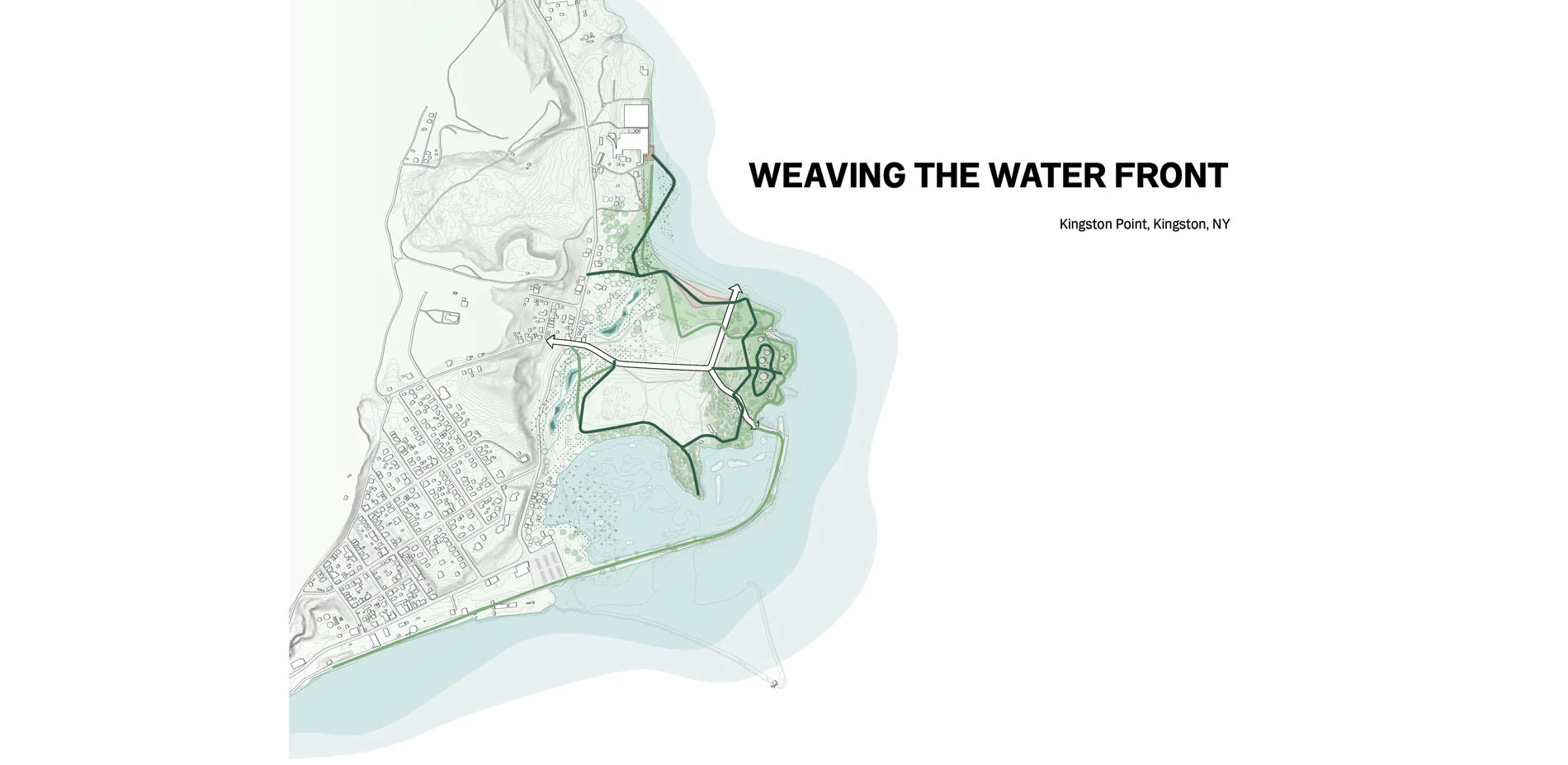
For over four century, waterfront of Kingston Point have experienced vicissitude of both nature and culture providing spectacular beauty, rich history, and ecological resources. Today, however, these values are threatened by changing climate and will end up in decrement and fragmentation. It is the major task to make the waterfront vibrant and active through the next hundred years and beyond for generations.
The Weaving the Waterfront proposal revitalizes a 38.3-acre site along the K
Milan Traversing
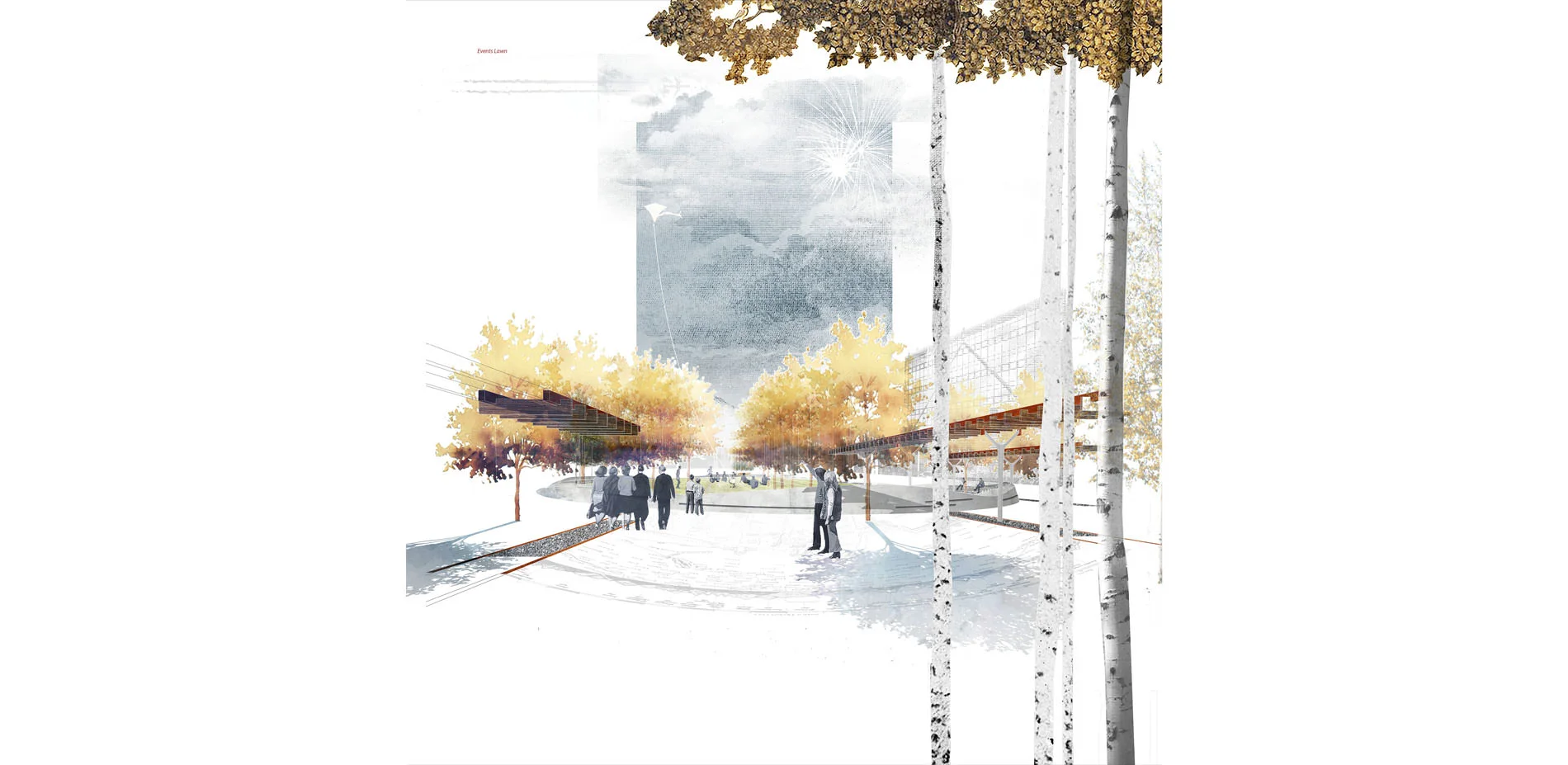
As the city of Milan developed over centuries, it is built with the materials transported through the canal in ancient times and railway in the industrial age. As the time goes by, the infrastructure will not function as transportation anymore, leaving the site blank in the dense urban area, fenced out from the urban context.
The design for the new urban park proposed to integrate the regional landscapes of Milan along the original infrastructure as a sequence into the park, orienting
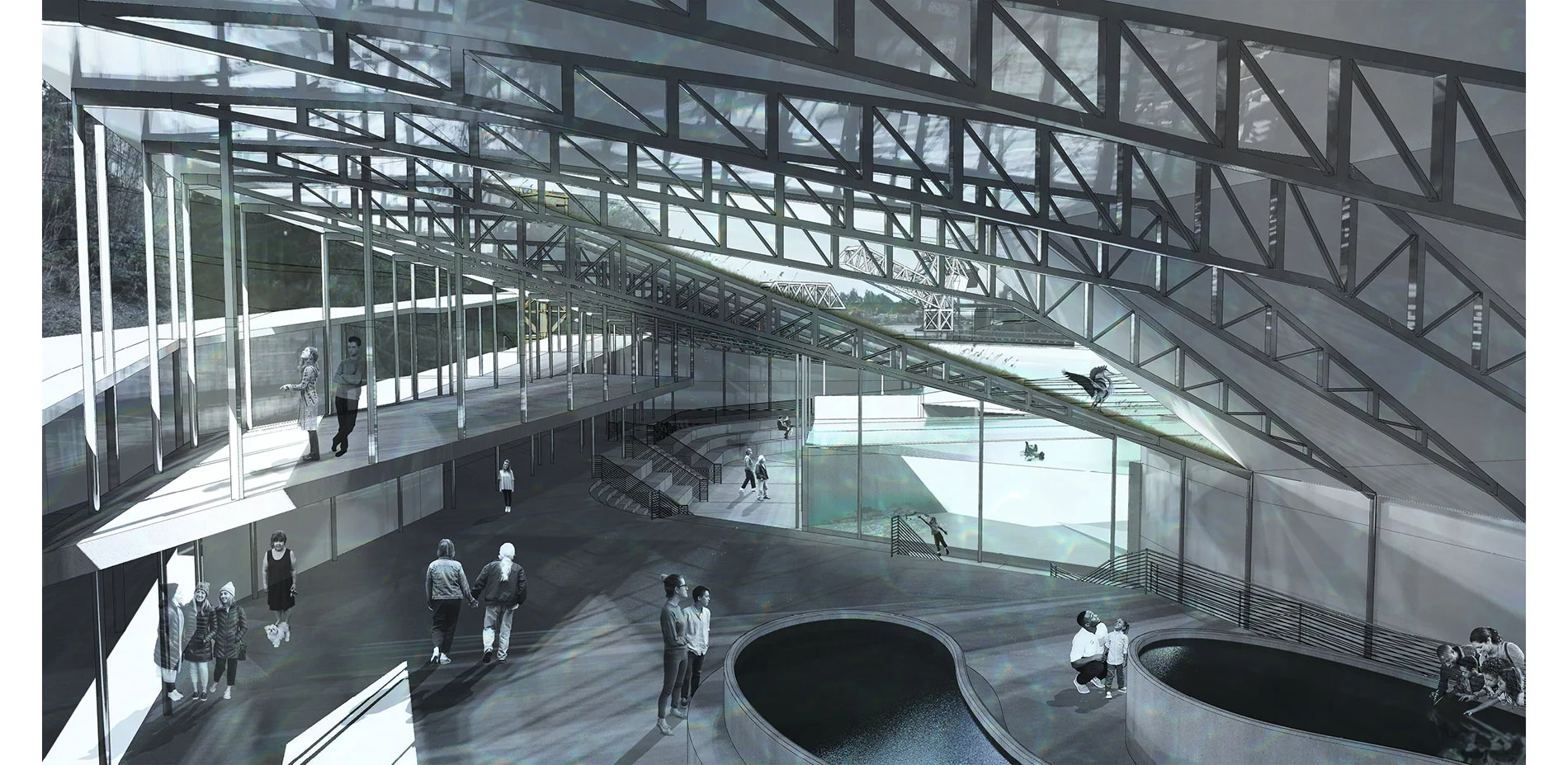
Concrete Nurse Logs: Spawning Biodiversity from Ballard's Century-Old Locks
This project embraces the task of biodiversity conservation within the realm of design. In the midst of an anthropogenic mass extinction on Earth—the most menacing of the current environmental crises—it advocates for the prioritization of biodiversity conservation in any design project. A bold articulation of the attitude that has engendered mass extinction, the U.S. Army Corps of Engineers-operated Hiram M. Chittenden Locks is emblematic of its early twentieth century origins for its rigid h
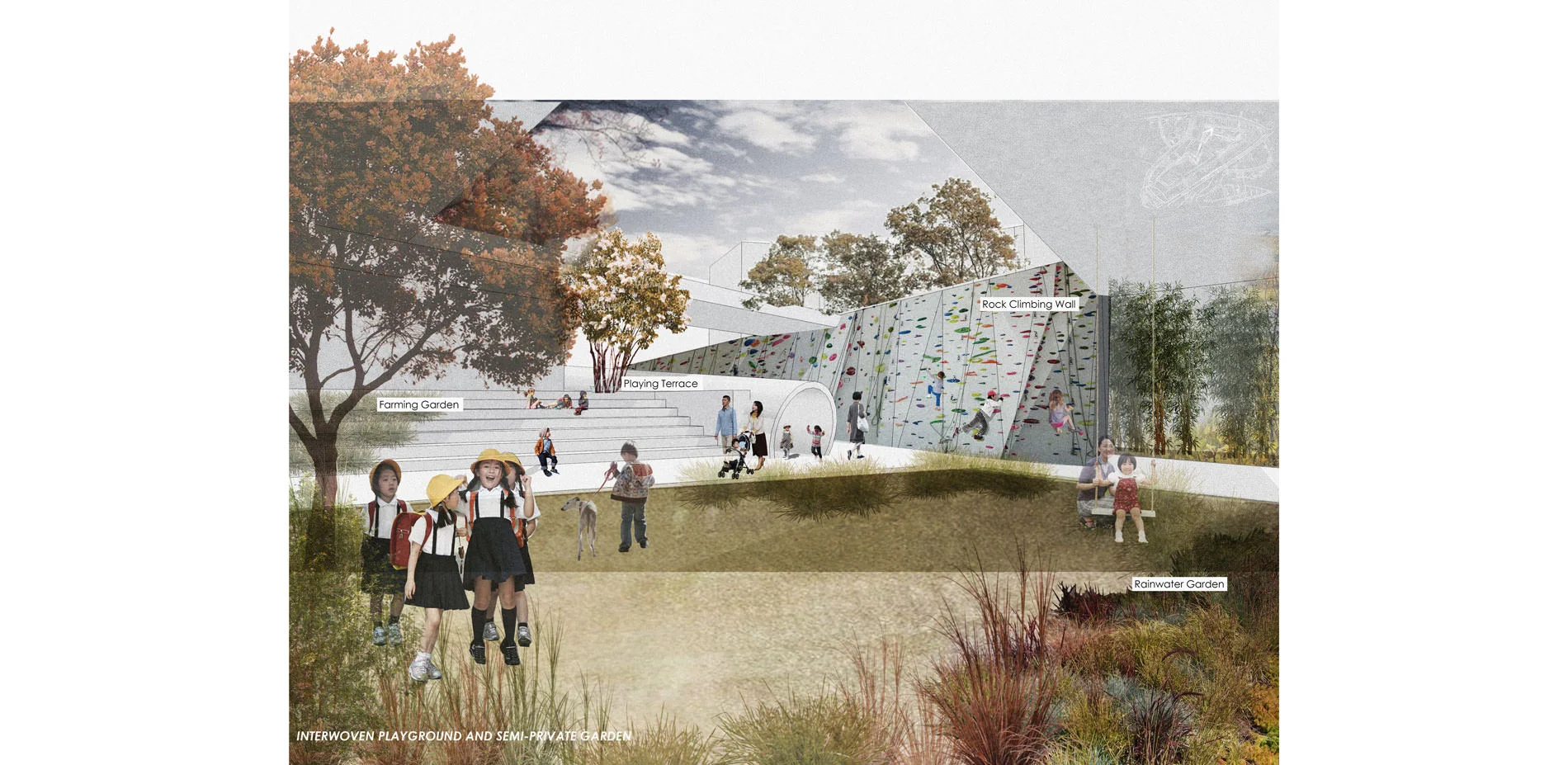
Creating Dynamic Hybrid: Towards Landscape Innovation in a Smart City
Kashiwa-no-ha is a national representative smart city in Japan. The construction of core area with a smart grid system has been completed, and the second stage including Smart City Innovation Campus with a retention pond needs to be developed now. Facing the request of limited city space to meet needs of diversified people in smart city community, how to make landscape “smarter”, more sustainable, more flexible and be one functional part of smart city is a big challenge. Concepts of “porosity

Create a Walkable History: Editing the Historical Percorsi of Pienza
Today, as we are operating place identity of small towns with cultural and historical heritages, the biggest challenge is not so much of preserving the old as about conserving the historical values and collective memories in a continuous transition from the past, the present, to the future. This project aims at providing a hermeneutic landscape approach in balancing the historical conservation, local public life and tourism development by editing a part of historical percorsi1 (local trails)
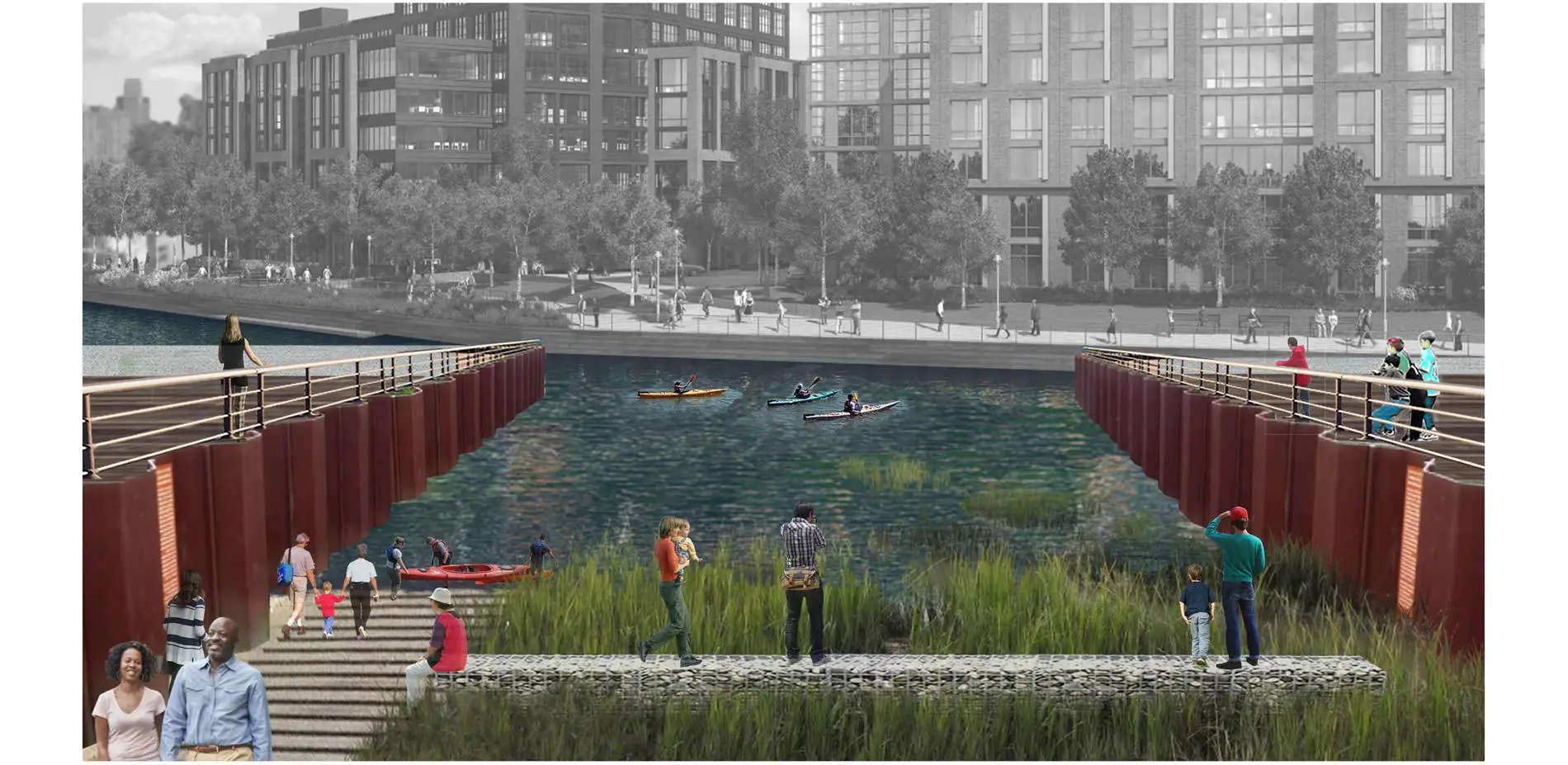
The Turning Point: A Focused Design Study for the Gowanus Canal in Brooklyn, NY
There is a street end abutting the Gowanus Canal in Brooklyn where the city dissolves into water. Asphalt cracks and gravel gives way to bricks and cobbles, which in turn surrender to sand, mud and the ever-lapping tide. Centuries ago, the Gowanus was a maze of brackish streams and wetlands, welcoming generations of Canarsee tribespeople, Dutch farmers, British merchants, and enterprising Brooklynites to stake their claim along its banks. Today, the canal is among the most polluted waterways
Advertisement
Residential Design Category
Honor Awards
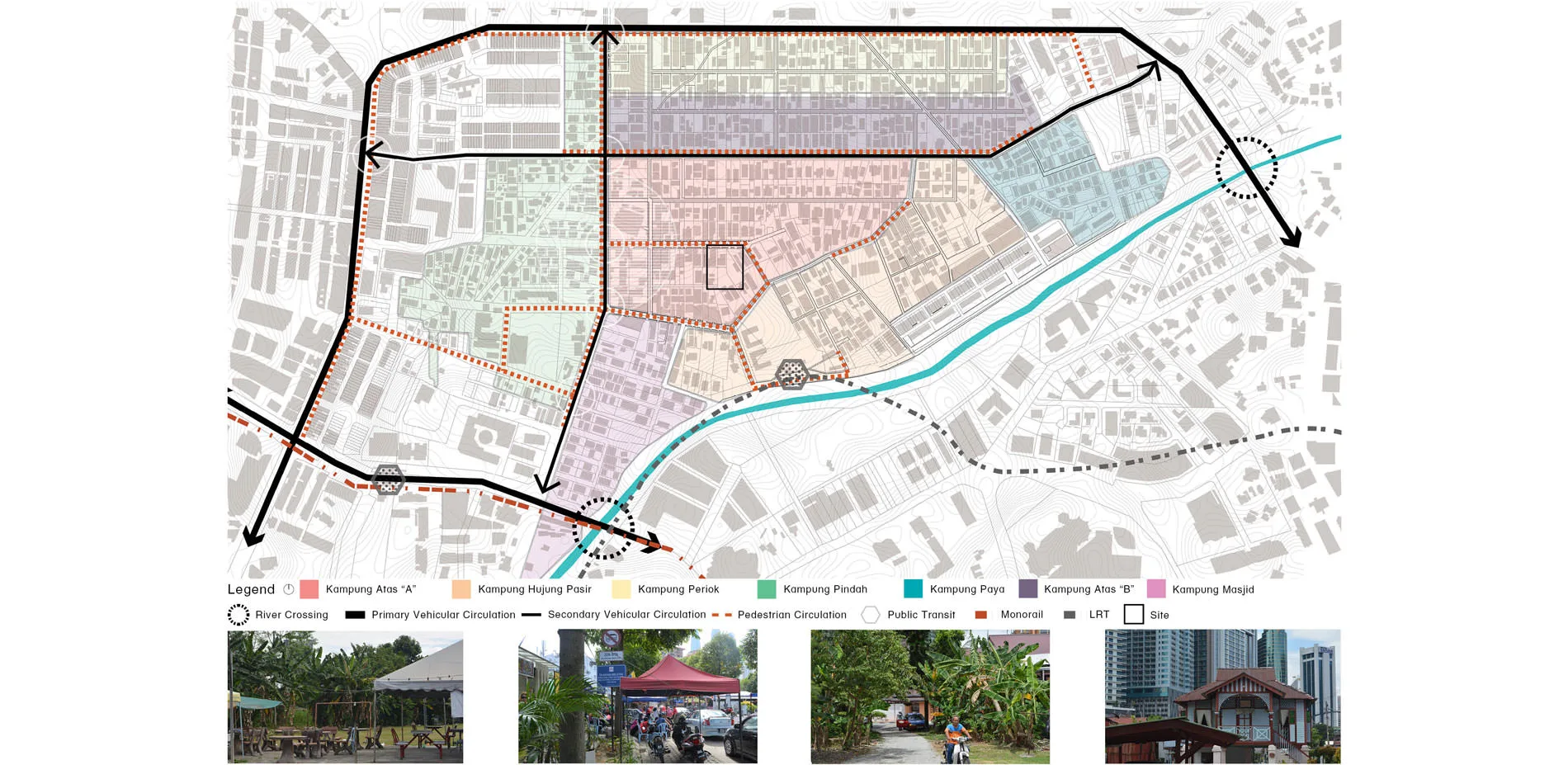
Micro-Infrastructure as Community Preservation: Kampung Baru
In the face of immense development in Kuala Lumpur, Kampung Baru stands as a last testament to the past historical and cultural heritage of the capital city. The project rebukes the proposed master plans completed and instead provides a new paradigm of micro-infrastructural development through which residential design and new forms of public space are championed. Working on a parcel level, property owners would be able to remain in the community they call home while also improving their lives
Analysis and Planning Category
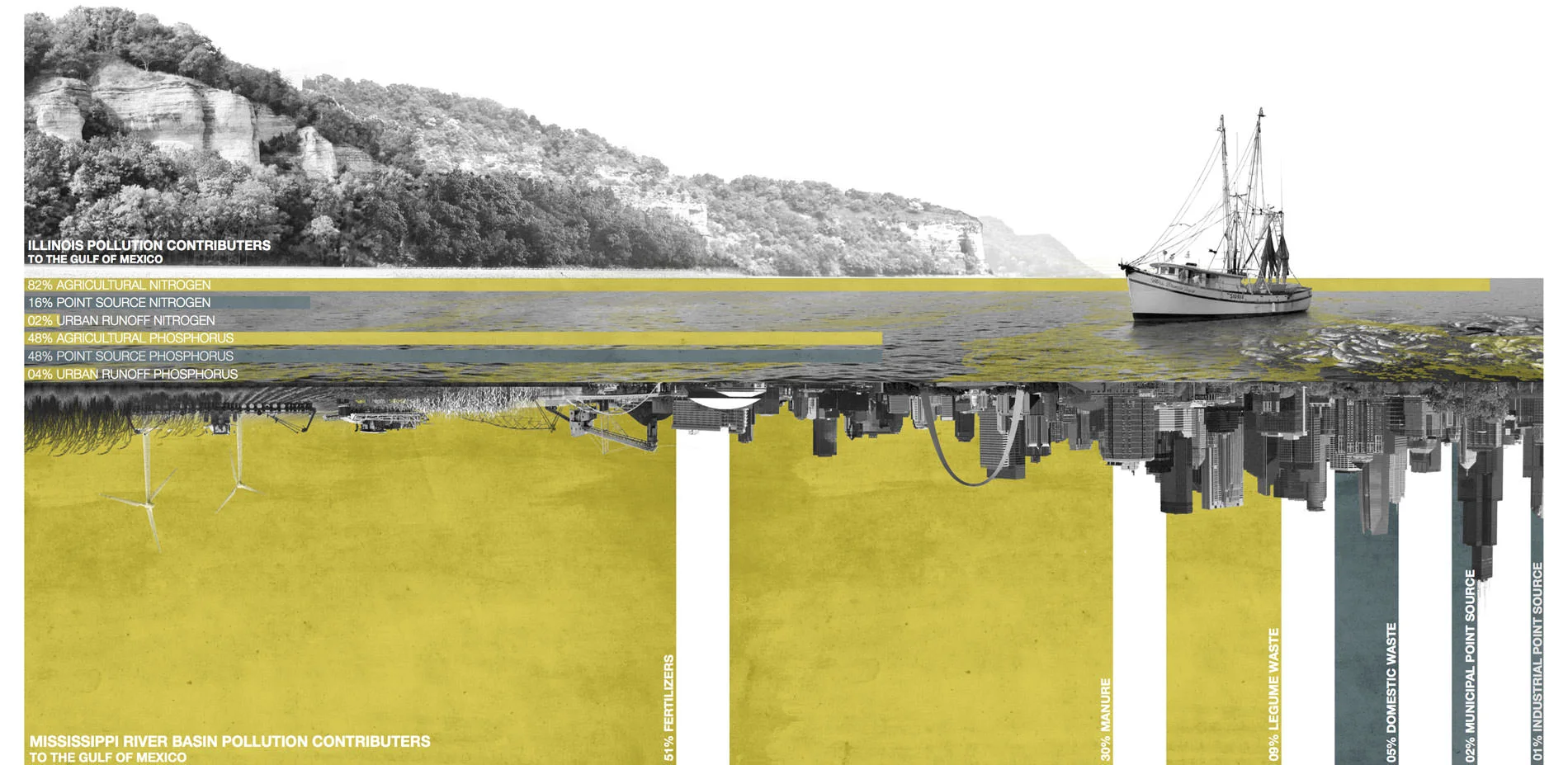
Water and the Agricultural Landscape of Illinois
Since the passing of the 1972 Clean Water Act, the United States has been fairly successful at reducing point source contaminant loads in our nation’s water resources. However, despite our relative success, progress needs to be made to ensure water quality. Non-point sources are generally unregulated and continue to adversely affect water quality efforts. Agricultural runoff accounts for the majority of non-point source discharges. Unfortunately, the fertilizers that usually ensure crop health ultimately place distress on aquatic systems. The state of Illinois is one of the leading contributors of fertilizer contaminant loads to the Mississippi River, and in turn the state has a tentative goal of reducing nitrogen and phosphorus loads by 45%. By framing agricultural strategies in the context of landscape architecture, the project aims to provide thoughtful solutions to agricultural issues while keeping the well being of farmers in mind. Instead of completely changing the science behind agricultural practices, the suggested series of interconnected projects offer complementary design strategies such as constructed wetlands to reduce the detrimental effects of nitrogen and phosphorus fertilizers.
Analysis and Planning
Honor Awards
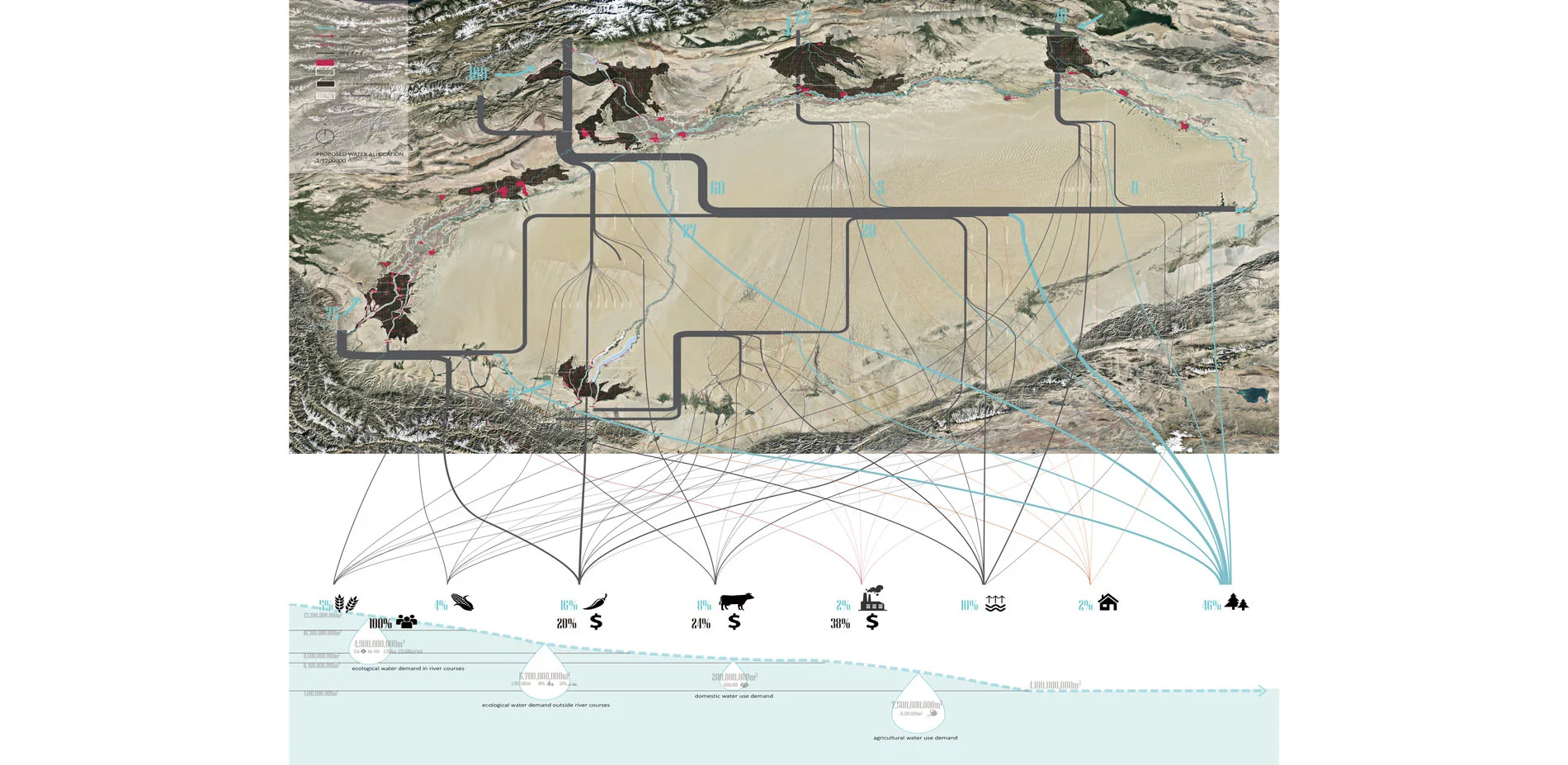
Desert River Water Conservation
The arid zones on the Earth cover 30% or more of the global land surface and support an ever-growing human population. People living there are always facing drought problems. Rivers in these zones often play a critical role in people’s life, landscape changes, ecological evolution and socio-economic development. Besides the global warming, many dry land rivers have already been strongly influenced by the accelerated expansion of human activities in arid regions with the increased population,
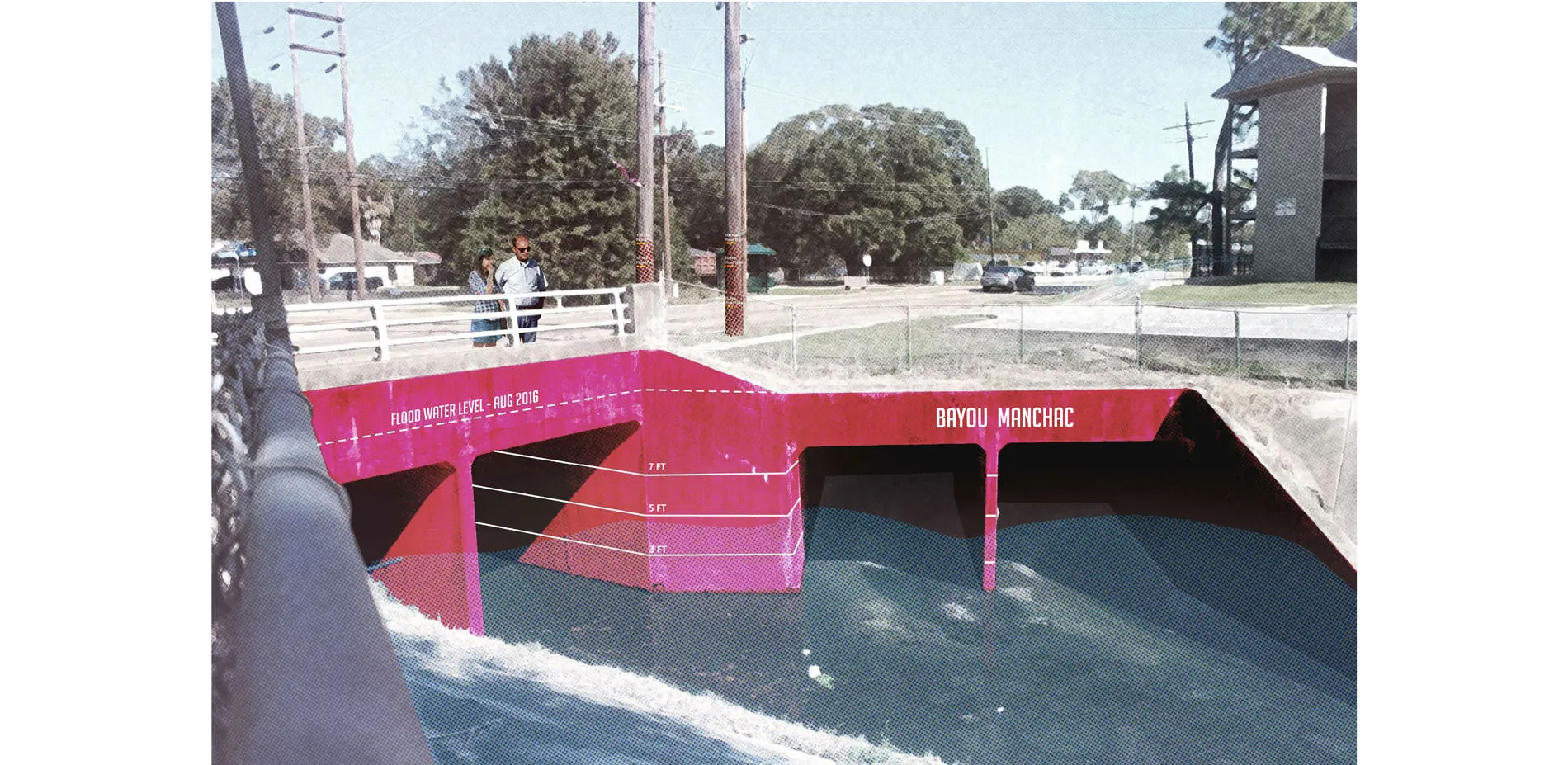
Disaster Autopsy Model
Water is the heart of Louisiana. Water is why Baton Rouge was founded. Water that moves, water that sits, water that rises, water that cleanses, and water that destroys. Canal water, ditch water, muddy water, spring water, crawfish water, dark water. The history of south Louisiana is a history of man learning to live with water and learning to shape water to our own means.
This project, spurred by the catastrophic flooding of August 2016, researches why Baton Rouge’s urban and suburb
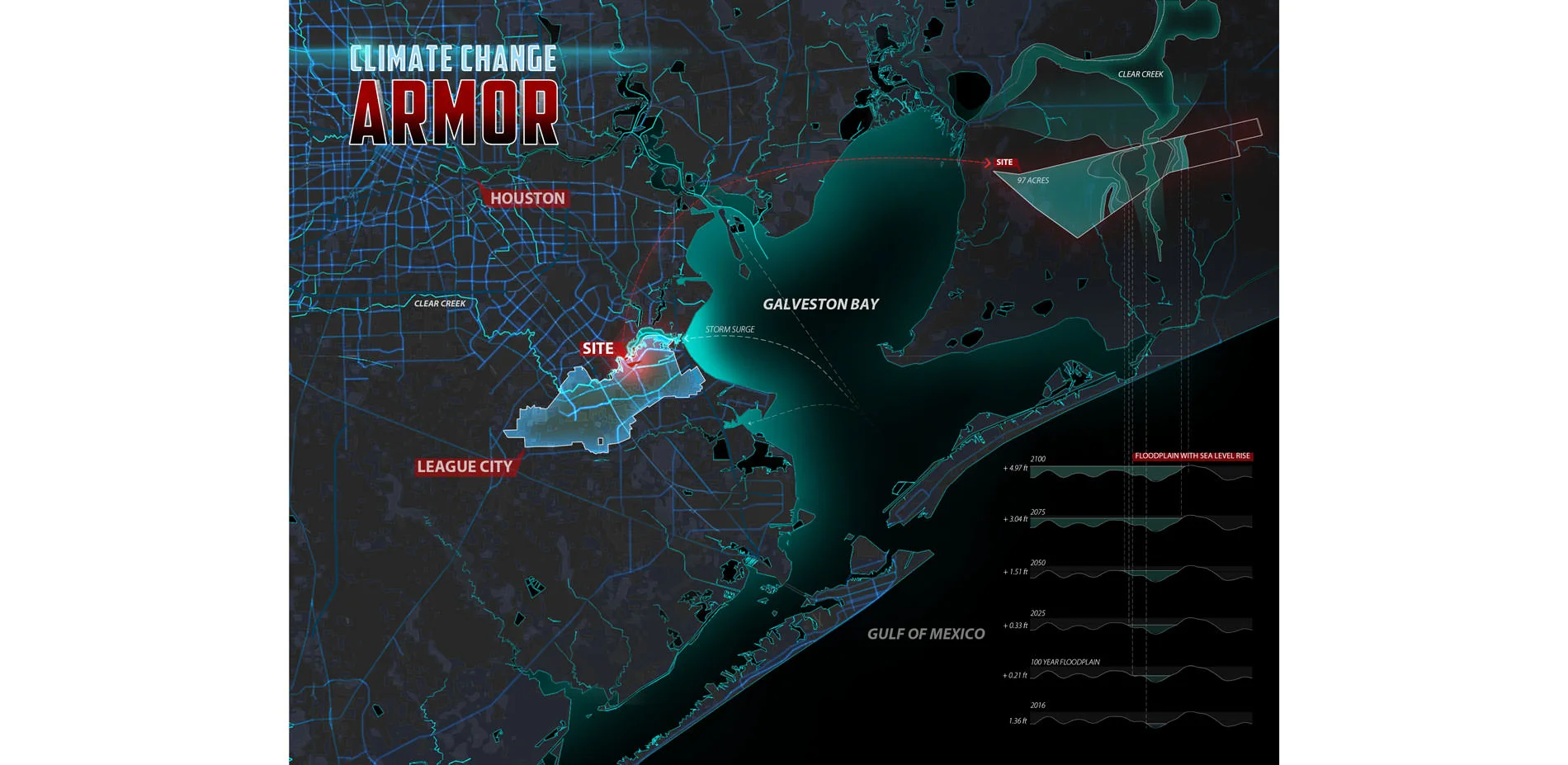
Climate Change Armor
Climate Change Armor is a collection of adaptive flood attenuation mechanisms for protecting newly designed communities from flood events and the eventual impacts of sea level rise. League City, TX is used as an application site. NOAA predicts that sea levels will increase and storm surge will become more frequent along the Texas coast. In the Gulf Coast, sea level projects to rise up to 6.29 feet by 2100. The Climate Change Armor Toolkit comprises both structural and non-structural mechanism
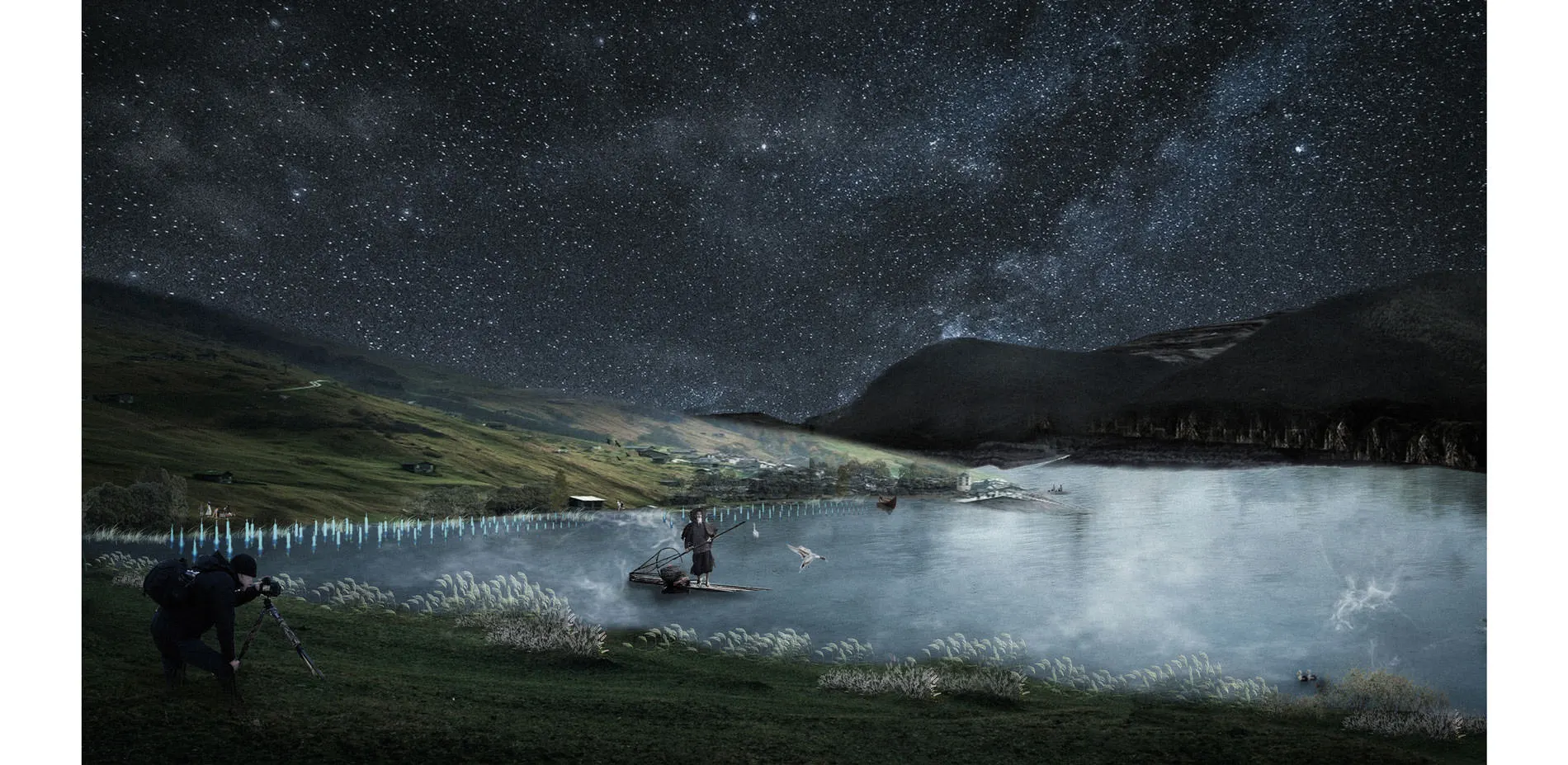
Reviving the 30 Meters
In 2010, after the completion of China’s Three Gorges Dam, the water level of upstream Yangtze River rose to 175 meters. The construction of the hydroelectric station has displaced over 1.24 million residents and led to immense ecological degradation. The seasonal hydrological regime creates a significant transitional area across a thirty-meter fluctuation from encompassing both human activities and ecological systems.
Using Yunyang City as a testing ground, this project confronts the
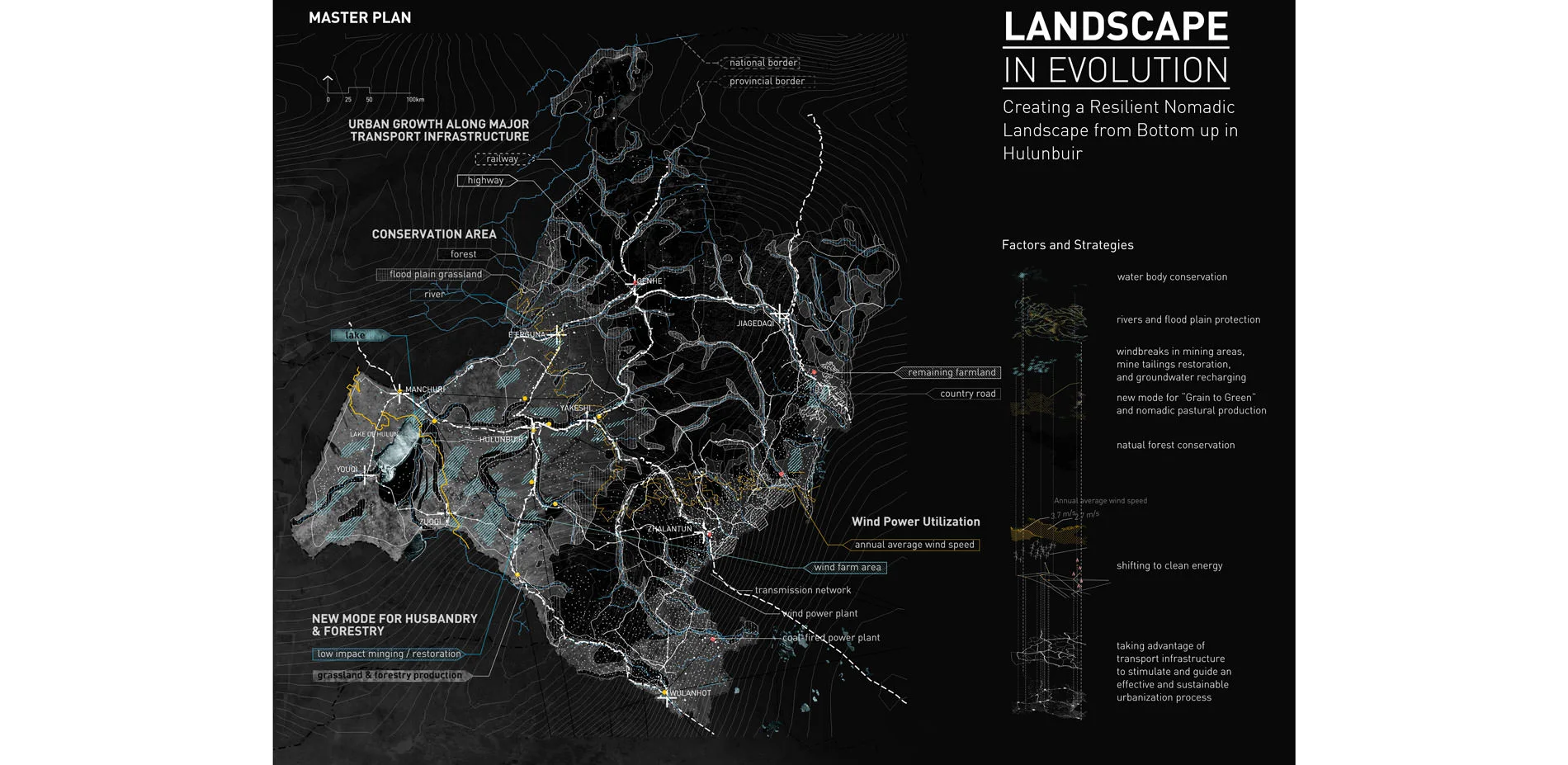
Landscape in Evolution: Creating a Resilient Nomadic Landscape from Bottom up in Hulunbuir
The study area is in Hulunbuir, Inner Mongolia, China, a region with extremely diversified forms of landscape and land uses. Based on analysis of dynamic and complex factors influencing the evolutionary process of the region, the landscape is considered and created as an agent-based self-organizing system from bottom up, which is resilient and adaptable to the environment and ever-changing in time. Rather than landscape patterns or configurations, the central focus of the design is the cooper
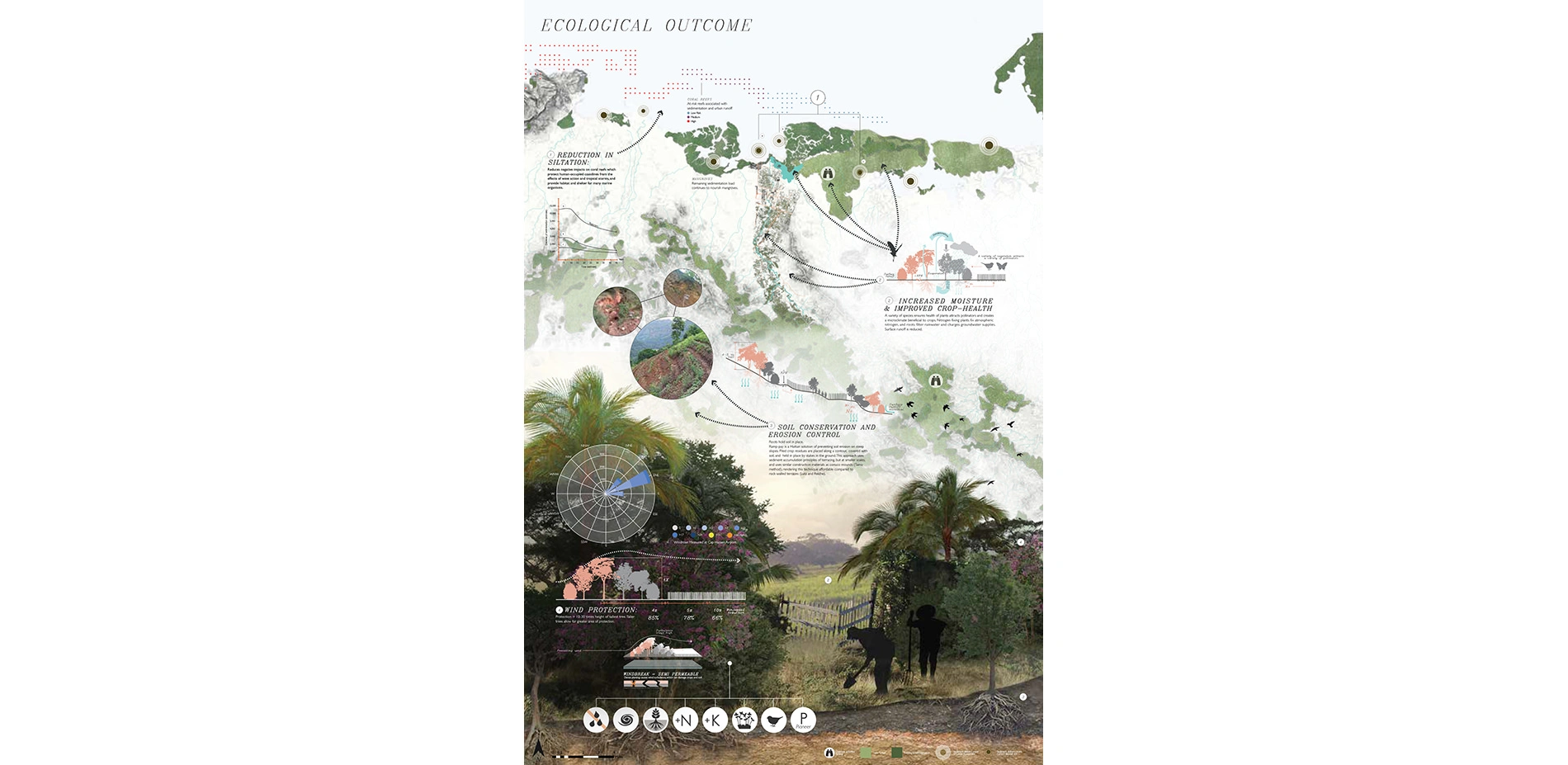
FORESTS ON THE EDGE Plant-Based Economies Driving Ecological Renewal in Haiti
Using Haiti as a prototypical case-study, this project investigates the utilization of live fences as a catalyst for reforestation through the choreographed design of economically and environmentally beneficial linear forests. Specifically situated for subsistence farmers in developing nations, this supportive ‘fabric’ of forests is poly-functional: buffering neighboring crops from damaging winds, improving crop moisture retention, stabilizing and enriching soils, and--critically--providing t
Research Category
Honor Awards
Fairy Tales to Forest
How we interact with our environment is influenced by our encounters with nature at an early age, whether these encounters are actual experiences with nature or vicarious experiences through other means. For example, we create images of place in our minds based on stories we hear as children. These stories are shaped by societal views and cultural values in regards to how environment is perceived. We often learn about the forest before we experience it, commonly through portrayal in children’
Communications Category
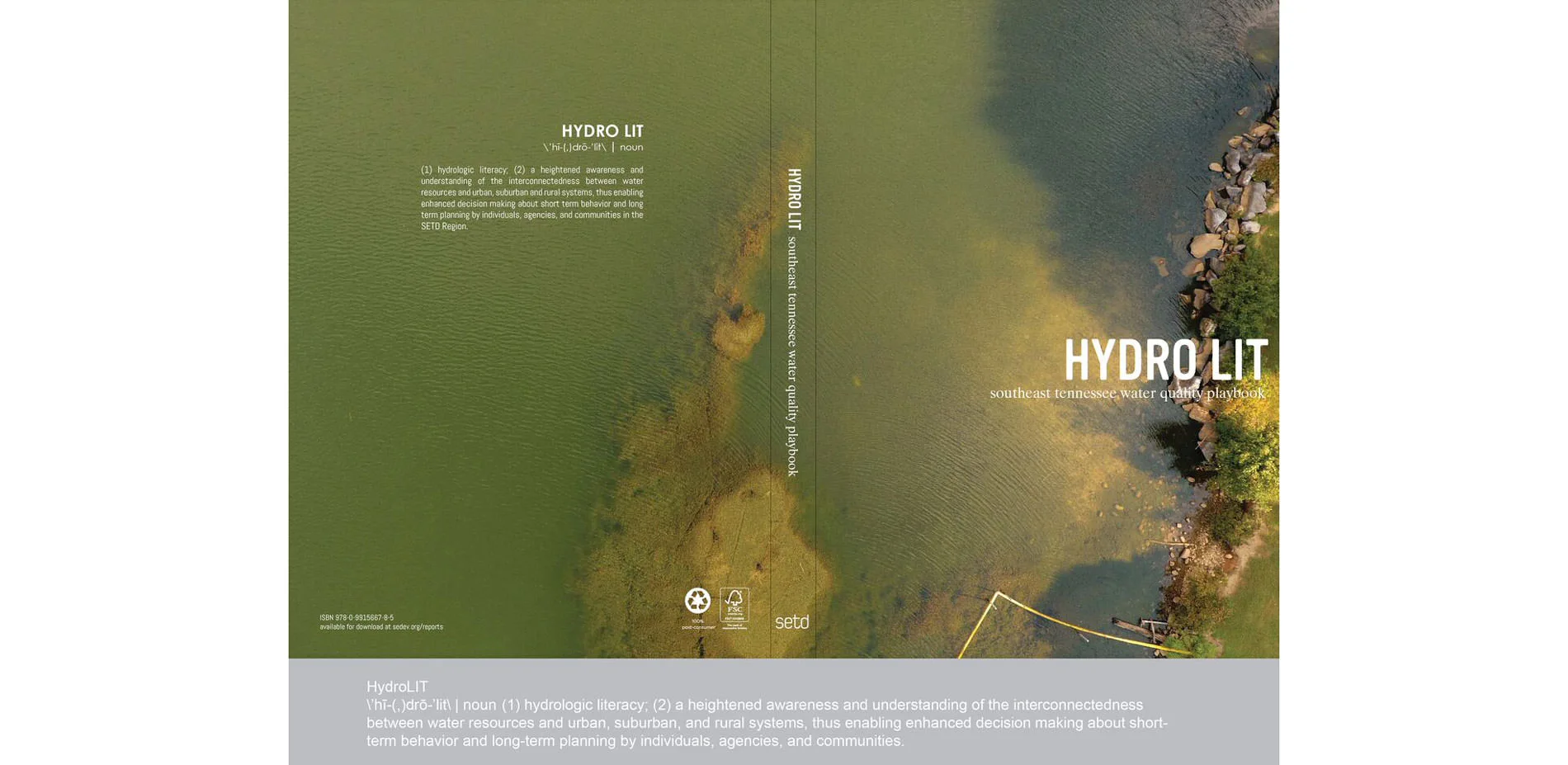
HydroLIT: Southeast Tennessee Water Quality Playbook
HydroLIT is a manual that proposes innovative strategies for improved water quality in the southeast Tennessee region. These strategies acknowledge the ability of watershed boundaries to offer a framework for merging visions of urban development and ecological health. They coalesce the roles of economic prosperity and natural resource health in shaping urban life as well as the relationship between designed interventions and their surrounding biophysical flows. These proposals function at multiple scales and offer tactical interventions as economical first steps for local communities to begin implementation. HydroLIT is a pioneering toolkit that aims to empower citizens and policymakers with knowledge of water quality stewardship that can affect change across the region.
Communications
Honor Awards
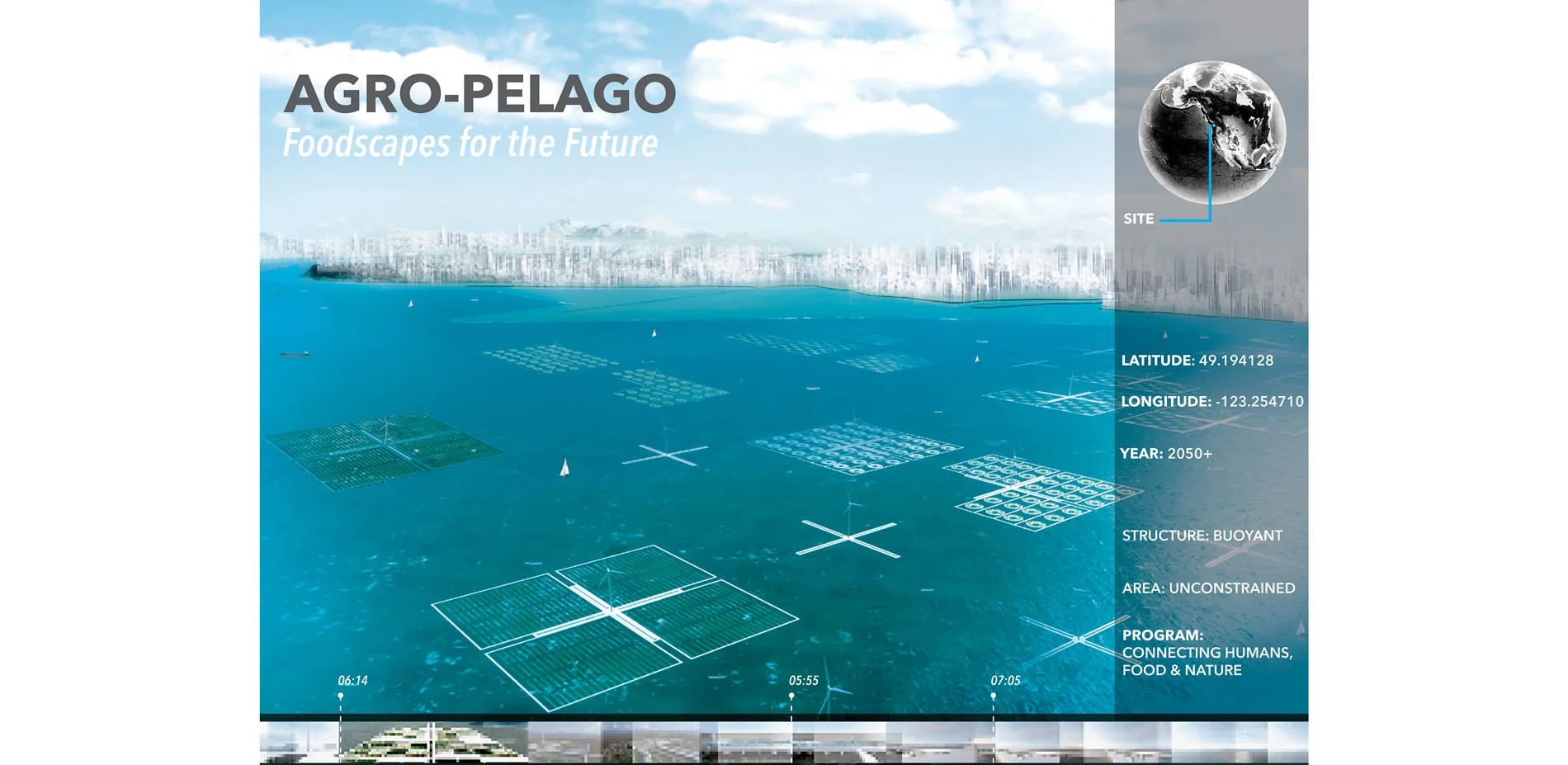
Agro-Pelago (Foodscapes for the Future)
What if landscape architects could cultivate the sea to produce food? In the future, agricultural land in coastal areas faces extinction. Climate change and sea level rise floods farmland with salt water, unsustainable farming depletes soils, pollinators and crop varieties, and as land transitions from arable to urbanized, food security disappears. These threats present opportunities for landscape architects with collaboration amongst non-designers, multi-disciplinary industries and people ac
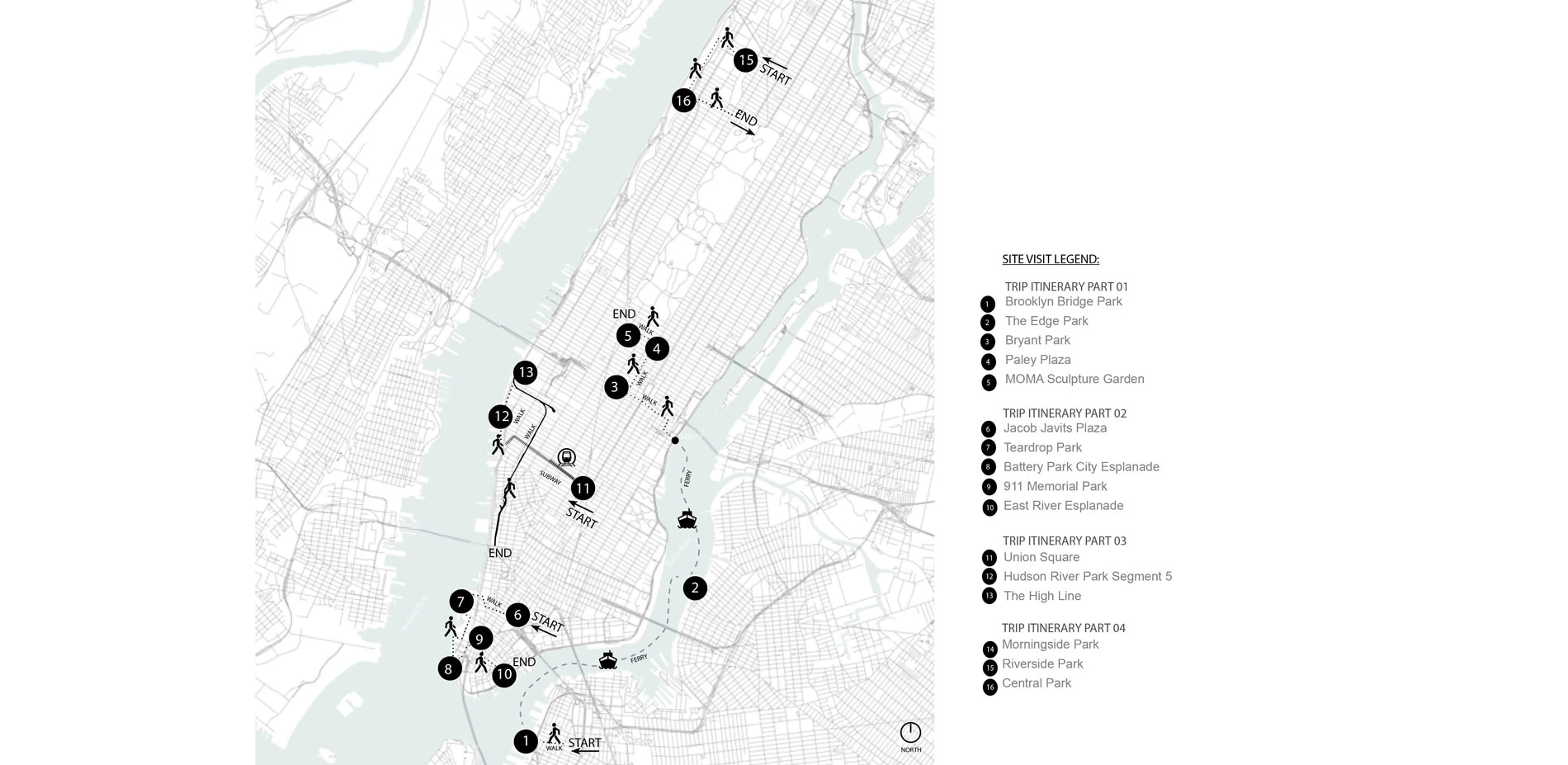
Urban Landscape Metrics: Re-Imagining the Class Field Trip in New York City's Great Parks
This project explores 16 urban parks in New York City through drawing, historical research, site reconnaissance, and comparative analysis as part of a design class seminar organized into three parts; Research and Contextualize, Draw and Analyze, and Curate and Disseminate. The purpose was to reimagine ways of studying urban landscapes as an extended field trip including virtual and physical site explorations. Over 520 acres were researched in one semester producing over 250 student-created di
Tactile MapTile: working towards inclusive cartography
This project presents an alternative approach to exploring the pedestrian experience. Challenging the existing primacy afforded to vision, this work takes a tactile approach. Tactile abstractions are used as a means to guide people through the multi-sensory environments encountered everyday. Designed as tools that enhance spatial understanding for people within a large range of visual capacities, these maps consider circumstances that influence a full spectrum of experience.
Pairing
Student Collaboration Category
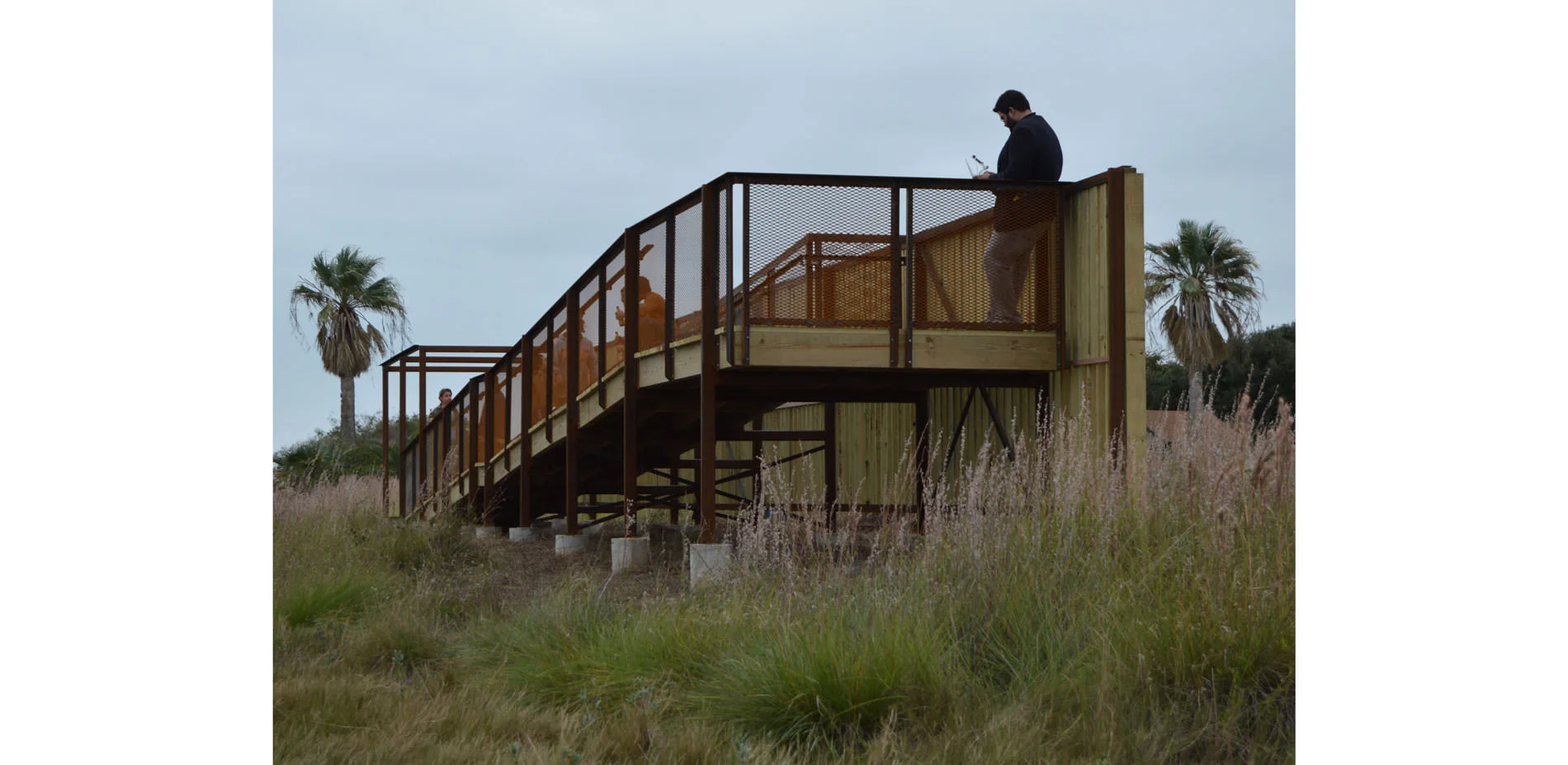
RISE, a coastal observation platform
RISE, Goose Island State Park's new observation platform, overlooks a coastal marshland known for attracting migratory birds, notably Whooping Cranes that come to feed on blue crab. The platform is intended to provide a venue for bird watching and environmental engagement programs in an area of the park previously inaccessible due to a slough and invasive wetland scrub.
The six-foot high platform is accessed by a 70-ft long ramp and concealed by a 90-ft lumber screen-wall. Composed of narrow vertical slots of varying widths, the screen-wall offers separation from the adjacent parking lot and provides a visual backdrop for the native bluestem grasses important to the local ecology, which the environmental educators plan to discuss. Passing through the entry portal, the wetland partially comes into view and reveals more of itself as the visitor moves up toward the observation area.
Despite its vertical presence, RISE is horizontal in spirit - it establishes a relationship with the distant horizon and acts as register for the immediate topography and the grasses that spring from it.
Student Collaboration
Honor Awards
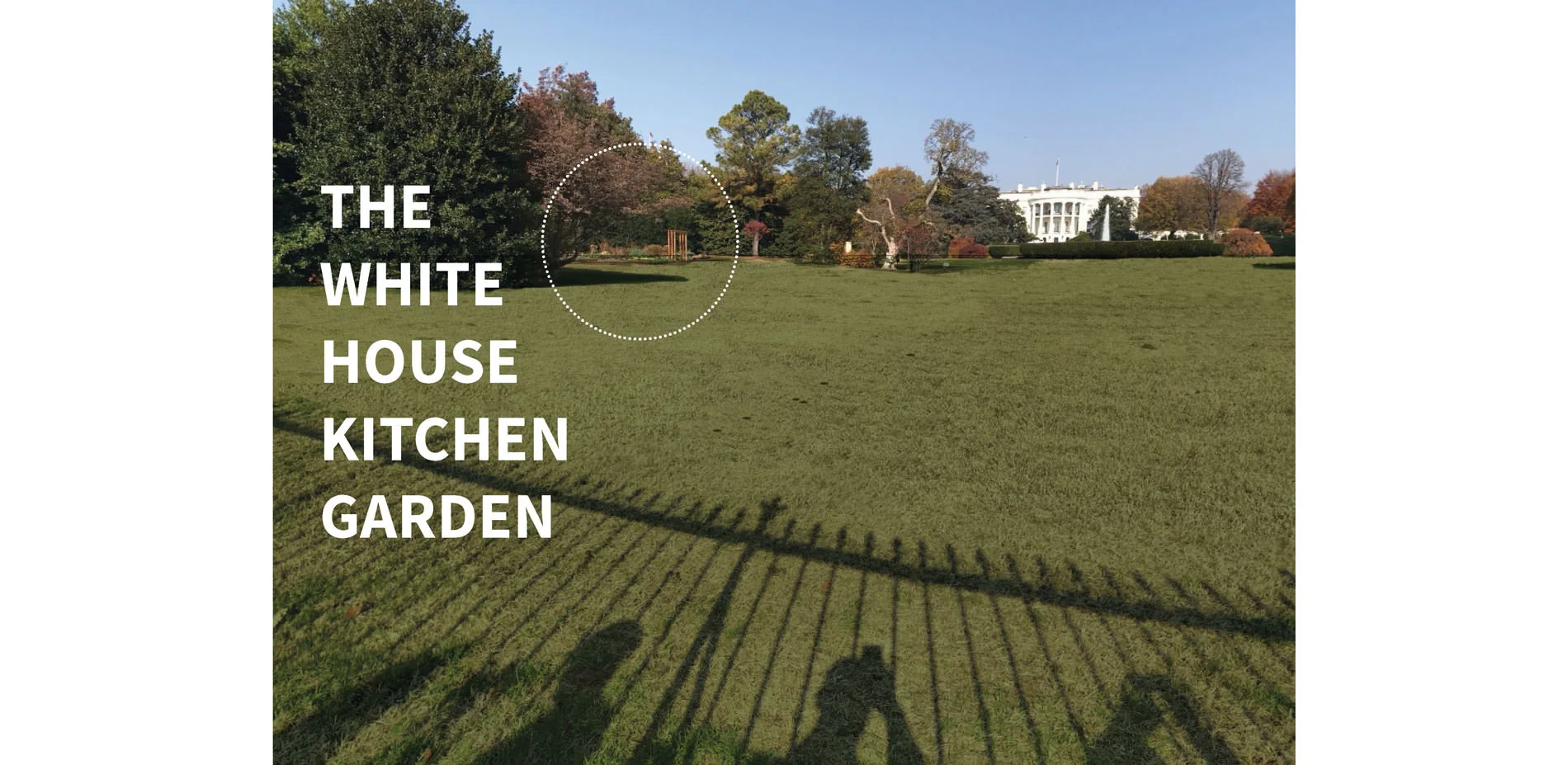
The White House Kitchen Garden
President’s Park, the grounds of the White House in Washington, D.C., is one of the most publicly recognizable landscapes in the country. The White House Kitchen Garden is intentionally sited within that landscape to be visible from the south fence line. It is within this context that we designed updates to the White House Kitchen Garden to establish a lasting symbol of health and wellbeing for children and adults across the country.
The motto of our project, ‘E Pluribus Unum,’ or ‘Ou
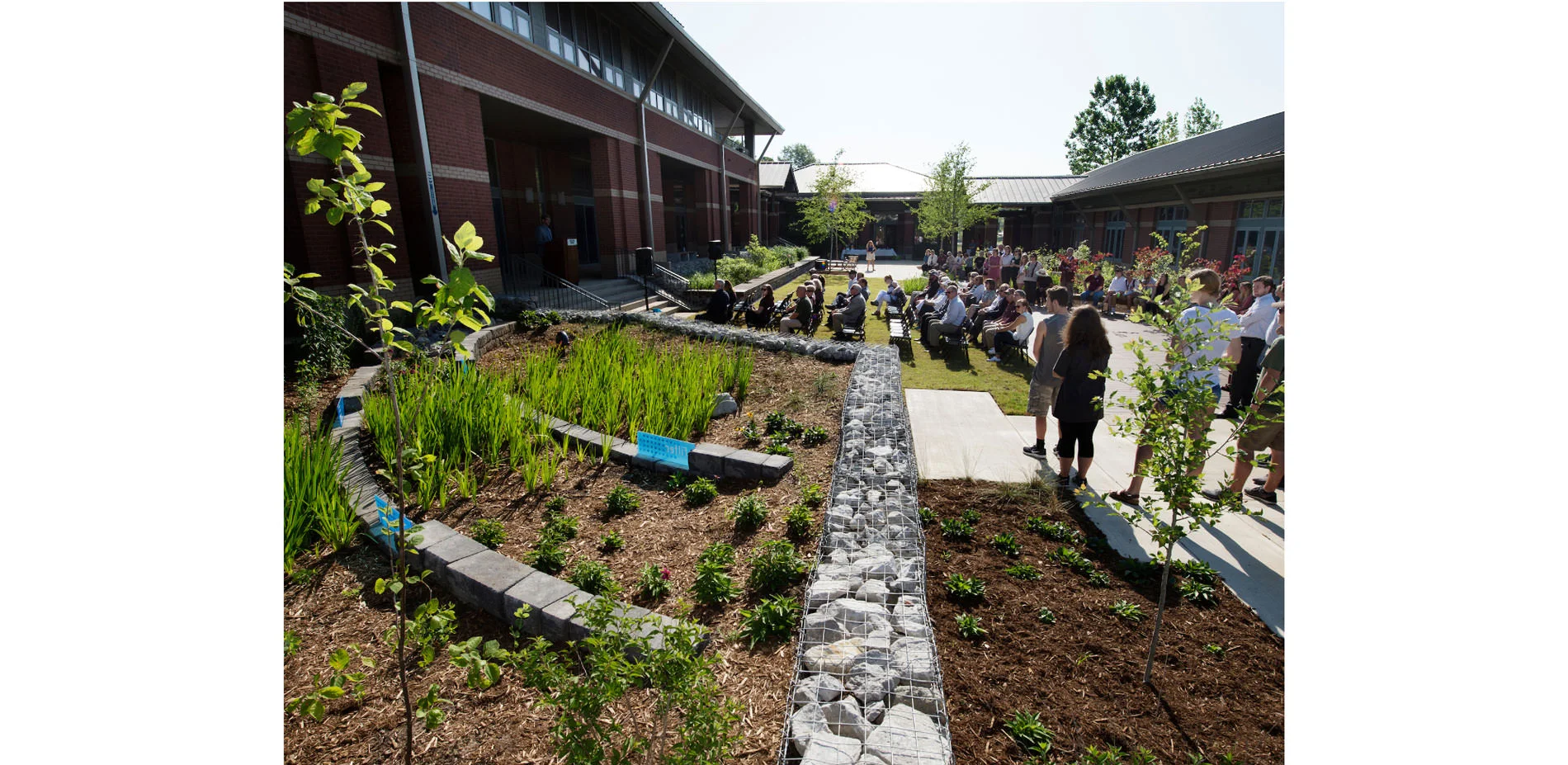
Rain Garden Demonstration
The Rain Garden Demonstration includes five levels of communication that explain how the rain garden works to help protect its watershed. Each level focuses on a different aspect of the garden’s design and function. The different levels also target different age groups and levels of expertise allowing the garden to communicate its function to a wide range of visitors. Traditional kiosks and a booklet provide detailed information for novices to
Student Community Service Category
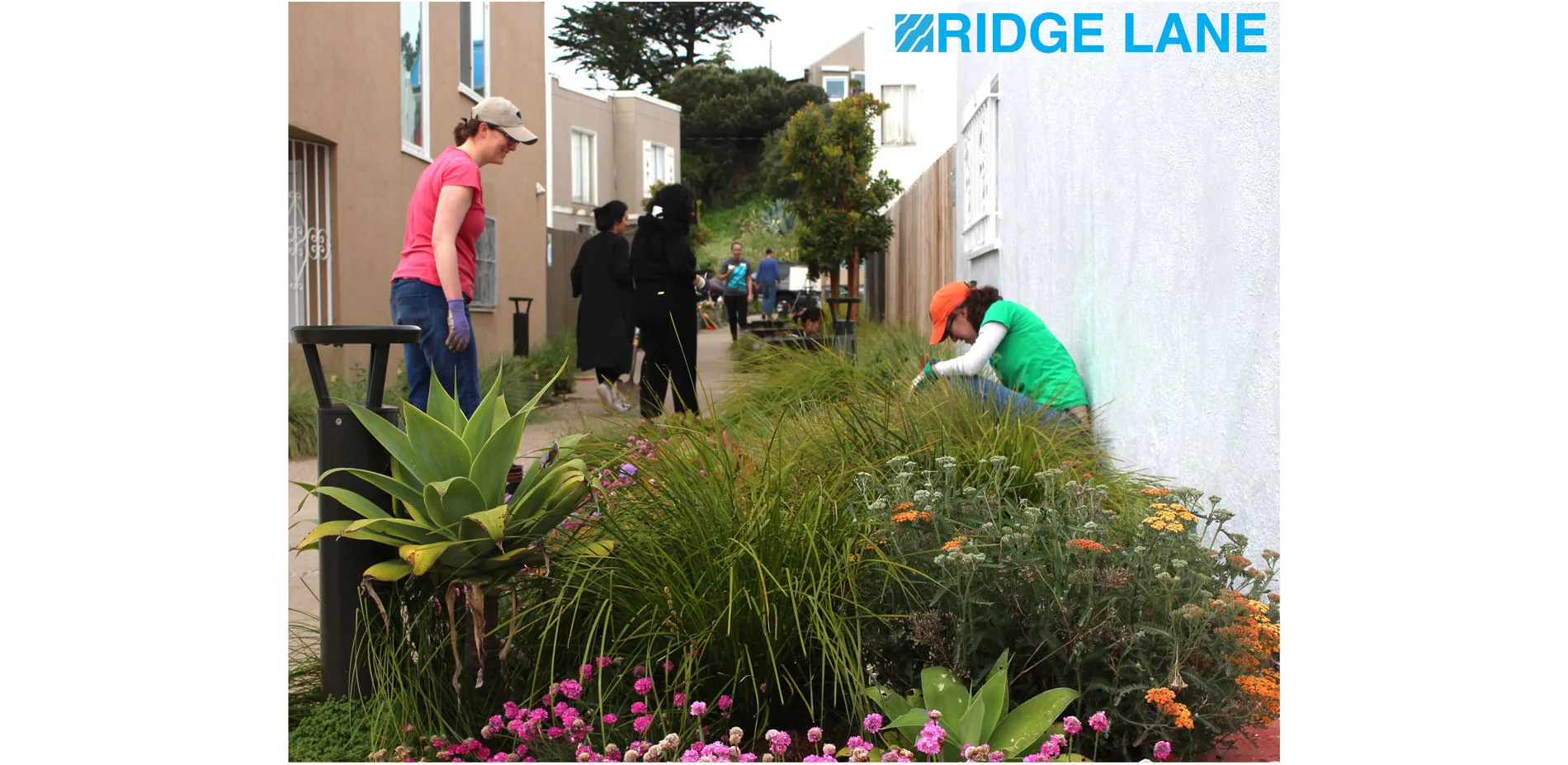
Ridge Lane
As urbanization grows, the value of public open spaces becomes more vital. The City of San Francisco contains more than 1,500 vacant lots that total an area approximately half the size of Golden Gate Park. Social and biotic values of these scattered and down-trodden sites are underutilized, thus leaving voids in underserved communities.
The Ridge Lane project is a revitalization of one of these vacant lots that has adapted a grass-roots strategy with the goal of empowering the community to become involved in all phases of the project from visioning to implementation, giving them a sense of pride and ownership of their neighborhood.
Meticulous analysis and incorporation of the neighbors’ feedback resulted in a design that celebrates their shared appreciation of Ridge Lane’s unique ecological and social factors.
The metamorphosis of Ridge Lane from an abandoned wasteland to a community gem interweaves ecology, design, and social factors resulting in a beneficial environment for all of its inhabitants.
Student Community Service
Honor Awards
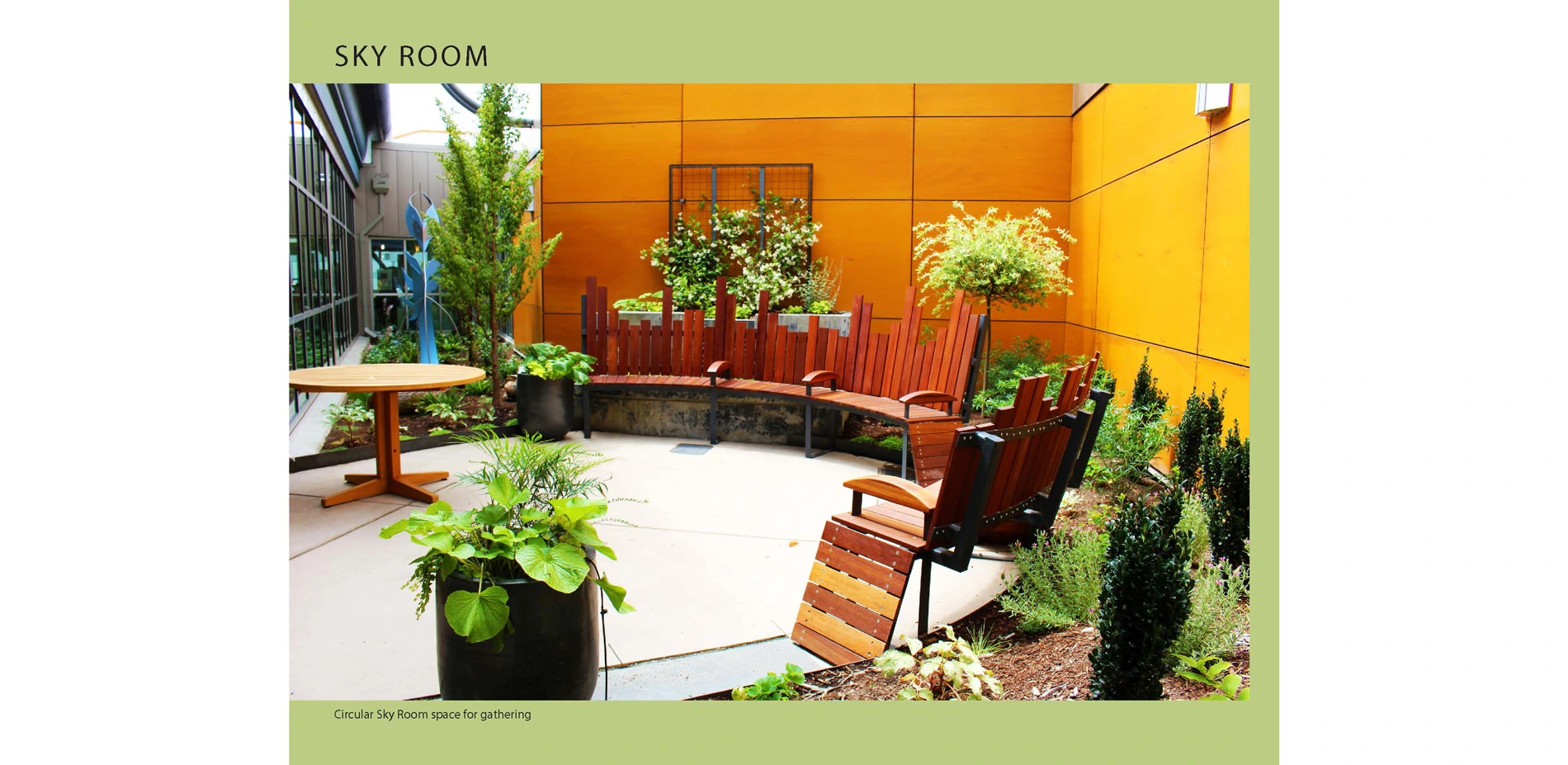
Earth and Sky Garden: A Therapeutic Garden for the Puget Sound Veteran's Affairs Hospital
The relentless demands of working in a hectic hospital environment and the stress of an agonizing wait for a diagnosis can be mediated through interaction with green refuges. The Earth and Sky Garden, a capstone design build project for the Puget Sound Veteran’s Affairs Hospital is located in a courtyard adjacent to the main entrance and emergency department. The site serves family, staff and patients who have post-traumatic stress disorder and/or other diagnoses. This garden offers respite,
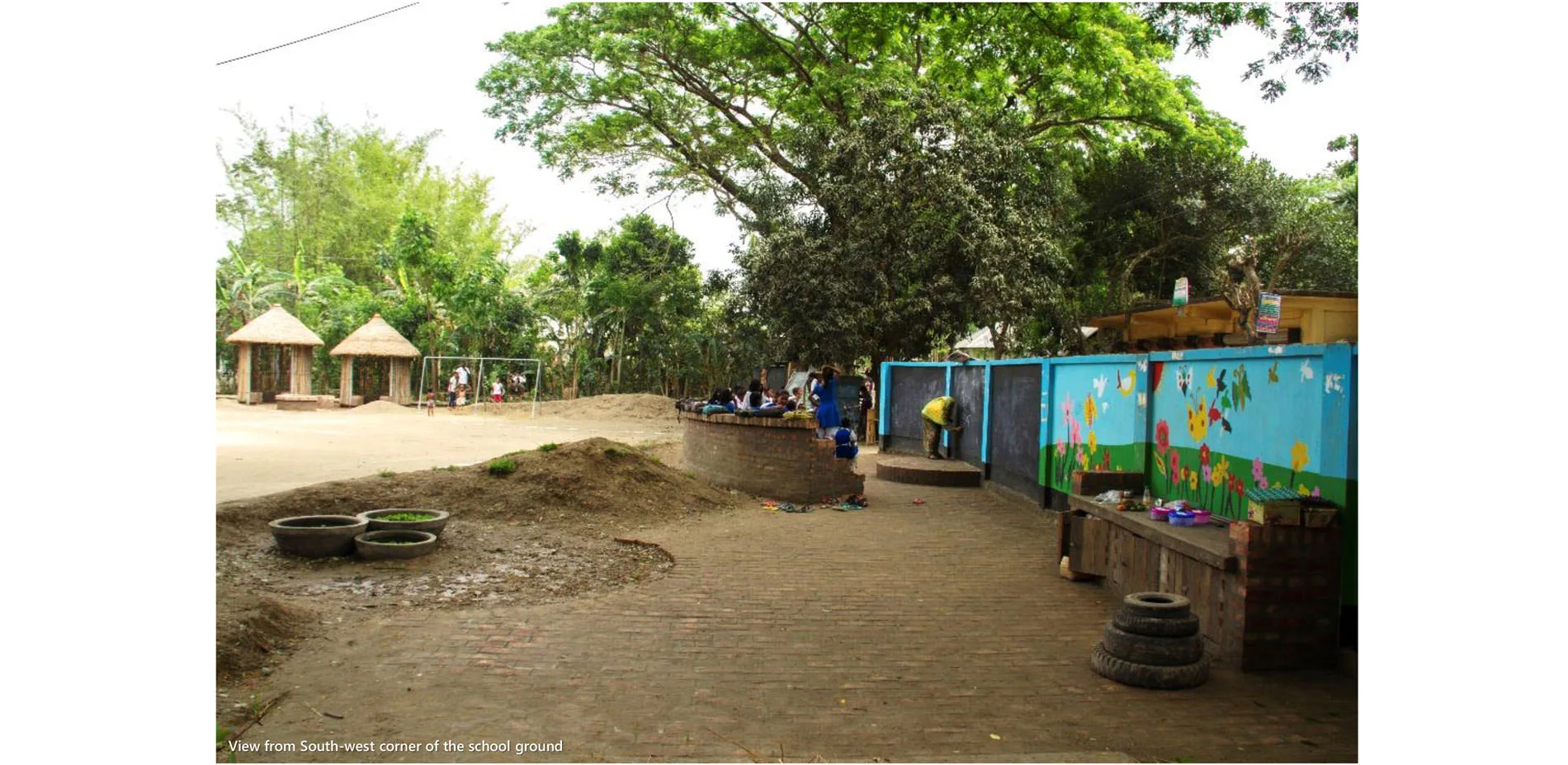
An outdoor learning environment for and with a primary school community in Bangladesh
Tulatoli Primary School is situated some 80 miles from Dhaka, the capital city of Bangladesh. Children’s drop-out rates and low attendance levels at primary schools being the main concern, the school authority was keen to look into this issue from a different perspective. The goal was to investigate the role of the school landscape on children’s learning and their motivation. The design and construction process was informed by existing evidence and theoretical models integrated with the prefe