




At COP31, Landscape Architects Will Push for Greater Investment in Climate Adaptation at the Local Level
Delegates will highlight practical nature-based planning and design strategies that increase resilience for people and communities
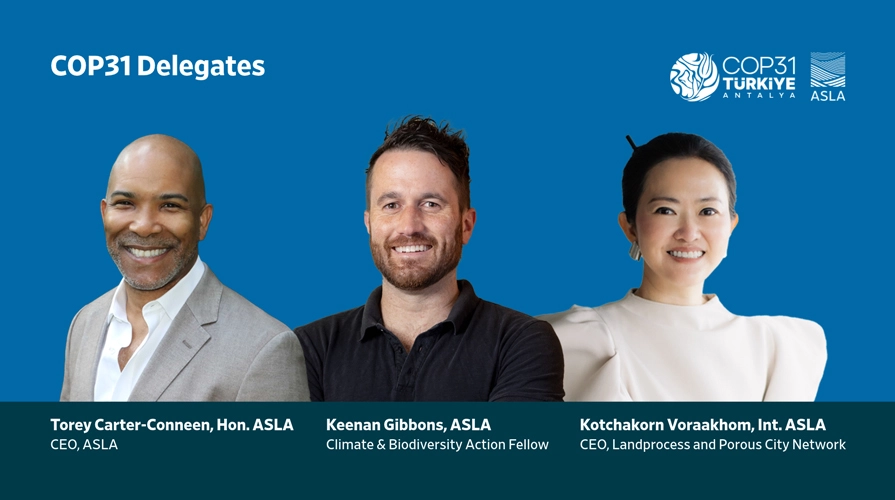 Landscape architecture delegates at COP31 in Antalya, Türkiye / ASLA
By Jared Green
ASLA will be represented by three delegates at COP31 in Antalya, Türkiye. This is the fifth year ASLA has been an NGO observer to the UN Framework Convention on Climate Change (UNFCCC) Conference of Parties (COP) process.
ASLA’s delegates:
- Keenan Gibbons, ASLA, PLA, ASLA Climate & Biodiversity Action Fellow; Principal and Director, Landscape Architecture, SmithGroup; Lecturer, University of Michigan. Focuses on using nature-based strategies – enabled by drone, sensor, and AI technologies – to reduce extreme heat impacts for communities.
- Torey Carter-Conneen, Hon. ASLA, CEO, American Society of Landscape Architects (ASLA). Focuses on strengthening the economic case for nature-based solutions and landscape architecture.
And the landscape architect delegate of the Government of Thailand:
- Kotchakorn Voraakhom, International ASLA, CEO, Landprocess and Porous CIty Network; Special Envoy for Climate Change, International Federation of Landscape Architects (IFLA). Focuses on lifting up Global South voices on climate adaptation and nature-based solutions since COP26 (2021).
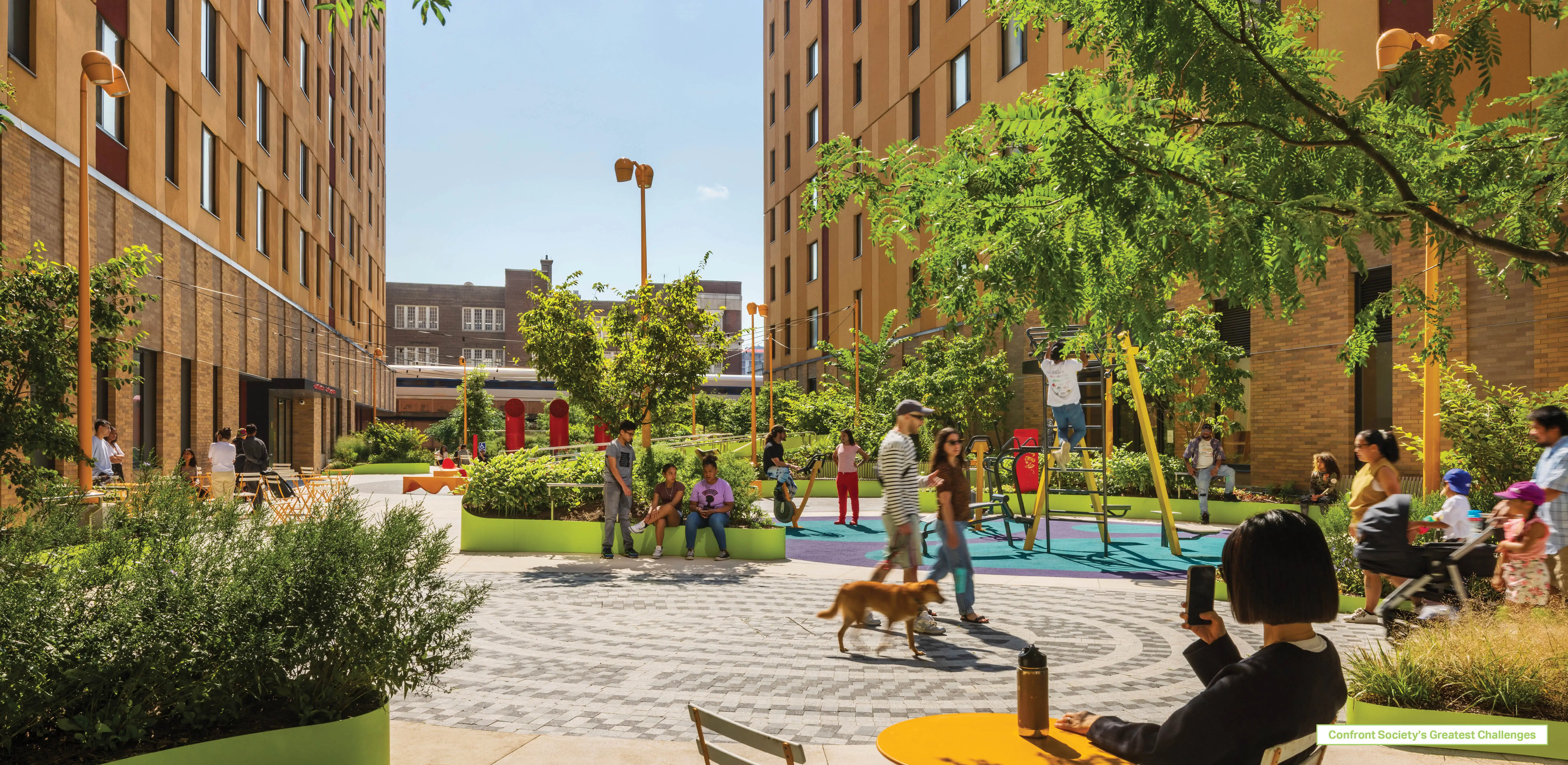
At COP31, ASLA will call for directing a greater share of global climate adaptation funds to local governments. World leaders at COP30 in Belém, Brazil last year committed to tripling climate adaptation funds by 2035 in order to support a Global Goal on Adaptation. Belém also resulted in 59 new indicators for measuring progress on adaptation. To make progress at COP31, global policymakers need to leverage the new goal framework, funding commitment, and metrics to provide more support for planning and design implementation at the local level. 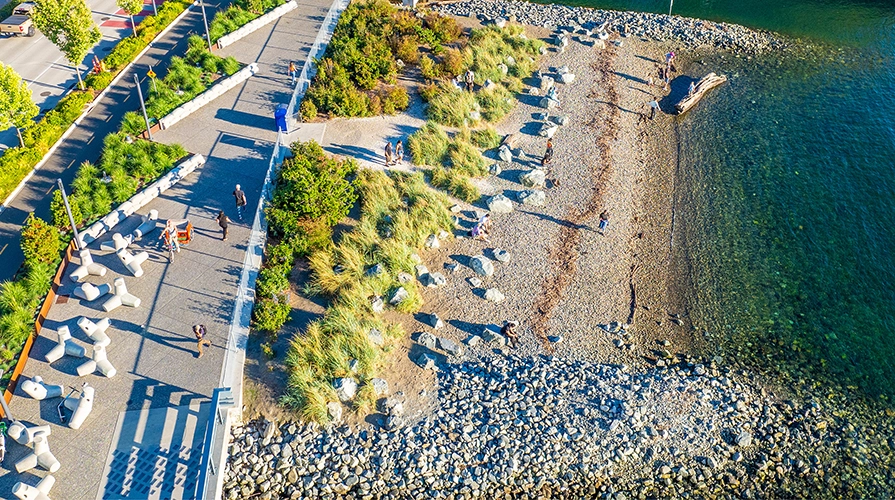 ASLA 2026 Professional Urban Design Honor Award. Seattle Waterfront Park: Reconnecting the City to the Bay, Seattle, Washington. Field Operations / Erik Holsather, courtesy of Friends of Waterfront Seattle
“Climate adaptation is about planning and designing new infrastructure to handle shifting heat, flooding, drought, and sea level conditions. Frontline communities around the world need vastly more funding to plan and design this infrastructure,” said ASLA CEO Torey Carter-Conneen, Hon. ASLA. “The nature-based solutions landscape architects lead and develop are the most cost-effective way to not only reduce loss and damages, but also create co-benefits in the form of improved health and well-being, strengthened economies, and enhanced biodiversity.”
“More local governments around the world need support in adapting to extreme heat. We know that integrated networks of nature-based approaches – parks and plazas, green streets, and recreation areas – lead to cooler and healthier communities. Landscape architects have the data, technological tools, and solutions that can help communities maximize their investments in heat adaptation,” said Keenan Gibbons, ASLA, ASLA Climate & Biodiversity Action Fellow.
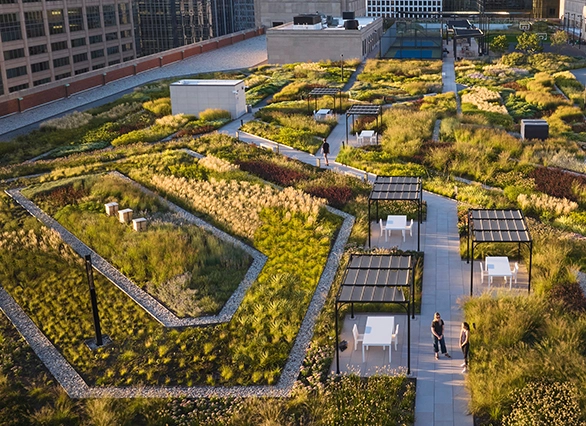
"Loss and damage from climate change cannot be reduced to a financial ledger or post-disaster accounting—it represents the lived history of displaced people and degraded ecosystems. At COP31, we must democratize adaptation finance, empowering local stewards who know how to build living sponges, restore water flows, and transform vulnerable urban centers into disaster-ready cities through nature-based adaptation,” said Kotchakorn Voraakhom, International ASLA. 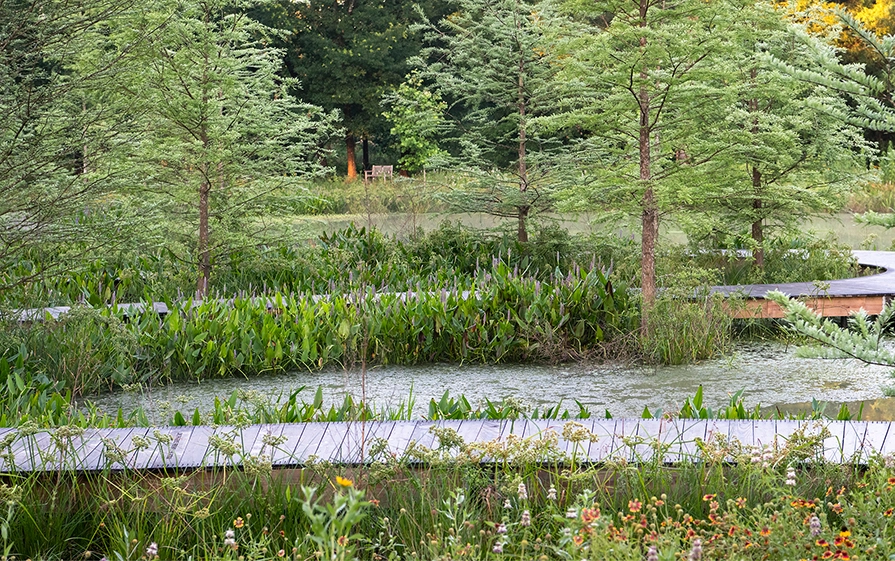 ASLA 2026 Professional General Design Honor Award. Houston Arboretum & Nature Center. Houston, Texas. Design Workshop and Reed Hilderbrand / Brandon Huttenlocher/Design Workshop, Inc.
At COP31, ASLA will host and co-host sessions that offer practical strategies for local governments to advance adaptation goals:
ASLA will host How to Better Measure Extreme Heat in the U.S. States’ Climate Action Pavilion on November 12 at 11 a.m. Türkiye Standard Time
Extreme heat is impacting more communities in the U.S. and globally. Most heat analysis has relied on satellite data. But drone-based thermal imaging captures heat at a 0.6 inches (1.5 cm) resolution, and AI trained on drone data infers heat patterns from satellite data. Learn how communities can use technology-enabled, nature-based approaches to reduce extreme heat impacts.
Speakers:
- Torey Carter-Conneen, CEO, American Society of Landscape Architects (ASLA)
- Keenan Gibbons, ASLA, ASLA Climate & Biodiversity Action Fellow

The Urban Heat Island Effect Material Palette, detailing average spot temperature readings of typical urban materials / Keenan Gibbons/SmithGroup
ASLA will co-host Creating Safe, Sustainable, Climate Resilient Communities, an official UN side event with the American Institute of Architects (AIA), Royal Institute of British Architects (RIBA), and International Code Council (ICC) on November 14, 2-3.30 p.m. Türkiye Standard Time in Side Event Room Yellow.
Explore practical tools and proven strategies for climate resilient communities. U.S. Congressional leaders and global built environment organizations will highlight how strong building codes, nature-based solutions, and regenerative design can help communities adapt to climate hazards, restore ecosystems, and improve well-being.
Speakers:
- U.S. Representative Dave Min (D-CA)
- Ryan Colker, Executive Director, Energy & Resilience, International Code Council
- Keenan Gibbons, ASLA, ASLA Climate & Biodiversity Action Fellow
- Arathi Gowda, FAIA, AIA Government Advocacy Committee | Northeast Regional Regenerative Design Director, Perkins&Will
- Mina Hasman, OBE, Sustainability Director, Skidmore, Owings, and Merrill (SOM)
- Moderator: Kotchakorn Voraakhom, International ASLA, CEO, Landprocess & Porous City Network
Landscape architecture delegates will also present at these Blue Zone sessions:
Vision to Urgency: Scaling Built Environments for Global Regeneration
Government of Thailand Pavilion, November 14, 1-2 p.m. TST
This high-level summit brings together leaders across the built environment — architecture, landscape architecture, urban design, and engineering — to examine how designers can adapt communities to climate change and scale up regenerative approaches.
Speakers:
- Torey Carter-Conneen, CEO, American Society of Landscape Architects (ASLA)
- Mina Hasman, OBE, Sustainability Director, Skidmore, Owings & Merrill (SOM)
- Representative, The American Institute of Architects (AIA)
- Dr. Steve Hammer, Founding Director, Penn Center for Sustainable Urbanization, University of Pennsylvania
- Moderator: Kotchakorn Voraakhom, CEO, Landprocess & Porous City Network
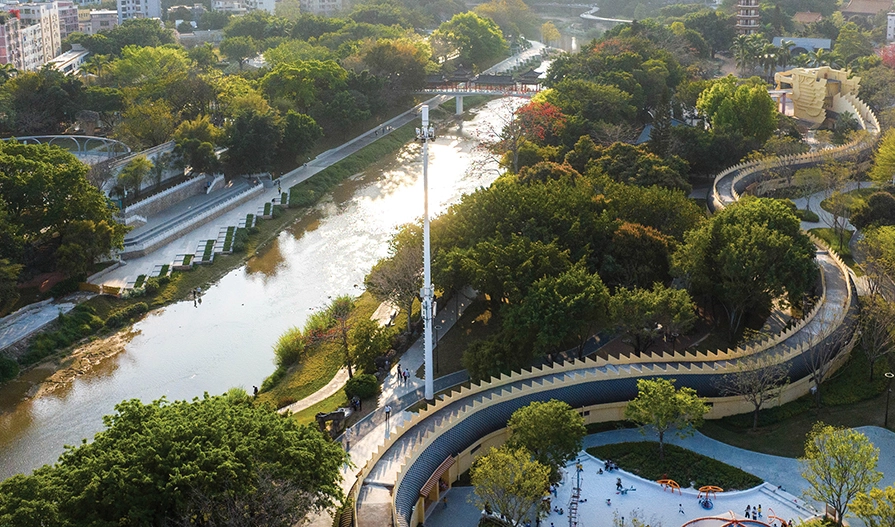 ASLA 2026 Professional Urban Design Honor Award. Restoring a River, Reconnecting a City: Longgang River Blueway. Shenzhen, Guangdong, China. SWA Group, Houston Office; Shenzhen BLY Landscape, Architecture and Planning Design Institute Co., Ltd.; HASSELL Studio Pty Ltd (Hassell); Shenzhen Urban Planning & Design Institute Co., Ltd. (UPDIS) / Chill Shine, CRLand
Technology-Enabled Adaptation: Empowering Local Decision-Making on Heat, Water, and Air Quality
Government of Thailand Pavilion, November 13, 3 p.m. TST
Learn how to leverage orbital Earth observation, drone-based sensor technologies, nature-based solutions, and ecosystem conservation to manage compounded urban risks.
Speakers:
- Thanarat Chongsuttanamanee, Member of the House of Representatives, Royal Thai Parliament
- Keenan Gibbons, ASLA, ASLA Climate & Biodiversity Action Fellow
- Pakorn Petchprayoon, Ph.D., Director, Geo-Informatics Development & Application Office, Geo-Informatics and Space Technology Development Agency, Government of Thailand
- Pakkasem Tongchai, Acting Head, Thailand Country Programme, International Union for Conservation of Nature (IUCN)
- Moderator: Kotchakorn Voraakhom, International ASLA, CEO, Landprocess & Porous City Network
At COP31, Gibbons, Carter-Conneen, and Voraakhom will share the vision outlined in Landscape Architecture 2040: Climate & Biodiversity Action Plan. They will explain how landscape architects design nature-based solutions to create multiple benefits for people and communities:
1) Strengthened Resilience Healthy, biodiverse landscapes that store carbon in trees, plants, and soils increase communities’ ability to adapt to climate impacts – such as extreme heat, flooding, drought, and sea level rise. Nature-based solutions can be designed for urban, suburban, and rural communities to bolster resilience over the long-term.
2) Going Beyond Net-Zero Landscapes are the most efficient way to mitigate greenhouse gas emissions and store carbon. Through smart planning and design, landscapes can achieve zero emissions and double sequestration by 2040.
3) Increased Biodiversity Nature-positive landscapes are the foundation of terrestrial ecosystems and efforts to achieve the goals of protecting and restoring 30 percent of ecosystems by 2030 (30 x 2030). Biodiverse landscapes are more resilient to climate impacts and better at storing carbon.
4) Improved Health and Livability Accessible public landscapes, such as parks and recreation areas, provide proven physical and mental health benefits that reduce healthcare costs and increase community cohesion. All communities should benefit from nature-based solutions in an equitable way.
5) Expanded Investment and Sustainable Livelihoods When woven into communities, nature-based solutions become resilient assets that lead to increased investment in housing, infrastructure, and public amenities, and create sustainable local livelihoods. In the U.S., investments in parks and green space can generate between $4 and $11 for every dollar invested, due to increased tourism, improved property values, and enhanced community health.