
.webp?language=en-US)

ShadeWorks: Designing and Building Community Shade in Bluff, UT
Matthew Annable, Student ASLA; Tara Abbaticchio, Student ASLA; Kenneth Biesiada, Student ASLA; Sarah Doyle, Assoc. ASLA; Molly Haberman, Student ASLA; Patrick Healy, Student ASLA; Jennifer Leach, Student ASLA; Gregory Laudenslager, Student ASLA; Kelley Price, Student ASLA; Jacob Rocamora, Student ASLA; Jessica Stonberg, Student ASLA; Caitlin Tamposi, Assoc. ASLA; Trevor Toms, Assoc. ASLA; Byungsun Yang, Assoc. ASLA; Ben Brehmer, Assoc. ASLA
-
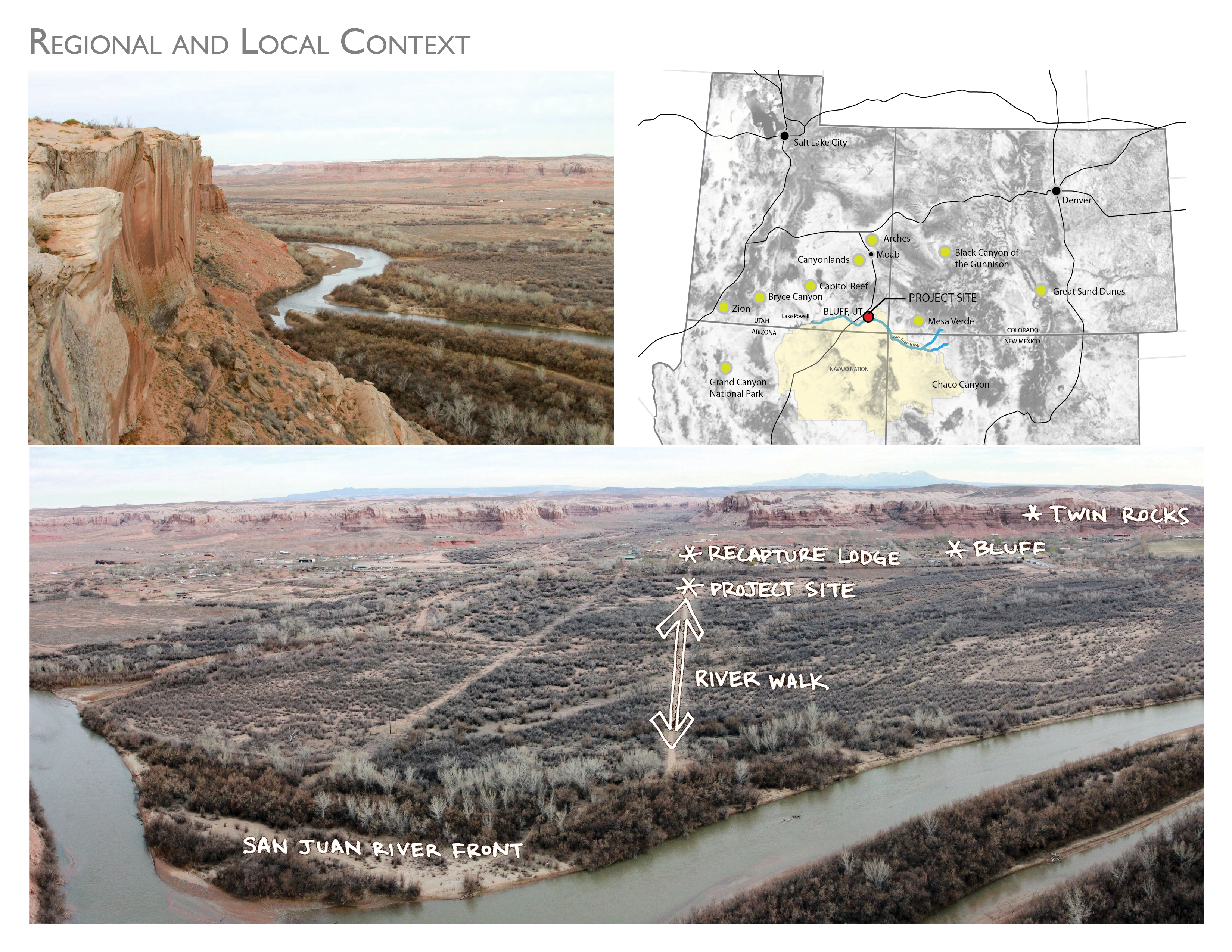
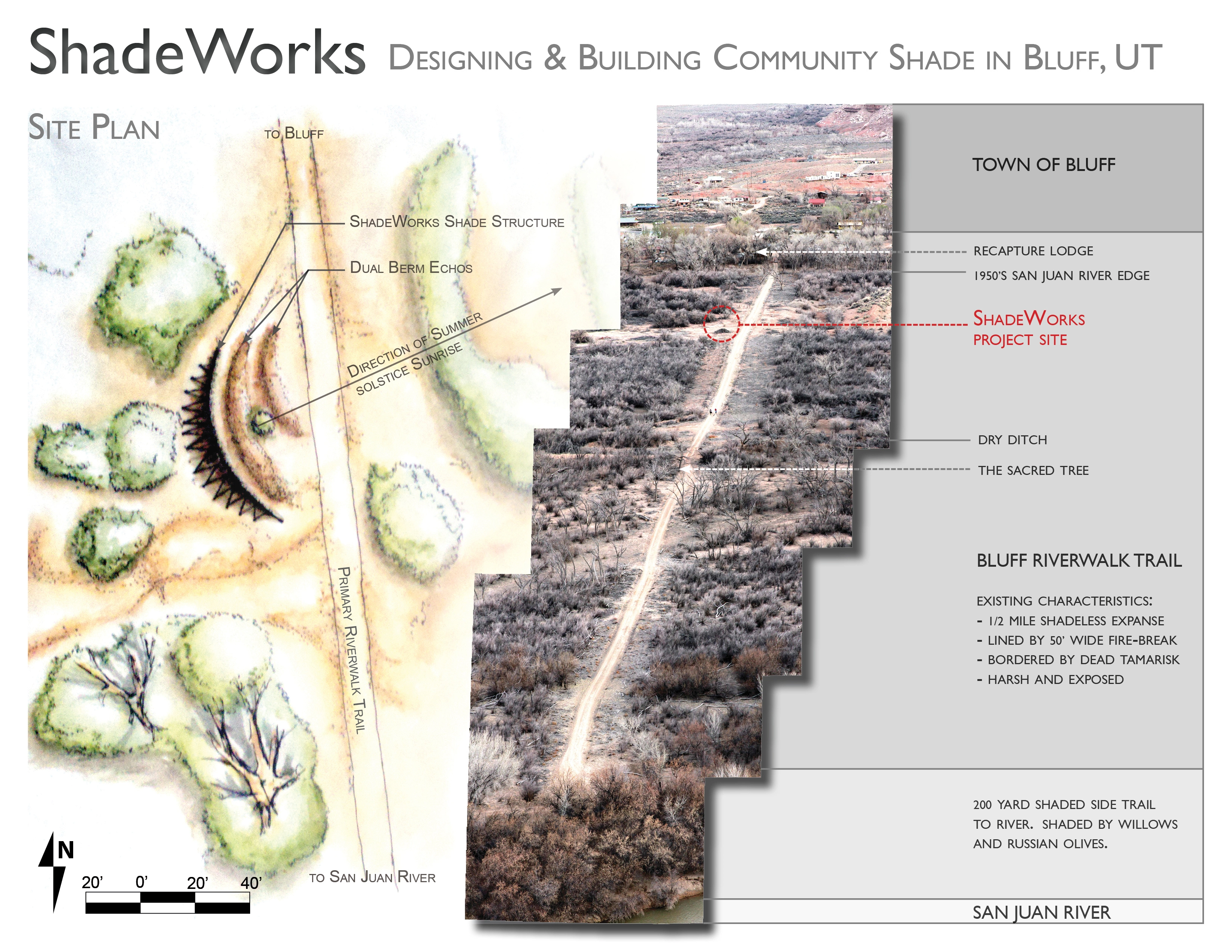
Our studio worked with the community of Bluff, UT to reconnect the town with the San Juan River. We proposed a river walk master plan aimed at activating and drawing visitors through the 1/2 mile expanse between the town and the river. This was achieved through a culturally aligned network of trails and interventions strategically located to provide visitors shaded respites from the hot sun and opportunities to discover and reflect on Bluff's monumental landscape. The Bluff community selected one intervention, named ShadeWorks, from our plan which we fully designed and built in Spring 2012.
-
Background: Bluff, UT and the San Juan River
The town of Bluff, UT is located along the San Juan River in the rural and extremely arid southeast corner of Utah. The San Juan creates a 200-mile long ribbon of fertility through an otherwise very dry place. Bluff exists because of the San Juan. Its erosive power created a monumental landscape of geologic features that were revered by ancient cultures. One of the oldest known petroglyphs on the North American continent is found just a few miles west of Bluff along the San Juan. There is strong archeological evidence that the Ancestral Puebloans, the earliest known permanent settlers of the Bluff locale, settled and built their dwelling and ceremonial places with a great reverence to Bluff’s monumental landscape, the solar cycle, and the power of the river. Today, the San Juan defines the boundary between private Bluff landholdings (to the north) and the Navajo Nation (to the south). As recently as the 1950’s the San Juan coursed immediately proximate to the town of Bluff. Since then, it has eroded its way ½ mile to the south where it has taken up residence against the canyon wall. This has effectively disconnected many Bluff residents from the San Juan.
Goals and Objectives: Community Connection
The community/river disconnect led to recent Bluff community activism behind reconnecting the public to the river. This movement challenged our studio with one fundamental goal: Reconnect the people to the river across an extremely exposed ½ mile wide expanse of hot sand. Our key objectives were to design a site wide master plan aimed at activating the open space between the town and the river and catalyzing that activation by fully designing and building one key community selected intervention from the master plan.
Community Based Design Approach
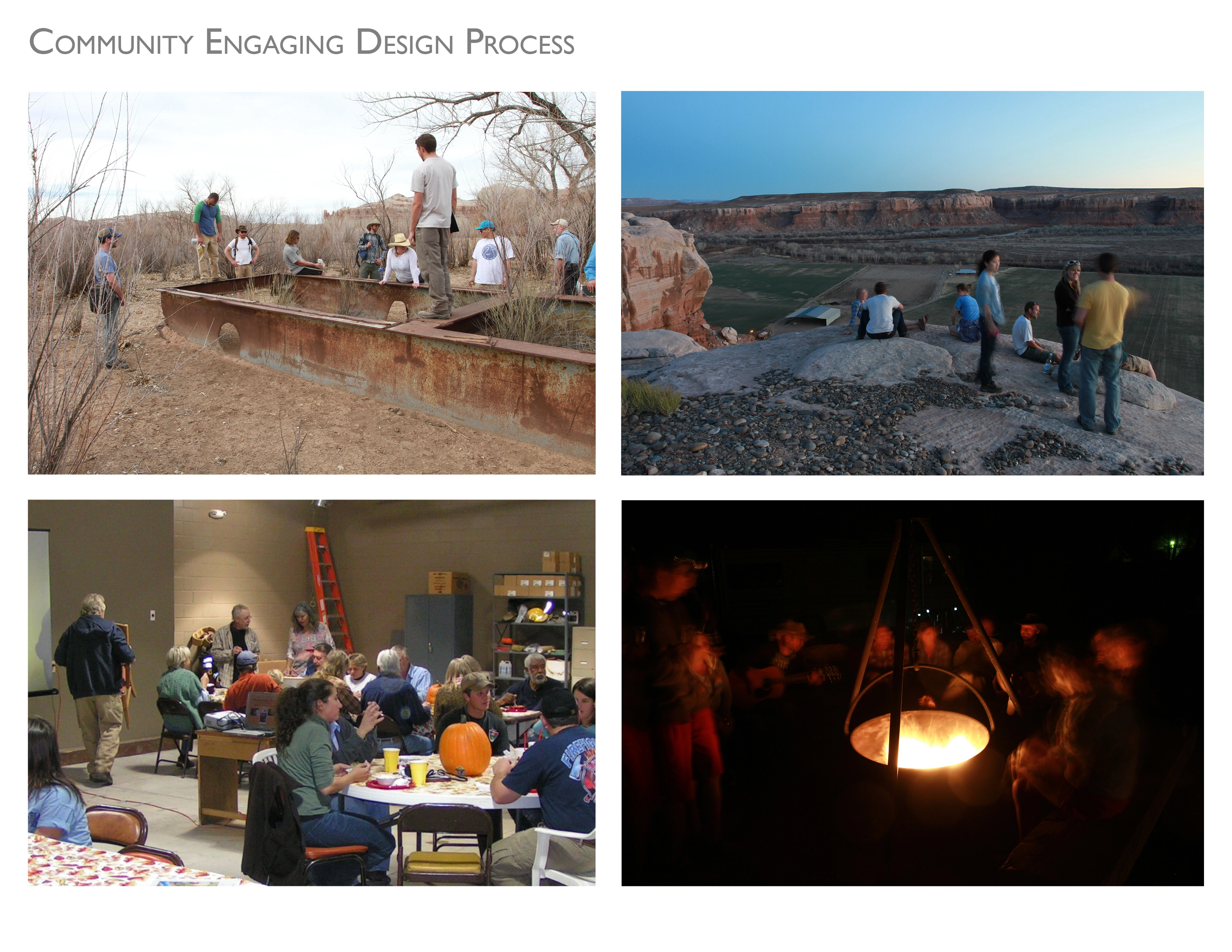
We took up the design portion of this challenge during an intensive 8-week studio in the spring of 2012. We engaged the Bluff community during a multi-day site visit, which included all of the following:
- A full interpretive site tour by the landowner
- Extensive conversations with Bluff community members
- Visits to local Navajo homes
- Tours of local resource stockpiles and scrap-yards
- Visits to local artisan galleries and installations
- A tour of Bluff’s cultural and monumental landscape elements
- Personal exploration of the Bluff landscape
- On-site design sessions
This level of community engagement played a critical role in uncovering our key master plan design principles:
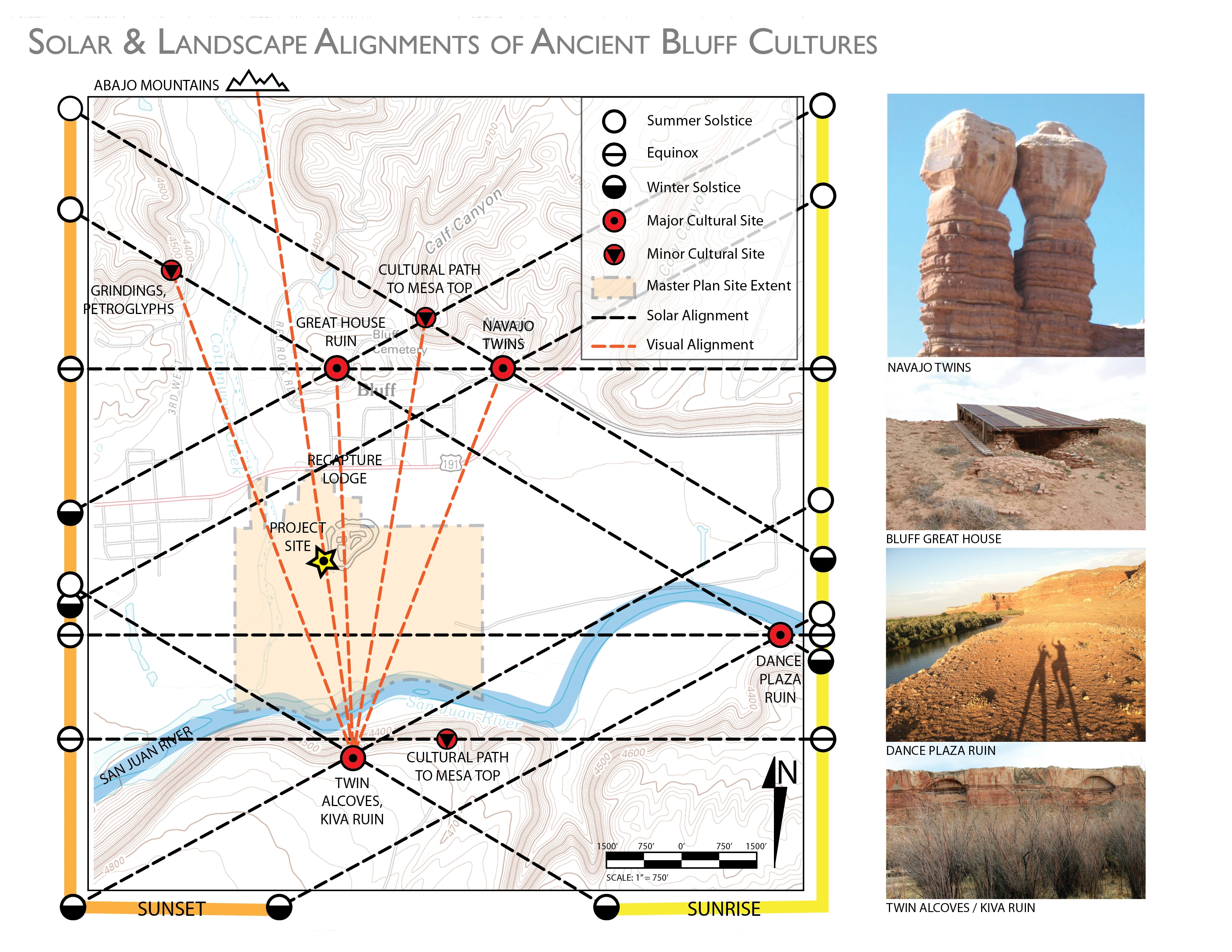
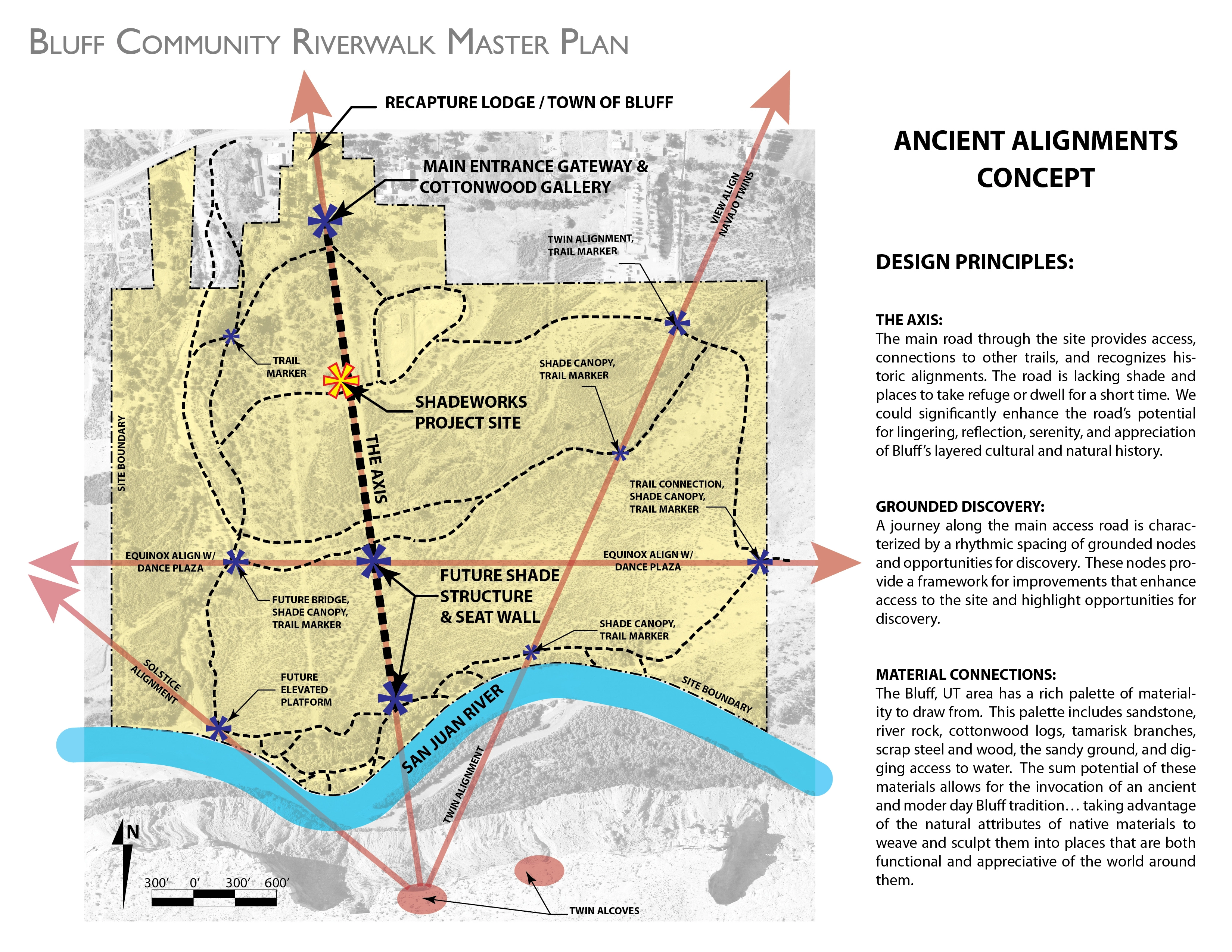
Principle 1- Engage the Axis: The main trail through the site provides river access, side trail connections, and recognizes historic alignments. The trail is lacking shade and places to take refuge or dwell for a short time. We could significantly enhance the trail’s potential for lingering, reflection, serenity, and appreciation of Bluff’s layered cultural and natural history.
Principle 2 - Create Places of Grounded Discovery: A journey along the main access trail is characterized by a rhythmic spacing of grounded nodes and opportunities for discovery. These nodes provide a framework for improvements that enhance access to the site and highlight opportunities for discovery.
Principle 3 - Material Connections: The Bluff, UT area has a rich palette of local building materials to draw from. This palette includes sandstone, river-rock, cottonwood logs, tamarisk branches, scrap steel and wood, dynamic sandy soils, and digging access to the water table. The sum potential of these materials allows for the invocation of an ancient and modern-day Bluff tradition… taking advantage of the natural attributes of native materials to weave and sculpt them into places that are both functional and offer a reverence to the surrounding landscape and its prior inhabitants.
River Walk Proposal and Build Project Selection
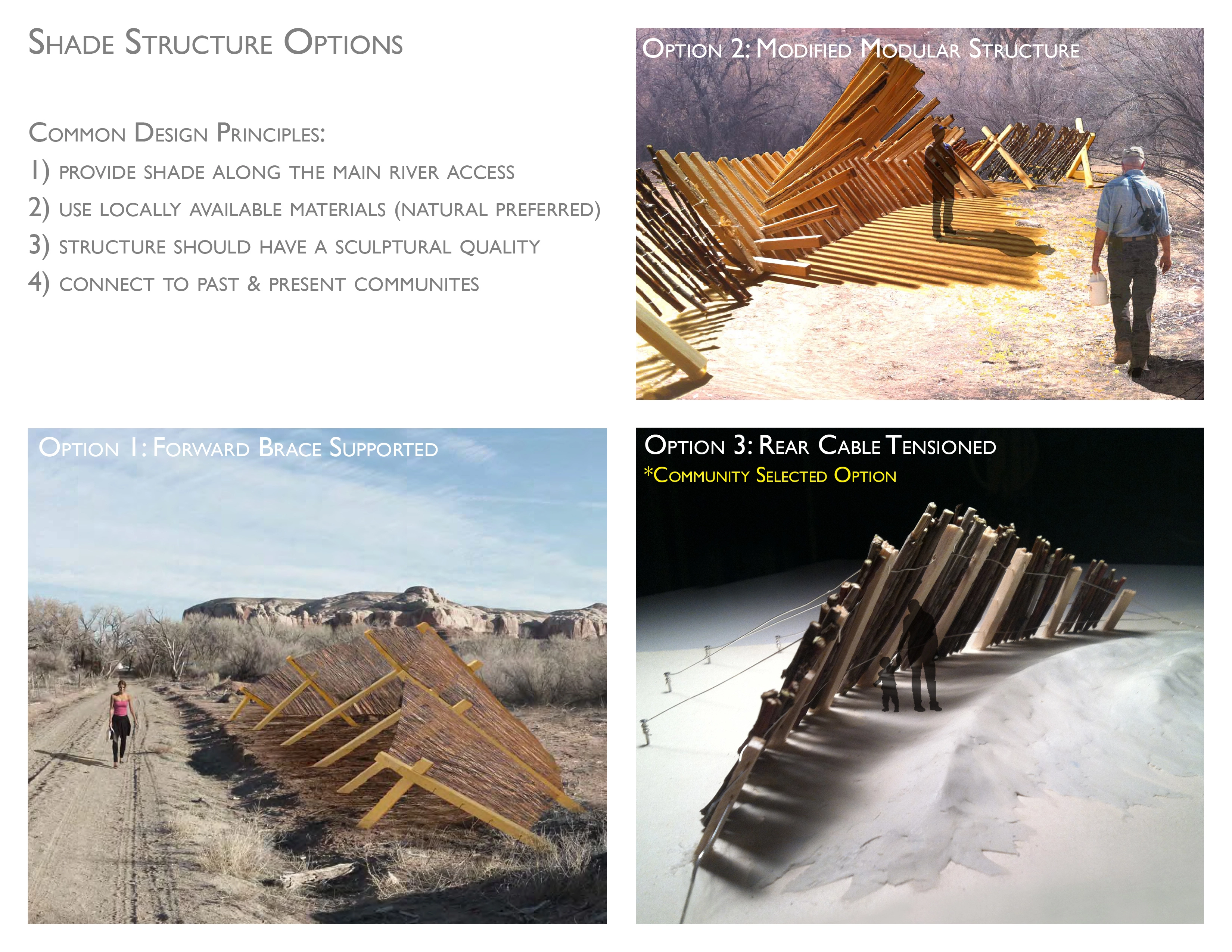
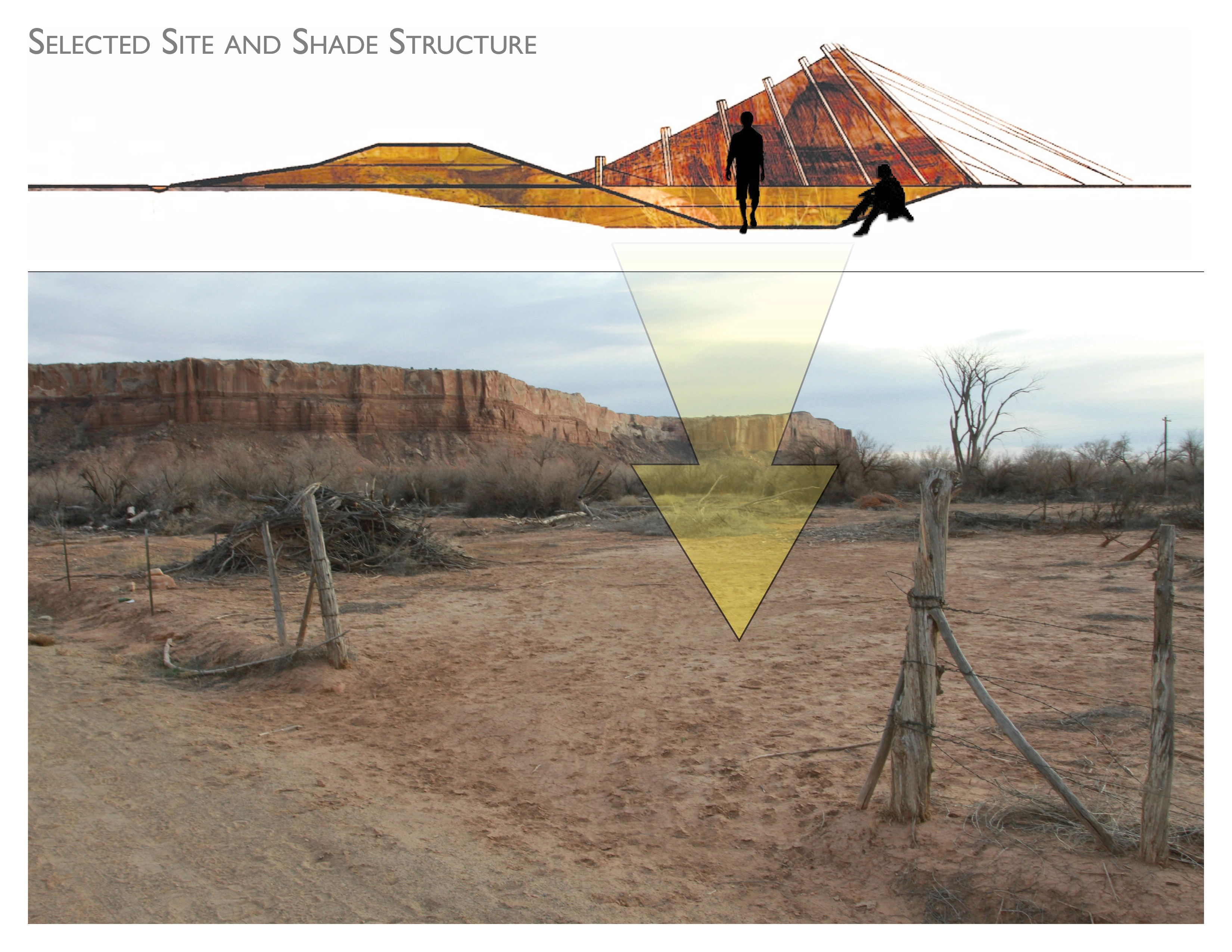
Our master plan proposal achieved town/river re-connection through a culturally aligned network of trails and interventions strategically located to provide visitors convenient respites from the hot sun as well as opportunities to discover and reflect on Bluff's monumental landscape. The Bluff community was presented three conceptual shade structure options and selected one intervention, named ShadeWorks, for our design studio to fully design and build on the site.
Community Build
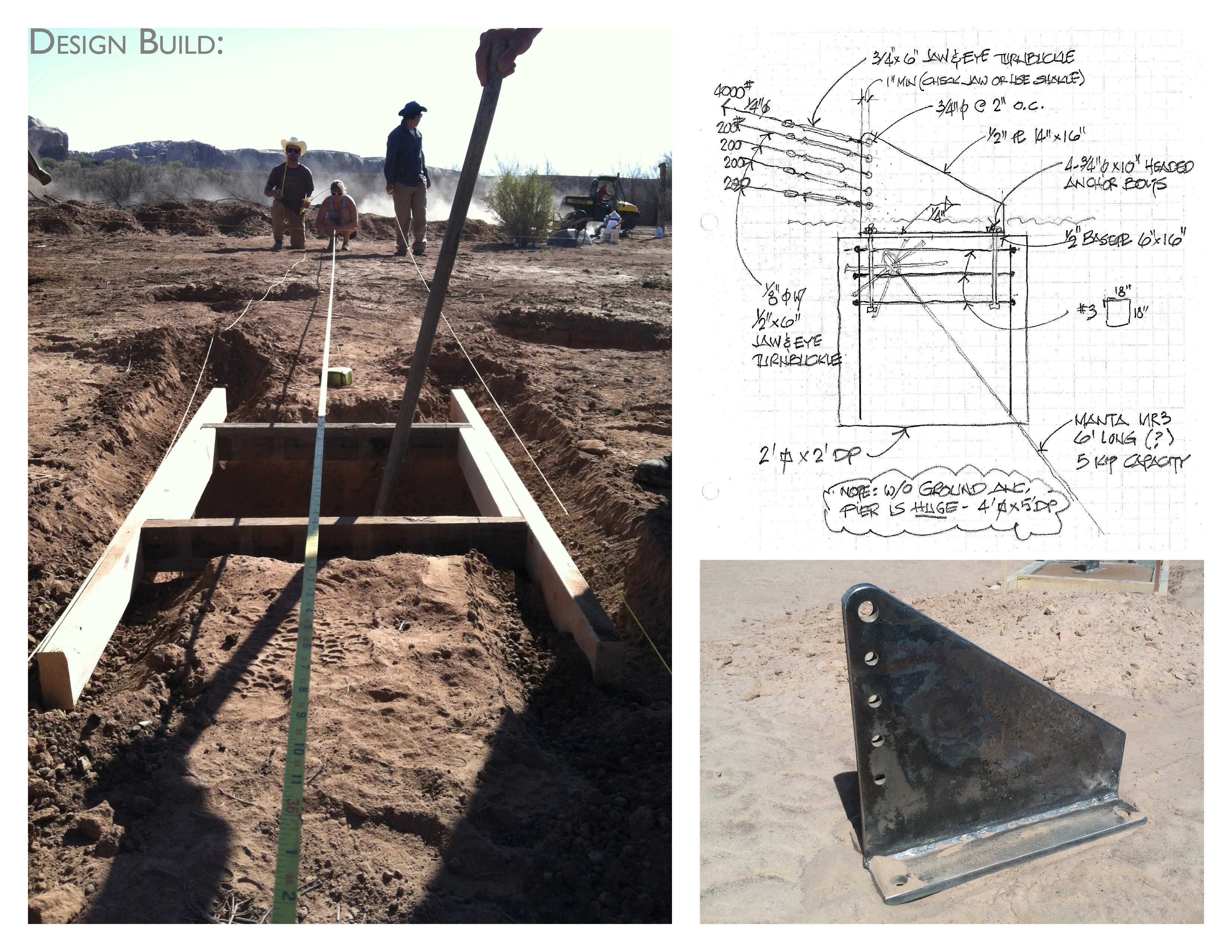
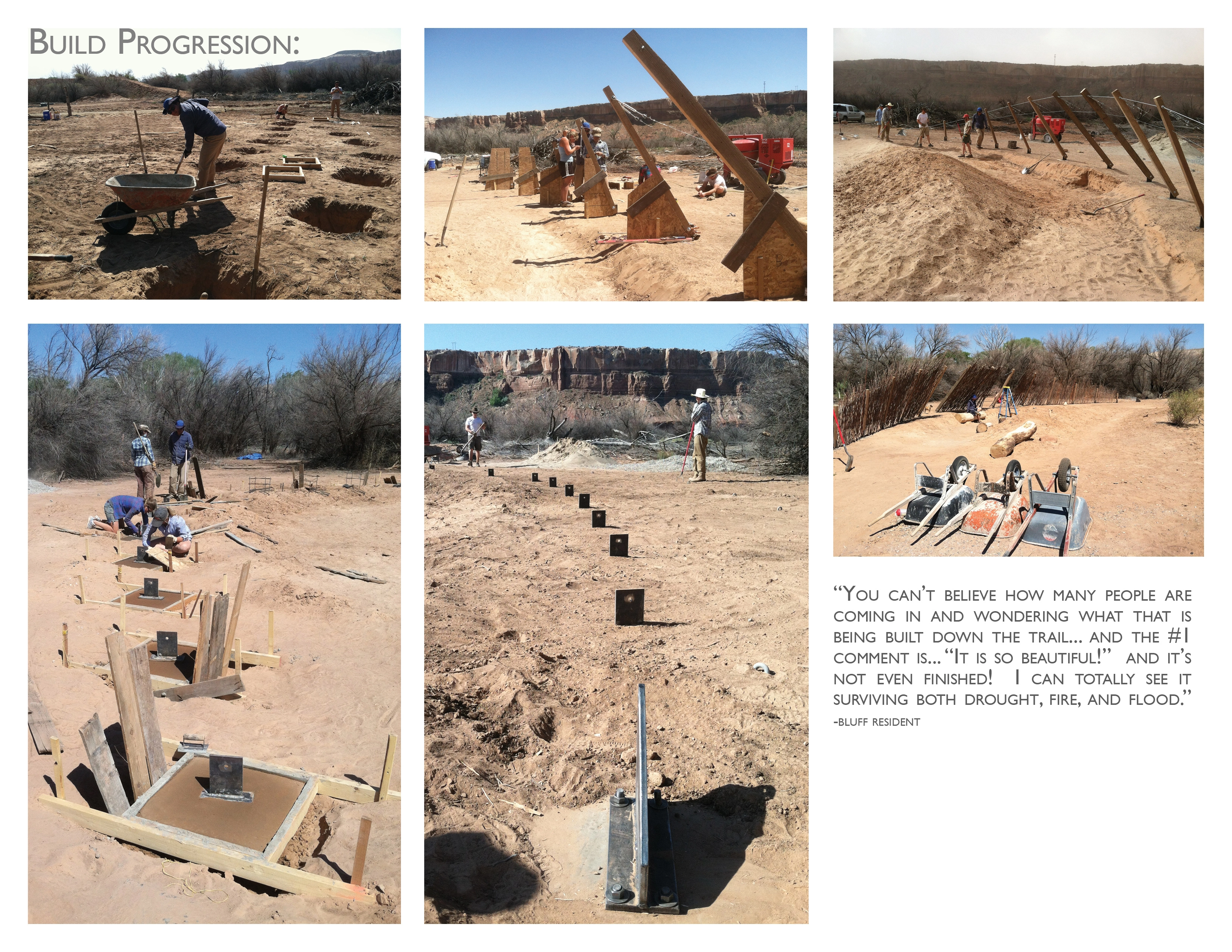
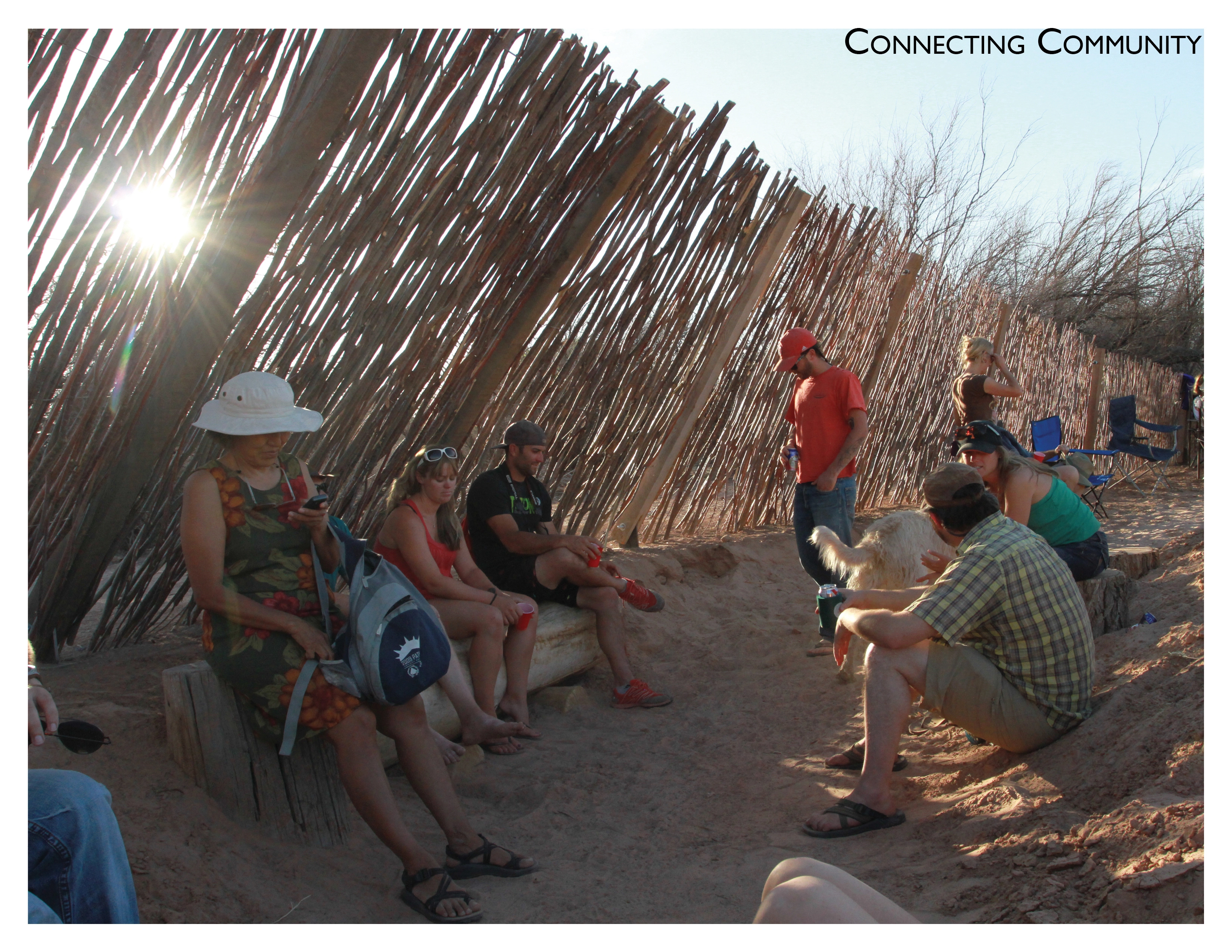
The build portion of the project took place in Bluff in May 2012. ShadeWorks was built in conjunction with several members of the Bluff community including landowners, local business people, community leaders, and a local non-profit that designs and builds homes for the Navajo community. Upon completion ShadeWorks hosted a community celebration event comprised of Bluff residents, tourists, and visiting students.
ShadeWorks Realized
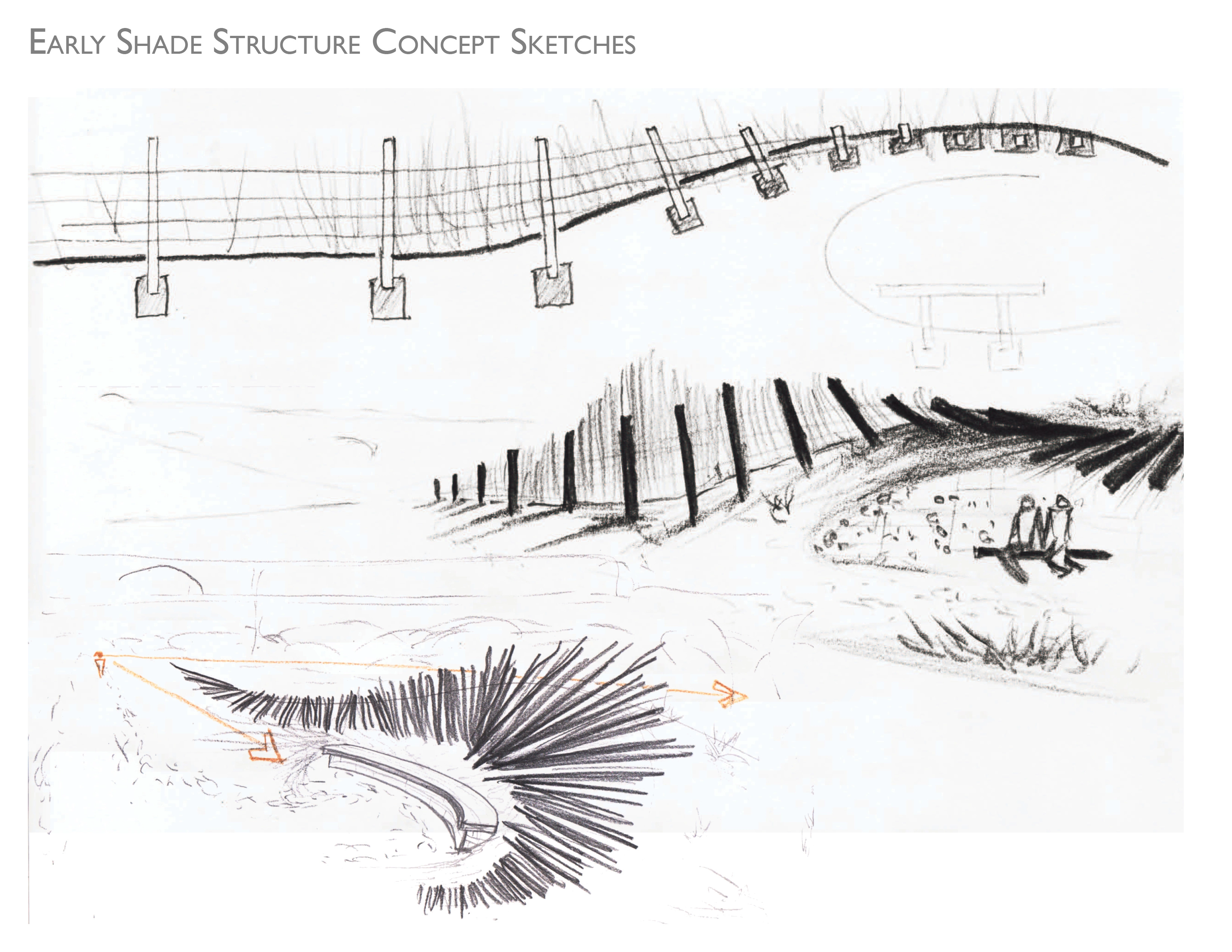
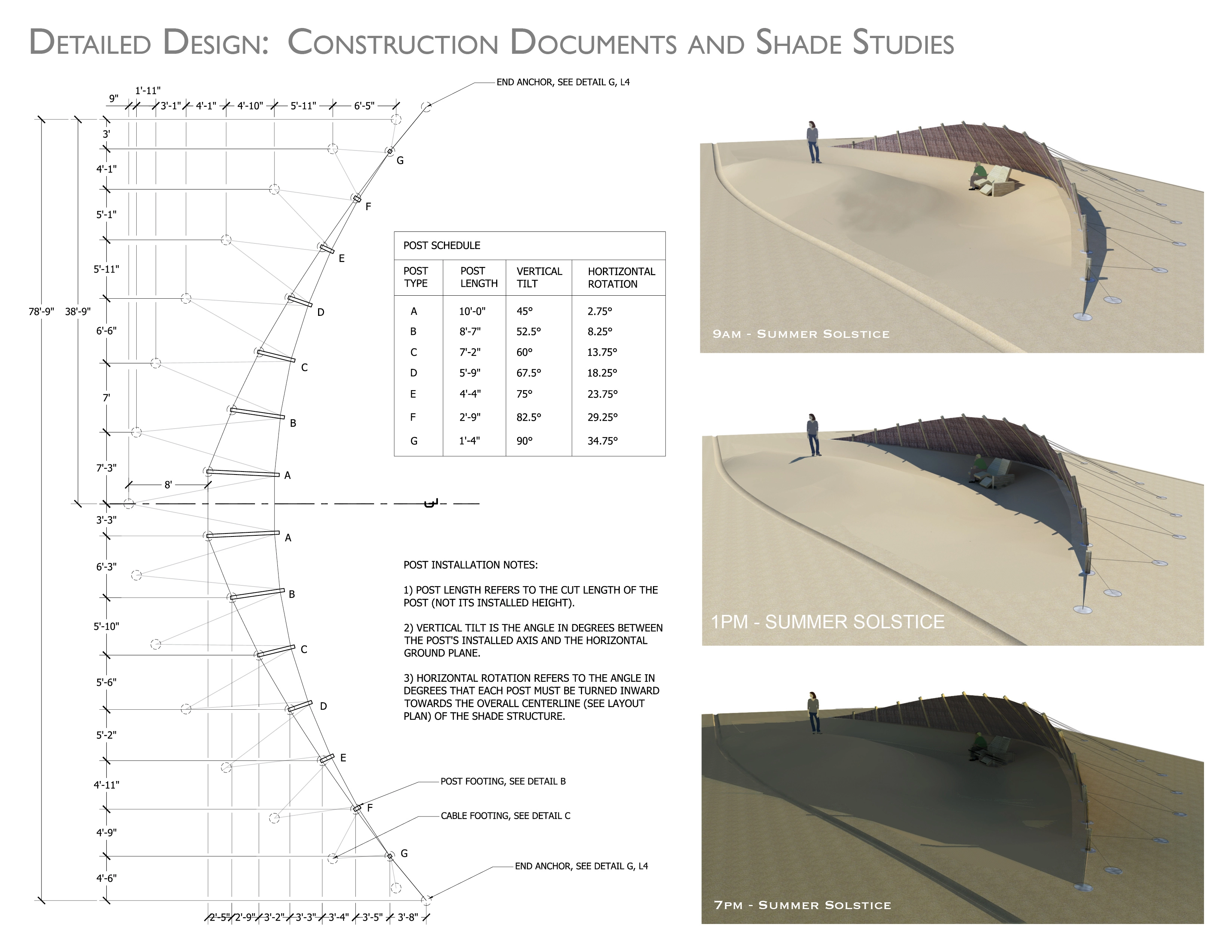
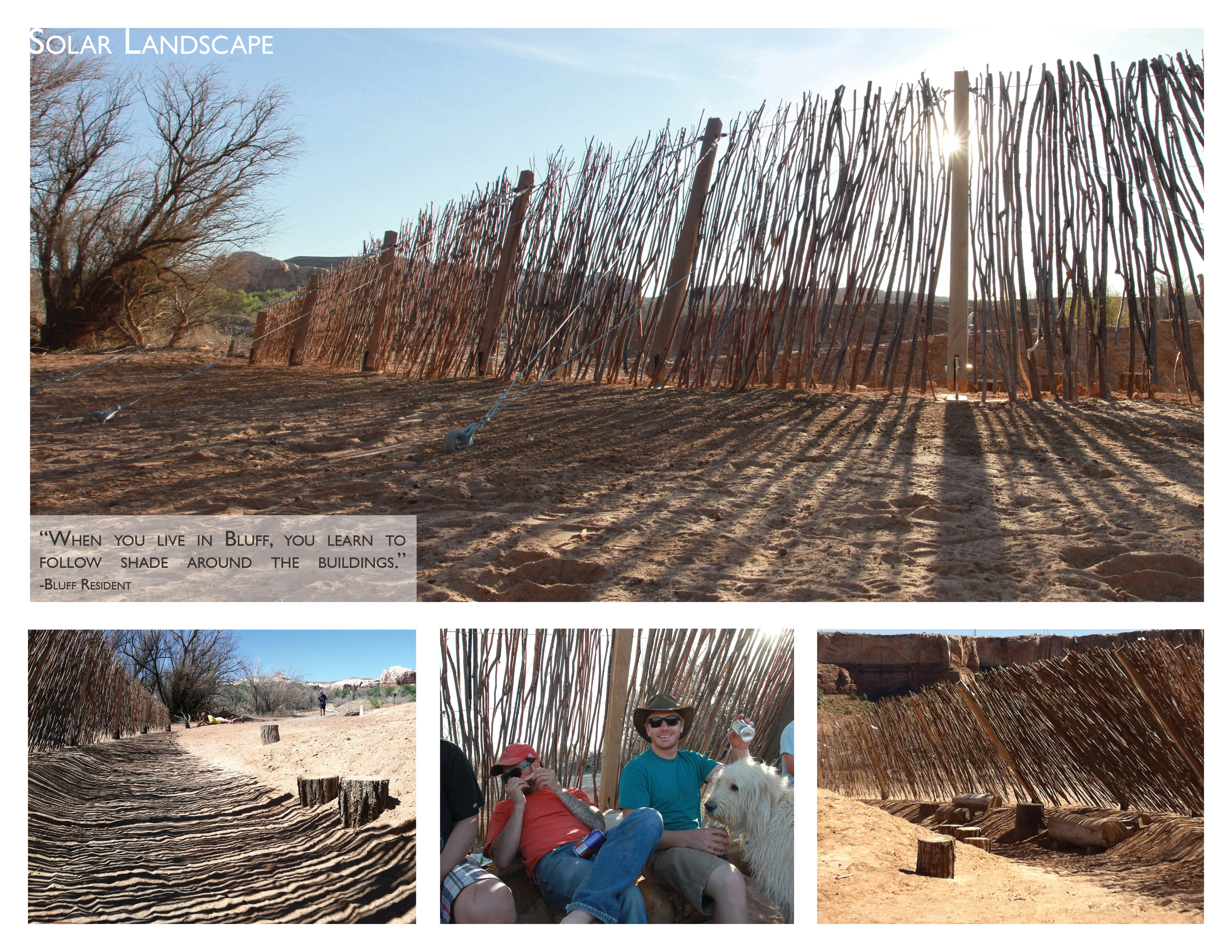
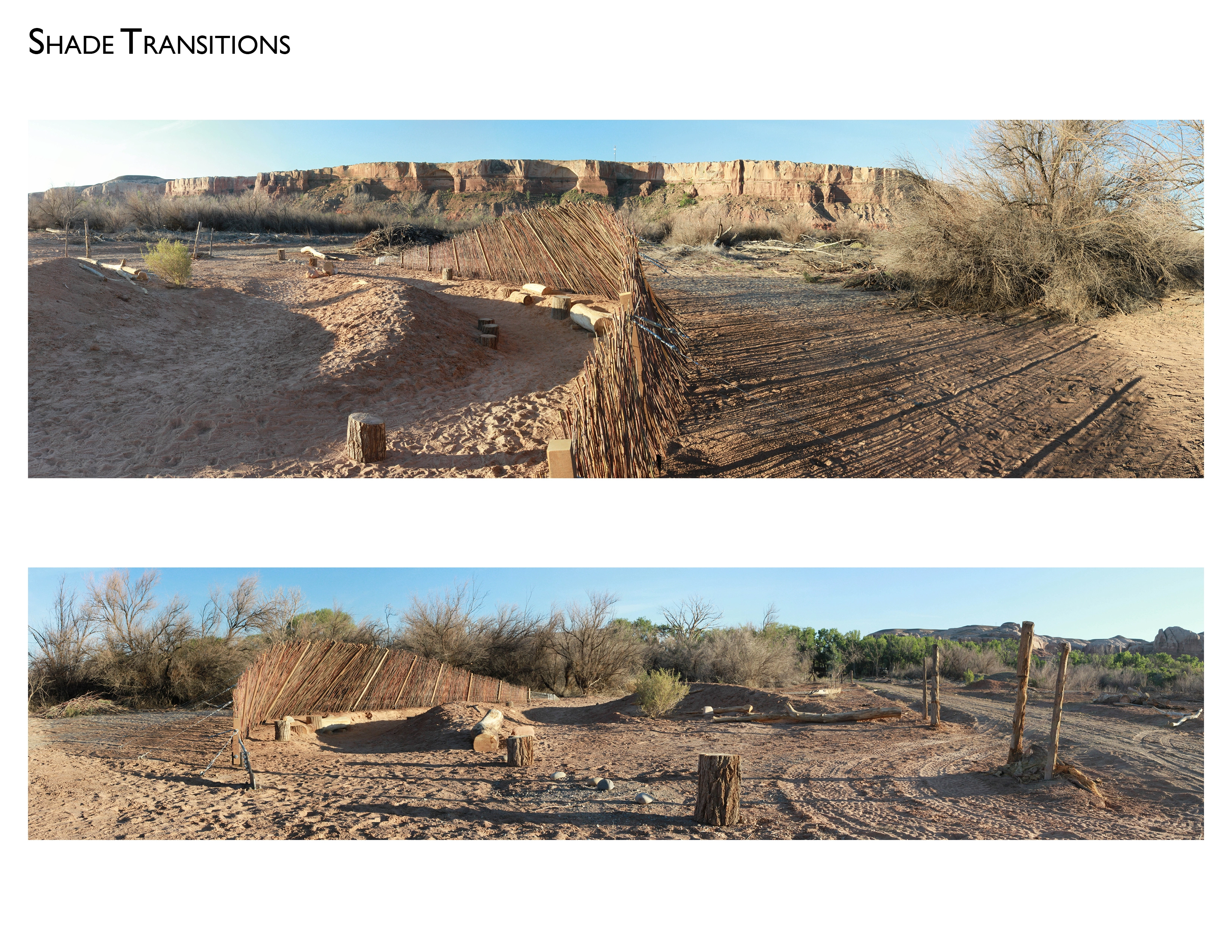
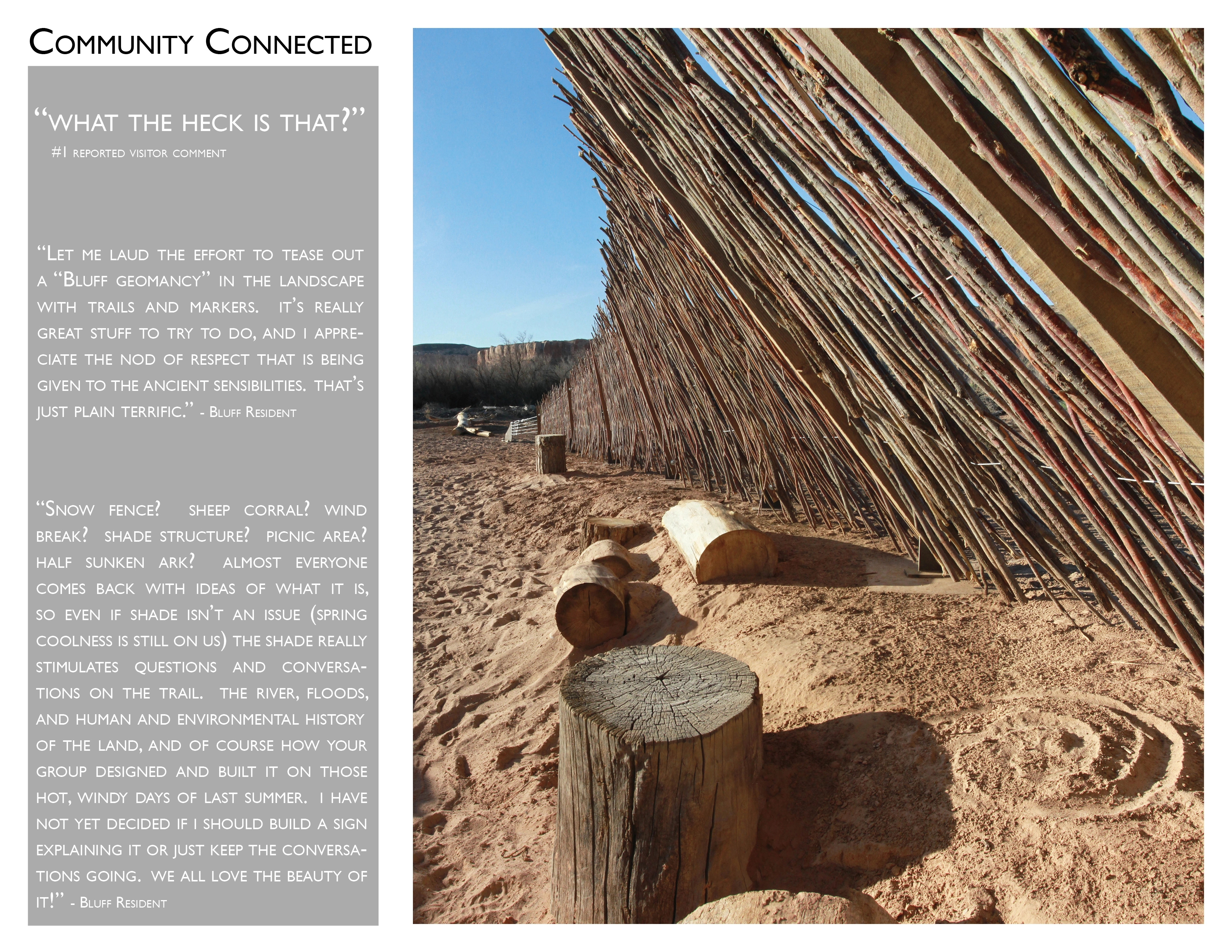
ShadeWorks rises from the desert landscape to provide a place of respite for weary visitors along the exposed public river walk from the town of Bluff, UT to the San Juan River. It forms an organic curve resembling the red rock alcoves seen in the local bluffs. Running the length of 80 feet, the structure visually peels away from the earth just enough to create an intimate space protected from the scorching afternoon sun and wind. The quality of this space is made possible by a system of triangulated tensioned cables that hold the structure taught and upright from the rear. Locally abundant willow are woven through the structural system of cables softening the aesthetics and grounding the structure within the surrounding landscape. In the spirit of ancient Bluff cultures, ShadeWorks opens to the summer solstice sunrise and provides maximal shade during the afternoons of the summer months. It is a place to warm yourself in the cool morning sunrise, to watch the sunset on the red sandstone bluffs, and to connect with Bluff’s communities of the past and present.
-
Design and Build Phases
Astrid Vander
Design Phase
Grant Davis and Xiaojian Guo
Build Phase
Jason Astorino and Peter Lutz
Design Build Bluff
Cindy Bithell, Andrew Foster, Rick Sommerfield and Cortland Wilson
Structural Engineering Expertise
Charles Keyes
Archeologists
Jonathan Till and Winston Hurst
Recapture Lodge
Jim and Luanne Hook
Product Sources
Furniture – Custom Design and Construction by Student team
Fences/Gates/Walls – Custom Design and Construction by Student team
Structures – Custom Design and Construction by Student team
Other – Custom Steel Knife/Anchor Plates fabricated by J M Custom Welding, 2858 S Main St , Blanding, UT 84511
All other building materials (aside from common hardware connections) were locally donated, salvaged, or harvested by the student team.
Advertisement
Related Awards
Award of Excellence, Student Community Service
Stimulating the Senses, A calming Retreat in a Skilled Nursing Setting
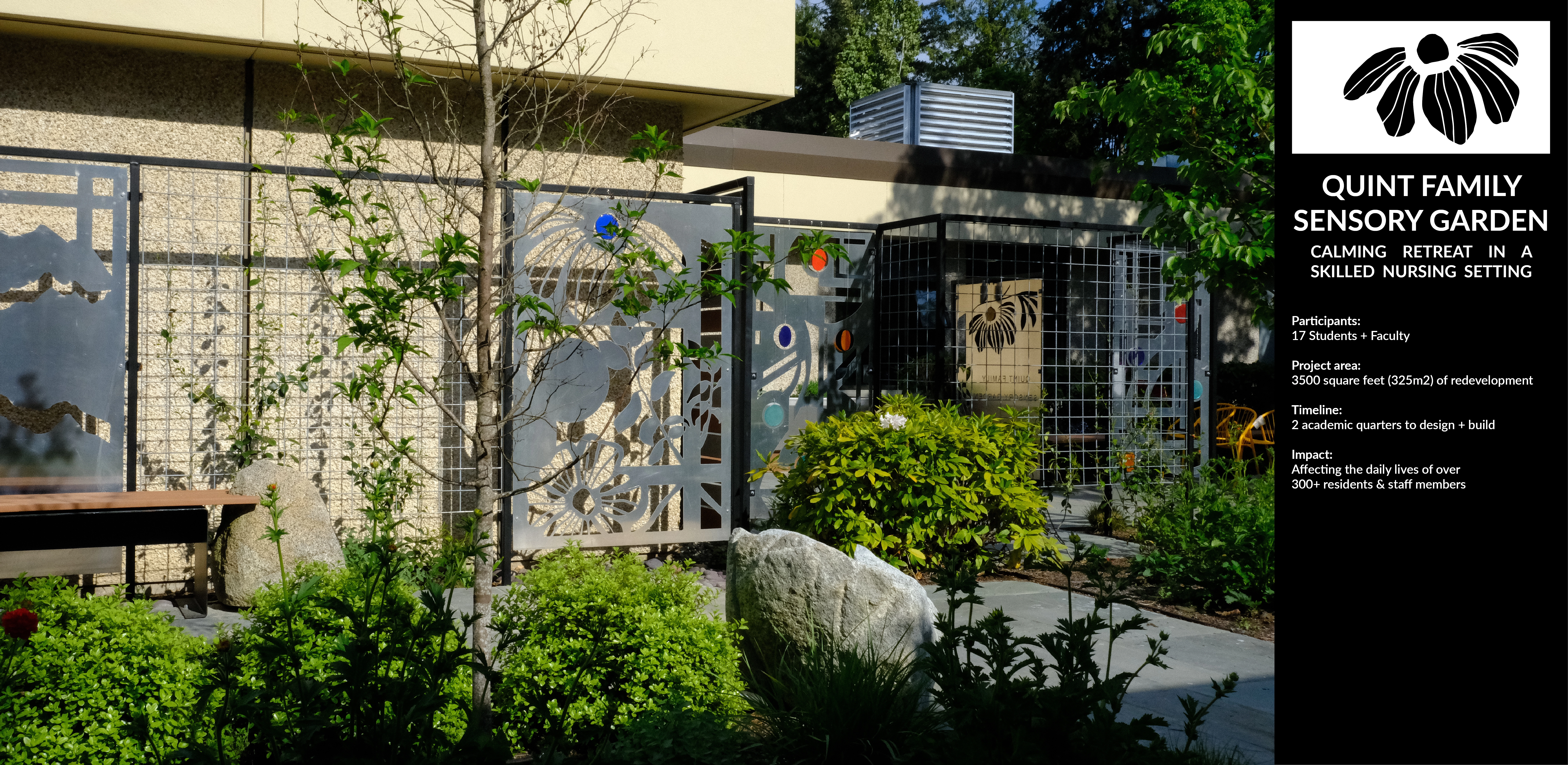
Those living in skilled nursing facilities run the risk of becoming isolated, depressed, loosing self-esteem and in some cases identity. In addition, this is often the winding down of life for the residents and a challenging and complicated experience for many. Despite these common attributes the experience does not have to be this way but can instead be a celebration of life. When designed properly the garden can be a place of appropriate stimulation, participation, community building, and reconnection to the sacredness and benefits of nature. This responsive garden was informed through a participatory process involving staff and residents and offers two “rooms” for each group and places of shared experience and mutual support.