
.webp?language=en-US)


What’s Out There
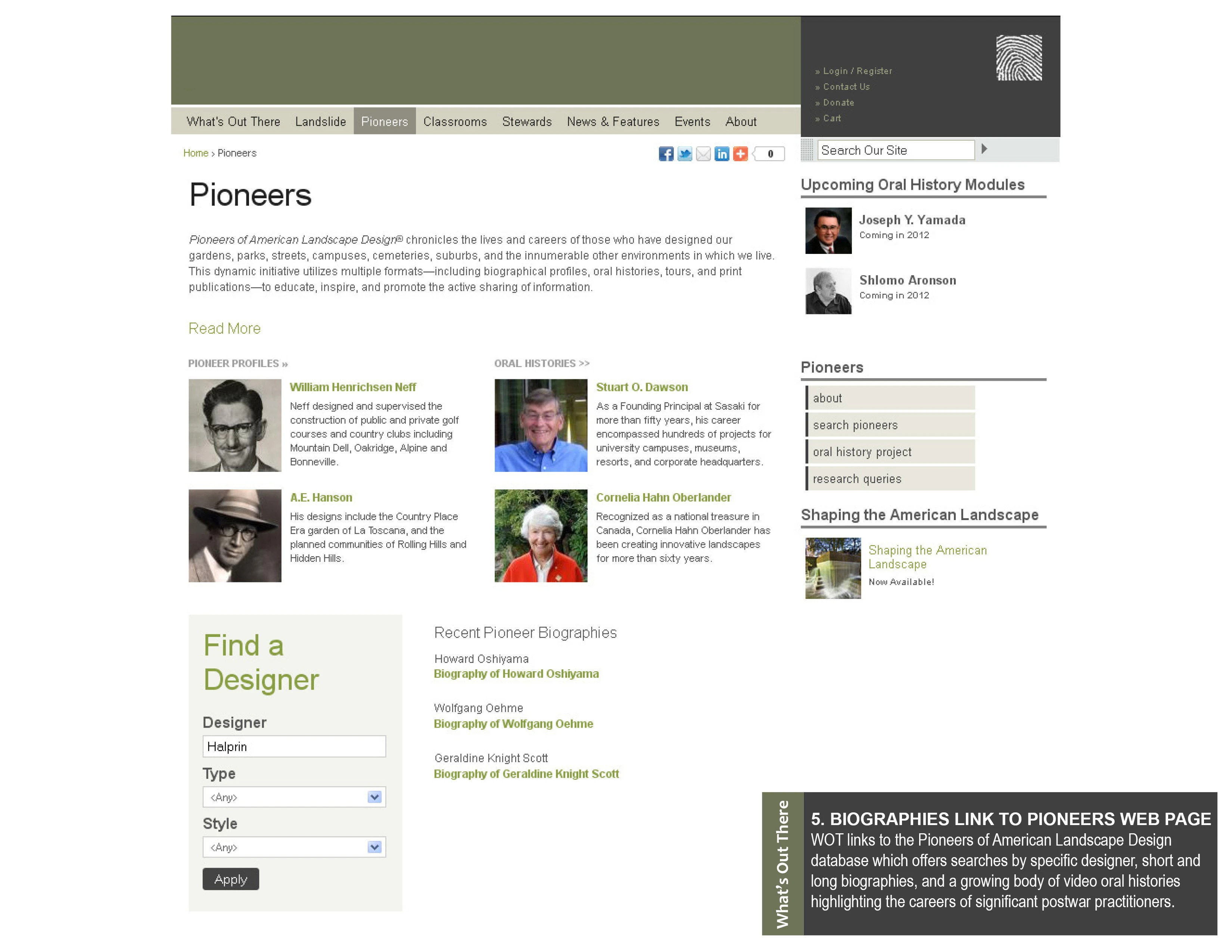
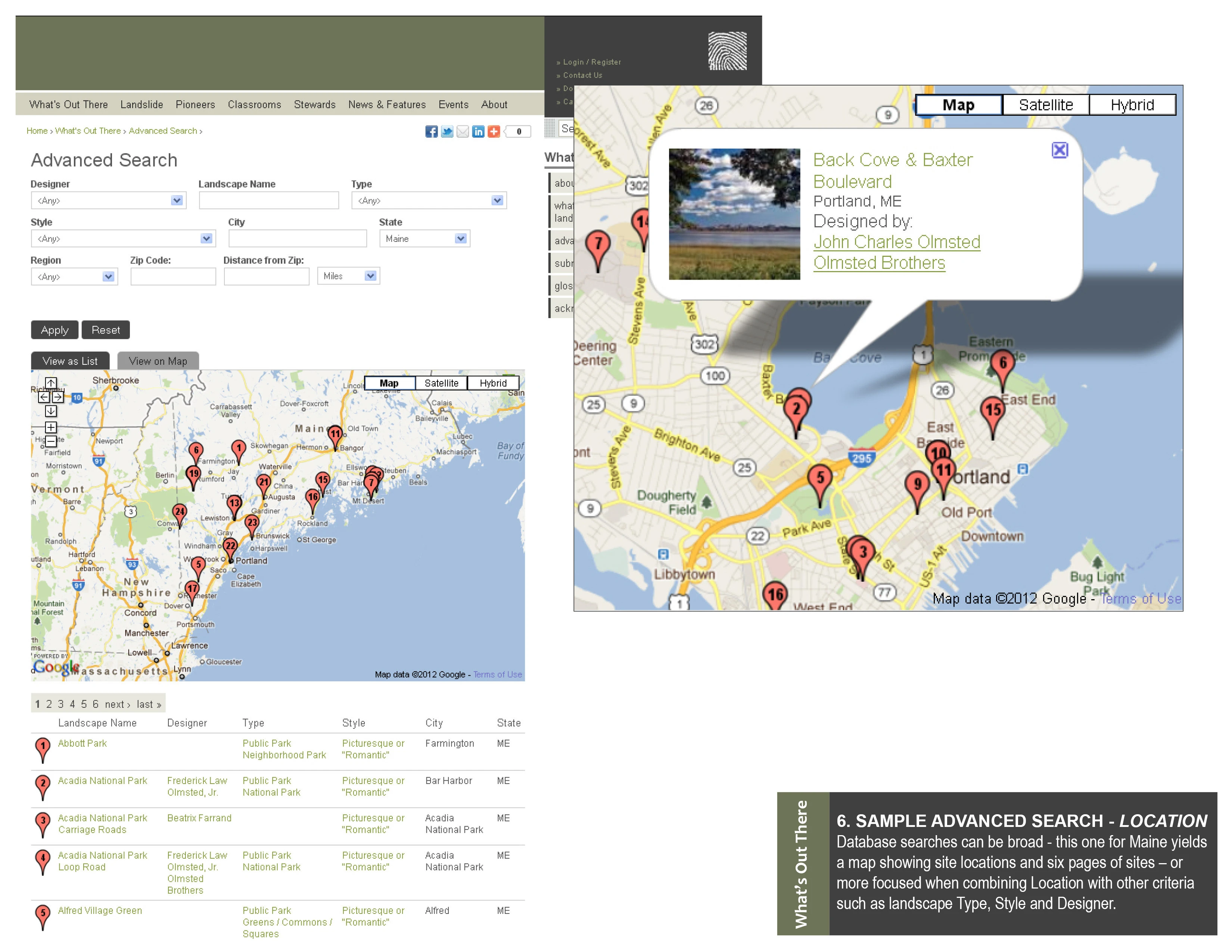
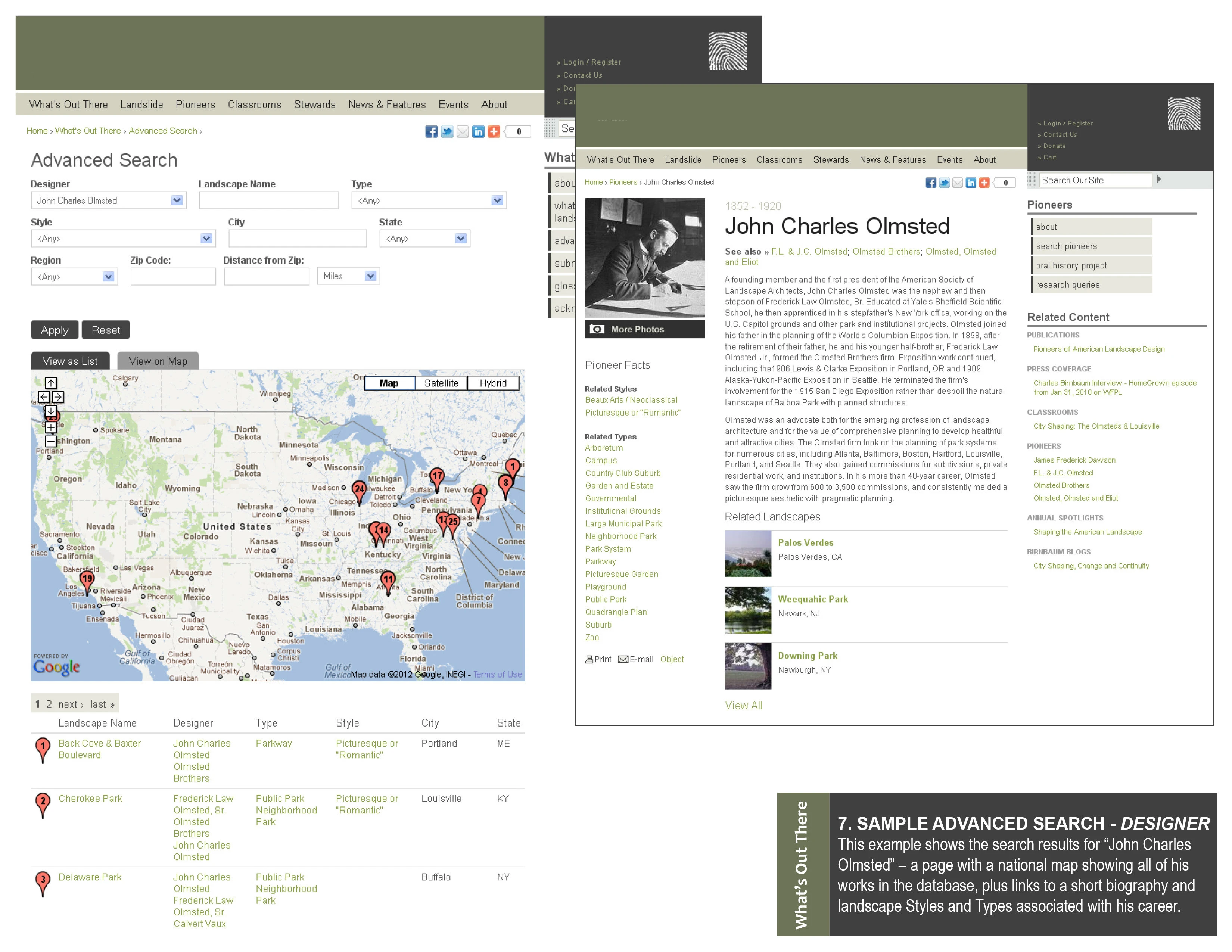
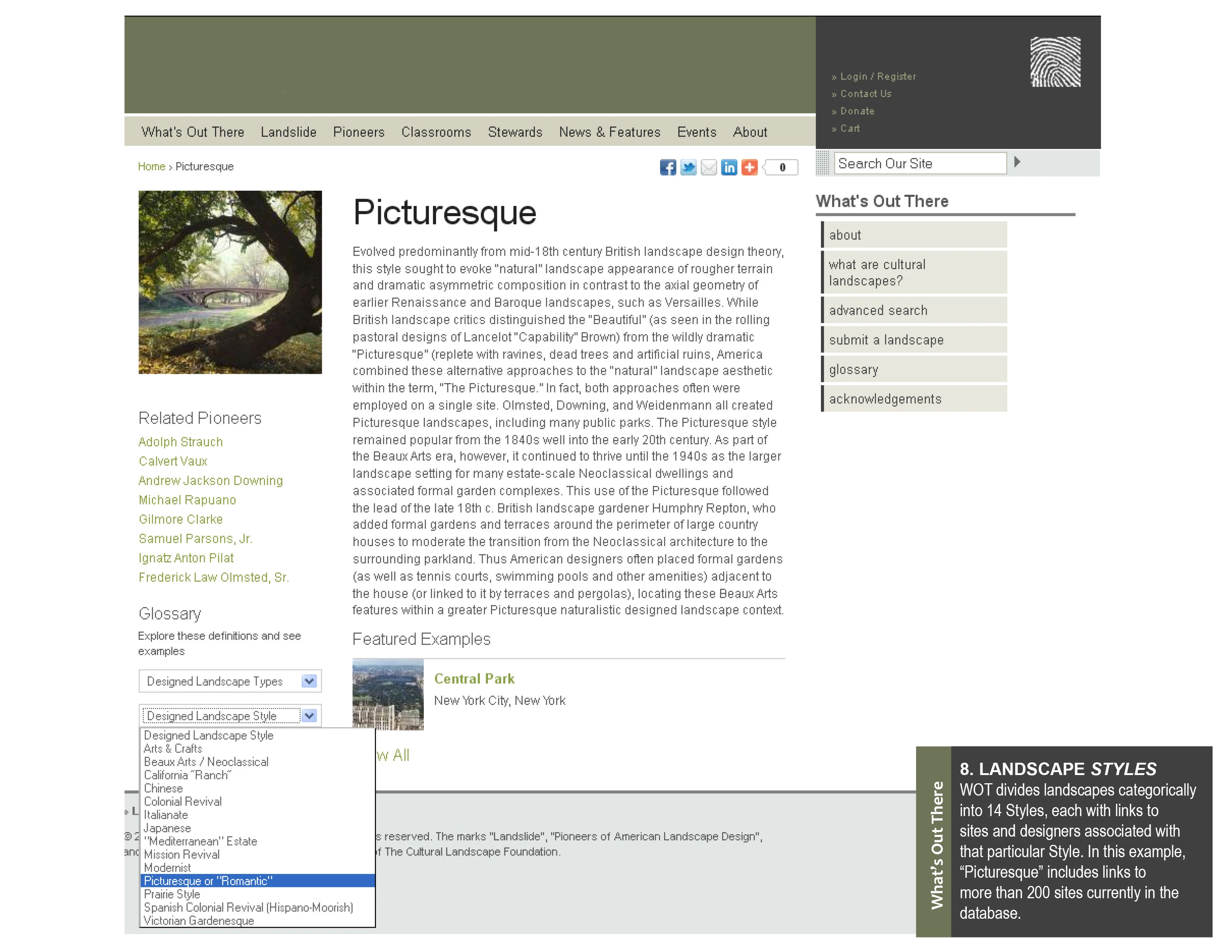
An ambitious project that reaches both designers and the general public and raises the visibility of the profession.
Awards Jury
-
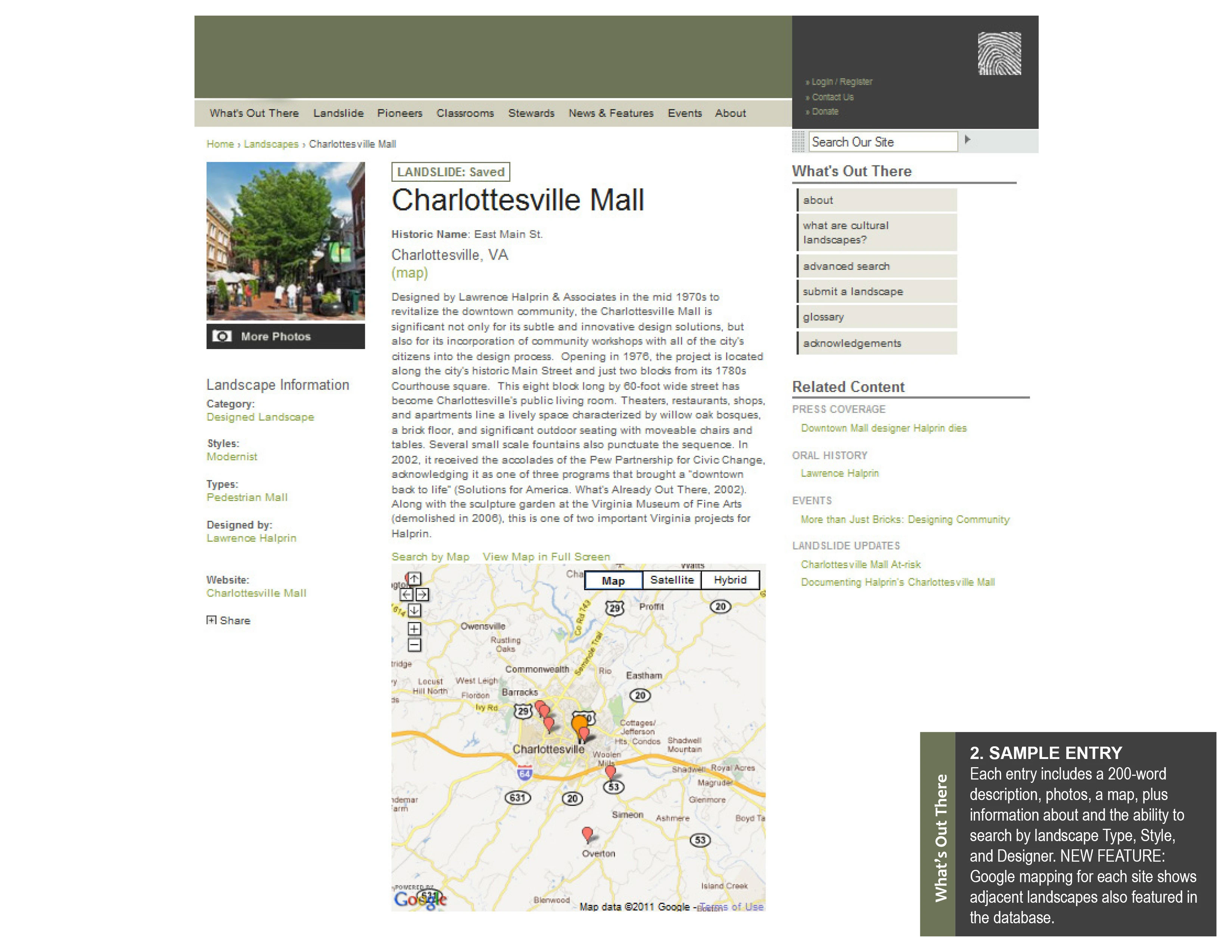
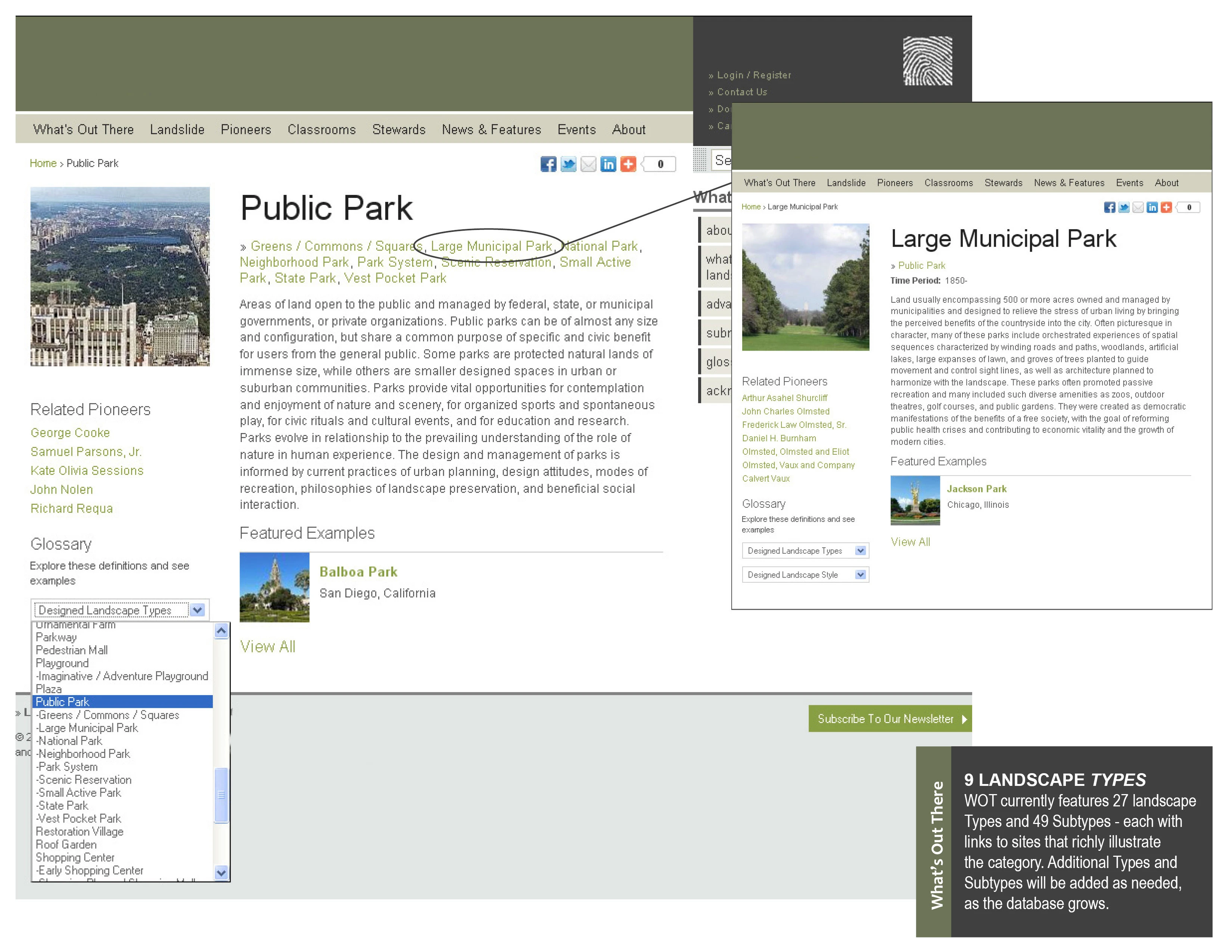
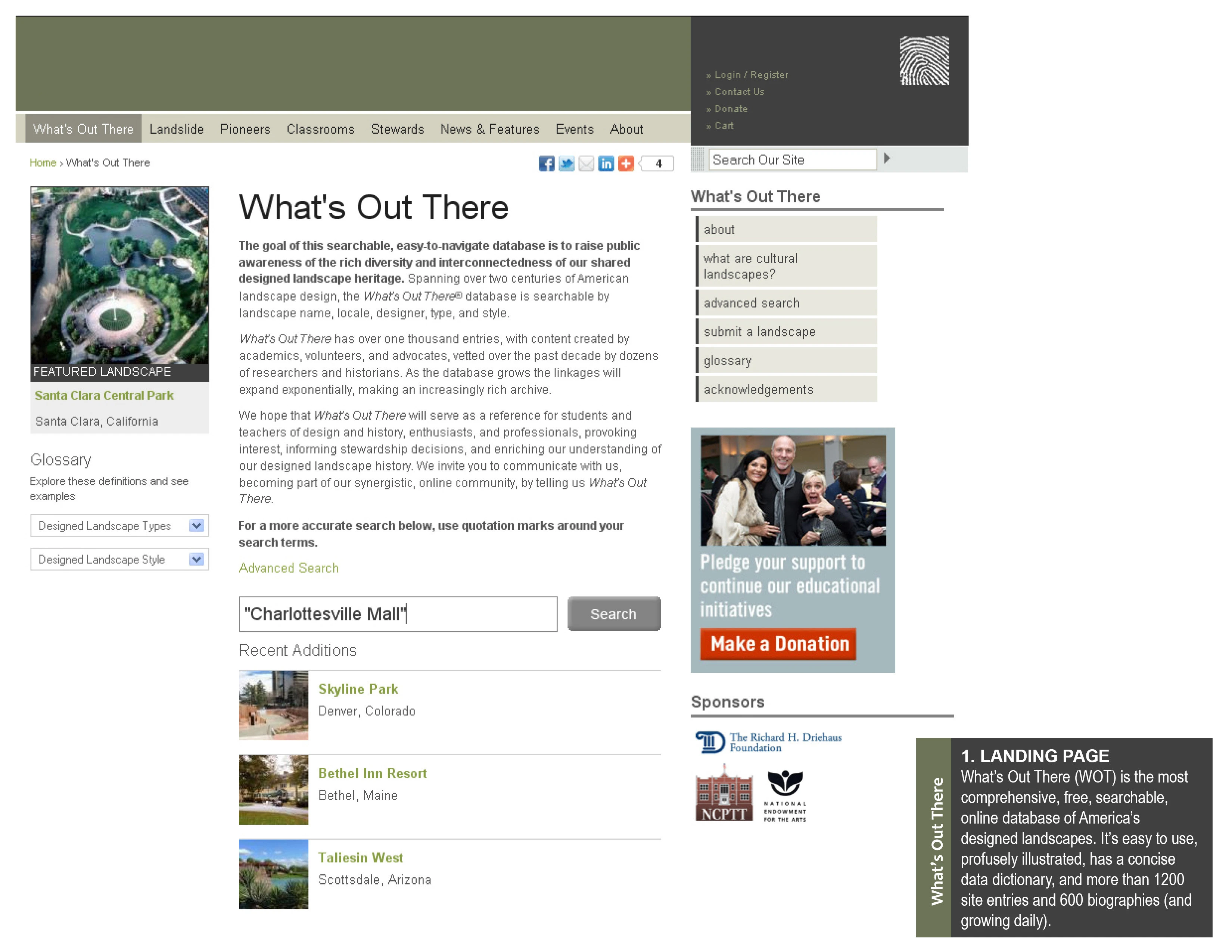
What’s Out There (WOT) is the most comprehensive, free, illustrated, searchable online database of America’s designed landscapes. WOT’s goal is to make the rich diversity and interconnectedness of our shared landscape heritage visible and valued. Launched in October 2009, and recipient of NEA, NCPTT, and Driehaus Foundation grants, WOT currently spans three centuries of landscape design with more than 1200 vetted site descriptions, 600 designer profiles, thousands of images, a detailed glossary, maps, and more.
-
What’s Out There (WOT) is the most comprehensive, vetted, free, illustrated, searchable online database of America’s designed landscapes. The site launched in October 2009 after ten years in development, and has twice been funded by both the National Endowment for the Arts (NEA) and the Richard H. Driehaus Foundation, along with the National Center for Preservation Technology and Training (NCPTT); additional support comes from corporate and private giving.
WOT serves multiple functions and reaches many audiences; most importantly, WOT is a centralized starting point for professionals and practitioners, students and scholars to explore, research, understand and appreciate the interconnection and complexity of our shared landscape heritage. WOT is also being utilized by heritage travelers, gardeners and landscape enthusiasts to understand the designed landscape legacy in their own neighborhoods and across the country. In addition, WOT aids in the public planning process by providing information and context that helps guide change and intervention.
Central to WOT is a concise yet comprehensive glossary organized under 27 types (e.g. Park), 49 sub-types (e.g. Vest Pocket Park) and 14 styles (e.g. Modernist). Written by leading scholars and academics, these categories are presented as drop-down menus, which along with the name of the designer and the location, allow visitors to frame individual research queries.
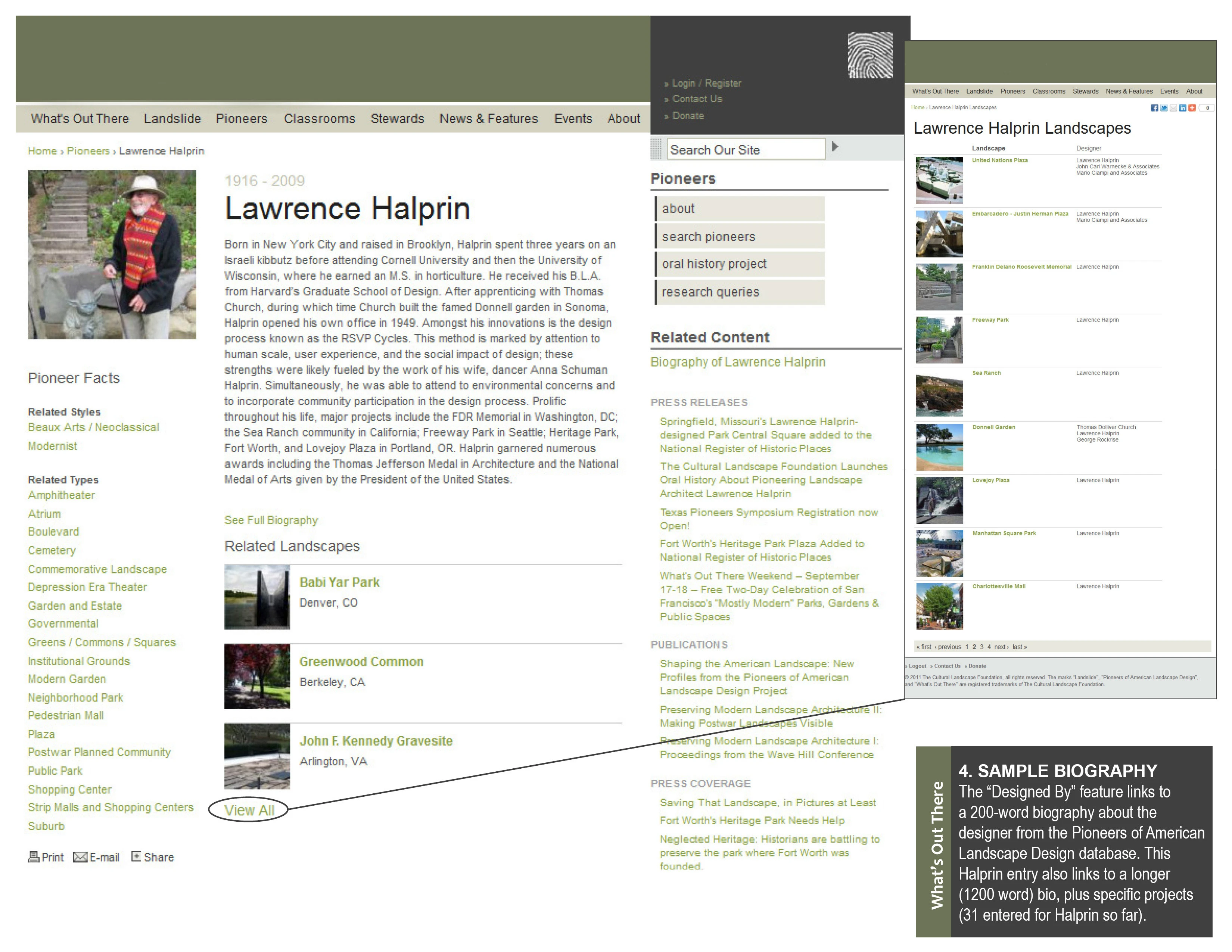
The database also includes more than 600 designer profiles, each with 200-word essays and many with additional, more extensive 1000-word biographies. The designer profiles are complemented by the organization’s publications, Pioneers of the American Landscape (2000) and Shaping of the American Landscape (2009), which contain longer profiles, and a free, online oral history series featuring a select group of influential postwar practitioners.
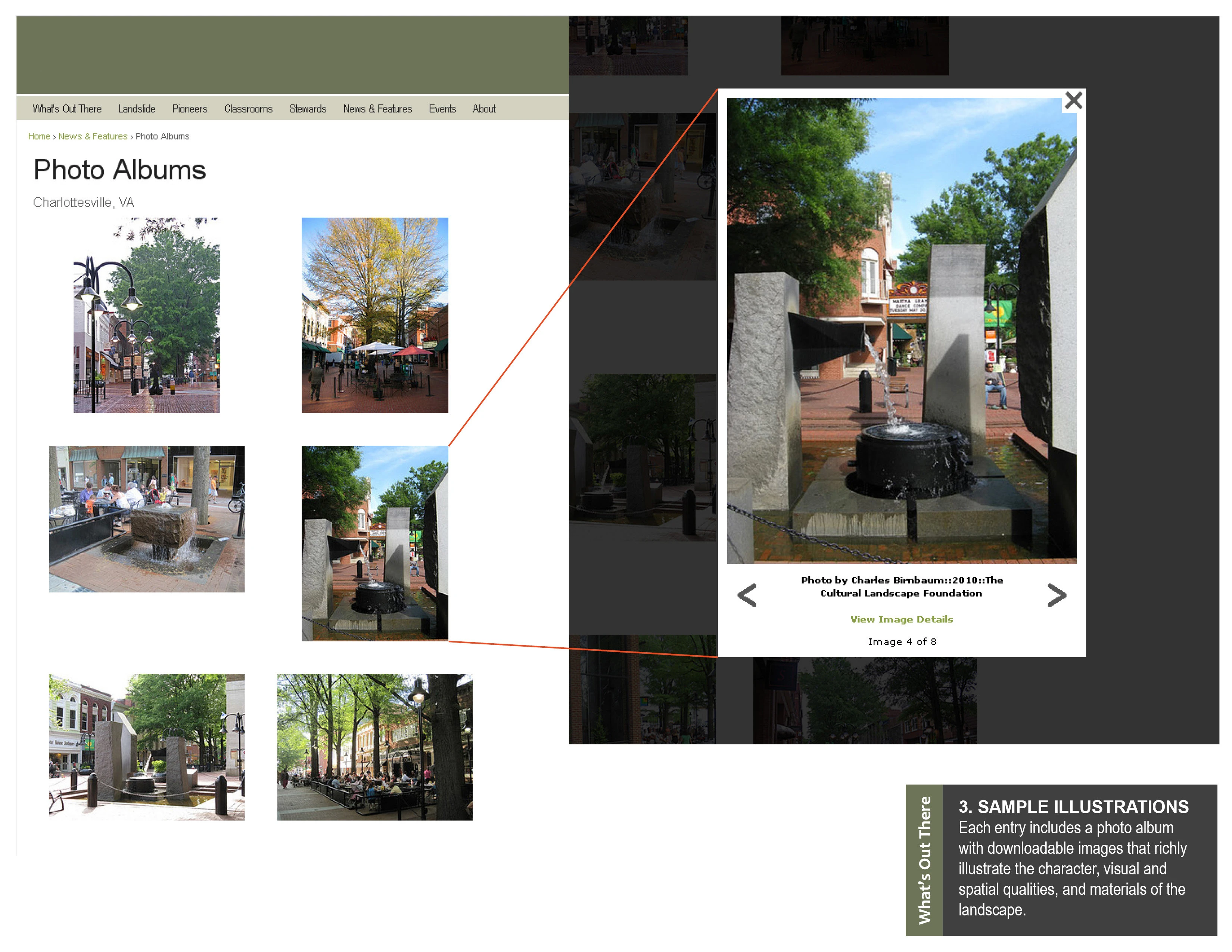
WOT contains more than 1200 site entries, cataloging some of America’s most important designed landscapes from the 17th century to 1976, along with some post-Bicentennial works of landscape architecture designed by practitioners whose careers have been realized. There are historic designed landscapes from all 50 states, National Historic Landmark (NHL) properties designated with significance in landscape, and some of the approximately 1900 National Register of Historic Places sites that include designed landscapes. These site entries are profusely illustrated with current photography and include a concise site description and relevant links to styles, types, designer biographies, related Web sites, and other supporting materials.
Based on targeted evaluation and outreach done to date, we know a broad audience accesses the database. WOT serves as a design and history reference for middle, high school, and college students and their teachers; history, landscape, and garden enthusiasts; and landscape professionals including students of landscape architecture. The database provokes interest, informs stewardship decisions, and enriches the understanding of our shared designed landscape history.
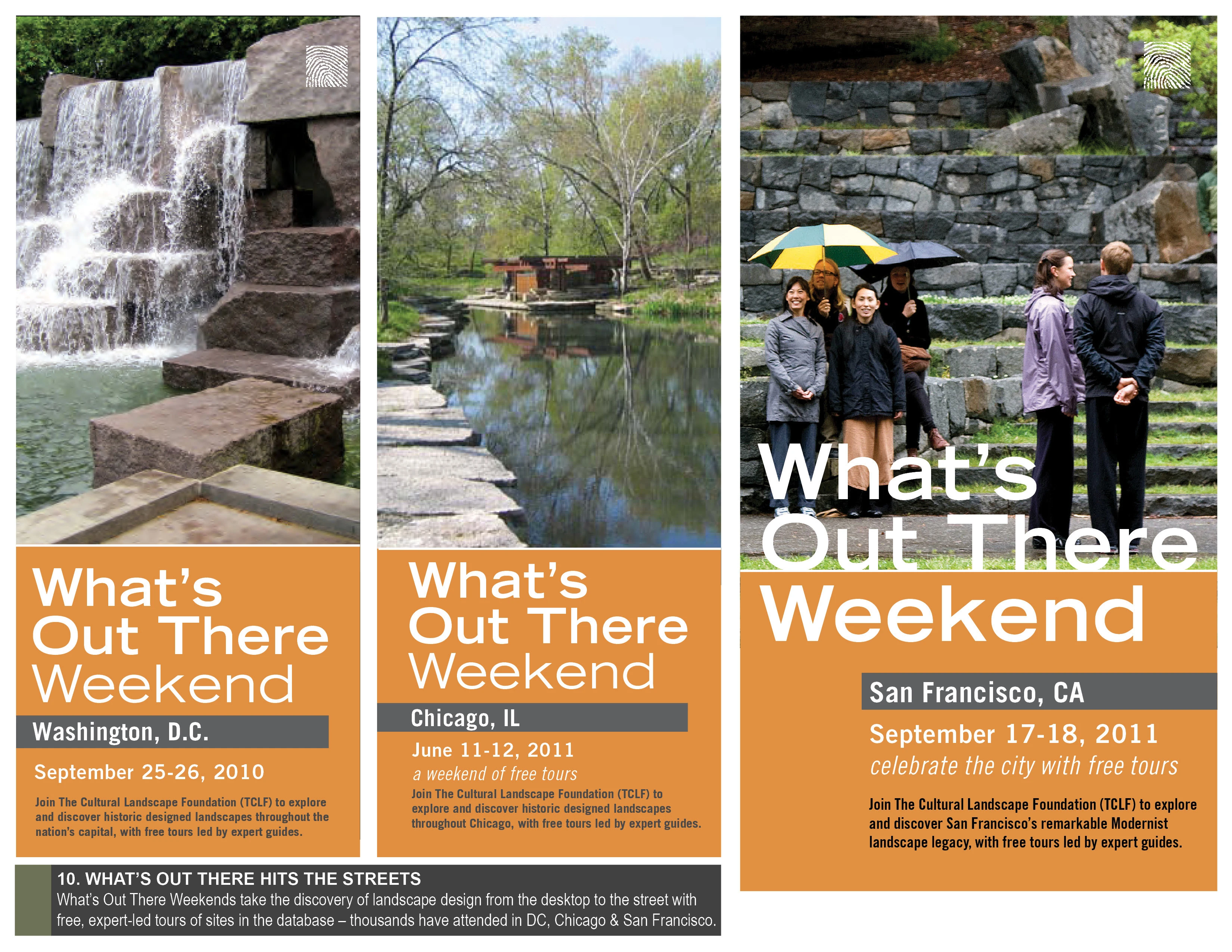
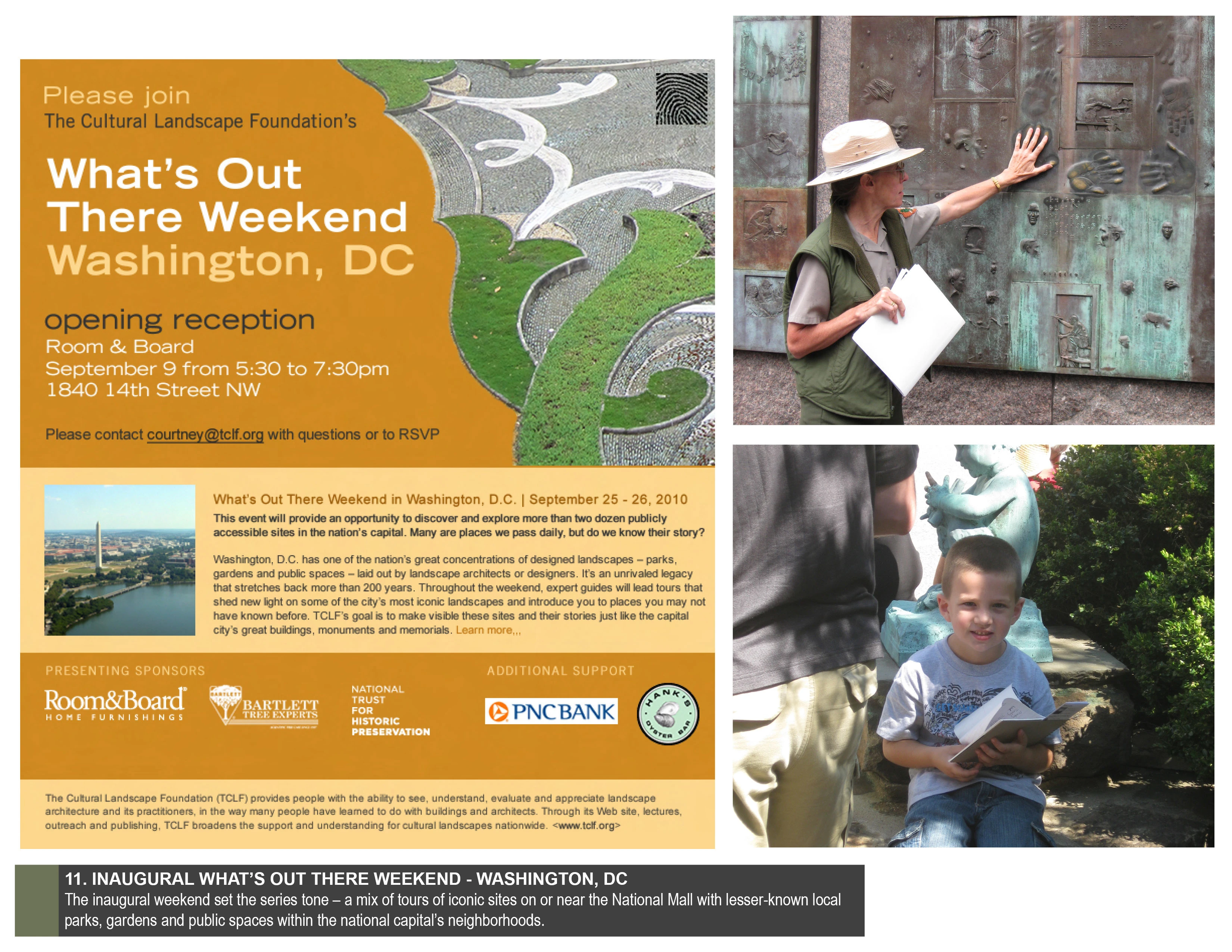
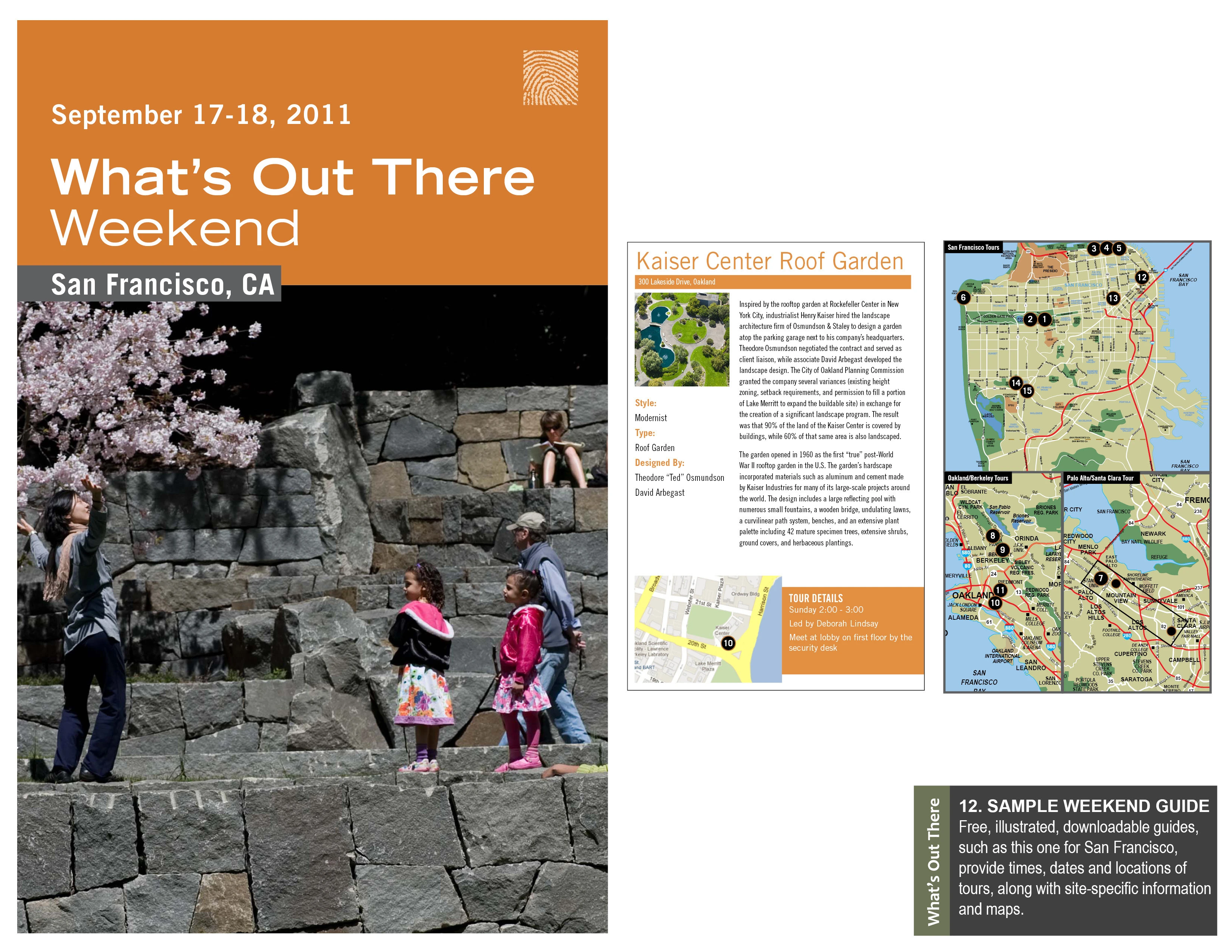
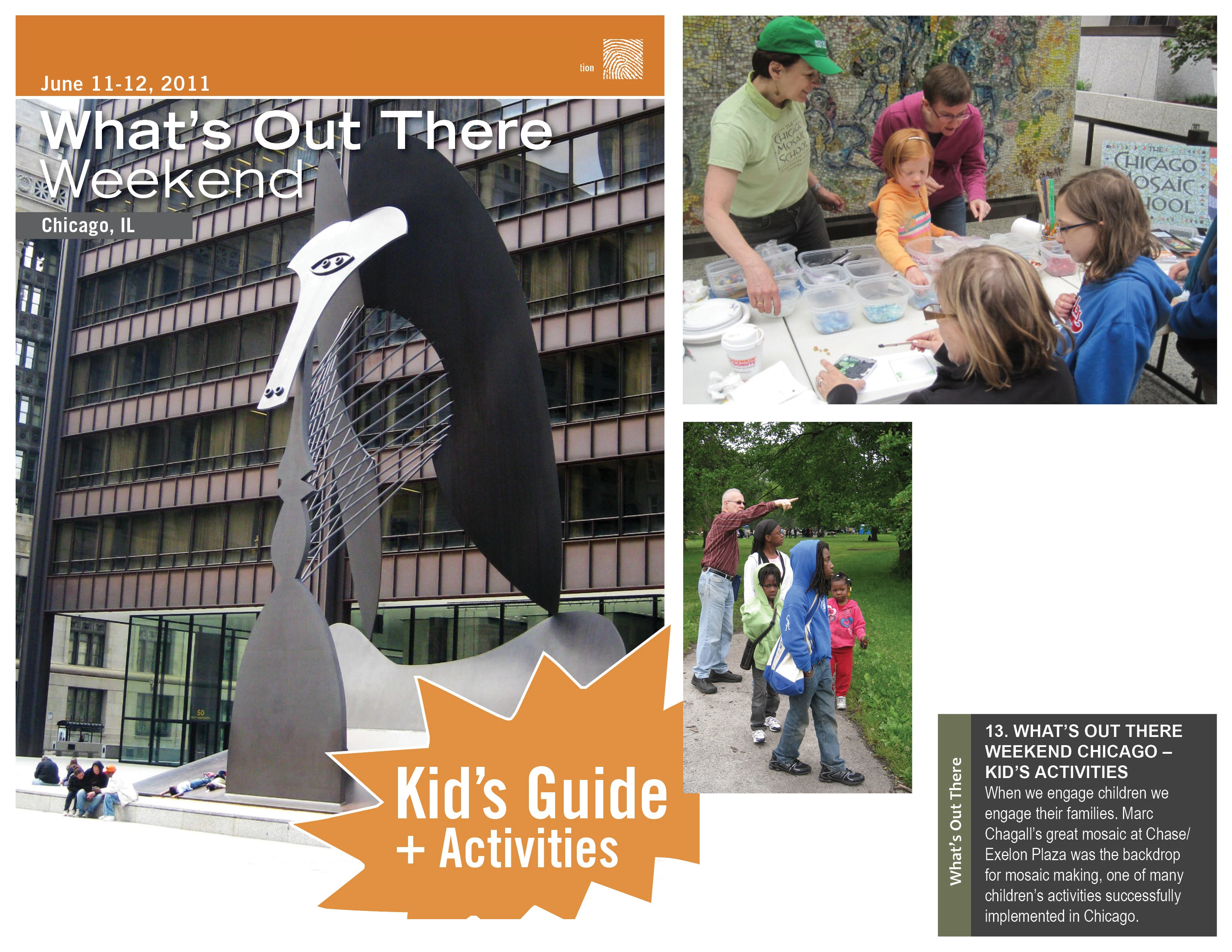
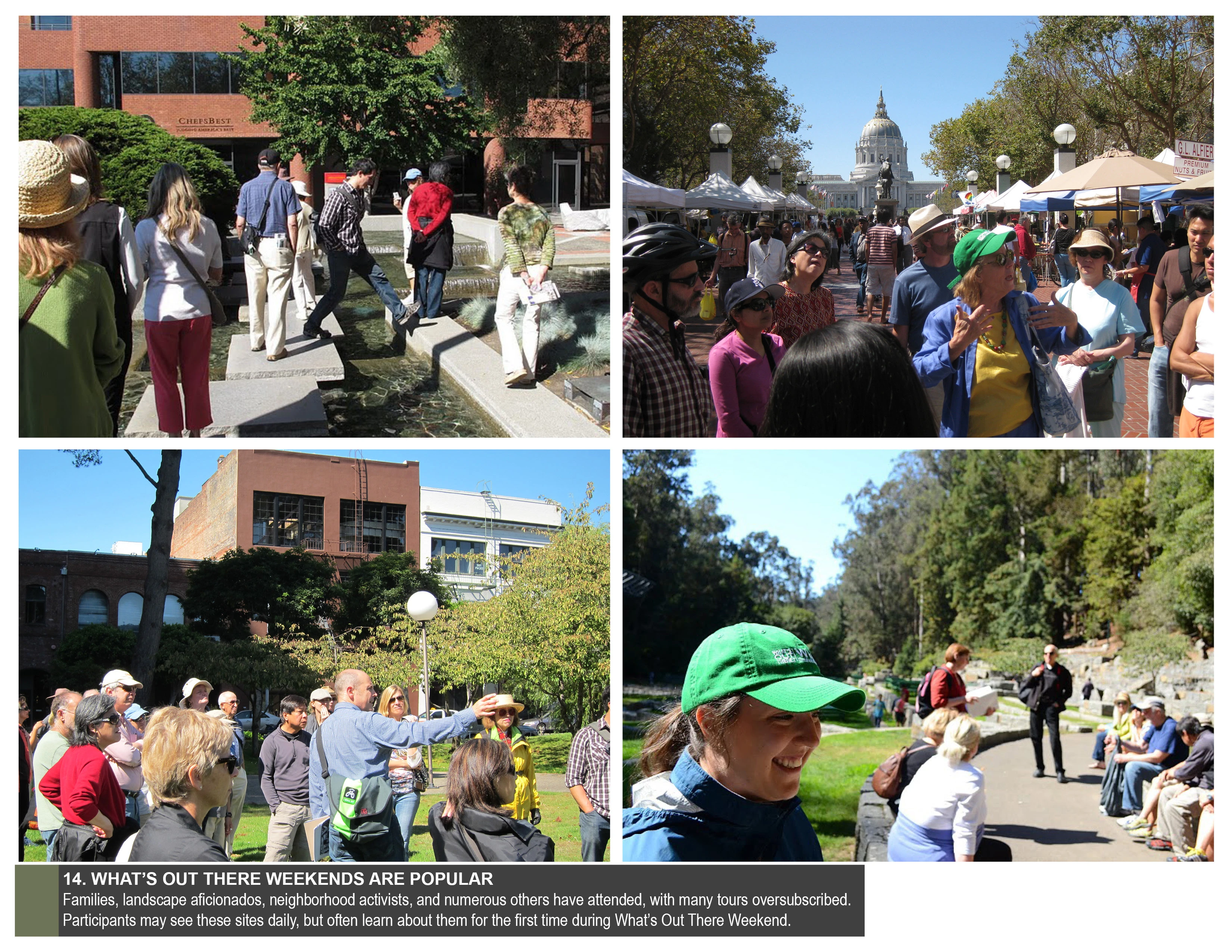
A relatively new programmatic outgrowth of the database, What’s Out There Weekend, features free, expert-led tours of publicly accessible designed landscapes. Serving several thousand attendees, What’s Out There Weekend has been held in Chicago, San Francisco and Washington, DC, with upcoming tours scheduled for New York City and other locations. What’s Out There Weekend helps foster a stewardship ethic by giving people the opportunity to experience anew the public parks, gardens, plazas, cemeteries, memorials, and neighborhoods they may see every day but don’t necessarily know about.
The WOT database continues to grow richer each day thanks to an ongoing interaction with its audience and a series of carefully constructed partnerships with professional colleagues, like-minded institutions, and university-based landscape architecture and planning programs. The university partnerships offer a particularly rich way of interacting and encouraging future stewardship. Supportive faculty have incorporated WOT content creation into their classroom curriculum, which has expanded the database significantly in particular parts of the country. For example, our partnership with Louisiana State University has yielded some 50 new WOT entries in the area, and we expect similar results in 2012 from our partnership with the University of Washington. Through a partnership with the Maine Historical Society supported by a grant from the NEA, the WOT database has recently gained more than 150 Maine landscapes.
What’s Out There offers a unique window into America’s landscape history. As the database grows linkages between sites, designers, types and styles will expand exponentially, making an increasingly rich archive and leading to ever-greater stewardship of our shared designed landscape heritage.
-
Advertisement
Related Awards
Honor Award, Communications
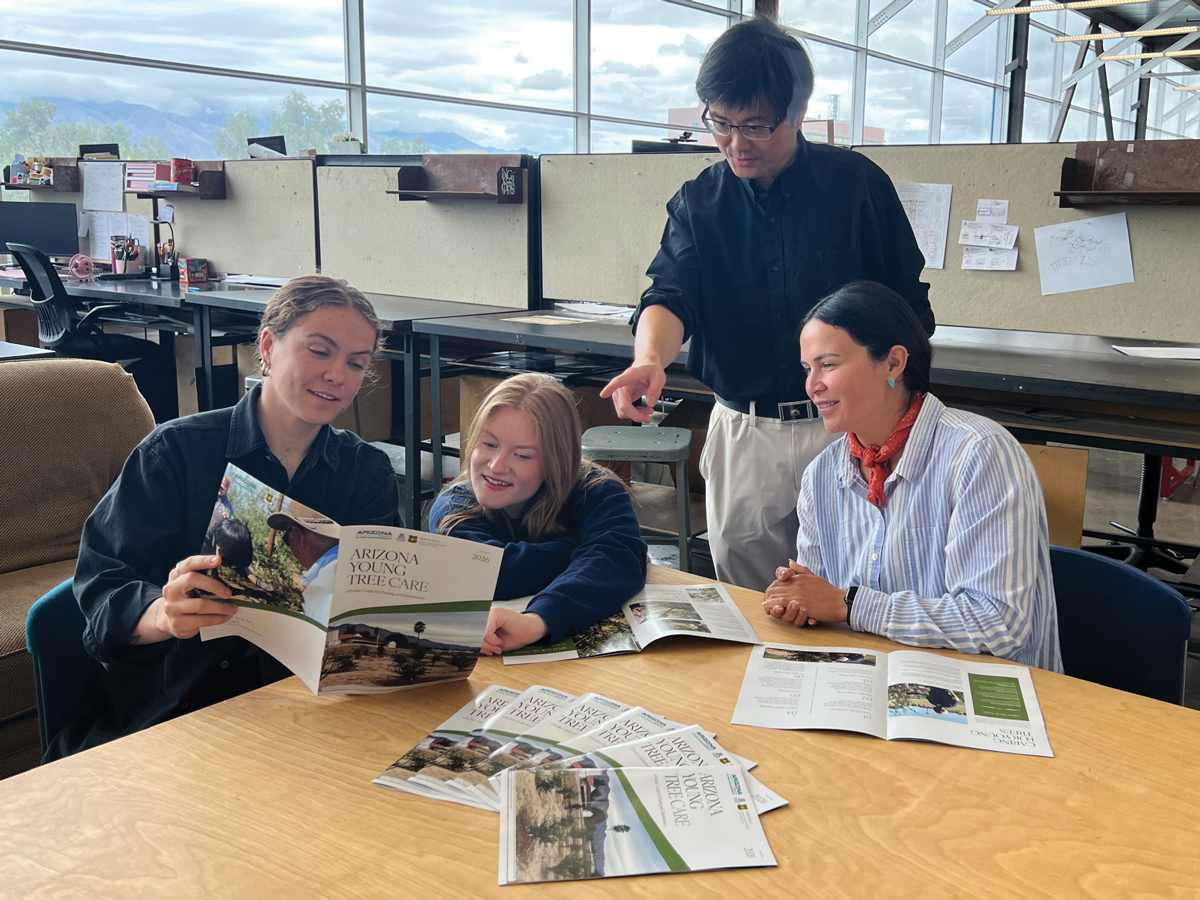
Growing Impact: Advancing Knowledge of Urban Desert Tree Care
The objective of this project is to create a knowledge hub for public education and engagement on tree care and maintenance to increase urban forestry benefits in desert cities of southern Arizona. From 2023-2026, the team has engaged practitioners, government agencies, and the public through workshops, public lectures, and hands-on training on young tree care, smart watering systems, and pruning techniques.