

.webp?language=en-US)
.webp?language=en-US)
Interview Series: Bridging Academia and Practice
An Interview with Yujia Wang, MLA, ASLA
by Sara Hadavi, PhD, ASLA
Landscape architecture education and professional practice can inform and strengthen one another when practitioners and educators have opportunities to engage meaningfully across both realms. While the previous interviews in this series have highlighted practitioners who have taken on adjunct or part-time teaching roles alongside their professional careers, there are also opportunities to maintain an active practice, while pursuing a full-time academic career. This model offers a different perspective on how practice-based knowledge can be integrated into landscape architecture education.
As part of this interview series, the ASLA Education & Practice Working Group continues to explore the diverse ways landscape architects navigate the relationship between education and practice. By highlighting different career pathways and models of engagement, these conversations aim to provide insights into the benefits and challenges of connecting professional practice with academic education.
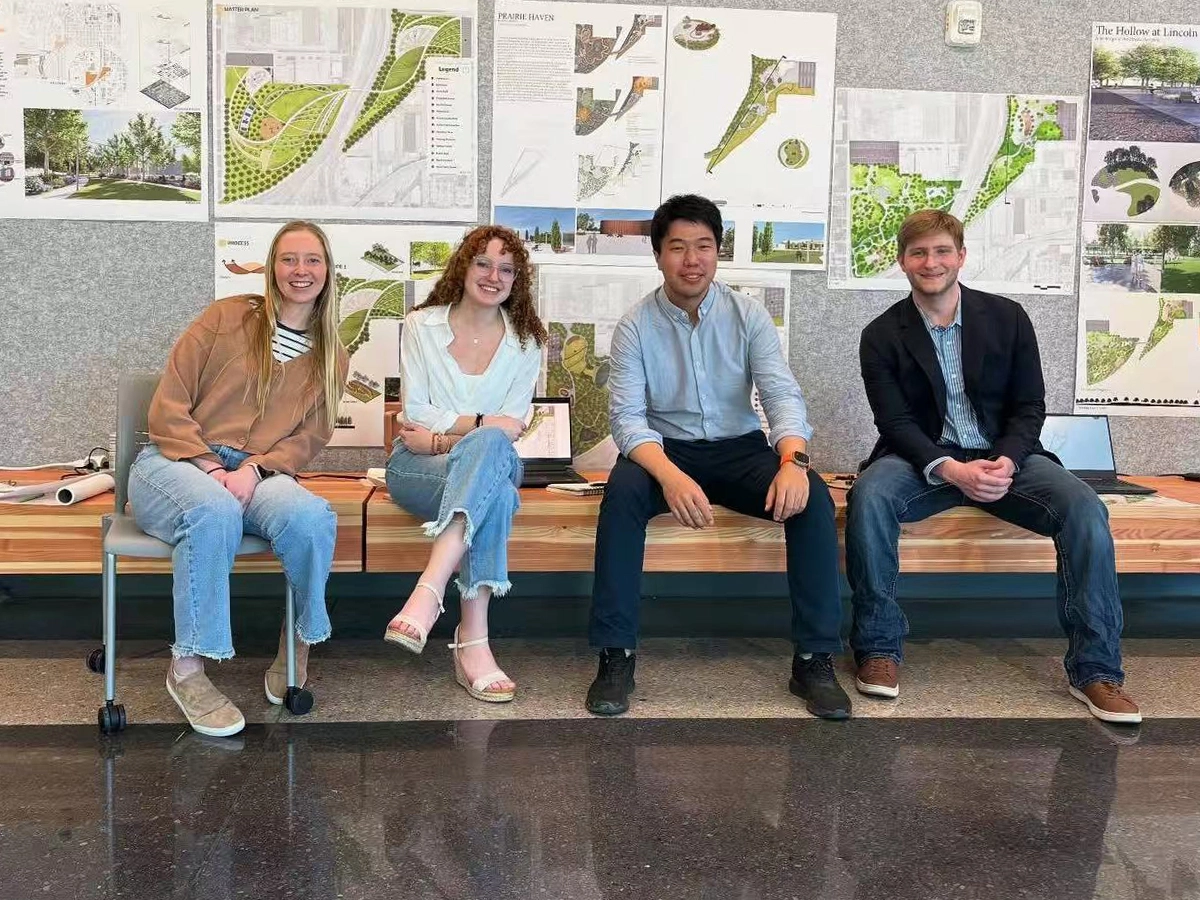
In this fifth interview, we are pleased to feature Yujia Wang, MLA, ASLA, Associate Professor of Practice at the University of Nebraska, whose career combines full-time teaching with his own landscape architecture practice. His teaching approach has been recognized through several awards, and his experience offers a unique perspective on maintaining an active professional practice while working within academia, and on how this ongoing connection can enrich both teaching and the profession.
Can you briefly describe your professional journey in landscape architecture and what led you to transition into teaching?
My first exposure to practice came from two sources. One is the professors I studied with in undergraduate and graduate schools. I was fortunate to work with people who are deeply engaged in practice, working at the forefront of design with great passion, energy, and critical approaches. How they work in and outside of studio continues to influence me to this day.
The second has to do with the incredible urbanization movement in China. Public space is often central to the movement—the way to cultivate and catalyze any new urban areas, large or small, and so emerged many design competitions that I started entering as a student. The concepts of place and of public domain became a foundational understanding. My formal practice experience began at Sasaki Associates, an international office with a very unique culture. There was no rush, in a sense; and it was the right institutional environment to lead, to think, and to come up with strategic and compelling designs. There, I had the opportunity to work on a series of major public-space projects in the US and abroad. All this combined then gave me a great feeling for how and where to start my own creative practice, and what its philosophy should be. I've always enjoyed abstracting and distilling design practice. I had also done work in public curation at the time at a couple of important design biennales and when the right door happened to open, I walked through it into academia.
Can you tell us about your teaching approach and how it has been shaped?
My teaching spans a wide range: design fundamentals, landscape studios, engineering courses, and research seminars. The methods vary accordingly, but the common thread is creating a learning environment that is intellectually fun, where students feel ownership, where they are given the space to embrace uncertainty and risk. In short, an environment that can unlock deep learning potential.
If we narrow the discussion to design, the core remains what makes design so captivating; the experimental worktable that has traditionally defined design practice: a table, a few chairs, people sitting around drawing together, giving shape to ideas, striking sparks off one another. I don't believe design can be fully rational, and I want to cultivate, from the very beginning, students' ability to engage in the creative process; the thrilling unknown, and experience for finding clarity from the initial impulse. It really helps students gradually discover who they are, how they best create, and how to grow that sense.
The other thing I try to place emphasis on is the capacity for abstraction—for example, to define and elaborate on a given issue; to distill questions, principles, mechanisms, etc., from a wealth of information; to come up with a vision, frameworks, and strategies that could guide actions, and to eventually unpack that criticality through spatially driven solutions. It determines how we meet a constantly changing world and its issues. On this point, I invite you to read my article "The Rights And The Place (TRTP): A Pedagogical Method for Grounding Abstract Challenges in Undergraduate Landscape Design Studios," published in Landscape Research Records, 2025.
All of this draws on my own experience—my understanding of successful teams, effective design, good ways of working, positive culture, and impactful learning.
What motivated you to take on a teaching role?
I enjoy taking design processes apart and developing generalizable principles, so whether it's pedagogical frameworks or day-to-day desk crits, I could see myself liking the work very much and indeed, I have found it very interesting and energizing. Over time, I have also come to realize that this makes it very natural to teach in a way that embraces the individuality of each student, which is great, because it recognizes that there are many creative pathways, that learning design is really a process of students discovering who they are, how they create, and how they can magnify their own potential; it also builds ownership and agency. It also has far-reaching influence as seeds of thought are planted. And seeing students react to your teaching, as they question, create, and grow—that is incredibly rewarding. It gives me a great deal of energy in return.
Was teaching something you had always considered, or did it emerge organically?
Mostly the latter; it emerged gradually and organically. Over a number of years, I had the opportunity to teach studios and guest reviews very occasionally, and I knew I was good at it, both from how I felt and from people’s reaction. Then there’s also a bit of a leap of faith, because I never fully understood what full-time academia work meant until I was deep into it, but I was interested and adventurous enough that I decided to do it anyway.
What were your initial expectations about teaching? How did the reality compare?
On the whole, not far off; after all, I came up through the student side of the table myself. The hard part of teaching is probably finding the right rhythm, which takes time. But with passion and a sense of responsibility for students and for teaching, the rest are technical problems, and none of them are hard to solve.
What have been the most challenging aspects of transitioning from practice to education?
I entered academia at an odd moment, Fall 2019. The difficult part was that the second semester ran very quickly into COVID, with a whole set of online teaching transitions to solve. There were other challenges, too, but they blended into that period, and I hardly recall them as such.
What is your teaching load and how do you balance your time and energy between professional work and your academic responsibilities?
I typically carry a 3-2 load, on top of research and service. I don’t know if there is a good way to balance it all with a full-time position in academia. Each commitment demands a great deal of time.
How do you sustain your creative energy across both domains of practice and teaching?
This I find easy. Working with students on design isn't a depleting activity. Like practice itself, it's full of creative passion, fresh and inspiring. The students give me a lot in return.
From your perspective, what are the most significant gaps between landscape architecture education and professional practice?
The gap question is an interesting one, but it needs a scope. Teaching time is finite, and so is what students can produce and absorb within it. Landscape practice is enormously broad, from large-scale planning down to a small garden, and each kind of practice has different demands. Then you have AI, the emerging disruptor. We need to admit that gaps will always exist, and they can never be fully closed. So, perhaps it’s more relevant to ask the question at a higher level: which thinking skills are universal? Which design approaches lie closest to landscape's core identity? I mentioned several points earlier, the capacity for abstraction, initiative, intuitive creativity, etc. Differences in scale, emphasis, or tools are more of a matter of each program's focus and identity.
What skills, knowledge areas or habits do students often lack when they enter the profession? How have you tried to address these gaps in your own teaching?
There will always be a period of adaptation when it comes to specific skills and habits; every office has its own area and way of producing work. From my own vantage point in practice, what I hope for in a new colleague includes people who are curious, who dig into and define problems, who venture ideas and designs, who try placing their own thinking within a framework, and who can communicate that thinking clearly through the medium we use most—sketches or models. I believe that whatever the context of design practice may be, a young professional like this will grow into an important member of a team very quickly.
When I design courses with learning objectives and approaches, and conduct day-to-day engagement, I always start with these foundational qualities. At this point, I think it has become a positive culture in the classroom. I think our students have made very good progress.
What courses do you teach and how do you bring real-world experiences and constraints into your classroom or studio?
I teach two landscape studios (Studios II and III), Site Systems I, a landscape research seminar, and a design thinking course open to a broader student body. Take Studio III: its sites have always been real-world projects, which bring rich contextual information and practice background into the course, constraints such as historic preservation, ecological conditions, and stormwater, along with motivations, stakeholders, and so on. At the same time, the framework remains a fully pedagogical one, not a practice project: I have a clear critical approach, spatial equity, and a set of distilled design frameworks, processes, and exercises mapped to well-defined learning objectives. I find this a good way to strike the balance.
How receptive are students to learning from someone whose primary background is practice rather than academia?
We've never framed the two against each other, but students do like to see how what they're learning maps onto practice. My sense is that as a student, you always want to get your feet on the ground quickly and to fully visualize everything. I find myself, if anything, reminding them of the value of abstract, theoretical knowledge and discussion, and of keeping something “floating” for a while.
Can you share a specific teaching strategy or project that helped connect students to professional realities?
I like to contextualize what we work on in any exercise, our learning objectives in practice, whenever possible. I give students a variety of scenarios of how they could be useful and sometimes share practical examples to illustrate them. Students enjoy having that birds eye view onto what they are doing now and it creates space for some fun conversations.
One thing to be cautious of, I think, is that while teaching can (arguably, should) be rooted in practice, it cannot be equated with practice. It should really begin with clearly defined learning objectives and critical approaches. To do so, it requires abstracting practice into clear, generalizable frameworks.
In your view, what unique value do professional instructors bring to landscape architecture programs?
Many colleagues in academia come from a practice background, including some who still practice; many are full-time faculty, myself included. Conducting academic work from a practice background creates a unique chemistry in advancing design theory, in design research, and in connecting practice, including knowledge, skills, viewpoints, and collaborative relationships, with pedagogical development. Our program also has many adjunct faculty involved in teaching, and they are deeply caring people, generously passionate about nurturing and guiding the next generation. Students can feel that care, and it becomes a part of the community culture that they start out with. Their practice experience and perspectives are, of course, very valuable for the students in their own right.
What institutional support (or lack thereof) have you encountered as a practicing instructor?
Our program has been a very supportive environment. Some general issues that people on non-tenure lines might face, I think, are heavier teaching loads; research support issues, for example, eligibility for certain research funding; and not always being included in faculty governance.
What are the limitations or frustrations of being in a practicing instructor role?
If this bothers you, not every practice-oriented faculty role is tenure-leading. Another question is how to make your practice work visible in the higher-ed context, which is heavily journal-based. I wouldn't call these frustrations. I assume the readers are mostly practitioners interested in academia, and these are things you'd want to know early.
Do you think the lecturer or professor of practice models are sustainable for a practitioner?
By lecturer or professor of practice I take it you mean full-time faculty, and it's worth pointing out that a practice background doesn't mean you'll land in one of those two roles; you can also be on tenure-track. As I said, keeping up practice at the same intensity makes work-life balance very hard; a slower pace of practice is workable. What matters more is what you hope to express and theorize through your writing as a scholar.
What has been the most rewarding aspect of teaching for you?
I want to take a step back once more, as my work spans teaching, research, creative activities, and service, and it’s worth pointing out that the reward can come from beyond teaching. The most rewarding part has been gaining the space to think and to define a design scholarship of my own: including concepts, critical approach, questions, and methodology. All of my work, from pedagogical development to research and service, now revolves around it with good coherence. For example, I have a line of theoretical work on (re)enchantment, which discusses a side of design as both an emotional process, and an emotional product; then I have a set of research projects that looks at emotional responses, emotional mechanisms, and valuation of emotional aspects of public spaces using quantification methods; and we also talk a lot about the making of “compelling ecological space” in our creative work. The intellectual clarity that begins to emerge is very enjoyable. Back to the teaching side, I enjoy working with students and helping them find their design voice. Seeing how your teaching shapes their growth, and witnessing as they emerge with such clear development in passion, resilience, creativity, critical thinking and confidence, must be the most rewarding part of the work.
Has your experience as an educator changed the way you approach professional practice?
The intellectual clarity I described, especially the research side of it, clearly gives practice a strong push forward. What I really enjoy is that once that clarity starts to emerge, teaching, research, and practice interact well in informing and reinforcing one another.
Have you noticed any shifts in the profession that should be reflected more explicitly in design education?
I think we need to recognize more fully that part of what public space does is to serve as an emotional product, an emotional scene. How does design education keep cultivating intentionality on this front? My recent writing on (re)enchantment titled “Four Enchantments: Theorizing the Use of Emotional Appeal in Public Design” published in The Architect, 2024, is an attempt at an answer and at providing a contextual and methodological framework. In today's AI wave, that may be more relevant than ever.
What would you say to practicing professionals who are curious about teaching but unsure where to begin?
Reach out and make your interest known. Guest critiques are probably the simplest entry point, though not necessarily a simple activity. Critiquing a professional design project and critiquing student work are not the same. A great critic understands the course's pedagogical setup and the student's line of thinking, then draws on their own thinking and experience, and on the discipline's lineages of practice and theory, to offer responses that are apt and thought-provoking. In a sense, this is a lite version of teaching a studio. We really do welcome and appreciate contributions from the field.
What kind of preparation, mindset, or support is necessary for practitioners to thrive in teaching roles?
There are many ways to teach, and teaching needs and learner profiles differ across schools. There is no standard answer. For design teaching, my own approach is to take the student's perspective: understand who they are, and how they think and create, then guide the exploration further on their terms. Being prepared to protect and nurture that diversity is very important. The points I previously made on the differences between teaching and practice projects are also relevant here. Think about how you want to advance that clarity in process and critical approach.
How can universities better integrate practicing professionals into their programs—not just as lecturers/visiting faculty, but as active participants in curriculum development?
There is only so much temporary faculty can do. To fully integrate, what should be done is to create more tenure-track and other full-time positions aimed at candidates with practice backgrounds. Lasting influence is built only on long-term, mutual commitment.
What do you envision as the ideal relationship between academia and practice in landscape architecture?
Landscape has always been a practice-based discipline, which means the two sides will continually be deeply engaged. A good relationship is mutually supportive and collaborative; at the same time, I think it’s a good thing that a decent part of work on each side doesn’t coincide or map clearly. On the academic side, we also need to work out how we can maintain our identity and way of working that are different from the “mainstream” higher education; the voice from the field can really help in protecting our approach. A more important hope of mine is that we can work together to figure out things that are engaging and captivating such as exhibitions, movies, novels, and vlogs, whatever the form may be, for conveying the importance of landscape architecture to the public. That may be the most important work we can do for the future.
Are there emerging trends in the profession (e.g., climate adaptation, equity, digital tools) that academia should prioritize more effectively?
The technical side is very tactical. I've brought numerous new tech developments into my teaching—for example, VR—and students can engage new tools on their own, too; I did so myself as a student. At the same time, no student can learn every new tool. Critical issues do matter, and we have long embraced them in experimental forms in academia, but it’s not about prescribing issues. There are many and it’s changing at a very fast pace. Strategically, I think it all comes back to the essence of education: what qualities and ethics should future landscape architects possess, so that they feel capable and responsible to tackle whatever issues may arise? And how do we inspire and enable them to pursue to follow their own curiosity and drive? The rest will happen organically.
How do you see the role of adjunct/practicing/lecturer/professor of practice faculty in landscape architecture evolving in the coming years?
These are very different appointment types, and I'd resist lumping them together. Higher education is going through a period of change and turbulence; in the short term, shifts in these appointments will mostly track the changes and challenges of higher education itself. In the long run, commitment to people will matter the most.
Any additional thoughts that we didn't discuss? Please feel free to add.
Only that I hope practitioners reading this will see academia not as a retreat from practice (it really isn't), but as a platform for clarifying and theorizing it. The door is more open than it may seem, and the perspective can be incredibly valuable. I invite you to connect. For contact information and more about what I do, see my faculty page.
Bridging Academia and Practice
Education & Practice Interview Series
The Education & Practice Professional Practice Working Group is committed to supporting landscape architecture education that better aligns with the needs of the profession. To this end, this interview series is intended to provide firsthand insights for practitioners interested in teaching. Collectively, these interviews aim to offer a clearer picture of the nuts and bolts of academia-practice integration and to help guide practitioners who are considering a role in landscape architecture education.

Interview Series: Bridging Academia and Practice
An Interview with Jessica Henson, ASLA

Interview Series: Bridging Academia and Practice
An Interview with Michelle Delk, FASLA, PLA
Interview Series: Bridging Academia and Practice
An Interview with Paul Kissinger, FASLA, PLA
Interview Series: Bridging Academia and Practice
An Interview with Letora Anderson, PLA, AICP