

.webp?language=en-US)

.webp?language=en-US)
Growing the Future of Design: A Summary of ASLA's Committee on K-12 Education and Career Discovery in 2025
by Yiwei Huang, Ph.D., ASLA, and Taylor Metz, ASLA, PLA, with the support of all K-12 Education and Career Discovery Committee members
The Bureau of Labor Statistics projects 3% employment growth for landscape architects from 2024-2034, reflecting steady occupational demand. Meanwhile, enrollment in landscape architecture programs accredited by the Landscape Architectural Accreditation Board (LAAB) has steadily increased over the past decade, but not at a pace that fully aligns with projected industry demand.
A contributing element in this gap may be the level of awareness of landscape architecture among K-12 students. Unlike architecture, engineering, or computer science, landscape architecture is rarely introduced in middle or high school curricula. In the 2025 Field article Planting Seeds: Introducing High School Students to Landscape Architecture, Megan Janssen, Student ASLA, and Ashley Steffens, ASLA, FCELA, highlight a striking reality: many students first learn about landscape architecture only after arriving at college, and awareness among high school seniors remains remarkably low. As a result, countless students with strong interests in creativity, ecology, design, or community building may never realize that landscape architecture is a possible career path.
This contrast between growing societal need for landscape architects and low early awareness of the profession presents both a challenge and an opportunity. By reaching students earlier through quality resources, engaging classroom visits, interactive presentations, and hands-on design activities, ASLA and its members are helping bridge that gap and introduce the profession to a new generation of environmental stewards.
Committee on K-12 Education and Career Discovery: A Strategic Engine
To support these outreach efforts at a national level, ASLA established the Committee on K-12 Education and Career Discovery in 2024. The committee brings together landscape architects, educators, curriculum developers, community designers, and advocates who share a common goal: expanding awareness of landscape architecture among young learners and the educators that guide them.
This committee works to develop, advocate, and promote educational resources. It supports chapter outreach efforts, highlighting effective teaching strategies, amplifying youth voices in the profession, and helping design outreach that resonates with diverse student communities. In the production of National ASLA resources, committee members also pilot programs and activities locally—testing materials in classrooms and community events before sharing them broadly with the profession. This combination of grassroots experimentation and national coordination allows the committee to both innovate and scale successful approaches to K-12 engagement.
2025 Highlights: Creative Activities and Learning Tools
ASLA’s Career Discovery initiatives in 2025 include a range of programs and activities that support K-12 engagement in different ways. Together, these initiatives help introduce young learners to environmental design while also equipping educators and professionals with tools to bring landscape architecture into their communities.
Expanding K-5 Learning: Schoolyards in Bloom: Exploring Pollinators
The Schoolyards in Bloom: Exploring Pollinators Through Landscape Architecture poster is an interdisciplinary, hands-on learning resource designed to introduce students to pollinators, environmental literacy, and landscape architecture through art, science, and design activities. Its primary target audience is teachers, informal educators, families, and caregivers working with grades K-5, with parallel extensions for middle school students (grades 6-8). Sponsored by TBG, content for the poster project was written by committee member Taylor Metz, ASLA, PLA, and designed by National ASLA. The poster provides grade-specific lesson plans aligned with STEM goals and Next Generation Science Standards (NGSS), along with interactive classroom and outdoor activities, vocabulary development, and coordinated design projects, such as creating pollinator gardens or murals.
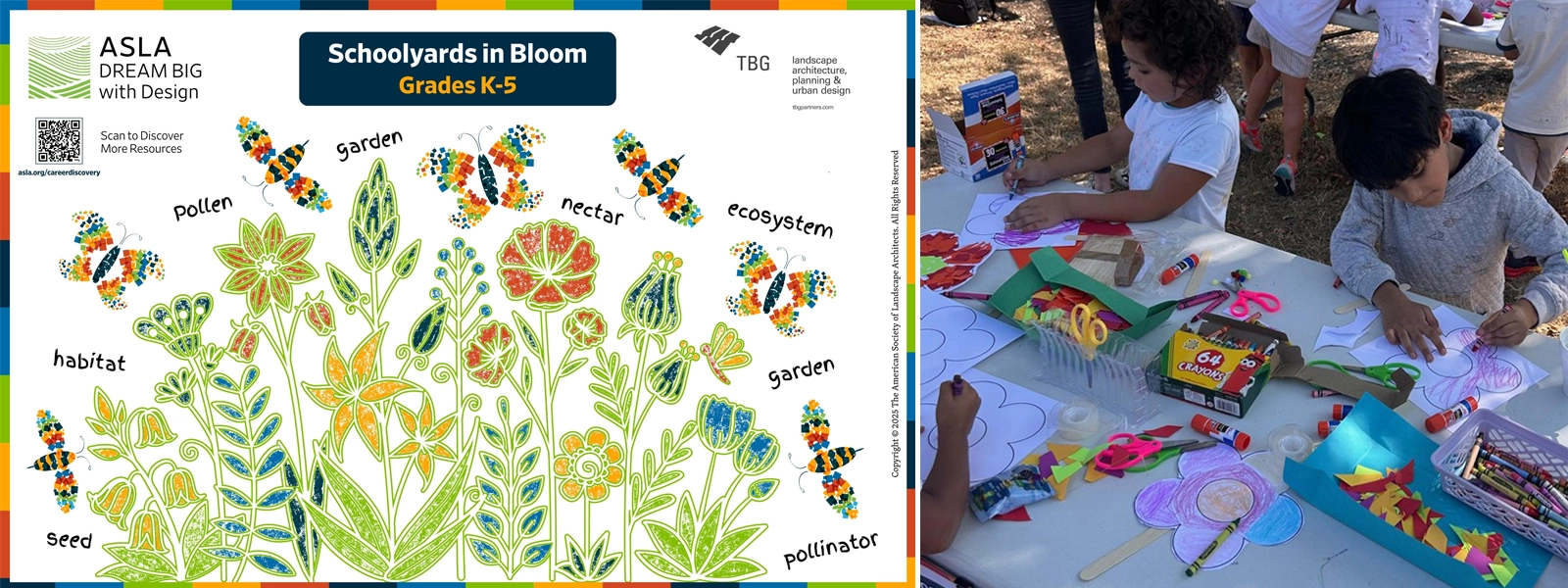
Forthcoming - Spring 2026: New Learning activities to grades 6-8: Schoolyards in Bloom: Exploring Pollinators
A companion set of lessons designed for grades 6-8 will expand on the Schoolyards in Bloom curriculum. Written by committee member Miranda Mote, Ph.D., Affiliate ASLA, these activities will include both hands-on and digital interactive learning modules that will help students understand how trees and other plants support pollinator ecosystems, highlighting the relationships between plant diversity, habitat design, and ecological health.
Sharing Methods with Educators: Design Academy for K-12 Educators
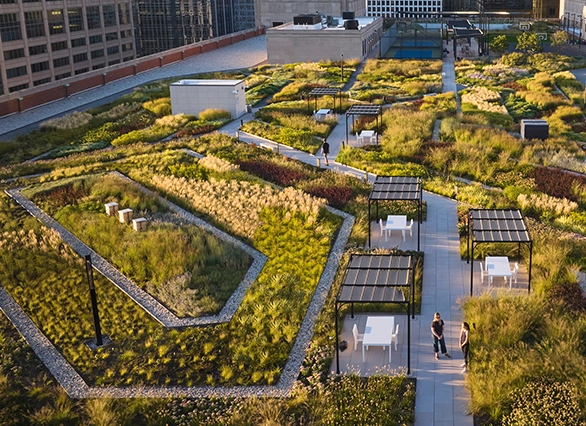
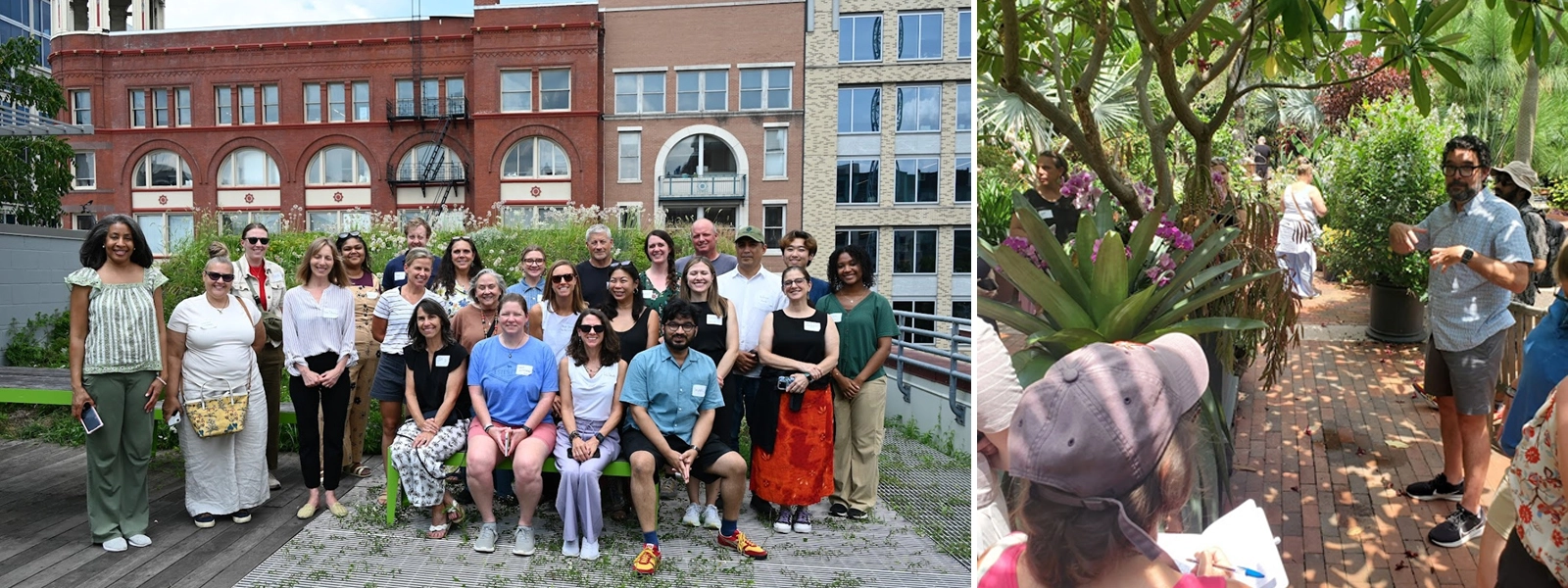
ASLA’s inaugural Design Academy for K-12 Educators (July 23-26, 2025), Teaching Environmental Design through Landscape Architecture, brought 23 teachers from across the US to ASLA headquarters for immersive professional development. Through theory sessions and field trips of iconic landscape projects, from parks and playgrounds to green roofs, educators explored how environmental design intersects with history, geography, arts, and science. The program, initiated and organized by Lisa J. Jennings, Senior Manager, Career Discovery and Diversity, exposed teachers to a deeper knowledge of landscape architecture and how to weave environmental design into their classrooms. By engaging teachers directly, this annual program expands the reach of landscape architecture education far beyond the event itself, as participating educators bring these ideas and activities back to their own classrooms and communities.
STEM Literacy by Design
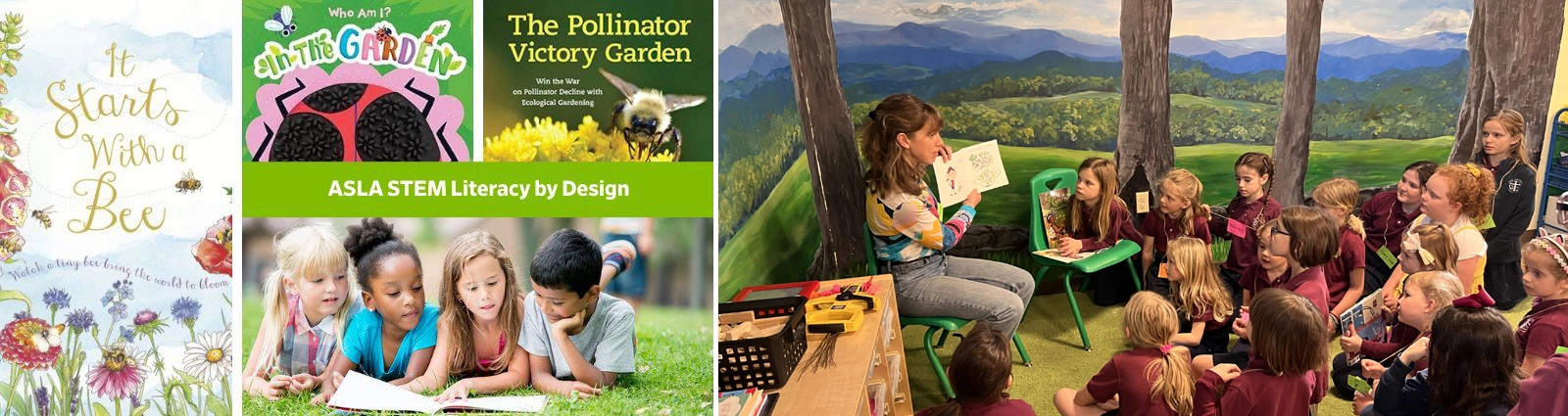
STEM Literacy by Design is an outreach initiative, introduced by ASLA in 2024, that introduces young students—primarily in pre-K through sixth grade—to landscape architecture and environmental design through literacy and STEM concepts. The program uses children’s books about the natural environment and outdoor design to help students understand how science, technology, engineering, and mathematics shape the landscapes and communities around us.
In 2025, the book list expanded. The K-12 Education and Career Discovery Committee continues to look for new books and projects that could be included in the program. Several additional titles were added this year, including:
- Mis sentidos y la arquitectura: ¡Hagamos un recorrido! by Jomarly Cruz Galarz, AIA,
- The Pollinator Victory Garden: Win the War on Pollinator Decline with Ecological Gardening; Attract and Support Bees, Beetles, Butterflies, Bats, and Other Pollinators by Kim Eierman,
- Who Am I? In the Garden (Pre-K Touch-and-Feel Sensory Book) by Little Hippo Books and Mel Matthews, and
- It Starts with a Bee: Watch a Tiny Bee Bring the World to Bloom by Words & Pictures and Jennie Webber
bringing the total number of books in the program to ten.
Committee Members in Action: Local Outreach Across the Country
Beyond the support of national programs, members of the K-12 Education and Career Discovery Committee are actively introducing landscape architecture to students in their own communities through classroom visits, design workshops, summer camps, and community events. These efforts demonstrate the many ways landscape architects can share their knowledge and inspire young learners.
Committee members serve as chapter judges for the Future City Competition, participate in 4-H events, host high school visitors, visit local schools to introduce the profession of landscape architecture, and lead summer programs or take part in Park(ing) Day activities. Here are some highlights of the many inspiring activities they have led:
Jyl Glancey, ASLA, Landscape Architect at The Land Group, Inc., shared some fabulous activities her firm led engaging with local schools.
Sandbox Activity: In this classroom activity, students work in groups at sand-filled “site” stations where they explore the role of a landscape architect by responding to prompts on a rubric and completing a Mad Lib-style worksheet, which they then present to the class.
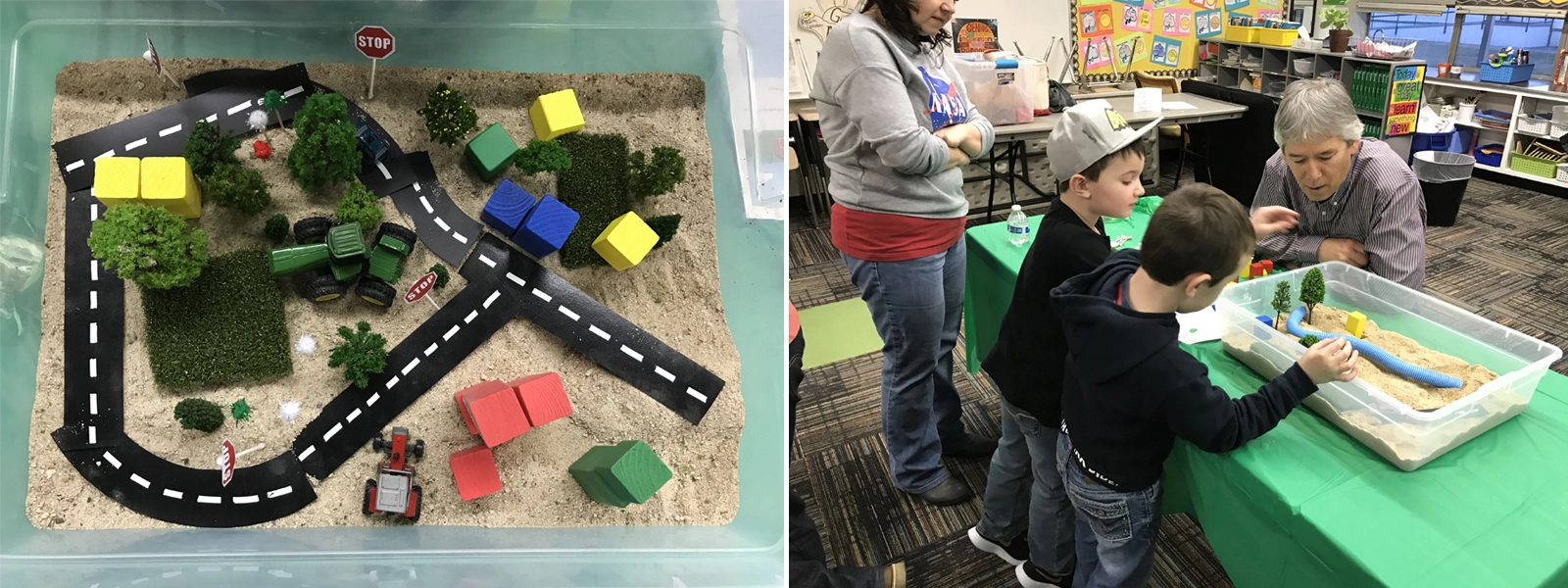
Master Plan Activity: In this planning exercise, students design their own master plan for a local area using a large map and Lego-style blocks representing buildings, infrastructure, trees, and other landscape elements to explore how communities are organized and developed.
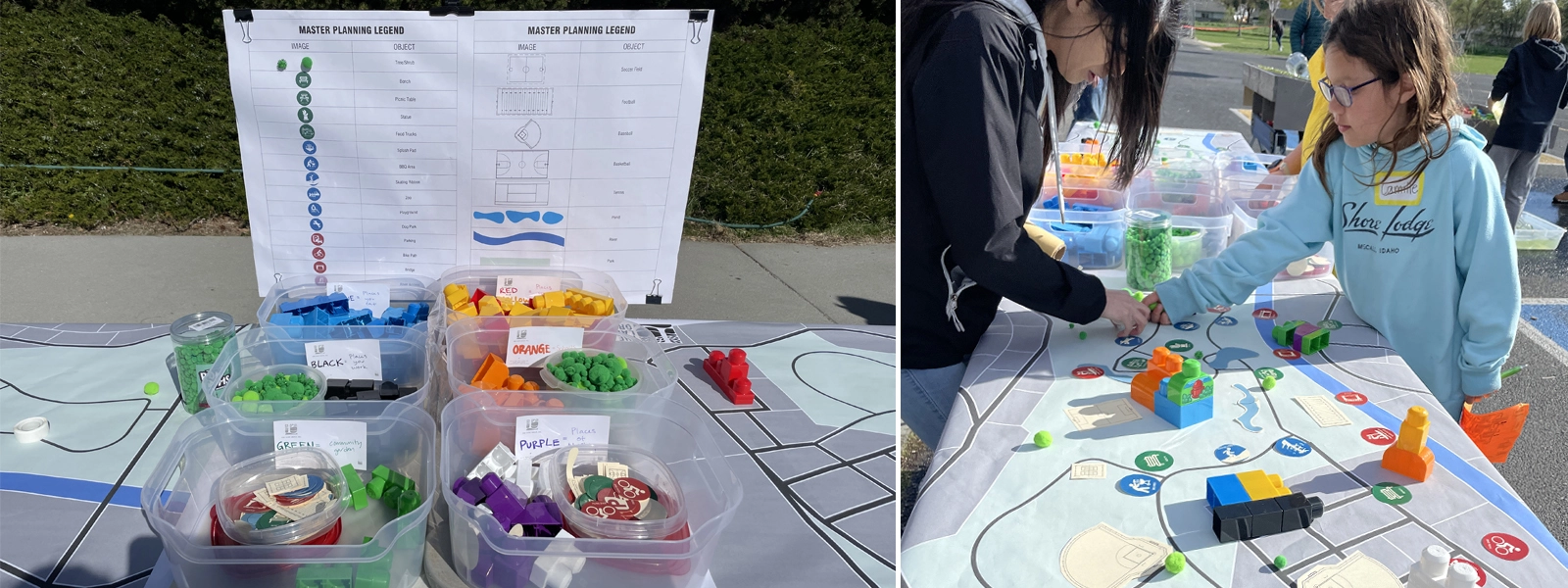
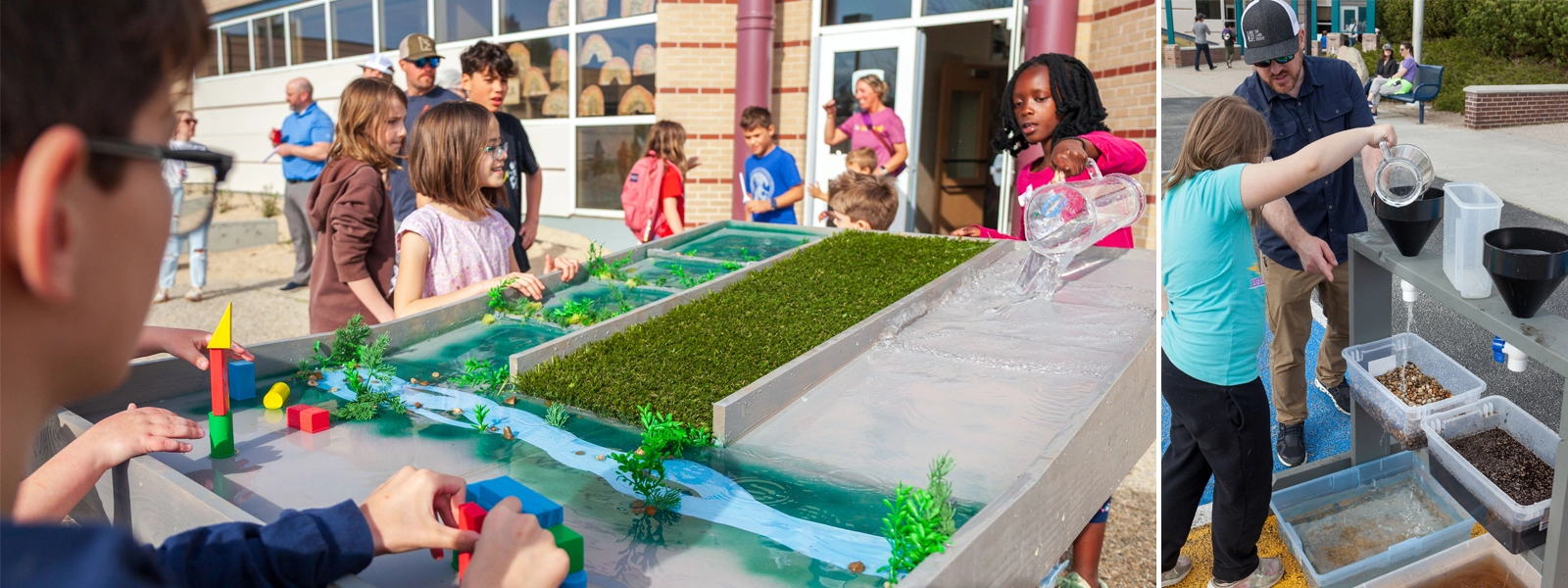
Water Play Activities: These hands-on activities help students explore how water moves through landscapes by pouring water through funnels filled with different materials, such as synthetic turf, gravel, sand, and permeable pavers, and predicting which will drain the fastest. A second activity demonstrates how water flows down a slope and how different surface materials affect runoff and the impacts on areas at the base of the slope.
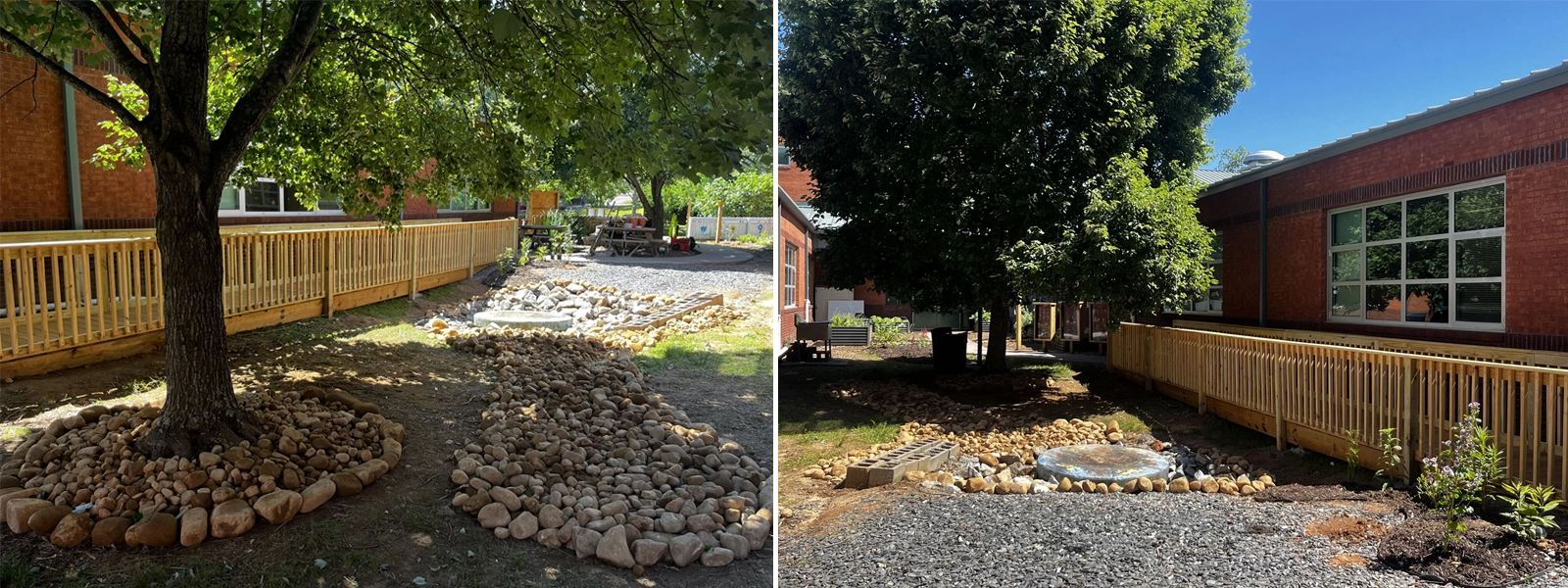
Last year at Parkside Elementary, in partnership with Takeda, Brooke Freeman, ASLA, and her organization (Out Teach) helped design a dry riverbed and rain garden system that slows, spreads, and makes stormwater visible, allowing students to see how water moves and shapes the land after a storm. Building on that work, they are currently developing a Takeda-supported project featuring a segmented vegetated swale system that works with the site’s slope, creating a series of visible moments where runoff is slowed, cooled, and filtered while also serving as a learning tool for understanding ecological infrastructure!
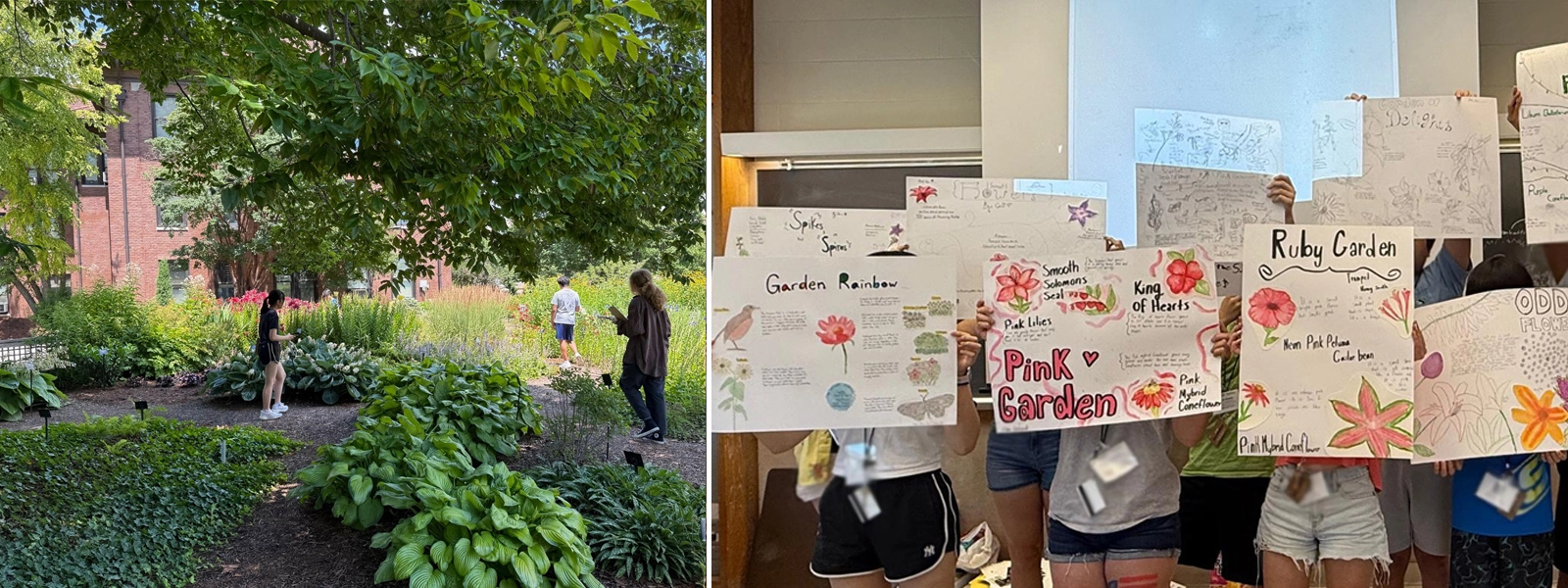
Yiwei Huang, Ph.D., ASLA, led a two-week summer camp course through her affiliated university for K-12 students, introducing them to the fundamentals of plant identification and observation in natural environments. Through guided outdoor exploration and nature journaling, students learned to closely observe plants and record their findings, building both ecological awareness and scientific curiosity.
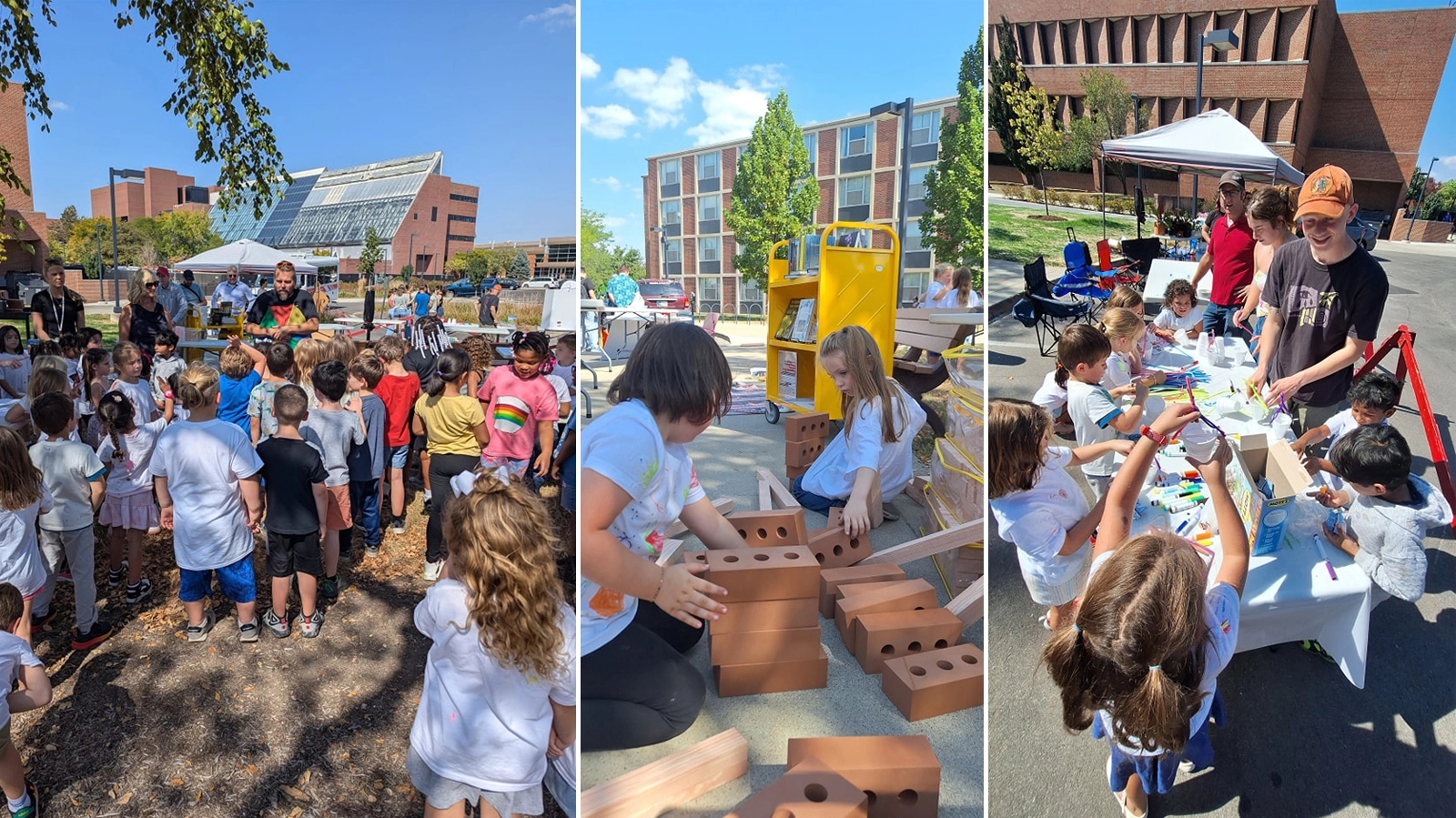
Taylor Metz, ASLA, PLA, joined the Ball State Student Chapter of ASLA and hosted a lively Park(ing) Day event. The “Youth Activating Spaces” theme featured activities focused on Indiana birds, pollinators, building materials, books, and plants, and brought together volunteers from Sigma Lambda Alpha, Student APA, and faculty and students to engage with young learners from Burris Elementary and the Acton Academy at Fall Creek.
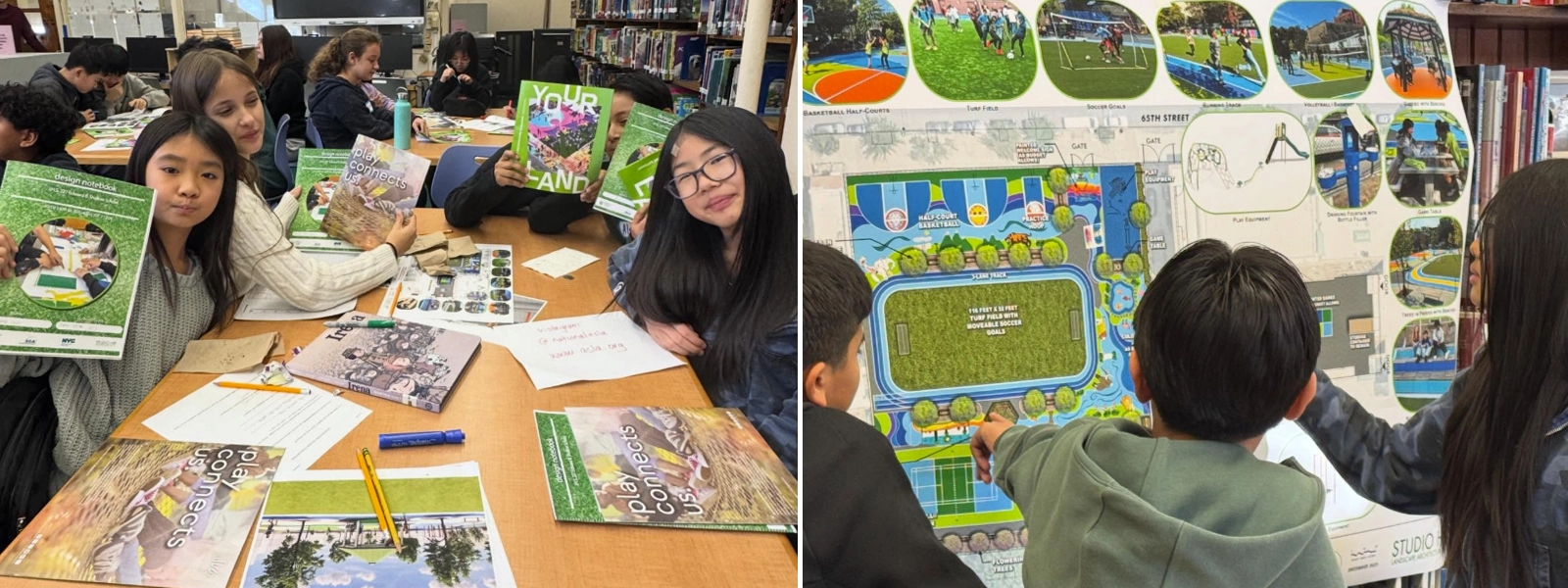
Jennifer Nitzky, FASLA, and her Studio HIP shared their recently completed final design session of a five-week program with students at PS 227 in Brooklyn, where the students took on the role of landscape architects and designed their own schoolyard. During the session, the students received copies of ASLA's YOUR LAND magazine and showed great enthusiasm for learning more about design, even asking for ASLA’s Instagram and website to continue exploring landscape architecture.
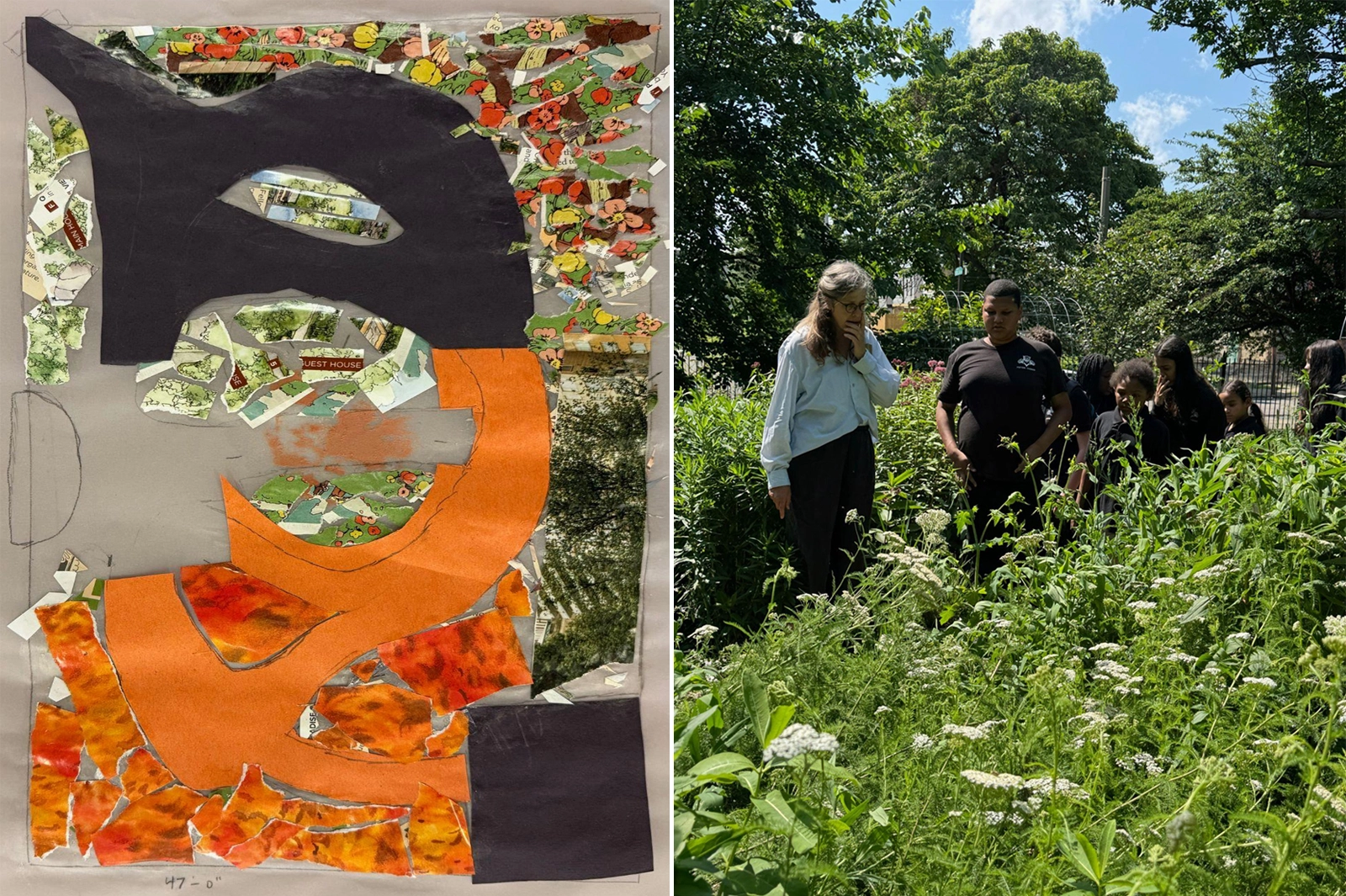
Miranda Mote, Affiliate ASLA, through her non-profit Botanography led educational programming in Philadelphia at Historic Fair Hill and Potter Thomas Elementary School in spring 2025, Superheroes of Our World: Pollen / Pollination / Pollinators. Mote has also been working directly with high school students and teachers at Universal Audenried Charter High School in Philadelphia to guide the design and construction of a school garden lab which will cultivate pollinators, fruits, and vegetables for their school's culinary program and support experiments for their AP Environmental Science program. All elements of this school garden lab will be built by Engineering Technology students this March.
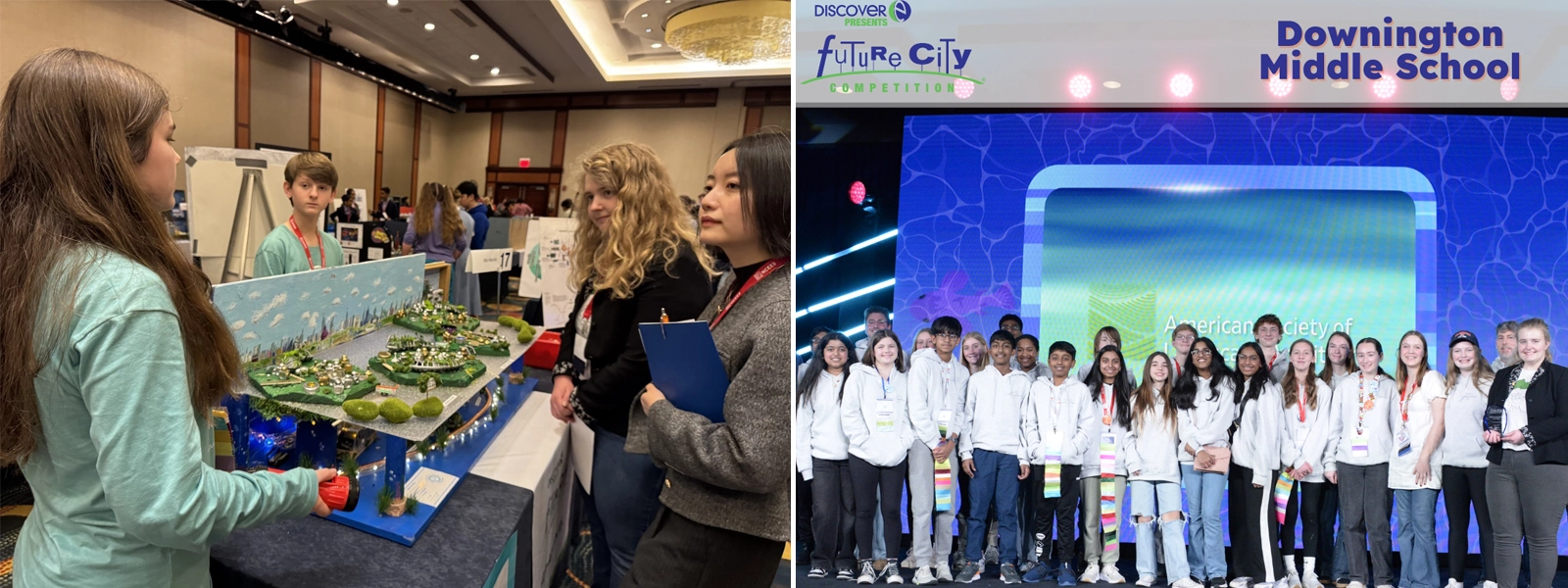
Chloe Gillespie, ASLA, has served as a judge for the Future City Competition for the past three years: two years serving as a Special Awards Judge representing ASLA at the national competition in Washington, DC, and one year serving as a regional judge for the Iowa Regional Future City Competition. Future City is a national organization promoting innovative STEM-focused solutions to designing a city 100+ years in the future. Middle school and high school students work in groups alongside professional mentors to design a city that will meet the goals of the theme set by the organization each year. Each team has to write an essay, develop a project plan, build a large scale model, and present their model to regional judges. Each region selects one winner to send to Nationals in Washington, DC. The Future City Competition helps students build confidence in tackling engineering solutions and project management skills, gives them a real-world example to apply math and science knowledge, and strengthens teamwork and presentation skills.
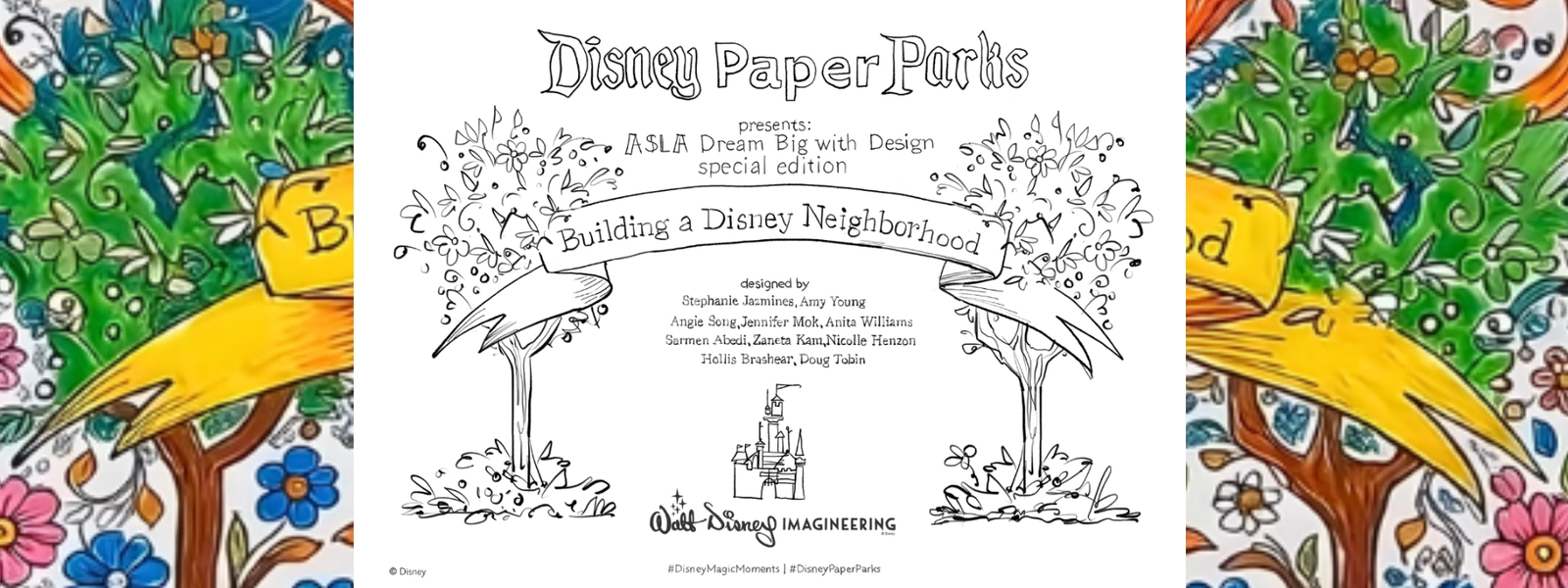
Just Released: Disney Paper Parks: ASLA DREAM BIG with Design Special Edition
Led by Walt Disney Imagineer Jennifer Mok, ASLA, Disney Paper Parks: ASLA DREAM BIG with Design Special Edition invites students and educators to reimagine theme parks through design. Drawing on the magic of Disney and real design thinking, students explore sustainability, equity, and creativity—imagining their own parks and learning how landscape architects bring ideas from concept to paper. This resource reinforces design thinking while making STEM learning fun and accessible.
Looking Ahead: Growing Future Designers
It is the belief of the K-12 Education and Career Discovery Committee that expanding awareness of landscape architecture among young learners is not simply about recruitment—it is about helping students understand how design and environmental literacy can shape healthier communities, resilient ecosystems, and more vibrant public spaces. Through a growing range of programs and efforts, more students are encountering landscape architecture long before they reach college. By blending creativity, environmental literacy, science, and community engagement, these initiatives spark curiosity and help young people imagine themselves as future designers, planners, and stewards of the places they inhabit.
It is often stated that “It takes a village to raise a child,” meaning that the collective resources, energy, and dedication of an entire community are needed to support young people as they grow. In much the same way, meaningful K-12 engagement will be driven by the creativity and commitment of landscape architecture professionals, educators, students, and firms to share their knowledge and time. Anyone can participate, whether by hosting a classroom activity, supporting a local school event, mentoring students, or simply sharing their experiences in the field. If you are interested in contributing or have ideas for outreach, we encourage you to connect and get involved so that, together, we can continue expanding opportunities for young people to discover landscape architecture.
To help document and share these outreach efforts, National ASLA has also developed a Career Discovery Tracker, a simple tool that allows ASLA members to record and share their K-12 engagement activities. By tracking classroom visits, workshops, camps, and outreach events, the profession can better understand the growing impact of these initiatives and identify opportunities to expand them.
From judging Future City Competitions and leading Minecraft-based design workshops to visiting classrooms, speaking with community groups, or supporting local events, landscape architects are finding many ways to introduce the profession to the next generation. Members are encouraged to contribute their experiences and ideas for future programming. Whether by hosting a classroom activity, mentoring students, supporting a local school event, or sharing resources with educators, landscape architects across the country can play a role in helping the next generation discover the profession.
Join Our Movement to Introduce K-12 Students to Landscape Architecture!
Join our growing community of K-12 advocates and be the first to learn about new resources, programs, and opportunities to collaborate.
Access customized presentation slides (with talking points), quick links to Career Discovery resources, and learn from tutorials.
For additional outreach needs, email Lisa J. Jennings, Senior Manager, Career Discovery and Diversity, at [email protected].
The ASLA Committee on K-12 Education and Career Discovery focuses on the development, advocacy, and support of ASLA resources that prioritize the voice, presence, and perspective of the K-12 audience throughout the profession, as well as within ASLA. Each member of the community brings deep knowledge and practical expertise in K-12 education, diversity, and inclusion, innovative engagement strategies, and partner development.
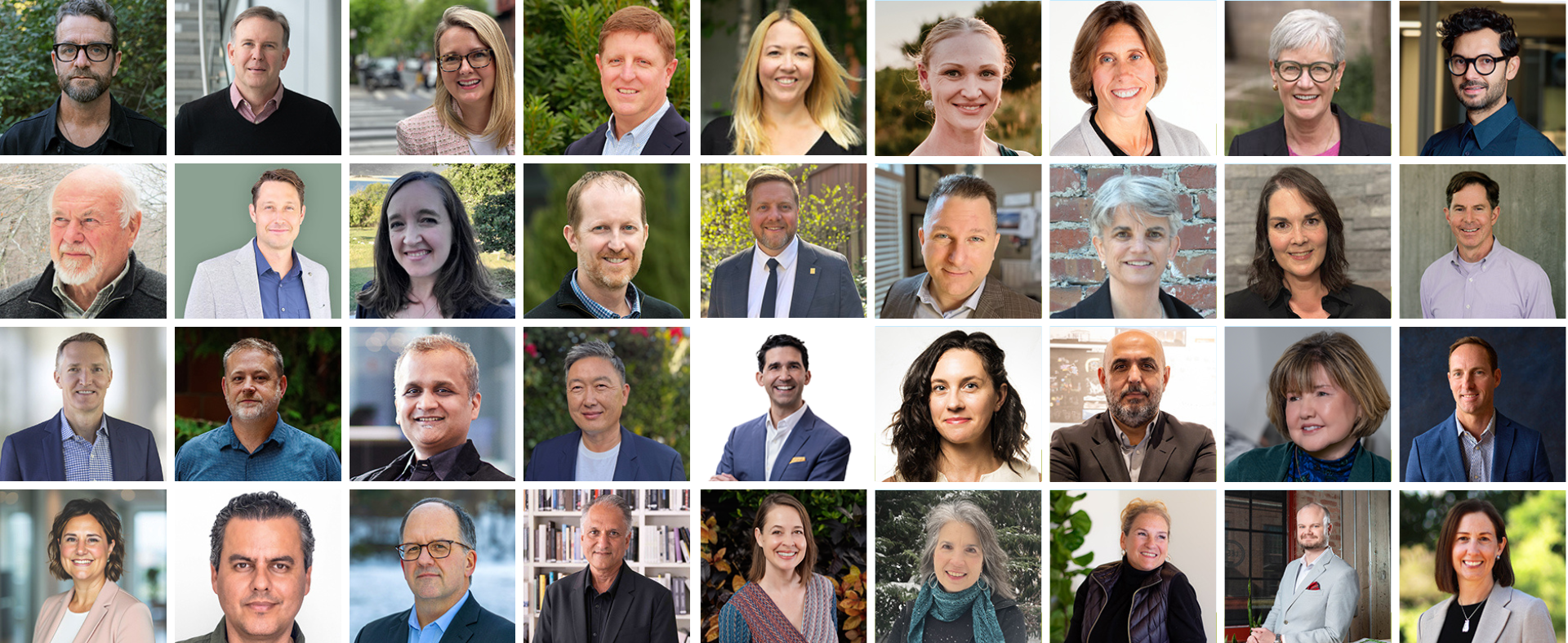
Committee Members for 2025-2026
Alicia Bartoli-Arnold, ASLA
Brooke Freeman, ASLA
Chloe Gillespie, ASLA
Jyl Glancey, ASLA
Yiwei Huang, Ph.D., ASLA
Baldev Lamba, Ph.D., ASLA
Taylor Metz, ASLA, PLA
Miranda Mote, Ph.D., Affiliate ASLA, FAAR
Daniel Rose, ASLA
Woodia Yu, ASLA