

.webp?language=en-US)

.webp?language=en-US)
Starting the Conversation of Construction Workforce Stability
by Annette P. Wilkus, FASLA, RLA
The construction and landscape industries are running on thin crews. By 2030, the industry faces a gap of millions of skilled trades positions, driven by demographics, slow training pipelines, and growing demand for housing, infrastructure, and climate-resilient projects. If current deportation and enforcement pressures continue, that gap will hit even harder on the ground, meaning construction delays, higher costs, compromised safety, and projects with delayed openings—from housing and schools to parks and private residential developments.
As design professionals we need to begin to make workforce stability a normal part of the conversation—not as politics, but as a health, safety, and welfare issue that affects every project.
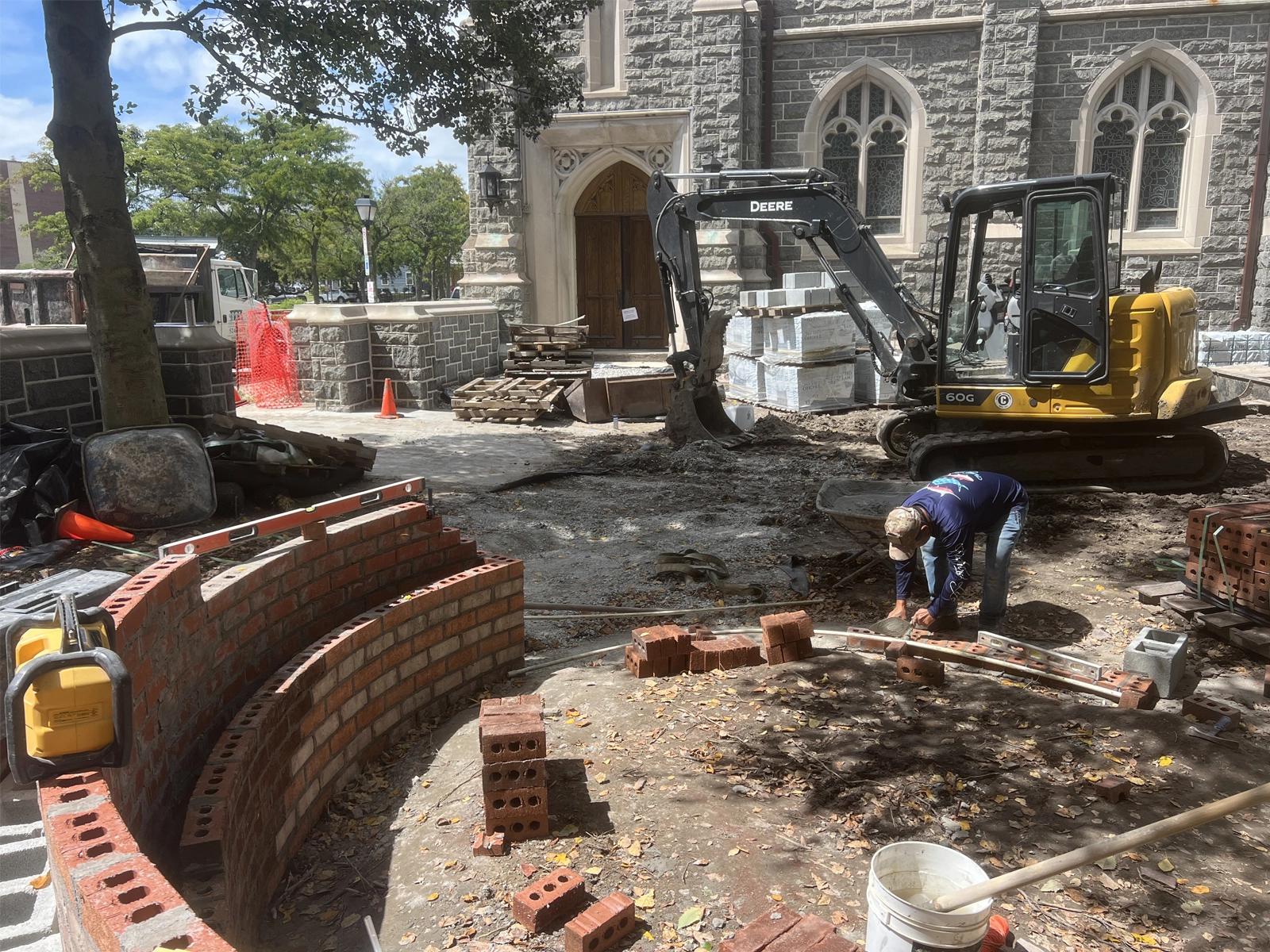
As shown by the statistics below, construction builds the economy and needs a strong, knowledgeable workforce behind it.
- Construction adds roughly $1.2 trillion to US GDP each year, about 5% of the nation’s total economic output. [1, 2]
- The sector generates around $3 trillion in annual revenue and directly employs about 7.3 million workers, making it one of the largest job-creating industries in the U.S. [2, 3]
- When you count related jobs in development, design, equipment, and services, construction supports over 11 million jobs across the country. [4]
Those dollars translate into homes, schools, roads, water systems, parks, and landscapes—the infrastructure behind everyday life.
As with many professions, the workforce is aging and thinning. There are more than one million construction laborers in the U.S., making them the largest single occupation group in the construction sector. [10, 3]
- The average age of construction workers in the US is about 42, one year older than the average worker across the rest of the economy. [7, 8]
- Fewer high-schoolers and young adults are entering the trades, and workforce participation overall has not recovered to pre-pandemic levels, leaving roughly 1.7 million fewer workers available nationally. [9, 7]
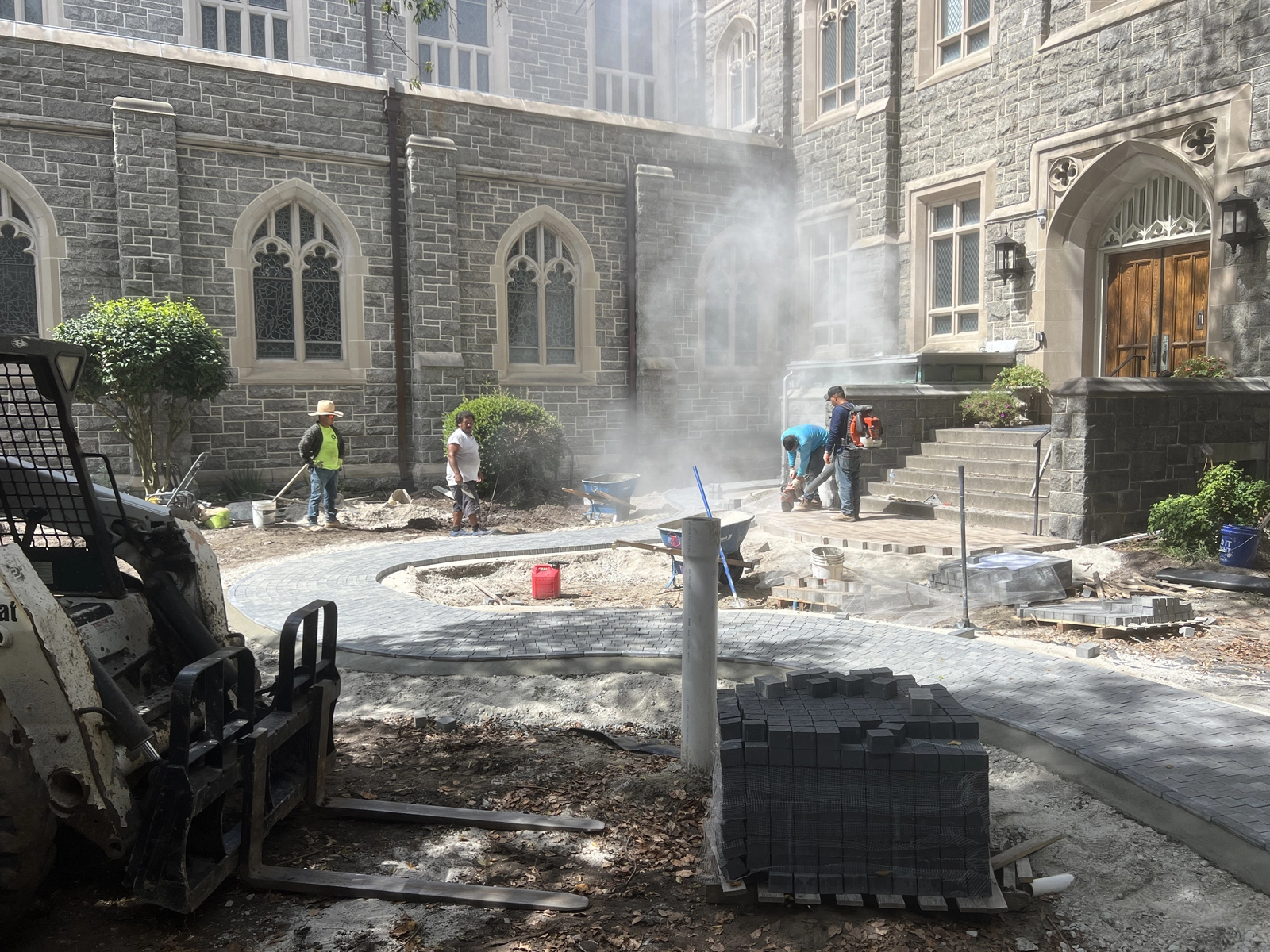
This coming instability of labor affects all design projects—meaning our livelihoods as members of the design community will be directly influenced by the decrease in the construction labor force.
- Analysts estimate that the US will need about 650,000–725,000 construction and extraction workers each year through the mid-2030s just to replace workers who retire or leave the field. [9]
- That’s more than 2 million new hires needed over just 2024–2026 to keep up with expected turnover. [9]
- Projections show that millions of skilled-trades positions overall could remain unfilled by 2030 if recruitment and workforce-stability policies don’t change. [9, 11]
Construction activity is responsible for over 7% of US GDP when residential construction is counted broadly, showing how tightly neighborhoods, schools, and commercial spaces are tied to the health of the industry. [4]
Without the labor force needed to complete our visions, projects will be altered, both during design and construction, by budgets and delays.
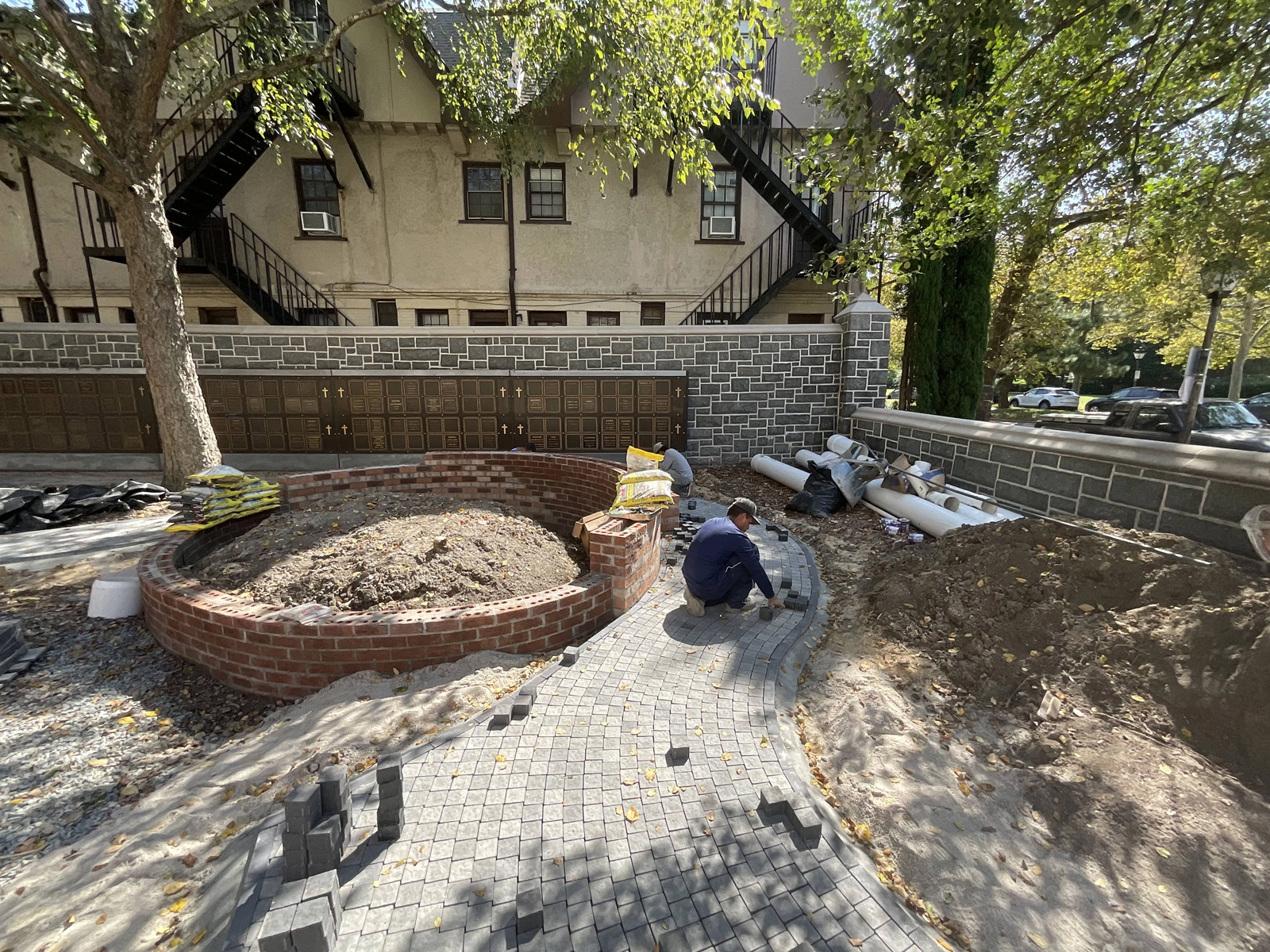
So—there are some of the statistics. For over 25 years both as an employee and as the founder of SiteWorks, I was able to work closely with many crews, encompassing countless laborers. I saw every day the craft and commitment that it takes to make a special detail or design element come to life. I’ve worked with talented laborers who were actively seeking citizenship, dedicating an amazing amount of time and money resources to do so. I worry that without a robust workforce of experienced tradespeople we will lose the opportunity to keep designing innovatively. We will lose the knowledge base and talent that makes our designs come to life. What can we, as design professionals, do to alleviate the soon-to-be shortage of workers building our designs? And not only will there be a shortage of laborers but also experienced, skilled, and talented workers. With the current trend of material costs rising and shortage of laborers, we’re heading toward projects that won’t be built or even bid by talented contractors.
This brings us back to the core reason to begin serious discussions about the declining labor force and how it directly affects health, safety, and welfare. Without skilled craftsman building our projects, there will be unskilled, untrained workers doing the work—directly affecting our liability and licenses. With the current deportation and enforcement measures, we will lose the talent of our laborers and installers.
There is a movement started by Design Demands Labor (DDL) to begin the conversation. We are a growing network of landscape architects, architects, and allied design and construction professionals who see this downward trend of labor as a health, safety, and welfare issue that needs to be addressed. DDL speaks to design professionals about their obligations under construction documents and licensure, and in support of the construction workforce. We do not speak for workers, and we do not narrate their experience on their behalf. Our standing comes from our own profession’s complicity—the documents we seal are demands for labor. We are looking for professionals to look at the website, scrutinize it, make any comments you see needed, and help us reach a consensus. As a profession we can leverage the discussion with consensus. We owe it to the people who build our visions.
References:
[1] Statista. Value added to GDP by construction industry U.S. 2023. July 2024.
[2] Vertical IQ. US Construction Sector. October 2025.
[3] Construction Coverage. The Most Popular Construction Jobs in the U.S. [2024 Edition]. November 2025.
[4] Leading Builders. Residential Construction Economic Study. July 2020.
[5] Eye on Housing. Immigrant Share in Construction Sets New Record. November 2024.
[6] NAHB. Concentration of Immigration in Construction Trades. November 2024.
[7] U.S. Bureau of Labor Statistics. The Construction Industry: Characteristics of the Employed, 2003-20. December 2019.
[8] SITECH Rocky Mountain. Fun Construction Facts. June 2025.
[9] Bluebeam. Why 2026 Forces Construction Efficiency. January 2026.
[10] Statista. Construction workers in the U.S 2023, by type. July 2024.
[11] Machinery Partner. Labor Shortages in Construction: Solutions for Recruitment and Retention. September 2024.
[12] The Associated General Contractors (AGC) of America, Inc. Construction Workforce Shortages Are Leading Cause of Project Delays. August 2025.
[13] Risk and Insurance. U.S. Commercial Construction Reaches Historic Peak—But Storm Clouds Gathering. November 2025.
[14] Duke Center for Population Health and Aging. Immigrants Built America, Can We Keep Building Without Them? April 2025.
Annette P. Wilkus, FASLA, RLA, is the founding Partner of SiteWorks in New York City, with over 40 years’ experience in design, construction documentation, and construction management. She is devoted to the craft of construction documentation, construction management, and maintenance for the life of the design. She believes strongly that design does not stop once documents are released for bid, but problem solving and respecting the design intent extends through construction and into the operations and maintenance of a design. Annette has been an integral member of construction management teams for Teardrop Park, The High Line, Hunters Point South, Governors Island, and the Ford Foundation for Social Justice. She is a frequent speaker at professional conferences and has authored multiple articles pertaining to the documentation and implementation of outdoor environments. During her retirement, she is focusing on construction workforce stability with Design Demand Labor (DDL). She is a registered landscape architect and Fellow of the American Society of Landscape Architects.