

.webp?language=en-US)

.webp?language=en-US)
Nature-Based Infrastructure Can Be Designed to Manage Floods and Build Community
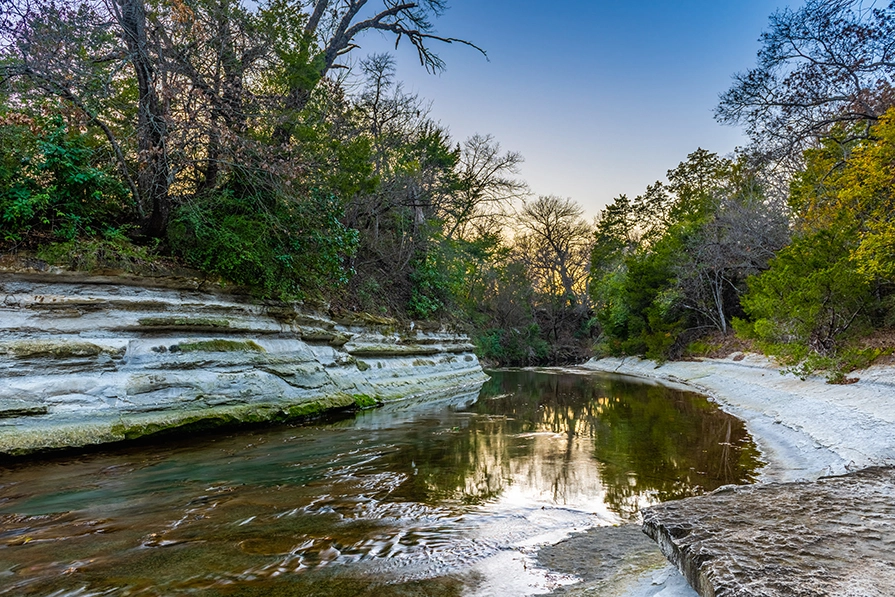
Five Mile Creek, behind South Oak Cliff Renaissance Park, Dallas, Texas / Courtesy of Trust for Public Land
By Molly Morgan
In the field of landscape architecture, we are trained to see a space not just for what it is, but for what it can become.
We see a vacant lot and envision a vibrant playground. We see a concrete channel and imagine a living waterway. But today, one of our profession’s greatest challenges and most profound opportunities is to reimagine our cities’ relationship with water.
We are being called to design not just for beauty, connection, and enjoyment, but for resilience. In Southern Dallas, a community long defined by the threat of flooding is now being redefined by this very opportunity.
Mitigating floods in Southern Dallas
Due to rapid urbanization, several Dallas neighborhoods are in flood plains that become inundated during extreme weather events.
The Oak Cliff neighborhood in Southern Dallas, is one example. Located within the Five Mile Creek Flood Plain, the community faces the risk of flooding and the additional risk of contamination to the city’s drinking water during each flood. This made it crucial to manage stormwater in the area – and the city has been working on this effort since the 80s.
At Trust for Public Land, our team has been part of the city’s effort to remediate and replant the creek area using a green infrastructure approach. We’re in the middle of executing our Five Mile Creek Greenbelt project, a vision to create healthier, better connected, resilient communities with three new parks and 17 miles of trail stretching across Southern Dallas.
With the community, we opened the first of three parks in 2021: South Oak Cliff Renaissance Park, designed with landscape architects at Studio Outside. According to an analysis by the Landscape Architecture Foundation, South Oak Cliff Renaissance Park can capture stormwater runoff within rain gardens built into the landscape and intercept over 13,000 gallons of stormwater annually within tree canopies. These features also ensure that South Oak Renaissance Park uses 82 percent less water for irrigation than similar Dallas parks.
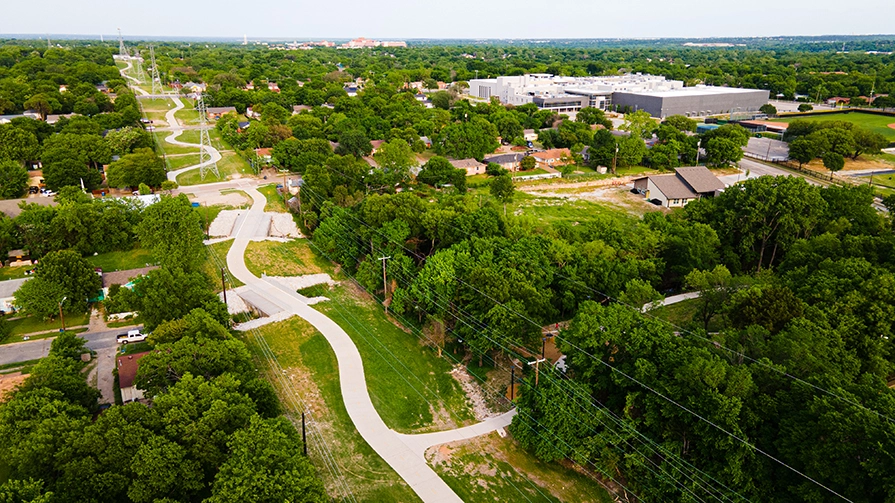
Tree Canopy at South Oak Cliff Renaissance Park, Dallas, Texas / Courtesy of Trust for Public Land
Why isn’t there more nature-based infrastructure?
Nature-based infrastructure can increase communities' capacity to manage flooding and protect clean water access – both of which are becoming increasingly difficult as climate and weather evolve. Unfortunately, many communities do not have enough nature-based infrastructure because it is often overlooked in infrastructure funding conversations.
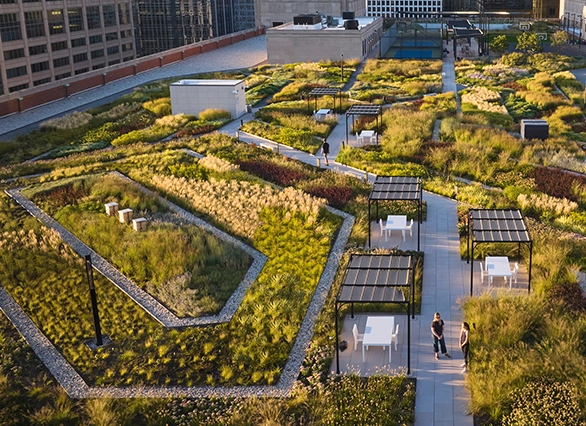
I recently got back from a trip to London where I discussed this very topic with a panel of leaders at the Economist Water Summit. We defined nature-based infrastructure as anything that helps absorb, delay, and treat stormwater. This includes permeable pavement, green roofs, trees, bioswales, rainwater catchment systems, forests, preserved open space – and even a neighborhood park or schoolyard.
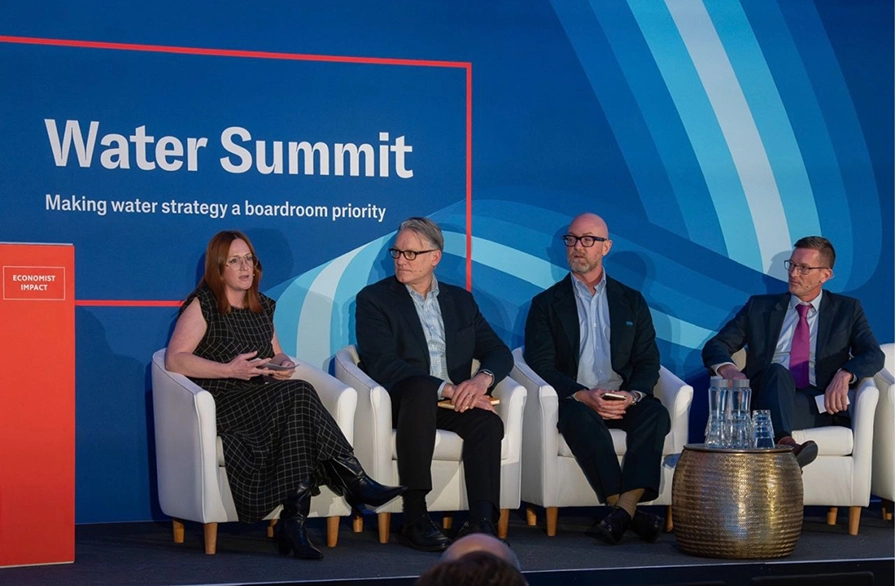
The Economist Water Summit, London, England / Courtesy of The Economist
In the next few decades, communities in the U.S. will spend $100 billion managing stormwater. That's a significant amount of money dedicated to managing a result, and it doesn't do anything to address the underlying issue. Instead of investing that money toward stormwater cleanup, it should go toward nature-based infrastructure that prevents flooding. We can’t stop storms from happening, but we can use nature-based infrastructure to filter stormwater pollution and reduce storm runoff by 99 percent, all while delivering additional benefits to communities.
Protecting Atlanta from floods
During our panel, my Trust for Public Land colleague Brendan Shane shared an incredible story from Atlanta’s Cook Park. The surrounding Vine City neighborhood, once home to leaders like Dr. Martin Luther King Jr., was plagued by devastating flooding that left a scar on the community. After a particularly bad flood in 2002, 60 homes were razed. Our organization worked with the city and residents to transform those 16 acres of chronically flooded land into a vibrant community centerpiece that acts as a sponge. The project was guided by Jay Wozniak, a landscape architect and director of the Georgia urban parks program for Trust for Public Land.
In 2024, Cook Park, which was designed with landscape architects at HDR Inc, faced its ultimate test during Hurricane Helene. As the storm raged, the park captured 10 million gallons of stormwater, shielding the neighborhood. Within 72 hours, it slowly and safely released that water back into the city’s system. That is the power of nature-based solutions.
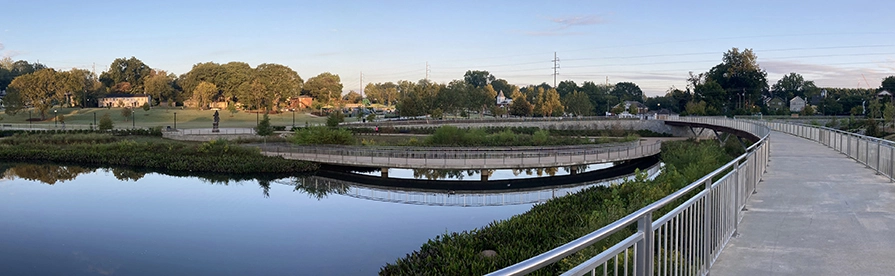
Cook Park, Atlanta, Georgia, HDR Inc. / Courtesy of Trust for Public Land and community partners
Growing support and resources
But spaces like Cook Park don’t always get the funding they need or as quickly as needed. That’s why it’s becoming increasingly important to create new policies that help propel projects like this forward. Panelist Brian Murphy of Uisce Éireann (Irish Water) noted that water resilience is closely linked with economic resilience — an argument that has helped build strong public sector support across the EU. In Ireland, that support is translating into investment in green infrastructure.
Uisce Éireann is using nature-based systems like reed beds — planted with native species such as Phragmites australis — to treat wastewater and manage sludge. These systems act as natural filters, using plant roots and microorganisms to break down contaminants while significantly reducing energy use, chemical inputs, and the need for heavy transport.
In places like Carlow and Enfield, sludge drying-reed beds are helping reduce waste volumes and operational costs, while also creating new habitats and improving biodiversity. These low-tech, high-impact solutions demonstrate how public investment in nature-based infrastructure can deliver both environmental and economic returns — reinforcing the case that resilience isn’t just an environmental priority, but a smart and scalable public investment strategy.
Scaling nature-based infrastructure
Landscape architects are at the helm of exploring the multi-faceted benefits of nature-based infrastructure. Our creativity will shape the future of many communities. But it’s important that we don’t execute this work alone. Strategic private and public partnerships make nature-based infrastructure a reality.
As we work to scale these solutions globally, local communities need to be involved from conception to design to construction, ensuring these spaces meet communities’ unique needs and garner public support. Together, more landscape architects like us can work with our cities and communities to turn asphalt into resilient, multi-beneficial spaces.
Molly Morgan is Texas State Director for the Trust for Public Land. She has a Master’s degree in Landscape Architecture from the University of Texas at Arlington.