

.webp?language=en-US)

.webp?language=en-US)
How Developers Value Landscape Architecture (Part II)
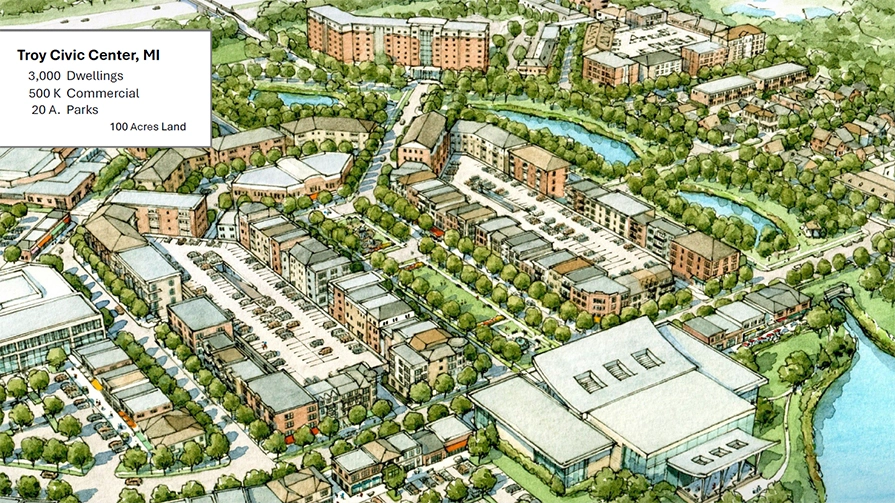
Plan for new civic center in Troy, Michigan / Gibbs Planning Group
By Jared Green
Private developers can champion landscape architecture projects that reduce greenhouse gas emissions and climate impacts and increase community health and livability. But not all developers have the vision to achieve integrated ecological, social, and economic benefits.
There are economic arguments that can persuade developers to plan holistically and weave parks, green streets, and green infrastructure — nature-based solutions at all scales — into new communities. Landscape architects can use these arguments to move private developers in a more sustainable, competitive direction.
In an online discussion moderated by ASLA CEO Torey Carter-Conneen, Hon. ASLA, real estate and economic development advisors from HR&A and landscape architects from Gibbs Planning and LandDesign offered effective ways to make the case to developers.
“Landscape architects are uniquely qualified to engage communities and illustrate and promote what the community is looking for — often the things they don't know they want until they see it illustrated,” said Bob Gibbs, FASLA, founder of Gibbs Planning and author of Principles of Urban Retail Planning and Development.
Gibbs outlined a few dense residential communities he has planned and designed for developers that increase walkability and reduce vehicle use, providing clear health and climate benefits.
He is one of the founders of the Congress for New Urbanism, an organization dedicated to achieving dense, livable communities, and he advances their principles through his large-scale planning work. “We see ourselves as primarily environmentalists by compacting suburban development into smaller sites. We offer a market-based alternative to large-lot homes and therefore preserve land and open space,” Gibbs said.
Many developers don’t see the value of a denser, more walkable approach at first. “Frankly, a lot of our clients come to us saying, ‘I really don't like the kind of places you build even though they perform better.’ But then city governments say to us, ‘If it's one of your plans, it’s more likely to get approved.’ And once they are built, they tend to outperform more conventional developments.”
One developer in Birmingham, Michigan came to Gibbs Planning because they were repeatedly denied approval to develop five lots on an eight-acre of property. “So after meeting with the community, we advised the developer to ask for 25 homes instead of 5 homes. We did this because the community around the development — those who had opposed it — told us they wanted to move out of their large, older homes into smaller, compact places where they could have a square, a park, and some diversity.”
Gibbs proposed an English close with homes facing a square, parking in the back, and a park. “It added a lot of real estate value and helped the community embrace it."
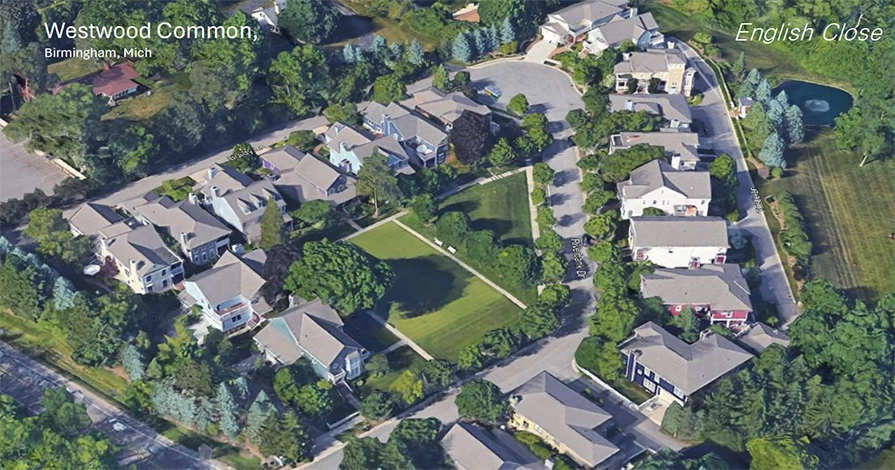
Westwood Common, Birmingham, Michigan / Gibbs Planning Group
“This is a typical example of listening to the community, understanding engineering and design, and then proposing something the developer and community didn't know they wanted,” Gibbs said.
His firm helped another community in Warren, Michigan, a suburb of Detroit, figure out a solution. “The city wanted a city center and created a plan with blocks and streets but weren’t able to get community buy-in.”
“We were brought in to work with the community. They told us they wanted housing for themselves or their children. They wanted a grocery store, small restaurants they could walk to, and a hotel with a banquet facility to hold family weddings and events.”
So Gibbs offered them a series of alternatives. “Once they saw the new plan and understood how it included their desires and aspirations, they embraced it. Within six months, the new plan was accepted by the City Council, and the community overwhelmingly to build a very high-density town center on a very small piece of property.”
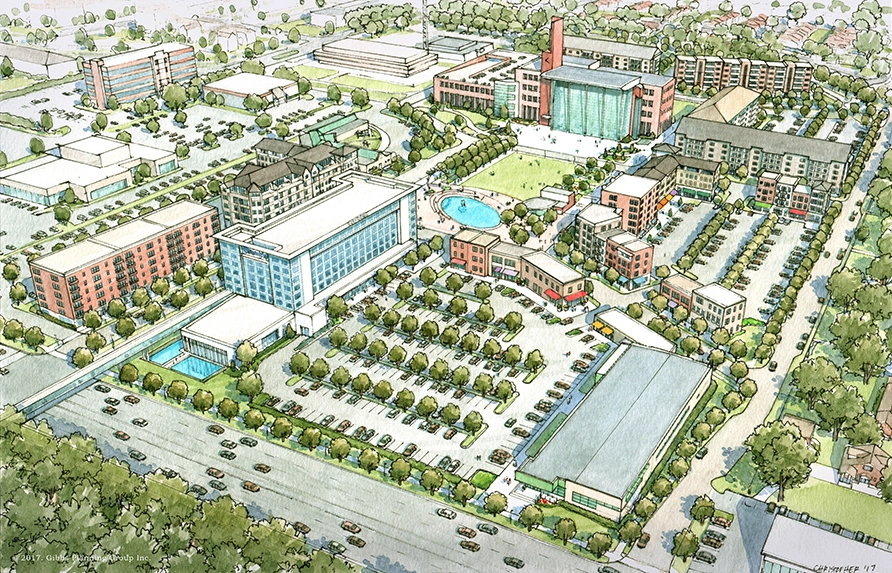
Warren, Michigan City Center / Gibbs Planning Group
In Troy, Michigan, a suburb north of Detroit, the city had 80 acres of property with a library, city hall, and police station. “The city came to us because real estate developers said they needed a city center to sell housing and make their offices marketable.”
The resulting plan was based on a large square, anchored with a new library, and aligned with 3- to 4-story residential, office, and retail (see image at top). The plan called for about 3,000 homes to be built on 100 acres and 500,000 square feet of retail, office, hotel, and other uses. “A very dense plan that would have never gotten approved without us first listening to the community, illustrating what the community wanted, and then showing how it could be adapted to this property.”
“Walkable places are in extreme demand. People travel to Nantucket and spend a fortune to spend a week there so they can pretend to live in a walkable town. The left bank of Paris is extremely popular for the same reason. People can experience a walkable environment with lots of fun, restaurants, and things to do.”
“About 30 percent of home buyers and households in the country want walkable communities with parks and squares,” Gibbs said. “And they're willing to pay about 20-35 percent more for that.” He added that “this type of planning is illegal in most states and requires a large number of variances.”
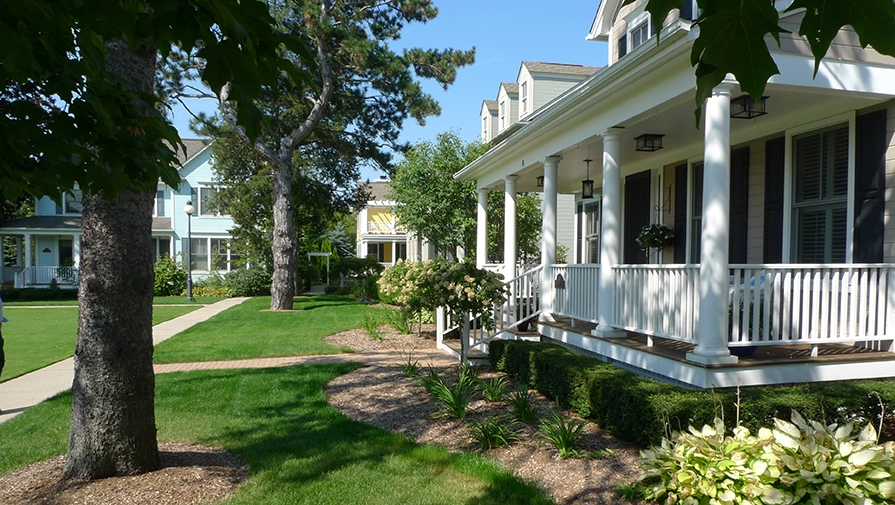
Westwood Commons, Birmingham, Michigan / Gibbs Planning Group
He said green elements also improve walkability. “Research shows that streetscapes that have large green trees and lots of landscaping perform better. The retailers have sales 15-20 percent higher with large trees and more natural areas than more plain and simple streetscapes. That's because the visitors will stay longer, they feel more comfortable, and the goods and services will appear to be of a higher quality than in a less landscaped place.”
“We're all in for parks and squares. Real estate developers appreciate what landscape architects do. We're good at getting the community involved. We're good at providing walkable places that are more than just parks, but have places that people can walk to. Restaurants, groceries, shops — places to meet other neighbors and residents.”
“Landscape architects are unique. We understand how to design and build communities that are practical and give a competitive return on the investment — and provide a quality of life you can't get in suburban places.”
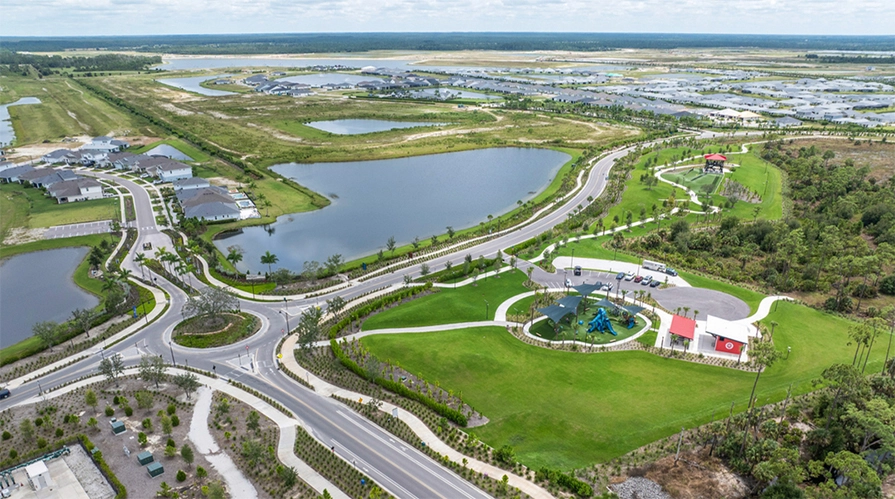
Babcock Ranch, which is just northeast of Ft. Myers in Florida, is a resilient, fully solar-powered master-planned community that survived Hurricane Ian in 2022 without losing power and with little damage. It has become a model of sustainable living and nature-positive development.
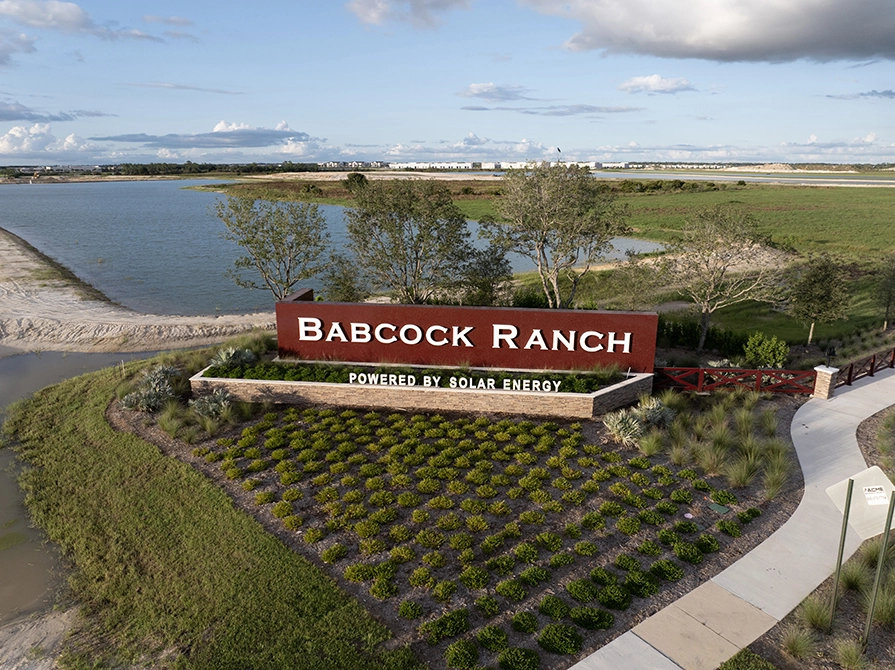
Babcock Ranch, Florida / Grayson Sands, courtesy of LandDesign
The landscape architecture and planning firm LandDesign has been planning and designing the project for a decade, explained landscape architect Jacob Bennett, PLA, a senior associate and studio leader in their Washington, D.C. office.
Babcock Ranch was conceived by the developer Sydney Kitson, CEO of Kitson & Partners. “Twenty years ago, he envisioned the hometown of tomorrow — America's first solar-powered city,” Bennett said. Kitson developed a concept for a community that leads with renewable energy and conservation. “He's a big believer in nature and stewardship but he also needed to make it economically viable.”
Kitson acquired 90,000 acres but gave over 70,000 acres back to the state for permanent preservation. And of the remaining 18,000-acre development, “over half of that has gone into either some form of conservation or open space.”
Babcock Ranch required “the skills landscape architects learn in school,” Bennett said, “but it also became more about the storytelling and creativity we bring to the table, which helps knit disciplines together and results in good solutions that balance land planning yields and other elements. We layered in a story about nature — how we work with nature, not against it.”
For example, LandDesign worked with the developer to enhance the creek that runs through the center of the development. Instead of “backing up homes” right to the water, the firm used the creek to create a 3-mile-long park and trail system. “We knit together park design, conservation, and the public realm to invite people to be part of that natural space. The park system enhances the overall community, helping with home sales."
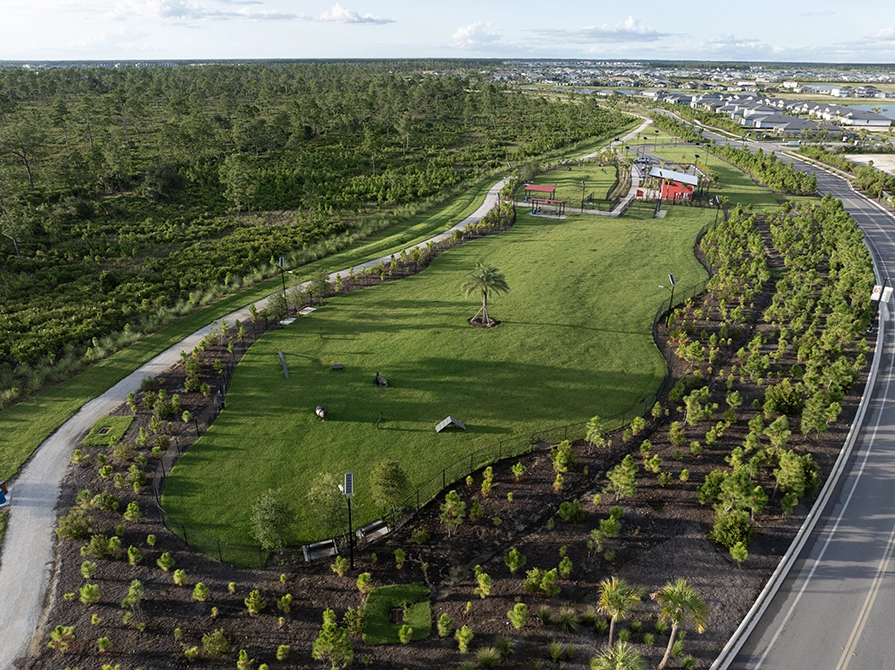
Babcock Ranch, Florida / Grayson Sands, courtesy of LandDesign
The firm designed a stormwater management pond to include a dock, so it became a “fishing pond, a place to create memories.” By bringing the pond into the public realm, “it enriches everybody's experience of the place,” Bennett said.
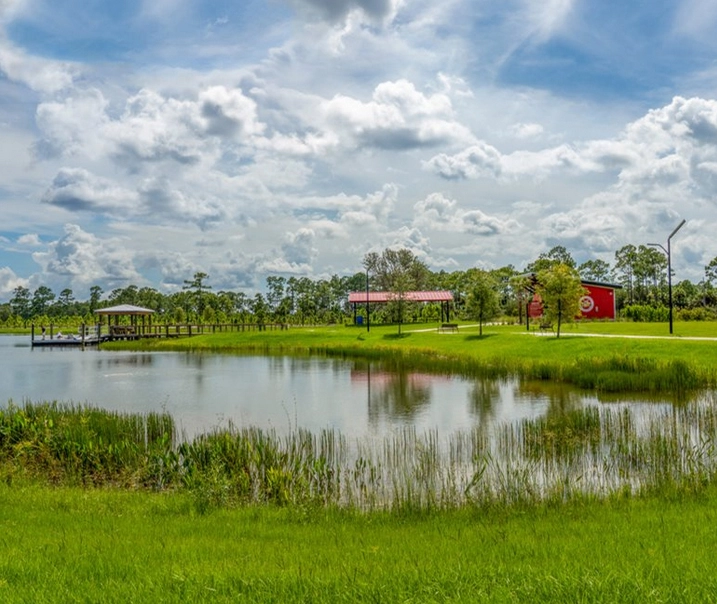
Babcock Ranch, Florida / Grayson Sands, courtesy of LandDesign
They also advocated for the use of native plants throughout the project. “They are better for irrigation, lower maintenance, more resilient, and last longer. And they may be more aesthetically pleasing to many residents than tropical plants.”
LandDesign made resilience a centerpiece of the nature story. They ensured roadways go downhill and feed into stormwater bodies and then layered in additional stormwater conveyance systems as back-up. “When the community gets over-surged or overfilled, there is redundancy in the system to make sure this place perseveres. This is the biggest cost saving — they don't have to replace something when a hurricane comes through.”
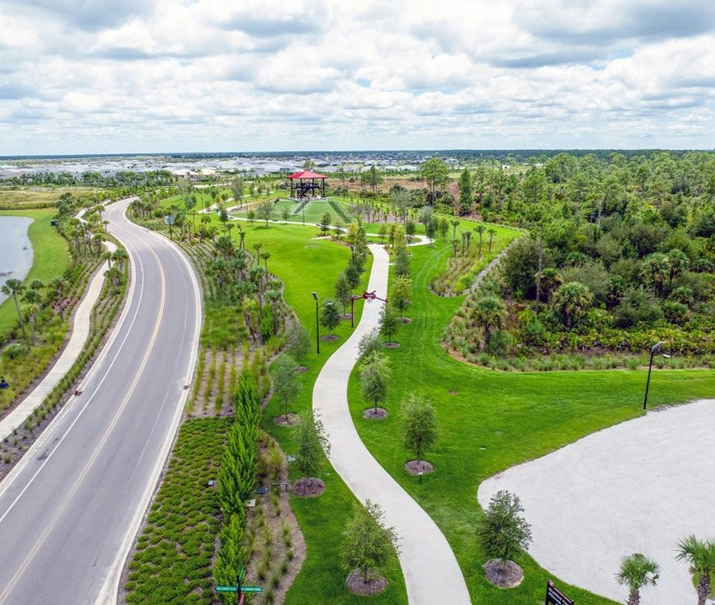
Babcock Ranch, Florida / Grayson Sands, courtesy of LandDesign
“The resilience is infused in the landscape – the native plants, green spaces, intertwined stormwater water ponds, and conservation areas. It tells the story of why this place has a lower likelihood of flood damage or repair. It says here's how we can live responsibly in Florida.”
Babcock Ranch, Florida / Grayson Sands, courtesy of LandDesign
“We can also think of the landscape as a sales engine. More people want to live within a physical representation of what they hold dear. Babcock Ranch is a successful master planned community because of the layers of green infrastructure that meet the trail systems – these are things people can experience on a daily basis that makes them feel good about the decisions that they've made.”
Bennett said landscape architects can create value early in the planning process before design starts. In places like Florida, which face increased hurricane, storm, flooding risks, incorporating nature-based solutions to address these challenges early on is vitally important.
“We need to be at the table helping make the decisions about how to design with water. We can pair up with engineers about the spacing and cadence of lakes that help reduce pipe sizes. We can bring filtration and treatment swales into our roadways. These kinds of decisions should happen up front before a park is defined.”
Landscape architects can be “involved in the bigger picture — improve financial outcomes, reduce risks, and support faster, smarter development — but only if we show up early and get involved in the decision-making process sooner. The best way to do that is leverage natural climate concerns and think about the end-users and what they want.” He reiterated that a project’s success is “determined by these decisions up front. The early inputs — the preservation, open spaces, green spaces, the walkability — lead to the economic outcomes.”
In the Q&A, a question came up about the value of different sizes of parks and green infrastructure.
“Signature parks have the greatest economic impact — whether that's on property values or generating visitation and spending,” said Jill Schmidt Bengochea, a director with HR&A, a real estate and economic development consultancy. “But we see examples on smaller projects in smaller cities where developers are incorporating nature-based solutions or parks and open space, because they see the economic upside.”
City-wide park systems also have great economic value in aggregate. “For example, smaller parks in Dallas, Texas, have a lower increment in terms of nearby property premiums. But because there are more smaller parks, the total value was higher,” said Gail Hankin, a director at HR&A.
“We also looked at August Wilson Park in Pittsburgh, Pennsylvania. It is not a splashy, flashy park but increased homeowners' property values and long-term wealth building.”
“If a landscape architect adds a few extra trees to a development, it’s hard to determine what that exact return on the investment will be. It's not going to be nothing. These types of investments do drive a return.”
Read part I