

.webp?language=en-US)

.webp?language=en-US)
Advertisement
Extreme Heat
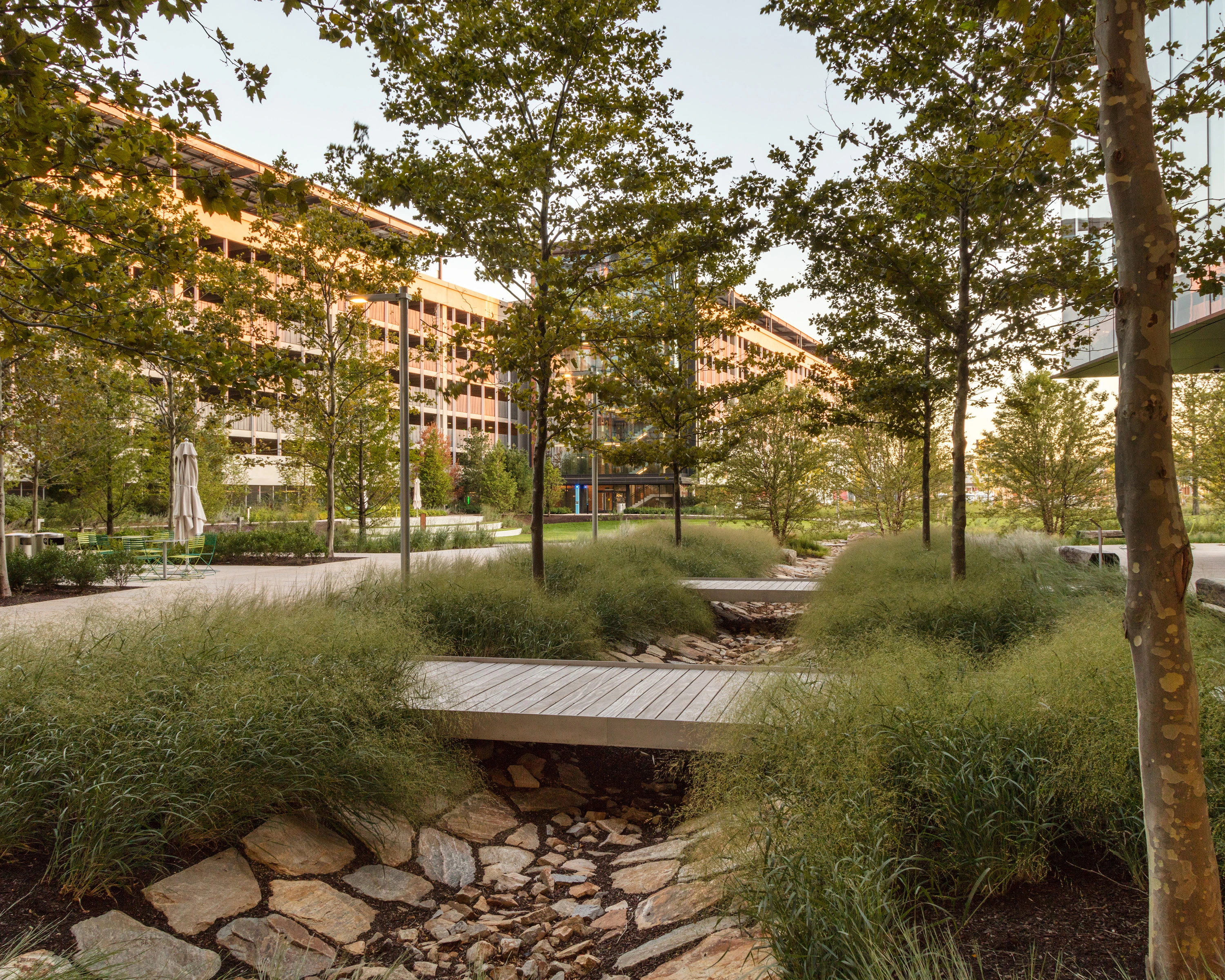
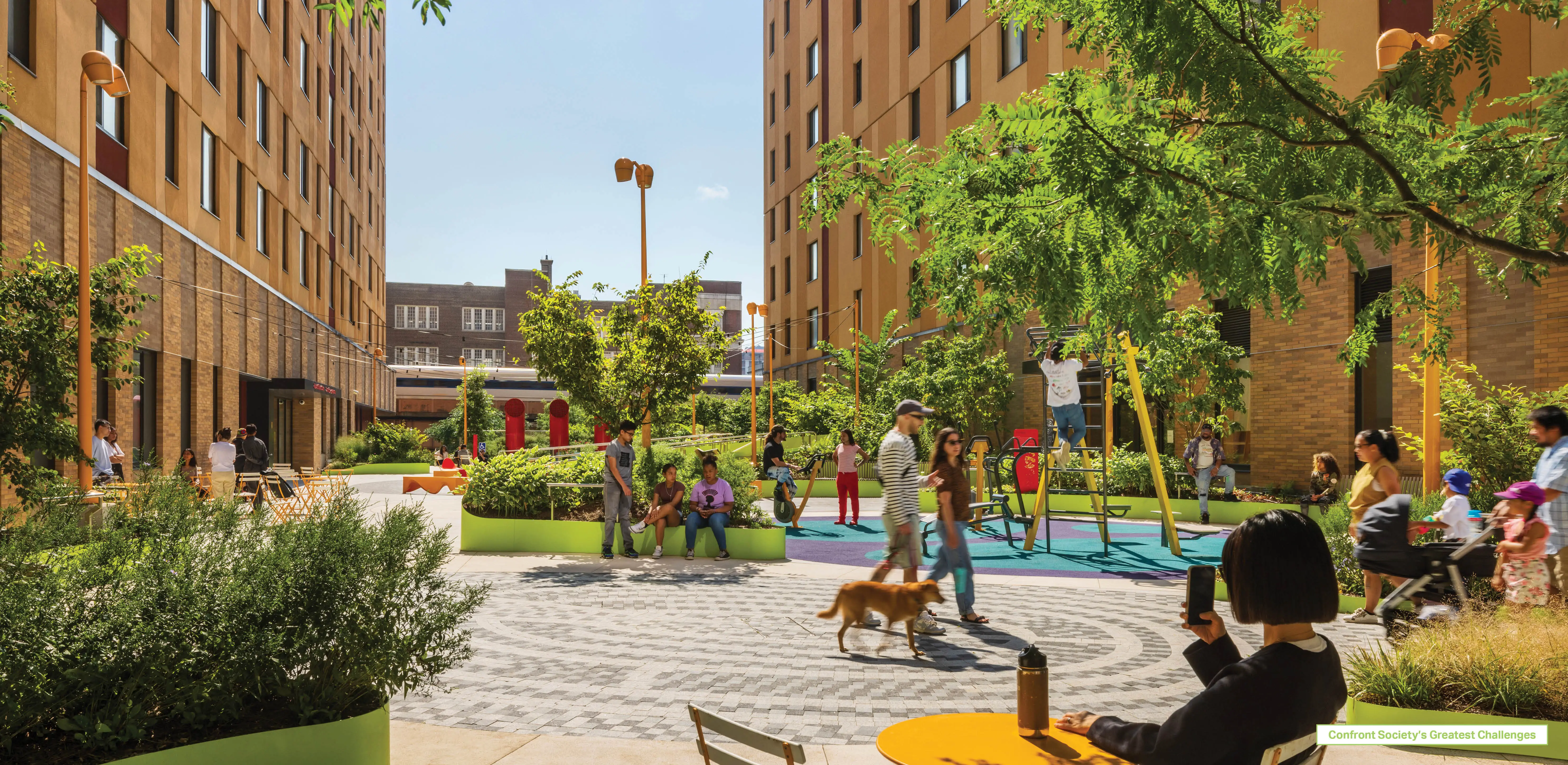
ASLA 2022 Professional General Design Honor Award. From Brownfield to Green Anchor in the Assembly Square District, Somerville, Massachusetts. OJB Landscape Architecture
15 of the 16 warmest years on record have occurred during this century, according to the National Oceanic and Atmospheric Administration (NOAA). 2015 also marks the 39th consecutive year that the annual temperature has been above the 20th century average. Rising temperatures intensify environmental threats, such as drought and rising sea levels. Higher average temperatures also lead to increased energy use and exacerbate pollution, which in turn raises health risks. According to the Intergovernmental Panel on Climate Change (IPCC), we are also seeing longer continuous stretches of higher temperatures that pose greater health risks than isolated hot days. Heat-related illnesses, such as heat stress, asthma, and malaria (mosquitos carrying the disease will travel further as temperatures rise) are expected to claim an additional 250,000 lives between 2030 and 2050, according to the World Health Organization. The effects of rising temperatures are pronounced in cities, where asphalt and concrete absorb and trap heat. This phenomena is known as the urban heat island effect.
How Resilient Planning and Design Helps
Trees are nature’s amazing cooling devices: they release water moisture, provide shade, and create micro-climates. Other designed green infrastructure -- green roofs, green streets, rain gardens, and parks -- can offer similar benefits. While a patchwork of trees, gardens, and green roofs cannot decrease temperatures, a system of them, combined with other tactics, such as the use of light-colored building materials, can be effective. Los Angeles is implementing this strategy with the intent of shaving 1.65 °C off of its city-wide temperature by 2035. Similarly, the cities of Melbourne and Adelaide heat reduction strategies include planting huge amounts of greenery; Adelaide, 100,000 square meters of it by 2020. The city of Stuttgart orients buildings to better leverage wind as a means of cooling their streets down.
Co-benefits
Vegetation planted to cool down cities also helps manage stormwater, provide habitat for wildlife, and give streets character. Green roofs can provide many benefits – in addition to cooling the air, they can insulate the building, reduce building energy consumption, absorb stormwater, provide wildlife habitat, and create social space. Green infrastructure also creates lots of good local jobs installing and maintaining these systems.
Role of the Landscape Architect
Landscape architects play a lead role in greening our cities and communities in order to make them cooler. They work with architects and engineers to design green roofs, walls, and streets, and other green infrastructure as zones to inhabit during extreme heat events and hotter-than-average summers. Landscape architects can identify the tree and plant species best suited to generate a cooling effect while minimizing harmful volatile organic compounds (VOCs). Working with planners and arborists, they create urban forest plans and design and implement these systems.
Advertisement
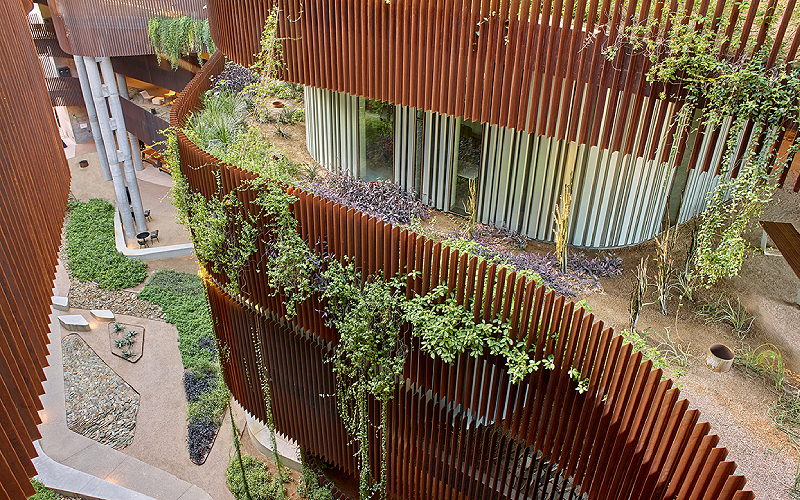
Landscape Architecture Solutions to Extreme Heat
Evidence-based research underscores how nature-based solutions reduce extreme heat and highlights the essential role landscape architects play in delivering these benefits.
Relevant Projects
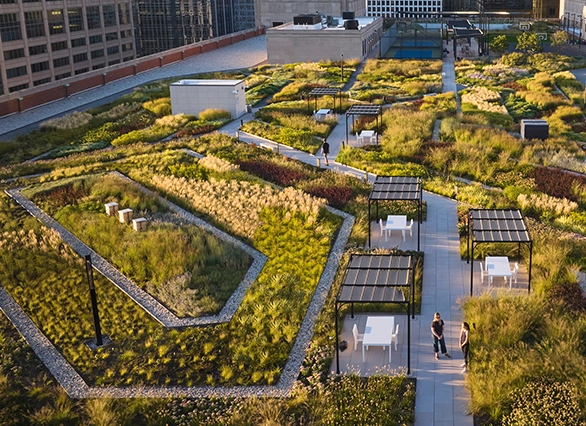
ASLA 2010 General Design Honor Award, Rooftop Haven for Urban Agriculture, Chicago, IL, Hoerr Schaudt Landscape Architects
Stuttgart: Combating the Heat Island Effect and Poor Air Quality, Stuttgart Office for Urban Planning and Urban Renewal
Louisville: Cool 502, Louisville, KY
NYC Parks Green Roofs, NYC Parks Department and Columbia University
Chicago Green Alleys, Chicago, IL
Melbourne Urban Forest Strategy, City of Melbourne
Resources
Volatile Organic Compound (VOC) Emission Rates, U.S. Department of Agriculture
Melbourne Tree Map, City of Melbourne
Research on Green Roof and Evapotranspiration, GritLab, University of Toronto
Extreme Heat: Hot Cities—Adapting to a Hotter World, Symposium Report, Center for Architecture in New York, NY
Using Cool Pavements to Reduce Heat Islands, Environmental Protection Agency
Heat Island Resource, EPA, Environmental Protection Agency
Urban Forest = Cleaner Cooler Air, ASLA
Quantifying Pollution Removal by Green Roofs, Science Direct