
.webp?language=en-US)


Working with Beaver Engineers:First Step in Restoring Eco-corridors
Yehong Yuan, Student International ASLA; Luyi Lin, Student International ASLA; Yilin Li, Student International ASLA; Wanlin Qu, Student International ASLA; Meixin Song, Student International ASLA; Ziyao Tang, Student International ASLA; Xi Zhang, Student International ASLA; Di Li, Student International ASLA
Schools
Beijing University of Civil Engineering and Architecture
Beijing Forestry University
UC Berkeley
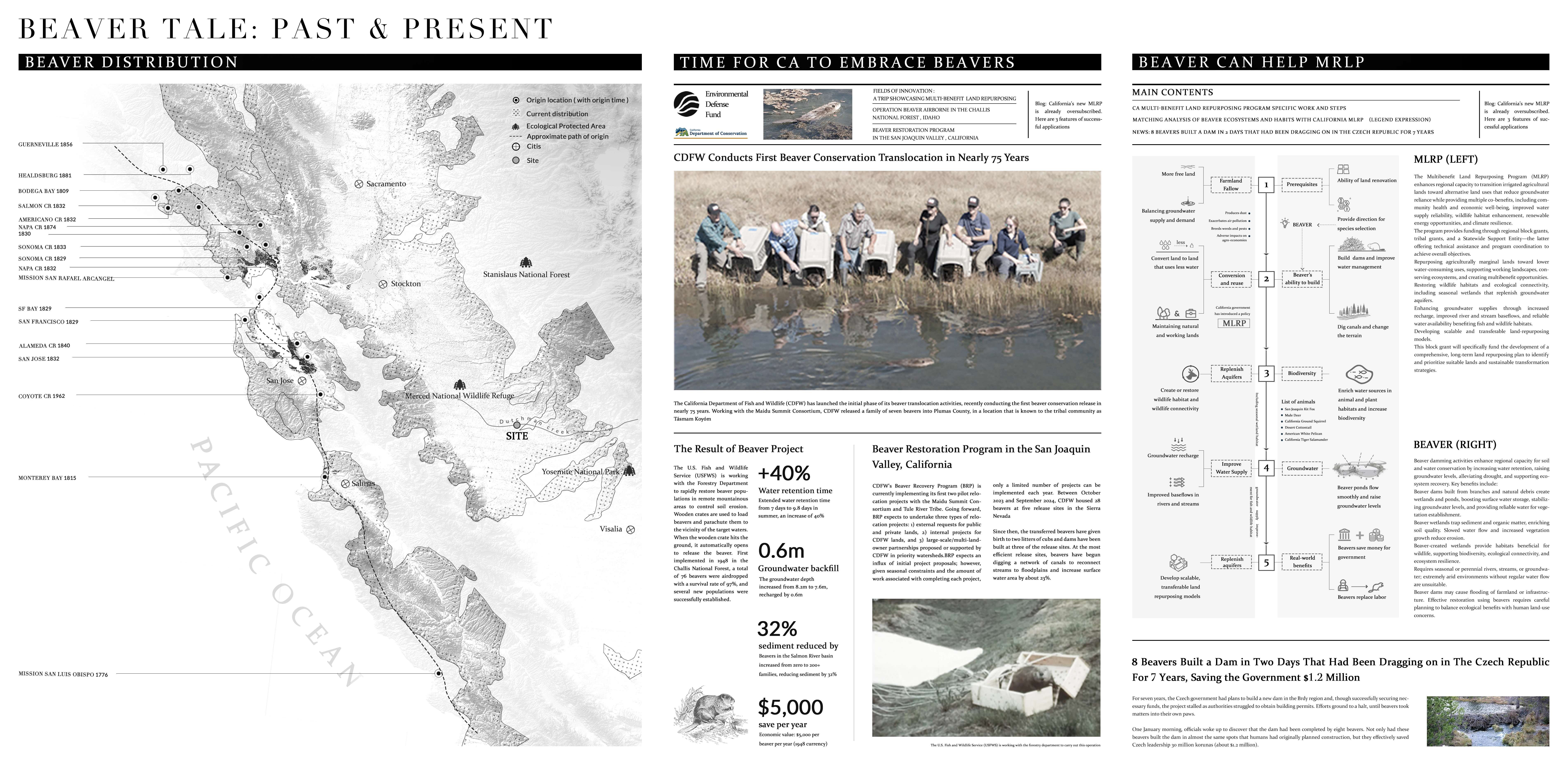
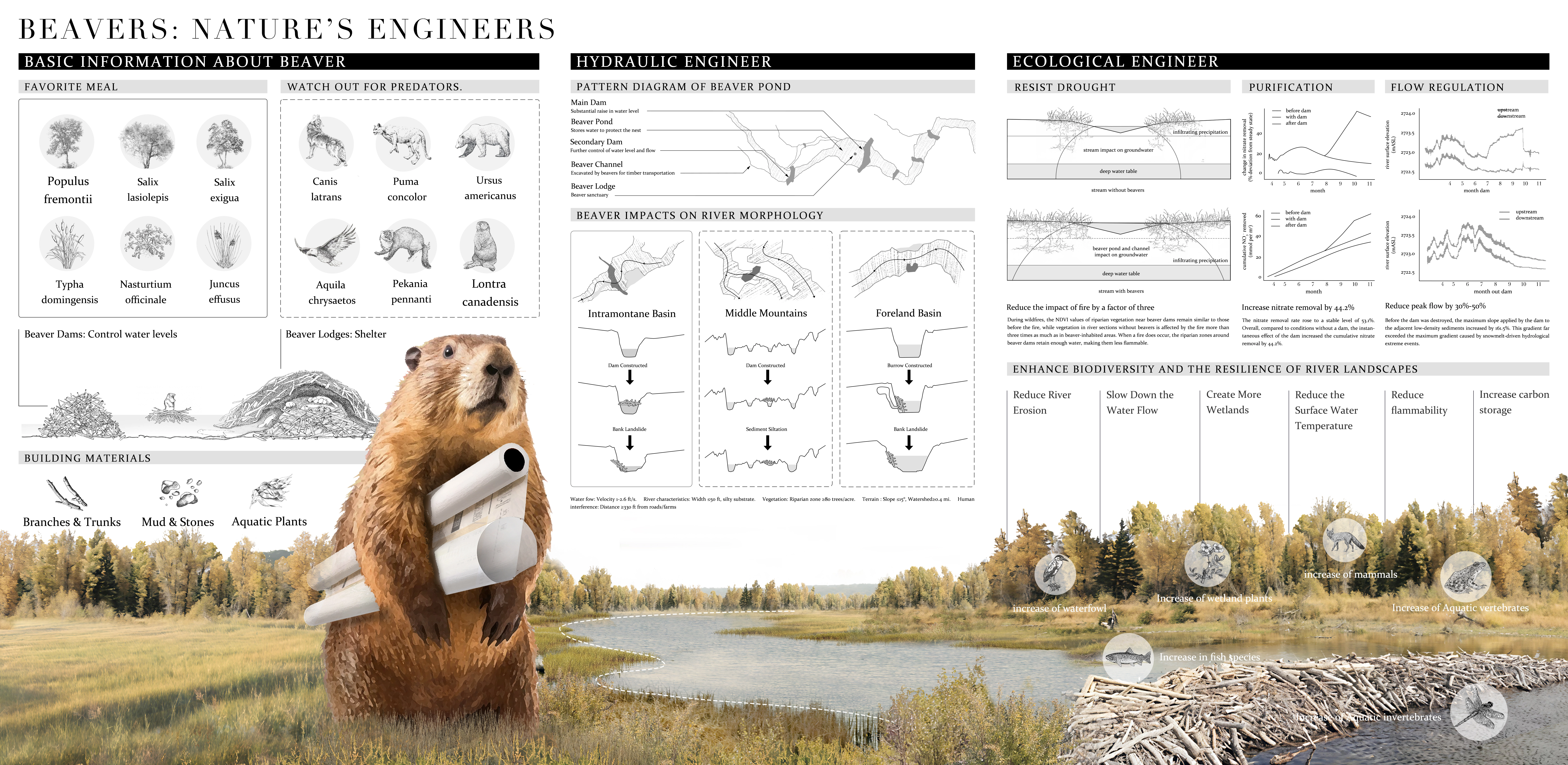
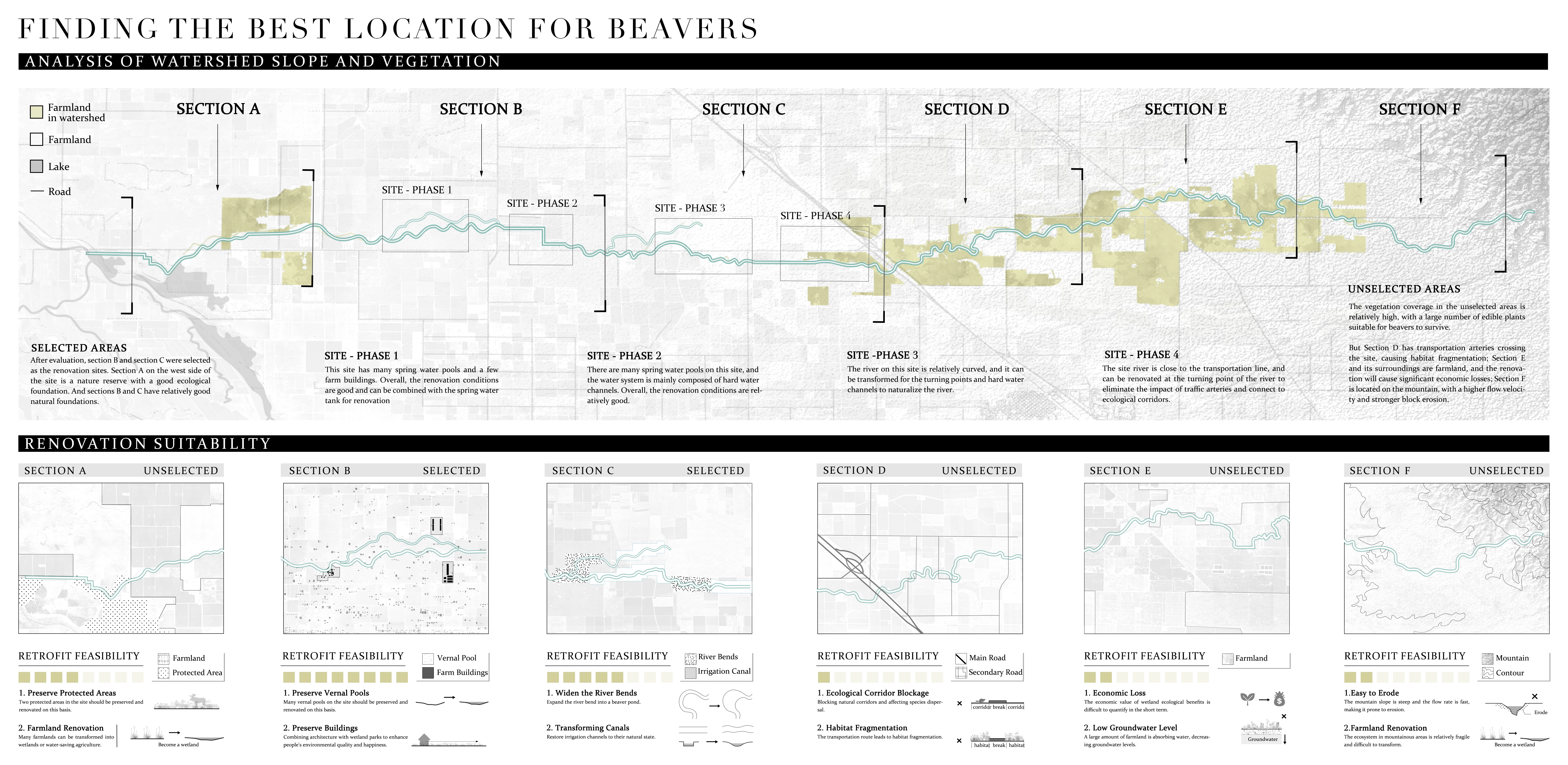
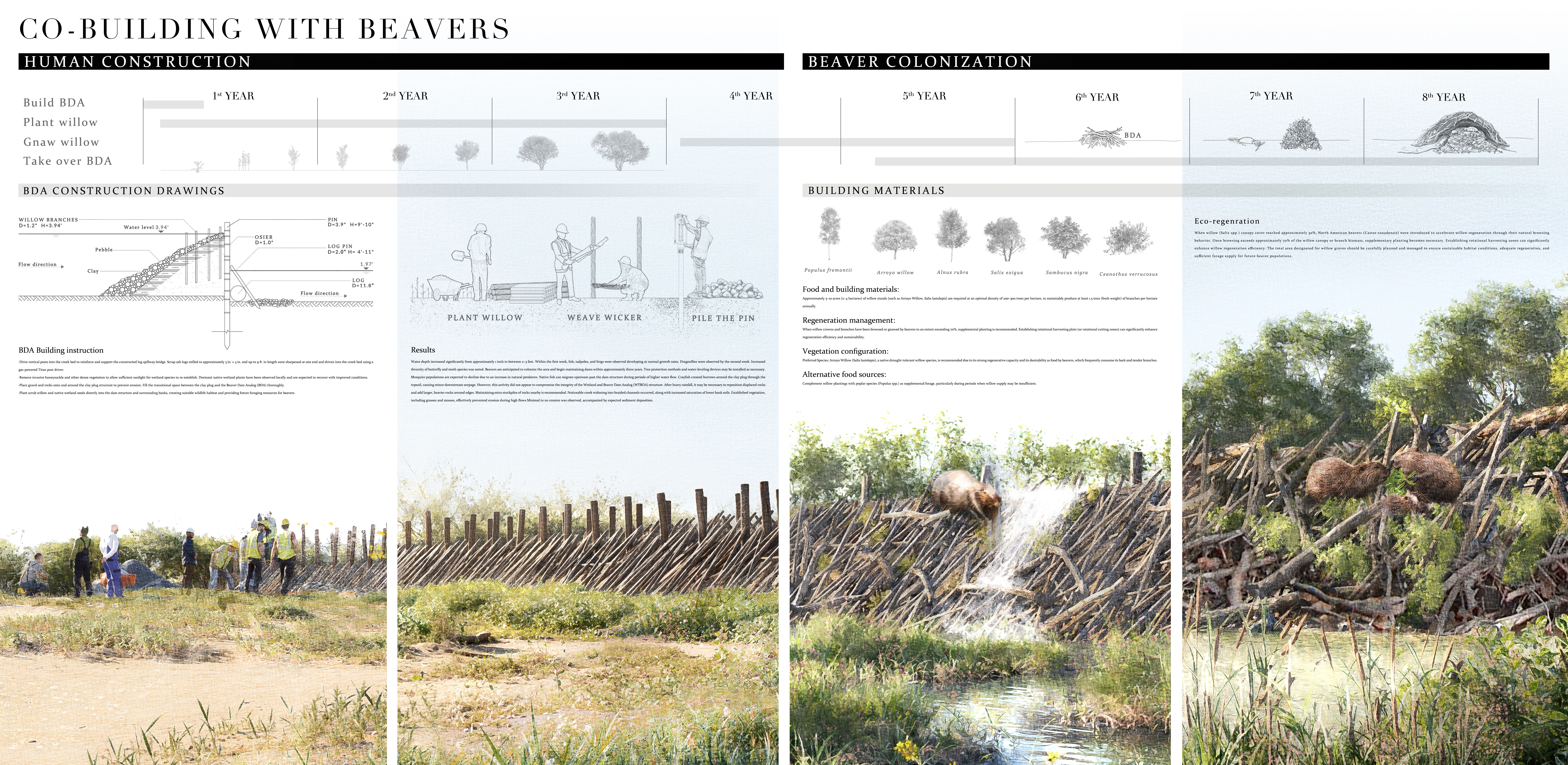
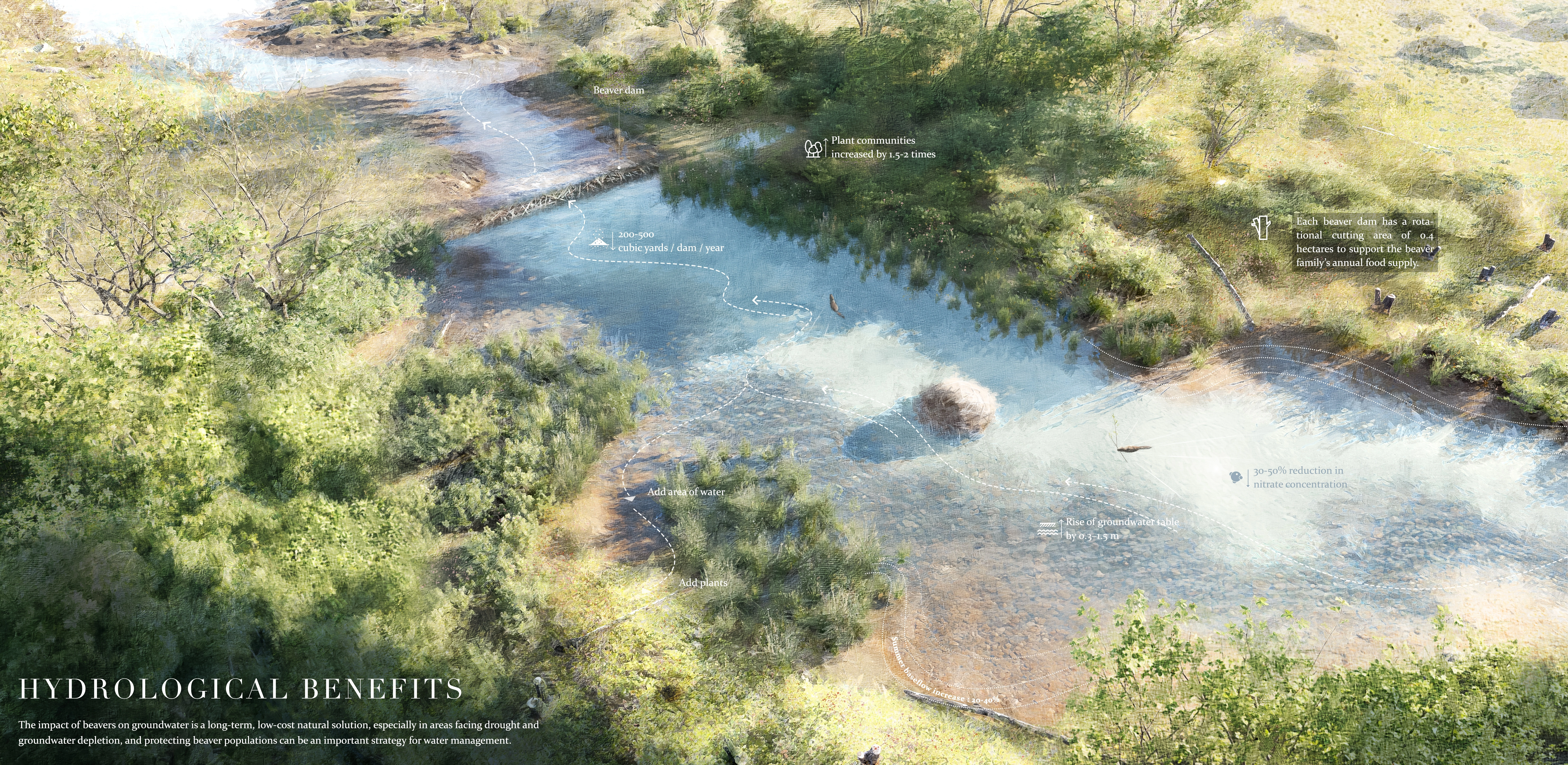
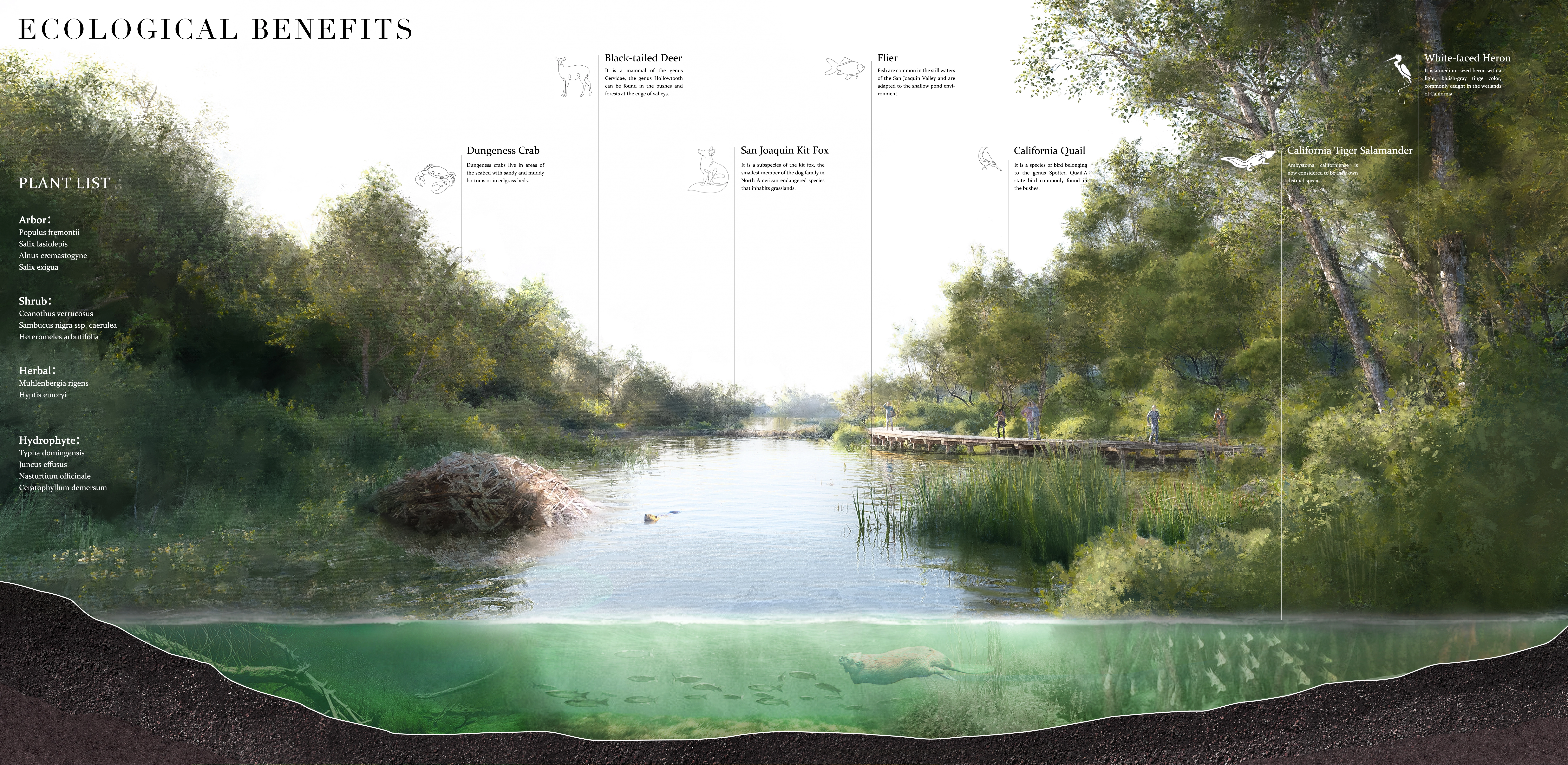
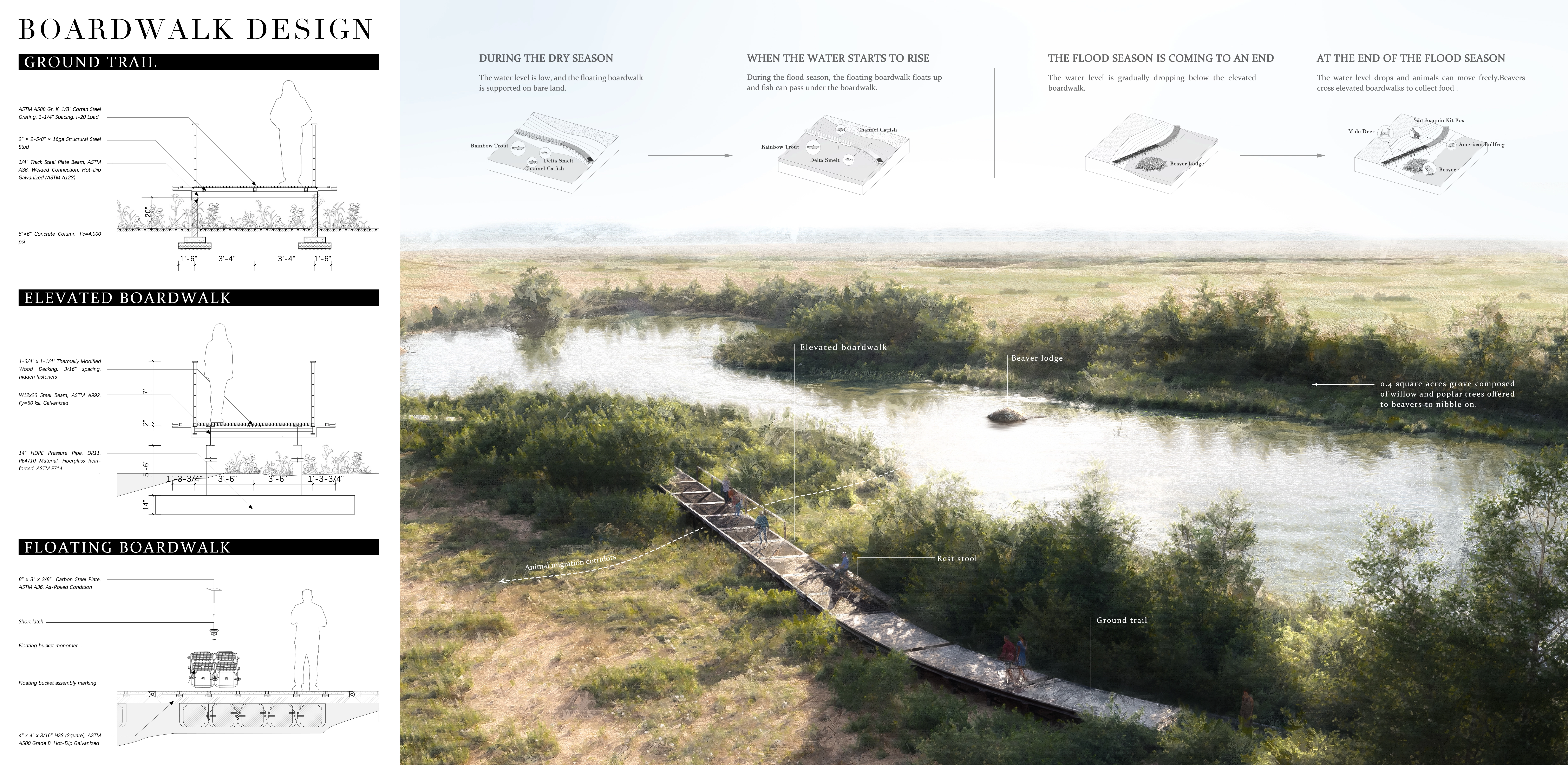
Interesting research, analysis, and application of hydrological benefits of dam creation. Graphics are beautifully created and laid out well to understand the concepts.
Detailed contextual research on a compelling topic. Informed and well-grounded analysis.
Awards Jury
-
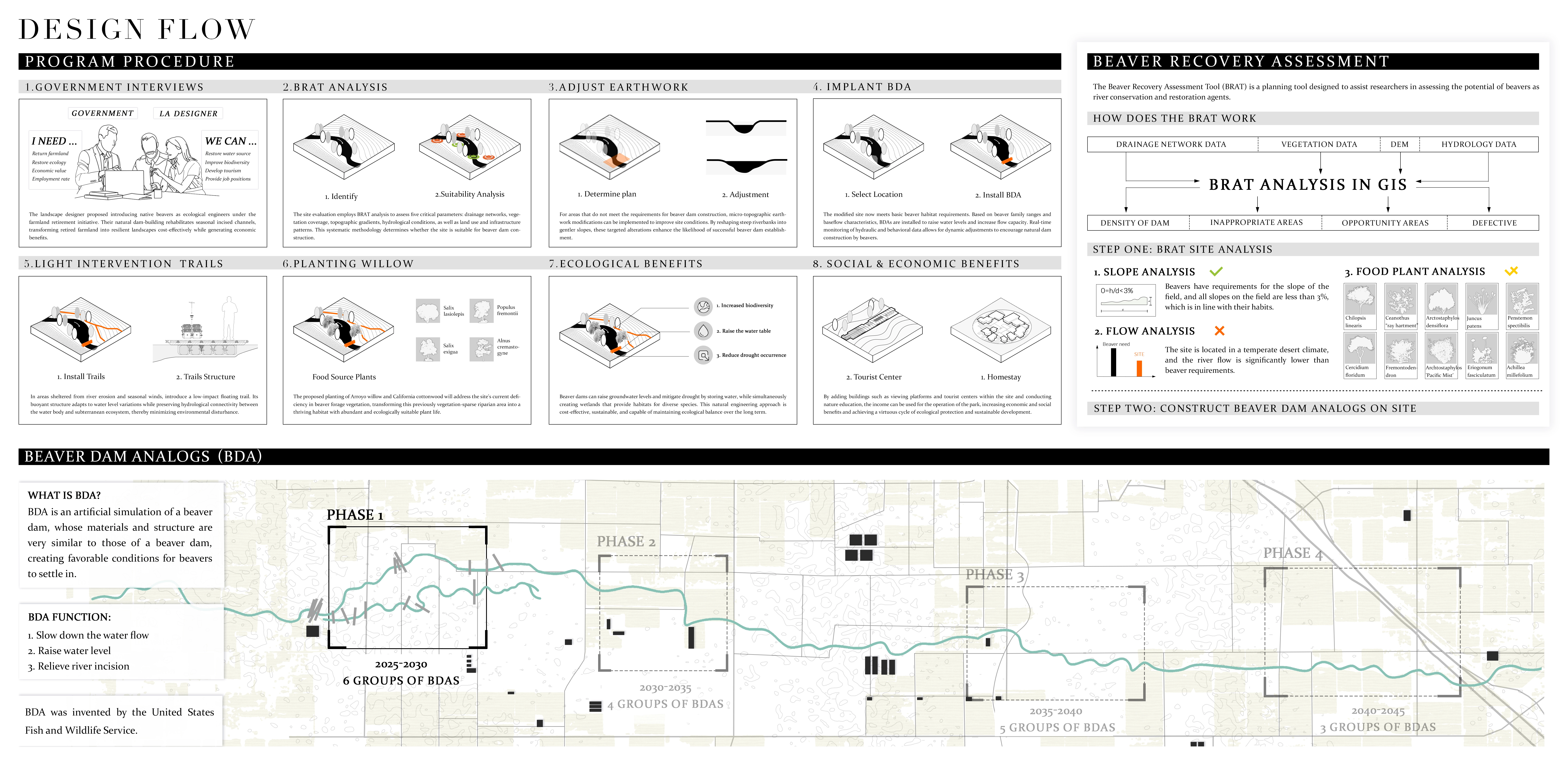
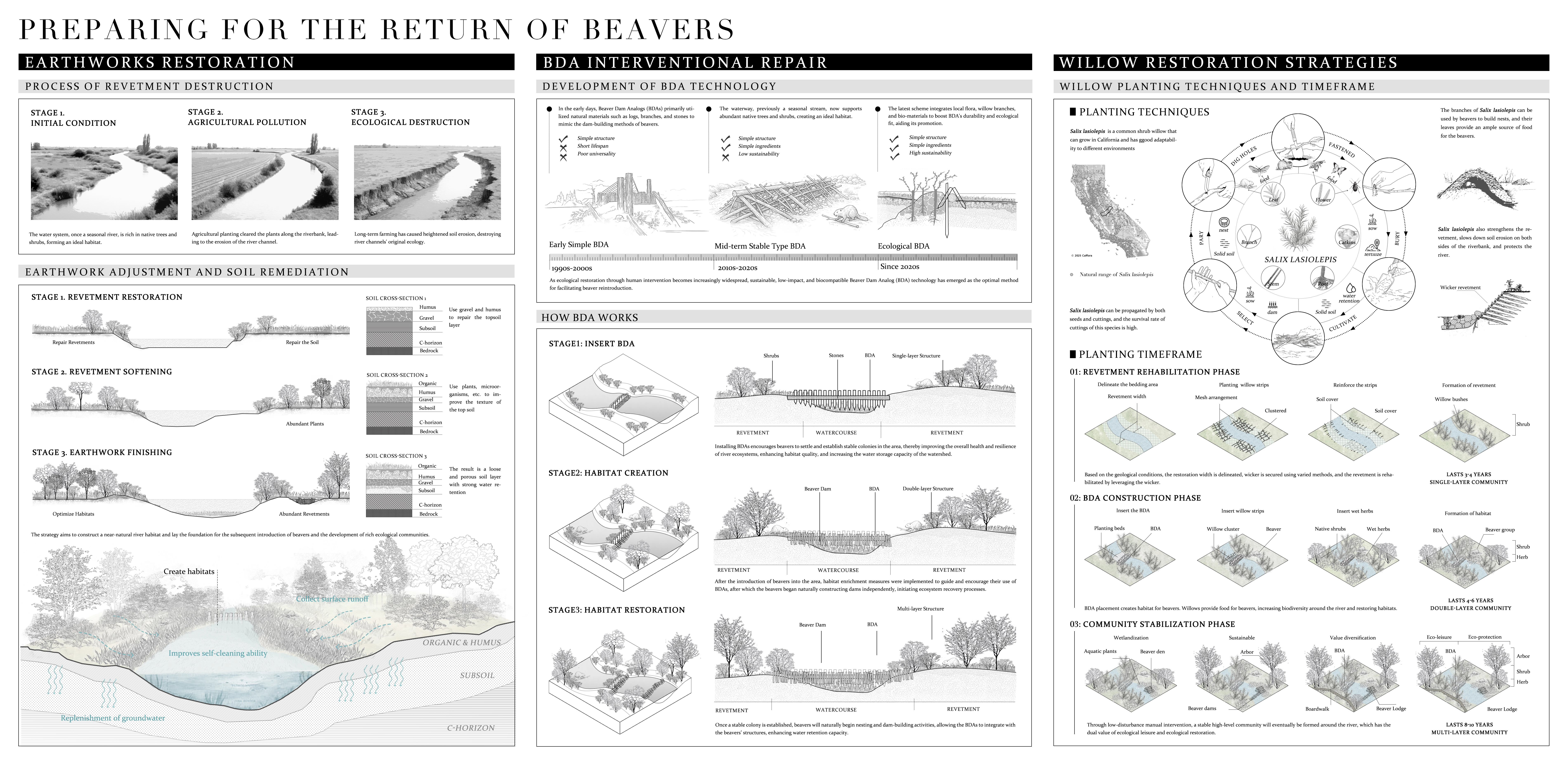
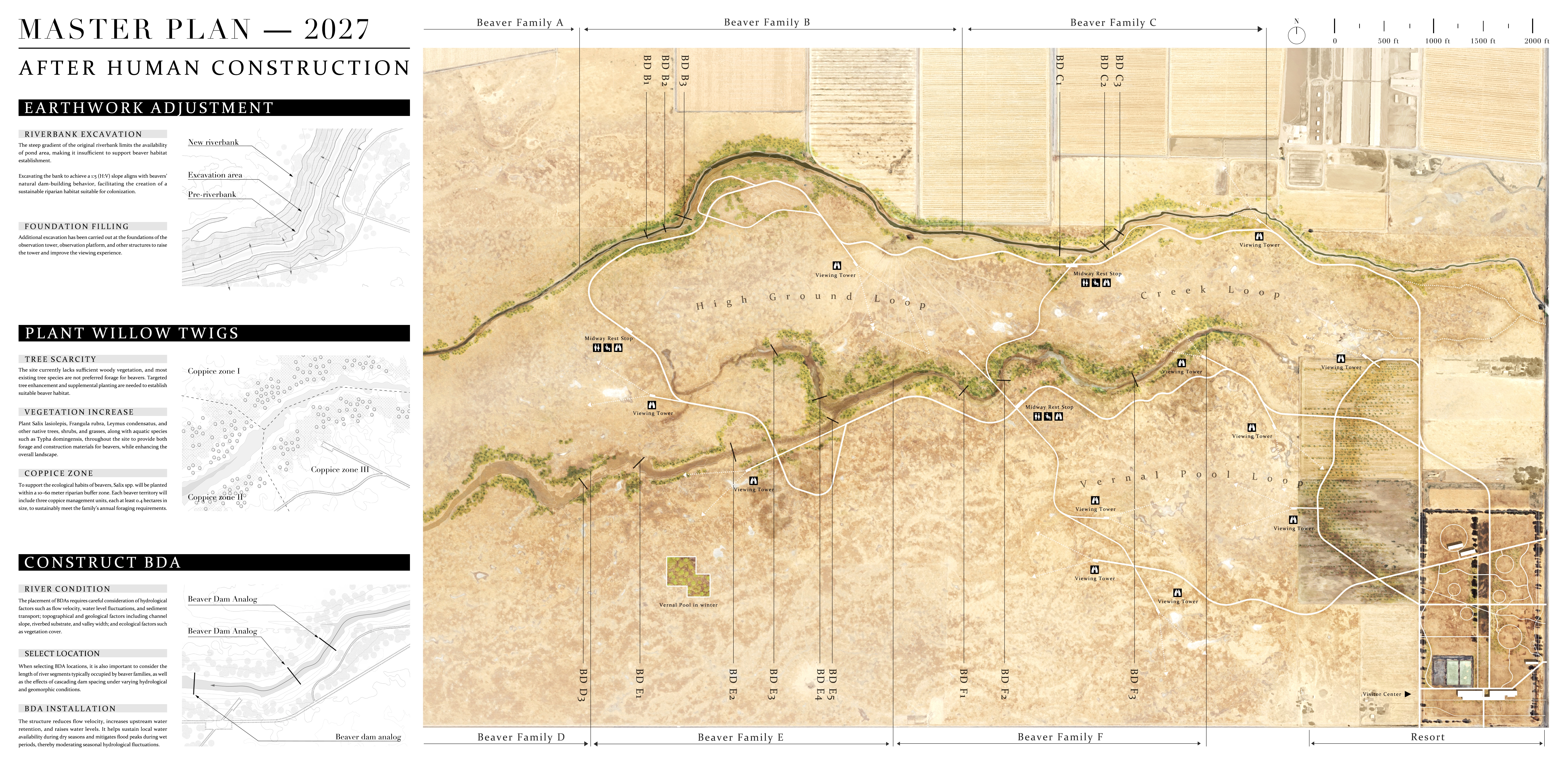
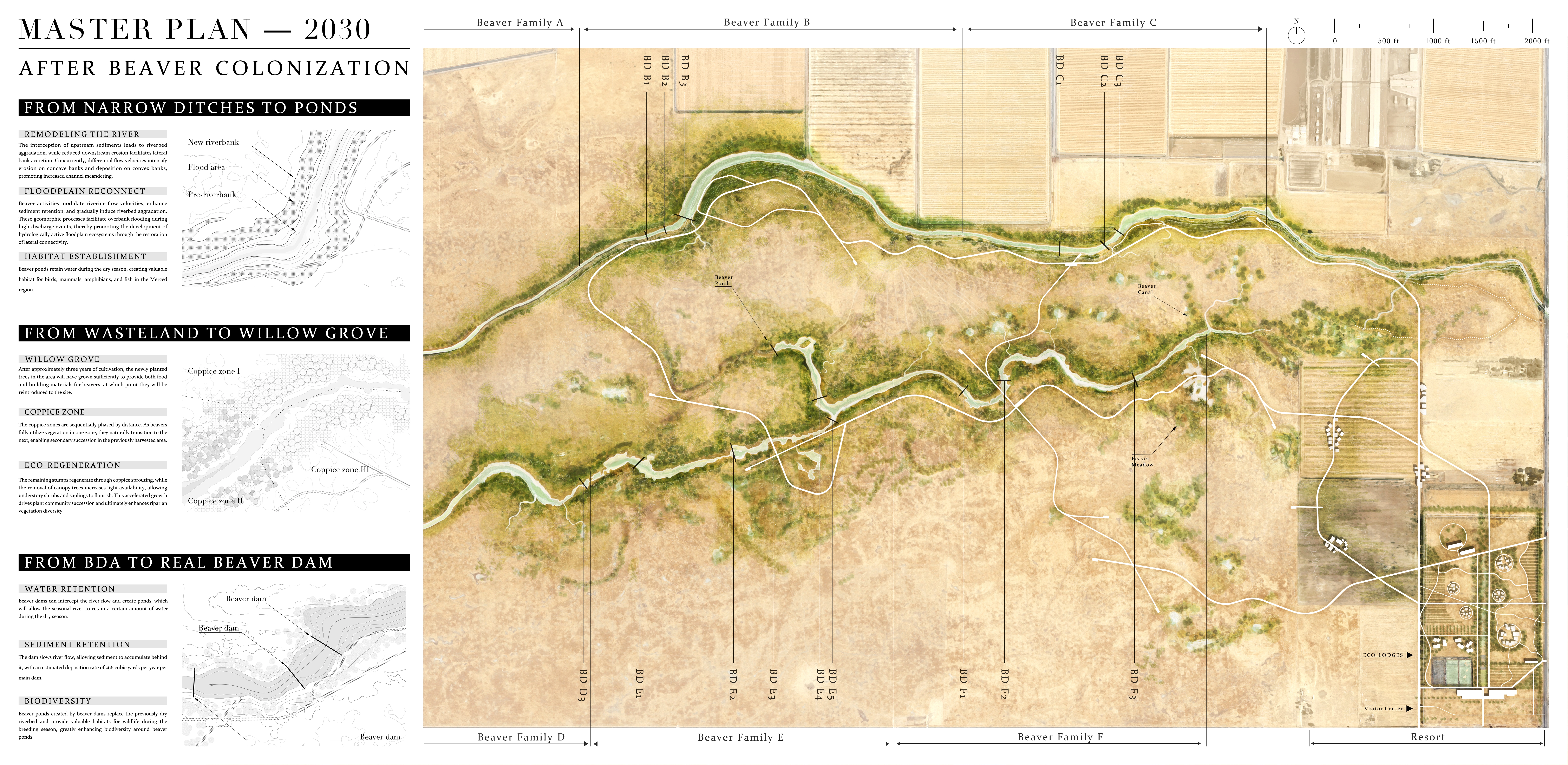
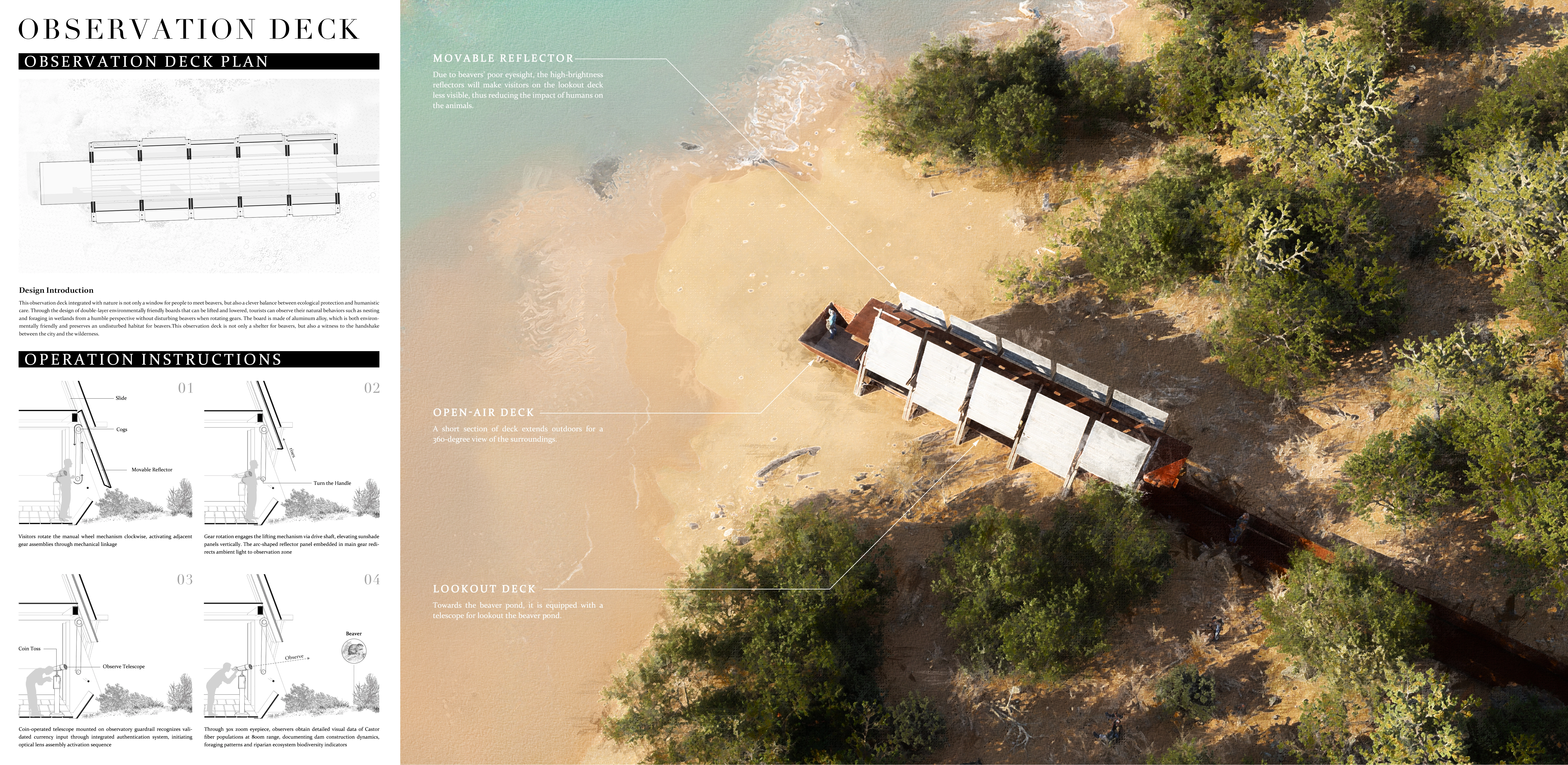
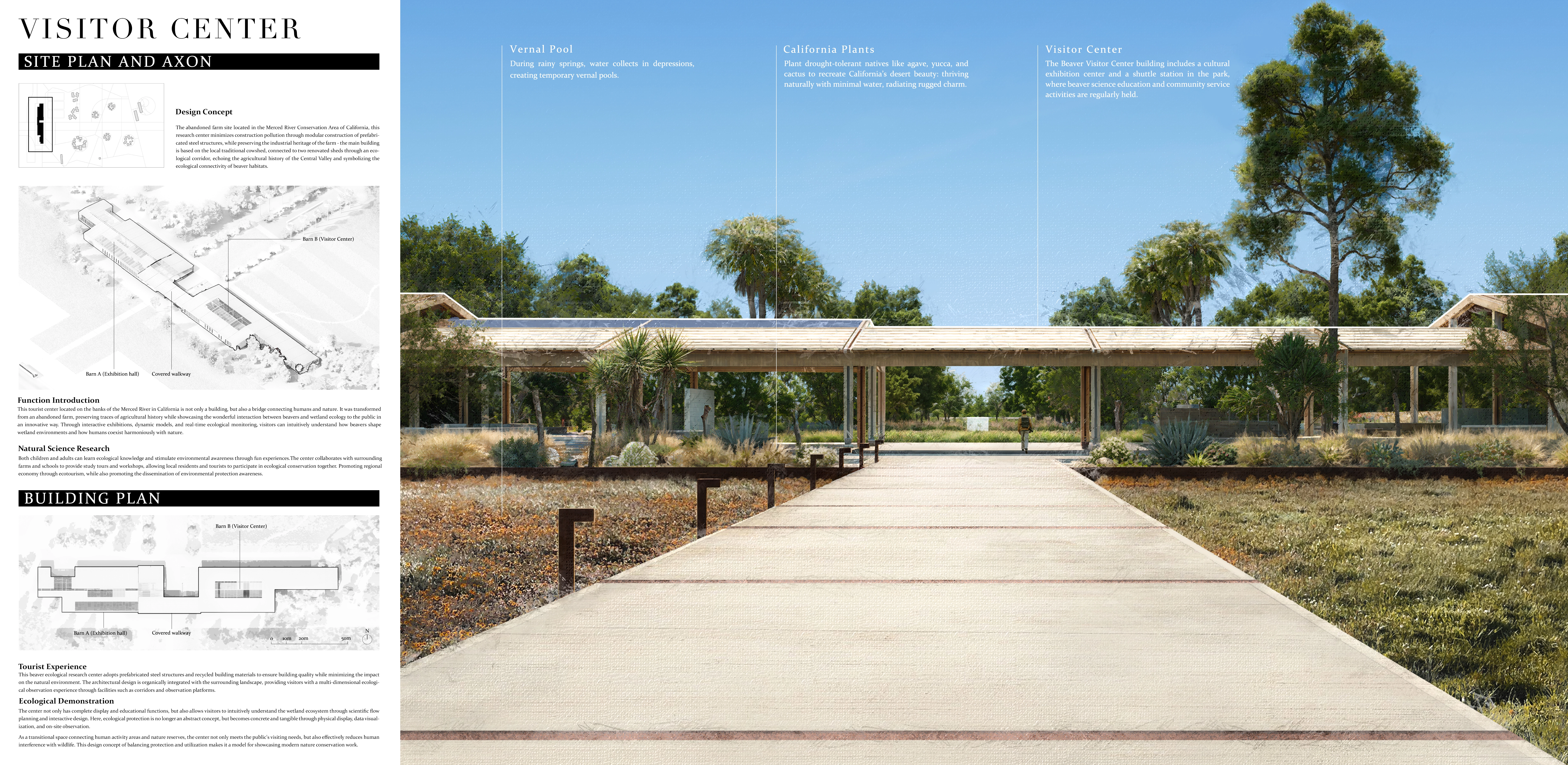
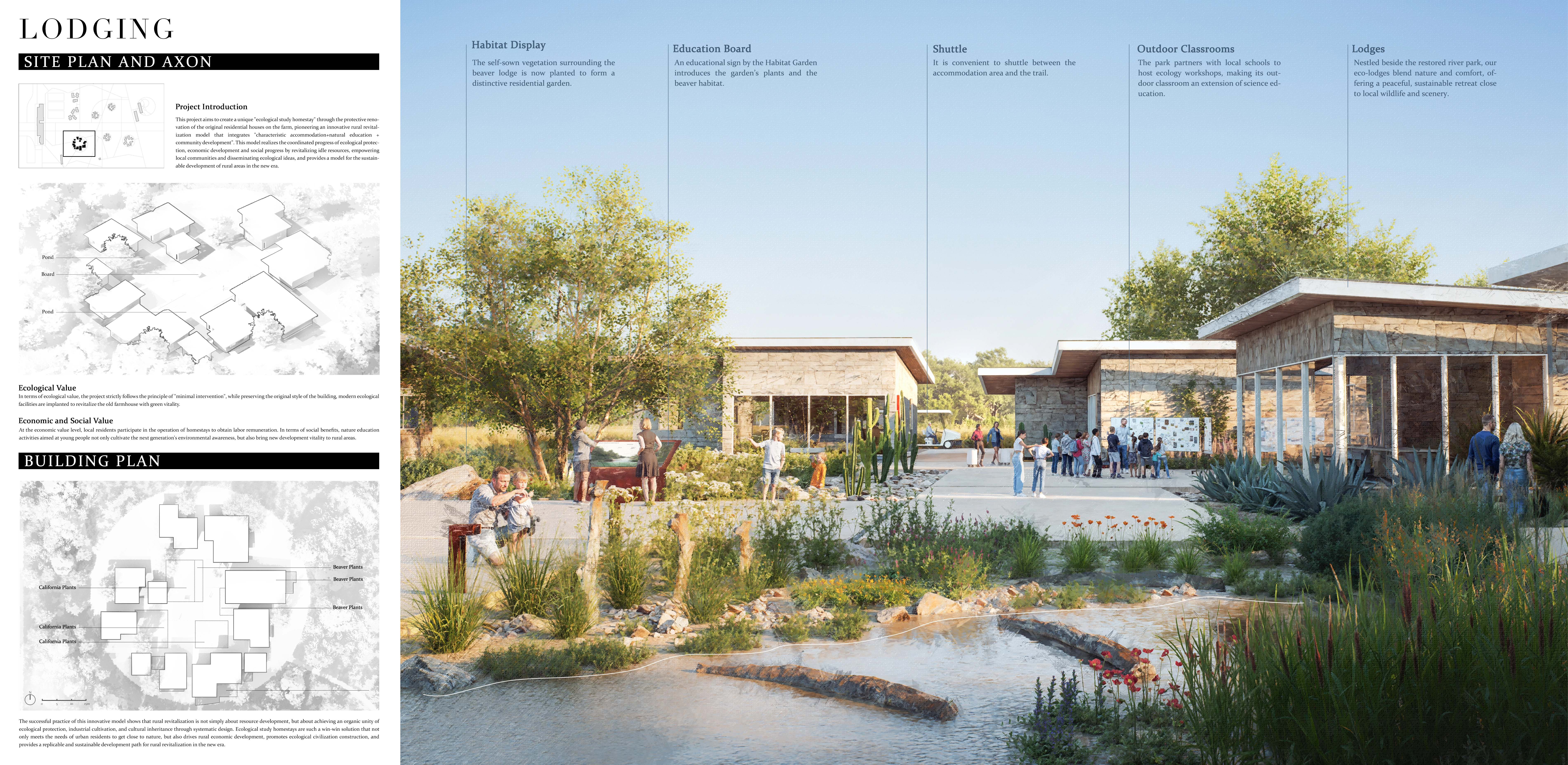
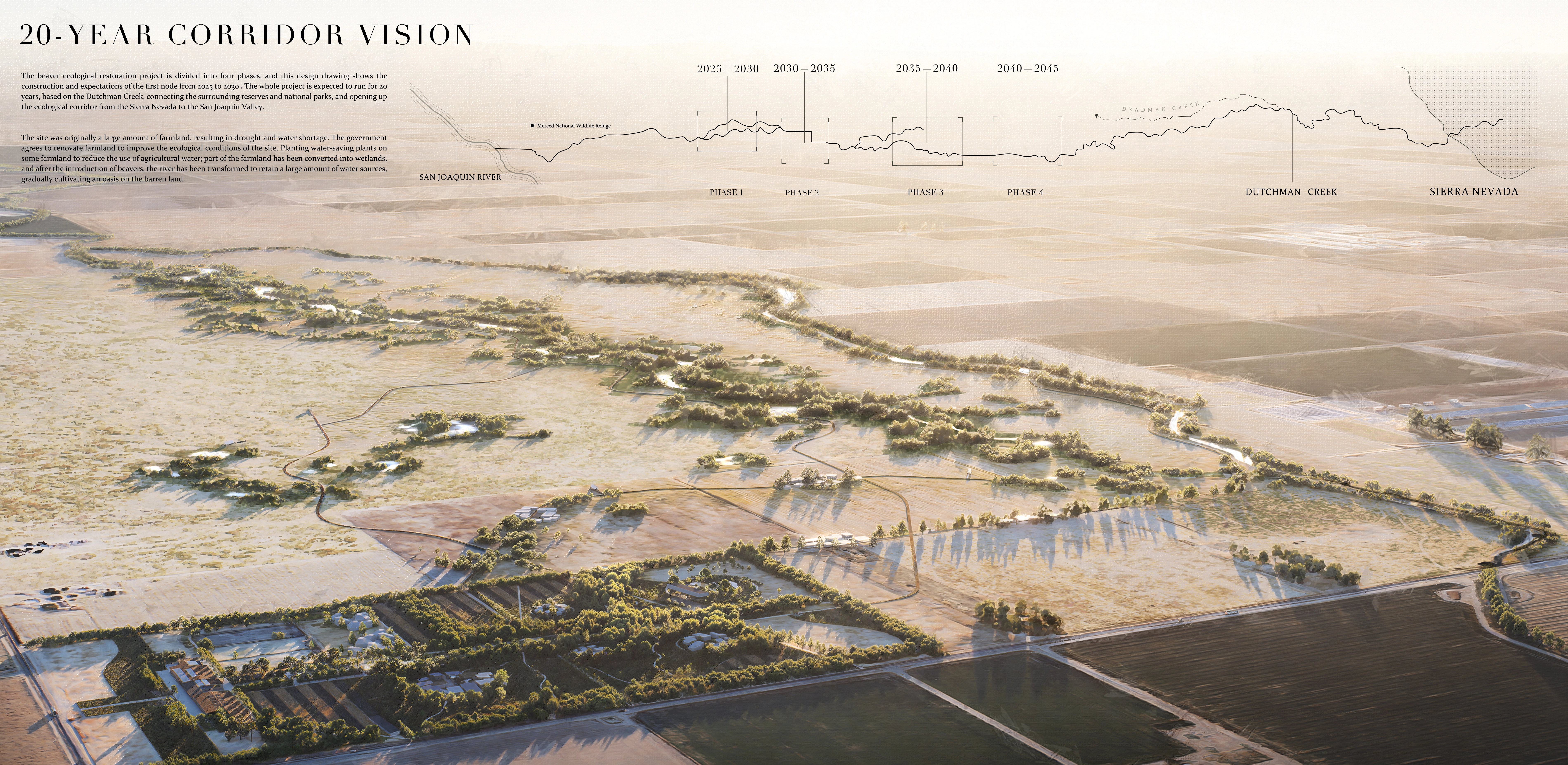
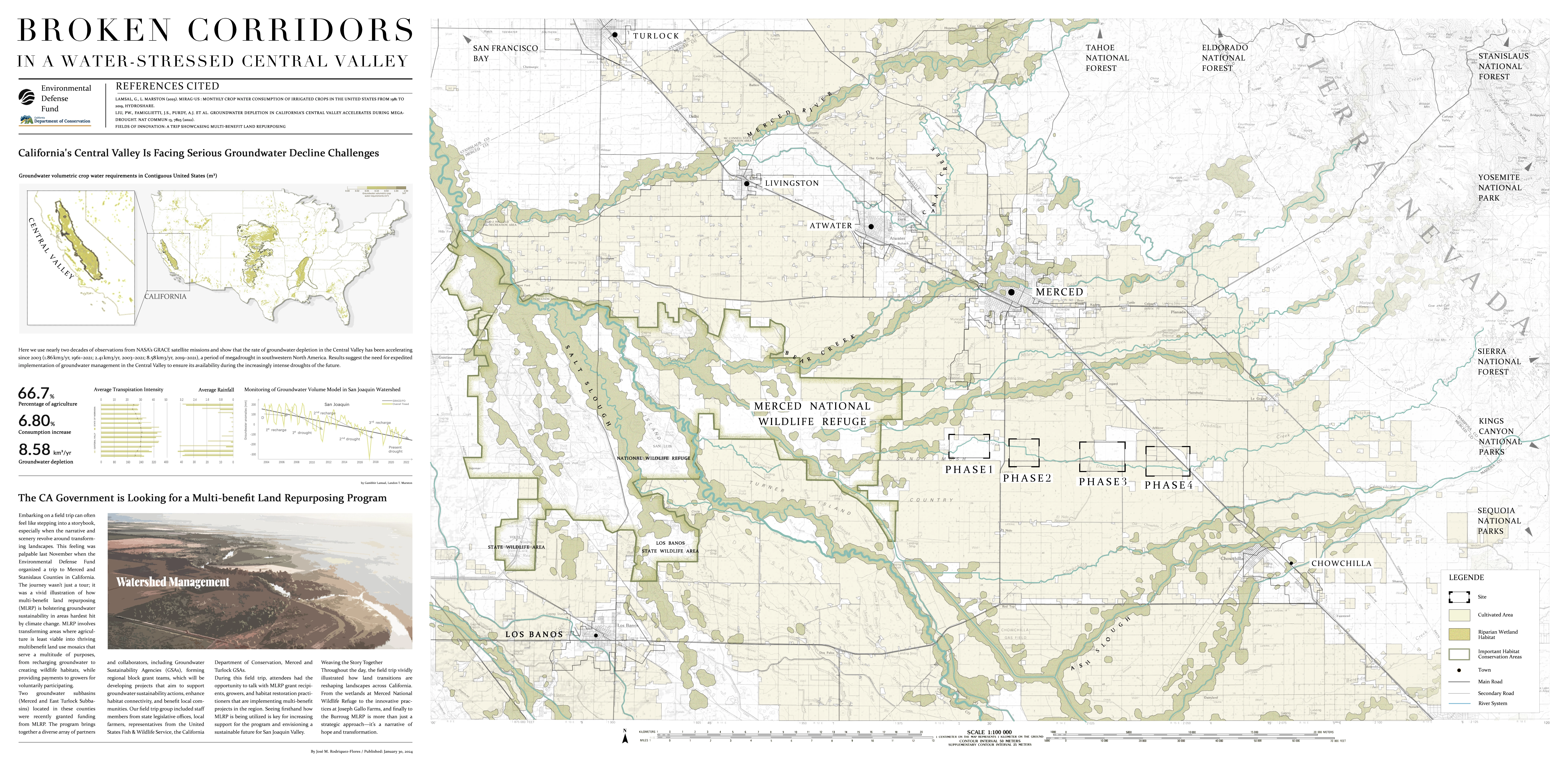
In response to groundwater loss and fragmented corridors in California’s Central Valley, our team supports the Department of Conservation’s rewetting strategy by partnering with native beavers to build a human–nature co-restoration system. Stage one prepares habitats with auxiliary dams and willow forests to help beavers settle in. Stage two relies on beavers to reshape the ecosystem and reconnect corridors. Stage three introduces low-impact pavilions, floating boardwalks, and nature-education homestays to support ecotourism. This pilot site offers a replicable model for broader application.
-
Background California’s Central Valley was once a vibrant ecosystem of braided rivers and lush vegetation. Over time, widespread land reclamation transformed much of the landscape into vast farmland. To meet irrigation demands, intensive groundwater extraction became routine. In less than a century, groundwater levels have dropped by over 10 meters. Experts warn that by 2040, up to 900,000 acres of farmland in the San Joaquin Valley may need to be fallow to balance groundwater supply and demand. As an alternative, the California Department of Conservation proposes a multi-benefit land repurposing program. With public funding, landowners can voluntarily convert irrigated farmland into more water-resilient uses—such as groundwater recharge zones, habitats, or renewable energy sites. Overview In response to groundwater loss and fragmented ecological corridors, our team joins this initiative with a restoration strategy that collaborates with the valley’s original ecosystem engineer—the North American beaver. Through a model of human–nature co-restoration, we aim to deliver lasting ecological, economic, and social benefits. Site Selection and Modeling Our pilot site lies along Dutchman Creek, strategically positioned to form a wildlife corridor between the Sierra Nevada and the Merced National Wildlife Refuge. Despite low water demand, the site holds high conservation value. Using BRAT (Beaver Restoration Assessment Tool) software, we analyzed the watershed’s capacity to support beaver activity. This allowed us to pinpoint optimal stream segments for intervention. Human-Driven Early Stage To encourage beavers to settle down, the first phase focuses on optimizing habitat conditions—ample food, suitable water flow, and constructed Beaver Dam Analogues (BDAs). We used live stake propagation—a low-cost, low-maintenance technique—to quickly establish willow groves that provide both food and dam material. By capturing early-season flows, these interventions support riparian growth. The terrain was selectively reshap.
-
- Xi Zheng - Professor
- Zhenming Zhang - Professor
-
- Salix lasiolepis
- Populus fremontii
- Alnus cremastogyne
- Salix exigua
- Ceanothus verrucosus
- Sambucus nigra ssp. caerulea
- Heteromeles arbutifolia
- Muhlenbergia rigens
- Hyptis emoryi
- Typha domingensis
- Juncus effusus
- Nasturtium officinale
- Ceratophyllum demersum
Related Awards
Award of Excellence, General Design
A Floating Forest: Fish Tail Park in Nanchang City
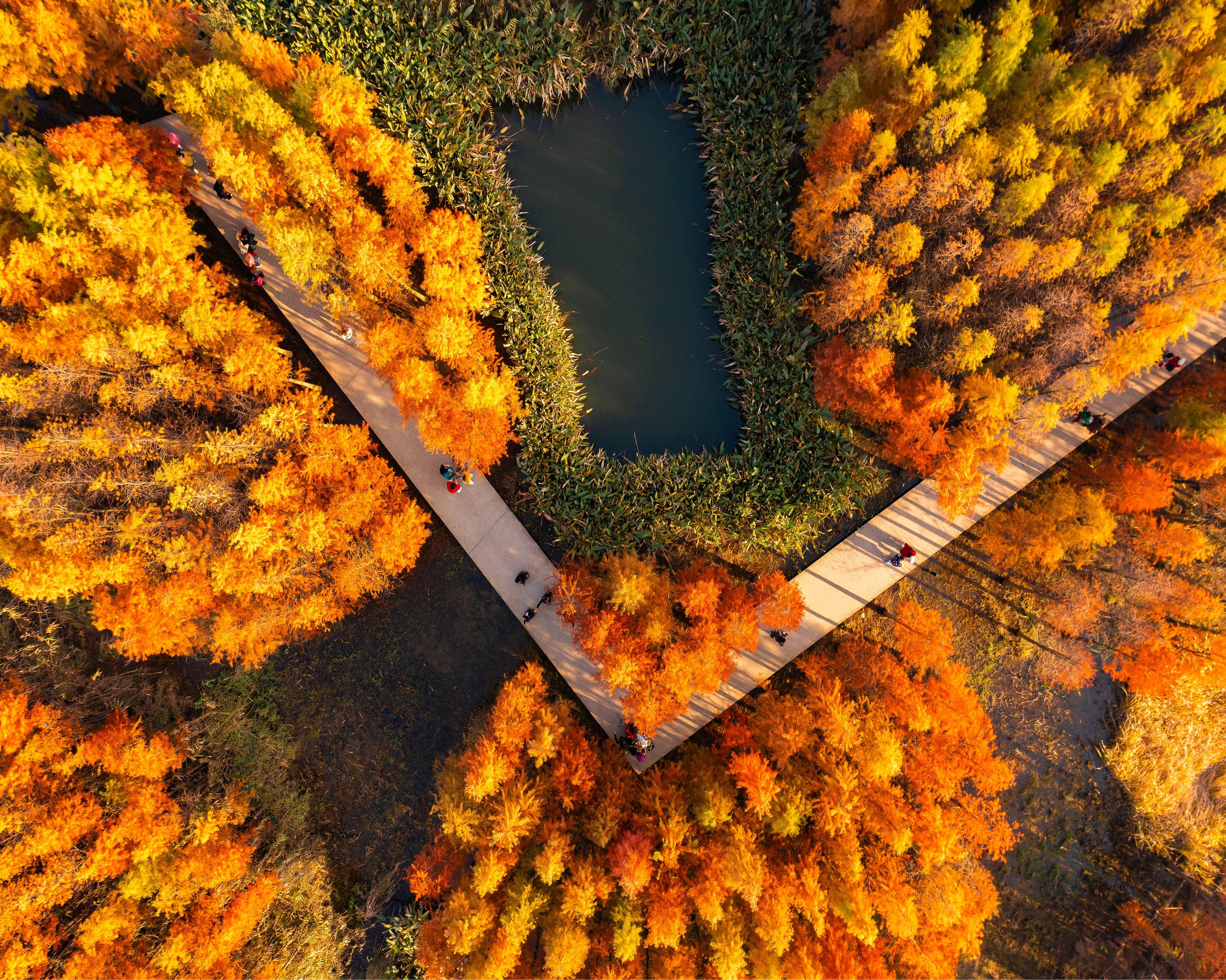
In Nanchang, within the Yangtze River floodplain, we revitalized a heavily degraded 126-acre landscape into a floating forest that manages stormwater, restores habitats, and provides diverse recreational spaces—all within a limited budget and a short timeline. This innovative urban nature model strengthens the district’s identity and spurs surrounding development. Fish Tail Park offers a scalable solution for flood-prone regions, seamlessly integrating flood resilience, ecological restoration