

.webp?language=en-US)


St. John’s Terminal: An Ecology for Technology and Innovation
-
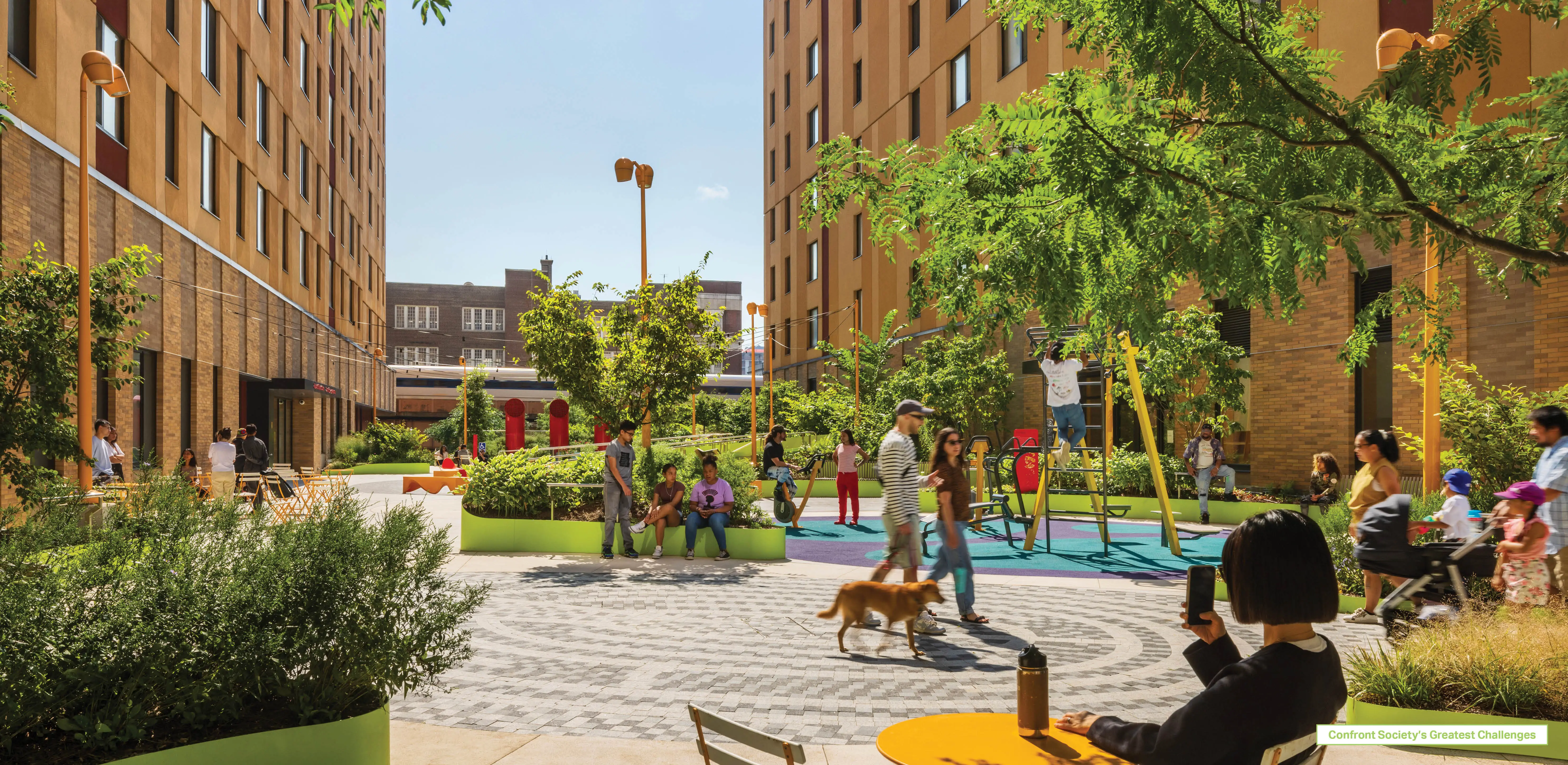
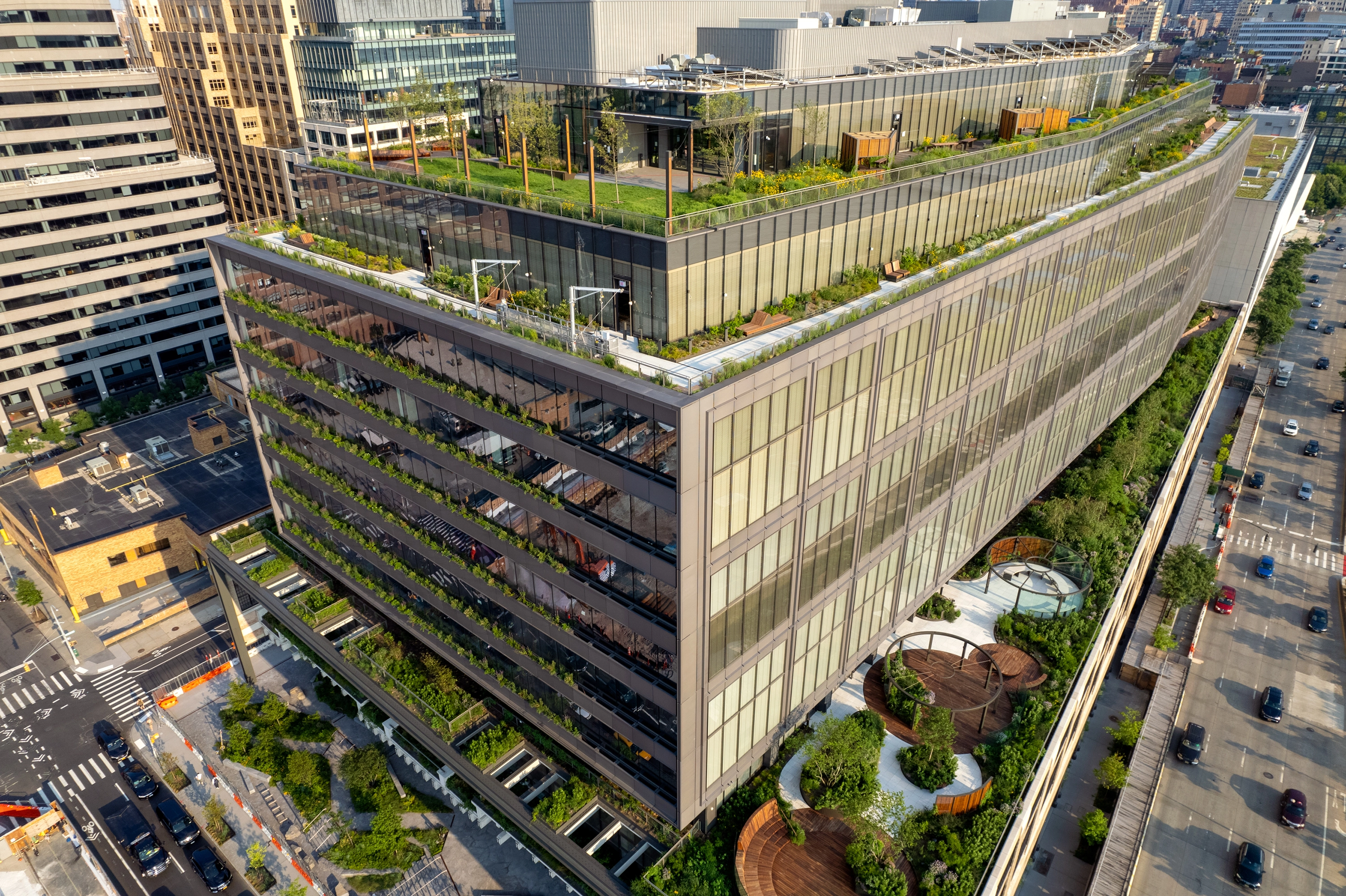
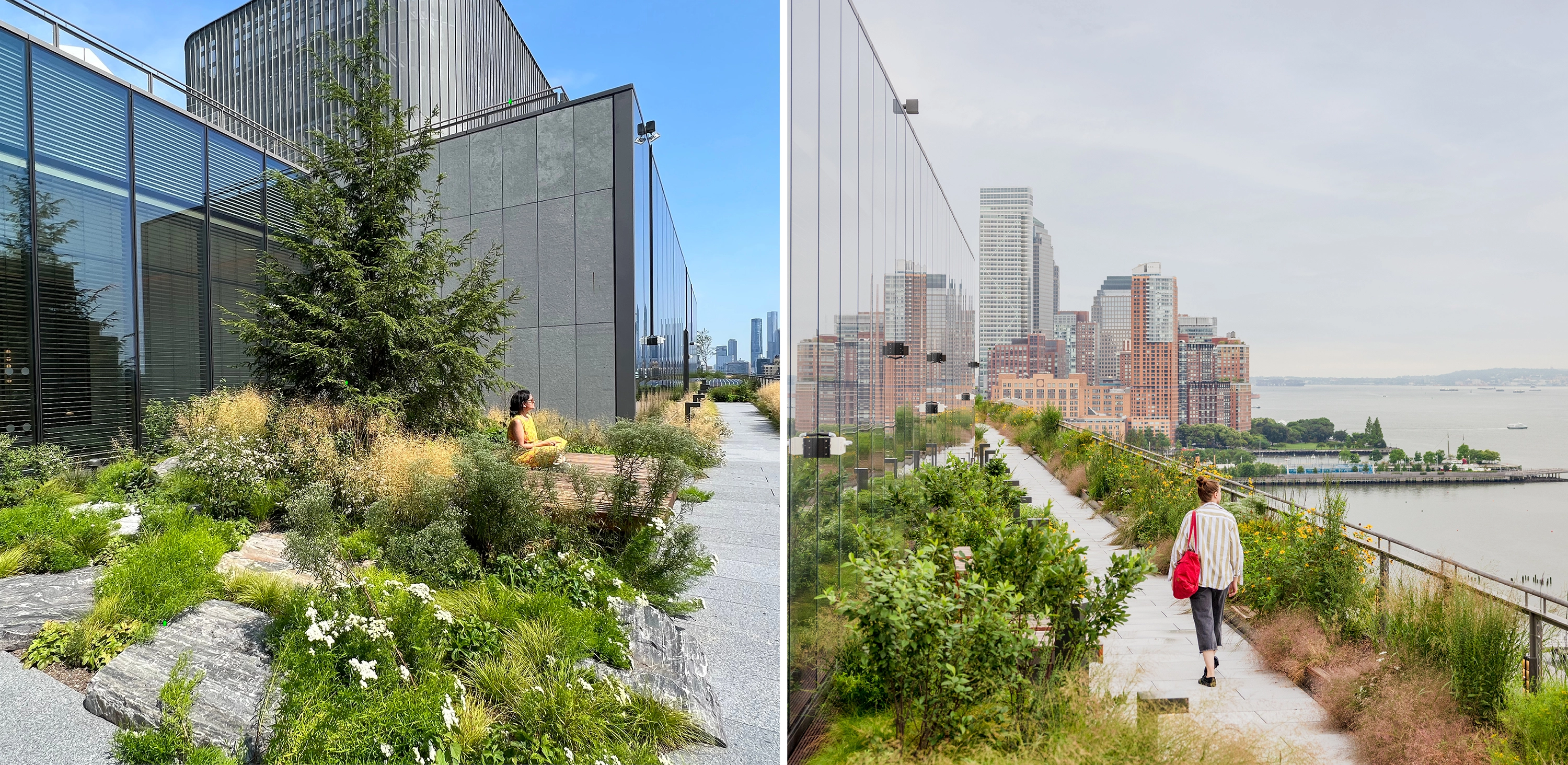
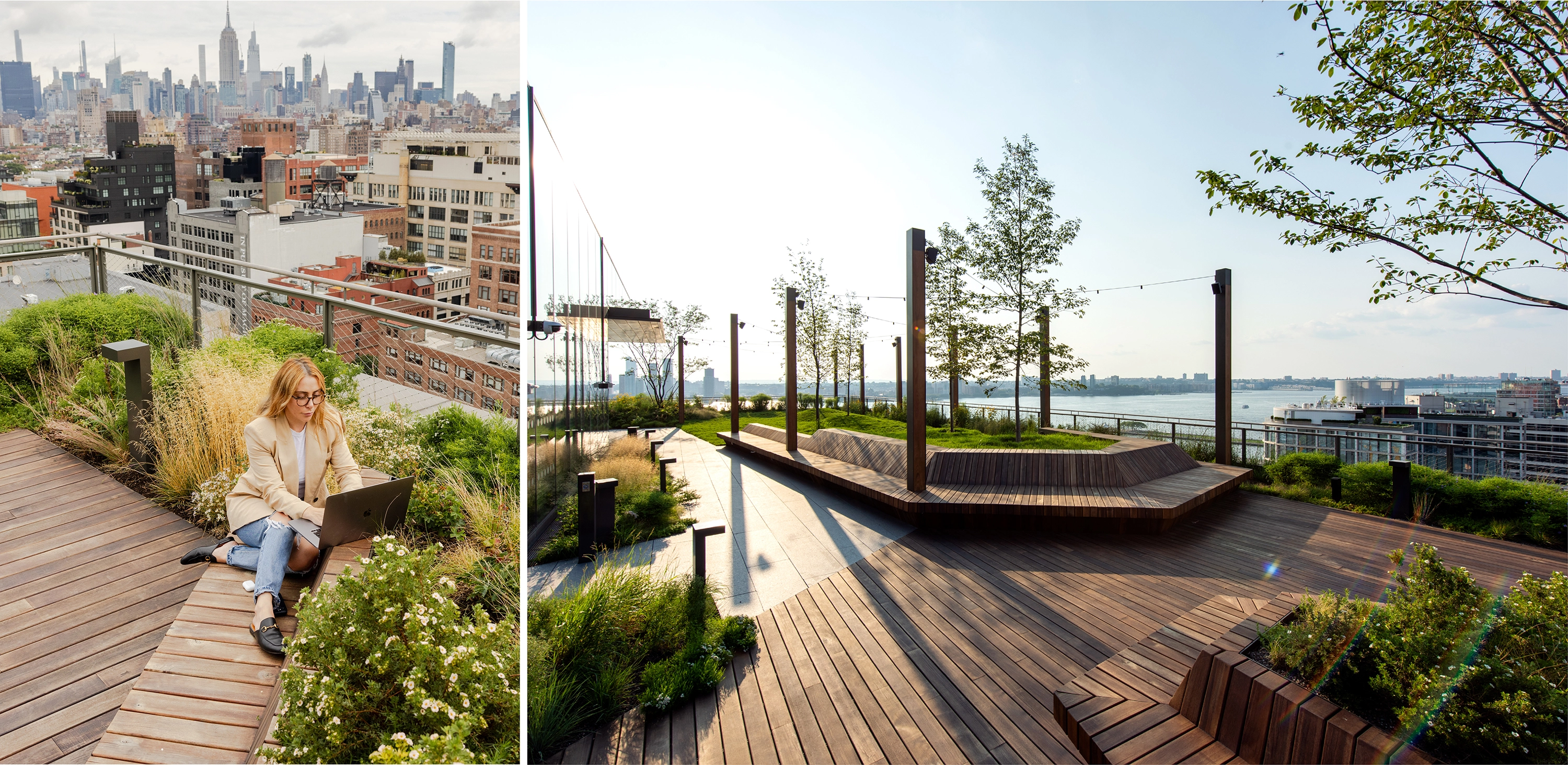
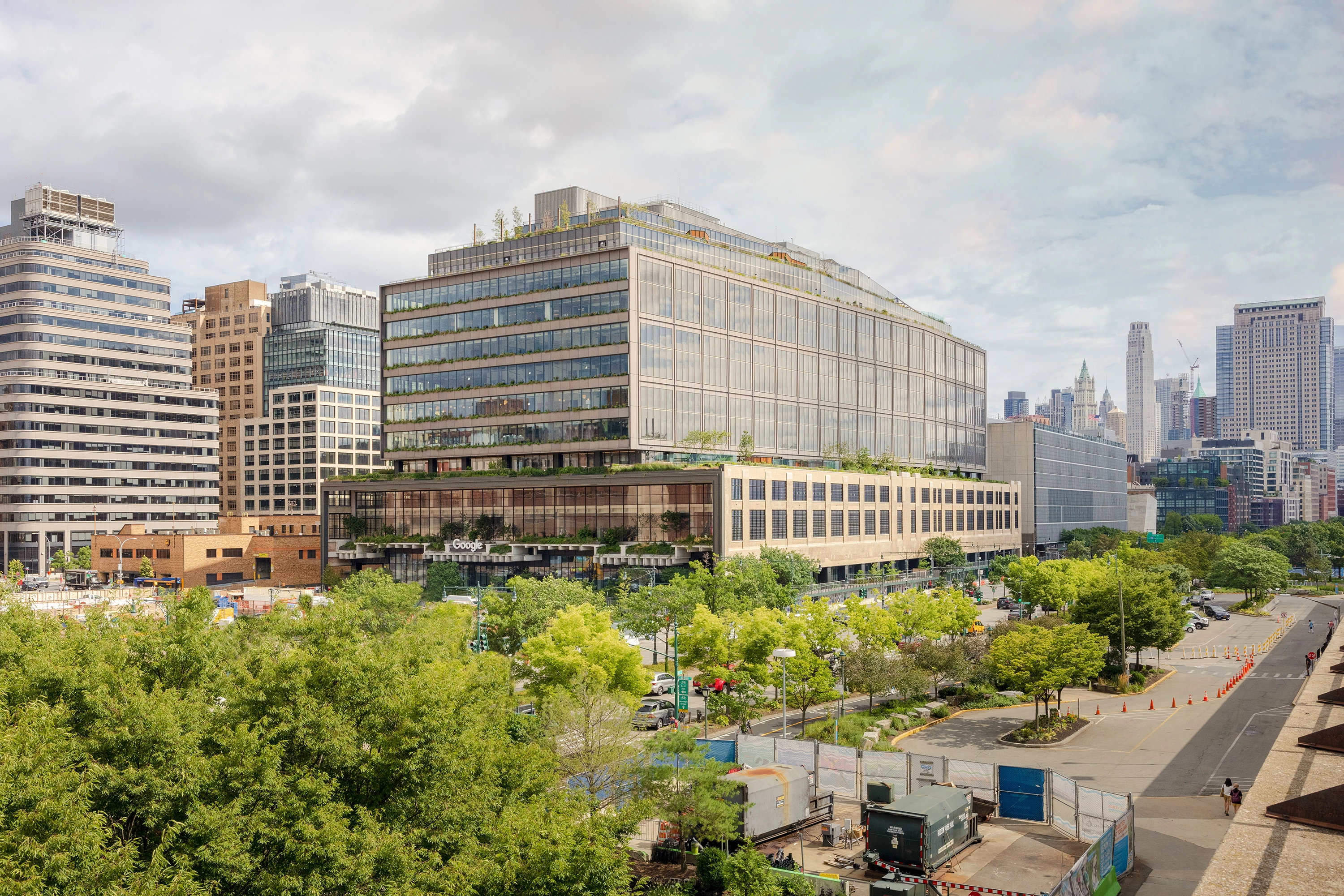
The adaptive reuse of St. John’s Terminal has been skillfully engineered to support roughly 1.5 acres of native habitat across multiple terraces, seven stories of window boxes, planted train tracks in the building’s north façade, and a large public entry plaza. Sustainability, biophilia, and creating meaningful spaces that spark collaboration and imagination were all key to the landscape visioning and design. A journey through the landscape draws you through different moments in the site’s history, expressed through material selections, native planting, and landscape features.
-
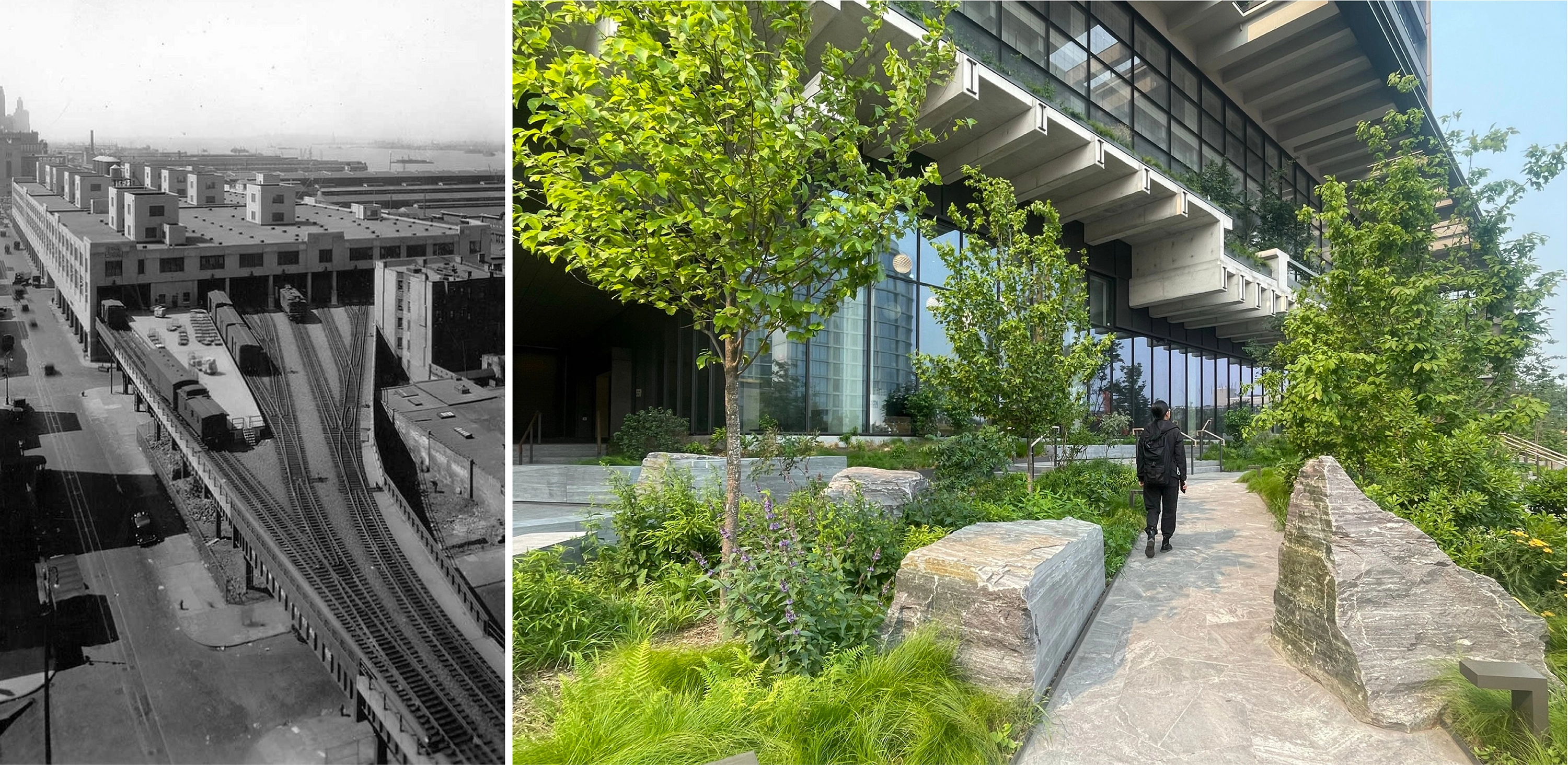
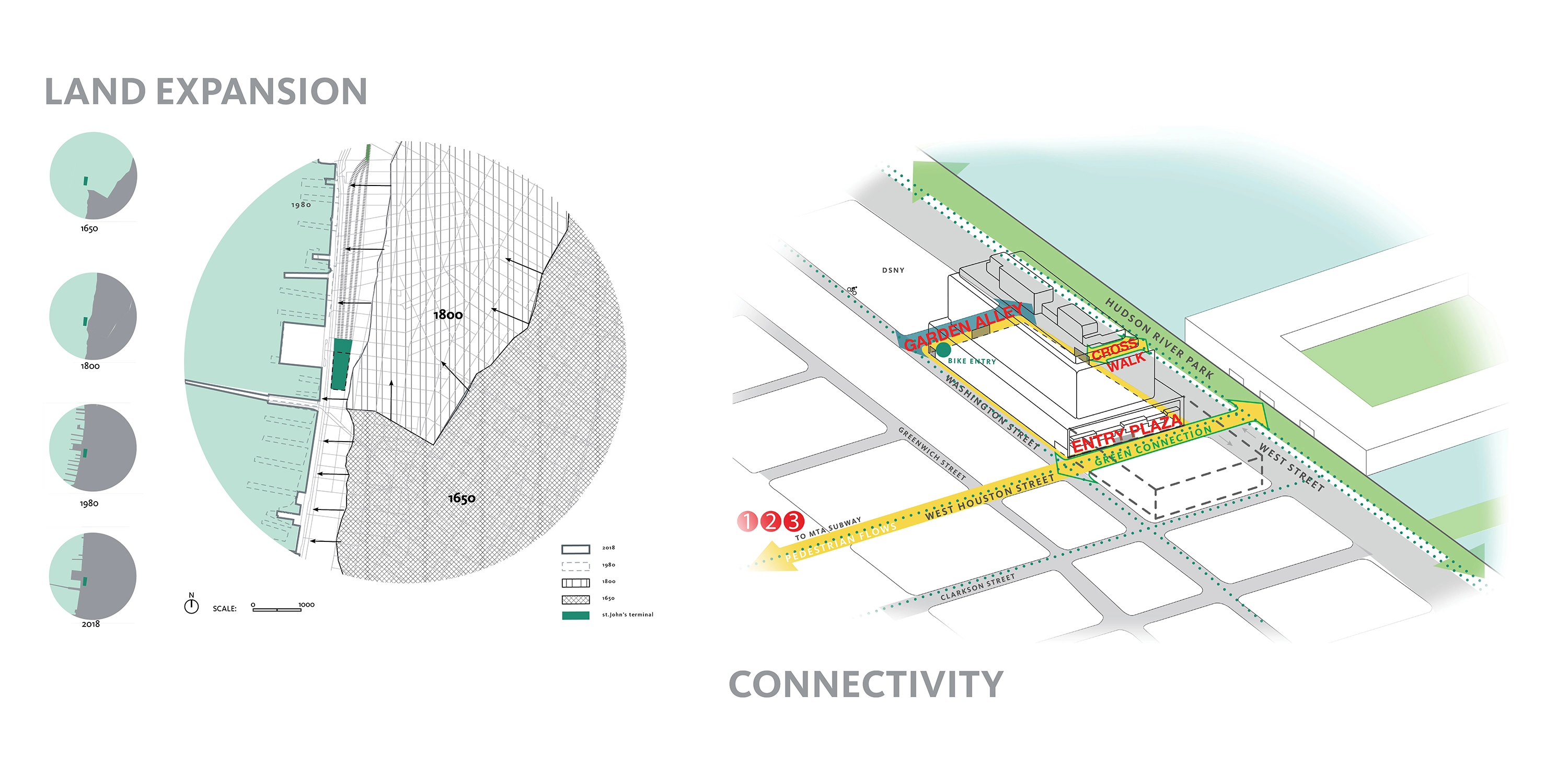
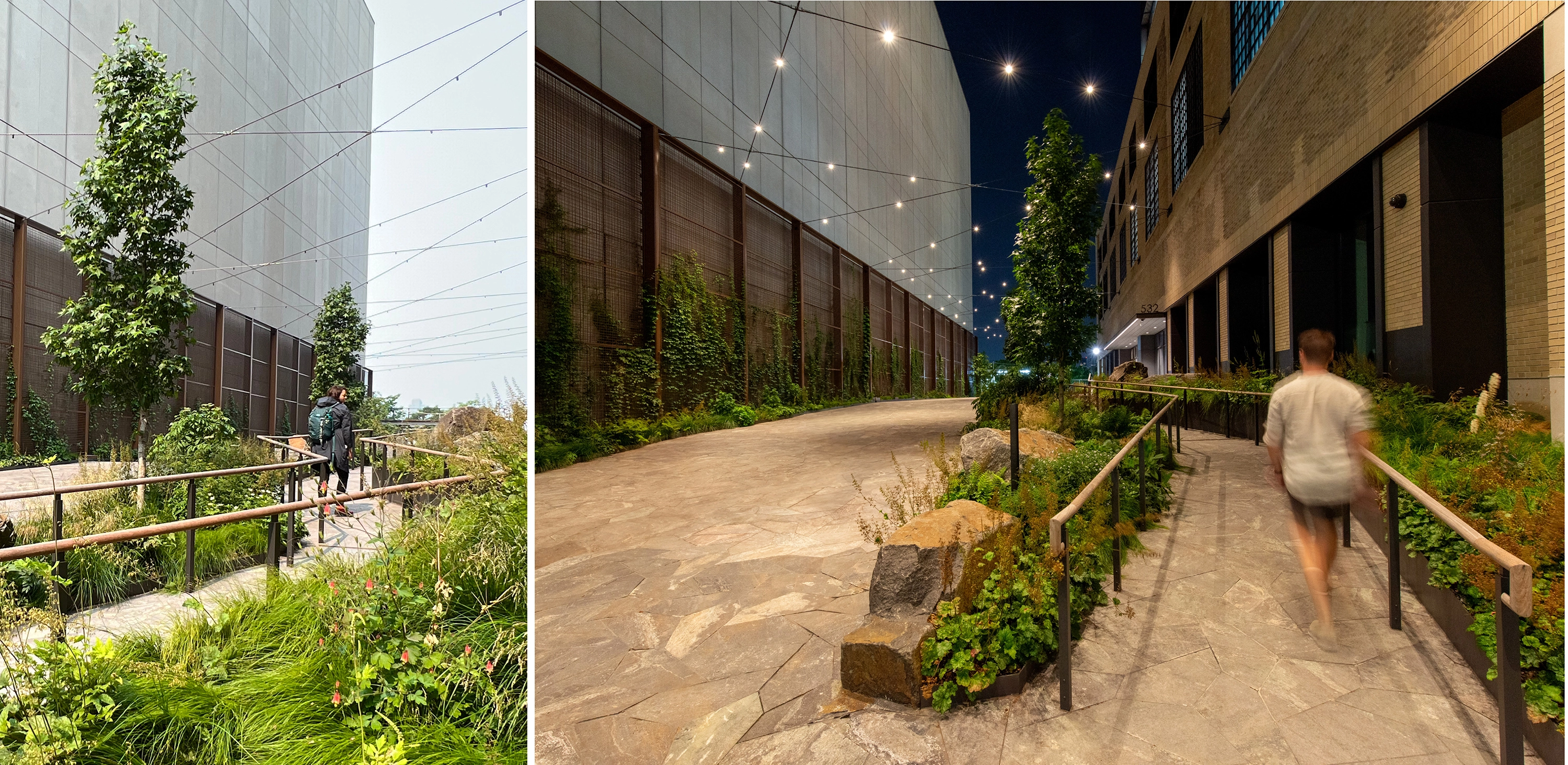
Located in Manhattan, St. John’s Terminal has been adapted into a center for tech and innovation. It is the North Amerian headquarters for GOOGLE's global business organization. The former terminus of the raised railway that has been repurposed as The High Line linear park has been skillfully engineered to support extensive landscape tgerraces, with roughly 1.5 acres planted with New York native habitat. Located on the original shoreline, the entry plaza and adjacent beautified streetscape form a new gateway to Hudson River Park. Urban design improvements include a new mid-block crosswalk connecting to the park, and a verdant street connection between Washington Street and the West Side Highway.
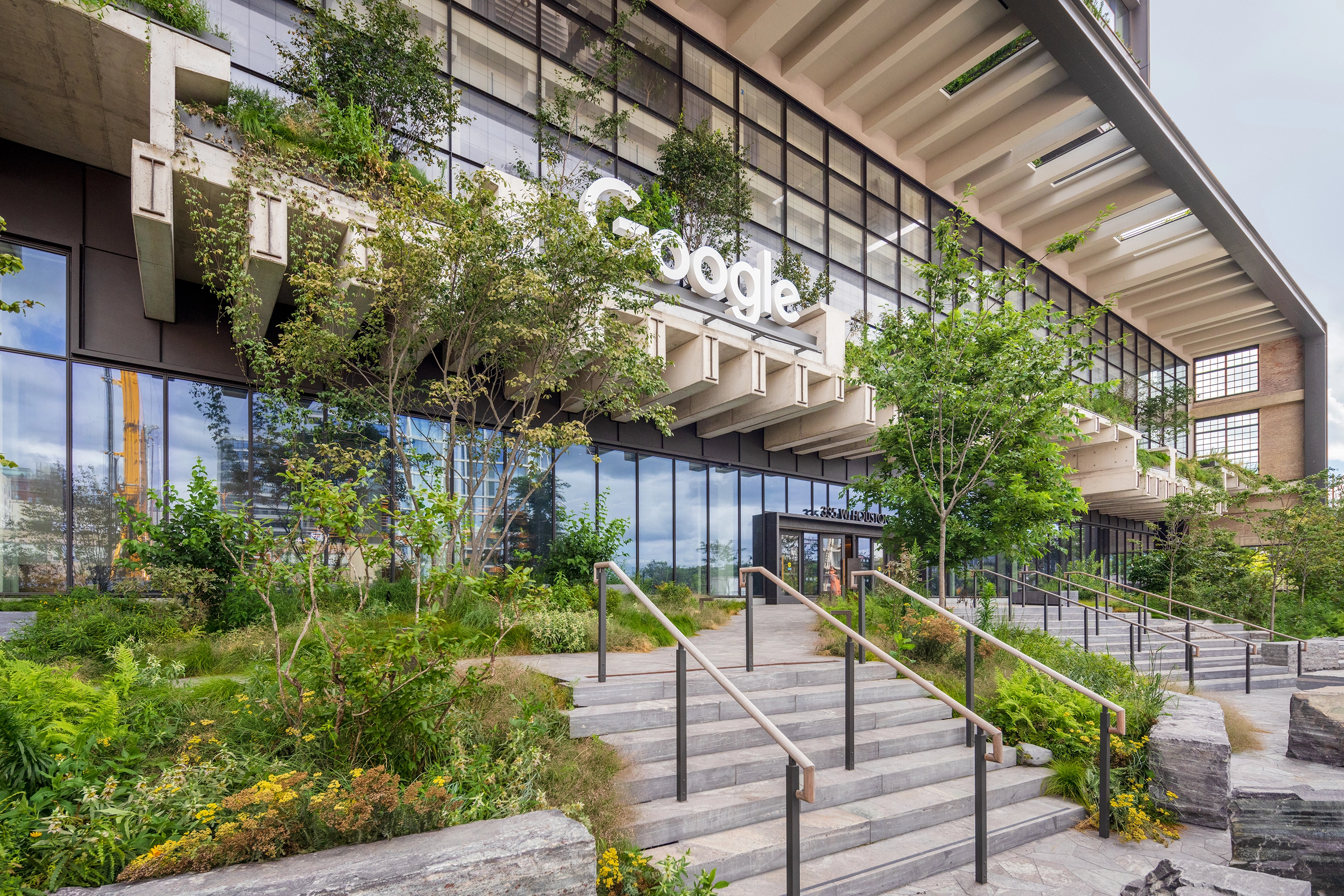
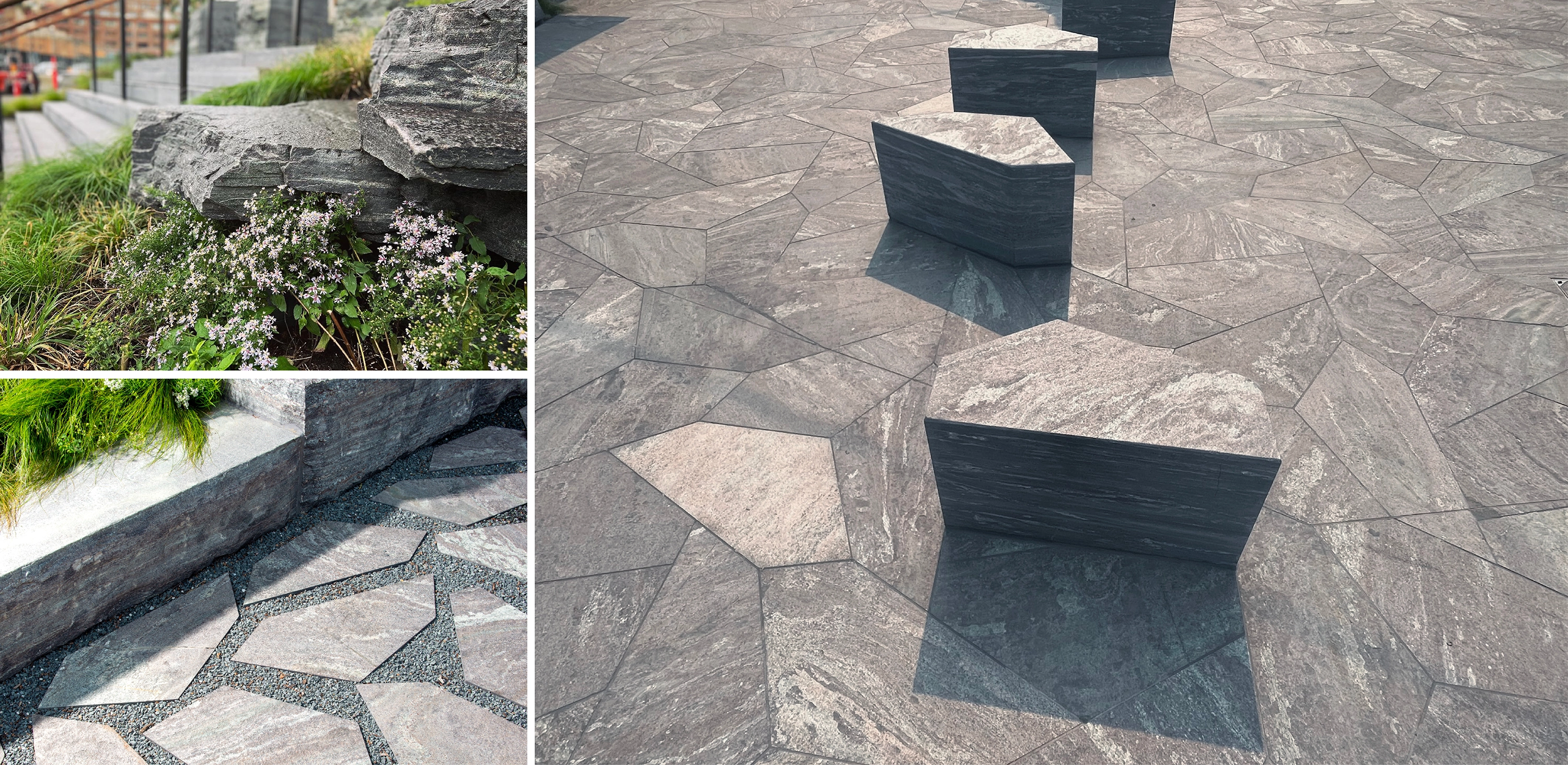
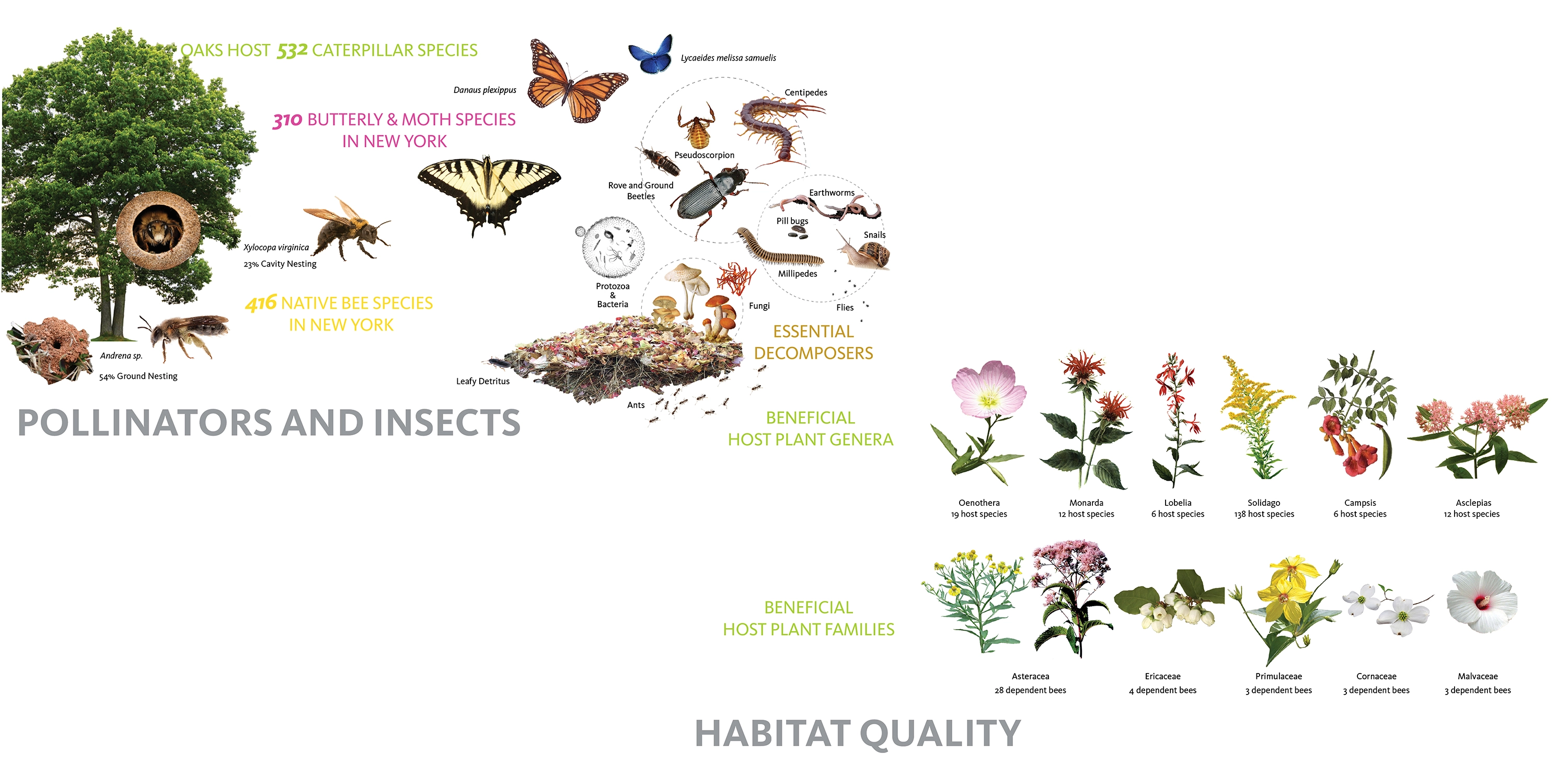
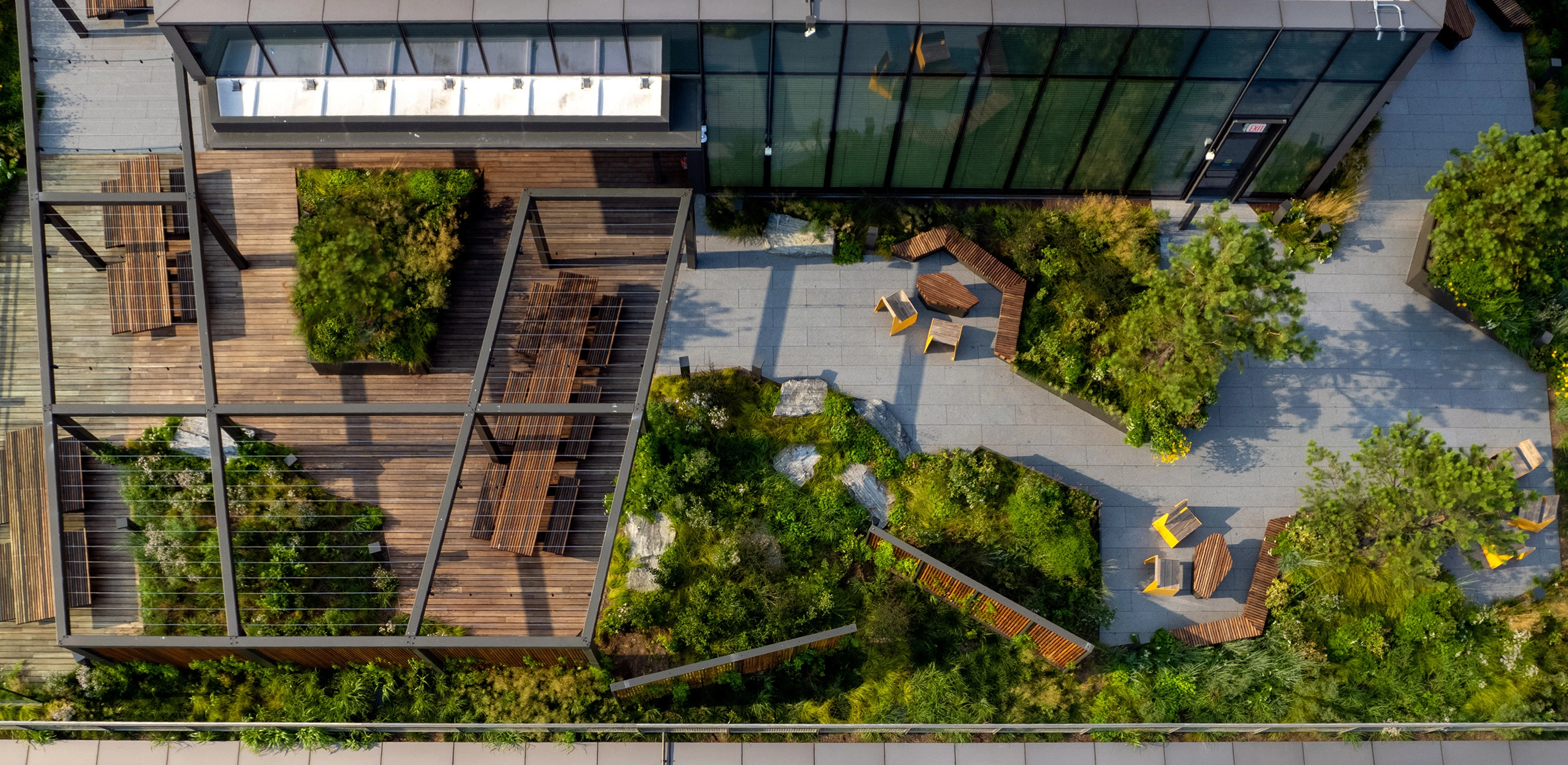
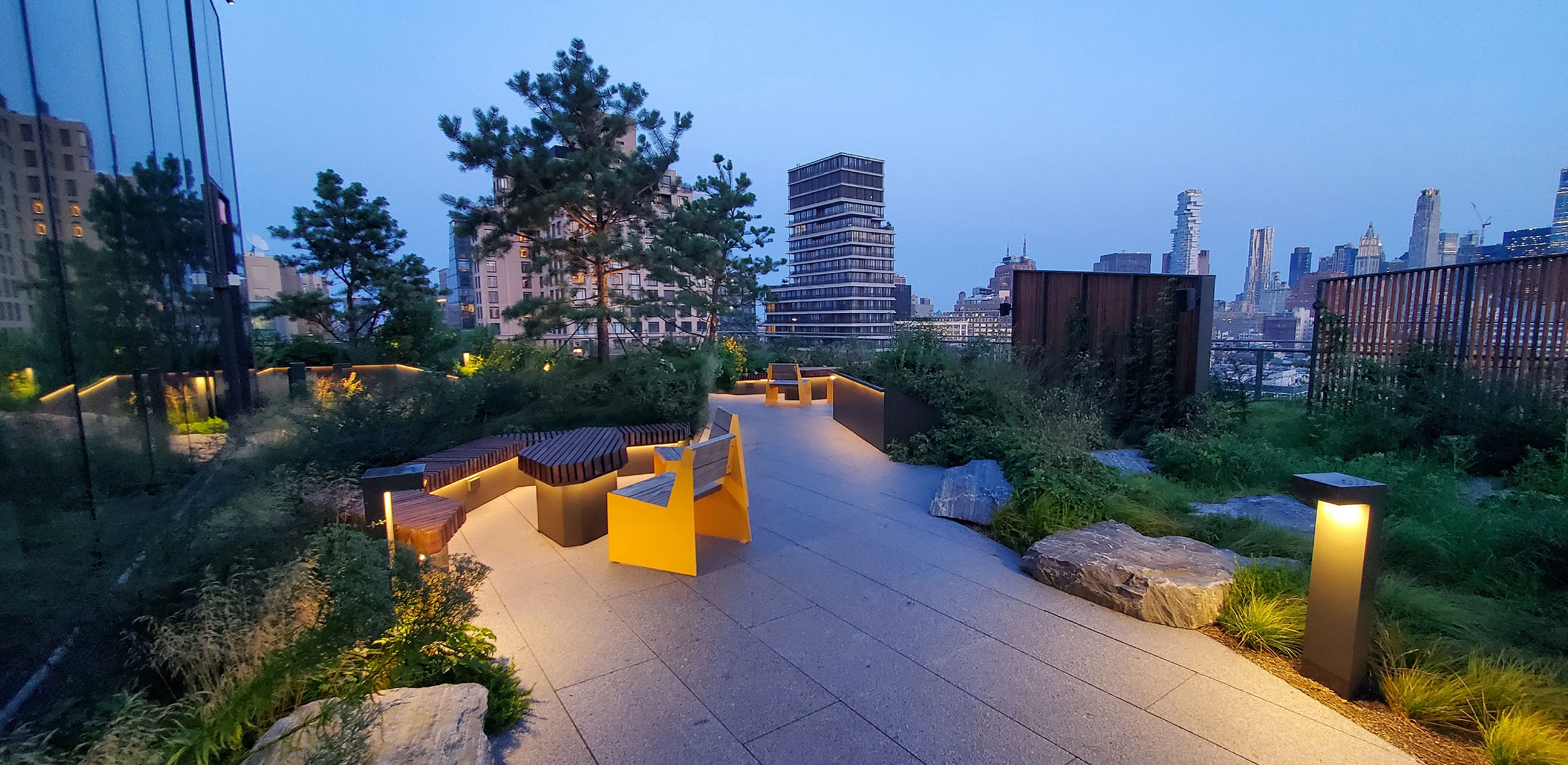
Open to the public, the entry plaza provides an immersive garden experience through lush, resilient understory plantings and groves of native trees. The design draws from natural shoreline forms with planted berms and natural boulders complemented by geometric stone seats and paving regionally sourced from upstate New York. The plaza is designed to retain up to 92,000 gallons of rainwater stored in a below-grade cistern and reused for irrigation sitewide. At the 2nd floor, the existing train tracks and platforms emerge from the face of the building and are planted with native trees, shrubs, and groundcover that appear as though they have spontaneously taken root there. Seven stories of window boxes on the north façade provide an ecological ladder for local birds and insects as they traverse from the plaza up to the 12th-floor terrace. NYC Audubon has documented approximatly 40 bird species using the habitat created at St. John's Terminal--including several species never before documented on a green roof.
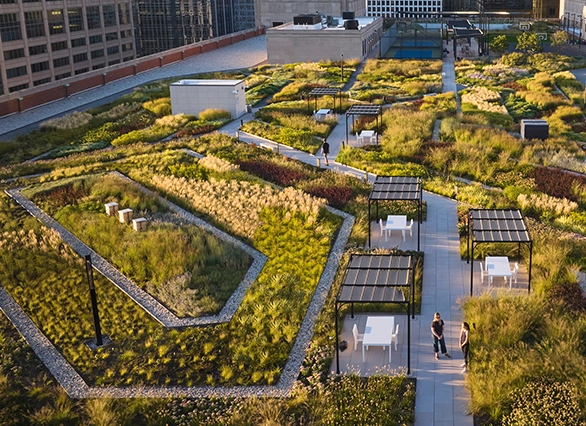
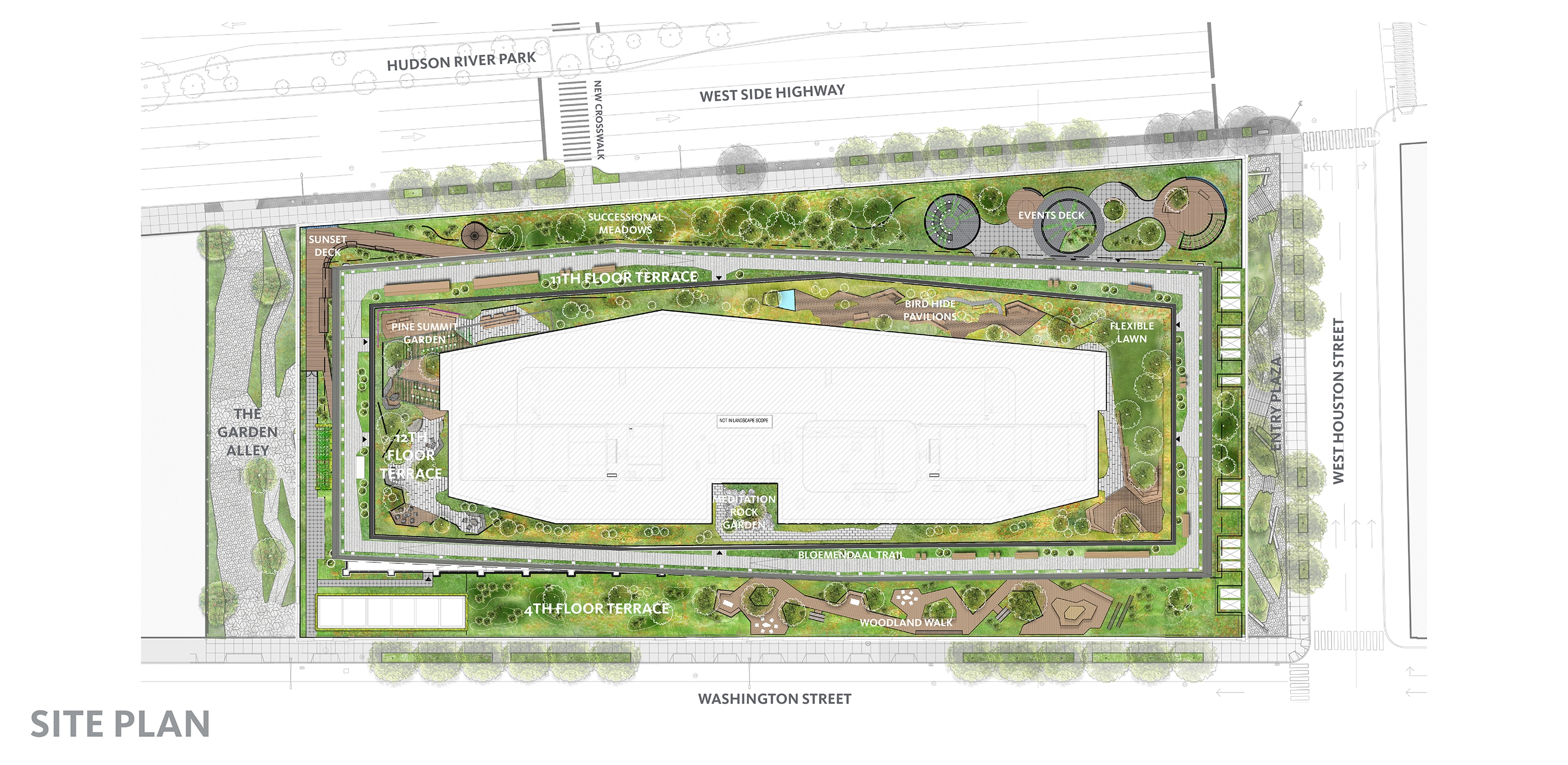
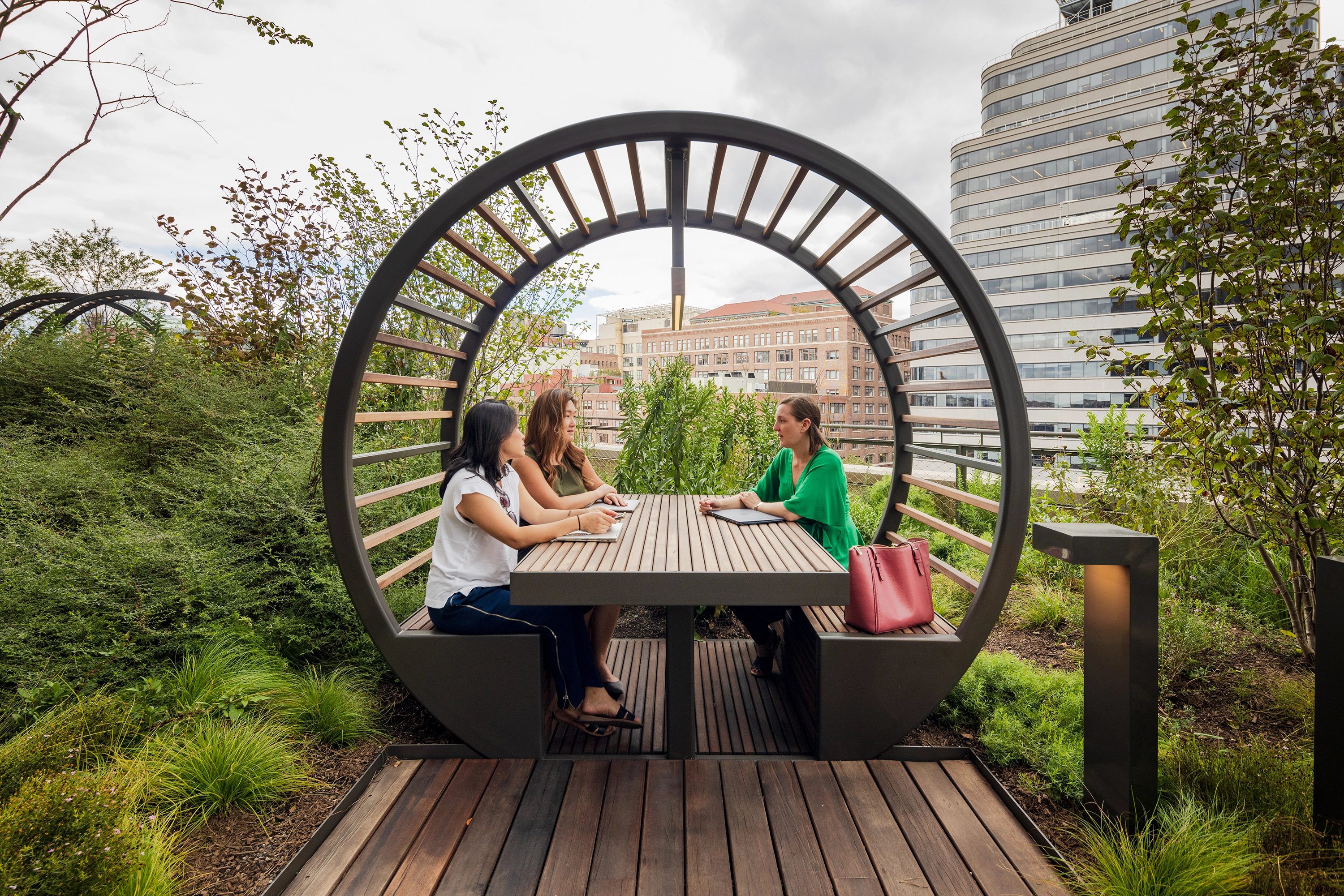
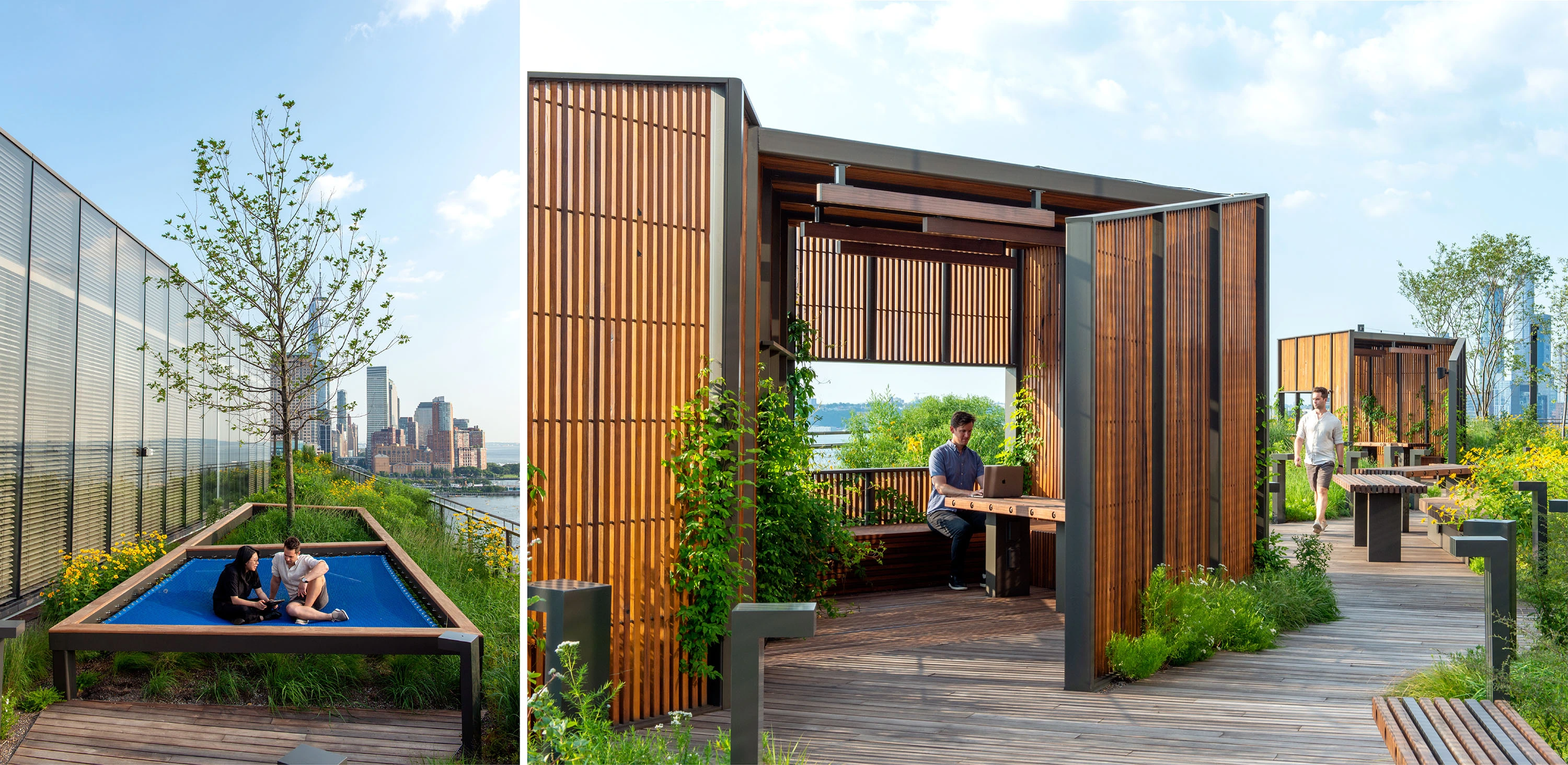
Collectively, the terraces provide a diverse range of work-space environments that inspire collaboration and imagination. The 4th-floor terrace, located on the roof of the existing building, takes cues from its industrial past through distinctive architectural elements, including wind-mitigation screens, pergolas, and seating nooks. The events terrace hosts visitors from the auditorium with a large flexible space, planted islands, fossilized limestone bar counters, and pergolas. The 11th floor is a quarter-mile-long, 360-degree walking path offering a moment of respite, with exceptional views across the water and of the Manhattan skyline. The walking path is framed by plantings inspired by the Dutch term, Bloemendaal – or “Valley of Flowers” – used to characterize the qualities of pre-development Manhattan. The 12th-floor terrace brings employees back to nature with rocky outcroppings and emergent alpine plants at the meditation garden and intimate seating areas nestled in the Pine Grove. A large lawn with rolling topography, a bosque of oak trees, and catenary lights supports flexible use for wellness programming, happy hour events, and lunch hour picnicking.
Sustainable strategies are woven through every element of the project; timber for the decking, furniture, and windscreens across the terraces is repurposed timber salvaged after Hurricane Sandy from the historic Coney Island boardwalk; 100 new trees have been planted on site; solar arrays at the terraces provide an expected generation capacity of approximately 100 kilowatts of renewable energy; and the site is designed to retain up to 92,000 gallons of rainwater.
-
- David Seiter, ASLA - Founding Principal
- Aaron Booher - Principal
- Lois Farningham, Project Lead - Associate Principal + Art Director
- Nancy Seaton - Associate Principal + Horticulturist
- Anni Pan - Associate Designer
- Langan Engineering - Landscape Architect of Record, Civil Engineer
- Adamson Associates Architects - Architect of Record
- COOKFOX Architects - Design Architect
- Gensler - Interior Architect
- Entuitive - Structural Engineer
- Cosentini Associates - MEP, LEED Consultant
- San Francisco Estuary Institute - Ecology Consultant
- Philip Habib & Associates - Civil Engineer
- Robert Derector Associates - MEP at Terraces
- Fisher Marantz Stone - Lighting Designer at Terraces
- Lumen Architecture - Lighting Designer at Streetscape and Plaza
- RWDI Consulting Engineers - Wind Engineer
- Blondies Treehouse - Landscape Contractor at Terraces
- Vespa Stone + Champlain Stone - Hardscape Contractor
- BrightView - Landscape Contractor at Alley and Plaza
- D & B Cousins Construction Corp. - Landscape Contractor at Streetscape
- Structure Tone + Turner - General Contractor
- Gardiner + Theobald - Owners Representative
-
Products
- Furniture
- Lumber/Decking/Edging
- Hardscape
- Other
-
- Acer rubrum
- Achillea millefolium
- Actea pachypoda
- Actea racemosa
- Agastache 'Purple Haze'
- Ageratina altissima
- Alium cernuum
- Amelanchier arborea
- Amelanchier laevis
- Amsonia hubrichtii
- Andropogon gerardii 'Blackhawks'
- Andropogon virginicus
- Anemone canadensis
- Antennaria neglecta
- Antennaria plantaginifolia
- Aquilegia canadensis
- Aronia arbutifolia
- Asclepias syriacus
- Asclepias tuberosa
- Baccharis halimifolia
- Betula populifolia
- Boutleoua curtipendula
- Campsis radicans
- Carex appalachica
- Carex flaccosperma
- Carex plantaginea
- Carex rosea
- Carpinus caroliniana
- Celtis occidentalis
- Chamaecrista fasciculata
- Chamaenerion angustifolium
- Clematis virginiana
- Comptonia peregrina
- Coreopsis rosea
- Decumaria barbara
- Dennstaedtia punctiloba
- Dennstaedtia punctilobula
- Deschampsia cespitosa
- Dichanthelium clandestinum
- Direvilla lonicera
- Eragrostis specabilis
- Erigeron pulchellus
- Eupatorium hyssipifolium
- Eurybia macrophylla
- Euthamia caroliniana
- Geranium maculatum
- Hamamelis virginiana
- Helianthis divaricatus
- Heliopsis helianthoides
- Heuchera americana
- Ilex glabra
- Ionactis linarifolius
- Juniperus communis 'Alpine Carpet'
- Juniperus virginiana
- Leucothoe fontanesia 'Zeblid'
- Liatris novae-angliae
- Lilium superbum
- Lindera benzoin
- Liquidambar styraciflua 'Moraine'
- Lonicera sempervirens 'Major Wheeler'
- Lupinus perenis
- Magnolia virginana 'Green Shadow'
- Monarda fidulosa
- Myrica pensylvanica
- Oenothera biennis
- Ostrya virginiana
- Packera aptera
- Panicum virgatum
- Parthenocissus quinquefolia
- Penstemon het. Suriblau
- Phlox divaricata
- Pinus rigida
- Pinus strobus 'Brevifolia Densa'
- Porteranthus trifoliata
- Potentilla f. ' Pink Paradise'
- Pycnanthemum muticum
- Quercus illicifolia
- Quercus montana
- Quercus rubrum
- Rhexia virginatum
- Rhus copallinum
- Rhus glabra
- Rosa carolina
- Sambucus canadensis
- Sassafras albidum
- Schizachrium scoparium
- Sibbaldiospsis tridentata
- Solidago sempervirens
- Symphyotrichum cordifolium
- Tiarella cordifolia
- Trichostema dichotomum
- Tridens flavus
- Tsuga canadensis
- Tsuja canadensis 'Gracilis'
- Vaccinium angustifolium
- Vaccinium corybosum
- Veronicastrum virginicum
- Viburnum dentatum
- Viburnum prunifolium
- Zizia aurea
Related Awards
Award of Excellence, General Design
A Floating Forest: Fish Tail Park in Nanchang City
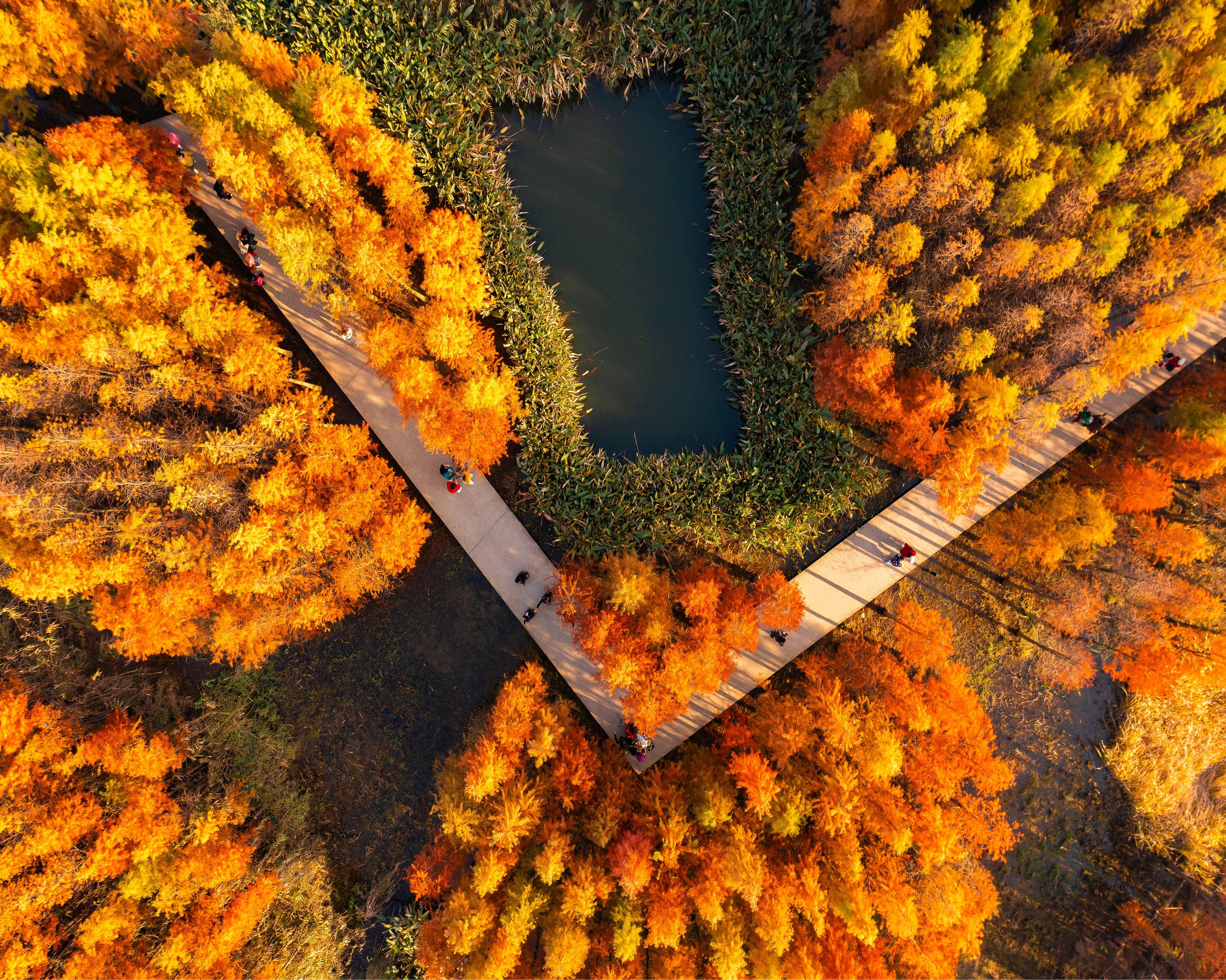
In Nanchang, within the Yangtze River floodplain, we revitalized a heavily degraded 126-acre landscape into a floating forest that manages stormwater, restores habitats, and provides diverse recreational spaces—all within a limited budget and a short timeline. This innovative urban nature model strengthens the district’s identity and spurs surrounding development. Fish Tail Park offers a scalable solution for flood-prone regions, seamlessly integrating flood resilience, ecological restoration
Related Articles

Awards
ASLA 2026 Professional Awards: Early Bird Deadline Approaching January 9
Submit your best work by the January 9 Early Bird deadline to save. Get insider tips at the January 7 Professional Awards Webinar. Student and other professional deadlines follow in February.
Dec 16 2025