

.webp?language=en-US)


Small Landscape Architecture Firms Can Take Action on Climate and Biodiversity
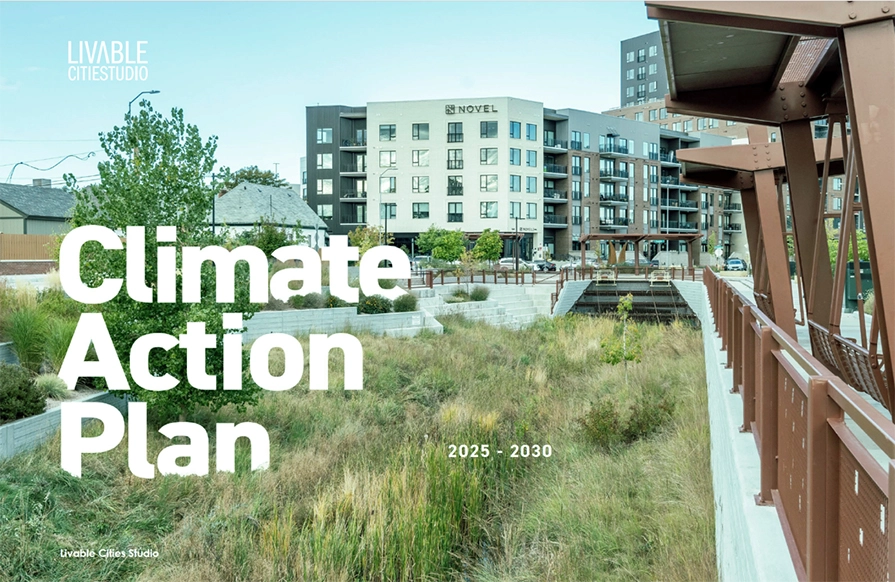
Climate Action Plan / Livable Cities Studio
By Jared Green
“Climate action isn’t optional. Communities are getting hotter and seeing more rain. As a result, municipalities are facing greater economic impacts — the climate crisis is becoming very expensive. But we landscape architects at small firms can help,” said Aida Curtis, FASLA, president, Curtis + Rogers Design Studio and chair, ASLA Climate & Biodiversity Action Committee.
A recent ASLA industry report found the median landscape architecture firm has one office with four staff. In an online discussion, Curtis and two other women leaders at small firms explained how practices of all sizes can advance climate and biodiversity goals. Small firms can take action; they just need to be strategic and prioritize.
Dana Brown & Associates, a firm based in New Orleans, Louisiana, has four landscape architects but it has been at the forefront of resilient, green design in the South for decades, explained Emily Dunaway, ASLA, a senior associate at the firm and co-chair of the ASLA Climate & Biodiversity Action Committee Advocacy Subcommittee.
The firm is now aligning with the climate, biodiversity, equity, and advocacy goals of Landscape Architecture 2040: ASLA Climate & Biodiversity Action Plan. “We are a small firm with very limited resources but we are in a unique position to act,” Dunaway said.
To make progress on the climate front, Dana Brown & Associates seeks to reduce greenhouse gas emissions from their projects. They analyze the embodied carbon emissions and carbon sequestration of their projects with Climate Positive Design’s Pathfinder tool. “As a small firm, we don’t have time to look into every project but we do a few typical ones.”
Using Pathfinder, they found concrete and imported stone to be their largest sources of emissions. These results have enabled them to take action. “We have shortened concrete paths, specified recycled concrete, and switched to local stone.”
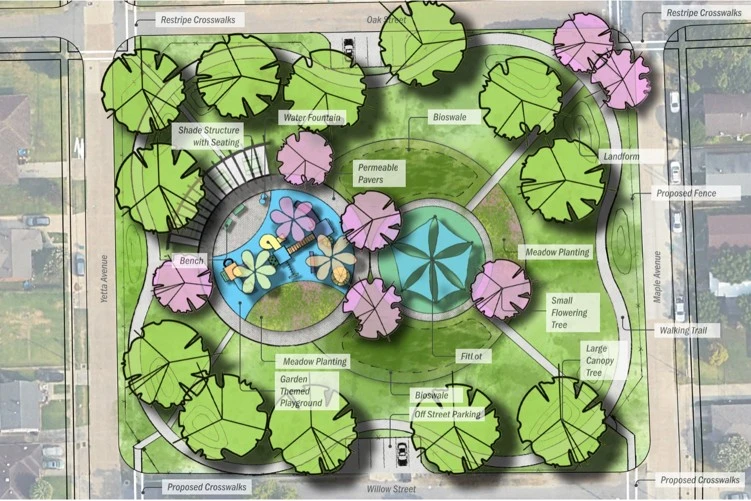
Design of a park in New Orleans that uses climate positive design strategies / Dana Brown & Associates
The firm makes a point of asking product manufacturers if they have environmental product declarations (EPDs). And to foster transparency and collaboration, they let product manufacturers know they are seeking to reduce emissions. “We ask product representatives: which products can help us reach our goals?”
To support the biodiversity of New Orleans, the firm has developed their own internal native plant palette book. Offering advice to other small firms, Dunaway said “if you can’t create a book, create an excel spreadsheet.” The firm examines indigenous plant communities. For each plant community, they identify defining characteristics. “This is a research task you can assign to interns.”
Climate and biodiversity advocacy is also a priority of the firm. They partner with local researchers at the Hammond Research Station, which is part of the Louisiana State University Agricultural Center. The center tests the soil infiltration rates of different plants. Dana Brown & Associates shares knowledge with them gained from applying native plants in the field.
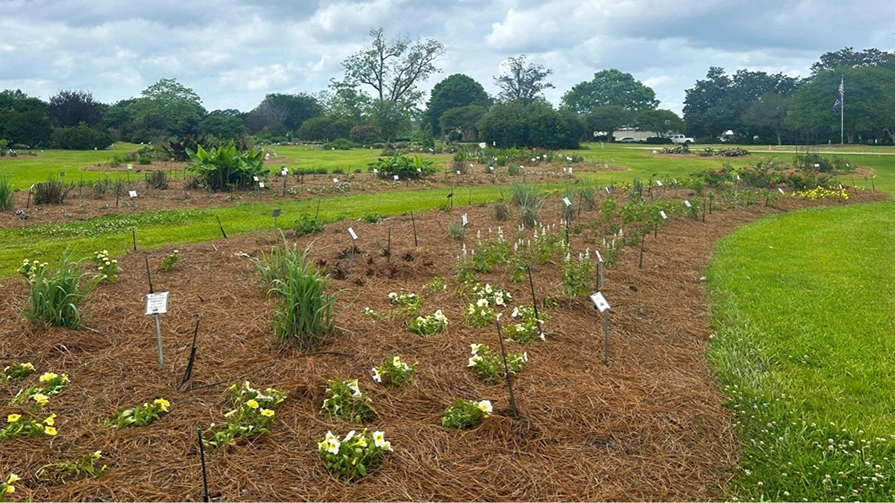
Hammond Research Station / LSU Agriculture Center
In New Orleans, the firm also advocates for native plants and green infrastructure to policymakers. Their work has led to updated codes in St. Parish that incentivized green infrastructure.
And the firm focuses on their own equity goals. They helped form Water Wise NOLA (now Water Wise Gulf South) with the goal of strengthening public awareness of green infrastructure. For Water Wise, they created a “green infrastructure cookbook” called the Joy of Water, using “appetizer, entree, and dessert” approaches. “It helped the community relate to it better,” Dunaway said. They have empowered communities through workshops so “people can better advocate for themselves. We’re about increasing literacy about the built environment.”
Dunaway encouraged other small landscape architecture firms to “identify stressors in your community and understand how those affect your business. Solve those stressors and become known for doing that.”
“To achieve the goals of Landscape Architecture 2040, we need to take an integrated approach. In low-lying neighborhoods, we need to protect communities,” said Curtis.
Curtis’ firm — Curtis + Rogers Design Studio — has 13 staff based in Miami, Florida. The firm seeks to first understand the “climate shocks and stressors” in the communities in which they work. These include “sea level rise, storm surges, too much water in the wrong places, and heat.”
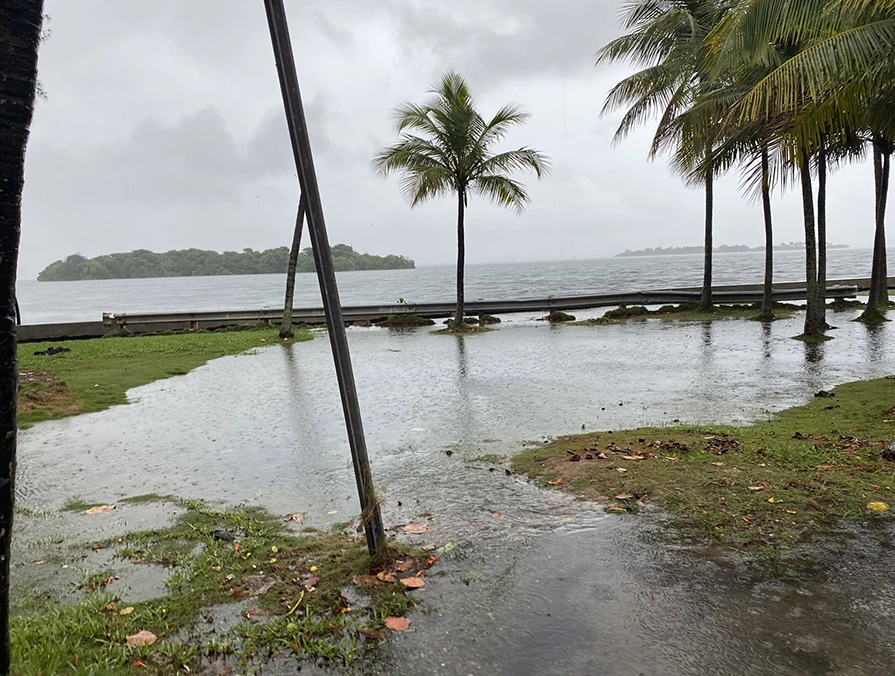
Tidal flooding and storm surges are common occurrences in South Florida’s coastal environments. / Curtis + Rogers Design Studio
Before starting a project, they collect heat data using an infrared thermometer. And they research sea level rise and historical hurricane and storm surge data, so “we can know how much we need to mitigate or adapt to.” They also check historical vegetation maps to understand the native plant communities.
For projects large and small, Curtis + Rogers conducts extensive research on materials. “We investigate local materials and go to quarries and nurseries.” Curtis noted that the firm receives lots of calls from product manufacturers, but they are very selective about whom they speak with. “If the product manufacturer doesn’t have an EPD for their products, we can’t schedule time to talk to them.”
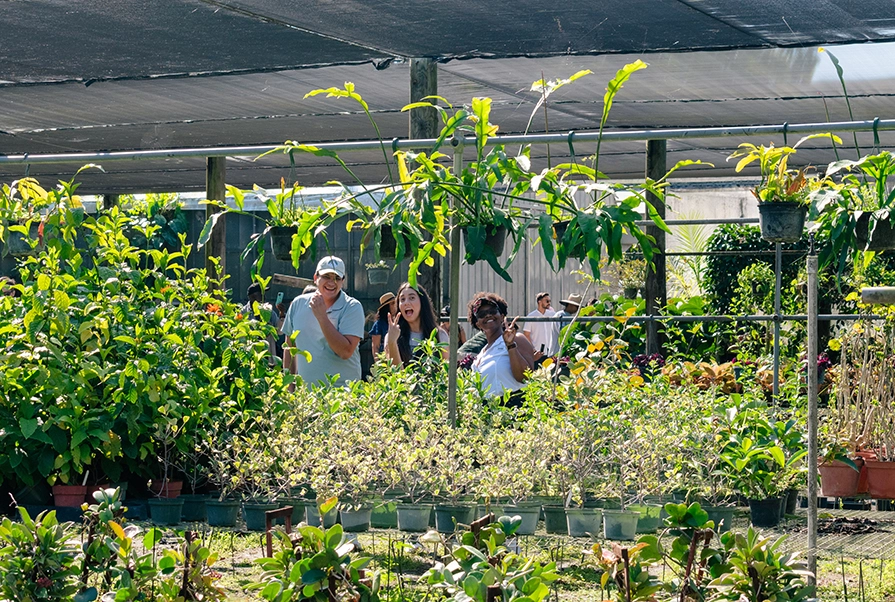
Curtis + Rogers Design Studio regularly tours local nurseries to see what trees and plants are available and what properties they need to thrive / Curtis + Rogers Design Studio
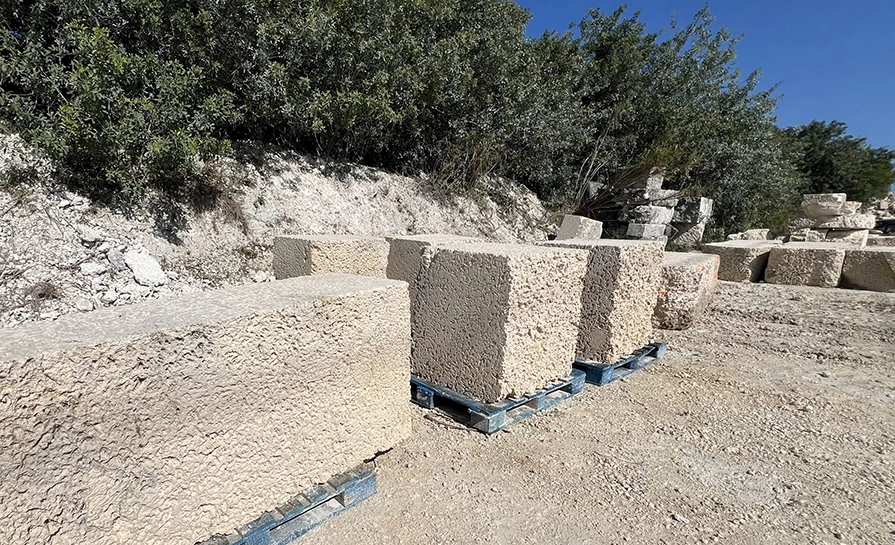
Curtis + Rogers Design Studio uses local materials, like this oolite stone, which resembles coral-like texture and is very common in South Florida / Curtis + Rogers Design Studio
Using Pathfinder helps them analyze the carbon footprint of their projects. “We put a project in and discovered it would take 52 years to become climate positive, meaning the point at which it sequesters more carbon than it emits. So we went back to the drawing board and added more forests and salt marshes into our design, and we got to 12 years to be positive. The tool helps us narrow our options.”
Curtis also said the firm does a lot of public projects, so they work with diverse communities. “We go to their places and learn about them. We provide support so they can share with us, including food and activities for kids. We have lots of conversations so we try to cater to them.”
They advocate for climate and biodiversity action by participating in a number of local organizations, including the Marine Resource Council, Tampa Bay Regional Resilience Coalition, and Miami Waterkeeper. They collaborate with climate-minded groups like the CLEO Institute and educational institutions like the Sea Level Solutions Center at Florida International University.
Small firms are also investing in their own plans. “We realized we needed our own Climate Action Plan to hold ourselves accountable and be seen as leaders in this space,” said Chelsea Gieryic, ASLA, an associate with Livable Cities Studio, which has 11 staff in Denver, Colorado.
The process of creating an in-house plan generated firm-wide excitement and buy-in from the firm principals. But flexibility in dedicating time to the effort made it work. “We balance a lot being a small firm. It took us three years to create the plan,” Gieryic said.
Livable Cities Studio established an internal point person to lead the development of the new plan. They also created a system to allocate non-billable hours to this effort – Advocacy, Innovation, and Research (AIR) hours.
The team first analyzed SWA’s Climate Action Plan — the first plan released by a large landscape architecture firm — and those of firms from allied professions. They then conducted an internal strengths, weakness, opportunities, and threats (SWOT) analysis of the climate resilience space in which they work. And then they created a draft plan to build internal support.
The result is a plan that offers a “holistic approach, covering climate goals for both projects and business operations.” Gieryic noted that “biodiversity isn’t specifically called out in the plan title but is woven into our ecological resilience work.” The plan includes an outline of work to date and near- and long-term goals. To implement their new roadmap, they have an internal committee who meets regularly to chart progress on action items.
To advance equity work, Livable Cities Studio has also been working on green infrastructure projects in West Denver communities, which are mostly Hispanic and low-income. “They are among the hottest neighborhoods. We have been working with them to build community connections and their capacity to plan for green infrastructure.”
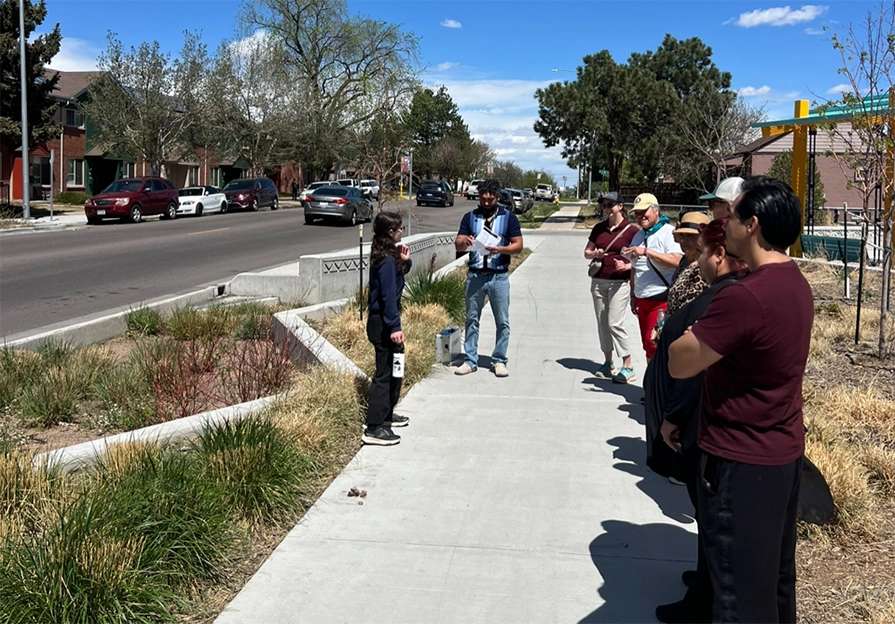
Livable Cities studio landscape architects meeting with community members in West Denver / Livable Cities Studio