
.webp?language=en-US)


The Art Institute of Chicago South Garden by Dan Kiley
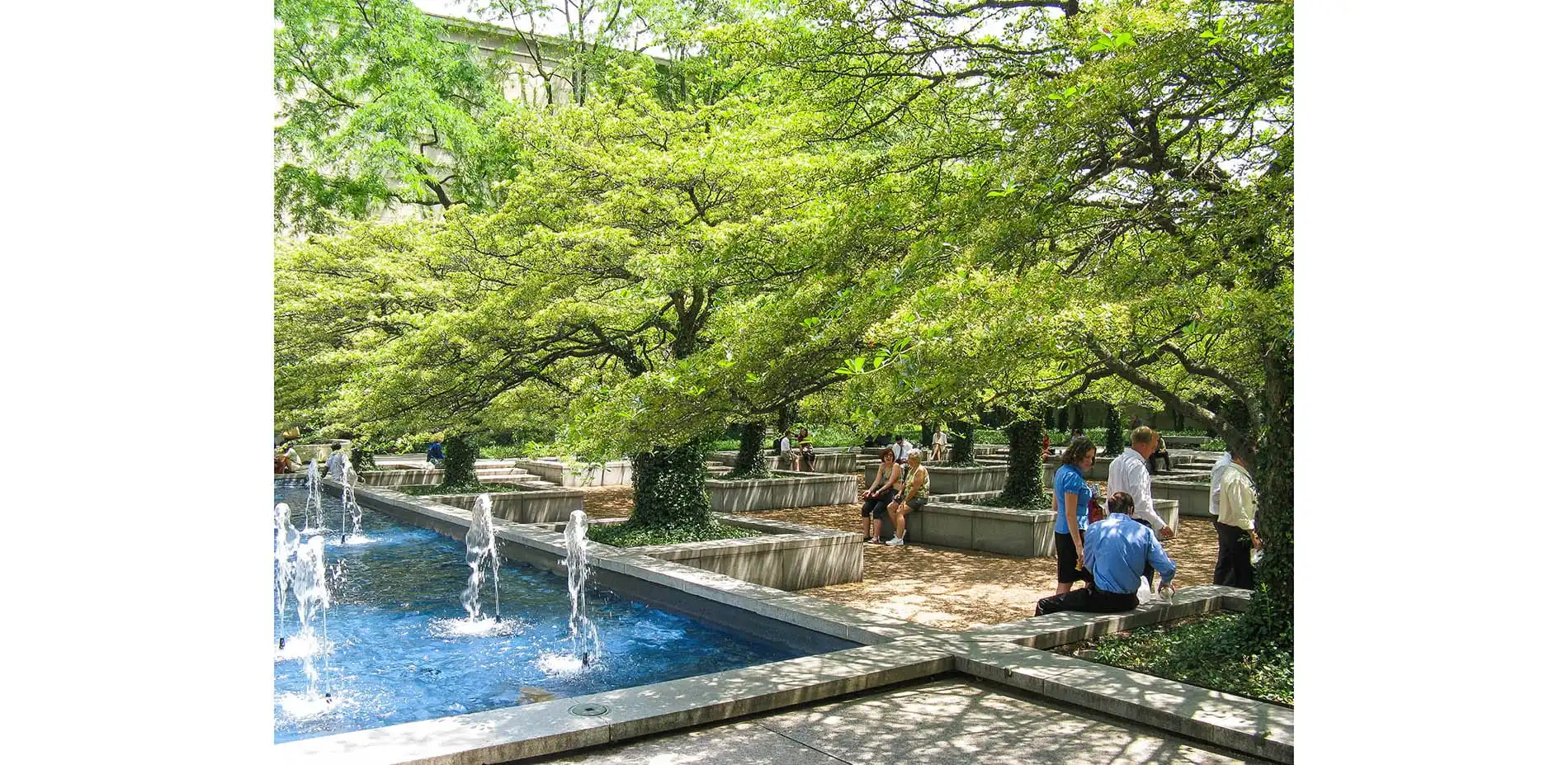
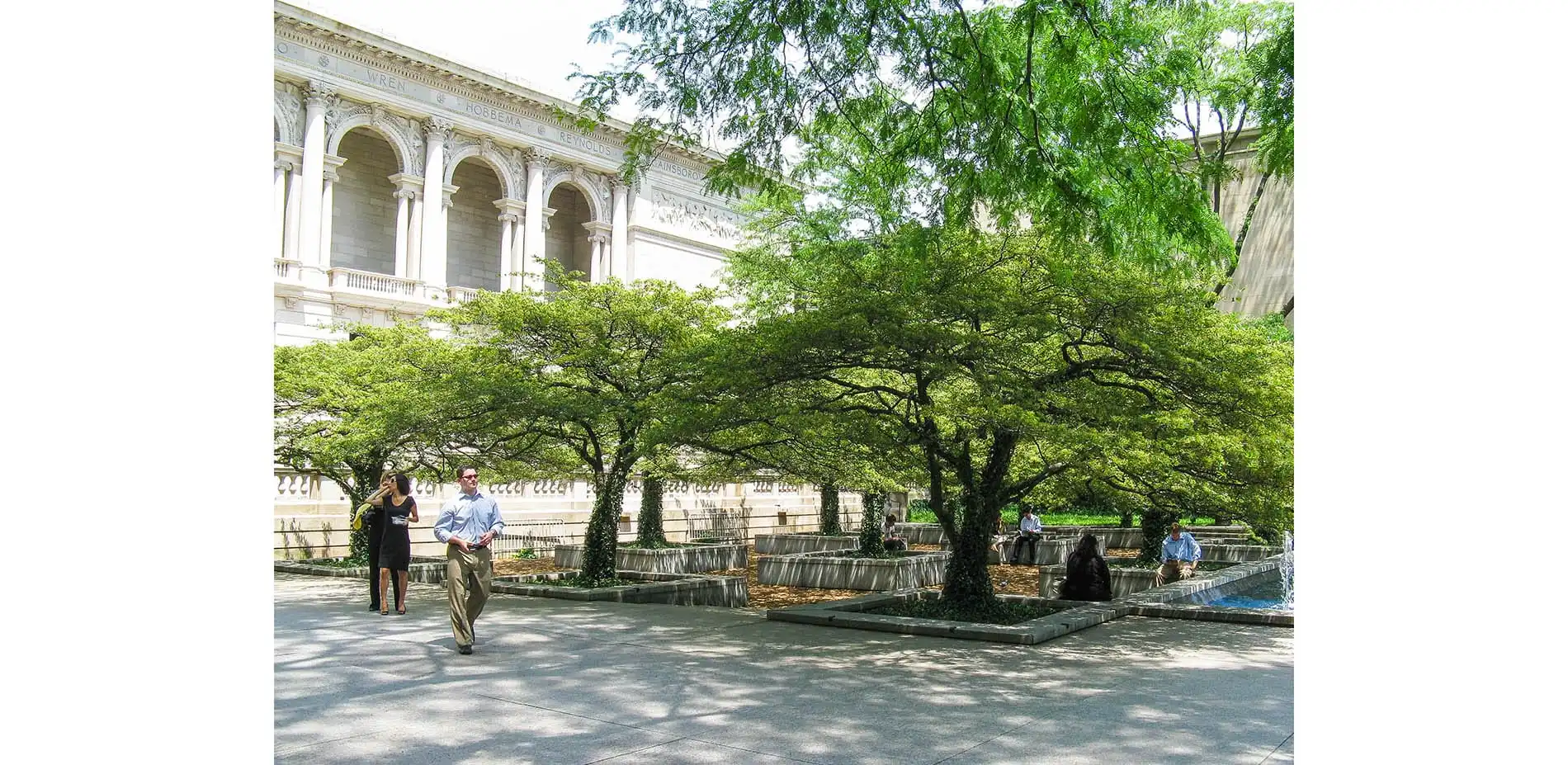
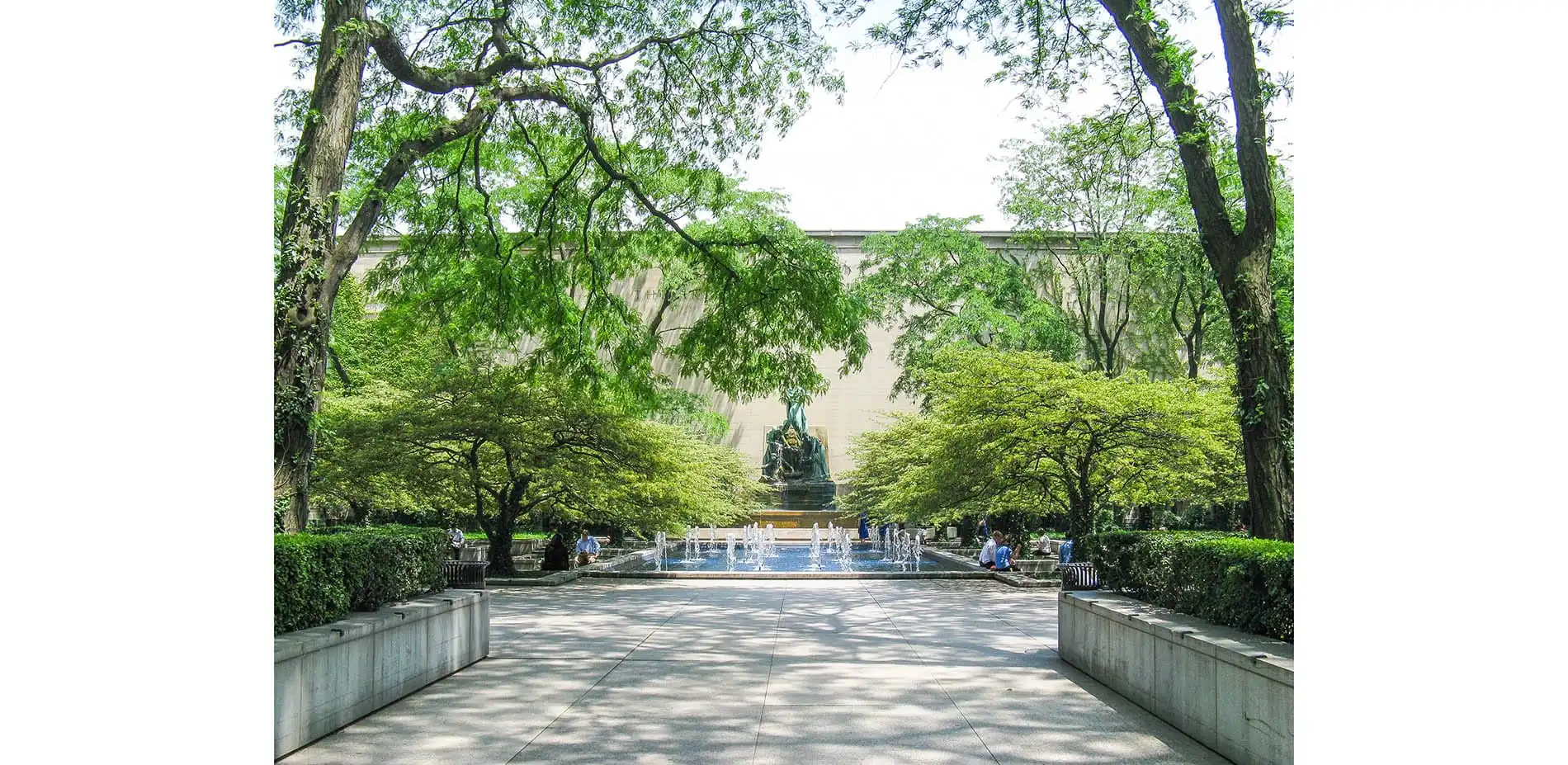
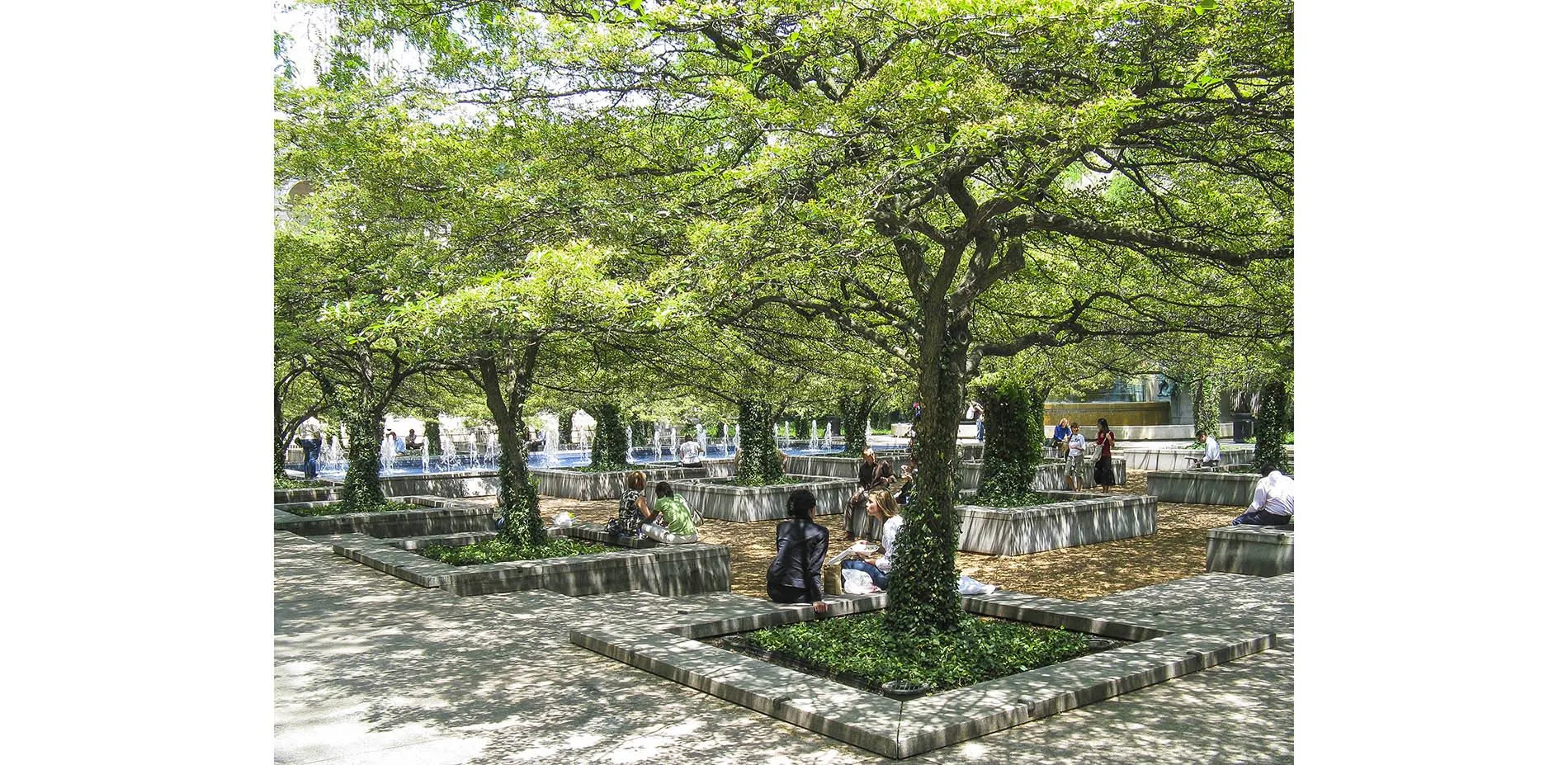
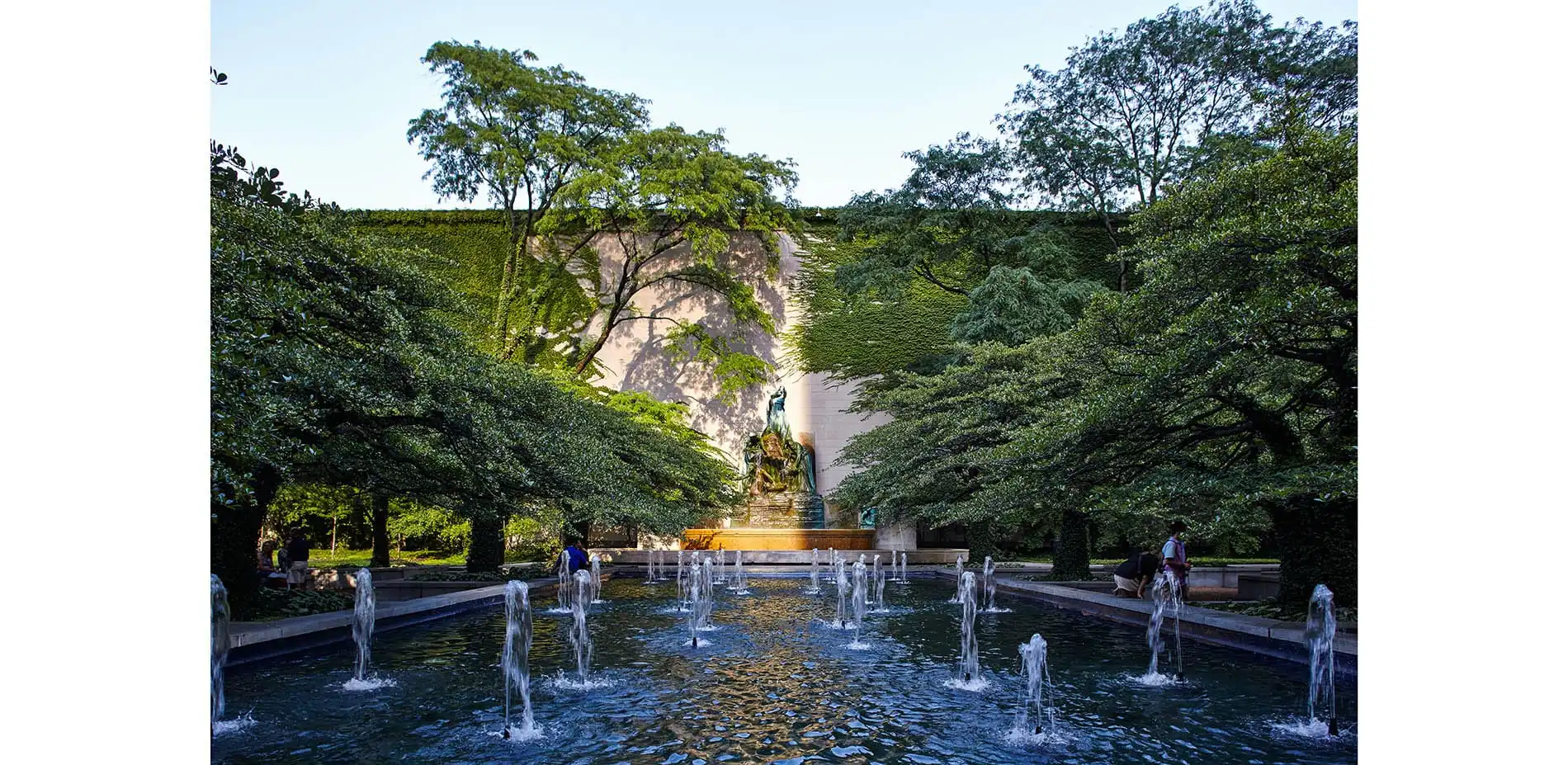
There is something very pure, even timeless about this that you don’t often see. It’s a stunning marriage of Neo-Classical and Modernist design principles.
Awards Jury
-
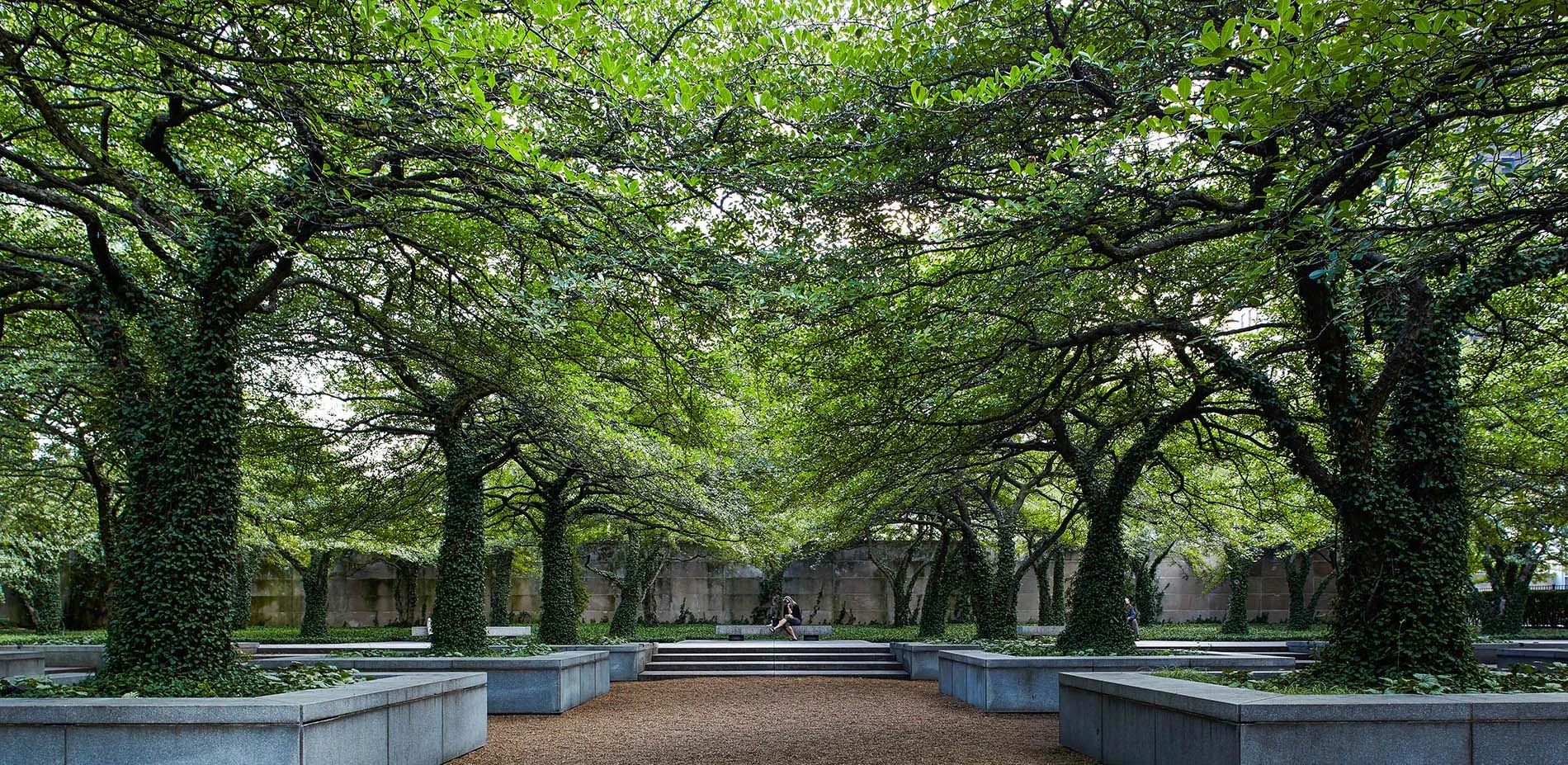
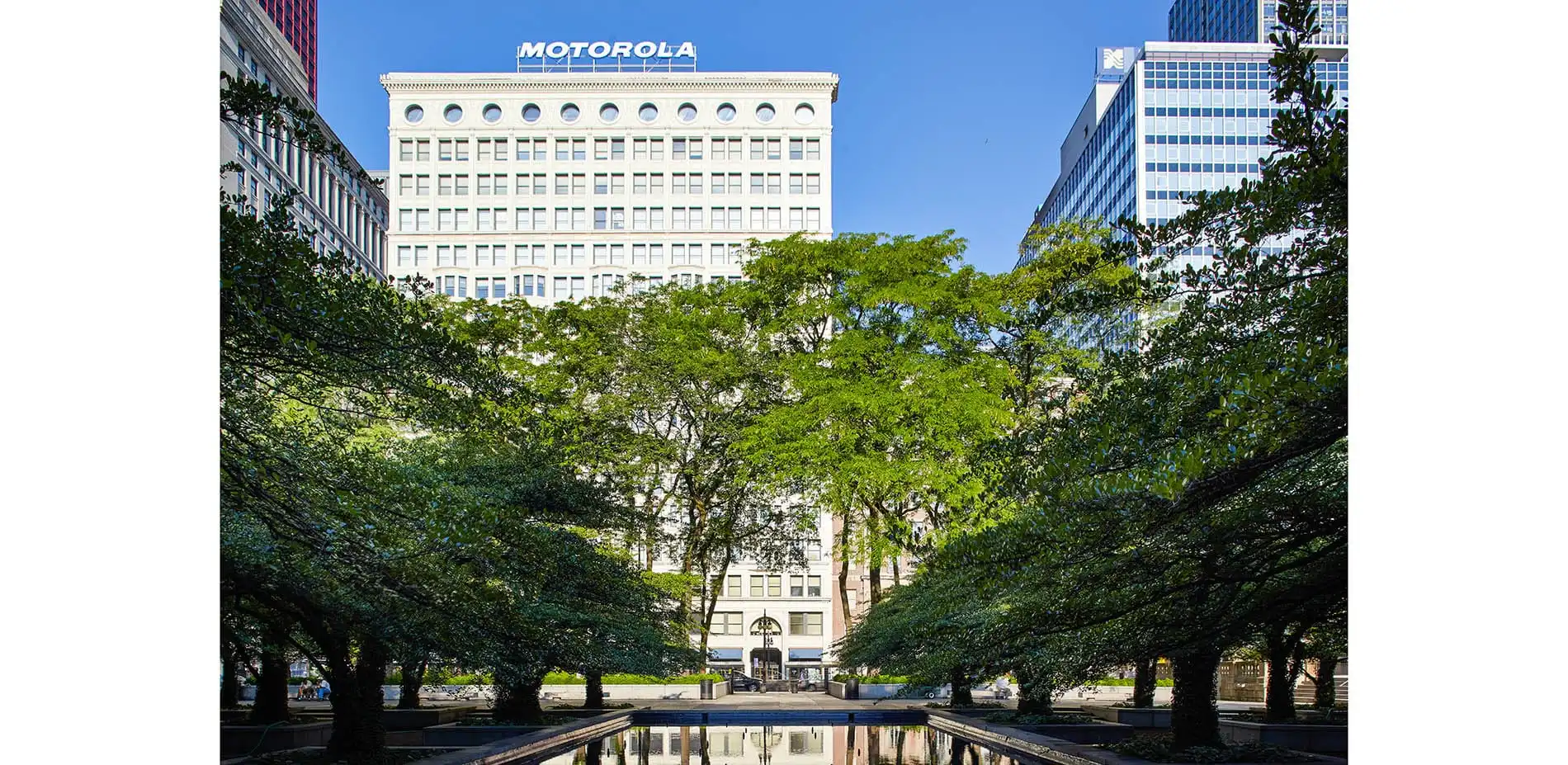
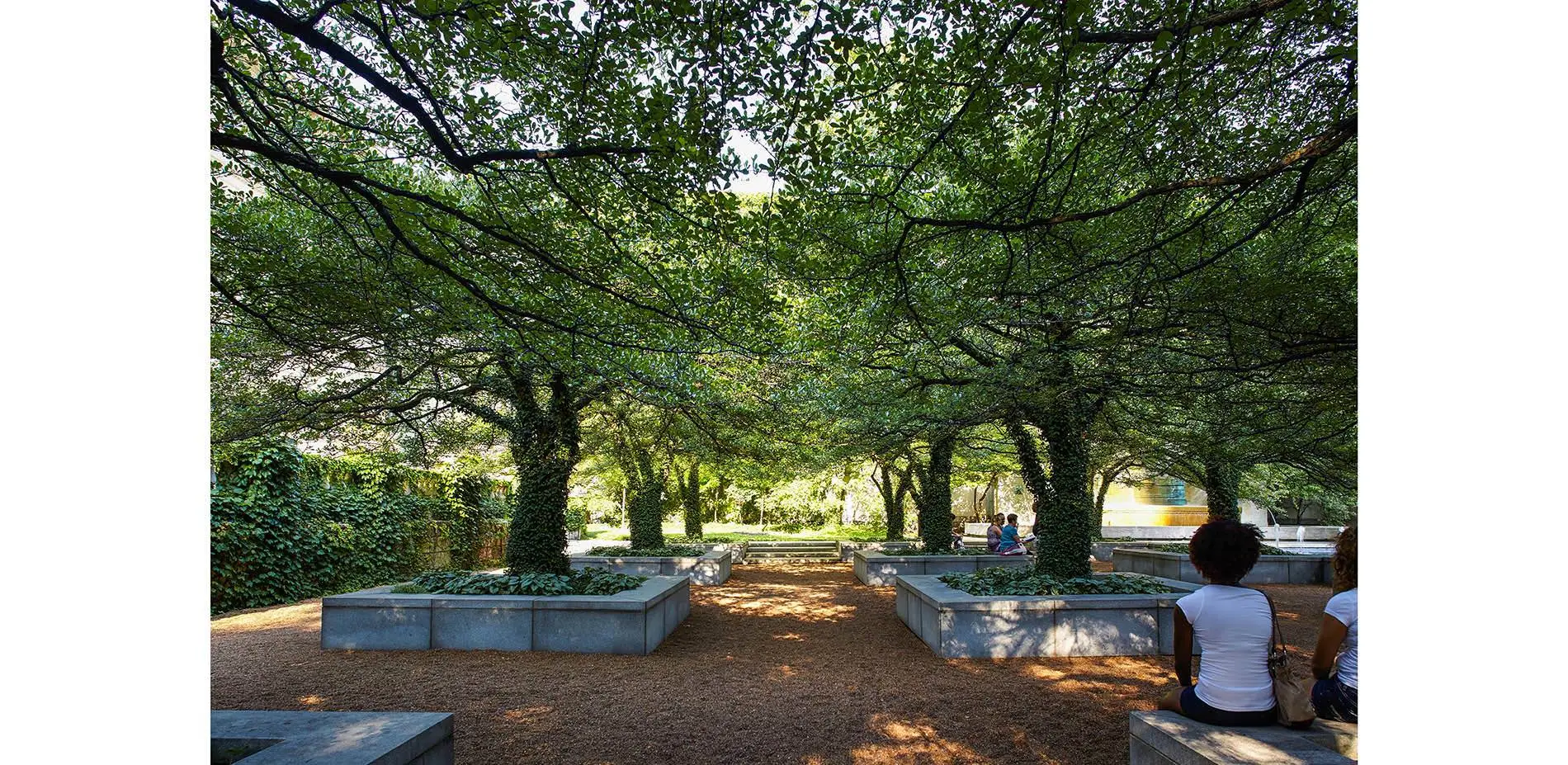
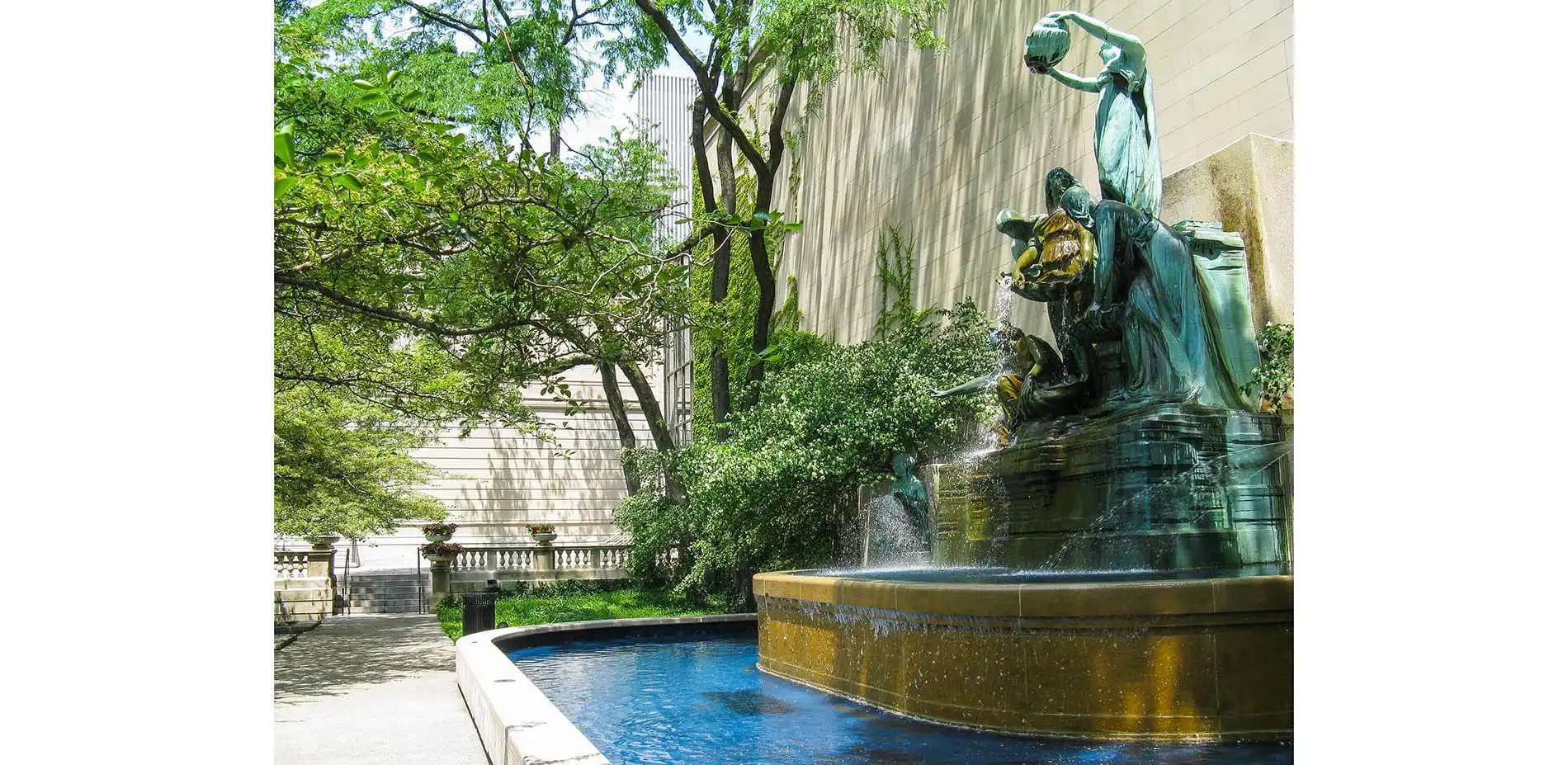
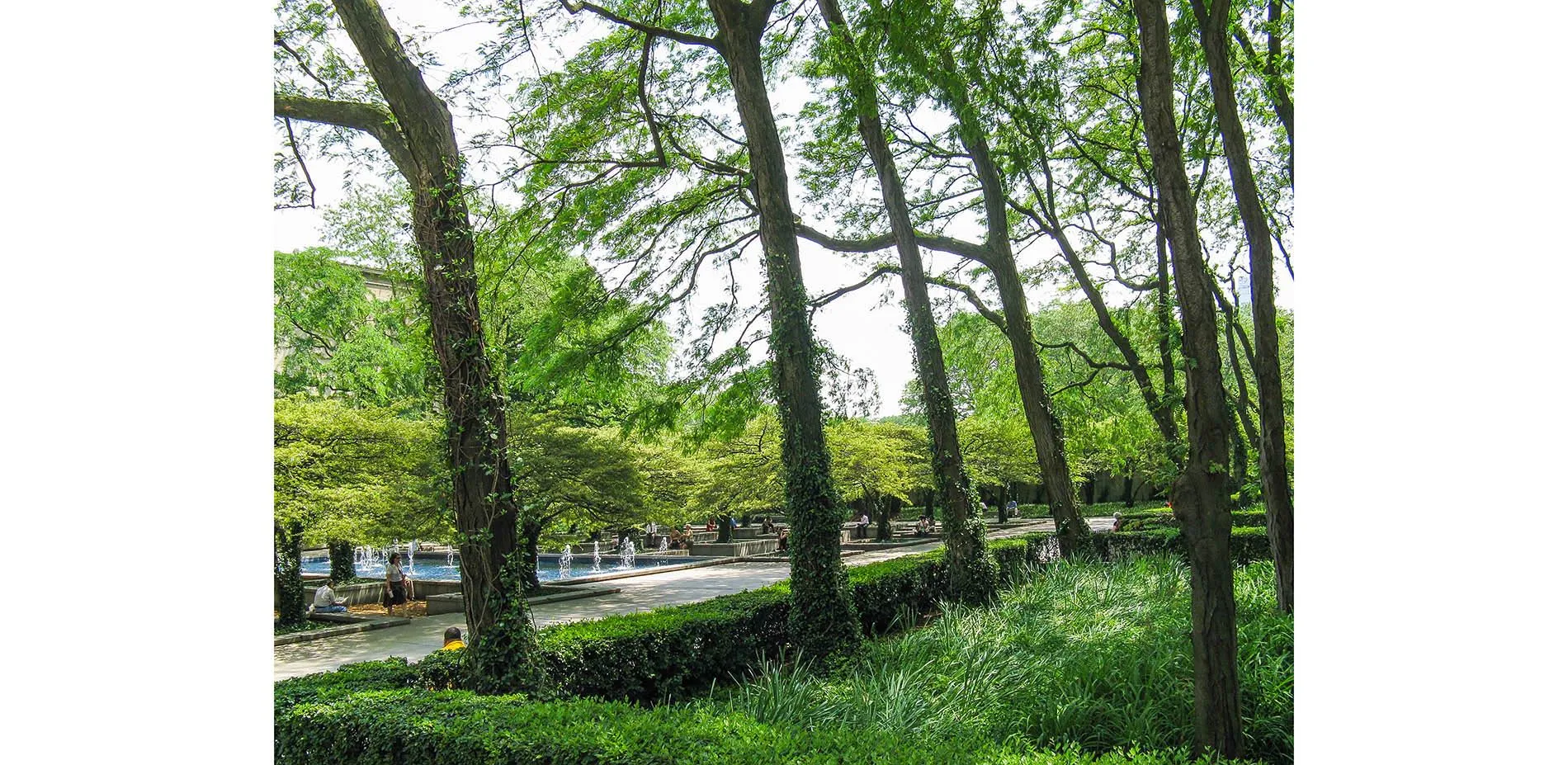
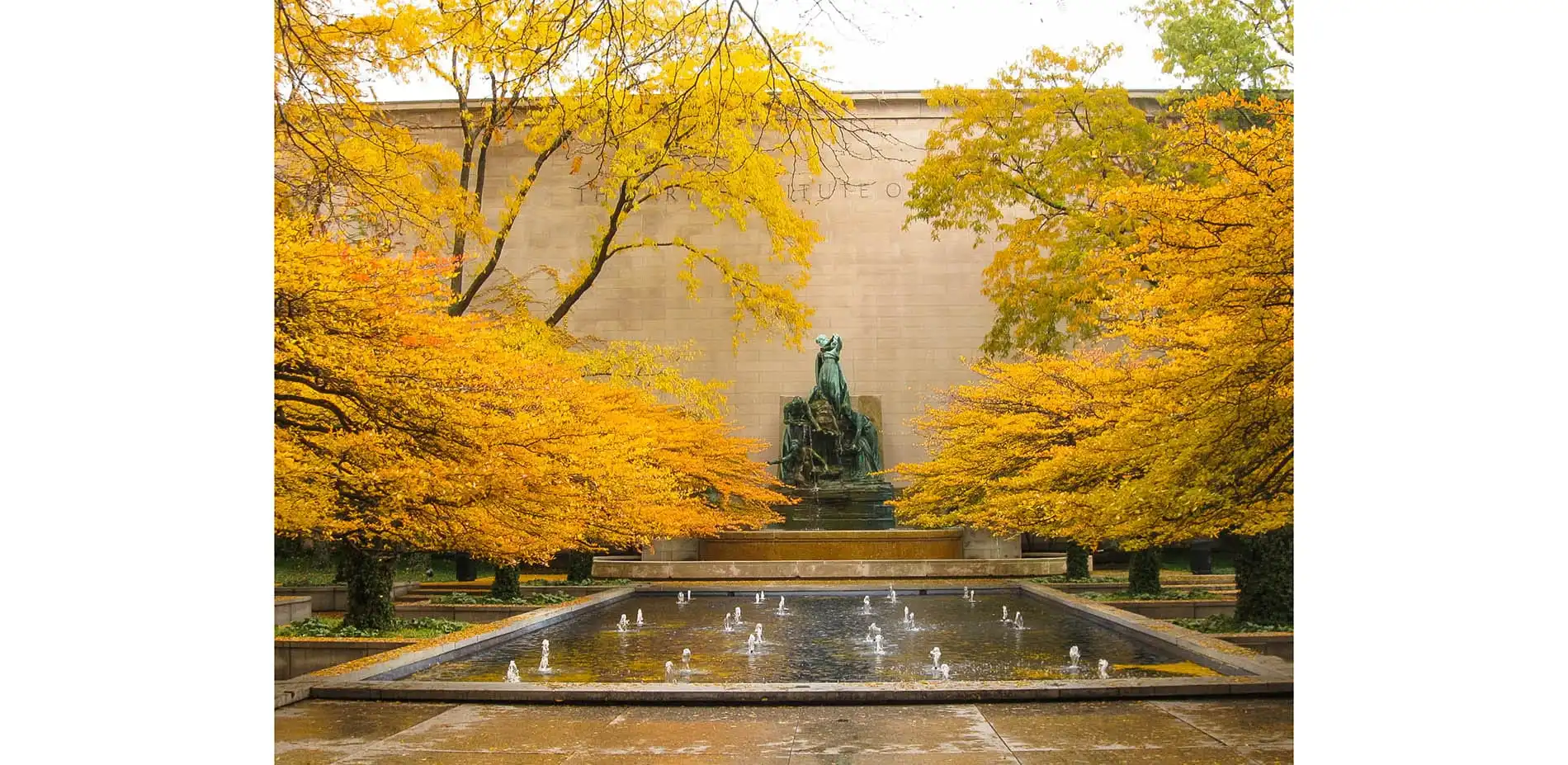
This intimately scaled garden built atop a parking garage at the Art Institute of Chicago greets more than two million visitors each year and is open to the public, free of charge. Completed in 1967, it is among Dan Kiley’s best preserved commissions. Moving inward from Michigan Avenue, two raised beds are planted with three staggered rows of honey locust trees, shading privet, ground cover, and flowering bulbs. The central plaza space is bisected by a rectangular pool terminating at the Fountain of the Great Lakes, sculpted by Lorado Taft in 1913. On either side of the pool, raised planters of cockspur hawthorn trees provide seating. Each planter is sited 20 feet on center and planted with ground cover and herbaceous plants for color in the summer months. The trees create a canopy over the entire plaza and frame the fountain.
-
This intimately scaled garden built atop a parking garage at the Art Institute of Chicago greets more than two million visitors each year and is open to the public, free of charge. The Art Institute and its gardens are ranked number one among 951 downtown sites by TripAdvisor.com users. Completed in 1967, it is among Dan Kiley’s best preserved commissions.
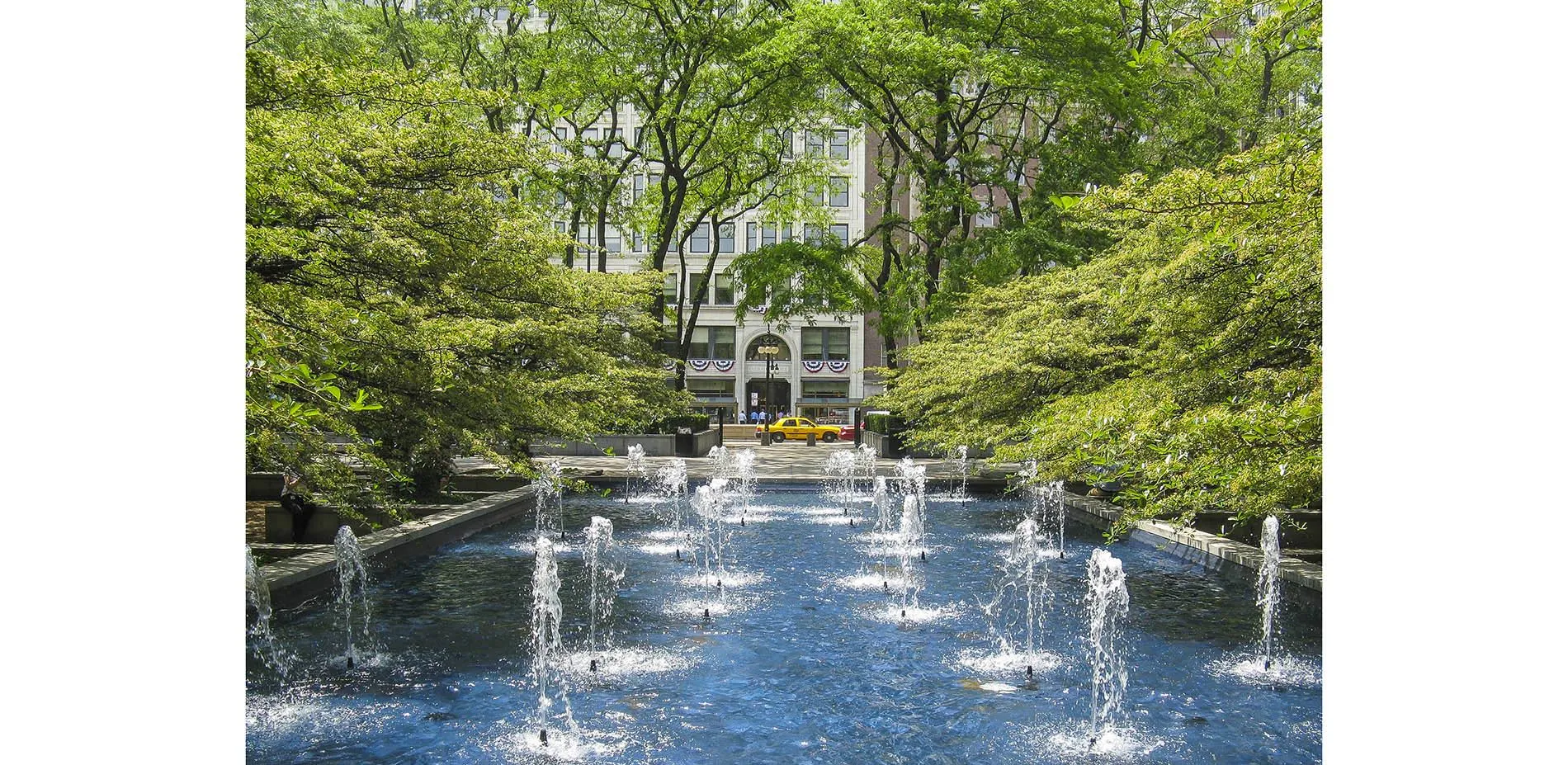
Moving inward from Michigan Avenue, two raised beds are planted with three staggered rows of honey locust trees, shading privet, ground cover, and flowering bulbs. The central plaza space is bisected by a rectangular pool terminating at the Fountain of the Great Lakes, sculpted by Lorado Taft in 1913. On either side of the pool, raised planters of cockspur hawthorn trees provide seating. Each planter is sited 20 feet on center and planted with ground cover and herbaceous plants for color in the summer months. The trees create a canopy over the entire plaza and frame the fountain.
The planters are both functional and esthetic: at 30 inches high with wide marble edges, the planters provide seating throughout the park; structure the garden; and increase the soil depth above ground, raising the height of the trees whose branches conjoin above creating a dense overhead canopy. Along the rear of the space, honey locust trees and flowering shrubs frame the Taft fountain.
Kiley said “My intent here was to create a drama: to substantiate the act of passing by a grove of trees within the city, to suddenly find oneself before a long vista over a pool, to have one’s eyes arrested by a beautiful sculpture.” Low jets enliven the water’s surface. Around the trees, the content of planters is changed out seasonally to provide a vibrant element to the space. Hawthorns are again used in a long low bed that sits along the park’s eastern edge.
A final pair of long raised planting beds was placed along the southern edge of the site bordering South Michigan Avenue. Planted with honey locusts, and underplanted with privet and spring flowering bulbs, the tall trees create an entry to the park, while also working to screen it from the busy street.
Former Kiley Tyndall Walker firm partner Ian Tyndall said Kiley had originally planned to have the planters surrounded by water—an idea that was rejected. Twenty-three years later, Kiley implemented that design concept at Fountain Place in Dallas.
The Art Institute of Chicago South Garden has been beautifully maintained—even the original plantings remain and seasonal plantings continue to enliven the space as Kiley originally intended—and is open to the public, free of charge. While continued maintenance is necessary to deal with any issues that may arise as the plaza ages, the plantings and hardscape are well-taken care of and the garden is beloved by natives and visitors to Chicago alike.
Recognizing the site’s significance, the ASLA awarded the garden a Centennial Medallion in 1999. Presenting it with the Landmark Award will raise the profile of this project nationally and help preserve this seminal Kiley design for future generations. -
Advertisement
Related Awards
Landmark Award, The Landmark Award
Restoring the Glory, the Restoration of Forest Park
Firm: HOK
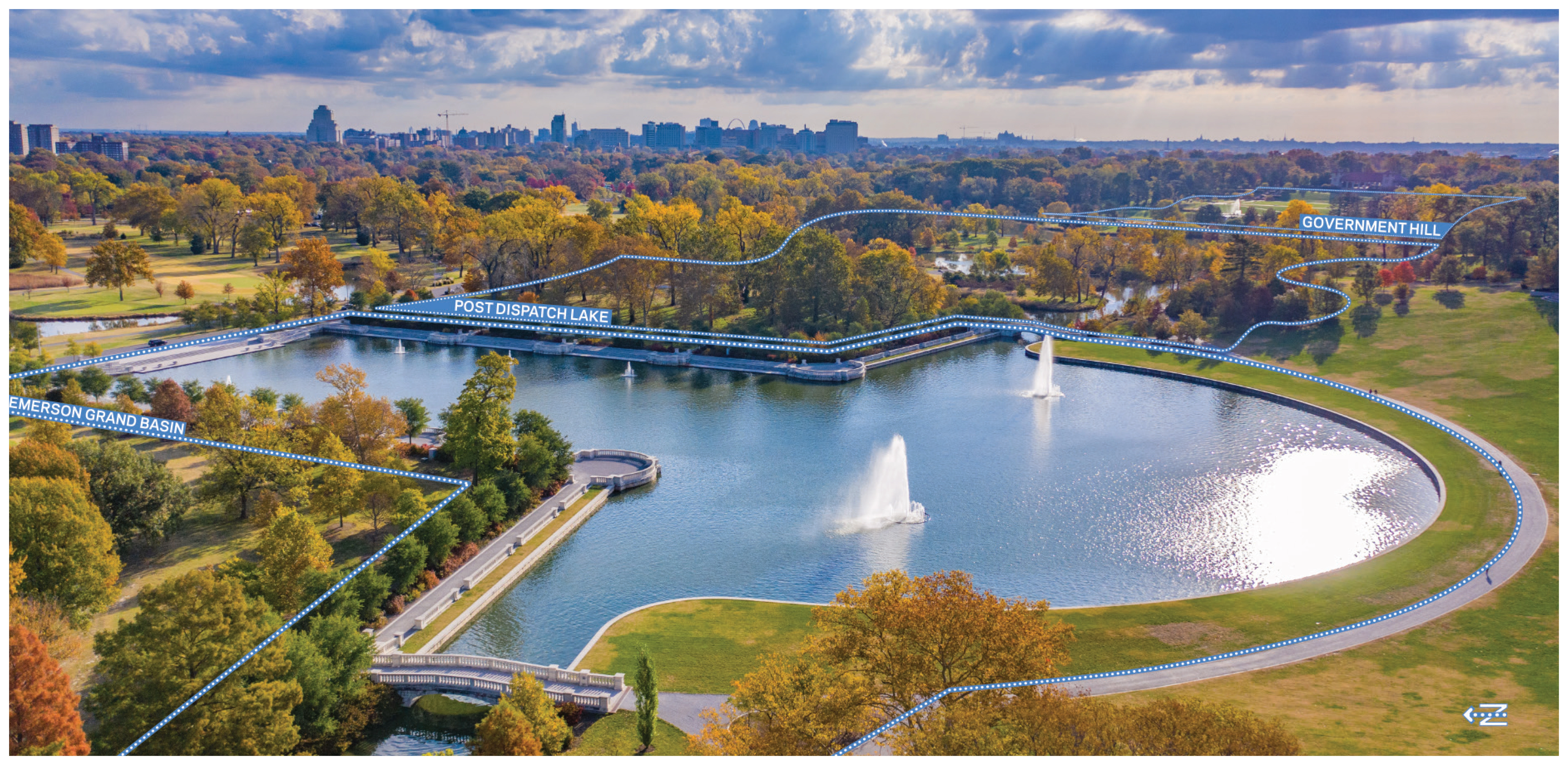
Forest Park, at 1,370 acres, is one of the largest urban parks in the U.S. The park is one of St. Louis’ greatest civic treasures and has been the site of events such as the 1904 World’s Fair. However, due to limited funding and deferred maintenance during the 1970’s and 80’s, the park became less functional and unsafe. In 2000, the nonprofit conservancy Forest Park Forever (FPF) engaged the design team to restore some of the park’s most iconic landmarks in preparation of the 100th anniversary of the Fair. The restoration modernized amenities, reintroduced natural systems and reconnected visitors to the magic of this beloved public space. Today, Forest Park proudly stands as one of America’s most celebrated and well-visited urban parks.