
.webp?language=en-US)

Townscaping an Automobile-Oriented Fabric: Farmington, Arkansas
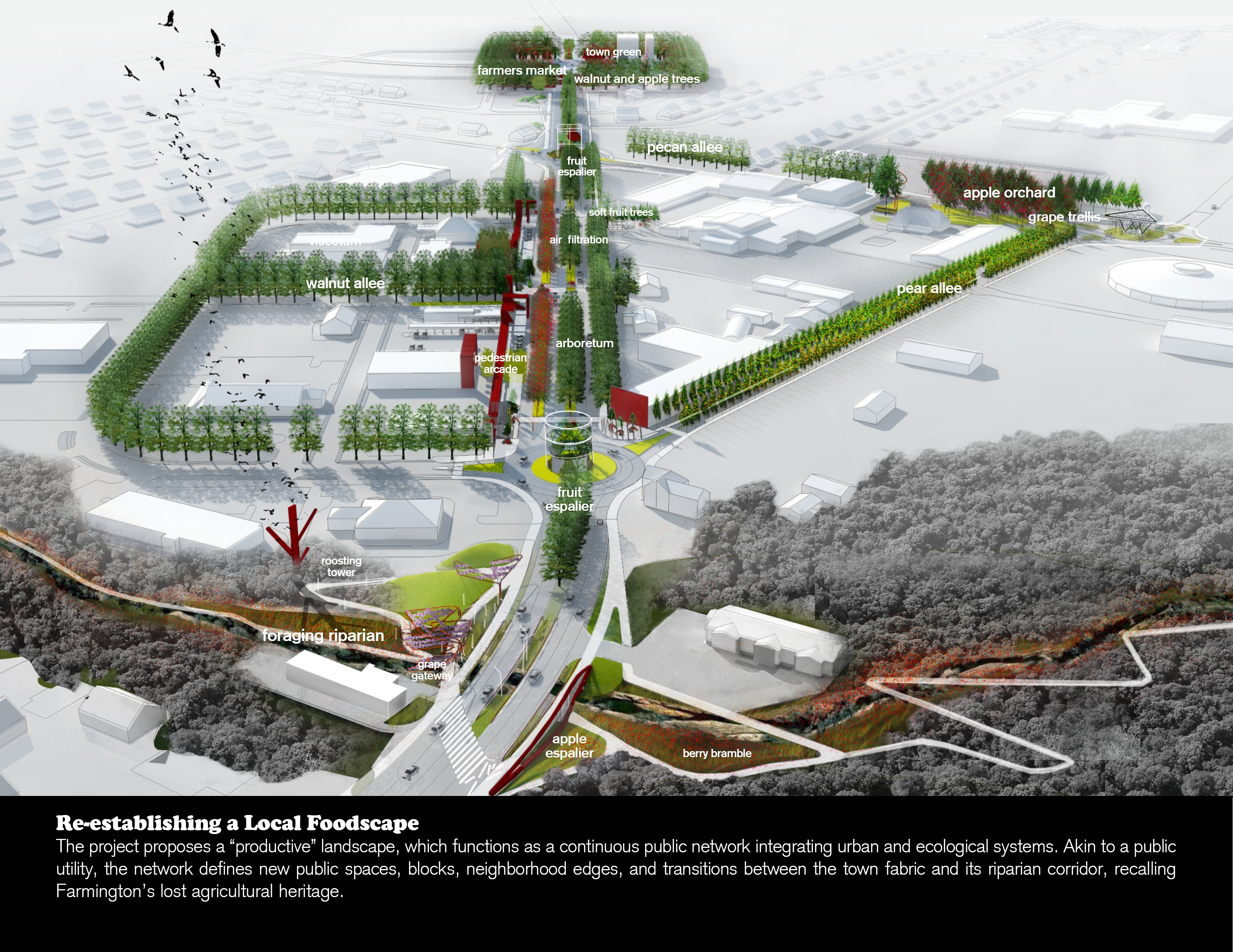
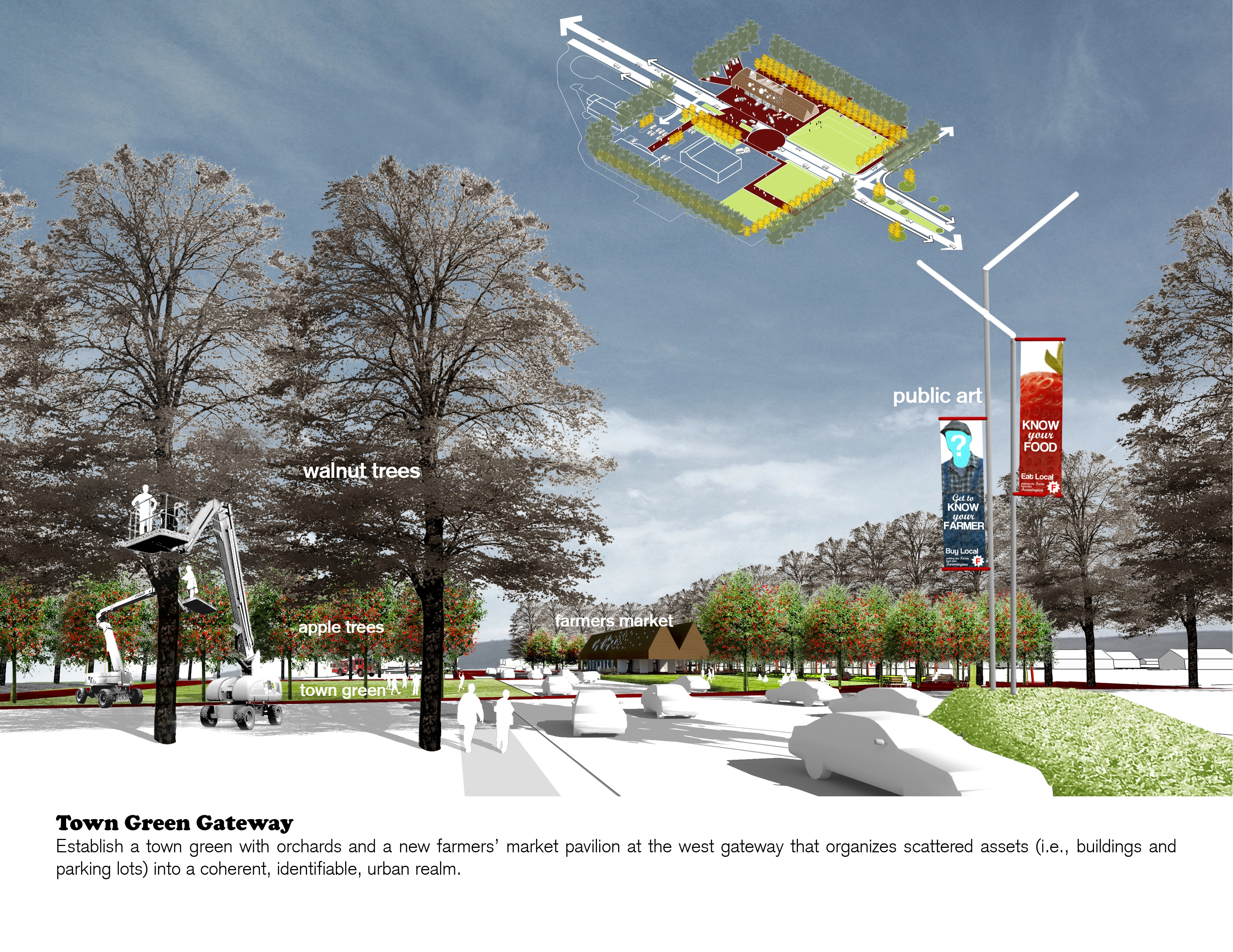
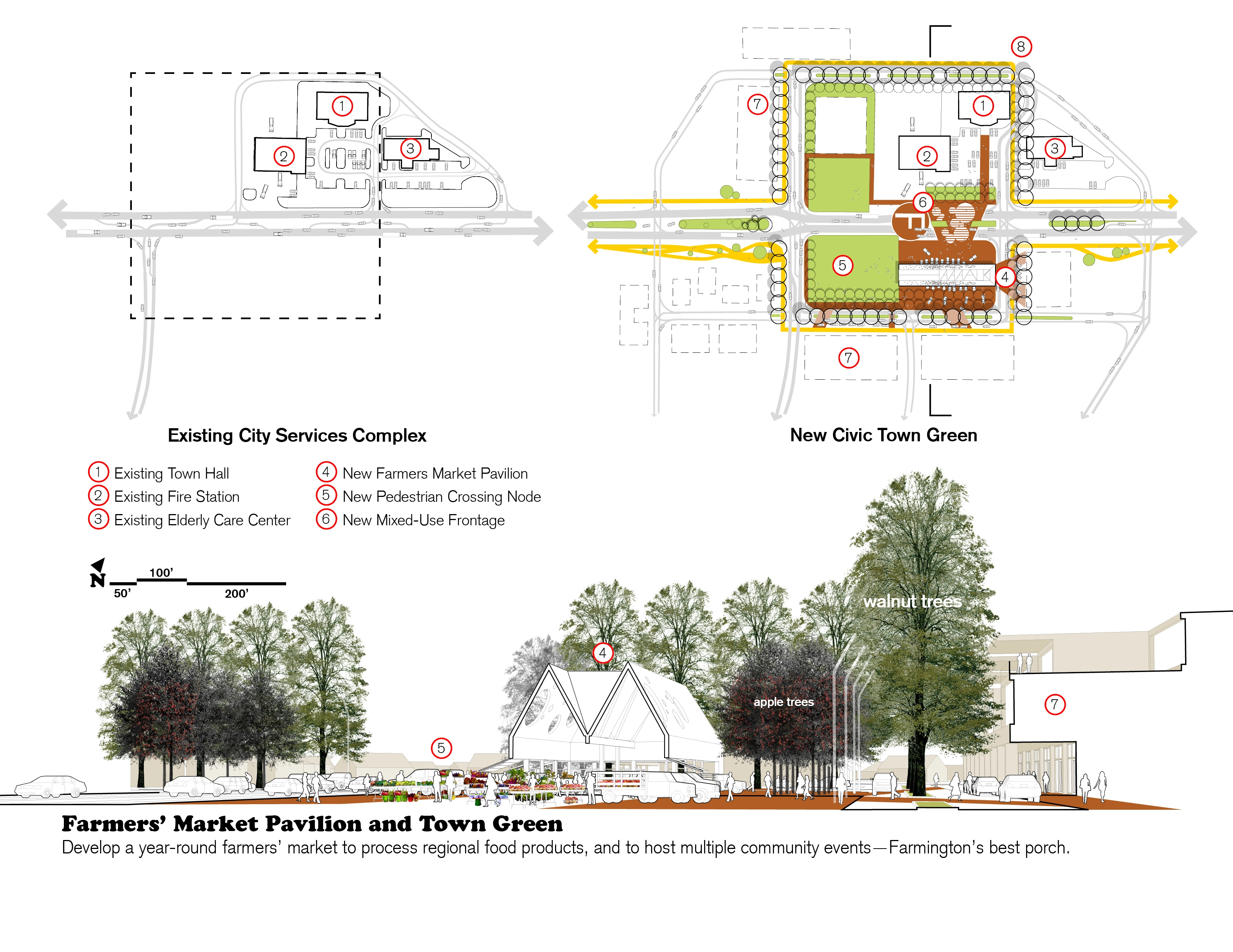
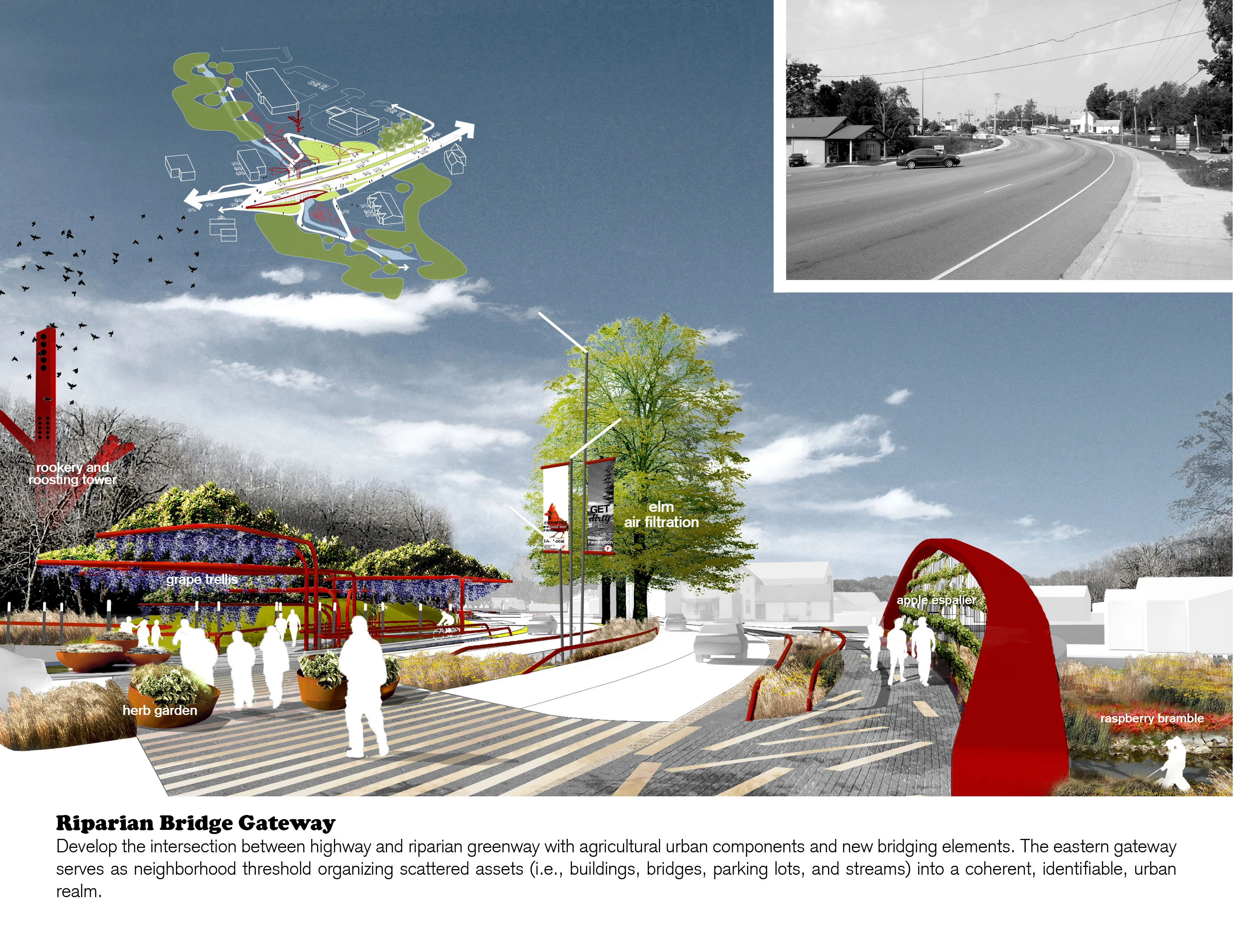
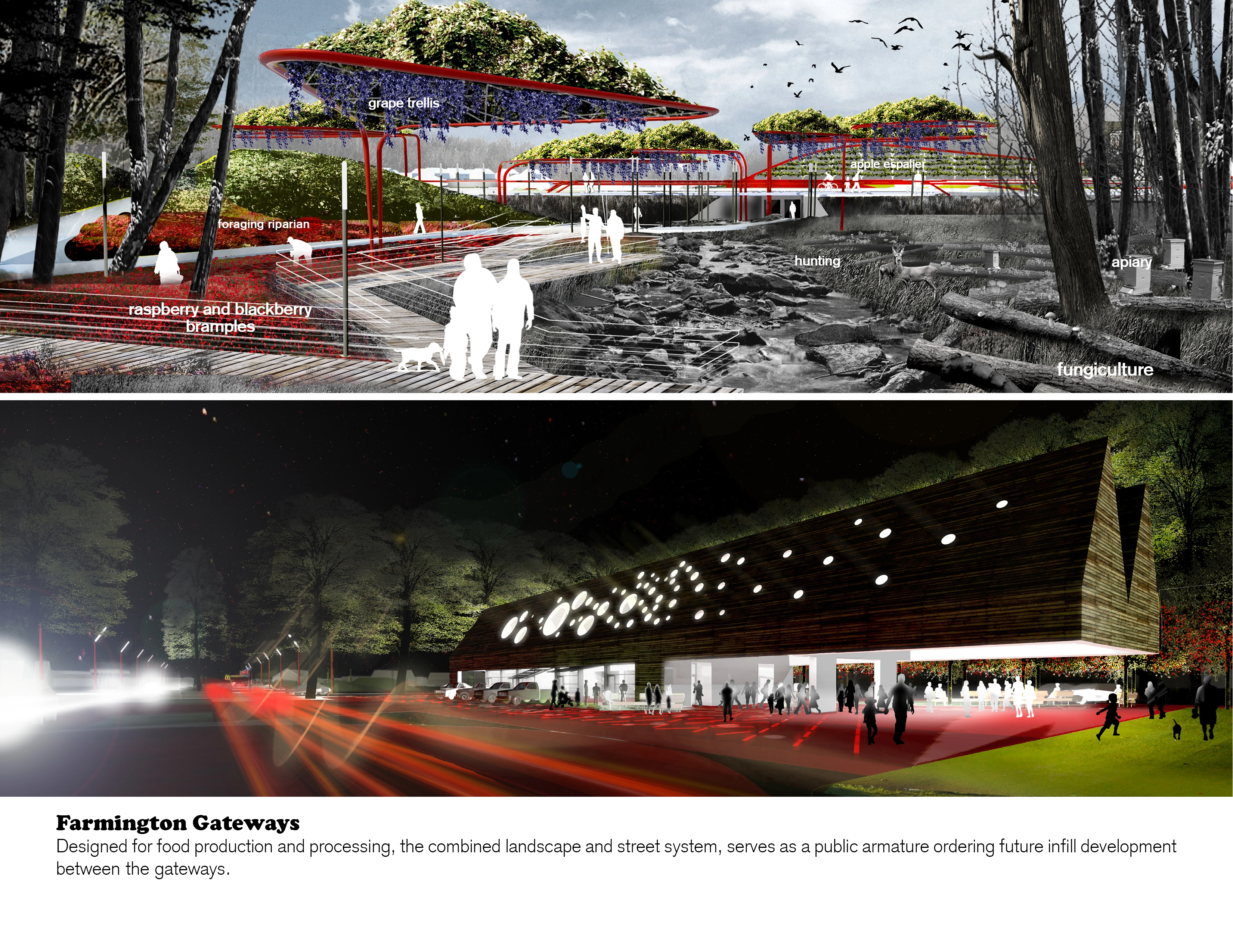
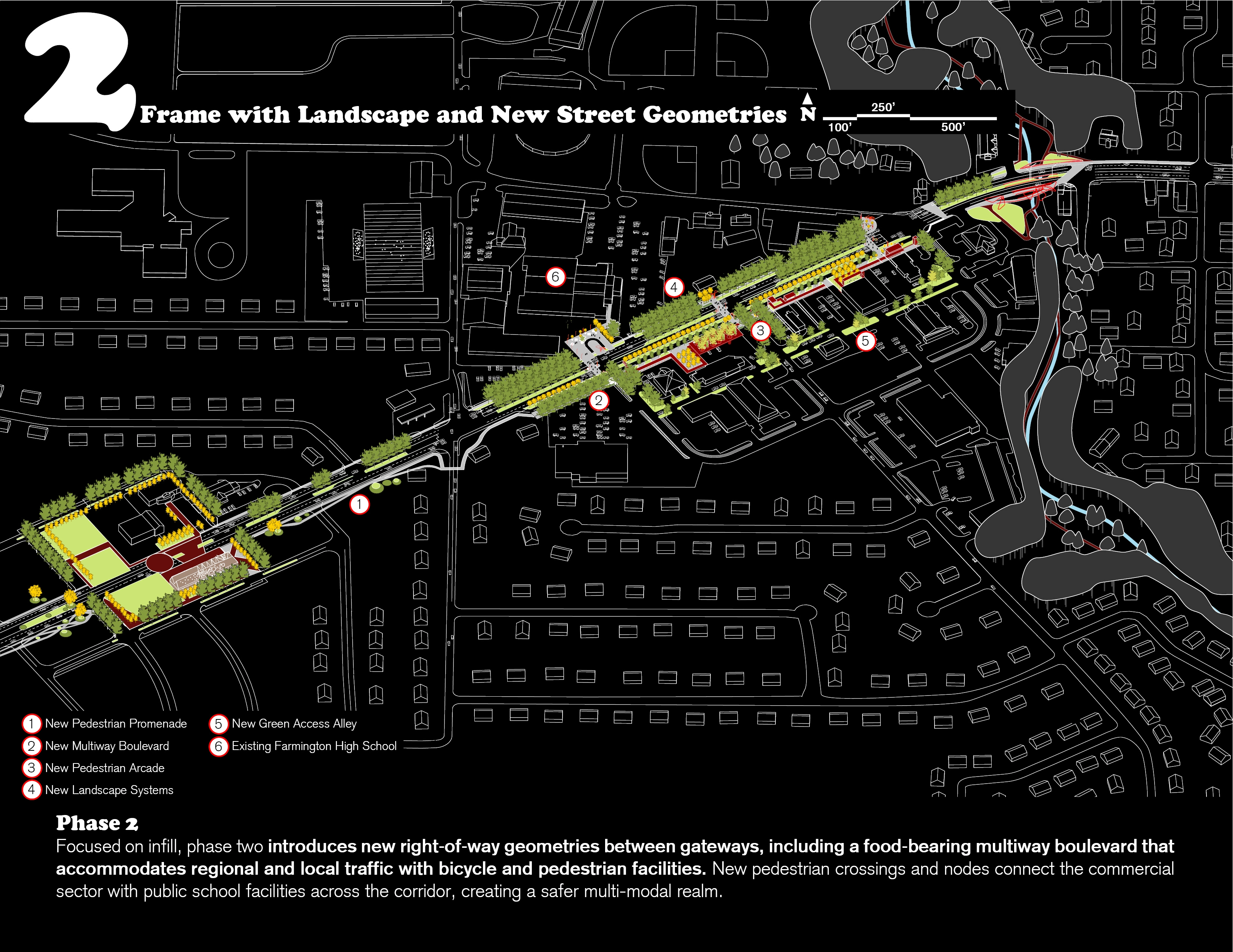
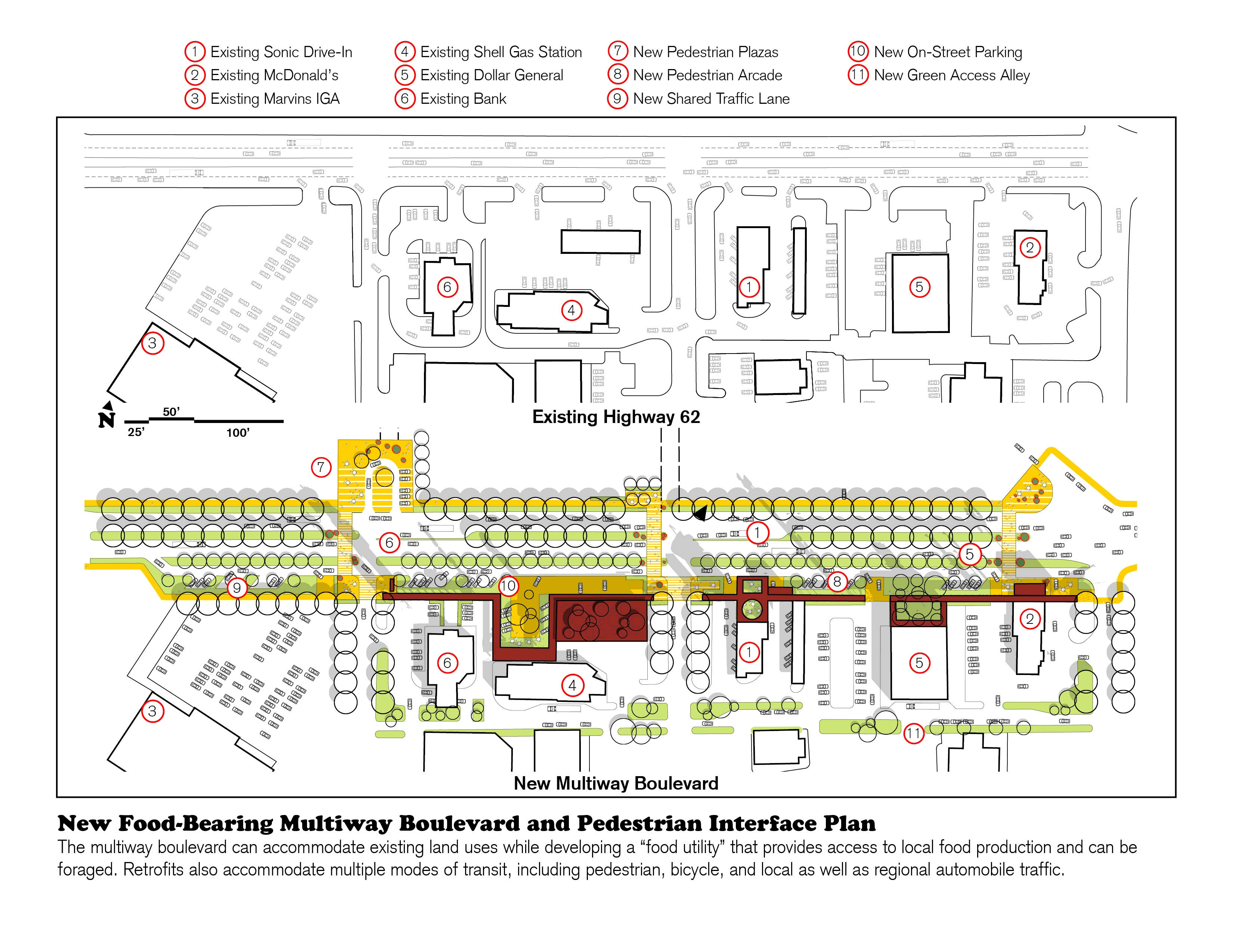
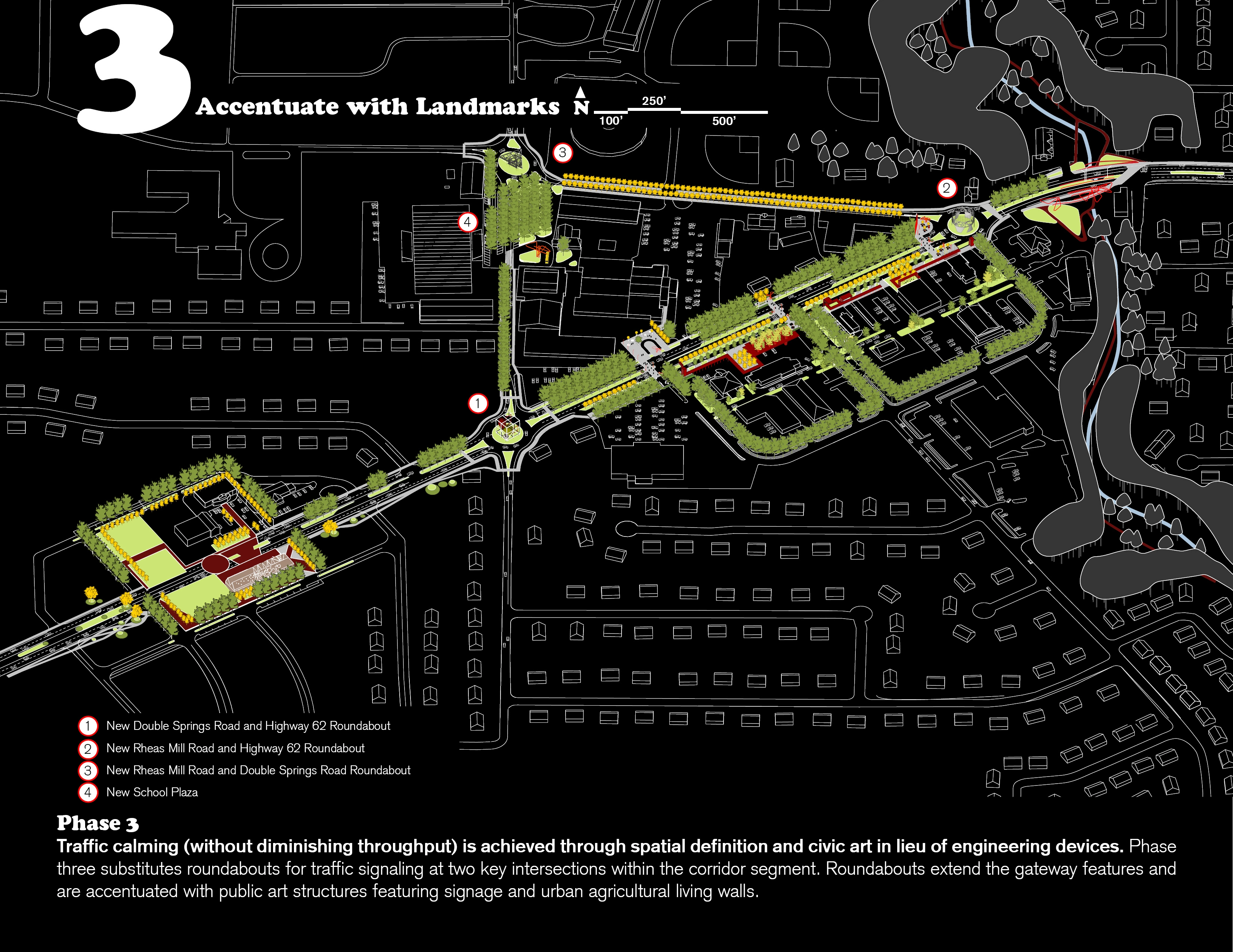
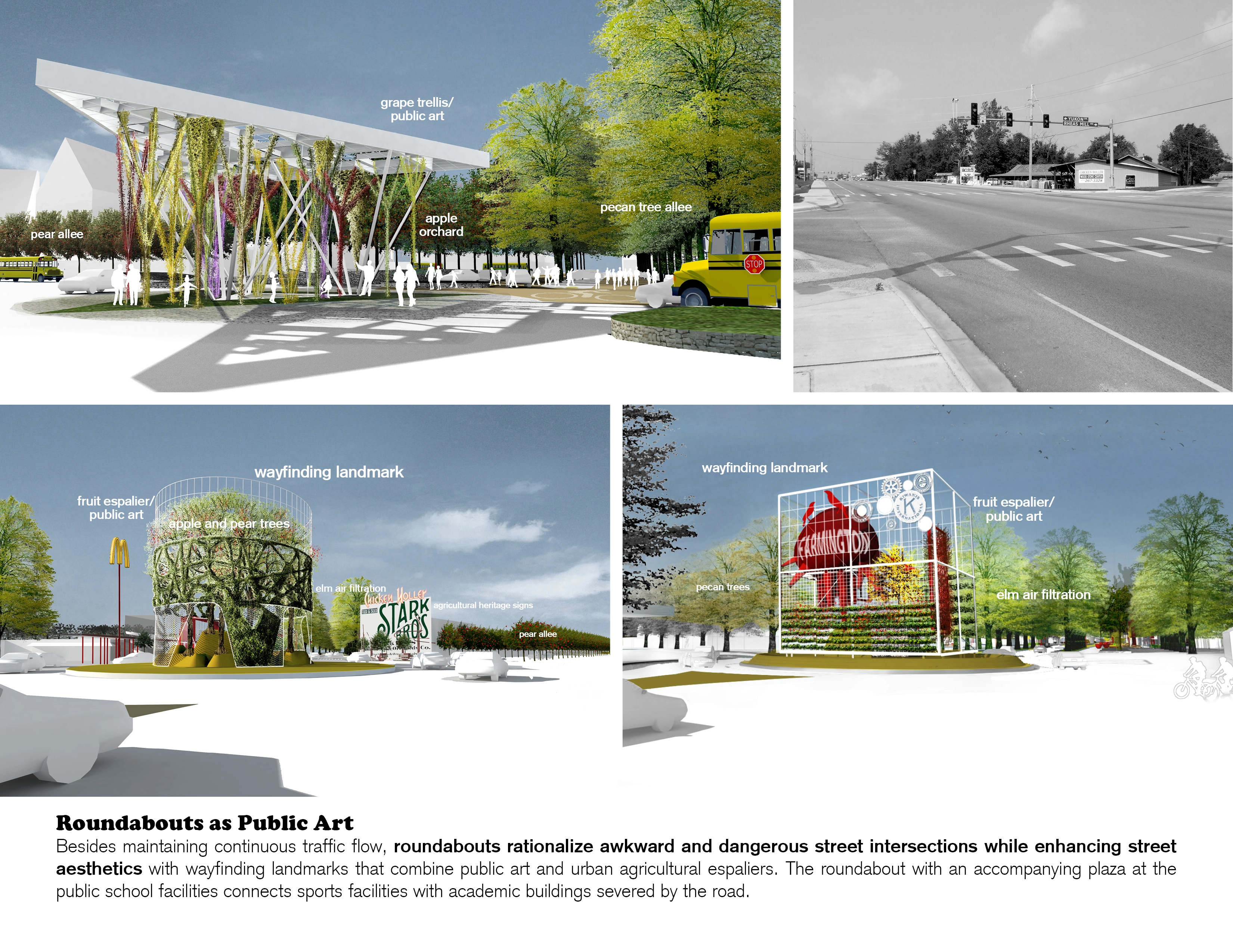
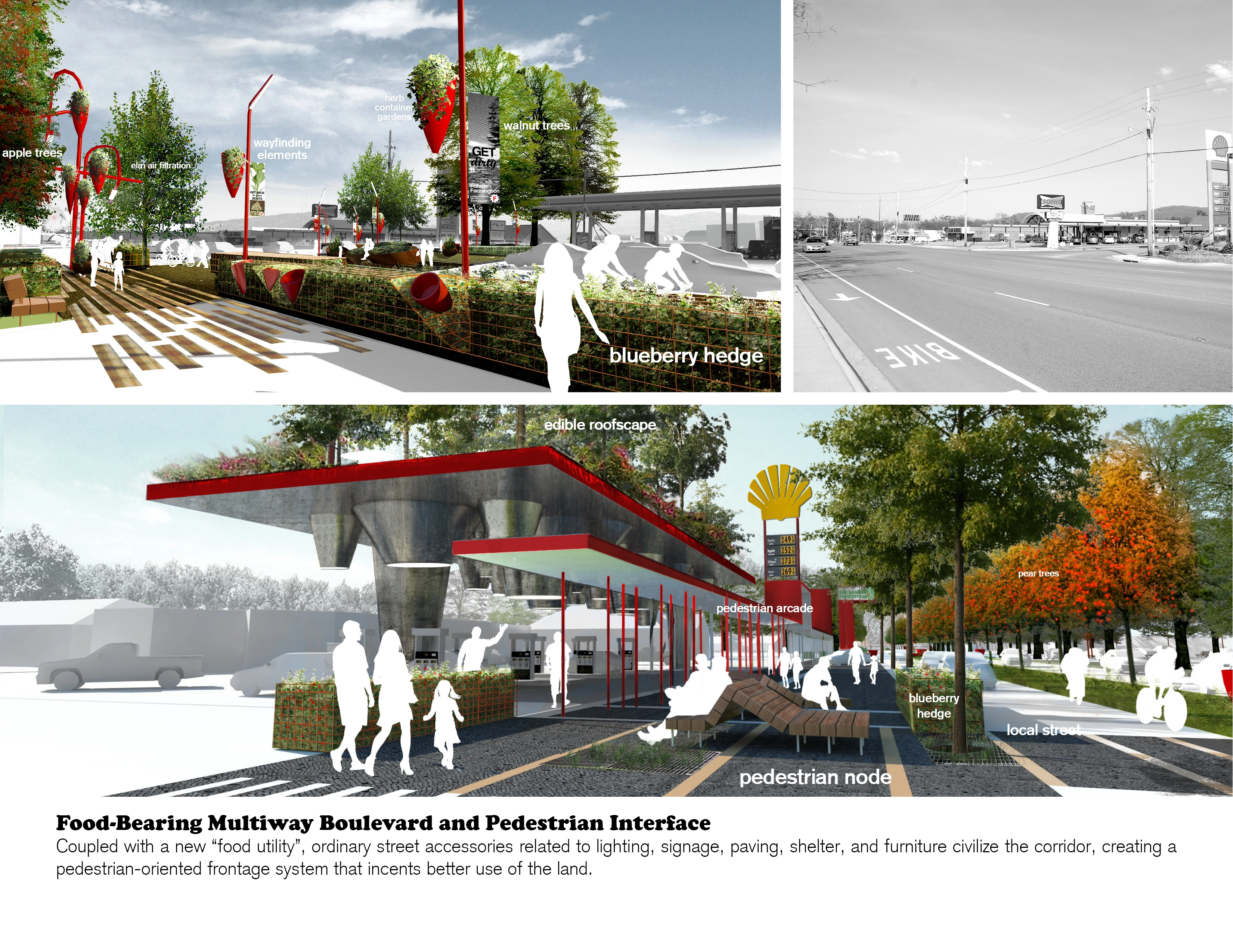
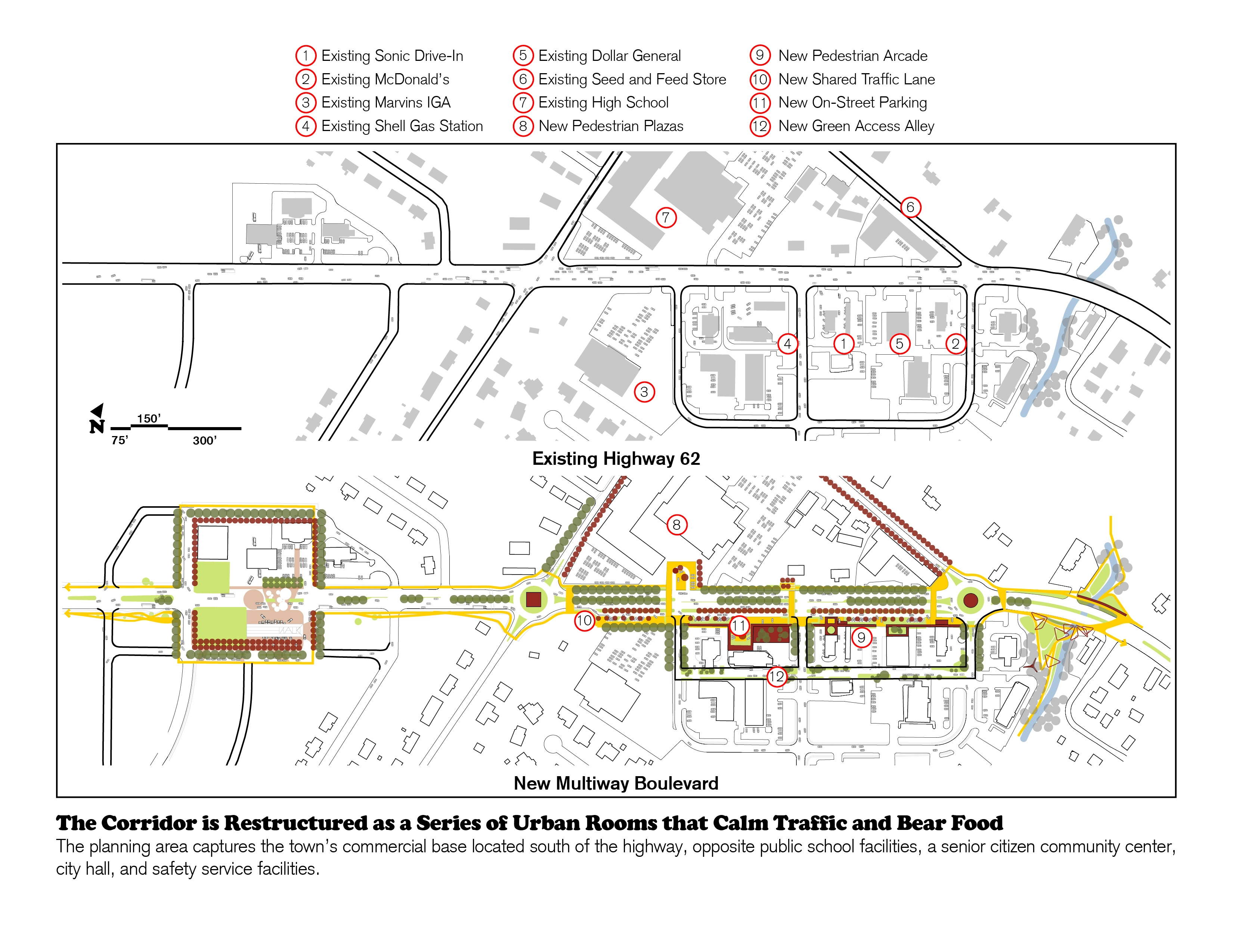
This project references the vibrant farming community of the 1940s and 50s. It is an intervention that is edible. There is a remediation for each approach to town. This is an unromantic problem that is solved in a dignified way. The right of way is public space and this is the beginning of rethinking how to use public space for public good.
Awards Jury
-
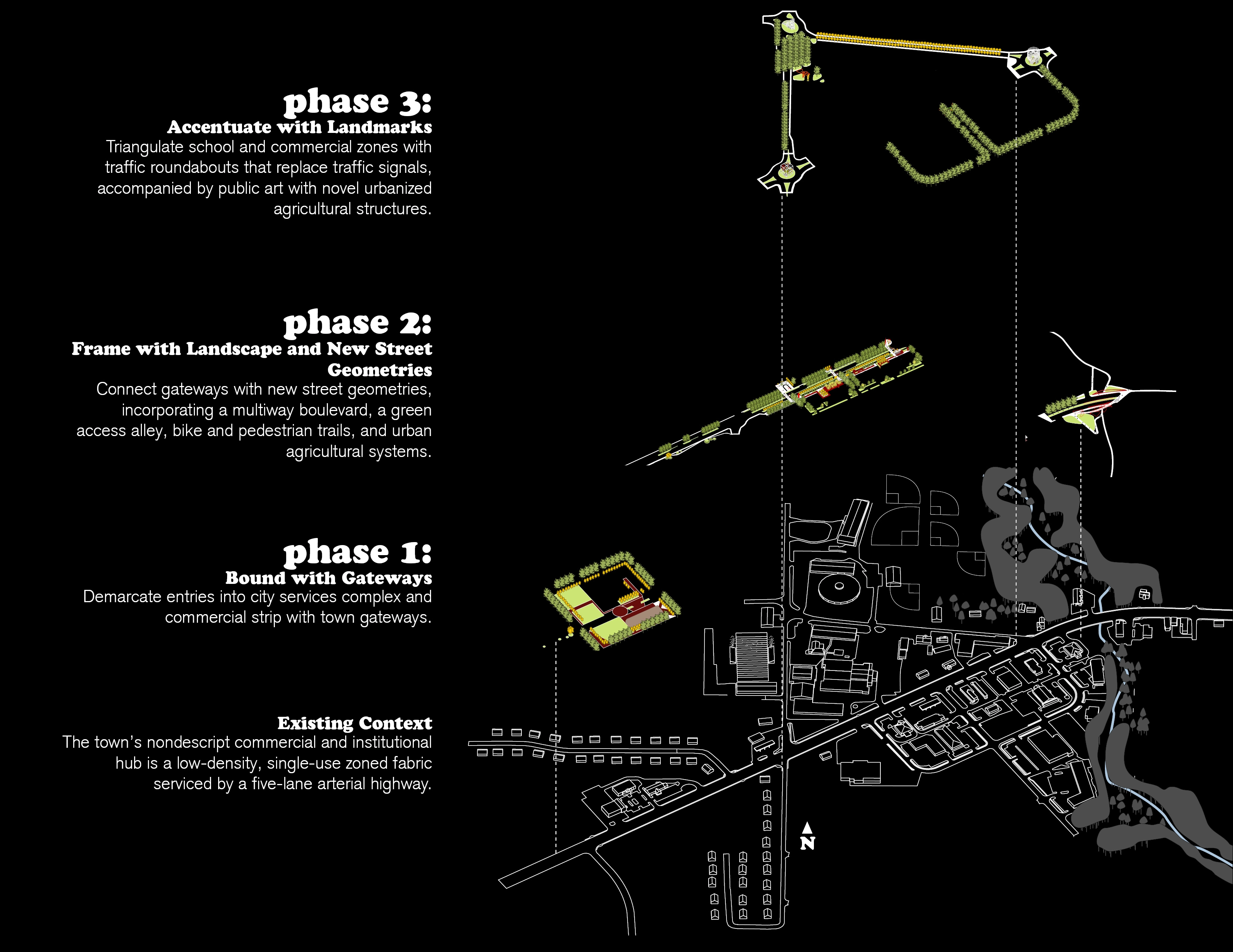
The Farmington townscape plan retrofits a suburban five-lane commercial arterial into a food-bearing multiway boulevard, revitalizing this once vibrant 5,000-person farming community. Townscaping employs a serial organization of nodes to create a walkable urban environment within an automobile-oriented context. Townscaping proposes an incremental urbanism without reliance on capital-intensive architectural investments. The goal is to evolve a memorable town fabric through three placemaking strategies: 1) agricultural urbanism, 2) context-sensitive highway design, and 3) public art planning.
-
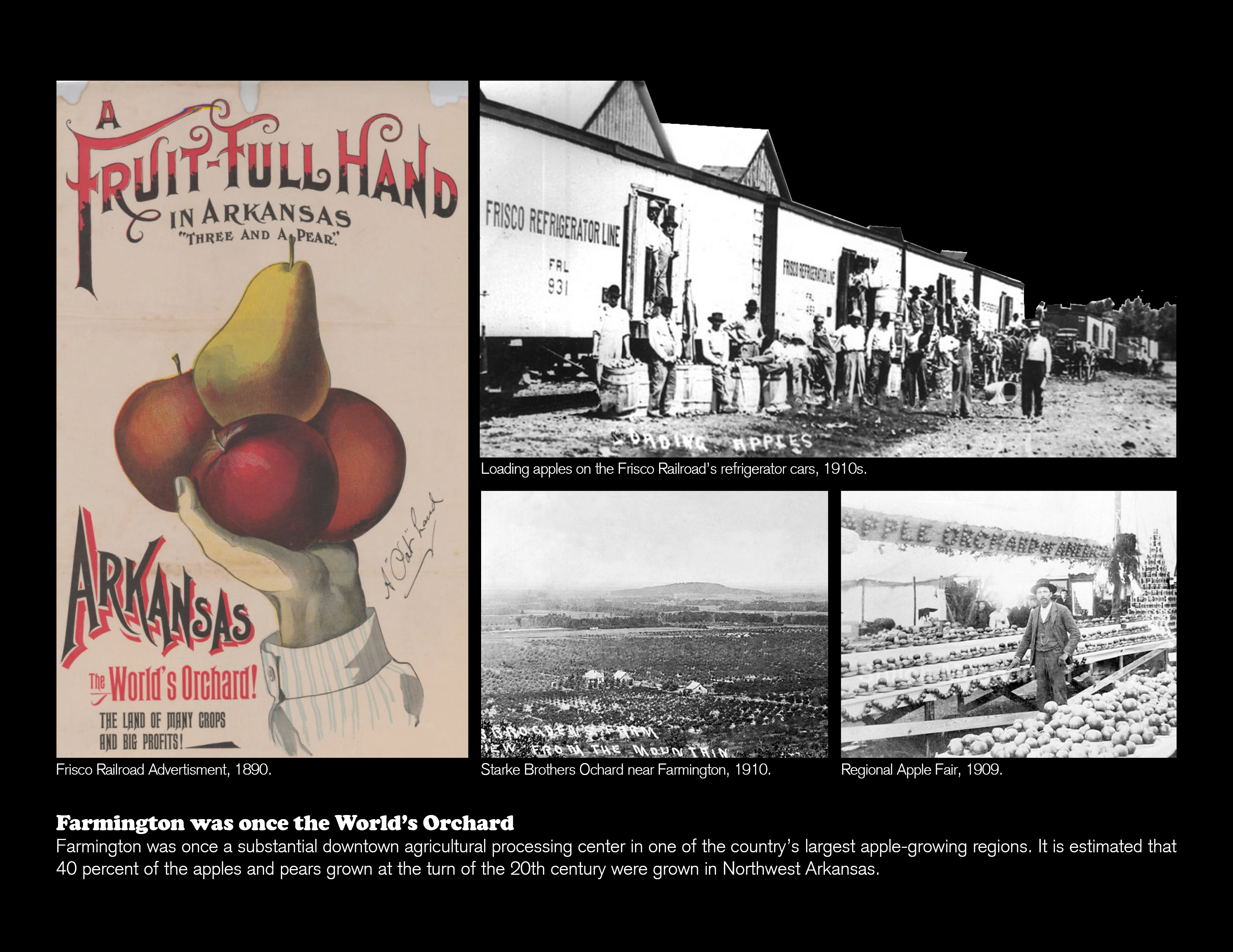
Farmington was once a substantial agricultural community in one of the country's largest apple-growing regions. It is estimated that 40 percent of the apples and pears grown at the turn of the 20th century were grown in Northwest Arkansas. The townscape plan proposes to re-restablish a local foodscape, recalling Farmington's agricultural heritage. The convenience provided by proximity to growing systems demystifies farming and positions it to be a tool for local economic development and jobs creation.
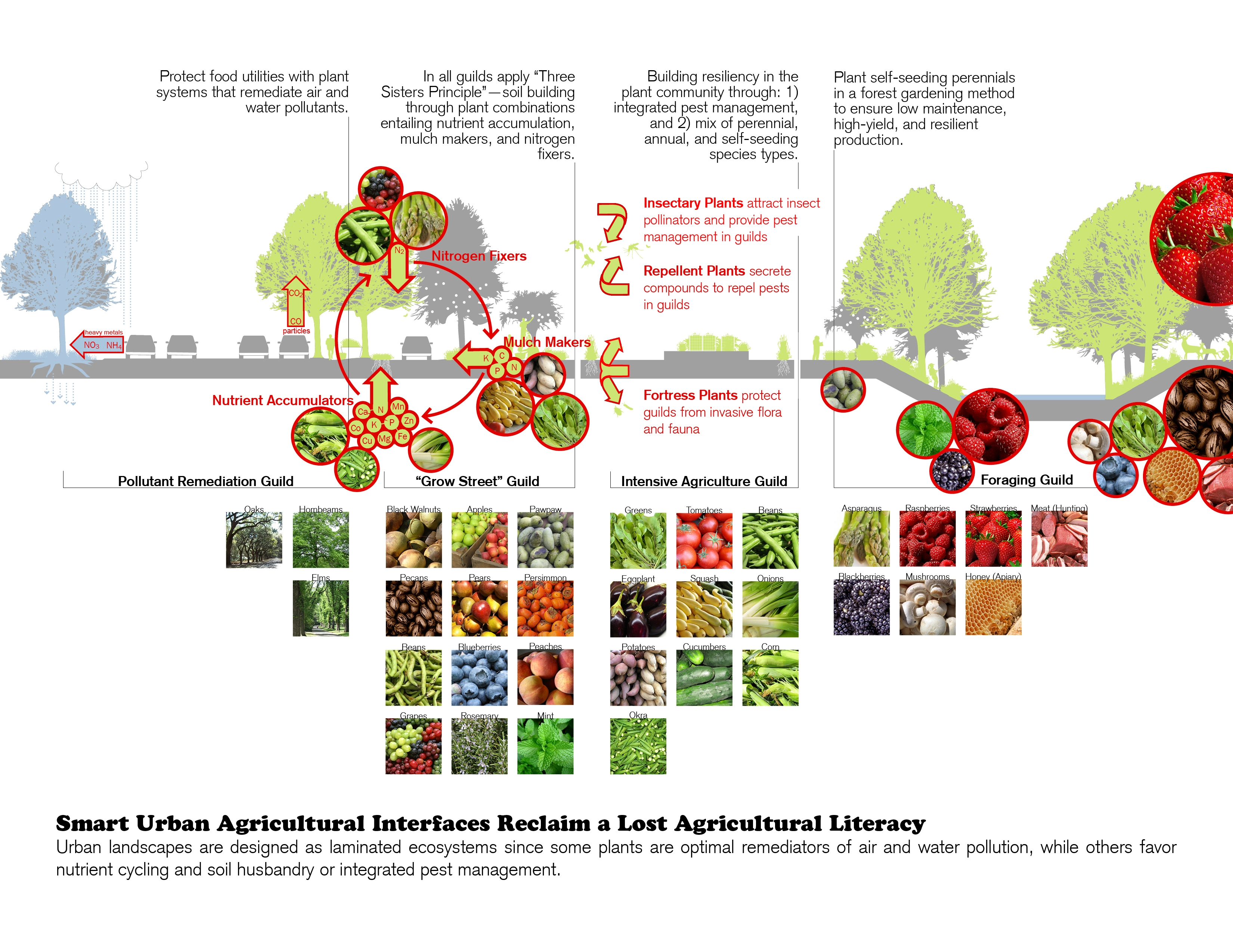
1. Develop an urban agricultural landscape network of civic food-bearing landscapes - edible landscapes - in public right-of-ways, recalling Farmington's lost agricultural heritage. This provides local food supply resiliency and security, while democratizing access to improved nutrition and healthy lifestyles. Landscapes include fruit-bearing arboretums, foraging landscapes, herbaceous container gardens, trellised vines, and espaliers ("plant training"). Urban landscapes are designed as laminated ecosystems since some plants are optionmal remediators of air and water pollution, while others favor nutrient cycling and soil husbandry or integrated pest management.
2. Provide a model context-sensitive highway design that enhances the delivery of ecological and urban services offered by SR 62. According to the Federal Highway Administration: "Context-sensitive solutions (CSS) is a collaborative, interdisciplinary approach that involves all stakeholders to develop a transportation facility that fits its physical setting and preserves scenic, aesthetic, historic and environmental resources, while maintaining safety and mobility." The plan transforms a highway into a boulevard, accomodating the town's schools and institutional and commercial sectors arrayed along the highway. A proposed local frontage system on the commercialized south edge encourages pedestrain activity.
3. Introduce public art planning to develop a wayfinding system through the expresive power of signage, building frontage, street furniture, lighting, sculpture, memorials, landscaping, and other urban accessories. Unique townscape sets produced from the recombination of ordinary elements lend structure and imageability without having to rely on buildings in the initial phases. The artistic function amplifies resourcefulness in these ordinary elements, avoiding the isolation of public art as its own discrete land use.Environmental/Social Data and Methods of Analysis
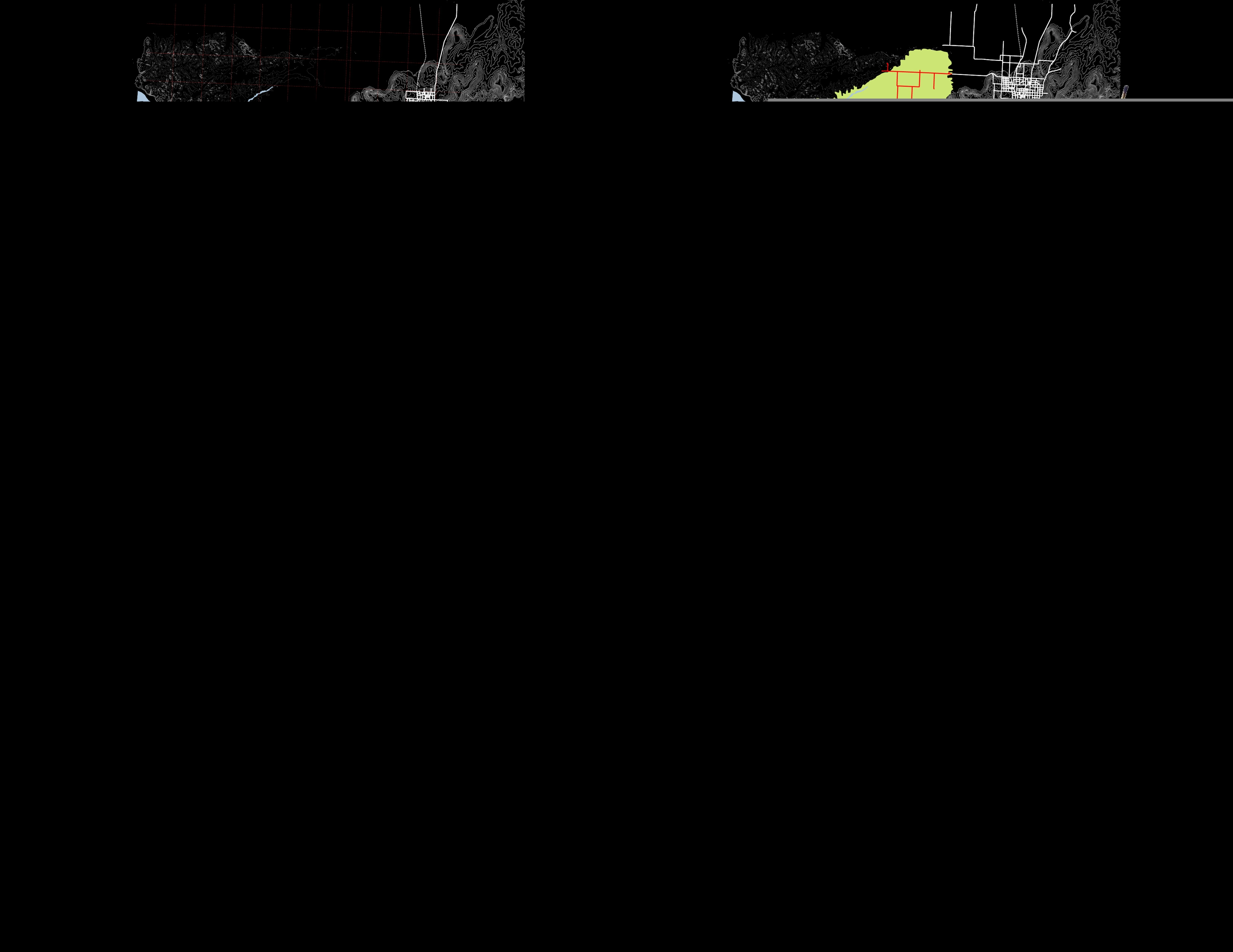
Mapping alayses chronicle Farmington's changing urban morphology as a function of its population growth and changing livelihood over the last century. Farmington was once a substantial downtown agricultural processing center in one of hte country's largest apple-growing regions, dwarfing nearby towns in importance. Now, Farmington is a bedroom community to these nearby towns, which have retained their downtown cores. Sprawling automobile-oriented patterns - high-speed commercial corridors, subdivision farms, and automobile-based retail - are addressed through sprawl repair protocols in content-sensitive highway design and urban architecture. The area's agricultural legacy prompted research and development in smart urban agricultural interfaces to reclaim a lost literacy in agriculture.
Consideration of Options and Public Participation
The project team devised a "Highway Ecology Matrix" consisting of ordinary components deployed in highway development classified according to the ascending levels of service. An ideal townscaping tool for non-designers, this matrix facilitates customization of highway segments - content sensitive design - through amenity combinations created by participating citizens. Project planning, involving community charrettes and workshops with civic groups, the school district, and the regional planning authority, was sponsored through a planning grant from the National Endowment for the Arts in their 2010 Access to Artistic Excellence program.
Role of Design
Design thinking was used to frame both a solution to the problem of the "shapeless environment" and to devise a vocabulary or syntax toward an articulated solution in incremental urbanism. Design development shows how combinations from the Smart Urban Argicultural Interfaces and Highway Ecology Matrix offer multiple corridor redevelopment solutions.
Project Implementation
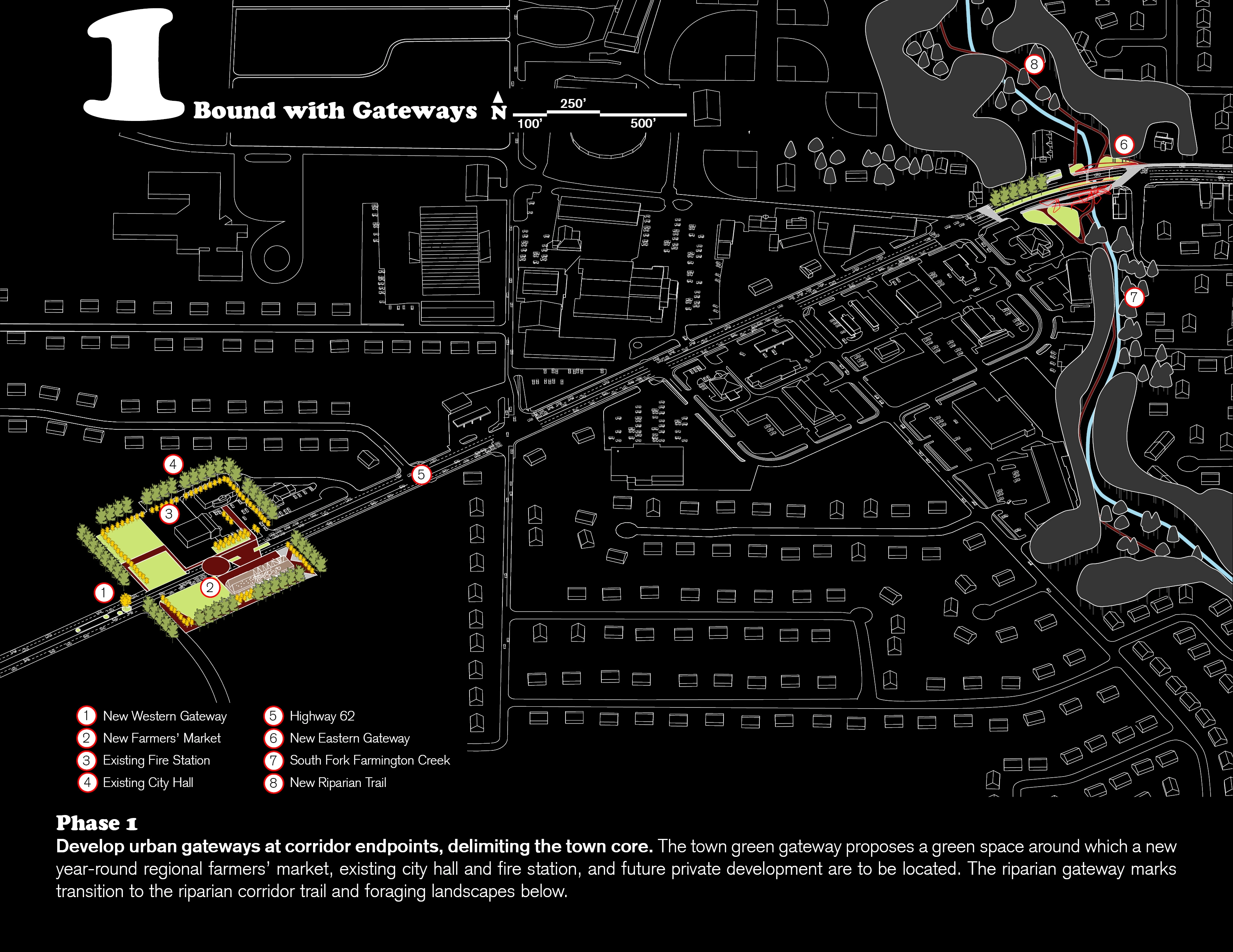
Planning results are being used to seek 2013 Transportation Facilities Enhancement funding from Arkansas Highway Transportation Department (AHTD) to implement Phase 1, including improvements to the riparian corridor. Farmington is currently in discussions with property owners abutting the highway to acquire property for development of the town center.
Project Administration
The Farmington City Manager, assisted by planning staff from the Northwest Arkansas Regional Planning Commision, will be charged with executing the proposal, particulary in working with the Arkansas Highway and Transportation Department to implement context-sensitive highway practices. Local citizen clubs are fundraising to implement non-highway portions of the townscape.
-
Lead Designer
University of Arkansas Community Design Center (UACDC)Landscape Architect of Record
Christopher Suneson, ASLAUACDC Staff
Stephen Luoni, Director, Assoc. AIA
Jeffrey Huber, Assistant Director, AIA, LEED AP, NCARB
Cory Amos, Project Designer
Peter Bednar, Project Designer
Katie Breshears, Project Designer, AIA, LEED AP
Linda Komlos, Administrative SpecialistUACDC Students
Tyler K. Cukar
Caleb J. Lowery
Nicholas J. Pierce
Rebecca RoarkSponsor
National Endowment for the Arts
Advertisement
Related Awards
Award of Excellence, ANALYSIS AND PLANNING
Rethinking Taj Heritage Corridor: A River as Historic Connection
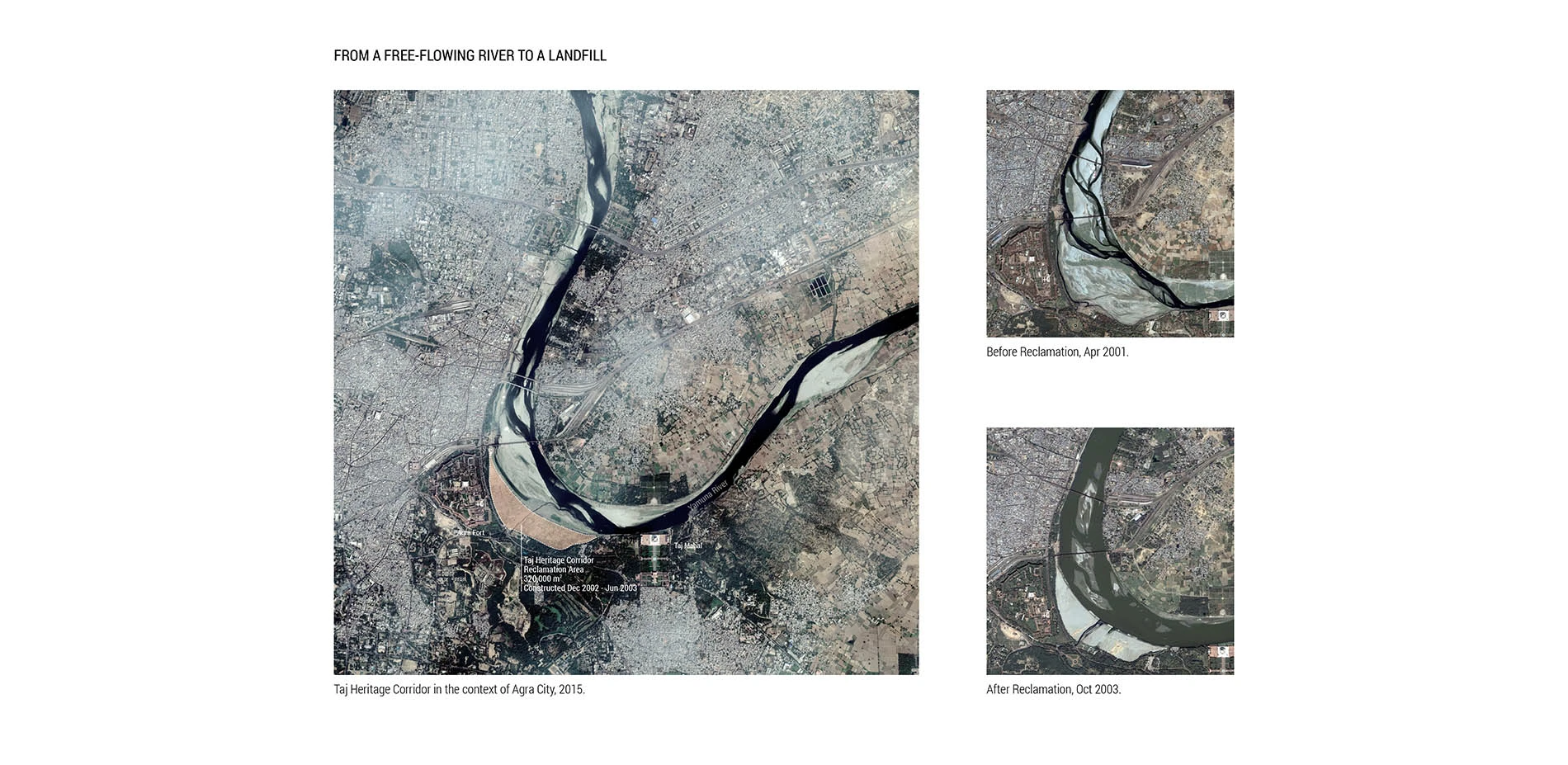
Locates between Taj Mahal and Agra Fort, this proposal on Taj Heritage Corridor aims to reestablish the image of riverfront that was destroyed during the problematic reclamation project in 2002-2003. By creating a recreational water treatment canal along the original river bank, a landscape urban infrastructure is proposed to visually connect the city's scattered historic riverfront monuments and create public space for both tourists and local community. With a full respect of the silently mi