
.webp?language=en-US)

Operative Platform
Hansol Kang, Student ASLA

-
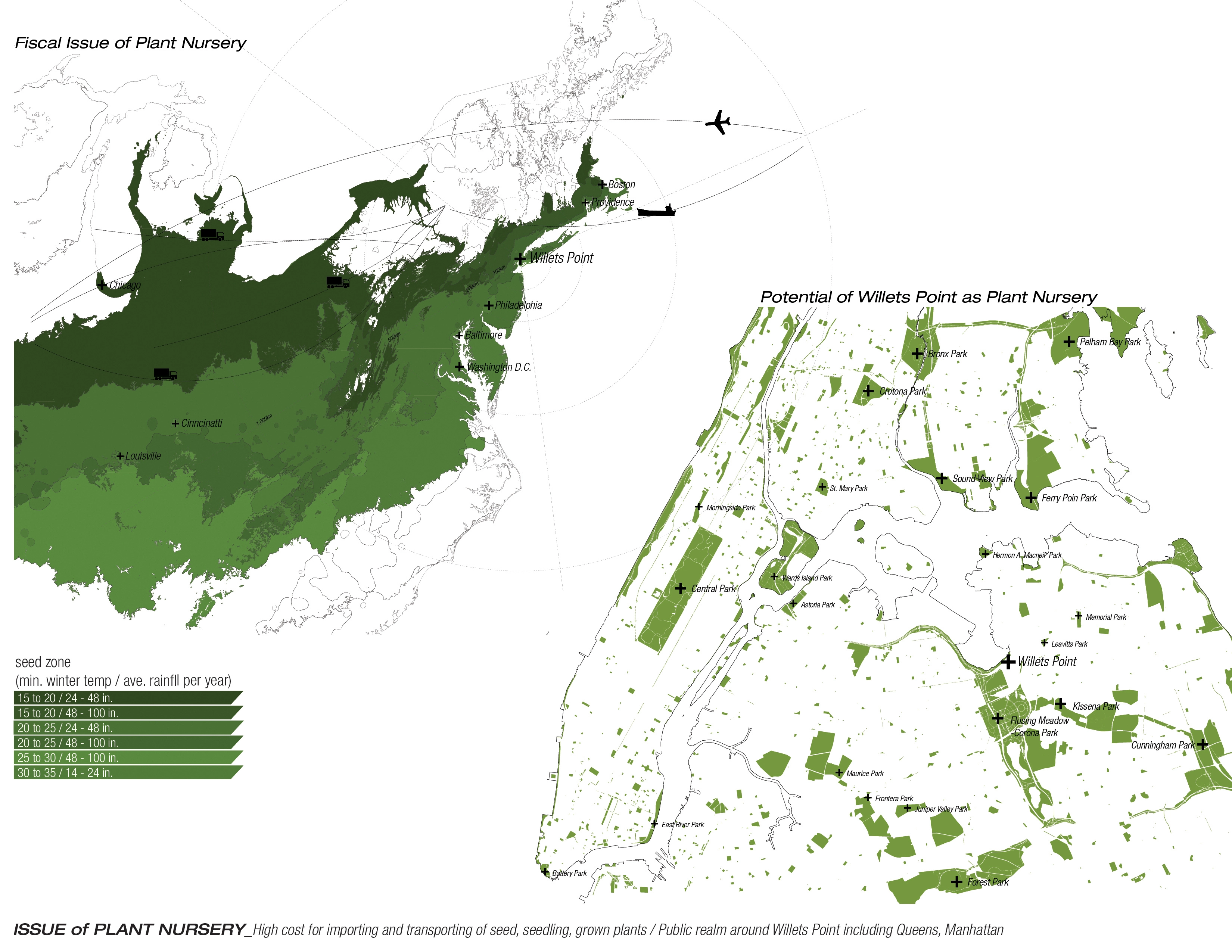
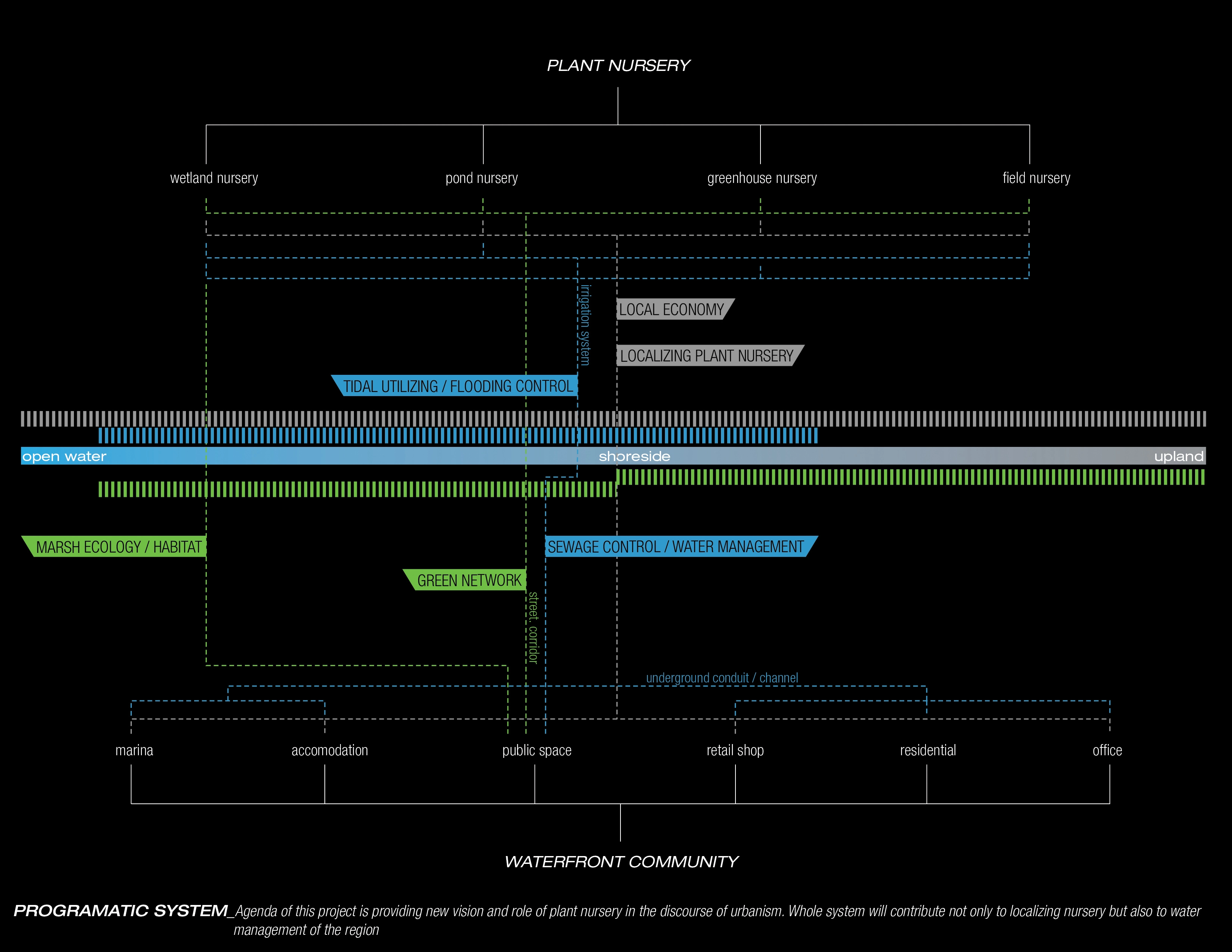
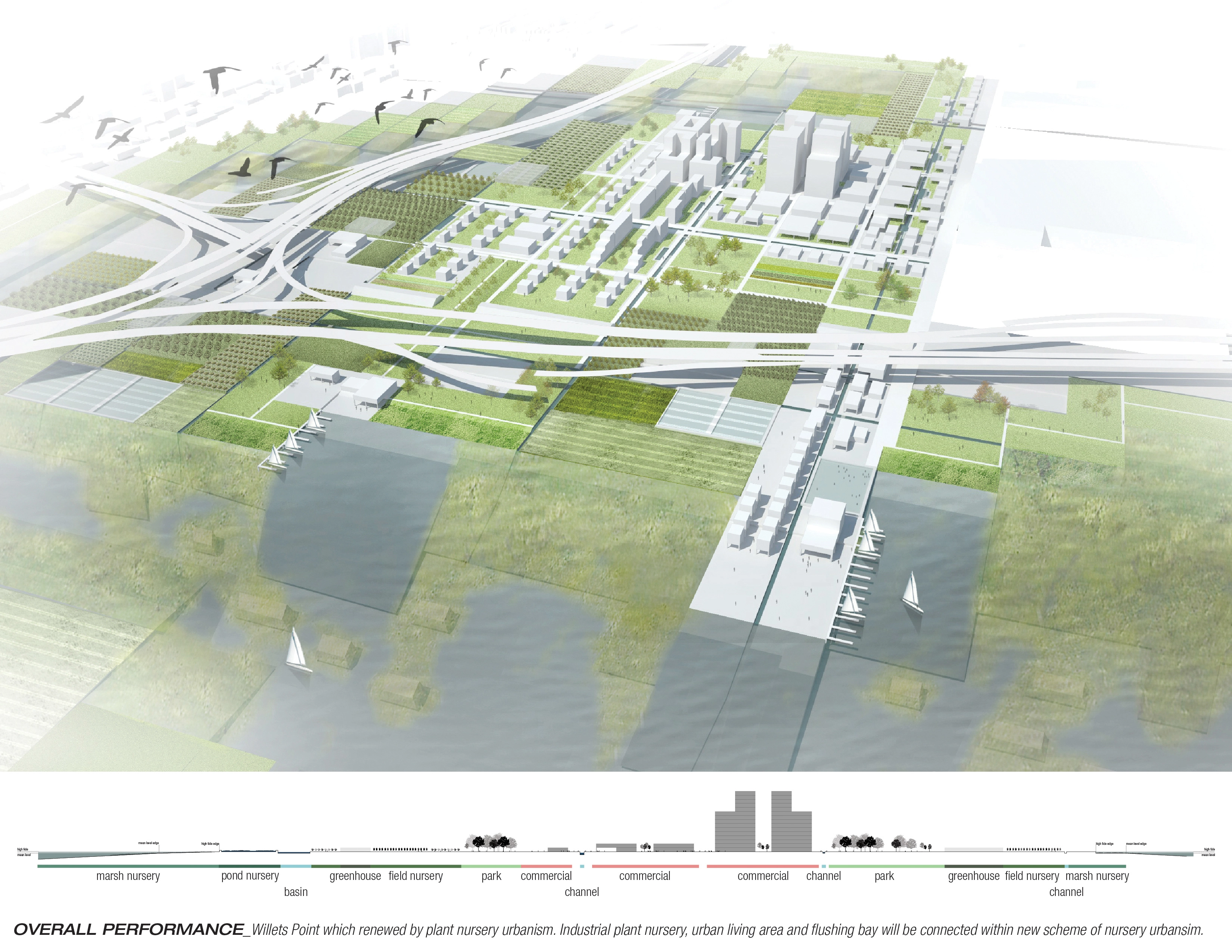
The project provides a vision for an urbanization process that integrates plant nurseries operations and practices as its main structuring system. The project aims to project a novel mode of urbanism that is framed by a productive ecology and integrates a more systematic proposal for a time based dynamic urbanization process. Way to reduce the cost of plant nursery operation and to reframe hydrologic system of Willets Point will be envisioned within this project, the Operative Platform.
-
Operative Platform can be situated in close relationship between landscape architecture and urban design. Under the flow of interdisciplinary, landscape architecture stands at the very critical moment, and tries to fulfill new role in whole design field. This project also can be read as a effort to share that discourse and reinterpret contemporary flow with its own manner.
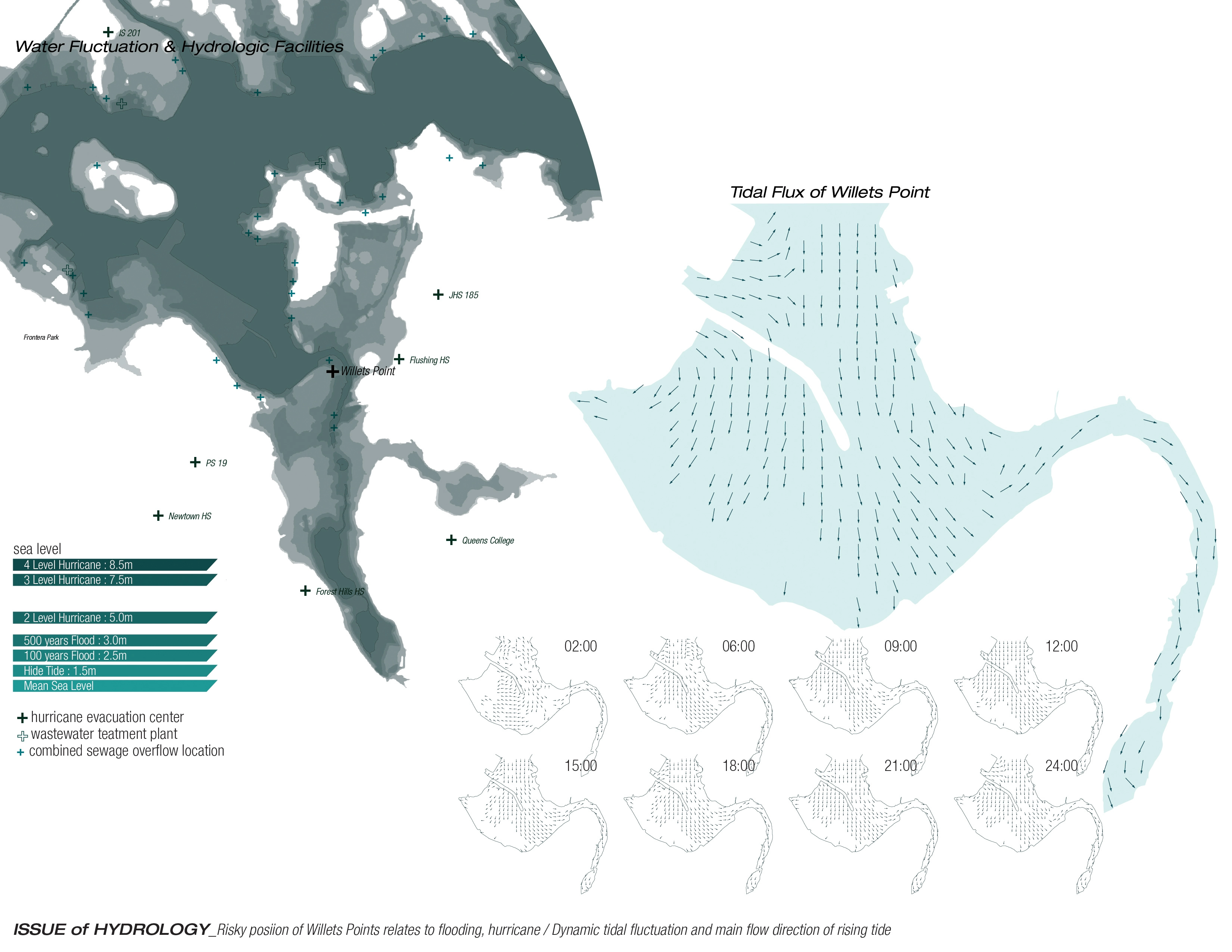
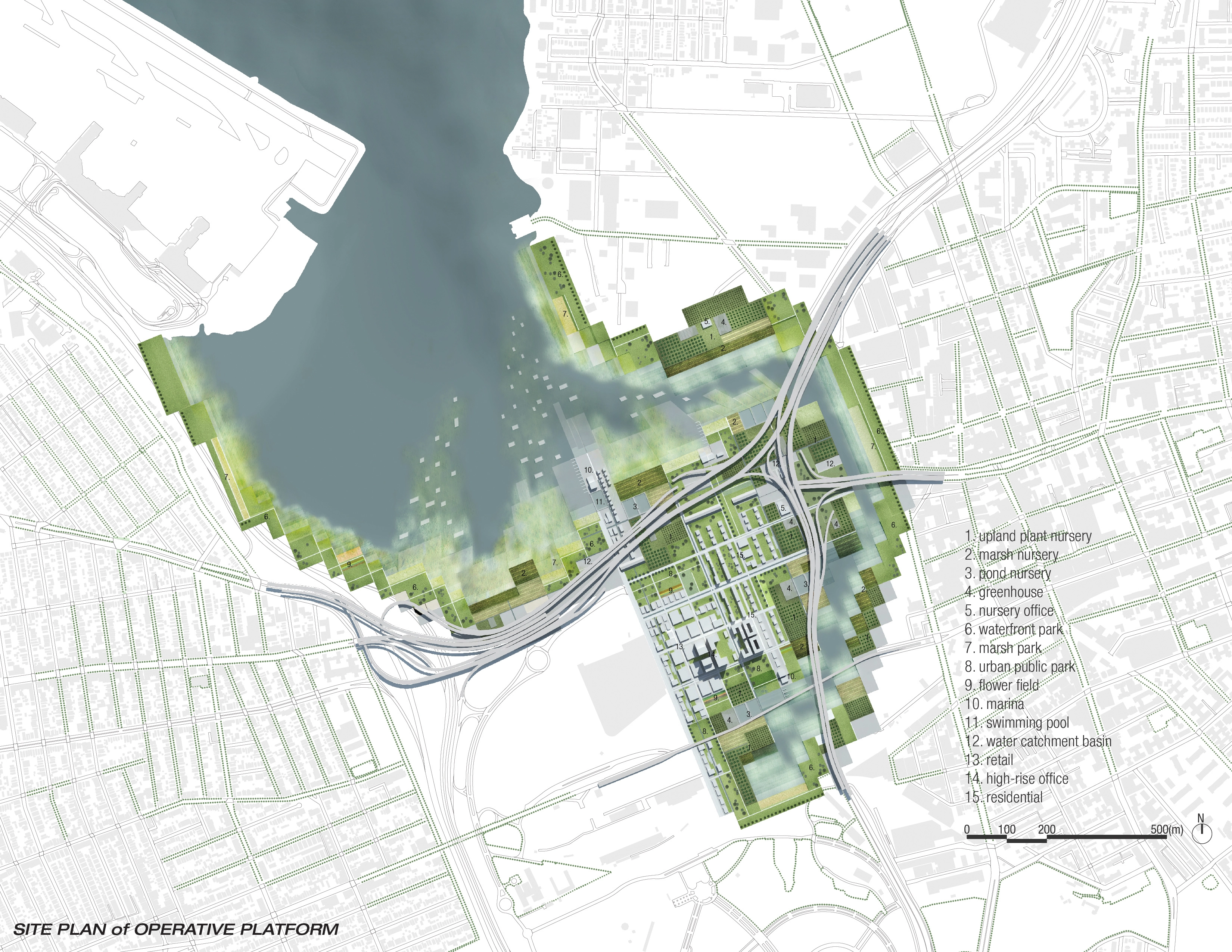
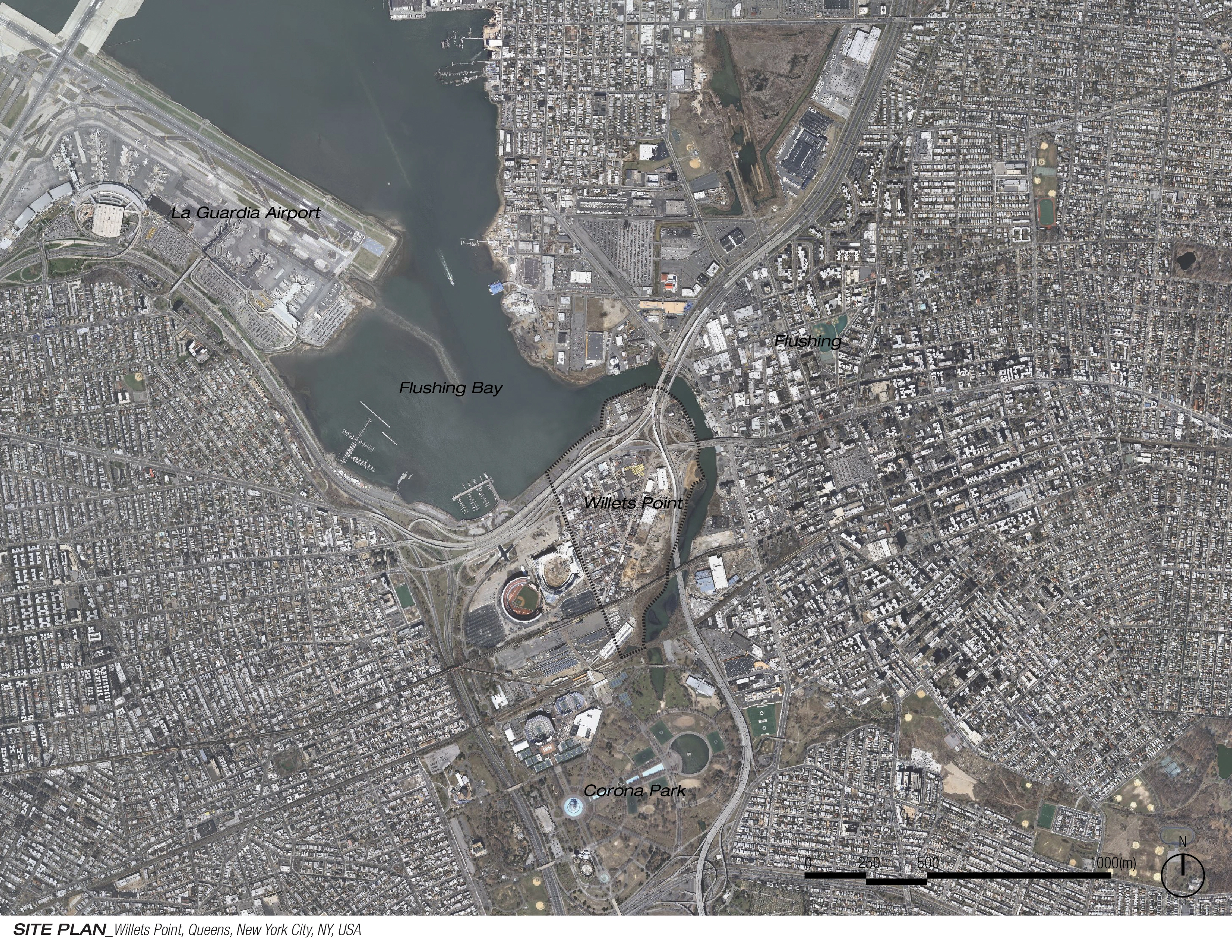
Site is Willets Point, Queens, NY and size of that is about 320,000 square meters. Near the site, La Guardia airport is located on northern part, and Corona park meets with the southern part of the site. Scope of this project is not confined only within the Willets Point but span out to other side of shoreline (to shore of Flushing and of La Guardia airport). The project is informed by a number of obstacles associated with the site. Willets Point’s estuarine hydrology presents a major issue for the site, if it is to be considered for redevelopment and integration into the adjacent Flushing and Corona neighborhoods. The site is currently vulnerable to constant flooding and storm surge. Furthermore, the site is a predominantly industrial site and presents little public as well as ecological value. By reconsidering the nature of the site’s utility as well as reframing the urban system in relation to its dynamic tidal flux, a new nursery urbanism will perform and operate in a manner that works with the hydrological as well as programmatic transformations projected for the site, while simultaneously assembling new urban experiences that will enrich the public and private domains of Willets Point.
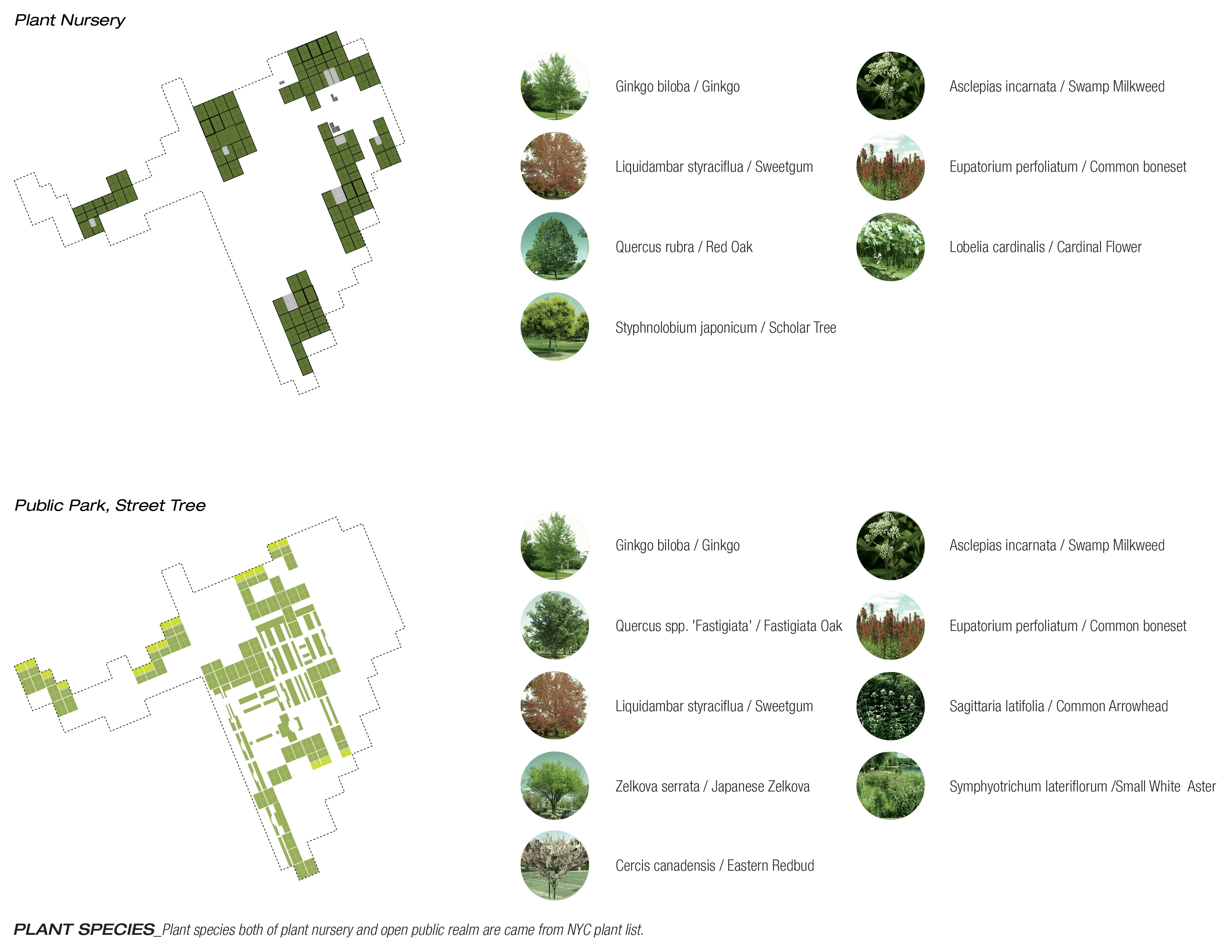
In other words, the site presents an opportunity for integrating plant nurseries within the urban environment, transforming the dominant use from a contaminating industry to a productive ecology that will allow for a more efficient and localized mode of rearing urban trees that could be managed to cultivate more hardy tree stock while also potentially providing some remediation for the site. The high costs and inefficiencies associated with transporting seed, seedling and grown plants from remote plant nurseries will be addressed by a more localized urban nursery that would also provide the site with an immediate productive value prior to its impending development. While tree nurseries, structure the redevelopment of the site and bring an immediate economy and value to the site, the projections for future stages of development still retain significant portions of the productive ecology within its urban environment. Besides the performance, economic and ecological benefits, this also provides the site with a distinct character and urban experience that frame the projected lives of the sites inhabitants.
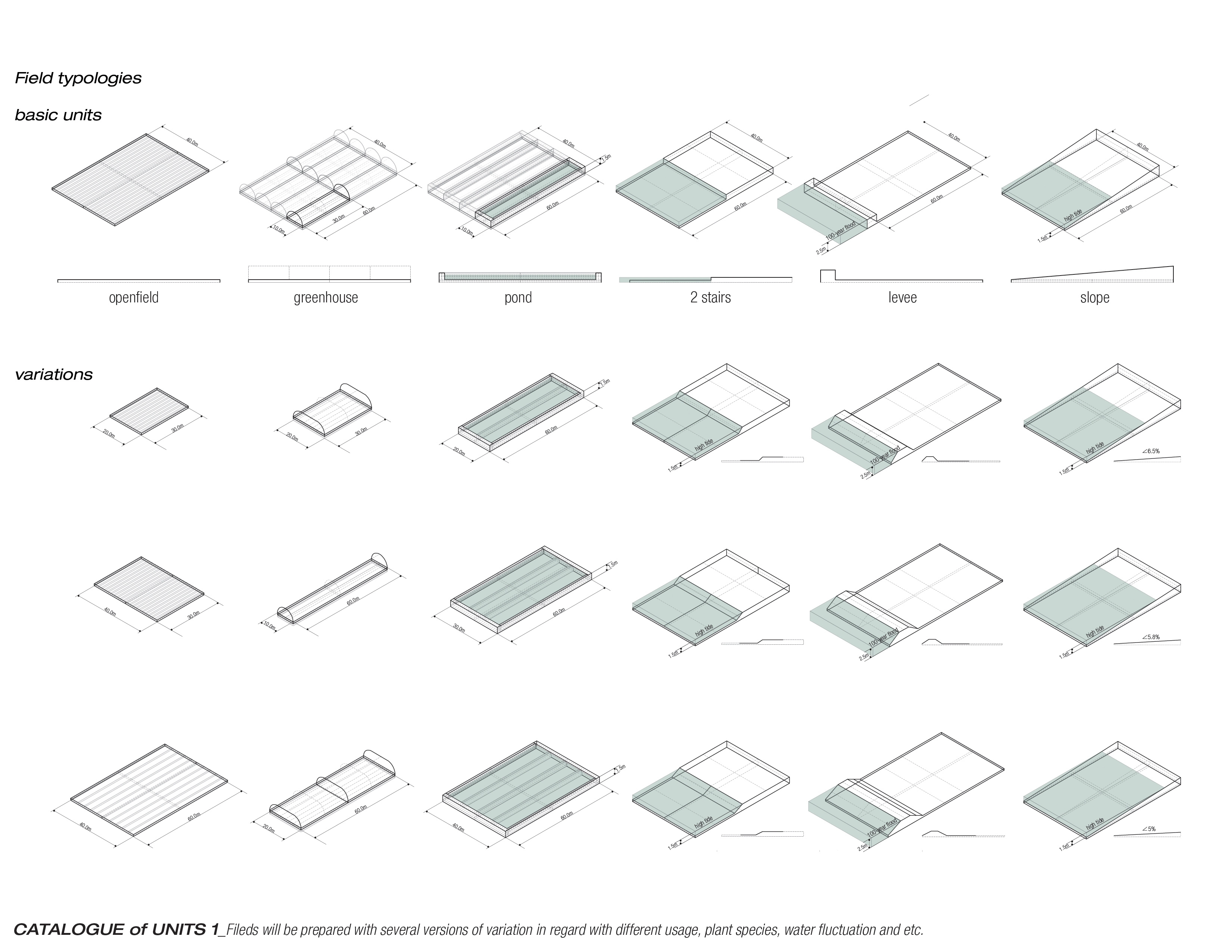
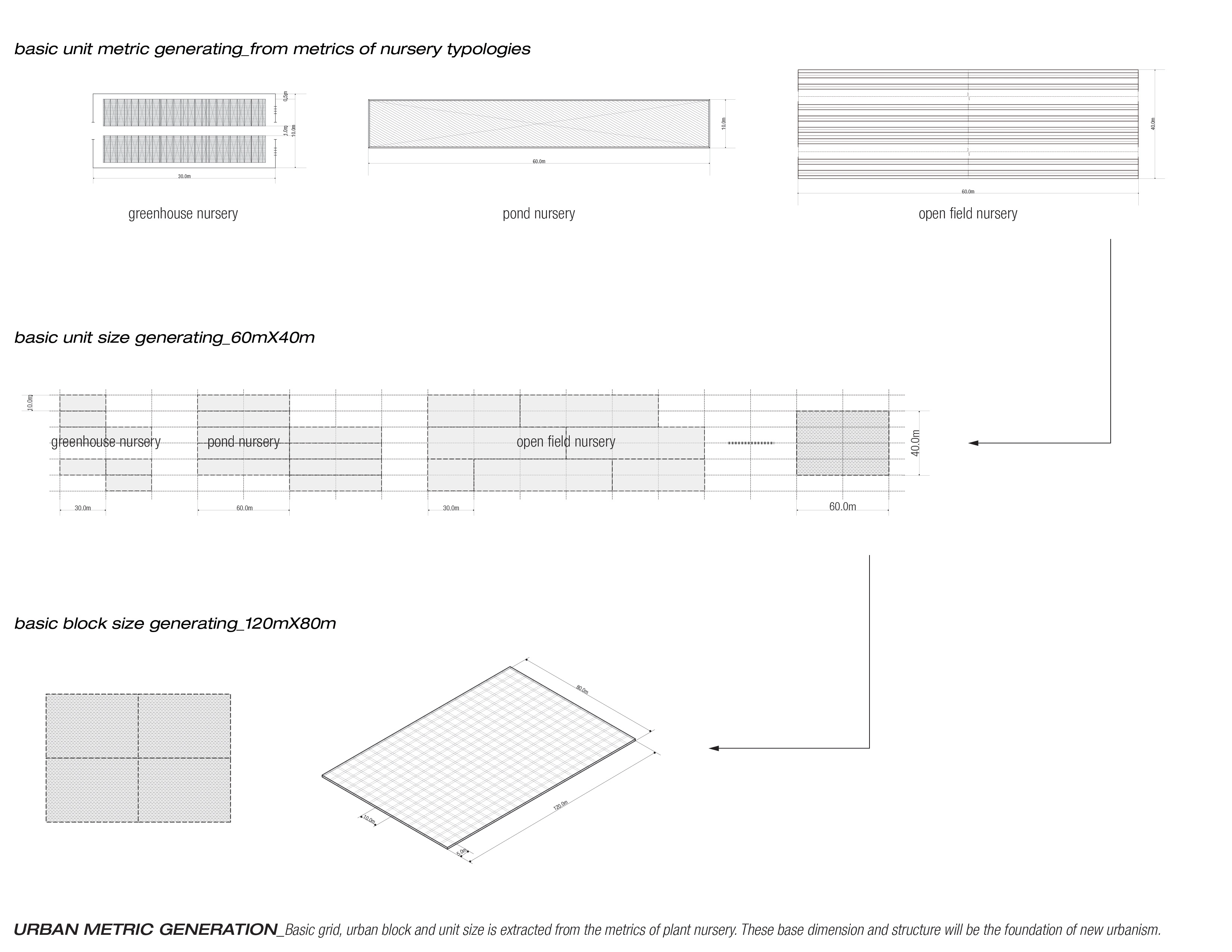
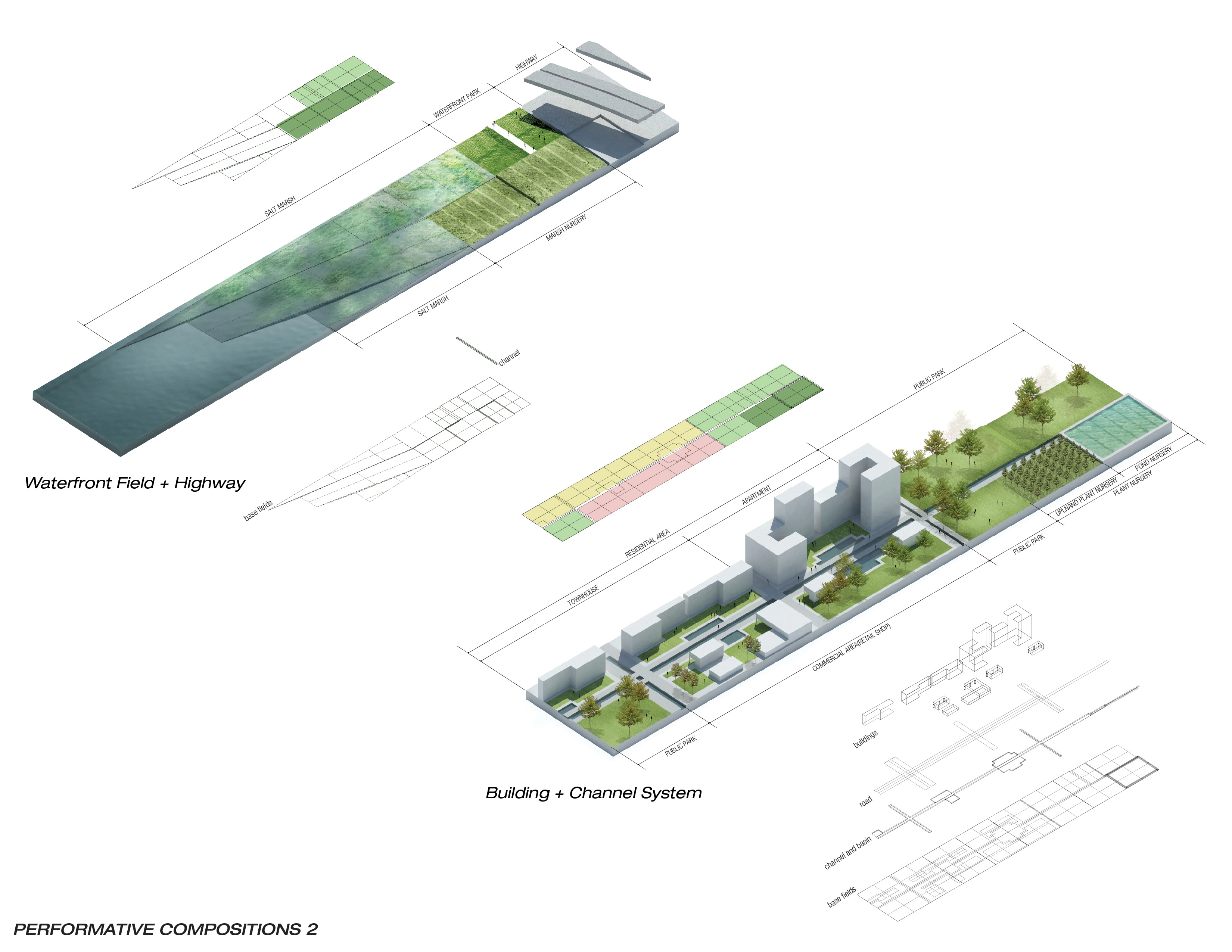
To integrate two starting points what I mentioned above, plant nursery and hydrologic system, the urbanization system comprises a number of typologies based on several nursery types(open field nursery, wetland pond nursery and greenhouse nursery with consideration of water fluctuation and different species) and urban building types(with piloti and terraced structure) informed by the surrounding neighborhoods and adapted for a waterfront site. The overall grid and block are generated from the metrics of a nursery field. The systems are also informed by a combinatorial protocol between the fields, buildings and landscape infrastructure that are deployed throughout the site and adapted to existing site conditions. These can be formulated into four critical combinations that guide the relationships between:
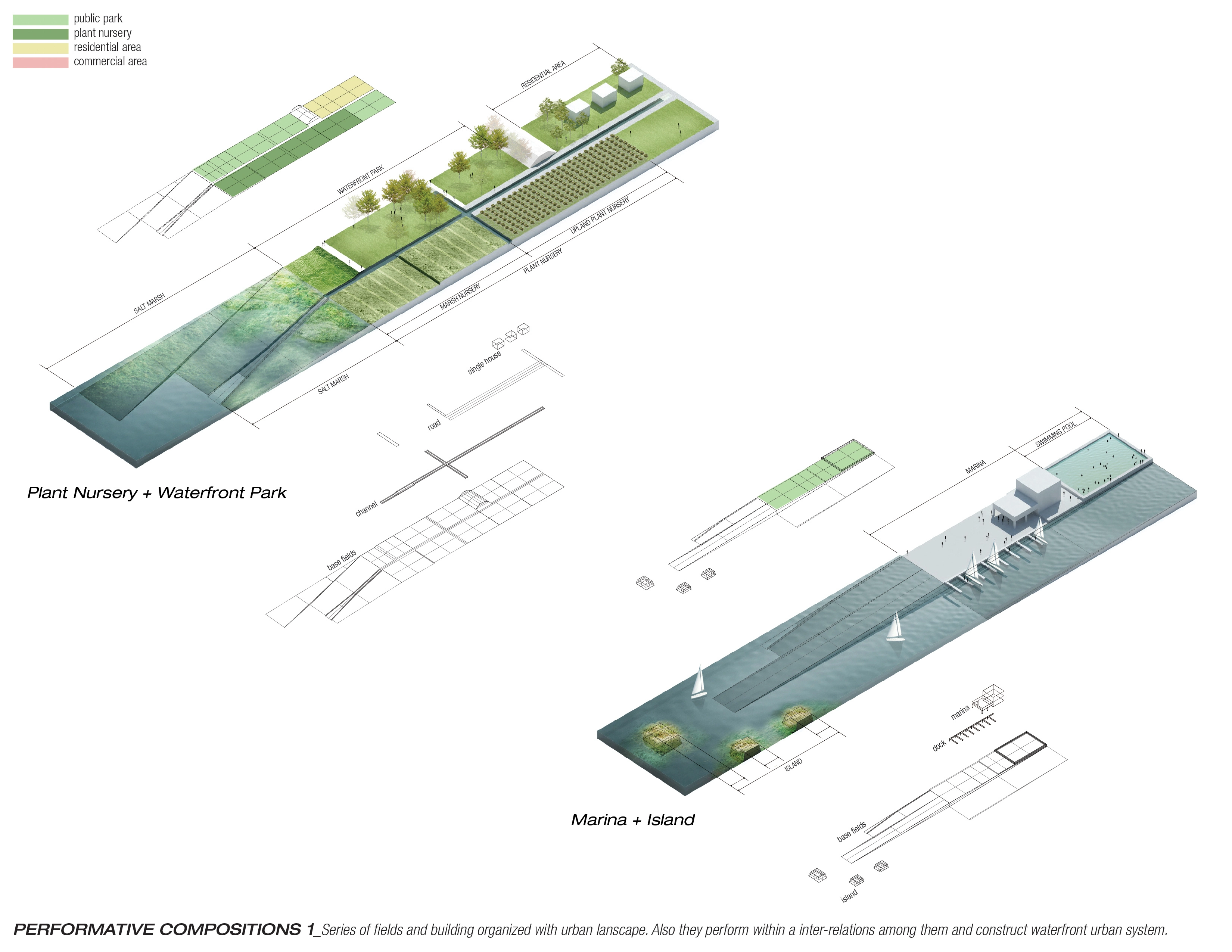
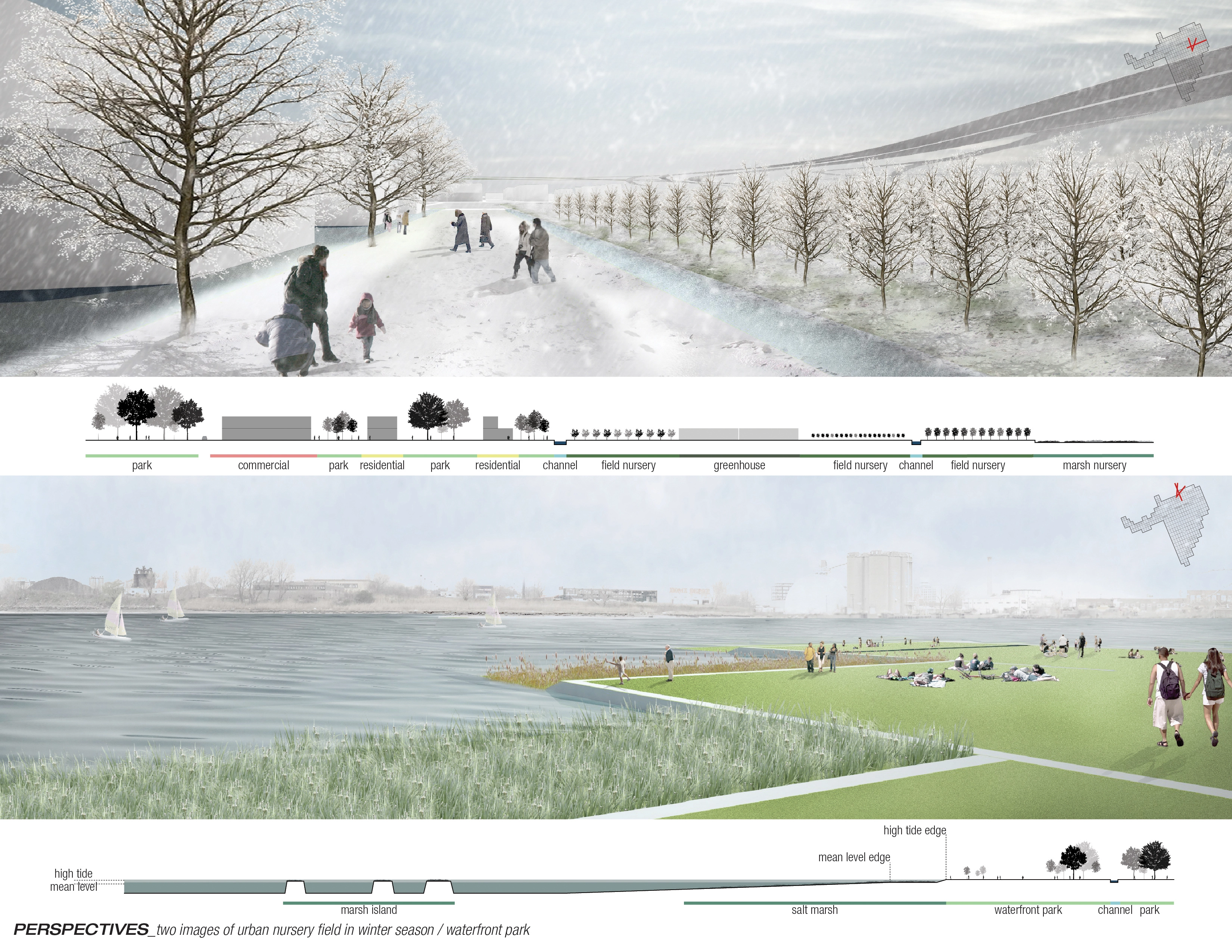
- The urban public realm, nursery fields and low density houses along the shoreline.
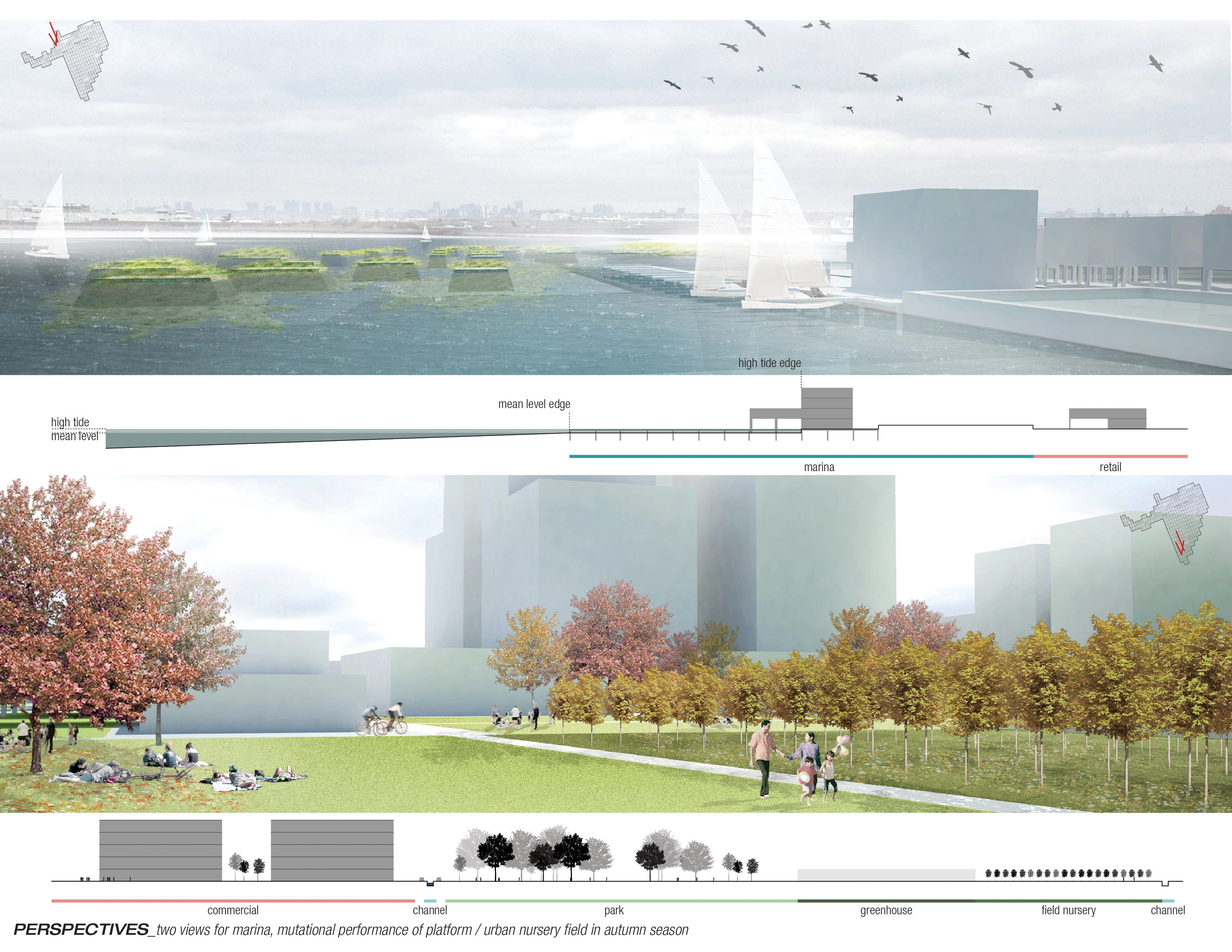
- The marina, and a dynamic relationship between field and tidal pools.
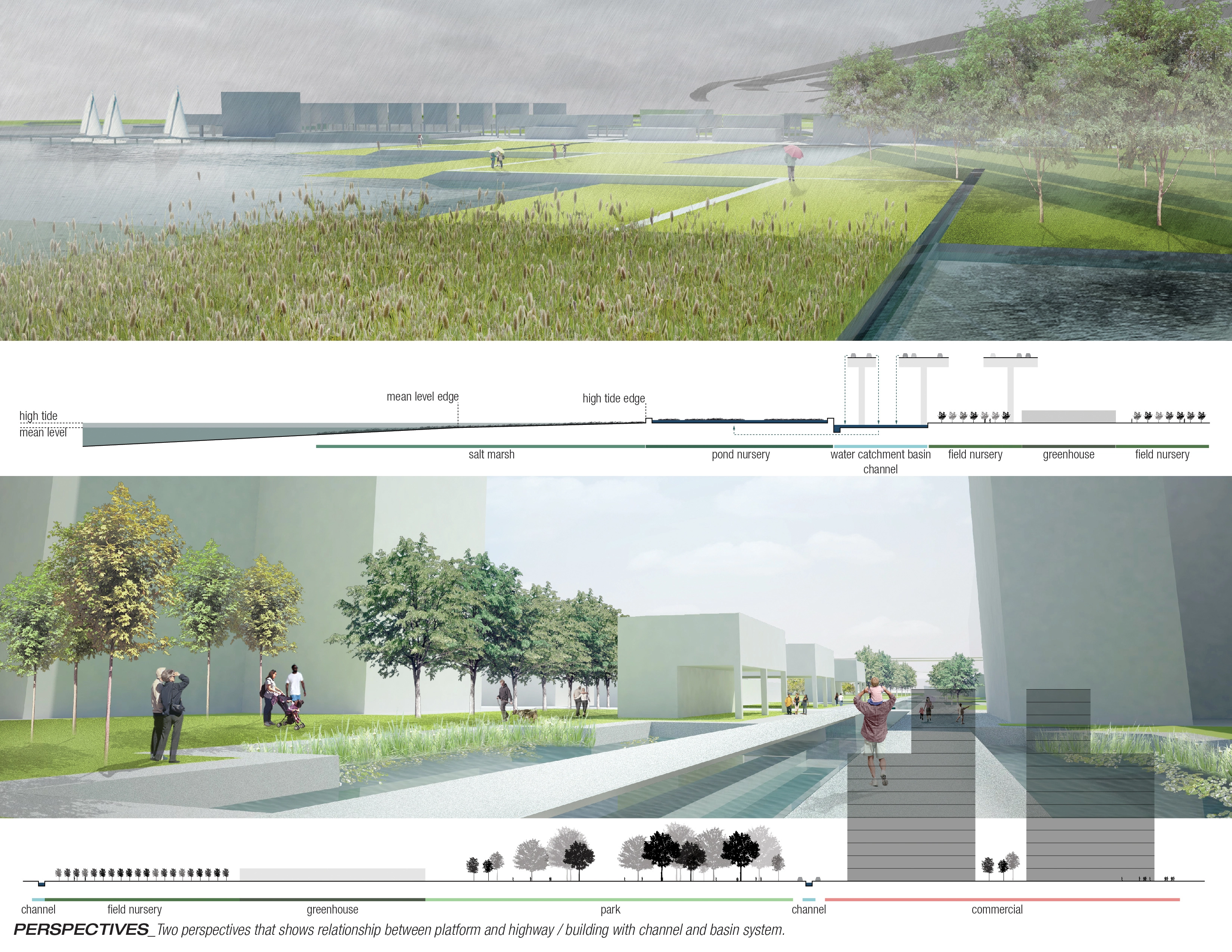
- The fields and the dominant existing infrastructures of overhead highways.
- The residential and commercial developments with the nursery fields and water channels.
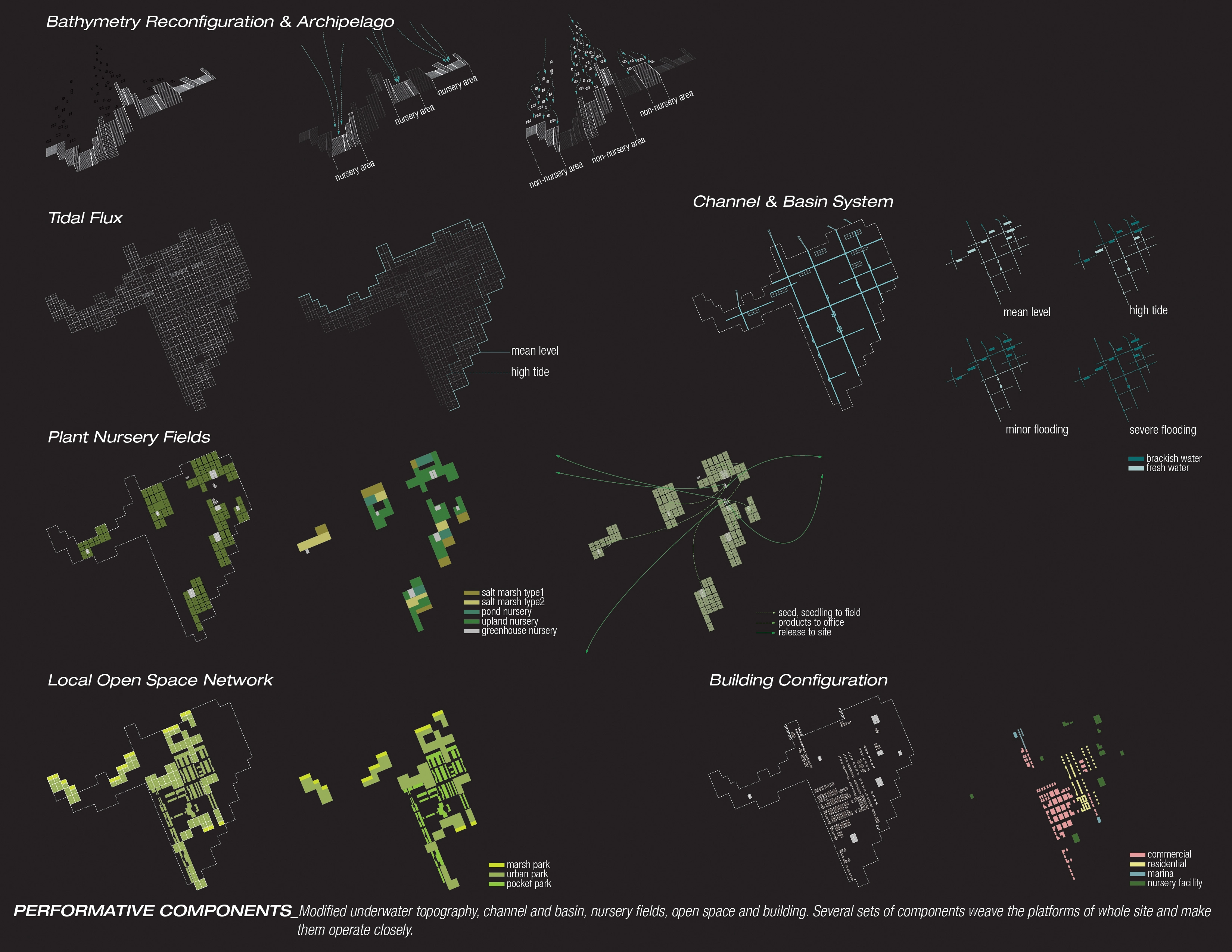
The critical components of the system include:
- A modified bathymetry and series of terraced platforms along the shoreline that are engineered to control the water direction and facilitate current flow. Each platform has its own specific morphology and configuration to redefine the shoreline and high tide edge condition. The new shoreline will reconnect a larger regional system of green and water infrastructure that traditionally ran through the site.
- Channels and basins will operate as an integral part of the in site water management, including sewage treatment, flooding control and irrigation (brackish for salt hay cultivation and treated storm water for nurseries).
- Nursery fields. Different platforms and field parcels will accommodate different types of nurseries and these are orchestrated in a systemic relationship.
- Green public spaces and buildings have different usage and program that contribute to reorganize urban frame of the site, Willets Point.
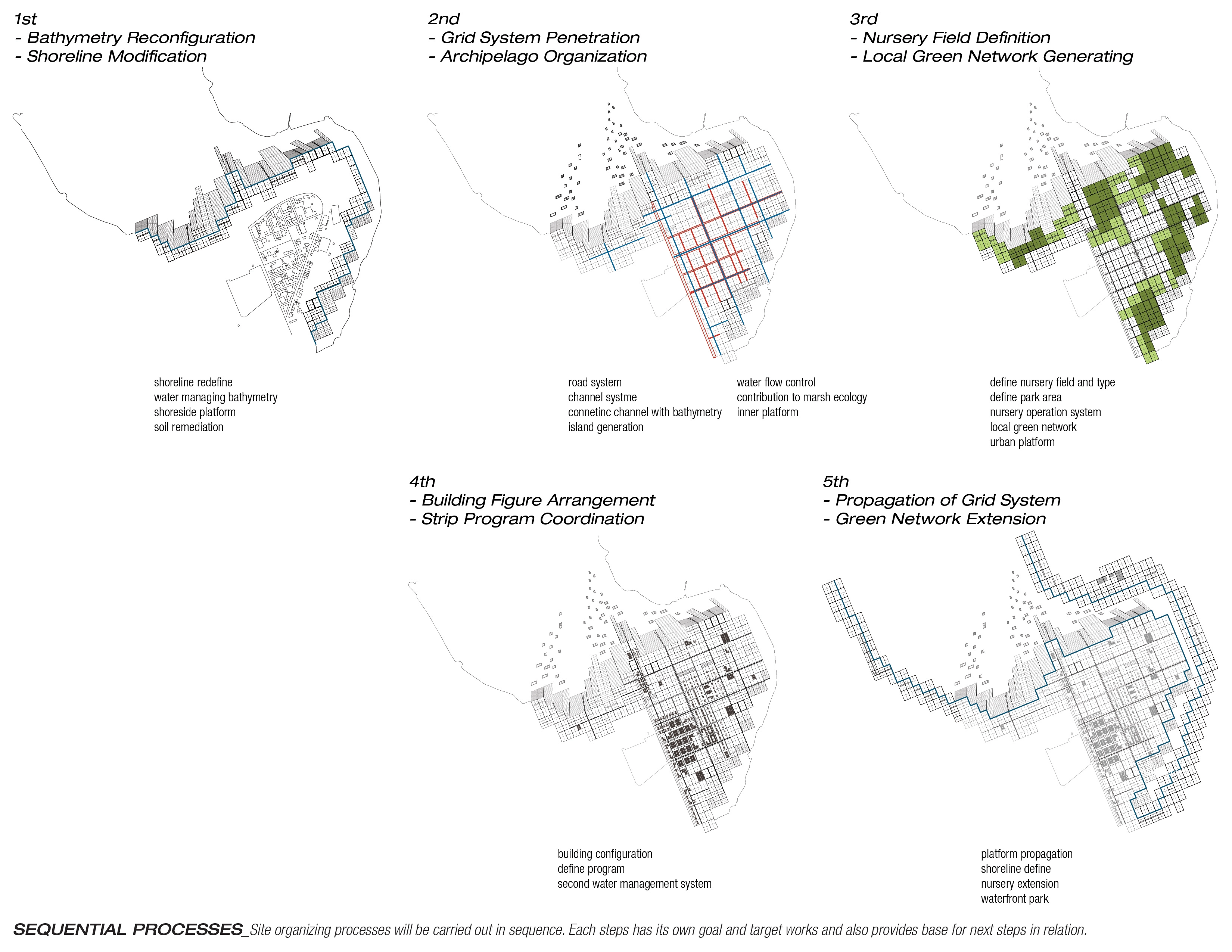
The site transformation require some critical phases, however the subsequent development will be flexible and open to market dynamics. These critical phases start with the shoreline and bathymetric reconfiguration. The existing road system of the site are then renovated and extended and subsequently the platforms and channel systems will be implemented. The subsequent distribution of tree fields and buildings are more flexible in their phasing but are guided by considered relationships.
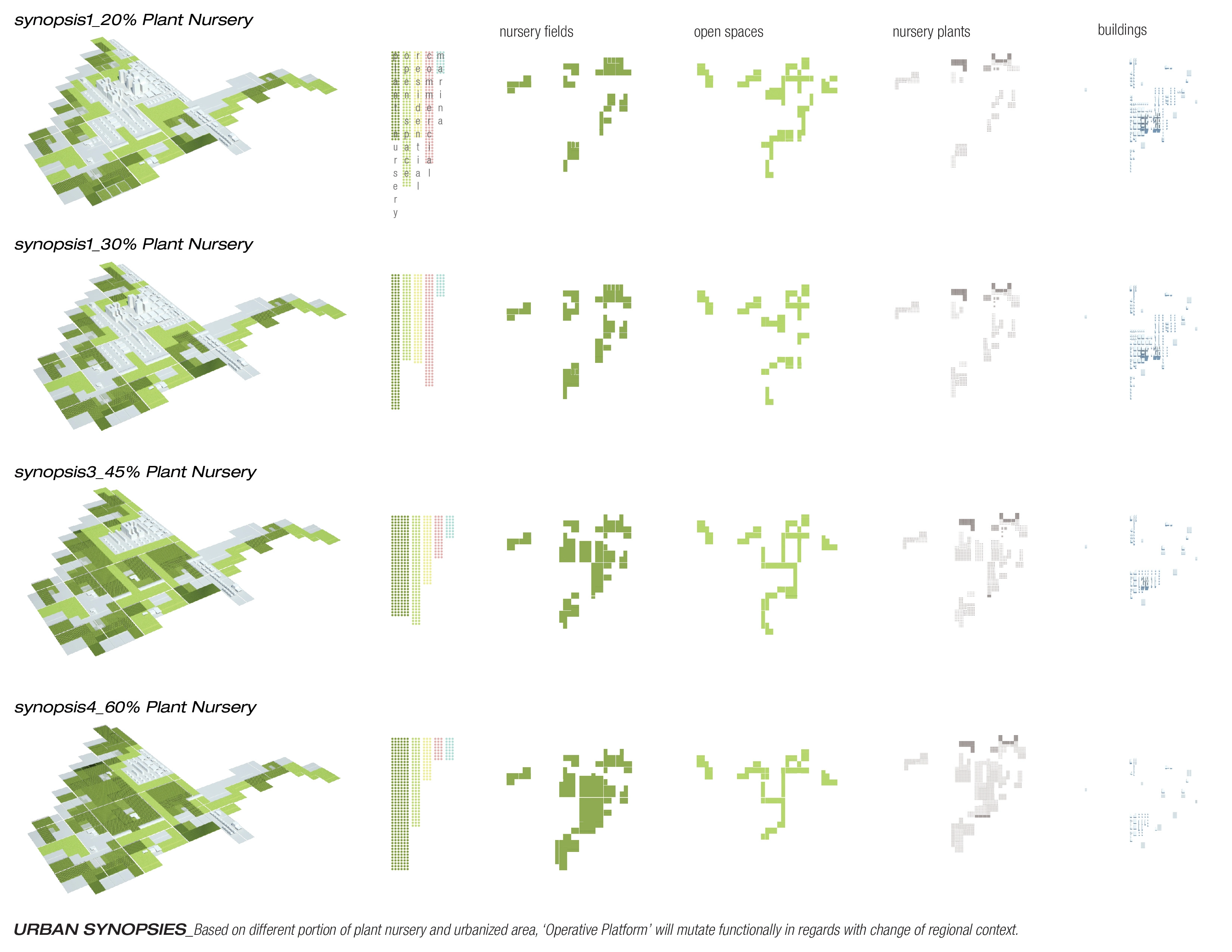
Several images show the way to grab the new urbanism made by ‘Operative Platform’. With those views, we can get a general picture of renewed Willets Point, relationship between fields and highway (one of the dominant existing infrastructure), building with channel system, waterfront park, marina and newly defined inter-relation between urbanized are and plant nursery. Lastly, 4 synopsises based on different portion between plant nursery and urbanized area shows various mutations of operative platform. With those differentiated scenarios, this project prepares several stories and operates functionally that can respond to regional change.
-
Advertisement
Related Awards
Award of Excellence, General Design
A Floating Forest: Fish Tail Park in Nanchang City
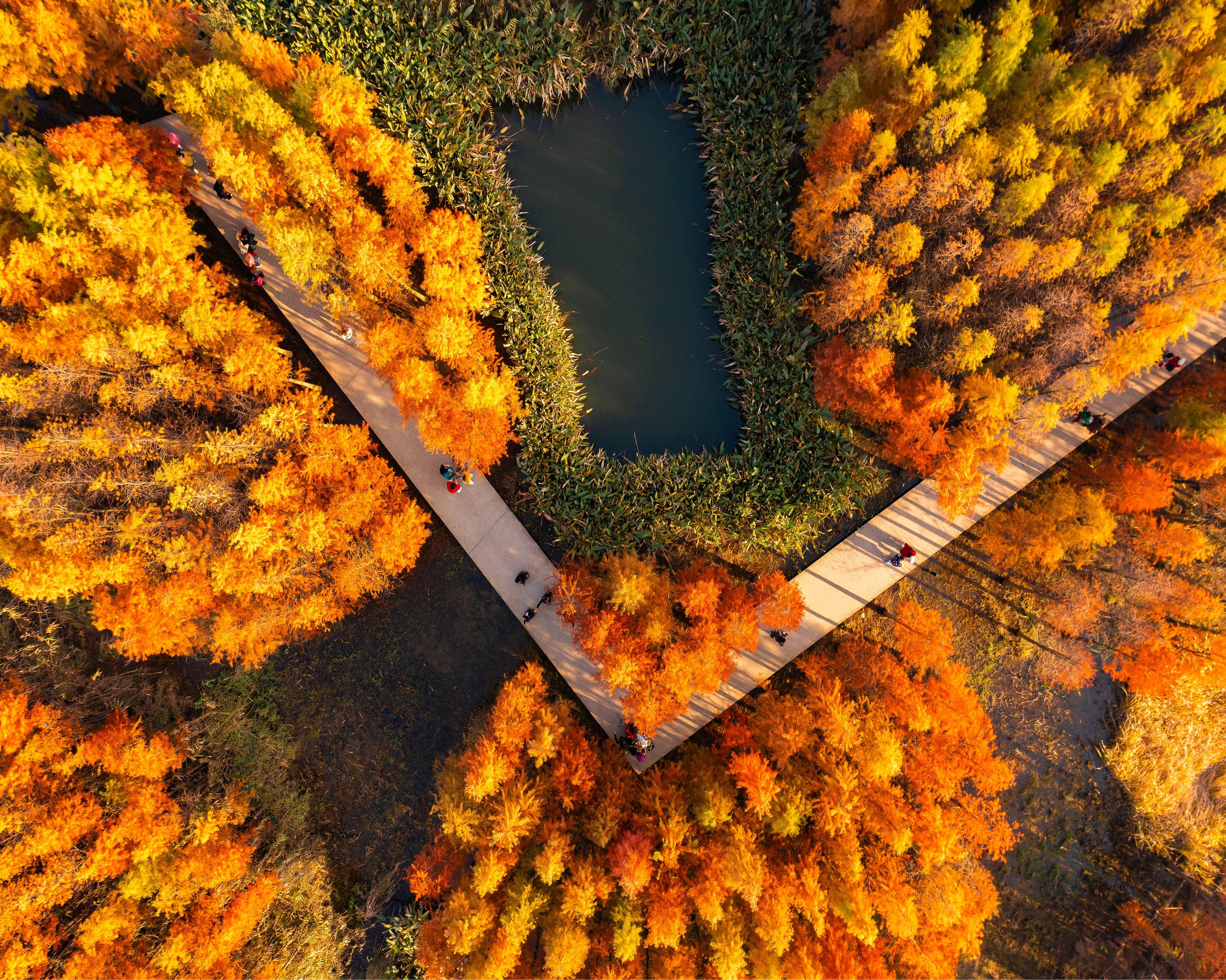
In Nanchang, within the Yangtze River floodplain, we revitalized a heavily degraded 126-acre landscape into a floating forest that manages stormwater, restores habitats, and provides diverse recreational spaces—all within a limited budget and a short timeline. This innovative urban nature model strengthens the district’s identity and spurs surrounding development. Fish Tail Park offers a scalable solution for flood-prone regions, seamlessly integrating flood resilience, ecological restoration