
.webp?language=en-US)

Bayou Commons: A New Urban District on Houston’s Buffalo Bayou
Victor Perez Amado, Student Affiliate ASLA; Alex Atherton, Student Affiliate ASLA; Anna Cawrse, Student ASLA
-
Bayou Commons is downtown Houston’s first residential district celebrating cultural diversity and urban lifestyle. The proposed development represents a virtual collaboration by students of landscape architecture, architecture and real estate finance from two universities located 2,000 miles apart with 100% of the work completed remotely. The four-phased development integrates aspects of urban restoration ecology, cultural narratives, and demographic analysis balanced with complex urban economics including public-private partnerships, absorption, and various financial rates of return.
-
Context
From 139 submissions across 64 universities, the proposal is the Grand Prize recipient of the 2012 ULI/Gerald Hines Urban Design Competition, completed by a multi-disciplinary team representing two universities. The proposal grounds complex issues of urban design with real world financial implications; thus, requiring innovative, collaborative, and most importantly, feasible solutions. The project utilizes landscape architecture as a key mediator by bridging the disciplines of design, planning, real estate finance, and marketing.
The project site, situated adjacent to Buffalo Bayou, is a 26-acre parcel that currently holds a USPS regional distribution center. Many view the site as possessing the capability to catalyze further downtown revitalization. In 2009, the parcel was one of several hundred USPS nationwide properties put up for sale to offset the federal agency’s financial losses. Thus, the competition challenges student teams to develop a comprehensive proposal for a fictitious entity, the Central Houston Foundation (CHF), who acquired the option to purchase the site. The team’s submission would ultimately integrate over three million square feet of development, including 1,350 residential units, in a thoughtful, phased, and logical approach.
The Invisible Resource
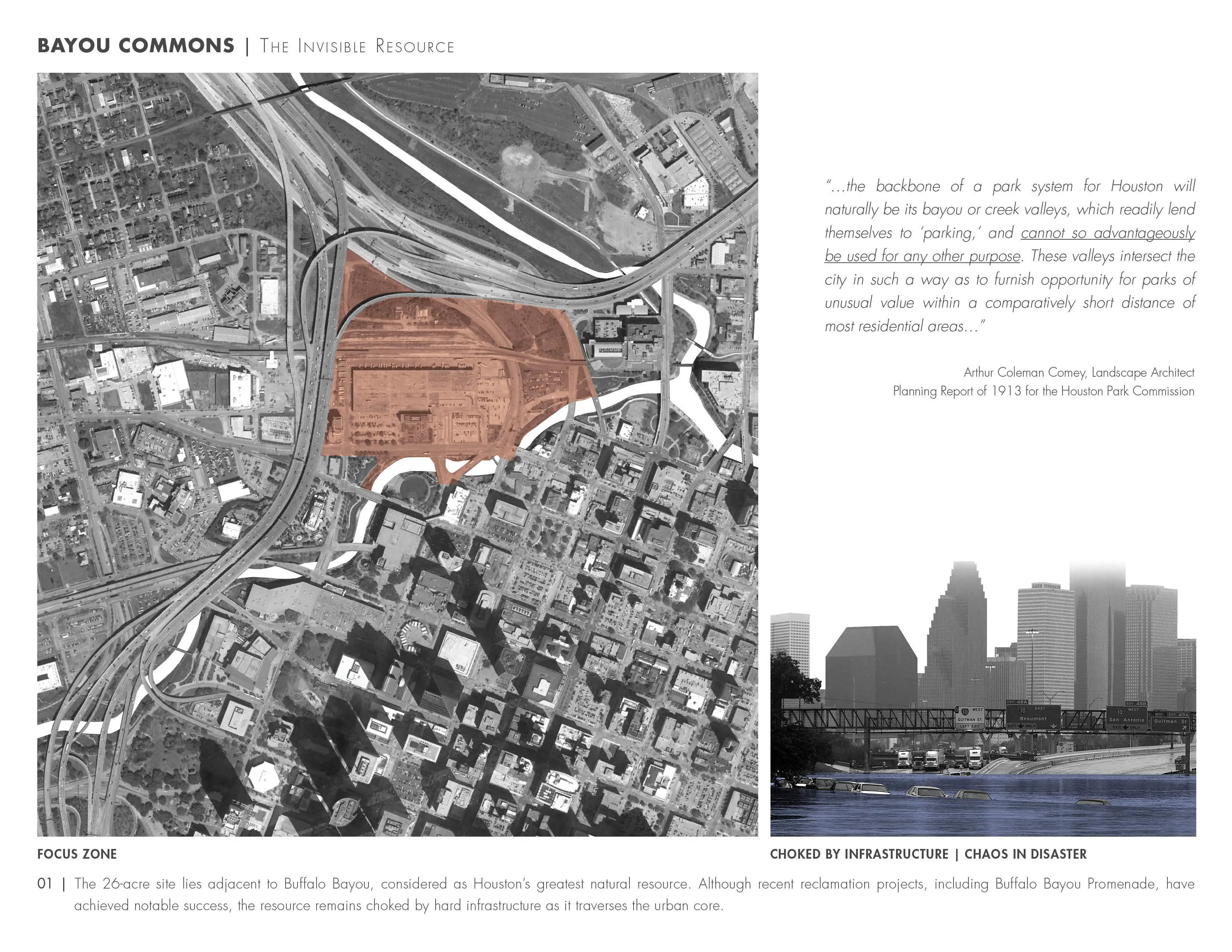
Many of our world’s greatest cities are characterized by the water body they rest upon. Whether an ocean, lake, river, or bayou, these natural resources have served as a physiological feature of urban lifestyle by providing cultural, ecological, social and economic value to the city’s historical development. Under the threat of mass flooding in the 1930s, many urban rivers were channelized and avoided in order to reduce potential risk. Today, while many of these rivers have been restored to a notion of their former glory, many others remain relatively “invisible resources” as they flow through our nation’s cities. Houston’s Buffalo Bayou, which served as an influential driver for the city founding in 1836, remains one such resource. Although great strides have been achieved in projects such as Buffalo Bayou Promenade, a notable length remains invisible as it traverses through the urban core, choked by hard infrastructure. It is not until catastrophic events, including $5 billion in damage caused from Hurricane Allison in 2005, that the bayou becomes a notable presence to the citizens of Houston.
Analysis Process: A Balanced Approach
The proposal’s success would not only lie in its ability to address current physical conditions, but would also require a balanced mastery of the city’s projected market demographics. As America’s fourth largest city, Houston represents one of the nation’s youngest, fastest-growing and most culturally diverse metropolitan areas. Spanning 624 square miles, its physical scale is immense. With the ten-county Greater Houston Region projected to increase to 8.5 million (45% increase) by 2030, the city has positioned itself as a global icon. The region is home to twenty-nine Fortune 500 companies and the Port is the fifteenth largest in the world. Despite these statistics, there are currently only 3,000 actual residential units in downtown. Thus, the proposal’s strategy seeks to address this shortcoming by redefining the way urban living and development will evolve in the city’s core. The Houston Downtown District’s Market Research report desires to “build downtown for the future profile of downtown residents and workers.” Personal phone calls to local real estate brokers and developers not only provided access to historic absorption rate of multi-family development, current units under construction and projected market conditions, but also revealed statistics that identify targeted user groups, including residents, students, business owners and travelers.
The Physical Framework: Landscape as Infrastructure
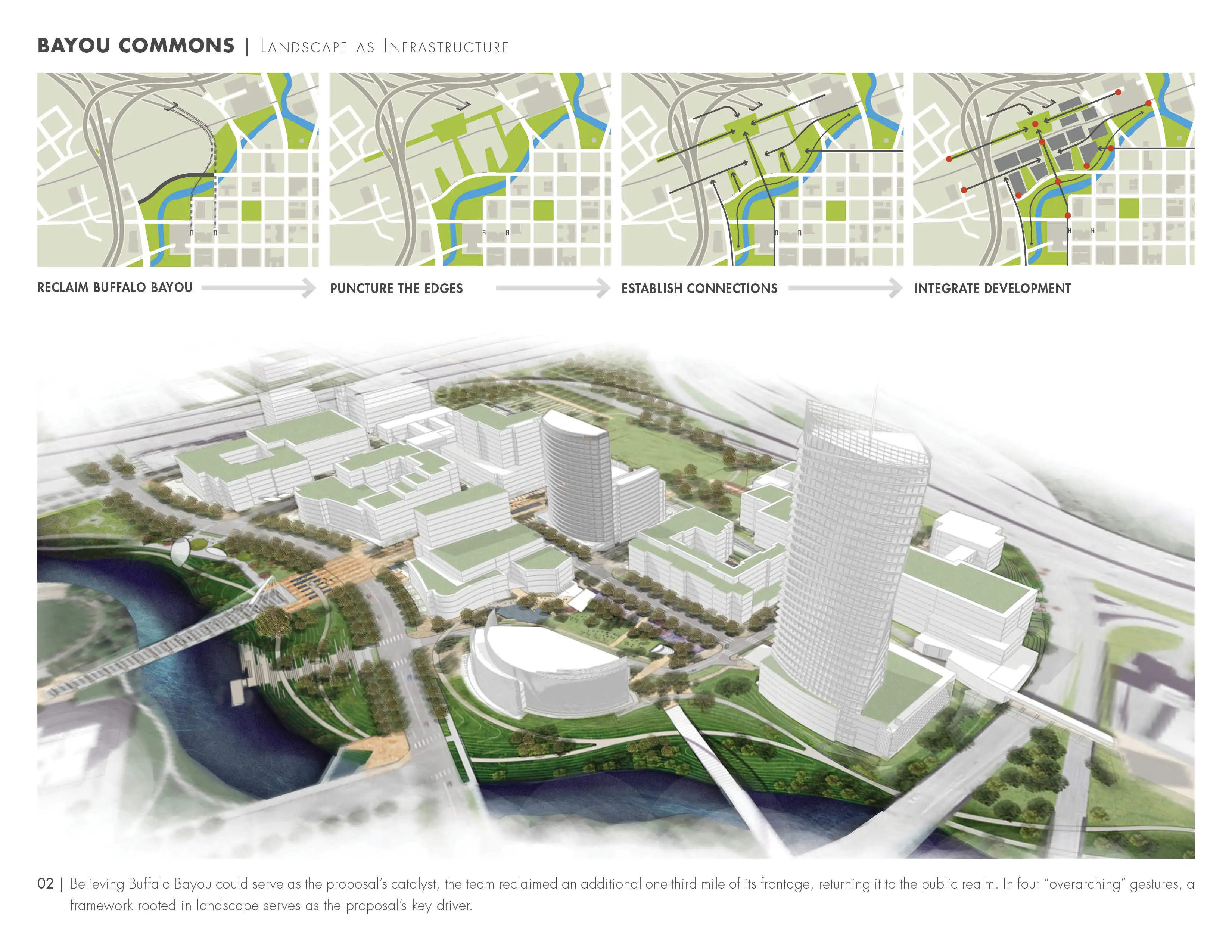
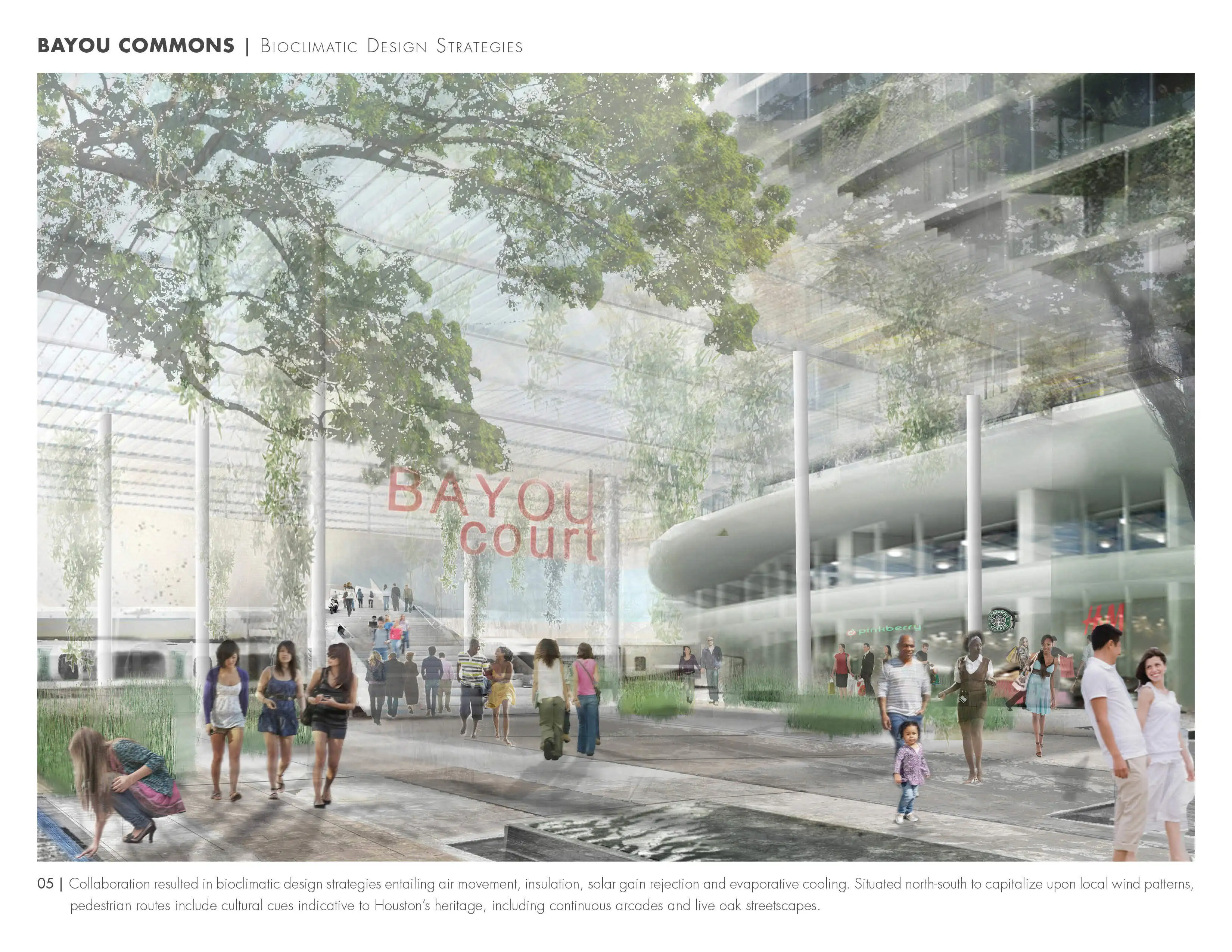
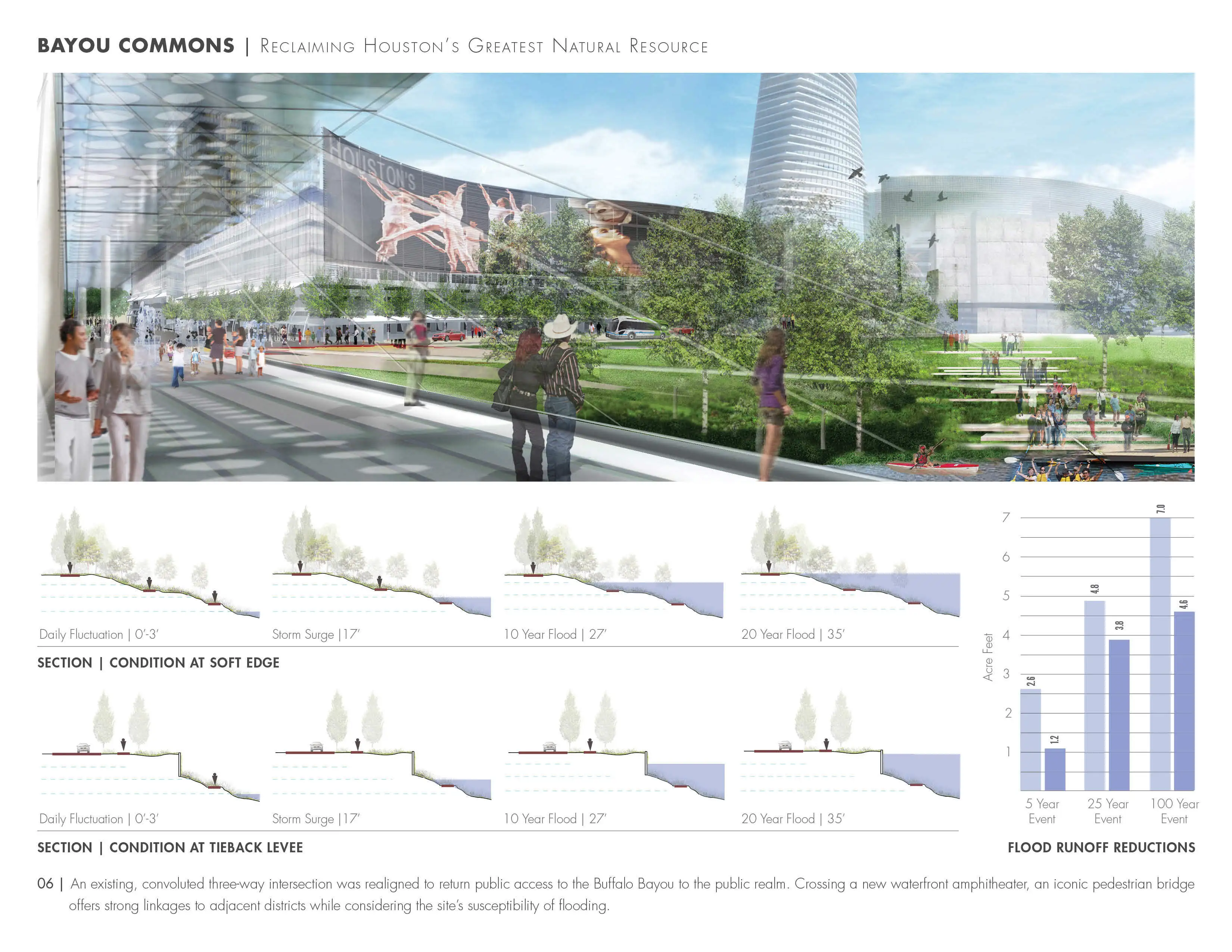
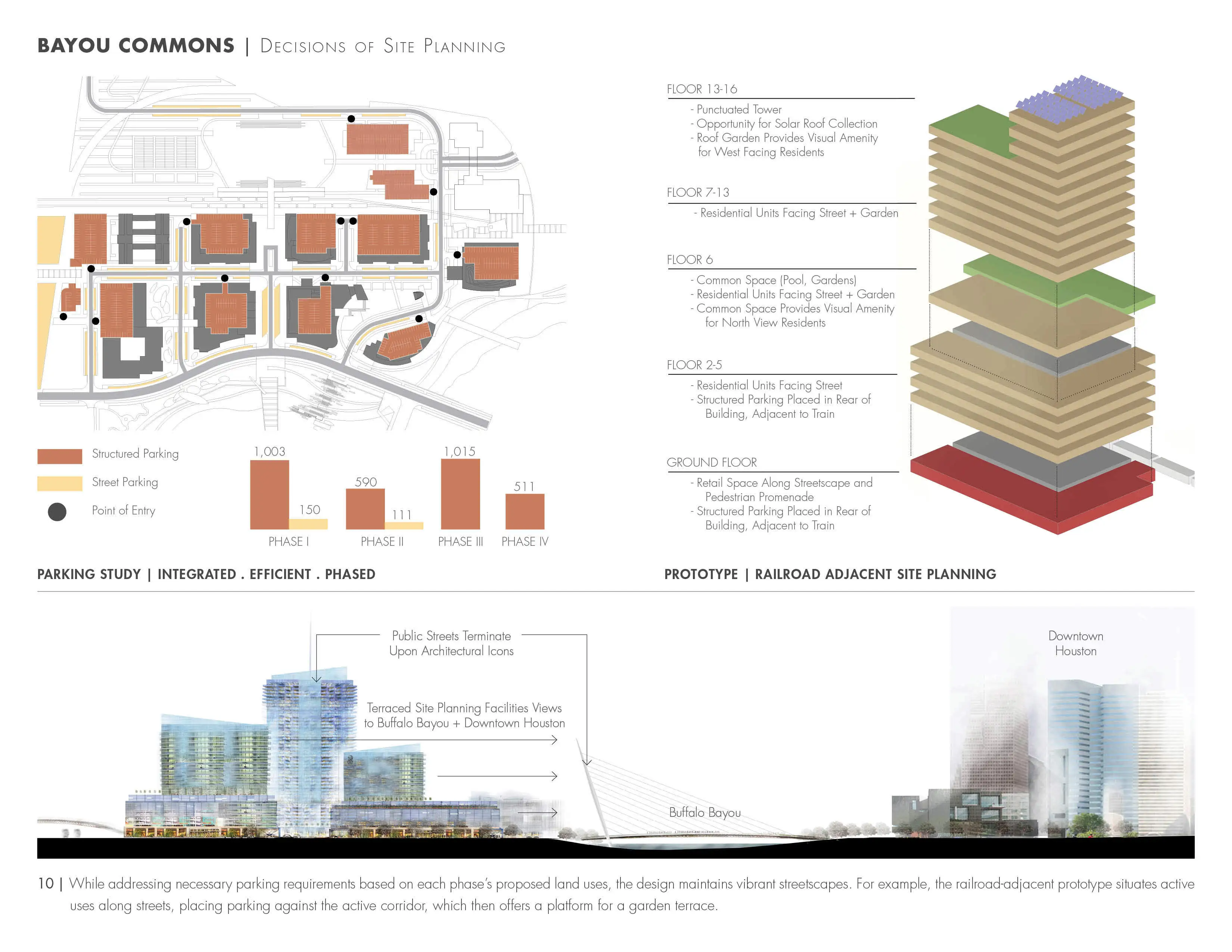
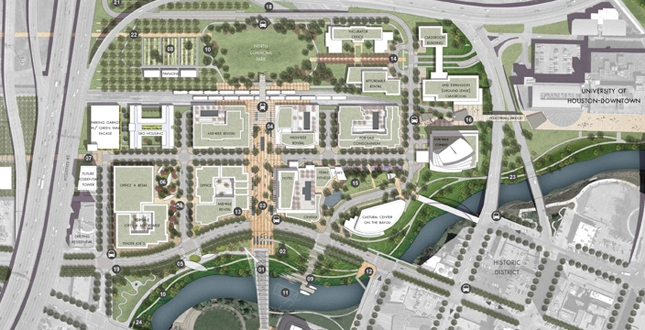
Buffalo Bayou provided the physical resource to craft a plan with strong physical and visual linkage to its natural environment. In four “overarching” moves – ‘Reclaim the Bayou’, ‘Puncture Site Edges’, ‘Establish Lost Connections’ and ‘Integrate Development’ – the proposal focuses on integrating the landscape of Buffalo Bayou as the plan’s physical framework. Franklin Street, the district’s east-west arterial, was realigned from its current location, providing increased capacity for flood conveyance, offering increased bayou-front green space and recreational amenities including a waterfront amphitheater. This move situates development adjacent to its frontage in order to create an active streetscape. A series of landscape fingers “puncture” the site’s periphery and include a signature live-oak retail corridor terminating upon a new commuter rail station, an education-based cultural park, and a linear urban plaza. Deliberate vehicular and pedestrian connections provide linkages to nearby public transportation hubs and the Theater District, Historic District and the University of Houston-Downtown campus. Pedestrian routes include cooling shade and water elements with a continuous arcade indicative to Houston’s rich outdoor culture. Additional bioclimatic design strategies, entailing air movement, insulation, solar gain rejection and evaporative cooling have been incorporated in the proposal’s development. Finally, architectural massing is stepped as it approaches Buffalo Bayou, facilitating views to both the reclaimed natural resource and the spectacular Houston skyline beyond.
Environmental Stewardship
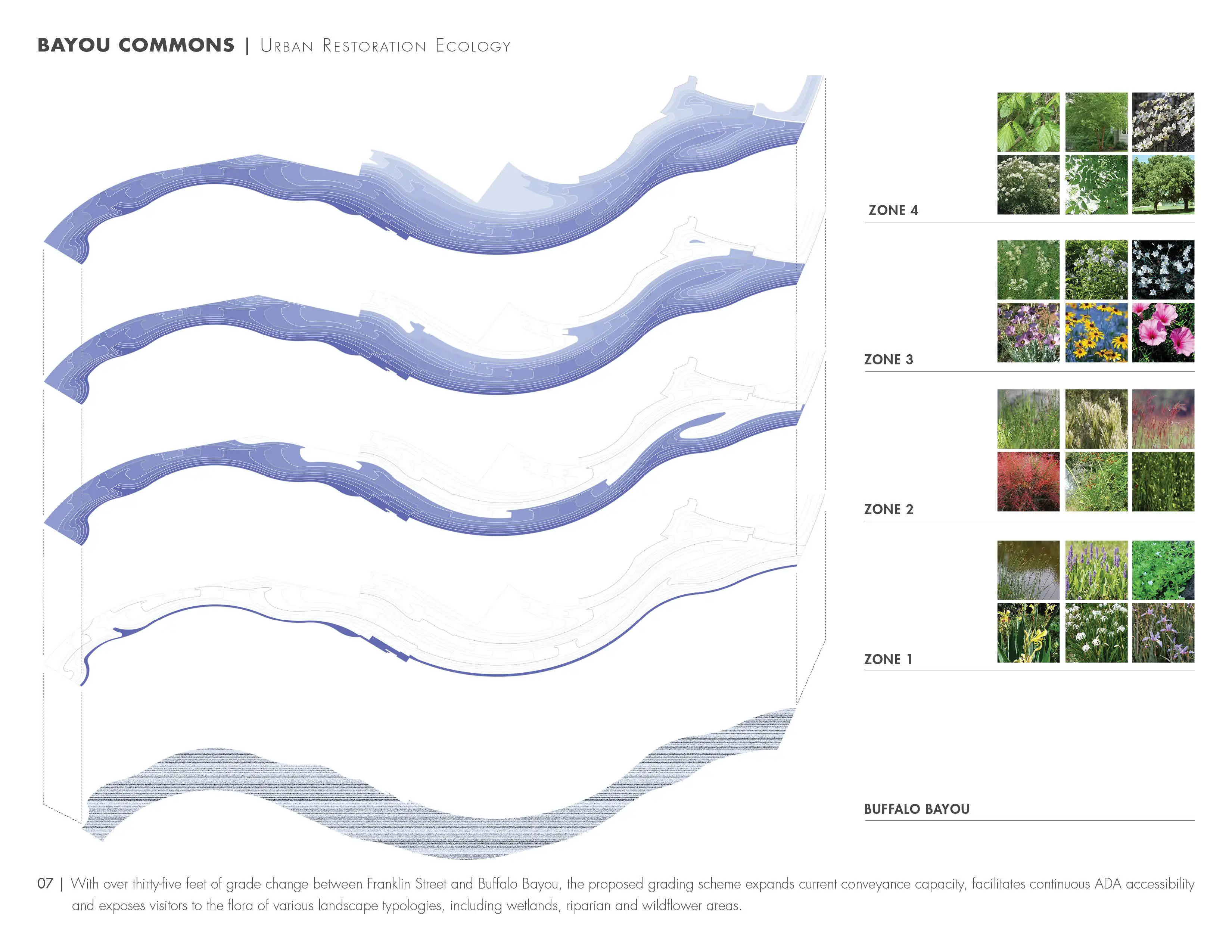
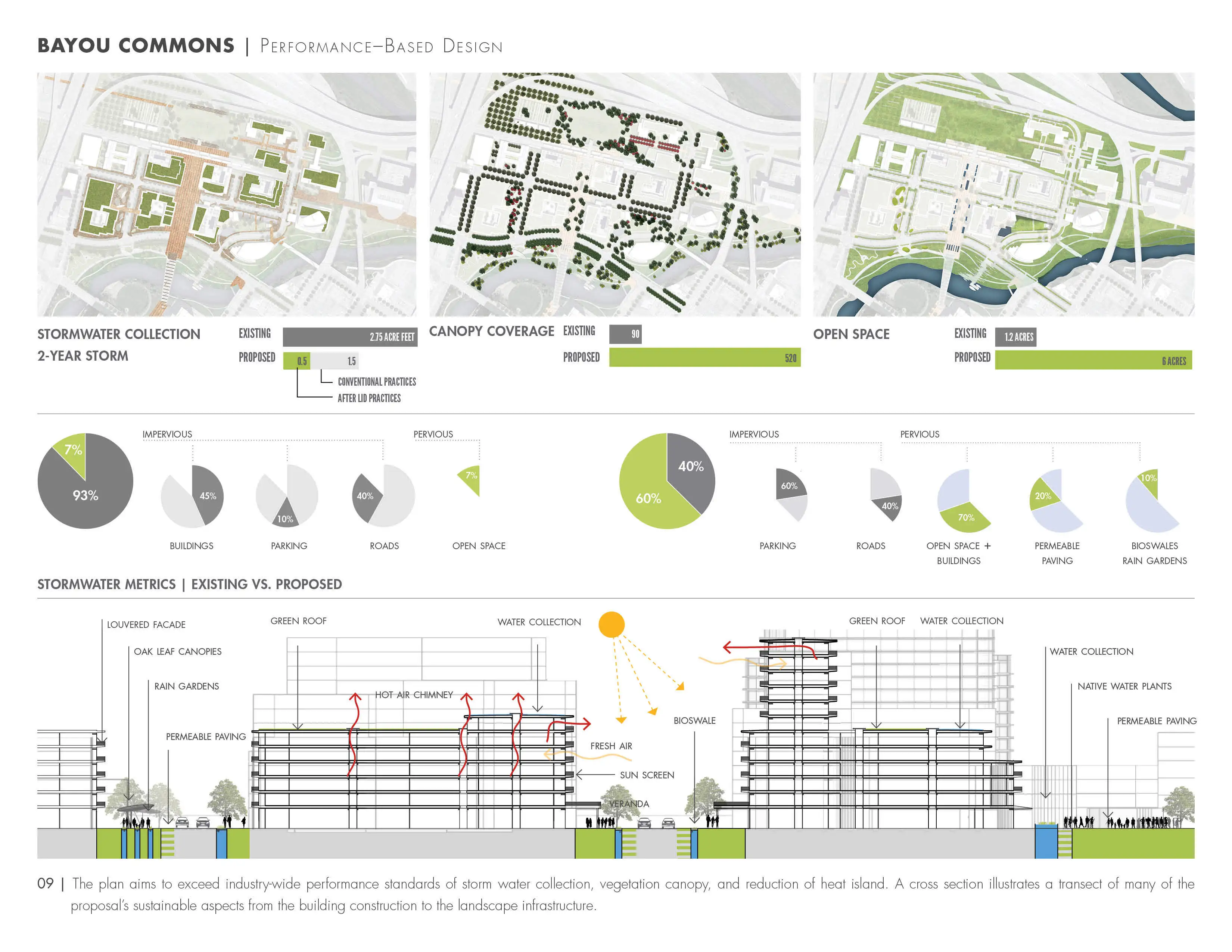
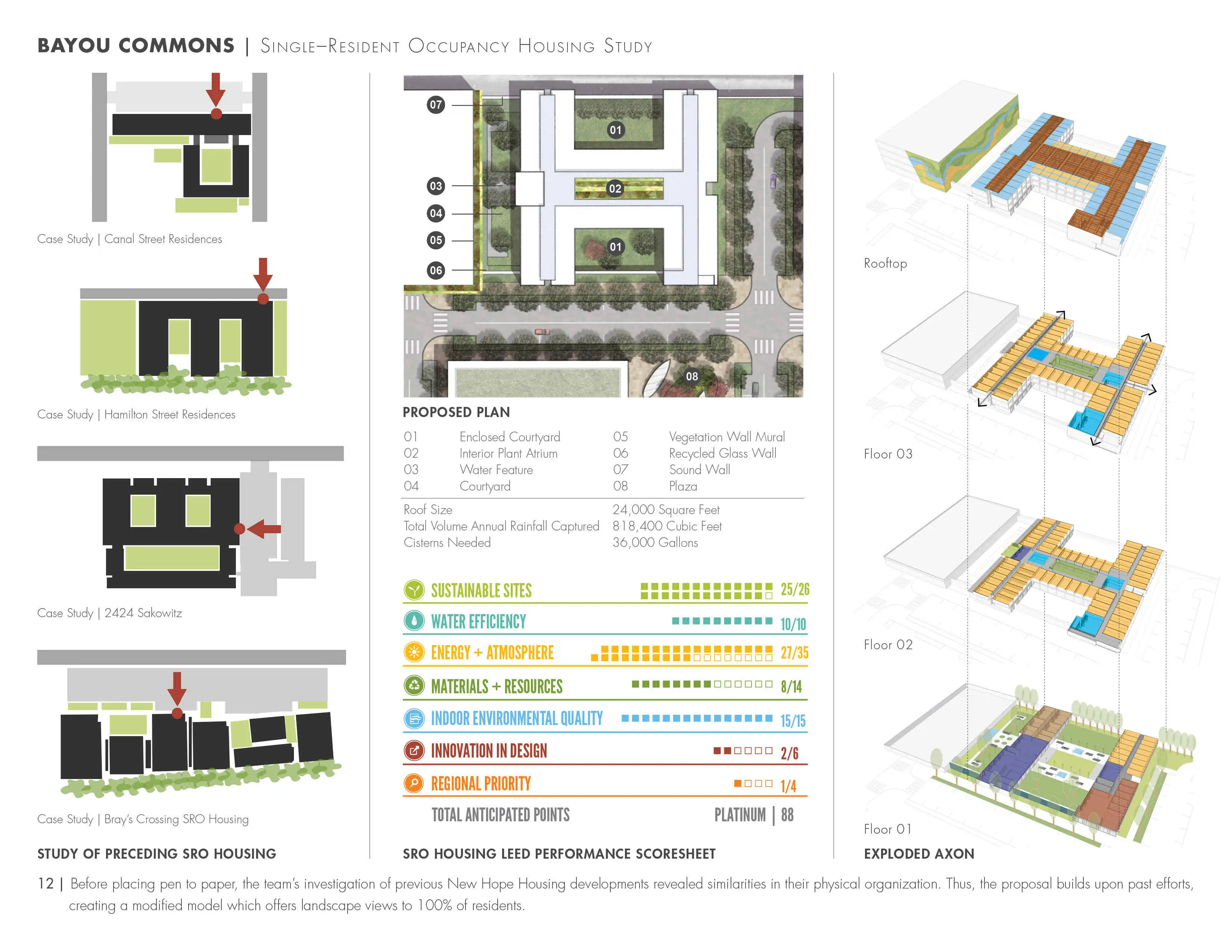
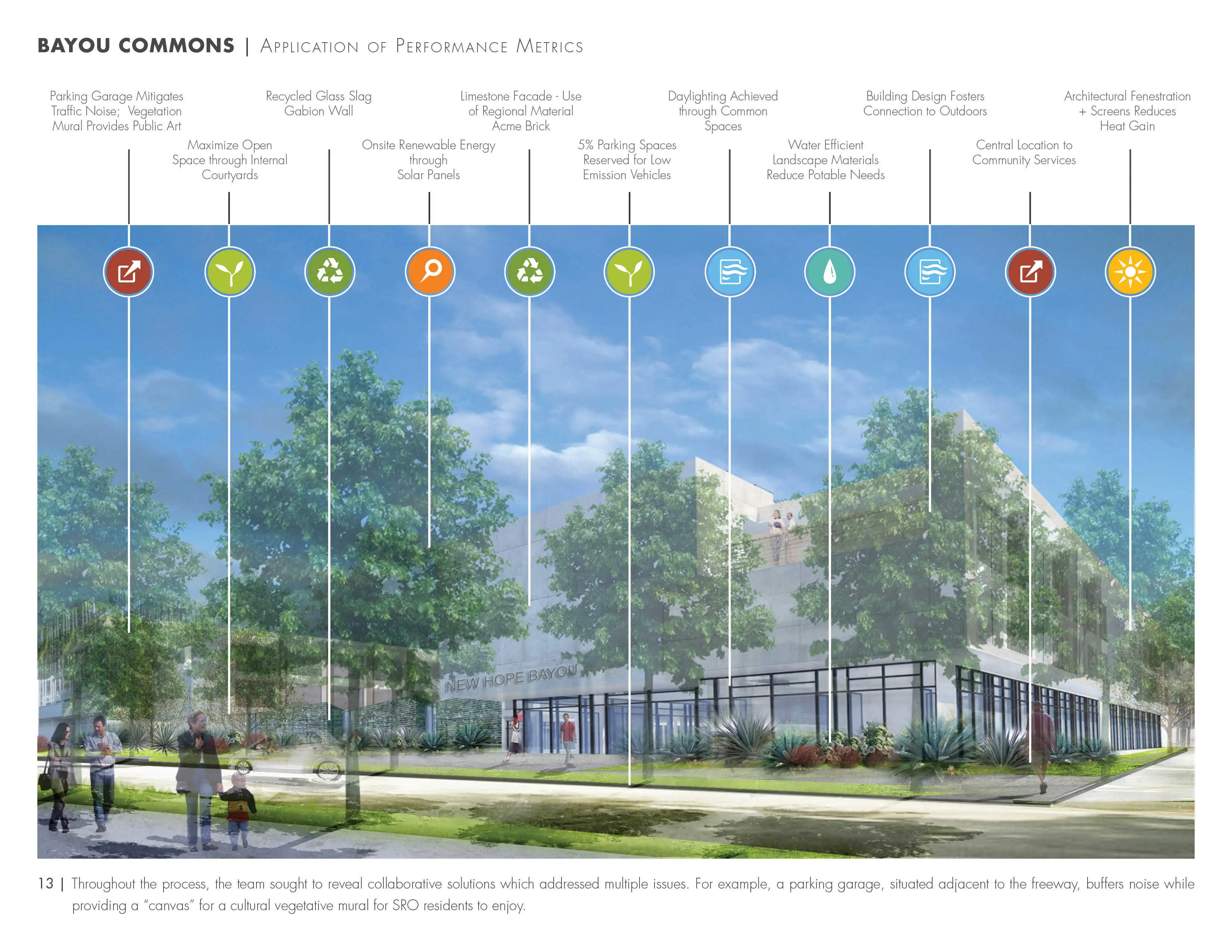
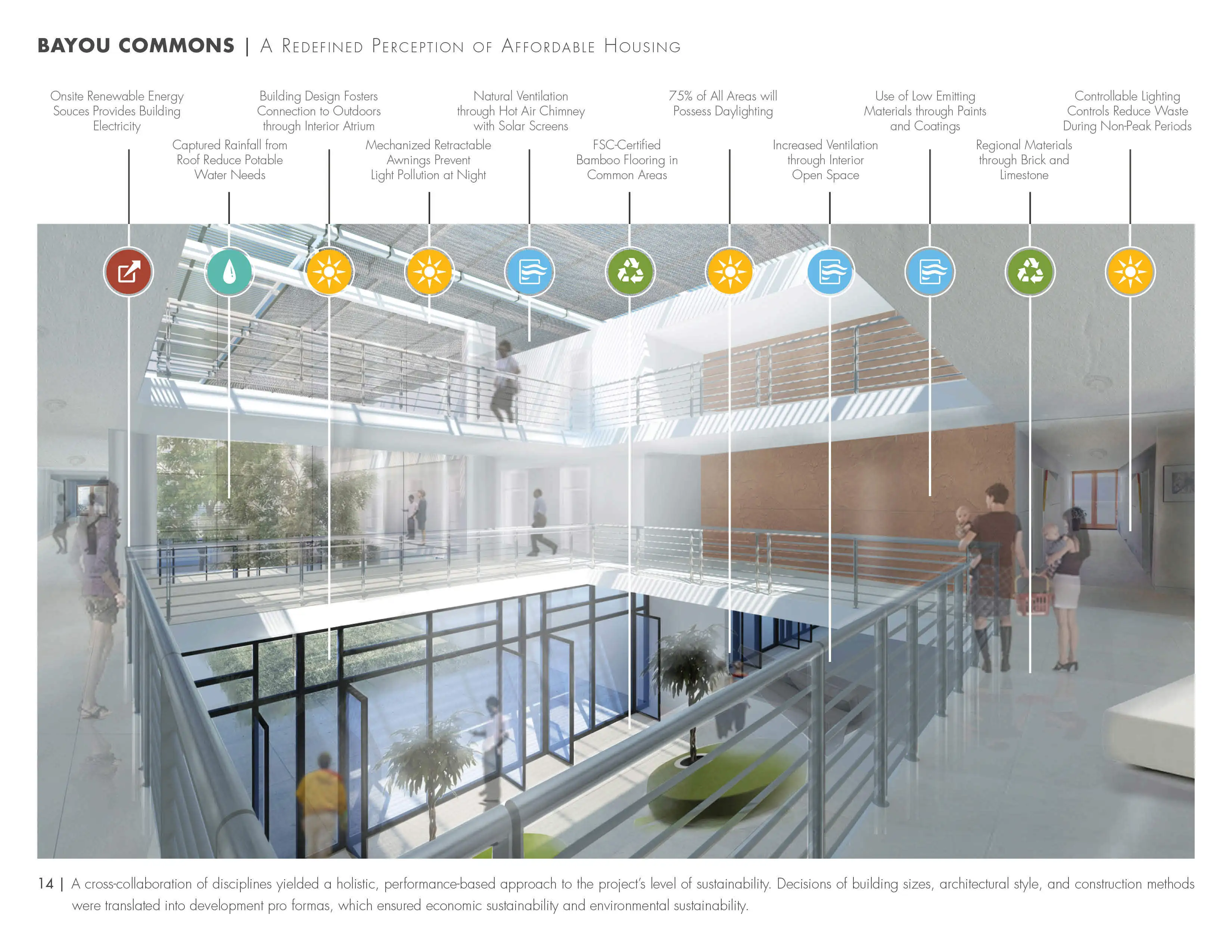
A cross-collaboration of disciplines yielded a holistic, performance-based approach to the project’s level of sustainability. Referring to metrics established by the Sustainable Sites Initiative and LEED, the proposal reduces impervious surface area by over 50%, increases canopy coverage by 450% and adds five additional acres of open space along the corridor. A performance scorecard, conducted on the proposed SRO Housing, further illustrates the team’s rigor towards performance-based design. The project’s financial pro forma anticipates all proposed construction will achieve LEED Platinum standards. Techniques in urban restoration ecology seek to rehabilitate Buffalo Bayou by improving water quality through best management practices, by increasing wildlife habitat through diverse landscape typologies and by maintaining public access through a grading scheme which accommodates various stages of flooding.
Cultural Expression
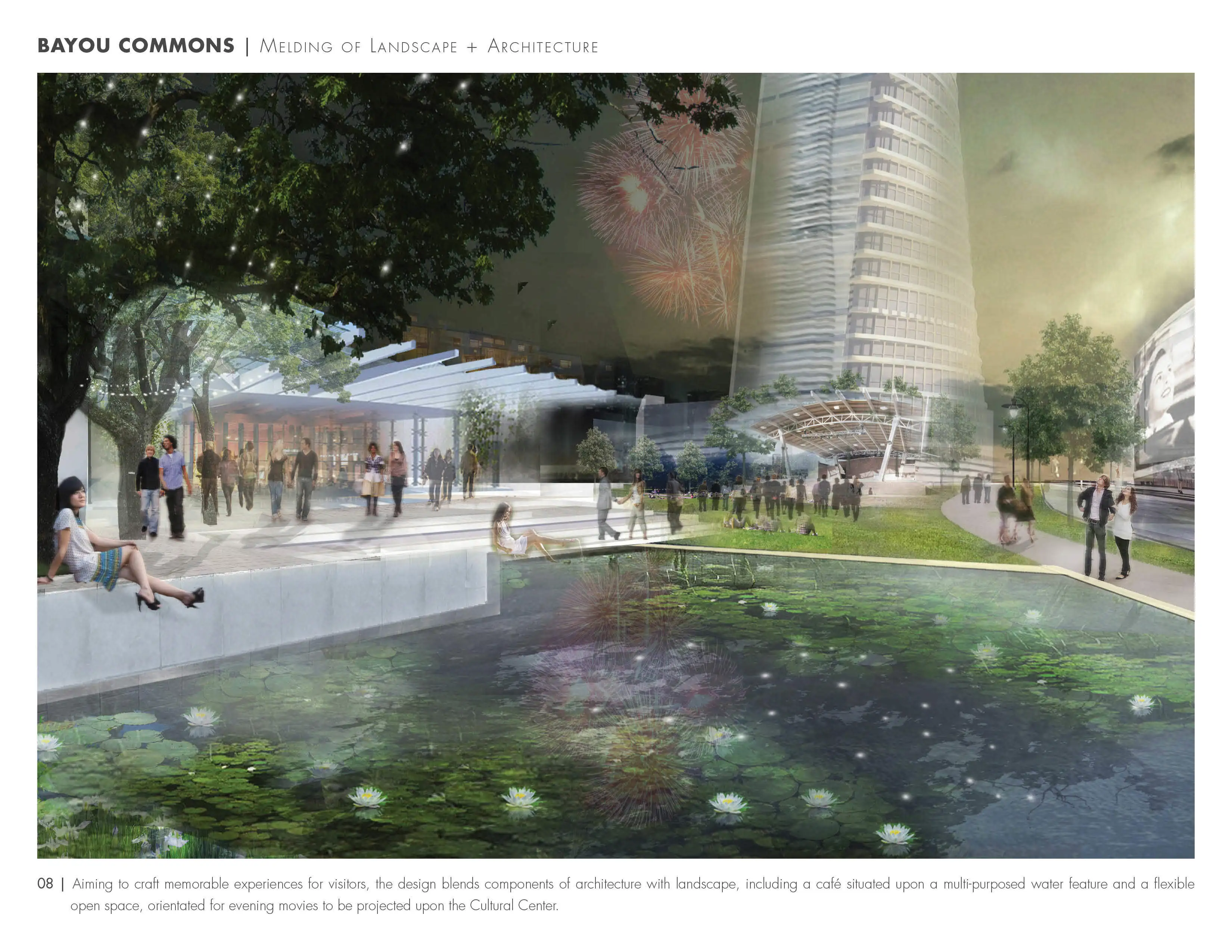
The proposal seeks to educate its residents with cues indicative of Houston’s heritage, including architectural verandas, bald cypress allees and amply-shaded oak streetscapes. Further efforts focused on turning these cues into productive elements. Along the linear plaza, a series of abstracted “live oak” shade structures capture runoff. North Commons Park reintroduces a productive pecan grove, an element historically found along bayou. Finally, a new architectural icon for downtown Houston, The Cultural Center on the Bayou serves as a civic educational/performance venue dedicated to conveying the importance of Houston’s resource.
Social Equity through Housing
The Commons aims to attract a mix of ethnic and socio-economic individuals through its integration of diverse residential product types which correspond to local statistics on housing demand. Furthermore, the competition’s prompt provided opportunity to work with New Hope Housing, a non-profit housing entity that builds and manages single room occupancy (SRO) housing. After investigating New Hope Housing’s past developments, the team proposed a modified model that offers residents a visual and physical connection to their natural environment, while providing a safe, stable, and comfortable living environment.
Market Conditions and Financial Feasibility
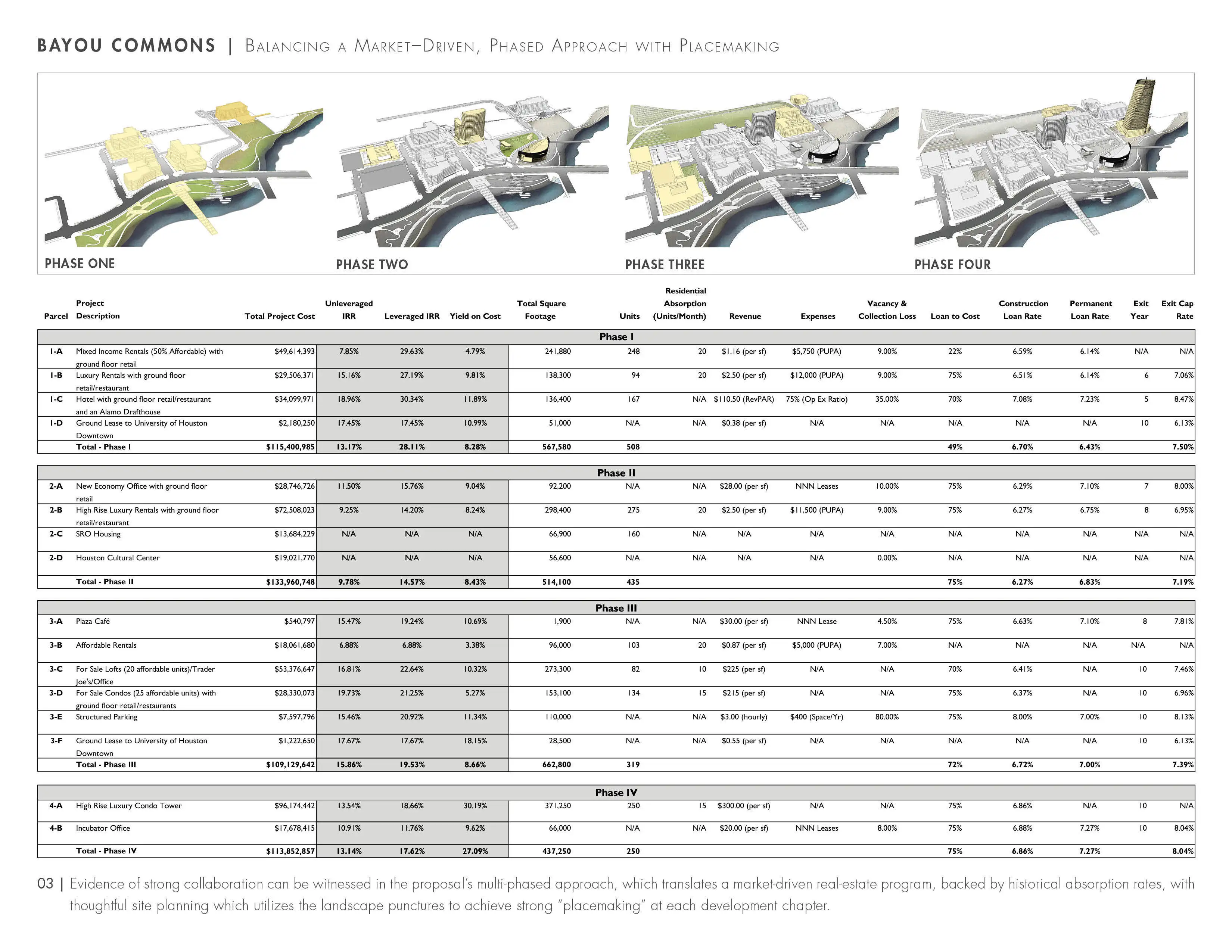
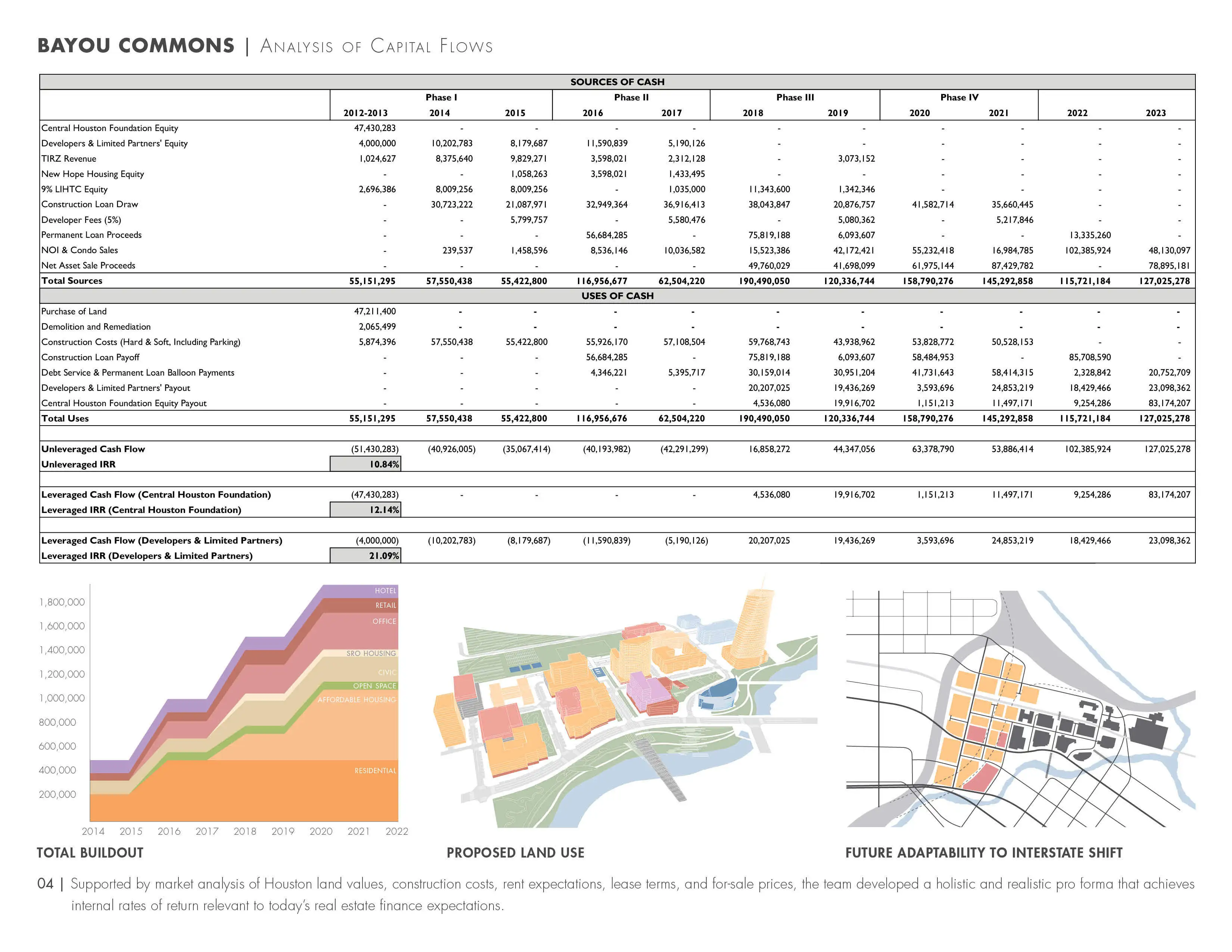
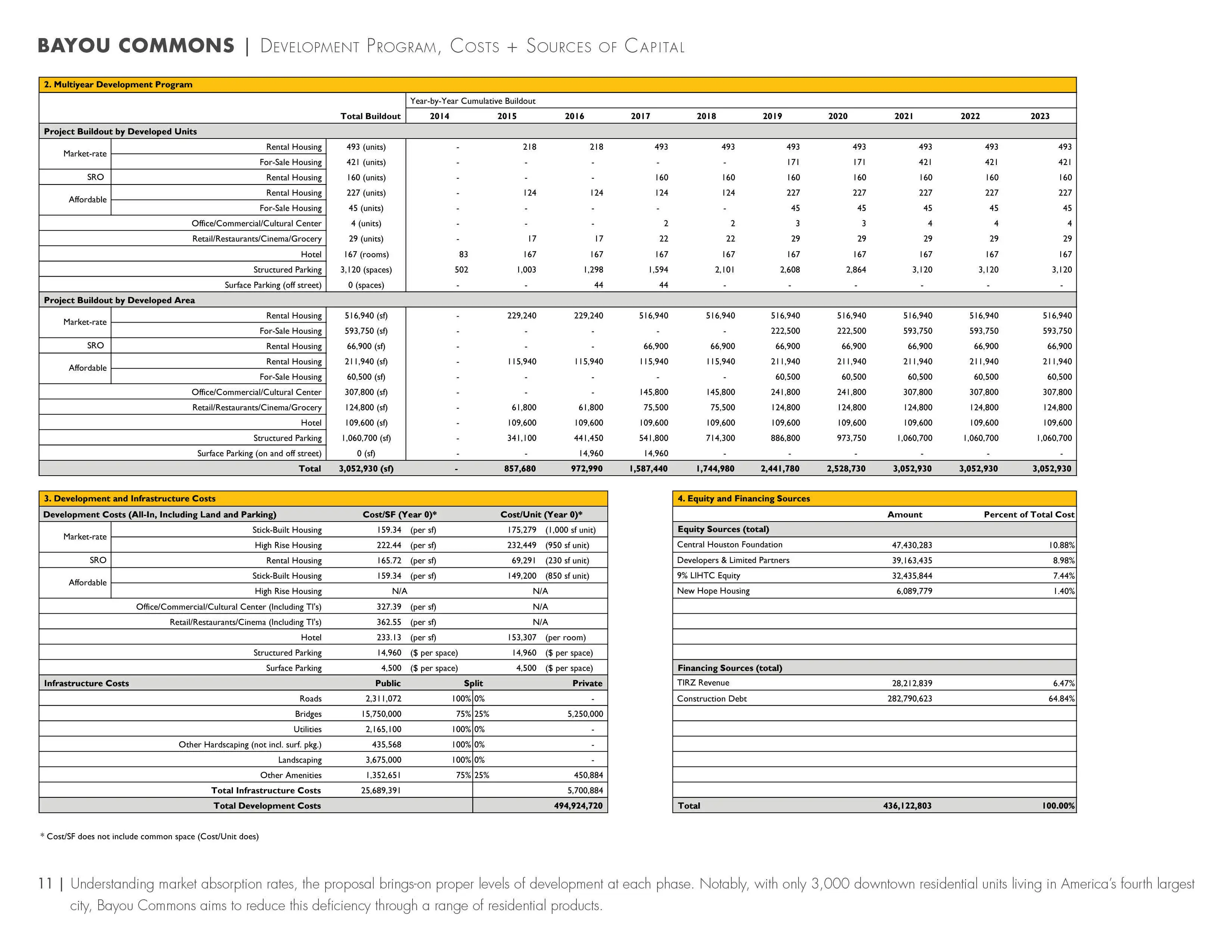
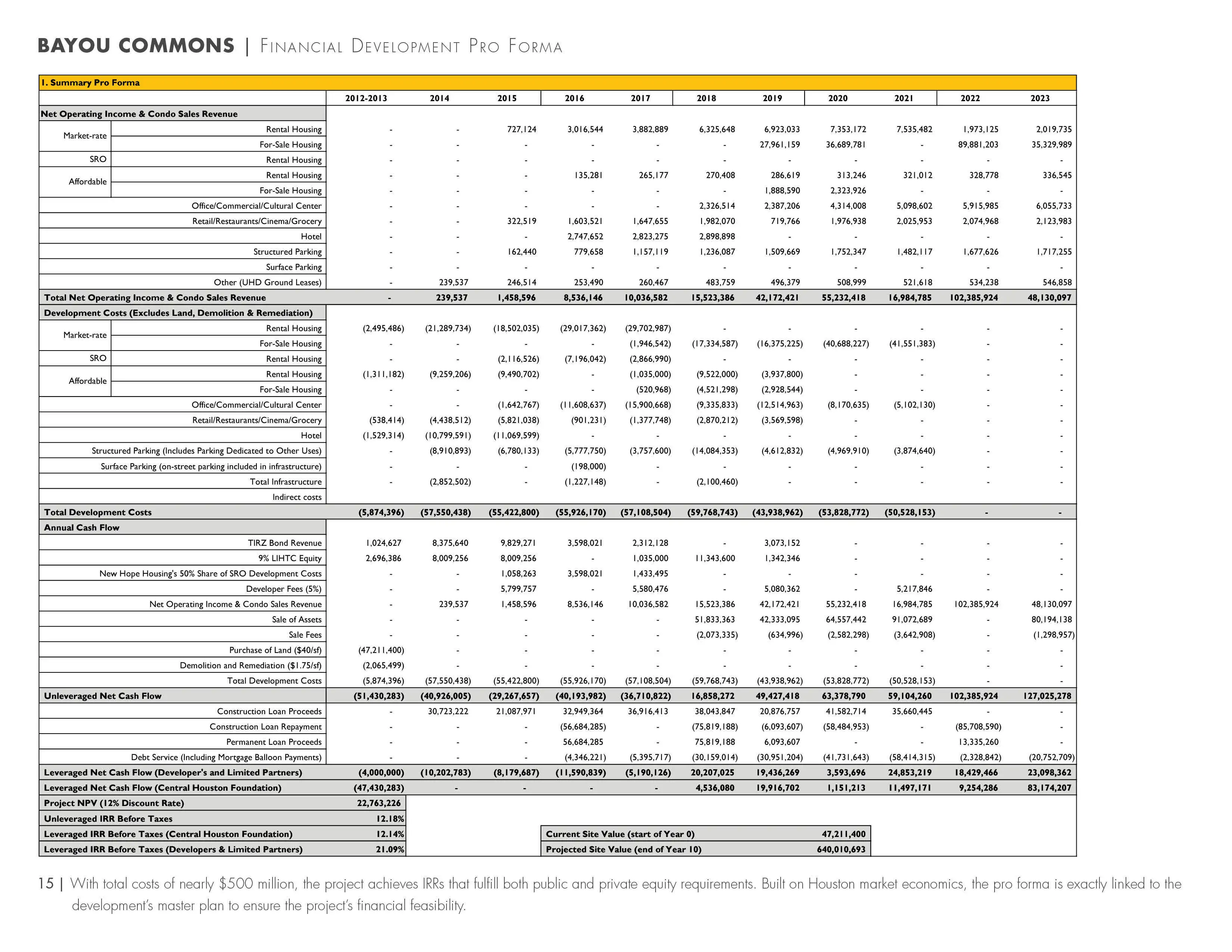
The team’s ten-year phased approach is firmly grounded in the local Houston market. Land values, construction costs, rent expectations, lease terms, and for-sale prices were all thoroughly researched and built-in to the financial pro forma that guides the development plan. The plan carefully considers place-making in each phase while building product that meets the current demand. The early phases identify and capture a current demand for multi-family rental product. Future phases bring on an acceptable amount of retail, restaurants, and commercial office supported by this residential base to create a truly mixed-use, livable neighborhood. Future phases shift to the expectant real estate market cycle of for-sale product including lofts and condominiums. Ultimately, the phasing plan is market driven, realistic, and provides for flexibility. From a financial standpoint, the team recommended the CHF to partner with outside developers and private investors in order to realistically develop an urban project as complex as Bayou Commons. The project is funded through the CHF’s initial land purchase, private equity, Low-Income Housing Tax Credits, Tax Increment Financing, and traditional debt. With total project costs of nearly $500 million, the project achieves an Unleveraged IRR of 10.84%, and a Leveraged IRR of 18.91%. The CHF can expect an IRR of 12.14% and the private development partners can expect a market-acceptable IRR of 21.09%.
-
Additional Members of Urban Land Institute/Gerald D. Hines Competition Team
Michael Albert, ASLA, Masters in Landscape Architecture, Harvard University Graduate School of DesignChad Murphy, Masters in Business Administration in Real Estate, Leeds School of Business, University of Colorado — Boulder
Professional Advisors: Design Workshop, Inc.
Todd Johnson, FASLA and Kurt Culbertson, FASLA
Additional Academic Support
Sherman Miller, Executive Director, University of Colorado Real Estate Center, University of Colorado — BoulderBetsy Colburn, Tim Dekker and Steven Handel, Honorary ASLA, Visting Professors, Harvard University Graduate School of Design
Lin Peng, Student ASLA, Masters in Landscape Architecture, Harvard University Graduate School of Design
Applied Techniques in Urban Restoration EcologyCompetition Endowment Sponsor
Gerald Hines & Urban Land Institute
ULI/Hines Student Urban Student Competition
Advertisement
Related Awards
Honor Award, Student Collaboration
TREES ALIVE!: Techniques, Details, Traditions
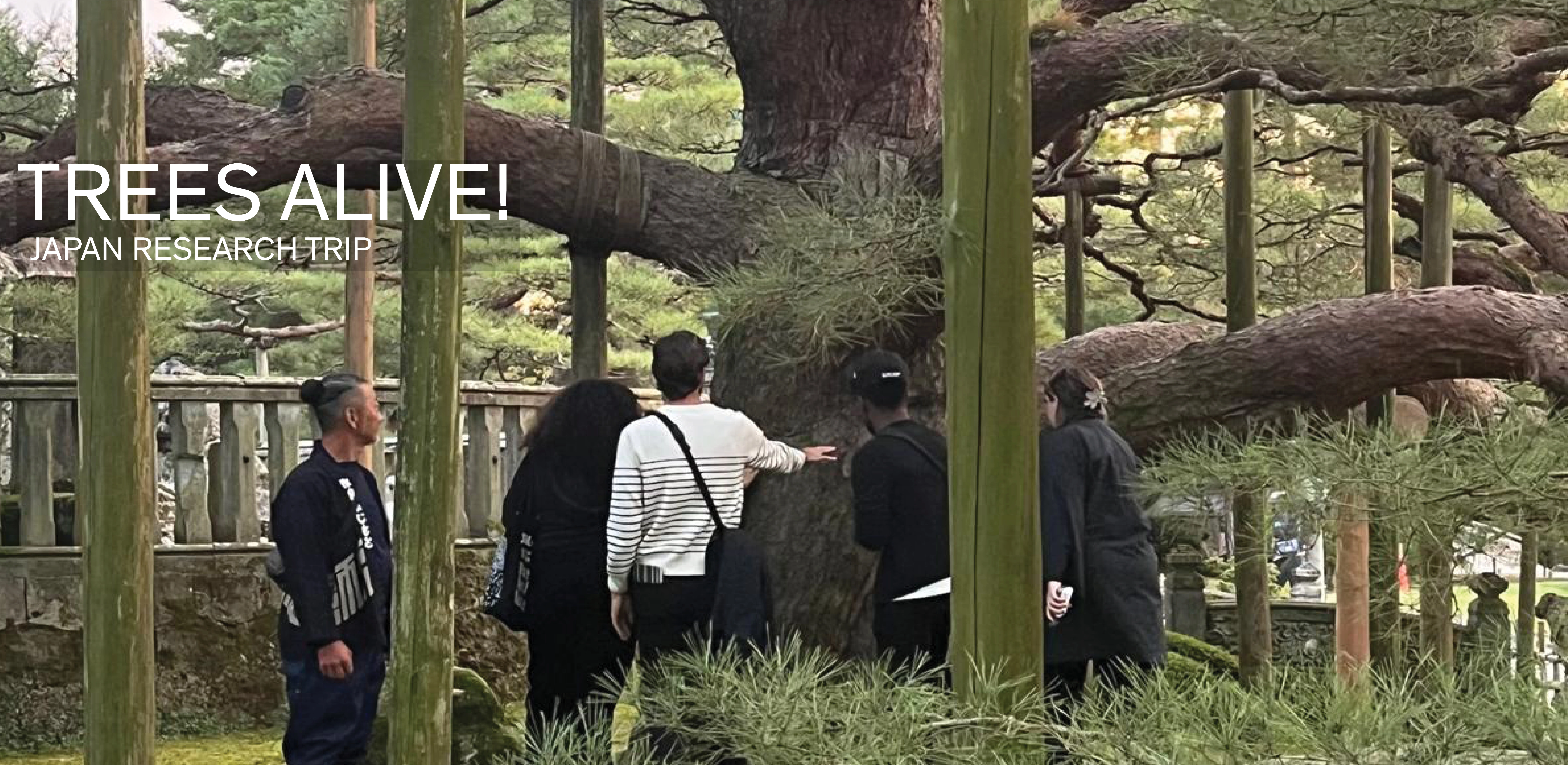
TREES ALIVE! is a collaborative research and travel exchange between American and Japanese landscape architecture programs to study the techniques, details, and cultural traditions for trees in contemporary urban landscapes. Students participated in collaborative technical workshops and visits to significant gardens and landscapes to investigate urban tree planting and legacy tree conservation in Tokyo, Kanazawa, Chicago, Columbus (Indiana), Philadelphia, and New York. Two technical