
.webp?language=en-US)

Off the Reservation: A Seed for Change
-
The significance of this project relies on the unique culture of the Quechan Indian tribe. Looking to indigenous Indian cultural practices of food, water, and mobility can help revitalize cultures lost to the reservation system and inform wider issues of infrastructural and cultural stability. Located along the Colorado River near Yuma Arizona, this project challenges current landscape practices of agricultural water use, ecology and housing, and creates contemporary solutions based on native traditions.
-
The Indian Reservation
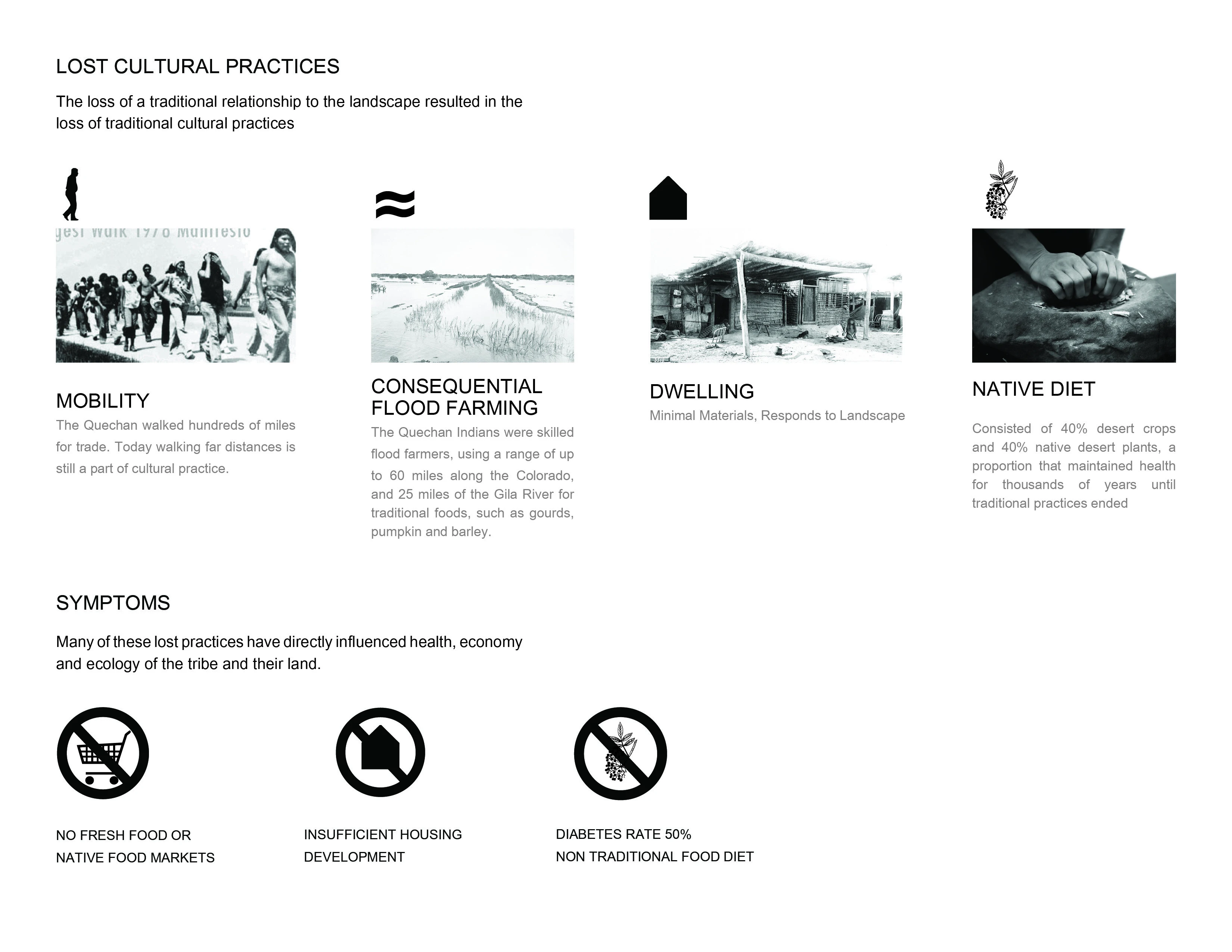
The Quechan Indian tribe is located on the Fort Yuma reservation near Yuma Arizona at the Colorado and Gila River Confluence. The Quechan Indians are a part of the Yuman speaking peoples in the lower Colorado River region and were skilled warriors who, for thousands of years, had command of a 60 mile long section of the Colorado River used for consequential flood farming. The Quechan traveled on foot for trade in networks extending hundreds of miles from their home base at the confluence.
The Symptoms
Today, because of the restraints of living on the reservation, and the damming of the Colorado River, the Quechan tribe has lost this range of mobility and a connection to water related activity. They stopped practicing traditional techniques of farming and gathering native desert foods and the walking exchange networks that strengthened their cultural hold on the land was lost. Symptoms include lack of housing and development, high rate of diabetes and a general dying culture.
Landscape as Problem
Current Landscape practices have negative impact to native cultures in the arid southwest and specifically on the Fort Yuma reservation in the form of agricultural water use, ecology and housing.
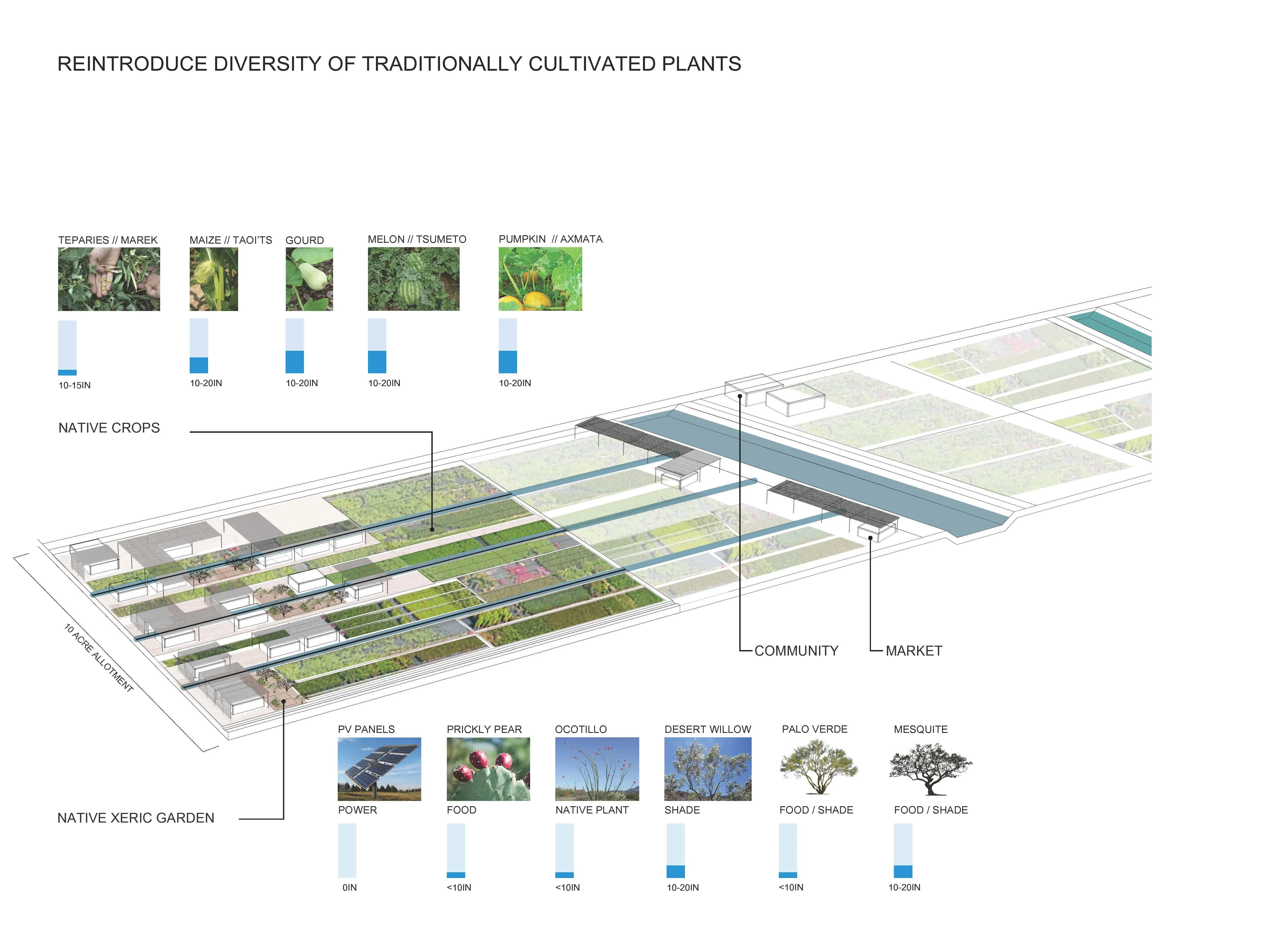
Agriculture: The 10 acre agricultural allotment plots on the reservation are leased out to non-native farmers who plant crops with high water consumption rates and practice wasteful watering methods. Traditionally cultivated desert foods would use far less water, are known to fight diabetes, and have higher cultural as well as monetary value.Ecology: With the division of Colorado River water into canals and ditches, the ecology of the natural river has changed leaving it dry in places below Arizona. Invasive species have taken over along the riverfront as agricultural crops lack biodiversity. Native plants traditionally used for food and medicinal purposes would use less water, create habitat for the return of native wildlife, while the introduction of alternative water sources could free up Colorado River water for these restoration practices.
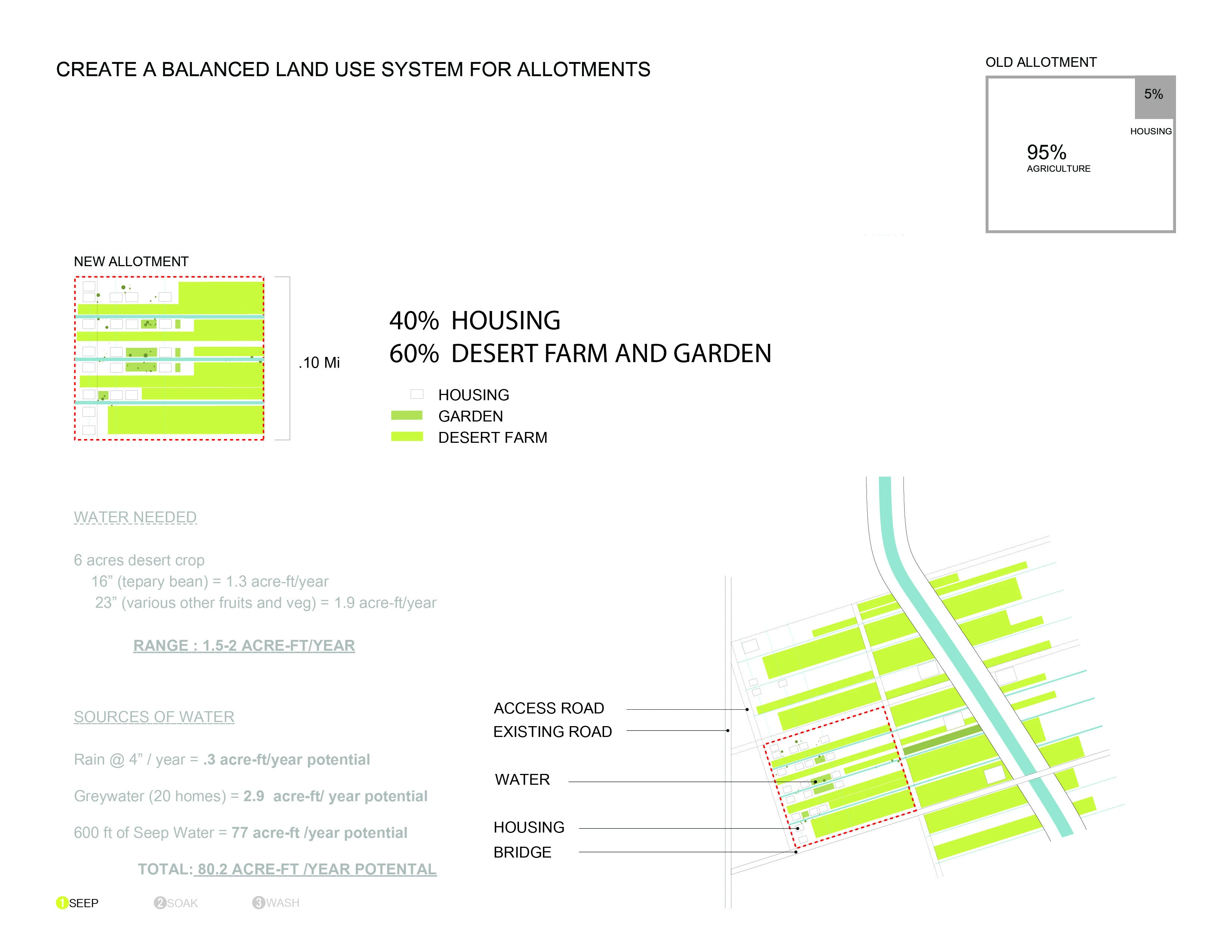
Housing: More than 2.4 million Native Americans live on or near tribal land. They face some of the worst housing conditions in our country. Over 40% live in overcrowded or dilapidated housing. On the Quechan reservation, housing development is currently inefficient with no active housing authority. Typically, there is only one house per 10 acre allotment plot and new HUD housing wait lists are up to 15 years long. One goal of this project was to integrate housing, water practices and native agriculture.Restore: Exploring the Design Potential for Landscape to Revive the Culture of the Tribe.
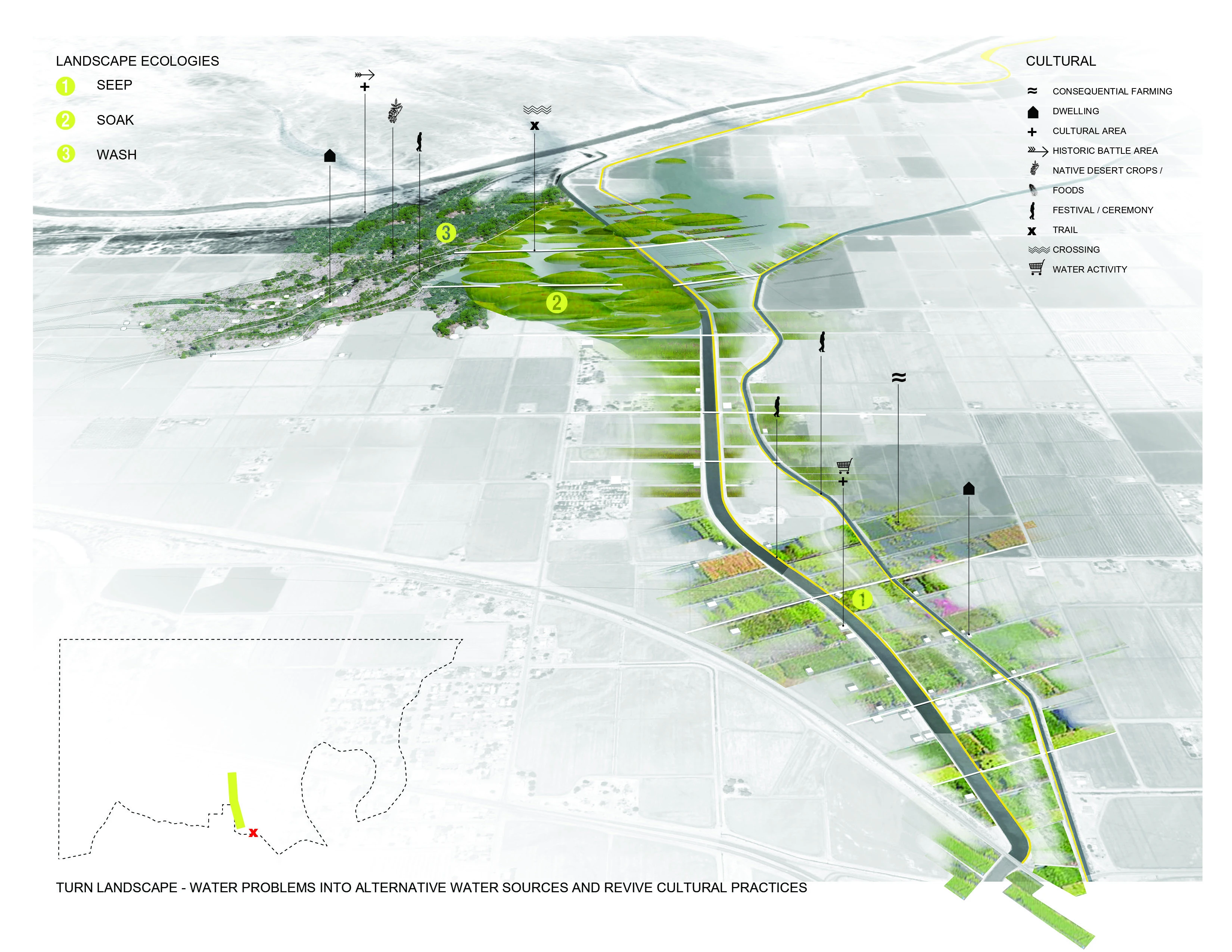
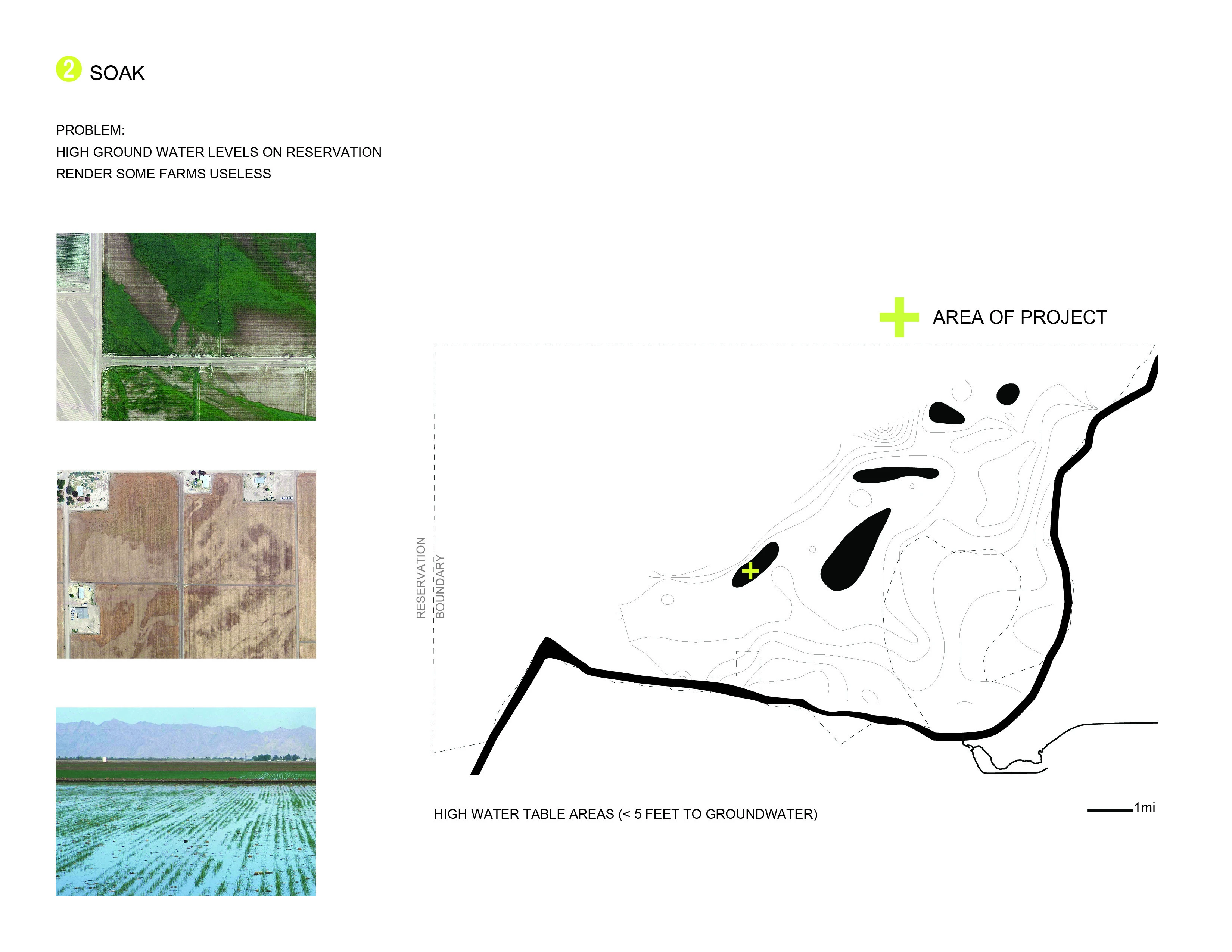
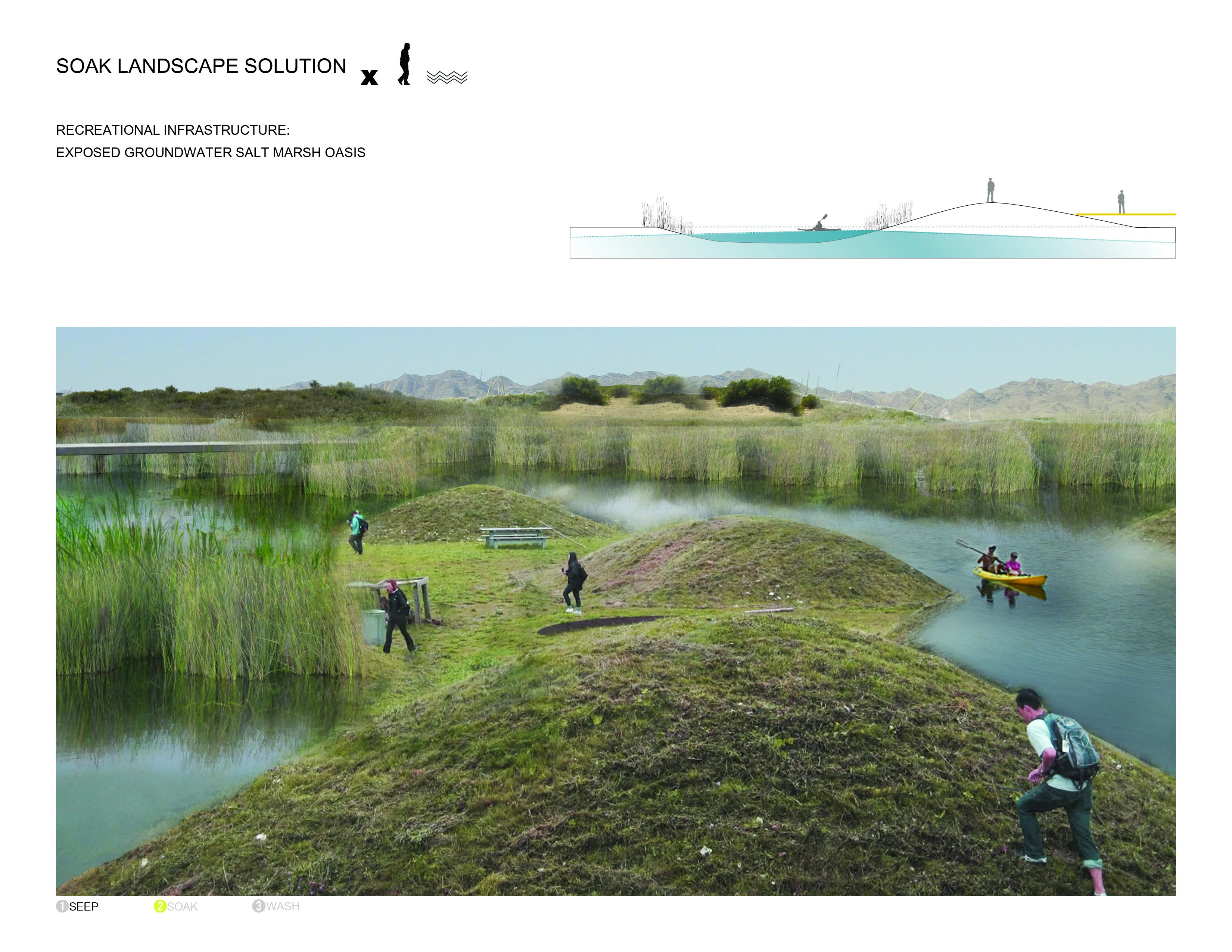
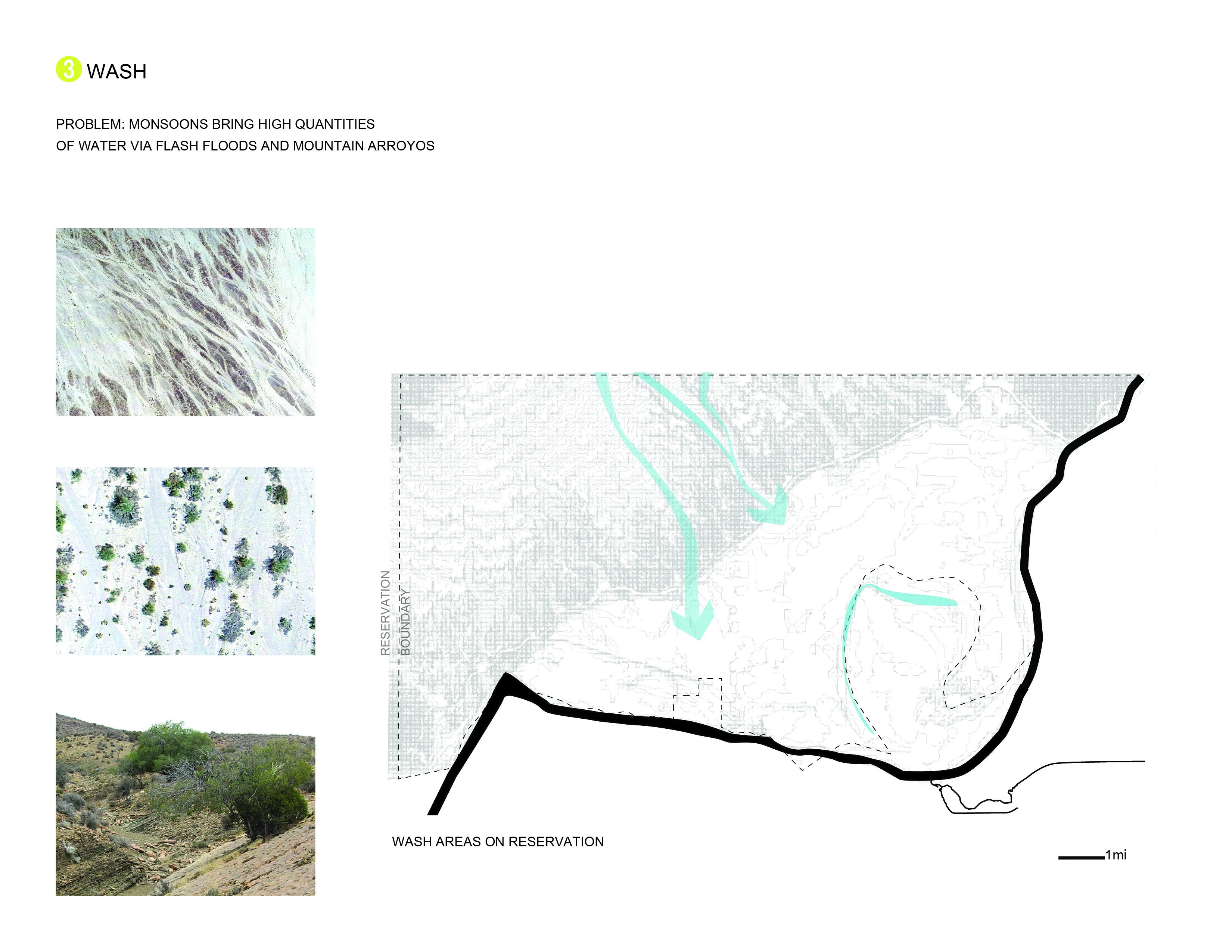
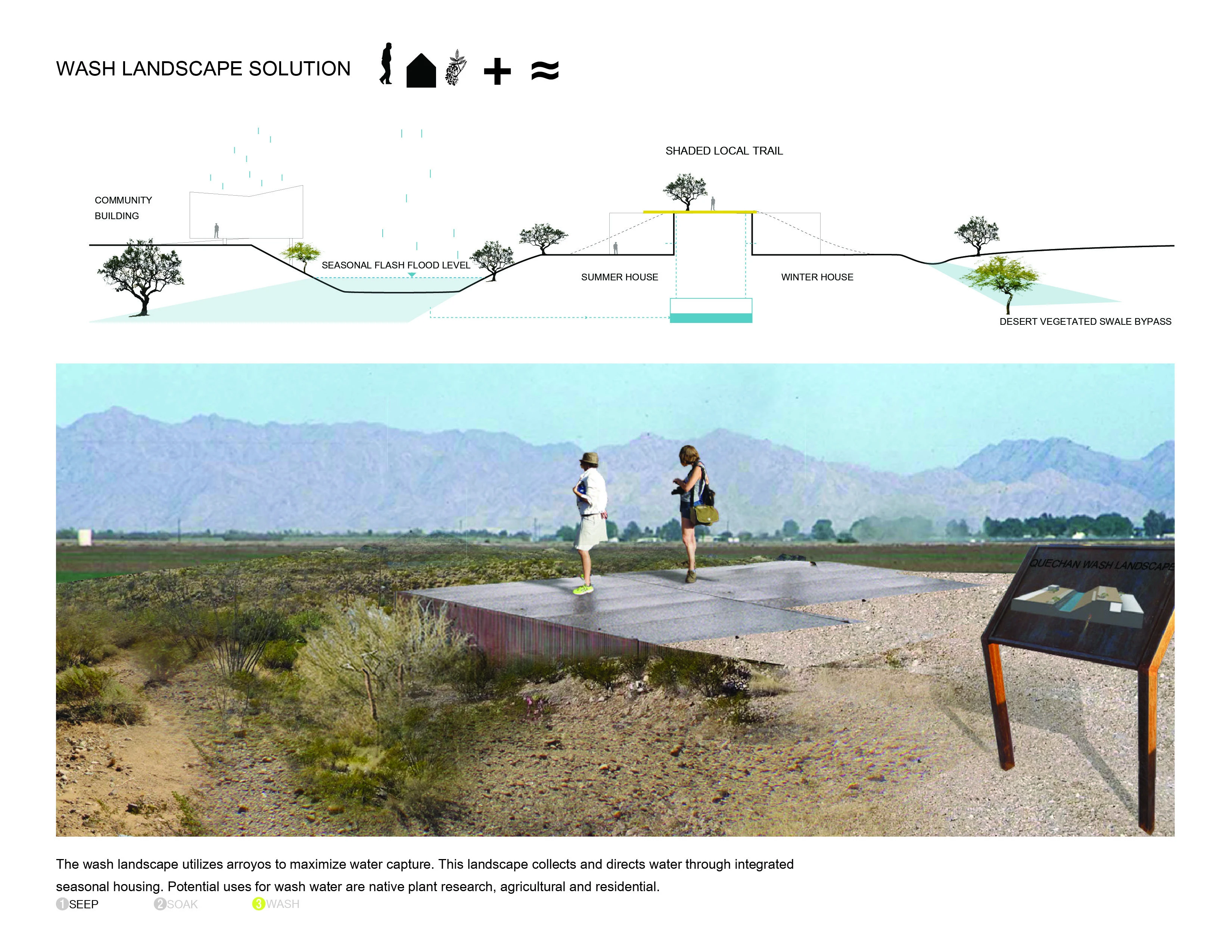
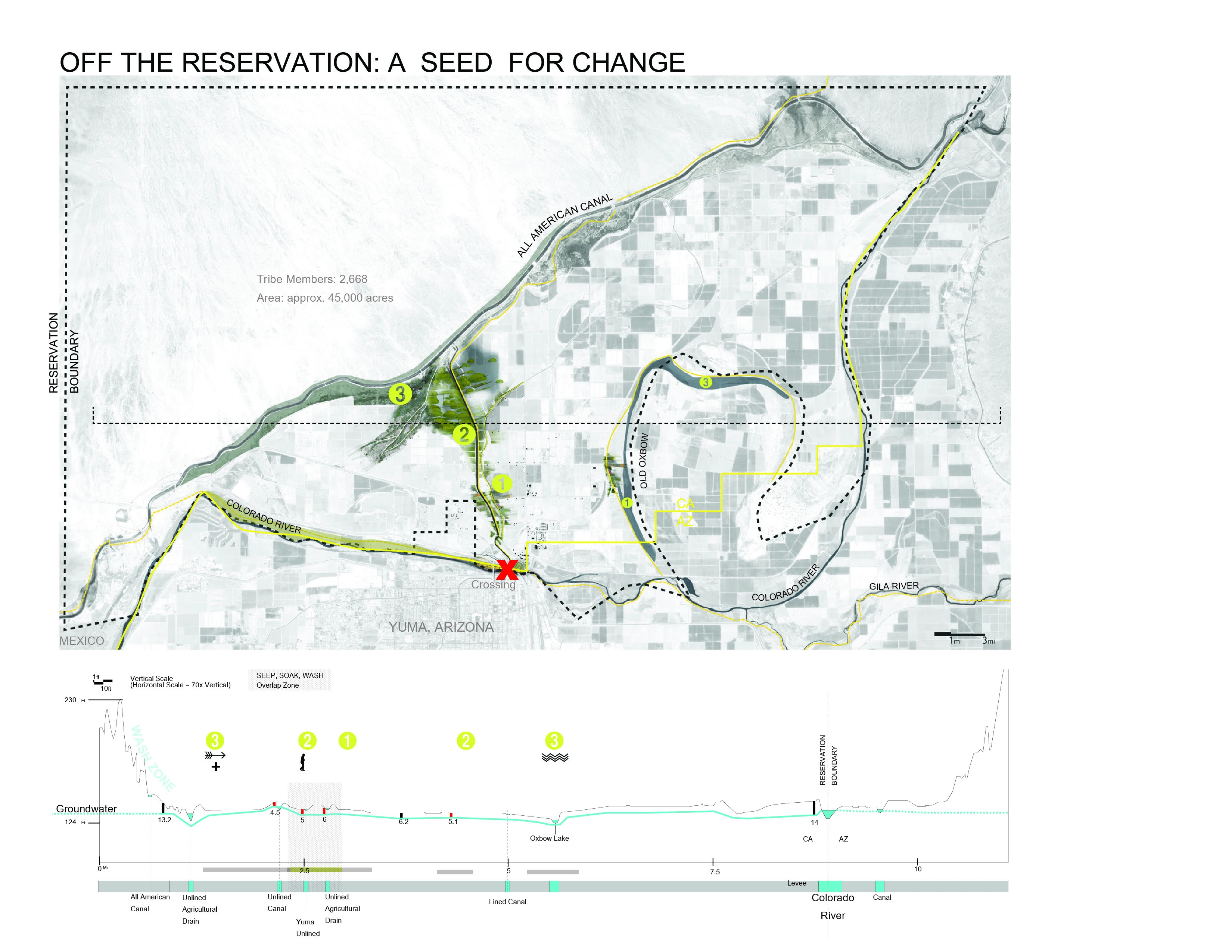
The project takes advantage of 3 landscape water “problems” as opportunities for reconnecting with the land and introduces three “consequential” water sources. SEEP, SOAK and WASH are natural water ecologies that occur on the reservation. Heightening these water centric land features allows opportunity for Quechan cultural ecologies (MOBILITY, NATIVE FOOD FARMING, WATER ACTIVITY) to thrive, bringing back some traditional farming techniques, staging sustainable infrastructure for future growth and cultural stability.
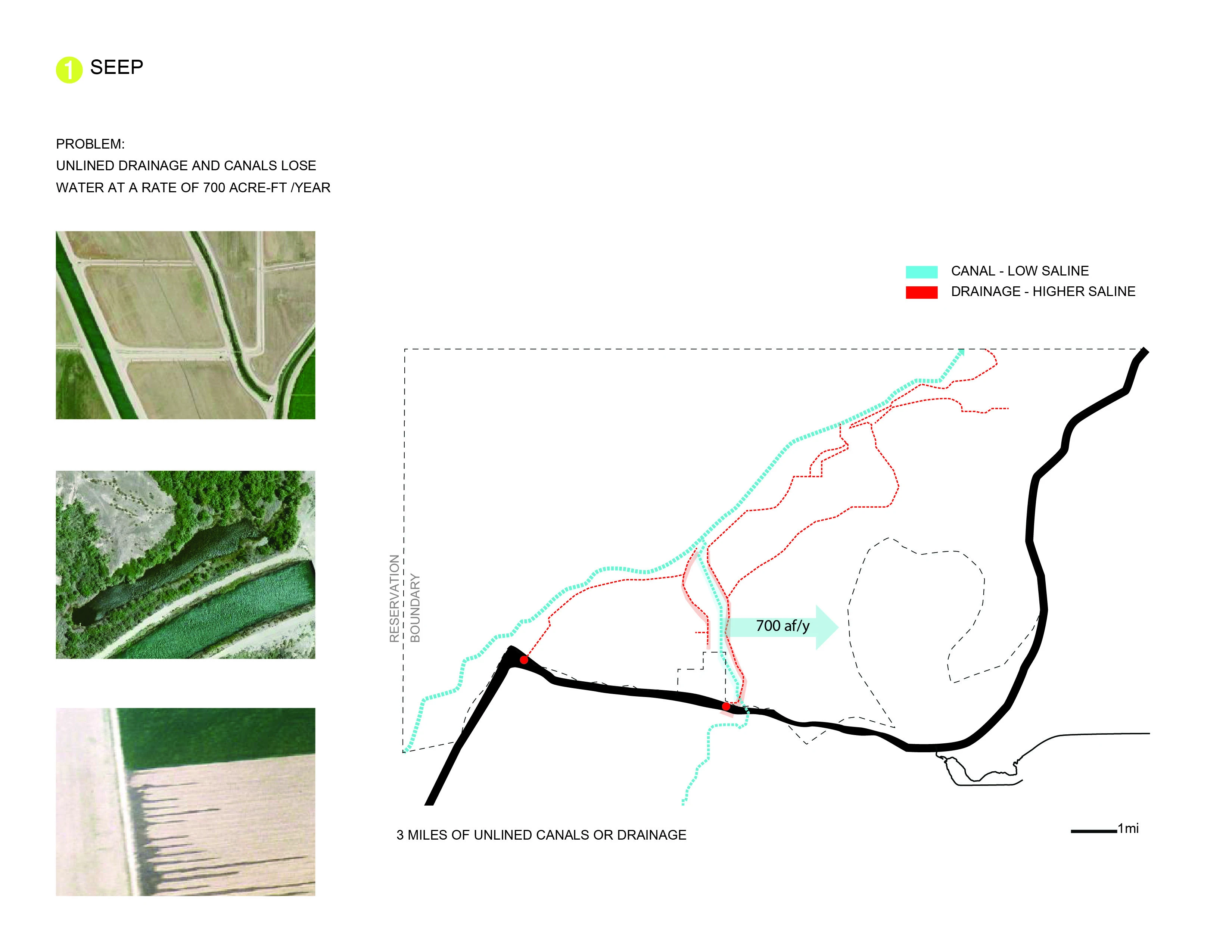
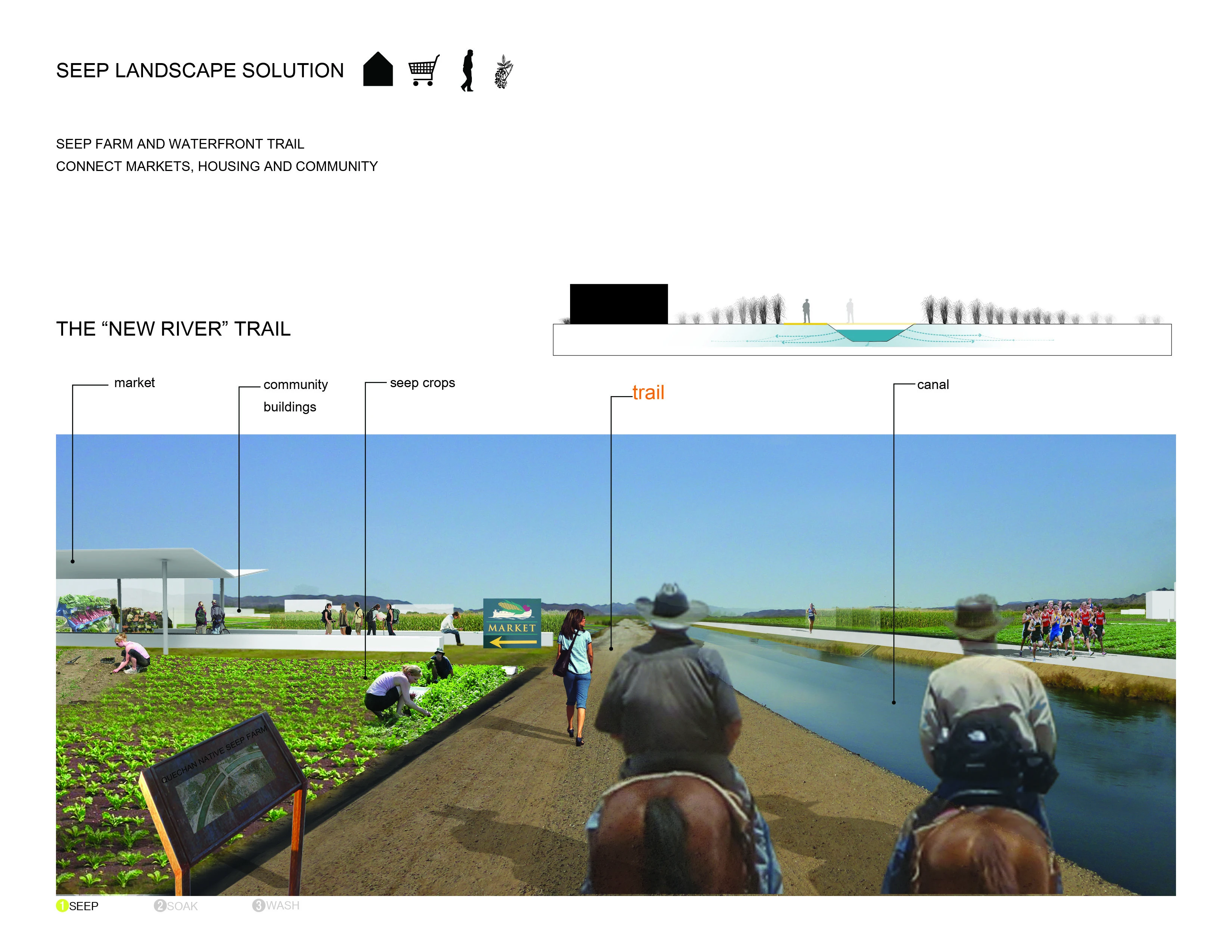
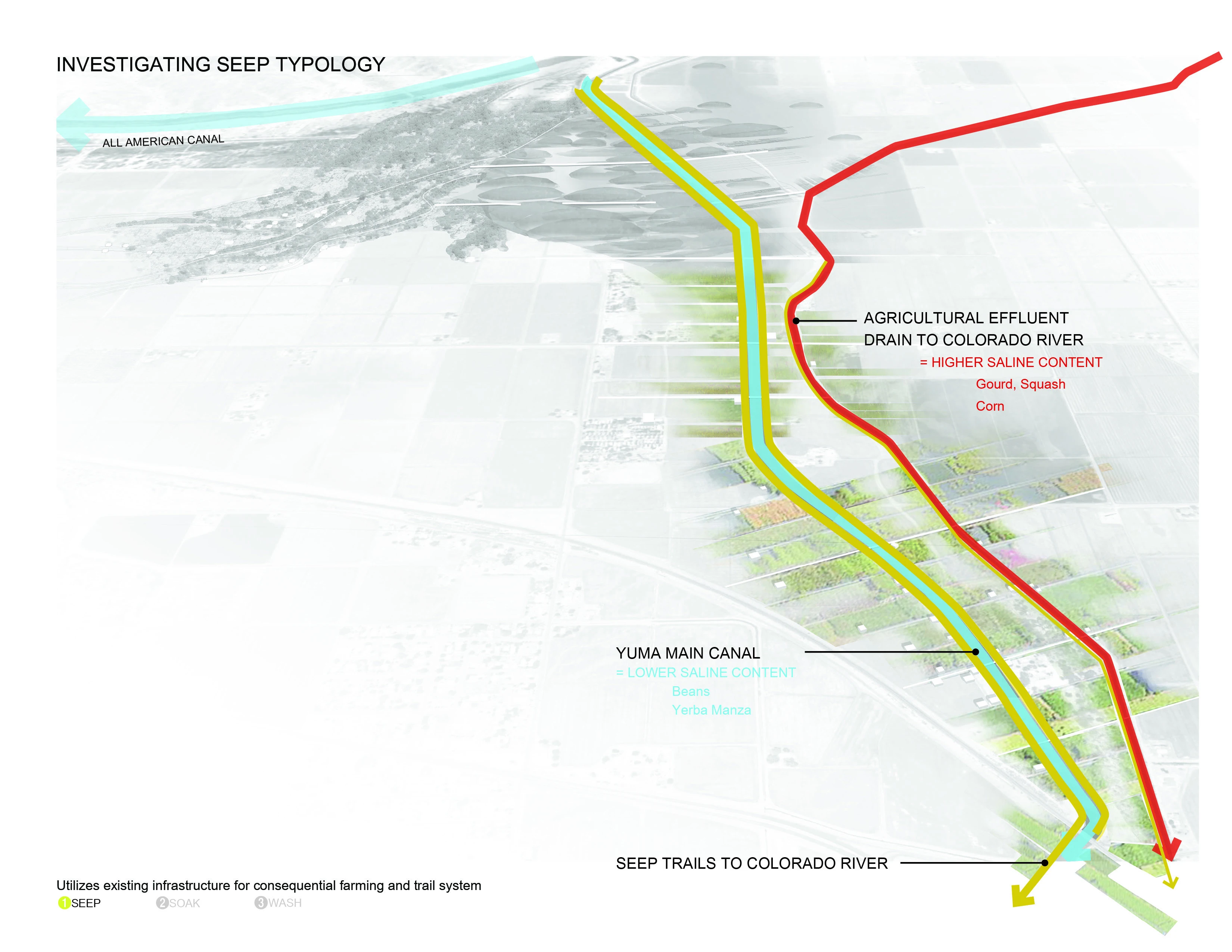
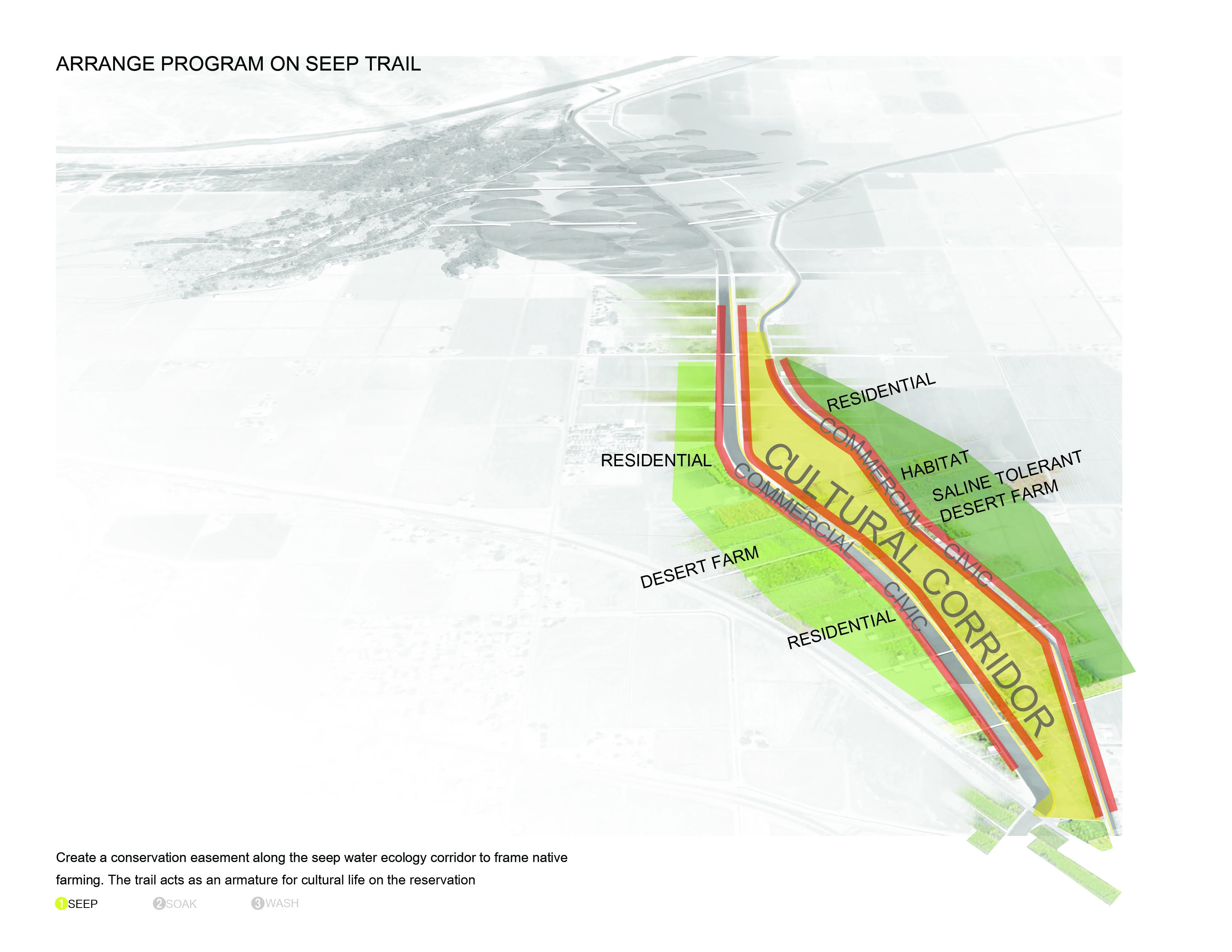
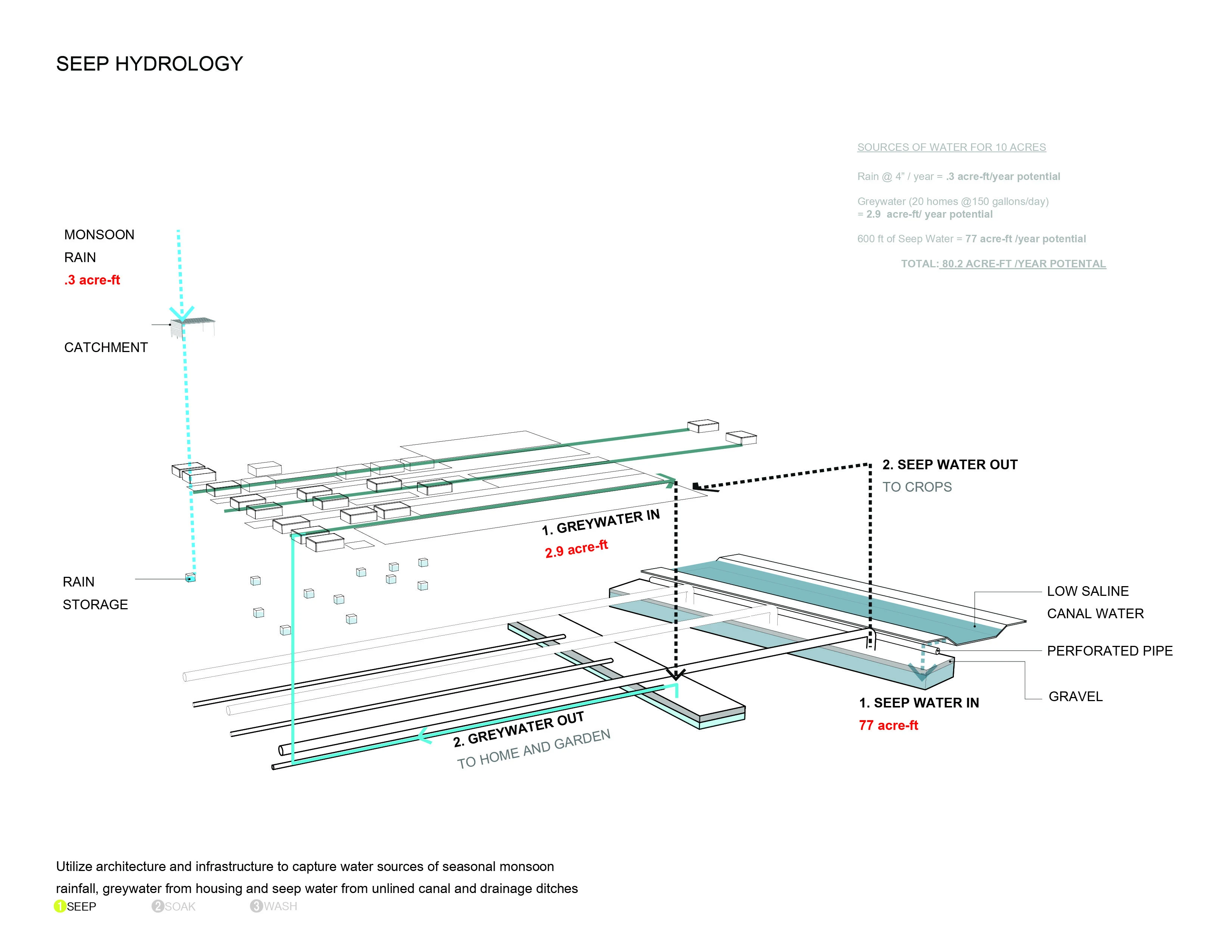
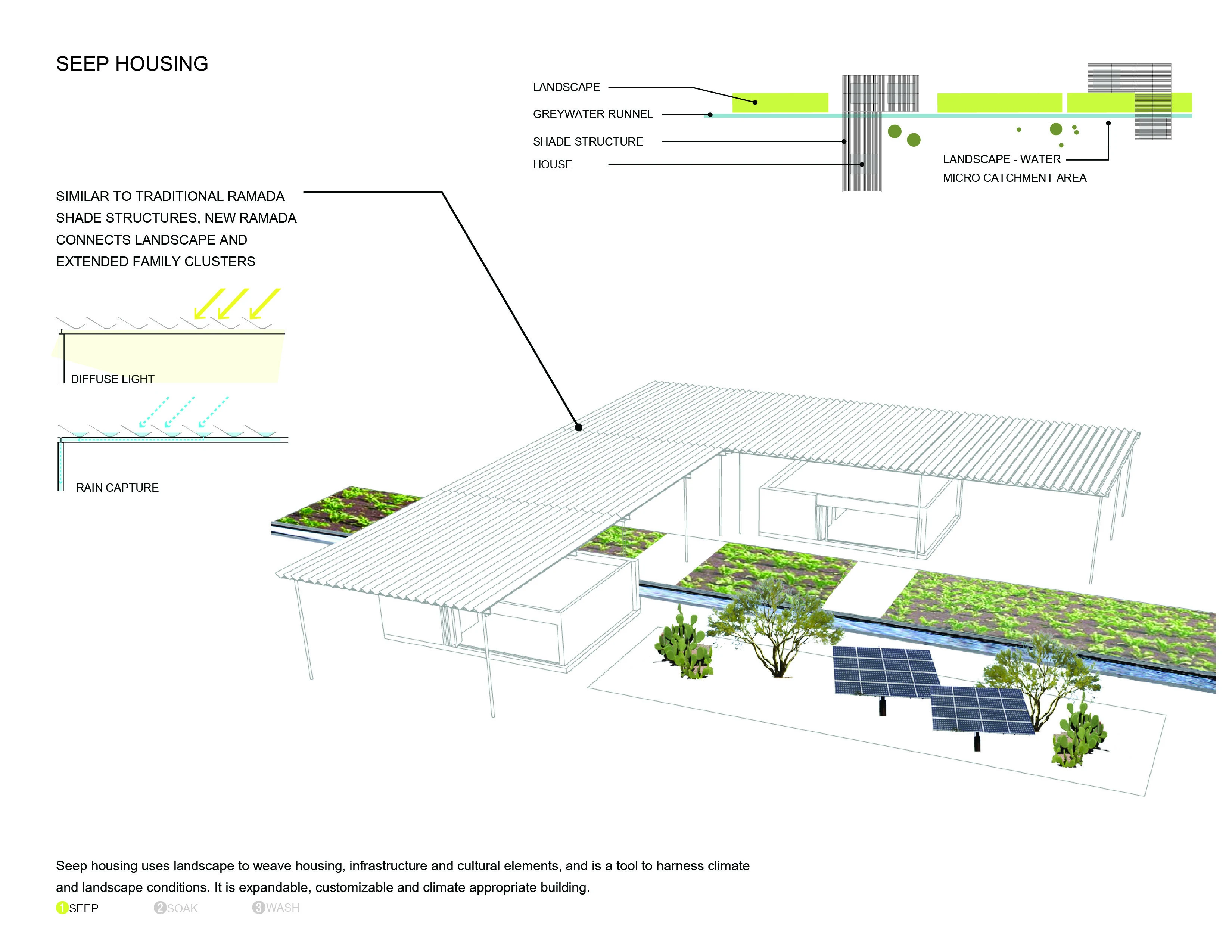
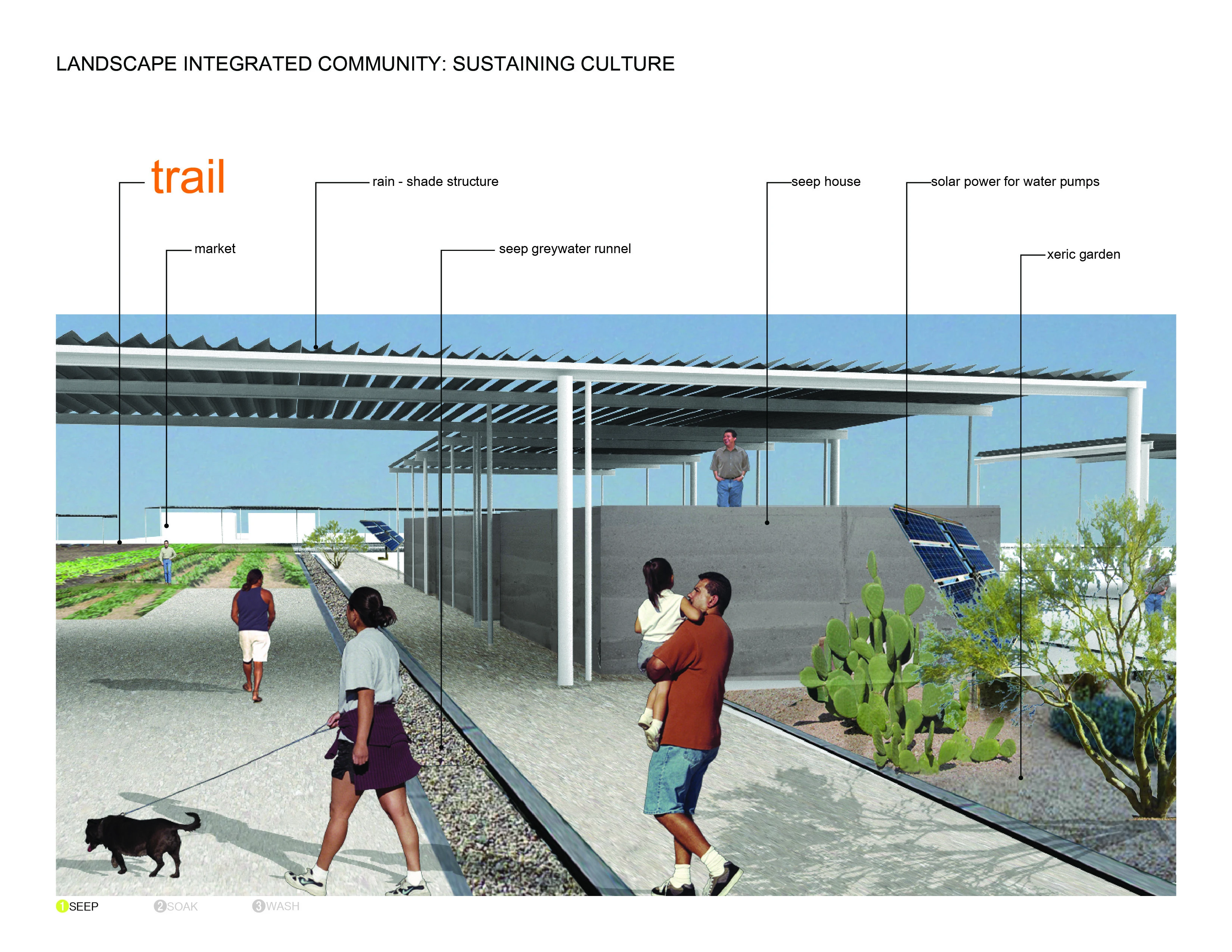
The SEEP landscape typology was developed further by researching the possibilities of using water seeping from unlined agricultural drainage (water that would otherwise be emptied into the Colorado River) and canal ditches as potential supplemental irrigation source for new native farming. SEEP landscape operations include a change of agricultural practice from water hungry crops, such as alfalfa, to traditionally cultivated crops, reintroduce traditional housing principles, and create a more balanced land use system for the existing agricultural allotment plots. As one alternative water source to the Colorado River, the unlined canals become the “new river” and provide water for new consequential farming, while supporting the trail system, markets, housing and cultural life. Implementation for the seep framework depends on the creation of a conservation easement along the seep corridor, and the formation of a native housing authority for the creation of cultural and climate appropriate building.
Extend
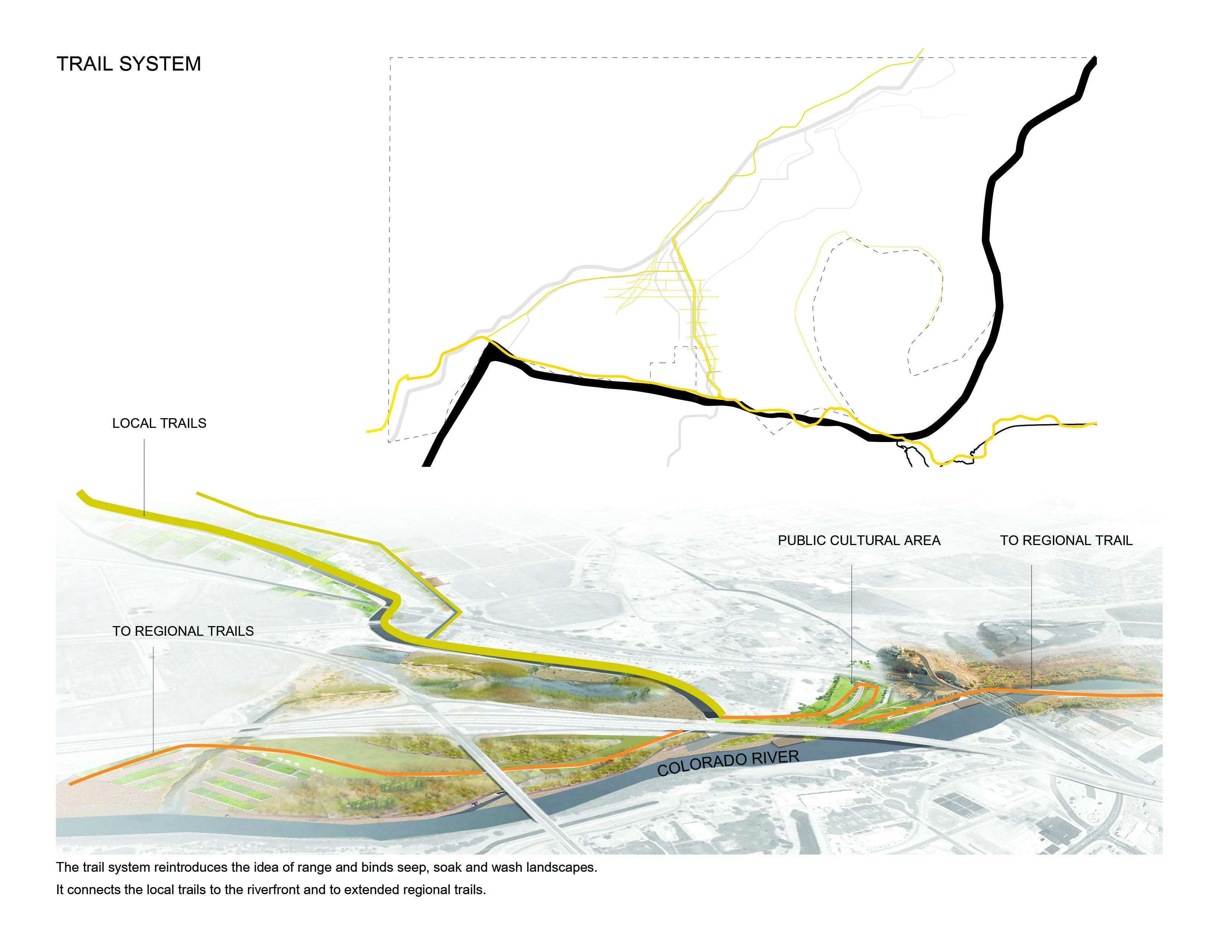
The trail system is an extension of the Quechan culture, reintroduces the idea of range and binds SEEP, SOAK and WASH landscapes. The local trails along the SEEP canals connect to the Colorado Riverfront while regional trails connect to sacred and culturally significant land beyond the reservation. The reorganization of cultural activity and development along the trail corridor shifts focus away from the confines of the reservation and acts as an armature to restore range and connection to land.
-
Additional Advisors and Mentors
Laurie Olin, FASLA; Gavin Reggal and Tony Atkin
Advertisement
Related Awards
Honor Award, Analysis & Planning
A Cultural Approach: The Fort Peck Tribes Hazard Mitigation Plan
In collaboration with the Fort Peck Assiniboine and Sioux Tribes, EPA, and FEMA, the Fort Peck Tribes Hazard Mitigation Plan (HMP) adopts a culturally responsive approach to hazard mitigation planning that features connection to place.