
.webp?language=en-US)
SW Montgomery Green Street: Connecting the West Hills to the Willamette River
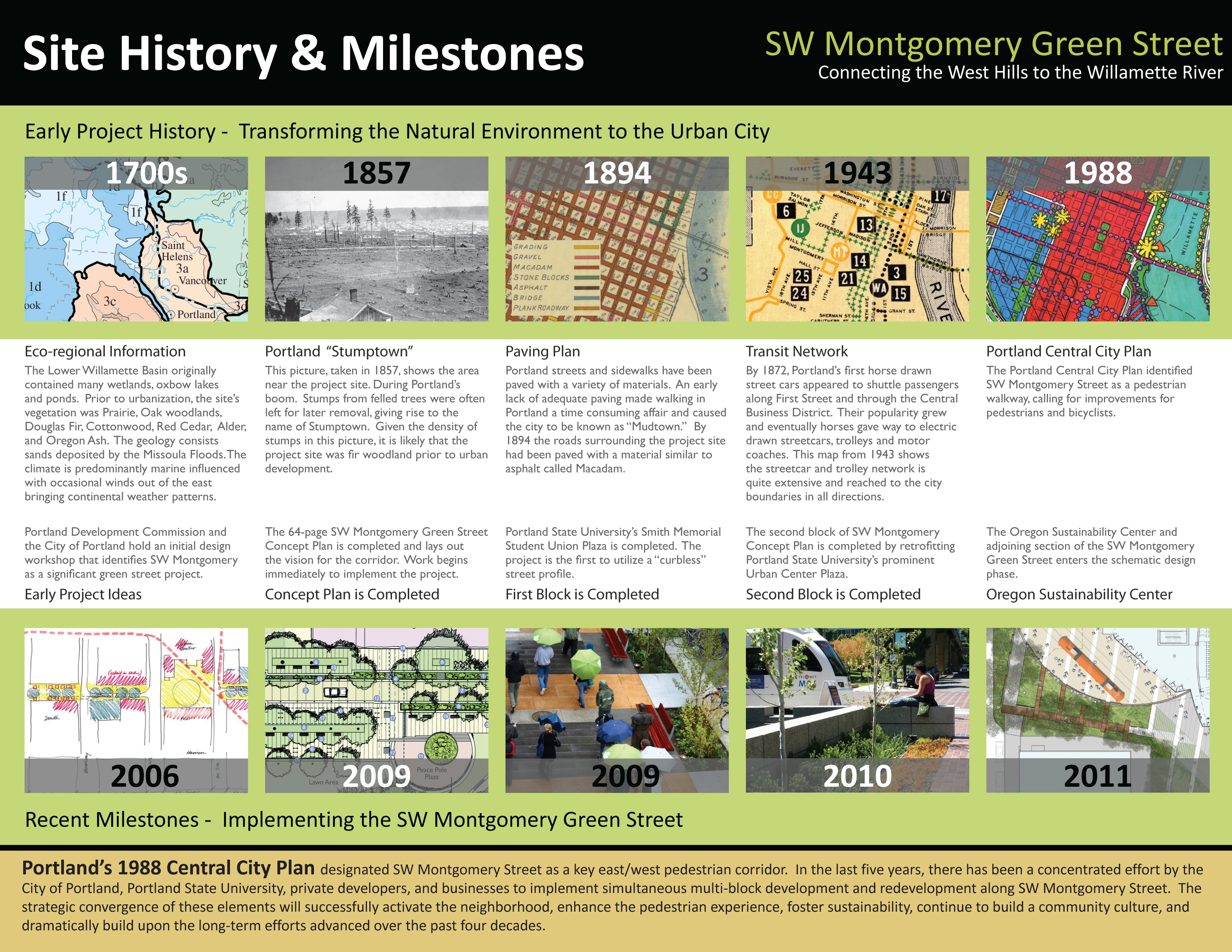
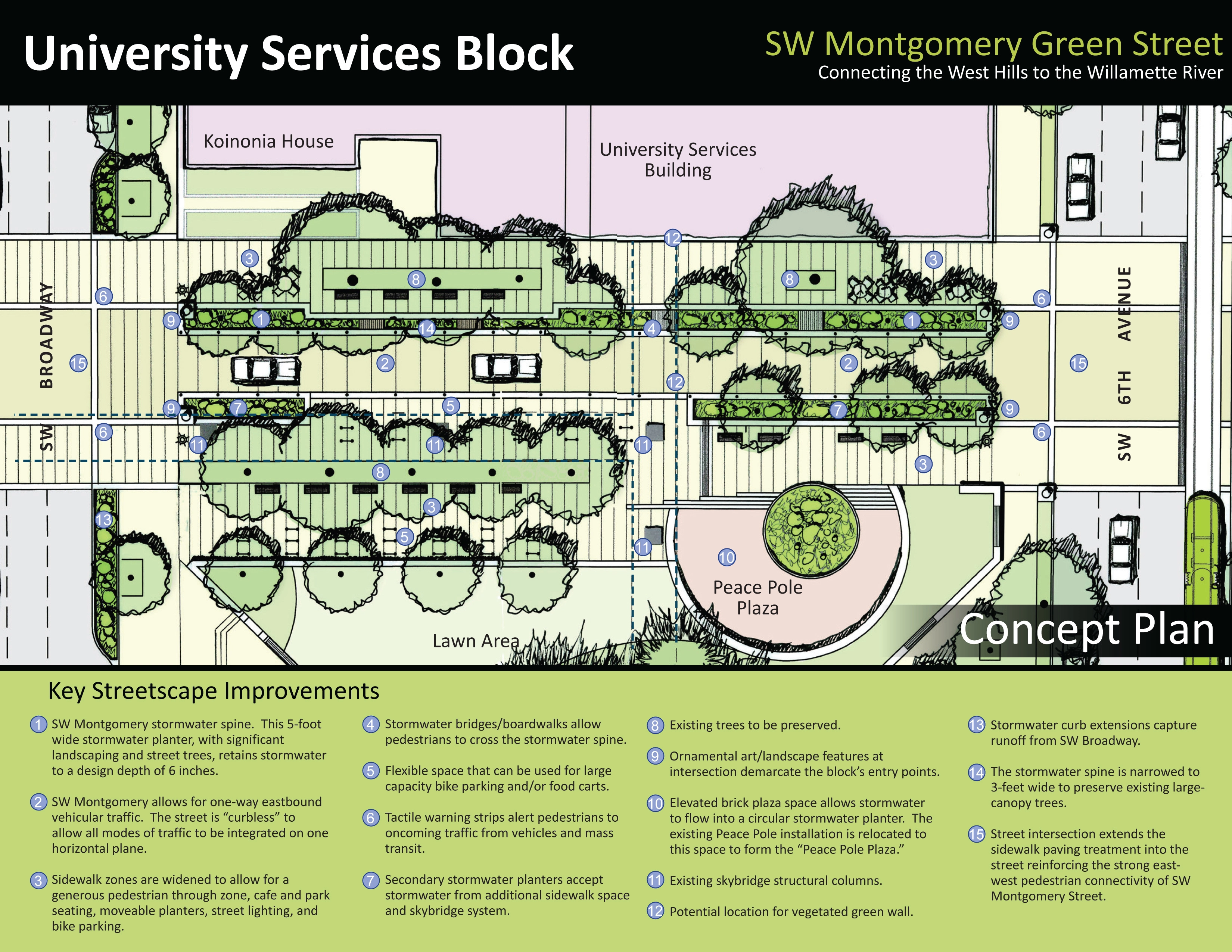
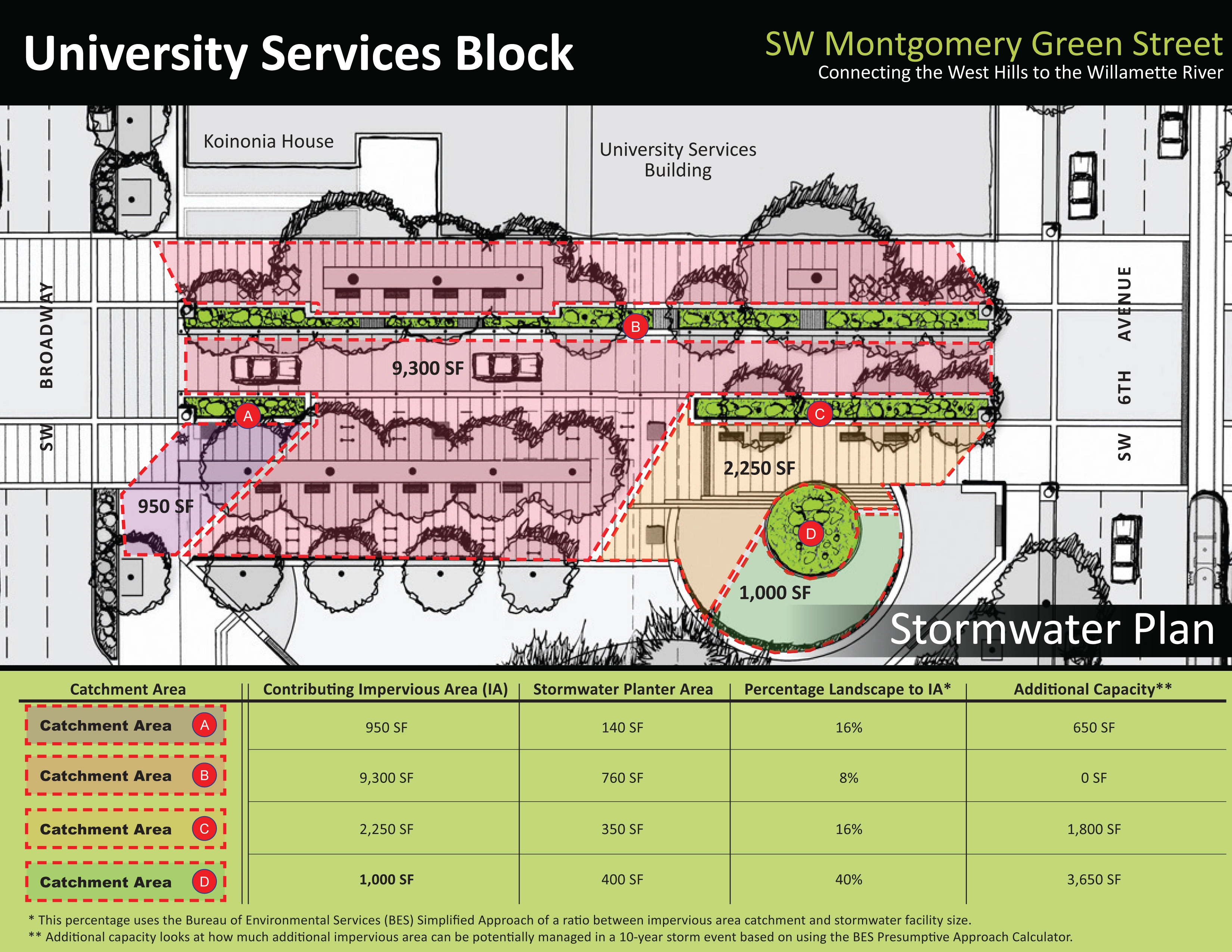
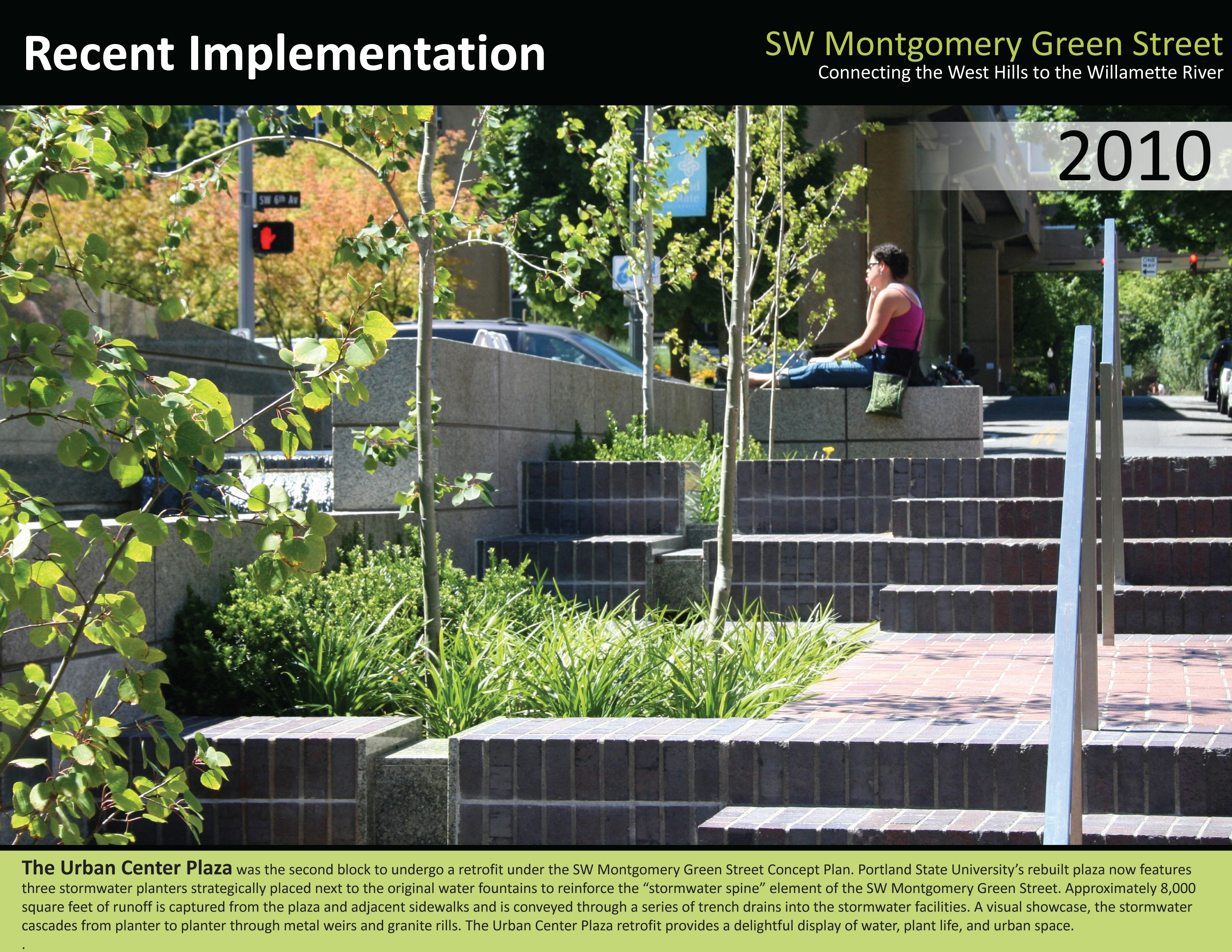
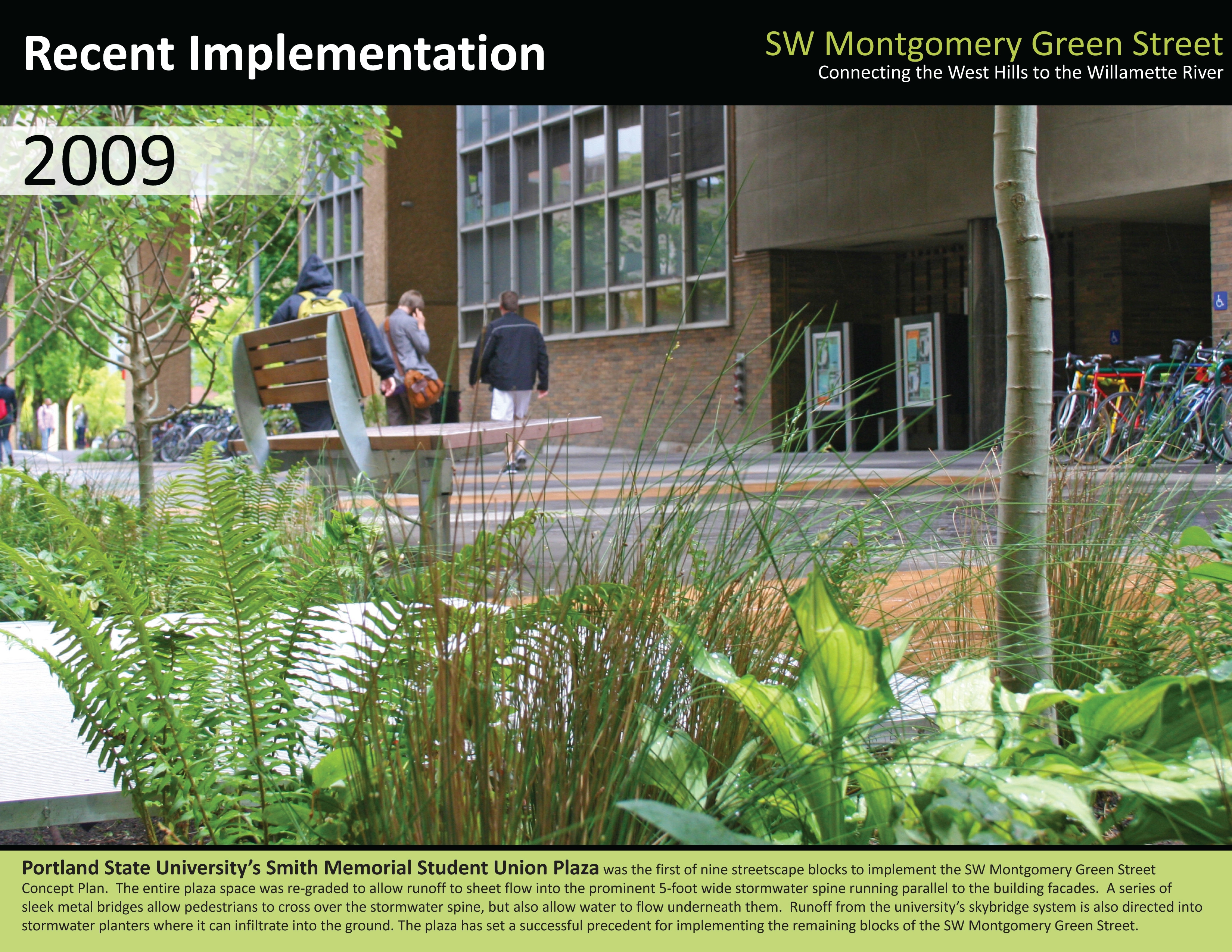
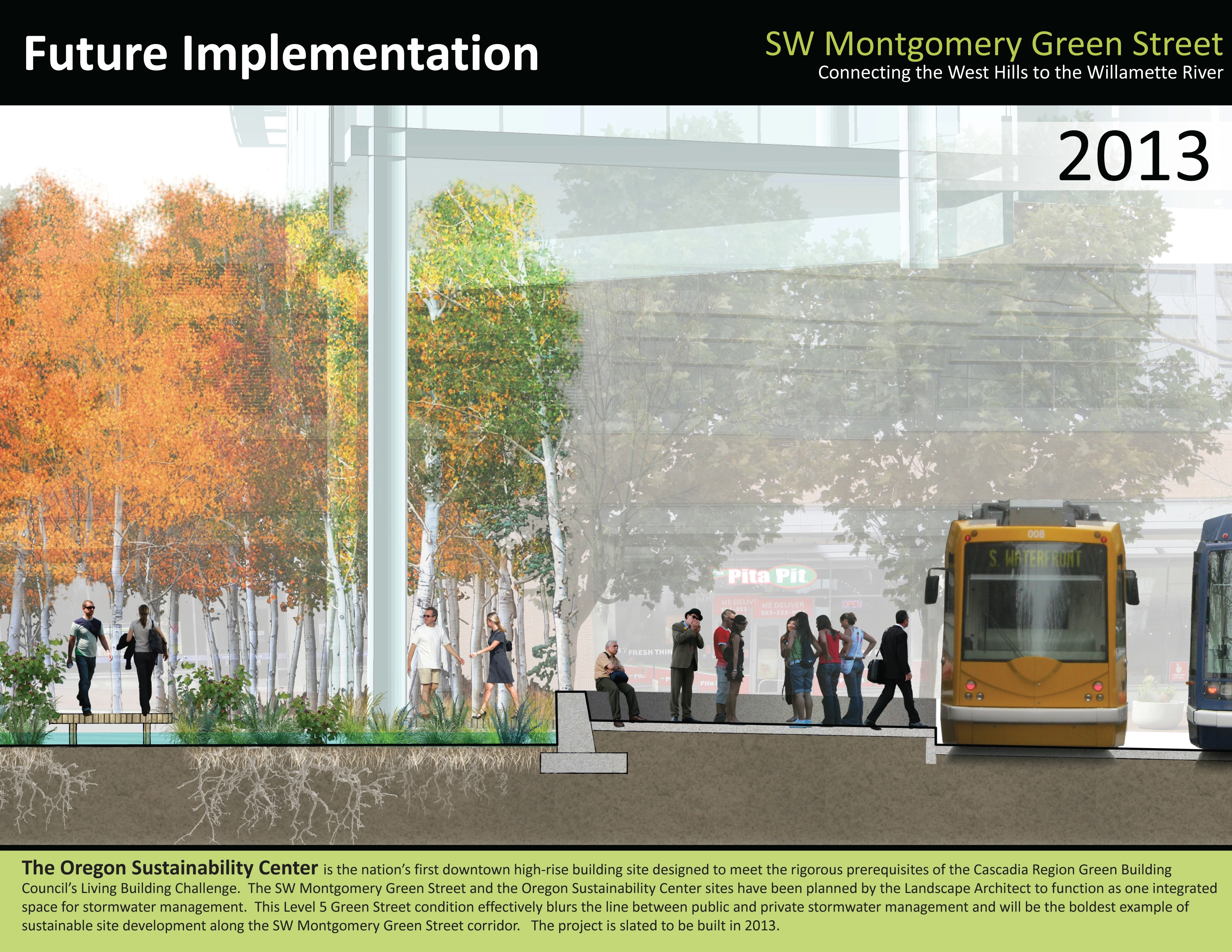
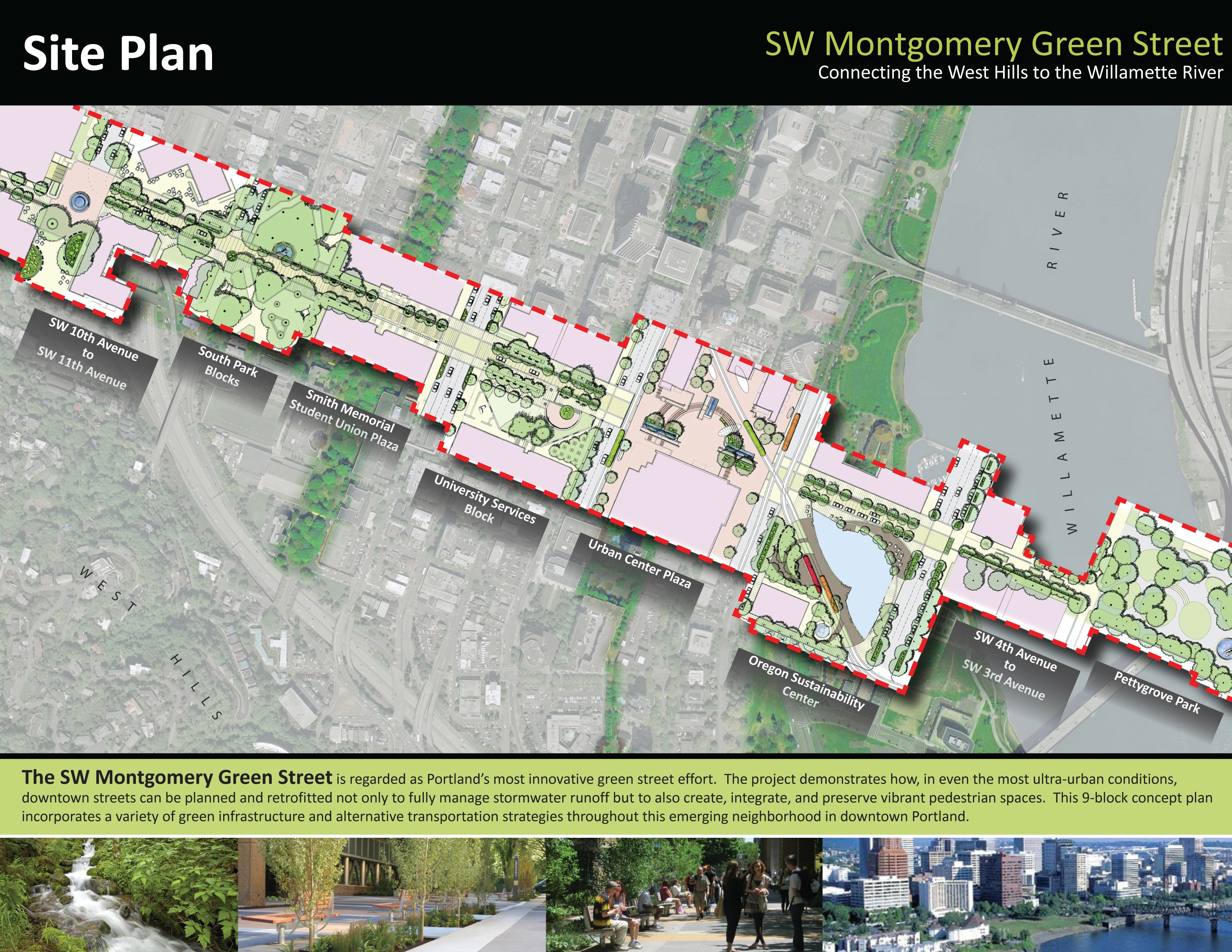
Clean, refreshing, crisp, and stellar. Most cities do piecemeal solutions, but this sets the bar for other cities and lets people know this isn’t just landscaping.
Awards Jury
-
The SW Montgomery Green Street demonstrates an emerging new urban street plan for which Portland is receiving national and international recognition. This multi-block plan incorporates a variety of green infrastructure and alternative transportation strategies throughout this emerging downtown neighborhood. The Southwest Montgomery Green Street is considered to be Portland’s boldest and most innovative downtown green street project to date.
-
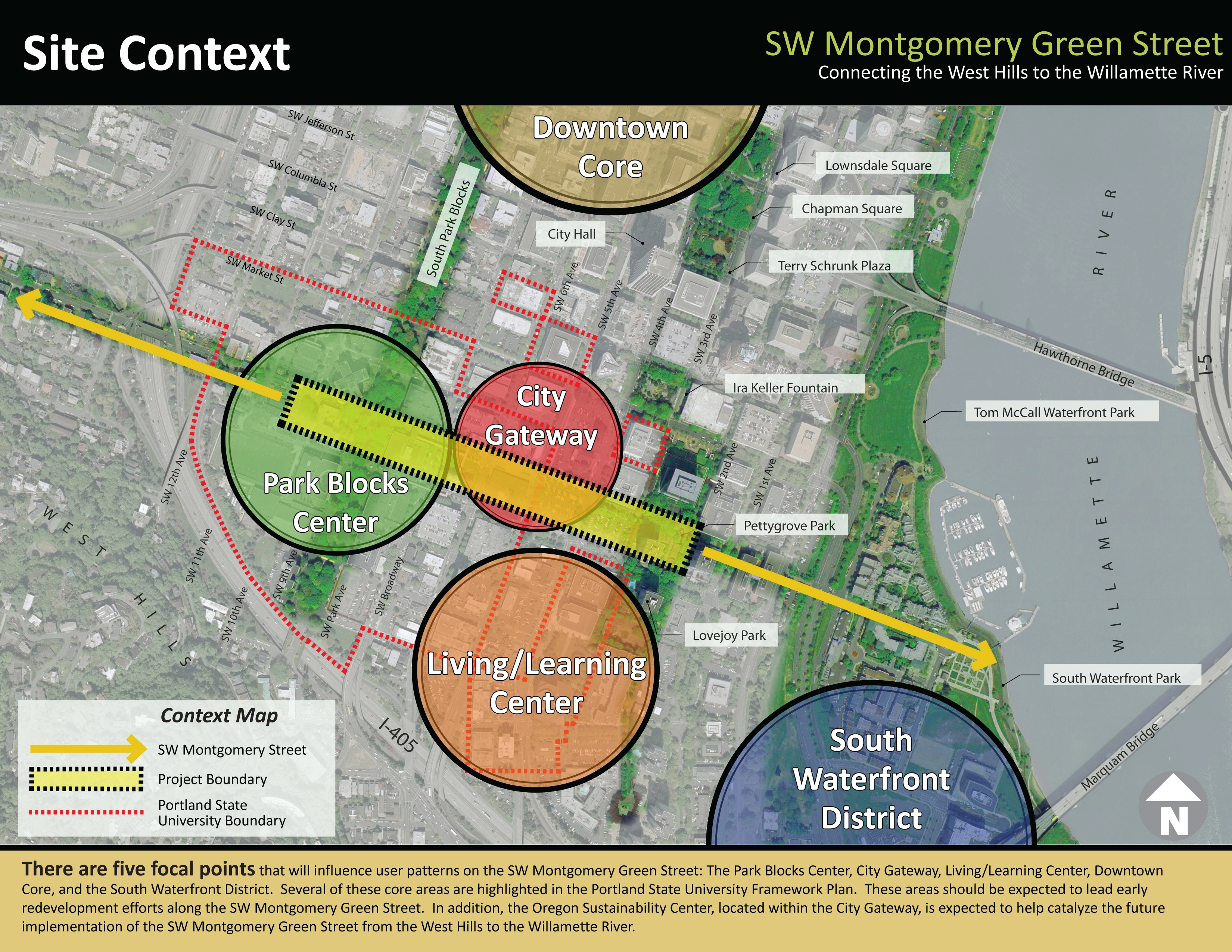
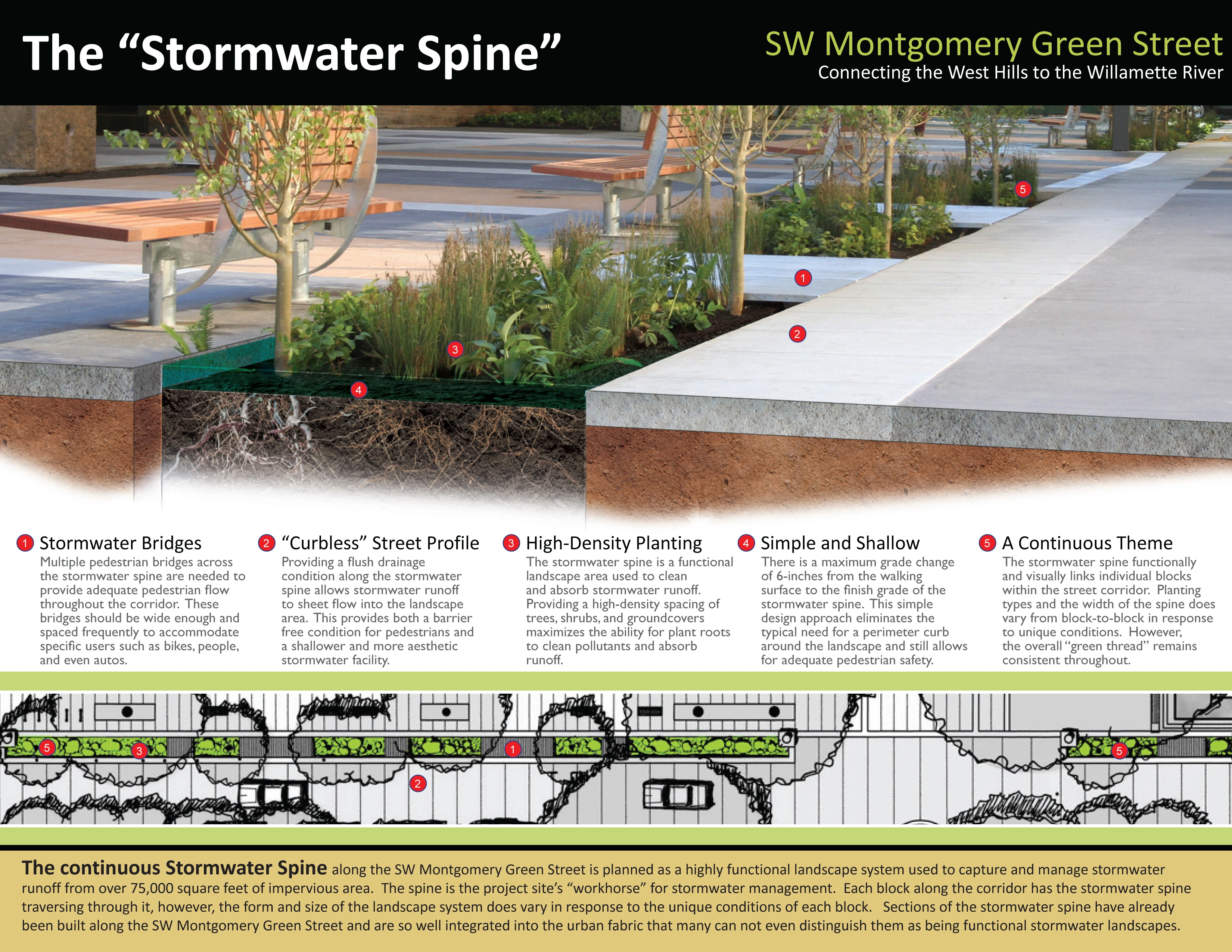
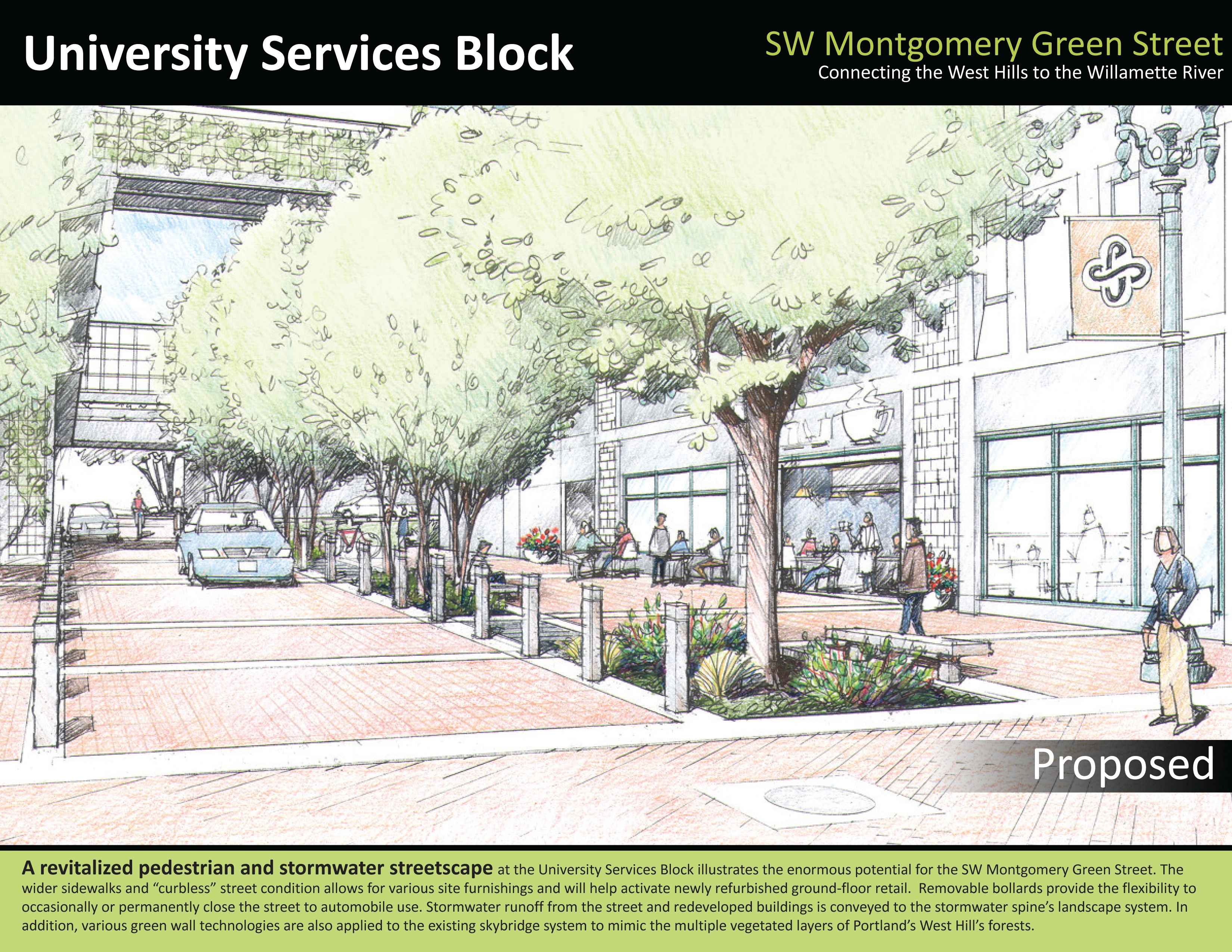
Through a collaborative effort, the Portland Development Commission (PDC), Portland’s Bureau of Environmental Services (BES) Portland State University (PSU), and Gerding Edlen Development, are pursuing a 9-block plan that incorporates a variety of sustainable stormwater management strategies from SW 11th Avenue east to Pettygrove Park via SW Montgomery Street. The Portland Central City University District Plan emphasizes the development of this neighborhood as an area where University uses mesh with City of Portland goals and designates SW Montgomery Street as a key east/west pedestrian corridor. Simultaneous multi-block development and redevelopment along SW Montgomery Street will dramatically build upon the long-term efforts advanced by the City, PSU, private developers, and businesses over the past four decades. The strategic convergence of these elements will successfully activate the neighborhood, enhance the pedestrian experience, foster sustainability, and continue to build a community culture. The SW Montgomery Green Street Plan demonstrates how, in even the most ultra-urban conditions, downtown streets can be planned and retrofitted not only to fully manage stormwater runoff but to also create, integrate, and preserve vibrant pedestrian spaces. The landscape architect was asked to take the primary role creating a highly integrated and pedestrian-oriented urban streetscape vision that incorporates a variety of green infrastructure strategies along the corridor including stormwater swales, planters, green walls, green roofs, artful stormwater conveyance, and a definitive “curbless” street design.
General Project Goals
- The SW Montgomery Green Street Plan aims to achieve many goals for the surrounding project area. Several general goals were identified by the project team early in the planning process, including:
- Enhancing Portland’s current reputation as an incubator for collaborative and innovative sustainable design and development,
- Developing a model for sustainable practices by incorporating sustainable stormwater management approaches into the site design and celebrating all the elements of a vibrant urban environment,
- Creating a primary means of connectivity among amenities such as the University, fountains, parks, auditoriums, museums, theaters, and shopping; within walking distance of many central city business district jobs, also connect to the greater metropolitan area via the streetcar, future light rail, and numerous transit mall bus lines,
- Expanding the Urban Center Plaza’s success as an active city plaza and let that success extend throughout the entire project corridor,
- Incorporating the vision to connect the West Hills with the Willamette River along SW Montgomery Street, and:
- Using the SW Montgomery Green Street to connect the overall area to an Eco-district.
Specific Green Street Goals
Along with the general goals outline above, the landscape architect was tasked to help achieve specific green street design goals for the SW Montgomery project corridor, including:
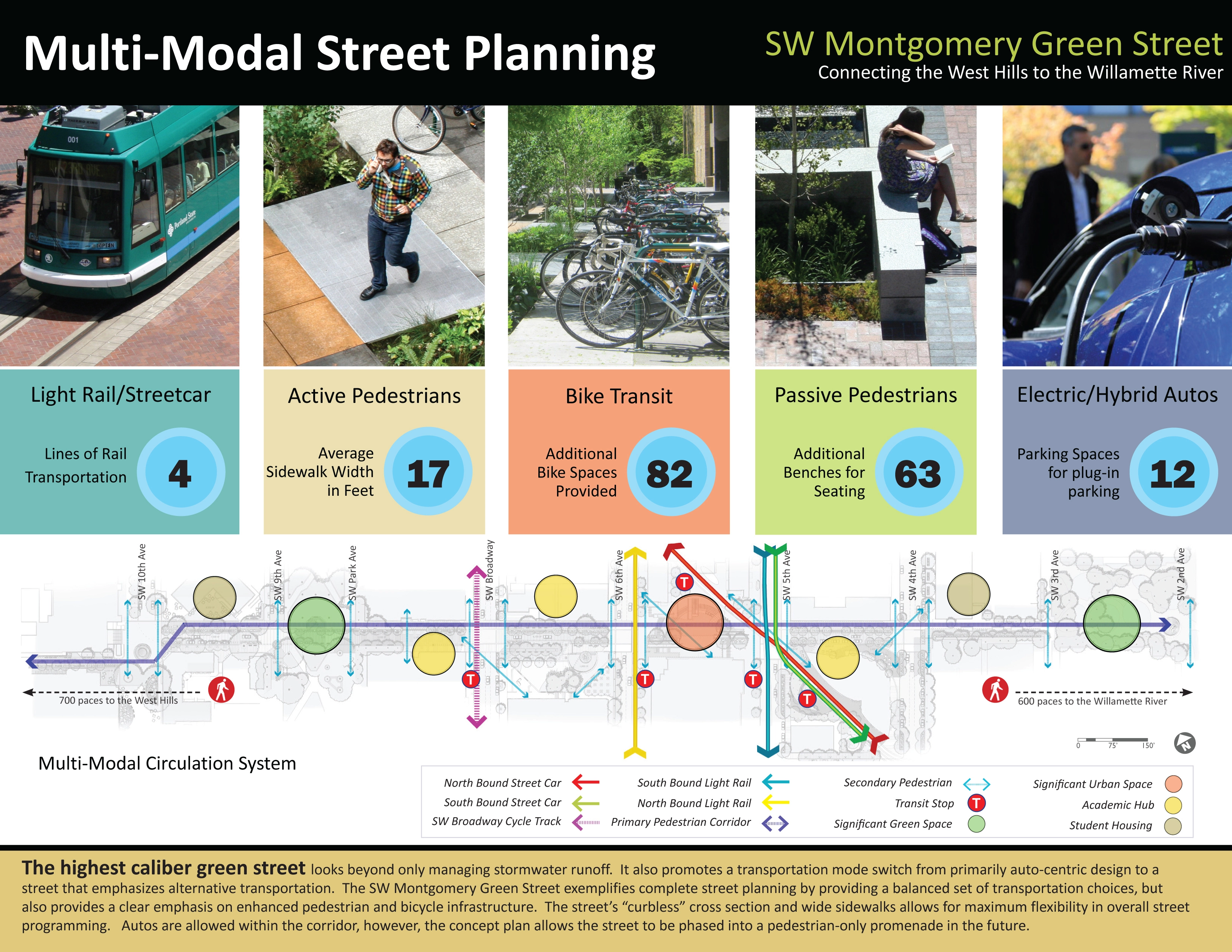
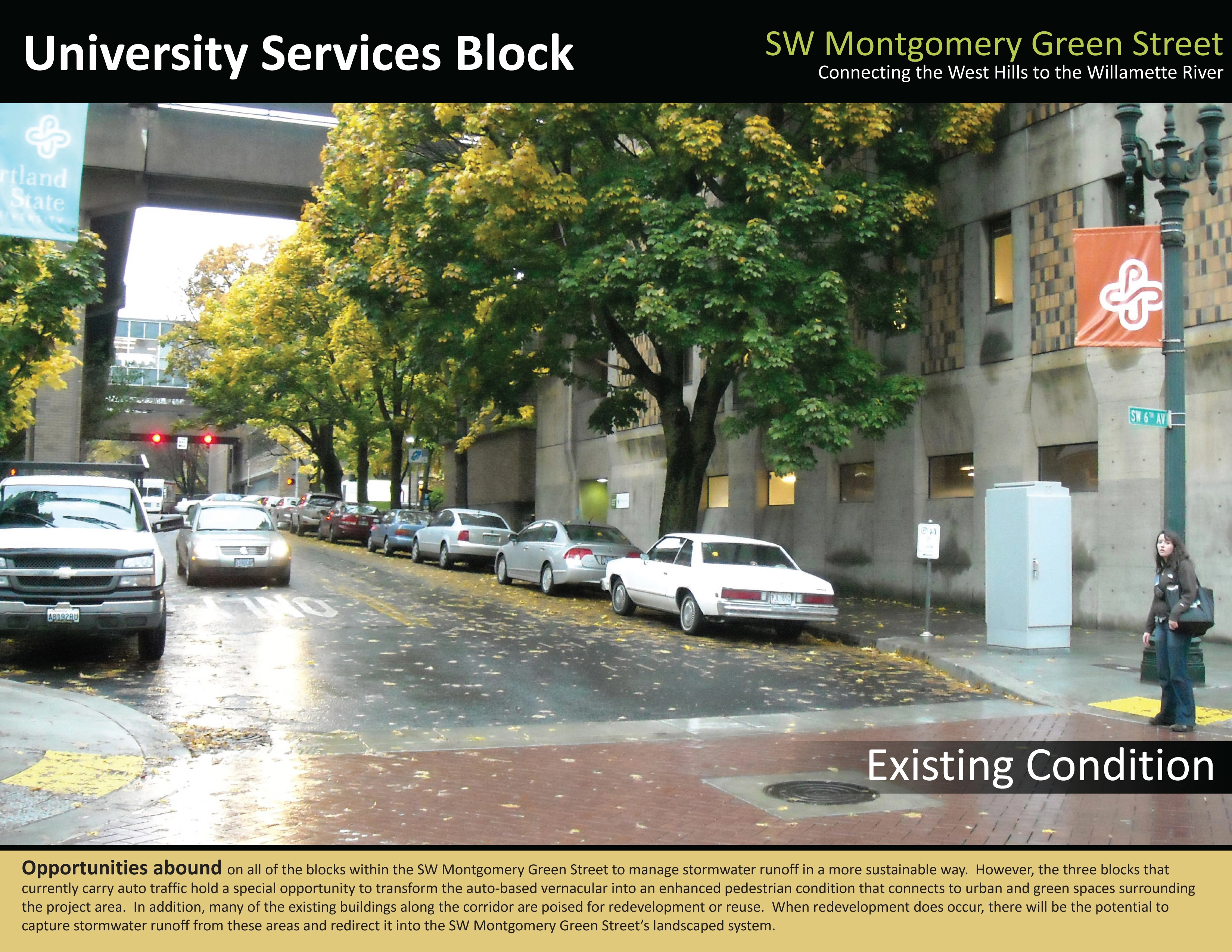
- Create wider sidewalks and “curbless” street conditions that allow for various site furnishings adjacent to ground floor retail areas. Blocks that carry auto traffic should have active retail with one lane of traffic and one lane of parking with the option to close for pedestrian-only special events,
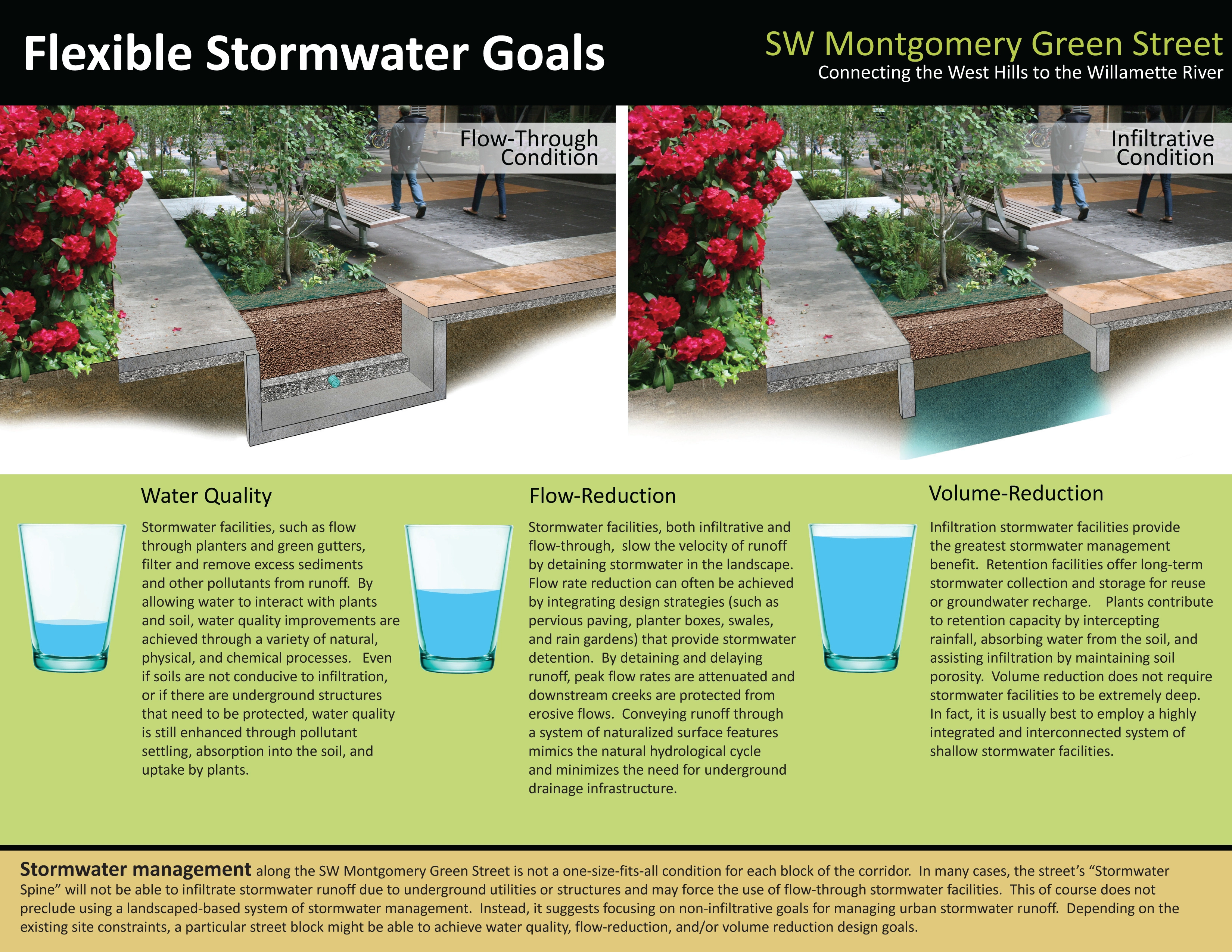
- Introduce a visually continuous landscaped element that acts as a “stormwater spine” or common thread through multiple blocks and creates a “green” east/west connection through downtown and the Portland State University district,
- Integrate right-of-way green street design with adjacent developments including the planned Oregon Sustainability Center. Explore the potential of creating shared stormwater planters to accept both street and building rooftop runoff, and:
- Retrofit green street elements along the project corridor, while honoring the character found particularly at the South Park Blocks, Urban Center Plaza, and Pettygrove Park.
Project Analysis and Implementation
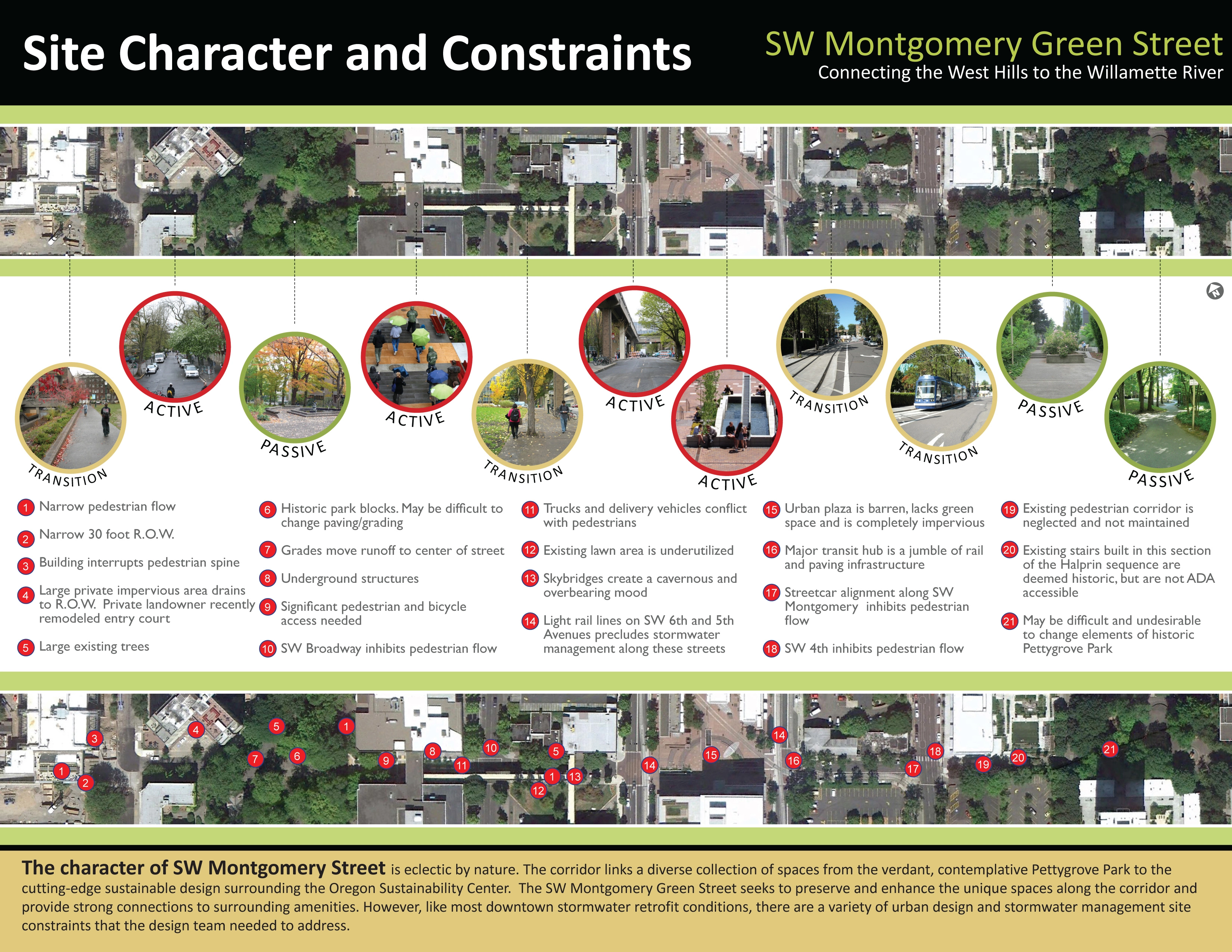
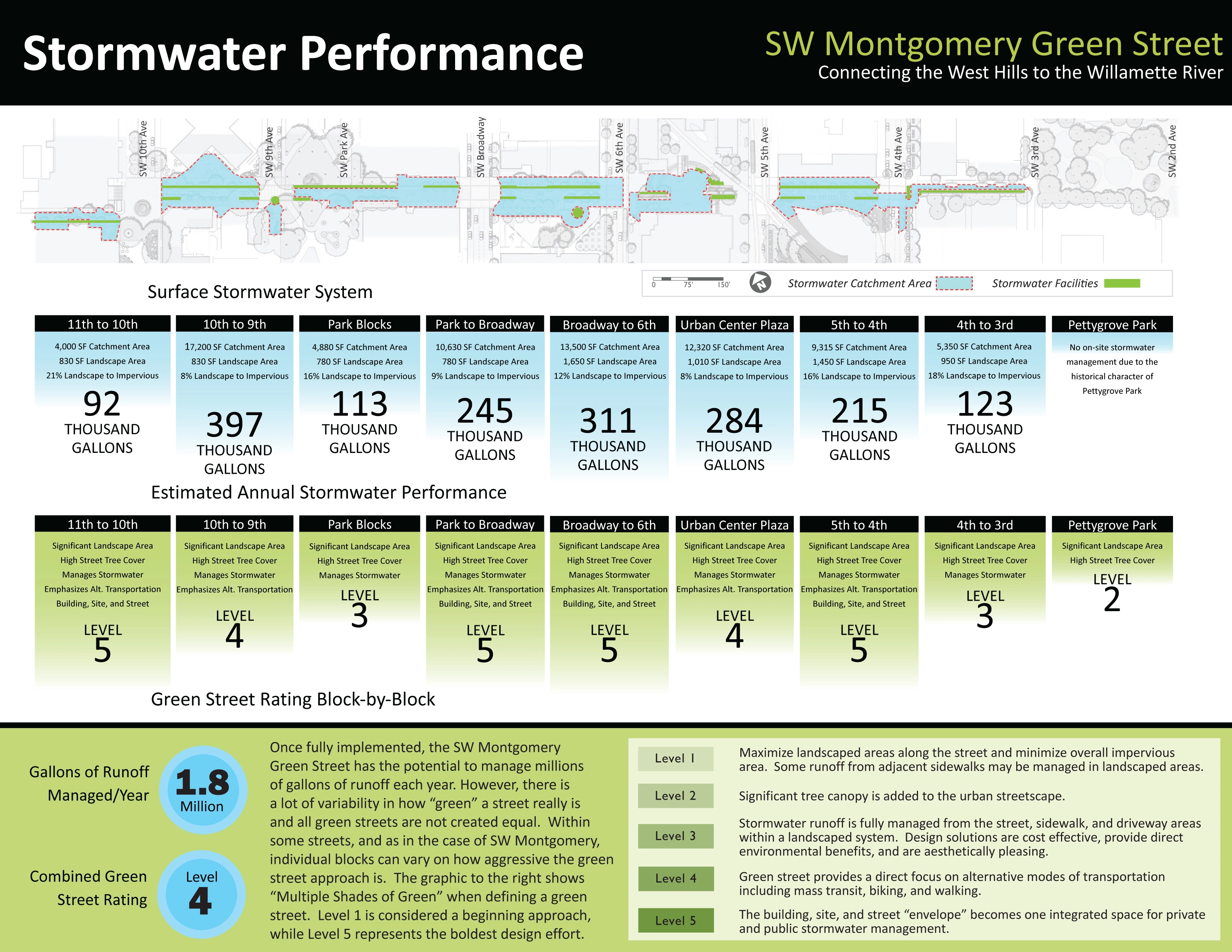
To fully realize the plan for the SW Montgomery Green Street, the landscape architect was asked to study the project’s site character, determine the project’s overall stormwater management goals, investigate and respond to the site’s constraints, determine how bold of a green street is possible, and analyze the different modes of circulation throughout the neighborhood. This analysis provided the opportunity for 1.8 million gallons of stormwater runoff to be managed through the street’s “stormwater spine,” the potential for a significant transportation mode shift from auto-infrastructure to people-infrastructure, and the ability to have the street itself catalyze sustainable private redevelopment along the SW Montgomery Green Street corridor. The final product of these analyses is the creation of the SW Montgomery Green Street Plan which has proven to be highly implementable both in the near and long-term.
The SW Montgomery Green Street Plan is being implemented in multiple phases. Two blocks of the plan, the Smith Memorial Student Union Plaza and the Urban Center Plaza Retrofit, have been successfully completed by the landscape architect’s design team. Two additional blocks are targeted for implementation within the next two years, including the proposed Oregon Sustainability Center- Portland’s most technologically advanced, state-of-the-art green building site that aims to meet the rigorous criteria of the Living Building Challenge. With the strategic convergence of various partners and continued planning and implementation efforts, the SW Montgomery Green Street corridor will successfully activate the neighborhood and foster sustainability as a relationship between academic, residential, and business communities. This project’s implementation will serve as a new concept for street planning and a place-making model for other downtown streetscape projects in Portland and beyond.
-
Lead Designers: Nevue Ngan Associates
Keving Robert Perry, ASLA, Ben Ngan, David Goodyke and Jason HirstCivil Engineering Support: Sisul Engineering
Douglas JohnsonArchitecture Support
Michael Riscica and Nancy Merryman
City of Portland Bureau of Environmental Services
Emily HauthPortland Development Commission
Lisa Abuaf and Irene BowersPortland State University
Ernest Tipton and Kate Vance
Advertisement
Related Awards
Honor Award, Analysis & Planning
A Cultural Approach: The Fort Peck Tribes Hazard Mitigation Plan
In collaboration with the Fort Peck Assiniboine and Sioux Tribes, EPA, and FEMA, the Fort Peck Tribes Hazard Mitigation Plan (HMP) adopts a culturally responsive approach to hazard mitigation planning that features connection to place.