
.webp?language=en-US)


Shangri La Botanical Garden
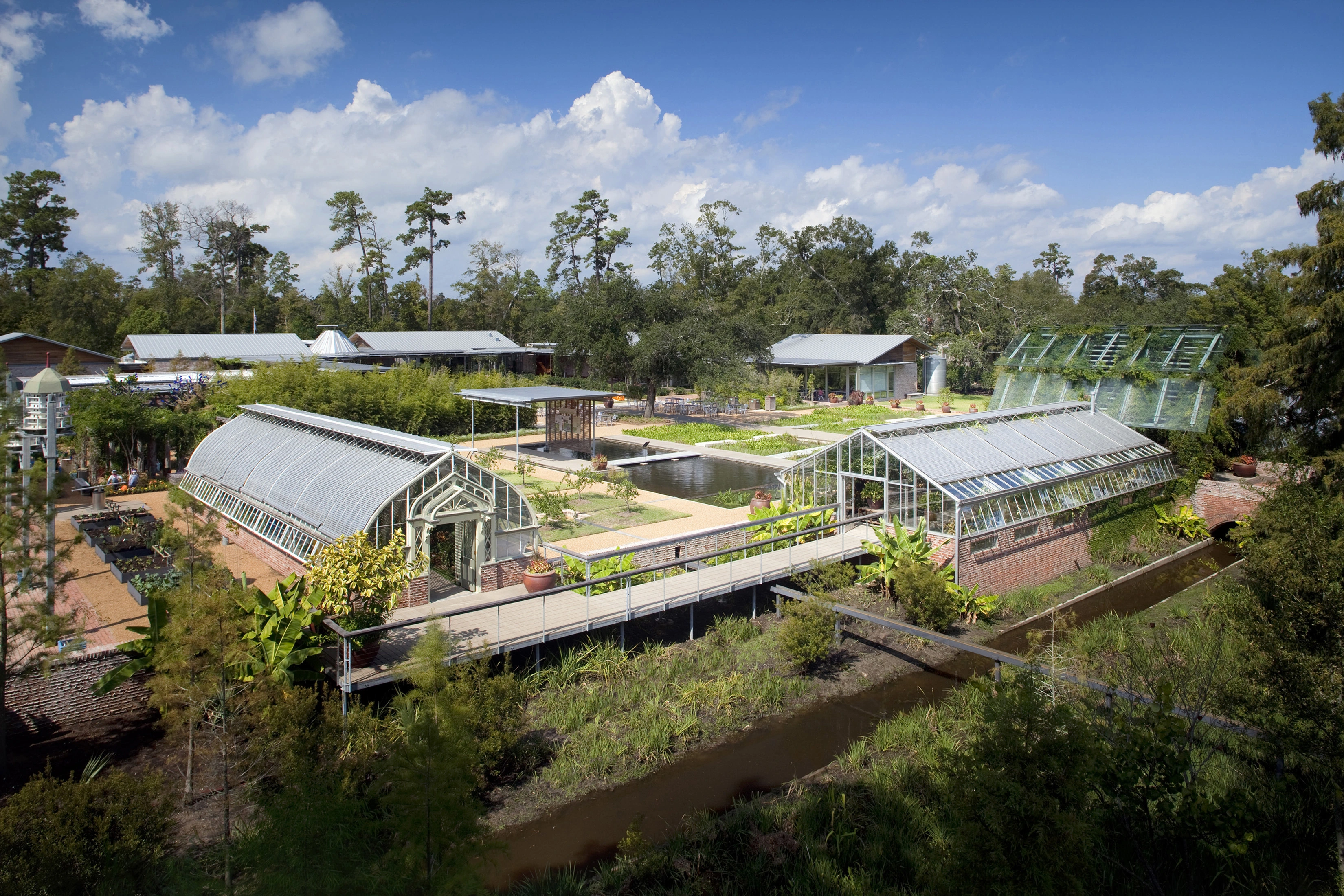
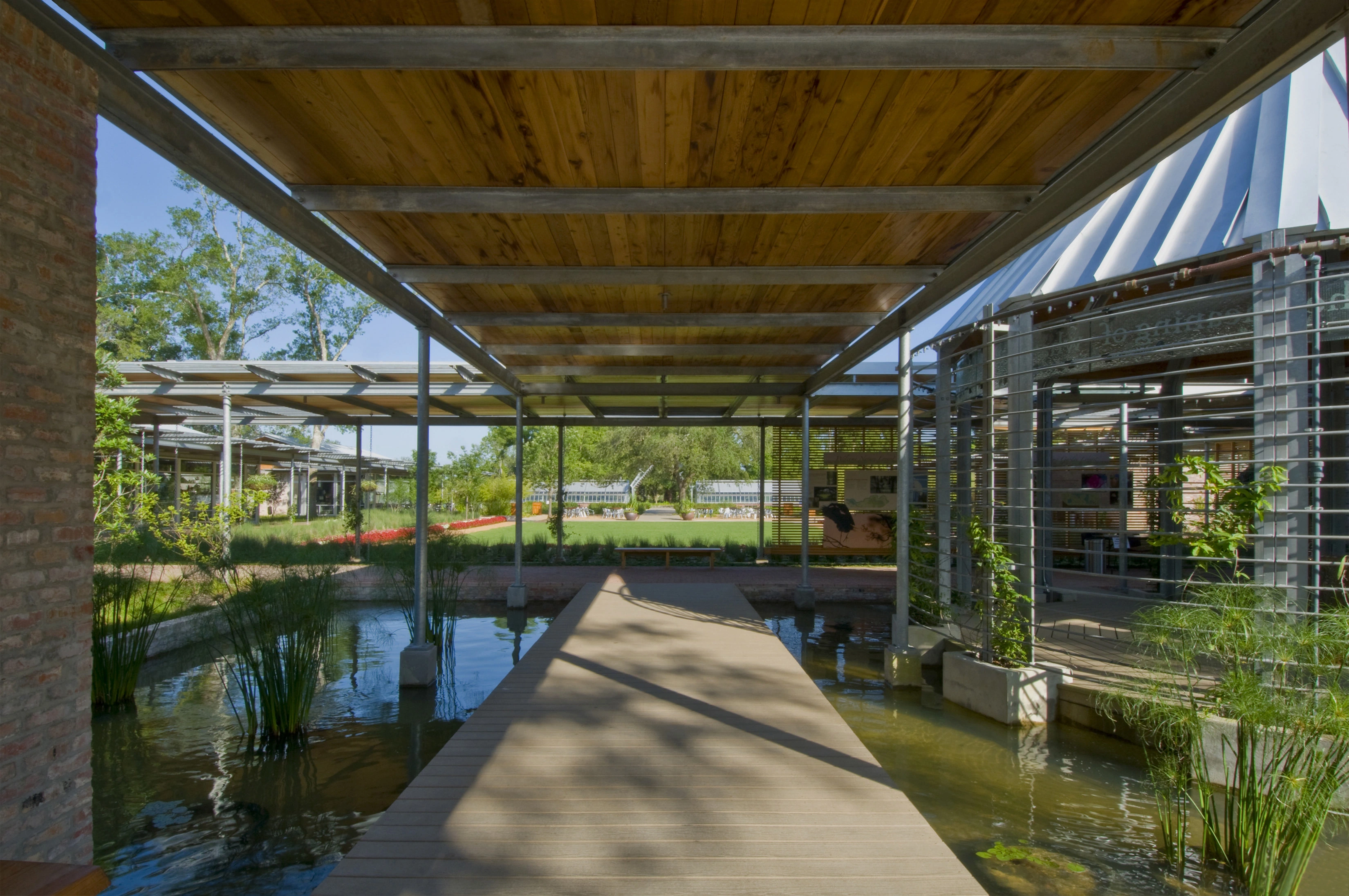
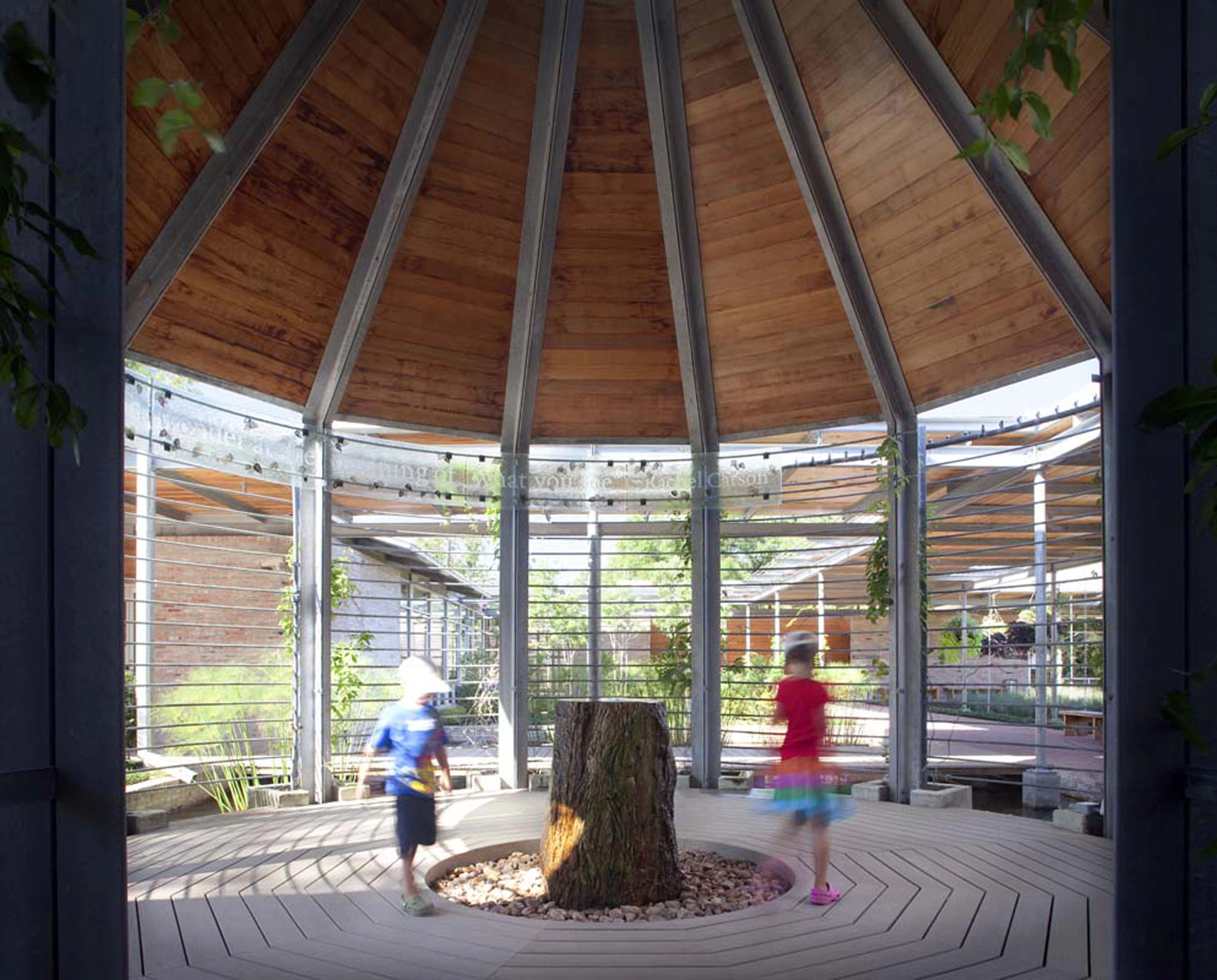
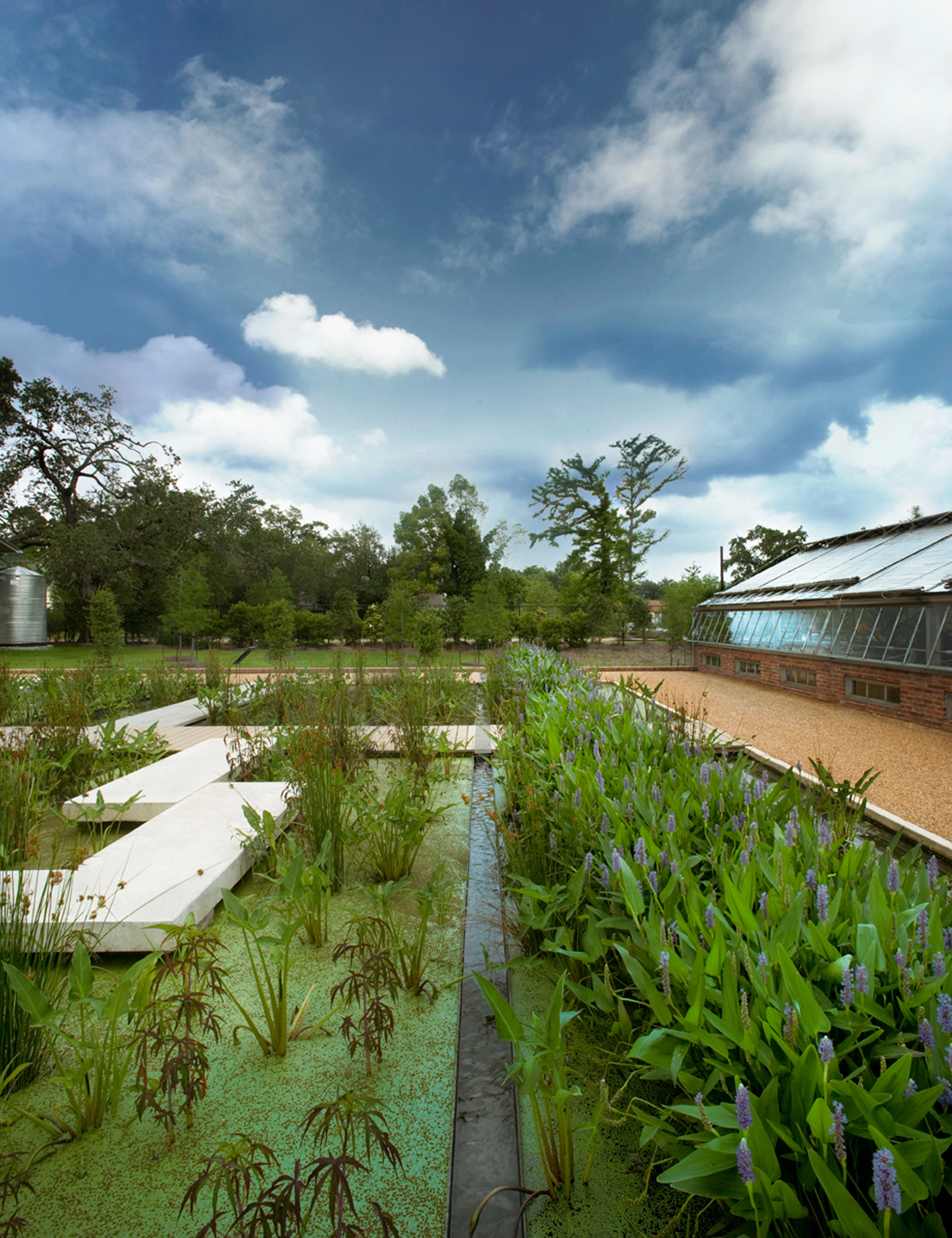
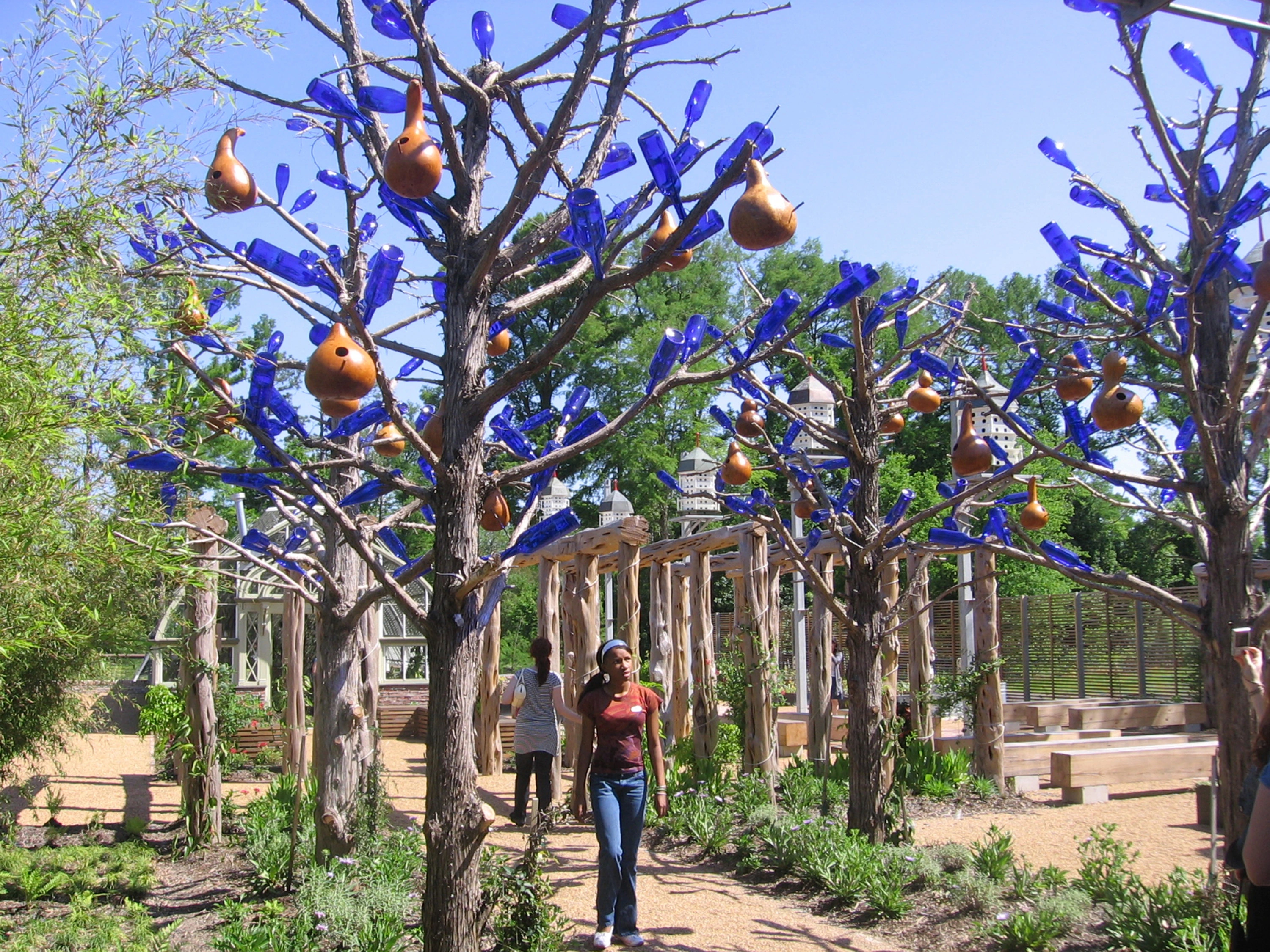
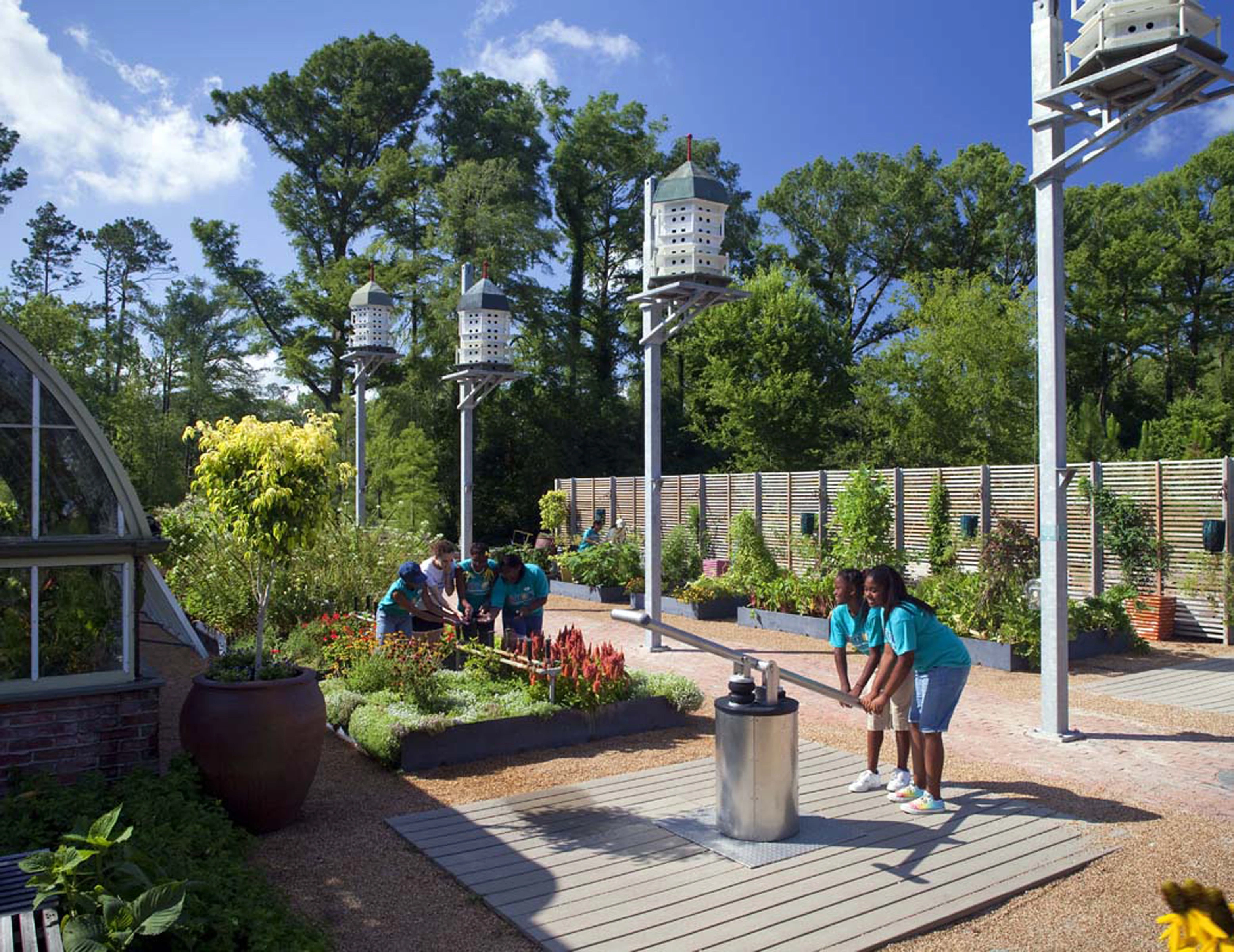
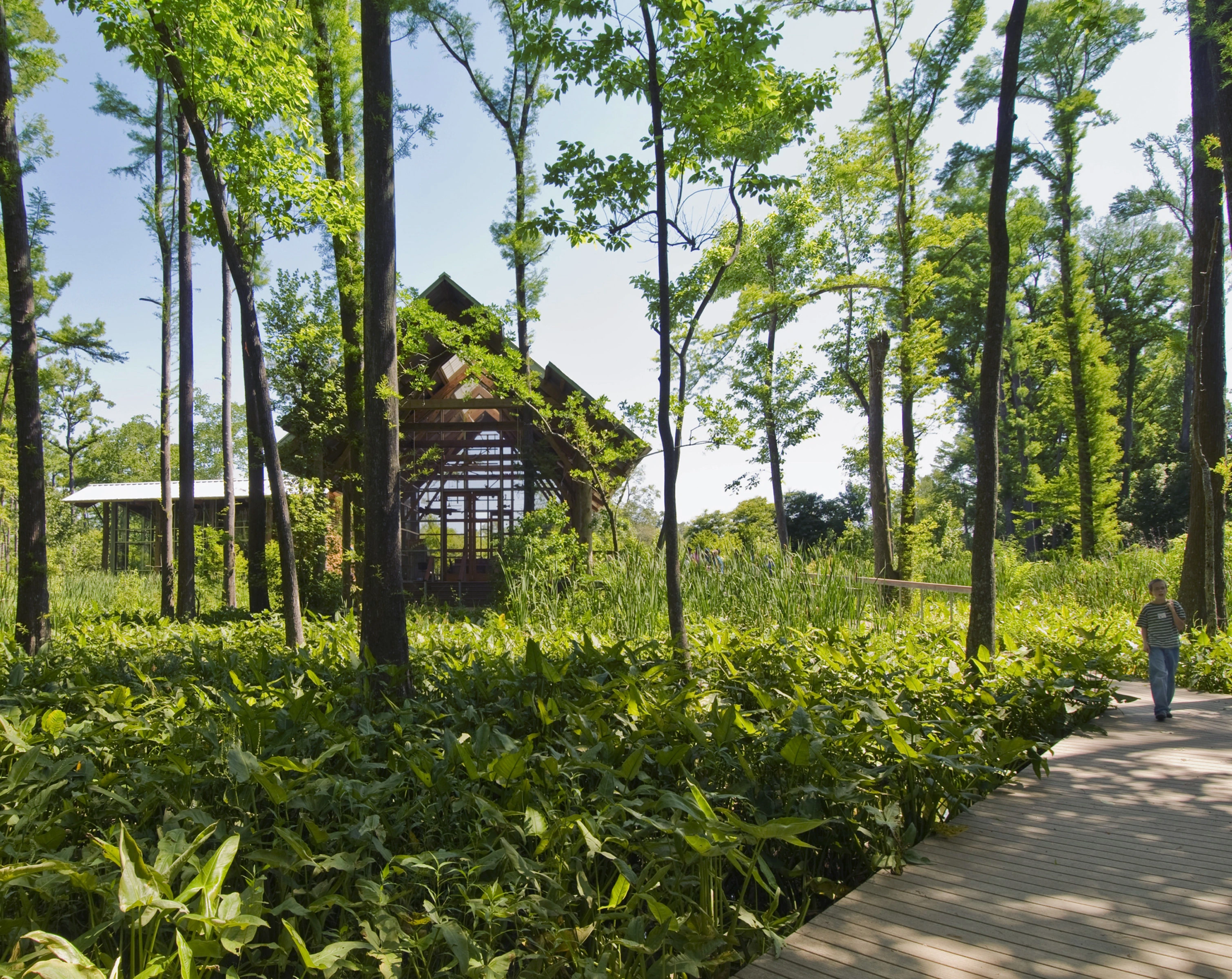
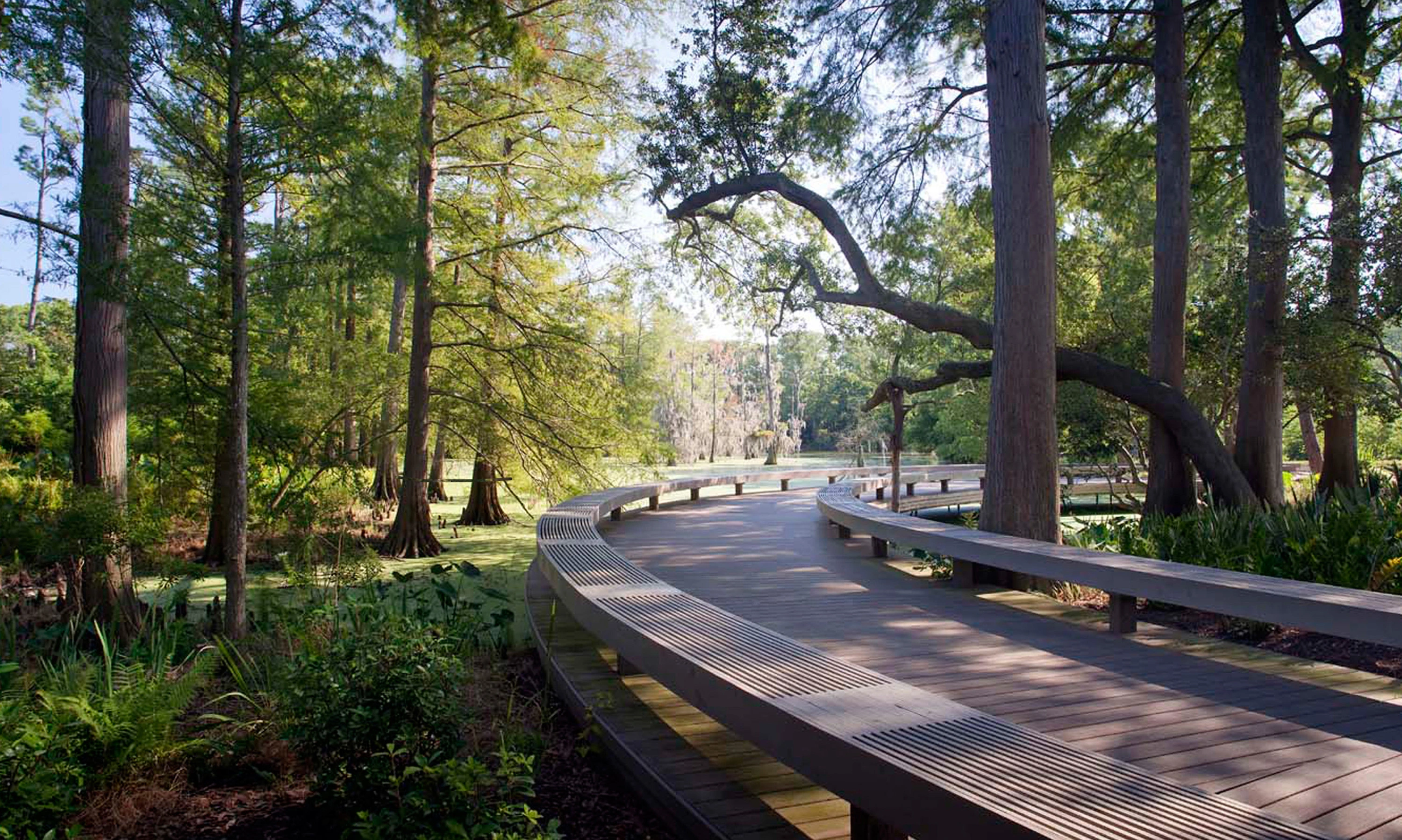
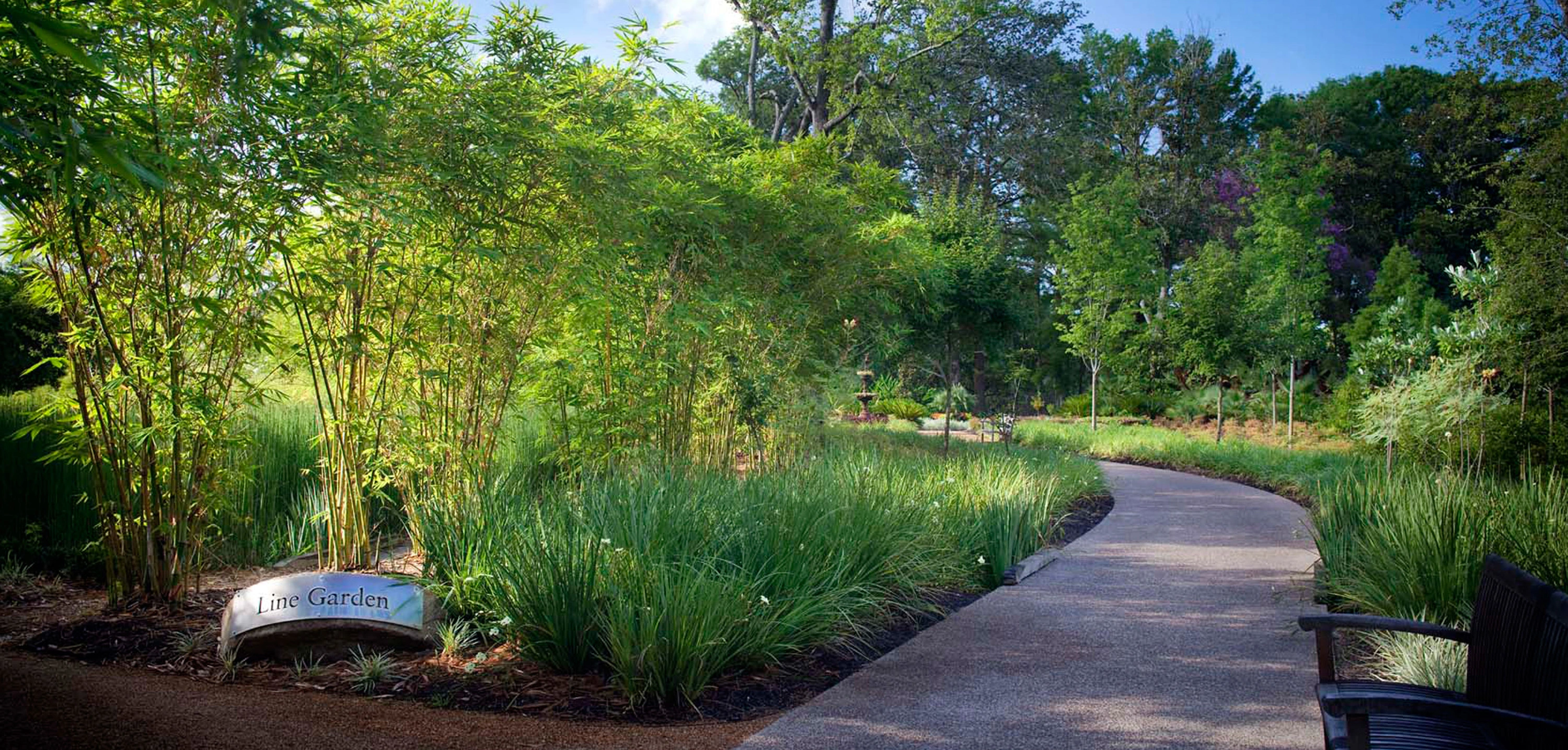
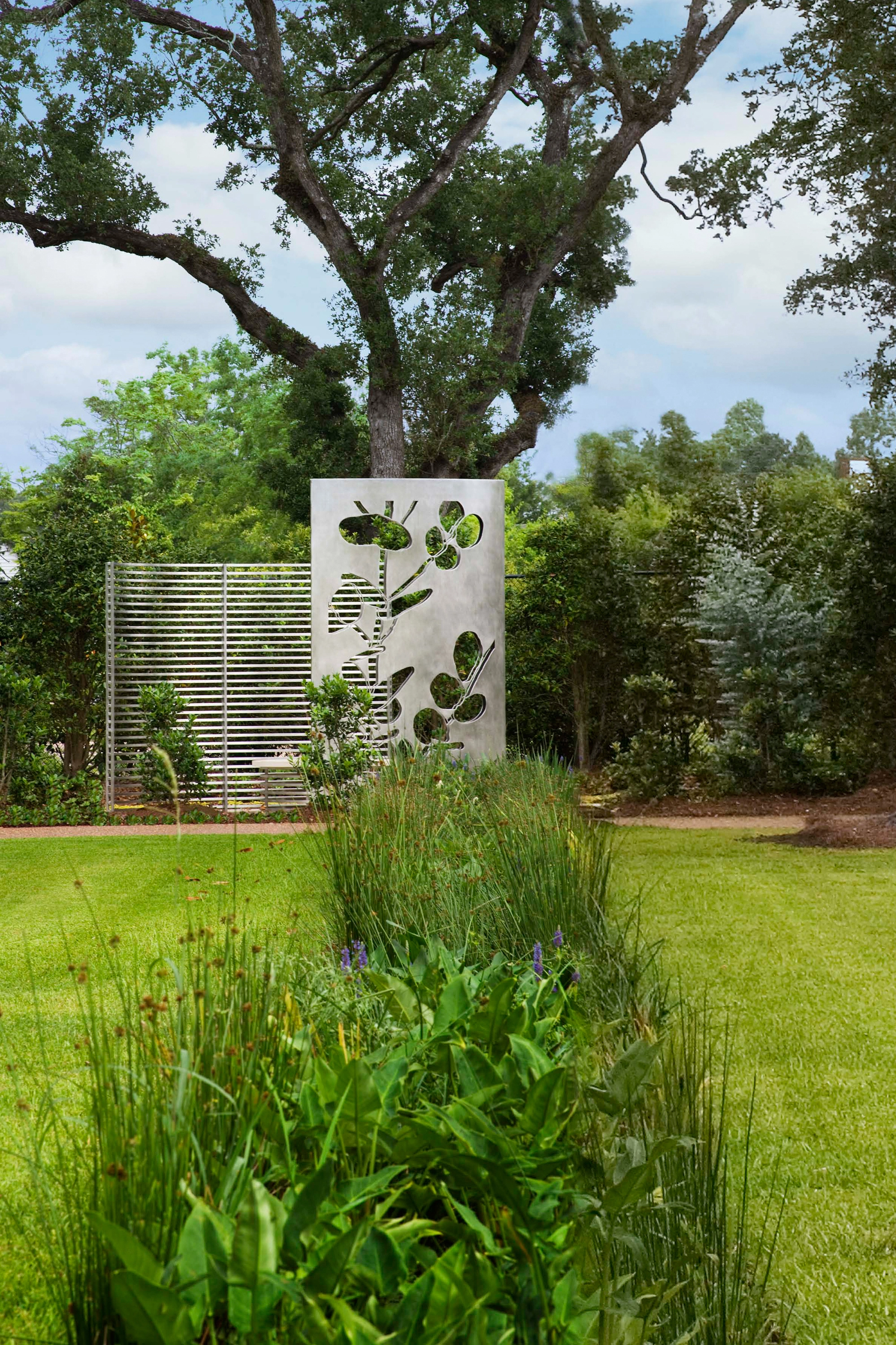
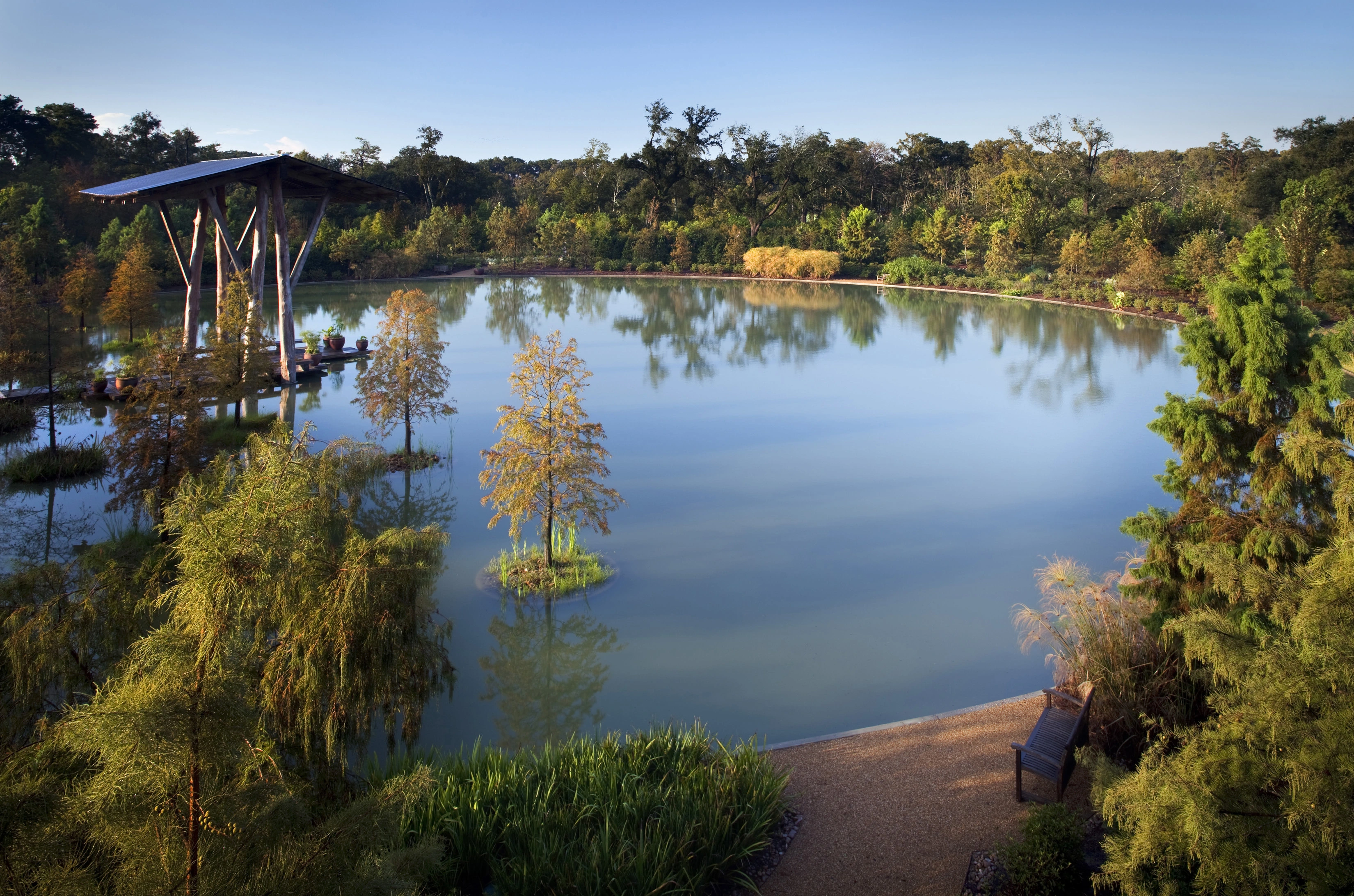
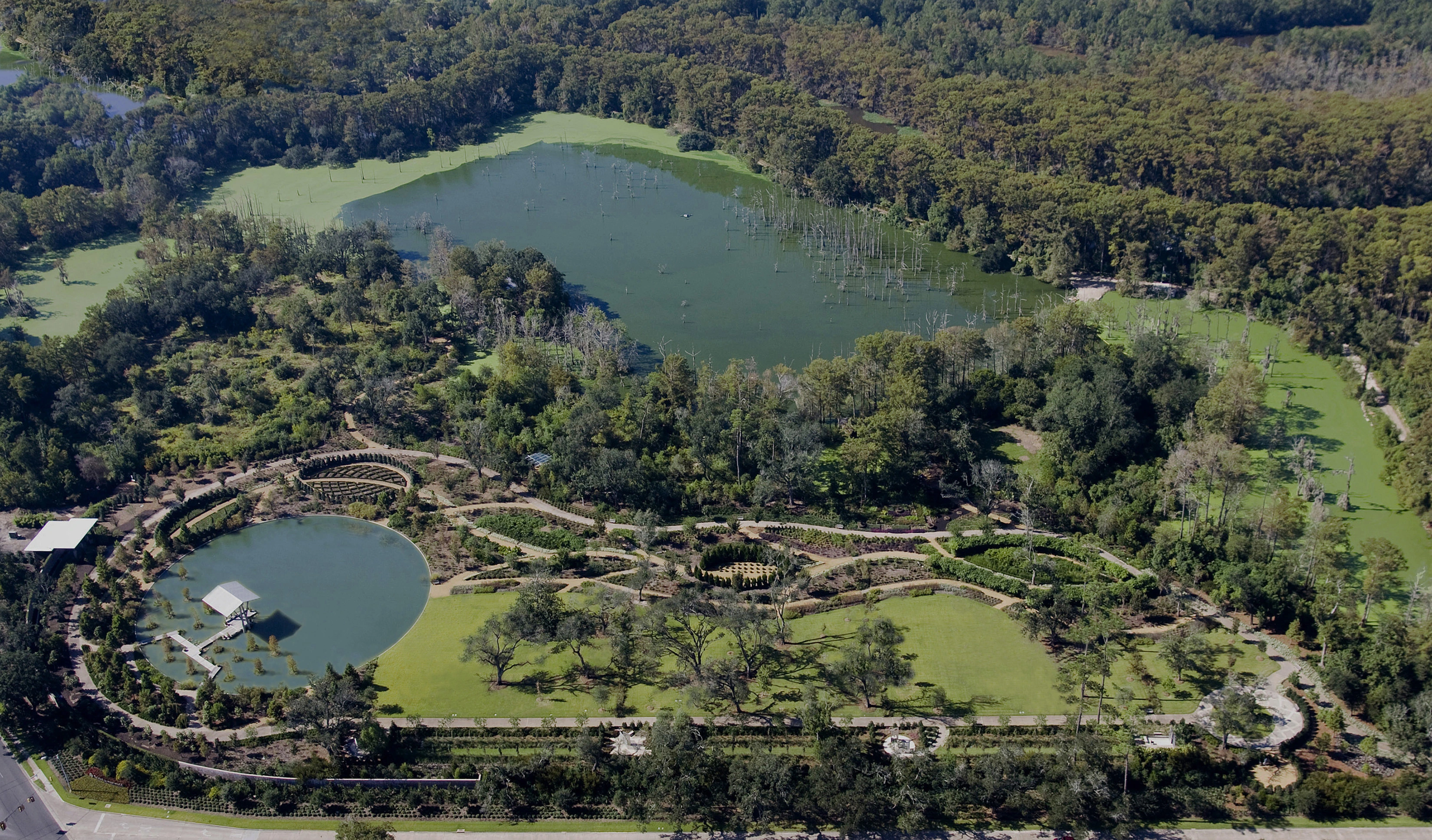
Everywhere you turn is something special: the vernacular and reuse of materials; the graceful, curving paths; and the way the amenities are well connected. This has educational elements to teach us about water and the elements of beauty, art, and color.
Awards Jury
-
Shangri La Botanical Gardens and Nature Center is the first LEED Platinum-NC project in Texas. When it opened in 2008 it was one of only 50 Platinum projects in the world. The 252-acre site, in southeast, Texas, is now a hub of environmental awareness and education about regional landscapes and animal habitats. Shangri La’s design and programming make visible the life processes of many species of wildlife within the context of a native landscape, recreated botanical gardens, and innovative center for environmental education.
-
Shangri La Botanical Gardens and Nature Center is an example of responsible environmental stewardship in its mission, design, construction, operations, and maintenance. The original garden dates from the mid-twentieth century and was the vision of H. J. Lutcher Stark, a prominent Texas businessman and philanthropist who resided in Orange. Inspired by the mystical retreat represented in James Hilton’s popular 1933 novel Lost Horizon, Lutcher Stark sought to create his own haven of indescribable beauty where time would stand still, and in 1937, he began creating Shangri La. The garden he created became fully realized in the late 1940s and through the 1950s was a horticultural showplace primarily for his collection of azaleas and camellias. The garden was open to the public and became a popular regional tourist attraction. A devastating freeze in the late 1950s damaged much of the collection, and the garden closed, but remained a favorite camping area for local Boy Scouts.
In the early 2000s the Stark Foundation determined that this 252-acre site, with mixed tupelo, cypress, and pine trees, a bayou, migratory birds, gardens, and lake was a site of extraordinary ecological diversity and held great potential for redevelopment. The Board elected to renovate the gardens into a regional center for environmental awareness and education and engaged our firms to assemble a team toward that end. As prime consultants, our firms assembled a team of over forty consultants and conducted over seven years of research, conceptual and schematic design, team assembly, client interface, programming, documentation, construction supervision and observation to bring this project to reality. The team included the general contractor, architect, water quality experts, migratory bird specialists, environmental engineers, economic planner, exhibit designer, LEED consultant, wetlands expert, together with many other specialists, consultants, and professional staff.
Construction was set to begin in late summer, 2005, when hurricanes Katrina and Rita hit coastal Louisiana and Texas. The Texas-Louisiana border took a direct hit from Rita, and over 75 percent of the Shangri La’s inventory of trees was destroyed, together with pre-construction work already in progress on site. The landscape was devastated and the community demoralized. Nevertheless, the Stark Foundation’s board, sensing that environmental education was now more important than ever before, determined to move forward with this project and its goal of making this site one of the most environmentally responsible developments in America.
Shangri La is located in Orange, Texas, a small town of 18,000 residents. Lutcher Stark moved here in the 1930s, made his fortune from this region, and in 1961, established the Nelda C. and H. J. Lutcher Stark Foundation. Since its inception, it has nurtured the local economy and provided resources for the Orange community through general educational initiatives (college scholarships for local residents), cultural programming (a performing arts series), and public facilities (a house museum, an art museum, and a performing arts auditorium).
Recent efforts have focused on the region’s ecosystem via K-12 cross-programming, teacher workshops, community events, and camps. After the death of Stark’s widow in the 1990s, Shangri La re-emerged under the oversight and care of the Stark Foundation. The Foundation’s goal of re-opening the garden and grounds grew, and our firms were hired to interpret, reinstate, and direct its existing mission to “mentor children of all ages to be kind to their world”. Over time, this mission has evolved and expanded to “ignite curiosity, instill a sense of wonder, nurture creativity, spark excitement, encourage exploration, inspire respect, expand knowledge, and model stewardship.”
The landscape architects and client rigorously examined Shangri La’s three core strengths — its botanical garden, bayou, and birds — to expound on their environmental attributes, to make them visible, and to instill a sense of their importance among the public
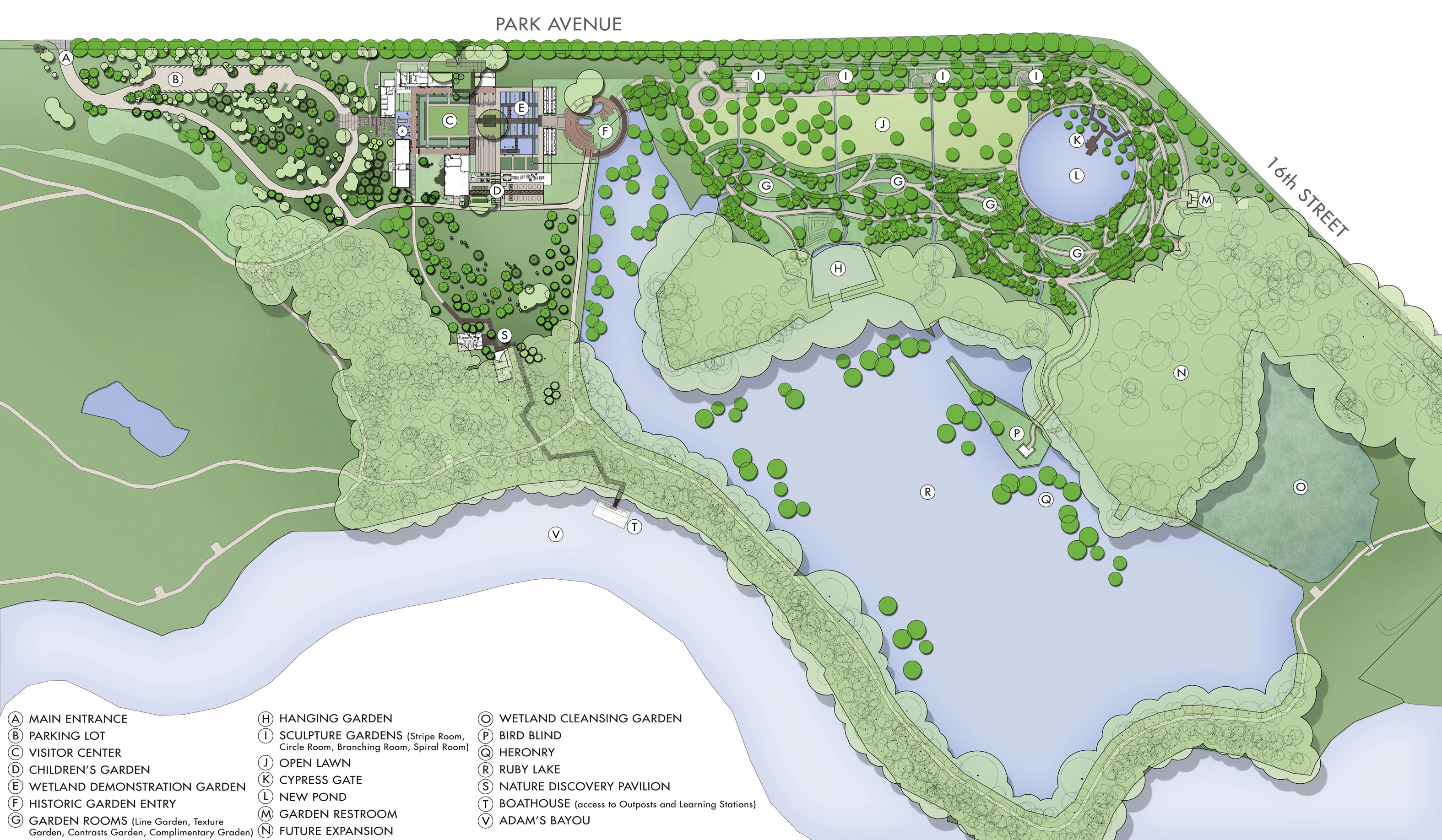
The Visitor Center is an enclave of small buildings organized around functional landscape spaces. These buildings form an open foyer to the Botanical Garden and display extensive examples of sustainable practices: recycled asphalt paves the parking lot; pine and cypress trees felled by Hurricane Rita are used as wheel stops, benches and arbors; water collection cisterns serve the building’s grey water uses; there is a hands-on children’s garden and nature-focused educational exhibits including a 2.5-acre wetland and water cleansing exhibit. This man-made wetland features aquatic plants, small pumps, and runnels that carry, filter, and clean water from Ruby Lake over a four-day period, finally returning the cleansed water through a brick cistern and steel runnel. Shangri La’s Visitor Center and its education zones emphasize Stark’s vision of art in nature, love of plants, and environmental philanthropy.
From the Visitor Center, the public moves through the site to its three core education zones:
- Botanical Garden: Organized within a historical framework, the garden was restored through a contemporary design with added layers of visual art and emphasis on design principals. The idea of line, shape, color, texture, and contrast are expressed through plant selection, patterning, and site-specific sculptures that reinforces the landscape architect’s vision of a visual dialogue among native and adapted plant species, as well as art.
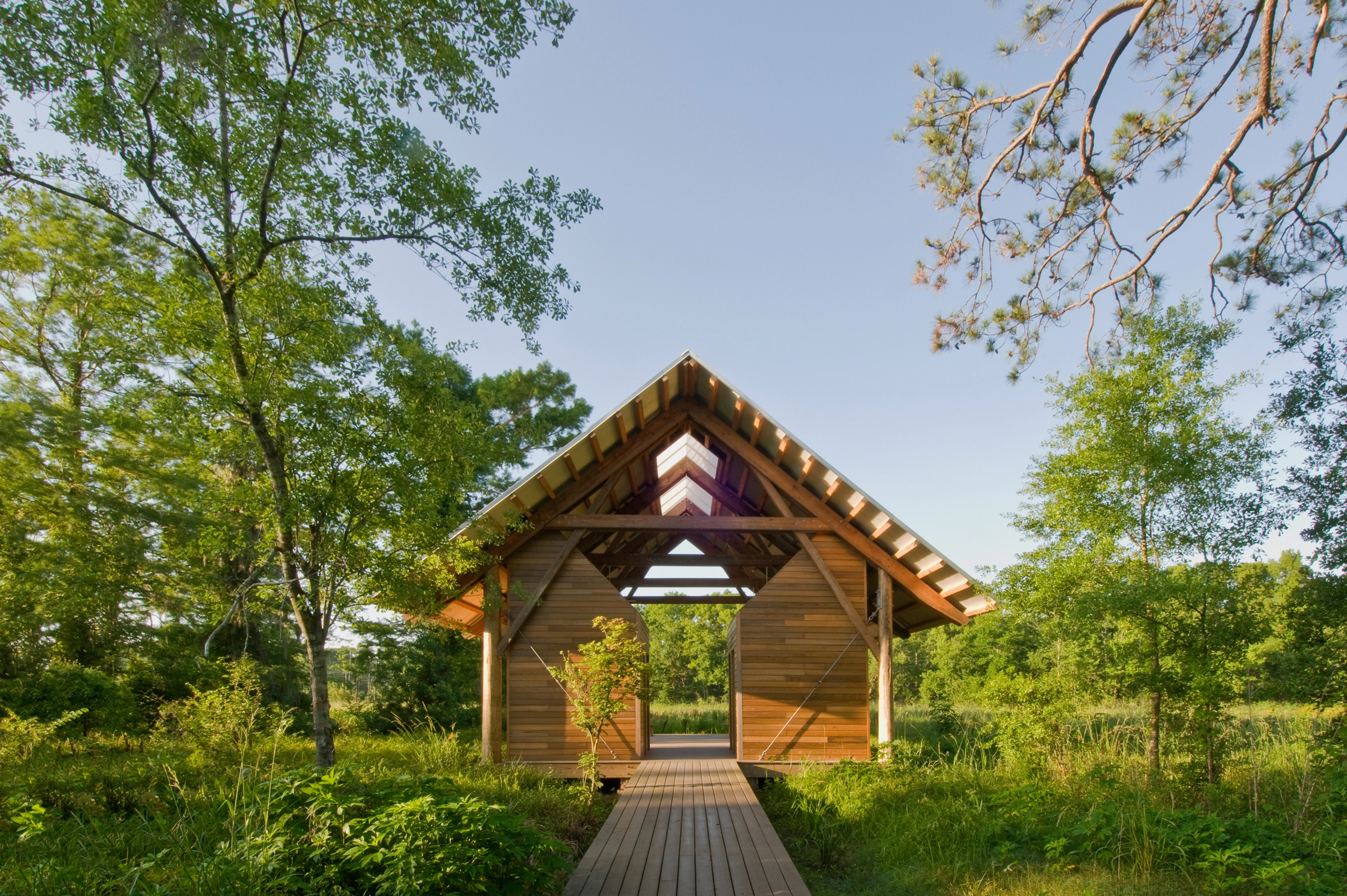
- Bayou/Nature Areas: Docent-led boat tours along Adam’s Bayou inform visitors about the site’s water ecosystem. Visitors can exit the tour at remote docks and boardwalks that lead to environmental outposts powered by solar panels. Boardwalks were first located on topographic plans then later strategically field-sited for maximum landscape sensitivity. The boardwalks use helical pier technology that minimizes ground disturbance with decking that is recycled plastic.
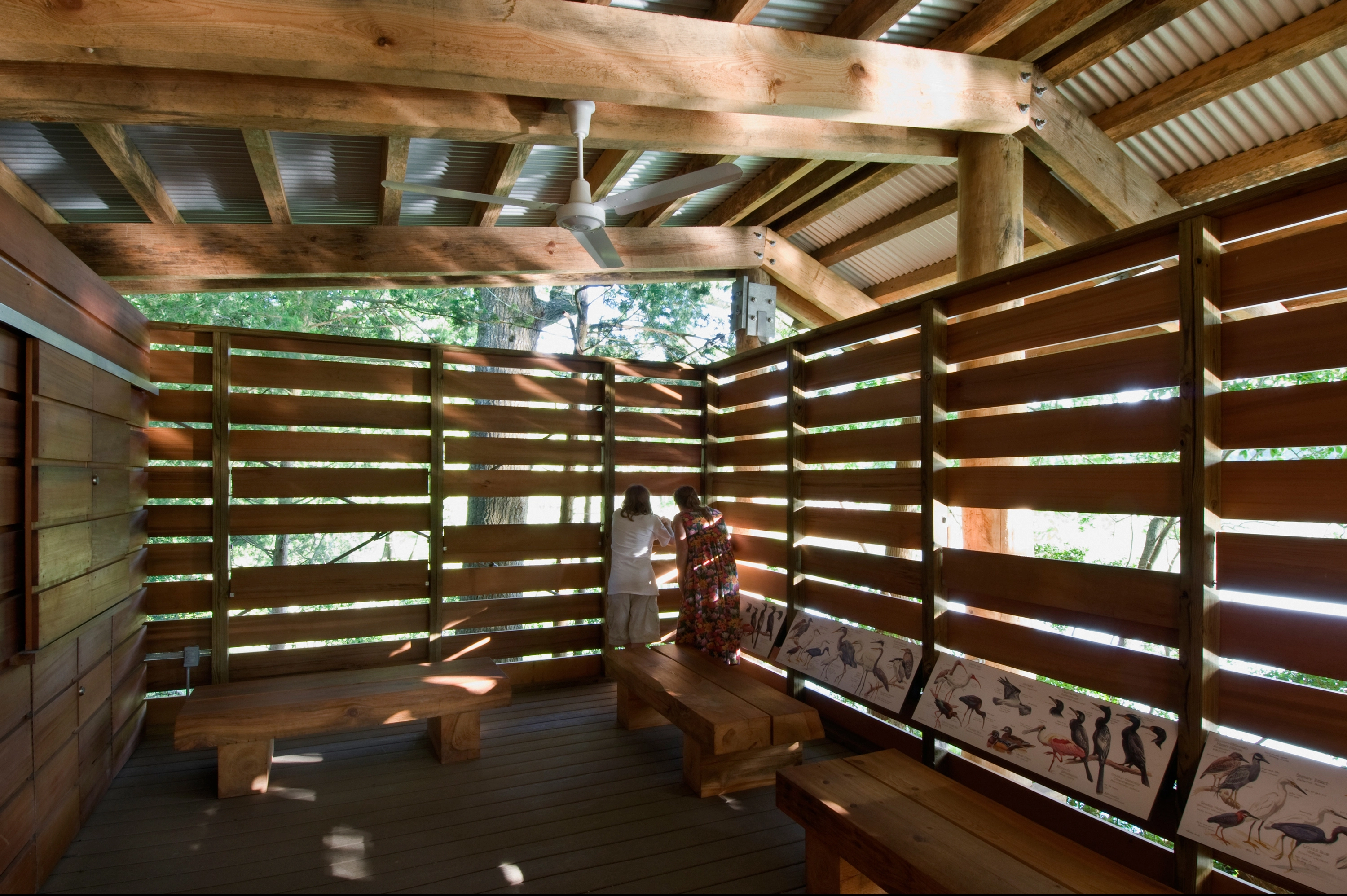
- Birds: Blue Herons and numerous coastal bird species migrate and nest at Shangri La’s Ruby Lake, thereby playing a major role in how the landscape architect selected construction methods and materials, programmed activities, and staged construction. A bird blind allows visitors to observe the habitats of birds and other species without disturbance. Water Demonstration Gardens at the Visitors Center and bioswales in the botanical garden naturally filter and clean water from the heronry lake that had become eutrophic from the droppings of thousands of migratory birds that nest there.
This Shangri La, like the fictional place for which it is named, is a rich and complex landscape. Despite two recent catastrophic hurricanes, the project has survived and flourished, teaching us to respect nature’s forces and admire its beauty. Shangri La has expanded environmental awareness in this region, changed the image of a small community, and inspired economic endurance through its focus on environmental responsibility and landscape stewardship.
-
Landscape Architects: Jeffrey Carbo Landscape Architects
In association with William T. Arterburn, ASLA and MESAShangri La Staff
Executive Director: Michael HokeDesign & Construction Team
Architect
Lake | FlatoFountain Consultant
Greenscape Pump Services, Inc.General Contractor
H.C. Beck GroupGraphic Design
fd2sIrrigation Design
Aqua EngineeringLandscape and Irrigation Contractor
Bio Landscape & Maintenance, Inc.Owner's Representative
Boyken International, Inc. [acquired by Hill International]
Howard L. Templin, AIA and Onsite Representative: Gus HarrisSustainable Dsign/LEED Consultant
Earthly Ideas, LLC
Featured Products
Aquatic Plants Consultant/Biological Filtration
Alan Plummer Associates, Inc.Banding in Paving
American Marble Mosaic CompanyComposite Boardwalk with HiddenFasteners
ChoiceDekCourtyardFurniture
GlosterCustom Stone Map
Stone ForestInterpretive Planning and Design
Andrew Merriell & AssociatesLighting
Bega LightingParking Lot Poles and Fixtures
Architectural Area LightingPlaza Pavers
Boral BrickSculpture Artist
Linda CovitTeak Benches
Smith and HawkenXypex-Additive Retaining Wall Pools
Technical Coating Services Inc.
Advertisement
Related Awards
Award of Excellence, General Design
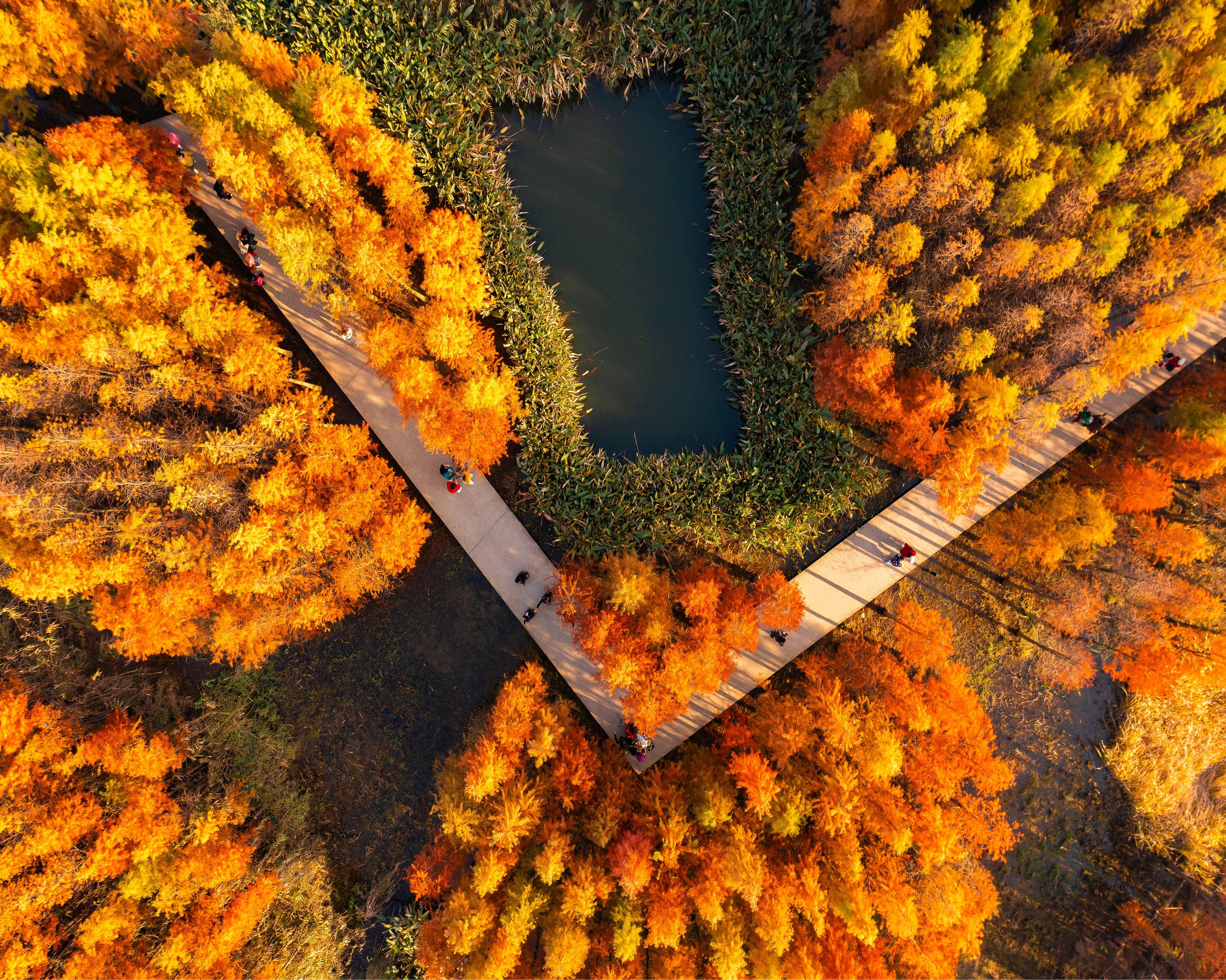
A Floating Forest: Fish Tail Park in Nanchang City
In Nanchang, within the Yangtze River floodplain, we revitalized a heavily degraded 126-acre landscape into a floating forest that manages stormwater, restores habitats, and provides diverse recreational spaces—all within a limited budget and a short timeline. This innovative urban nature model strengthens the district’s identity and spurs surrounding development. Fish Tail Park offers a scalable solution for flood-prone regions, seamlessly integrating flood resilience, ecological restoration