
.webp?language=en-US)

Powell Street Promenade
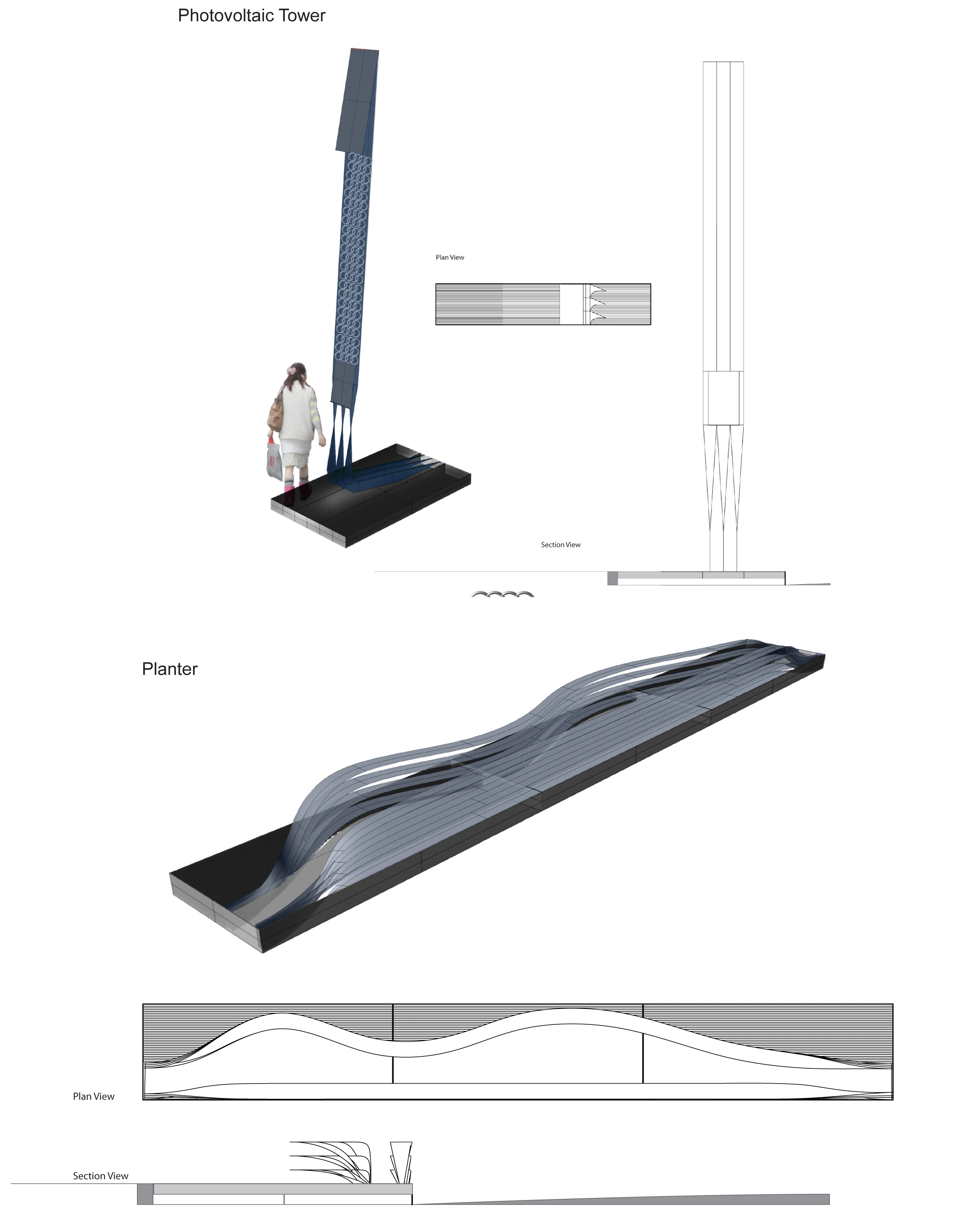
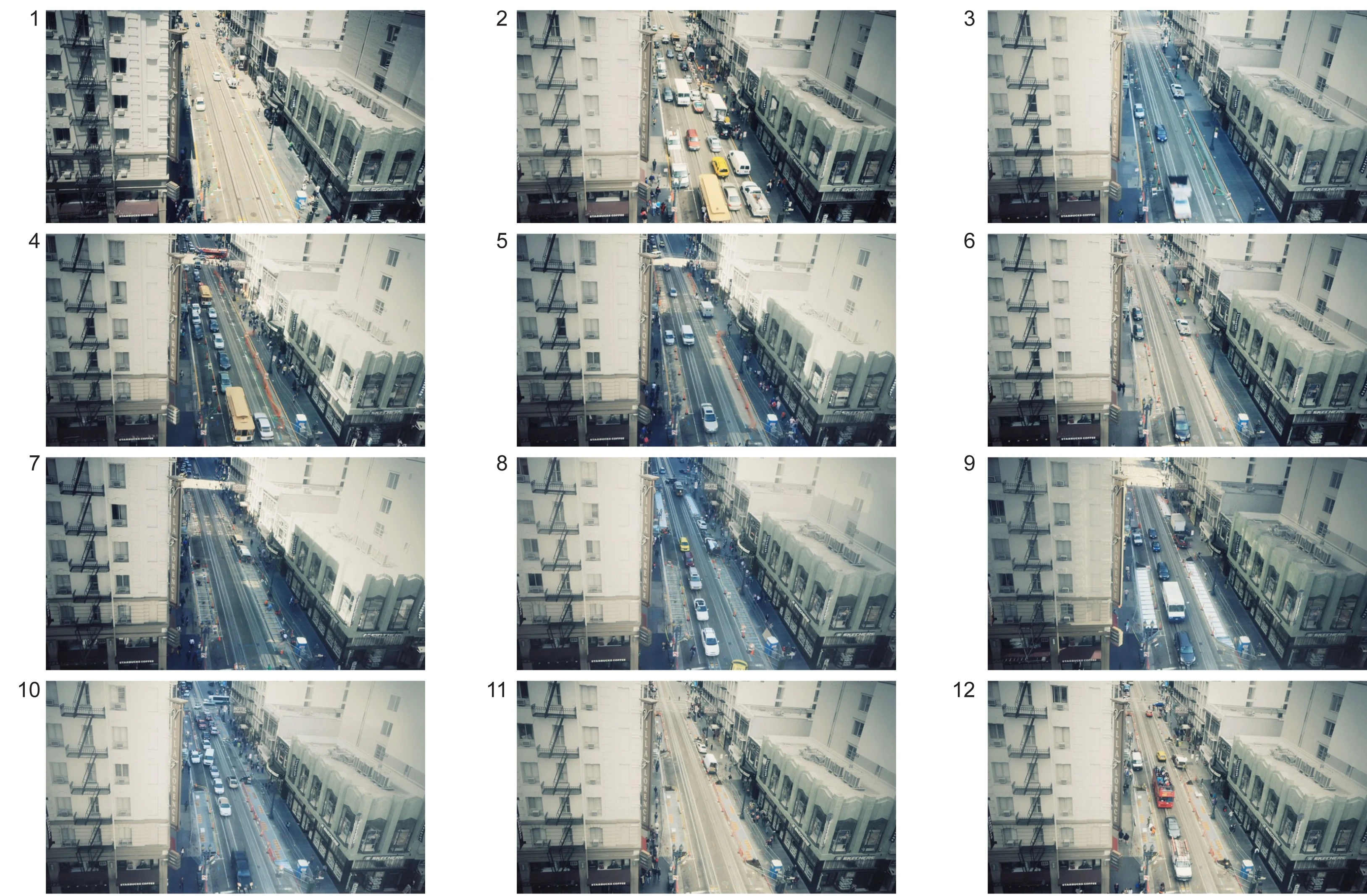
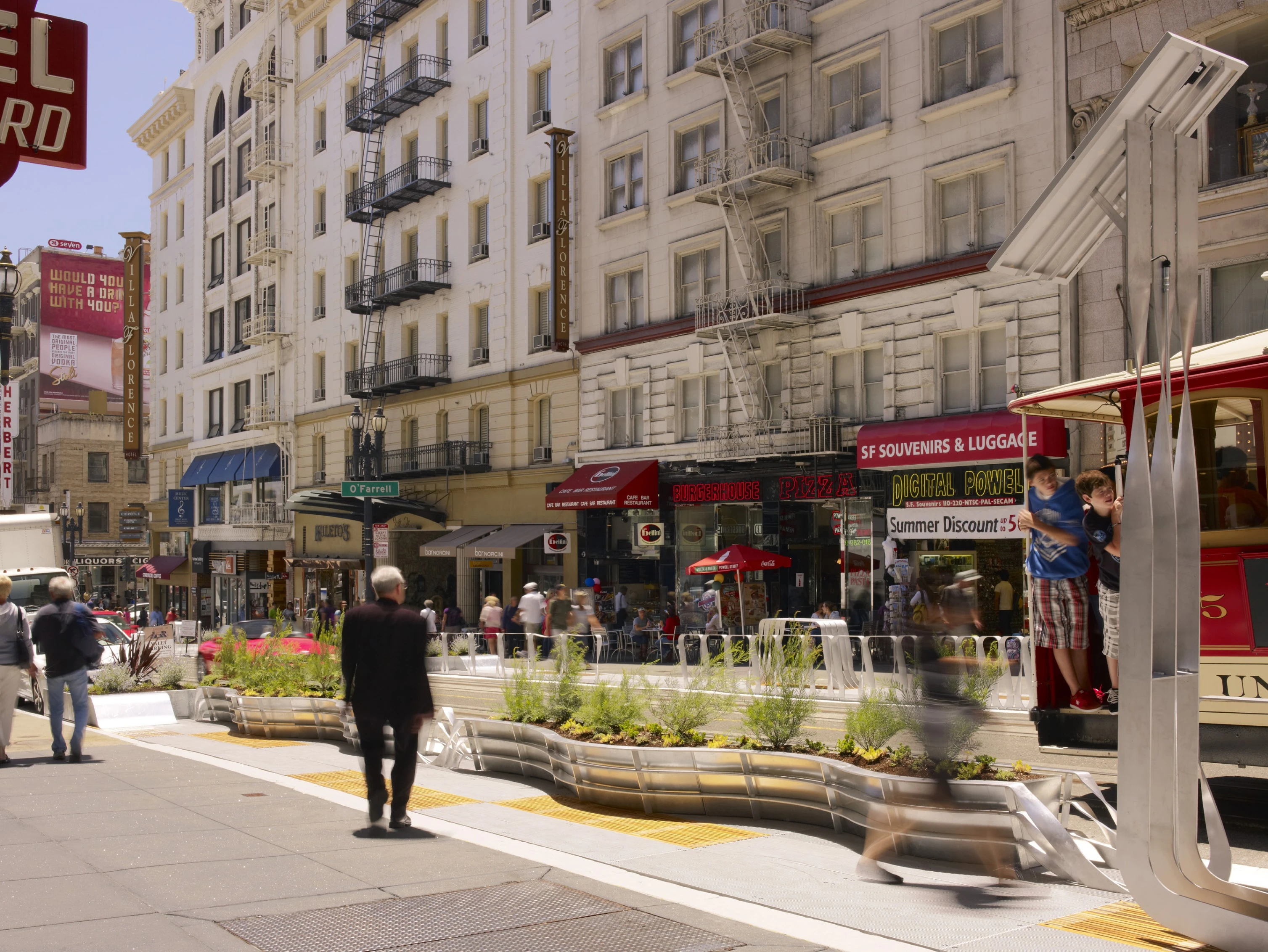
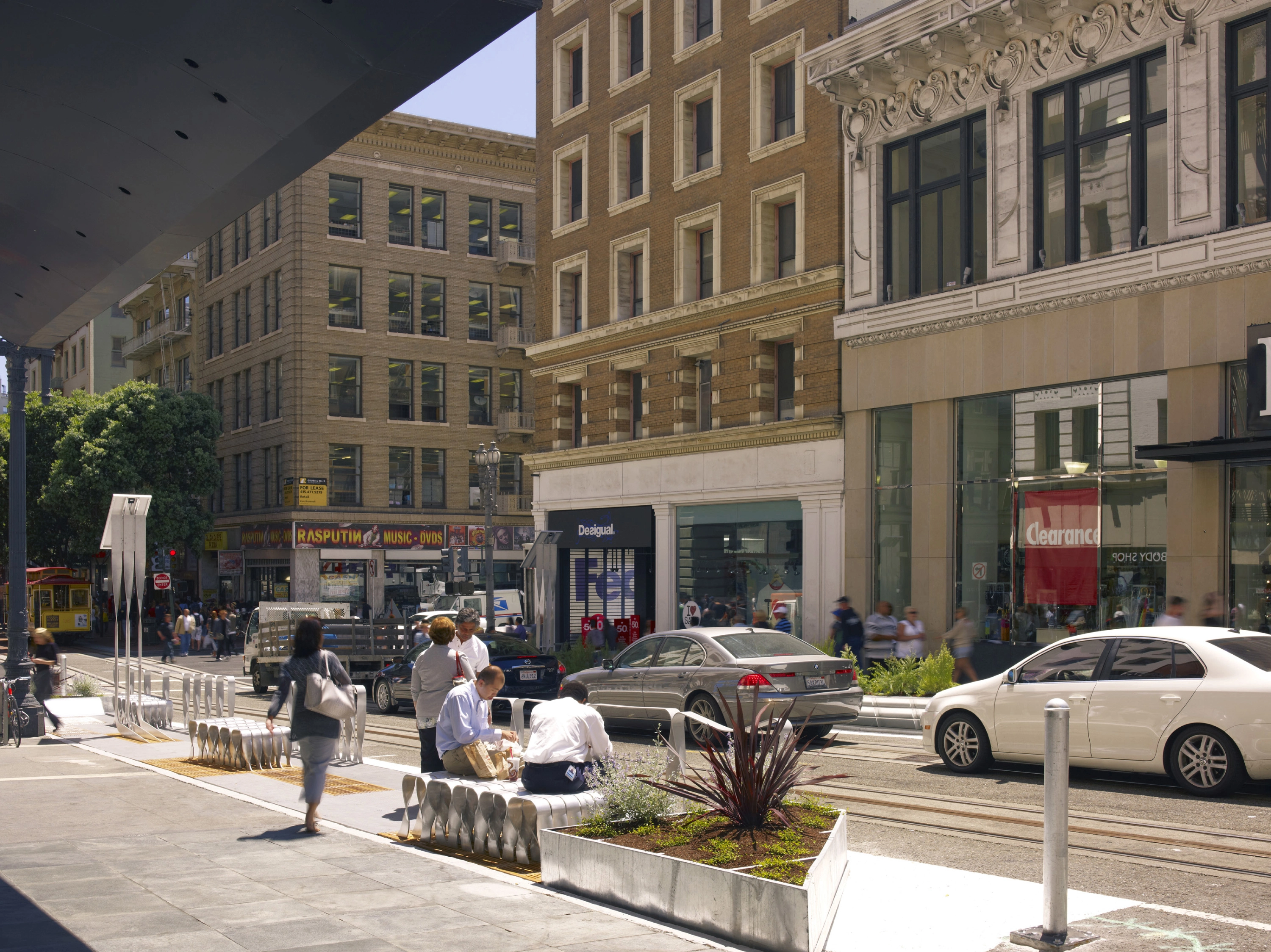
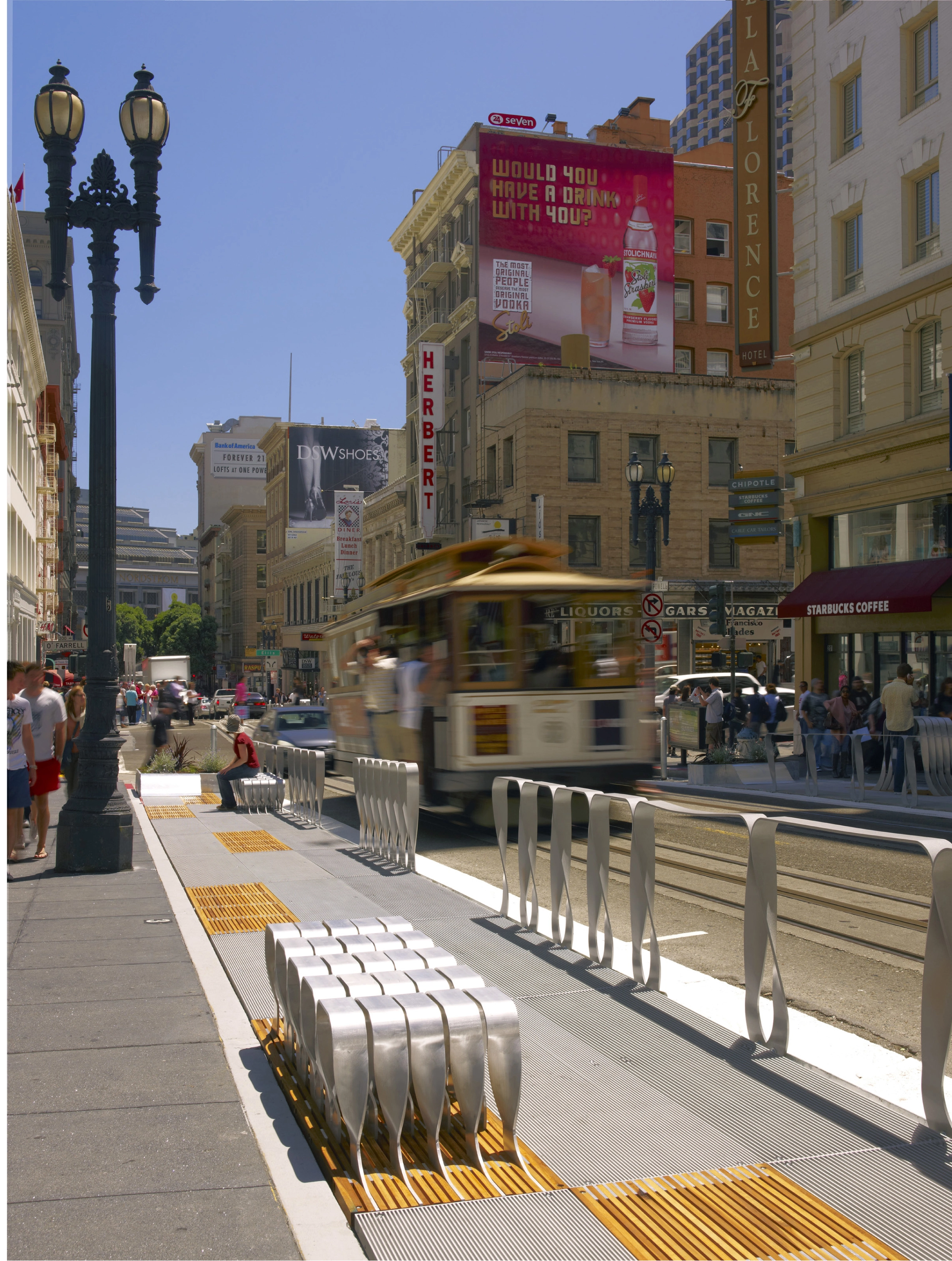
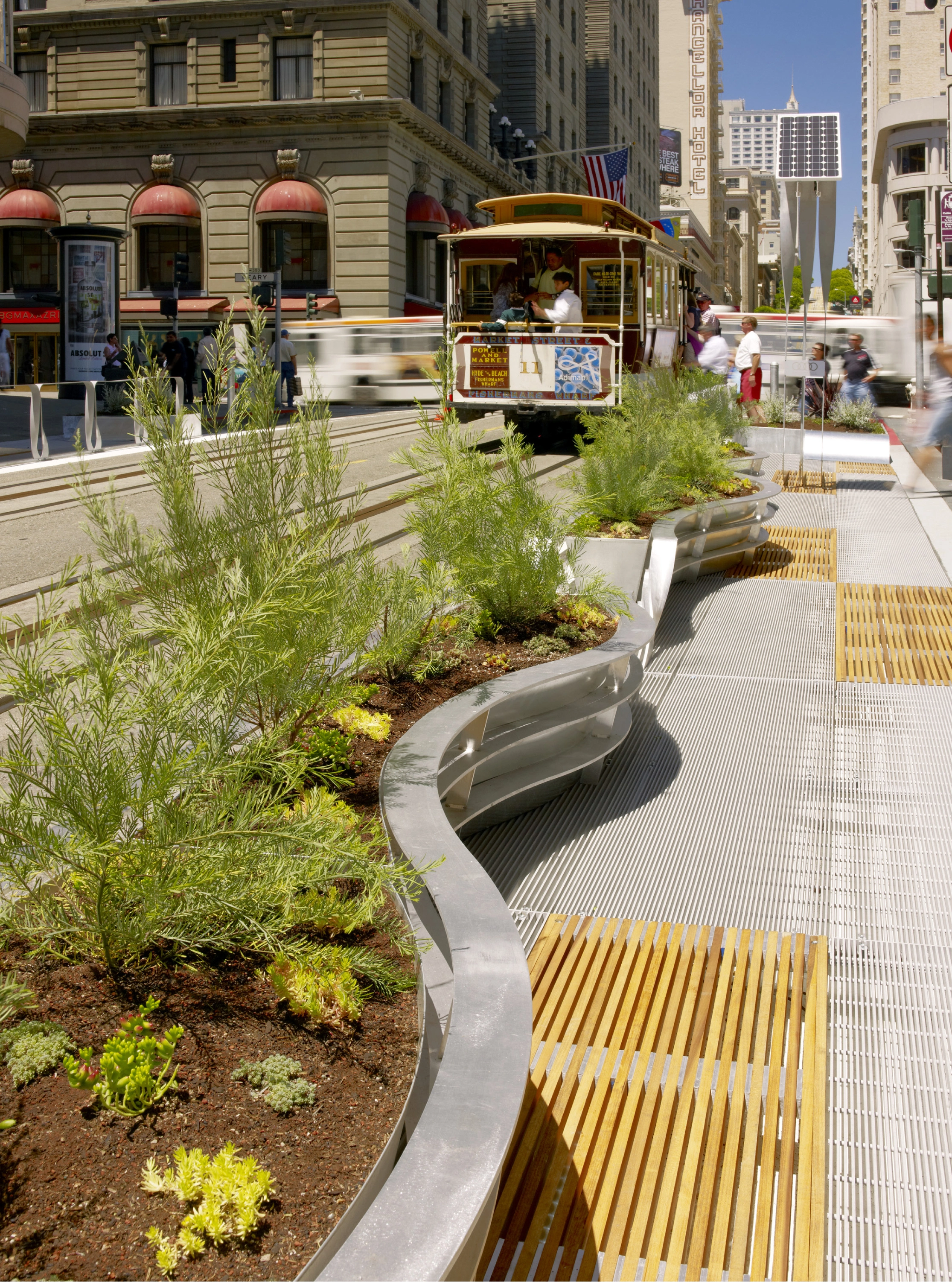
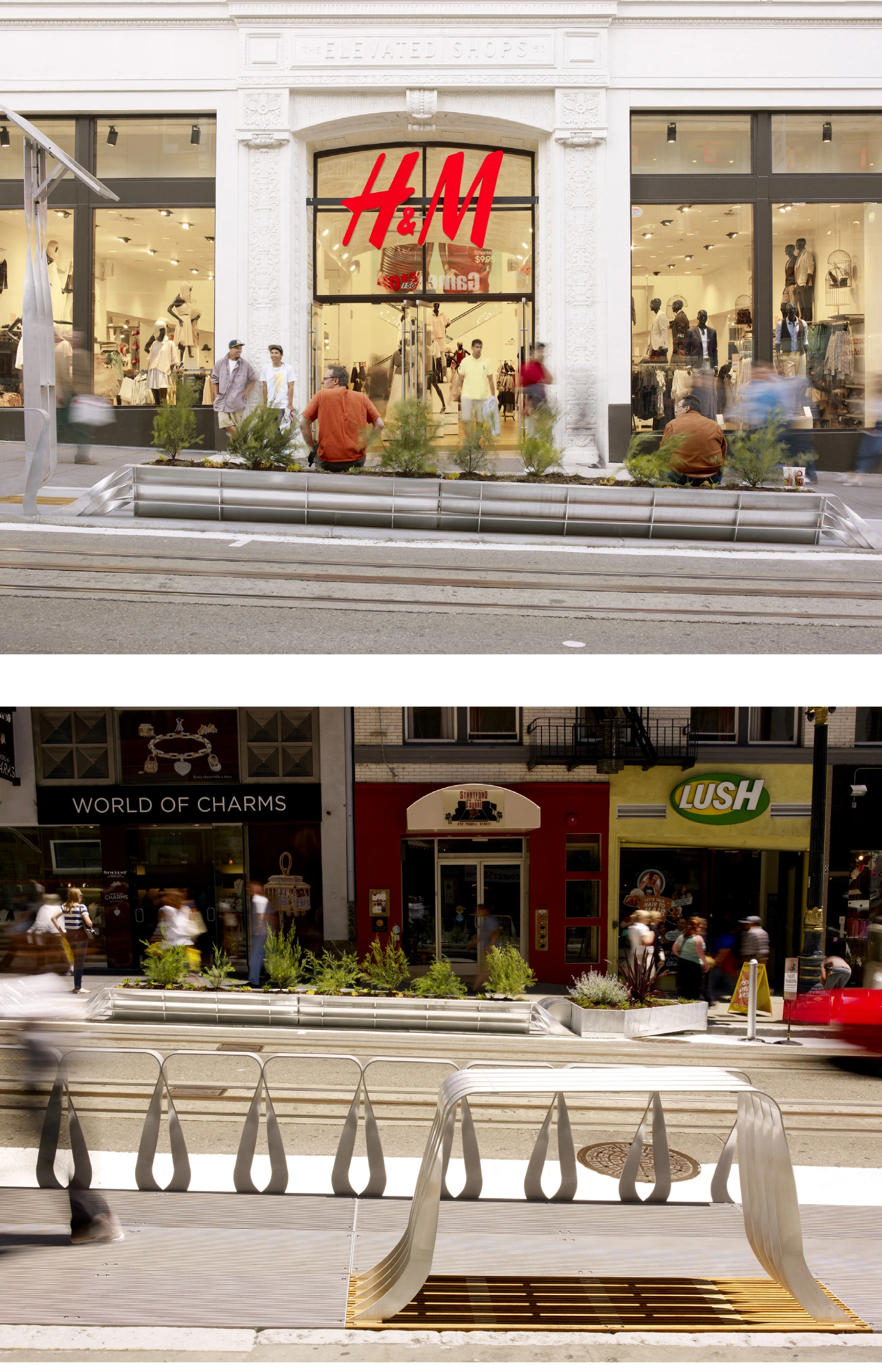
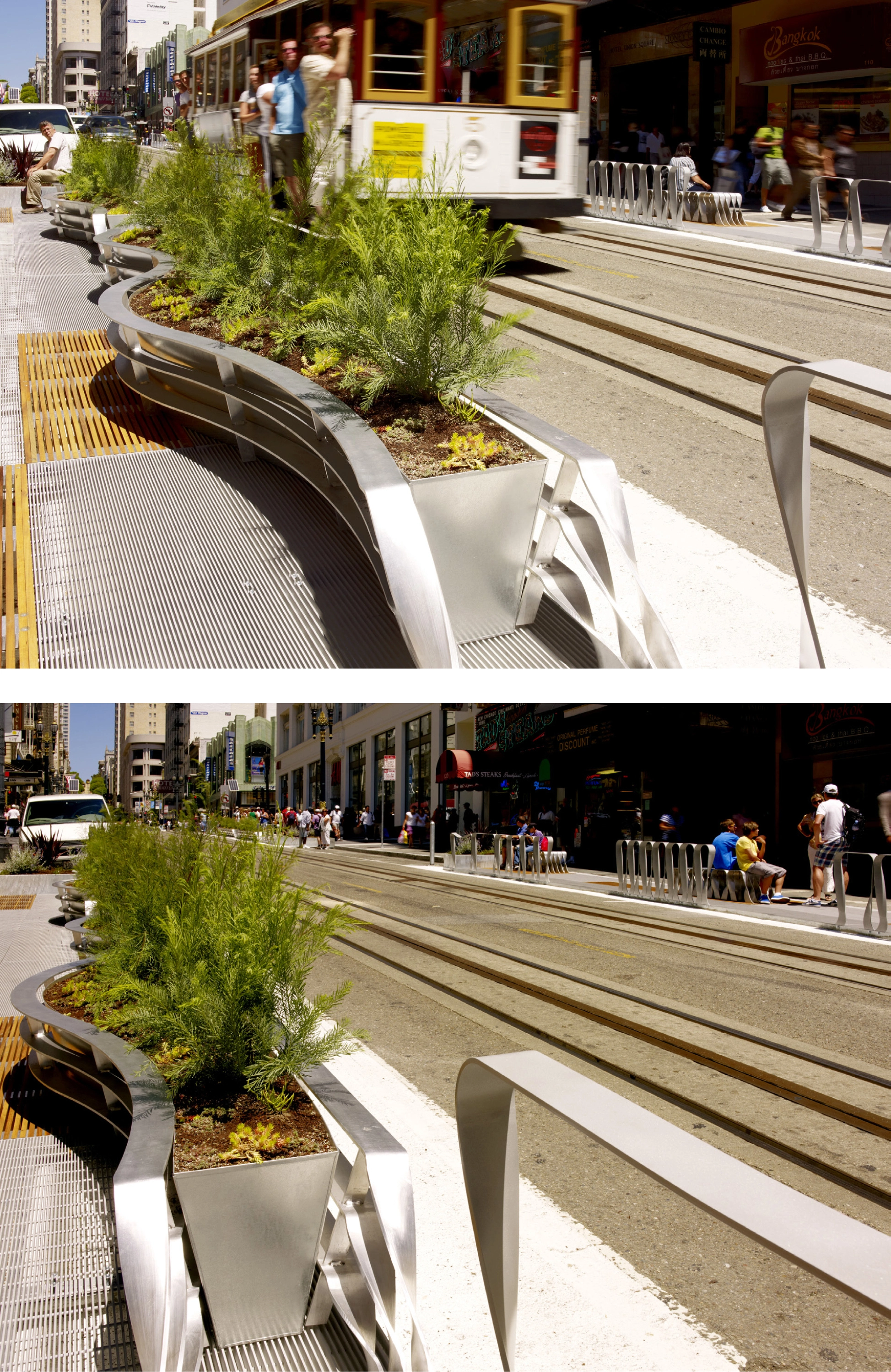
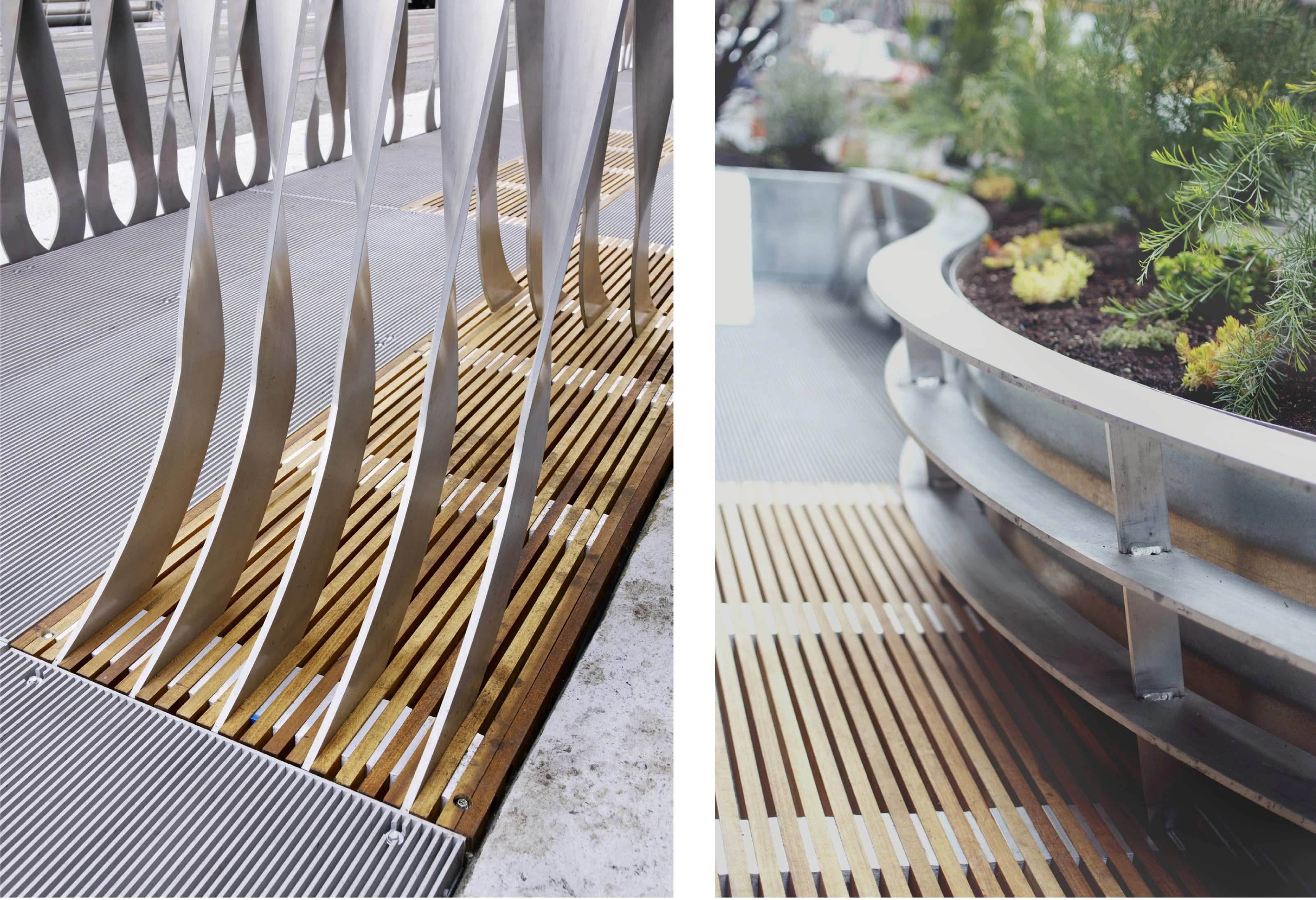
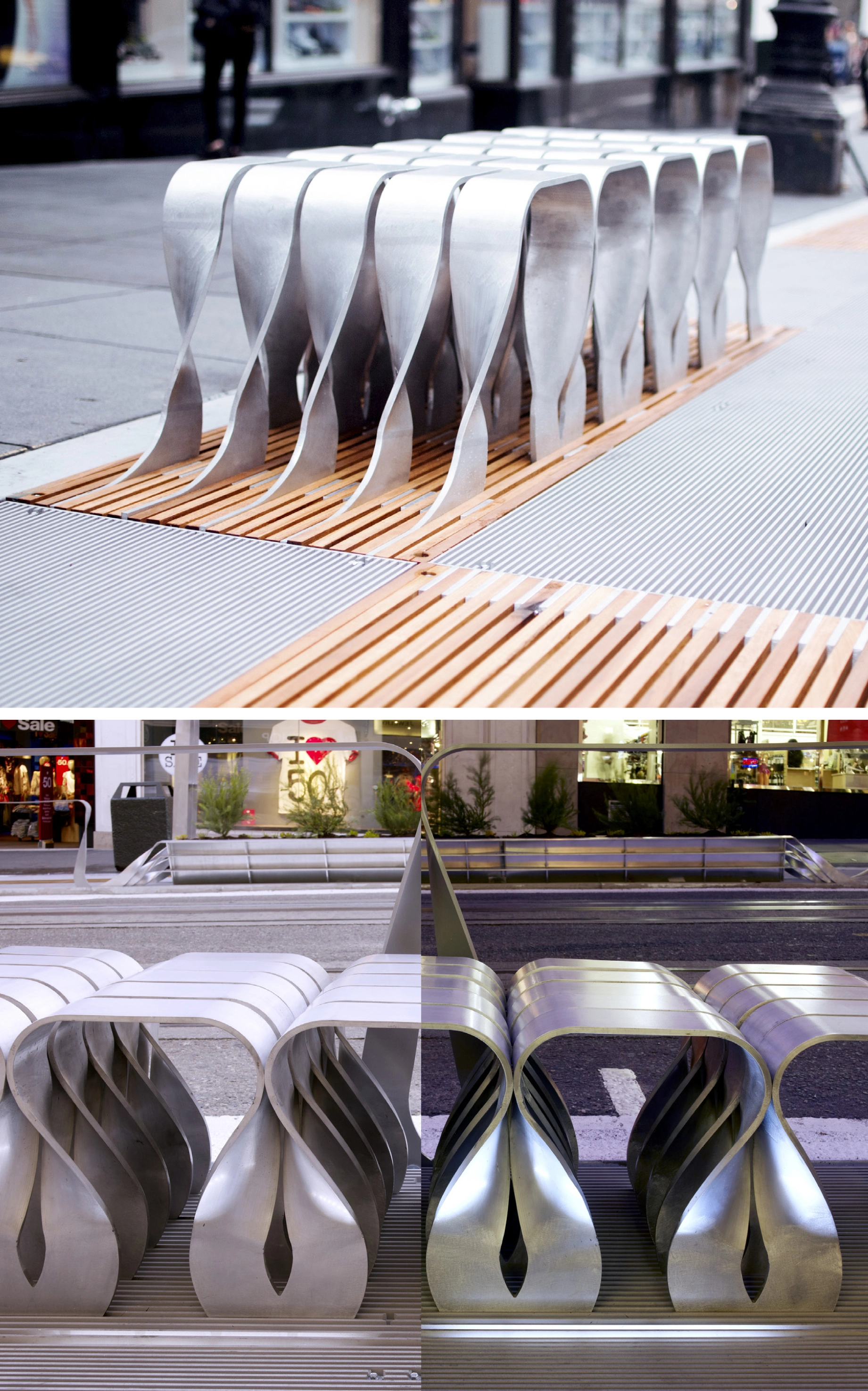
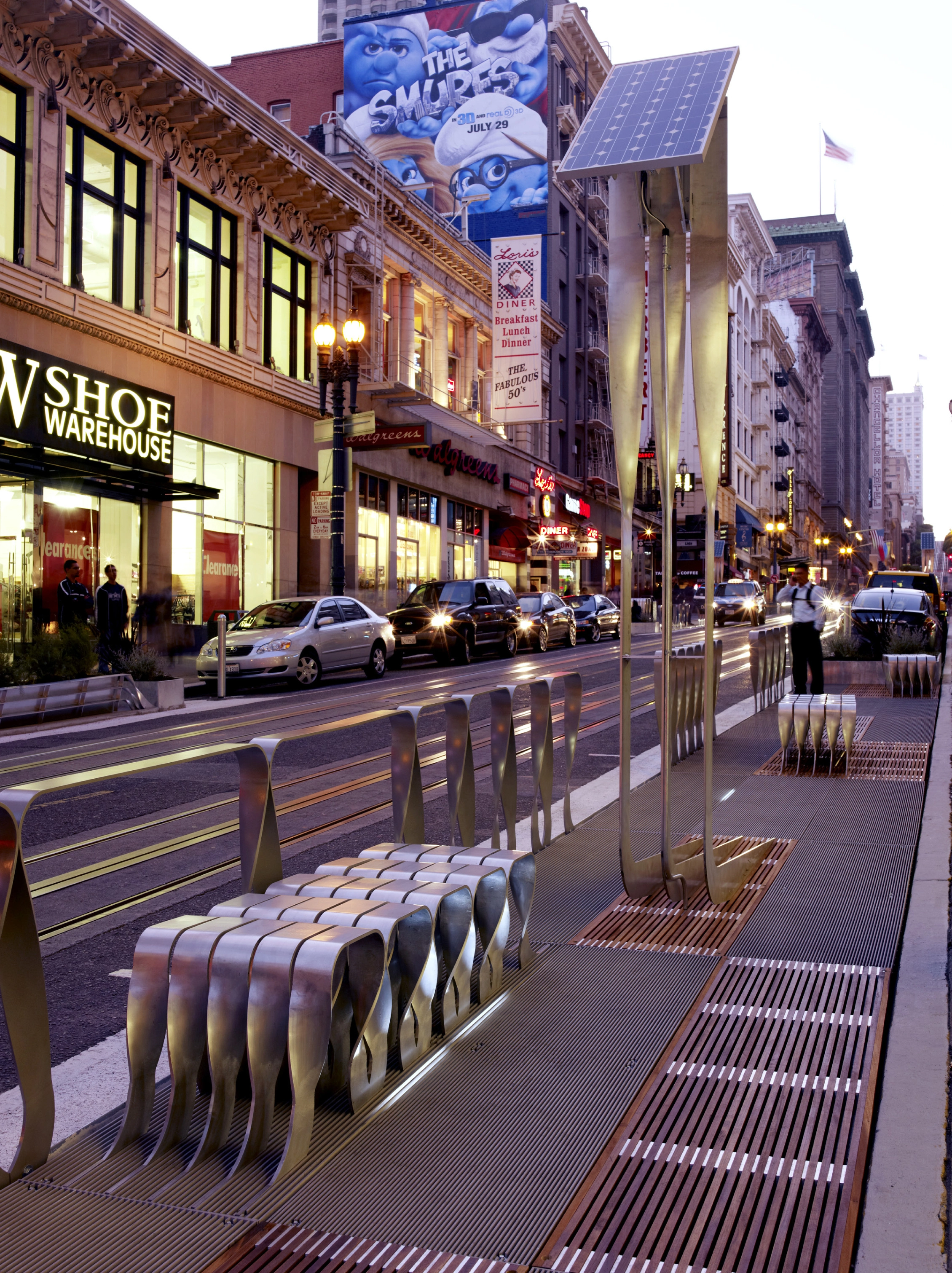
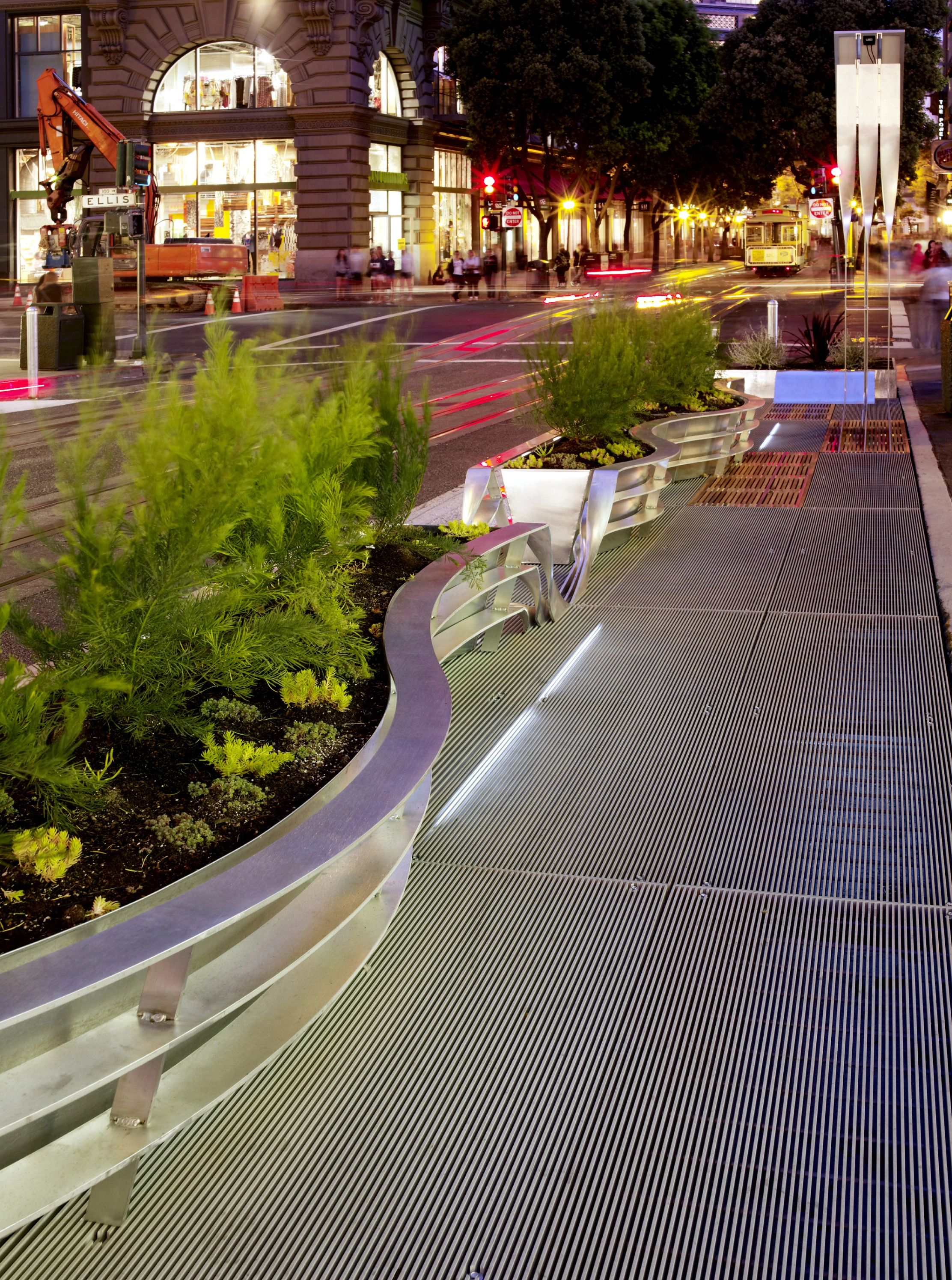
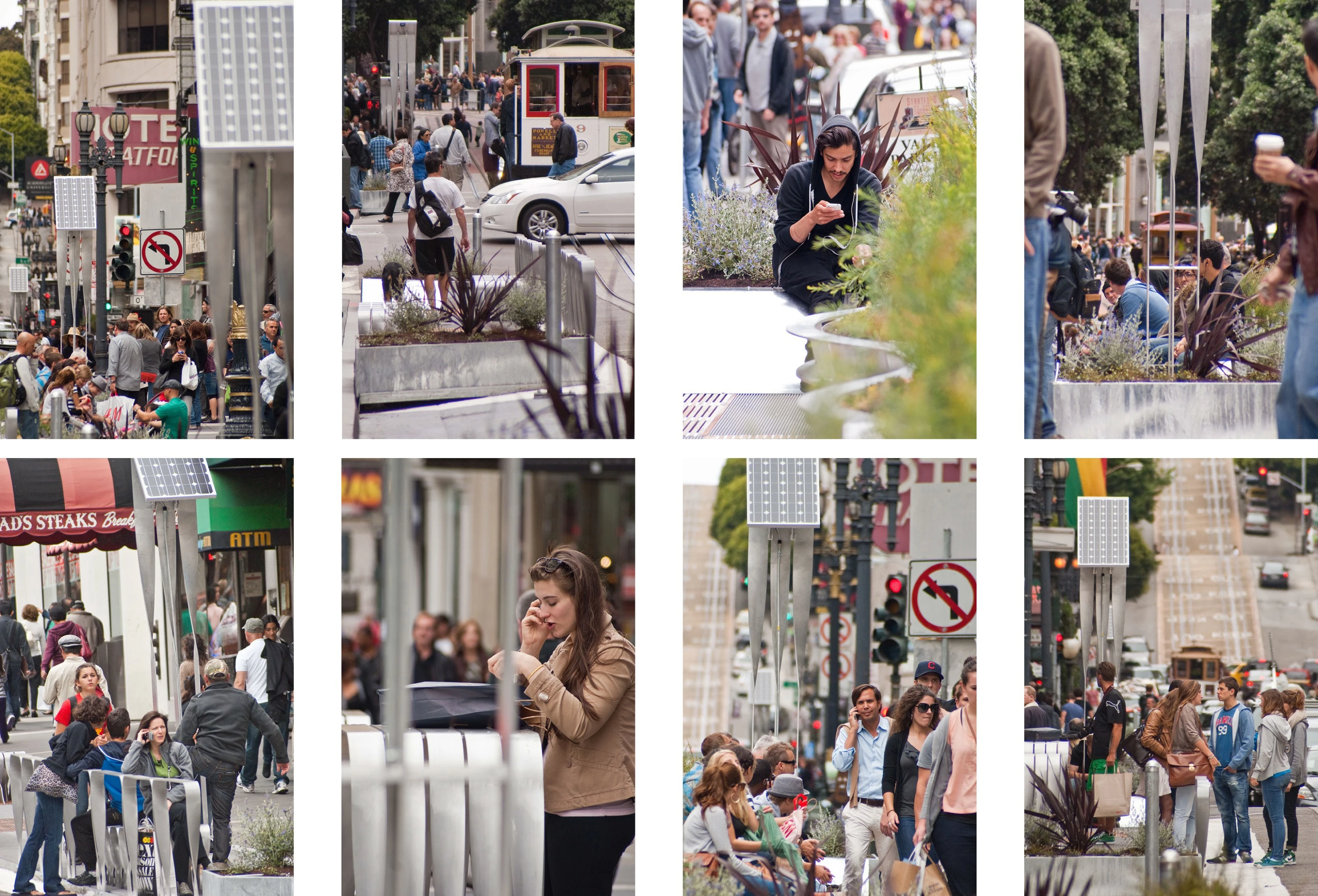
A really amazing industrial design solution. Street furniture can be pretty benign, but this pushes the boundaries of technology, much the way car design has, by using those incredible, manipulative computer aided manufacturing programs. It reminded me of a car. It’s that simple.
Awards Jury
-
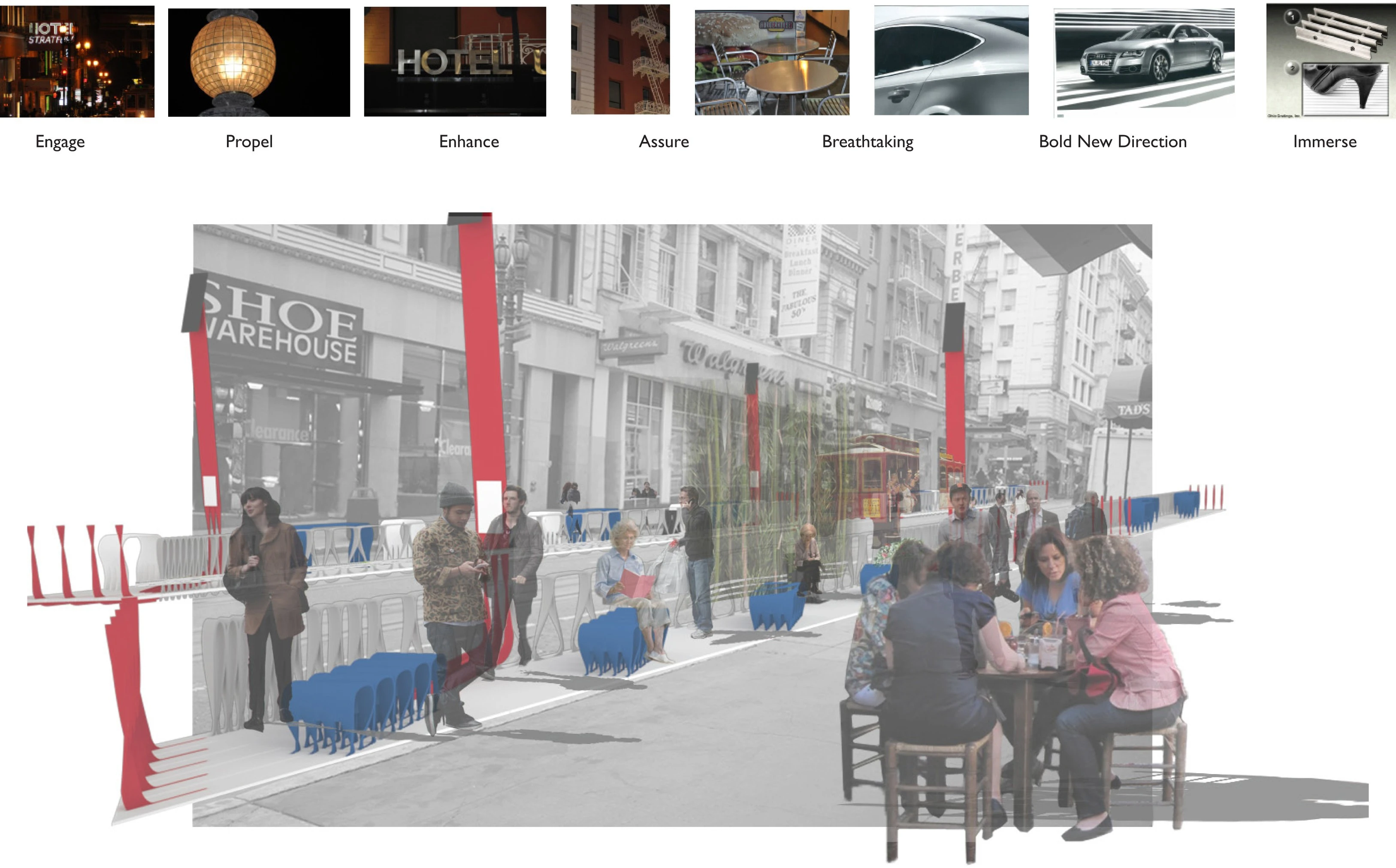
On one of the busiest thoroughfares in San Francisco, four city blocks of parallel parking are replaced with a new pedestrian promenade. The Powell Street Promenade provides a 6’2” extension of the existing sidewalk, combining material innovation, technology and urban design into a new landscape that offers refuges for pedestrians amid the street’s busy vehicular and historic cable car traffic. It is the largest example of the city’s “Pavement to Parks” program, which seeks to reclaim swathes of urban land for pedestrian amenities. The project was funded in a public-private partnership with Audi USA and was intended to reflect their notion of ‘A Boldly Designed World’.
-
Site & Context
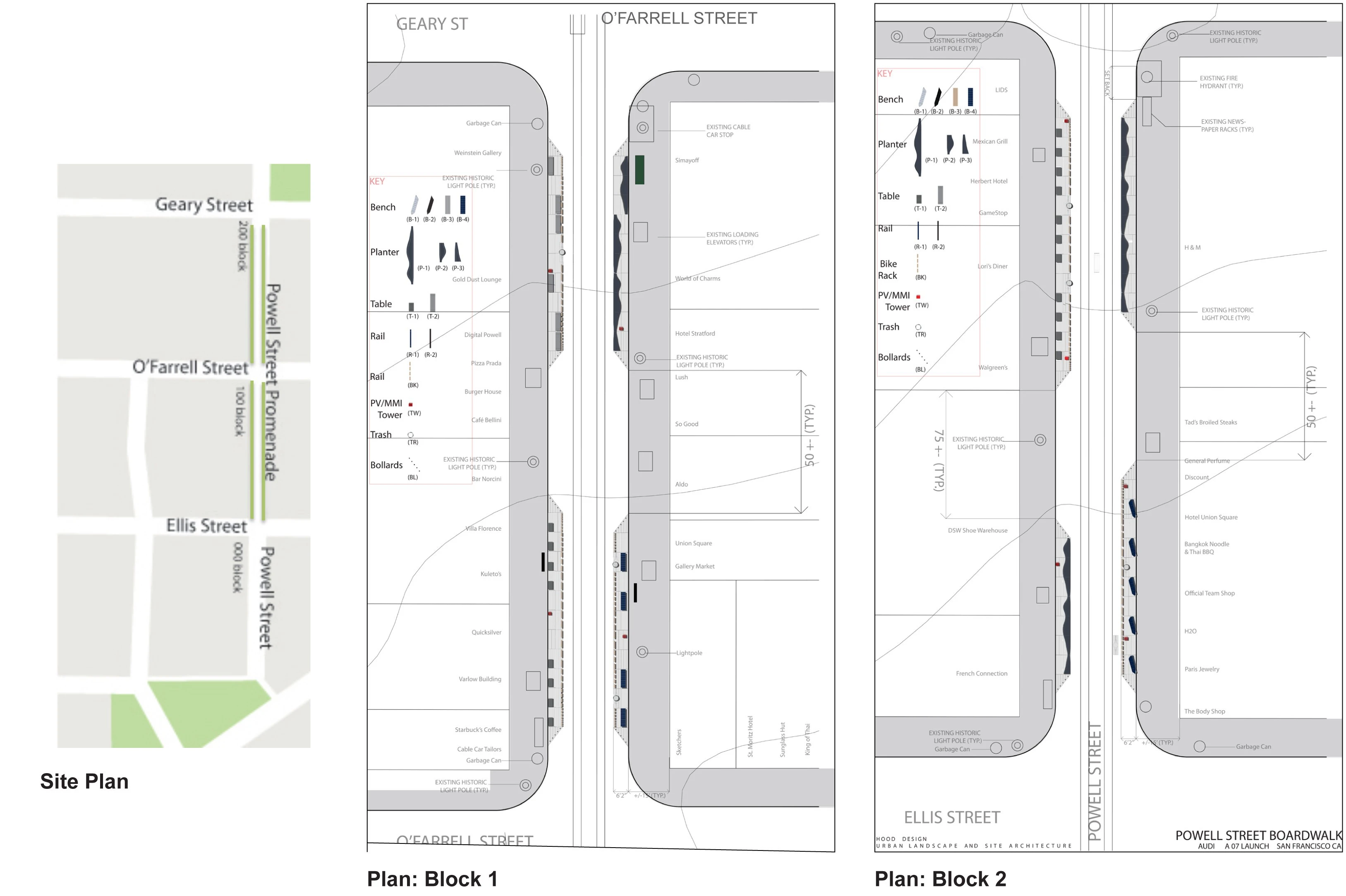
The Powell Street Promenade is located on Powell Street in downtown San Francisco, spanning two blocks between Ellis St. and Geary St. and connecting to the edge of San Francisco’s Union Square. The existing city street included cable car tracks, vehicular thoroughfare, street parking, and sidewalks on each side of the street. The Powell Street Promenade installation replaced the existing street parking adjacent to the existing sidewalks on both sides of the street. Powell Street is one of the busiest pedestrian zones in America, second only to New York’s Times Square in number of visitors with 25,000 to 35,000 visitors per weekend day. The streets are lined with retail stores and restaurants. The historic San Francisco Cable Car transports more than 7.5 million passengers per year through this area of Powell Street.
Scope and Size
The Promenade is a 6’2” wide extension of the existing city sidewalk on both sides of the street, spanning a total of two city blocks. The installation removed nearly 4,500 total sq ft of street parking, and replaced it with pedestrian activity space. The scope of the project included designing and installing new pedestrian walking surfaces, street furnishings, and planting along the two blocks.
Design Intent
The Promenade transforms Powell Street from a corridor that people pass through into a destination in itself; engaging, enhancing, and immersing pedestrians in an urban environment that is distinctly new, while retaining its existing iconic presence. The design merges surface with furnishings creating a new constructed walk that floats between street and sidewalk, giving visitors and new experience adjacent to cable cars and storefronts.
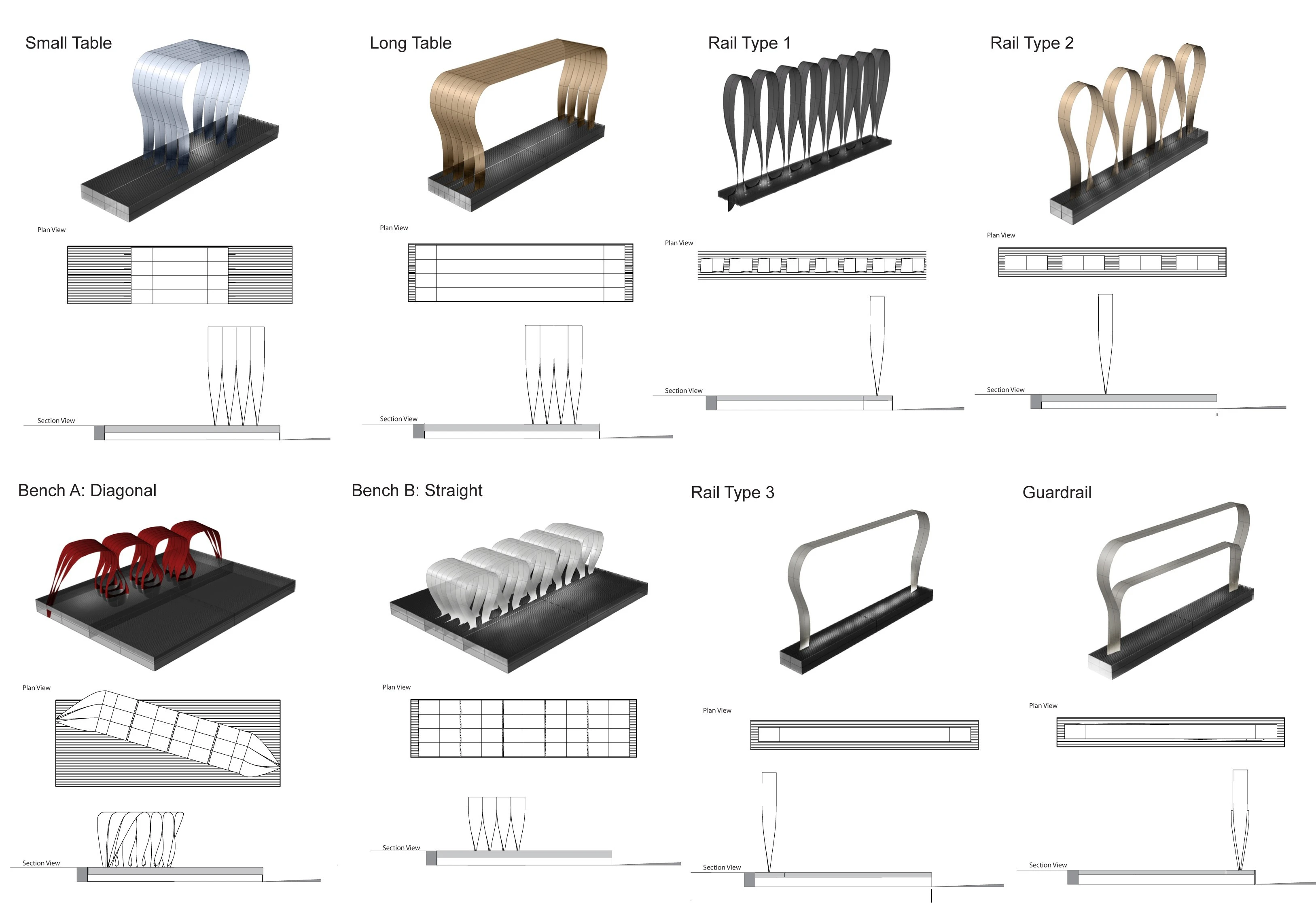
The new walking surface is constructed of aluminum grating with spacing between 1/8” and 3/16.” This narrow dimension allows for ADA approved pedestrian surface while accommodating surface drainage. This structure also connects benches, planters, rails and photovoltaic towers so that they emerge from the walking surface skeuomorphically in one sculptural gesture along the street.
Materials & Installation
The Promenade’s surface is constructed of modular segments of slip resistant aluminum grating with wood embellishment. Benches, tables, rails and 12-foot tall towers are also constructed of aluminum. Photovoltaic panels atop these towers generate energy throughout the day, which is then stored and used to power free Wifi access along with LED lighting on site. The lighting is integrated beneath the grating, providing a glow effect from underneath the promenade during the busy nighttime hours. Low-water and native plantings are employed throughout the promenade to frame spaces for pedestrians to linger. The fast-track installation took place over the course of two months.
Social Impact
The Promenade places a priority on the needs of pedestrians, transit users and cyclists. After the Promenade’s initial installation, pedestrian volumes increased on all the blocks in the site area. Post-occupancy studies conducted by the Union Square District of San Francisco also showed an increase in the amount of time pedestrians spent on the blocks, with more people from the immediate neighborhood patronizing businesses on the corridor. Weekday pedestrian volumes on the street increased by as much as 18percent.
At the ribbon cutting event, San Francisco Mayor Ed Lee commented, “Two-thirds of the millions of annual visitors make their way here… They love coming here, and why not link the historic cable car stop on Market Street (to Union Square) and make a wonderful experience. This unique public private non-profit partnership creates a safe, green, forward thinking and contemporary space for everyone...”
-
Hood Design Studio
Lead Designer: Walter Hood, ASLAProject Client & Design Consultant:
Audi, USA
Design & Construction Team
City Design Group and Permitting Consultants
City of San Francisco Dept. of Public Works
& San Francisco Planning DepartmentEngineering Services
Smith Engineering, Inc.Project Manager, Media and Marketing
Venables Bell & Partners
Featured Products
Aluminum Grating Suppliers
Barnett BatesFabrication
NorCal Metal FabricatorsFabrication and Installation
Atthowe Fine Art ServicesPlants
Flora Grubb GardensPV / Lighting
Alter Systems / TeemDesign
Advertisement
Related Awards

Award of Excellence, General Design
A Floating Forest: Fish Tail Park in Nanchang City
In Nanchang, within the Yangtze River floodplain, we revitalized a heavily degraded 126-acre landscape into a floating forest that manages stormwater, restores habitats, and provides diverse recreational spaces—all within a limited budget and a short timeline. This innovative urban nature model strengthens the district’s identity and spurs surrounding development. Fish Tail Park offers a scalable solution for flood-prone regions, seamlessly integrating flood resilience, ecological restoration