
.webp?language=en-US)

SHIFT:infrastructure
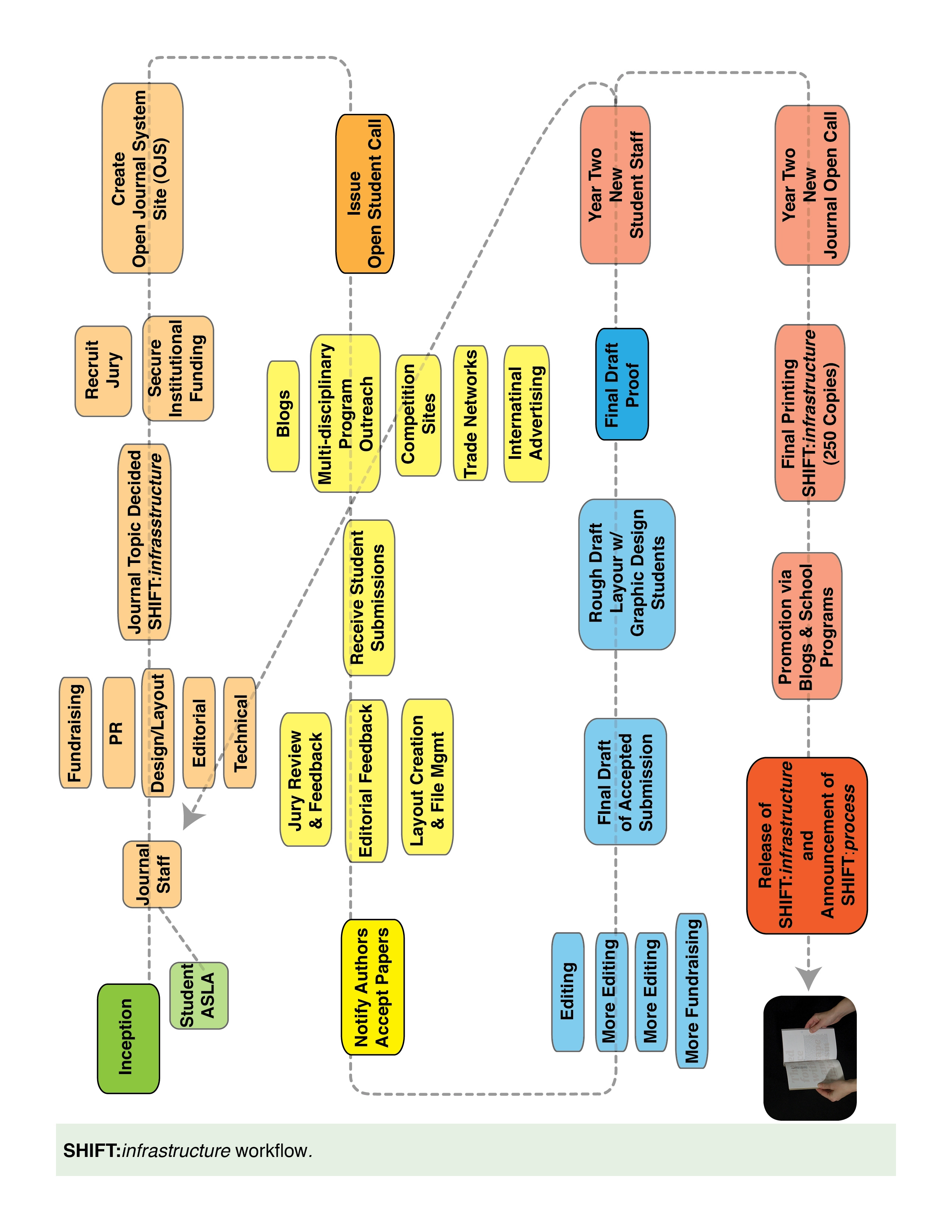
Lorna Allen, Student Associate ASLA; Tucker Beeninga, Student ASLA; Sarah Elsaesser, Associate ASLA; Matt Evans, Student ASLA; Benjamin Hood, Student ASLA; Michael Lynskey, Associate ASLA; Preston Montague, Student ASLA; Leslie Morefield, Associate ASLA; Lindsay Ruderman, Student ASLA; Scott Simmons, Associate ASLA; Caitlin Smolewski, Associate ASLA; Matt Tomasulo, Student ASLA; David Toms, Associate ASLA; Luke Wallenbeck, Associate ASLA
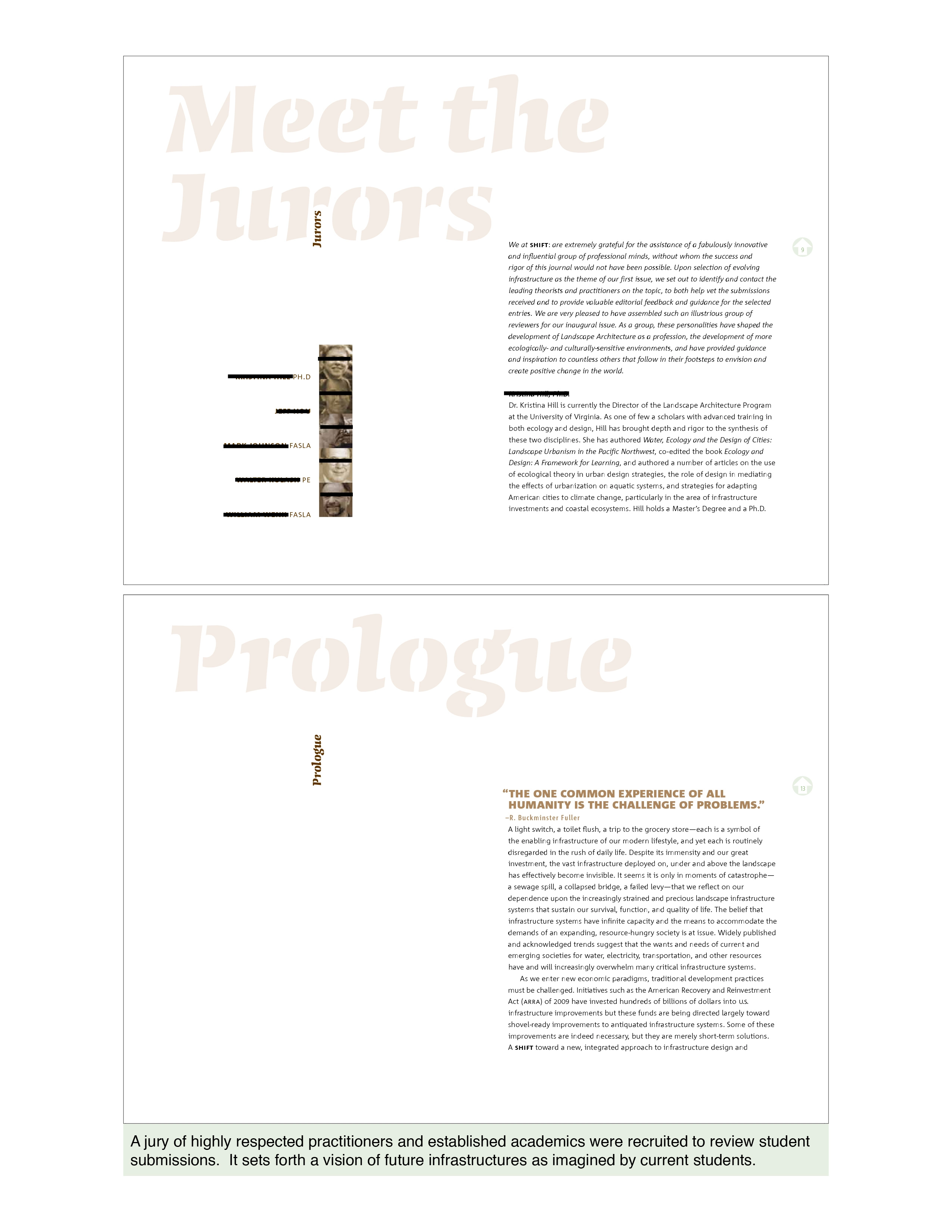
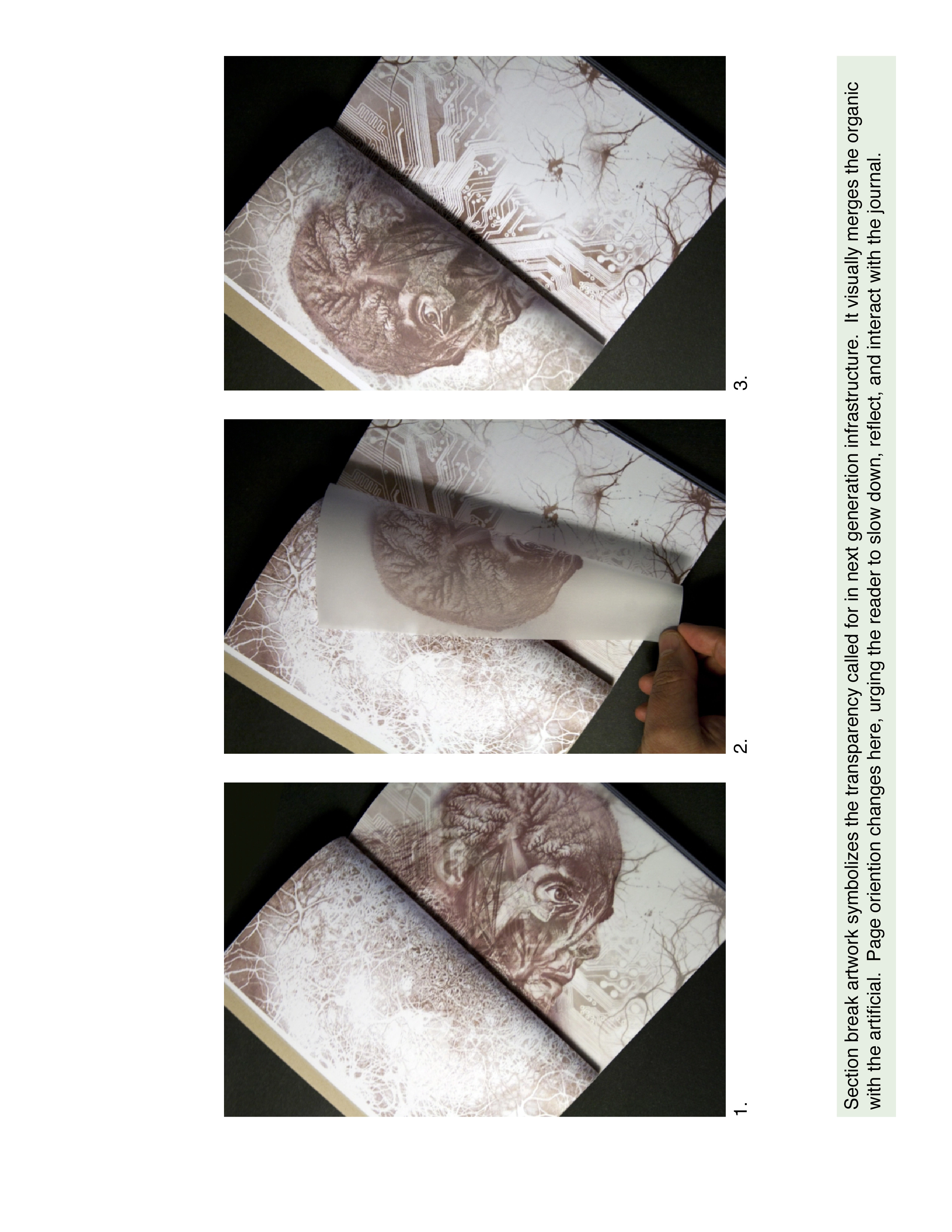
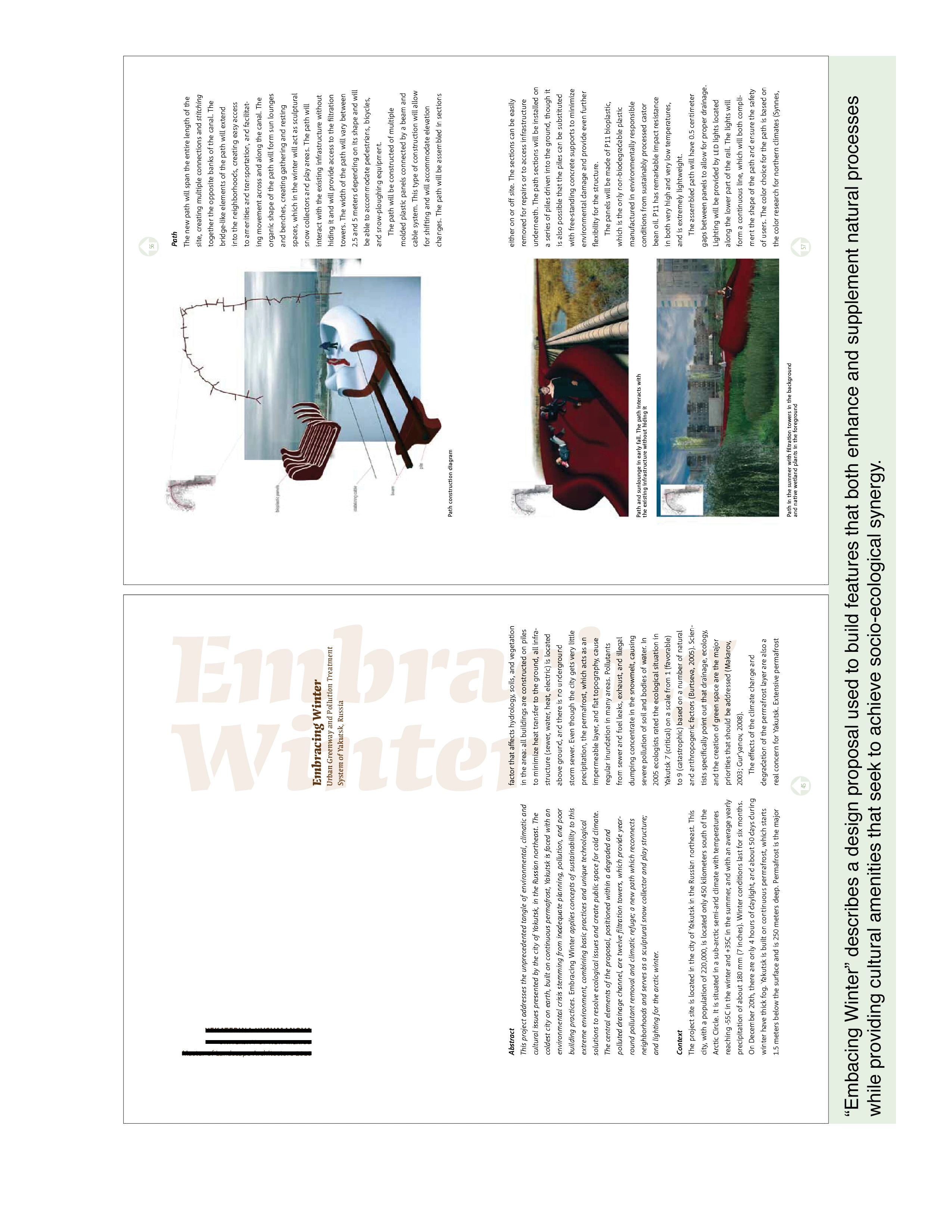
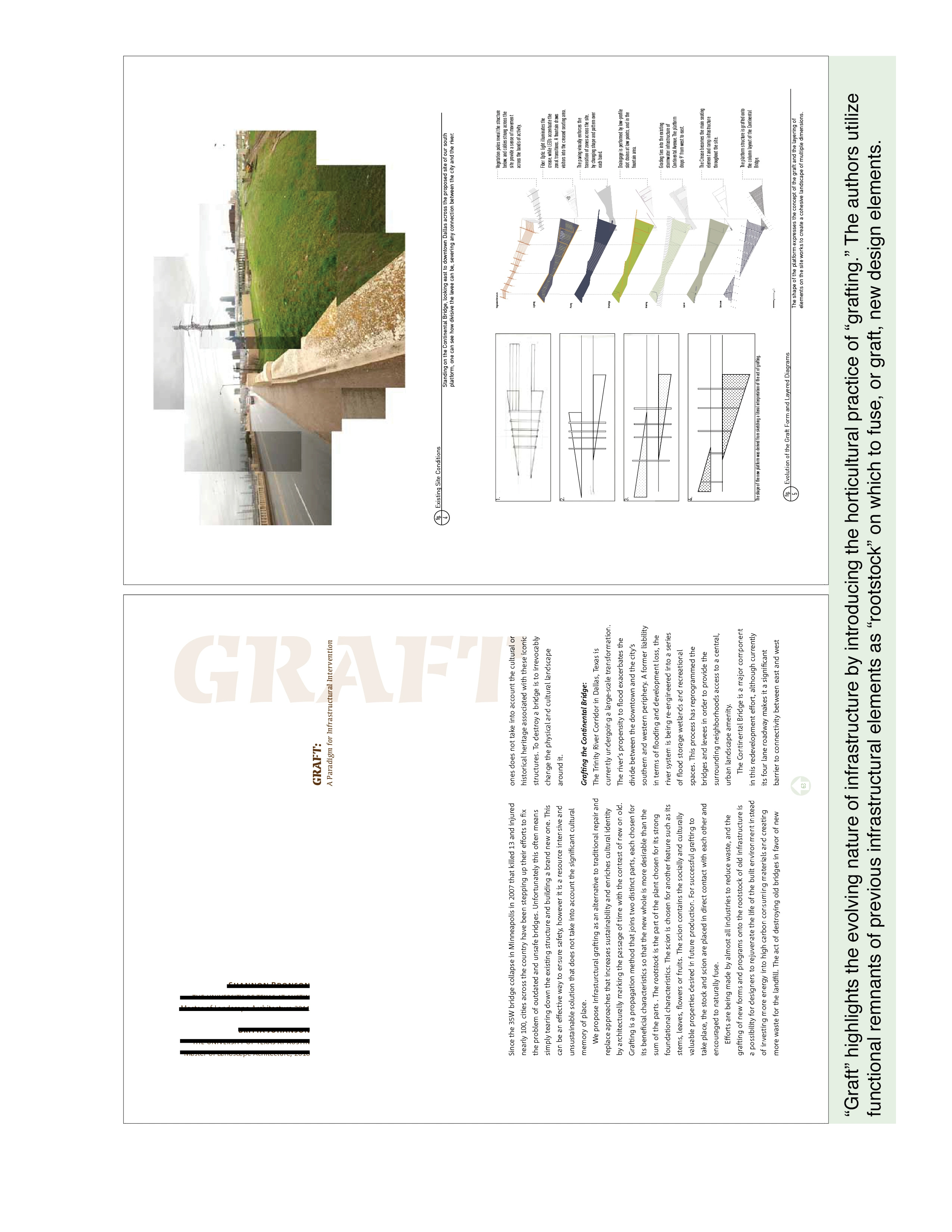
The vision is admirable and the presentation was impressive. The Web site is very helpful as well.
Awards Jury
-
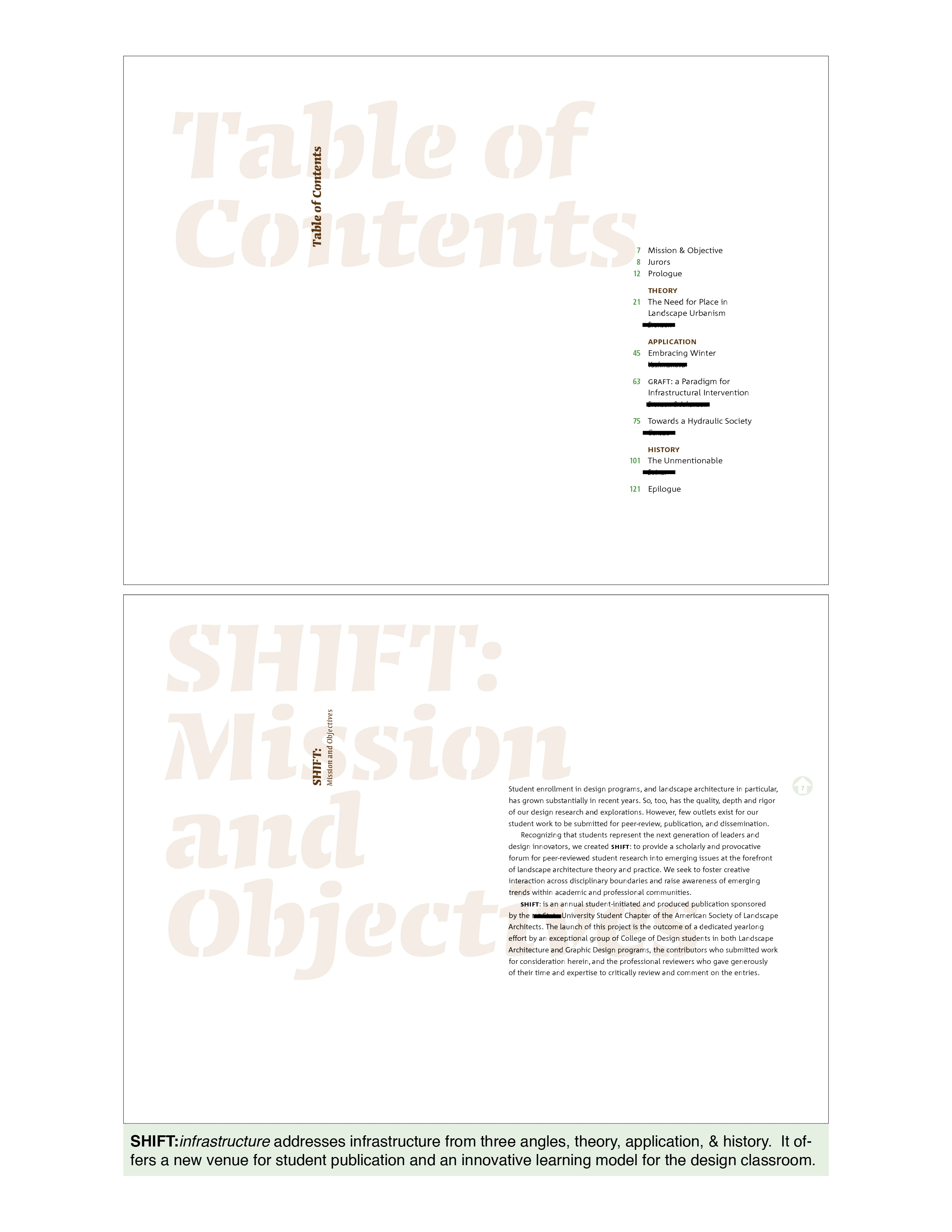
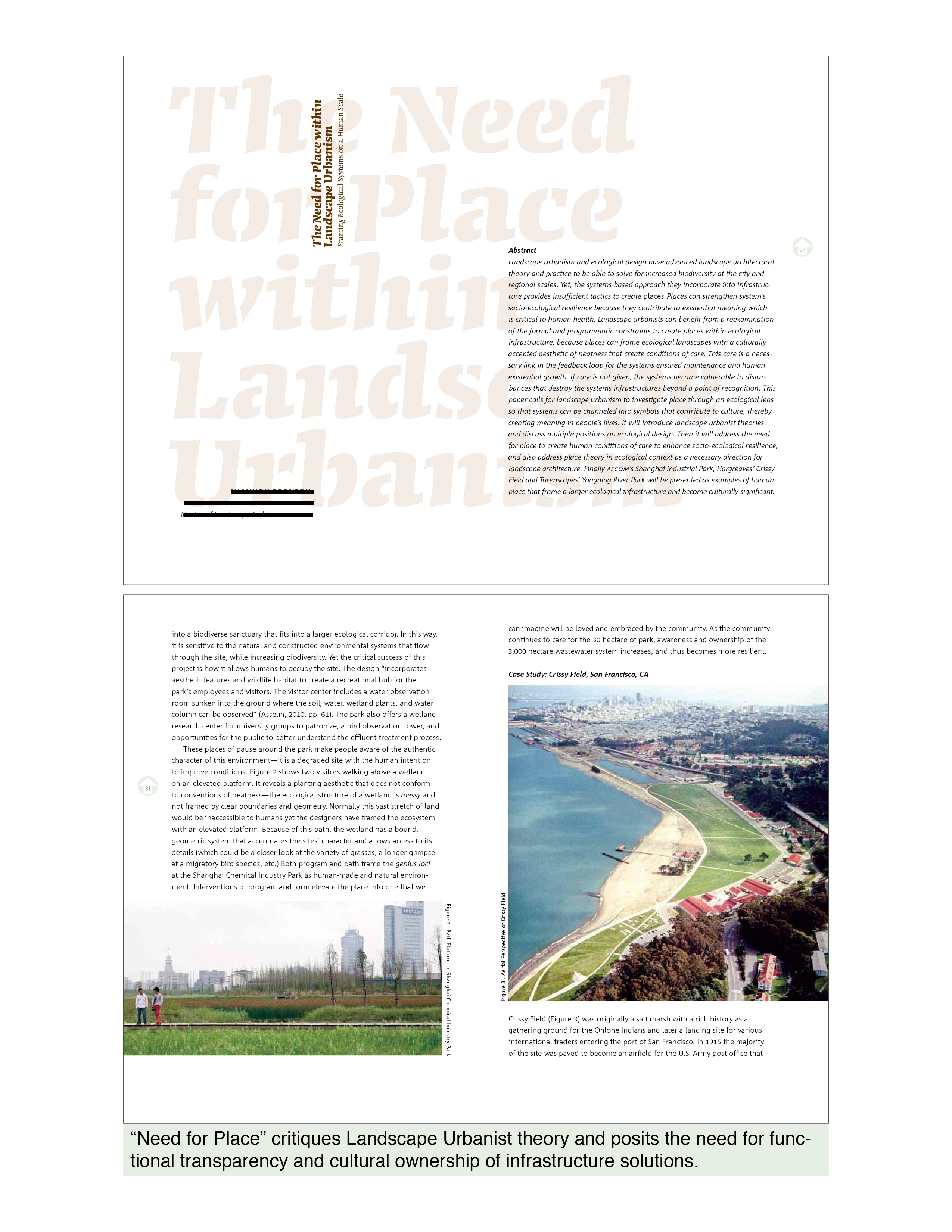
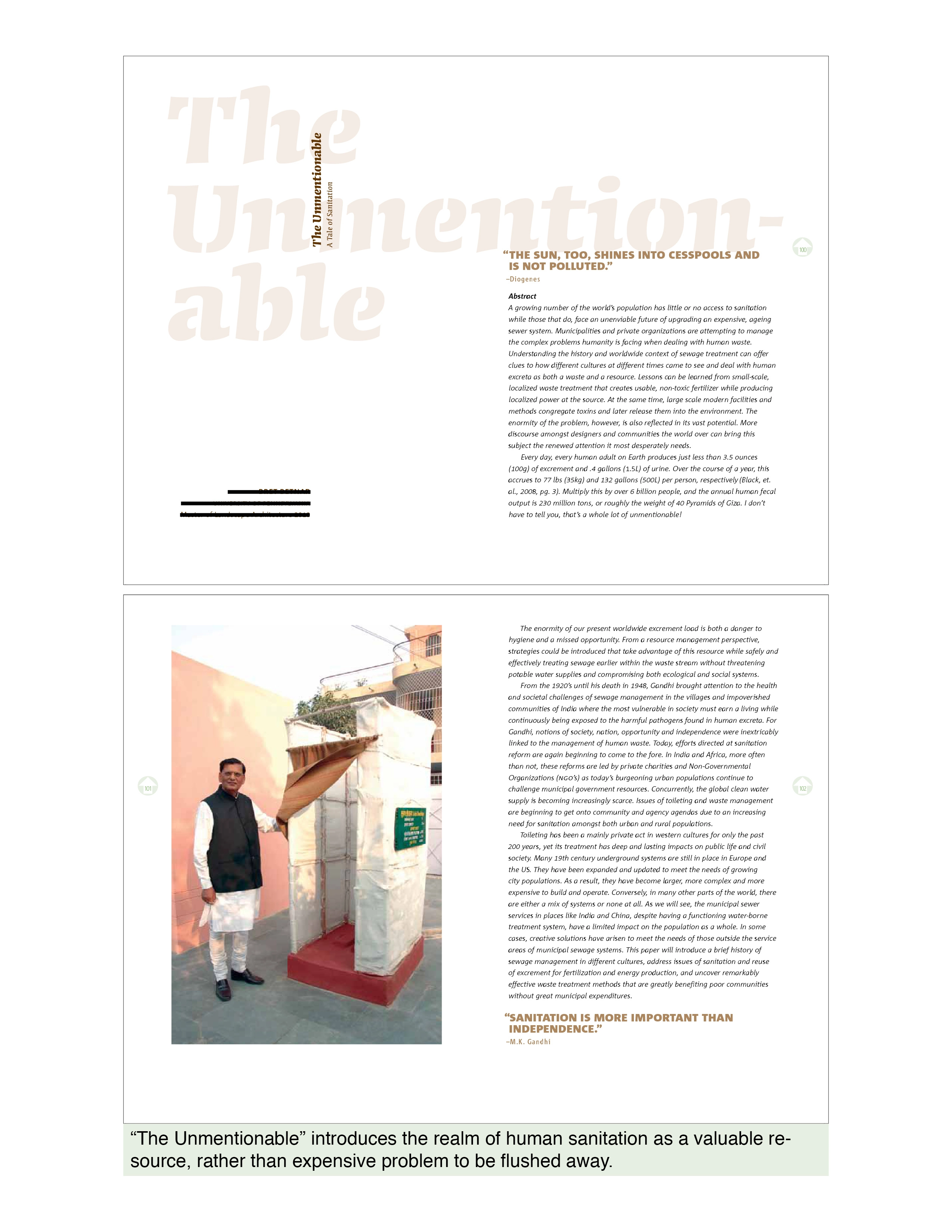
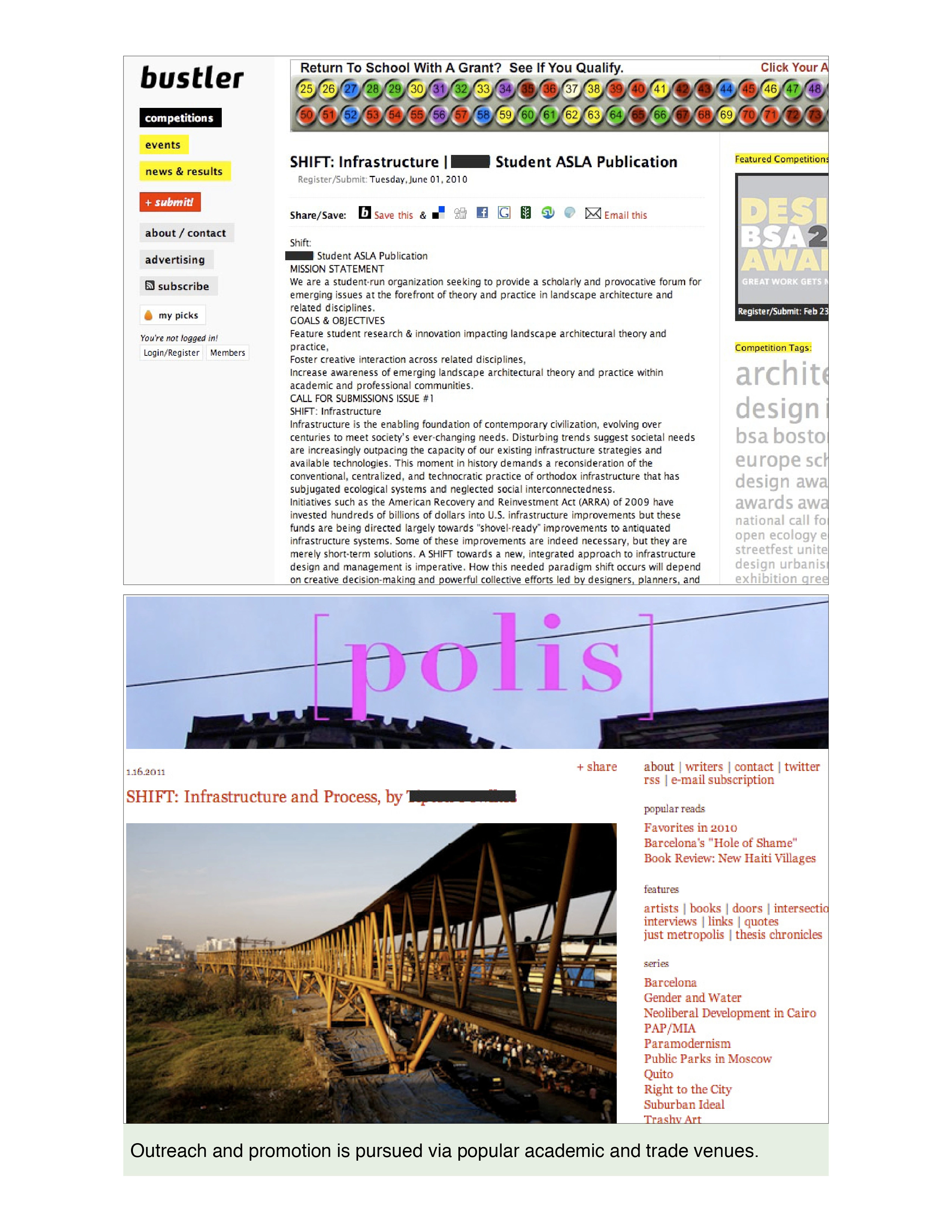
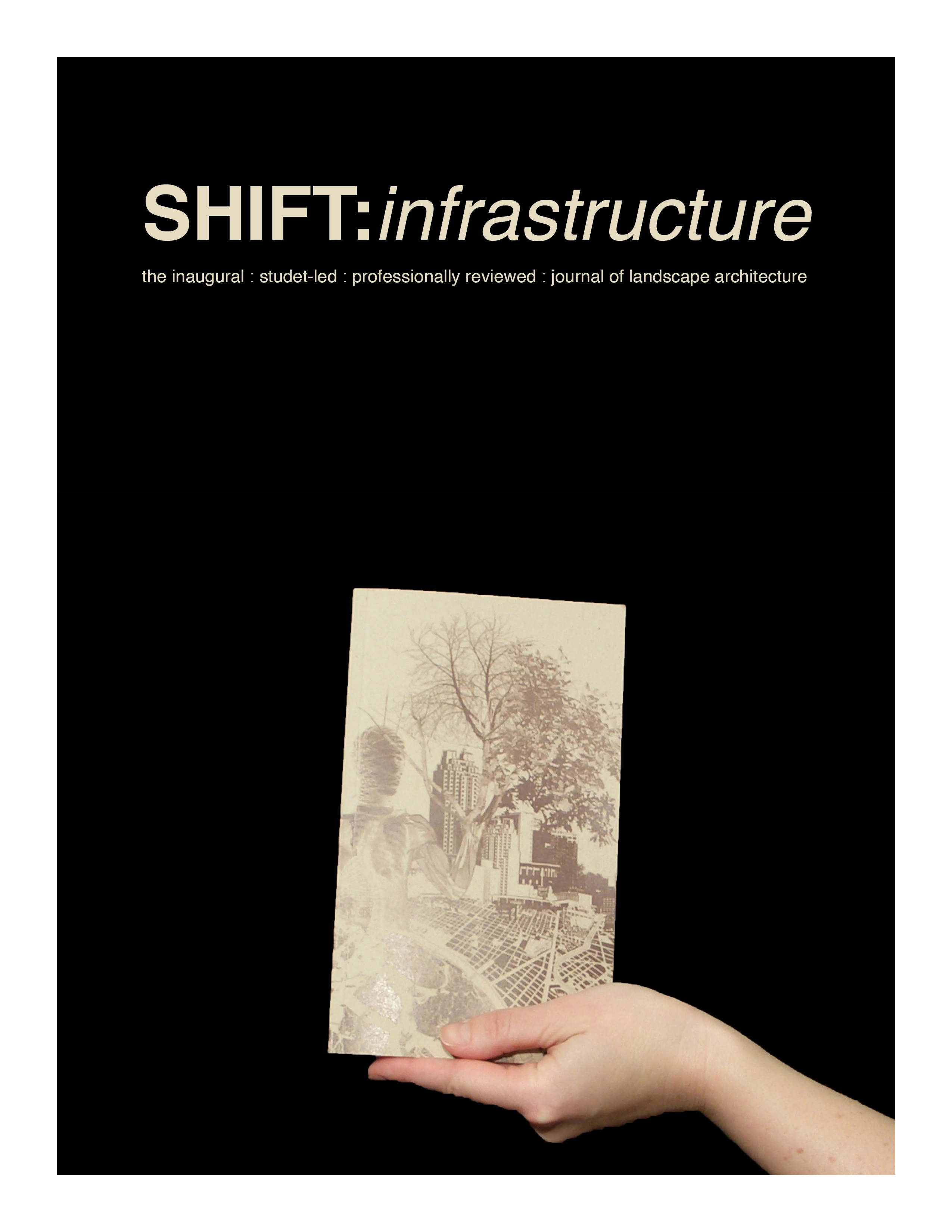
SHIFT:infrastructure is an annual student produced publication sponsored by the North Carolina State University Student Chapter ASLA. Recognizing that students represent the next generation of leaders and design innovators, we created SHIFT: to provide a scholarly and provocative forum for professional-reviewed student research into emerging issues at the forefront of landscape architecture theory and practice. We seek to foster creative interaction across disciplinary boundaries and raise awareness of emerging trends within academic and professional communities.
-
"The one common experience of all humanity is the challenge of problems."
—R. Buckminster FullerA light switch, a toilet flush, a trip to the grocery store —each is a symbol of the enabling infrastructure of our modern lifestyle, and yet each is routinely disregarded in the rush of daily life. Despite its immensity and our great investment, the vast infrastructure deployed on, under and above the landscape has effectively become invisible. It seems it is only in moments of catastrophe—a sewage spill, a collapsed bridge, or a failed levy—that we reflect on our dependence upon the increasingly strained and precious landscape infrastructure systems that sustain our survival, function, and quality of life. The belief that infrastructure systems have infinite capacity and the means to accommodate the demands of an expanding resource-hungry society is at issue. Widely published and acknowledged trends suggest that the wants and needs of current and emerging societies for water, electricity, transportation, and other resources have and will increasingly overwhelm many critical infrastructure systems.
As we enter new economic paradigms, traditional development practices must be challenged. Initiatives such as the American Recovery and Reinvestment Act (ARRA) of 2009 have invested hundreds of billions of dollars into U.S. infrastructure improvements but these funds are being directed largely towards "shovel-ready" improvements to antiquated infrastructure systems. Some of these improvements are indeed necessary, but they are merely short-term solutions. A SHIFT towards a new, integrated approach to infrastructure design and management is imperative. How can we leverage this opportunity to invent alternate ideas, strategies and tools that yield infrastructure models resulting in measurably superior and more sustainable conditions with regards to social equity, ecological resiliency and economic prosperity? This is the time for a multi-scalar re-evaluation of the current conventional, centralized, and technocratic systems and approaches that degrade fundamental ecological and social systems and their interdependencies. This is the time for better ideas, values, and solutions.
This publication reveals visions of our future as imagined by a rising generation of student contributors. It provides a glimpse into the values and theories of design that they will define, explore, and test in their professional careers.
Our Call
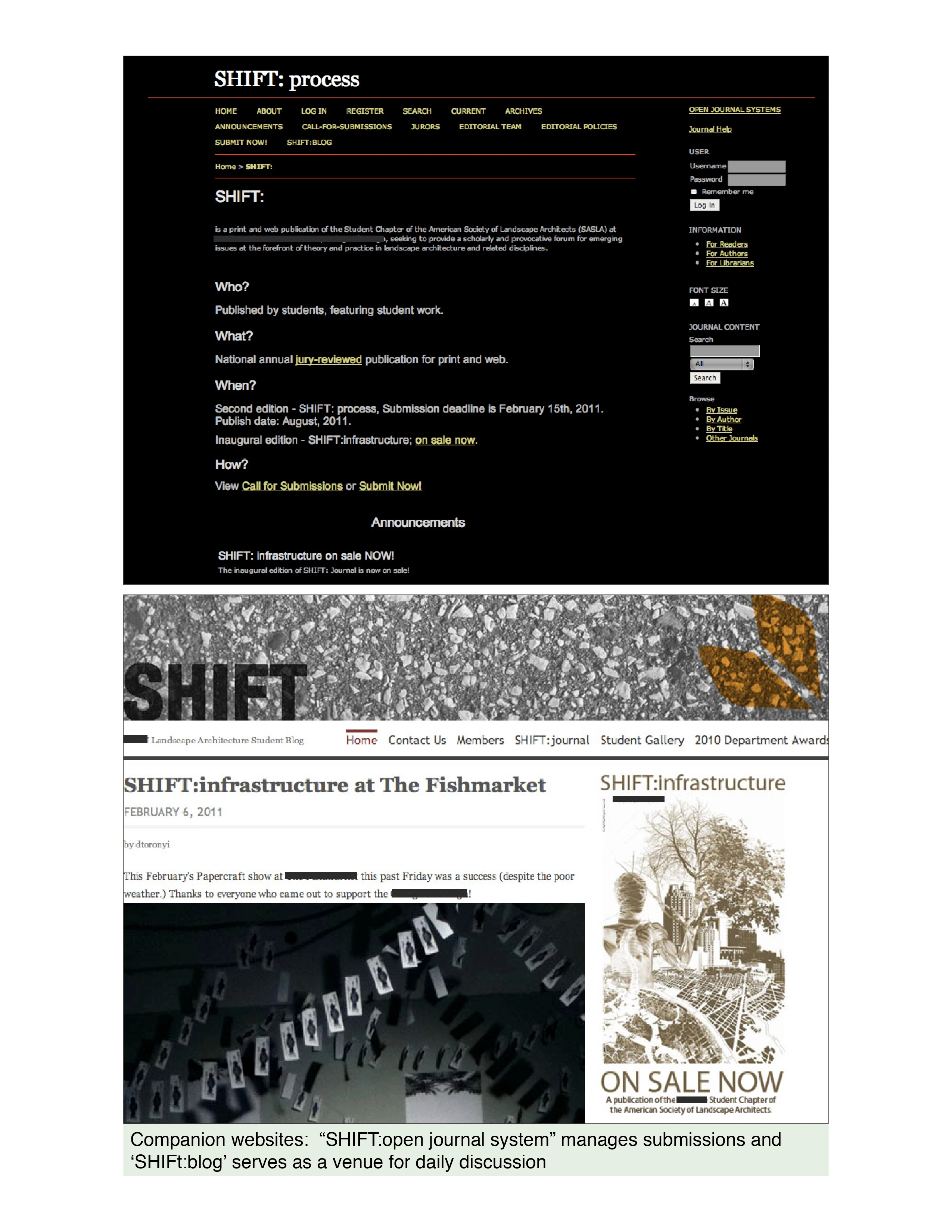
SHIFT:infrastructure invited our academic peers from around the globe to share their scholarly work to broaden the discourse challenging traditional notions of landscape infrastructure and advocating future directions of landscape architectural practice and inquiry. Following is the "Call for Submittals" that was disseminated to entice passionate students to formally develop and submit their work for peer review and possible publication in this journal.
The Response
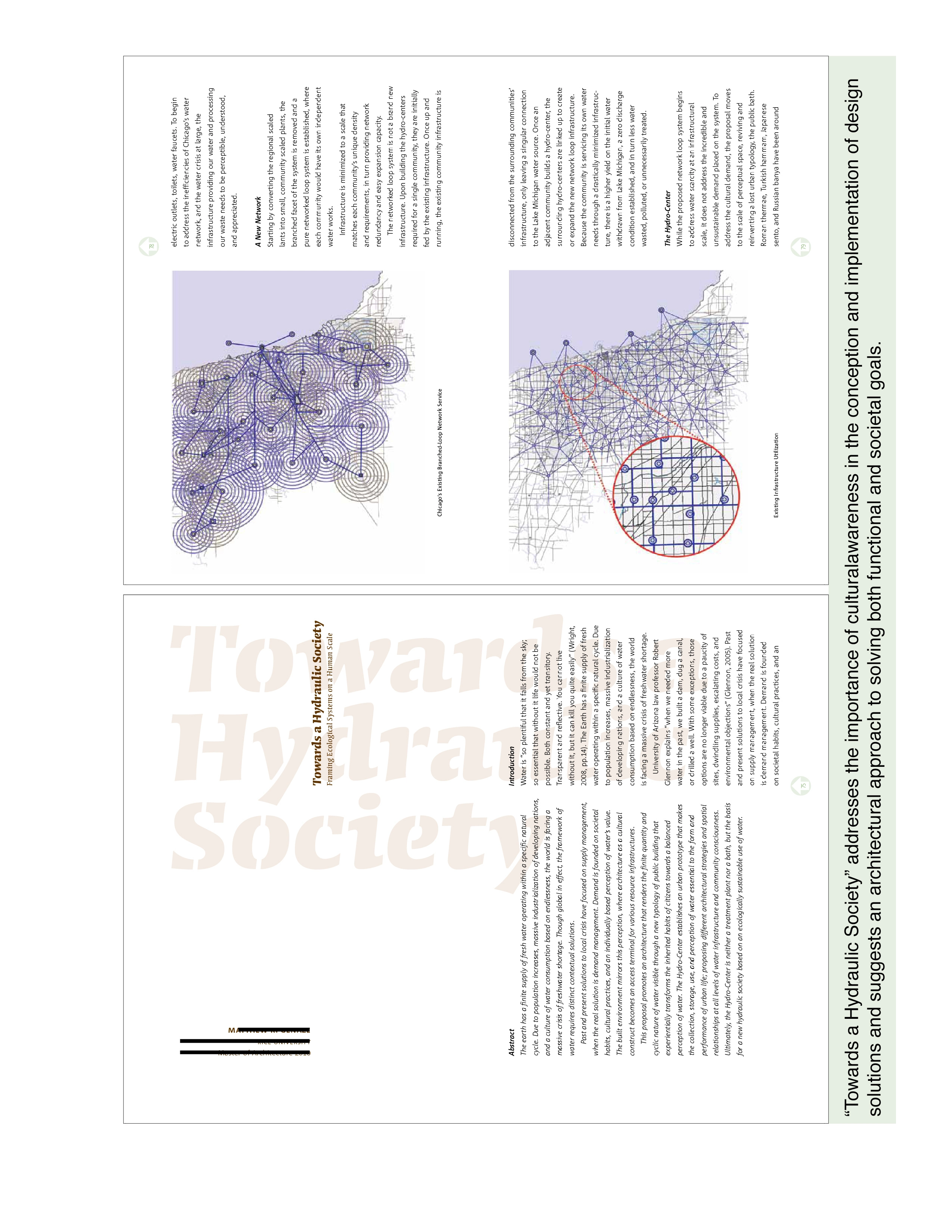
The entries we received point to the need for increased understanding and comprehension of landscape infrastructure and its support of the functions that sustain society. Each submission underwent a thorough review process by an external panel of distinguished thinkers and designers that culminated in the selection of five entries for inclusion in this journal. The selected entries look at infrastructure from diverse perspectives and reflect a broad geographical range—from south Texas, to India to the far reaches of Siberia. The authors generally emphasize the need for local, personalized solutions to infrastructure challenges and suggest that the era of centralized infrastructure is shiftingto distributed models that better fit the social and environmental needs of the unique regions, communities, and neighborhoods they support.
The Results
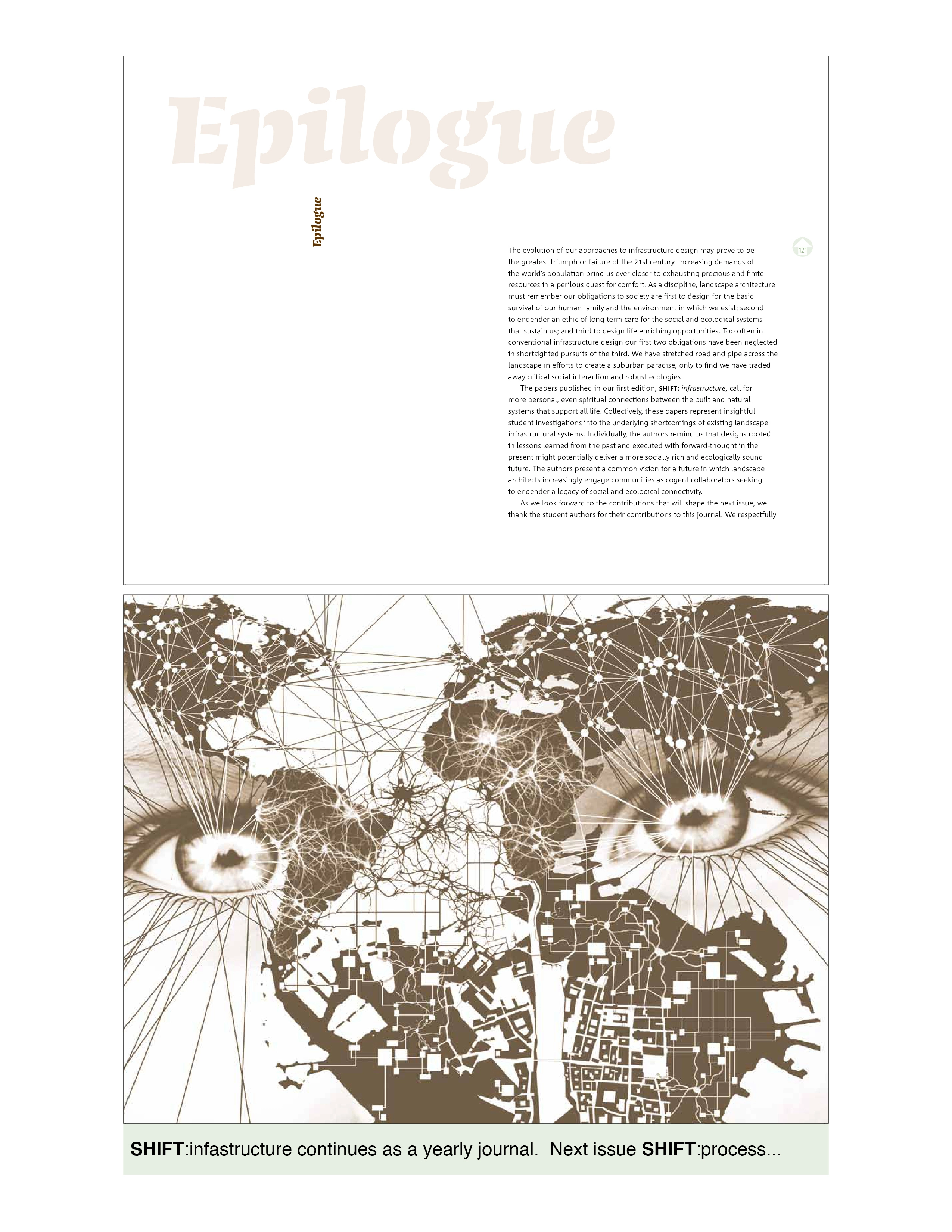
The papers published in our first edition, SHIFT: infrastructure, call for more personal, even spiritual connections between the built and natural systems that support all life. Collectively, these papers represent insightful student investigations into the underlying shortcomings of existing landscape infrastructural systems. Individually, the authors remind us that designs rooted in lessons learned from the past and executed with forward-thought in the present might potentially deliver a more socially rich and ecologically sound future. The authors present a common vision for a future in which landscape architects increasingly engage communities as cogent collaborators seeking to engender a legacy of social and ecological connectivity.
The Impact
In addition to providing a fresh look at the future of infrastructure through the eyes of emerging designers, the initiation of SHIFT:infrastructure as an annual publication has created a powerful learning platform for students. As a purely extracurricular and student run activity, it engenders a strong ethic of teamwork, leadership, and personal responsibility among team members. By reaching far beyond its home institution to recruit jurors and solicit student contributions, it fosters inter-institution and inter-disciplinary dialog and exposes students to multiple perspectives.
As we look forward to the contributions that will shape the next issue, we thank the student authors and professional jurors for their contributions to this journal. We respectfully hope these papers motivate discourse among an interdisciplinary field of designers, planners, and engineers who, ultimately, will invent viable solutions for the design and making of healthier places.
-
NC State Graphic Design: Graphic Designers
Kelly Bailey
TJ BlanchflowerChair NC State College of Design, Department of Landscape Architecture
Gene Bressler, FASLA
NC State Student Chapter American Society of Landscape Architecture
Special Thanks to Jordan Petersen
Advertisement
Related Awards
Honor Award, Communications
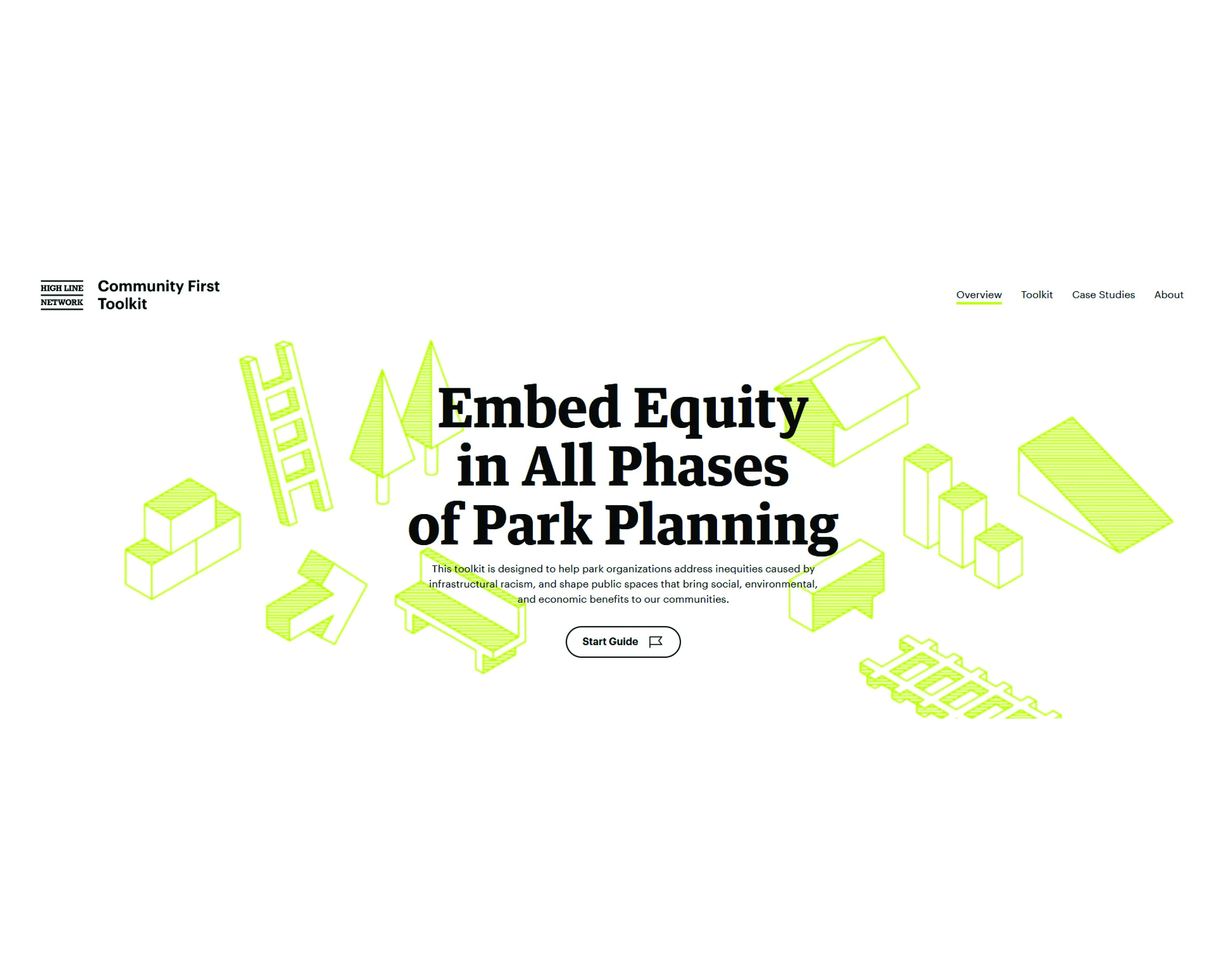
The Community First Toolkit: A Framework for Equitable Public Spaces
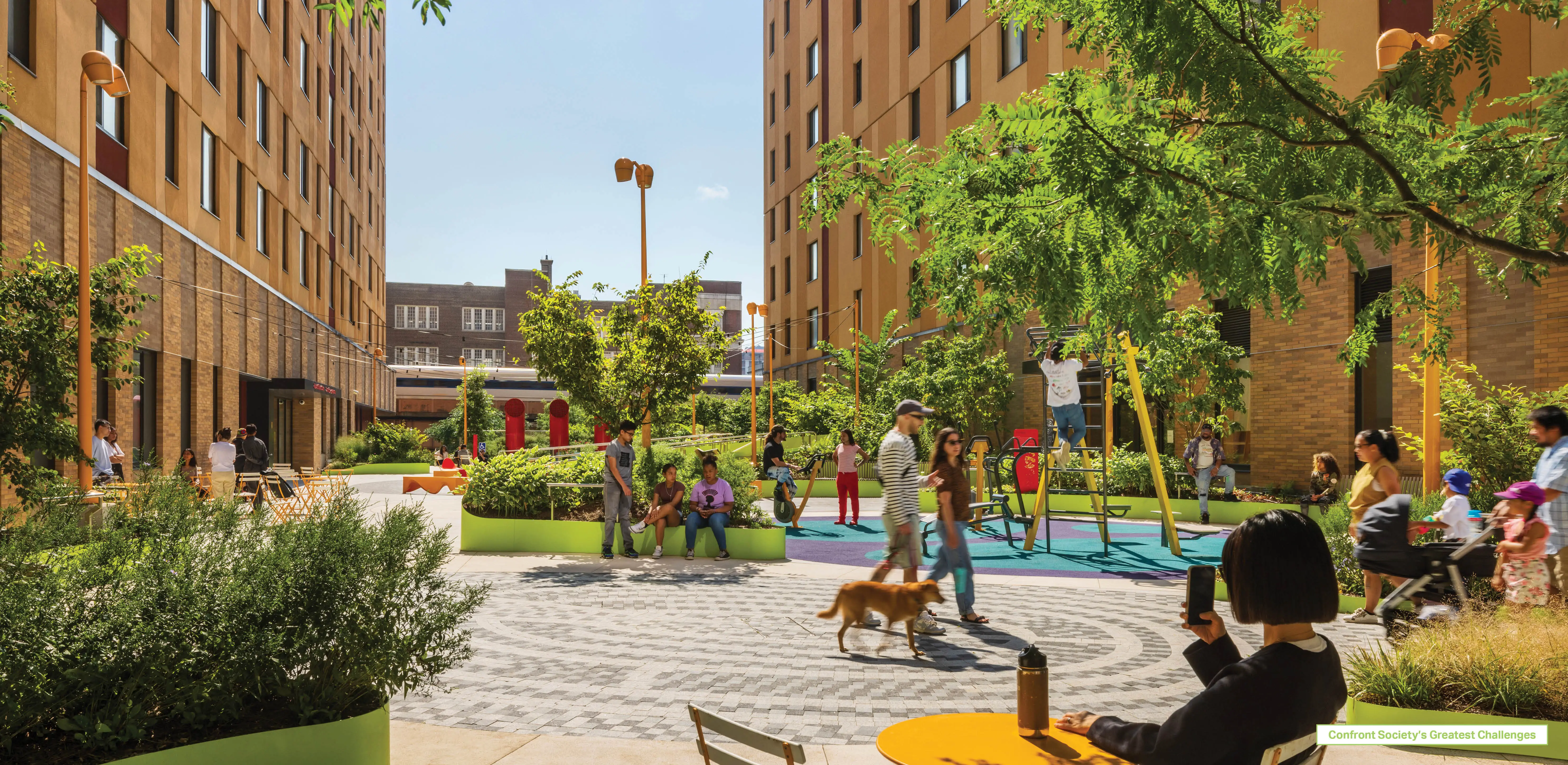
Communities across North America have faced uneven development for decades. The Community First Toolkit (CFT) provides a visionary, adaptable framework for public realm advocates to directly tackle infrastructural racism and embed equity at all stages of the design process.