
.webp?language=en-US)


Co-Modification
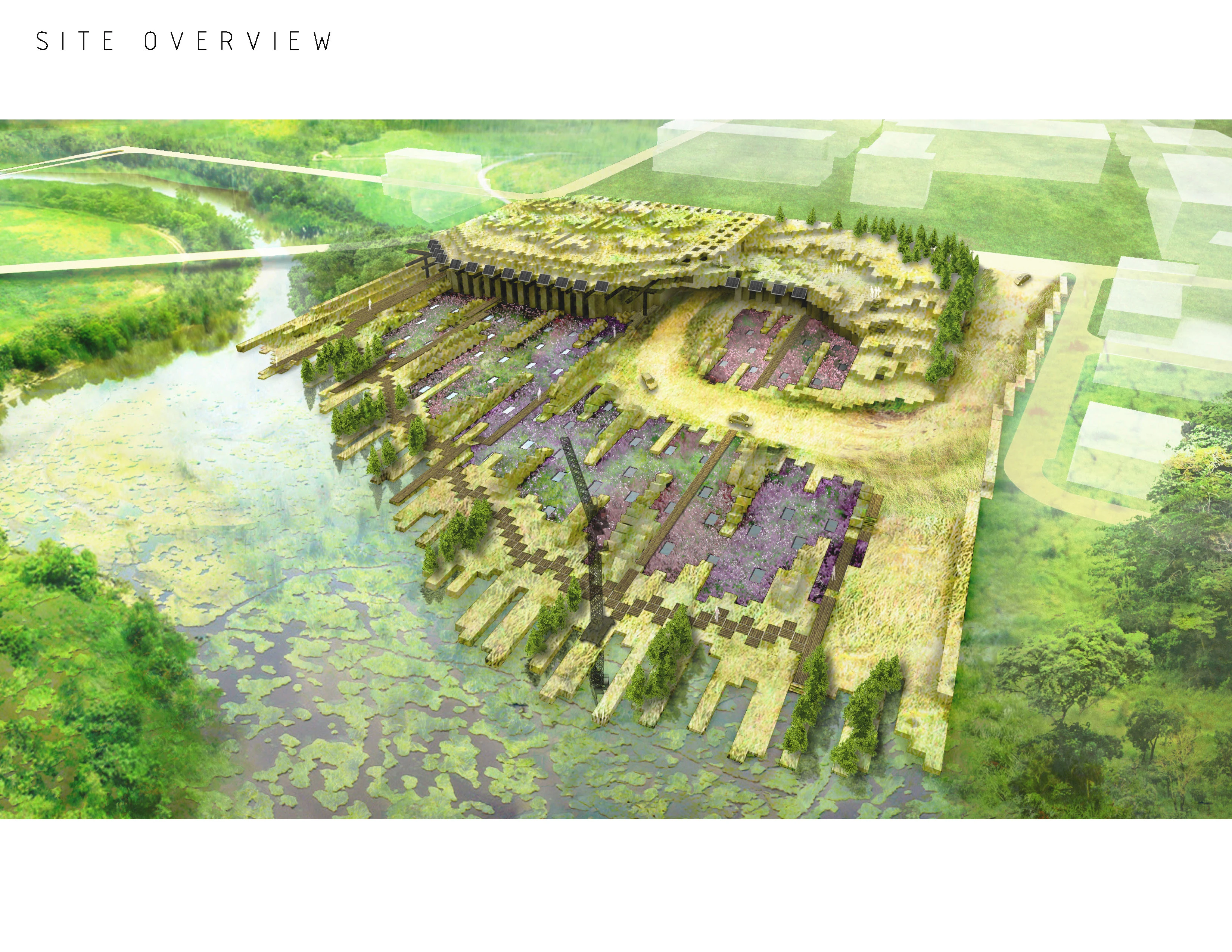
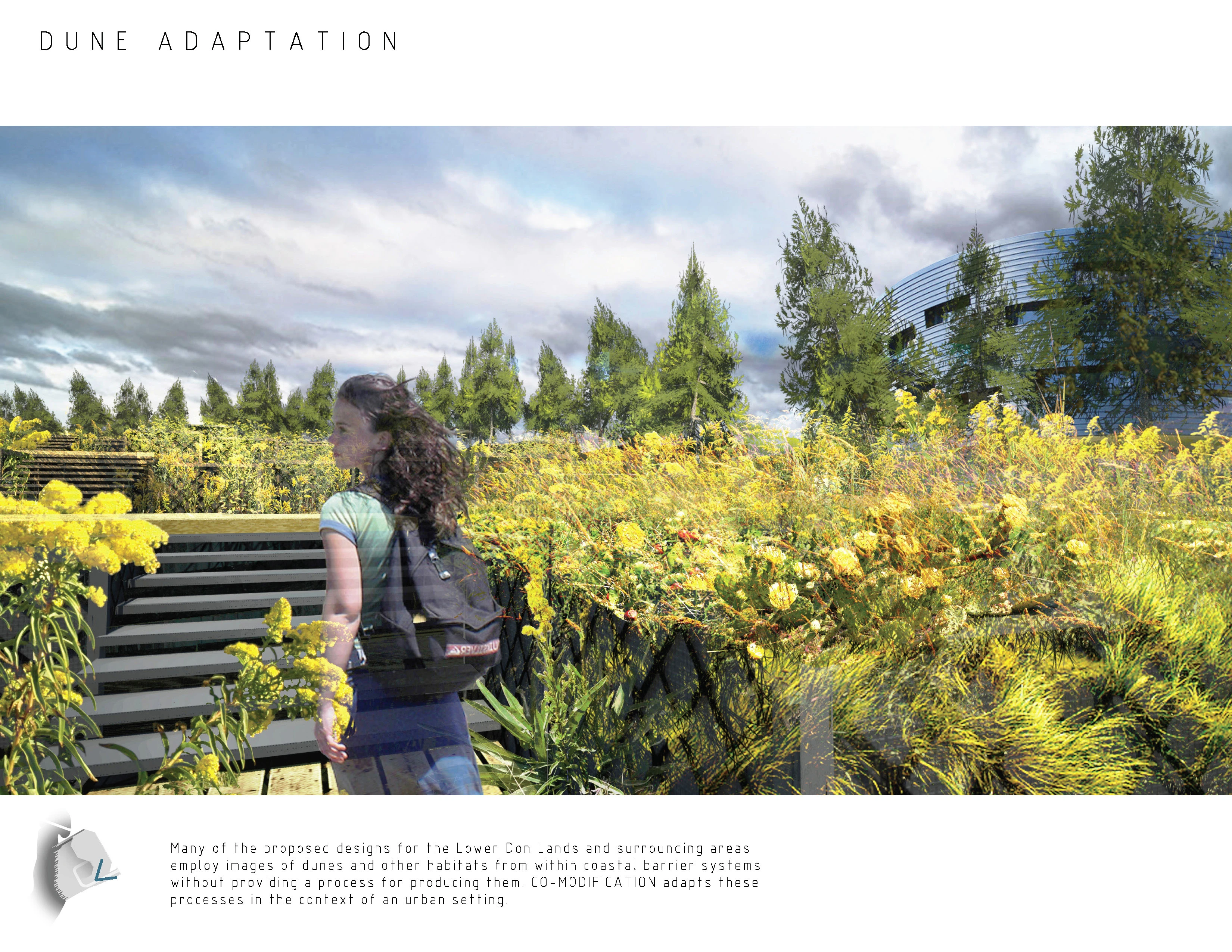
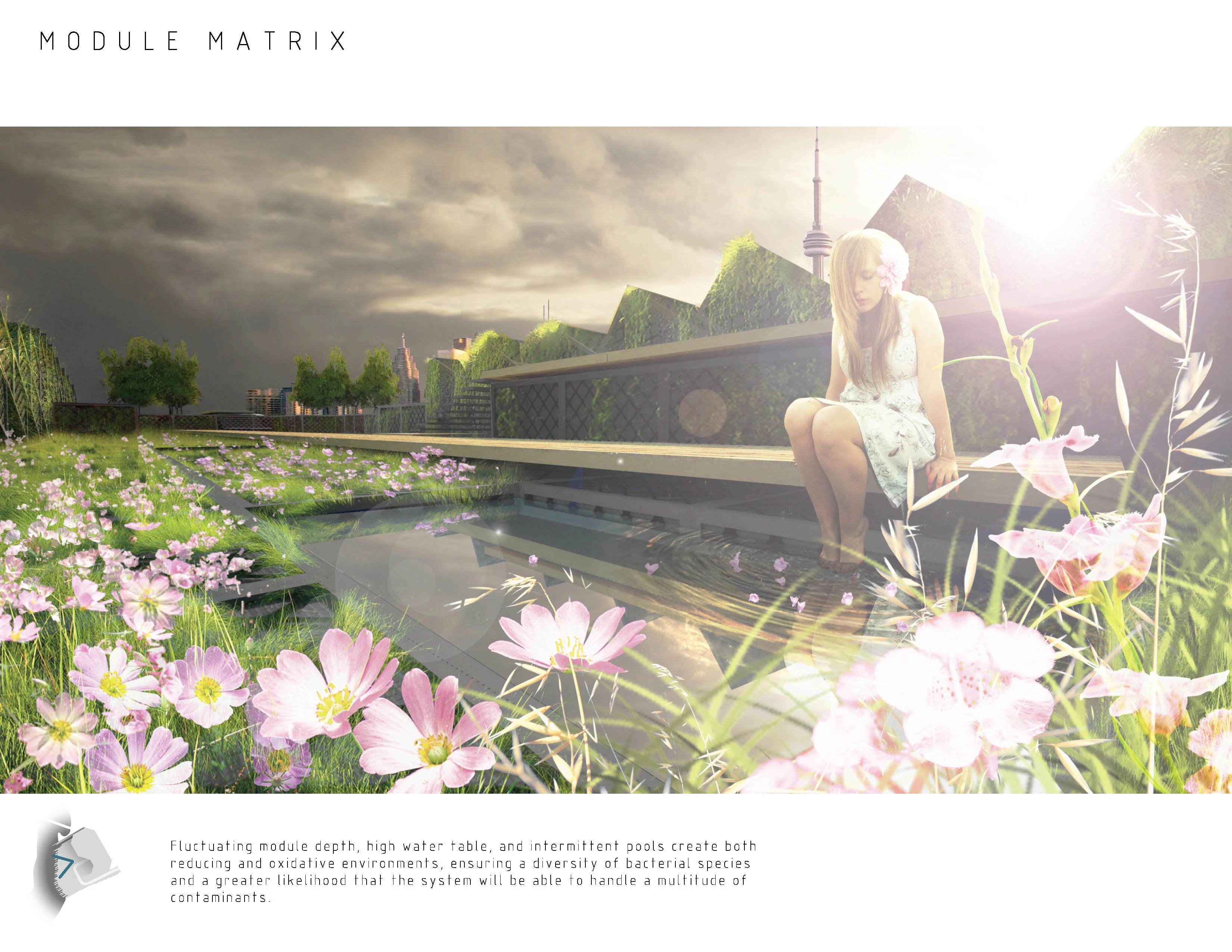
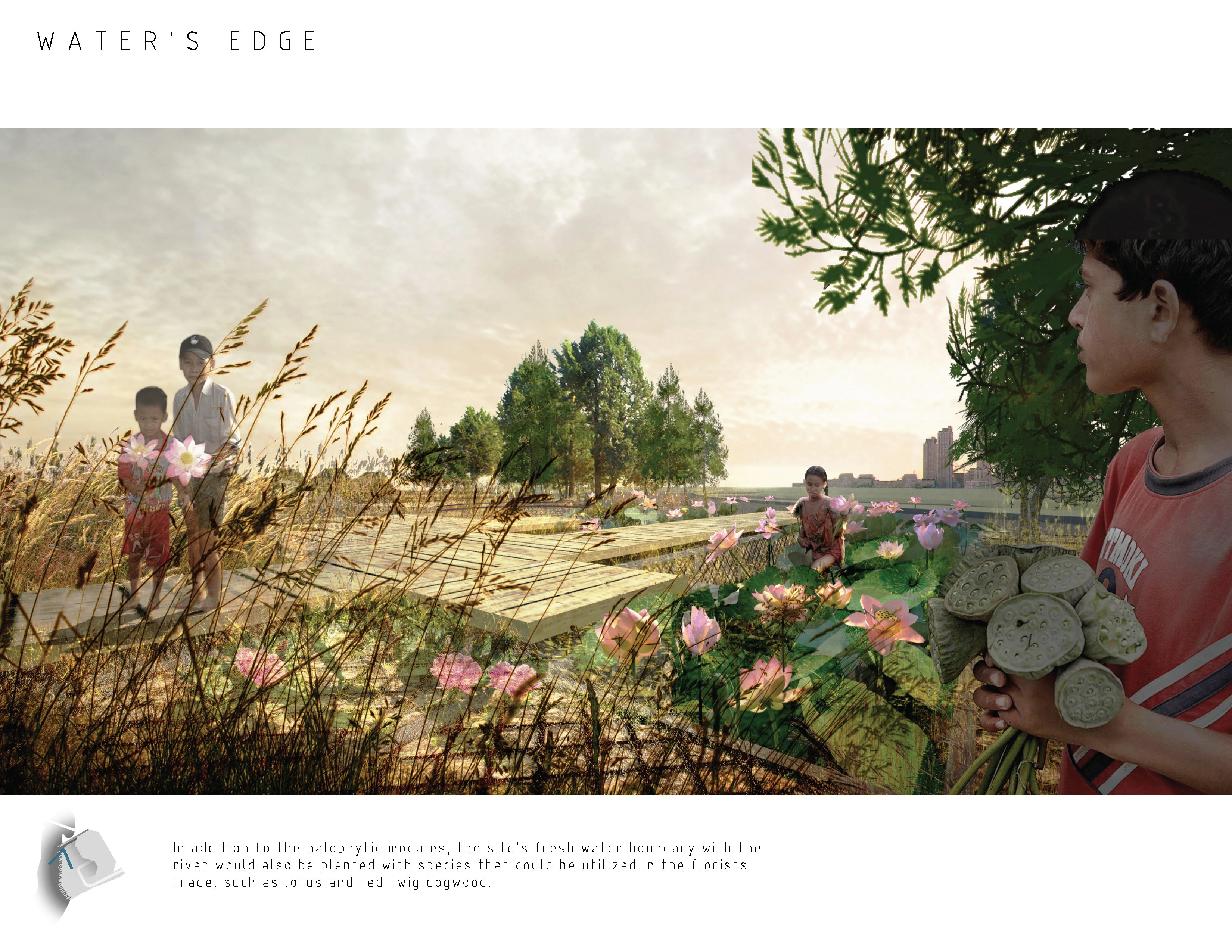
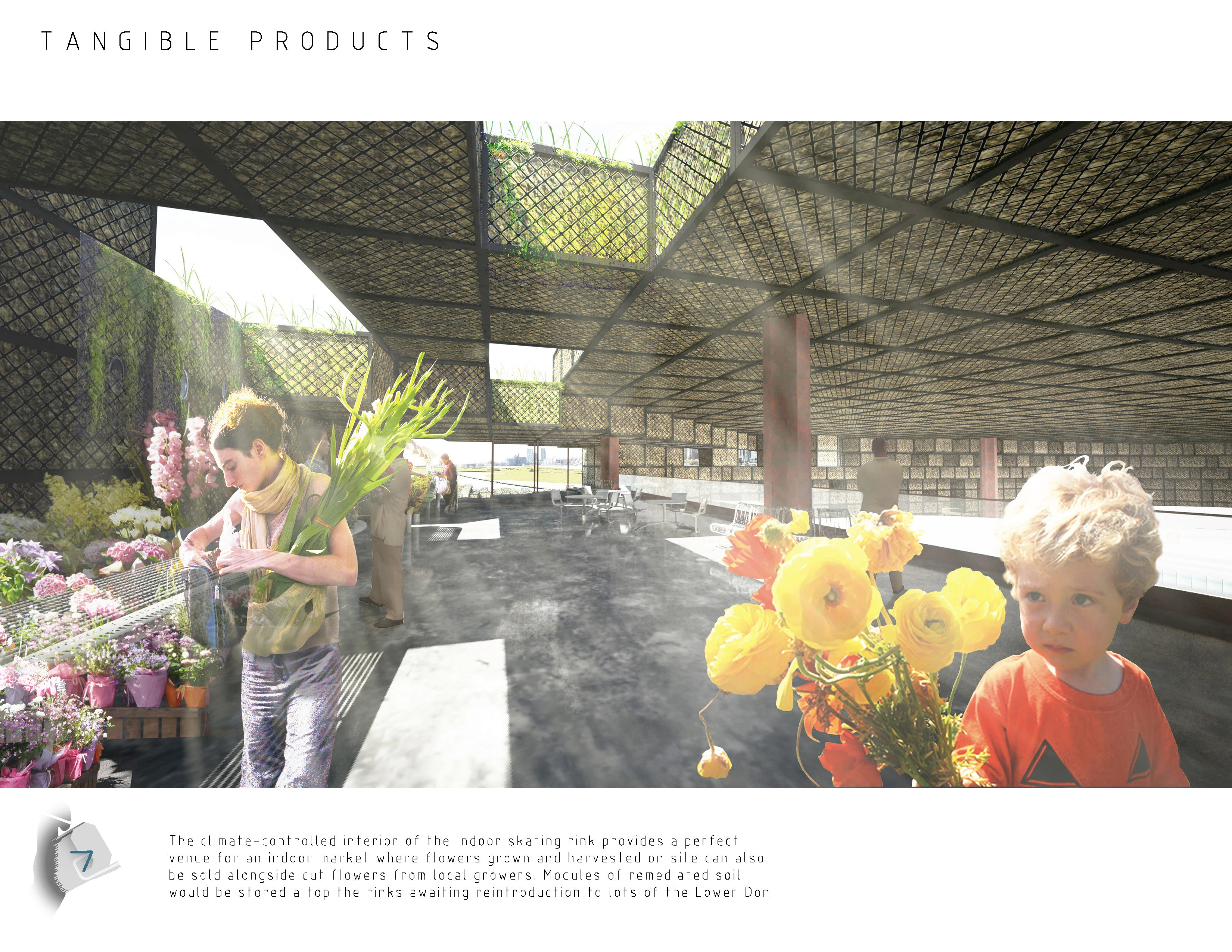
Making soil remediation a part of urban living is very practical and forward-thinking. The package is beautiful, there is a sculptural quality to it.
Awards Jury
-
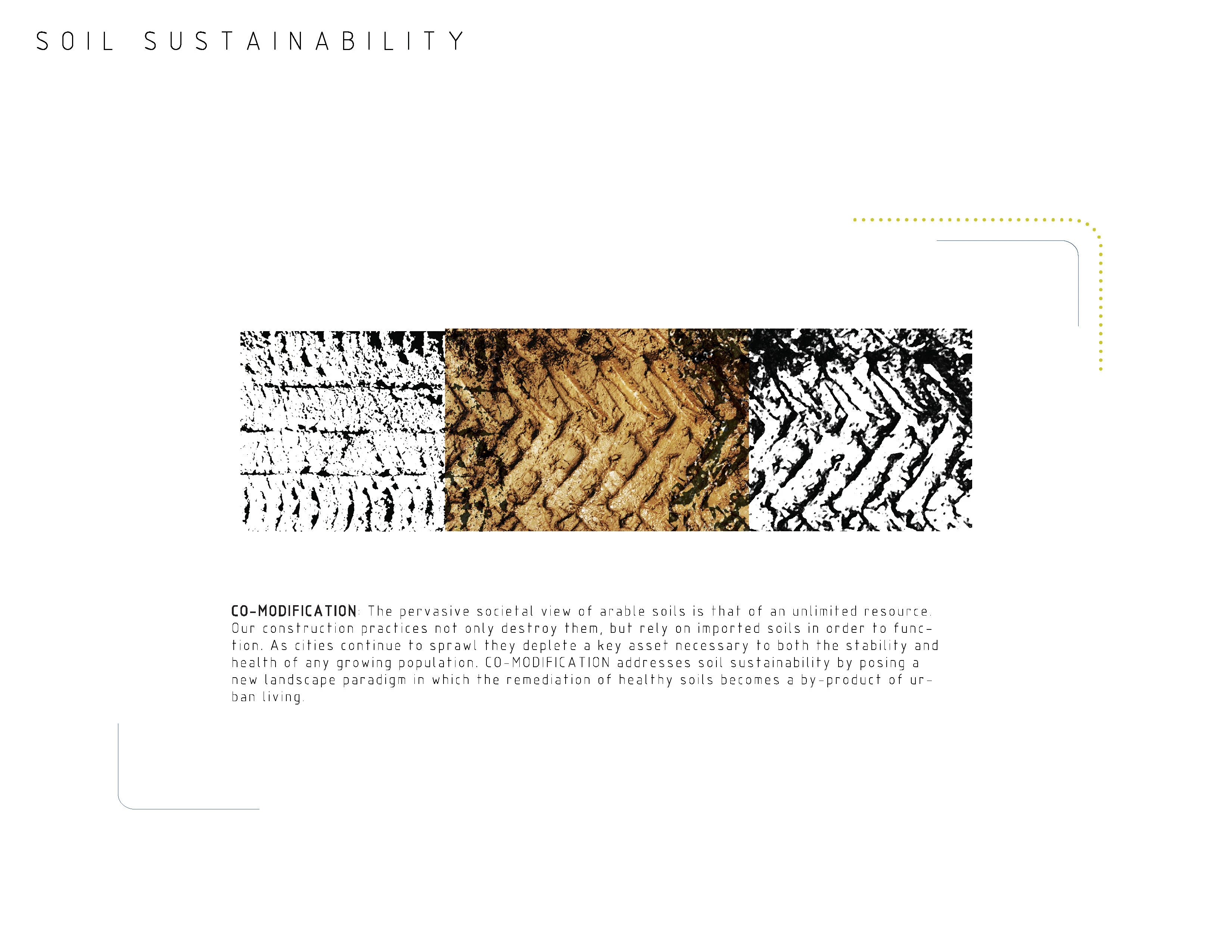
The pervasive societal view of arable soils is that of an unlimited resource. Our construction practices not only destroy them, but rely on imported soils in order to function. As cities continue to sprawl they deplete a key asset necessary to both the stability and health of any growing population. CO-MODIFICATION addresses soil sustainability by posing a new landscape paradigm in which the remediation of healthy soils becomes a by-product of urban living.
-
Context
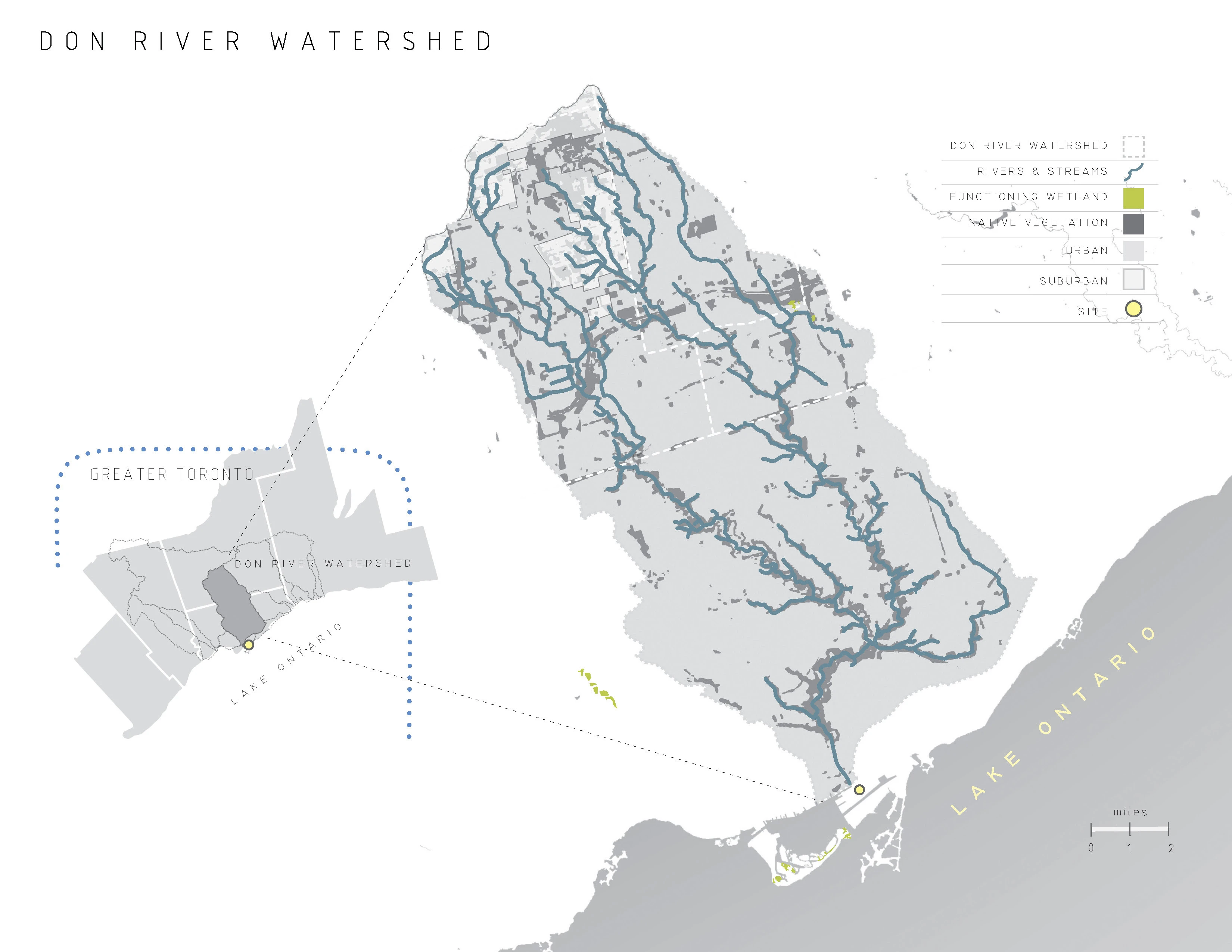
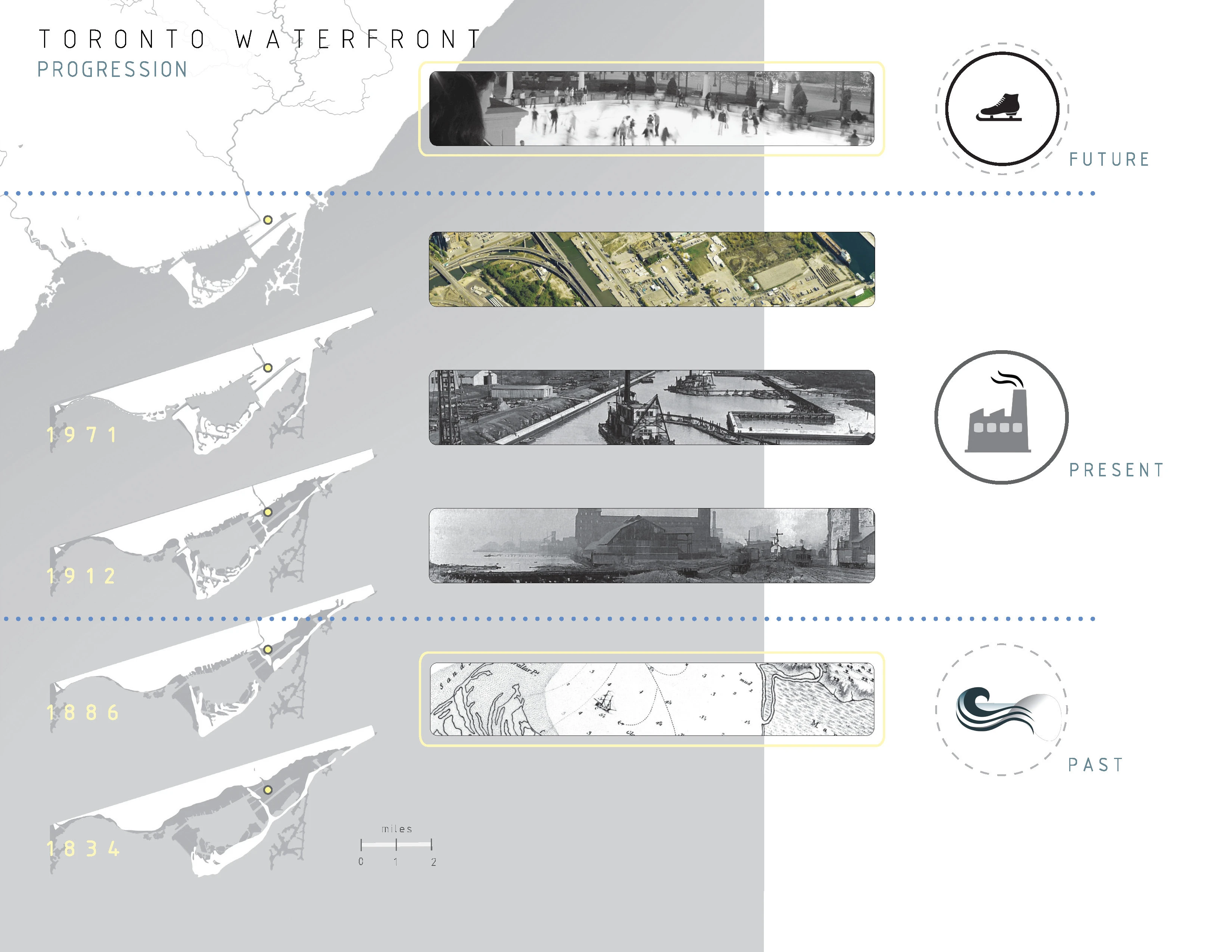
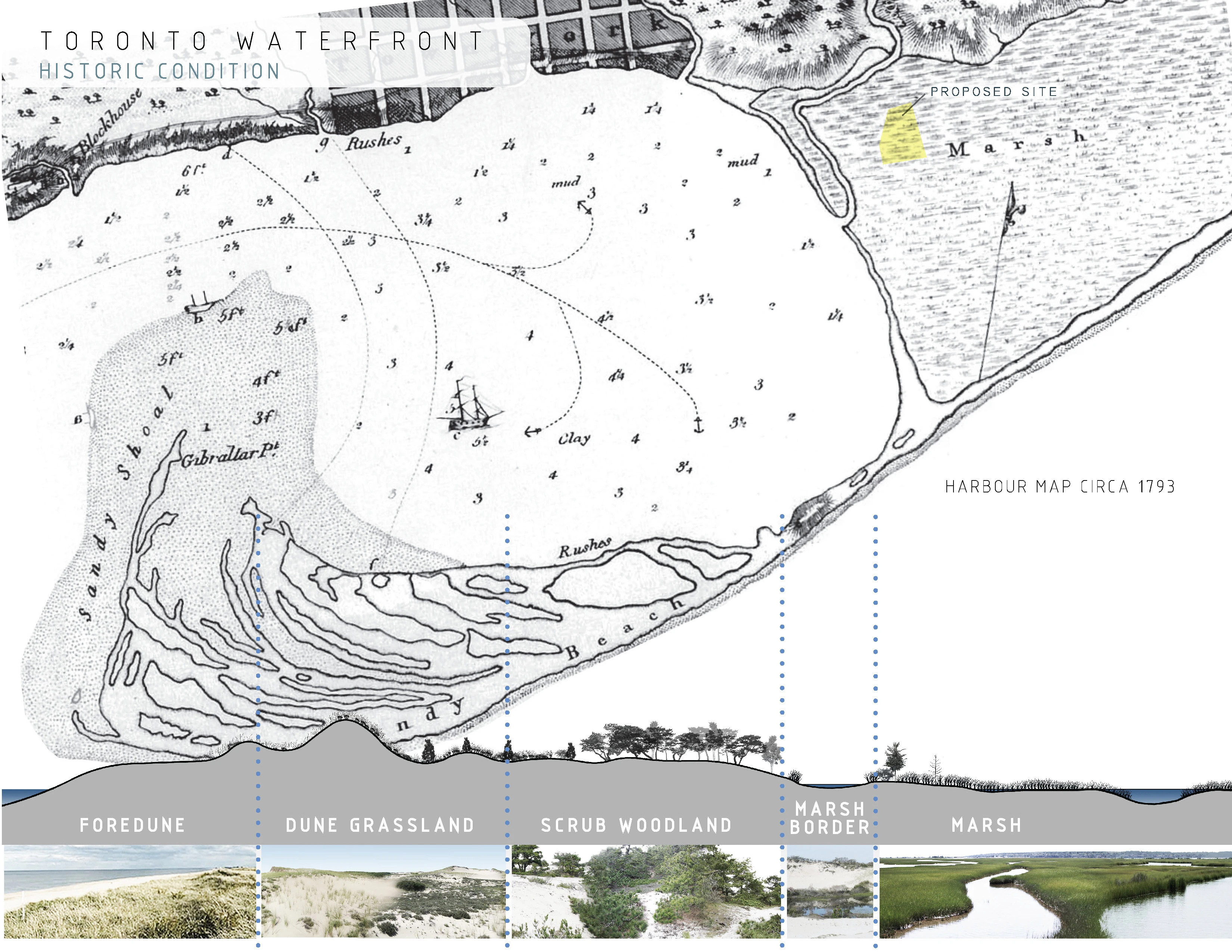
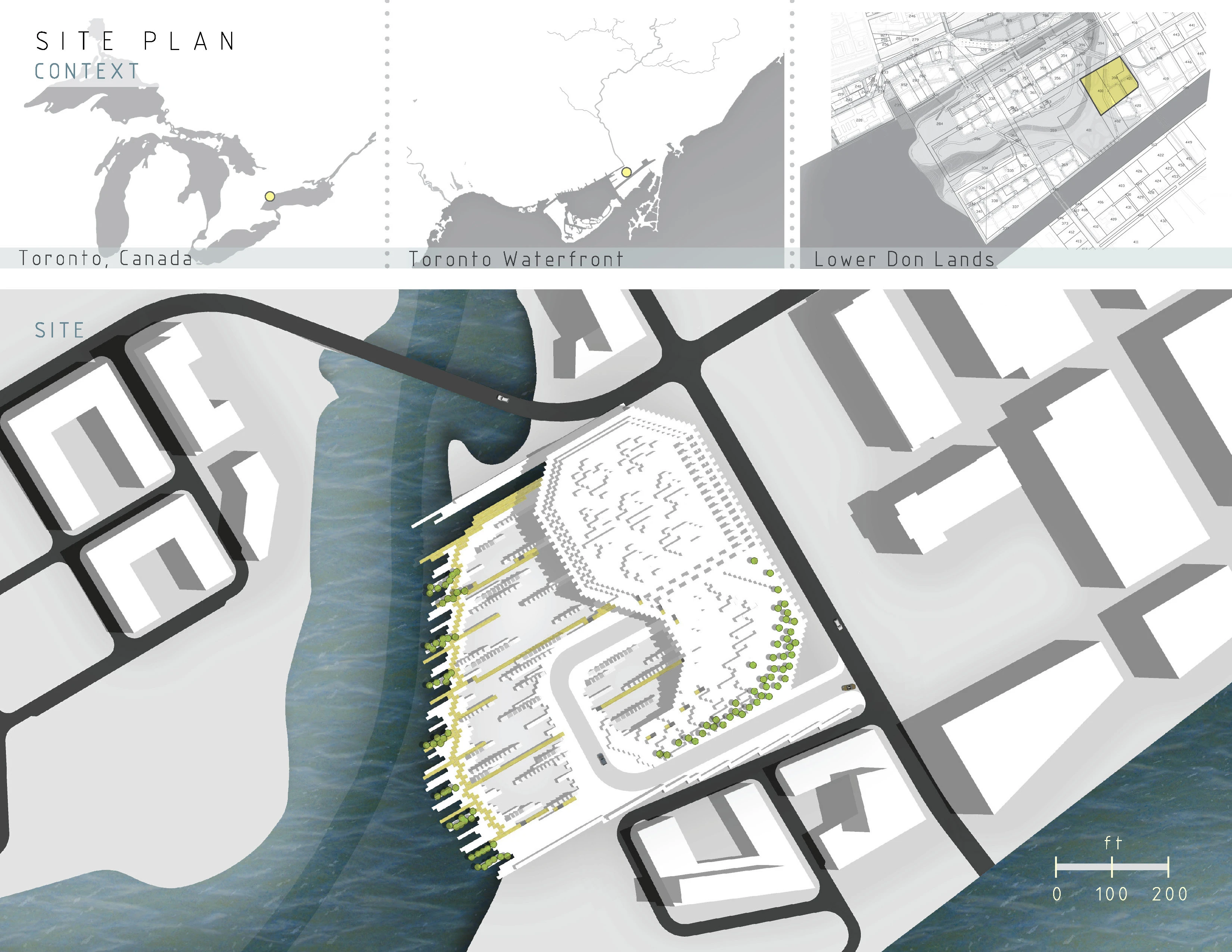
As with almost any major waterside city across North America, Toronto's waterfront has a history dominated by industrial production, leaving with it a legacy of contamination that lingers to this day. The city, like countless others, followed the typical track of industrialization and erased the rich ecology at its water's edge in the name of commerce and growth. Recently the city held an international design competition at the mouth of the Don River, in an area known as the Lower Don Lands, to begin to reverse century long patterns of degradation. While Michael Van Valkenburghs Associates' winning design strategy proposed multiple measures to revitalize the mouth of the Don and allow the river to reclaim areas that once served valuable ecological functions, it did little to address the underlying issue of contamination or the processes necessary to achieve the bucolic images they used to market their ideas.
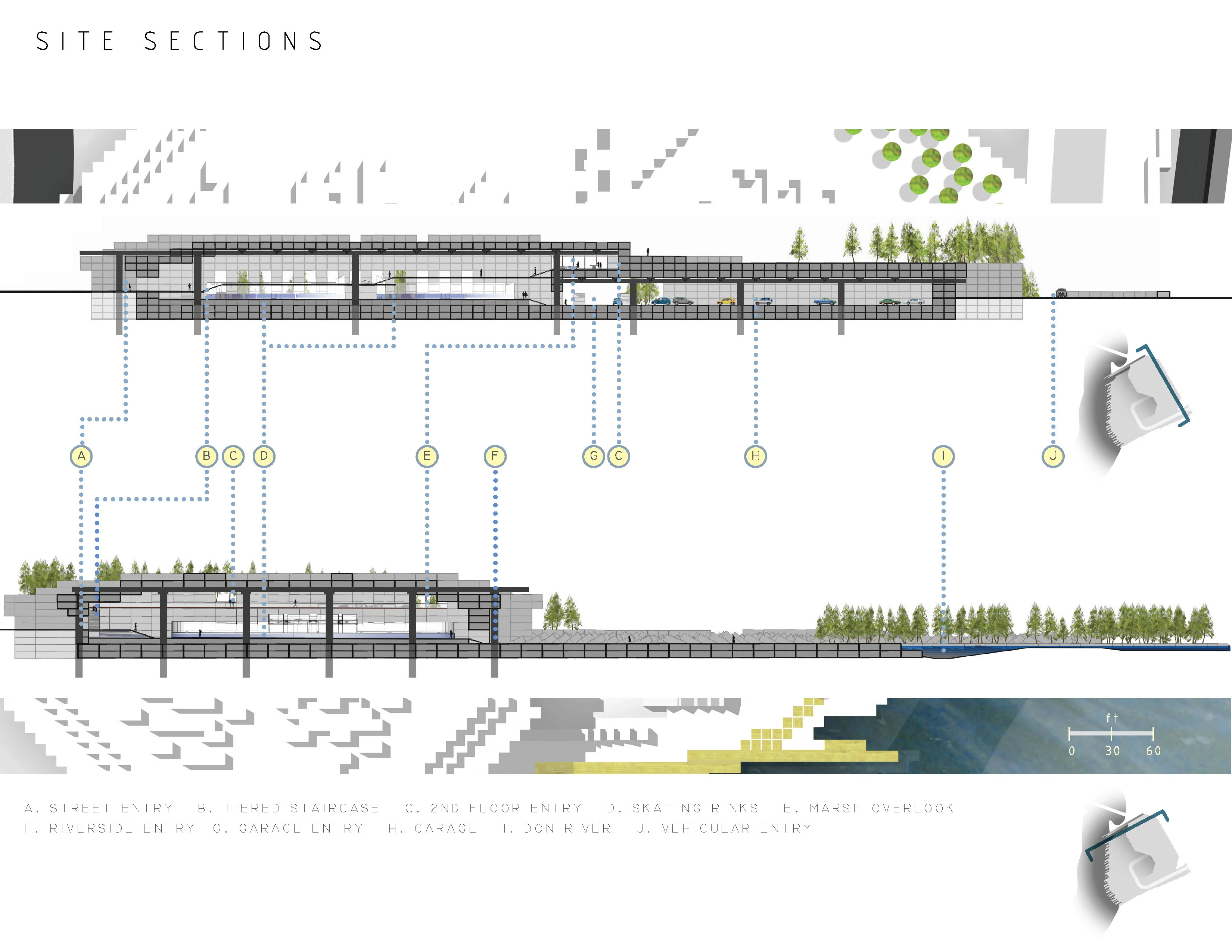
This project rectifies this disconnect by adapting a skating rink (one of the proposed recreational programs of the new Lower Don Lands) to begin to work with, rather than against, one of the largest fresh water systems in the world.
Industrial Ecology: Weaving Past, Present and Future
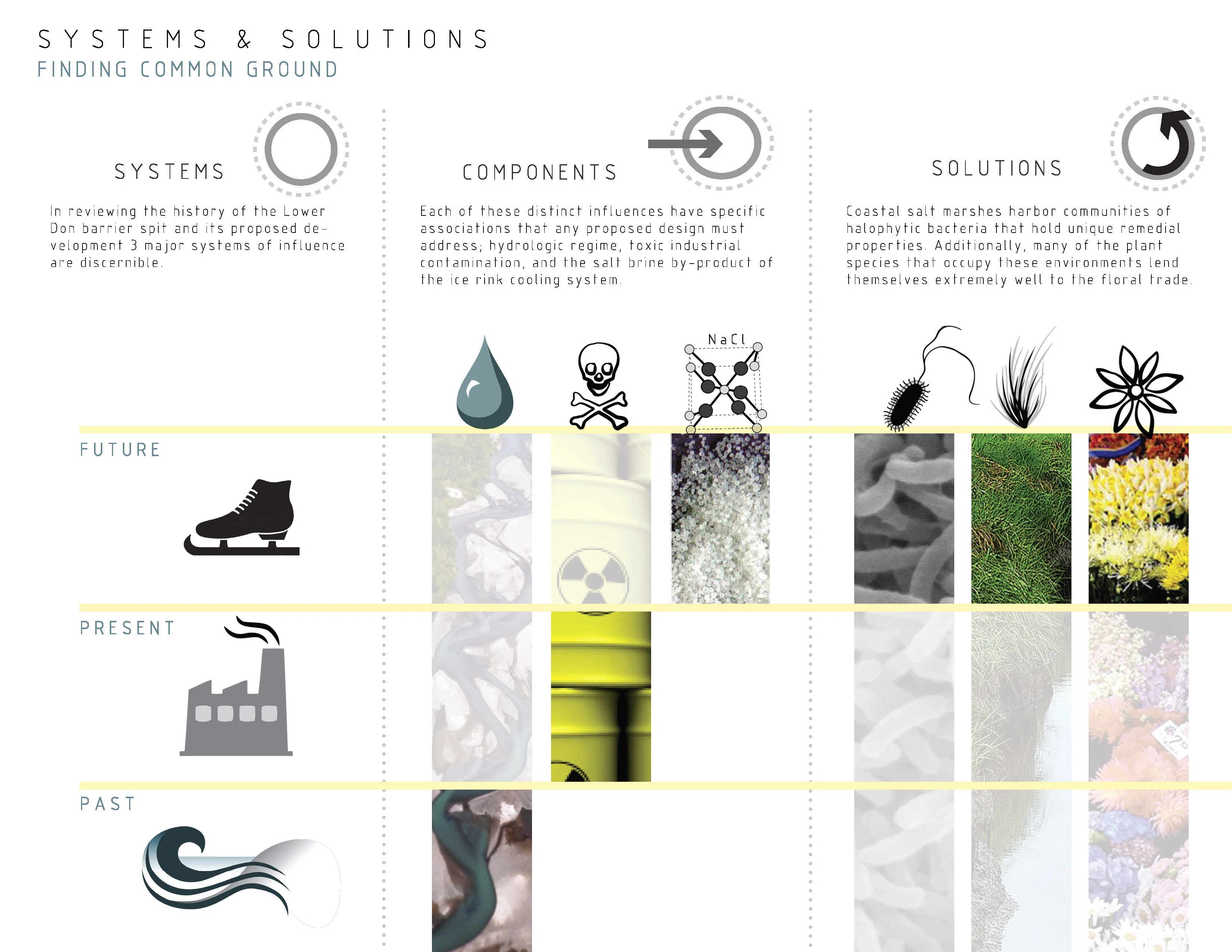
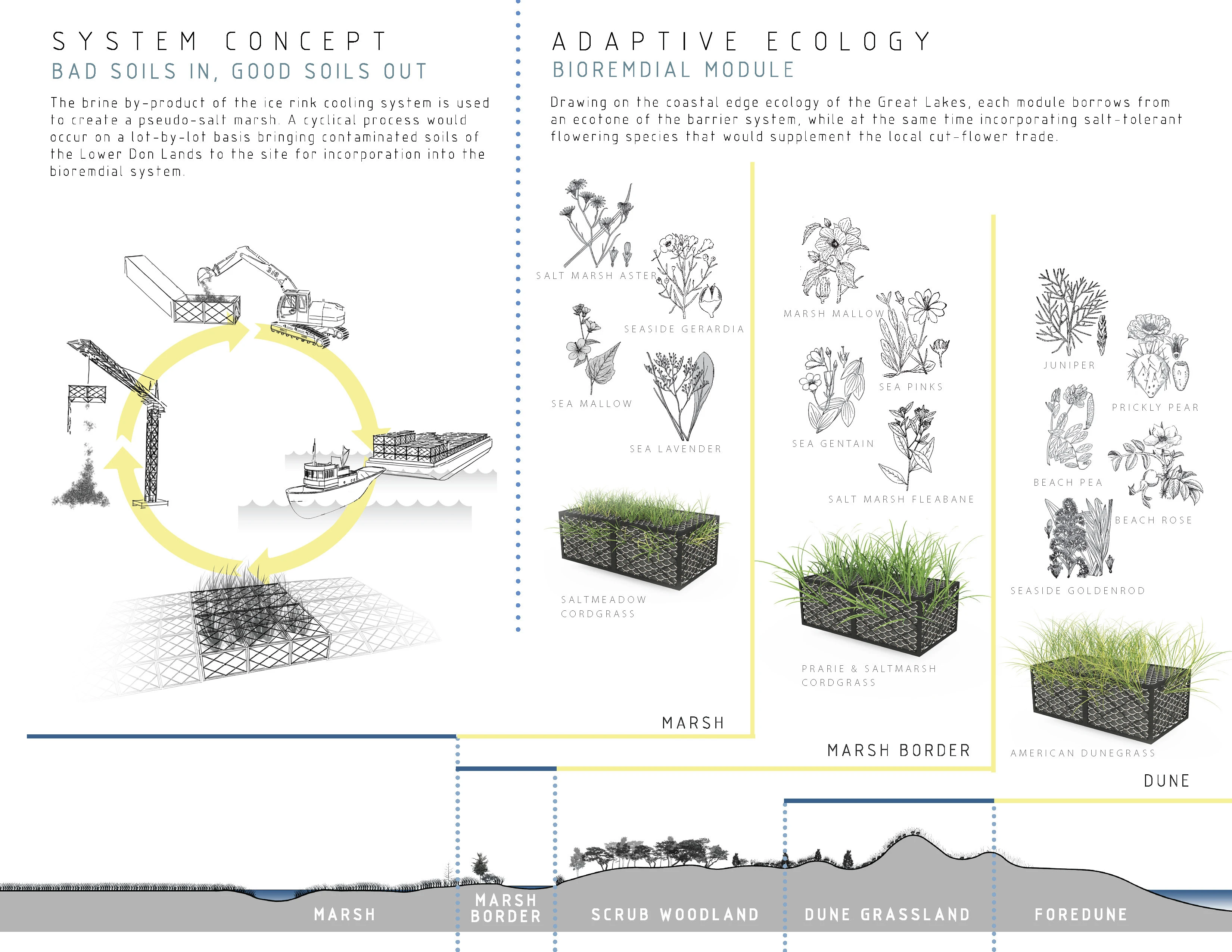
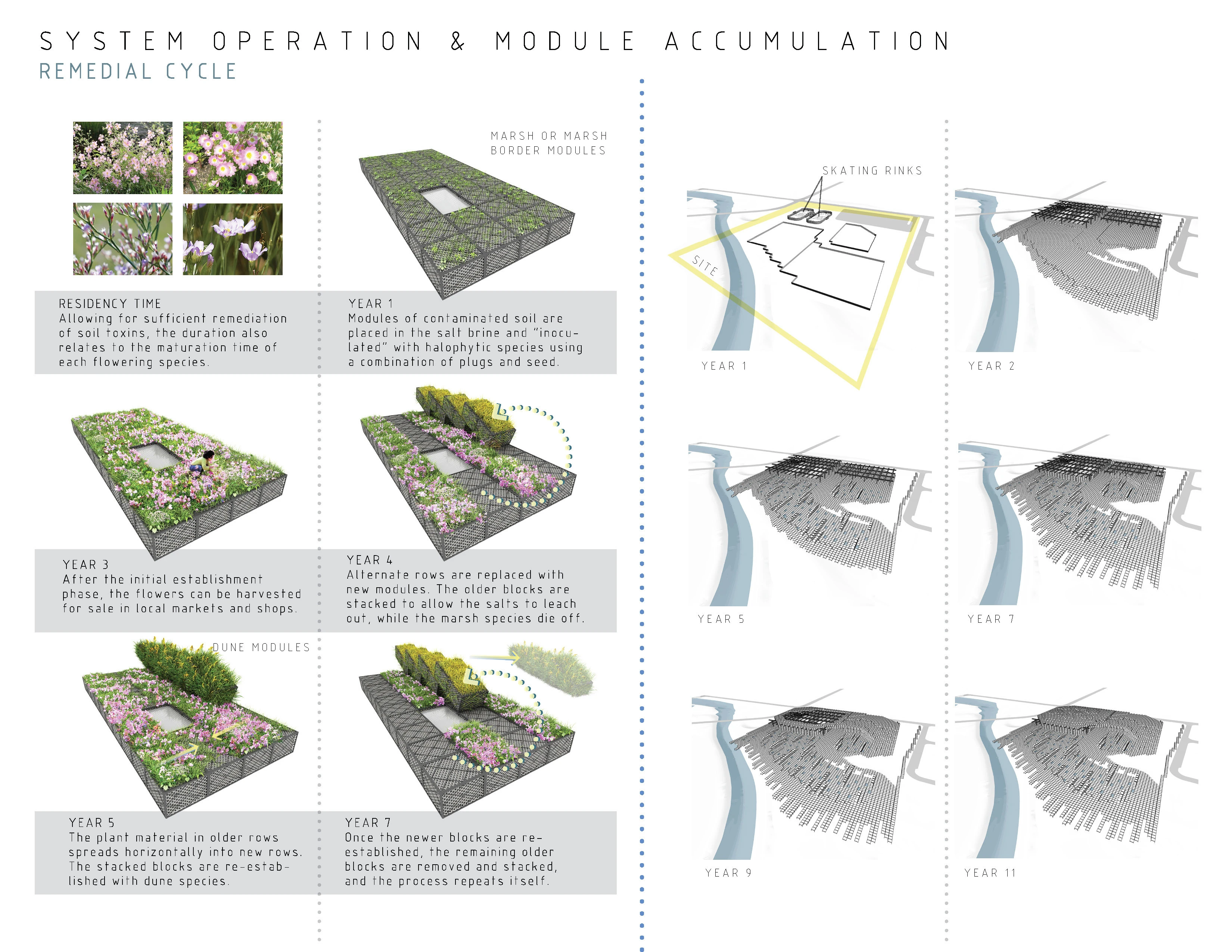
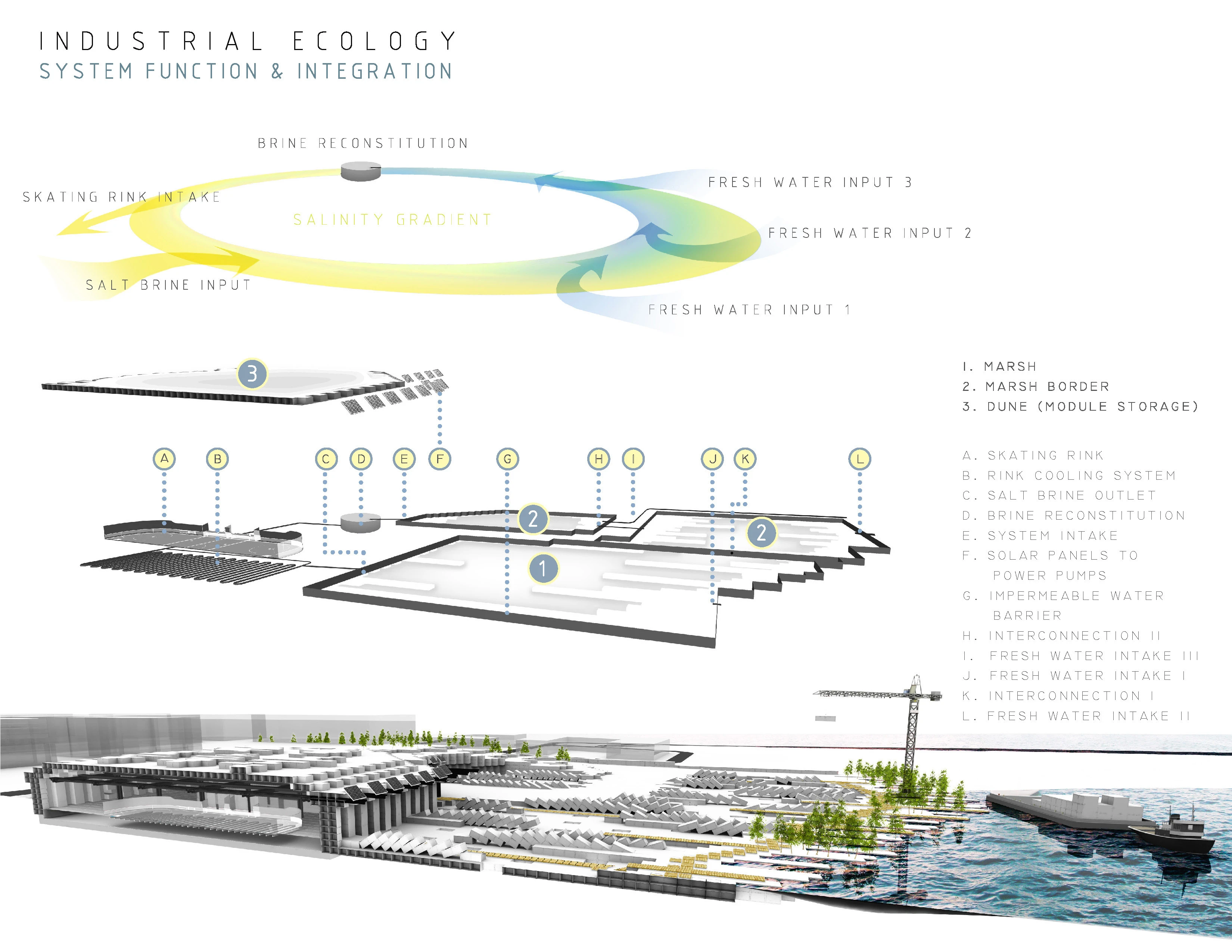
The Lower Don Lands were once part of a larger barrier system typical of large bodies of water. These systems are highly dynamic and rely on varied disturbance regimes resulting in some of the richest habitats in the world. In order to integrate this larger natural system with a proposed skating rink, the processes associated with each were co-modified in conjunction with one another in order to produce a resilient hybrid system that functions at multiple levels. The key to the success of this union relied on the fact that 1) nearly all cooling systems utilize various salt brines in order to operate, and 2) halophytic (salt-loving) bacteria that inhabit coastal marshes possess unique adaptive metabolic pathways that enable them to metabolize various toxins including those typical of industrial contamination (organochlorides, hydrocarbons, ketones, and heavy metals). This commonality made it possible to utilize an otherwise useless waste by-product in the creation of a pseudo-salt marsh that not only respects the historic ecology of the Lower Don Lands, but possesses the ability to rehabilitate it. In order to jump-start microbial activity the created pseudo-salt marsh would be inoculated with soil from naturally occurring salt marshes along the Atlantic Coast. Once established with halophytic bacterial species this closed system would have the ability to continually remediate contaminated soils from the Lower Don and surrounding areas.
The system operates by means of four main components: the skating rink, the bioremedial salt marsh, the salt brine circulating between the two, and a "dune" holding area where modules that have completed the remedial process await repatriation. In addition to pure logistics, these components respect the barrier system ecology by not only incorporating species found in these coastal habitats, but also by maintaining a physical level of disturbance necessary in order for these plant species to thrive. Each soil module is assigned an "ecotone grouping" of species (marsh, marsh border, and dune) depending on what stage and location the module has reached within the remedial system. In order to ensure a self sustaining cycle, alternating rows of modules would move through the system to allow established plant species to colonize new modules as they are introduced.
Logistics and Operation
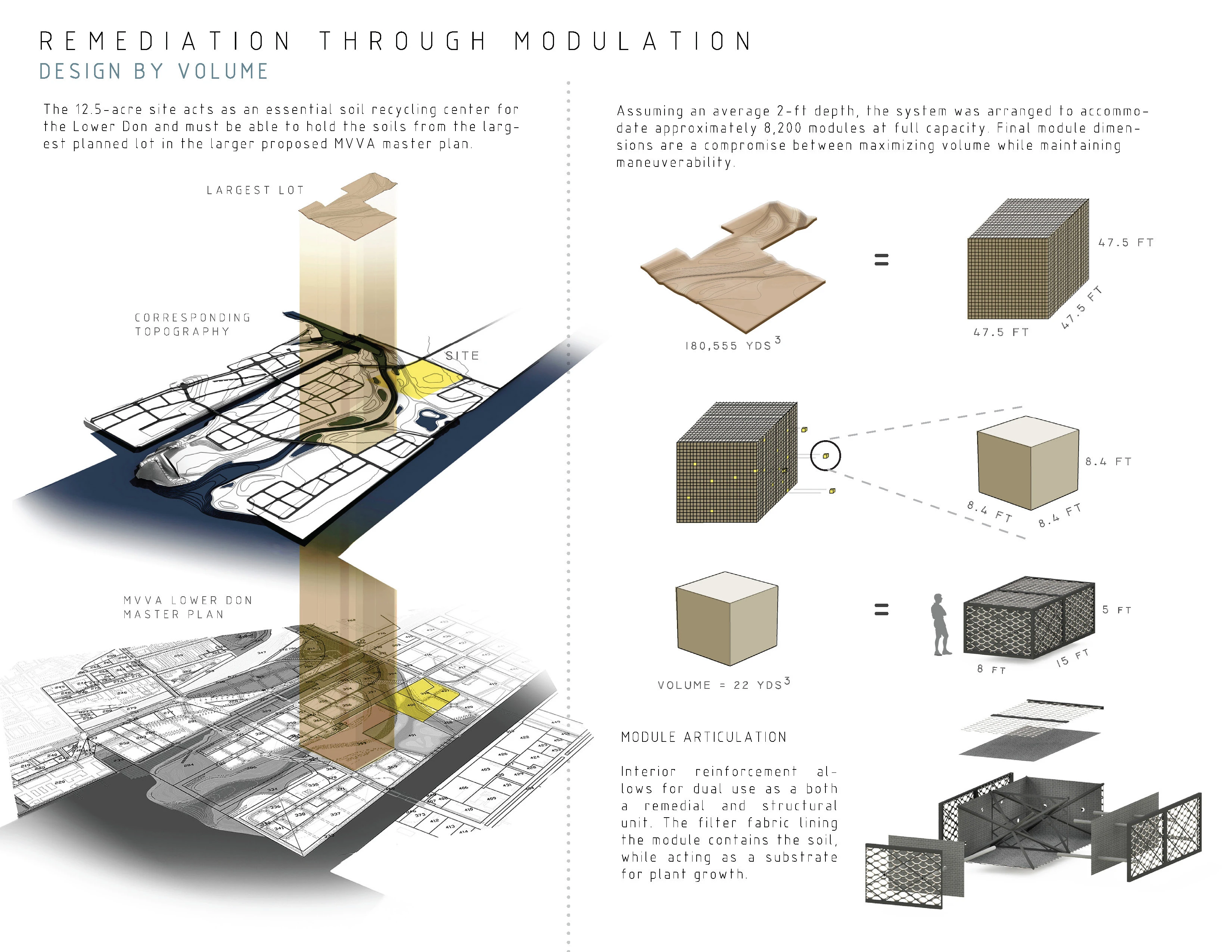
The system is modular in order to feasibly remediate soils for the entire Lower Don Lands development area, allowing for easy movement within the system as new modules come in and old ones must be removed. Assuming a lot-by-lot development strategy, the site was designed to hold enough modules at full capacity to accommodate the same volume of soil as contained in the largest lot of the MVVA master plan. This is to ensure that all soils within the Lower Don Lands, are treated, utilized, and remain in the area as the master plan is realized.
The proposed mouth of the Don River, adjacent to the site would be used as a staging area to transport the modules. Given the approximate size of the modules (8 ft x 15 ft x 5 ft) they would be lifted by crane and transported by barge. The marsh would be built to accommodate this 5 foot depth as the contaminated soils must be fully immersed in the salt brine in order for the bioremedial process to achieve its full potential. While the 5 foot depth of the module may seem excessive, it is necessary to ensure that both aerobic and anaerobic bacterial activity occur, so as to force the bacteria to use a variety of metabolic pathways which increase the likely hood that the process will fully breakdown a variety of soil contaminants. Given the level of construction that is necessary in order to realize the MVVA master plan this could easy be integrated in to the larger development plan, and given the financial realities of dealing with contamination and importing tons upon tons of clean soils this could easily be a financially competitive option. The modules themselves would posses additional framing to provide dual use as structure, making them safely stackable without fear of collapse.
Cut Flower Market
In the past, commerce and ecology existed in mutual exclusion. CO-MODIFICATION breaks with this unsustainable model. Many of the flowering species that occupy the habitats within the barrier system and those utilized in planting the modules lend themselves extremely well to the cut- flower trade (golden rod, sea pinks, sea lavender, etc). Given the continual regeneration of the plant material as the modules move through the system, there would be a continuous supply of new flowering material during the growing season. With its climate-controlled interior to its constant supply of patrons, the skating rink complex provides a perfect venue for a cut-flower market. To ensure the market would remain viable, local growers would sell their own material alongside flowers grown on site.
-
Advertisement
Related Awards

Award of Excellence, General Design
A Floating Forest: Fish Tail Park in Nanchang City
In Nanchang, within the Yangtze River floodplain, we revitalized a heavily degraded 126-acre landscape into a floating forest that manages stormwater, restores habitats, and provides diverse recreational spaces—all within a limited budget and a short timeline. This innovative urban nature model strengthens the district’s identity and spurs surrounding development. Fish Tail Park offers a scalable solution for flood-prone regions, seamlessly integrating flood resilience, ecological restoration