
.webp?language=en-US)

FIXture : Remediation of the Gowanus Canal
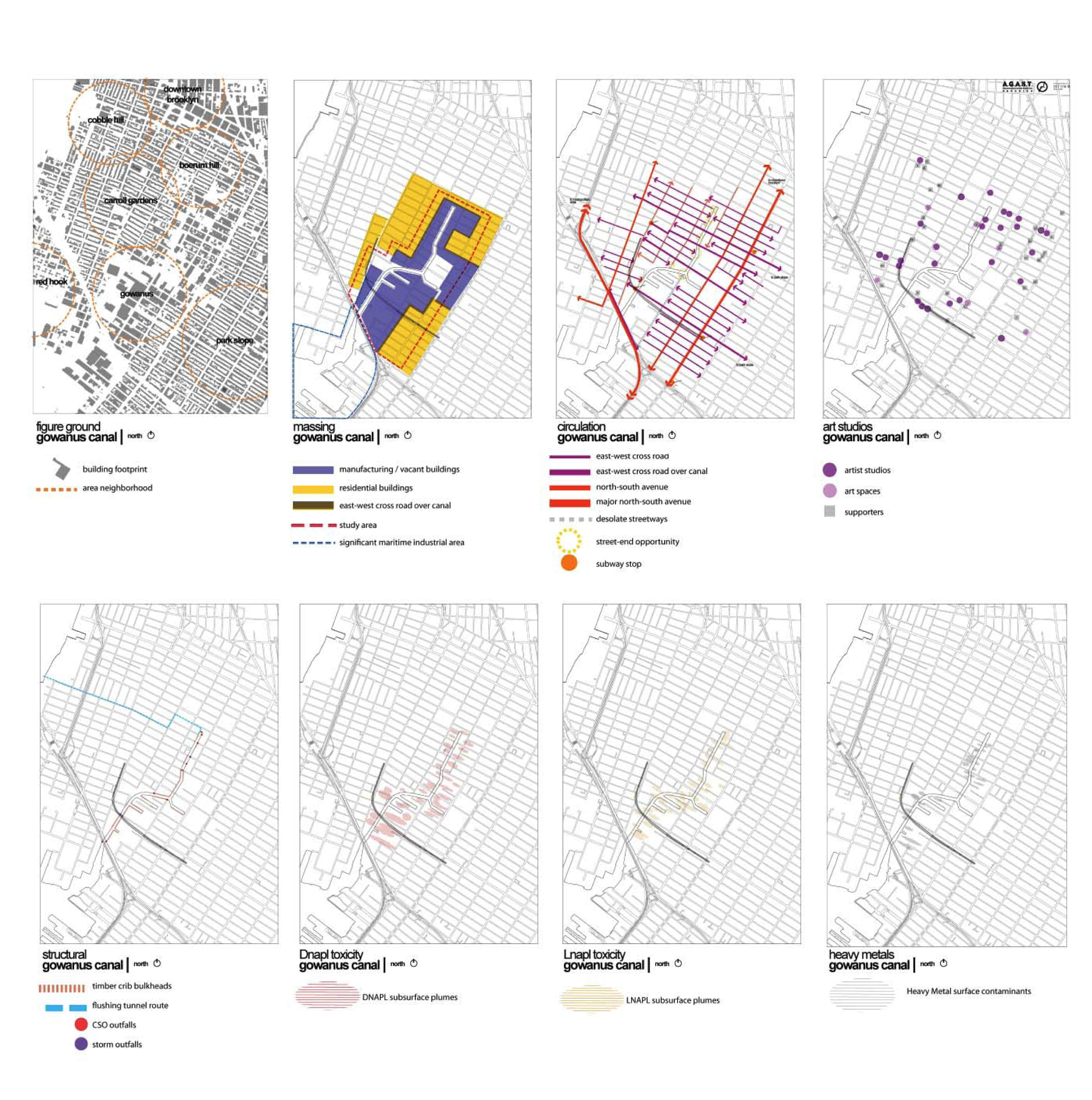
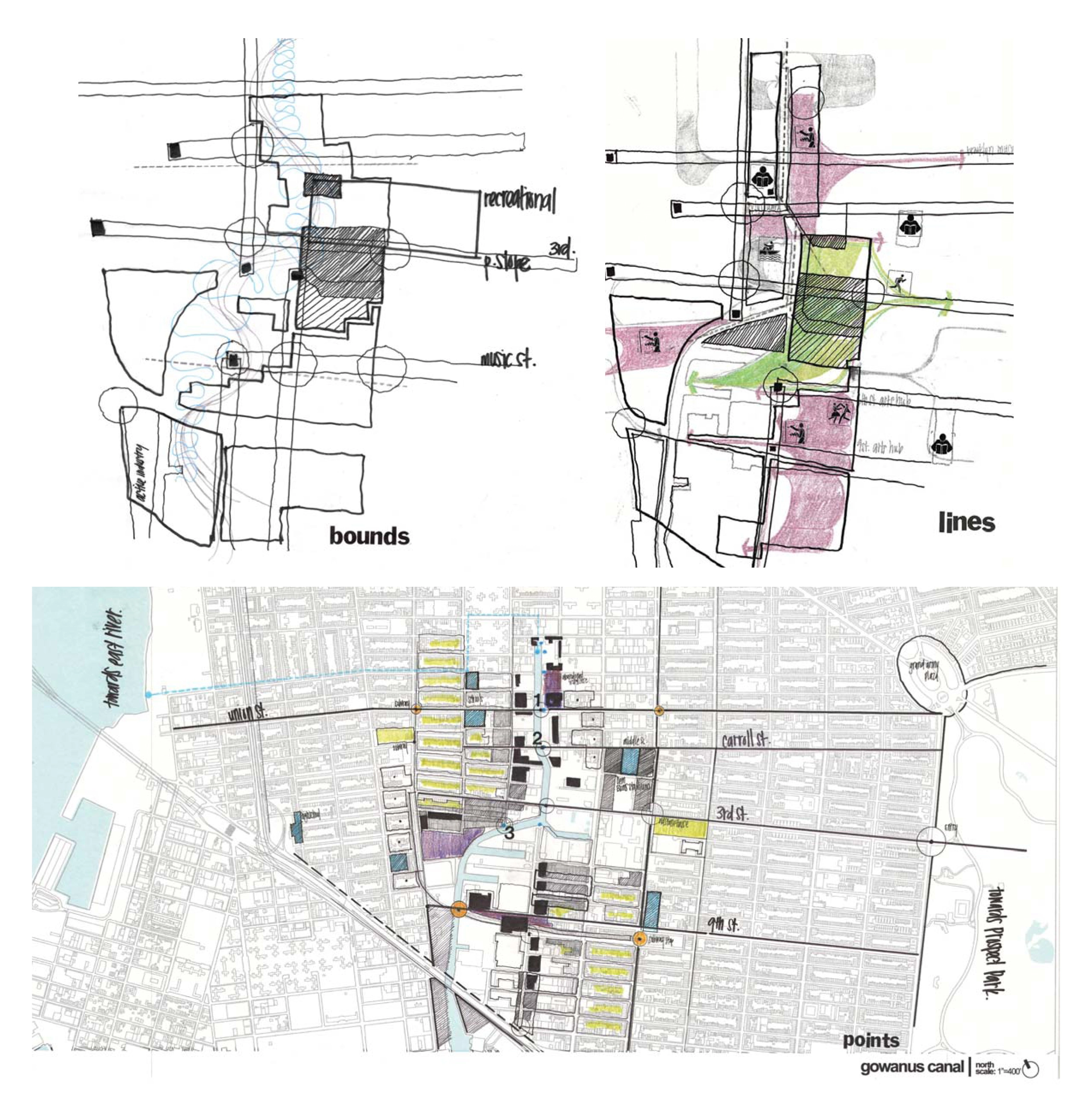
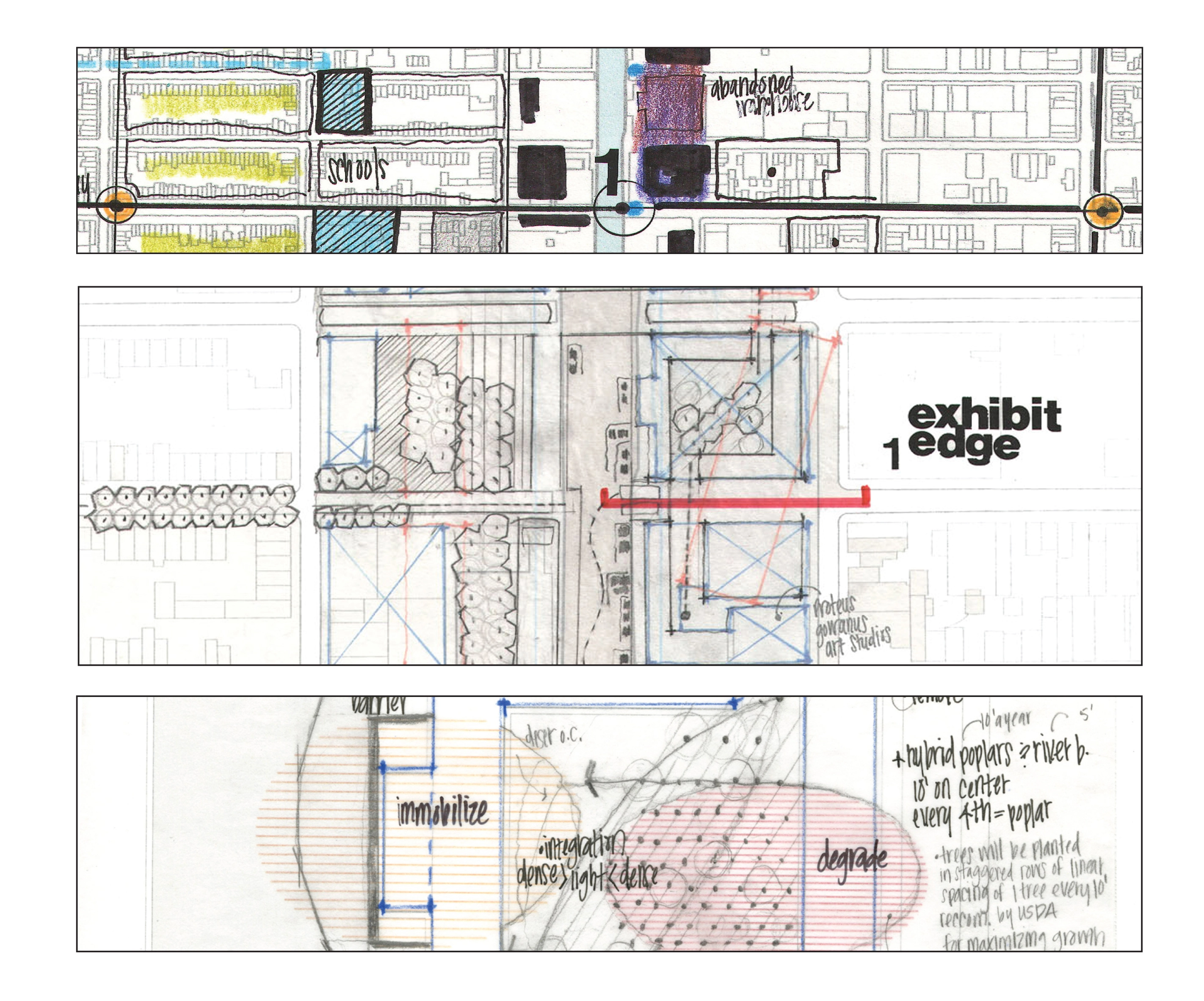
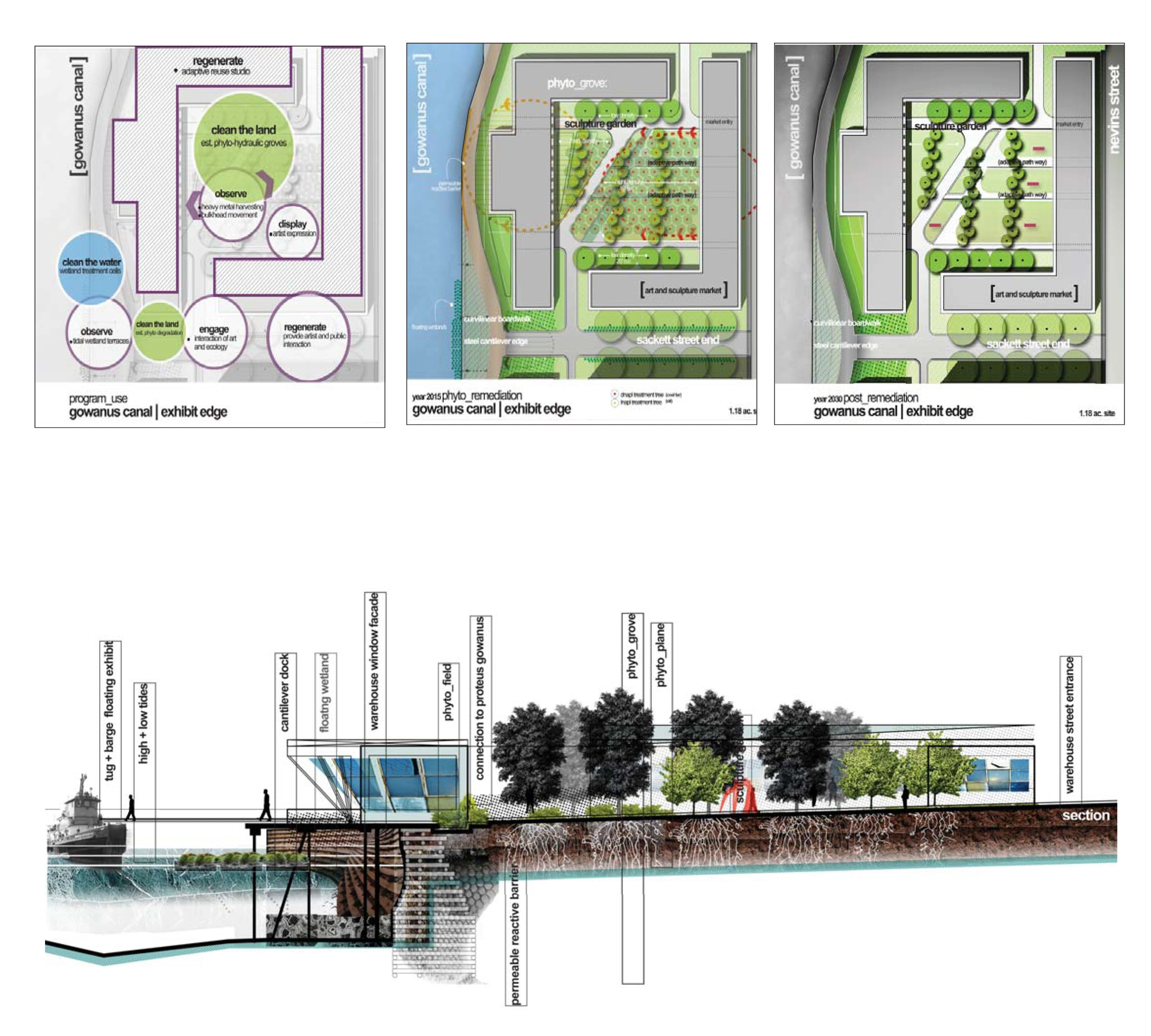
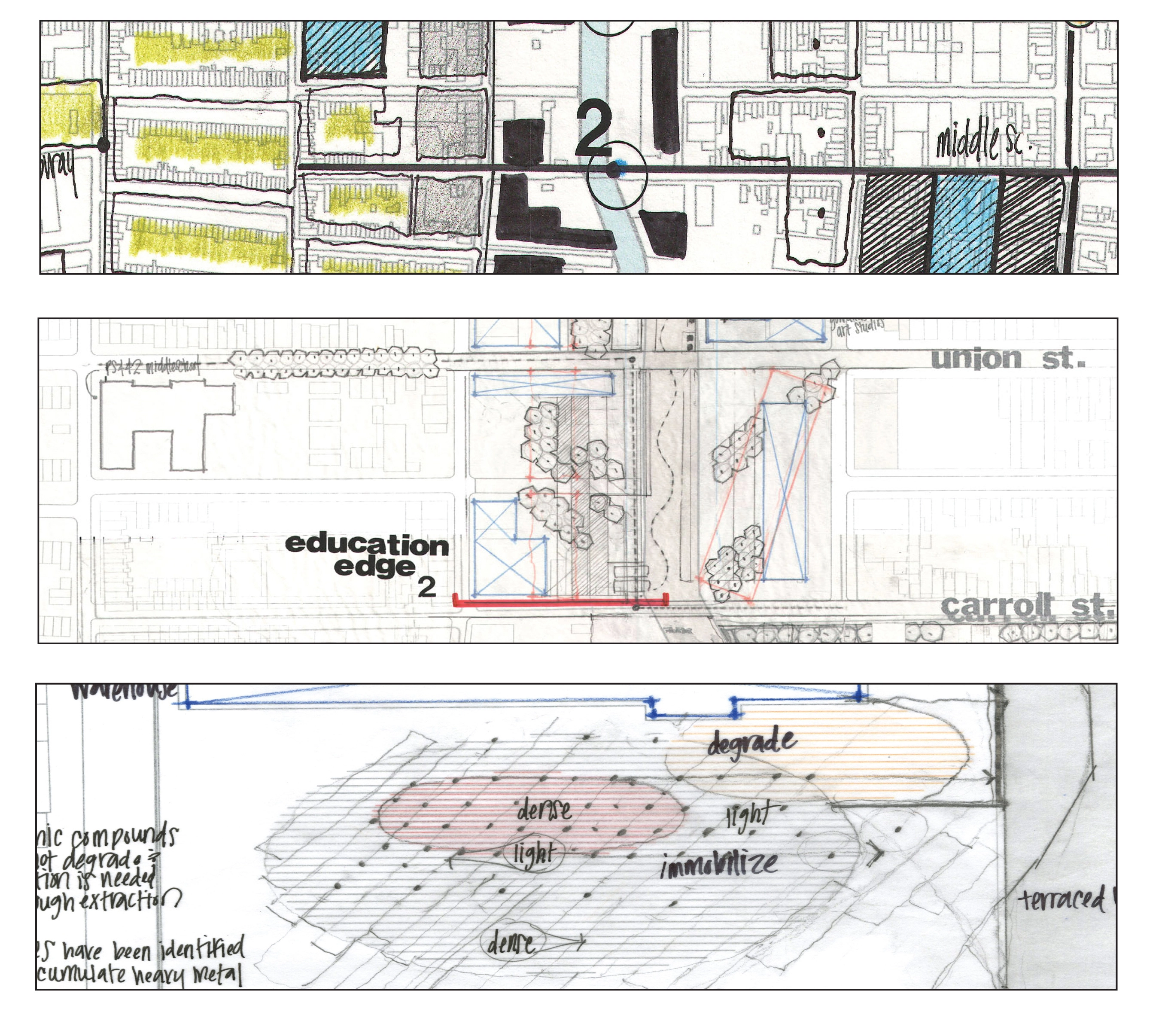
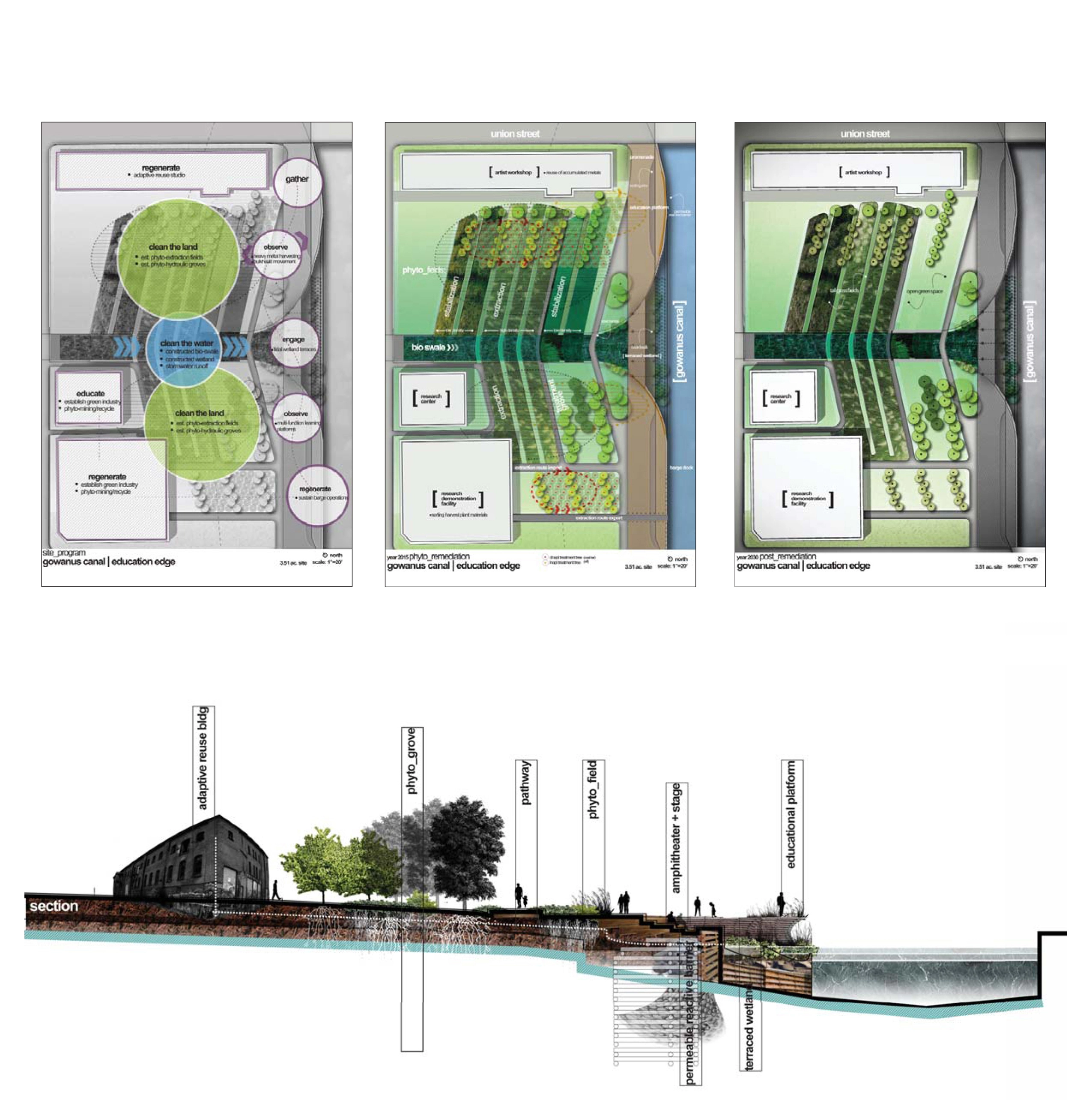
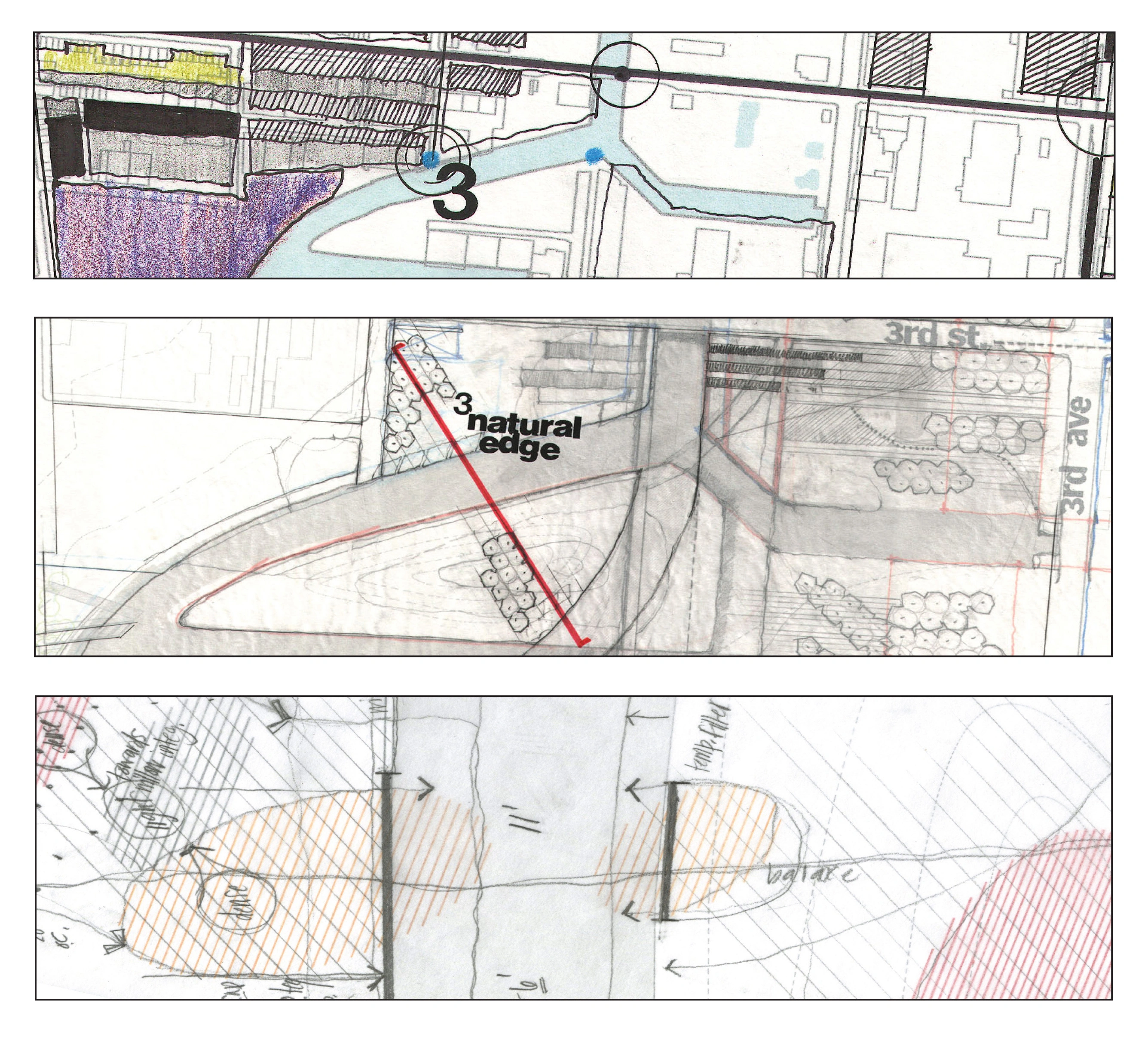
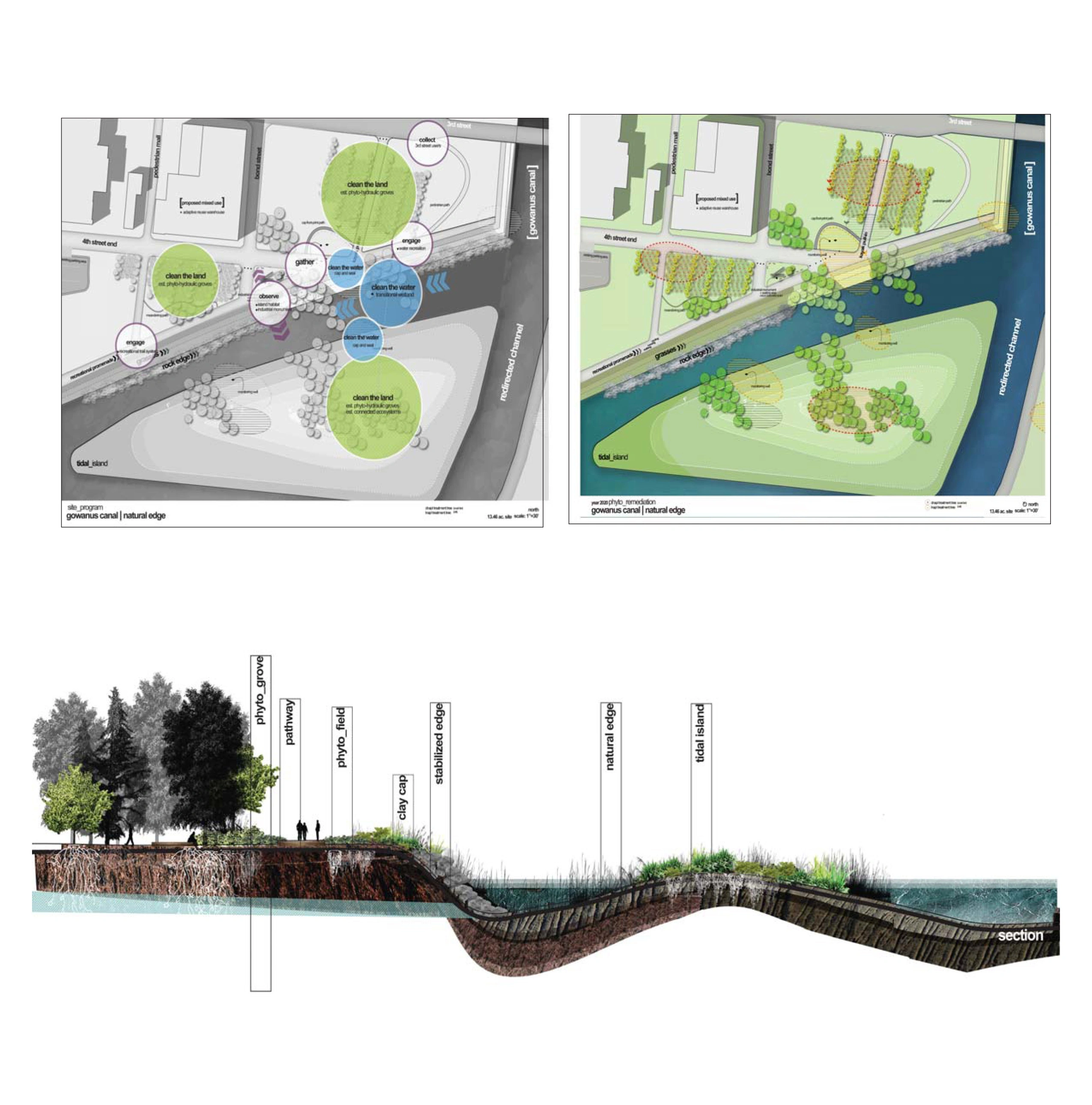
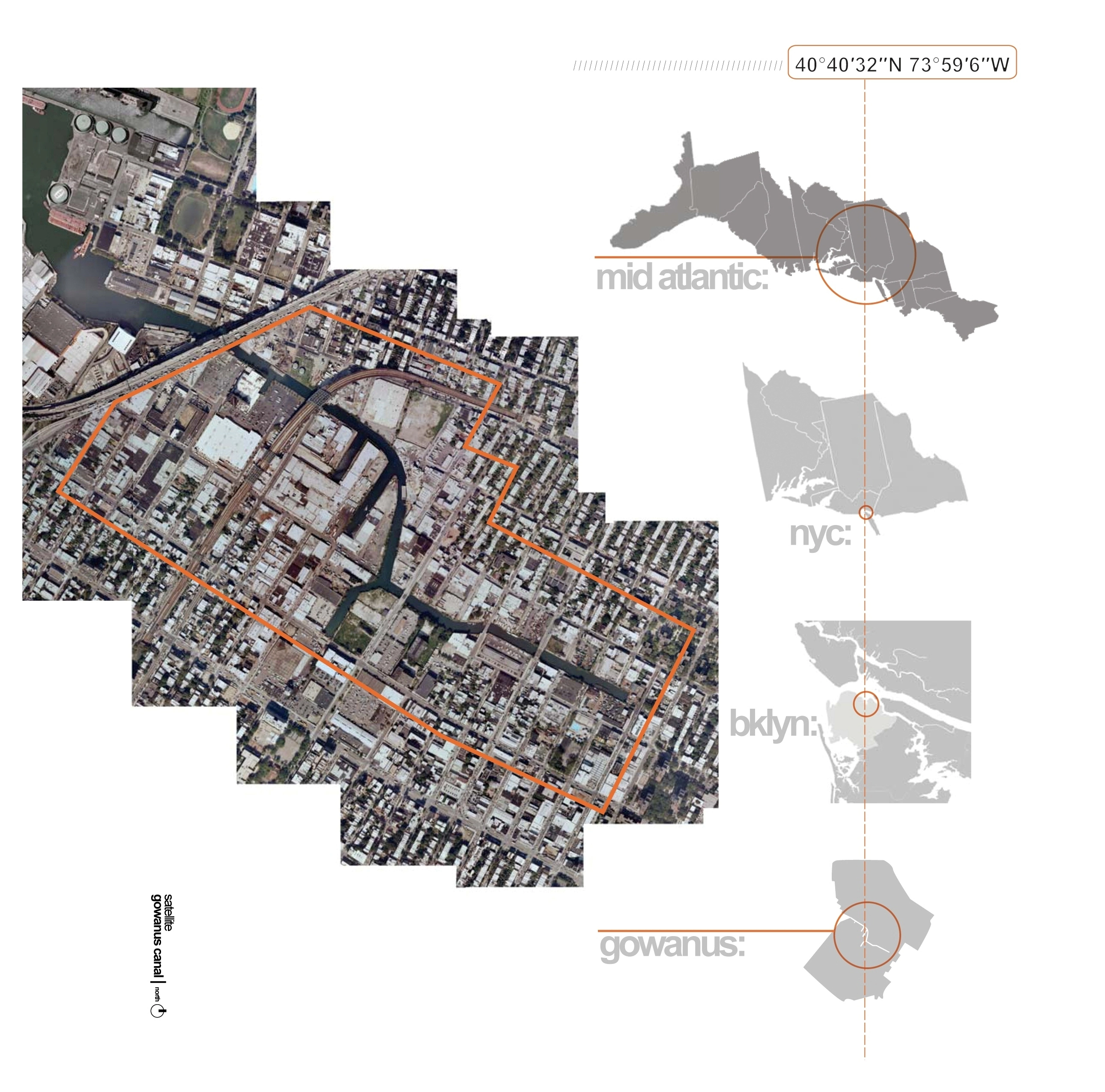
The graphics are particularly strong and show a good process for design development. It's great that students are focusing on these types of problems and will prepare them well for the future. Just excellent.
Awards Jury
-
This project is an embodiment of both environmental design and technology in order to reclaim one of New York's heavily disturbed, post-industrial waterfronts. The vacant corridor of the Gowanus Canal, located in Brooklyn N.Y., punctuates the landscape with unacceptable socioeconomic deterioration and abandonment. With potential for spontaneous and creative use, this site can become a place for renewed experience of the urban waterfront whose edge embraces rather than eradicates the natural and radical transformations of environmental remediation.
-
My background in post-industrial landscapes began at first with an artistic impression—finding beauty out of toxic sites. By better understanding the process of remediation, I was able to move forward to a particular site that would push me to learn not only the remediation of soils—but of polluted water bodies. By also utilizing a comprehensive study of time, place and human interaction, the Gowanus Canal has broadened my interests in remediation from an artistic perspective towards the landscape as a whole.
Jostled by an accelerate change of pace in the modern society of New York City, the industrial environment of lower Brooklyn has degraded into shattered remnants of what it once was. This post-industrious landscape is a physical narrative telling a story of what lead to its demise. The landscape continually evolves, which requires thinking beyond the site's deindustrialization. In this volatile context, a renewed interest in the Gowanus Canal has emerged within the last two decades. Within its urban context, post-industrial waterfronts re-create occupiable space. At the same time federal authorities raise the question of its contamination and the overall well-being of its surrounding communities.
Research Team
The knowledge gained through the utilization of academic networking helped me build a critical foundation of inquiries, which were then administered throughout my senior project. By reaching within the university's academic resources I was able to develop successful relationships with people who are working directly with my site in Brooklyn, NY. The research team has expanded beyond the borders of campus and became a vehicle for the research component of this project. This was done through formulating critical inquiries, expanding beyond the realm of landscape architecture, and synthesizing research into applicable design guidelines.
Brief History
Built in the mid 19th century, where a creek once meandered, the Gowanus Canal served foundries, coal yards, gasification facilities and hundreds of other industries. Over time, it became one of the most heavily contaminated water bodies in the nation and remains the most problematic brownfield in New York City. Reclaiming the site can uncover hidden dimensions of 19th century mass production and 20th century consumerism. As the surrounding urban population continues to grow, this void within the urban fabric faces the obligation to change.
Goals and Objectives
The social and ecological goals for the Gowanus Canal will become successful by design through the accomplishment of the following objectives:
Ecological Goals
(1) Integrate leading forms of remedial technologies. (2) Inhabit the natural cycles of existing conditions. (3) Install a park the becomes process over time.Ecological Objectives:
Propose ecological framework that adapts over time. Clean and improve overall water quality. Reestablish the integrity of the surrounding soil bodies. Recreate aquatic habitats and vegetation. Apply innovative mediums of remedial technologies (both active and passive).Social Goals
(1) Reactivate the educational and creative infrastructure. (2) Reflect the industrial history of the Gowanus Canal. (3) Recreate a new urban edge condition along the waterfront the surrounding communities.Social Objectives
Connect existing cultural institutions to the water's edge. Create a better understanding of historical impact through education. Create public open space. Utilize surface parking lots and vacant land/buildings.Remediation Strategy
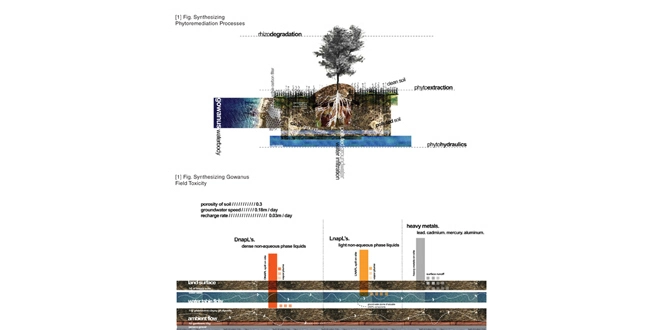
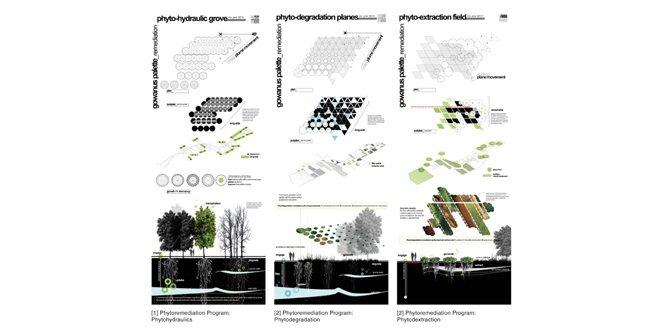
Due to underground water flows, geological formations, and intensity of original pollutant resource, the Canal's water body faces severe ecological deterioration. In order to reclaim the health of the water body remediation must begin where the pollutant source was established on land. A passive approach includes the technique of phytoremediation (using deep-rooted plants to sequester and eliminate pollution below the surface). Each technique can be coupled with other means of remediation, both active and passive. The planting proposal is based on the following factors of research and synthesis in contaminant movement, spacing and root depth, and life-span of species. The proposed remedial guidelines strictly administer series and sequence in order to create occupiable, urban, open space for future user-specific program and design.
Design
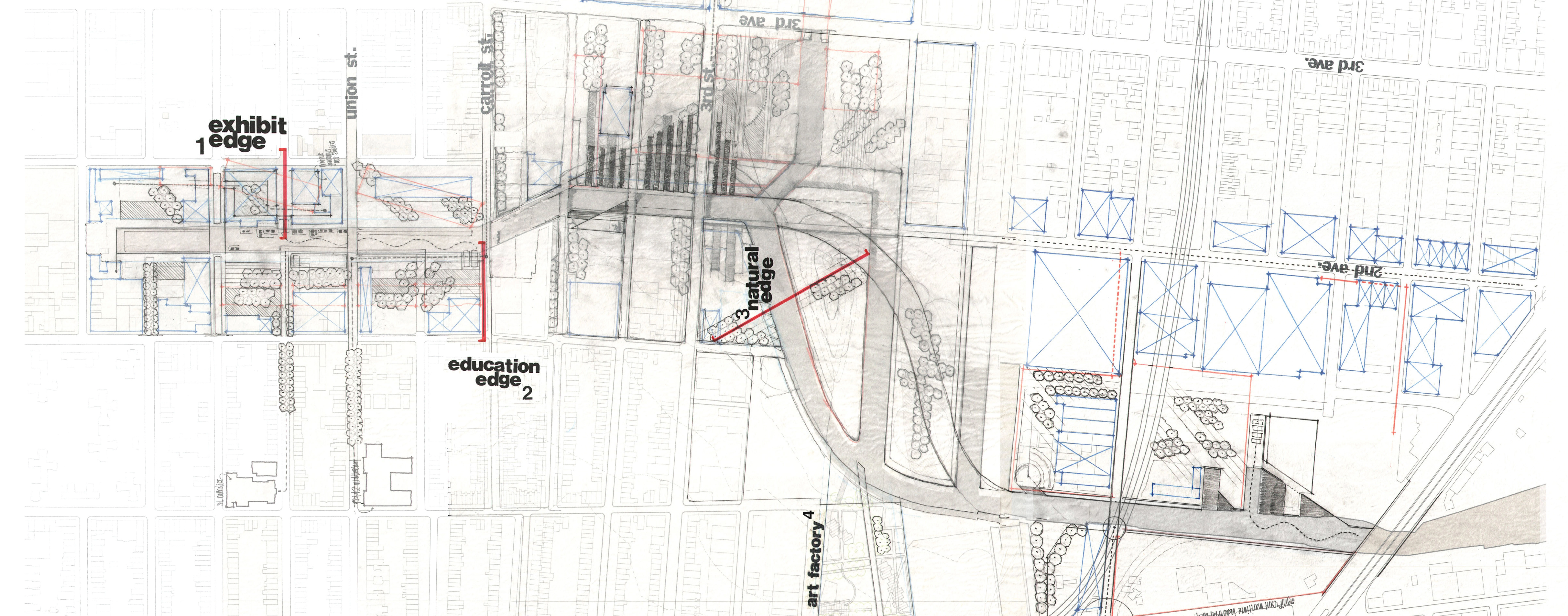
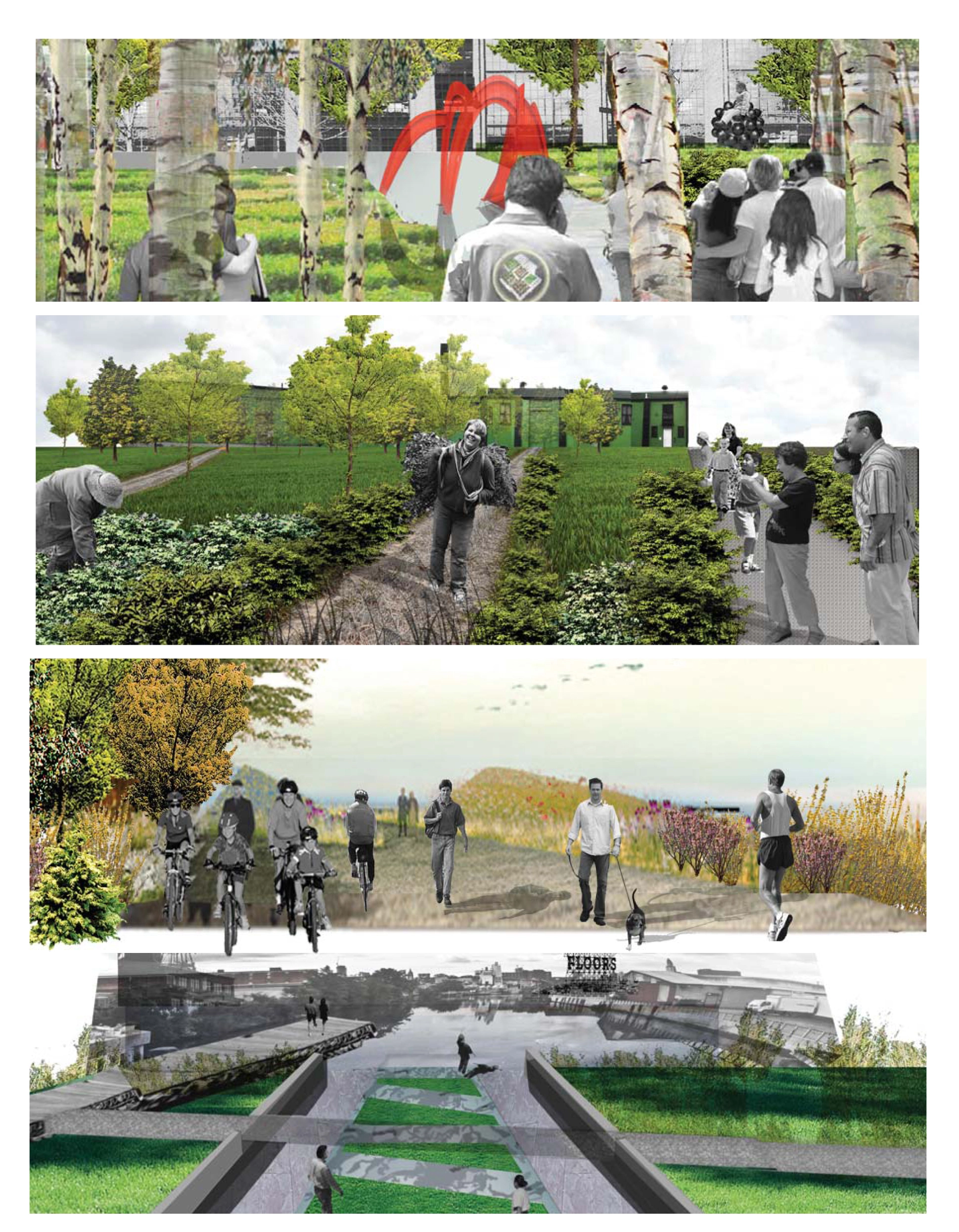
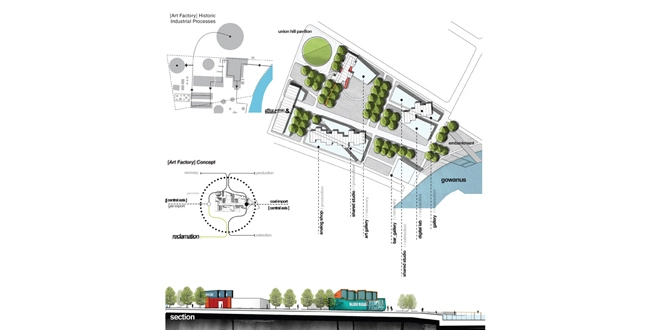
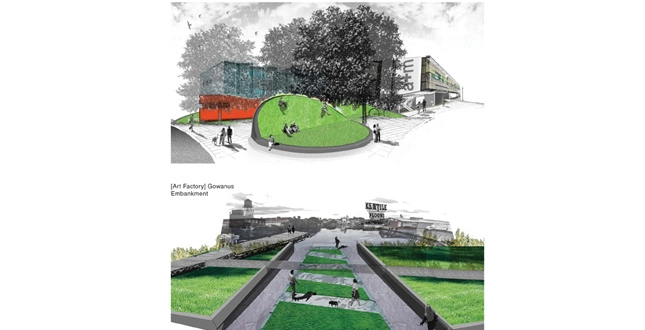
By studying local communities that are relevant, a proposed program can relate into its broader social context while adapting to site-specific design interventions along the banks of the Canal. The site selections were made based on the critical condition of the site (both ecologically and socially), concept, and pollution class. The first three of the four sites explore the notion of environmental remediation and how a contaminated site can adapt, and change over time, towards a proposed site program for specific needs and user groups. The fourth site of on the Canal transcends the remediation processes as a whole and looks towards to future of economic growth for the Gowanus. To reclaim the overall health of the Gowanus Canal ecosystem, a choreographed series of events in relation to each natural system must take place. Each system is addressed within the direct vicinity of the Canal and is coupled with a variety of remediation techniques.
-
I would like to acknowledge and extend my heartfelt gratitude to the following persons who have made the completion of this project possible:
My advisor, Brian Katen ASLA, for his vital encouragement, guidance, patience, and support.Dean Bork ASLA, Terry Clements ASLA, Wendy Jacobson, Mintai Kim, Ben Johnson, Patrick Miller, FASLA and Dave McGill for the extended help and inspiration.
Rachel Gruzen, Environmental Consultant, and other members of my research team for the assisting in the collection of topics.
Lastly, I offer my regards to all those who supported me in any respect during the completion of my project. Most especially to my family, Dawn and Robert Visconti, friends, and the "Fam" Jordan Clough, Kent Hipp, Ashleigh Marshall, Adam Sexton and Caroline Wallace—I love you all more than I can say.
Advertisement
Related Awards
Honor Award, Analysis & Planning
A Cultural Approach: The Fort Peck Tribes Hazard Mitigation Plan
In collaboration with the Fort Peck Assiniboine and Sioux Tribes, EPA, and FEMA, the Fort Peck Tribes Hazard Mitigation Plan (HMP) adopts a culturally responsive approach to hazard mitigation planning that features connection to place.