
.webp?language=en-US)


Tempelhof Wasserpark
Johanna F. Barthmaier, Associate ASLA
This is the kind of monumental thinking that will make a mark in the future. The form is elegant and it deals with contaminants from a decommissioned airfield site. It's more than just collecting water, it's treating the pollution.
Awards Jury
-
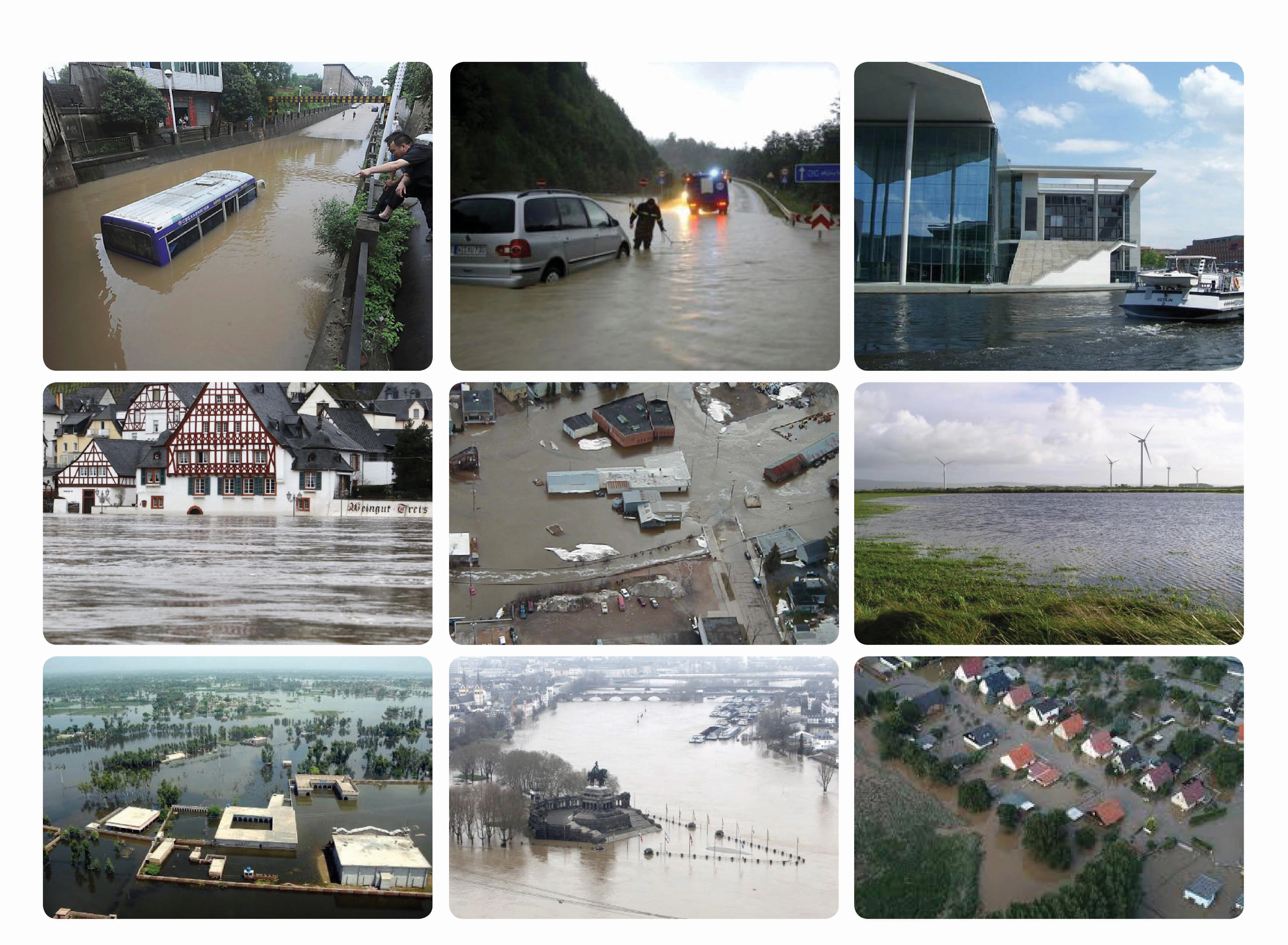
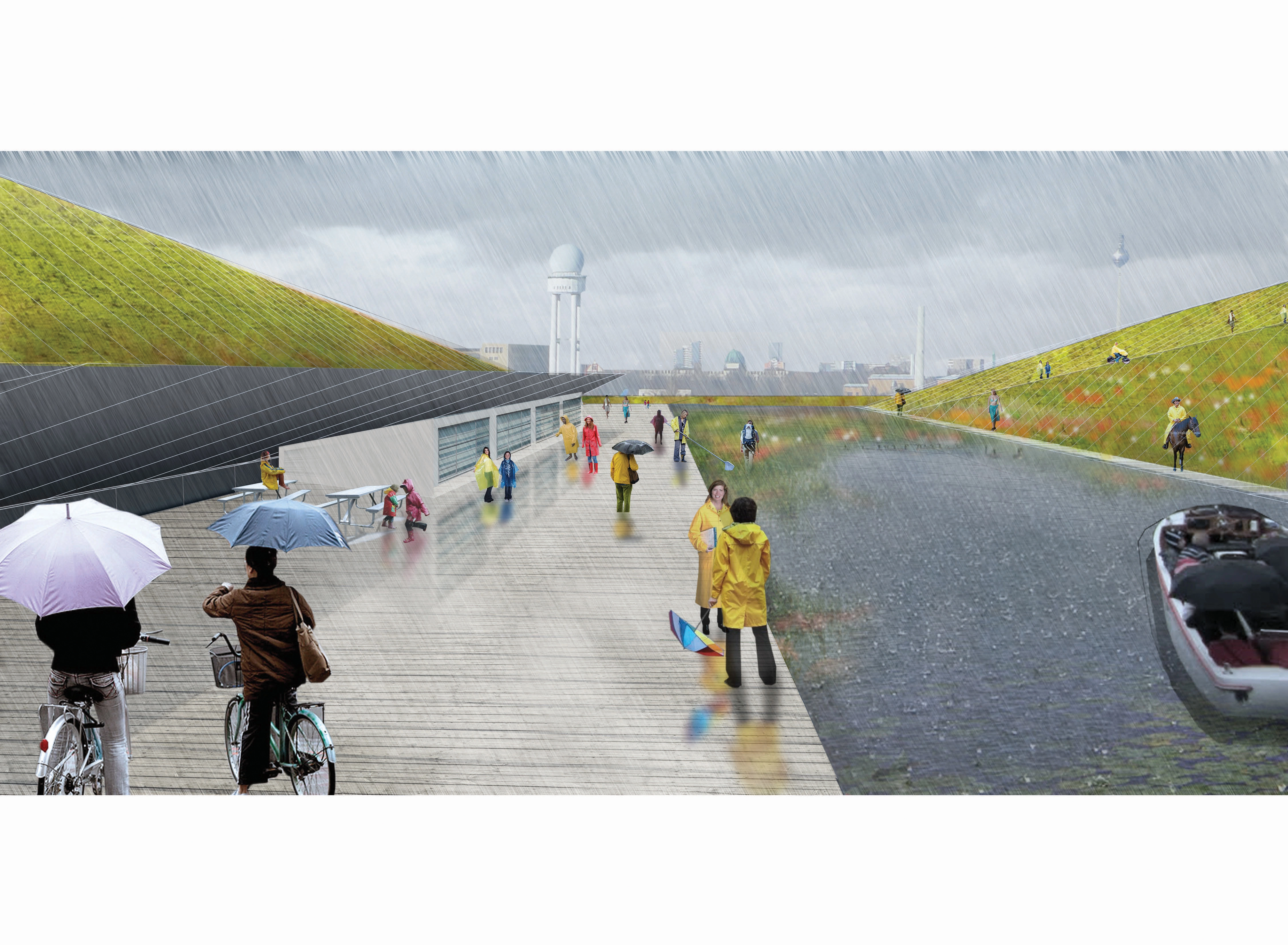
Berlin, Germany lies close to the water table and with an overwhelming amount of annual rainfall, the city has more water than its infrastructure can handle. Tempelhof airport provides a clear open space inside the city to test a new form of water management in Berlin, where storm and ground waters are reserved, absorbed and filtrated through pools, plantings and landforms. A module based on the folds of a paper airplane helped generate the design, which allows water to move and collect throughout the site. Depending on the weather, the ephemeral movement of water sets the stage for unique programs to develop and informs visitors about the local hydrology.
-
Context & History
The project site is located in the European planes of Berlin, which are the northern glacial lake and swamp regions of Germany. The city has a temperate seasonal climate and receives over 120 rain and/or snow events per year. The glacial valley on which Berlin resides formed during the Ice Age and became a deposit for swamps and bogs flanked by the Havel and Spree lake chain. This created a very high ground water system measuring over 16 meters in depth. High ground waters combined with an immense amount of annual precipitation gives the city more water than it’s infrastructure can process. Under these circumstances, urban hydrology is taken very seriously, and in most cases storm water is captured in underground reservoirs or sewerized for processing.
Tempelhof airport is located just south of the city center and is home to some of the richest history of World War II. Built up by the Nazi Party in the late 1930s, the airport was taken over after the war by the Americans for the Berlin Airlift, which delivered goods to West Berlin, now cut off by Russian forces. Since the fall of the Berlin Wall, Templhof functioned as a commercial airport until 2010 when it was shut down for economic reasons and turned into a public space for the city. Easily accessed by public transport, the airport site is bordered by low-income Turkish neighborhoods and the lively Kruezburg section of the city.
Site
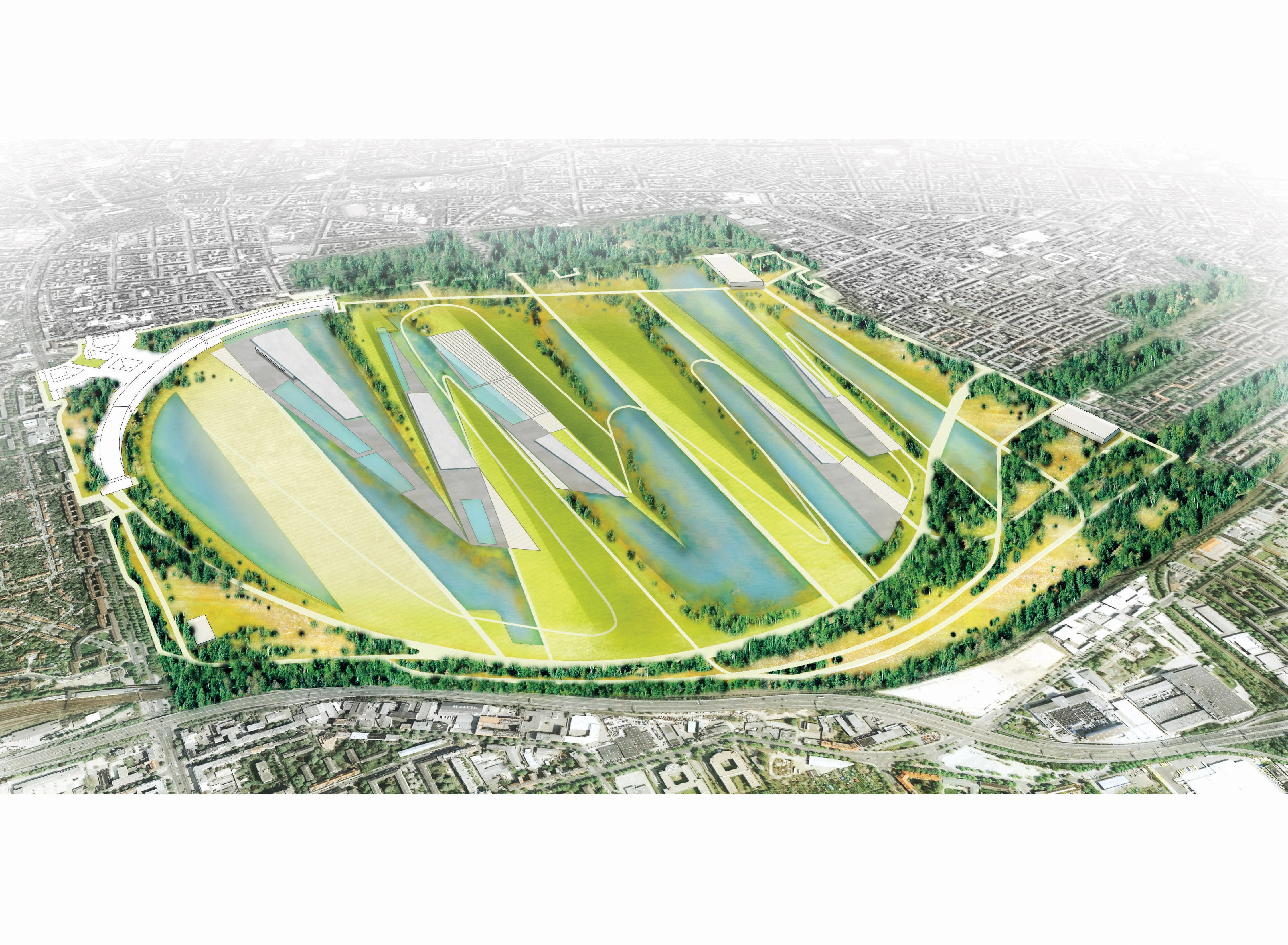
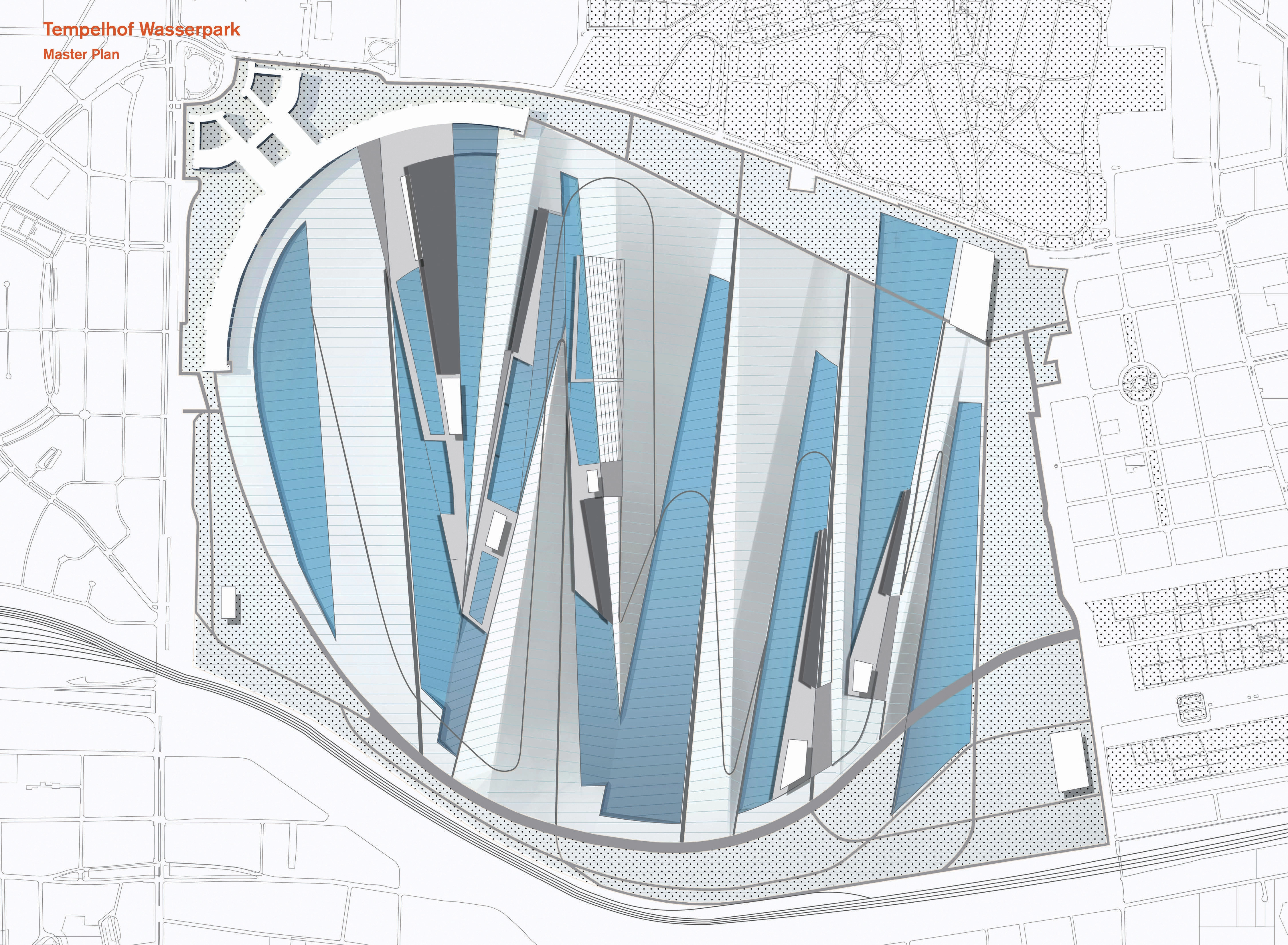
The 4-kilometer circular airfield now serves as a public space for the city and hosts a large array of impromptu programs and events. Two large runways built by the Americans in the 1950s correspond to strong east and west wind conditions. There is a large deteriorated path system used during Nazi rule that encircles the site and connects to primary and secondary entrances. To the north is the airport terminal, one of the largest structures in the built world. To the south is a community of allotted gardens and an elevated highway connection. With no reservoir or outlet, the main east and west connections of the site create natural low points where the intake of storm water frequently floods the central valley of the airfield.
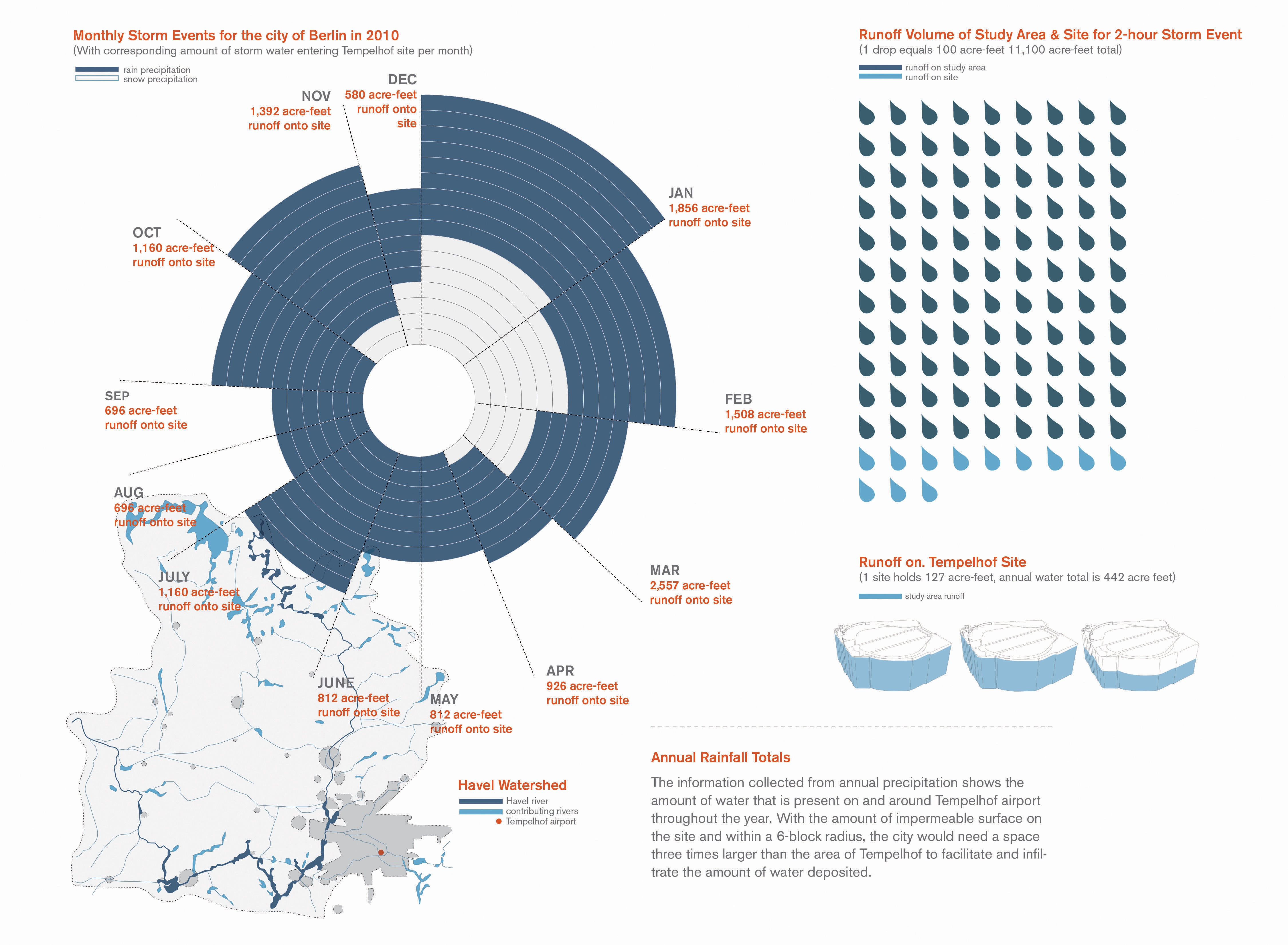
Calculations of annual rainfall and the amount of impermeable surface on the site and within a 6-block radius, indicate that the city would need a space three times larger than the area of Tempelhof to facilitate and infiltrate the amount of water deposited.
Program
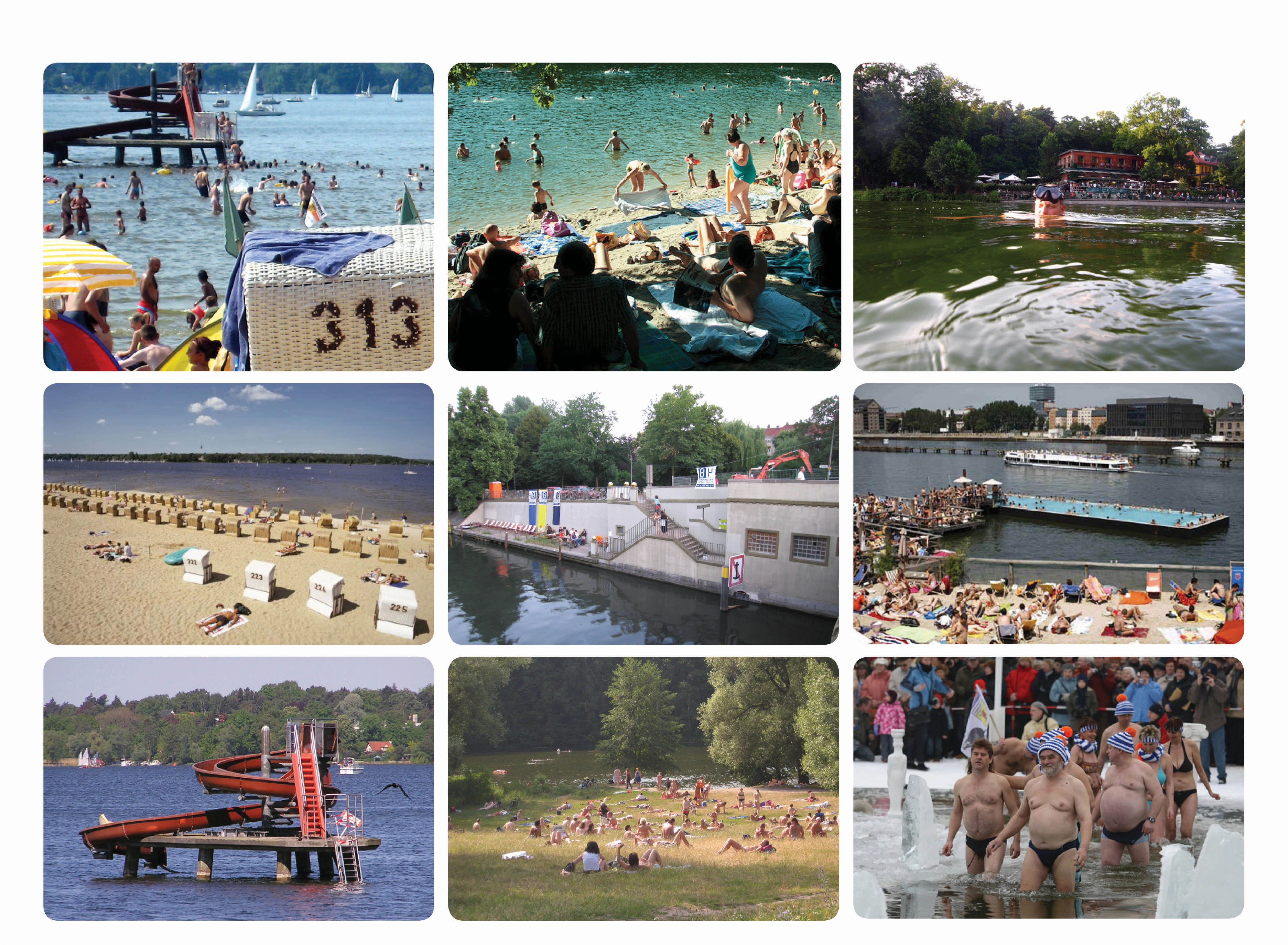
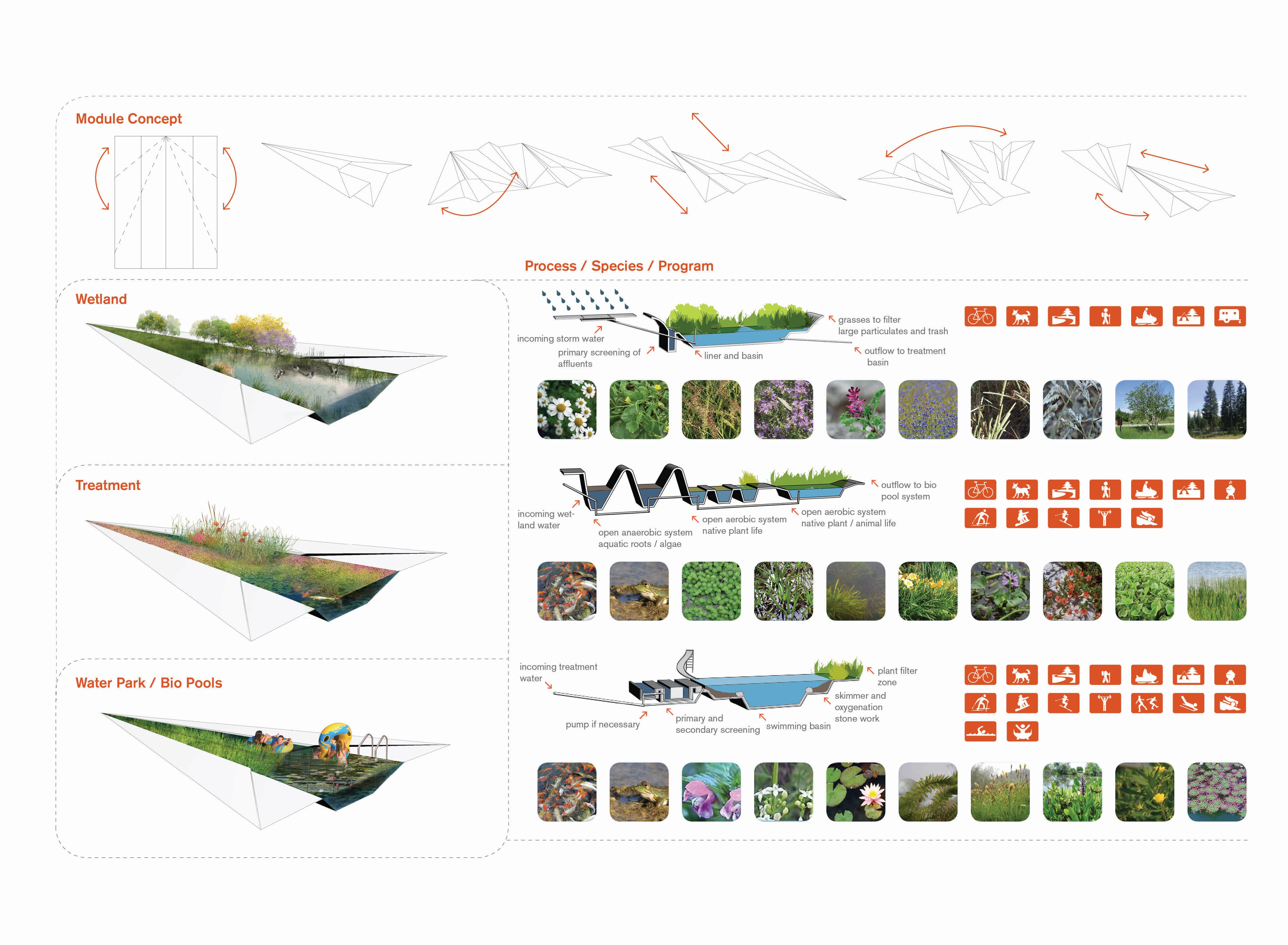
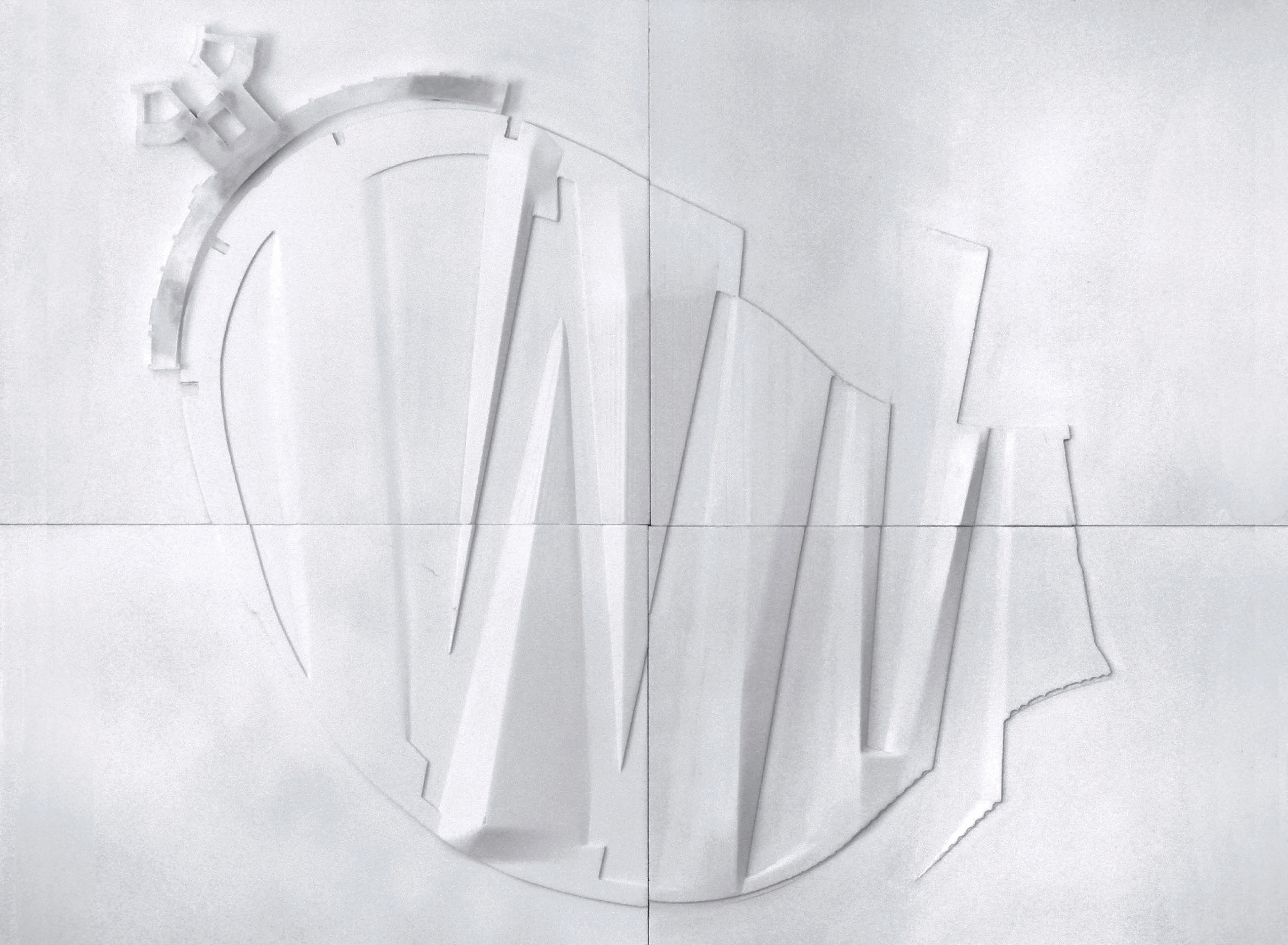
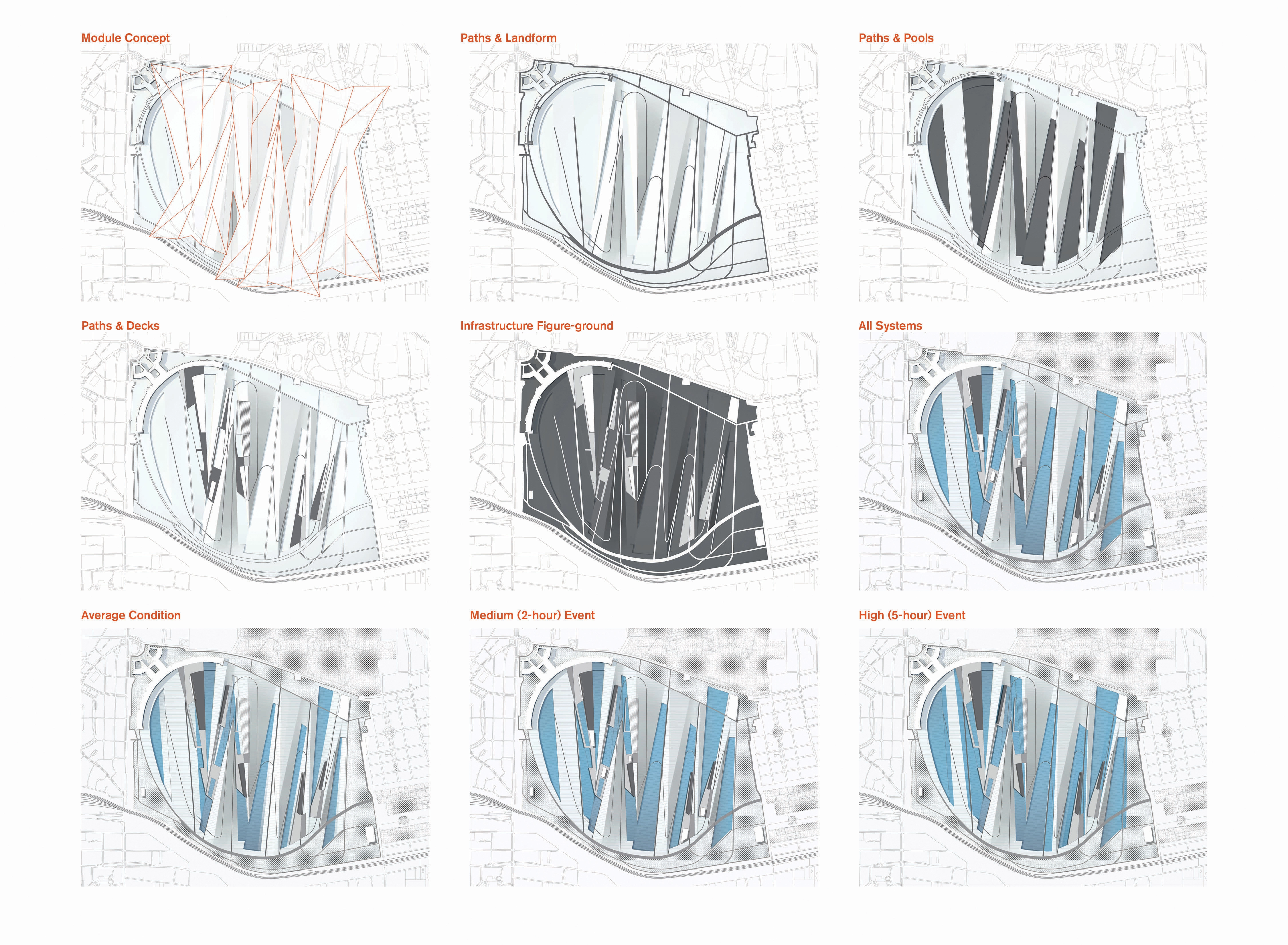
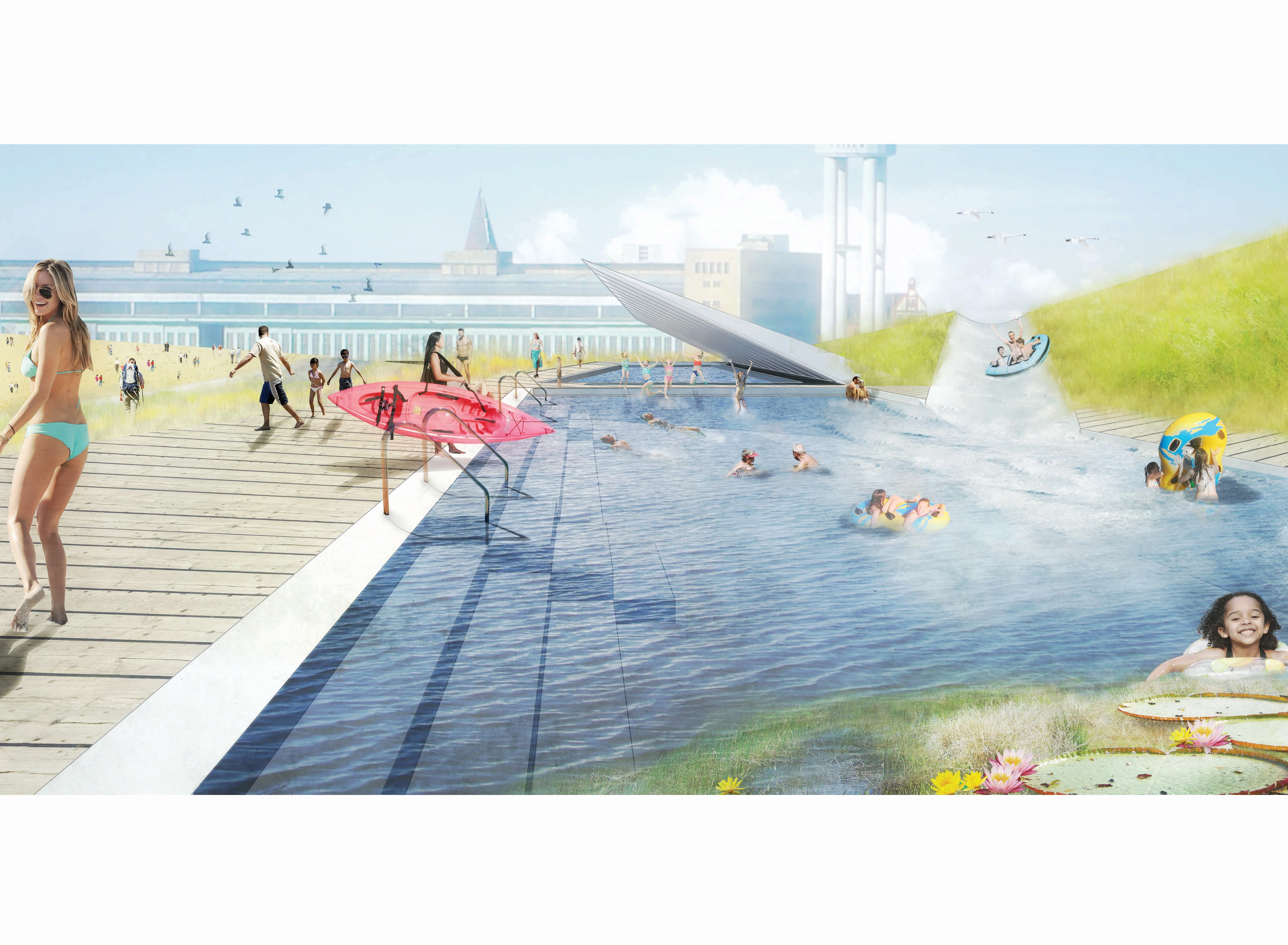
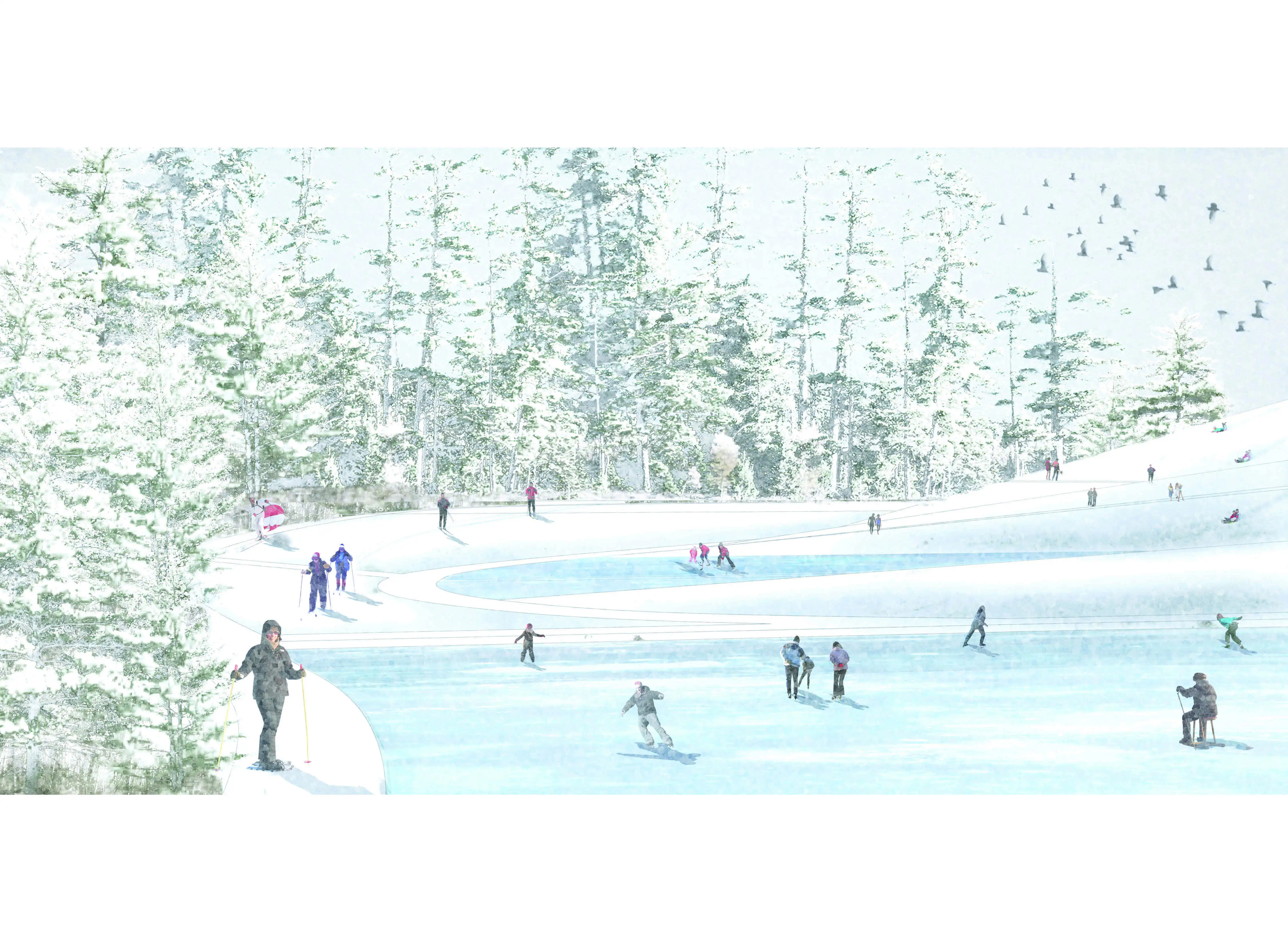
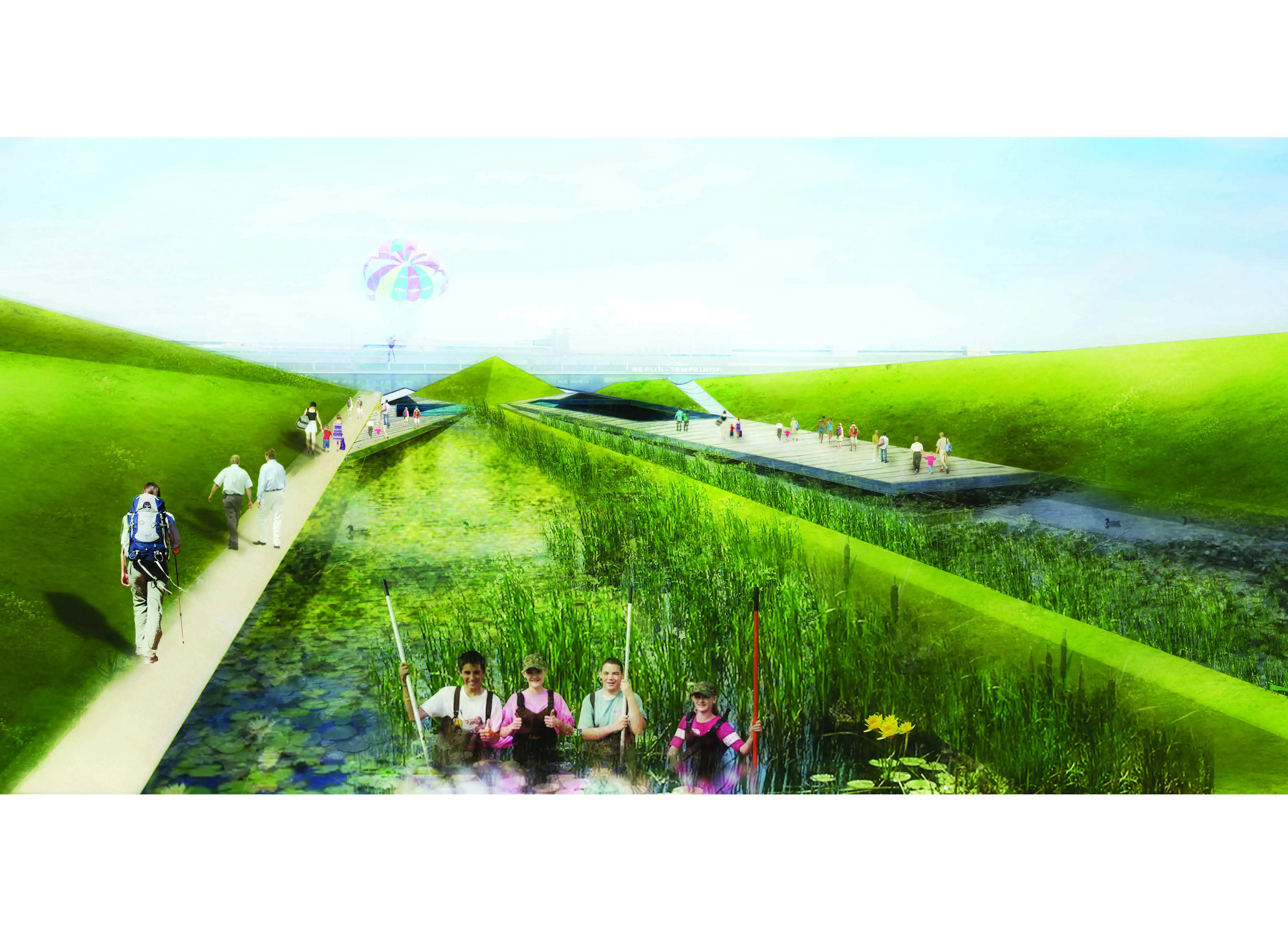
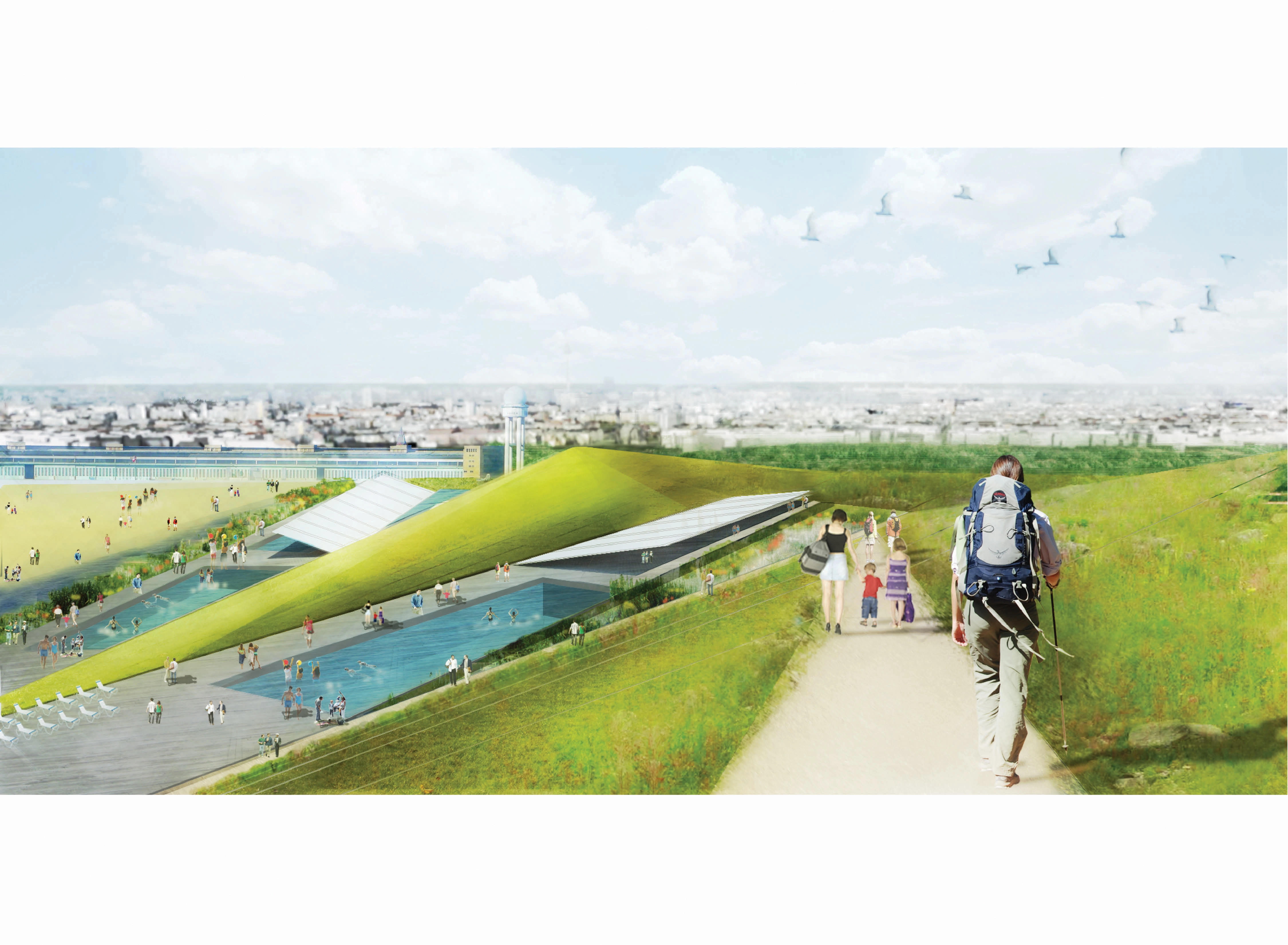
Tempelhof airport provides a clear open space inside the city to test a new form of water management in Berlin, where storm and ground waters are reserved, absorbed and filtrated through pools, plantings and landforms. Landforms capture and alleviate storm water on the site and within a 6-block radius through a system of high and low points. Eventually, as the water is filtered through a variety of four-season native plantings, a clean, natural swimming pool series develops in the low areas of the landform. The rises in the landform create different vantage points of the site and provide areas for recreation like skiing, hiking and integrated water slides for the pools. Depending on the weather, the ephemeral movement of water around the design sets the stage for unique recreational programs (such as swimming, hiking, boating, ice skating, etc.) to develop and helps manage water while informing visitors about the local hydrology.
Form
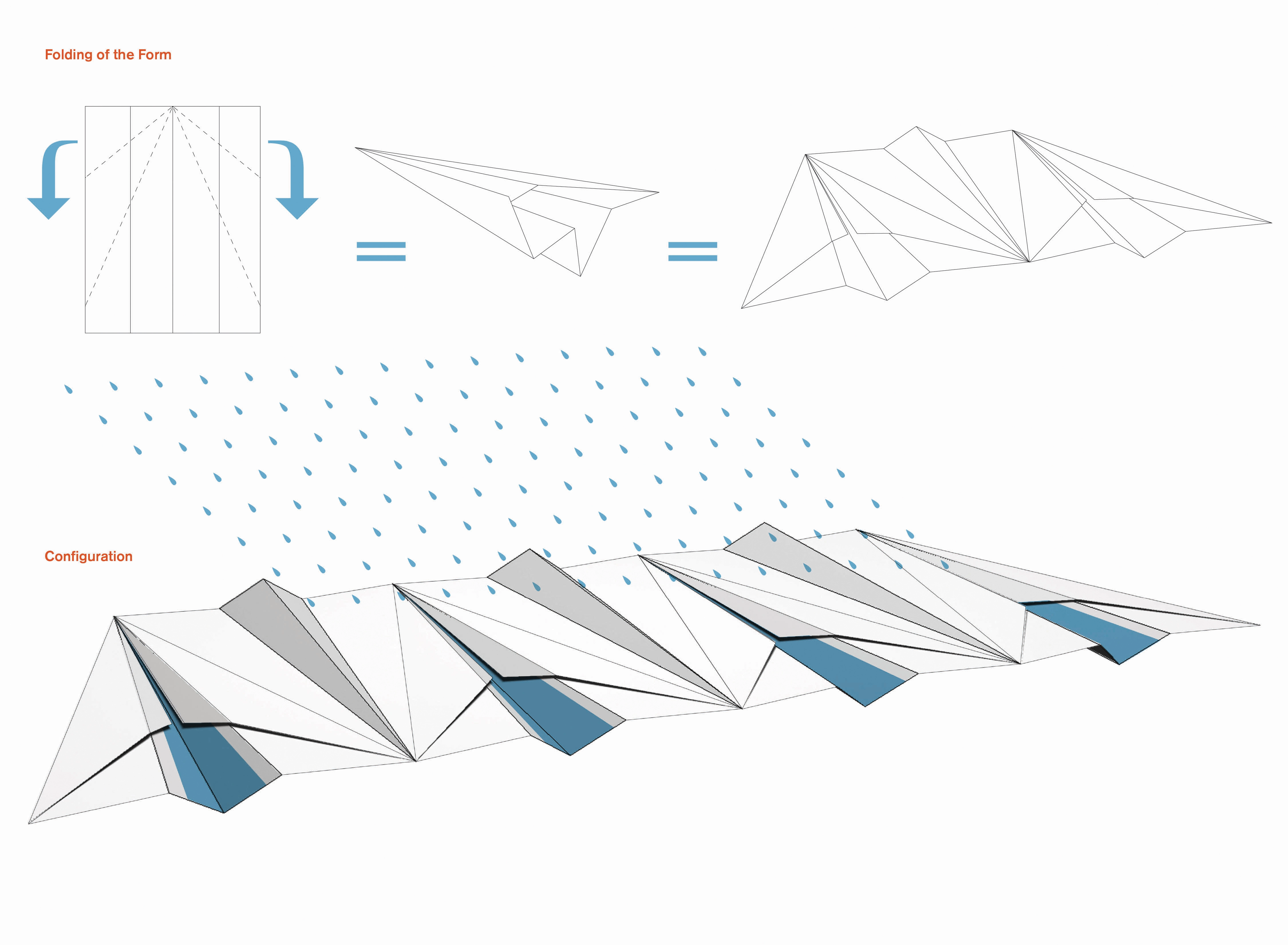
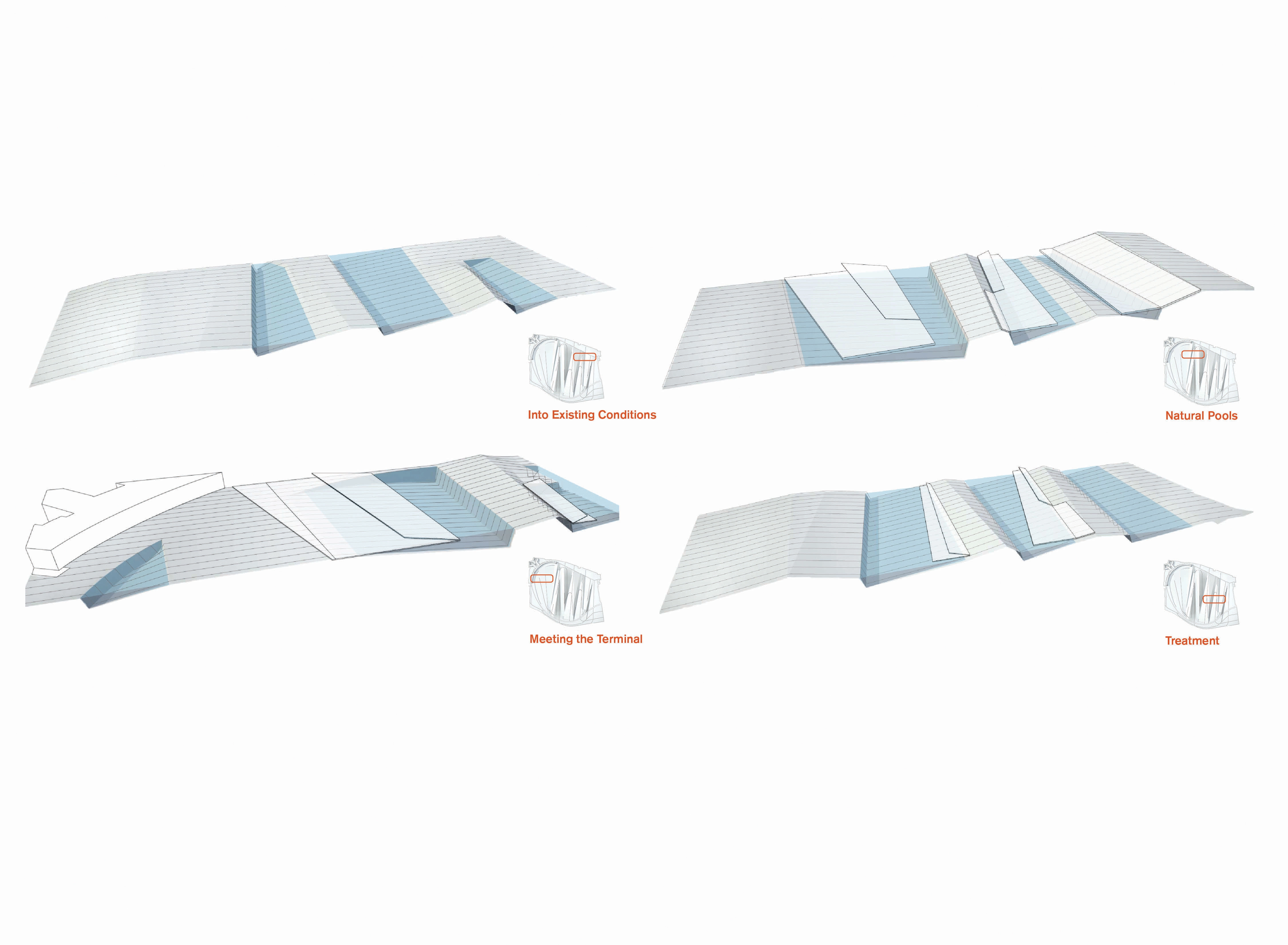
A module based on the folds of a paper airplane helped generate the design, which allows water to move and collect throughout the site. It was adapted and positioned based on connections to low points in the existing topography, community gardens, a large cemetery and tree-lined boulevards that connect the airport to the city center. The faceted surfaces of the paper airplane were redefined into a system of pools of specific volumes and filled landforms to move water through a three-step filtration system. The pools associated with the first step of filtration are connected to a wetland/reservoir circling the main airfield. The second step of filtrating pools uses specific plantings and bank filtration to make the water clean enough for swimming. The last set of low areas consists of a natural swimming pool system that is dependent on plantings to maintain its cleanliness. Between each pool are landforms that prevent water from overflowing into the adjacent pools. The original paper airplane form also generated the form for a series of floating decks, shade covers and viewing areas used to facilitate swimming, education and maintenance.
Environmental & Social Impact
"Tempelhof Wasserpark" creates a primary sustainable system unique to Berlin where water is cleaned and stored in order to contain floods and pollutants. By combining this large urban hydrology system with a recreational water park, a popular social activity in Berlin, the design becomes a community binder for the city and adjacent neighborhoods. The airport is transformed into a living classroom granting the visitor access to the city's infrastructure as well as to ephemeral experiences within the landscape.
-
University of Pennsylvania
Martin Rein Cano, Yadiel Rivera Diaz, Brian Payne
The class and critics of Tempelhof Studio
Advertisement
Related Awards
Award of Excellence, General Design
A Floating Forest: Fish Tail Park in Nanchang City
In Nanchang, within the Yangtze River floodplain, we revitalized a heavily degraded 126-acre landscape into a floating forest that manages stormwater, restores habitats, and provides diverse recreational spaces—all within a limited budget and a short timeline. This innovative urban nature model strengthens the district’s identity and spurs surrounding development. Fish Tail Park offers a scalable solution for flood-prone regions, seamlessly integrating flood resilience, ecological restoration