
.webp?language=en-US)
Integrating Habitats: "Growing Together"
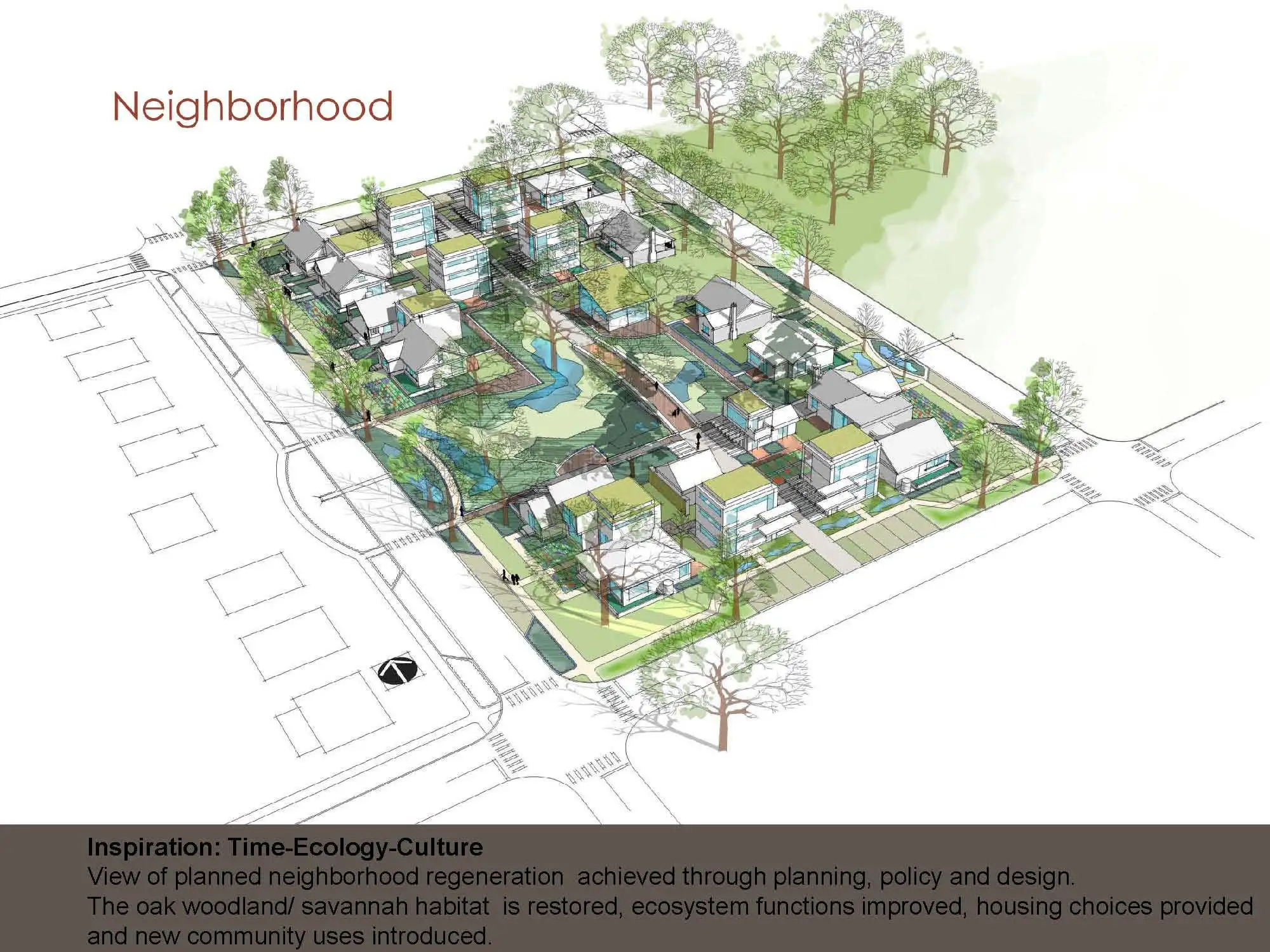
Refreshing. It increases density, but it also looks at ecology. This is where cities of today are and this is a very practical approach and shows what is possible. The political, financial, and design provisions are easily understandable by all audiences. One of our problems is getting people to love density and this makes a great case for it.
Awards Jury
-
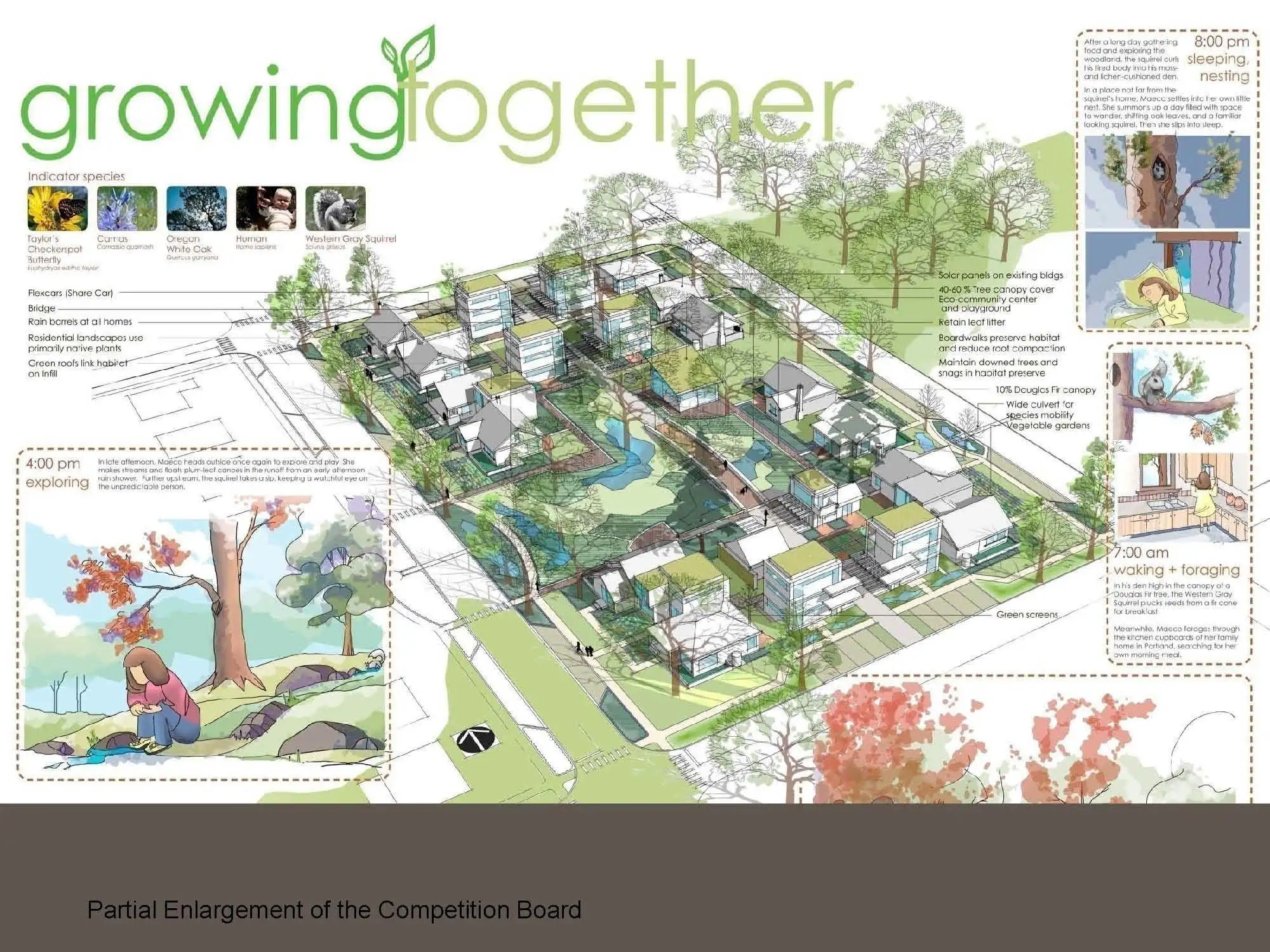
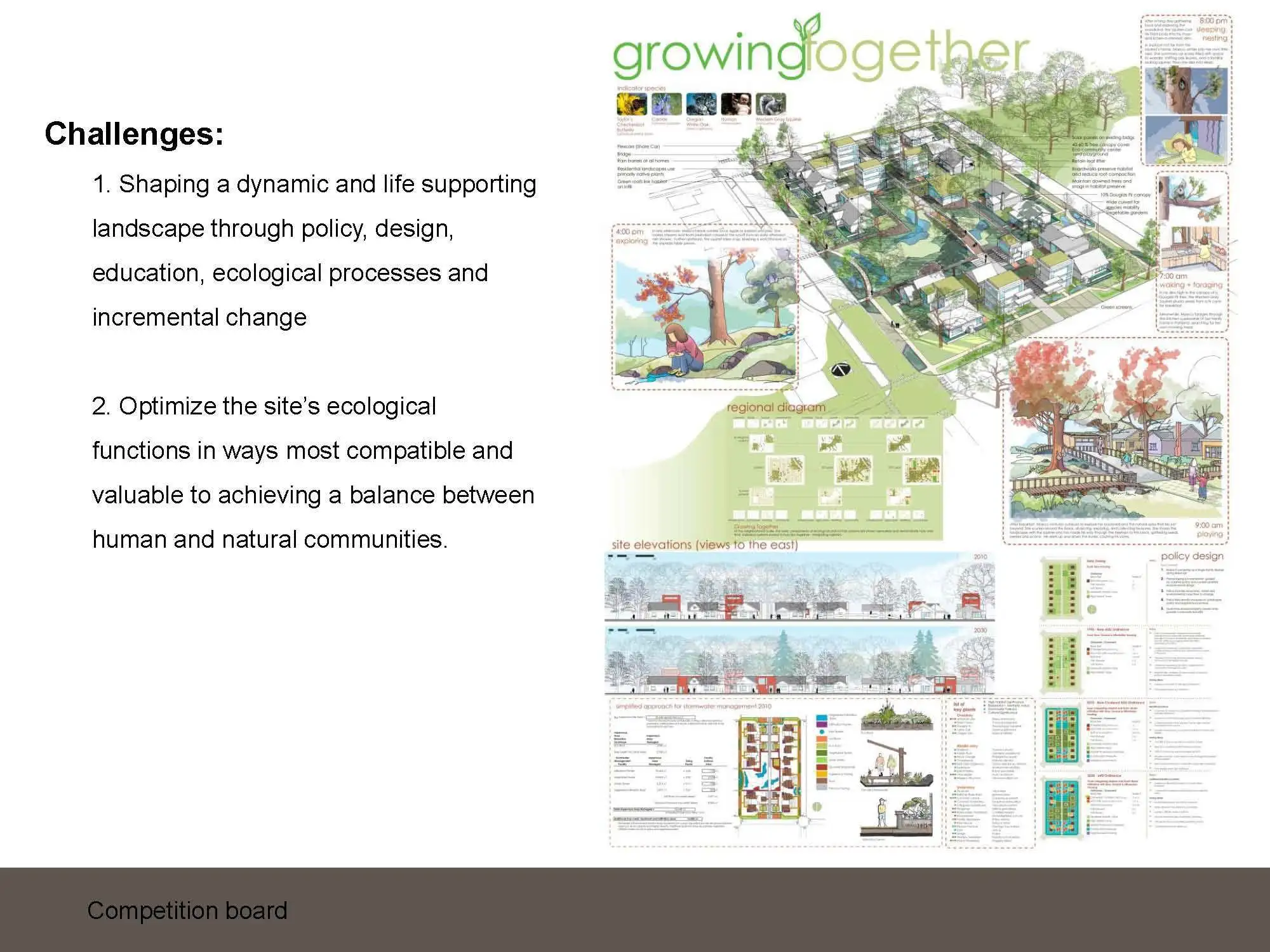
"Growing Together", a winning submittal to the Integrating Habitats competition sponsored by Portland Metro, represents a movement to protect and enhance the Pacific Northwest region’s natural resources through green building proposals that blend nature with sustainable development. This winning design, selected by a world-renowned jury, redefines the current language and standards of environmental sustainability by fostering balance between conservation and development, maximizing biodiversity, and safeguarding water quality for this generation and those to come.
-
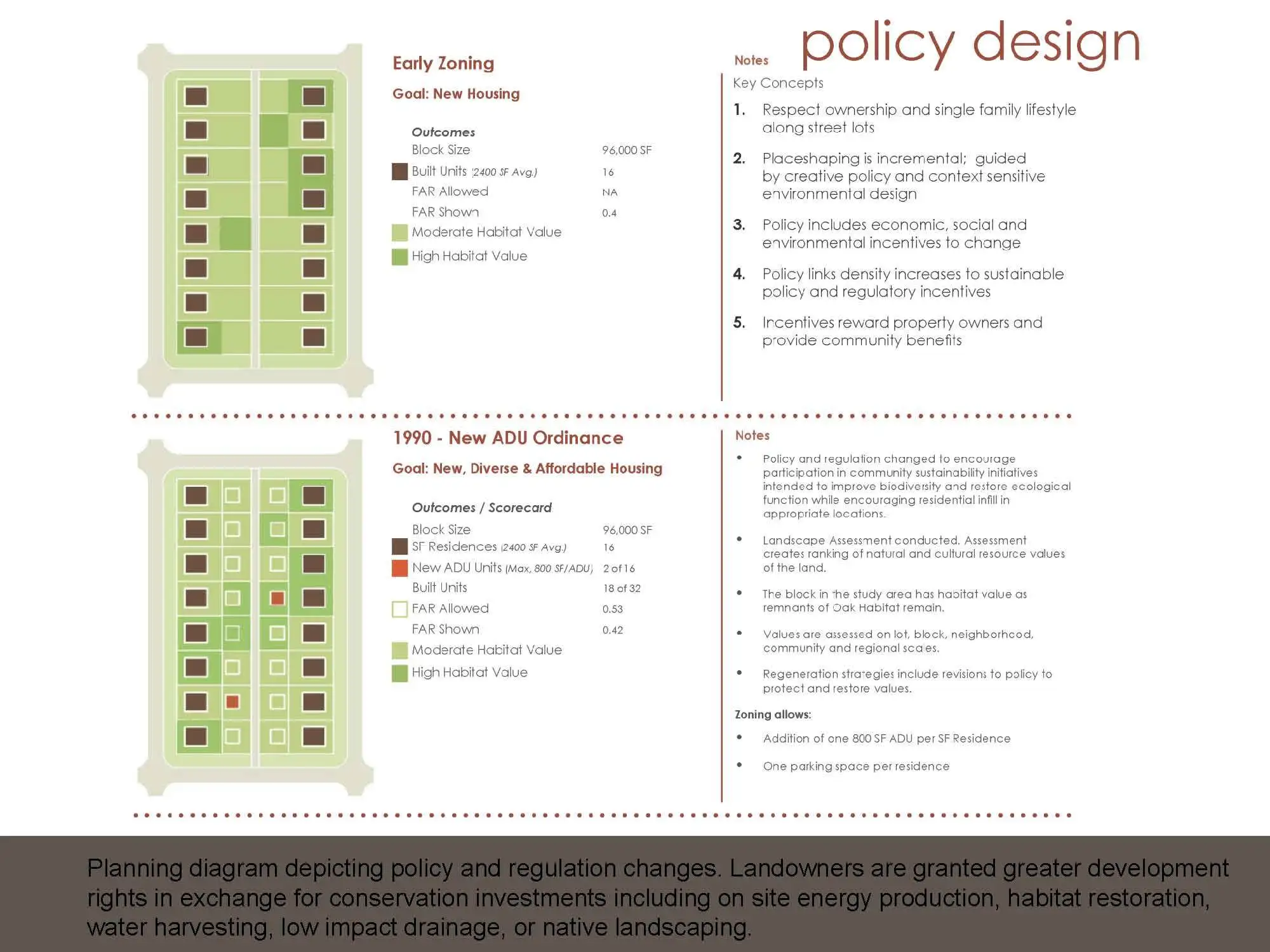
Places are shaped over time by natural, cultural, and political processes. The design solution to the challenge of integrating an Oak Savannah habitat into an established single family neighborhood addresses physical design and policy frameworks. The solution relied on the experience of visiting and living in the community to inform, educate, and guide gradual change.
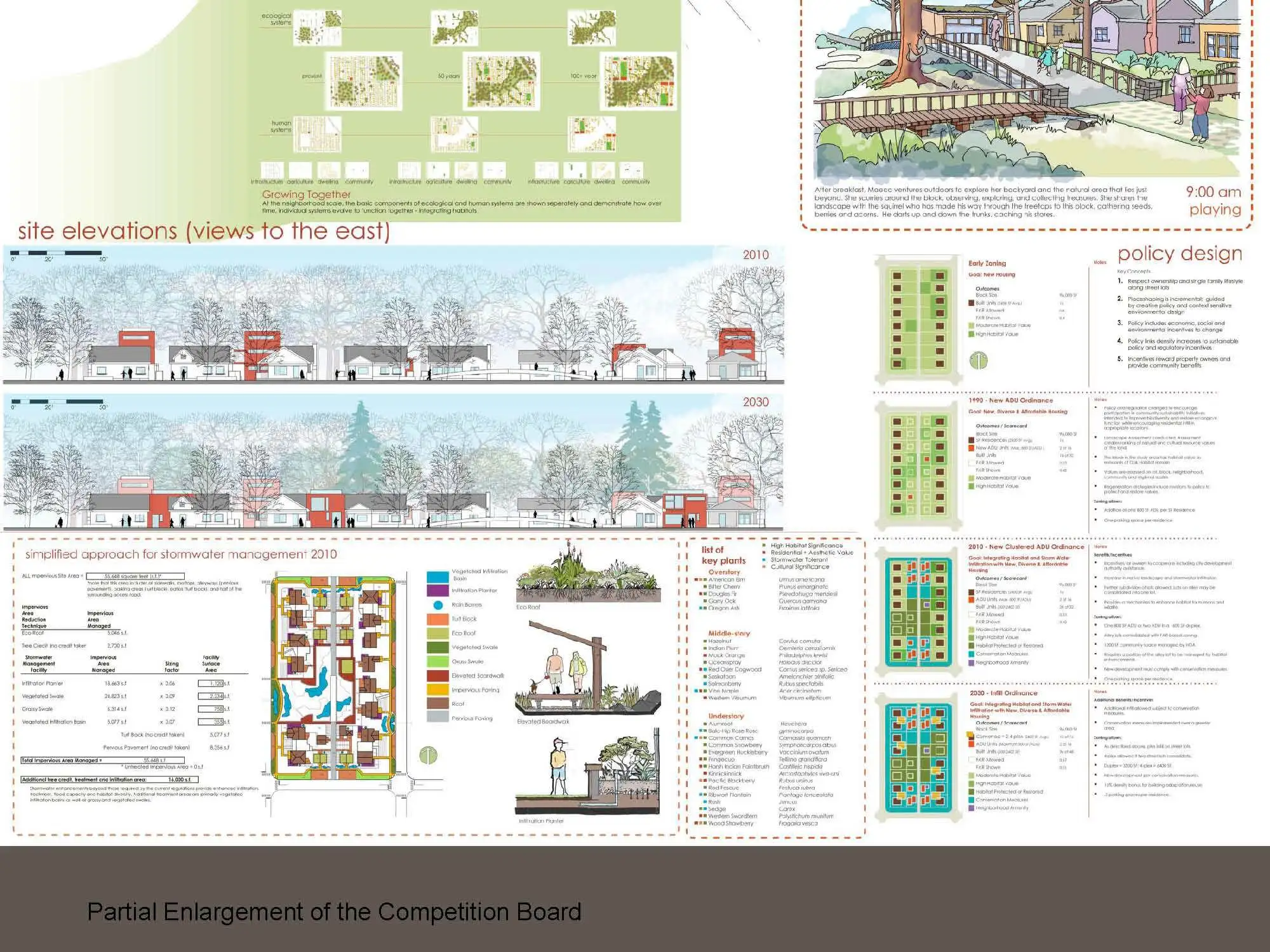
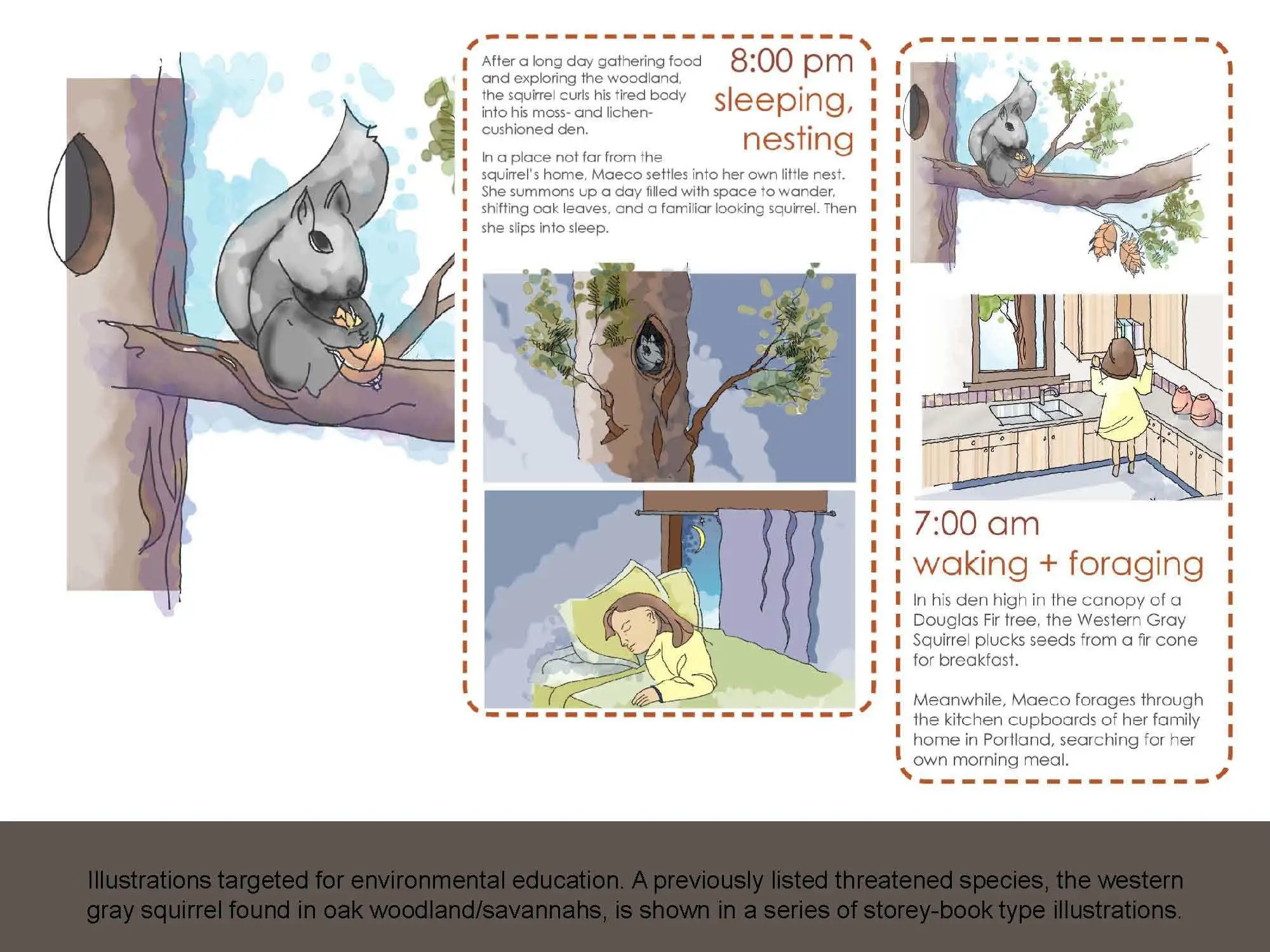
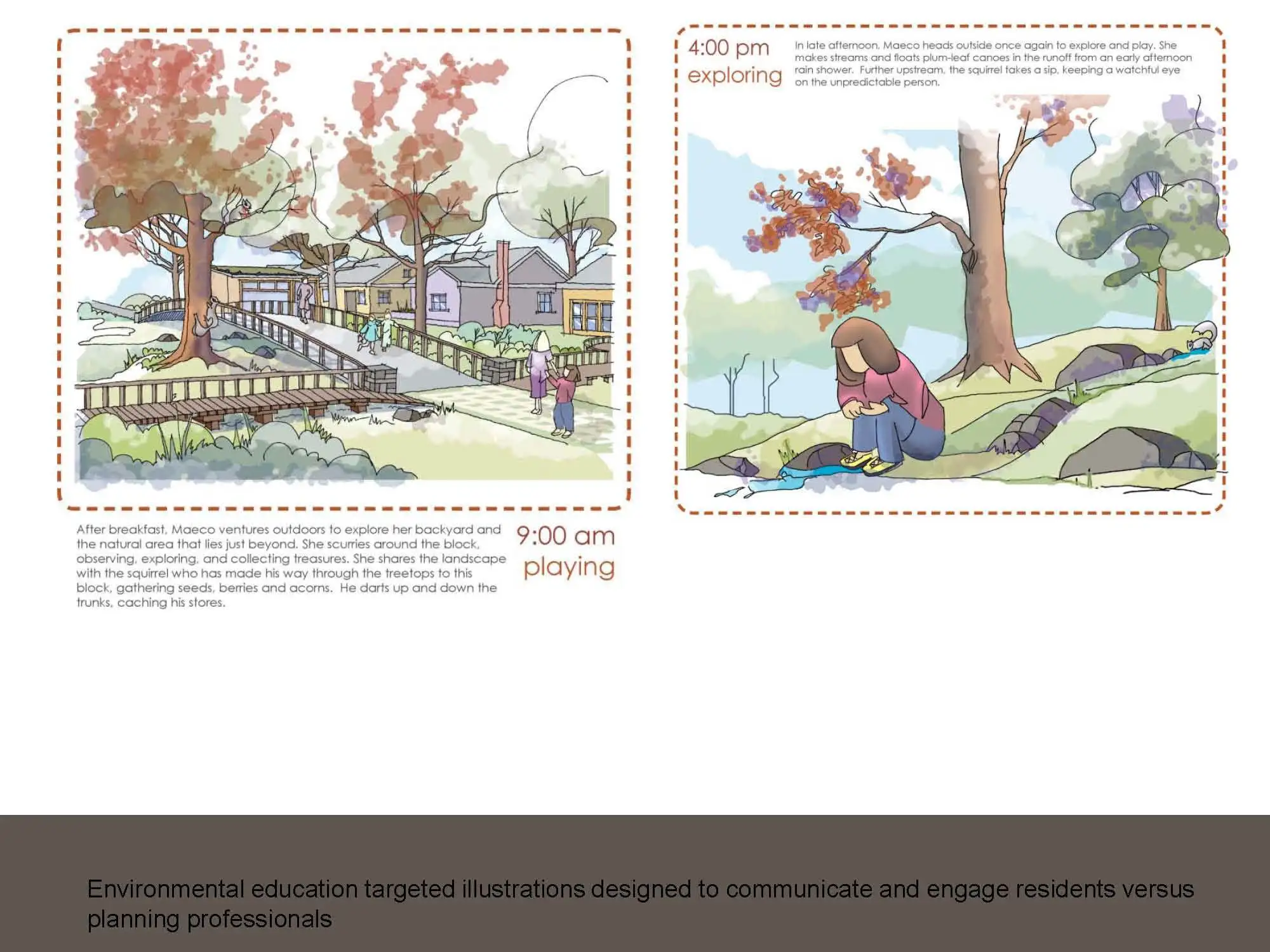
A series of sketches representing the neighborhood inhabitants’ experiences challenge viewers to recognize the importance of finding a balance between the built and natural environment. This is illustrated through the use of storybook like presentation graphics designed to be approachable and easily understood by diverse groups.
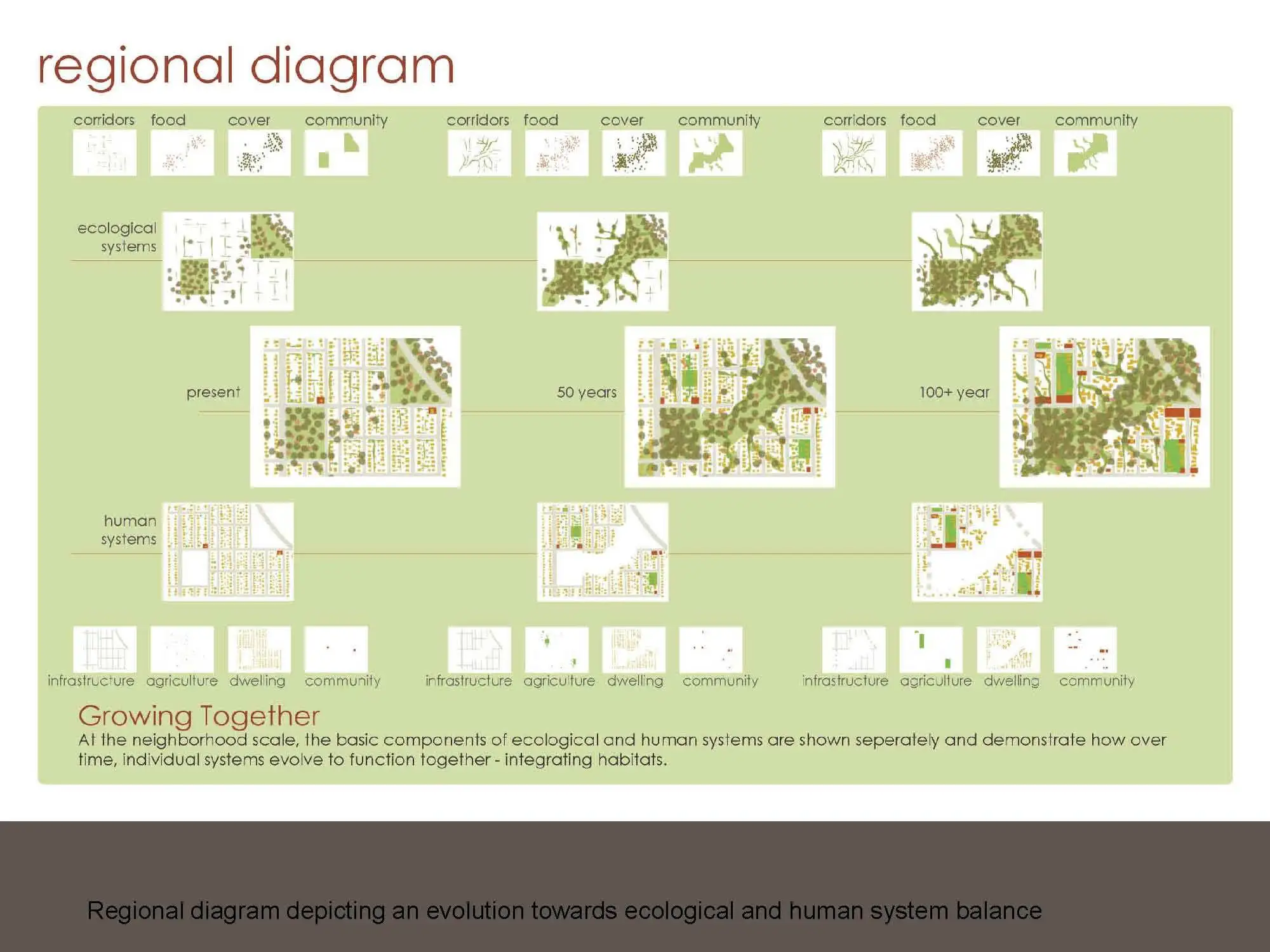
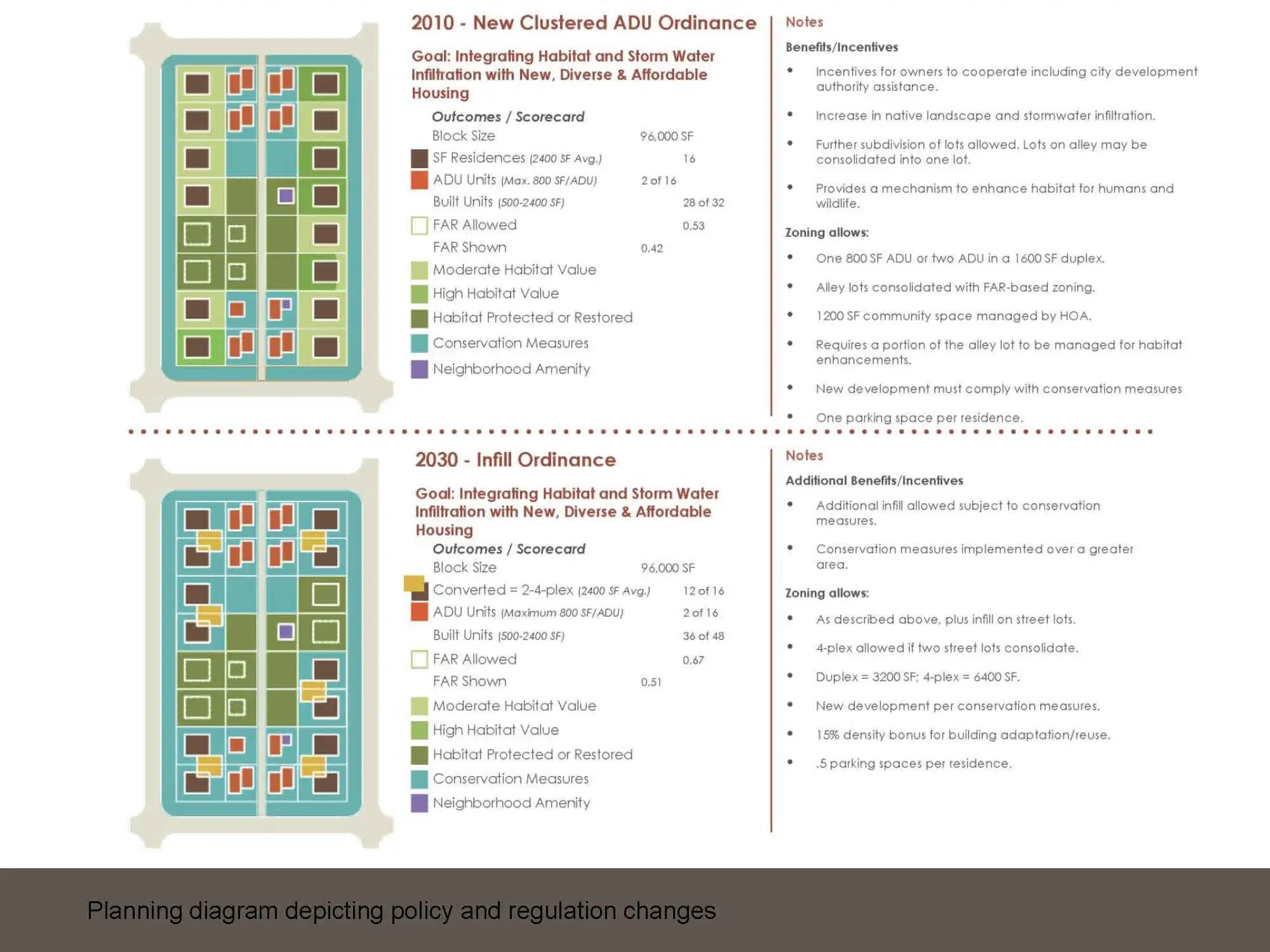
This land-based solution illustrates one of several scenarios that might evolve if policy is adopted to encourage investment in habitat restoration, low impact drainage, native landscaping, alternative energy, shared amenities, infill, and new housing choices. The plan illustrates how a block / neighborhood / community / landscape could regenerate; becoming more environmentally, culturally, and economically sustainable and at the same time provide higher quality habitat, house more people, require less infrastructure, and consume fewer resources.
The illustrated outcome accomplishes the following:
- Encourages and rewards property owner investment in low impact drainage, natural landscape, and habitat restoration by providing additional development rights in exchange for investment
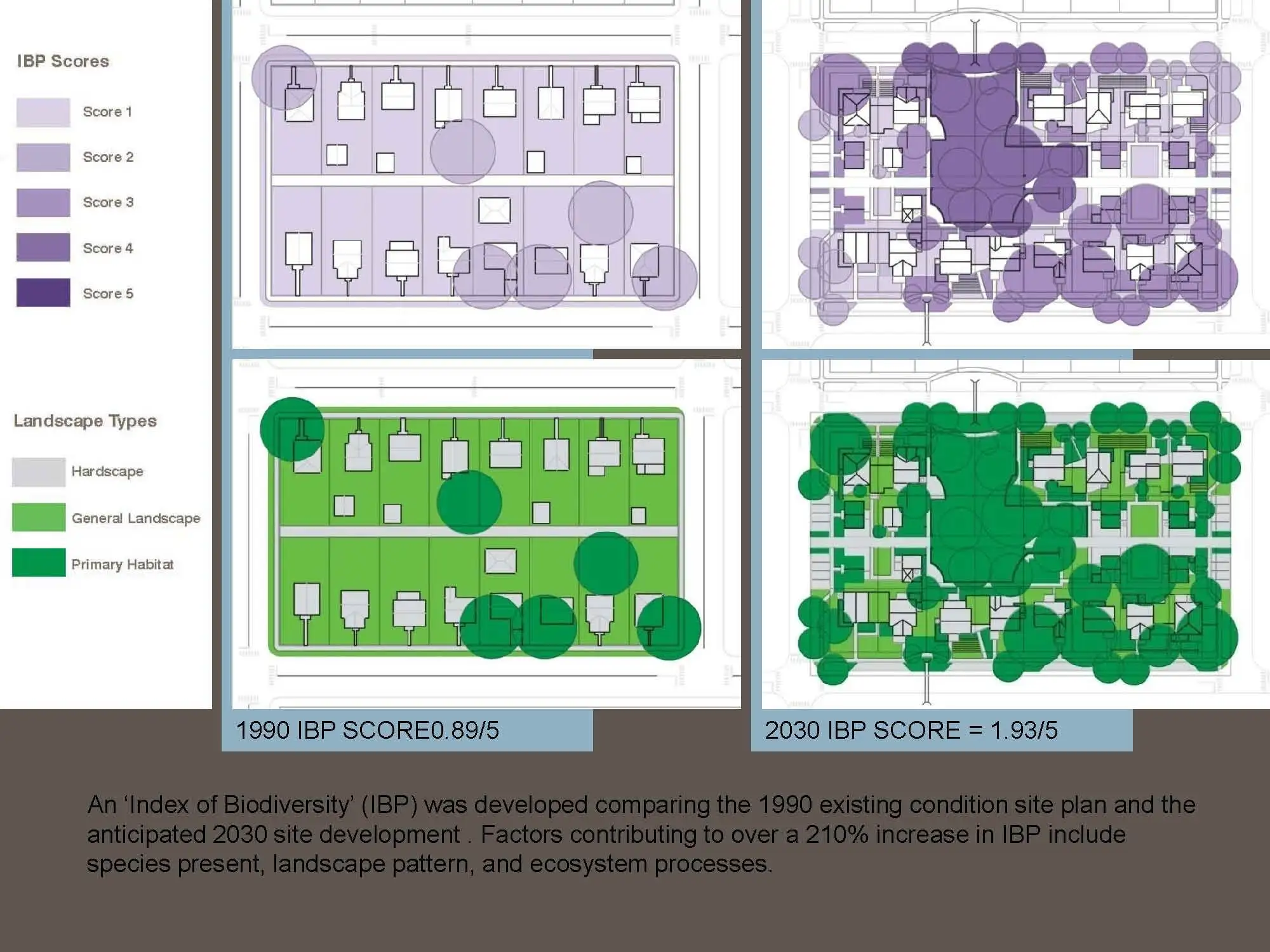
- Restores natural habitat and encourages biological diversity through adaptive management of land, vegetation, and stormwater
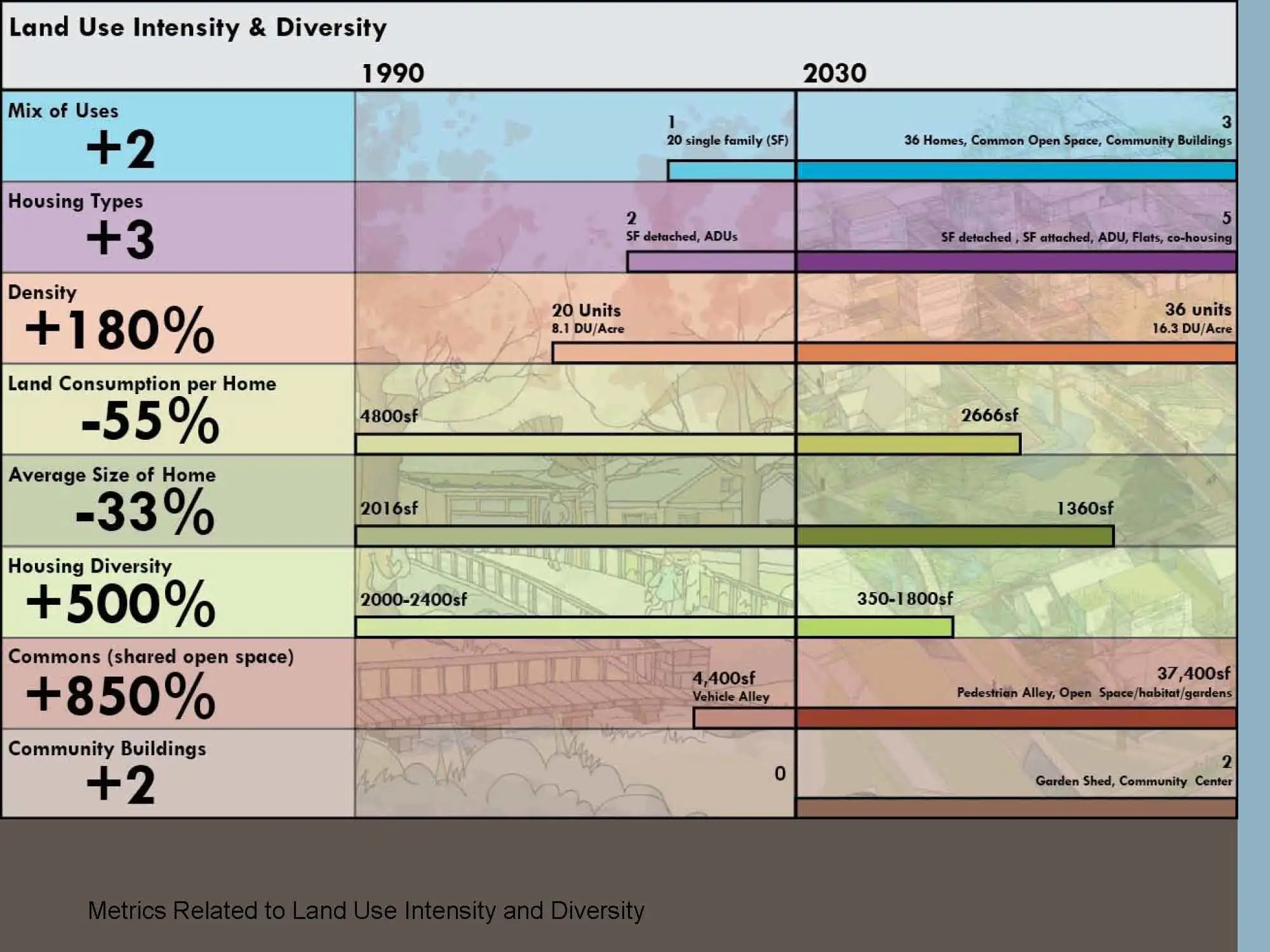
- Introduces new housing choices; encouraging diversity and promoting efficient use of limited land resources
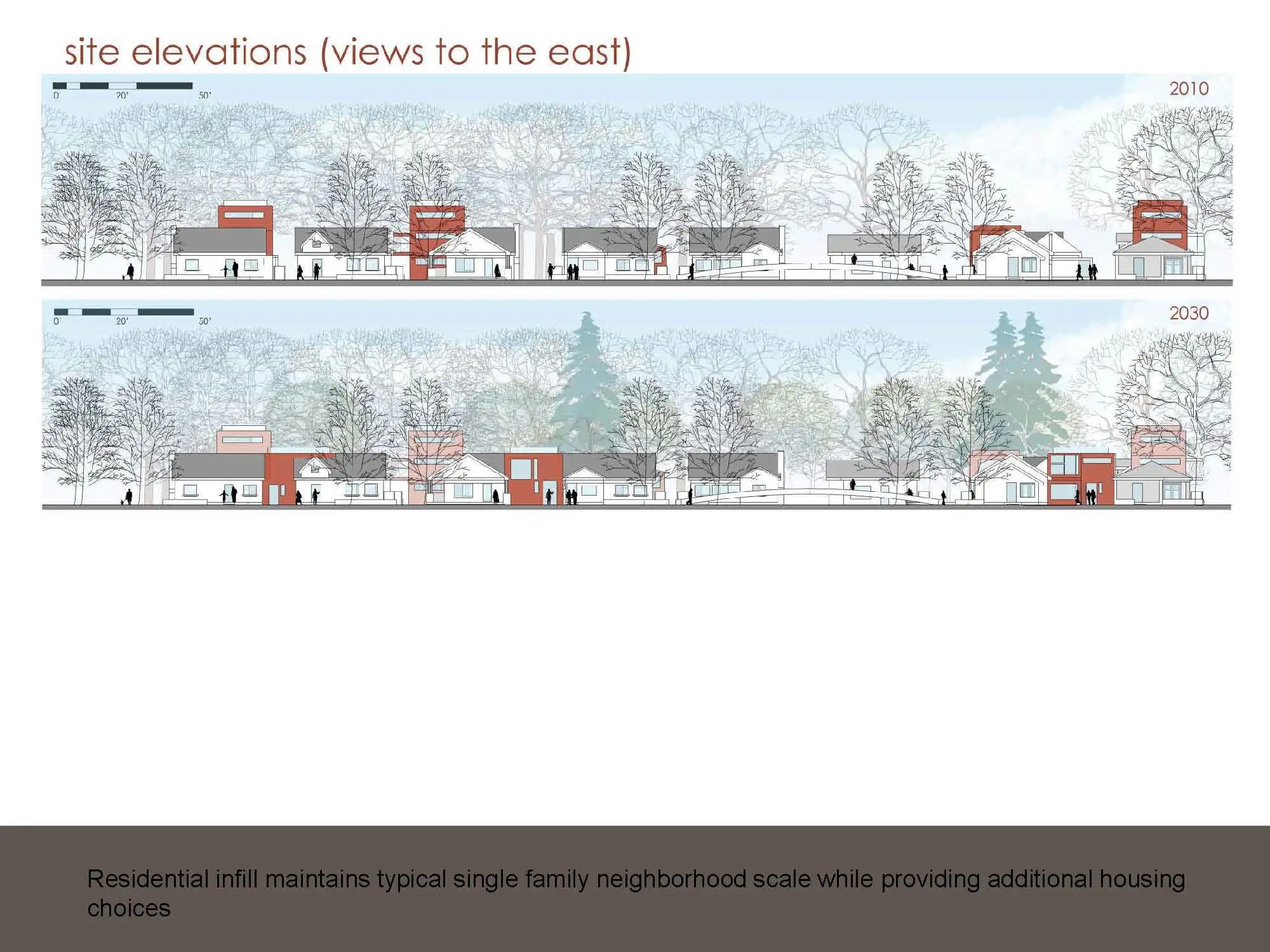
- Respects the investment, energy, and history embodied in existing building and improvements by thoughtfully introducing new structures, uses, and improvements into the existing fabric
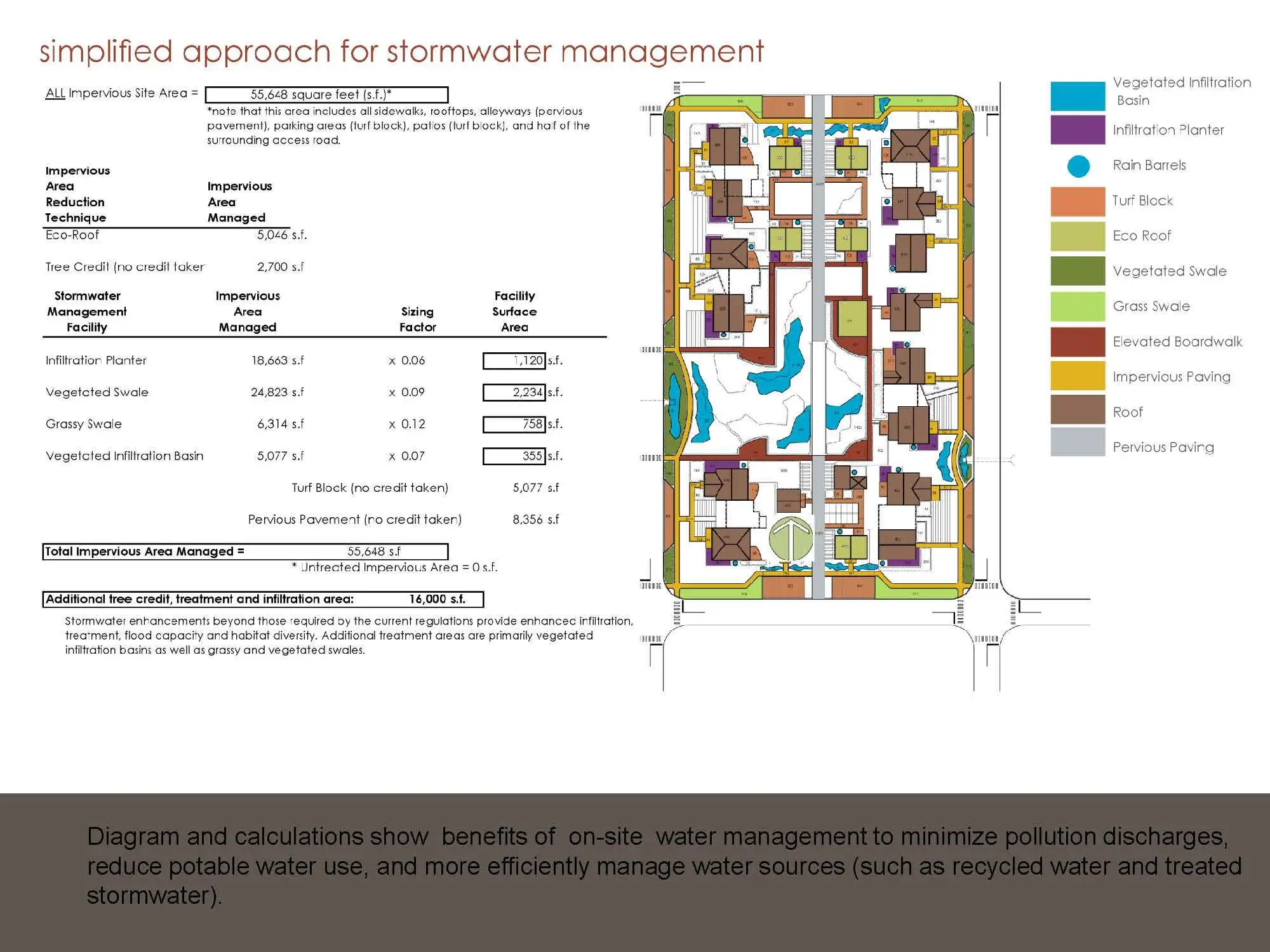
- Conserves water by harvesting storm water and reducing irrigation demands through the use of native landscaping
- Accommodates on-site energy and food production through community gardens, green roofs, solar panels, and permaculture practices
- Strengthens community by providing shared facilities and amenities including community/education center, park, playground, community gardens, restored habitat, trails, recycling facilities, shared cars, and seating areas
- Respects the values and benefits of single family home ownership and strives to retain these in the initial phases of regeneration by retaining private, yet smaller, lots and designing each lot to include private outdoor spaces
- Uses street right of way more efficiently and promotes greening of streets.
Challenges
- Shaping a dynamic and life supporting landscape through policy, design, education, and ecological processes.
- Optimizing the site’s ecological functions in ways most compatible and valuable to achieving a balance between human and natural communities.
Solution
Growing Together recognizes the cyclical nature of environmental planning and design. The strategy acknowledges that ecological and cultural values inform environmental and land use policies, as well as development and conservation regulations. All of these, combined with people’s experiences, design and ecological processes, combine to shape life supporting habitats.
Results
- Biological and cultural communities thrive
- Energy consumption is reduced
- Regional growth is contained through appropriate infill
- Ecosystem functions are restored including hydrologic function, plant succession, and species reproduction
- Biodiversity increases as measured by the indicator species; Humans, Western Gray Squirrel, Garry Oak
Design Concepts and Details
Nature Friendly
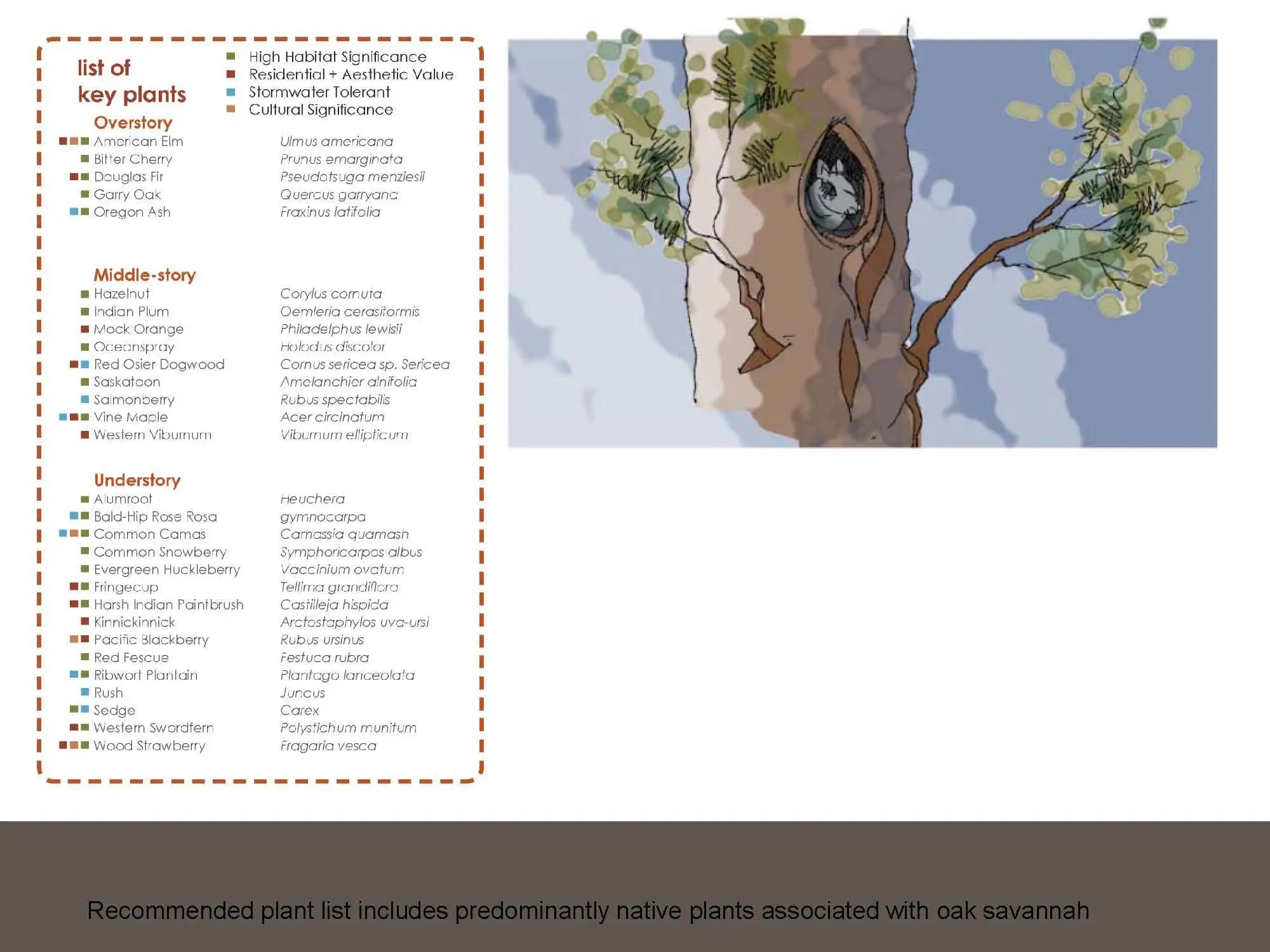
Through stewardship, the block becomes increasingly more nature-friendly. The native woodland, once home to 214 vertebrate species is rapidly disappearing. By 2040 the block has been reconfigured to protect and restore habitat. The landscape aesthetically infiltrates all storm water on site and ornamental species have been replaced with productive landscapes and native plants. A bridge, aligned on the former alley spans the protected habitat, provides cover, includes overlooks and terminates near the LEED® certified commons.Livability and Experience
Residents organize to take advantage of new regulations designed to encourage sustainable development and conservation while encouraging appropriate infill. Owners collaborate to develop and implement habitat restoration, water management and infill plans. A stronger, more diverse, multi-generational community emerges. Life on this block is increasingly communal, one of sharing gardens, childcare, patios, playgrounds, vehicles, tools, parks, caretakers and an appreciation for increasingly diverse people, plants and animals.People learn through personal experiences. Daily, they enjoy a vital, diverse and dynamic cultural and natural landscape. The block and neighborhood habitat continue to be enriched. Over time, single family residences are converted to small and distinct multiple family residences, yet an attractive “home place” for many species emerges.
These design ideas are poised to usher in a new era of development that keeps nature in all our communities and ensures the continued preservation and enhancement of our quality of life and the environment for this generation and those to come.
-
Portland Metro: Competition Organizers Stacey Triplett; Corie Harlan
Portland Metro: The Jurists
Stefan Behnisch; Joan Nassauer, FASLA; Tom Schueler; Susan Szenasy, Honorary ASLA; Jim Winkler; David Yocca. FASLAAECOM
Marilee Stander, ASLA; Sandy Fischer, ASLA; Nancy Bird; Kerry McWalter; Bonnie McDonald; Linda Howard; Erika Matthias; Lauren Hauck; Todd Bronk, ASLA; Jeff Bouma, ASLA; Isaac Brown, ASLA; Charles Everett; Jim Keany; Karen Strupp; Jan Mulder; Sarah Daniels; Curtis Alling; Ron Unger; Alex Felson, ASLAYost Grube Hall Architecture
Phillip Lopez, Dave Morris, Edward Running, Miles Woofter, Nicole De Jong
Advertisement
Related Awards
Honor Award, Analysis & Planning
A Cultural Approach: The Fort Peck Tribes Hazard Mitigation Plan
In collaboration with the Fort Peck Assiniboine and Sioux Tribes, EPA, and FEMA, the Fort Peck Tribes Hazard Mitigation Plan (HMP) adopts a culturally responsive approach to hazard mitigation planning that features connection to place.