
.webp?language=en-US)
Designing the Ecology of Democracy
Emily Bonifaci, Student ASLA; Alexis Canter, Student ASLA; Jenelle Clark, Student ASLA; Ilana Cohen, Student ASLA; Casey Elmer, Student ASLA; Julie Gawendo, Student ASLA; Matthew Girard, Student ASLA; Eamonn Hutton, Student ASLA; Diane Lipovsky, Student ASLA; Nilay Mistry, Student Affiliate ASLA; Izabela Riano, Student ASLA; Kerry Rutz, Student ASLA
-
This collective project — one studio, twelve participants — forced us to speculate on the nature of design and democracy in an ecological age. The Washington Mall, the most heavily visited national park and our most important public forum for democratic life, cannot be sustained in its present condition. Our analytical work and design speculations create a platform for the next generation of change at Union Square, the Us Botanical Garden, the Mall, and the adjoining city fabric. The National Park Service plan is now emerging and this studio aims to influence the debate: we must make the Mall an example of our best sustain practices.
-
For 200 years, our National Mall’s grand spatial figure has formed a recognizable image for the American democracy. It is a complex landscape, often contested and always passionately defended. Constant use and alteration have hardened and depleted the biological circumstances of the Mall and suppressed ecological relationships to the point where today’s Mall has rightly been declared unsustainable. The time has come for a new ecological paradigm to take hold.
A two-mile long swath of 9000 trees, turf, memorials, and reflecting pools, the Mall’s outlines were first established in Charles Pierre L’Enfant’s 1791 plan: a conceptual field for embedding the institutions of a balanced federalism in a park at the base of the Capitol Hill. In 1850, with a new plan to expand the collections of the United States Botanic Garden below the Capitol Grounds, Andrew Jackson Downing aligned a striving ambition of American horticulture with an emerging scientific identity for the nation. In 1902, a plan by members of the Senate Park Commission Plan, including Daniel H. Burnham and Frederick Law Olmsted, Jr., revised Downing’s landscape to reflect a more unified spatial organization. They pursued a vastly different horticultural identity, one focused singularly on groves of American elm and a monumental turfgrass median. Aspects of the plan were implemented during the 1930s by Olmsted’s firm. Later, in anticipation of the nation’s bicentennial, yet another plan by Skidmore Owings & Merril and Dan Kiley both reinforced and disrupted Olmsted’s work. In 2004, the World War II Memorial altered the eastern end of the Lincoln Memorial Reflecting Pool. This year, the last major addition on the Mall will be designed as a home for the National Museum of African American History.
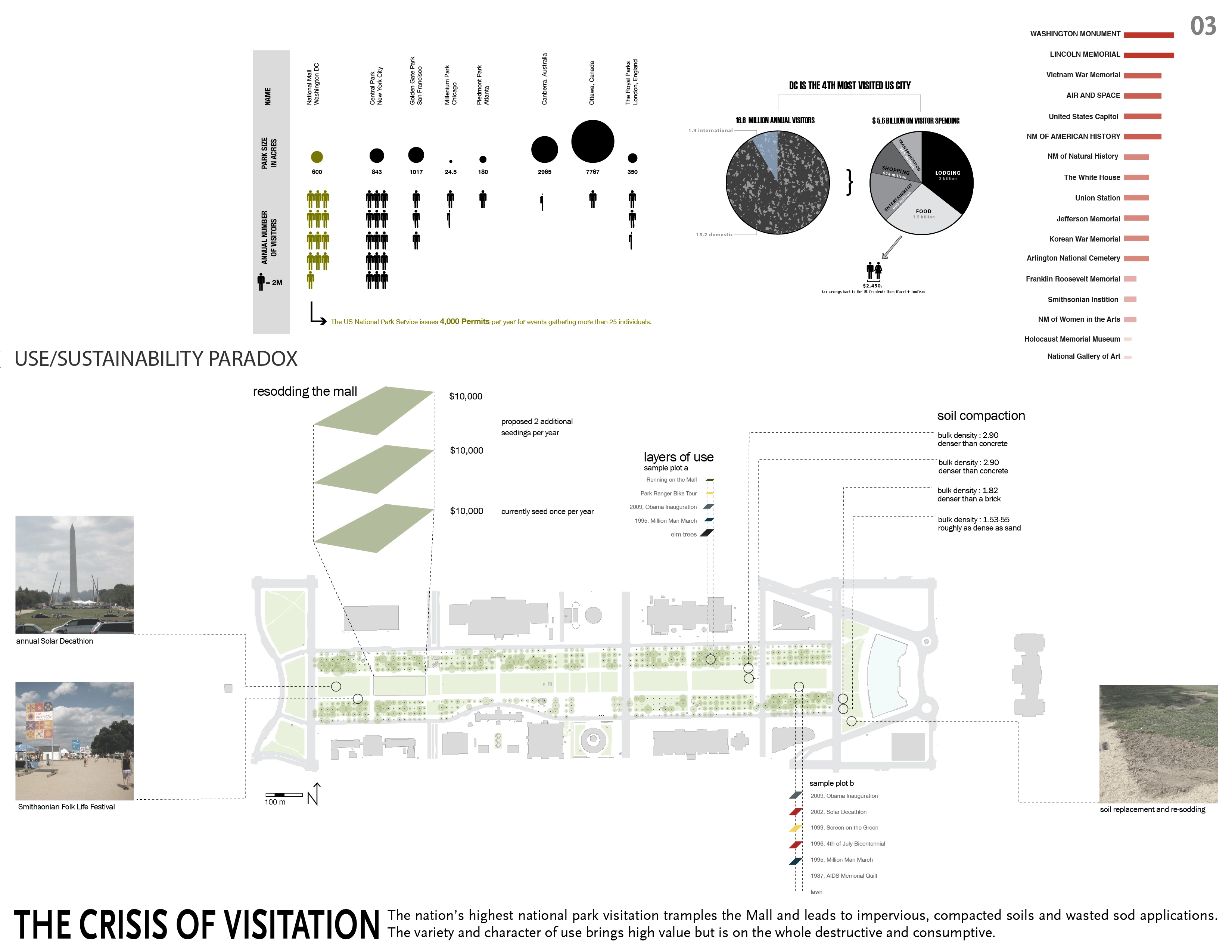
The Mall awaits overdue action by Congress and the American people. The crisis of its decline became abundantly clear when record-setting crowds for the 44th Presidential Inauguration trampled the Mall’s turf. Within weeks, the case for renewed investment in the Mall’s civic infrastructure fell victim to a political charge that the National Park Service sought to grab $200M for “re-sodding the National Mall.” The Obama administration withdrew the requested earmark. It will return, however. The requisite repair of sod and soil are the tip of an iceberg; with the impending needs for a visitor infrastructure and an interpretive reorganization, recovery and redesign of the Mall will become a national imperative.
The Studio Brief
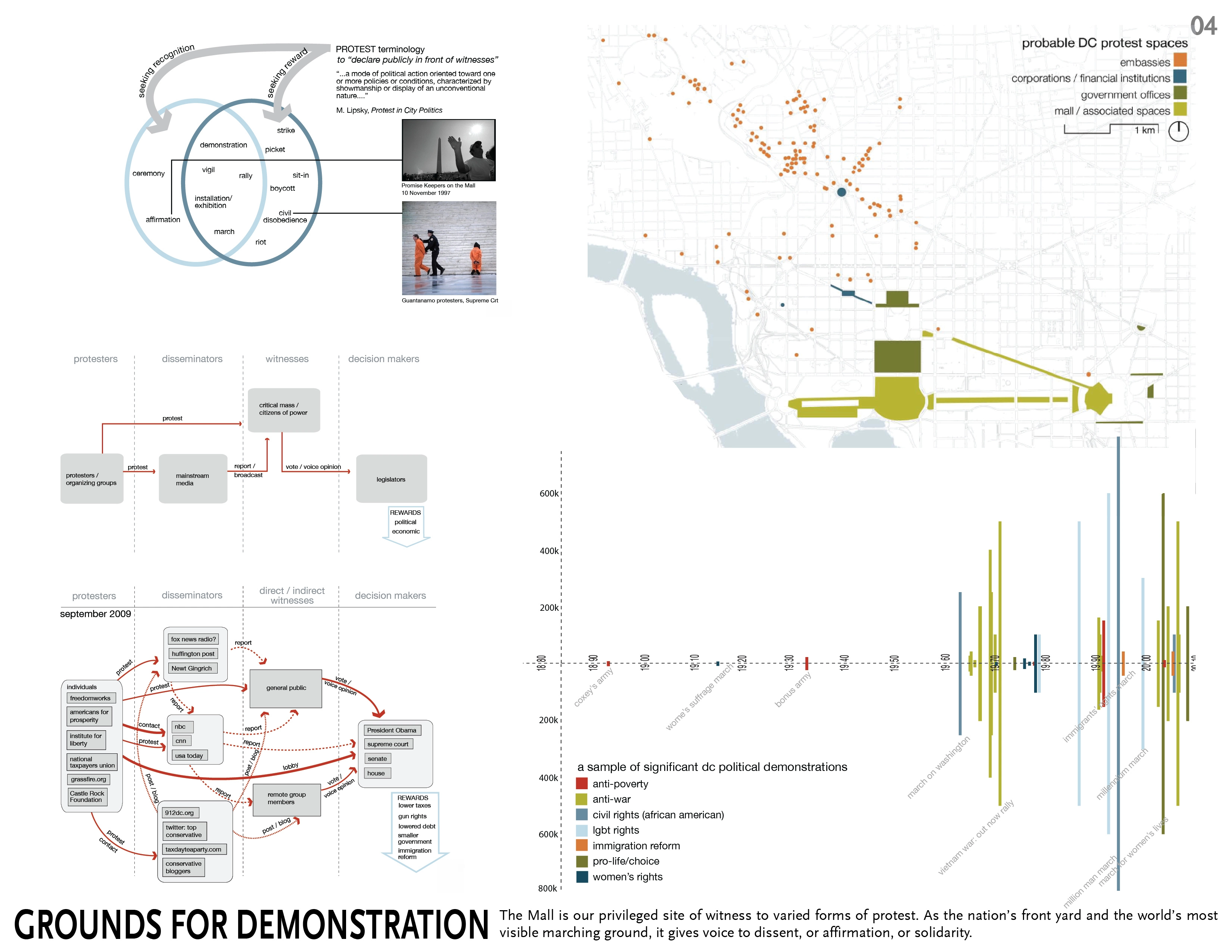
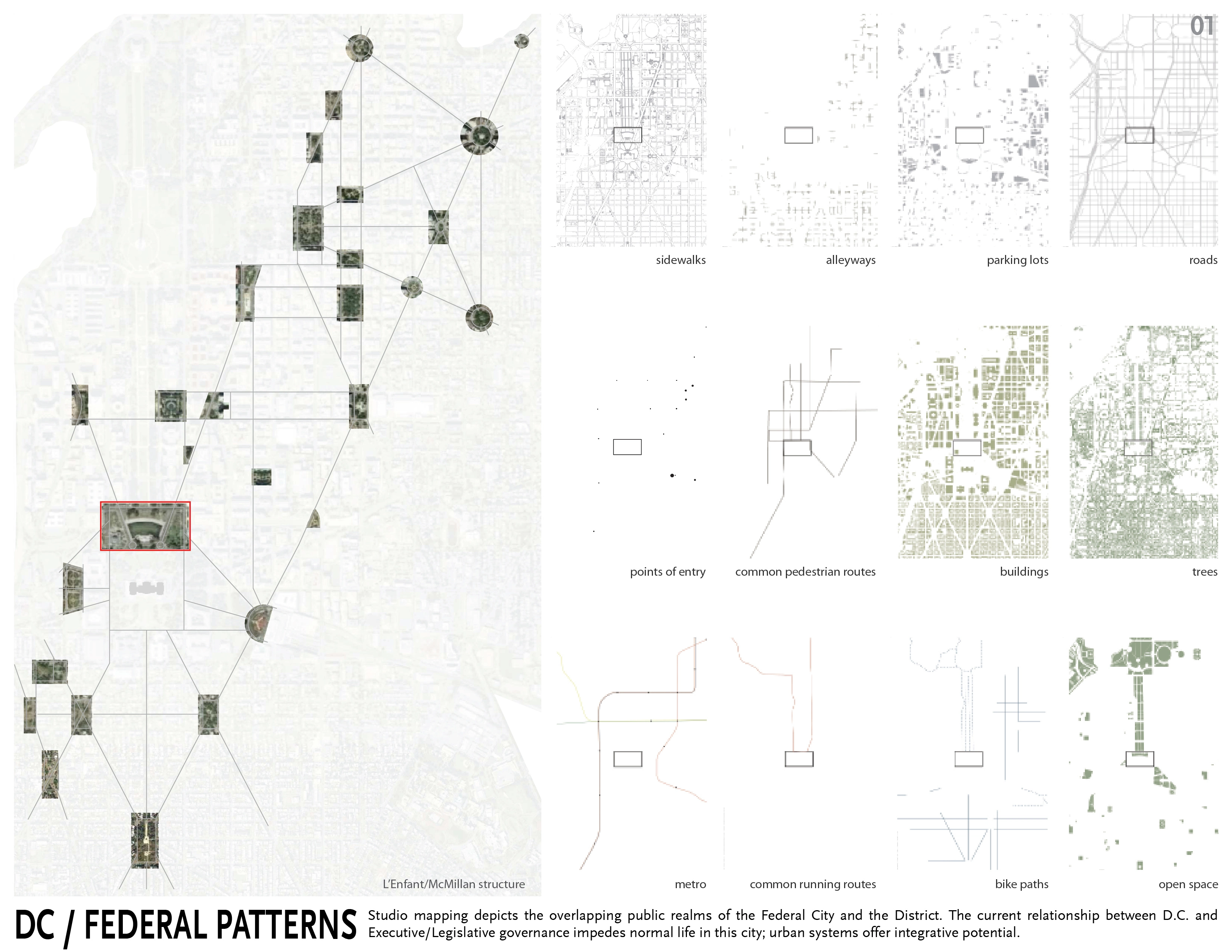
The studio examined the Mall as a reflection of evolving natural and cultural conditions. We began with the view of the Mall that corresponds to geographer Don Mitchell's formulation of a “field of contention” — a place that gives voice to the communication of democratic agreement and dissent, of affirmation and turbulence, equilibrium and unrest. We aimed to square this reading with the formulation of ecology-driven design solutions. The work included here is representative of a larger and more diverse body of production.
Analysis Topics
A selection of the analysis phase is highlighted here:
- Concepts of National Identity, Diversity, Multiculturalism
- First Amendment Rights and Forms of Protest
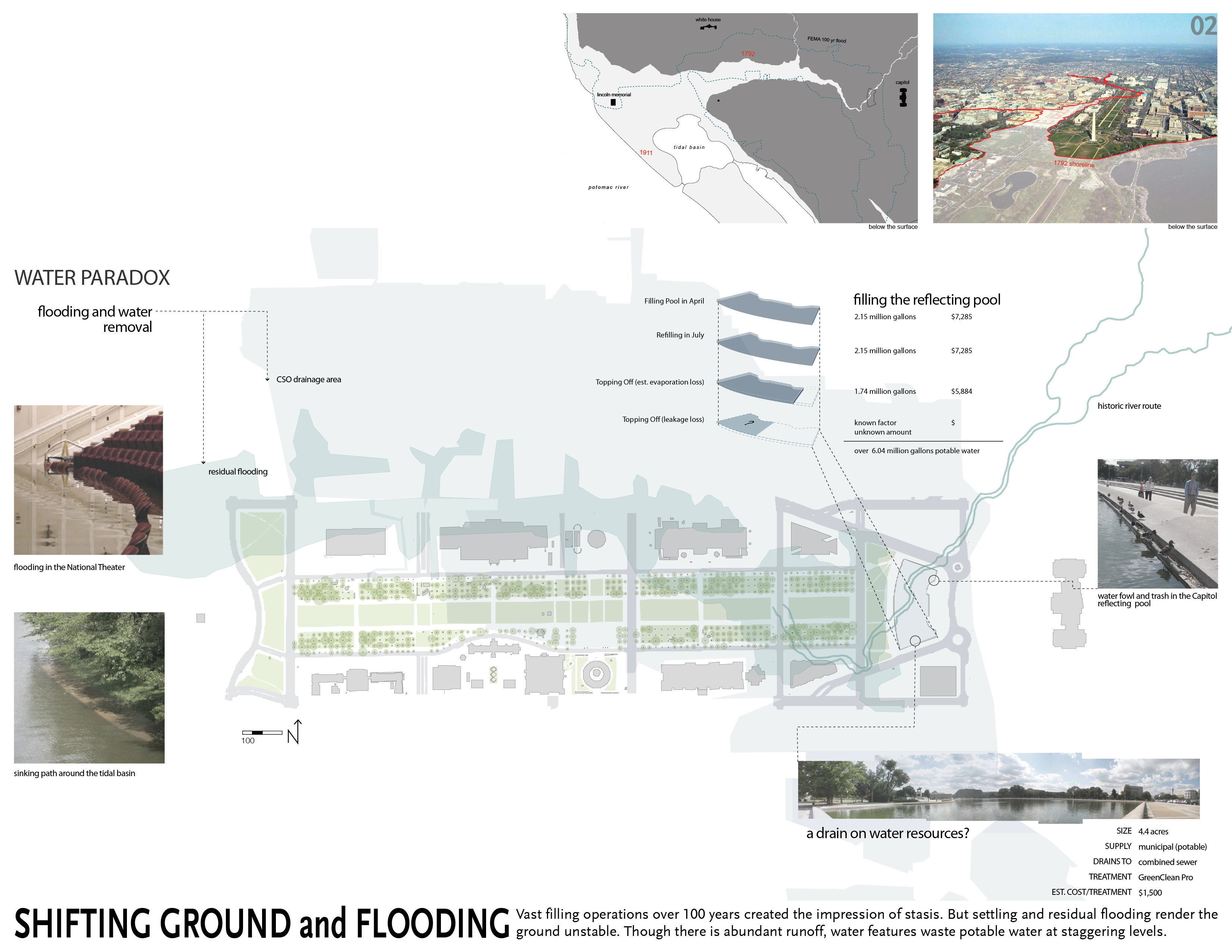
- Land Filling and Instability
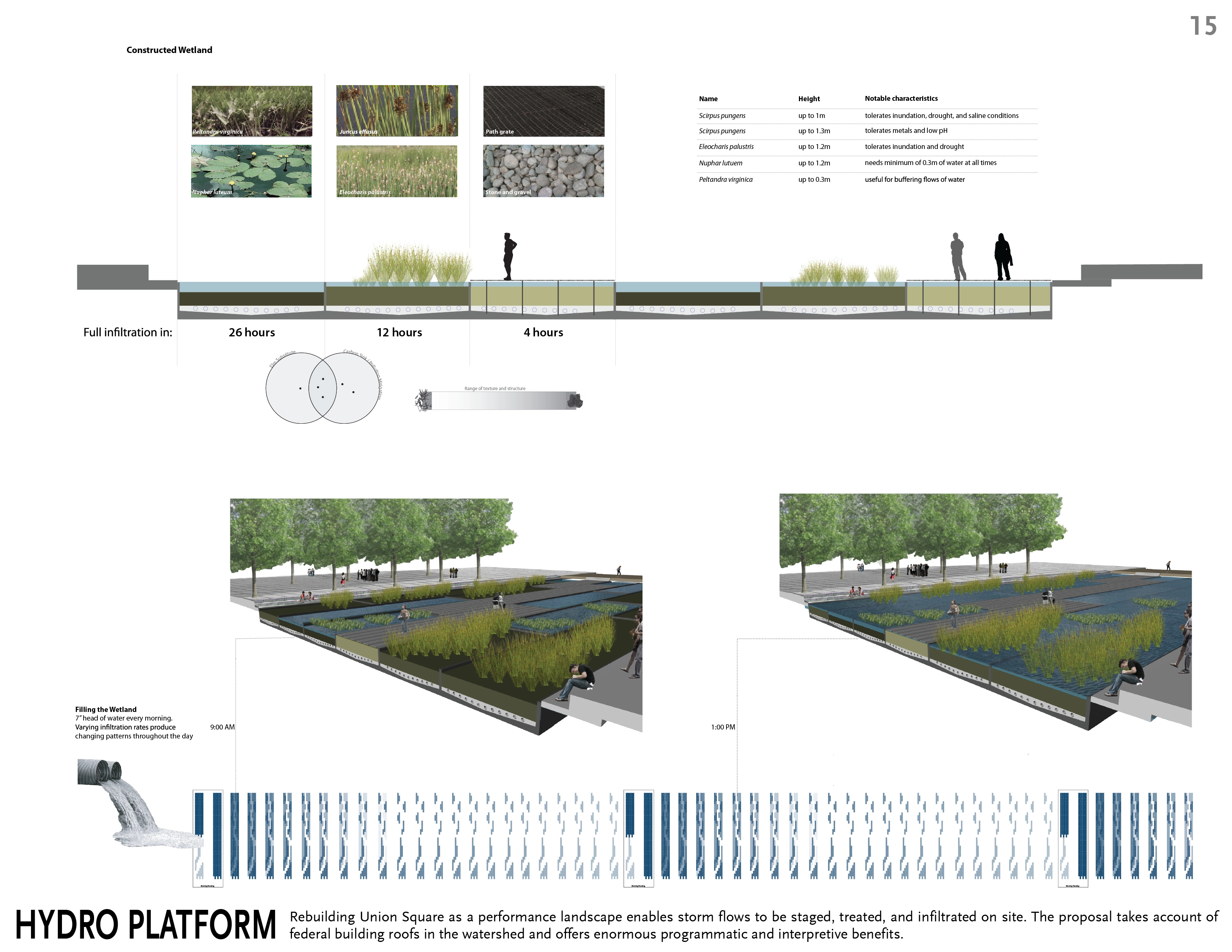
- Residual Flooding and Wasteful Consumption of Water Resources
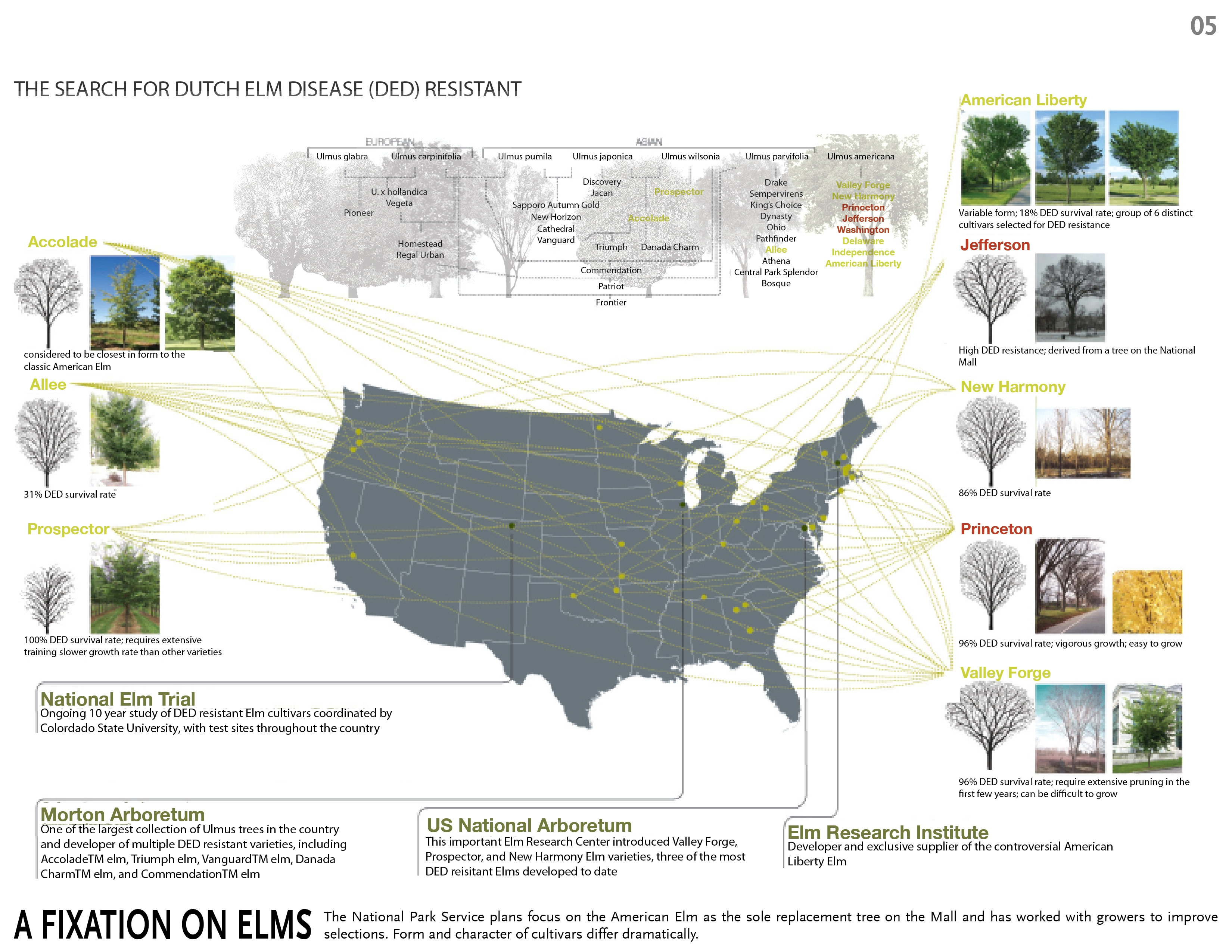
- Performance of the Urban Forest
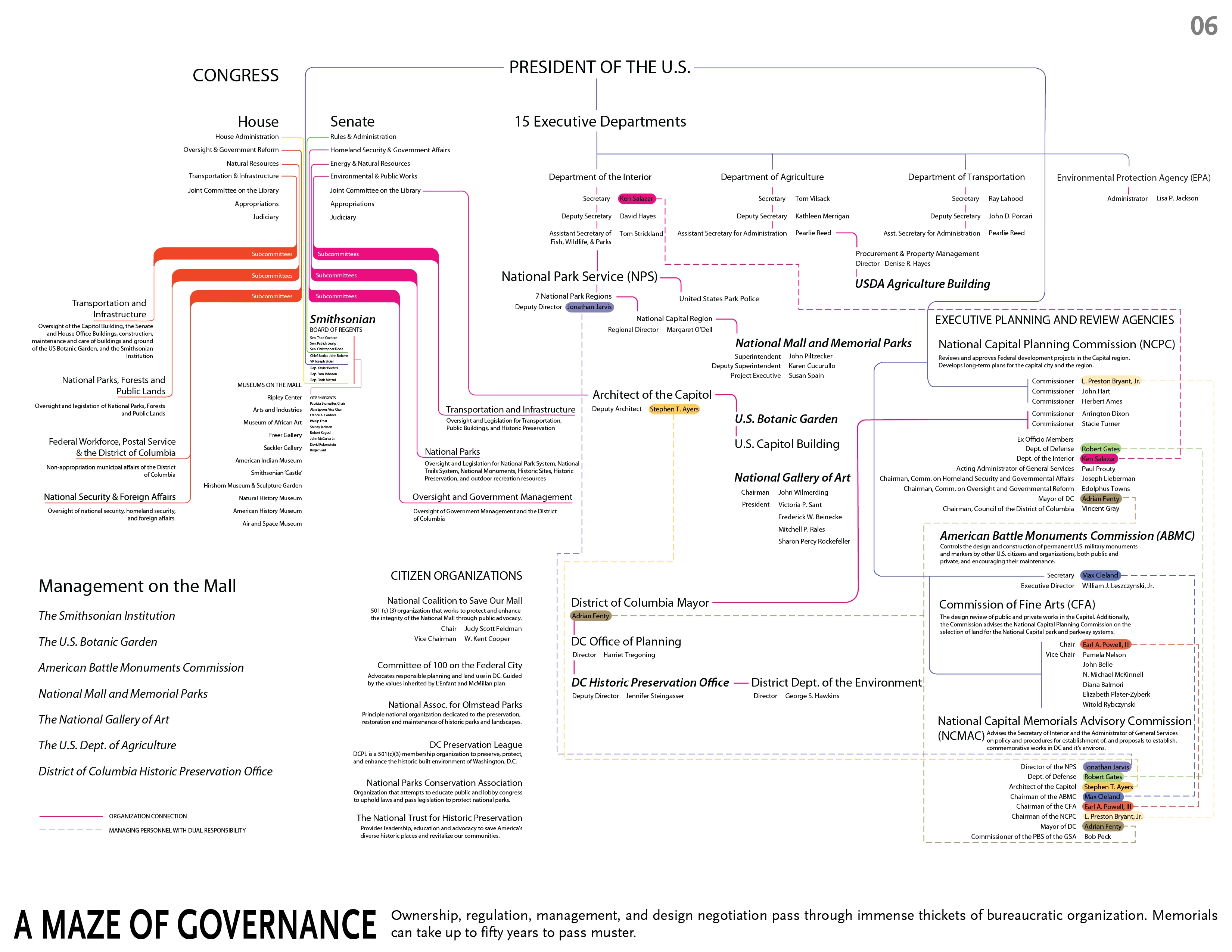
- A Maze of Governance
Plans
A selection of student proposals is included, covering the following topics:
Mall Proposals:
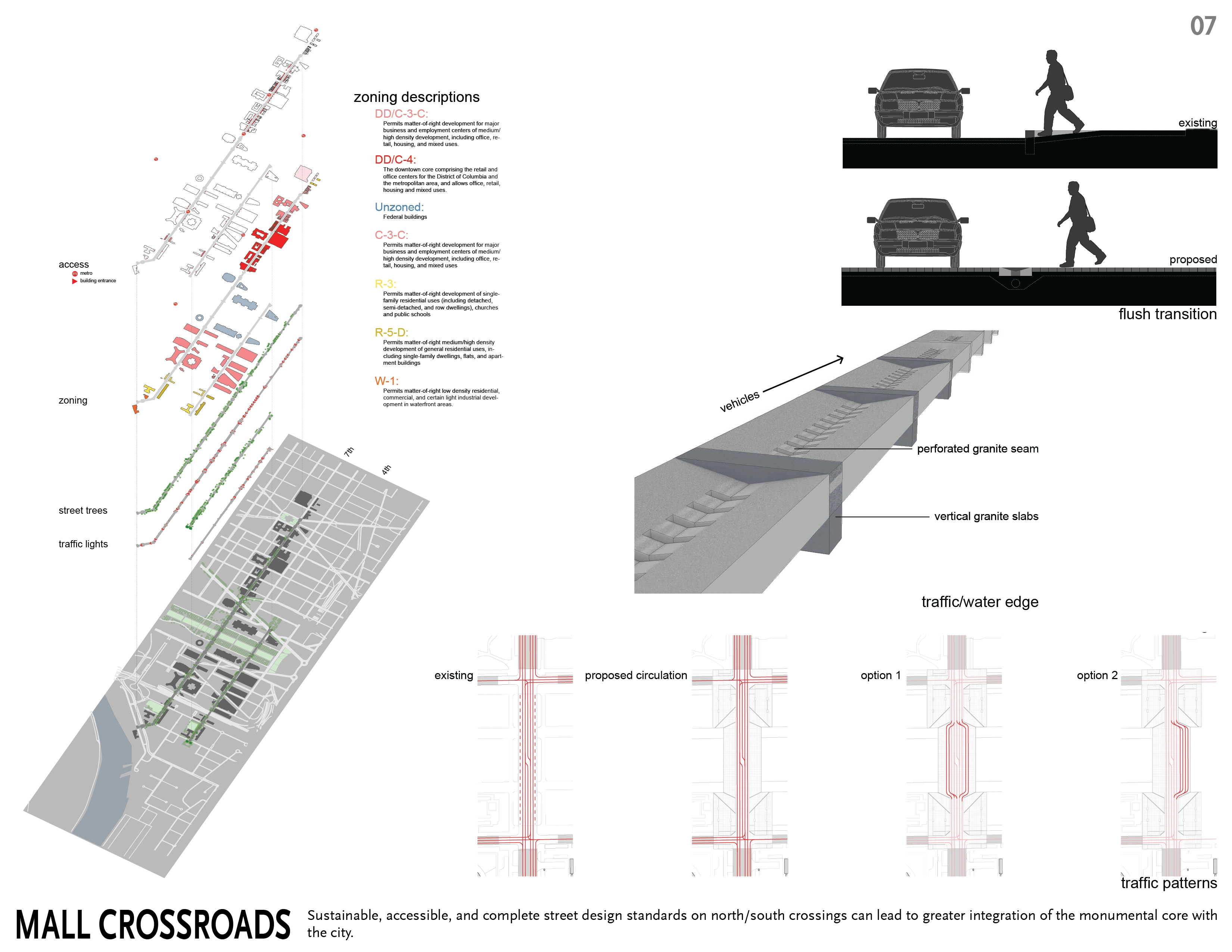
- Urban Design Crossroads
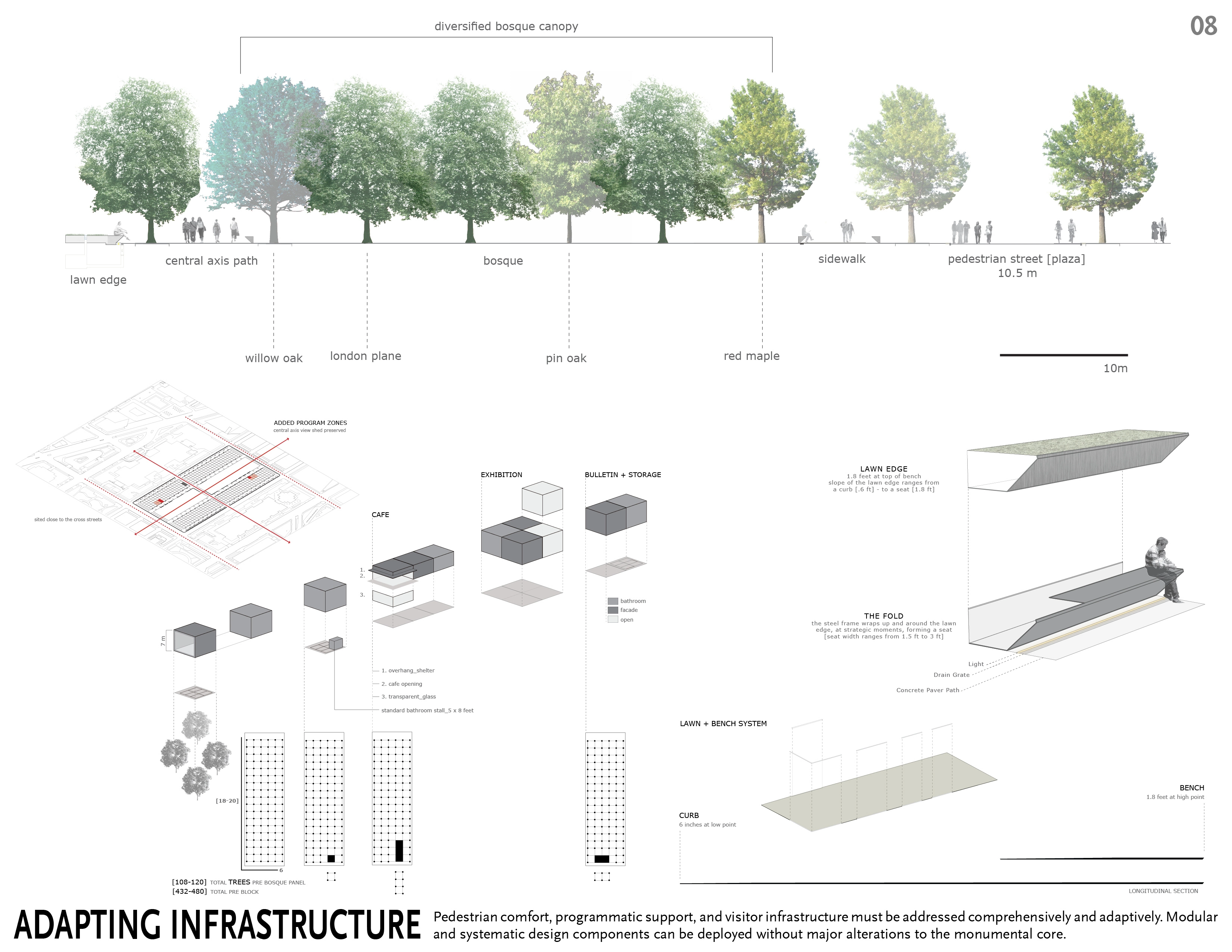
- Adapting Infrastructure
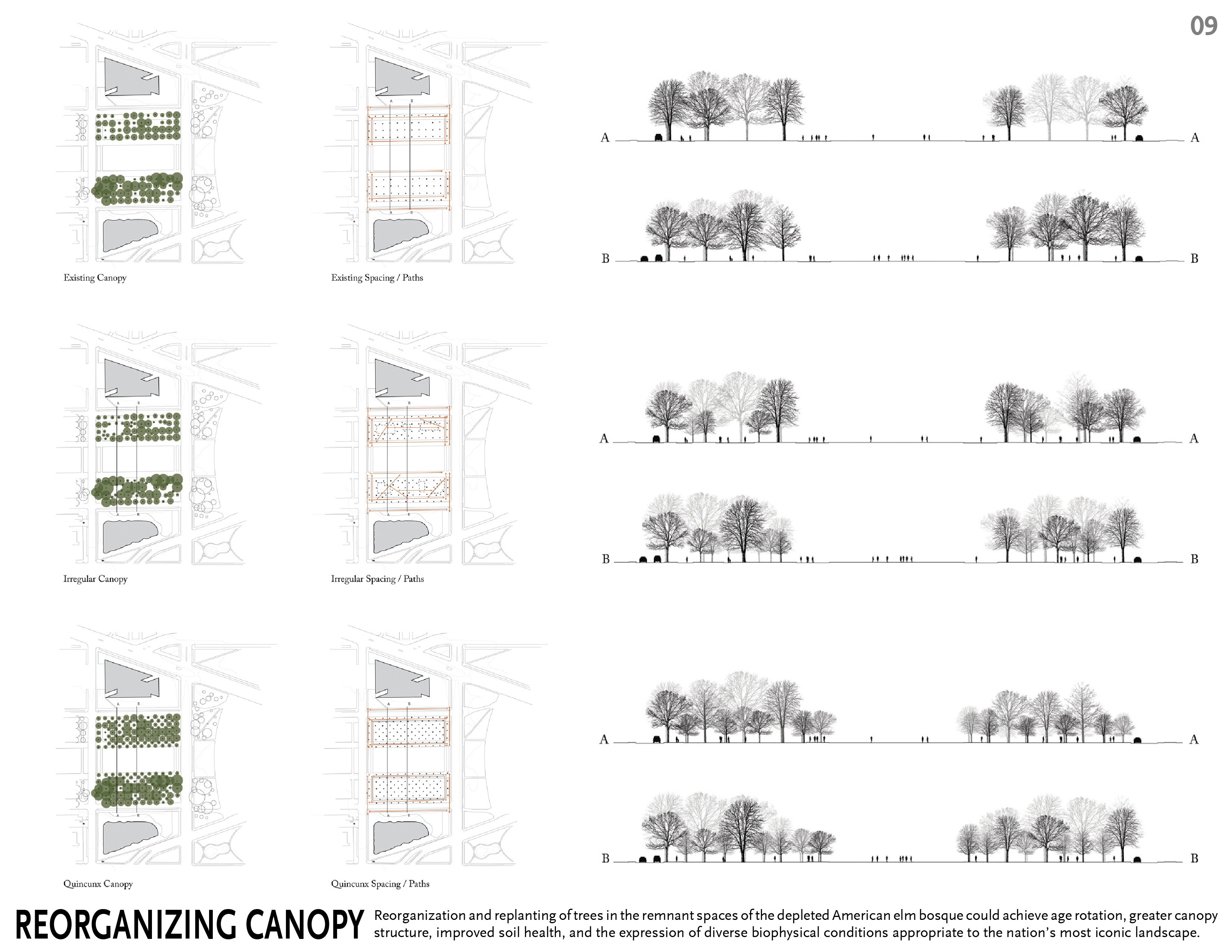
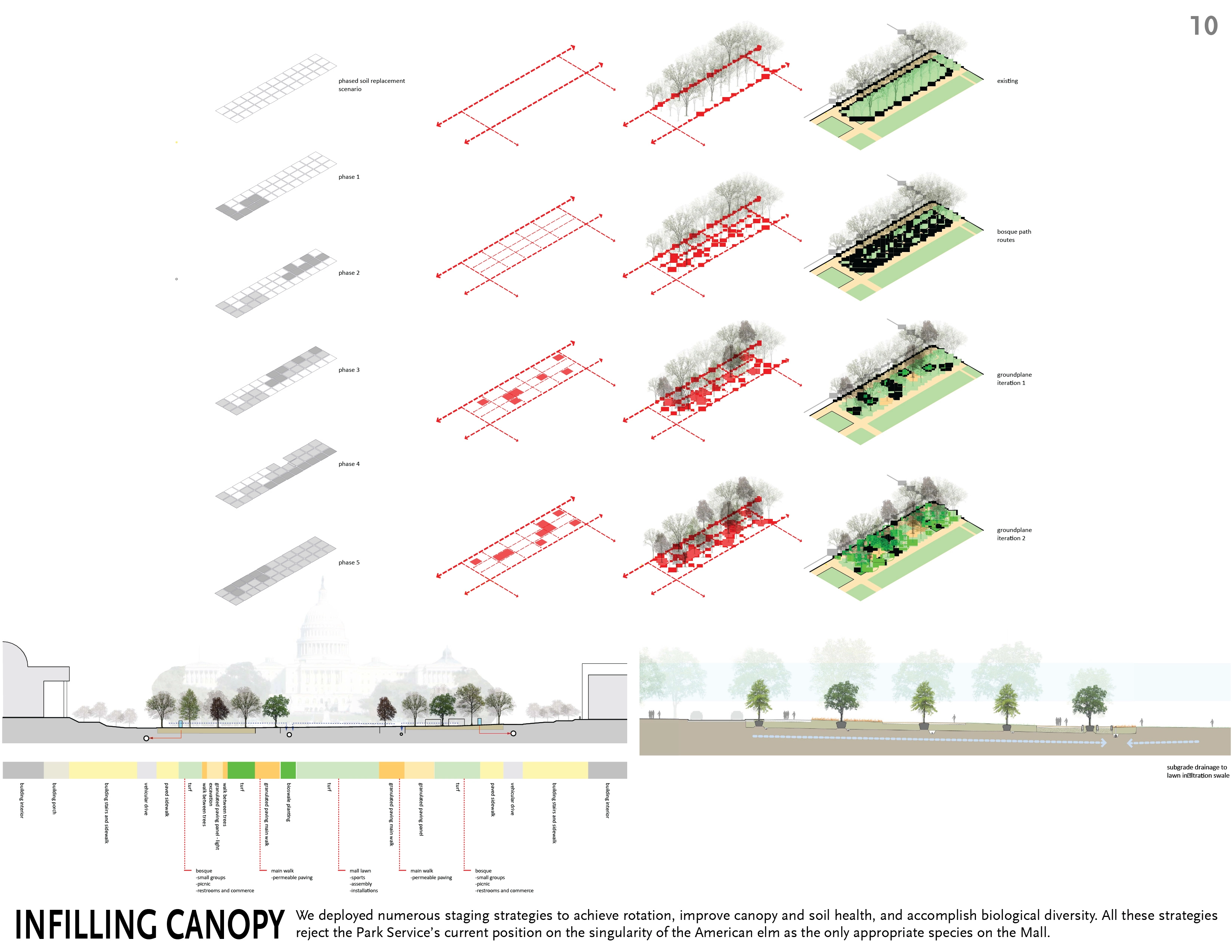
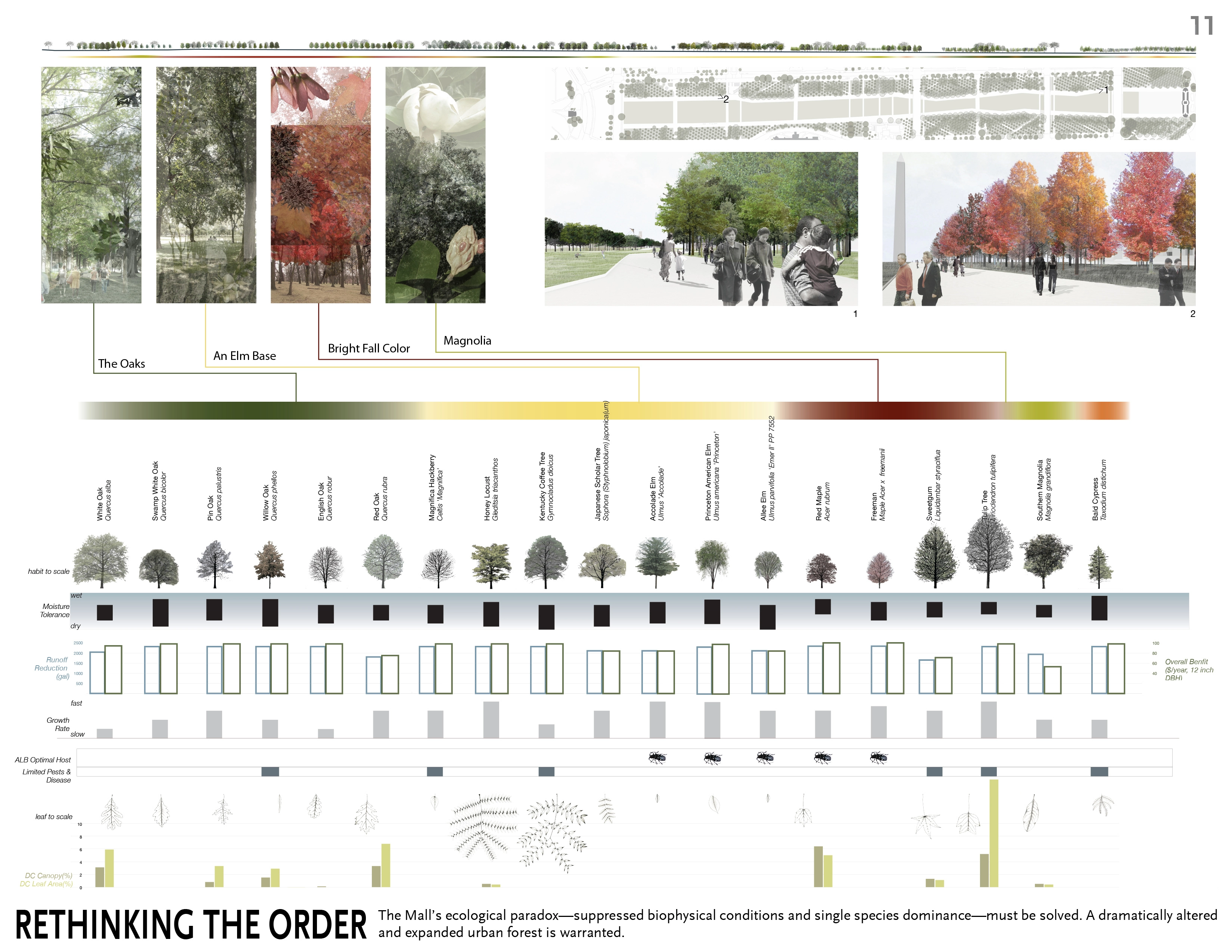
- Reorganizing Canopy
- Rethinking Olmsted’s Order
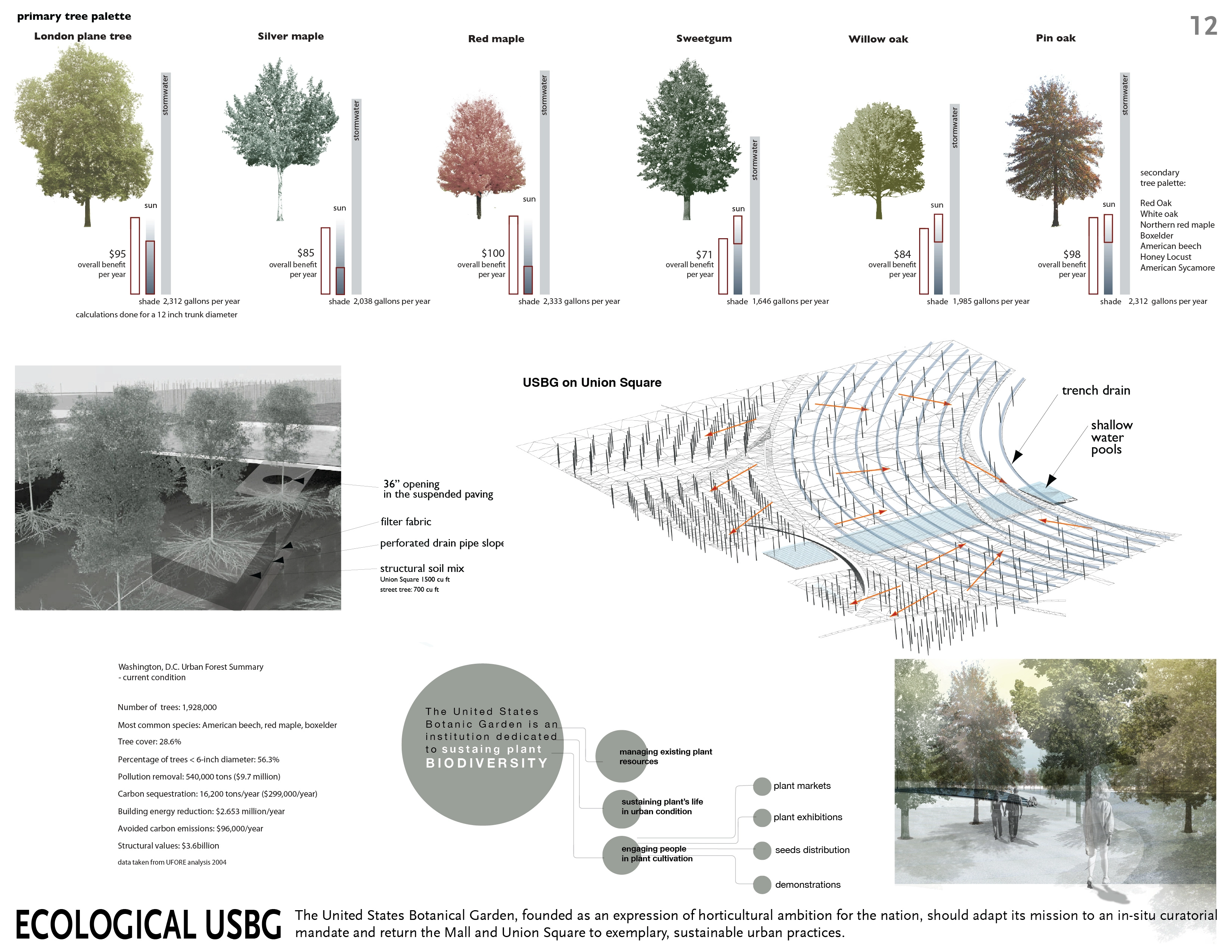
- Returning the USBG to Ecological Relevance
Union Square Proposals:
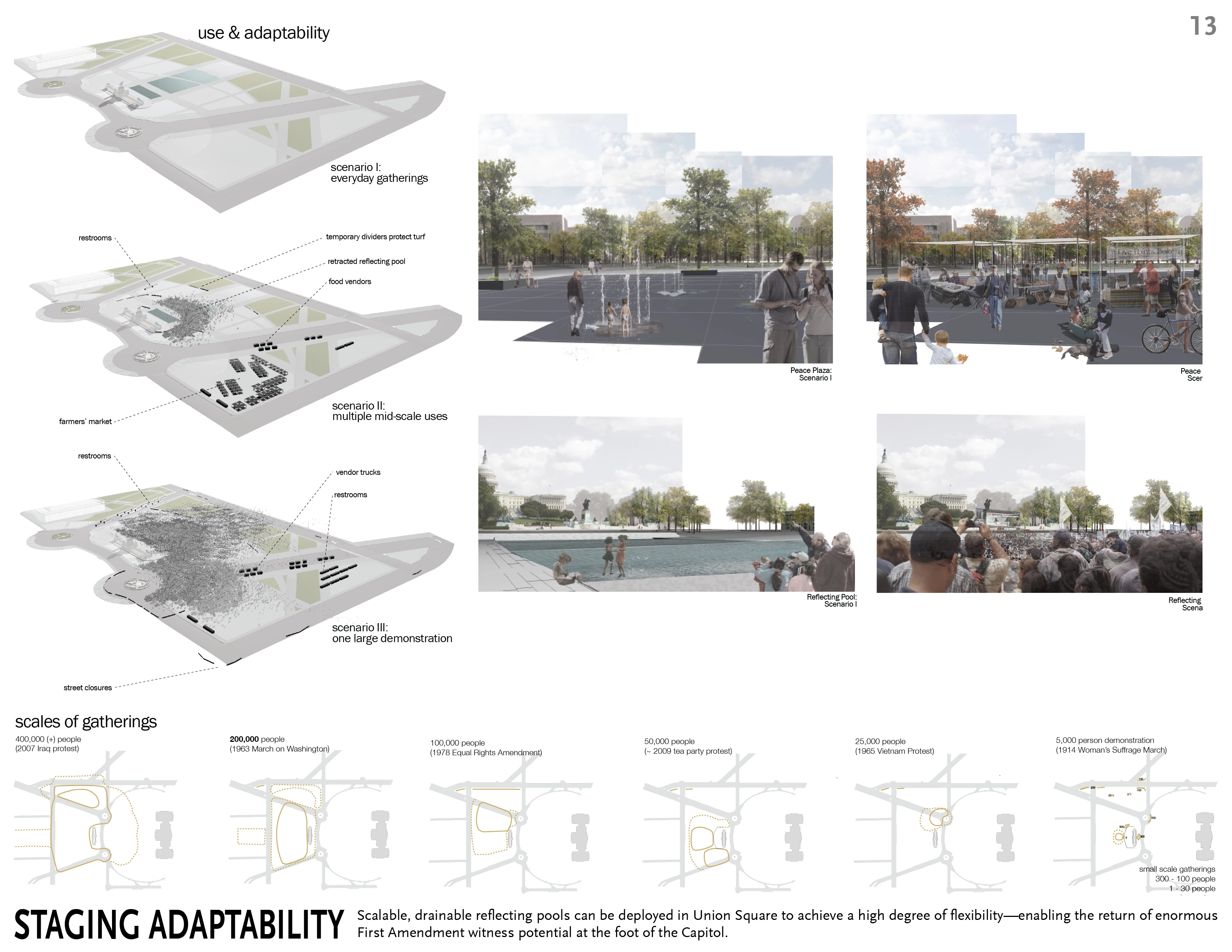
- Adaptable Infrastructure
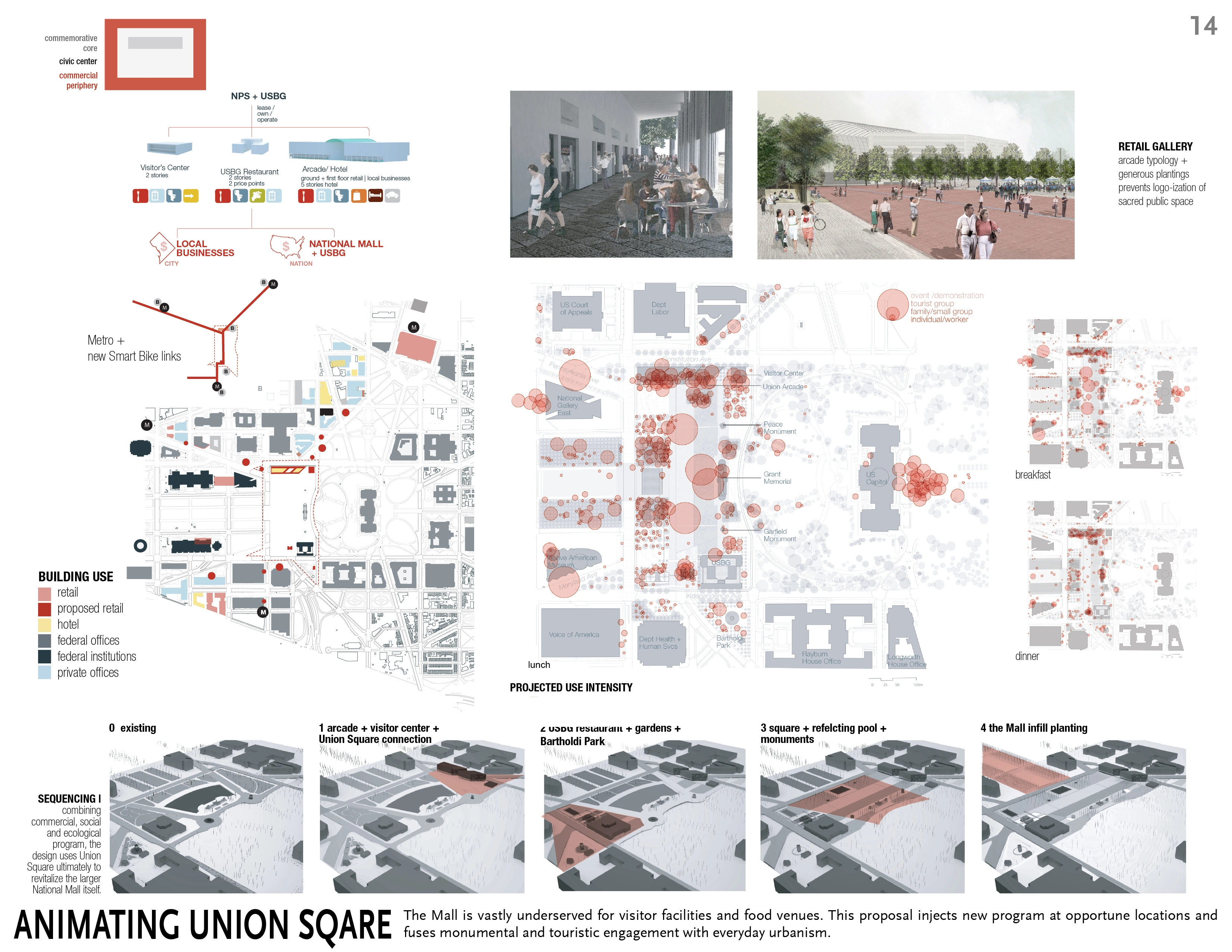
- Everyday Urbanism
- Hydrological Relevance
-
Design Critic
Gareth DohertyCollaborating Design Critic
Elizabeth K. Meyer, FASLA
Symposium Host
John Beardsley
National Park Service Project Executive
Susan Spain, ASLA
Research Assistant and Course Website Manager
James Willeford, Student ASLATeaching Assistant
Ilana Cohen, Student ASLA
Advertisement
Related Awards
Honor Award, Analysis & Planning
A Cultural Approach: The Fort Peck Tribes Hazard Mitigation Plan
In collaboration with the Fort Peck Assiniboine and Sioux Tribes, EPA, and FEMA, the Fort Peck Tribes Hazard Mitigation Plan (HMP) adopts a culturally responsive approach to hazard mitigation planning that features connection to place.