
.webp?language=en-US)

Last Grain: Revising the End of the Fossil Fuel Era and Canada’s Oil Sands Legacy
-
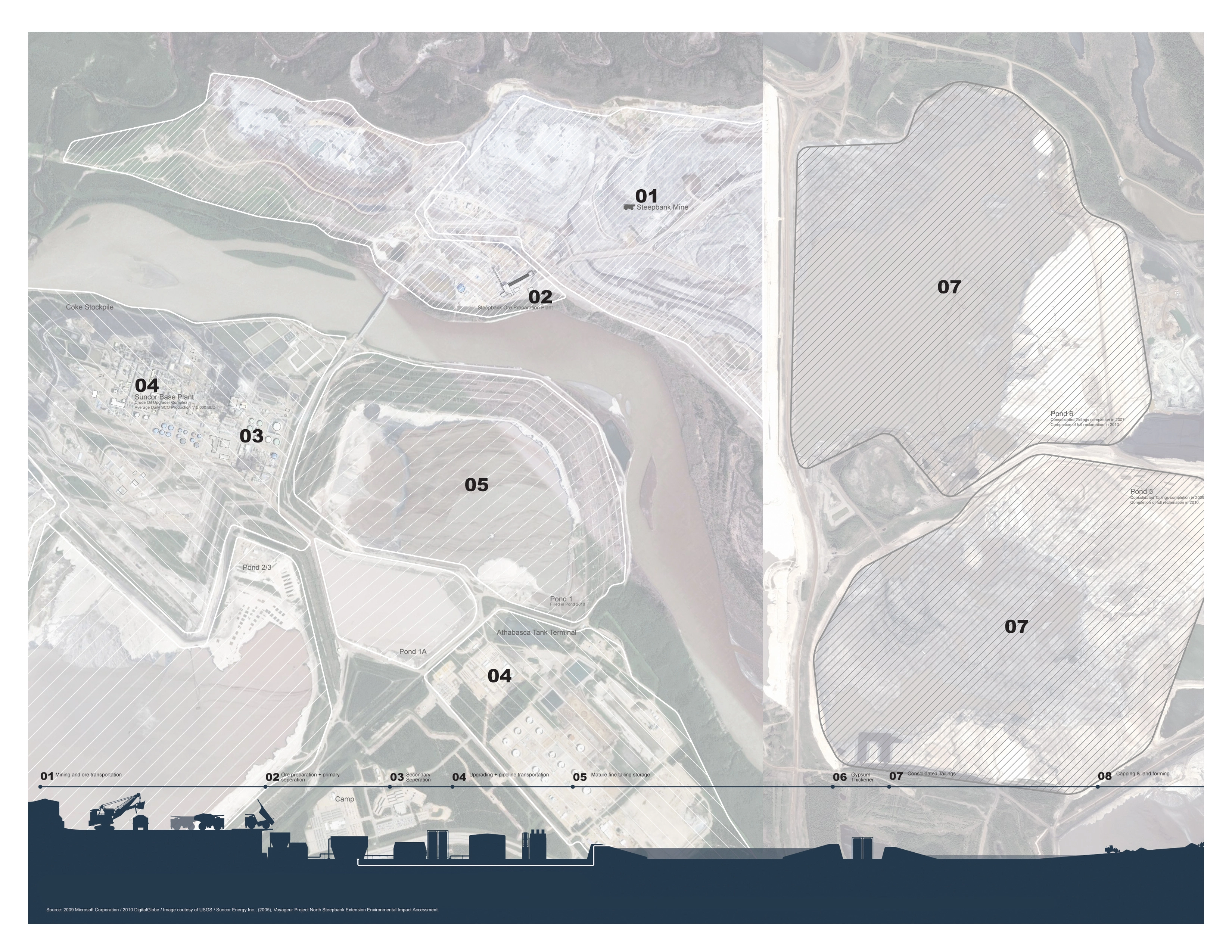
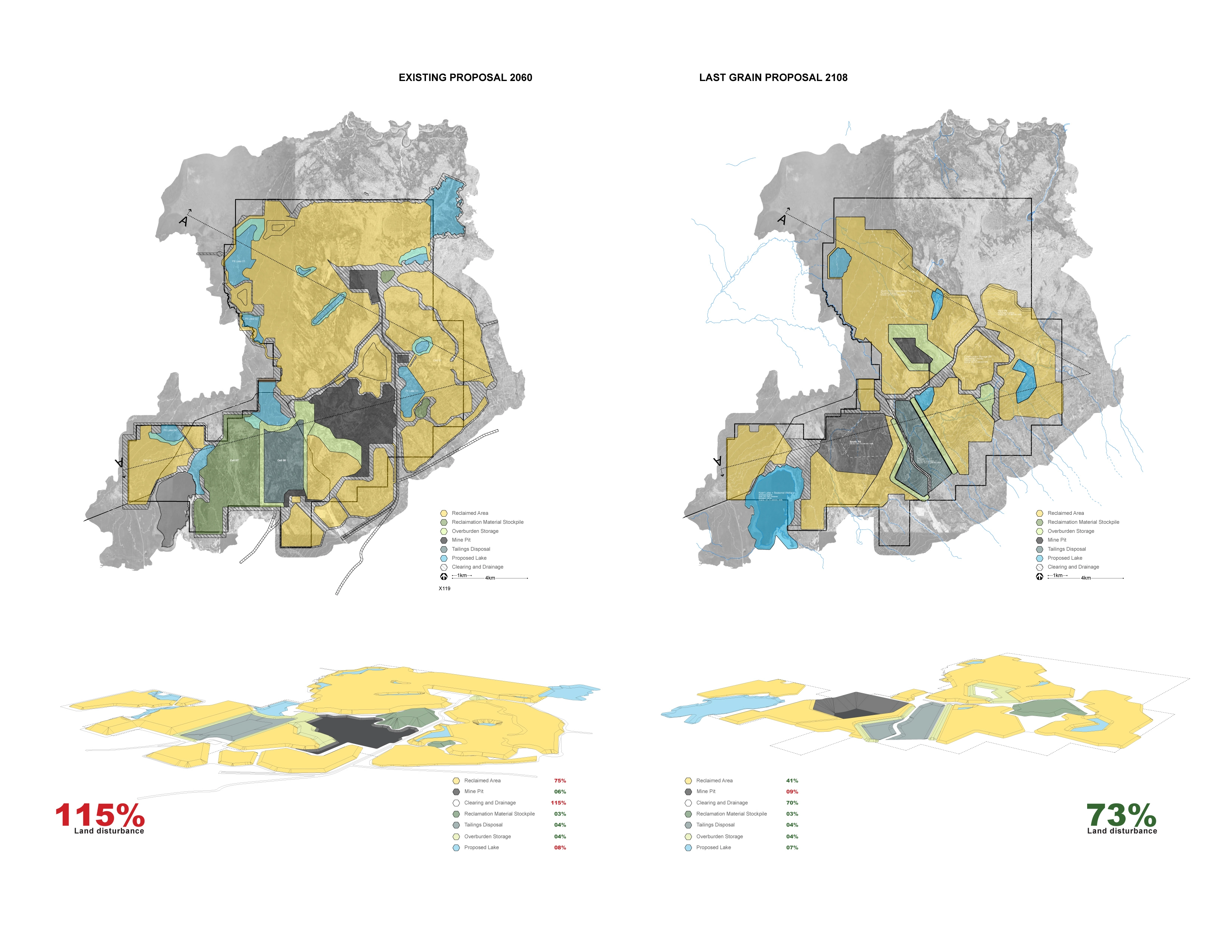
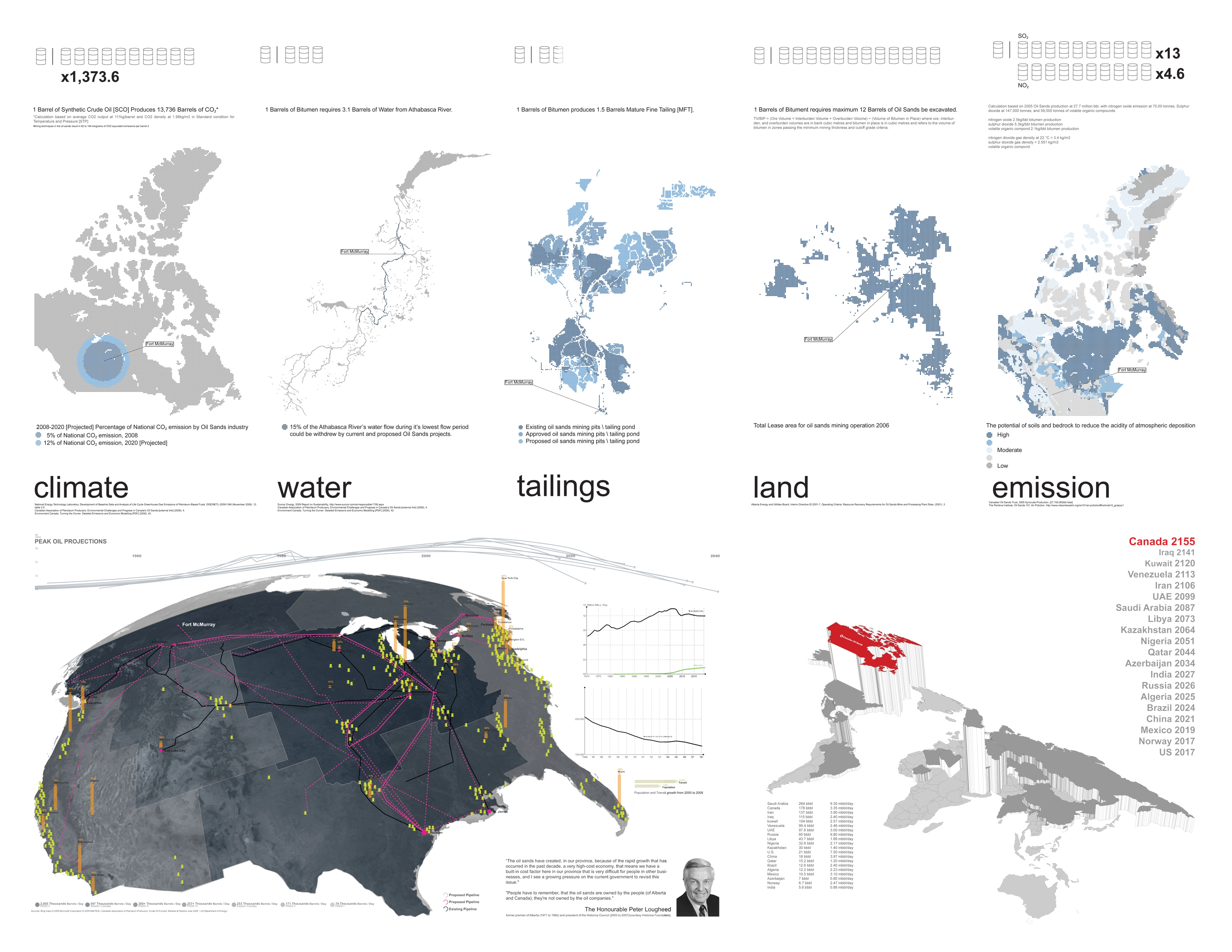
Canada’s oil sands are called the “dirtiest oil on earth”, which come with a deleterious environmental impact. This thesis uses landscape ecology to reorganize the oil sands’ surface mining operations and reclamation processes. It aims to redeem Canada’s damaged environmental reputation while searching for a place for landscape architecture within this contemporary industrial process.
-
As the global availability of oil resources dwindles, the cost—benefit ratio of extracting this resource from non conventional sources shifts. This fact is witnessed with the increased development of Canada’s oil sands. The extraction of oil from sand used to be considered too costly, both economically and environmentally to warrant investment. Today we understand that development of Canada’s oil sands is a sign that we are nearing the end of the fossil fuel era. Current extraction practices prioritize maximizing the rate of extraction but there is merit to considering an alternative strategy. A slower extraction rate has advantageous potential. Firstly, profits will increase in the long term, as the value of oil will increase as other nations deplete their sources. Secondly, a slower extraction rate can have beneficial ecological implications, both for current site conditions and future remediation strategies. And finally, extending the availability of our oil resources will allow for this resource to be better used to construct the infrastructure required for a society independent from a reliance on fossil fuels.
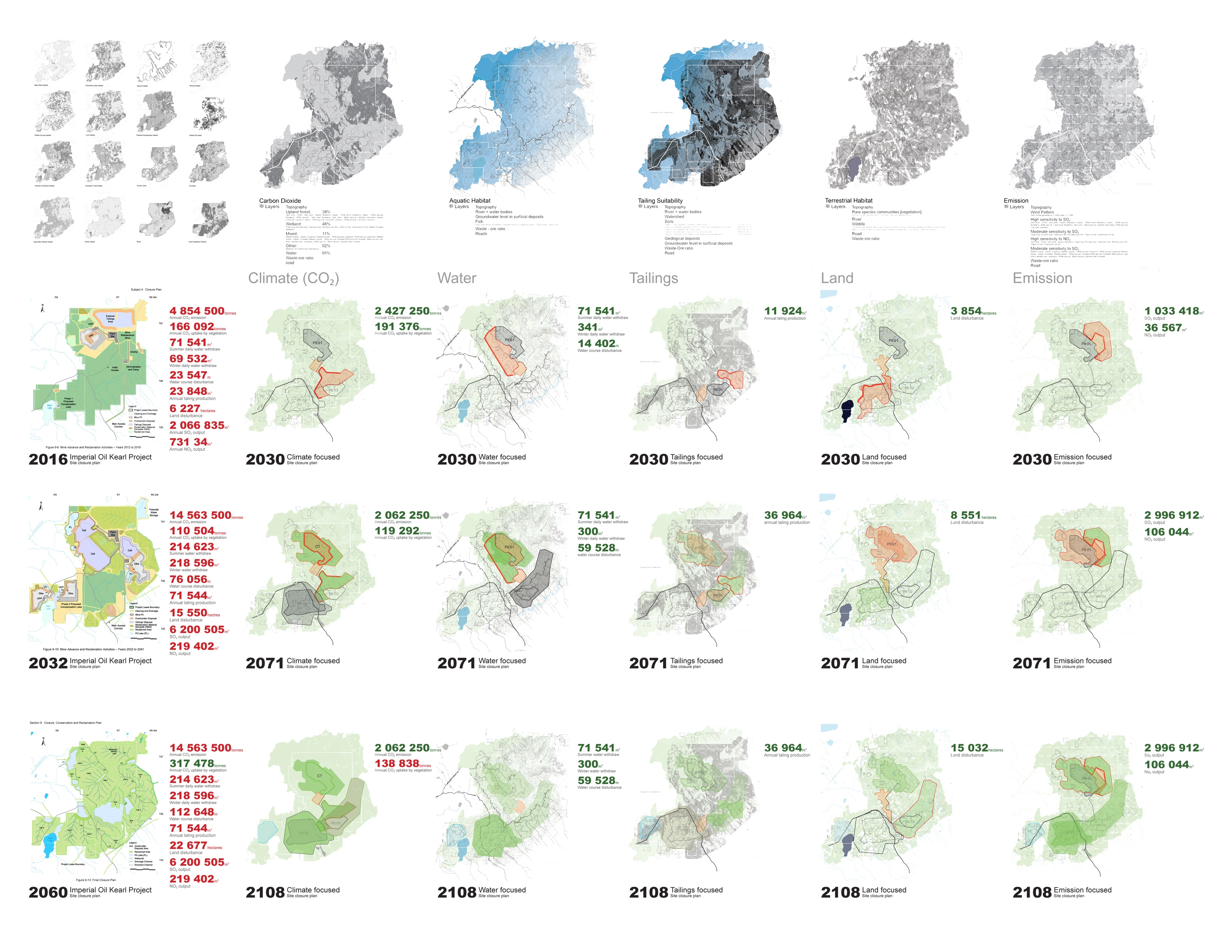
This thesis not only highlights the urgency of slowing down the Canadian Oil Sands development, but also strategizes how to slow down the development based on ecological analysis models with existing technologies.
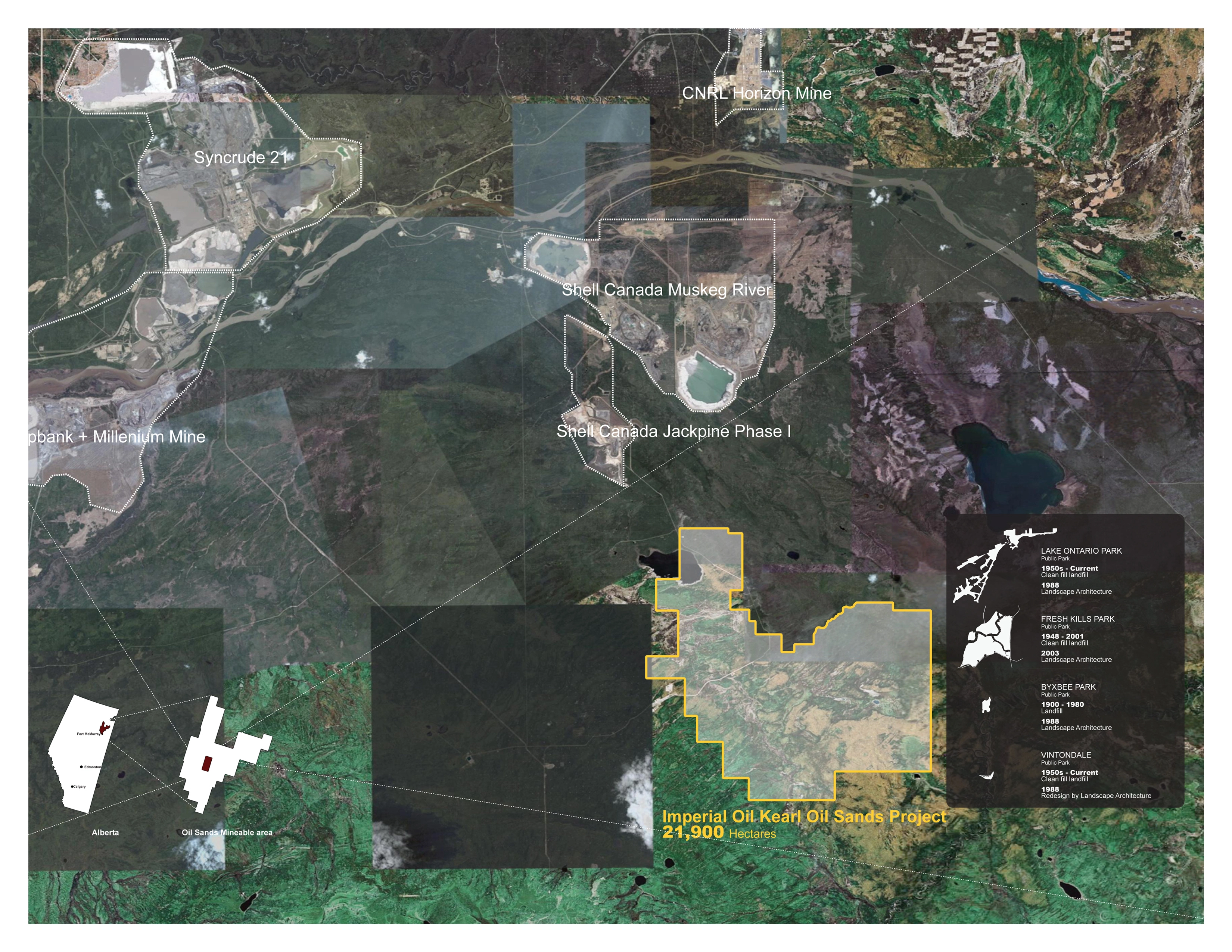
This project’s site is Imperial Oil’s Kearl Lake oil sands project as it just went through the Environmental Impact Assessment and will become operational this year. This thesis contains three parts to address the problems from rapid oil sands development.
- Oil sands deceleration strategy based on ecological analysis;
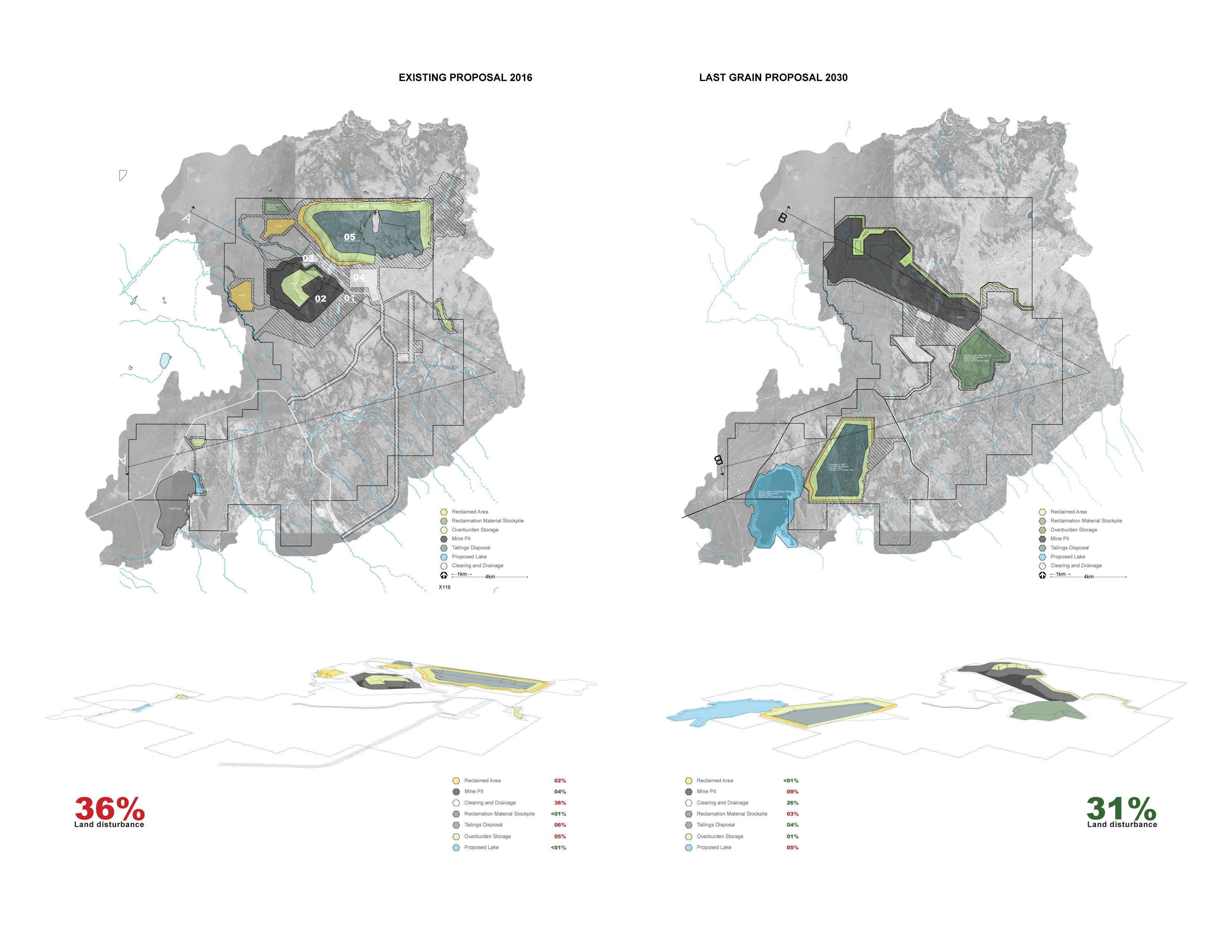
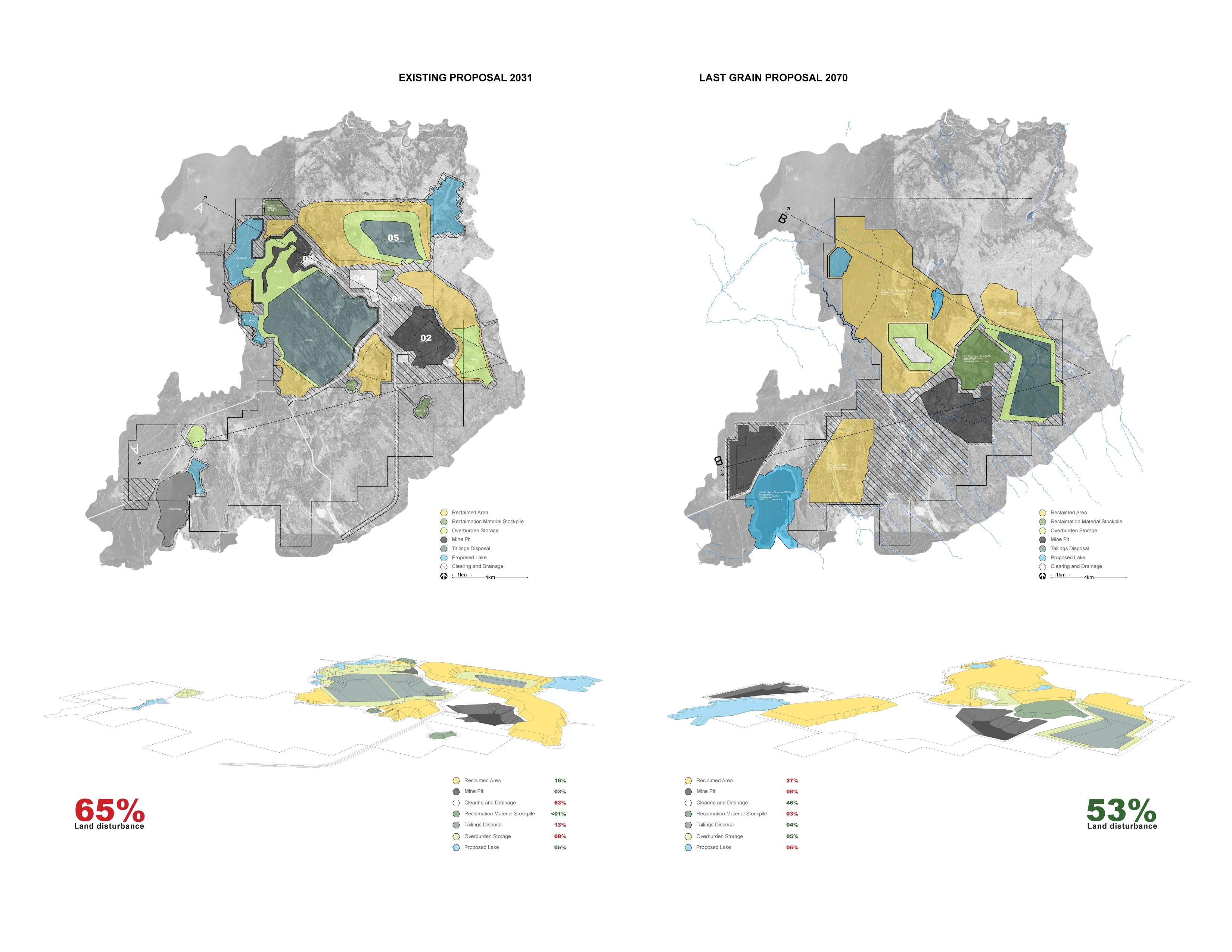
- Site reorganization to reduce project operation footprint;
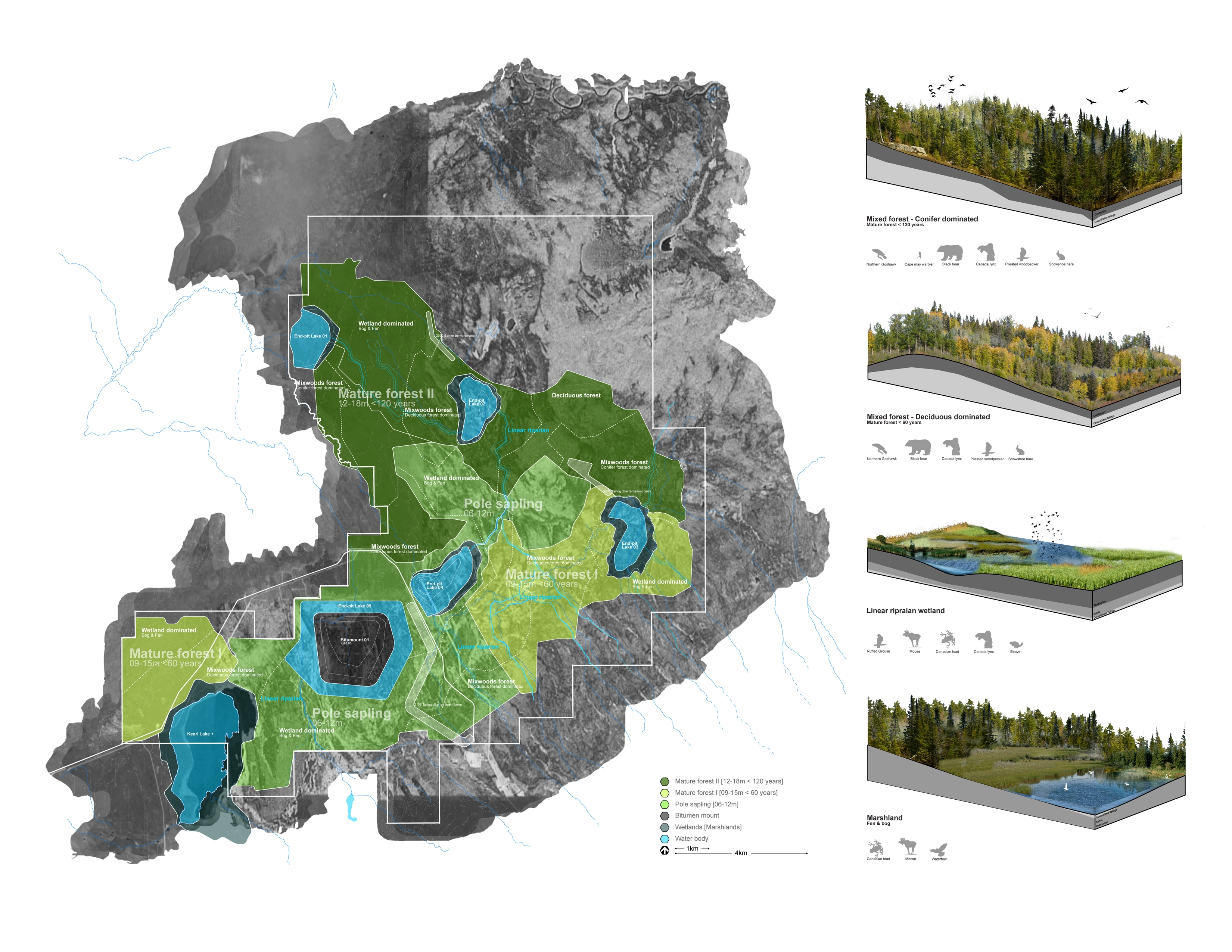
- Site remediation and post closure identity.
The ideal development rate for Canada’s oil sands, from environmental perspective is to create a balance between the rate of extraction and the rate of remediation; therefore to create a zero net loss mining operation after the initial development.
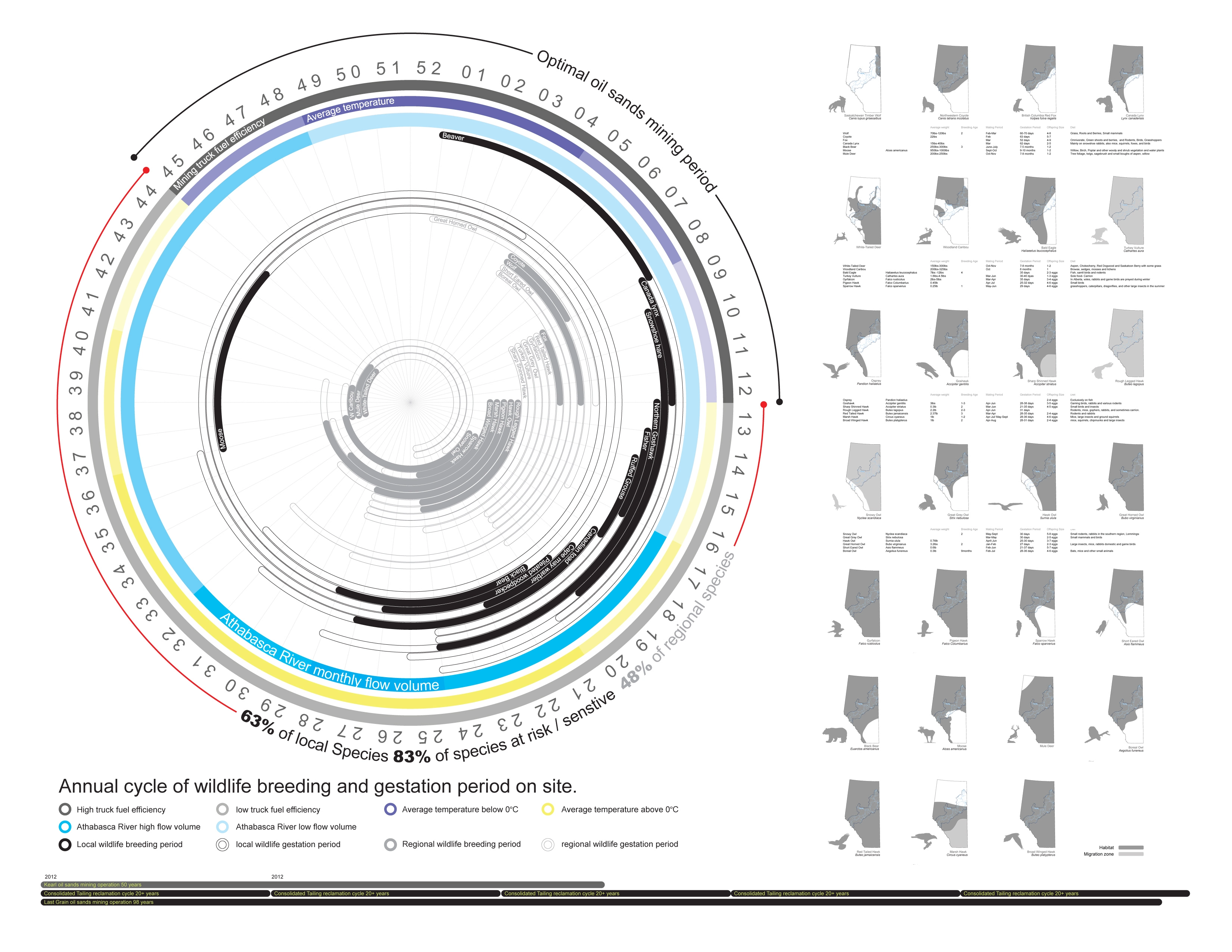
The project is approached from an ecological perspective. A seasonal mining strategy is developed based on wildlife breeding and gestation period on site. The majority of the wildlife become active from early spring to late fall, and are less so (or migrates away) in the winter.
The oil sands mining will then carry out operations between the months of November and March. At the same time, the mining trucks will enjoy the much improved fuel efficiency when driving on the frozen ground.
The seasonal mining strategy doubles the life span of the site. This will result in smaller mining pits; more remediation cycles while the mine is active; and reuse of the land to reduce the operational footprint. (For example, from external tailing ponds to reclaimation; to mining operations; to in pit consolidate tailings and finally to reclaimation again at the same location.)
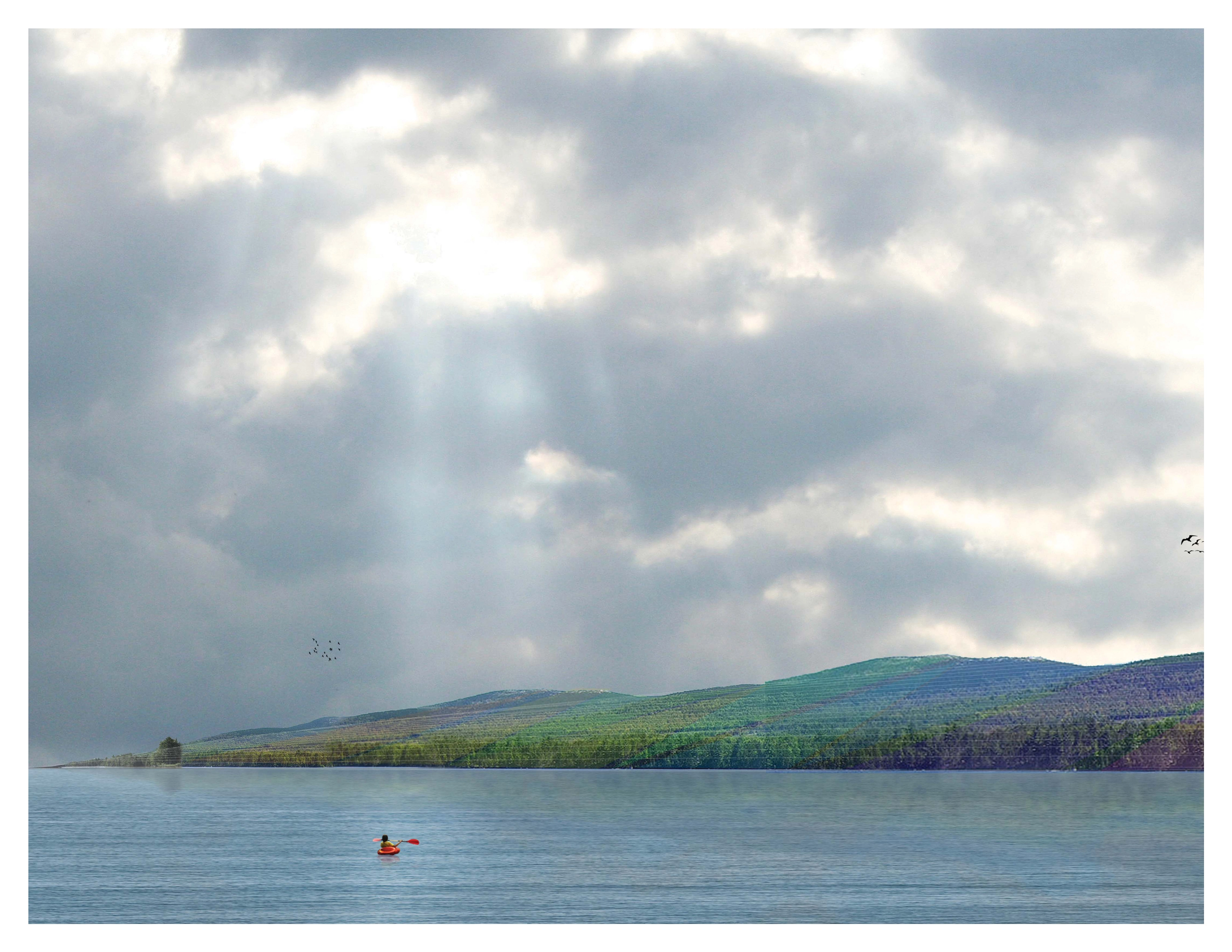
Finally, considering the current status of the global petroleum reserves and the rate of extraction and refining, the last drop of fossil fuel will come from Alberta’s oil sands. The transformations of the site identity will address the ecological aspect of the site and at the same time will setup the location as an icon to mark the end of the fossil fuel era.
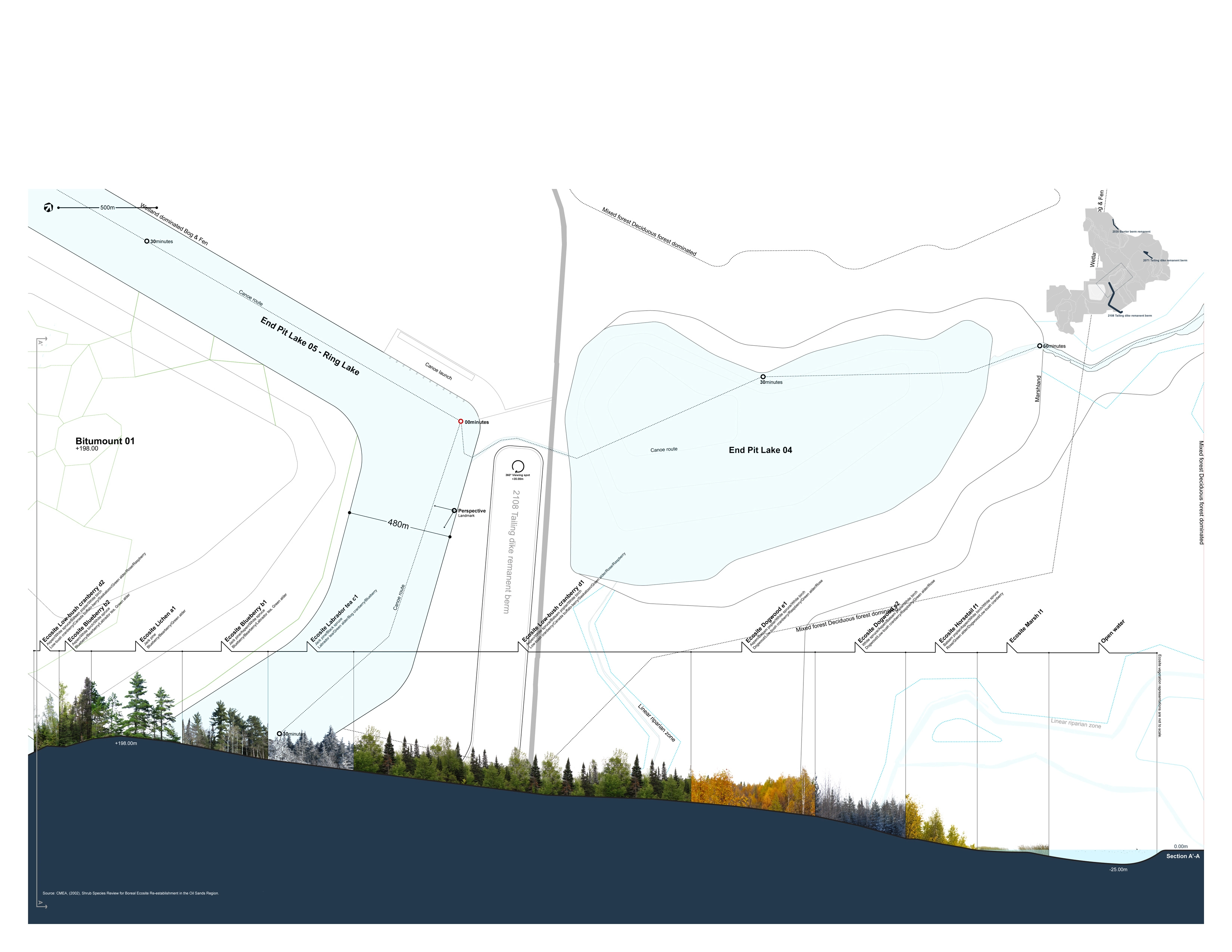
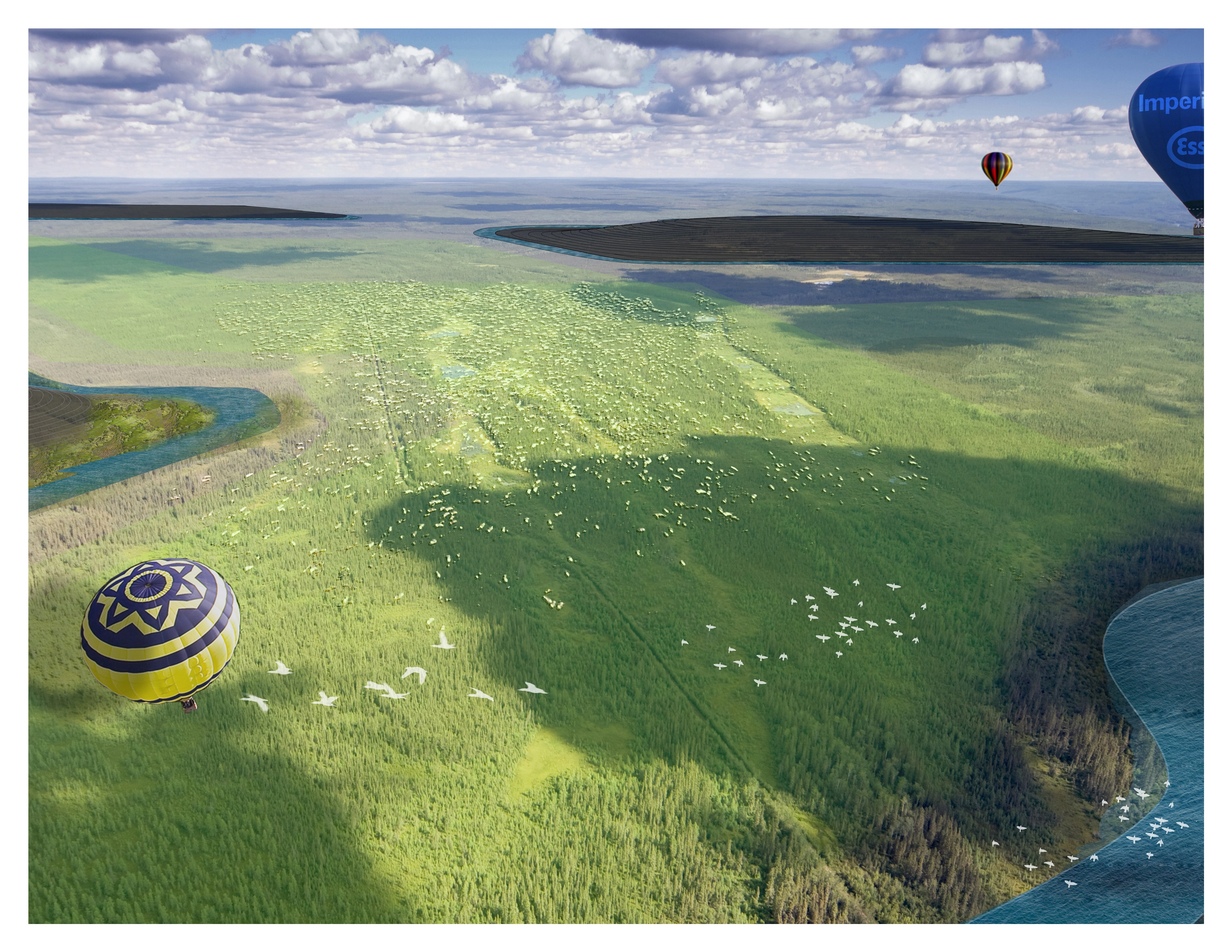
The marking of the end of the fossil fuel era should be monumental, to coincide with the scale of operations and the context of the regional landscape. Utilizing the last mining pit and existing end-pit closure and reclamation regulations, a large island is created in the centre of the end-pit lake consisting of consolidated tailings, tailing sands and overburden materials. The sublime scale of the island alone is a symbol of our human ability to impact nature and forces a questioning of the legitimacy and environmental sensitivity of such operations.
Micro-climate conditions are created to allow for a complete set of boreal ecosites to be implemented on the island, it allows visitors to appreciate the complexity of the boreal ecosystem yet still experience the magnitude of impacts through the scale of the landscape.
-
Special Thanks to:
Andrew Nikiforuk, Author, Journalist, Calgary, Alberta; Douglas Olson, O2 Planning + Design Inc., Calgary, Alberta; Kyle Harrietha, Cumulative Environmental Management Association, Fort McMurray, Alberta;
and to my thesis advisor, Alissa North, (Assistant Professor, Landscape Architecture, John H. Daniels Faculty of Architecture, Landscape and Design, University of Toronto). Her clarity of thought, encouragement and direction in the project helped define my research and design while being both inspirational and thought-provoking as always.
Advertisement
Related Awards
Honor Award, Analysis & Planning
A Cultural Approach: The Fort Peck Tribes Hazard Mitigation Plan
In collaboration with the Fort Peck Assiniboine and Sioux Tribes, EPA, and FEMA, the Fort Peck Tribes Hazard Mitigation Plan (HMP) adopts a culturally responsive approach to hazard mitigation planning that features connection to place.