
.webp?language=en-US)
Park 20/20: A Cradle to Cradle Inspired Master Plan
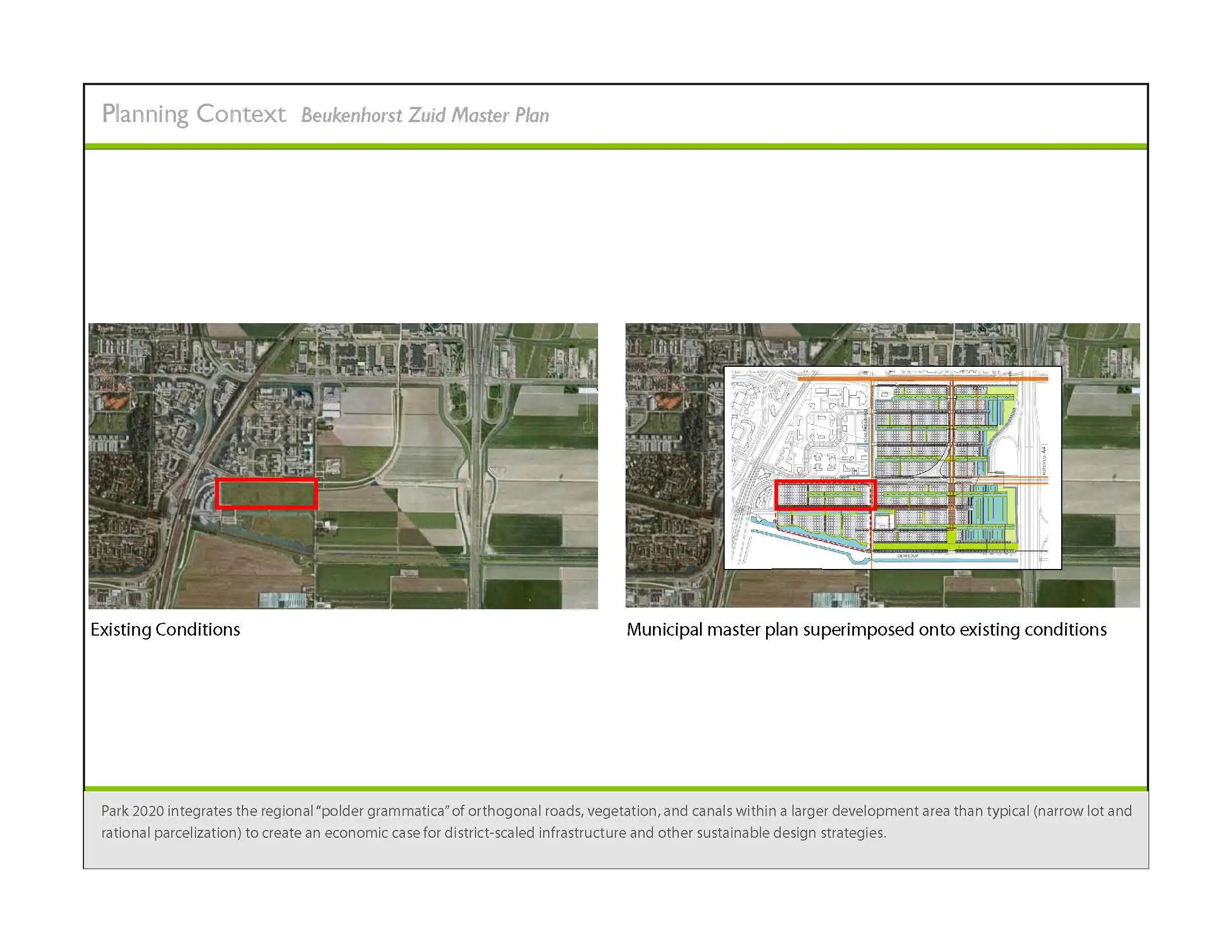
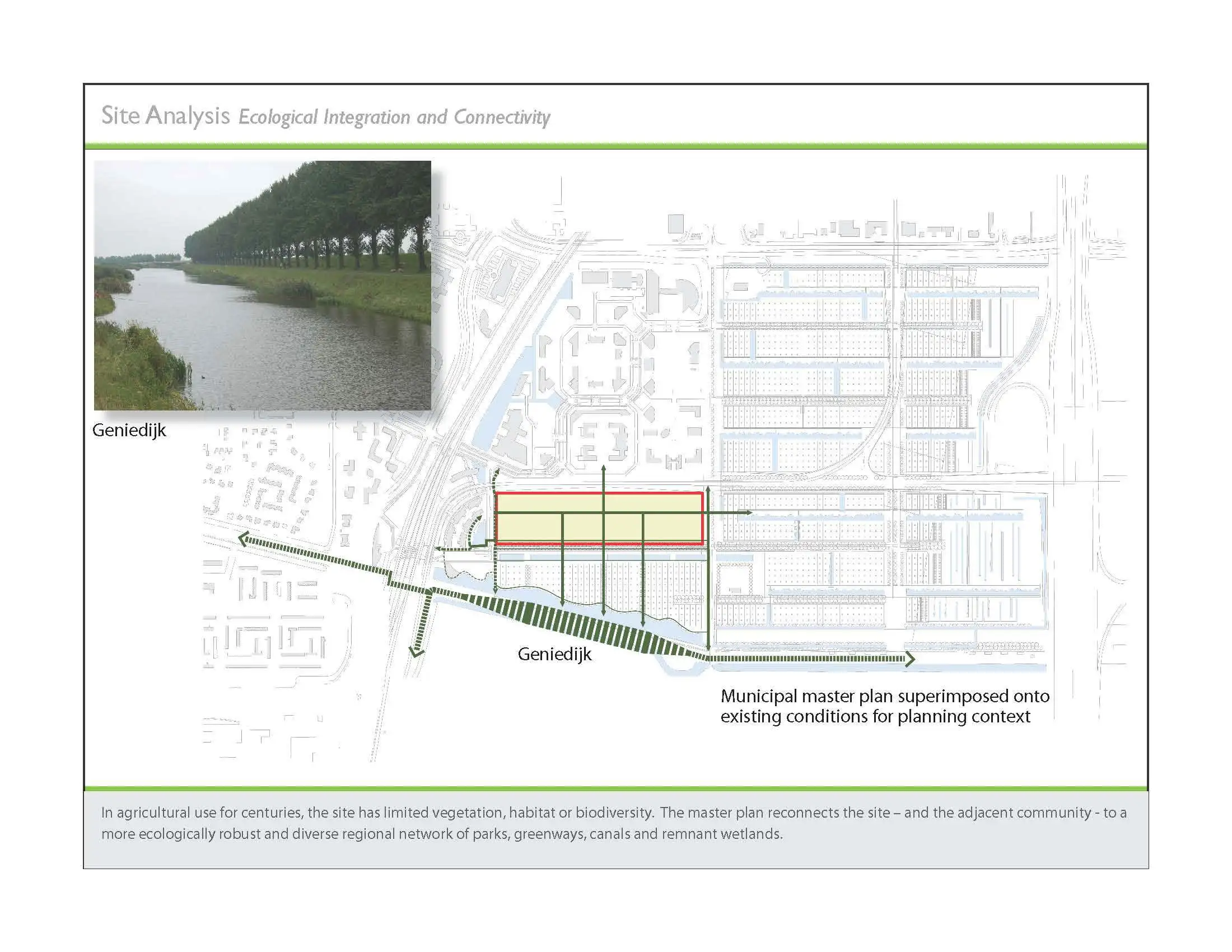
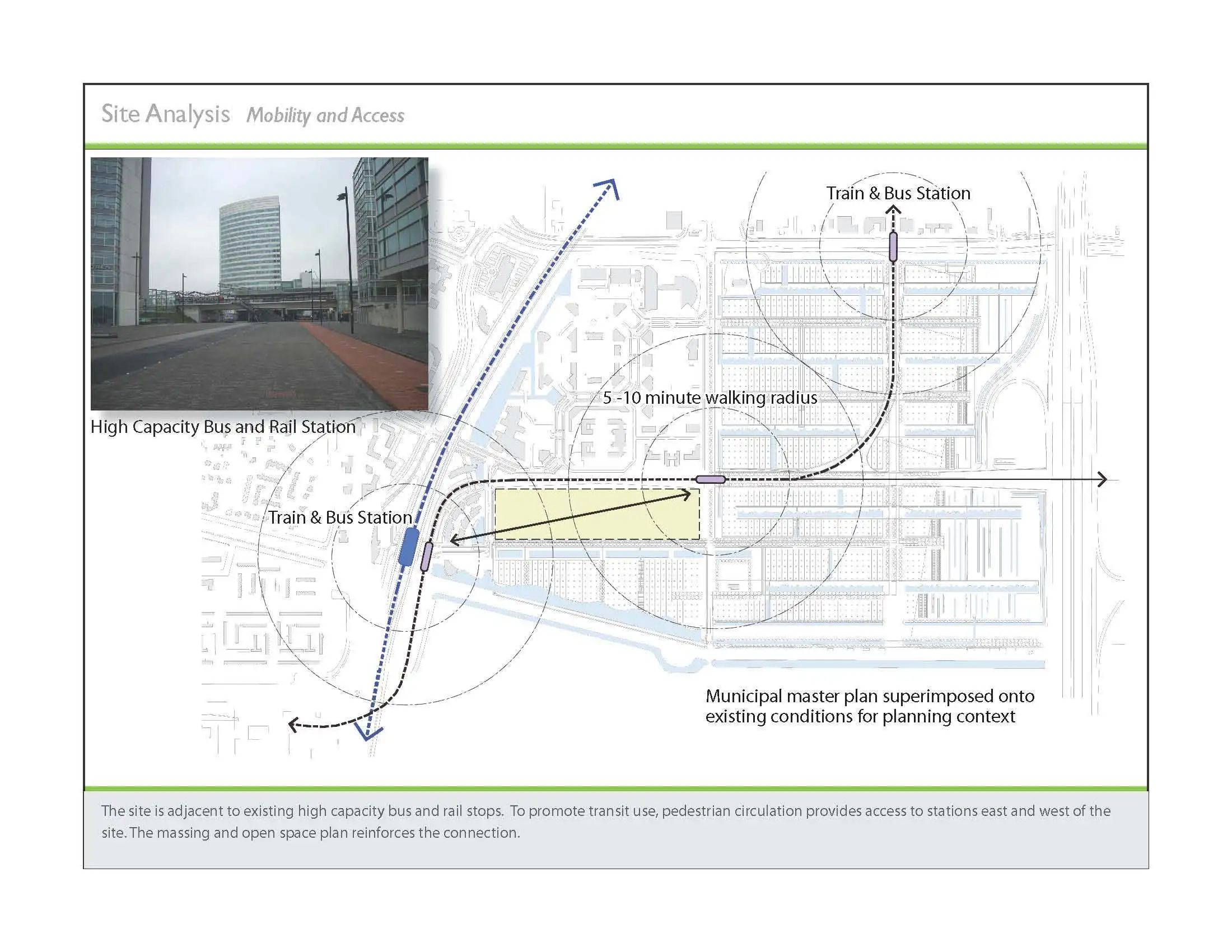
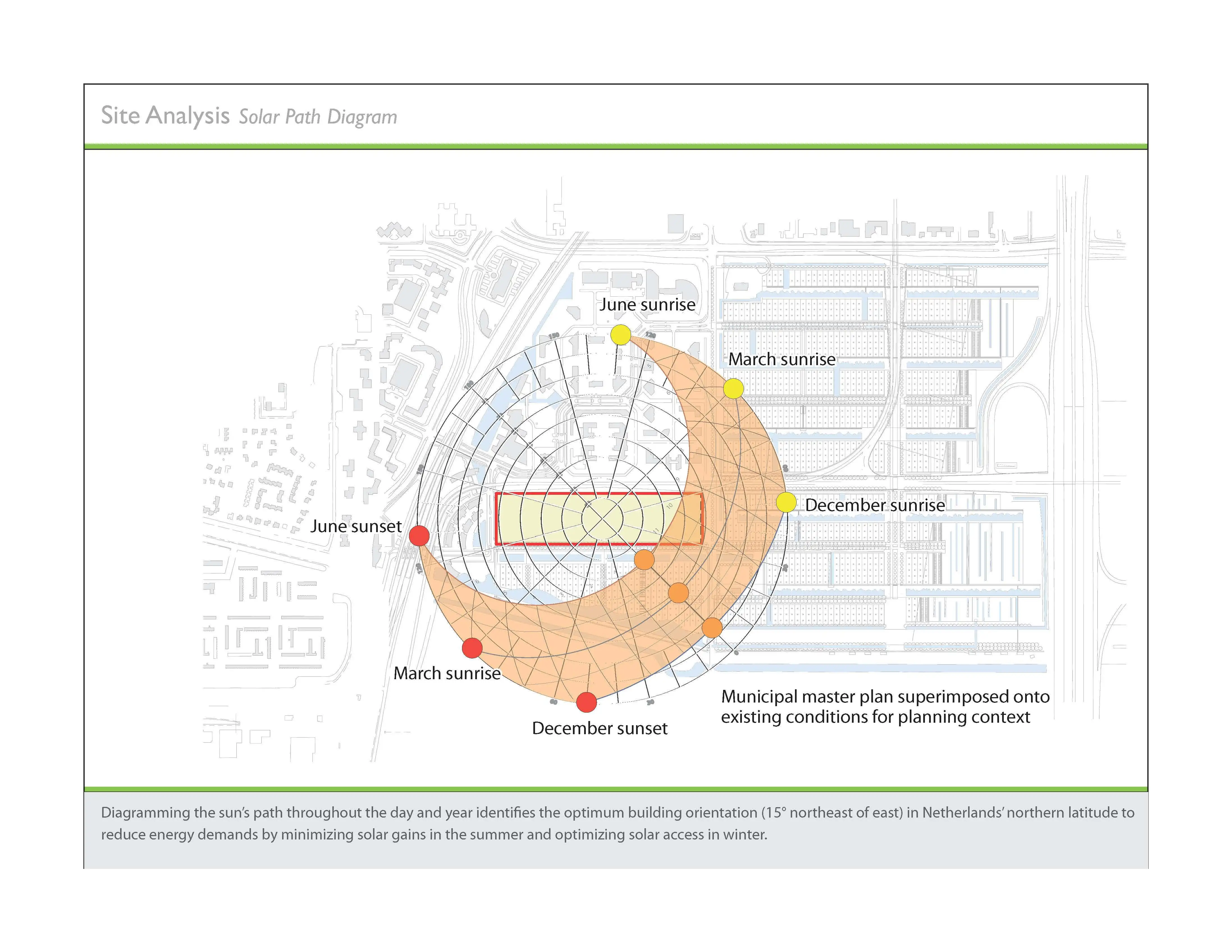
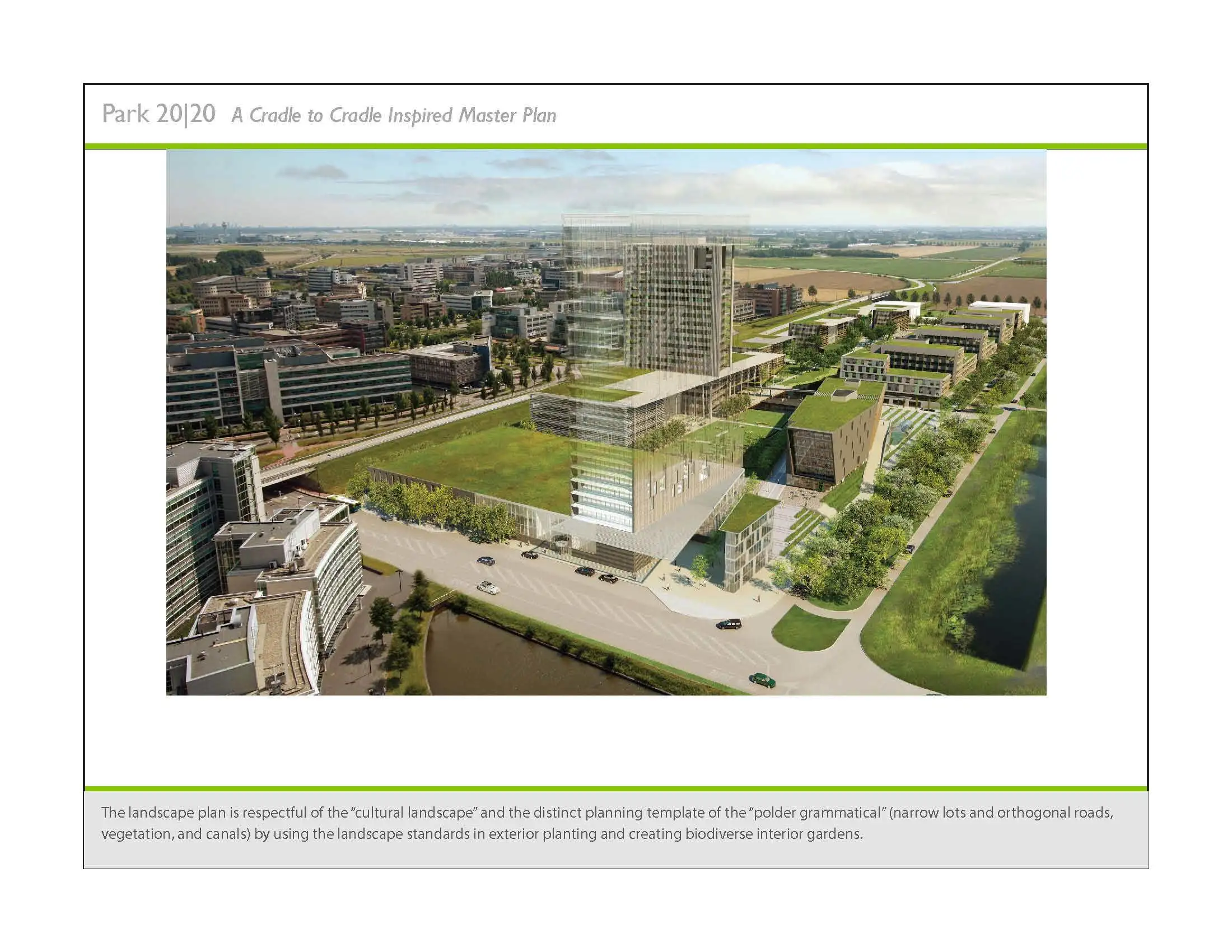
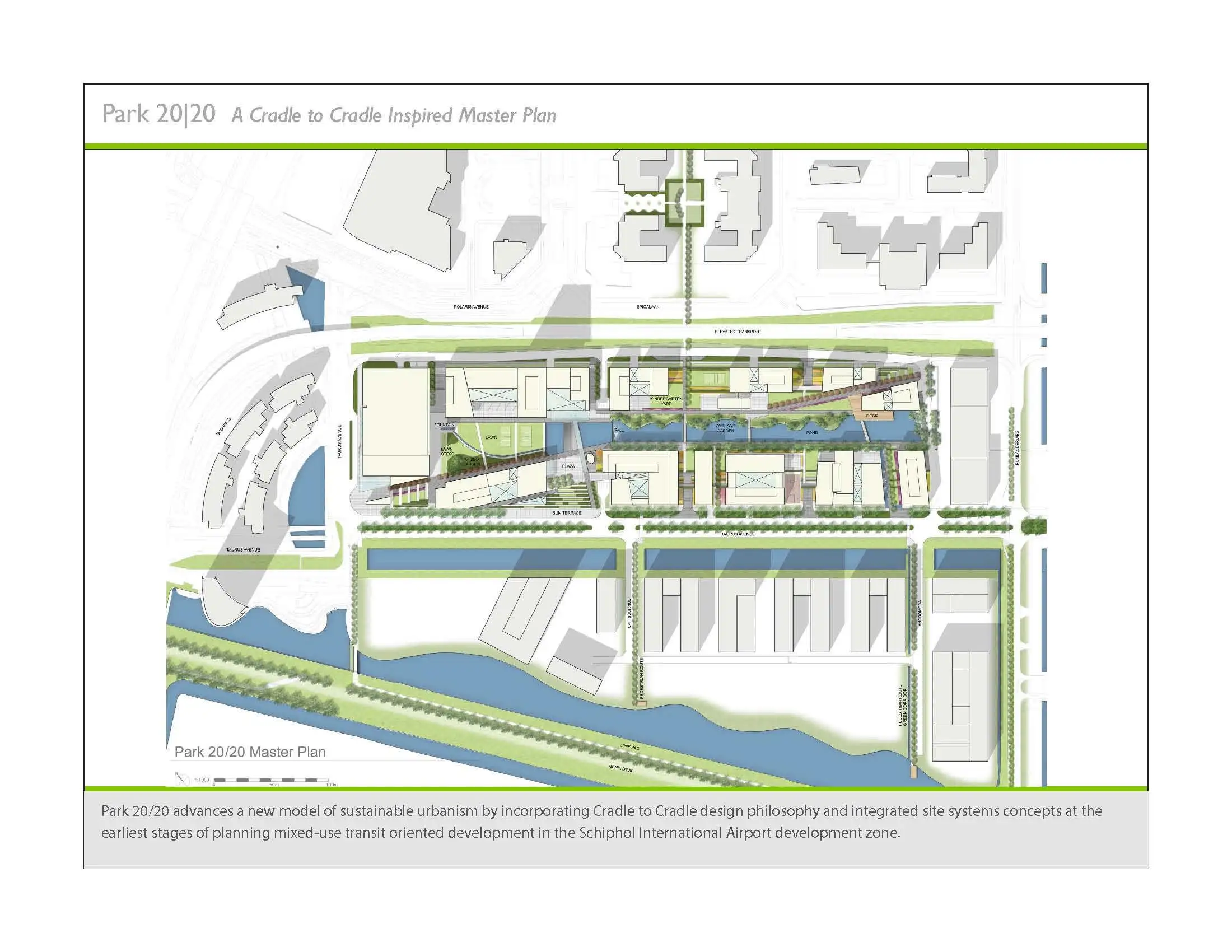
Truly a beautifully executed study, which integrates many programmatic uses with Bold gestures of design, and responds to all aspects of sustainability, sensitive site planning, and cultural integration.
Awards Jury
-
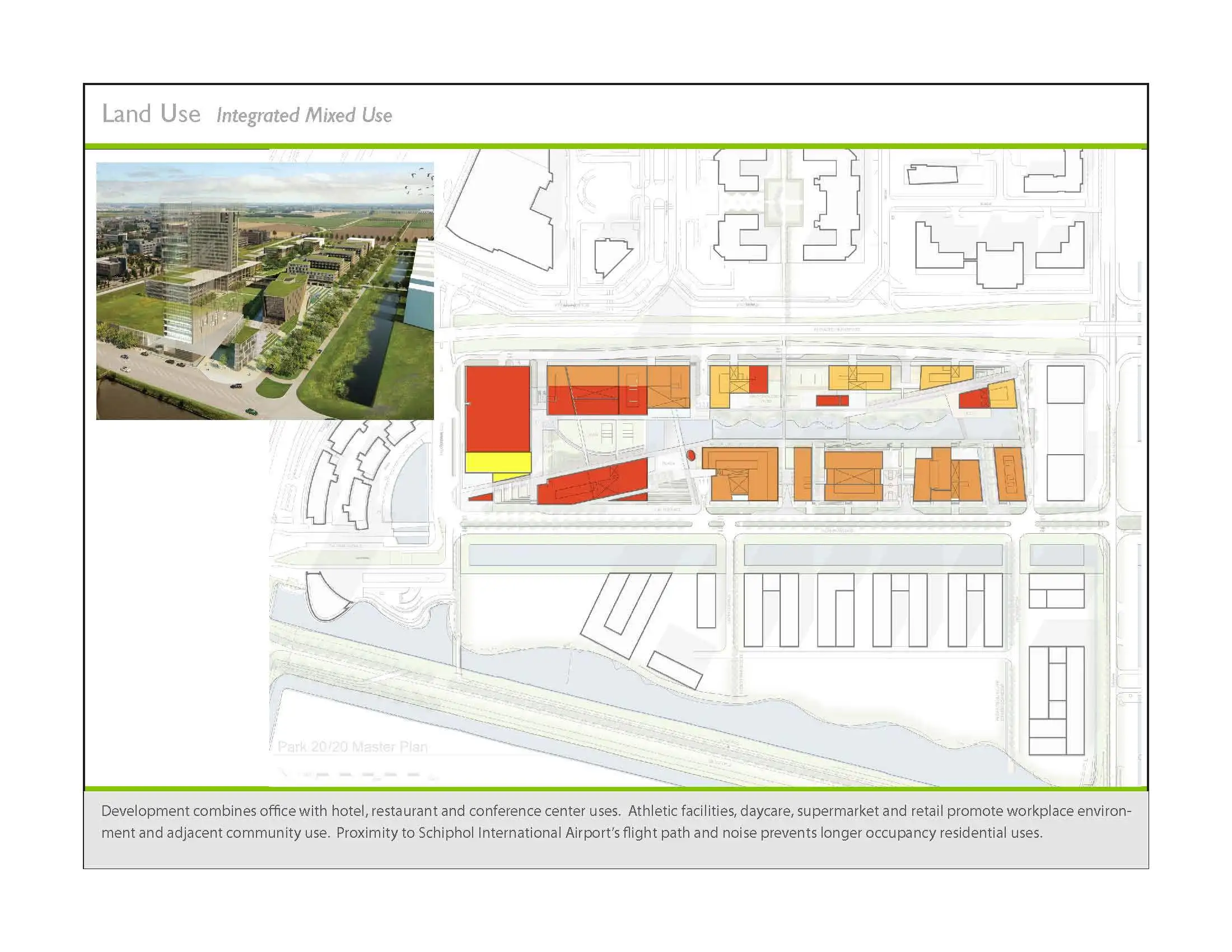
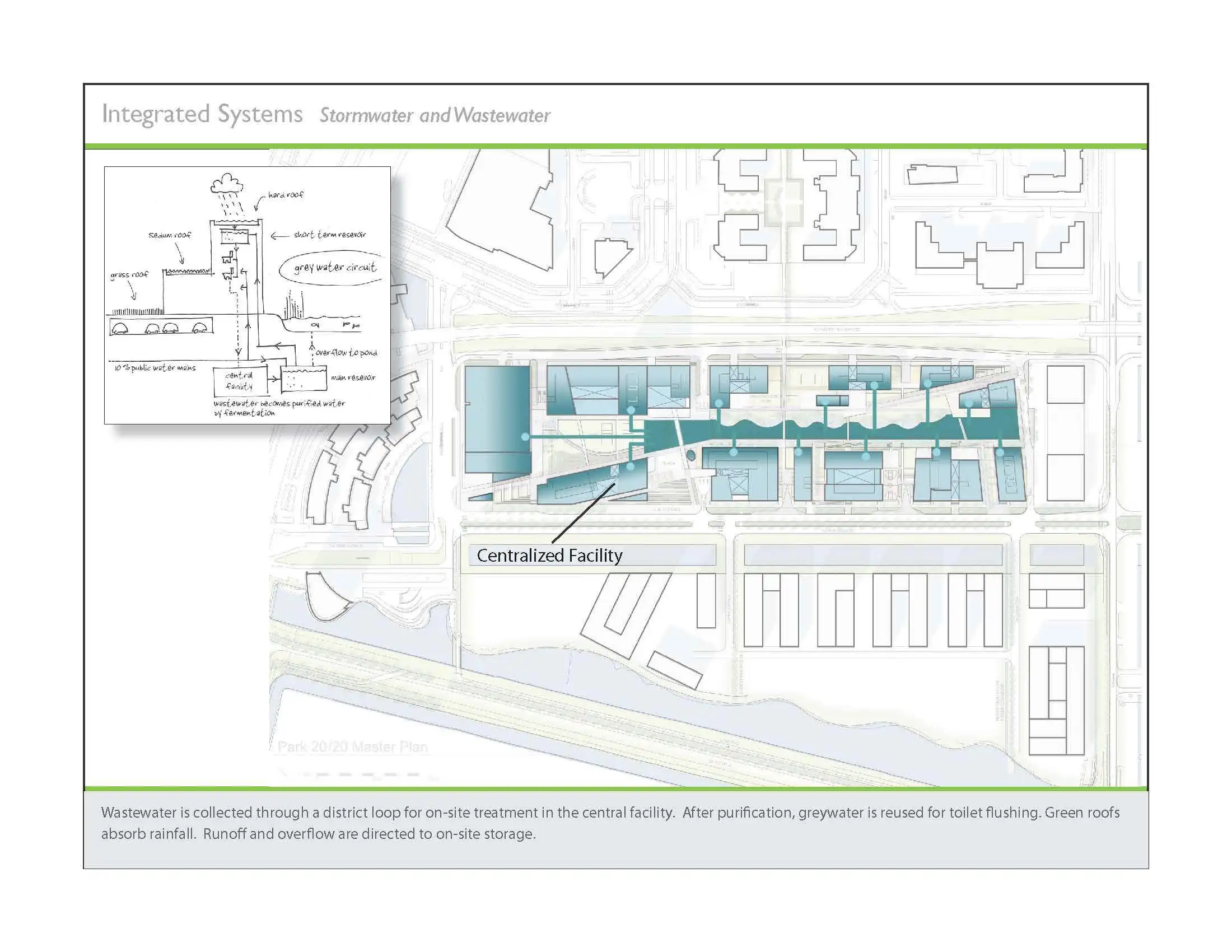
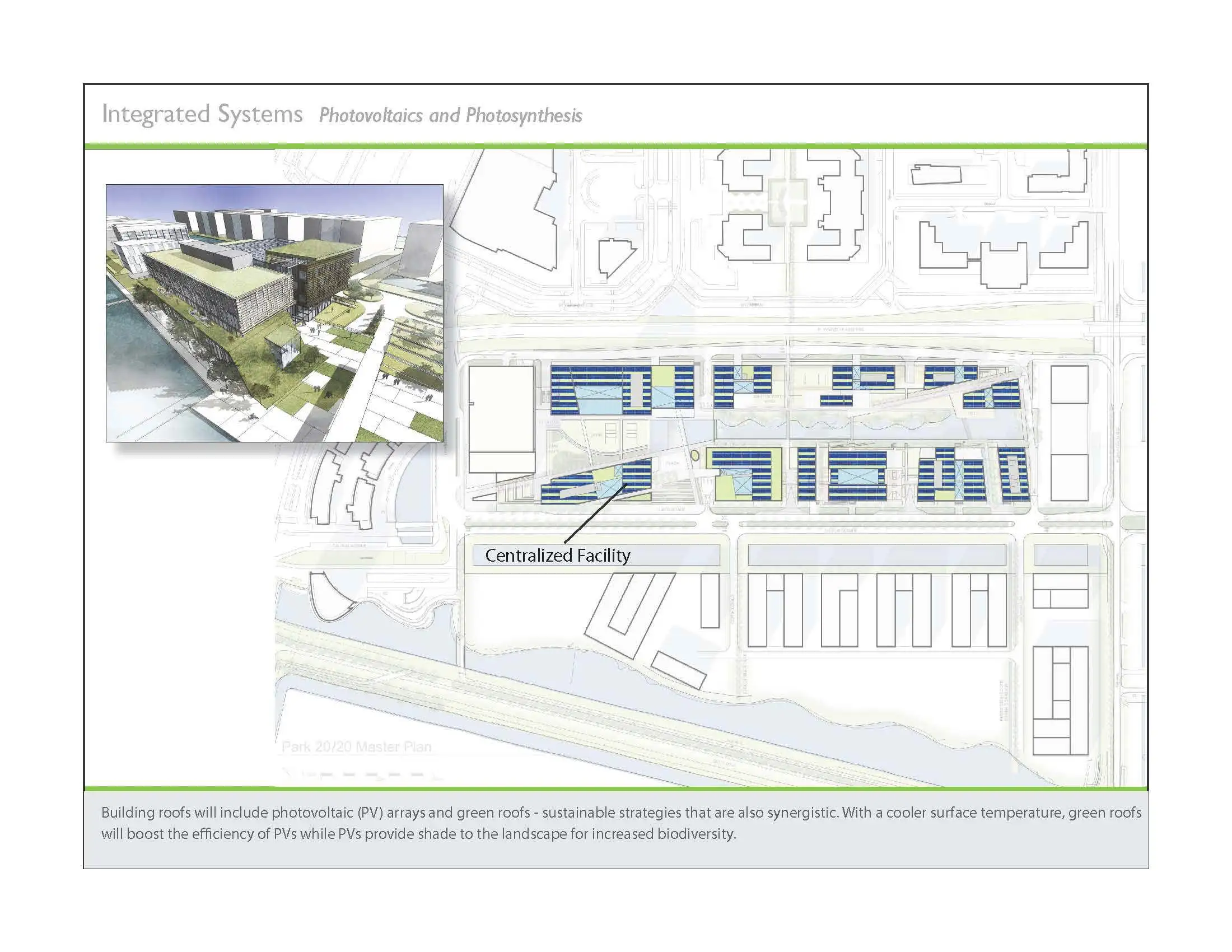
Park 20/20 is a new model of sustainable urban development located within a Dutch polder (land reclaimed from the seas). Planning concepts promote the regenerative design agenda of Cradle to Cradle philosophy at all scales, from regional ecological connectivity to on-site biodiversity and from workplace health and well-being to neighborhood connectivity. Integrated within the urban plan are highly effective district waste, energy and water system that eliminate wastefulness throughout the complex.
-
Application of Sustainability
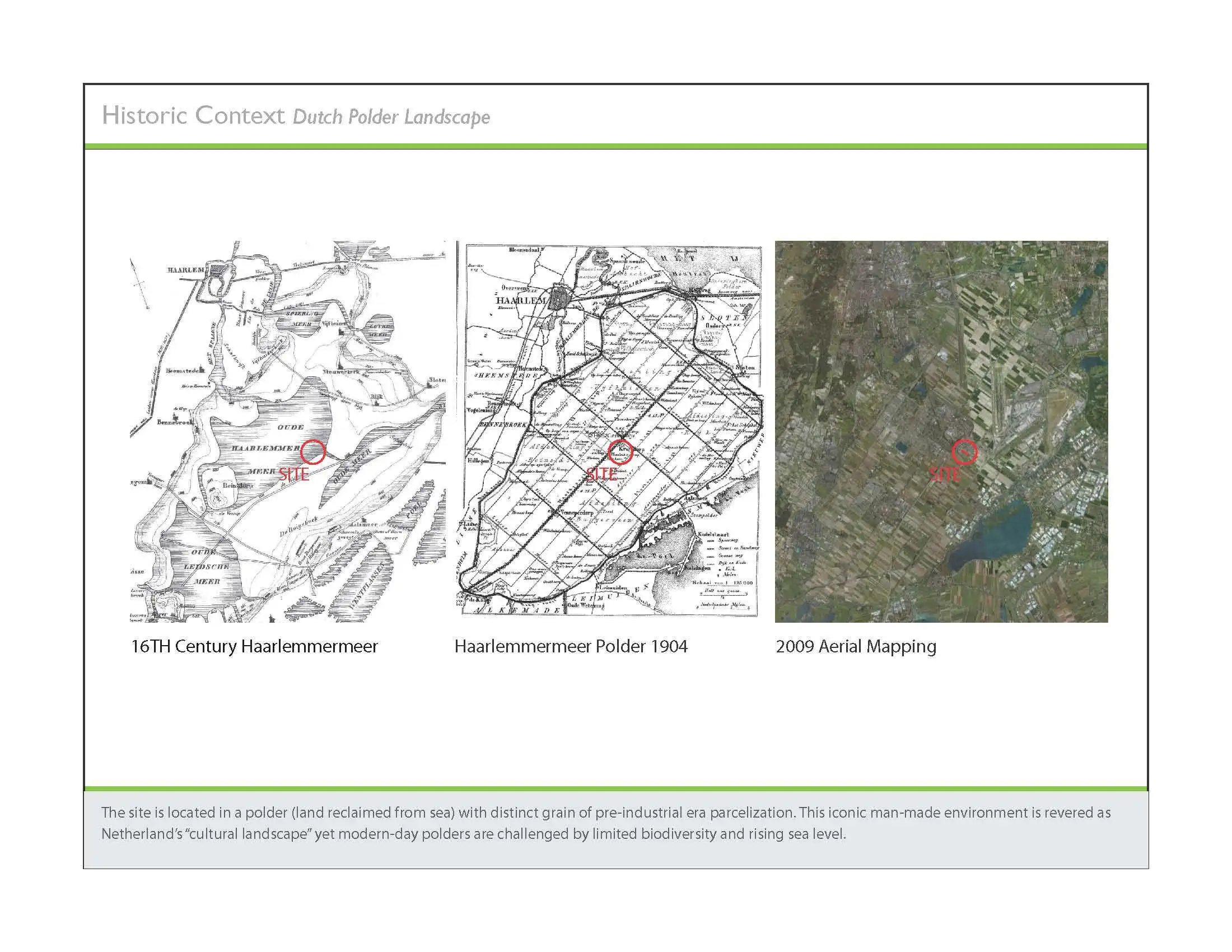
Park 20/20 is a new model of sustainable development, conceived as the first large-scale urban development in the Netherlands to implement the Cradle to Cradle (C2C) design philosophy. Located within a man-made "cultural landscape" of a Dutch polder (land reclaimed from the seas), the planning concepts promote regenerative design agenda of C2C philosophy at all scales, from regional ecological connectivity to enhanced landscape biodiversity, and from workplace health and well-being to neighborhood connectivity. Integrated within the urban plan are highly effective district waste, energy and water system that eliminate wastefulness throughout the complex.
Planning goals and objectives
Goals and objectives address each prong of sustainability:
- Social—respond sensitivity to the unique Dutch "cultural landscape," enhance connectivity with adjacent community, provide mixed-use amenities to adjacent community, create a healthy workplace environment, and reduce regional traffic congestion through transit-oriented development
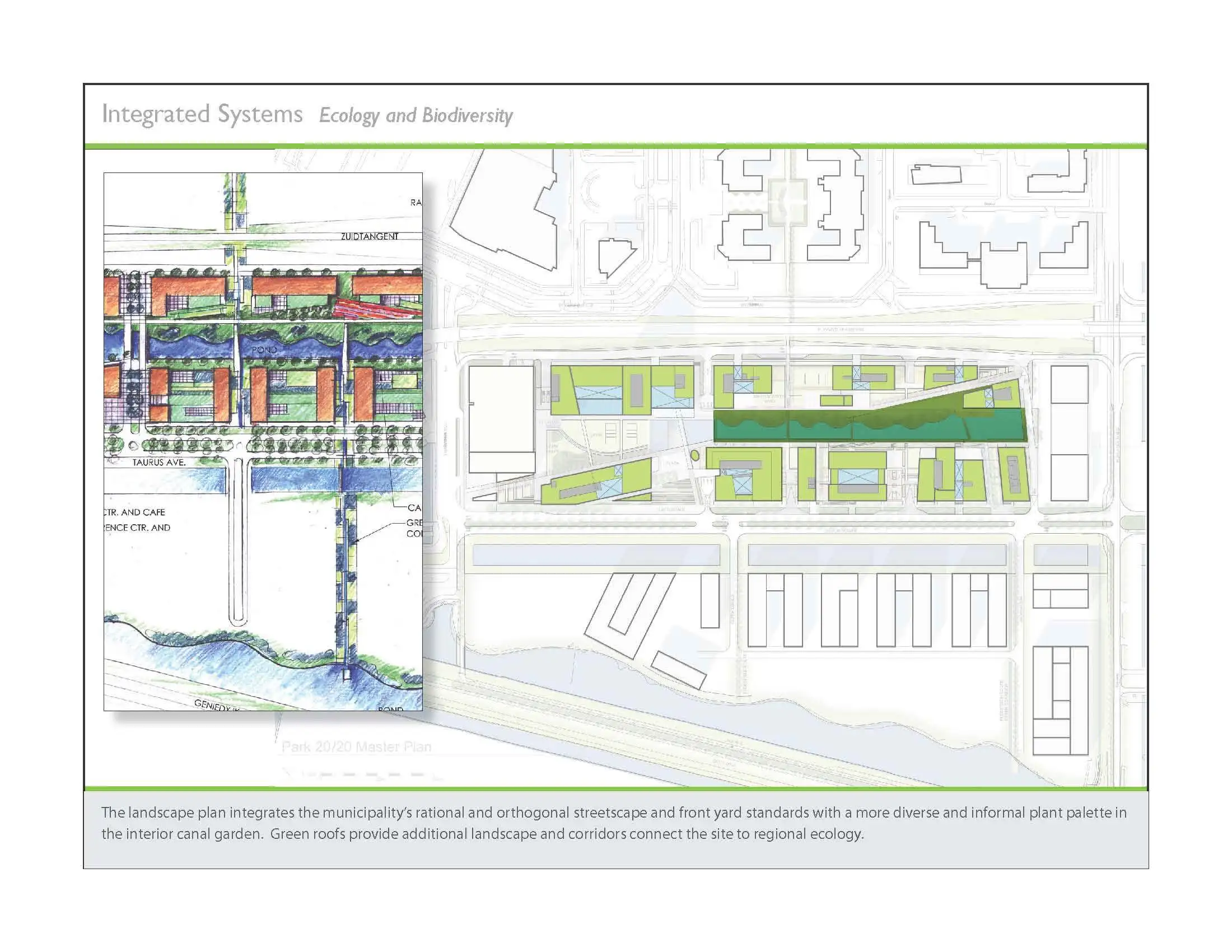
- Environmental—mitigate climate change through renewably sourced and passive energy strategies, create cradle to cradle cycles that promote health and eliminate waste, and enhance biodiversity and regional ecological connectivity
- Economic—increase economic viability of area, attract and retain workforce, extend life cycle of the buildings, create marketplace distinction, and promote a development of viable size and density to allow integrated district-scaled infrastructure.
Key environmental data collected/analyzed and method:
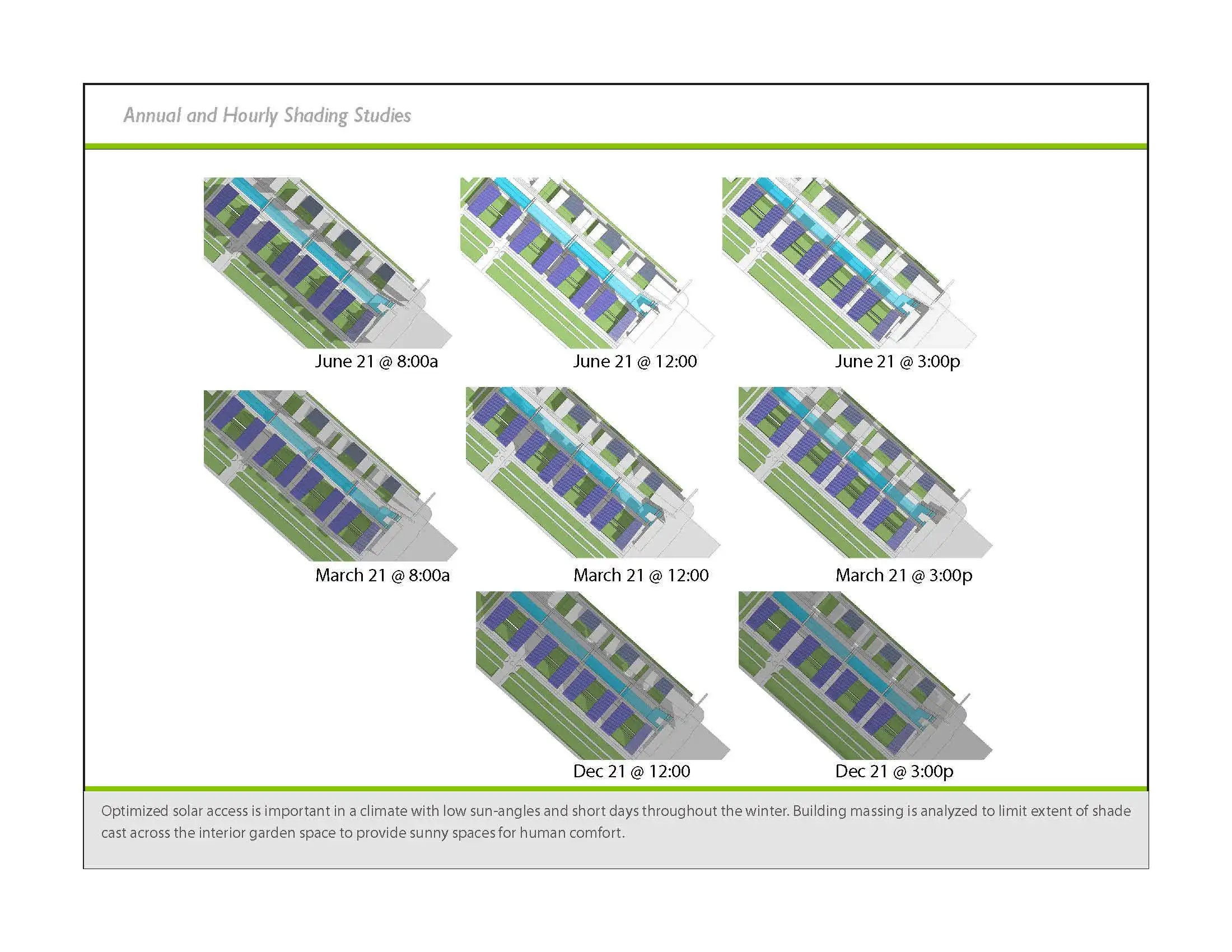
- Solar path diagram—mapping path of the sun through the day and year to determine optimal solar orientation for passive energy strategies and to optimize solar access across site during the winter month.
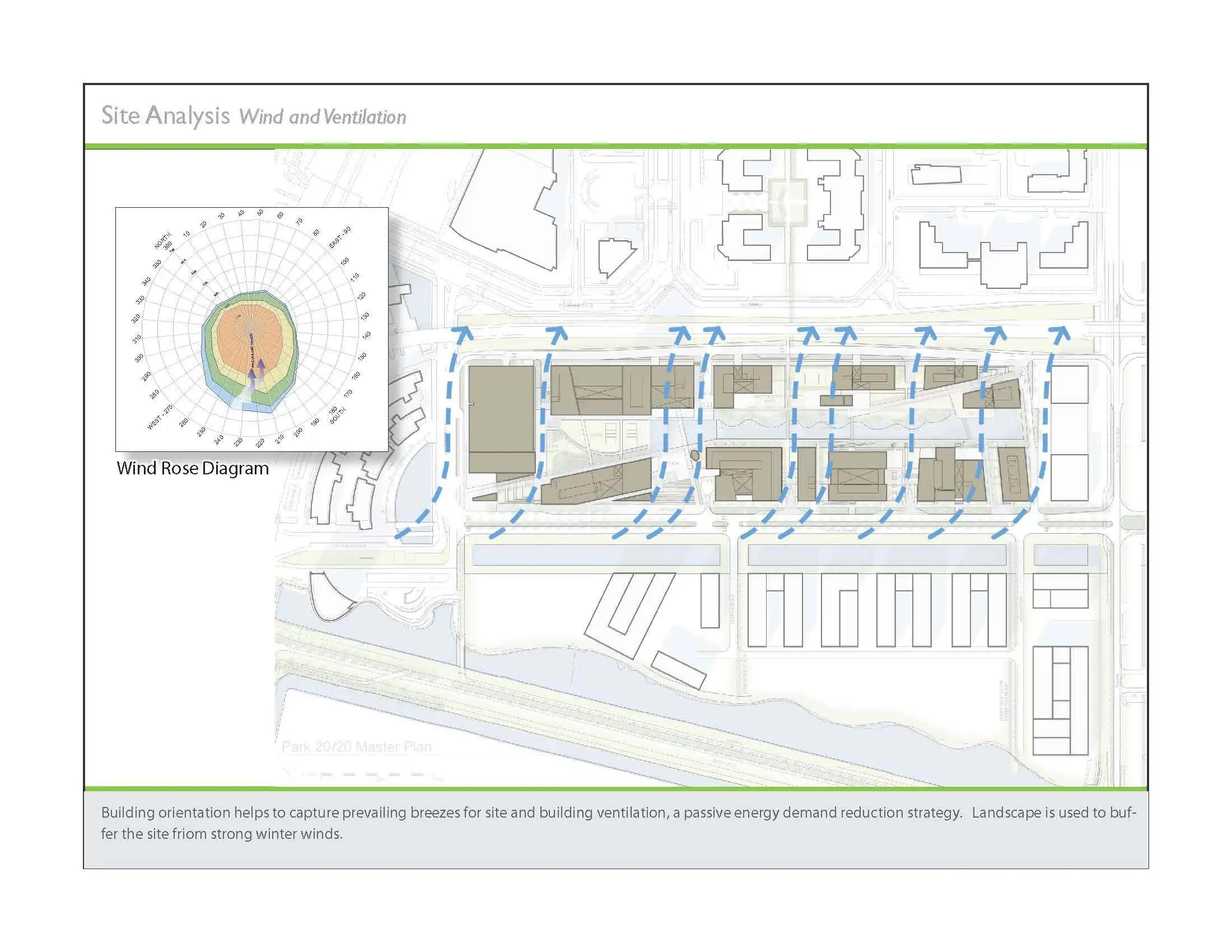
- Wind rose diagram—to determine the prevailing breeze for site and building ventilation strategies and winter winds for protection strategies in winter.
- Local and regional ecological network—to optimize linkage of site landscape.
- Polder water management—to understand site design impacts of unique Dutch canal system, flooding, water level stabilization, etc.
- Dutch environmental policy—highlighting lack of biodiversity as the most significant environmental threat followed by sea-level rise due to climate change.
Key social data were collected/analyzed and method:
- Historic and cultural context of the unique Dutch polder and cultural landscape—to understand application of the "polder grammatical" (elements of the landscape).
- Regional and local planning documents—to understand context and requirements.
- Character and land use of the adjacent community—to optimize connectivity.
- Mobility and access—to establish range of walkable distances to nearby transit stations.
- Proximity of Schiphol International Airport—for restrictions due to flight path and noise.
- New models for enhanced workplace environment—for development programming.
Consideration of master planning options and design process
A collaborative effort by planners, landscape architects and architects developed conceptual planning alternatives to explore relationship of several key planning informants:
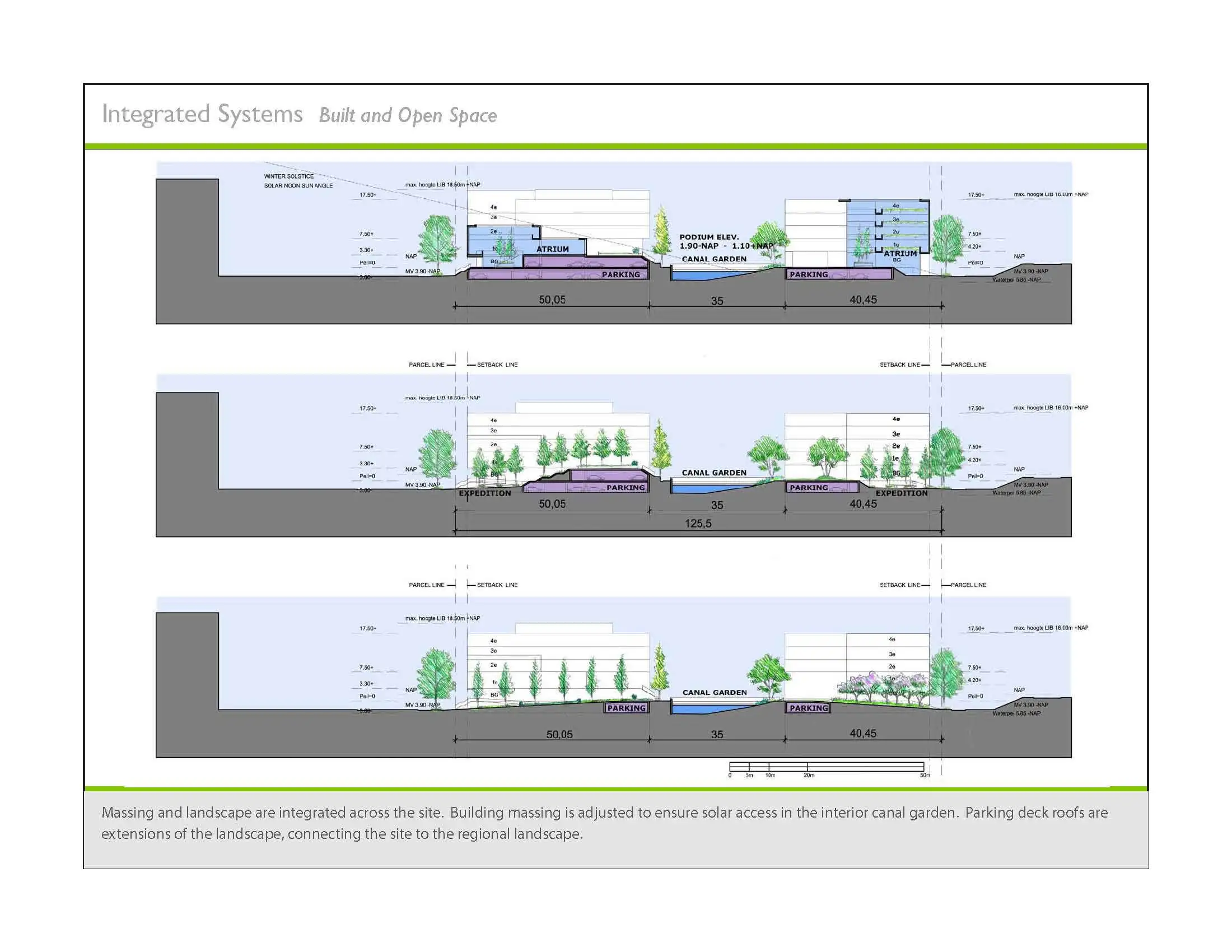
- Integration of optimum solar and wind orientation (to reduce energy demand) for building within the context of the tight urban block and the development program requirements by adjusting the building massing to ensure solar access in winter.
- Integration of regenerative landscape strategies respectful of the "cultural landscape" and the distinct planning template of the "polder grammatical" (narrow lots and orthogonal roads, vegetation, and canals) by: introducing a more ecologically diverse plant palette, using the landscape standards in exterior planting and creating a more biologically robust interior gardens, connecting the interior gardens to regional ecology with landscape corridors, creating additional landscape area on roofs surfaces and parking decks.
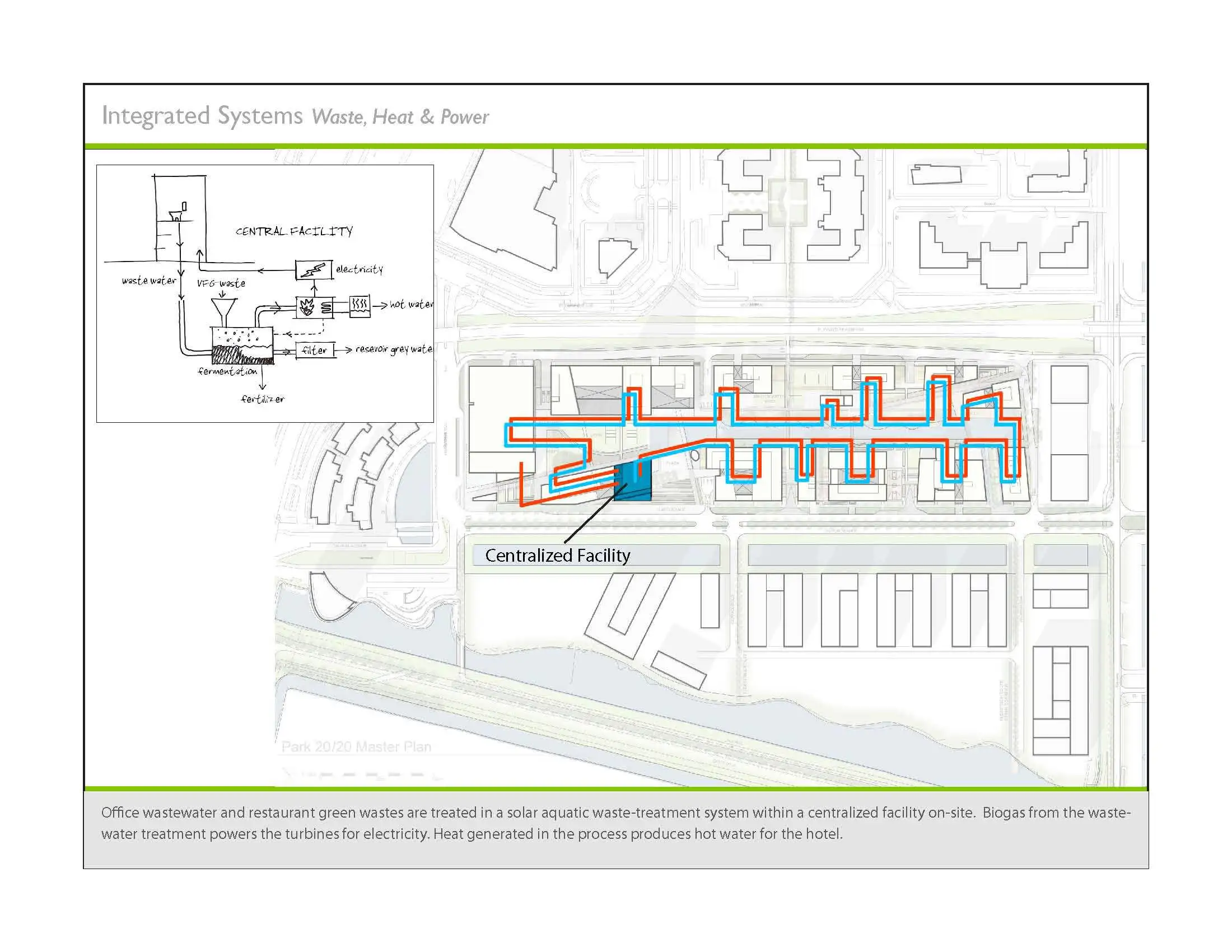
- Implementation of effective district-scaled sustainable infrastructure approaches by aligning scale and types of land uses (i.e., hotel demand for hot water with office wastewater treatment output of biogas fuel for heating) and creating a centralized treatment facility for wastewater, energy and stormwater on site.
- Implementation of C2C agenda of waste-free design by treating wastewater on site, capturing energy and soil amendments, and eliminating sewage discharge.
How interested parties were involved in the project
The master planning process involved consultation with municipality planners to ensure that Park 20/20 respected the regional and municipal master plans. Community interests were represented in the review and approval process, including policy and technical review by appropriate Aldermen and the City Council.
How the project was or would be implemented
Park 20/20 master plan received unanimous approval by the City Council of Beukenhorst in June 2009. Site and architectural design of Phase I (two buildings) commenced in Fall 2009 and is utilizing C2C protocol for material specification. Construction on the first building will begin in March 2010.
How project is or will be administered and or monitored
Park 20/20 is being developed by a private development company. Regional and national government entities are involved in economic development aspects as it seen as a showcase of cradle to cradle design and a new benchmark for regional development. Both sustainability and cradle to cradle commitments are terms of the contract between the developer and the government.
-
Master Planning & Architecture
William McDonough + Partners
William McDonough, FAIA
Kevin Burke, AIA
Diane Dale, ASLA, JD
John Easter
Will Grimm, AIA
Master Plan Landscape Architect
Nelson Byrd Woltz
Warren T. Byrd, Jr., FASLA, Principal in Charge
Kennon Williams, Senior Project Manager / Designer
Staff Designers: Zuzana Ponca, Jeremy Jordan, Evan Grimm
Advertisement
Related Awards
Honor Award, Analysis & Planning
A Cultural Approach: The Fort Peck Tribes Hazard Mitigation Plan
In collaboration with the Fort Peck Assiniboine and Sioux Tribes, EPA, and FEMA, the Fort Peck Tribes Hazard Mitigation Plan (HMP) adopts a culturally responsive approach to hazard mitigation planning that features connection to place.