
.webp?language=en-US)


Underwood Family Sonoran Landscape Laboratory
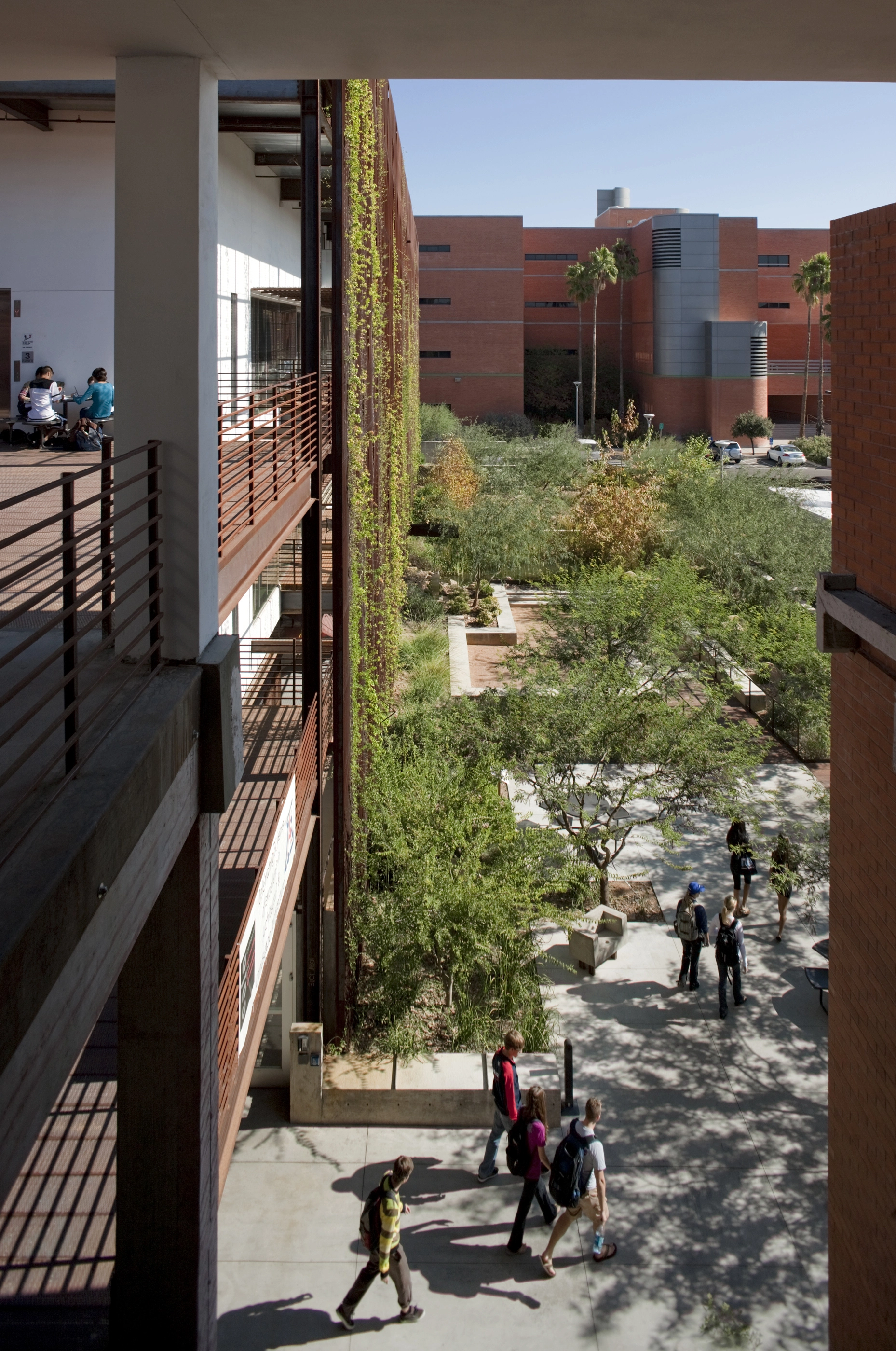
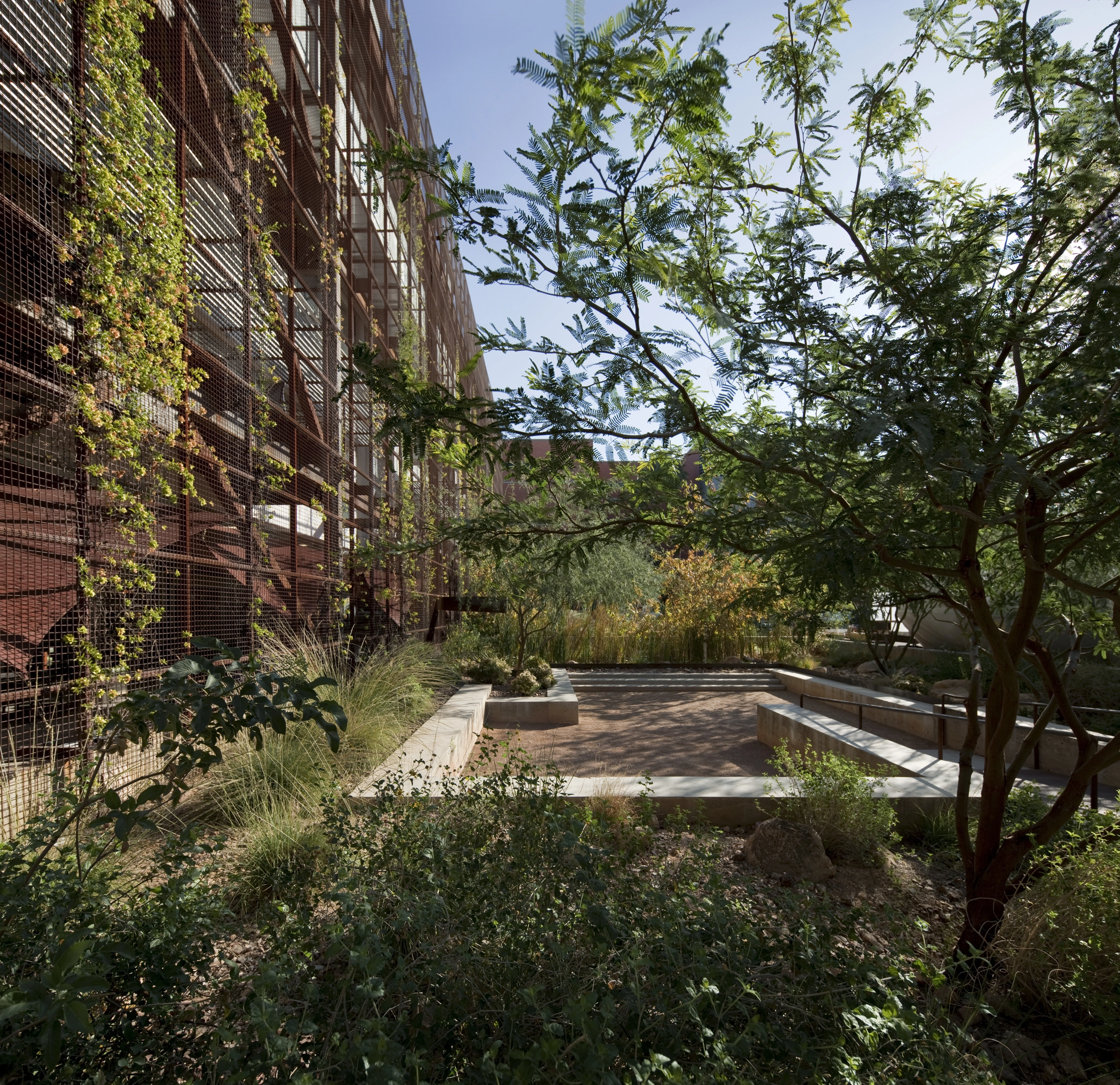
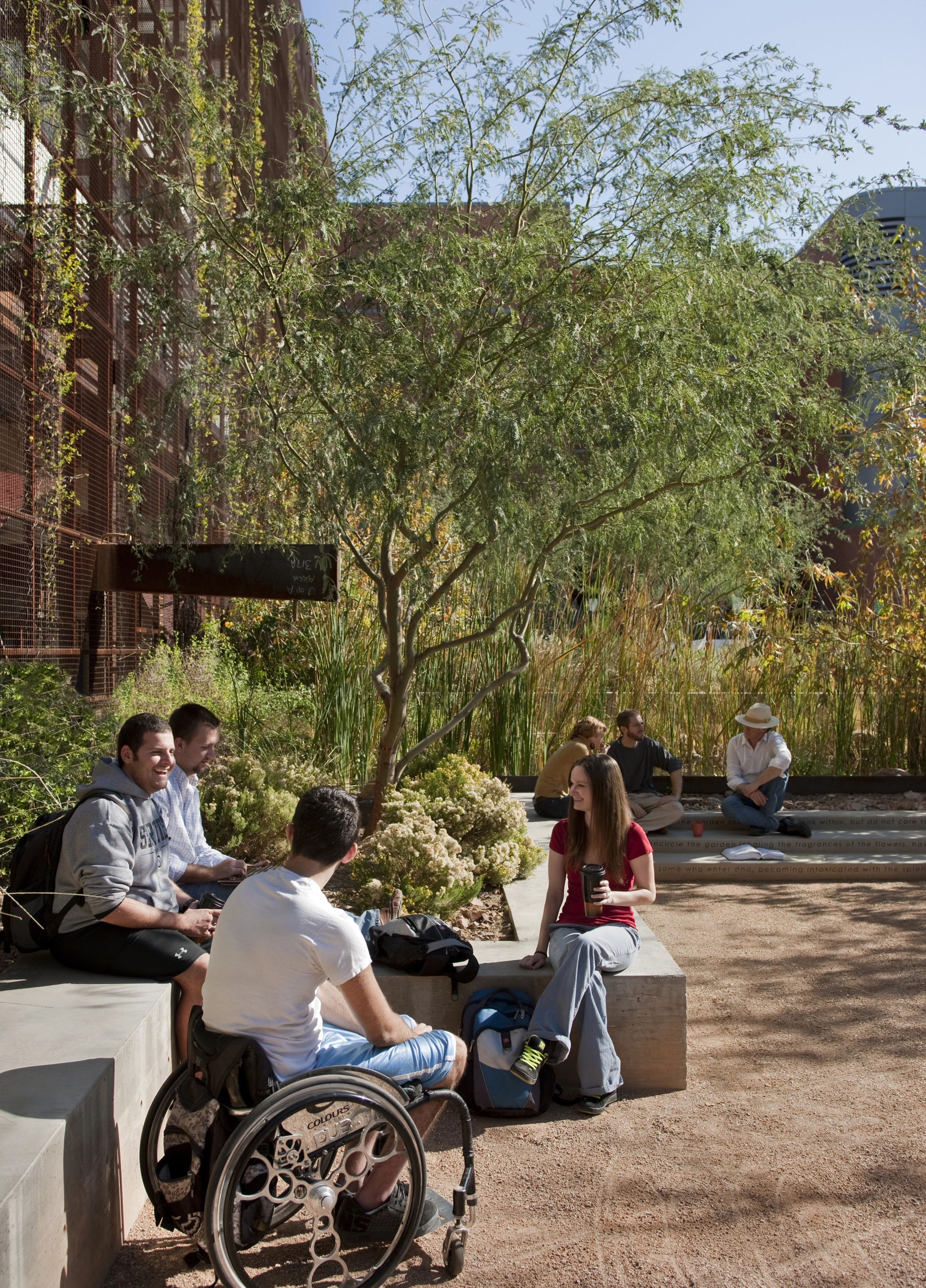
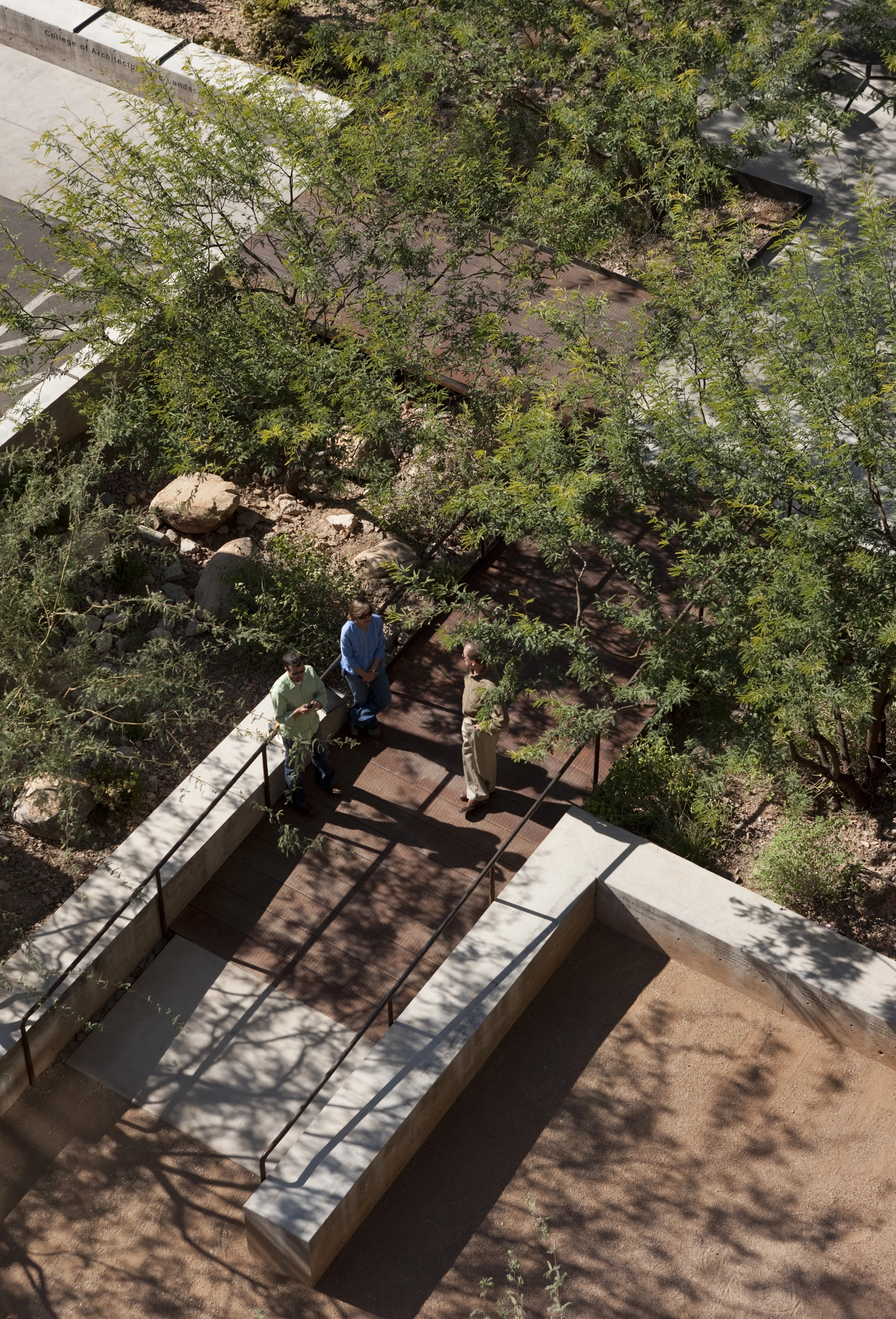
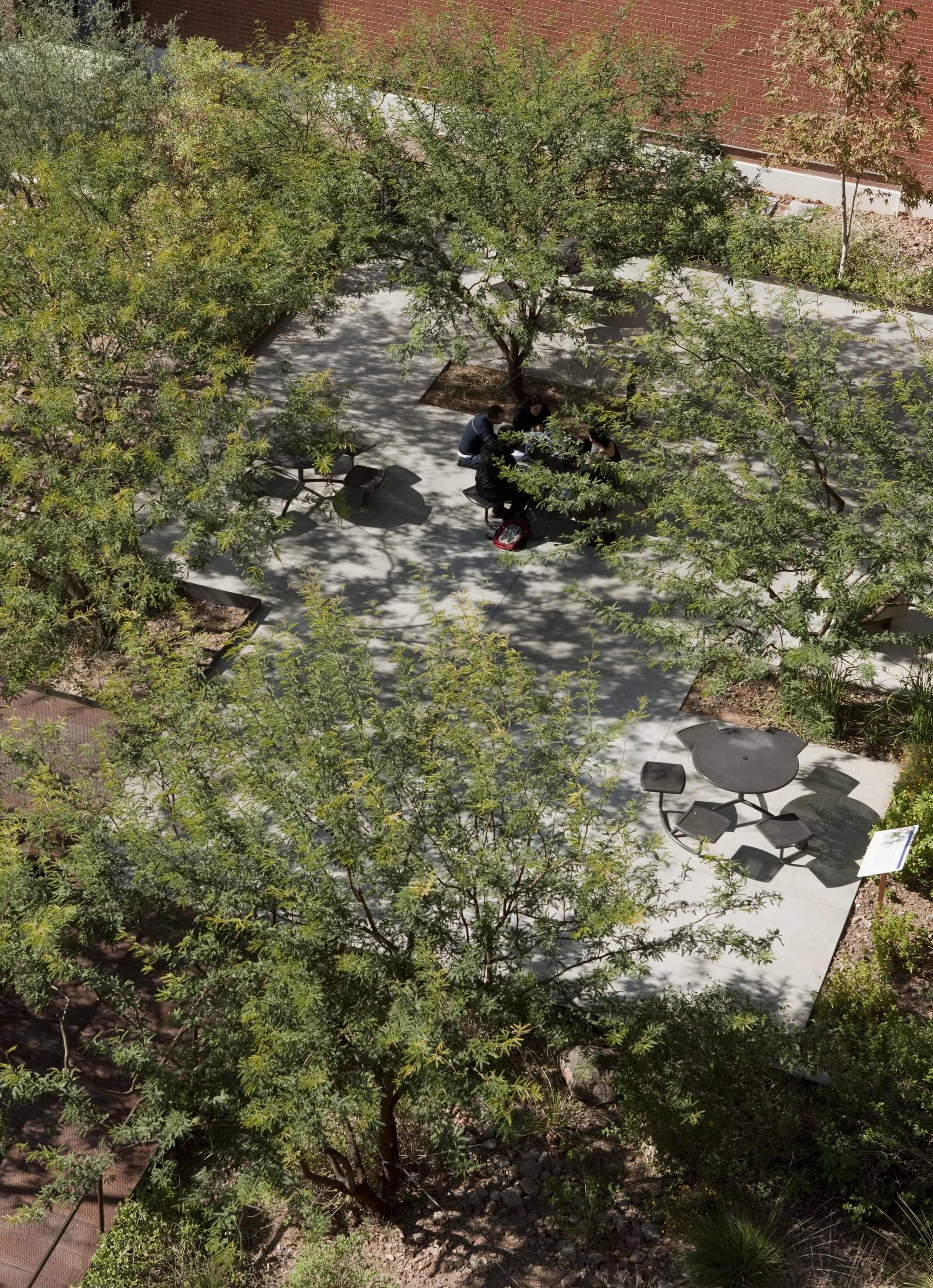
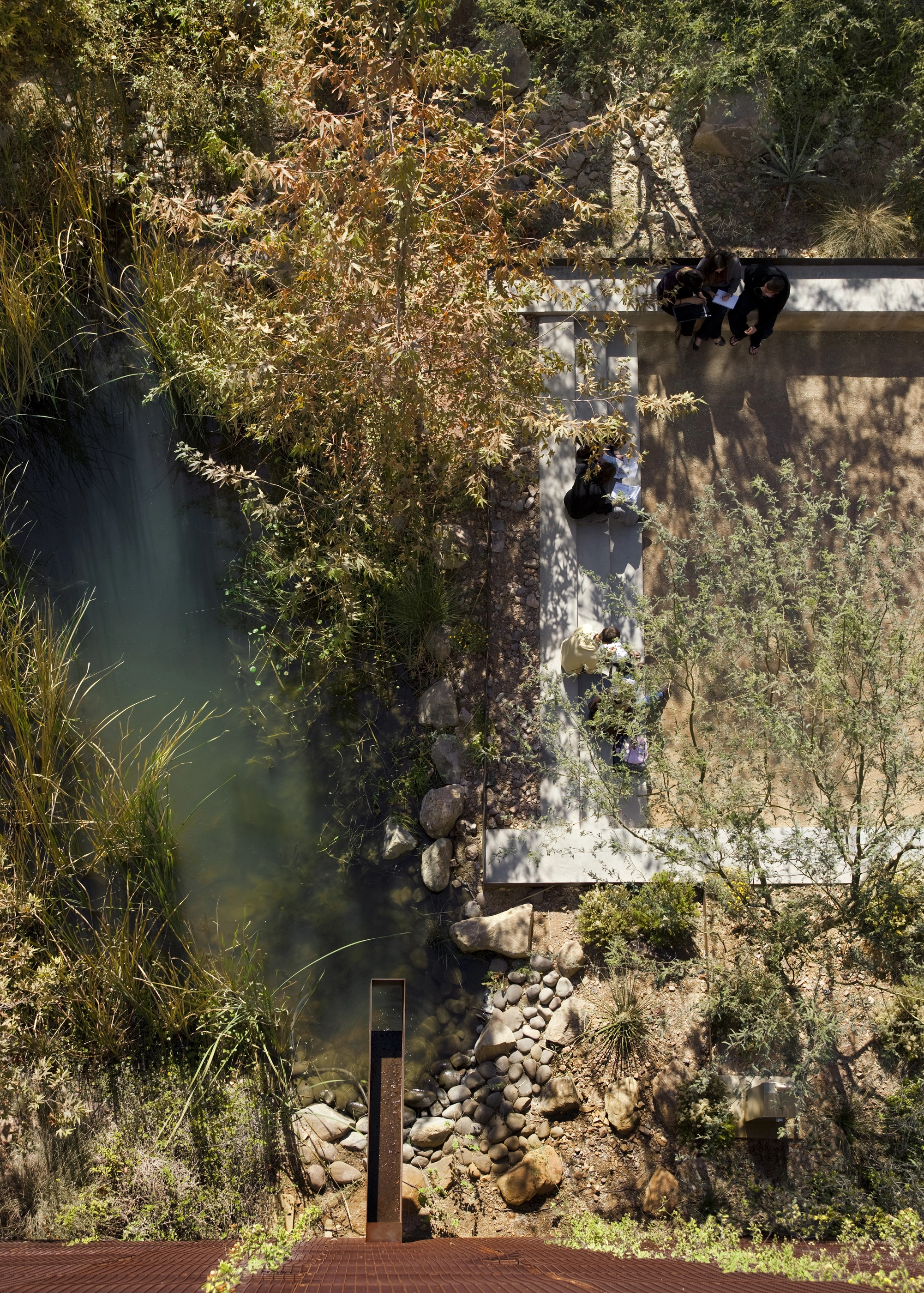
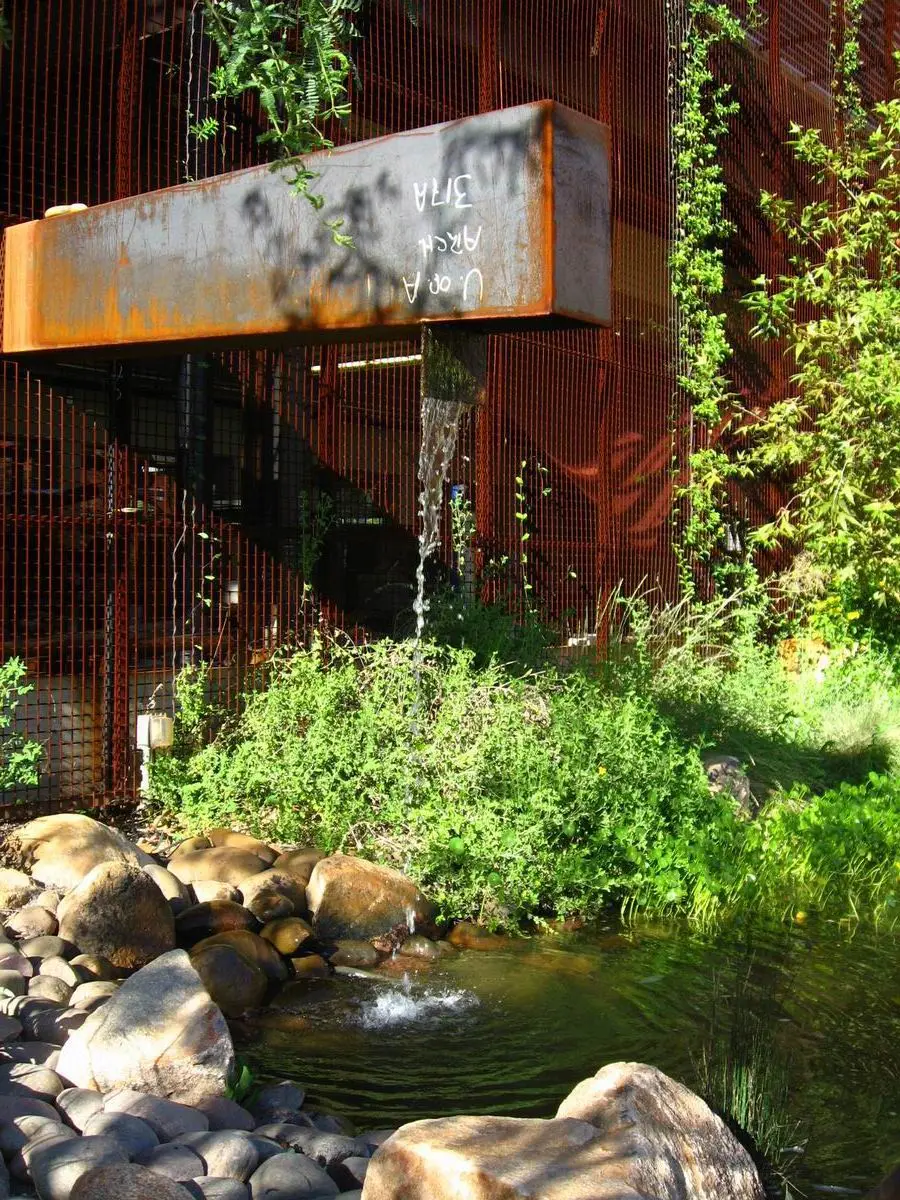
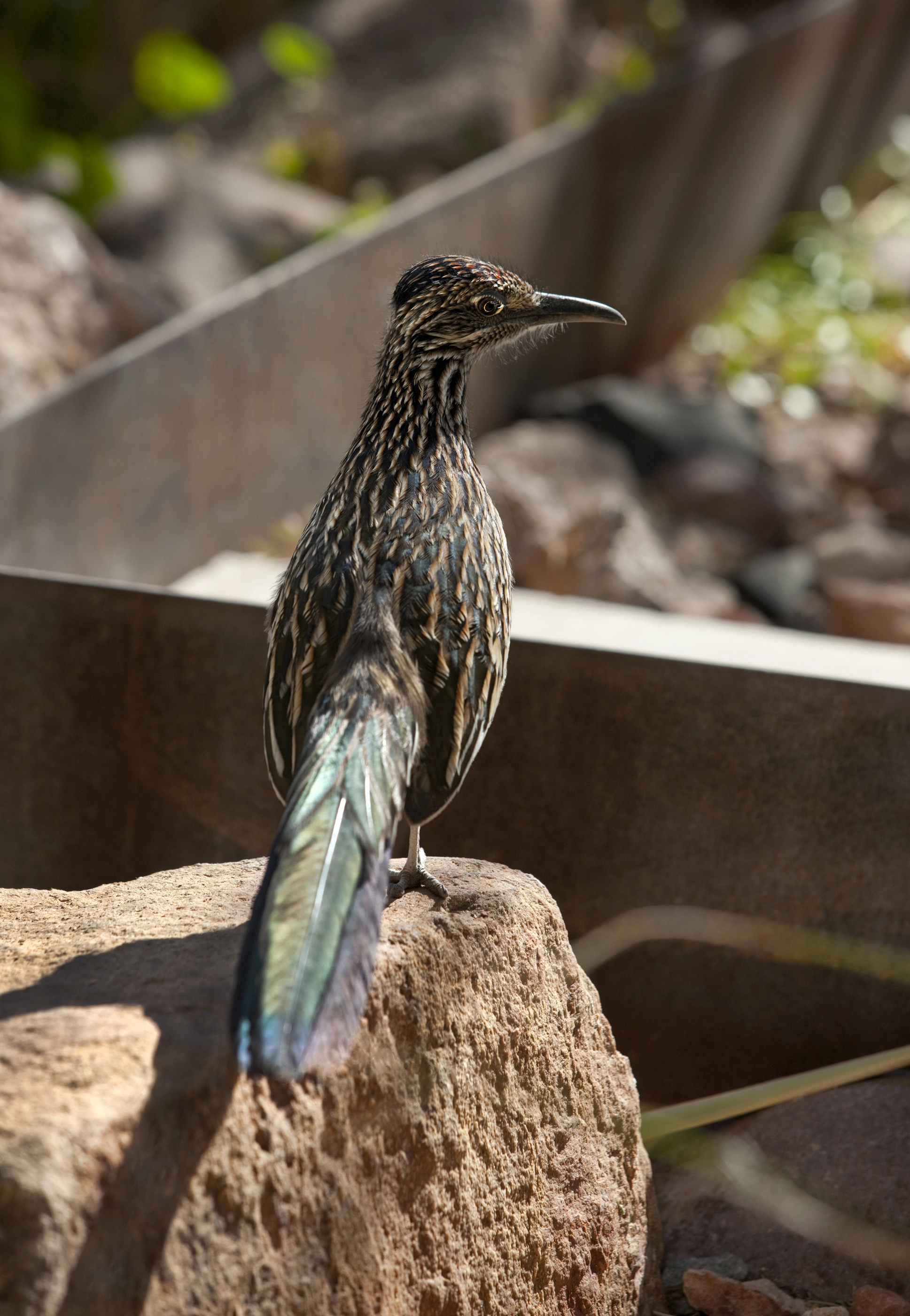
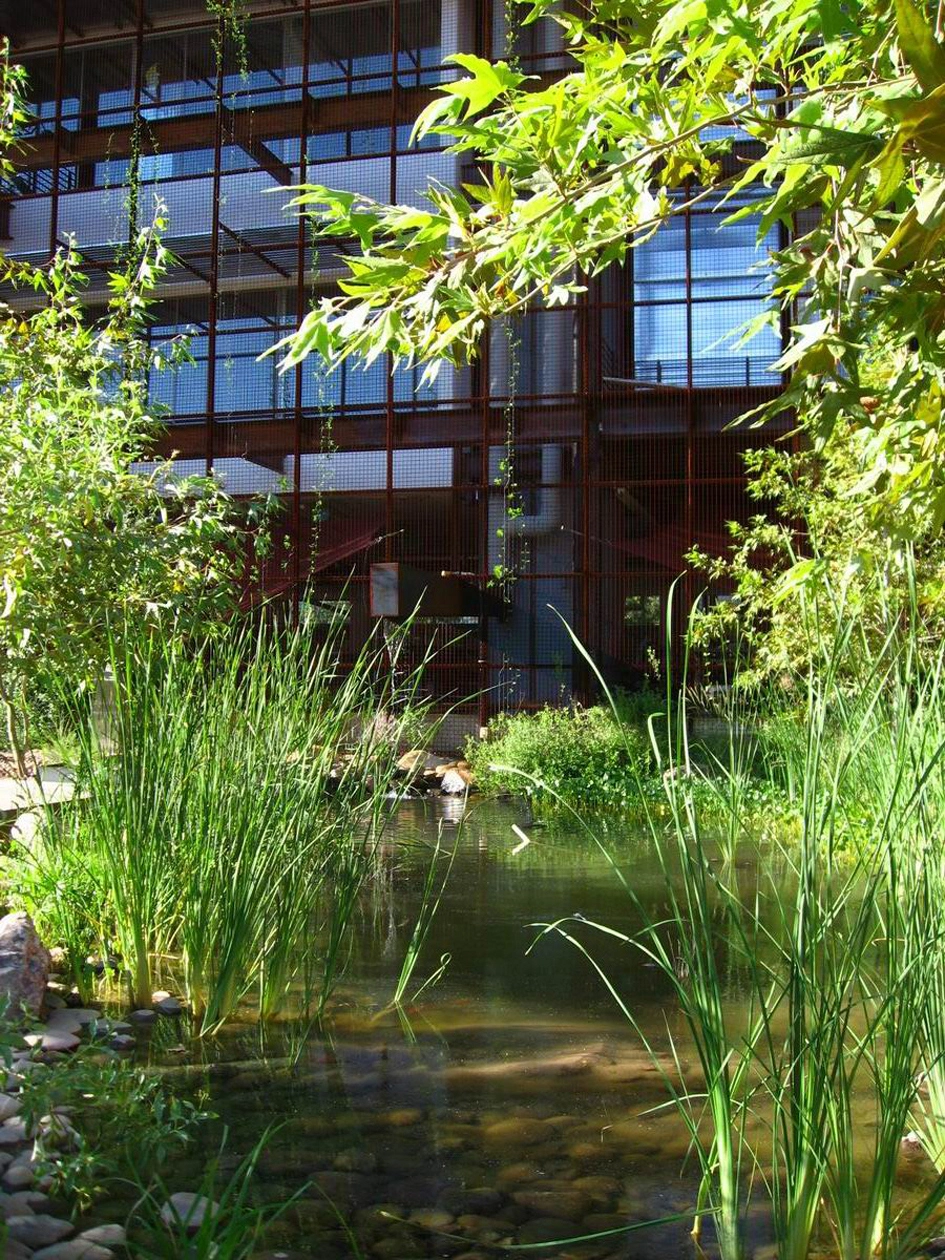
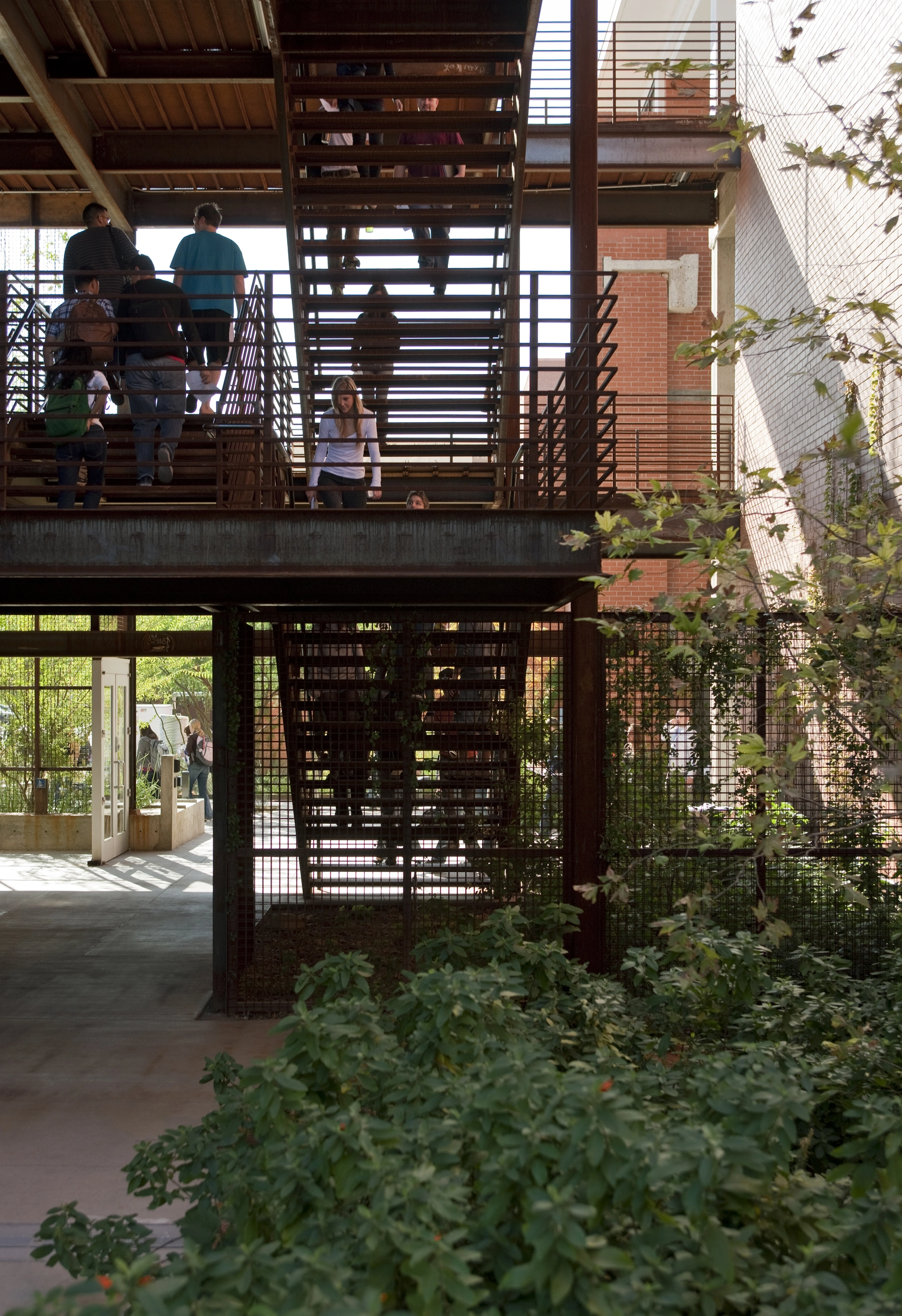
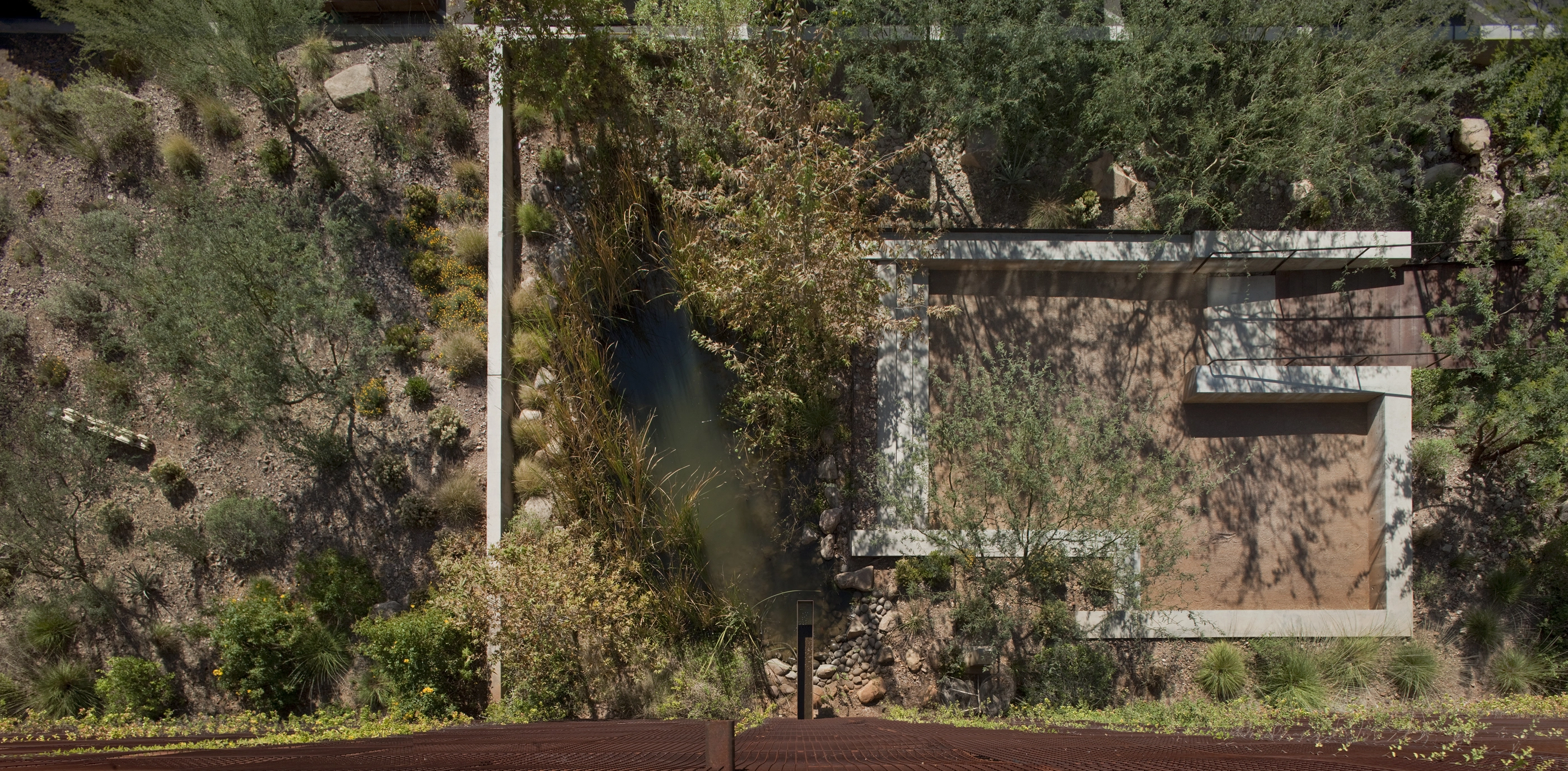
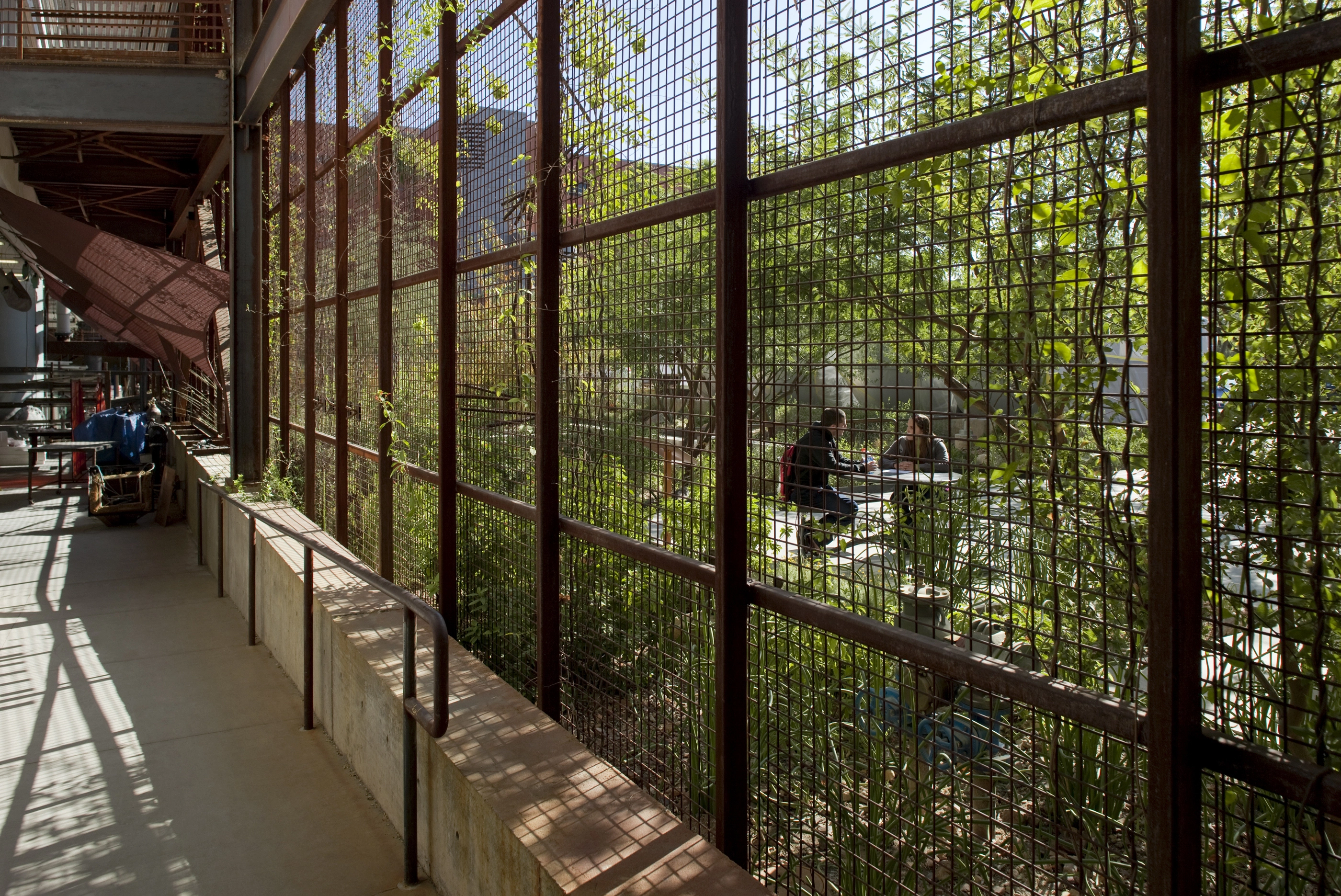
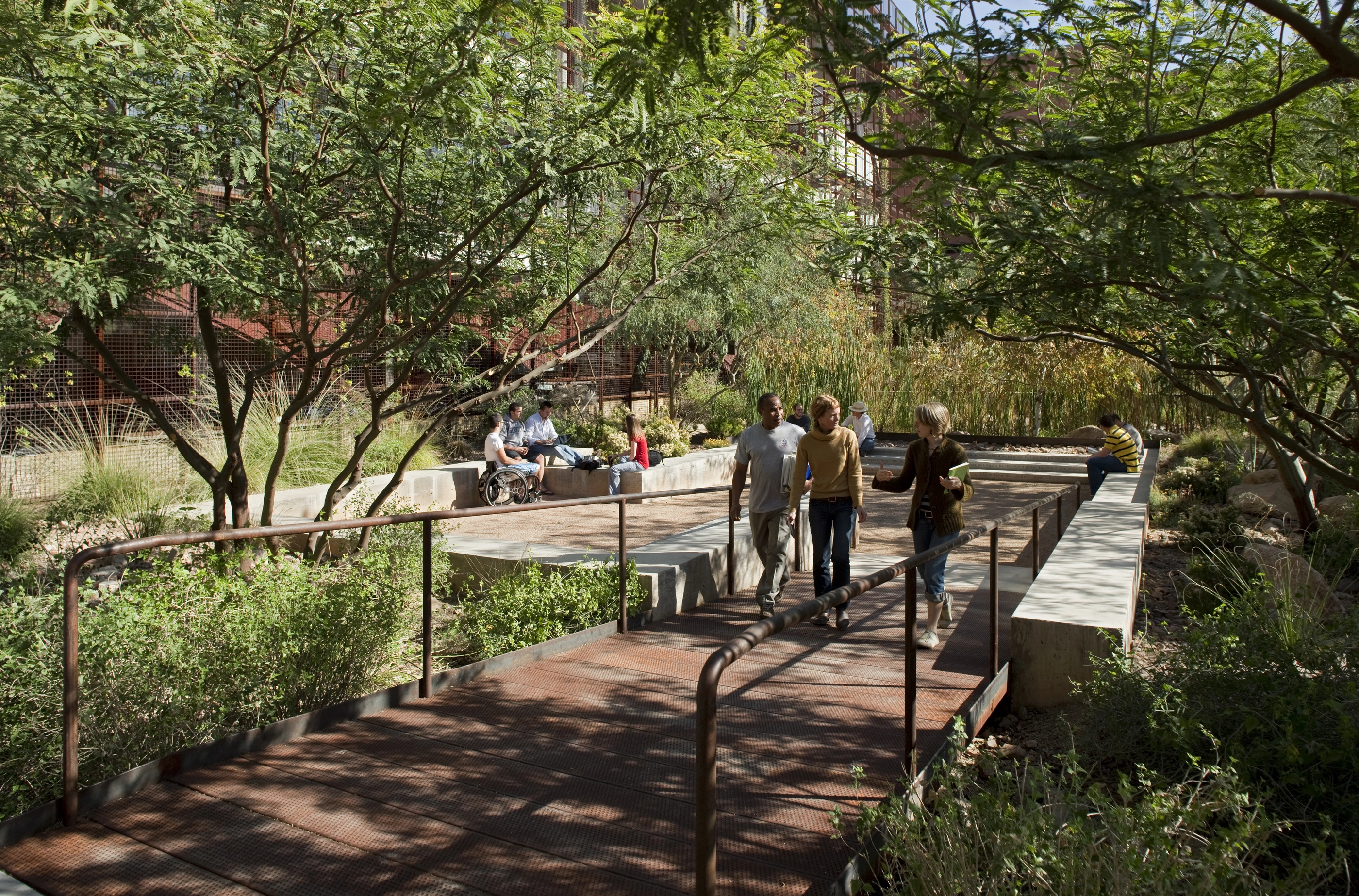
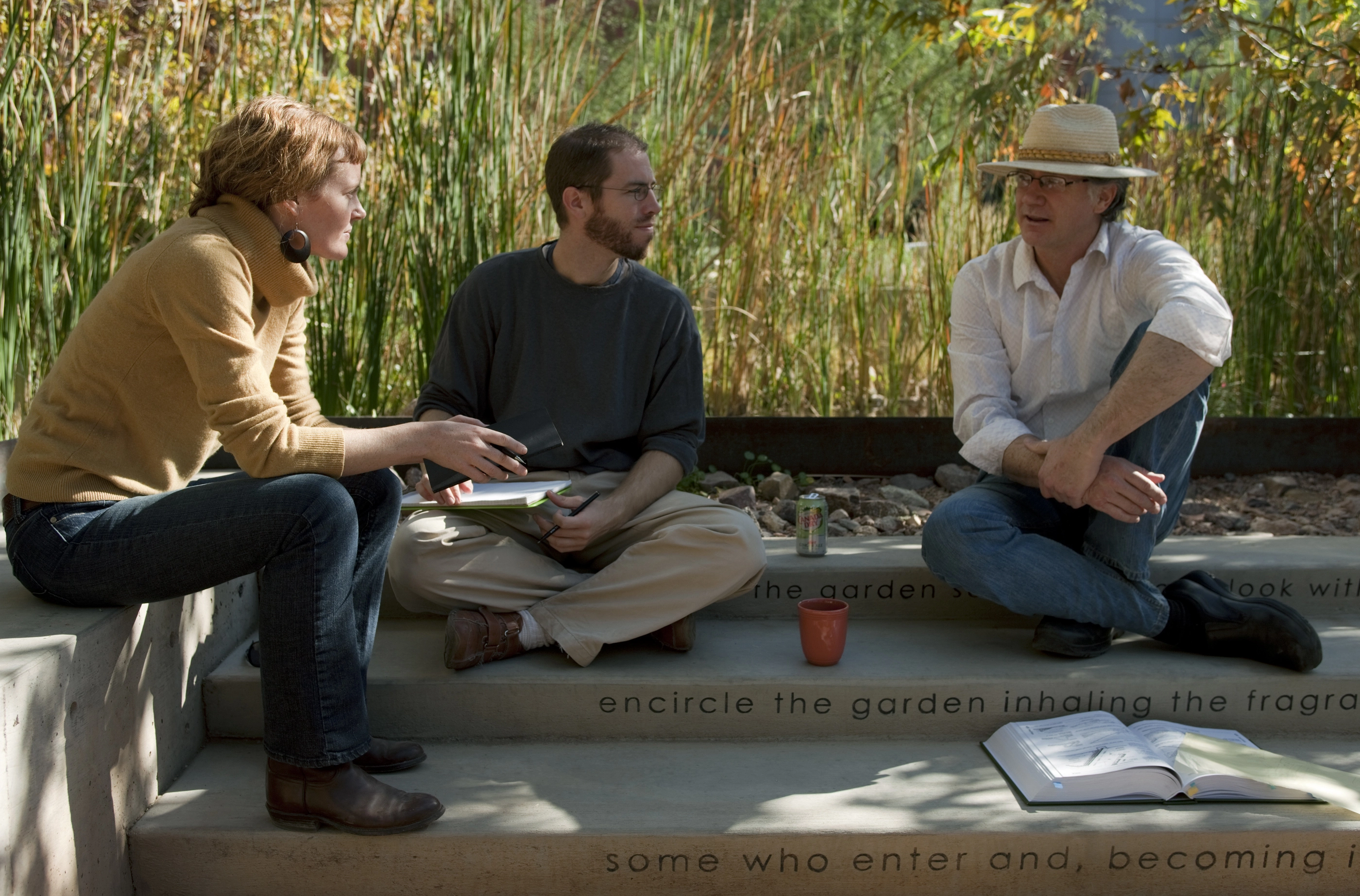
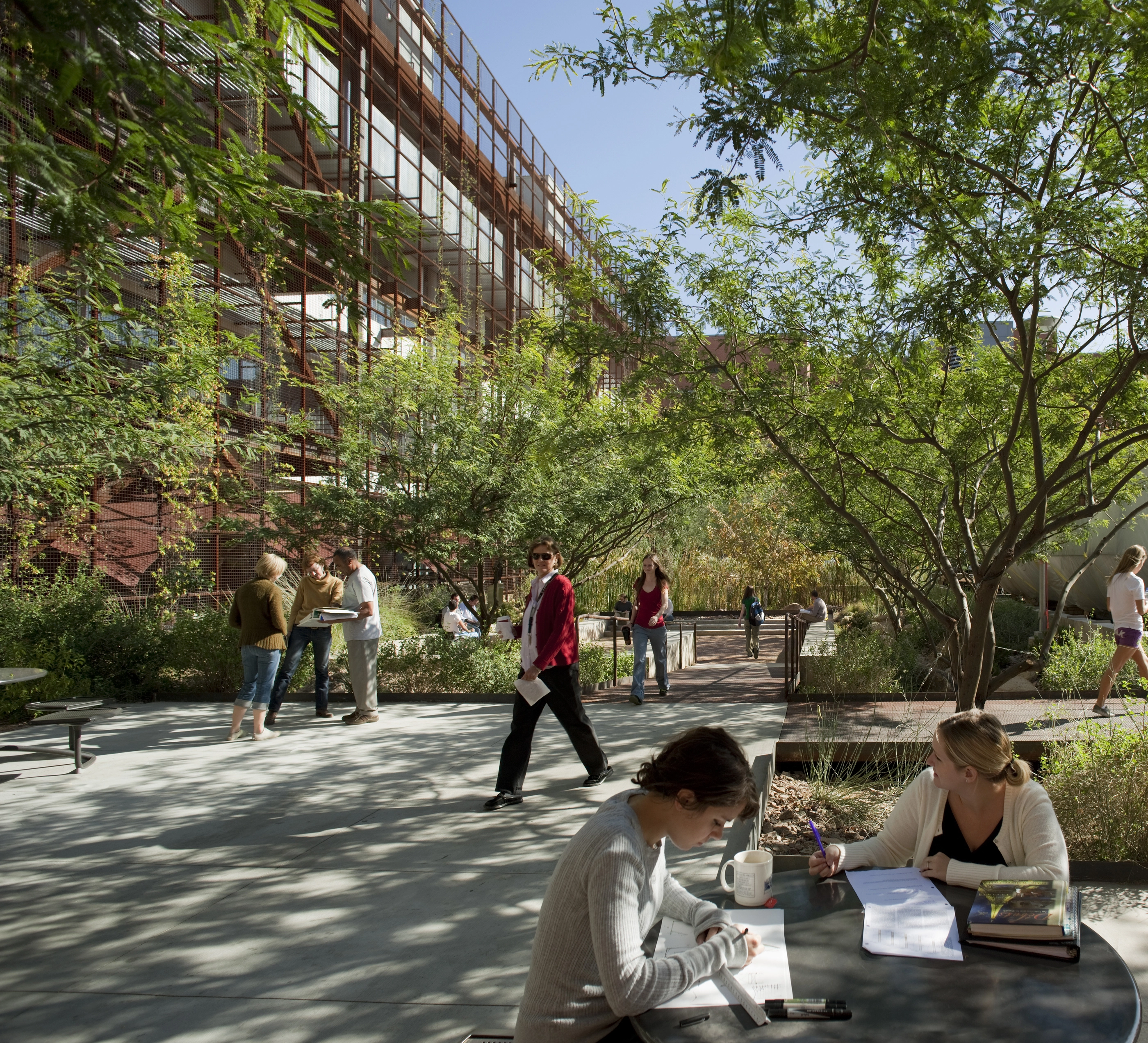
This project shows us everything that we should find in a university landscape. Not a blurred interpretation of "native" but rather a commitment to accuracy. An innovative and progressive incorporation of natural systems and social spaces. Blending the functional aspects with social spaces is a rare commitment to this level of honesty.
Awards Jury
-
The Sonoran Landscape Laboratory is a high-performance landscape functioning as both an outdoor classroom and entry plaza. It exemplifies sustainable strategies of water harvesting, climate regulation, air and water cleansing, recycling, urban wildlife habitat and human well-being. The former greyfield is now a thriving habitat that shades the southern exposure of the new building with a vine-covered scrim. An 11,600-gallon tank collects water produced by the building to support the native garden.
-
The College of Architecture and Landscape Architecture (CALA) at the University of Arizona built a new expansion facility that allows students from all three design disciplines (architecture, landscape architecture, and planning) the opportunity to work side by side in an integrated studio environment. The site also performs as an ongoing laboratory and demonstration facility for sustainable design in the arid southwest. Students from all three disciplines share studio space and academic coursework, and a world-class materials laboratory offers students the ability to research emerging materials and learn design through hands-on building.
The Sonoran Landscape Laboratory was designed as a low-cost, research-oriented, educational public space focusing on water-conscious design solutions and creating urban wildlife habitat and biomass. From its inception, the development was based on a critical public university/private enterprise collaboration. The faculty requested the site design to be an interpretive learning experience using a range of materials that would be a fun, regional oasis and attraction for existing and future students and professors of the CALA program.
The landscape architect was inspired by the fact that the site was part of an existing parking lot and all of the surface water seemed to drain to what would be the new building entry space. The idea of creating a new entry and garden/outdoor classroom that would be a cleansing biosponge garden for adjacent runoff and discarded water from the new building was received positively by the faculty and university.
The landscape architect's concept of a floating entry plaza was distilled into a perforated bridge spanning a restored arroyo that conveys reclaimed water to the landscape. An accessible, sunken outdoor classroom of permeable stabilized granite provides a place for student study, building projects and gathering while detaining water during desert storm events. Steps up to the riparian pond are inscribed with a favorite poem of one of the longtime architectural professors that he felt appropriate for the space.
This design reveals several important features of value to the client and future designers:
- It demonstrates both active and passive water harvesting techniques that dramatically reduces water consumption and exemplifies slowing stormwater runoff to reduce urban flooding.
- The project increased the biomass of the site 50 percent even with the addition of a new building in an existing urban setting. The resulting urban wildlife habitat has attracted many species of birds including hawks searching for ground mammals and reptiles in the garden. The pond is home for endangered fish and is listed by the US Fish and Wildlife Service as a "Safe Harbor" urban site.
- The design incorporates on-site recycling of demolition materials. Rubble consisting of bricks and concrete from a portion of the older architecture building demolished early in the project was used within the desert arroyo "microbasins" rather than imported natural stones.
- The cooler microclimate created by the garden has increased the opportunities for outdoor gathering and learning in a harsh desert environment and due to its orientation, reduces the urban heat island effect. As part of the teaching garden "laboratory," five distinct Arizona biomes are represented within the project limits. These include Arizona Wetland, Canyon, Desert Riparian, Mesquite Bosque, and Upland Sonoran. The vines have climbed to a remarkable 50 feet high up the scrim of the building and have started to shade and cool the building.
- The project is an example to other city/public projects without huge dollar resources that human health and well-being can be achieved through rethinking what urban space is by balancing hardscape and nature and getting the community involved. Views from the building to the garden create a restorative, healing environment.
Extensive collaboration with the engineers, architect and the irrigation consultant resulted in the design of an extensive building water harvesting system that collects roof runoff, HVAC condensate, and greywater from the building's new drinking fountains. These various water sources are directed to a 7-foot-diameter by 38-foot-tall vertical storage tank with an 11,600-gallon capacity. In the event of limited water supply from these sources, a potable connection to the tank was provided for emergency use. The design also integrated another water source from an adjacent well which required daily flushing for proper operation. This maintenance activity resulted in approximately 200 gallons per day being expelled into a city storm drain system. While directing this water to the fiberglass storage tank proved impossible, the water was successfully diverted into the desert riparian pond which helps maintain its water level and mineralizes the water to produce a proper habitat for desert fish species.
Approximately 230,000 gallons of water is harvested annually for reuse. The landscape establishment period (first 3–5 years) requires approximately 280,000 gallons of water annually resulting in an initial potable water reduction of 83 percent per year. A pumping system pressurizes water from the storage tank to be used in the high-efficiency drip irrigation system. A CALSENSE system is used to monitor evapotranspiration rates per biome. Over the next few years, the need for potable water should be eliminated resulting in a completely self-sustaining landscape, rare in such an inhospitable and unique environment such as the desert southwest.
In the event that the storage tank is full and a rain event occurs, the system is designed to overflow into the desert riparian pond and then into the bioswale arroyo. The arroyo is designed to soak up water and let it flow more slowly through a bioswale planted with native Arizona vegetation prior to reaching the low point of the drain inlet into the campus stormwater system. This system helps mitigate the problems associated with rapid urban water runoff, providing critical detention and filtration, while at the same time nurturing a native landscape.
We believe this project is a great example to students/future practitioners of partnering with clients and other collaborators to overcome economic hardships in creating new urban places that are high-performance landscapes of daily inspiration for urban dwellers.
-
TELA Project Team
Christine E. Ten Eyck, FASLA, Principal
Todd Briggs, ASLA, Project ManagerArchitect
Jones StudioCivil Engineer
Evans KuhnMechanical Engineer
Kunka EngineeringIrrigation Design
Carl KominskyWetland Consultant
Wass Gerke and AssociatesGeneral Contractor
Lloyd Construction Company, Inc.Landscape Contractor
AAA LandscapePhotographers
Bill Timmerman
Judeen TerreyDonors
The Robert and Richard Underwood Family
AAA Landscape
Mountain States Nursery
Arid Zone Trees
Western Tree Company
Rain Bird Irrigation
Kalamazoo Materials
FX Luminaire
Advertisement
Related Awards
Award of Excellence, General Design
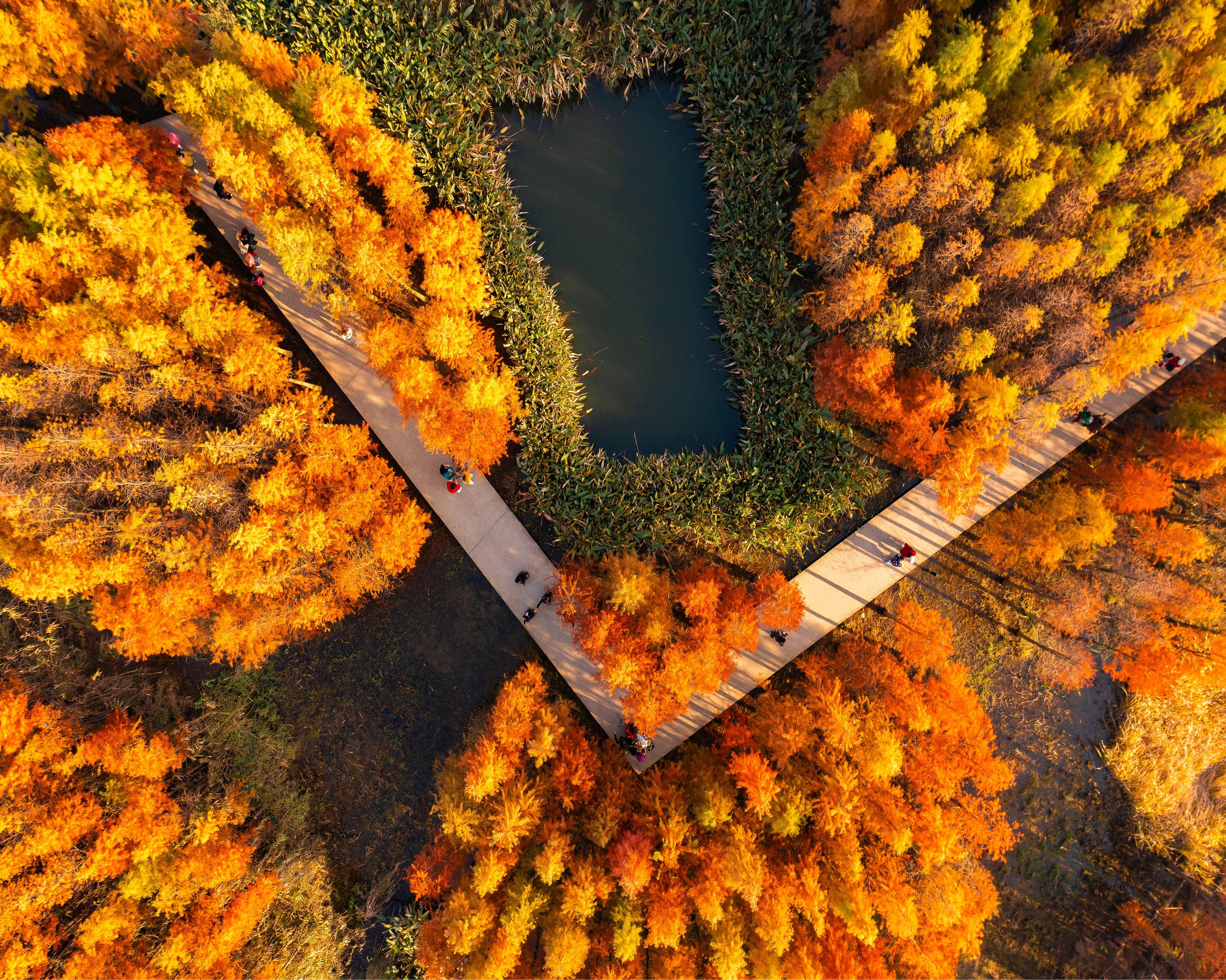
A Floating Forest: Fish Tail Park in Nanchang City
In Nanchang, within the Yangtze River floodplain, we revitalized a heavily degraded 126-acre landscape into a floating forest that manages stormwater, restores habitats, and provides diverse recreational spaces—all within a limited budget and a short timeline. This innovative urban nature model strengthens the district’s identity and spurs surrounding development. Fish Tail Park offers a scalable solution for flood-prone regions, seamlessly integrating flood resilience, ecological restoration