
.webp?language=en-US)

Exhibiting the Ground: Applying Fire as a Design Element for the Stapleton Community
Nieve Nielson, Student Affiliate ASLA
Very admirable in using modest means to achieve its ends. They understood the ecology of the site. This issue is an interesting and integral part of the practice.
Awards Jury
-
An investigation of inherent site conditions prompted a design intervention where fire was the major implementation near the former Stapleton International Airport in Denver, CO. Fire, as a natural element, can be embraced as a cultural means to shape a landscape and give it form, function, familiarity and flux.
-
Fire, as a natural element, can be embraced as a modern cultural means to shape a landscape and give it form, function, familiarity and flux. This concept was explored after an intimate study of an abandoned feral piece of land near the former Stapleton Airport in Denver, CO. A prescribed burn partnered with a mowed green break to contain the fire was proposed to reveal the inherent, embedded qualities of the land. It was predicted that a site implementation of rotating seasonal burns would unveil a variety of reactions, both ecological as well as cultural. Ecologically, the site would regenerate new plant growth lending a food source for grazing animals, nesting areas for a variety of birds, and cover for predatory species. Because the burns would take place during alternating times of the year, a mosaic motif of warm season grasses next to cool season grasses would also emerge. Culturally, this colorful planned patchwork pattern would invite human curiosity, captivation and recognition. The fire itself would attract people allowing for unorganized and regulated events alike. The spaces left after and before the burns would be inviting for educational outings, recreational purposes, as well as social gatherings.
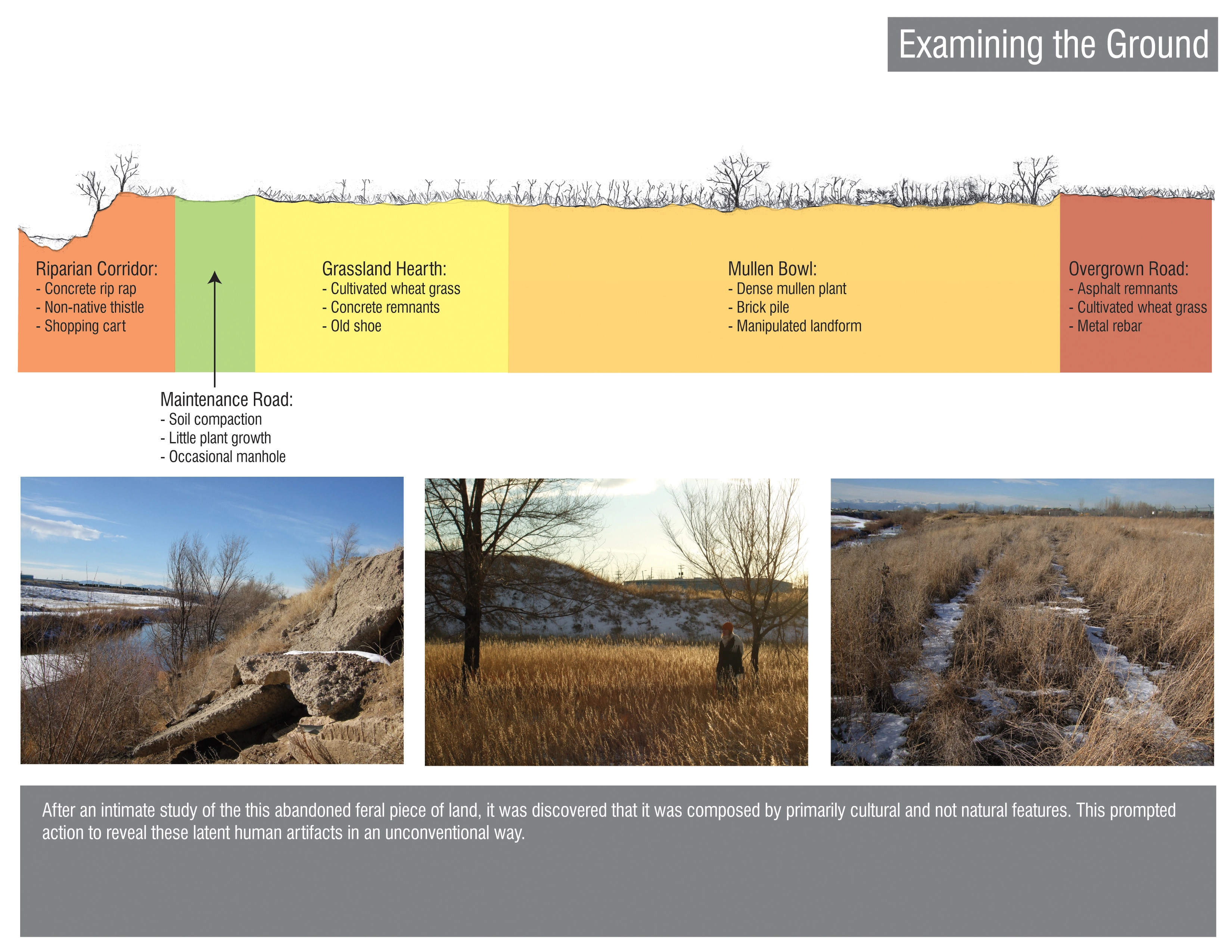
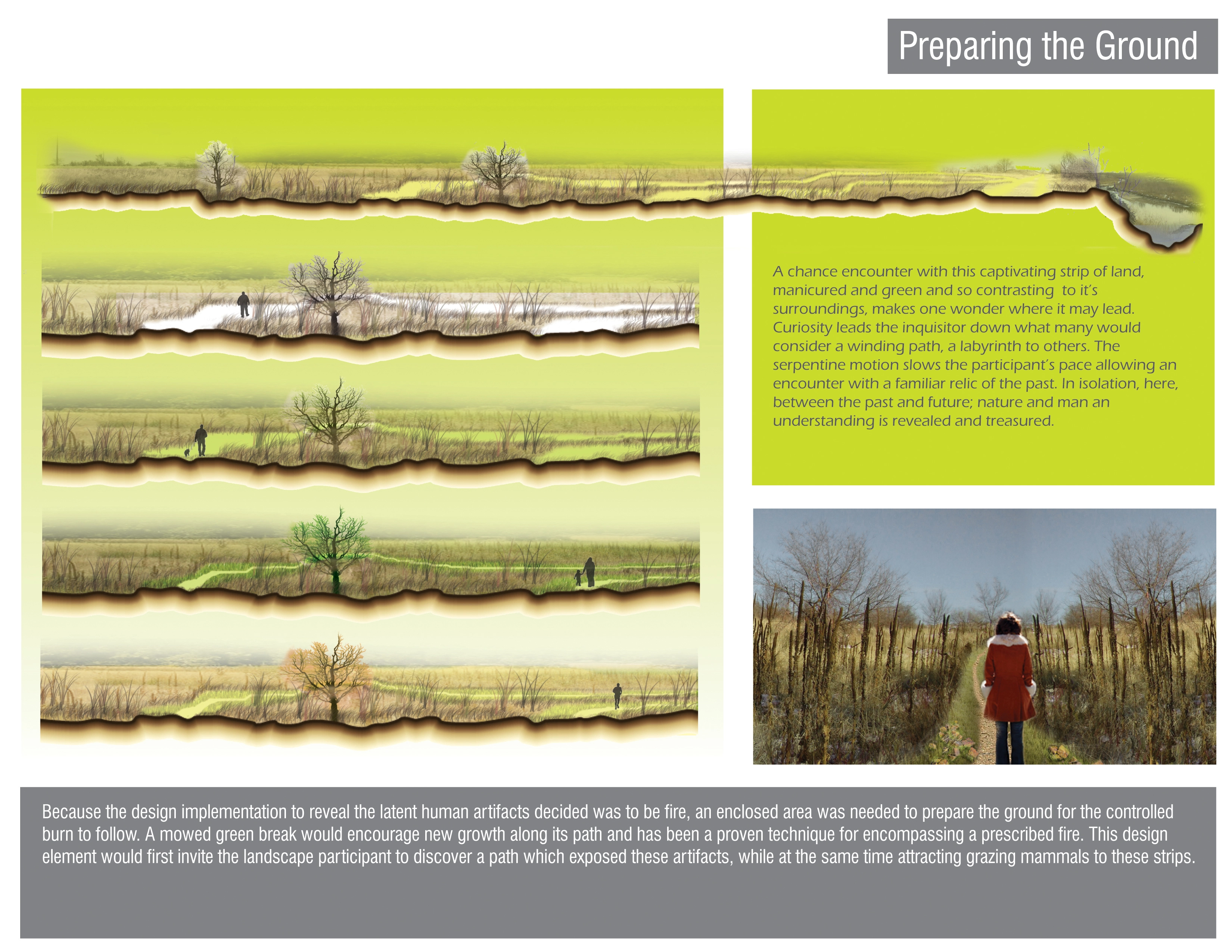
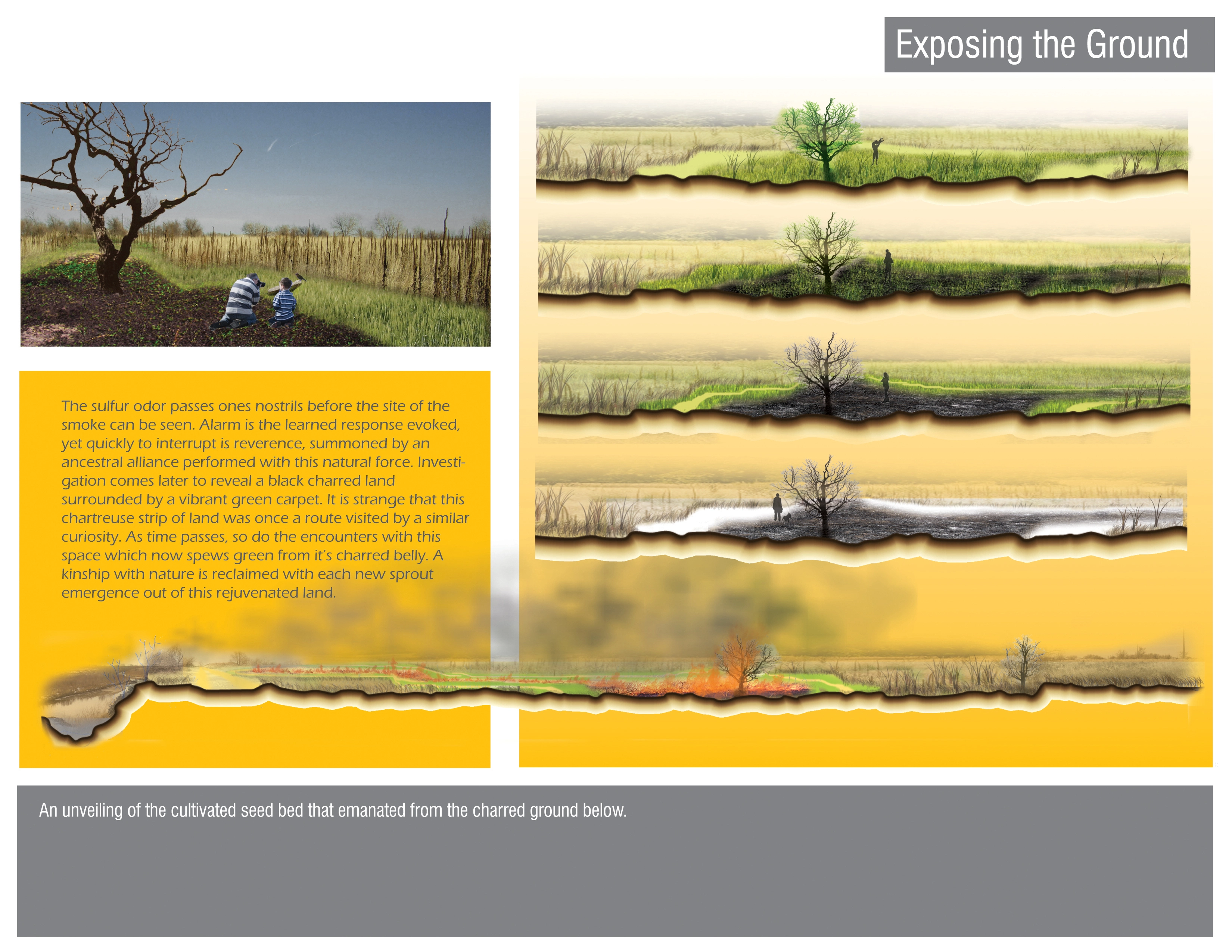
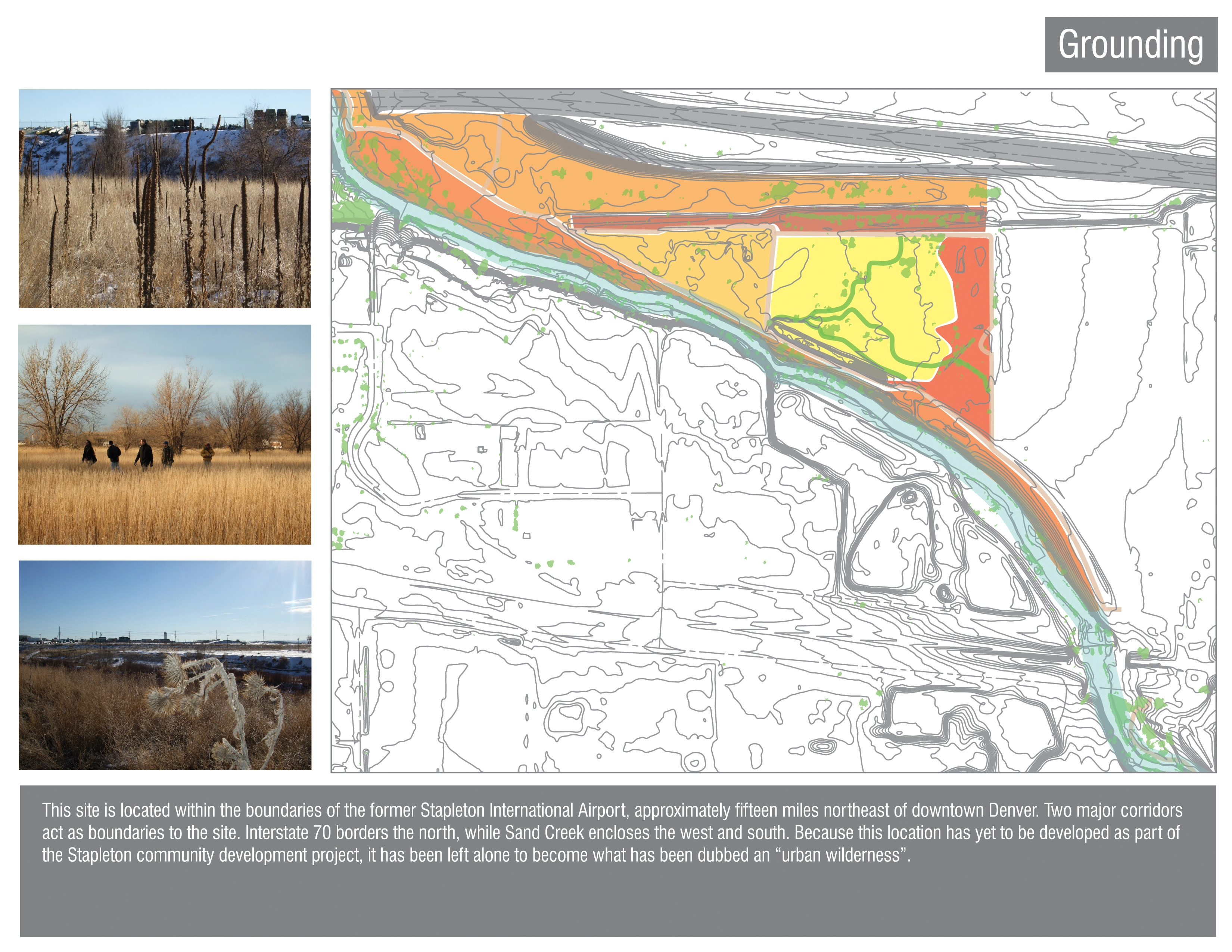
After studying this ten acre piece of land, it was discovered that it was composed by primarily cultural and not natural features. In an attempt to reveal these latent human artifacts, a new design implementation was introduced. Because fire is a natural element acquired by culture to shape the land, a prescribed burn was proposed. This operation partnered with a mowed green break would first invite the landscape participant to discover a path which exposed these artifacts followed by an unveiling of the cultivated seed bed that emanated from the charred ground below.
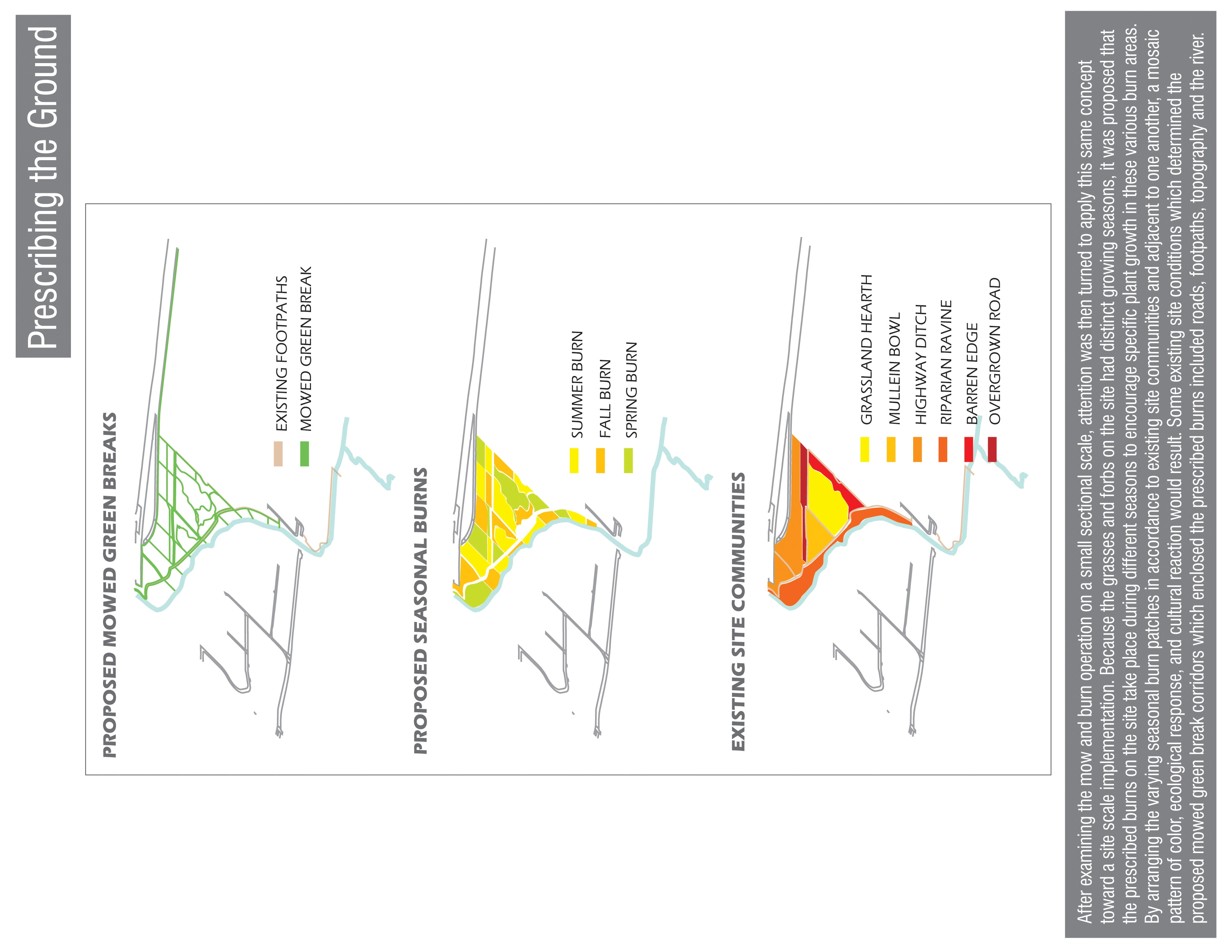
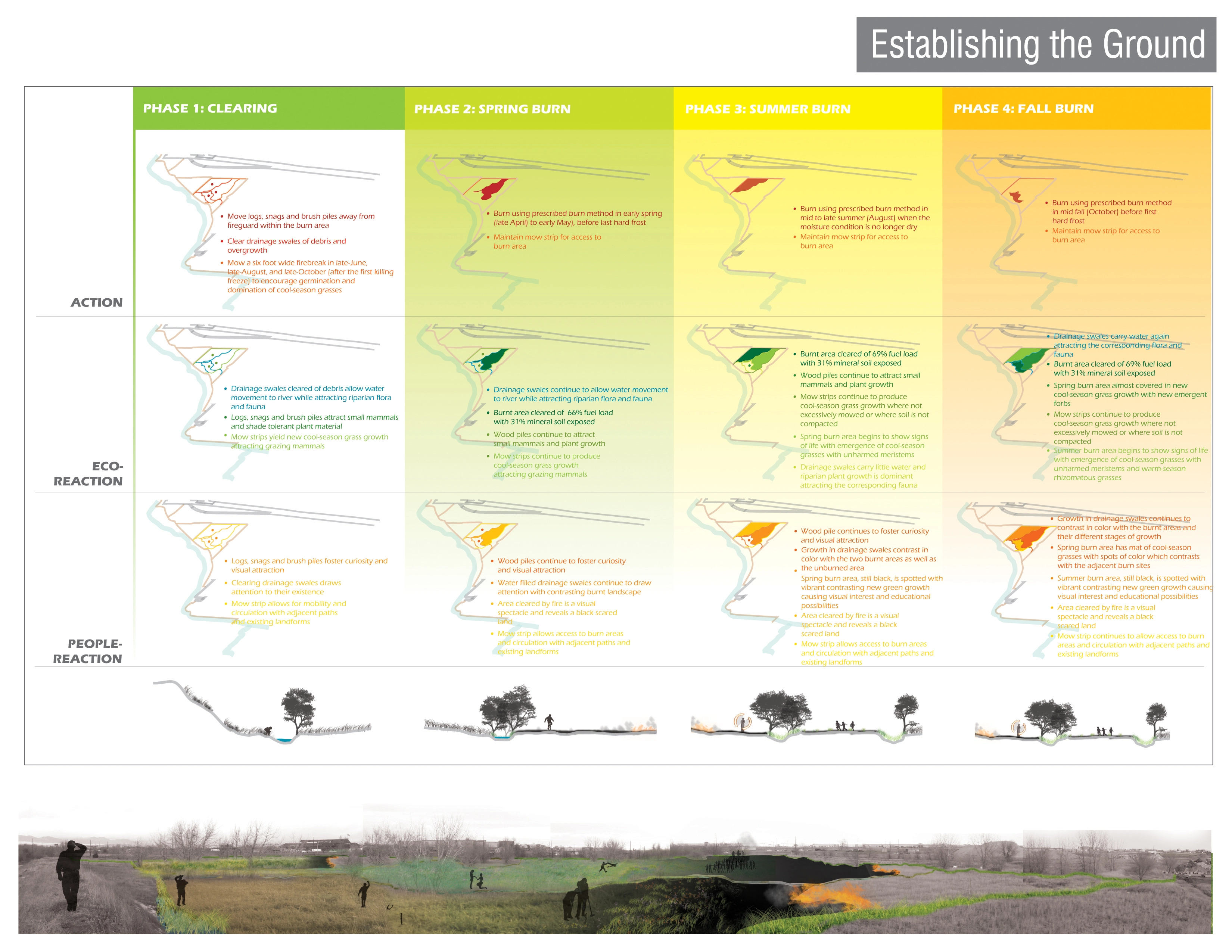
After examining the mow and burn operation on a small sectional scale, attention was then turned to apply this same concept toward a site scale implementation. Because the grasses and forbs on the site had distinct growing seasons, it was proposed that the prescribed burns on the site take place during different seasons to encourage specific plant growth in these various burn areas. By arranging the varying seasonal burn patches in accordance to existing site communities and adjacent to one another, a mosaic pattern of color, ecological response, and cultural reaction would result. Some existing site conditions which determined the proposed mowed green break corridors which enclosed the prescribed burns included roads, footpaths, topography and the river.
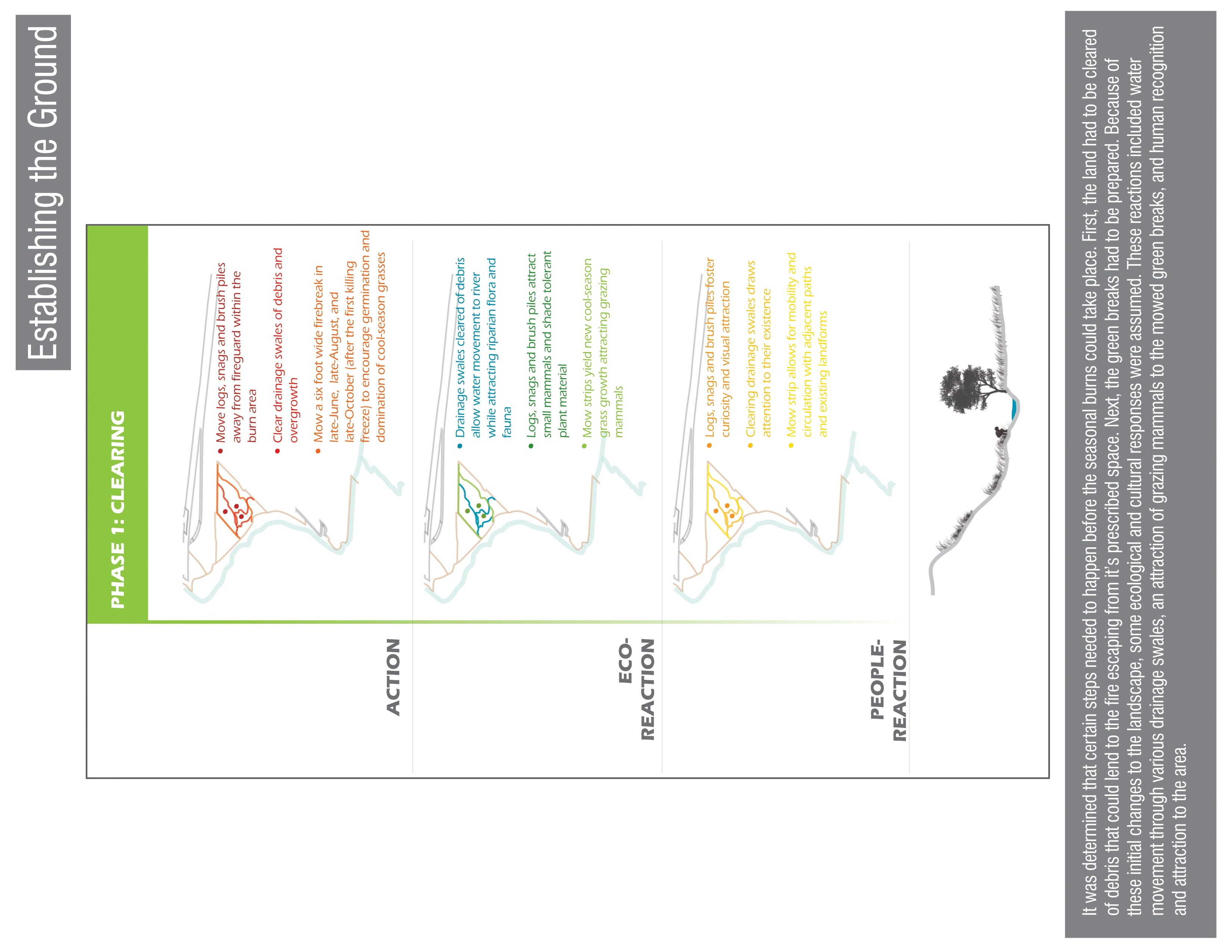
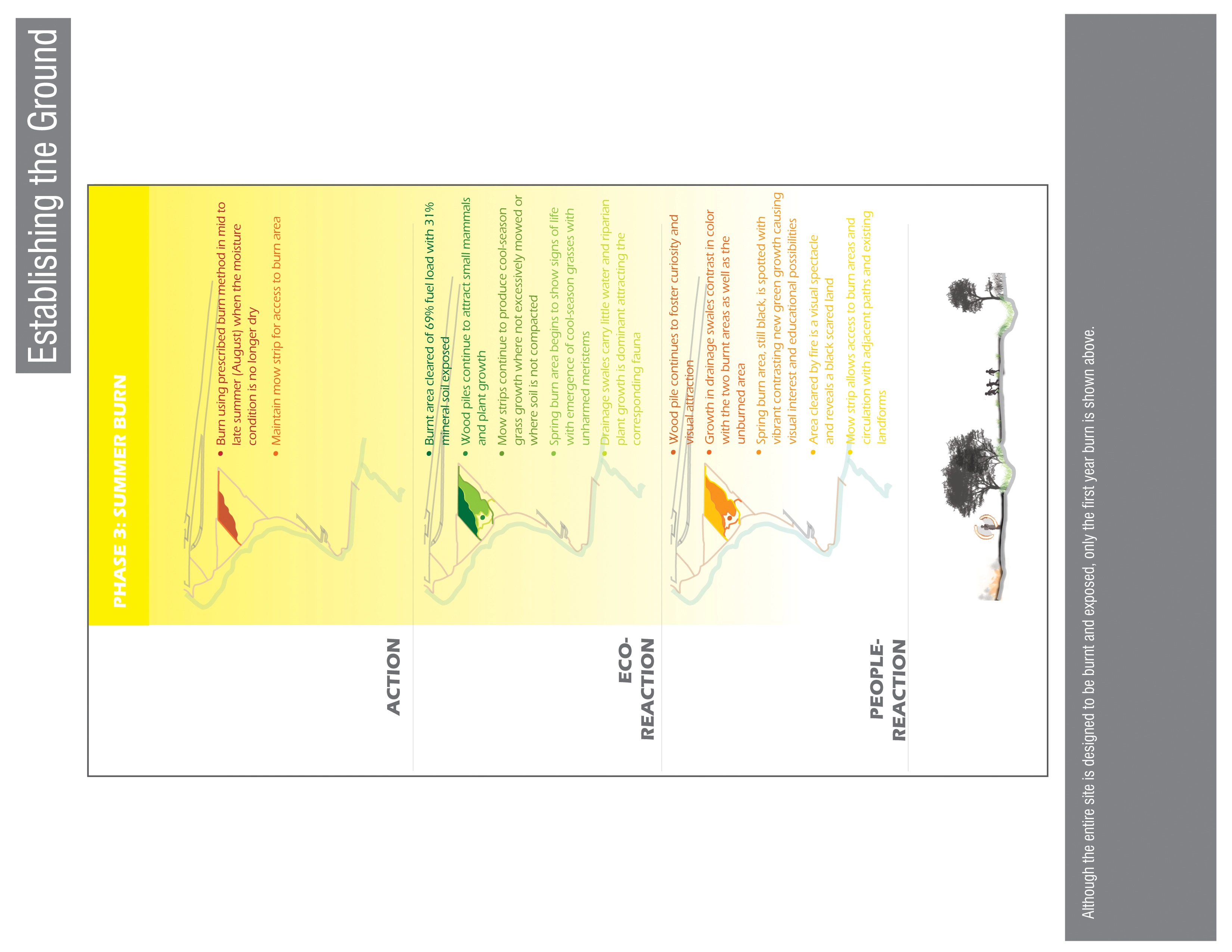
It was determined that certain steps needed to happen before the seasonal burns could take place. First, the land had to be cleared of debris that could lend to the fire escaping from its prescribed space. Next, the green breaks had to be prepared. Because of these initial changes to the landscape, some ecological and cultural responses were assumed. These reactions included water movement through various drainage swales, an attraction of grazing mammals to the mowed green breaks, and human recognition and attraction to the area.
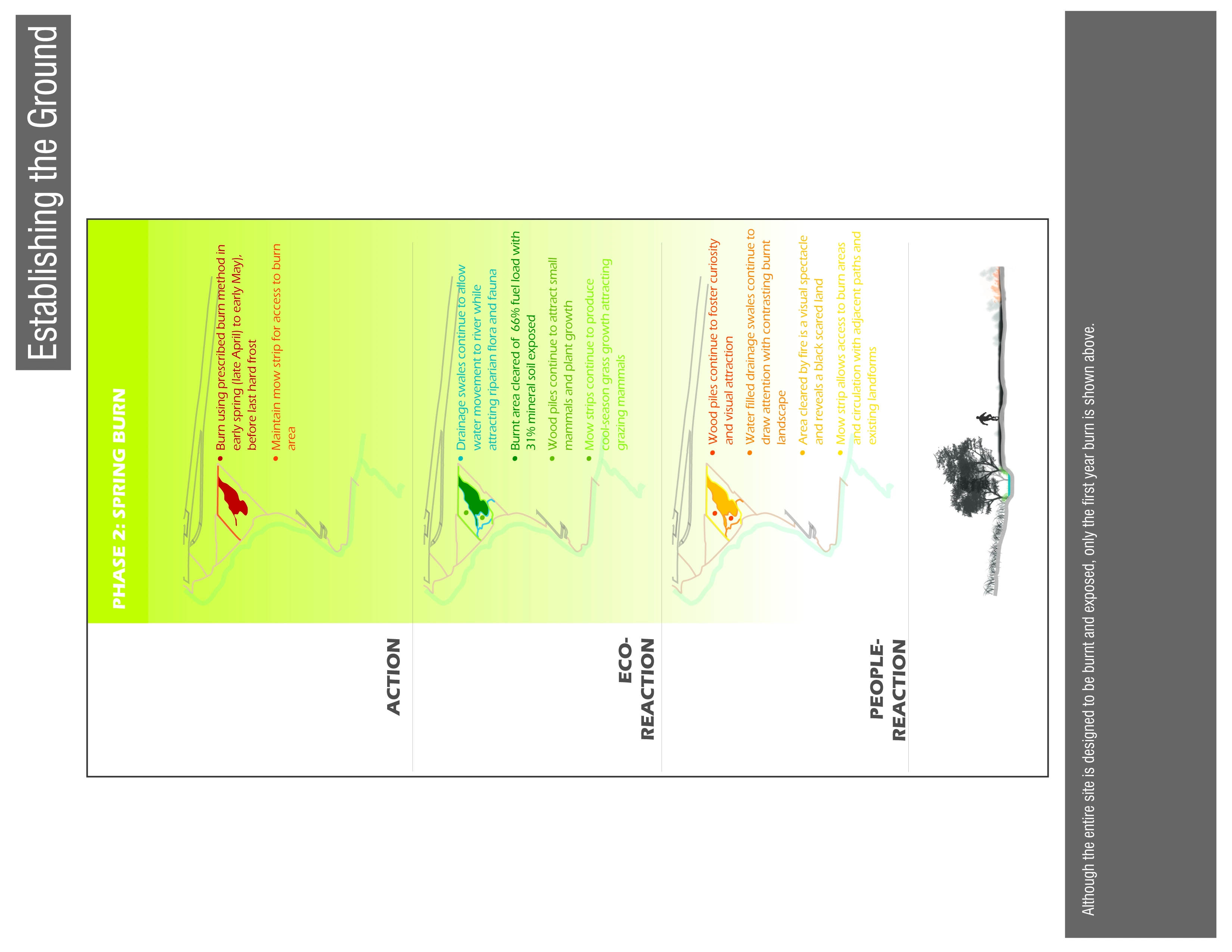
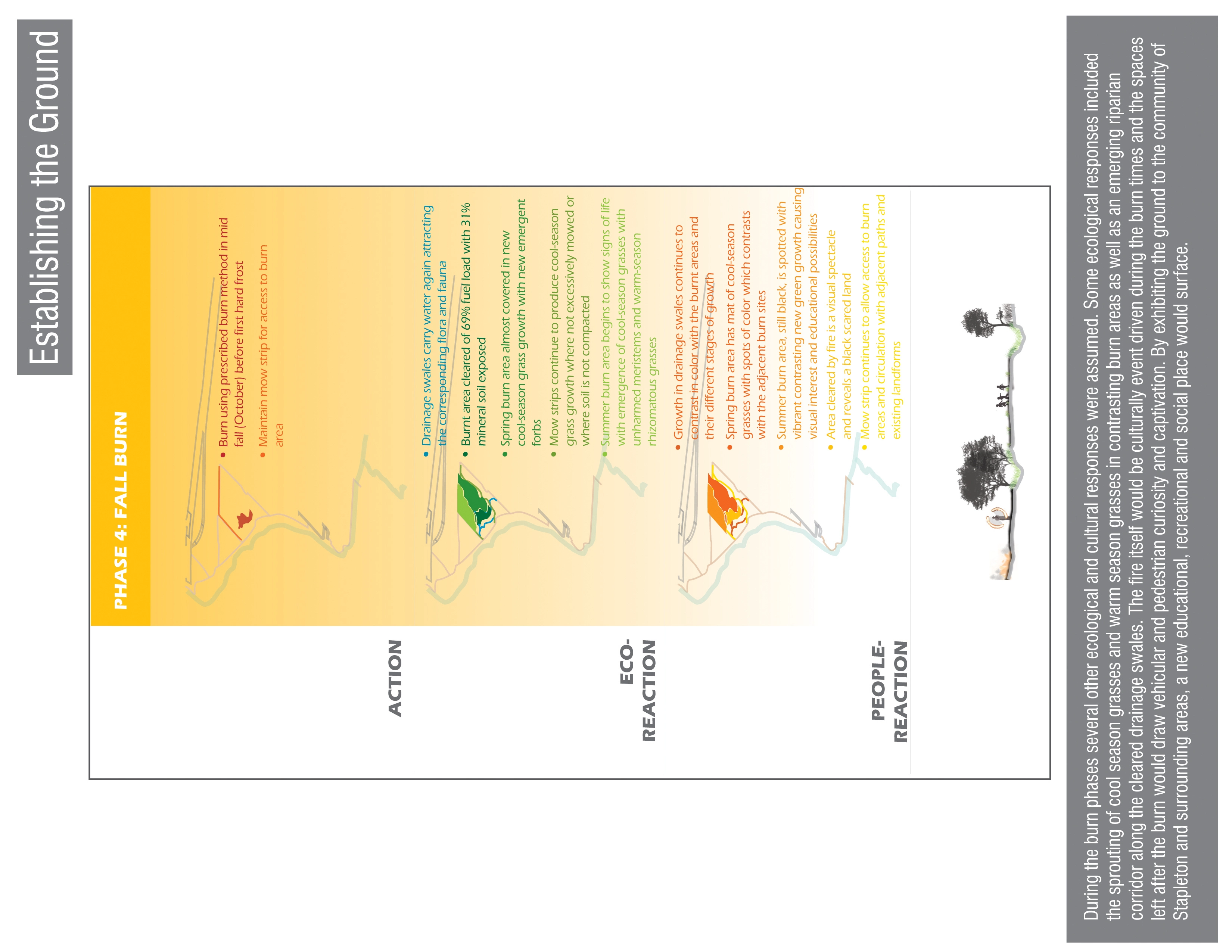
During the burn phases several other ecological and cultural responses were assumed. Some ecological responses included the sprouting of cool season grasses and warm season grasses in contrasting burn areas as well as an emerging riparian corridor along the cleared drainage swales. The fire itself would be culturally event driven during the burn times and the spaces left after the burn would draw vehicular and pedestrian curiosity and captivation. By exhibiting the ground to the community of Stapleton and surrounding areas, a new educational, recreational and social place would surface.
-
University of Colorado at Denver
Austin Allen
Daryll Peirce
Advertisement
Related Awards
Honor Award, Analysis & Planning
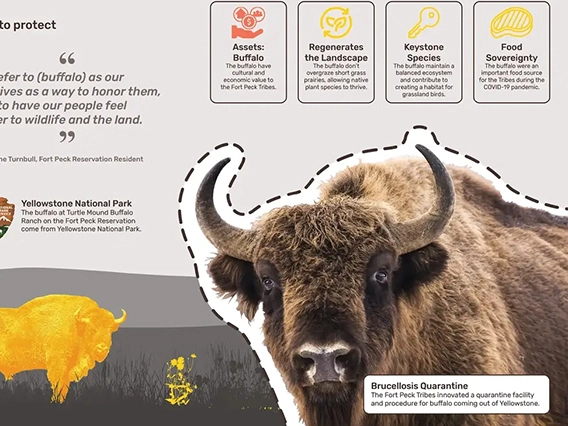
A Cultural Approach: The Fort Peck Tribes Hazard Mitigation Plan
In collaboration with the Fort Peck Assiniboine and Sioux Tribes, EPA, and FEMA, the Fort Peck Tribes Hazard Mitigation Plan (HMP) adopts a culturally responsive approach to hazard mitigation planning that features connection to place.