

.webp?language=en-US)

.webp?language=en-US)
The Sleepy Lagoon: A Memorial for Environmental Justice in Southeast Los Angeles
by Adriana García So, PLA
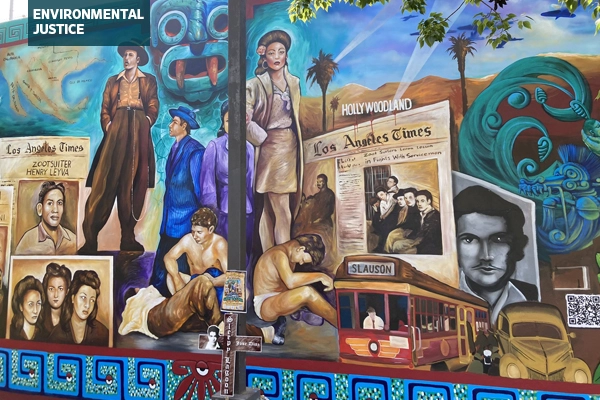
Environmental justice concerns in Southeast Los Angeles (SELA) exist around toxic byproducts from manufacturing plants and incinerators that contaminate cities like Bell and Maywood’s air, soil, and water. Urban infrastructure like the 710 South Freeway, which connects to the port of Los Angeles and Long Beach, traverses SELA communities and exposes them to elevated truck diesel and traffic fumes. East Yard Communities for Environmental Justice (EYCEJ) and Communities for a Better Environment have organized their members throughout SELA to fight off polluting projects and engage in visioning for alternatives that elevate the need for additional and improved green space along the 710 corridor. (See the Sleepy Lagoon Memorial website for a context map.)
Parallels between environmental injustice and the Sleepy Lagoon Murder can be drawn in the context of the neighborhood’s historically industrial landscape and the community’s lack of access to green space and recreation. The Sleepy Lagoon was a reservoir and popular swimming hole in the City of Bell, a racially segregated and historically redlined neighborhood in SELA. An incident took place in 1942 at the Sleepy Lagoon that resulted in the murder of Jose Gallardo Diaz, which led to widespread prejudice, discrimination, and racial profiling across Los Angeles of Pachucxs, an interracial youth subculture identified by their zoot suits. This murder resulted in racial profiling, criminalization, media attacks, and public violence targeting zoot suiters. Today, the Sleepy Lagoon no longer exists and in its place stands the Bell Business Center.
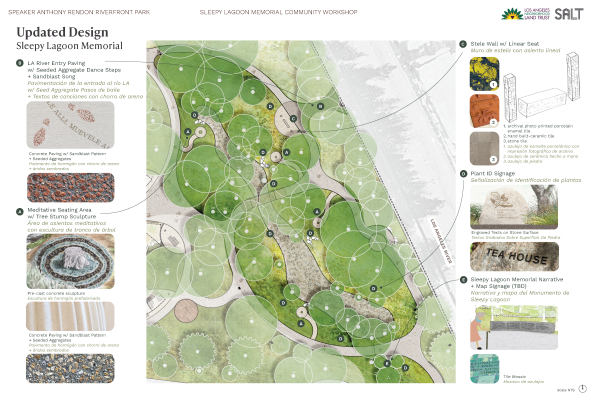
A proposed memorial to the Sleepy Lagoon reflects and shares the social, cultural, and ecological history of SELA at a brownfield site in the neighboring City of Maywood. A robust planning process led by Mapache City Projects and East Yard Communities for Environmental Justice during 2019 identified the Sleepy Lagoon Memorial. This process included many conversations with residents through focus groups, one-on-one discussions, and community meetings. The memorial design contains multiple interpretive elements that are culturally significant to SELA. Signage will be in Spanish, English, and include Tongva plant names. The memorial components:
- provide opportunities to transfer the cultural and environmental knowledge and history of the area,
- provide space for reflection and regeneration for present and future generations,
- create a natural habitat for native flora and fauna,
- make improvements to stormwater management, and
- incorporate sculptural art features connected by walking paths with seating opportunities.
Mapache City Projects, the artists responsible for creating a memorial to the Sleepy Lagoon, incorporated research and input from their own personal family archives while Indigenous culture bearers and the local community informed the memorial’s design and intersecting narratives.
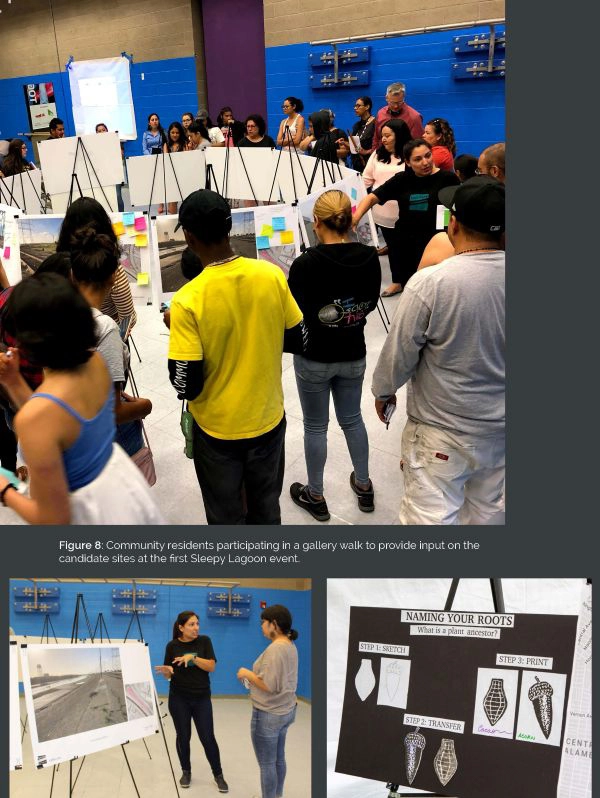
Separately, a parallel planning process for the selection of Maywood Riverfront Park as a priority renovation project in SELA was conducted in 2021. This community-driven planning process was part of the LINK Advocates, Governments, Families, and Parks Initiative in coalition with Communities for a Better Environment and the Los Angeles Neighborhood Land Trust (LANLT). Through many community workshops and surveys, Maywood Riverfront Park was selected as the preferred renovation project due to its size and immediate need for investment. This site is located along the Los Angeles River, which is the same corridor as the 710 South Freeway. Maywood Riverfront Park is made up of several former industrial parcels parched with ongoing soil remediation facilities lined immediately adjacent to residential homes.
Following the planning process, project implementation began in 2023, and Communities for a Better Environment, East Yard Communities for Environmental Justice, Sacred Places Institute for Indigenous Peoples, and LANLT partnered with the City of Maywood to renovate Maywood Riverfront Park. The team submitted a grant to the Mellon Foundation’s Monuments Project—which seeks to transform the nation’s commemorative landscape to ensure that collective histories are accurately represented—to continue the synergistic work of Mapache City Projects and develop designs for the Sleepy Lagoon Memorial. The team was awarded Monuments Project funding to cover additional community engagement during the park design timeline.
Project partners involved in the planning of community engagement include:
- East Yard Communities for Environmental Justice (EYCEJ) and Communities for a Better Environment, two environmental justice organizations responsible for leading outreach through their extensive memberships throughout Southeast Los Angeles.
- Sacred Places Institute for Indigenous Peoples, a California Indigenous-led, community-based organization, partnered to advise on Native and Indigenous narratives.
- Mapache City Projects, the artists that designed the final concept note for the memorial, and led the development of an interactive, arts and culture-based engagement curriculum.
- Eduardo Robles, a City of Maywood resident advising in the capacity of a cultural planner and strategist on engagement planning and long-term stakeholder group development to plan stewardship of the memorial and program it after construction implementation.
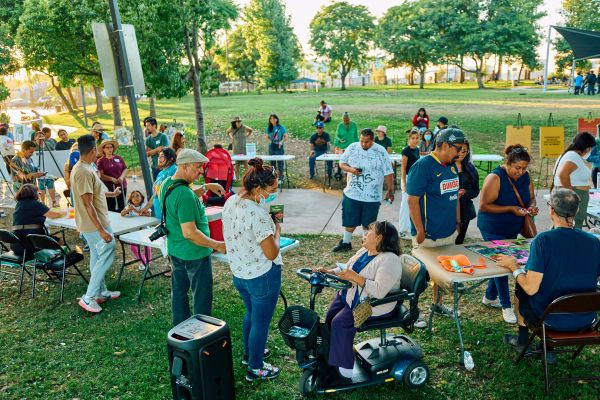
Goals for the community engagement workshops that were led in 2024 included:
- reintroduction of the Sleepy Lagoon Memorial concept to the community,
- gathering feedback to inform the location and design of individual art elements,
- gathering feedback for the interpretive signage elements, and
- educational workshops to share overall design updates of the memorial and park.
Additional educational goals were delivered through craft-based curriculum and workshops led by local artists and educators like natural plant dying, boogie dance workshops, and meditation guidance. These workshops also served as program prototypes to guide future stewardship once construction of the project is completed—the community gained insight for a culture and arts enrichment program to come.
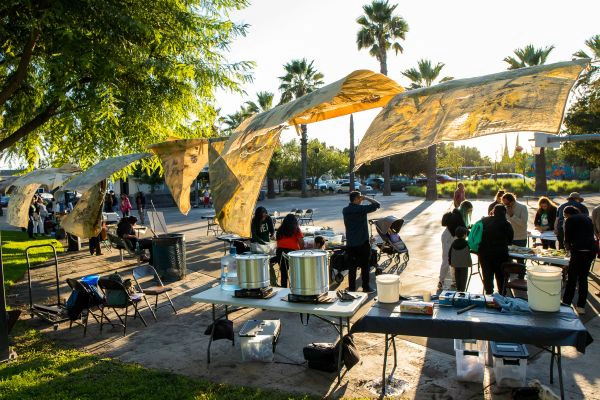
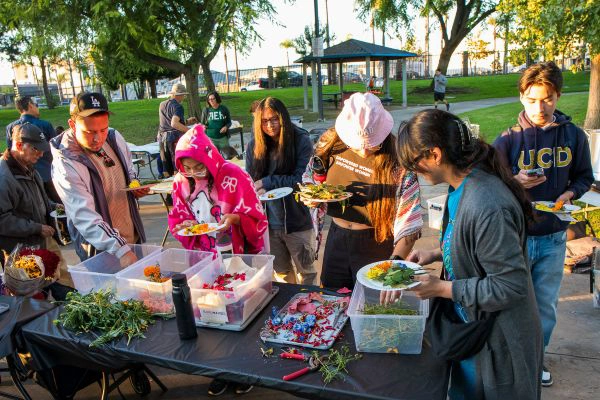
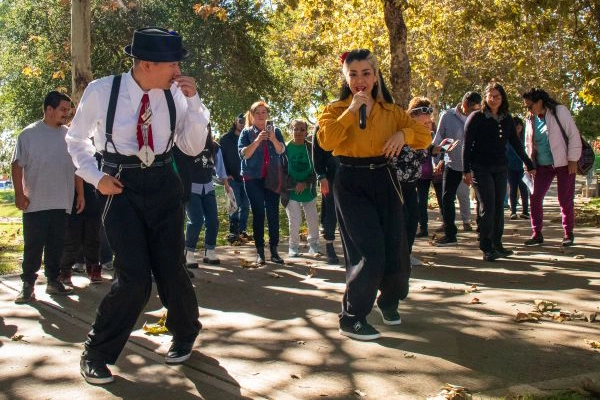
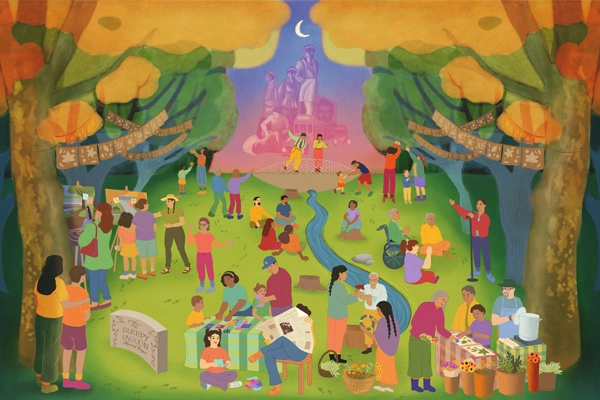
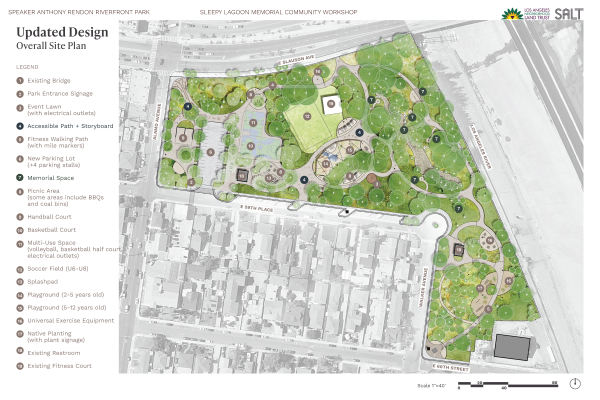
Project timelines were intentionally aligned for both the Sleepy Lagoon Memorial construction renovation of Maywood Riverfront Park, designed by SALT Landscape Architects in collaboration with Indigenous designers from Tawaw Architecture Collective. Tawaw were responsible for translating narratives from the Sacred Places Institute for Indigenous Peoples culture bearers into design concepts that could be transferred into spatial programming and materials.
Moving forward, the art elements developed during this planning process will be fabricated and installed by the same artists that designed the original concept. In addition to design and construction of the memorial, the project will support arts and cultural programming of the Sleepy Lagoon Memorial to highlight community resiliency and the community’s rights of nature and water. Partners will embark on a planning process for the long-term stewardship of the memorial by establishing a governance structure which will be inclusively defined by all stakeholders.
The Sleepy Lagoon Memorial’s visioning and all of the collective narratives shared through extensive community engagement workshops were only possible by our partnerships with the many community-based organizations such as East Yard Communities for Environmental Justice, Communities for A Better Environment, Sacred Places Institute for Indigenous People, Mapache City Projects and support from the City of Maywood. It is through these partnerships that outreach was successfully conducted through different organizational memberships and community support was built. LANLT is positioned to extend capacity to city agencies to be able to manage construction implementation and funding while ensuring that engagement remains a core focus of the development project. LANLT’s development model supports a structure where community-based organizations can drive planning, visioning, and design of priorities engaging the broader community members for an authentic community-driven development process.
Adriana García So, PLA, is a project manager for the Los Angeles Neighborhood Land Trust (LANLT), where she facilitates community-driven planning for parks and implements multibenefit green infrastructure projects in under-resourced communities. With a background in community engagement and landscape architecture, she approaches her work with an understanding of inclusivity and aims to center environmental justice through community-led projects and crafted spaces focused on user experience. Prior to joining LANLT, Adriana worked for private practice landscape architecture firms in Los Angeles for eight years. She holds a Bachelor of Science in Landscape Architecture from Cal Poly Pomona and is a licensed Landscape Architect.