

.webp?language=en-US)


Climate & Biodiversity News (September 2026)
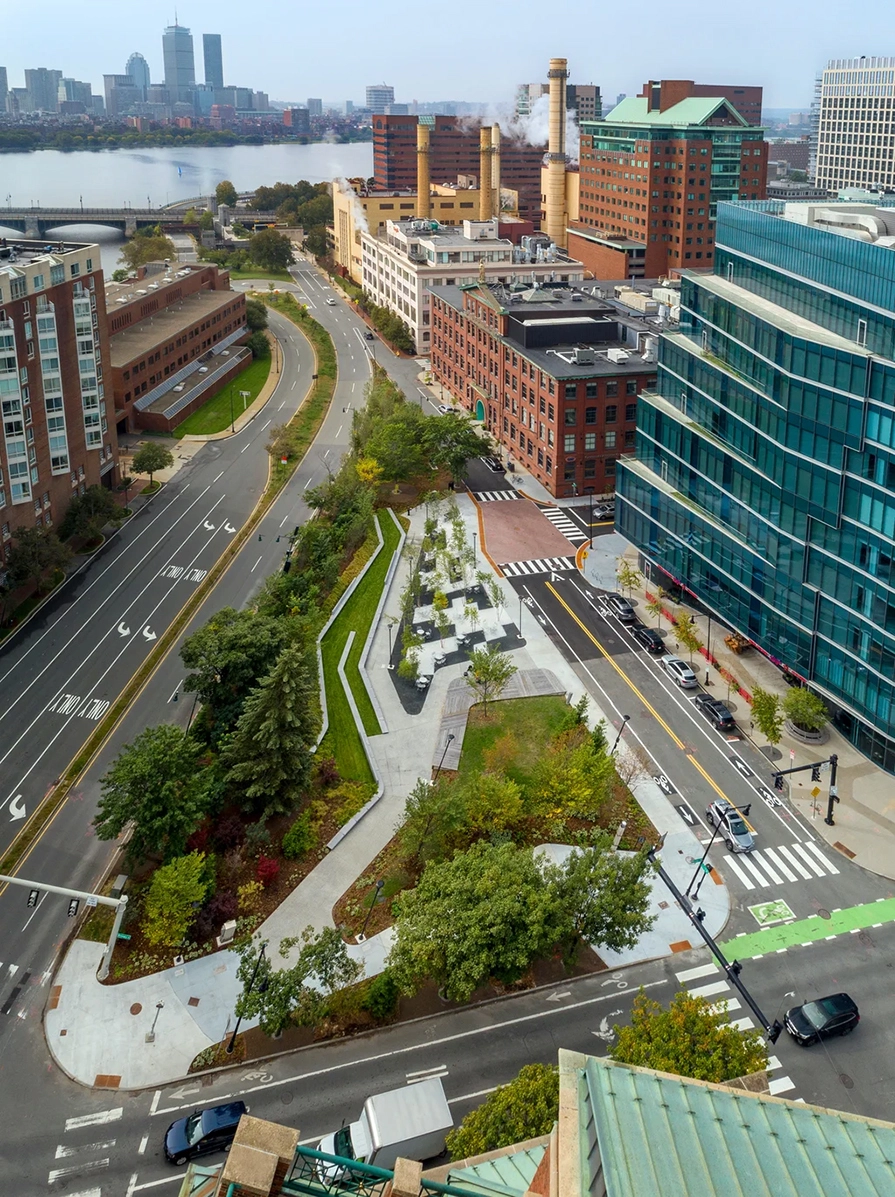 Triangle Park Urban Forest, Cambridge, Massachusetts. Stoss / Landscape Urbanism / Image courtesy of Stoss Landscape Urbanism
By Jared Green
8 Urban Design Projects That Are Improving Cities in 2026, Fast Company, September 14
Triangle Park Urban Forest in Cambridge, Massachusetts, designed by landscape architects at Stoss Landscape Urbanism, won Fast Company's 2026 Innovation by Design Award in Urban Design. The one-acre park includes 400-densely planted trees, made up of 25 species, in the style of a Miyawaki forest. Urban Design Award finalists include Denargo Market in Denver, Colorado, designed by Sasaki, and Water Street Tampa District Public Realm in Tampa, Florida, designed by Reed Hilderbrand.
EPA to Repeal Limits on Greenhouse Gas Pollution from Power Plants, NBC News, September 14
The U.S. Environment Protection Agency (EPA) announced it will roll-back regulations designed to limit greenhouse gas emissions from oil- and coal-powered energy facilities. In February, the adminstration also reversed limits on emissions from gas-powered vehicles, as part of its effort to undo the broader finding that these emissions endanger Americans' health and welfare. Environmental organizations are expected to sue.
EPA and US Army Consider Further Limits on Federal Wetland Protections, Smart Water Magazine, September 8
The EPA and the U.S. Army Corps of Engineers have announced a Supplemental Notice of Proposed Rulemaking that will further define the waters of the United States. According to the Natural Resources Defense Council (NRDC), the proposed supplemental rule would put 94 percent of wetlands in the U.S. at risk of pollution or destruction.
Indigenous Knowledge Helps Reveal the Ties Between Reefs and Mangroves, Mongabay, September 6
“First Nations peoples are the first scientists of the world,” said Katherine Cure, a fish biologist and lead author of new research in the journal Ocean & Coastal Management that includes Indigenous co-authors. In northwestern Australia, the Bardi Jawi Indigenous peoples have long studied the interconnected nature of mangrove and reef health. The research paper confirmed much of what the Bardi Jawi have already known: that many culturally-important fish species migrate between the ecosystems.
Global Warming Will Exceed Limit, UN Says in a Report That Maps Path to Get Back Below Danger Zone, AP News, September 2
The United Nations has announced the world will not achieve the central goal of the Paris Climate Accord: to limit global temperature increase to 1.5 Celsius (2.7 Fahrenheit). The planet is now at 1.4C (2.5F) above pre-industrial levels and will pass the 1.5C threshhold in the next few years. After a period of overshooting the 1.5 C limit, there are still opportunities to get back under it before the end of the century. Other scenarios show warming peaking at 1.8C (3.2F) by mid-century or 2.6C (4.7F) by 2100.