

.webp?language=en-US)

.webp?language=en-US)
Cherry Creek West Leads with the Landscape
By Jared Green
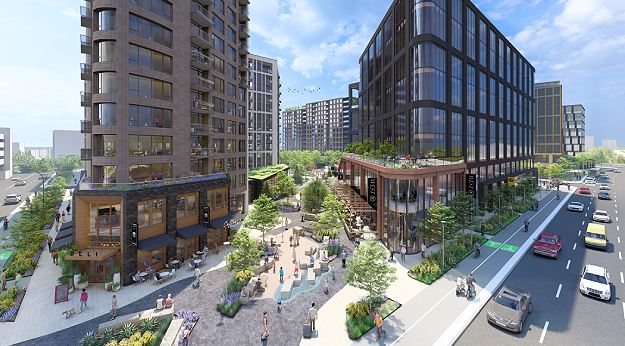
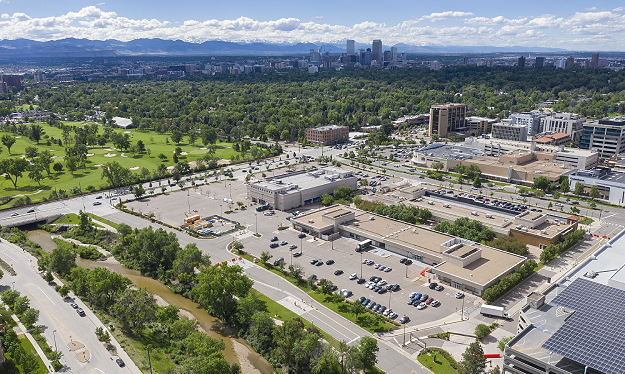
A 13-acre parking lot on the west side of Denver, Colorado will soon become Cherry Creek West, a new mixed-use community. Design Workshop, an international landscape architecture, planning and urban design firm, is transforming a big box shopping center into a walkable, bikeable destination that reduces vehicle emissions.
"The goal is to reach everything you need -- by walking, biking, or transit -- within 15 minutes," said Robb Berg, FASLA, president of Design Workshop.
East West Partners, the developers behind the billion-dollar redevelopment, worked with landscape architects at Design Workshop first to lay out the new 13-acre community. The developers wanted to "get the public realm right" before focusing on the buildings, Berg explained.
"They started with landscape architecture and urban design, because the first 30 feet makes all the difference in these developments. We wanted to design for people first and focus on the spaces a majority of people will interact with everyday. You won't have to live there, buy a ticket, or go to a restaurant to be there. We aimed to have the largest impact on the largest number of people," Berg said.
The initial master plan, which is being updated now that the project has won rezoning approval, shows a dense, mixed-use community with four acres of new open space; 825 residences, many of them affordable; 600,000 square feet of office space; 100,000 square feet of retail; and 2,000 underground parking spaces.
First, Design Workshop organized the layout of the new community and its public realm and created more "logical and safe" connections to the nearby Cherry Creek, a 45-mile greenway system that extends through the Denver metro region.
When they started planning, "there was no connection to the creek; the shopping center was blocking access. One of our goals at the onset was creating that connection."
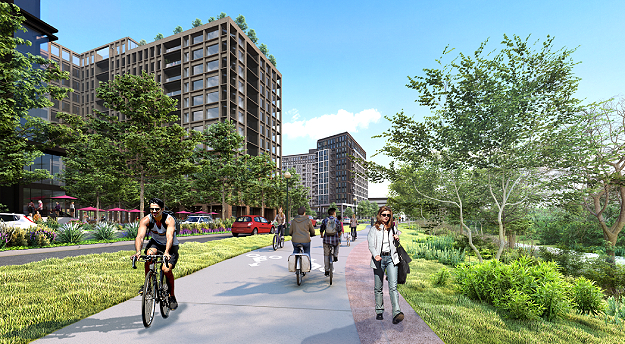
New walking and biking trails and bus rapid transit (BRT) infrastructure will enable access and lay the foundation for a "future, city-planned" BRT line, trail network, and bike lanes connecting to communities north of the development.
Then, the design team recommended putting all the parking spaces beneath the buildings, which was a "massive commitment by the developer," Berg said.
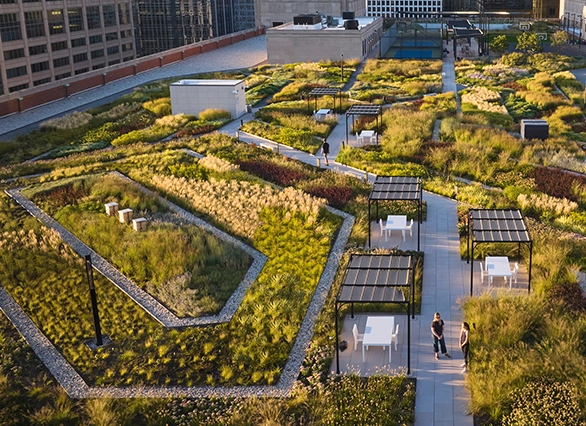
Within that public space, the landscape architects focused on weaving in nature -- both to draw people and pollinators. Essentially functioning as a green roof, the new verdant plazas will sit above parking garages below. "We will create a high plains desert landscape on structure, with native and adapted plant communities that increase biodiversity," Berg said. These landscapes are also designed to manage stormwater.
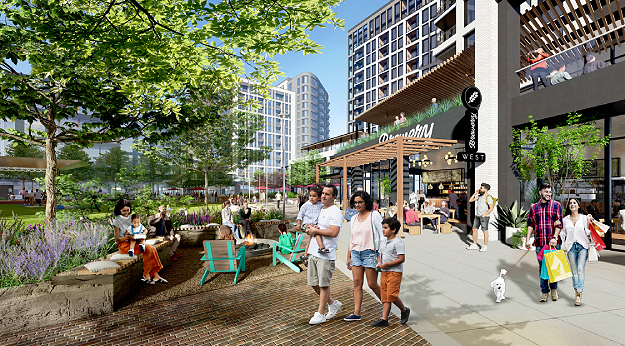
Concept designs for the development are being updated after negotiations with the city. One new addition is a shared woonerf-style street that will give priority to pedestrians but enable vehicle access.
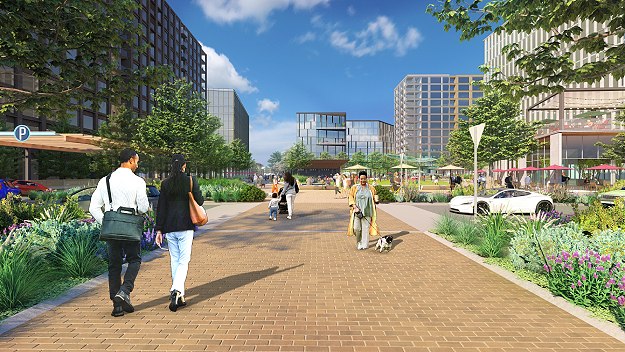
Berg said the original goal was a "100 percent car-free development." But the new walking trails, dedicated bike lanes, and BRT infrastructure are still expected to help more residents, commuters, and visitors leave their cars at home.
According to an analysis created as part of Design Workshop's new infrastructure master plan, the new development will shift more than 2,300 car trips to biking and walking, reducing greenhouse gas emissions by approximately 9.5 metric tons each day; and another 1,300 car trips will shift to transit, reducing approximately 4.2 metric tons of greenhouse emissions per day.
Cherry Creek West shows what can be done with underperforming shopping centers across the country. These places are opportunities to build a public realm, create new transportation connections, and shift to lower-carbon living.