

.webp?language=en-US)
.webp?language=en-US)
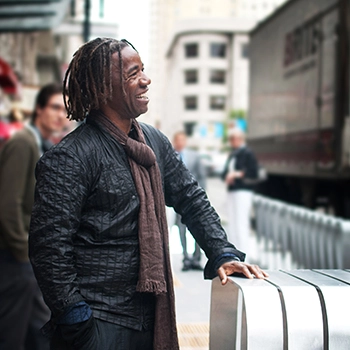
Walter Hood, ASLA
on Amplifying Black Narratives in Landscapes
An estimated 1,000 people are killed while being arrested by the police in the U.S. each year. According to studies, young black men are killed by the police between nine and 16 times the rate of other groups, and black people overall are killed at three times the rate of whites. Furthermore, the U.S. leads the world in killings by police. Canada, which also has high gun ownership rates, has less than one-seventh the rate of police killings of civilians. Many European countries count just a few deaths by police each year.
What change do you think can result from the killing of George Floyd by the police and the Black Lives Matter protest movement against racial injustice and police violence? The movement has become global and supported by millions of people.
That's a hard question. My first response is that we've been here before. In light of the pandemic and other things, I'm really hesitant to say there's going to be some major changes in the way black people are regarded and accepted in our society. We've had these moments before.
What makes it really hard, as a person of color, is understanding our history. In my short life -- I'm in my early 60s -- I grew up in a segregated neighborhood. My school was integrated when I was in junior high. For the first time, at age 13 or 14, I started living with other people who didn't look like me.
That's the hardest and most difficult thing we're not talking about: the racial construction of this country. We’ve only had 50 plus years where we've actually lived together in an integrated way. We have close to 300 plus years of living separately. So the idea that we can just all of a sudden flip the switch and people will change and accommodate the "other," it's a really tough one.
I don't think we're asking the right questions. You've listed these facts and metrics. Why are these numbers so high? When one looks back, why are we still policed in similar ways? Why are people of color harmed at a greater frequency?
In a country that was "separate but equal," there had to be an institution to keep that separation and keep people in their place. We have had close to 100 years of the Jim Crow institution, keeping us in a subservient place. This is U.S. culture. Even post integration, we still have to look at these institutions, which go back to the founding and the development of the country. You can't separate the two. We would like to, but they're inextricably tied together.
It's important to allow these issues and histories to come to a greater light and clarity, because now more people are interested in trying to understand this predicament than I've ever seen in any point in my life. The pandemic has a lot to do with it. People are thinking about the future. Everything is unsettled at this moment, and all the pieces have come together. It's the perfect storm.
Black Landscapes Matter, a book you co-edited with Grace Mitchell Tada, which will be published November, came out of a lecture series you initiated in 2016 following police killings. In your book, TED Talk, and other writings, you have called for planning and designing landscapes that allow for a diversity of narratives and perspectives, instead of homogenized landscapes that just say one thing to one group of people. How do you bring out these different memories and histories in a landscape?
After the spree of police killings in 2016, we wanted to bring together people who could articulate different voices in the black community. I wanted the book to articulate what's missing in how we design for other narratives, which is about difference. I say difference, not diversity -- it's about different ways of interpreting the world. When one puts out multiple narratives, they challenge the singular and its maintenance.
I'm thinking a lot these days about difference and sameness. Colonialism is about sameness. It takes difference and makes it into sameness. It does that to promote and maintain its construction. W.J.T. Mitchell talks about a double reading of landscape, a double semiotic.
Colonization is happening inside the colony, as ideologies are projected outside the colony. Our projection -- America, home of the free, and the brave, diversity for all, "all men are created equal" -- is sent out to the world. The Statue of Liberty, "give me your tired..." -- all of these things. But inside, we're being re-colonized to keep that narrative intact.
But that narrative is being torn. People are looking for other ways to see themselves and others around them. So in Black Landscapes Matter, we talk about different story lines. If more people are aware of what is part of their environment, not just today but yesterday, and possibly even tomorrow, we'd have a different way of thinking about the world. In so many spaces in this country, something happened! It has not always been vacant and desolate, places exist! Placemaking is re-colonizing. Something is always there if you are interested in it.
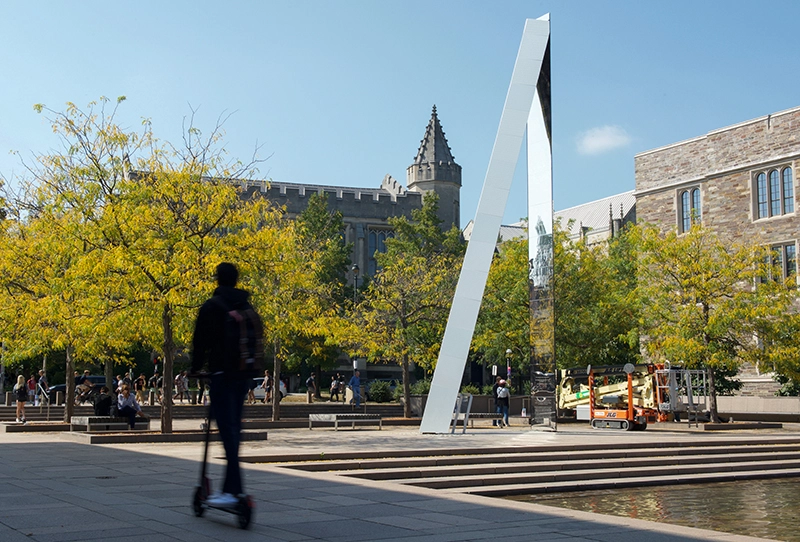
Many of your projects are specifically focused on unearthing hidden layers, creating spaces for multiple consciousness. The International African American Museum in Charleston, South Carolina, tells the story of slaves arriving in the port of Charleston and their descendants. A master plan for the Rosa Parks neighborhood in Detroit, Michigan, explores the history of the movement for racial equality. Double Sights, a public art piece at Princeton University, expands the interpretation of the many sides of former Princeton and U.S. President Woodrow Wilson. Navigating through all these layers of history, how do you get to the essentials and make planning and design decisions that really resonate?
For me, it's the willingness to want to unearth. Your previous question had to do with memory and history, which is a little different than unearthing.
Sometimes places are palimpsests, meaning part of the brick and mortar, and some of them are based in memories, the passing of time. For people of color who are marginalized, stories get lost. Each project is fraught with chance. I am not trying to solve a problem, per se. I'm trying to put something out in the world that has been covered up, erased, which might allow people to see the world and themselves in a different way.
Privilege at times only produces singular narratives, which is what happened with the Woodrow Wilson project. The students at Princeton still want his name off the building, so the piece has not resolved the issue. But what I hope the piece does is allow that issue to always be there. If someone at Princeton University said "remove the name of Wilson," then the piece wouldn't exist.
Advertisement
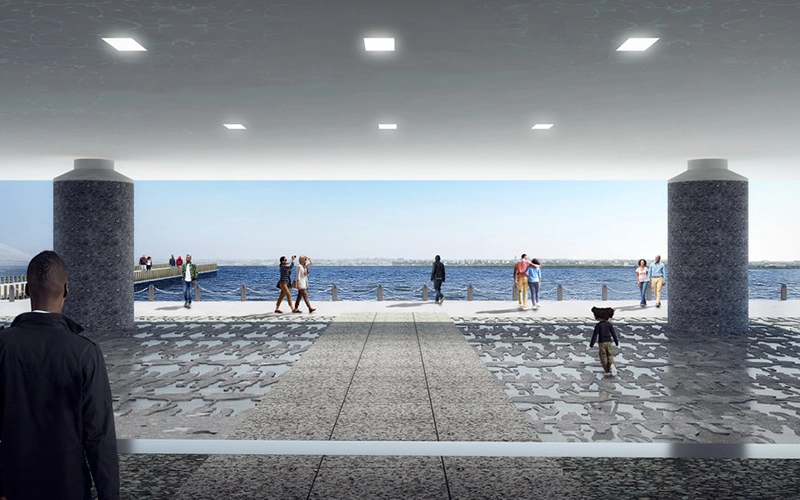
With the International African American Museum, there are clear, bold design statements. How do you really focus in on certain aspects of history and tell a broader story through design?
The design decisions for the landscape are very personal and I am consciously having conversations with those before me. I approached the Woodrow Wilson project through the narrative of W.E.B. DuBois, who has always been part of my thinking as a black man, and his idea of double consciousness. That gave me a point of view to criticize Wilson.
As for the International African American Museum in Charleston, the final was not the boldest design. We developed 29 different designs and worked through each one with the community. From my personal point of view, I wanted to put out imagery that had never been put out before. I took it upon myself to push the community. The Black Body in Space is something that really intrigued me conceptually.
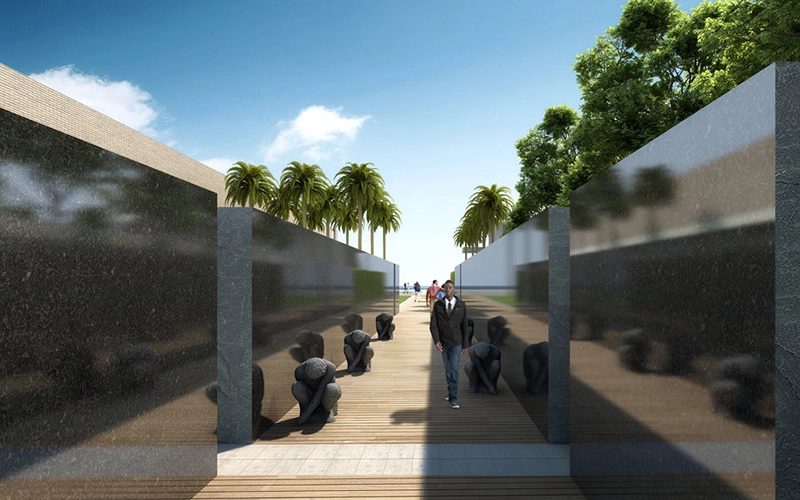
For the Rosa Parks neighborhood in Detroit, I approached the project, again through history and identity. I've spent years with my peoples' history. My research and design work has lived with these histories -- not just American history but the history of black America.
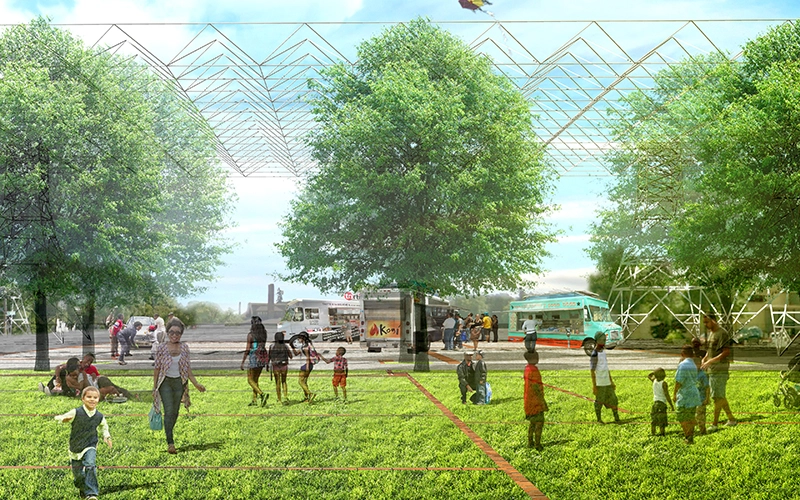
Returning back to your larger question: I could have gone through practice with no interest in black history. I could have just accepted the privileged position of the designer. I could just work in the very homogeneous/ standardized manner in which the profession trained me.
In my early years, that was really all I had to rely on, until I got to a point where it felt like something was missing. What was missing was myself. I did not see myself anywhere in landscape architecture, architecture, or planning. At the offices I worked, these ideas just didn't exist. I had to create a context for my ideas to bear fruit, so I situated myself in the rigorous, intellectual world of academia and developed an art practice. This is what I've been doing the last 30 years.
Do you think because you've found yourself in your work, people can find themselves in it, too? Is that what creates a sense of resonance, when someone sees your work and connects with it?
No, they actually hear a different voice, which again, is playing off the homogeneous. Early on, I noticed the design decisions I was making were different than the decisions other people were making. I didn't acquaint them because I'm black. It's because of my advocacy for and interest in people and the particular places that they live, which comes from my experience of being black.
Very early, one of my projects in a disinvested neighborhood involved planting an allee of a hundred and fifty flowering trees at one time along a decomposed granite walkway. This was 30 years ago, and people weren't doing stuff like that. To me, I wanted color to manifest in a bold way in a place that didn't have color.
Those design choices came out of me seeing a black community in need of something. As a person making landscapes, that is what I could give them. I always go back that very simple act -- that purity of impulse one has in a place where you're engaged but also giving of yourself. And this relates to the questions: what are you feeding yourself? Where's the inspiration coming from?
I try to bring in as much culture as I can to the work, which can offer multiple narratives and layers. I’m really not interested in singular gestures, but multiplicities.
People are yearning for difference. I just recently stopped using diversity and started using difference, because diversity is not really about difference. Difference is about opposition. Opposition is good. Double negatives are good. They exist in our world.
The doubles begin to tell stories we don't tell. We see it in the language that is manifest over time by culture. You'll see spaces given double negative terms, like Plaza Park. I was in San Jose, California, when Hargreaves was working on Plaza Park. I was like, "Plaza Park? Oh, this is interesting. Why does it have both?" If you go and look at the history, you know why it has two. These are the kinds of things people create over time through naming, adopting. Landscapes have a language.
If we're critical enough, we can begin to read the landscape in different ways. Once you do, it changes you forever. There's no way to go back.
Washington D.C. Mayor Muriel Bowser and the city government have painted "Black Lives Matter" in street-bounding yellow letters down 16th Street NW in front of Lafayette Square and the White House. This was widely viewed as a response to President Trump's order to teargas protesters and close off Lafayette Square -- a key protest space and site of a former slave market -- from public access. How do you unpack everything going on in that space? What is the role of public space in the protest movement?
In the history of this country, streets have been that number one space for protests. We can go back to women's suffrage and civil rights. The streets are the public domain. In D.C., what's public and what's federal? That's the interesting dichotomy in D.C. Lafayette Square, which is federal, gets acted upon differently than the city public. When I heard that, I was like, wow, I didn't know the President had dominion over that particular space.
Protesting has always taken place in the public realm. You can go back to Kelly Ingram Park and the Edmond Pettus bridge. These are my first memories: people protesting in the streets. This is nothing new. The marking, particularly with the branding, might be something new, a kind of guerilla tactic. I applaud the mayor for doing it, because she was able to demark a space. People are calling it the plaza, but again, this it is about nomenclature. I applaud her for marking a space that was taken away from her.
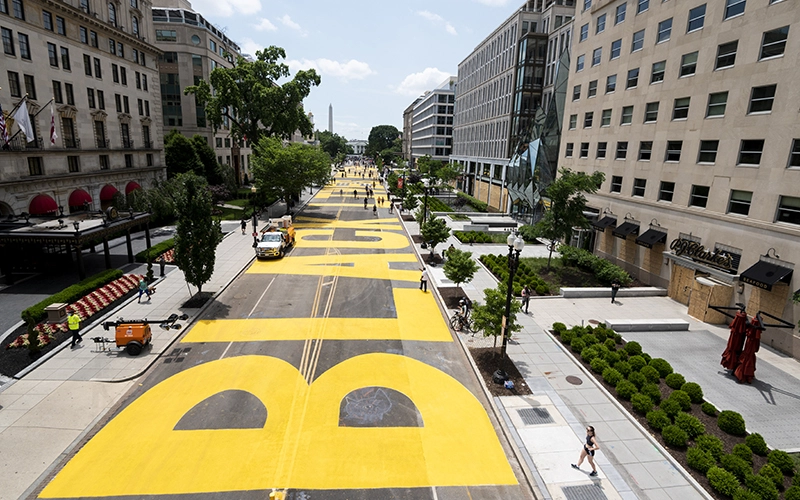
Lafayette Square, like a lot of public squares, was among the first public parks in our country. They were also places where atrocious things happened in our country like slavery auctions, so they're on hallowed ground to a degree. If we’re interested in changing how we think of ourselves, we can also be critical of the places where we’re actually protesting. To me, that could give credence to, or help articulate, issues we’re facing, particularly with the pandemic.
We know most low-income areas have higher cases of COVID, which you could also probably correlate to redlining policies and expulsive zoning, which was an institutional pre- and post-war planning practice. Redlined landscapes are still the same today if we are still in them.
Public safety is important. People should be allowed to use the spaces we have seen over the past few weeks, whether it’s the I-5 in L.A. or bridges in Minneapolis. These are spaces the public pays for.
You have equated the value of environmental diversity with that of social and racial diversity. Just as land comprised of diverse ecosystems are more sustainable and resilient, racially diverse or different communities also increase social sustainability and resilience. How can the fight for racial equality and justice support efforts to combat climate change and vice-versa? What are the connections?
The first connection one might think about is duplication. There really are two Americas, and we’re actually trying to support both of them, not equally though. There’s one America for one group of people and another for the other. It’s just not sustainable, because we’re having to spend more money on communities that are different, which is a result of the after-effect of not investing in these places in the first place. How to make communities more racially diverse is our next challenge.
We’ve been talking recently about a few new mixed-income housing projects in Oakland, California. When we think of mixed incomes, we think race, right? We can think of brown people, low-income; non-brown people, higher incomes. What might allow them to share the same space? That’s the question we’re beginning to ask. It comes back to public space, right?
We can develop parks and other types of landscapes that are more integrated into peoples' patterns and practices, so they can begin to share space. The architectural question is a bit more difficult, because a lot of that is driven through the market.
As for environmental diversity, I’ve lately returned to reading Olmsted and early Central Park history. In Go Tell It On the Mountain, written by James Baldwin, he describes an experience in Central Park one day. He goes to this hill. It’s his favorite hill. When he gets to the top of that hill, having walked from Harlem to Central Park, with all the white eyes upon him, he’s king of the world. He could do anything. He’s standing there looking out to Manhattan. He’s on this hill in the middle of nature, and he could do anything, and then slowly reality comes back to him. He descends the hill and runs into an older white guy. Immediately, he’s about to apologize, but instead the man smiles. That moment is how I think about what landscape can do. In a certain way, how do we put ourselves together in a place where there is no label or stereotype of the other? That’s really tough to do, as we recently saw with that woman in the Ramble.
Gentrification of urban Black and brown communities most often results in their displacement. Some communities have viewed efforts to add new green space and trees to their communities as a gentrifying agent. So one response has been the “just green enough” design movement, which calls for adding green amenities, but not to the extent that they would raise property values. What is your take? What approaches work best to stop displacement? And how do you think the protest movement can change conversations in communities where gentrification is happening?
All communities should be healthy. If we have the opportunity to increase biomass and improve the public-realm facilities in any community, we should do it. The fear of making something better particularly for those most vulnerable -- really. We should look at the issues that create the vulnerability. In many places, you have a high percentage of renters and low ownership. Some places you have little to no tax base. You have these institutional issue that don’t help. The first steps in some places are to figure out new and diverse housing types, increase ownership, and stabilize communities.
When communities were most healthy, successful, richest -- whatever word you want to use to characterize them-- they were diverse places. West Oakland has the moniker of having always been an African-American neighborhood. If you review its early formation, people came here because it was the western terminus of the railroad. Different communities of people worked and lived here: Latinos, Hispanics, African-Americans, Portuguese, Italians, etc. Post-war we see white flight, and then desegregation. First immigrant and then middle-class African Americans had opportunities to move into the places that whites had left. We then abandoned those redlined neighborhoods and left the most vulnerable.
That’s the dynamic of the city. We have to articulate these dynamics to communities in which we work and help them understand these processes. I live in an area that was once redlined. There are single-family houses mixed with light industrial. It’s a pretty diverse, mixed neighborhood. Next to my building, there was no green space at all. People reacted to vacantness in various ways, which was to tag the walls, dump garbage, or leave abandoned elements. I took it upon myself and started planting trees and shrubs adjacent the building. My little piece is the greenest part of the block.
What’s been refreshing and a reminder is watching how people reacted. The neighbor across the street almost every day tells me how great it is to see the green. People walk on my side of the street, and the behavior has changed. These are just little things that I just think we forget.
Part of our job is to help educate communities in which we’re working, based on shared knowledge. We can build an infrastructure to help with change, because change is going to happen. Cities are dynamic. Very early in my career, I had a conversation with a black family here in the East Oakland neighborhood about moving out of the city. They wanted to move to the suburbs because the schools were better, and the crime was lower. I couldn’t change any of that from my position.
So the issues become more structural. We have to improve these basic infrastructures like public education and improved environmental factors. In many of the places where gentrification happens, they’re so easy to topple because all of the infrastructure is eroded.
In 2013, ASLA’s member leadership made diversifying the profession a top organizational priority. The number of diverse people entering the profession remains stubbornly low. The high cost of landscape architecture degree programs and lack of alternative degree programs are issues. So is the lack of diverse landscape architects who can advocate for the profession in diverse communities. What do you think are the most important steps that can be taken to bring more black and brown young people into the profession?
Landscape architects: just set the example. Make it interesting for people of color, so they want to come into the profession. This means you have to change the narrative. Reach out, do the work. Approach the way we make things through a cultural lens. Look for difference, so people might get excited by seeing and experiencing something that has them in mind. Throw away the stereotypical and the feel good tropes -- basketball, barbeques, community gardens. It would be attractive for people to say, “wow, this is how I can improve my neighborhood. Look at what they’re doing," rather than settling. Really dig deep and contemplate these histories, the years of living separate. How do we talk about living together? If enough of us are out making change and having a different conversation, the idea of attracting a diverse group becomes secondary.
Years ago, I was part of a landscape group that was pushing for diversity. You can’t expect to attract people if there is no interest in change. I get excited when people of all persuasion get excited by the work we’re doing. It’s not about whether the project gets into a magazine and wins awards. To me, the best reward on any project is to get people excited, empowered, bringing them in and making them part of the project.
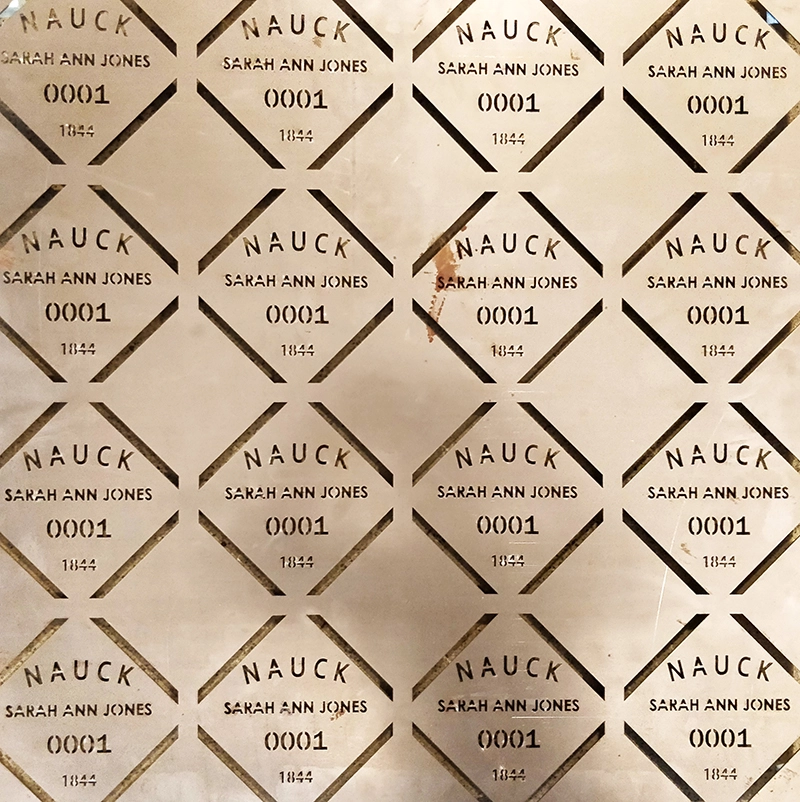
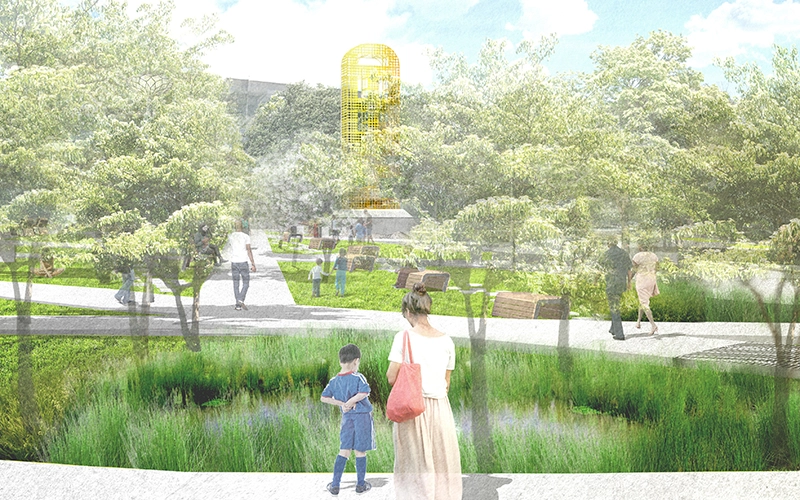
We are currently working for the town of Nauck, Virginia. It’s a town square. Working with the community very early on the discussion centered on the Freedmen’s Village of Arlington Cemetery and the black diaspora that emerged when they were removed. Many in Nauck are descendents.
I had recalled years ago as an undergraduate, I met a black landscape architect, Everett Fly, who had uncovered some of the histories of these towns that were built during Reconstruction. That experience stayed with me, and when I had the opportunity to have a conversation with that work, I immediately began to ponder the semiotics of this term used to describe black and brown people. What does it mean to be F-R-E-E-D!
It took a lot of nerve for me to start this conversation since it was something I had never entered into a conversation with a community about. I can’t describe the kind of excitement and conversation that began from there.
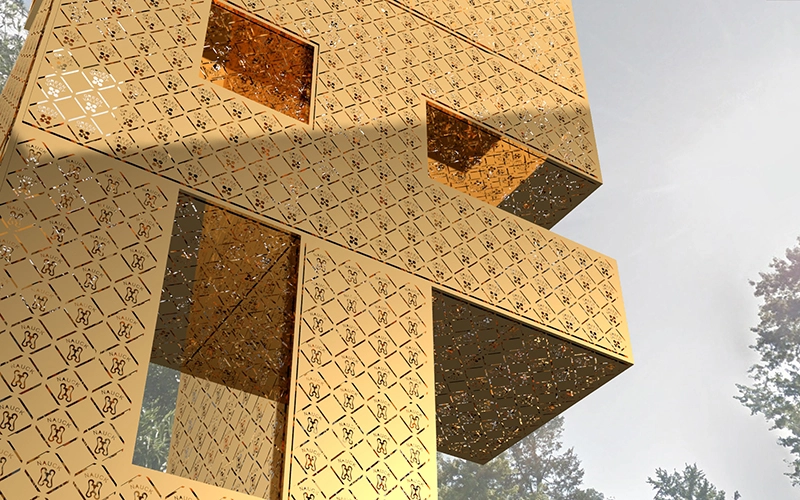
We can bring more voices to the table when we discuss, gender, race, and difference. Tell the truth about colonization and its impact not just on native and immigrant communities, but on the black and brown communities as well. If we don’t talk about it, we are reinforcing a post-colonial view.
This will bring difference into our profession, so it’s not simply just about making beautiful things. It can become about what those beautiful things mean. Once we can attach diverse meanings to the things we make, our profession could be much more inclusive.
For maybe two-thirds of my projects, race never comes up. To me, that’s where we should be heading. I don’t want the moniker of “black designer.” I can design for anyone, because I’ve had to learn how to. This skill came from being the “other,” and having to learn about white America and how to navigate, which is what we (others) don’t see happening from white America, right? I don’t see that kind of investment in me.
All I hear is, “Walter, help me. I’m working in a black community. I need you.” No, you don’t need me. You need to do the work for yourself. You need to learn about us. You need to get in there and roll up the sleeves. This is not my (our) problem. Until it changes, we’ll be back in the same position 20 years from now, asking why we’re not a diverse profession.
Walter Hood, ASLA, is the creative director and founder of Hood Design Studio in Oakland, California. He is also a professor at the University of California, Berkeley, and lectures on professional and theoretical projects nationally and internationally. He is a recipient of the 2017 Academy of Arts and Letters Architecture Award, 2019 Knight Public Spaces Fellowship, 2019 MacArthur Fellowship, and 2019 Dorothy and Lillian Gish Prize.
Interview conducted by Jared Green.