

.webp?language=en-US)
.webp?language=en-US)
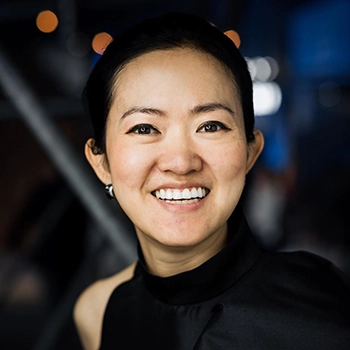
Kotchakorn Voraakhom, International ASLA
on Living with Water
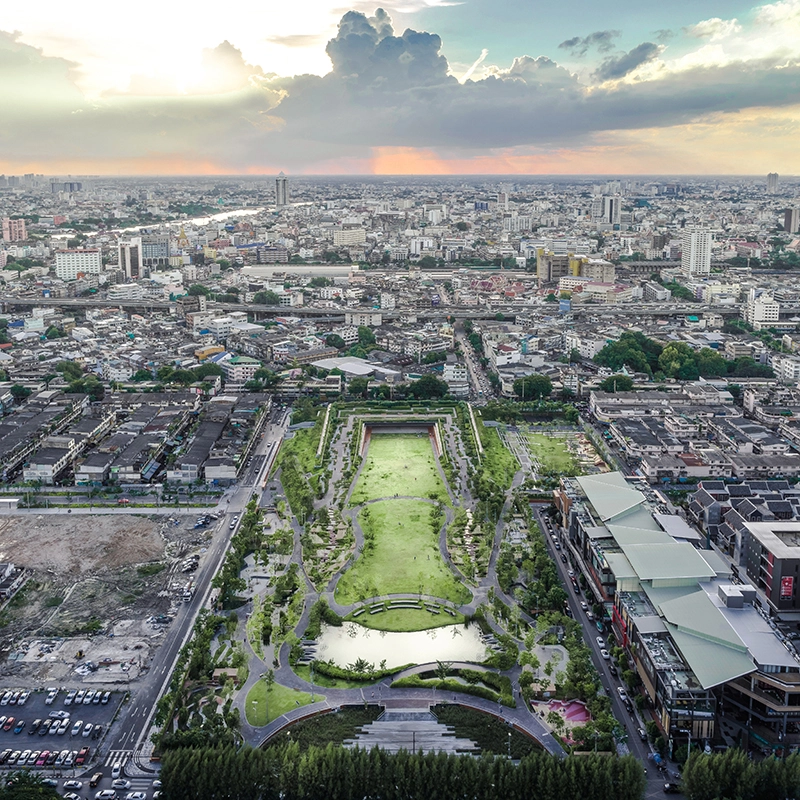
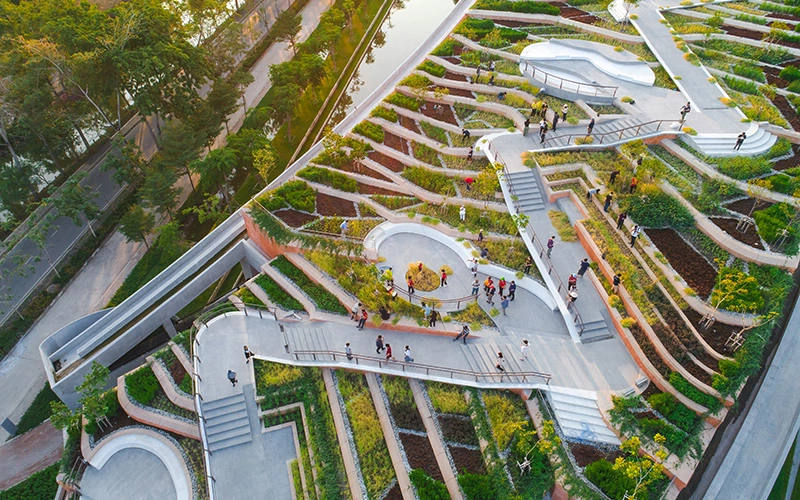
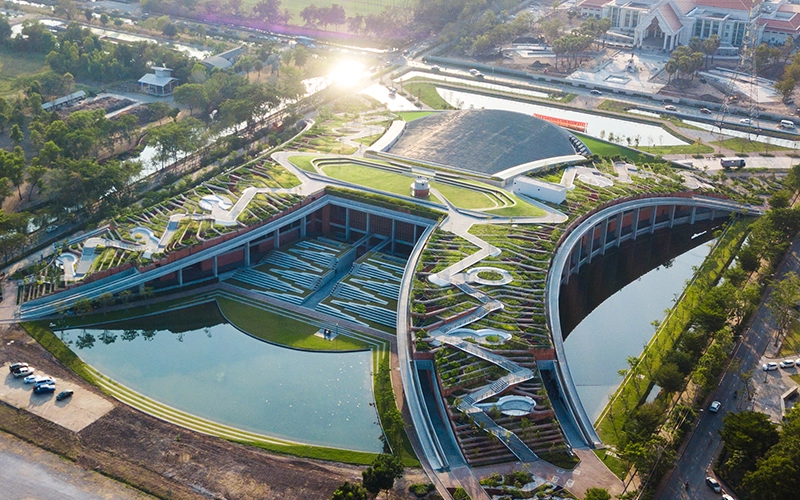
The 12-acre Chulalongkorn University Centenary Park in Bangkok, the first new park in the city in 30 years, is a model for how to design with nature. Tilted at 3 degrees, the park funnels storm water into a retention basin that can safely double in size amid heavy rains. How did you come up with this idea to incline the entire park?
Bangkok is a city of water but we don't know how to drain our water. We've been through many floods: either disastrous flash floods or the ones that are part of our daily life in Bangkok. This happens because we don't know where the water should go. We don't use the canal system as it should be used. In Bangkok, it is very sad that the canal department is under the sewage department. Canals have also been destroyed through urban development.
The city, along with the entire center of the country, is flat because of sedimentation. So I wondered: how can we create a water container in the city? I thought about our legendary Monkey King, and his "monkey cheek" approach to storage. Do you know about the monkey cheek? The monkey holds food in its cheek. When he is hungry, he just continues eating. If not, he just holds the food there. It's very simple way; no deep theory or anything, but just a natural way of being.
If you don't have hilly topography, like in Bangkok, you create the topography and just tilt it.
Advertisement
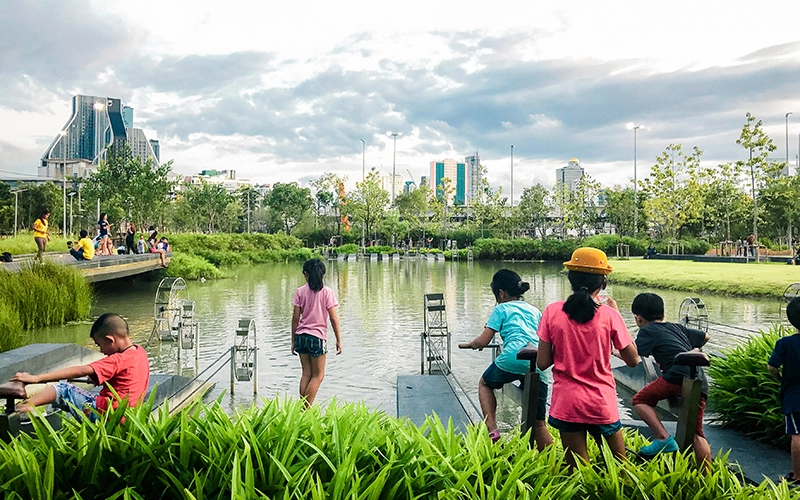
At the detention basin's edge, there are stationary bicycles. When visitors peddle the bikes, they turn wheels that aerate the water. Why is it important to engage visitors this way?
Because it's so human. I remember walking my dad to the park. He's a designer and said: "This is the highlight." You know when you get complimented from your parent, it's the best.
The park addresses climate change and flooding in a very technical way. But at the end I wanted people to feel they can be part of the solution by just being there, peddling the water bike. The water level in the detention basin also changes. Just the physical nature of pedaling is quite direct.
In your TED Talk, you said the 15 million residents of Bangkok are living on a "shifting, muddy river delta." Bangkok, New York City, Shanghai, New Orleans and many other delta cities are slowly sinking as sea levels rise. How can landscape architects help solve this problem?
We try to fix problems, but we are actually the problem. The reason our city is sinking is systematic. The issue doesn't just come from building a city on top of this delta; it also because there is no more sediment coming from upstream. Dams that create electricity are blocking sediment flow. We also don't let the land absorb rain. We have to see the problem systematically and fix what you have done rather than try to fix nature.
As landscape architects, we work with the land. We know how these systems should function. We can teach people how to live with water again, which is much better than fearing it. Living with water is the vernacular way in Thailand. We have long had homes on stilts and floating platforms. We even have floating markets. We are used to living on the edge between land and water.
In the future, floating cities are even possible. But they are not really futuristic, as they have already happened in the past. The future is about knowing where you're from and using that in a new context. I don't think the future will be these flying cyborgs or something, nothing so inhuman.
In the past, flooding meant food. Sediment was part of seasonal change. Thailand would flood for one or two months and we would just deal with it. Today, we forget that flooding is about transformation. It's only our relationship with water that has changed in a negative way. Landscape architecture can help people see a different relationship with water is possible.
For Bangkok's 250th anniversary, which is in 2032, city leaders are creating the Bangkok 250 Plan, a major redevelopment effort that aims to create a more livable city in 17 districts in the urban core. By then, the city's population is expected to grow to 11 million, an 18 percent increase over today, and the number of vehicles on the road is expected to grow by 1 million to 10 million. As a consultant on this planning effort, what are you advising the city to do?
We have a big team of urban designers, architects, and urban planners, and then there's me, the landscape architect. Of course, we want to revitalize the canal system. We want to incorporate much more green space. But we don't want to be naïve and just hope for more green space if there is no land. We have to be innovative about how we insert green spaces. There is one project we are implementing right now with the current mayor to reuse a failed governmental mega-project. In Asian cities, there are many projects like this that were built and then stopped. There's so much that can be renewed. But this also means the city is a challenging context.
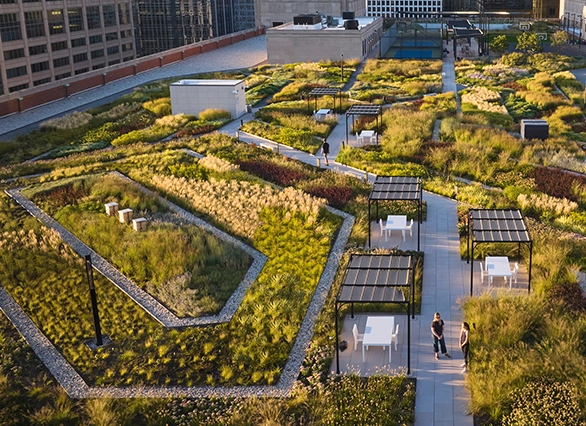
You have often gone to the rooftops, designing the Princess Maha Chakri Sirindhorn Garden on the former helipad of the Ramathibodi Hospital, the Siam Green Sky Urban Farm on top of a building at Chulalongkorn University, and a new green roof on the Puey Learning Center at Thammasat University. How does developing rooftops help you achieve your goals for the city?
At the Ramathibodi Hospital, we removed a helipad and replaced it with a healing garden. Green roofs are one of the key solutions for how to make a city more porous and sustainable.
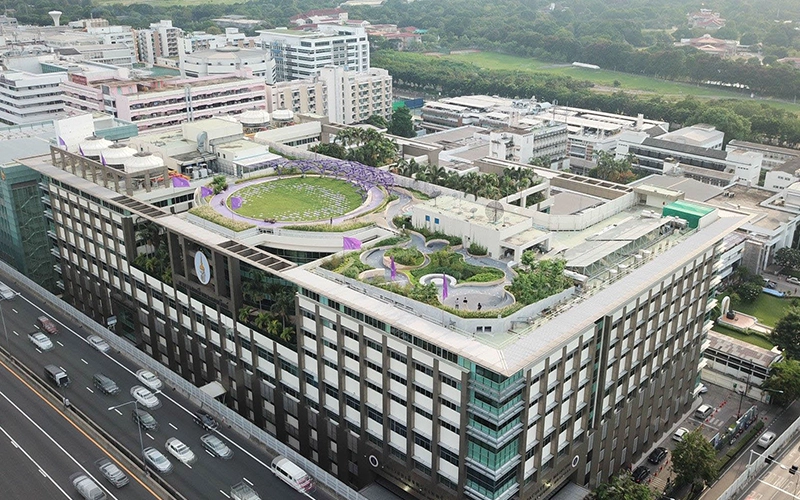
The Thammasat University in Bhutantanang, which is in the greater Bangkok area, will become the biggest urban farming green roof in Asia at 7,000 square meters (75,000 square feet). The roof mimics the structure of rice terraces and how farmers use topography to absorb rain, slow down runoff, and grow food.
You have also planned and designed many health care environments that provide patients with access to nature, including the Siriraj Hospice Center. How do you incorporate Thai cultural and spiritual beliefs about nature?
The other hat I wear is creative art therapist. I have many questions about death: What does it feel like? How can I help these people?
When it comes to healing, no one can help you. Doctors can cure you, but they cannot heal you. You have to heal yourself. And how do you heal yourself? You heal yourself through natural processes.
Perhaps with my Buddhist beliefs, I feel there's so much suffering in these hospices. Too many hospitals only think about more patients without thinking about how to create healthy spaces for them. I'm talking about government hospitals in Thailand; you can't imagine how crowded they are. These people deserve healing environments, so we are trying to find the right space in hospitals. I'm helping many other hospitals as well.
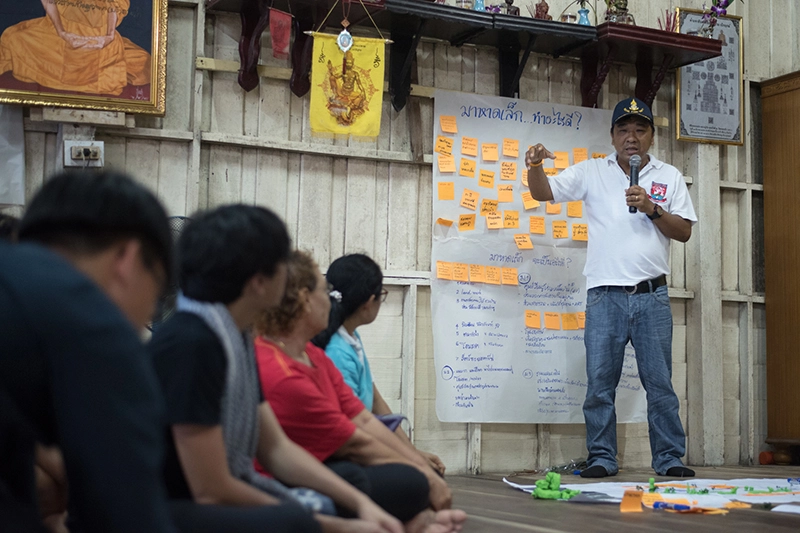
In addition to the work with your firm, you're also founder of Porous City Network, a nonprofit that co-designs water management solutions with vulnerable communities. What have been the results of the effort so far?
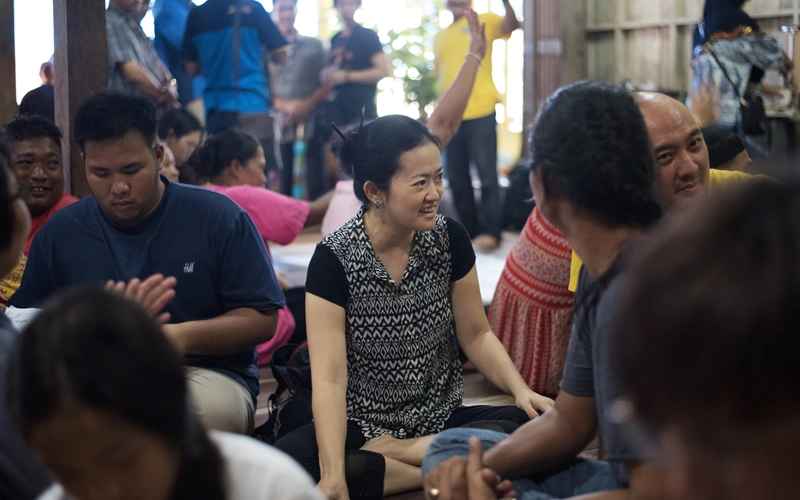
Porous City Network was started two years ago. Traditional client-based practice can only solve some problems. If we want to really tackle big problems, we need public education and advocacy. I'm trying to expand the network into other cities in Southeast Asia where they are facing similar problems.
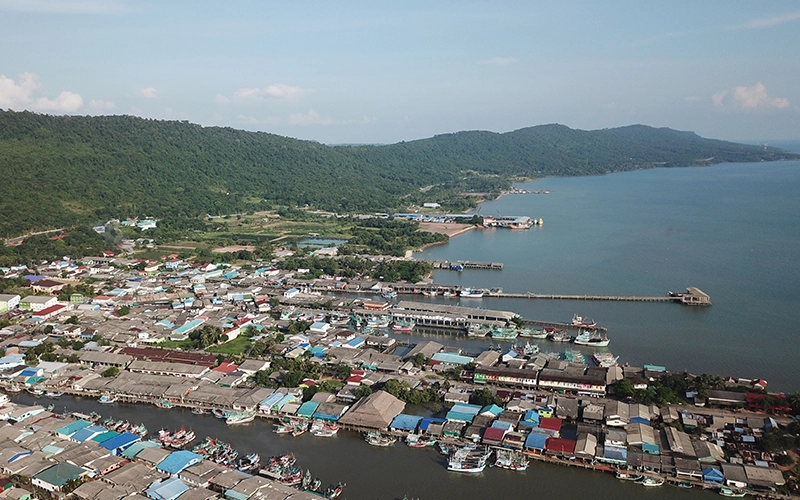
We helped a community along the coastline on the border of Cambodia, which is actually at the narrowest part of Thailand. The people are Thai but have no land rights on paper, so they build into the ocean. The government deemed them invaders and tried to displace them. We helped them negotiate with the government and create a plan that allows them to inhabit land in the ocean, which also involves restoring mangrove forests. They are the first community that has received government permission to do that.
This means the solution can be implemented in Thailand's other 7,000 fishing villages, rather than just displacing these communities.
I also bring landscape architecture students so they can learn about community participation processes. I use landscape architecture to help these communities.
Kotchakorn Voraakhom, International ASLA, is founder of Landprocess and the Porous City Network. Voraakhom is featured in TIME magazine's 2019 TIME 100 Next, a list that spotlights 100 rising stars who are shaping the future of the world, along with their list of 15 women fighting against climate change. Voraakhom is chairwoman of the Landscape Without Borders of the International Federation of Landscape Architects, Asia Pacific Region (IFLA APR). She is a TED Fellow and Echoing Green Climate Fellow. She received her master's in landscape architecture from Harvard University's Graduate School of Design.
Interview conducted by Jared Green at the ASLA 2019 Conference on Landscape Architecture in San Diego.